

Submitted:
23 December 2023
Posted:
25 December 2023
You are already at the latest version
Abstract
The effect of climate change plays a significant role on groundwater level variations and crop yield. The change in climate leading to increased temperatures, decreased rainfalls and extreme drought conditions ultimately cause low groundwater level and crop yield. Judicious groundwater management technology viz., water recharge options, need based irrigation, crop selection, must be adapted for further increasing the water table level in soil ecosystem. Additionally, climate change impacts combined with changes in agricultural water use can affect groundwater dynamics. Increased irrigation demand and decreased summer precipitation can lower groundwater levels, impacting crop production. Overall, climate change affects both groundwater resources and crop yield highlighting the need for sustainable water management practices and consideration of soil properties in agricultural modelling. The authors carefully selected relevant research articles addressing the impact of climate change on ground water level in Asian countries. The review highlights the use of machine learning method to ground water level and crop yield modelling. According to the study, machine learning techniques have made significant contributions to predicting groundwater level changes and crop yield with higher accuracies, high performance and less running time.
Keywords:
climate change
; groundwater
; crop yield
; machine learning
; artificial neural network
1. Introduction
Asia is the largest and the most populous continent in the world. It covers 60% of the current population (more than 4.4 billion people) and accounts for 30% of the total world area. The climate of Asia is dry across its southwestern region and the western portion experiences the widest daily temperature variations on Earth. The impact of climate change in Asian countries poses significant threats to ecosystems, freshwater systems, groundwater levels, global warming, extreme drought and adverse effects on agriculture. Climate change has also had a significant impact on groundwater consequently affecting crop yield and growth subjecting to various stresses. Groundwater availability is not enough to meet the growing demand, leading to overexploitation and depletion of groundwater resources. South Asia, in particular, is facing alarming groundwater depletion, with an annual depletion rate of 60 Billion Cubic Meters (BCM) and an increase in air temperature and evapotranspiration [1]. Additionally, Groundwater quality is continuously changing due to climatic change and human activities, emphasizing the need for comprehensive understanding and assessment of climate change impacts on water resources [2]. It also has the potential to contribute to climate change mitigation through geothermal energy use and CO2 capture and storage [1,3].
Due to climate change and excessive groundwater extraction, groundwater-related issues have resulted in saltwater intrusion into coastal aquifers and groundwater-related problems in several low-lying countries [4,5]. Climate change has led to a declining number of extreme cold events[6] together with an increase in the number of heatwaves [7], droughts, and excessive rainfall [8,9,10] that can significantly impact global food production[11]. Crop models are commonly used to develop effective adaptation strategies for maintaining stable grain production under future climate change. However, these models have limitations and uncertainties due to the model structure, parameters, and global climate model (GCM) inputs, particularly under extreme events. Extreme climate events (ECEs) have the potential to impact crop growth and yields by imposing various stresses on crops, as mentioned in [8]. However, it is worth noting that some process-based crop models oversimplify these intricate processes. Furthermore, most process-based crop models do not consider crop pests and diseases (CPDs), which can result in inadequate estimation of additional yield losses.
In contrast to process-based crop models and statistical-based models, machine learning algorithms, can capture potential non-linear relationships between extreme climate events and crop yields, without the need for a complex set of parameters or a profound comprehension of physical processes, as stated in [9]. Machine learning algorithms can incorporate indices such as ECEs and CPDs, as well as genotype by management by environment interactions, and may require less parameterization compared to process-based models. Numerous studies have utilized machine learning or deep learning algorithms [12,13,14,15,16,17,18,19,20,21,22], to forecast groundwater level and crop yield with satisfactory performance [8,9,10,11]. Yang et al. [23] trained CNN with high-resolution UAV images to predict the yield of rice, and the results obtained were far better than the statistical model based on vegetation index, whereas [24,25] used the convolutional LSTM to predict the variation of meteorological factors and then predicted the growth stage of crops.
Hence, it becomes necessary and significant to have a detailed and comprehensive investigation to explore the various machine learning models that is more effective than other conventional models in the prediction of groundwater level and crop yield due to the climate change. According to the study, machine learning techniques have made significant contributions in predicting groundwater level changes and crop yield with higher accuracies, high performance and less running time.
2. Materials and Methods
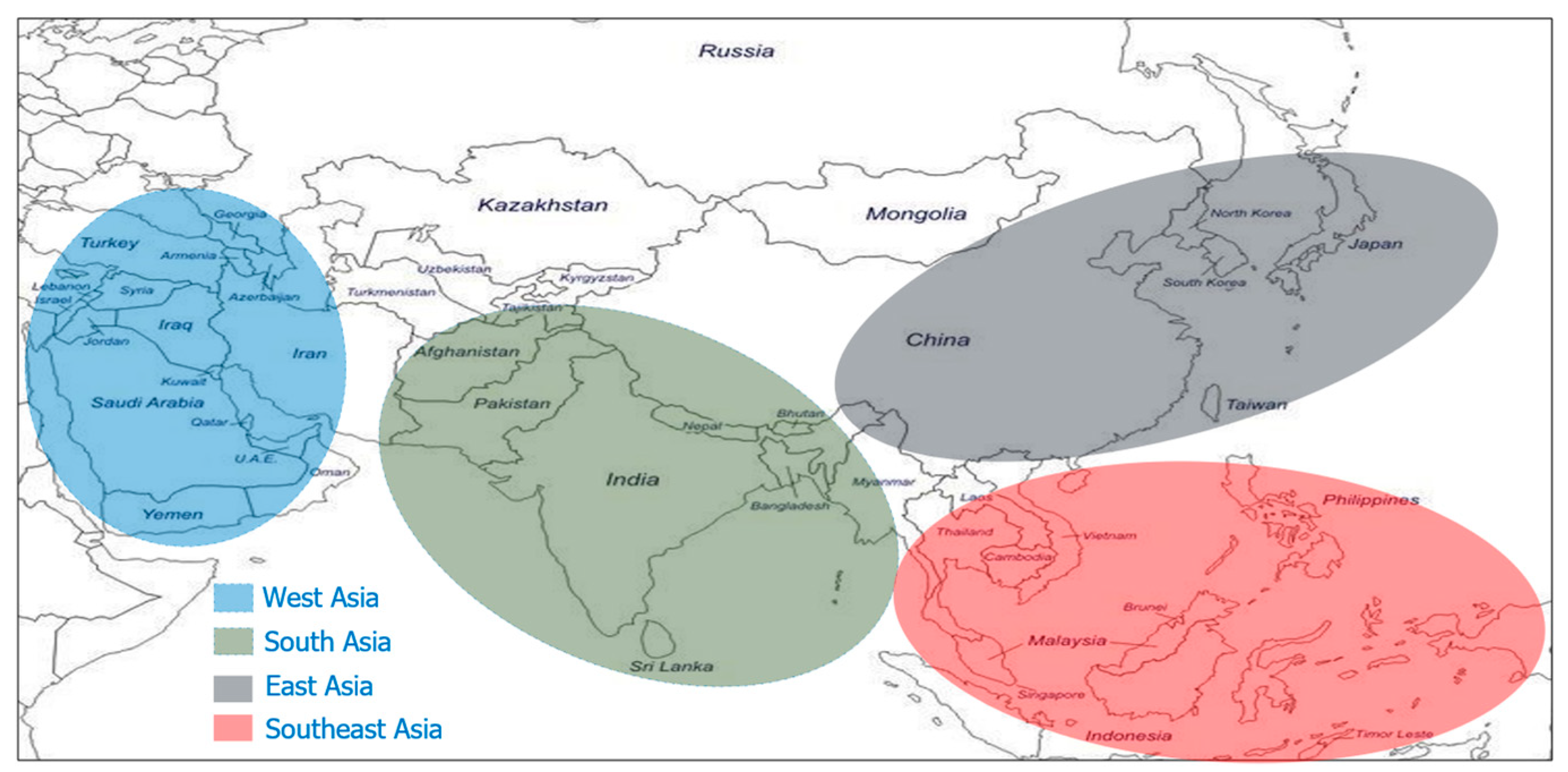
This study employed a comprehensive literature based on four scientific databases (Scopus, Science direct, Web of Science, and Google Scholar), employing the keywords "climate change," "groundwater level," "crop yield" and “machine learning”. A total of 100 papers were initially selected after screening by title, year of publication and article type. The second screening of these papers were assessed by reviewing their abstracts, methods, research region and technique to determine their relevance to climate change impact on groundwater and crop yield using machine learning techniques. In the final stage, a total of 50 research articles were selected for the review purpose. The Asian countries that are considered for this review study are Inda, China, Bangladesh, Iran and Philippines, covering the southern and eastern Asia. Moreover, additional articles that met either three of the four keywords in various combinations like climate change, ground water level and Machine learning and climate change, crop yield and Machine learning are also considered to get insightful information specifically on each criterion. This ensured a comprehensive analysis of the literature focusing on the review study. A systematic search together with screening process resulted in a robust collection of research papers relevant in the context of our study.
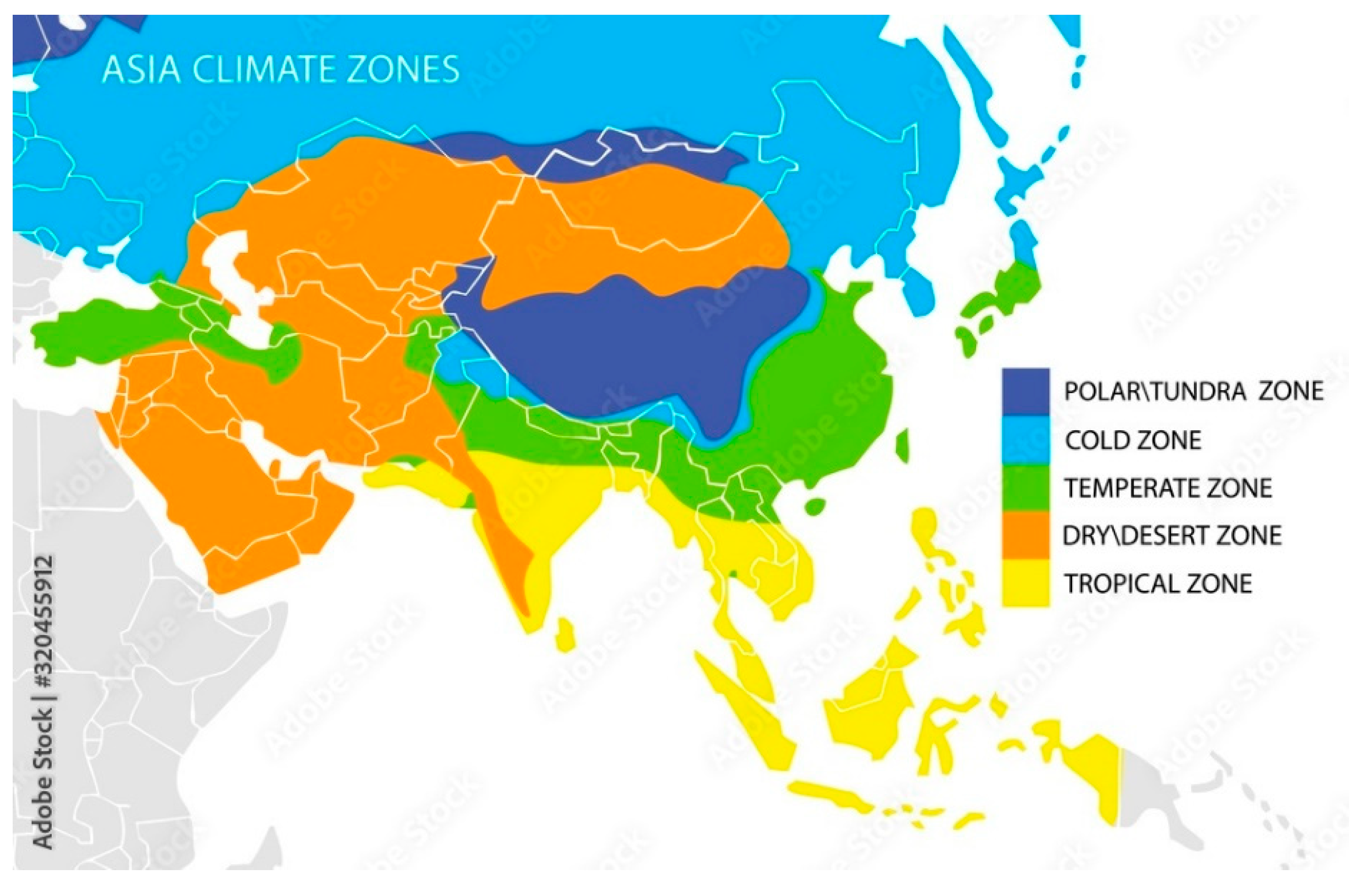
Figure 1.
The climate zones of Asia.
3. Climate Change in Asia—A Scenario
Asia is defined as the land and territories encompassing 51 countries/regions. It can be broadly categorized into six sub-regions based on geographical location and coastal peripheries. The climate characteristics within Asia exhibit a wide range, encompassing all climate zones from tropical to polar, including mountainous climates. Monsoonal winds and their associated precipitation dominate the regions of South, Southeast, and East Asia. Frequent instances of extreme precipitation and consequent flooding are prevalent in monsoon Asia, specifically in Southeast, South, and East Asia [26].
Climate change impacts are increasing in Asia, which is warming faster than the global average. According to the World Meteorological Organization (WMO), State of the Climate in Asia 2022 report, Asia, the continent with the largest land mass extending to the Arctic, is warming faster than the global average and its mean temperature over Asia for 2022 was about 0.72 degrees Celsius (°C) above the 1991–2020 average, which was itself roughly 1.68°C above the 1961–1990 reference period for climate change. Most glaciers in the High Mountain Asia region suffered from intense mass loss because of exceptionally warm and dry conditions in 2022. This will have major implications for future food and water security and ecosystems. It was predicted in the report [27,28], that by 2050, parts of Asia may see increasing average temperatures, lethal heat waves, extreme precipitation events, severe hurricanes, drought, and changes in water supply, based on Representation Concentration Pathway 8.5 (RCP 8.5). Scientists predict that by the end of this century the sea level could rise by 65 cm (2.1ft) that poses an existential threat to many countries in the region of Asia where nearly 50% of its population, about 2.4 billion people, live in low-lying coastal areas. Rising seas threaten to intensify floods and storms and degrade land through increased salination. A two-metre sea level rise could displace over 180 million people, mostly across Asia, particularly in Bangladesh and Indonesia. Adapting to rising seas is a key challenge for Asia.
Precipitation in regions of Asia is anticipated to undergo drastic alterations, either in the form of a decrease or an increase, because of climate change. The pattern and intensity of precipitation are expected to change significantly. Specifically, during the dry season in Southeast Asia, the average precipitation is projected to decrease by 10-30% until the middle and end of the 21st century, leading to a prevailing drying tendency in the region. Indonesia is likely to experience a decline in annual precipitation. On the other hand, North Asia and certain parts of West Central Asia have observed notable positive trends in precipitation changes. As a result, South and Southeast Asia are considered the most vulnerable regions in the world in terms of this aspect[29,30,31]. The rise in sea levels are creating problems for low-lying coastal areas, leading to coastal erosion and the destruction of marine ecosystems and threatening the economy based on the coastal ecosystems [32].
IPCC’s Sixth Assessment Report details the most effective and feasible climate adaptation approaches as well as which groups of people and ecosystems are most vulnerable. The consequences of climate change can affect the continued economic growth, livelihoods, and poverty [29]. It is worth noting that the average GDP growth of South and East Asian countries (about 5.5–7.9%) has been much higher than that of global (approximately 2.8%) for the period 1980–2020. Although the economic growth of the countries is higher, better management of crises requires a more sustainable economy.
Figure 2.
Regions of Asia considered for the research study.
4. Impact of Climate Change on Groundwater
The 2022 annual UN World Water Development Report [27] emphasized over to groundwater, which represents 99% of all liquid freshwater on the Planet. On a global scale, groundwater accounts for half the total volume of water destined for domestic use, and for one-fourth of all water withdrawn for irrigation. Climate change has significant impacts on groundwater in Asia. Climate and land cover largely determine precipitation and evapotranspiration, whereas the underlying soil and geology dictate whether a water surplus (precipitation minus evapotranspiration) can be transmitted and stored in the subsurface. Modelled estimates of diffuse recharge globally [14,32] range from 13,000 to 15,000 km3 yr−1, equivalent to ∼30% of the world's renewable freshwater resources [28] or a mean per capita groundwater recharge of 2,100 to 2,500 m3 yr−1. These estimates represent potential recharge fluxes as they are based on a water surplus rather than measured contributions to aquifers.
Figure 3.
A map of the world's groundwater resources on locations of regional aquifer systems [28].
Figure 3.
A map of the world's groundwater resources on locations of regional aquifer systems [28].
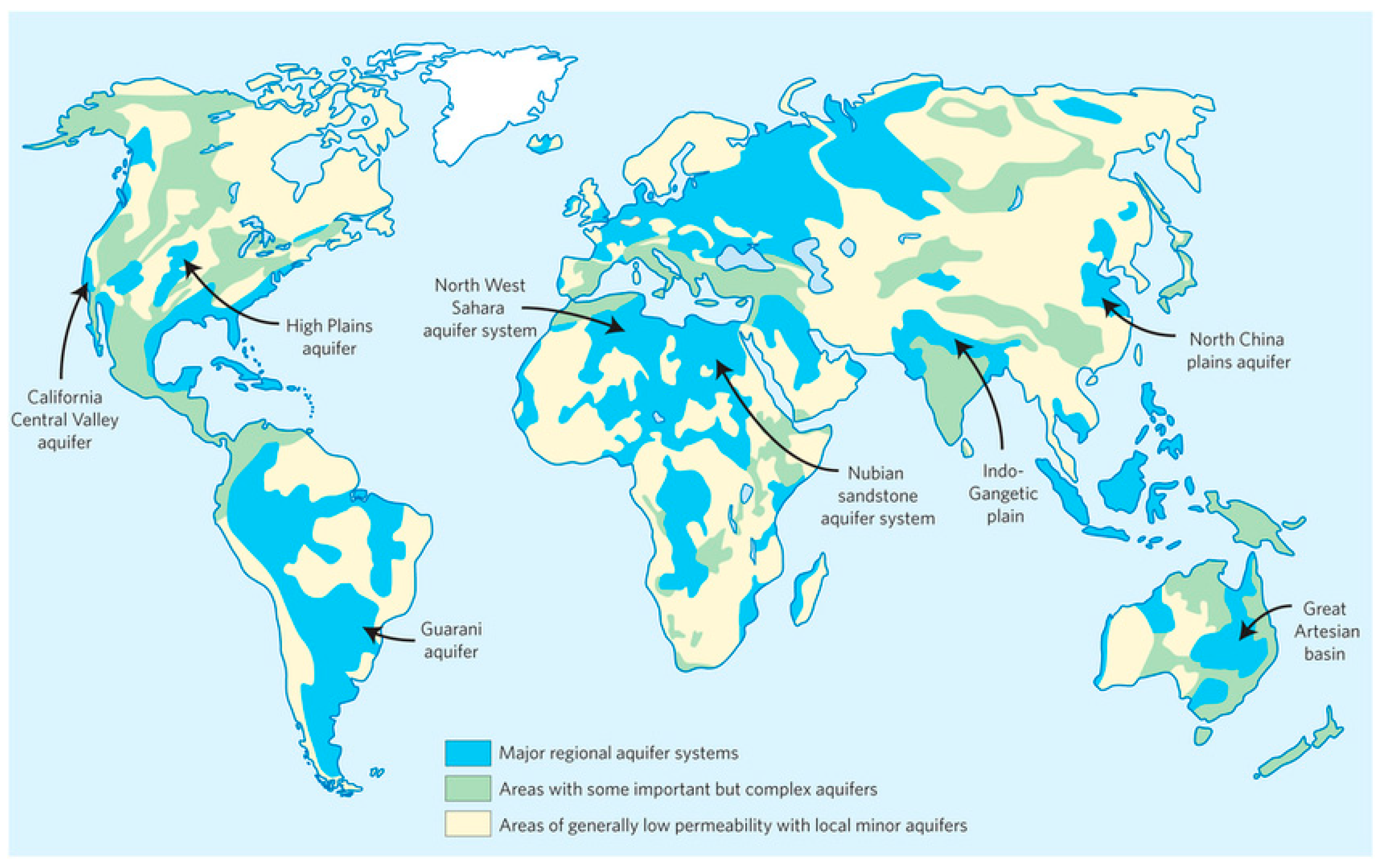
The figure illustrates that the major regional aquifer systems of Asia lie in the Indo Gangetic plain and North China. Bangladesh is known as a hazard-prone country. Among the hazards, floods are considered as the most vulnerable and disastrous factor in terms of adverse impact on people’s livelihood and properties. Due to locational disadvantage, particularly at the lower confluence characteristic, it is often severely affected by the wide magnitude of floods. However, the study is intended to discuss the flood intensity and recurrence trend by analyzing historical data. The study also focuses on the indigenous coping techniques of flood-affected people. To access the intensity of the flood, Flood Intensity Index (FII) method was applied and to analyze the flood recurrence and peak, Weibull’s and Gumbel’s distribution method was applied for a period of 36 years (1985–2020), and for ranking the coping strategies, Weight Average Index (WAI) was applied. Groundwater availability is not enough to meet the growing demand, leading to overexploitation and depletion of groundwater resources. In particular, South Asia is facing alarming groundwater depletion, with an annual depletion rate of 60 Billion Cubic Meters (BCM) and an increase in air temperature and evapotranspiration[1]. Additionally, Groundwater quality is continuously changing due to climatic change and human activities, emphasizing the need for comprehensive understanding and assessment of climate change impacts on water resources [2,33,34]. It also has the potential to contribute to climate change mitigation through geothermal energy use and CO2 capture and storage [1,3].
The impacts of climate change on crop water requirements and irrigation water requirements were investigated by the simulation tools CROPWAT, MODFLOW and WEAP [35,36] and statistical models on the regional cropping pattern using two climate change scenarios and combinations of 20 GCM models conducted in the Najafabad plain, which is the most important agricultural sub-basin of Zayandeh-Rud river basin, in the centre of Iran. The results revealed that over exploitation of water resources and inefficient irrigation system cause an extra drop of 0.4 to 0.8 m in groundwater table per year in the aquifer. Therefore, management and preventive measures to deal with climate change in the future is necessary regarding the critical condition of the aquifer.
In worldwide, over a quarter of the extracted groundwater originates from the Indian subcontinent, and numerous regions are observing substantial declines in groundwater levels or degradation in its quality [37]. The research [38] employed the analytical hierarchy process to identify Potential Groundwater Zones (PGWZ) in Bangladesh due to the effect of climate change. The outcomes revealed a decrease in groundwater potential over the decades, which was classified into five distinct zones based on the relative groundwater potential. The proportion of the very high PGWZ declined from 2.19% to 1.3%, and the high PGWZ decreased from 34.57% to 28.24%. Conversely, there was a notable increase in the poor status of PGWZ (comprising the very low, low, and medium zones) during the same time periods.
The over exploitation of groundwater in a subtropical fan delta region, such as the Damodar Fan Delta in India, where there is rapid population growth, requires urgent attention in terms of the sustainable mapping, monitoring, and management of water resources. Sadik et al. [39] analyzed the dynamics of GWL during the pre-monsoon, monsoon, post-monsoon rabi, and post-monsoon kharif seasons from 2013– to 2020–21 based on the GWL of 30 wells along with the prediction of GWL for 2025–26. The study's temporal variation suggests that, except for a few locations, most wells exhibit an increasing trend in groundwater depth. The spatial distribution of groundwater levels reveals that the most significant changes occur during the post-monsoon kharif season, followed by the pre-monsoon, monsoon, and post-monsoon rabi periods. Among the six machine learning algorithms considered, the extreme gradient boost (XGB) regressor emerged as the most reliable model for future prediction, while the decision tree algorithm proved to be the least efficient in depicting the dynamics of groundwater levels. Furthermore, the predicted groundwater levels for the years 2025-2026 also indicate that the greatest decline in groundwater levels is observed in the western part of the Damodar Fan Delta in India.
The effects of future climate variability and change on groundwater may have the greatest impact through indirect effects on irrigation-water demand, as irrigation currently dominates groundwater use and depletion [28]. While there is still substantial uncertainty about the impacts of climate change on mean precipitation from general circulation models, there is much greater consensus on changes in precipitation and temperature extremes. These extremes are projected to increase with the intensification of the global hydrological system, leading to longer droughts and more frequent and intense rainfall events. These climate changes may initially and primarily affect groundwater through changes in irrigation demand, as well as changes in recharge and discharge [29].

Table 1.
Impact of climate change on groundwater.
| Case Study Country | Specific Location | Climate Change Event/Other | Impact/Problem | Reference |
|---|---|---|---|---|
| Indonesia | Bandung | Decrease in rainfall and increase in maximum temperature | Decrease in groundwater recharge, increase in air temperature and evapotranspiration. | [1] |
| Pakistan | Lahore | Increased precipitation and temperature | Groundwater depletion, contamination in water bodies and increase in groundwater recharge | [1,34] |
| Vietnam | Ho Chi Minh City | Decrease in rainfall and increase in max temperature | Decrease in groundwater recharge | [1] |
| Thailand | Bangkok | Increase in maximum temperature and rainfall | Higher groundwater recharge | [1] |
| Iran | Najaf Abad plain | Reduction of rainfall, | Extra drop in groundwater table, drought | [35,36] |
| Bangladesh | North Bengal | Monsoonal rain | Decrease in groundwater potential | [33] |
| India | Damodar Fan delta | Post monsoon Kharif season | Increasing trend in groundwater depth | [36] |
5. Impact of Climate Change on Crop Yield—An Insight
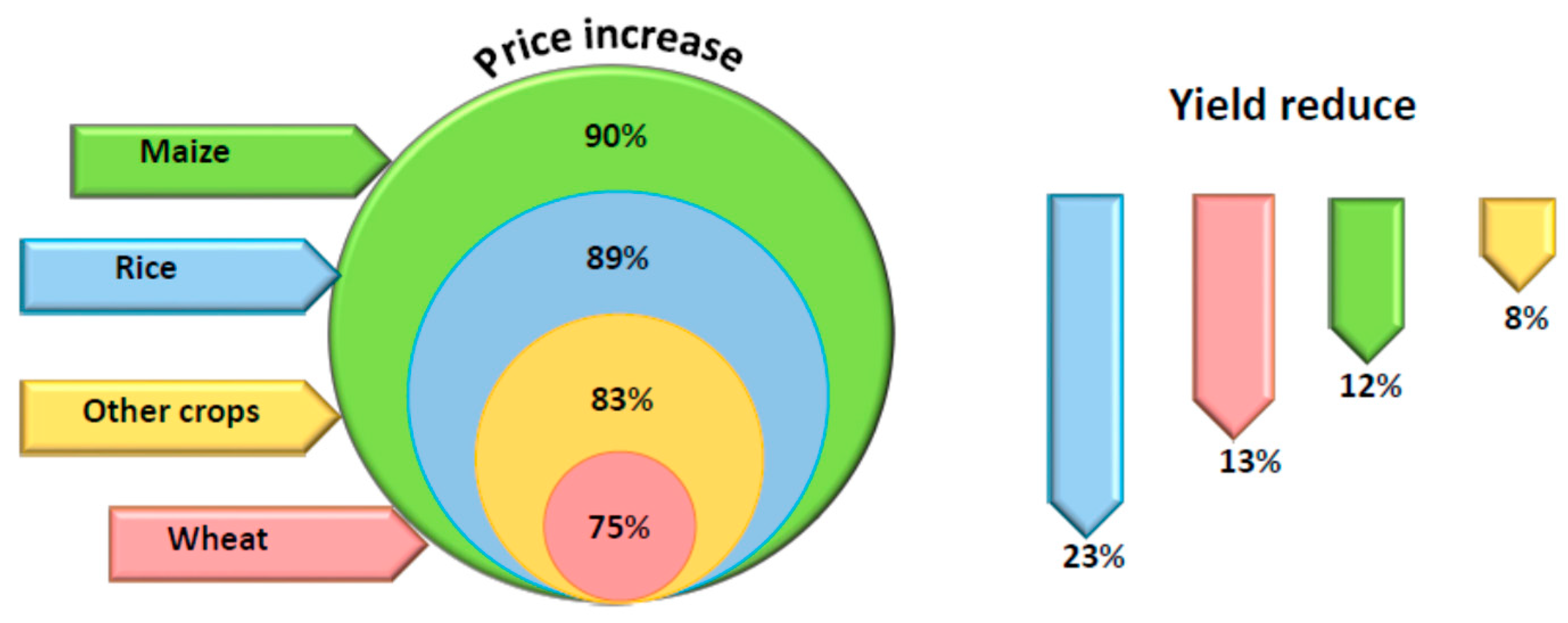
It is anticipated that climate change will have an impact on crop yields and complicate efforts to boost yields in many parts of the world. Higher temperatures will exacerbate drought stress and accelerate crop development, as well as increase agricultural yield variability and the likelihood of yield failures [40]. The temperate climate zone continues to shift towards higher latitudes due to global climate change, which affect the distribution of climate suitability of major crops in Asia like rice, cotton, wheat and maize.[10]. According to the research study [41] on the impact of climate change on cotton yield in the region of Xingiang, China, based on one-sided suitability assessments, leading to potential biases when optimizing cotton planting spatial distribution and adaptability. A spatial optimization framework, Geographical Information System (GIS) and Remote Sensing (RS) techniques, were used to accurately identify locations with ongoing land-use disputes to analyze extent of discrepancy between cotton suitability and planting zones under the influence of climate change. The findings show that the southern (19%), northern (4%), and eastern (1%) regions all have stable areas for the cultivation of cotton, suggesting that the southern region has a comparative advantage in climatic resources. The analysis of cotton planting zones in Xinjiang from 2000 to 2020 showed a decline in strong conflicts, from 60% to 33%.
According to the investigation [42], a well-established crop model to simulate the implications of climate change on crop yield is employed. Five simulated experiments for different cropping systems with/without straw mulching is conducted to assess water utilization in different distinct cropping systems, based on the projected future climates of 33 Global Climate Models (GCMs) under the RCP4.5 and RCP8.5 scenarios. Overall, the findings indicate that maize yield is expected to decline by 1.5-16.3% under future climate scenarios, regardless of the cropping system employed. Conversely, wheat yield is projected to increase by 2.8-5.6% under the RCP4.5_2040s, RCP4.5_2080s, and RCP8.5_2040s scenarios, but experience a decrease of approximately 5.3% under the RCP8.5_2080s scenario across all cropping systems. The investigation determined that the cropping system, one maturity per year consisting of early maize mono-cropping system with straw mulching during fallow period denoted as 2Y3MS1 represents the most optimal choice, as it effectively balances the overdraft of groundwater with crop yield. The Agricultural Production Systems sIMulator (APSIM) is utilized to simulate the cropping system [43].
A novel approach to predict the gross primary productivity of maize with drip irrigation in northwest China was studied using machine learning and deep learning [44]. Three distinct regression models viz., support vector regression (SVR), artificial neural network (ANN), and long short-term memory (LSTM) were tested and compared with traditional gross primary productivity (GPP) simulation model and the input data considered were photosynthetic active radiation, air temperature, humidity, soil water content, and leaf area index. ANN is an information-processing algorithm inspired by the human brain’s biological neurons. The performance of ANN and LSTM were more sensitive than SVR to parameter impact. SVR proves to be a commendable method for addressing regression problems with nonlinear relationships, as it has demonstrated favorable outcomes in various applications such as the simulation of evapotranspiration [19] and greenhouse gas emissions [40,44].
Figure 3.
Proposed climate change effects on crop yield and commodity price.
The food security of South Asia depends heavily on agriculture, as half of the world's malnourished people live in this region. In South Asia, agriculture occupies 56% of the total land area and employs more than 40% of the workforce. Rice adaptation requires an understanding of how the monsoon climate affects agricultural output outcomes, with several weather components accounting for yield variability in monsoon-dependent systems. The study [45] applied the data-driven machine learning techniques to better understand the relationship between rice production outcomes and climate variability in South Asian agricultural systems that rely on the monsoon. The results demonstrate that Random Forest (RF) machine learning model simulations provide new insights into non-linear crop-climate responses of rice production in India and variable interactions that would be difficult to identify in conventional parametric regression analyses.
An interesting research [46] was carried to identify the significant machine learning model that has less mean absolute error to predict the crop production based on the rainfall fall data. The study was carried for four states in India considering two crops for each. Regression techniques such as multiple linear, polynomial linear regression, support vector regression, decision tree regression, random forest regression, and XG- Booster method for prediction were compared with respect to the corresponding Absolute mean squared error. It is noticed that Random Forest regression model performed with less mean square error and considered the suitable model for crop prediction for this data set.
It is indisputable that the agricultural sector in Iran is exceedingly susceptible to climate change because of its substantial dependence on and susceptibility to climatic conditions, unfavorable geographical position, increasing poverty ratio, and high population scale. In the paper [47], the study is to uncover the consequences of climate change on both irrigated and rain-fed wheat yields in Iran, across various regions. The provinces were classified into two climate types based on the De Martonne Aridity Index and the Feasible Generalized Least Squares model was then implemented using data from 28 Iranian provinces spanning from 2001 to 2019. The findings of the index indicate that most provinces fall into the arid climate category and the rest of the provinces into the semi-arid. There are positive and negative effects on wheat yield, with variations observed across different regions. Both types of wheat have demonstrated adaptability to the effects of climate change in arid provinces not fully adapted to semi-arid provinces. However, both types of wheat yields have shown adaptability to carbon emissions. In arid provinces, there is an increase in the temperature coefficients for rain-fed wheat and decrease for irrigated wheat while the yield of irrigated wheat has not exhibited adaptability to changes in carbon emissions and precipitation levels.
Table 2.
A various scenario on impact of climate change vs crop yield.
| Case study country | Specific location |
Interest of study due to climate change event | Crop | Impact/Effect | Reference |
|---|---|---|---|---|---|
| China | Xingiang | Cotton suitability &Planting zones | Cotton | Declination of planting zones for suitability | [41] |
| North China Plain | Water utilization and different cropping system | Wheat, Maize | Increase in Wheat yield by 2.8% to 5.6% and decrease in maize yield by 1.5% to 16.3% | [42] | |
| Northwest China | Gross primary production with Drip Irrigation. | Maize | GPP performance is valid with less error by SVR | [44] | |
| India | 313 districts of 20 states | Crop yield adaptability to temperature and precipitation changes | Rice, Wheat and Maize | adaptation to the increase in temperature for rice and maize productivity. Increasing precipitations enhances rice yield but affects maize and wheat productivity. | [48] |
| 71 administrative districts in the four states | Rice production variability | Rice | Anomaly variation in both rice yield (33%) and area harvested (35%). | [46] | |
| Four districts | Rainfall, Nonlinear crop climate condition | Rice | Increase in rice production | [46] | |
| Iran | 28 Iranian Provinces | Irrigated and rainfed yield adaptability in arid climate category | Wheat | Crop yield is not adapted to the temperature and precipitation level impacts but adapted to carbon emission | [47] |
| Irrigated and rainfed yield adaptability in semi-arid climate category | Wheat | crop yield is not adapted to temperature fluctuations, but irrigated yield is not even adapted to changes in both carbon emissions and precipitation |
6. Mapping Groundwater Potential with Machine Learning
Mapping groundwater potential zones is essential for identifying areas with high potential for sustainable groundwater development and management. This article [49] aims to review parameters, model techniques, validation methods in groundwater potential field. According to statistics, there are three major model groups used to establish groundwater potential maps. The first model group is a statistical group, including multi-criteria decision making/analytic hierarchy process, frequency ratio, evidence belief function, and weights of evidence. The second model group includes machine learning models, such as random forest, logistic regression, boosted regression tree, and support vector machine. The final group is the hybrid/ensemble models. In groundwater potential mapping studies, 41 thematic layers affect the potential of groundwater. However, hydrological researchers have frequently used eight factors in groundwater potential studies: geology, slope, land use, soil type, drainage density, lineament density, altitude, rainfall. Most previous studies on groundwater potential have used a combination of geographic information system, remote sensing, and machine learning techniques to design the groundwater potential in regions of interest. Data sources are commonly applied to groundwater potential mapping, including satellite, boreholes, and geophysical data. The accuracy of groundwater potential maps produced by common machine learning models ranges from 50.0% to 90.1%, while that produced by common statistical models ranges between 59.0% and 90.3%. Interestingly, hybrid/ensemble models’ accuracy interval ranges from 71.0% to 92.0%. Therefore, the review suggests that statistical algorithms and machine learning techniques should be combined, and thematic layers should be increasingly used in mapping groundwater potential maps to achieve high efficiency.
The selection of hyper parameters plays a vital role in the performance of the high computational machine learning based solutions for effective groundwater management. The optimisation of hyperparameters is a complex process that often requires application-specific expertise for a skilful prediction. The research study [16] introduced an innovative approach by introducing the automated machine learning (AutoML-GWL) framework effortlessly incorporates the choice of the most superior machine learning model and skillfully adjusts its hyperparameters through the utilization of Bayesian optimization. The input data used in the AutoML-GWL model is a long time series (1997-2018) data of precipitation, temperature, evaporation, soil type, relative humidity, and lag of groundwater level while considering the influence of Land Use Land Cover (LULC) as a contextual factor. Within the model framework, sixteen widely used benchmark algorithms for monitoring and predicting groundwater levels were compared. The benchmark algorithms encompassed both conventional baseline machine learning models such as RF, Boosting EL, BDT, GAM, GRNN, LR, ANN, SVR, RBNN, KR, and LSTM, as well as novel hybrid machine learning models [18,50,51]. The results revealed that AutoML-GWL outperformed all the benchmark algorithms, achieving the highest correlation coefficient (R =0.90) and the lowest error (RMSE = 1.22). Consequently, SVR with lowest bias and KR with lowest correlation coefficient indicate their incapacity to precisely depict the groundwater level. Hence, the findings highlighted that AutoML-GWL is a highly effective approach for groundwater level prediction, surpassing traditional benchmark algorithms and novel hybrid models.
The interesting idea behind this study[52], is the application of ground water potential mapping (GPM) for the prediction of groundwater that provides the valuable information of groundwater volume which can be drawn from the aquifer without affecting the environmental conditions. The research region is the Southern regions of Yin Chuan Plain, China where the yellow river enters. The GPM was explored by adding three factors precipitation (PRE), evaporation (EVA), and ground surface temperature (GST) with total of 23 conditional groundwater factors and three ensemble learning models are used for the modelling process: random forest (RF), eXtreme Gradient Boosting (XGBoost), and light gradient-boosting machine (LightGBM).
7. Machine Learning Models on Groundwater Level, Crop Yield Prediction Due to Climate Change
Machine Learning models play an inevitable role in variety of applications to climate change effects on various agro farm factors. The literature on the application of machine learning (ML) in groundwater levels (GWL), climate change and crop yield explores diverse innovative methodologies and models, providing valuable insights to their respective domains.
a. Evapotranspiration (ET): It is the process of transferring water from the land to the atmosphere, encompassing both soil evaporation and transpiration from the crop canopy [53,54]. To address the intricacies of evapotranspiration estimation for irrigation in region of China, the study [53] introduces the Deep Neural Networks (DNN) as a standalone model where the stacking method was applied to integrate it with data-driven models such as Additive regression (AR), Random Forest (RF), Random Subspace (RSS), M5 Burned Tree (M5P) and Reduced Error Pruning Tree (REPTree). This model adeptly tackles data scarcity challenges, offering crucial long-term predictions of Actual ET (AET) that is vital for effective water resources management.
b. Groundwater Flooding: The research study [55] introduces a robust methodology employing Spatial Distribution Models and Ensemble Models to evaluate Groundwater Flooding Susceptibility (GFS), serving as a valuable tool for local authorities managing groundwater flooding risk in areas impacted by rising groundwater levels. A spatial flood modelling and mapping serves as an alternative method to anticipate the spatial distribution and the intensity of flooding in regions that lack hydrological and hydraulic data. To evaluate the accuracy of flood inundation, a novel hybridized model, neural network and swarm intelligence-grey wolf algorithm (ANN-SGW) [56] was developed and assessed using statistical evaluation metrics. In addition, the performance of this model was compared to four benchmark machine learning models: random forest (RF), logistic model tree (LMT), classification and regression trees (CART), and J48 decision tree (J48DT). The research was conducted in Sari city, which is situated in Northern Iran. Remarkably, the ANN-SGW model exhibited superior predictive capabilities, surpassing the performance of all four benchmark models that were tested. Consequently, it is recommended that local and regional municipality agencies utilize the presented ANN-SGW model to identify flood-prone areas and effectively plan for future flood events.
Figure 3.
Different Predictive Machine Learning algorithms.
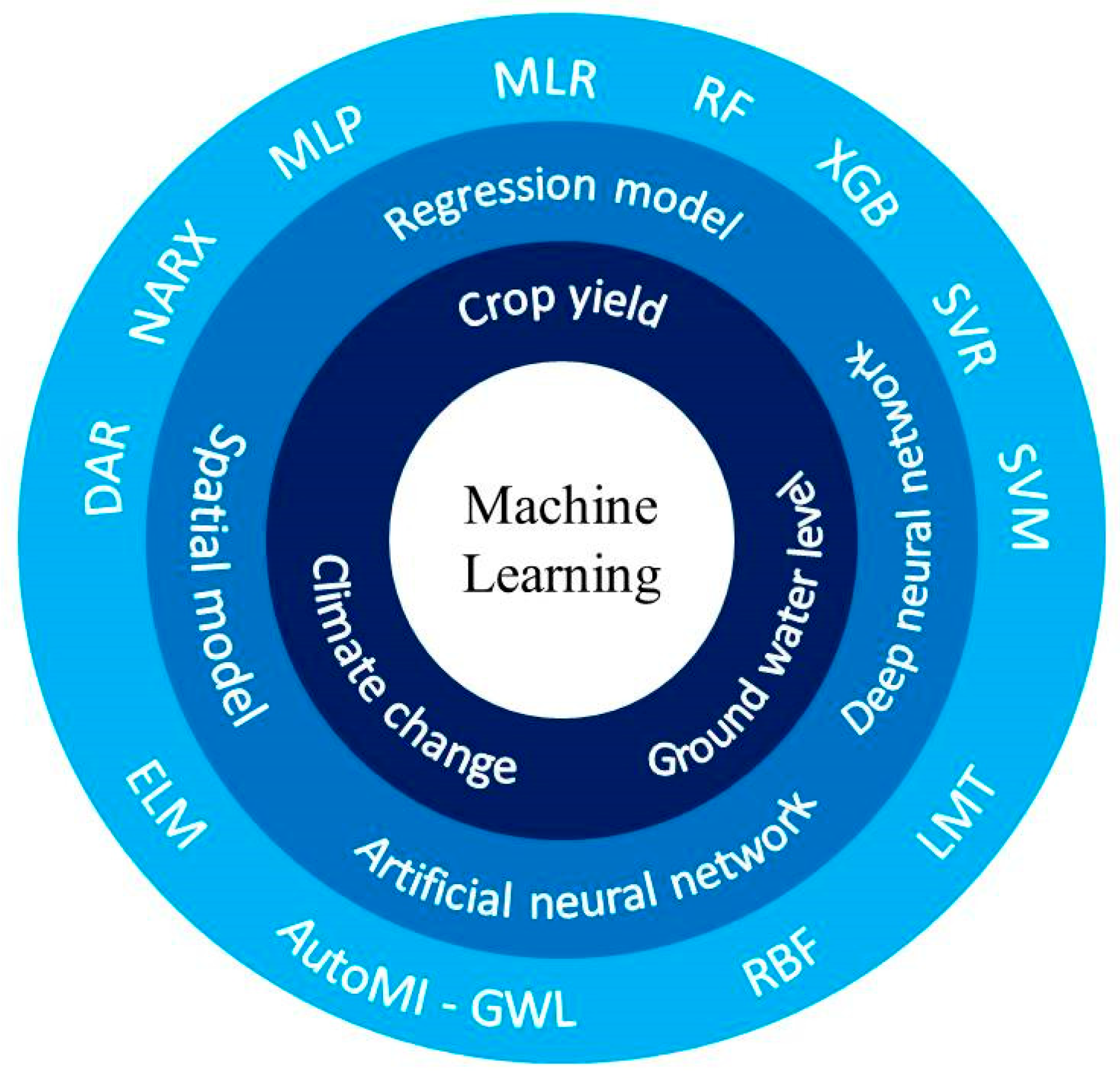
c. Groundwater Potentiality: According to research [57], Bangladesh's major rivers run along the high ground water potential {GWP) zones in the country's southern and central regions. To provide extremely reliable groundwater potentiality mapping, three traditional standalone machine learning techniques such as logistic model tree (LMT), logistic regression (LR), and artificial neural network (ANN) have been merged with a stacking ensemble framework. The objective of the current study [58], is to determine the GWP zones by means of an ensemble modeling approach that incorporates advanced machine learning algorithms such as Random Forest (RF), Radial Basis Function (RBFnn), and Artificial Neural Network (ANN). Additionally, set theories like union and intersection-based modeling will be utilized, along with 15 proxy conditioning parameters, to develop a sustainable water resource management plan. The study focuses on the Tangon river basin of the Barind tract in Eastern India and Bangladesh, which is afflicted by water scarcity. The current study has effectively determined that 32% of the lower catchment area, situated near rivers, possesses the potential to acquire groundwater. The groundwater potential mapping (GPM) in the Yinchuan Plain in China, employing ensemble learning models and underscoring the crucial role of climate factors in GPM for arid regions was studied in [9].
d. Groundwater Management: Introducing an innovative AutoML-GWL framework utilizing Bayesian optimization for hyperparameter tuning, the paper showcases superior performance in groundwater management practices, furnishing accurate information crucial for sustainable water resource management [16]. The initial demonstration of the practical advantages of utilizing machine learning models to address the various significant challenges associated with groundwater modeling has been accomplished in [59].
e. Gross Primary Productivity: The gross primary productivity (GPP) reflects the ability of plants to absorb carbon dioxide from the atmosphere. For evaluating machine learning models against traditional physical models for predicting GPP of maize in northwest China, SVM made a superior performance than other models emphasizing the potential of machine learning in advancing predictions [7]. The machine learning model also outperformed the traditional physical models on cloudy days and after irrigation.
f. Groundwater Fluctuations: The study comprehensively evaluates climate change impacts on groundwater fluctuations in the Ardabil plain, Iran, utilizing machine learning models driven by downscaled Global Climate Model outputs, indicating potential temperature increases and precipitation decreases [8].
g. Nitrate Uptake by Maize: In [60], the effectiveness of convolutional neural networks (CNN) in representing the process of nitrate absorption by maize and estimating the quantity of nitrate lost via surface drip irrigation in three soils with varying textures were studied. To achieve this objective, CNN was trained using the outcomes obtained from the simulation model HYDRUS-2D. Diverse combinations of factors that impact the daily uptake of nitrate such as potential crop evapotranspiration, irrigation water, and the quantity of injected fertilizer were examined as inputs for the model. In [10], the five innovative hybrid algorithms: Ant, Firefly, MOE, GWO, and Particle Swarm Optimization (PSO) were integrated with the random forest (RF) algorithm for the purpose of mapping groundwater nitrate concentrations in the coastal multi-aquifers of the Mekong Delta.
h. Daily Reference Crop Evapotranspiration (Eto): The crop ETo can be accurately determined using the internationally accepted FAO Penman–Monteith (FAO-56 PM) equation. However, this requires numerous observed data, including solar radiation, air temperature, relative humidity, and wind speed, which in most cases are unavailable, particularly in developing countries such as the Philippines. This research showcases the effectiveness of Support Vector Machines (SVM) and Extreme Learning Machines (ELM) in accurately estimating daily reference crop evapotranspiration (ETo) in Region IV-A, Philippines, with implications for efficient water resource management [19].
8. Conclusions
This article presents an overview of existing research on the impact of climate change on groundwater level and crop yield using machine learning models. It considers the effect of climate change due to various factors on groundwater level and crop yield separately and together with Machine learning. It addresses the various prediction models for groundwater level changes, crop production and crop pattern.
It is needed to validate our approach, as validation in research is critical. The data for this work was collected using Scopus, Science direct and PubMed. The search keywords were carefully used to extract suitable papers for the review. In fact, the study demonstrated how climate change effect the groundwater level, crop yield prediction, and both by the emerging novel approach based on the data sets using Machine learning techniques. This method overperformed in the predictive analysis better than the conventional method of data driven statistical methods and time series analysis.
After thorough research and analysis of the existing literature, the authors provided a comprehensive set of multi-faceted recommendations for choosing the effective ML models for the prediction of ground water level and crop yield in Asian countries under different climatic conditions, crop management system, cropping patterns, evapotranspiration rate, groundwater fluctuations and management and nitrate intake. It is perceived that the SVR model is the most common model for predicting crop yield with respect to the effect of climate change and cropping system. The Random Forest model performed well when compared with conventional parametric regression analysis. It is inevitable that out of all the regression models used in this paper, the XGB regression is the most reliable model with more prediction accuracy for future prediction of groundwater level. Machine learning models lead to a more accurate outcome than ANN and DNN. The comprehensive model APSIM with its highly advanced platform for modelling and simulation of agricultural systems showed a significant work in finding the most optimal choice of cropping system that balances the overdraft of groundwater with high crop yield.
The authors evidenced that different machine learning and artificial Intelligence methods have their own capabilities and shortcomings in modeling depending upon the input variability and characteristics chosen for the research study. Hence, it is challenging to suggest a particular prediction model for a specific issue, such as predicting GWL oscillations and high yield crop variety. Further investigation is necessary for exploring the effects of climate change on the spatiotemporal variability of groundwater quality as well as expediting climate-resilient enhancement of crops through the utilization of AI techniques.
Acknowledgments
The author1,2 greatly acknowledge the Global Centre for Environmental Remediation (GCER), College of Engineering, Science & Environment, ATC Building, The University of Newcastle, Callaghan, NSW-2308, Australia for providing research facilities and thankful to Tamil Nadu Agricultural University, Coimbatore, Tamil Nadu, India for extending support under GoI-ICAR-NAHEP-IDP for International Training Program.
References
- Shrestha, S.; Hoang, N.A.T.; Shrestha, P.K.; Bhatta, B. Climate change impact on groundwater recharge and suggested adaptation strategies for selected Asian cities. APN Sci. Bull. 2018, 8. [Google Scholar] [CrossRef]
- Chinnasamy, P., M. Hsu, and A. Govindasamy, Satellite-Based Analysis of Groundwater Storage and Depletion Trends Implicating Climate Change in South Asia: Need for Groundwater Security. 2022. p. 17-26.
- Ahmad, B.; Nadeem, M.U.; Liu, T.; Asif, M.; Rizvi, F.F.; Kamran, A.; Virk, Z.T.; Jamil, M.K.; Mustafa, N.; Saeed, S.; et al. Climate Change Impact on Groundwater-Based Livelihood in Soan River Basin of Pakistan (South Asia) Based on the Perception of Local Farmers. Water 2023, 15, 1287. [Google Scholar] [CrossRef]
- Sharan, A.; Lal, A.; Datta, B. Evaluating the impacts of climate change and water over-abstraction on groundwater resources in Pacific island country of Tonga. Groundw. Sustain. Dev. 2023, 20. [Google Scholar] [CrossRef]
- Sharan, A.; Lal, A.; Datta, B. A review of groundwater sustainability crisis in the Pacific Island countries: Challenges and solutions. J. Hydrol. 2021, 603, 127165. [Google Scholar] [CrossRef]
- Harrison, M.T. Climate change benefits negated by extreme heat. Nat. Food 2021, 2, 855–856. [Google Scholar] [CrossRef]
- Langworthy, A.D.; Rawnsley, R.P.; Freeman, M.J.; Pembleton, K.G.; Corkrey, R.; Harrison, M.T.; Lane, P.A.; Henry, D.A. Potential of summer-active temperate (C3) perennial forages to mitigate the detrimental effects of supraoptimal temperatures on summer home-grown feed production in south-eastern Australian dairying regions. Crop. Pasture Sci. 2018, 69, 808–820. [Google Scholar] [CrossRef]
- Li, L.; Zhang, Y.; Wang, B.; Feng, P.; He, Q.; Shi, Y.; Liu, K.; Harrison, M.T.; Liu, D.L.; Yao, N.; et al. Integrating machine learning and environmental variables to constrain uncertainty in crop yield change projections under climate change. Eur. J. Agron. 2023, 149. [Google Scholar] [CrossRef]
- Davamani, V.; Parameswari, E.; Arulmani, S. Mitigation of methane gas emissions in flooded paddy soil through the utilization of methanotrophs. Sci. Total. Environ. 2020, 726, 138570. [Google Scholar] [CrossRef]
- Davamani, V.; et al. Mitigation of nitrous oxide emission through fertigation and ‘N’ inhibitors – A sustainable climatic crop cultivation in tomato. Sci. Total Environ. 2022, 813, 152419. [Google Scholar] [CrossRef]
- Change, I.C. , Land: An IPCC Special Report on Climate Change, in Desertification, Land Degradation, Sustainable Land Management, Food Security, and Greenhouse Gas Fluxes in Terrestrial Ecosystems. 2019.
- Ahmed, A.M.; Deo, R.C.; Feng, Q.; Ghahramani, A.; Raj, N.; Yin, Z.; Yang, L. Deep learning hybrid model with Boruta-Random forest optimiser algorithm for streamflow forecasting with climate mode indices, rainfall, and periodicity. J. Hydrol. 2021, 599. [Google Scholar] [CrossRef]
- Mohapatra, J.B.; Jha, P.; Jha, M.K.; Biswal, S. Efficacy of machine learning techniques in predicting groundwater fluctuations in agro-ecological zones of India. Sci. Total. Environ. 2021, 785, 147319. [Google Scholar] [CrossRef]
- Pham, Q.B.; Tran, D.A.; Ha, N.T.; Islam, A.R.M.T.; Salam, R. Random forest and nature-inspired algorithms for mapping groundwater nitrate concentration in a coastal multi-layer aquifer system. J. Clean. Prod. 2022, 343, 130900. [Google Scholar] [CrossRef]
- Salem, G.S.A.; Kazama, S.; Shahid, S.; Dey, N.C. Impacts of climate change on groundwater level and irrigation cost in a groundwater dependent irrigated region. Agric. Water Manag. 2018, 208, 33–42. [Google Scholar] [CrossRef]
- Singh, A.; et al. AutoML-GWL: Automated machine learning model for the prediction of groundwater level. Eng. Appl. Artif. Intell. 2024, 127, 107405. [Google Scholar] [CrossRef]
- Susilo, G.E.; Yamamoto, K.; Imai, T. Modeling Groundwater Level Fluctuation in the Tropical Peatland Areas under the Effect of El Nino. Procedia Environ. Sci. 2013, 17, 119–128. [Google Scholar] [CrossRef]
- Tao, H.; Hameed, M.M.; Marhoon, H.A.; Zounemat-Kermani, M.; Heddam, S.; Kim, S.; Sulaiman, S.O.; Tan, M.L.; Sa’adi, Z.; Mehr, A.D.; et al. Groundwater level prediction using machine learning models: A comprehensive review. Neurocomputing 2022, 489, 271–308. [Google Scholar] [CrossRef]
- Tejada, A.T., Jr.; et al. Modeling reference crop evapotranspiration using support vector machine (SVM) and extreme learning machine (ELM) in region IV-A, Philippines. Water 2022, 14, 754. [Google Scholar] [CrossRef]
- Thomas, D. A review of crop yield prediction based on Indian agriculture sector using machine learning. AIP Conf. Proc. 2023, 2773, 020002. [Google Scholar]
- Wang, J.; Shen, Y.; Awange, J.L.; Yang, L. A deep learning model for reconstructing centenary water storage changes in the Yangtze River Basin. Sci. Total. Environ. 2023, 905, 167030. [Google Scholar] [CrossRef]
- Zhang, S.; Jia, H.; Wang, C.; Wang, X.; He, S.; Jiang, P. Deep-learning-based landslide early warning method for loose deposits slope coupled with groundwater and rainfall monitoring. Comput. Geotech. 2024, 165. [Google Scholar] [CrossRef]
- Yang, Q.; Shi, L.; Han, J.; Zha, Y.; Zhu, P. Deep convolutional neural networks for rice grain yield estimation at the ripening stage using UAV-based remotely sensed images. Field Crop. Res. 2019, 235, 142–153. [Google Scholar] [CrossRef]
- You, J.; Li, X.; Low, M.; Lobell, D.; Ermon, S. Deep Gaussian Process for Crop Yield Prediction Based on Remote Sensing Data. Proc. AAAI Conf. Artif. Intell. 2017, 31. [Google Scholar] [CrossRef]
- Cao, J.; Zhang, Z.; Luo, Y.; Zhang, L.; Zhang, J.; Li, Z.; Tao, F. Wheat yield predictions at a county and field scale with deep learning, machine learning, and google earth engine. Eur. J. Agron. 2020, 123, 126204. [Google Scholar] [CrossRef]
- IPCC, IPCC 2014 Sixth Assessment Report : Impacts, Adaptation and Vulnerability :Chapter 10 - ASIA 2014.
- UNESCO, The United Nations World Water Development Report 2022: groundwater: making the invisible visible; facts and figures.
- Taylor, R.G.; Scanlon, B.; Döll, P.; Rodell, M.; Van Beek, R.; Wada, Y.; Longuevergne, L.; Leblanc, M.; Famiglietti, J.S.; Edmunds, M.; et al. Ground water and climate change. Nat. Clim. Chang. 2013, 3, 322–329. [Google Scholar] [CrossRef]
- Farajzadeh, Z.; Ghorbanian, E.; Tarazkar, M.H. The impact of climate change on economic growth: Evidence from a panel of Asian countries. Environ. Dev. 2023, 47. [Google Scholar] [CrossRef]
- Wilson, A.M.; Gladfelter, S.; Williams, M.W.; Shahi, S.; Baral, P.; Armstrong, R.; Racoviteanu, A. High Asia: The International Dynamics of Climate Change and Water Security. J. Asian Stud. 2017, 76, 457–480. [Google Scholar] [CrossRef]
- Eckstein, D. , et al., Global climate risk index 2020. Bonn: Germanwatch, 2019: p. 1-50.
- Nicholls, R.J.; Lincke, D.; Hinkel, J.; Brown, S.; Vafeidis, A.T.; Meyssignac, B.; Hanson, S.E.; Merkens, J.-L.; Fang, J. A global analysis of subsidence, relative sea-level change and coastal flood exposure. Nat. Clim. Chang. 2021, 11, 338–342. [Google Scholar] [CrossRef]
- Lal, A.; Datta, B. Multi-objective groundwater management strategy under uncertainties for sustainable control of saltwater intrusion: Solution for an island country in the South Pacific. J. Environ. Manag. 2019, 234, 115–130. [Google Scholar] [CrossRef]
- Zeb, H.; Yaqub, A.; Ajab, H.; Zeb, I.; Khan, I. Effect of Climate Change and Human Activities on Surface and Ground Water Quality in Major Cities of Pakistan. Water 2023, 15, 2693. [Google Scholar] [CrossRef]
- Shaabani, M.K.; Abedi-Koupai, J.; Eslamian, S.S.; Gohari, S.A.R. Simulation of the effects of climate change, crop pattern change, and developing irrigation systems on the groundwater resources by SWAT, WEAP and MODFLOW models: a case study of Fars province, Iran. Environ. Dev. Sustain. 2023, 1–27. [Google Scholar] [CrossRef]
- Goodarzi, M.; Abedi-Koupai, J.; Heidarpour, M. Investigating Impacts of Climate Change on Irrigation Water Demands and Its Resulting Consequences on Groundwater Using CMIP5 Models. Groundwater 2018, 57, 259–268. [Google Scholar] [CrossRef]
- Cetin, M. The changing of important factors in the landscape planning occur due to global climate change in temperature, Rain and climate types: A case study of Mersin City. Turk. J. Agric. -Food Sci. Technol. 2020, 8, 2695–2701. [Google Scholar]
- Dey, B.; Abir, K.A.M.; Ahmed, R.; Salam, M.A.; Redowan, M.; Miah, D.; Iqbal, M.A. Monitoring groundwater potential dynamics of north-eastern Bengal Basin in Bangladesh using AHP-Machine learning approaches. Ecol. Indic. 2023, 154. [Google Scholar] [CrossRef]
- Mahammad, S.; Islam, A.; Shit, P.K.; Islam, A.R.M.T.; Alam, E. Groundwater level dynamics in a subtropical fan delta region and its future prediction using machine learning tools: Sustainable groundwater restoration. J. Hydrol. Reg. Stud. 2023, 47. [Google Scholar] [CrossRef]
- Saxena, R. , et al., The role of artificial intelligence strategies to mitigate abiotic stress and climate change in crop production, in Visualization Techniques for Climate Change with Machine Learning and Artificial Intelligence. 2023, Elsevier. p. 273-293.
- Zhu, Y.; Sun, L.; Luo, Q.; Chen, H.; Yang, Y. Spatial optimization of cotton cultivation in Xinjiang: A climate change perspective. Int. J. Appl. Earth Obs. Geoinf. 2023, 124. [Google Scholar] [CrossRef]
- Xiao, D.; Liu, D.L.; Feng, P.; Wang, B.; Waters, C.; Shen, Y.; Qi, Y.; Bai, H.; Tang, J. Future climate change impacts on grain yield and groundwater use under different cropping systems in the North China Plain. Agric. Water Manag. 2020, 246, 106685. [Google Scholar] [CrossRef]
- O'Leary, G.J.; Liu, D.L.; Ma, Y.; Li, F.Y.; McCaskill, M.; Conyers, M.; Dalal, R.; Reeves, S.; Page, K.; Dang, Y.P.; et al. Modelling soil organic carbon 1. Performance of APSIM crop and pasture modules against long-term experimental data. Geoderma 2016, 264, 227–237. [Google Scholar] [CrossRef]
- Guo, H.; Zhou, X.; Dong, Y.; Wang, Y.; Li, S. On the use of machine learning methods to improve the estimation of gross primary productivity of maize field with drip irrigation. Ecol. Model. 2023, 476. [Google Scholar] [CrossRef]
- Bowden, C.; Foster, T.; Parkes, B. Identifying links between monsoon variability and rice production in India through machine learning. Sci. Rep. 2023, 13, 1–12. [Google Scholar] [CrossRef] [PubMed]
- Antony, B. Prediction of the production of crops with respect to rainfall. Environ. Res. 2021, 202, 111624. [Google Scholar] [CrossRef] [PubMed]
- Pakrooh, P.; Kamal, M.A. Modeling the potential impacts of climate change on wheat yield in Iran: Evidence from national and provincial data analysis. Ecol. Model. 2023, 486. [Google Scholar] [CrossRef]
- Khanna, S.K.a.M. , Distributional heterogeneity in climate change impacts and adaptation: Evidence from Indian agriculture 2023: p. 1-47.
- Thanh, N.N.; Thunyawatcharakul, P.; Ngu, N.H.; Chotpantarat, S. Global review of groundwater potential models in the last decade: Parameters, model techniques, and validation. J. Hydrol. 2022, 614. [Google Scholar] [CrossRef]
- Kalu, I.; Ndehedehe, C.E.; Okwuashi, O.; Eyoh, A.E.; Ferreira, V.G. A new modelling framework to assess changes in groundwater level. J. Hydrol. Reg. Stud. 2022, 43. [Google Scholar] [CrossRef]
- Nourani, V.; Tapeh, A.H.G.; Khodkar, K.; Huang, J.J. Assessing long-term climate change impact on spatiotemporal changes of groundwater level using autoregressive-based and ensemble machine learning models. J. Environ. Manag. 2023, 336, 117653. [Google Scholar] [CrossRef]
- Guo, X.; Gui, X.; Xiong, H.; Hu, X.; Li, Y.; Cui, H.; Qiu, Y.; Ma, C. Critical role of climate factors for groundwater potential mapping in arid regions: Insights from random forest, XGBoost, and LightGBM algorithms. J. Hydrol. 2023, 621. [Google Scholar] [CrossRef]
- Elbeltagi, A.; Srivastava, A.; Li, P.; Jiang, J.; Jinsong, D.; Rajput, J.; Khadke, L.; Awad, A. Forecasting actual evapotranspiration without climate data based on stacked integration of DNN and meta-heuristic models across China from 1958 to 2021. J. Environ. Manag. 2023, 345, 118697. [Google Scholar] [CrossRef]
- Roy, D.K.; Lal, A.; Sarker, K.K.; Saha, K.K.; Datta, B. Optimization algorithms as training approaches for prediction of reference evapotranspiration using adaptive neuro fuzzy inference system. Agric. Water Manag. 2021, 255, 107003. [Google Scholar] [CrossRef]
- Allocca, V.; Di Napoli, M.; Coda, S.; Carotenuto, F.; Calcaterra, D.; Di Martire, D.; De Vita, P. A novel methodology for Groundwater Flooding Susceptibility assessment through Machine Learning techniques in a mixed-land use aquifer. Sci. Total. Environ. 2021, 790, 148067. [Google Scholar] [CrossRef] [PubMed]
- Darabi, H.; Haghighi, A.T.; Rahmati, O.; Shahrood, A.J.; Rouzbeh, S.; Pradhan, B.; Bui, D.T. A hybridized model based on neural network and swarm intelligence-grey wolf algorithm for spatial prediction of urban flood-inundation. J. Hydrol. 2021, 603, 126854. [Google Scholar] [CrossRef]
- Pal, S.; Kundu, S.; Mahato, S. Groundwater potential zones for sustainable management plans in a river basin of India and Bangladesh. J. Clean. Prod. 2020, 257, 120311. [Google Scholar] [CrossRef]
- Sarkar, S.K. , et al., A national-level study on groundwater potentiality mapping using a hybrid machine learning models under the scenario of climate change. 2022, Research Square.
- Lal, A., R. Naidu, and B. Datta, Applications of Machine Learning Models for Solving Complex Groundwater Modelling, Monitoring and Management Problems, in Groundwater in Arid and Semi-Arid Areas: Monitoring, Assessment, Modelling, and Management, S. Ali and A.M. Armanuos, Editors. 2023, Springer Nature Switzerland: Cham. p. 177-196.
- Azad, N.; Behmanesh, J.; Rezaverdinejad, V.; Khodaverdiloo, H.; Thompson, S.E.; Mallants, D.; Ramos, T.B.; He, H. CNN deep learning performance in estimating nitrate uptake by maize and root zone losses under surface drip irrigation. J. Hydrol. 2023, 625. [Google Scholar] [CrossRef]
Disclaimer/Publisher’s Note: The statements, opinions and data contained in all publications are solely those of the individual author(s) and contributor(s) and not of MDPI and/or the editor(s). MDPI and/or the editor(s) disclaim responsibility for any injury to people or property resulting from any ideas, methods, instructions or products referred to in the content. |
© 2023 by the authors. Licensee MDPI, Basel, Switzerland. This article is an open access article distributed under the terms and conditions of the Creative Commons Attribution (CC BY) license (http://creativecommons.org/licenses/by/4.0/).
Copyright: This open access article is published under a Creative Commons CC BY 4.0 license, which permit the free download, distribution, and reuse, provided that the author and preprint are cited in any reuse.


