

Submitted:
15 December 2023
Posted:
18 December 2023
You are already at the latest version
Abstract
The main development direction of energy efficiency technologies in construction is the creation of various materials with a complex structure and unique strength, thermal and other properties. The aerogel is a material with high porosity and excellent thermal insulation properties. This paper provides the state-of-the-art of aerogel applications for the additive manufacturing of energy efficient buildings. This work provides the experimental and numerical assessment results of thermal conductivity of aerogel-enhanced blanket, the experimental assessment results of thermal performance of aerogel-enhanced building structure, the experimental assessment results of the aerogel application as mixture powder component of the concrete mixture to printing building and the experimental assessment results of the aerogel application as parget powder component. Experimental results show the effect of aerogel powder component application: thermal conductivity decreased by 25%.
Keywords:
aerogel
; thermal performance
; additive building structure
; thermal conductivity
; energy efficiency
1. Introduction
Additive building manufacturing is a process of building parts that is based on creating a physical object from an electronic model by adding material, typically layer by layer. Additive technologies are widely used in the construction of buildings and structures [1].
A significant part of the world’s energy consumption is spent on building maintenance. Therefore, the energy-efficiency of the buildings has become a key priority for solving energy-saving issues. Additive technology allows improving the quality and reliability of a construction structure by excluding human errors, significantly reducing the cost of constructing buildings with unique architecture [2,3]. The thermal properties of 3D printing enclosing structures have a significant impact on the energy efficiency of buildings. The research of thermal behavior and the development of solutions for increasing the energy efficiency of enclosing structures created using additive technologies are necessary for reducing energy costs consumed for heating and cooling of buildings and improving the quality of the buildings’ internal environment [4].
The buildings envelope constructed by additive technology are classified according to the purpose, the character of static work, the homogeneity of the material, the placement of insulation in the cavities of the structure, the sequence of insulation placement, the material, reinforcement, and the presence of a rigidity diaphragm [5].
According to the purpose, structures are divided into external ones that protect the premises from natural climatic conditions and internal ones that meet the constructive and ecological, sanitary, and hygienic operational, aesthetic, and economic requirements of the object. According to the character of static work, the structures can be classified as load bearing, self-supporting, and non-load bearing, performing the role of partitions in the room. The additive building structure can be classified as homogeneous (made of one material) and non-homogeneous (composed of several materials). Non-homogeneous walls can have partial filling and consist not only of one material but also can have closed air cavities. The enclosing structure can be divided into a frame and inner filling.
The thermal insulation materials used for the additive exterior wall are polystyrene foam; extruded polystyrene foam; urethane foam; mineral wool; liquid thermal insulation; aerogel materials. The aerogel is rarely used as a thermal insulation material the additive building constructions [6].
An aerogel is a nano-porous insulation material that has unique properties—extremely low thermal conductivity, superior flexibility, compression resistance and the most promising superinsulation systems. The thermal conductivity of thermal insulation materials is one of the most important parameters to increase energy efficiency of the buildings. Aerogels consist of globules, several nanometers in size, interconnected by an extensive network of mesoporous, which are filled with air [7]. The pore size exceeds the size of the clusters themselves by ten or more times. The aerogel is a nanostructured material with high porosity and excellent thermal insulation properties [8,9]. A significant disadvantage is the high cost of manufacturing and application. Nevertheless, studies of thermophysical properties and properties of aerogel materials have been relevant research topics in the last few years. Testing and development of these insulation materials are very important for both manufacturers and designers. Therefore, studies of thermal properties are extremely important [8].
The applications aerogels can be used as aerogel granules, powder, and aerogel blankets (Figure 1).
Aerogel blankets are a based innovative insulation material based on silica aerogel produced from fiberglass (Figure 2).
The authors investigated the thermal properties of aerogel blankets [11]. The paper obtained the temperature dependence of the thermal conductivity of aerogel blanket samples in the range from 0 to 65 ° C and established a change of about 18%. The authors investigated a thermal conductivity, the effect of temperature on the change in specific heat from 0 to 65 °C. Based on the measured thermal conductivity and specific heat capacity, thermal conductivity, heat transfer is obtained. The results of the study showed that the thickness can have only a negligible effect on thermal conductivity.
The paper presents a theoretical and experimental study of the thermal conductivity of aerogel blanket. The authors presented a model that considers all the heat transfer mechanisms. The authors carried out an analytical calculation of the change in thermal conductivity depending on temperature; the model was verified with experimental data. Using the proposed model, parametric studies were carried out to study the effect of the total porosity and thermal conductivity of fibers on the effective thermal conductivity of aerogel blanket. [12]
The research reported the results of thermal conductivity behavior of aerogel-enhanced blankets. The authors presented comparative thermal characterization results of aerogel blankets and established the thermal conductivity as 0.013 W/ (m K). The authors developed and presented some new aerogel-enhanced blankets [13,14,15].
The authors present a study of two types of aerogel blanket: with a fiberglass web and with a polyethylene terephthalate fiber web. The results of calculations showed that aerogel coatings have low thermal conductivity (0.015 W m−1 K−1) and hydrophobic properties. [16]
The aerogel blanket has a wide range of applications in construction [17]:
- Insulation of building facades to reduce cold bridge and energy costs.
- Noise insulation of internal walls. The speed is up to 70 m/s (the minimum speed of sound propagation through the material), so it acts as a sound insulation system, and its minimum thickness allows increasing the saleable area.
- Insulation of internal walls. Due to the small thickness of the material, it is suitable for cladding any internal walls, partitions, corners, for local elimination of freezing, to prevent condensation, the appearance of mold.
- Thermal insulation of the floors.
- Insulation of window and door openings.
- Thermal insulation of saunas and baths.
- Thermal insulation of pipes etc.
Aerogel powder and granules also used as components of insulation solutions and building materials (Figure 3). Typically, concrete has a high thermal conductivity ranging from 1.7 to 2.5 W/ (m·K), therefore it requires insulation layers for standard insulating properties. Therefore, building mixtures and concrete with aerogel powder or granules are being developed, which ensure sufficient compressive strength and good thermal insulation. As the amount of aerogel in the mixture increases the thermal conductivity decreases linearly [18].
The experimental results of thermal performance of aerogel granules into the cavity of double-glazing units are presented in the study [19]. The results indicate that the particle size of the used aerogel granules influences the optical and thermal properties of the glazing unit. Compared to standard double glazing, double-glazed windows with large aerogel granules (particle size 3-5mm) achieve a 58% reduction in heat loss and a 38% decrease in light transmittance. For a glazing unit with aerogel granules (particle size <0.5mm), the reduction amounts to 63% in terms of heat loss, but as much as 81% in terms of light transmittance.
The authors of this study have developed a synthesis method for silica powders and granules. The process involves the direct hydrophobization of silica aerogel in a diluted organic solution of trimethylchlorosilane, which acts as the phase separation inducer, followed by subsequent drying at atmospheric pressure. This approach allows for the collection and drying of gels at atmospheric pressure without the need for the solvent replacement phase typical in traditional methods. The silica aerogel in the form of powder and granules, obtained by the above method, has a specific surface area of up to 756.0 m2/g, thermal conductivity of up to 0.0164 W/(m·K), and a variable density from 47.6 to 120.0 mg/cm3. Overall, the proposed method represents a simple and economical technique to produce high-quality silica aerogel powders and granules. The obtained aerogels could be applicable in thermal insulation, environmental restoration, adsorption, and other areas [20,21].
In this study, the impact of aerogel granule size on the solar light transmittance coefficient was investigated. The energy characteristics of the glazing system with different sizes of aerogel granules and different filler thickness were evaluated under various climatic conditions. The study revealed that the use of aerogel granules with a diameter of 1 mm and a layer thickness of 16 mm can reduce heat losses by 22% when facing the horizon and by 10% when facing east or west in hot summer and cold winter conditions. The results also showed that the use of aerogel granules can reduce the heat increase by 17.36% throughout the year in climatic conditions with a hot summer and warm winter. It was also noted that changing the size of aerogel granules and the thickness of the filler does not make significant changes to the energy characteristics of the aerogel glazing system when facing north [22].
A literature review showed insufficient quantity of experimental and numerical data and research on the aerogel application for the additive manufacturing of energy efficient buildings. The goal of this study is experimental and numerical assessment on the thermal performance of aerogel-enhanced building structure.
This paper provides the state-of-the-art of aerogel applications for the additive manufacturing of energy efficient buildings.
2. Materials and Methods
2.1. The aerogel-enhanced blanket applications for thermal insulation building envelope
2.1.1. The experimental assessment of thermal conductivity of aerogel-enhanced blanket
This study provides determination of the thermal conductivity of the aerogel-based material and comparison of the obtained value with the value provided by the manufacturer. The samples of aerogel-enhanced blanket are shown at Figure 1.
The thermal conductivity of the aerogel samples was measured by the heat flow meter equipment PIT-2.1 (Russia) (Figure 4). To experimental assessment of thermal conductivity, the material Alison Aerogel Blanket of the DRT06 series (Team Company, St. Petersburg) was applied. The technical thermal conductivity of the material is λ=0.0220 W/ (m·K). The dimensions of the sample are 250 mm x 250 mm. The material technical thickness is 10 mm.
The actual thickness of the samples is differing from the declared information of the manufacturer. The actual thickness of the aerogel blanket was measured. Figure 5 shows the aerogel sample scheme of the thickness measuring points.
The estimation results of aerogel-blanket sample thickness are presented at Table 1.
To experimental assessment of aerogel-blanket sample thermal conductivity the thermal conductivity meter ITP-MG4 “250” (Manufacturer: STROYPRIBOR, Russian Federation) is applied. The average inside temperatures of the aerogel-blanket samples is equal to 10°C and 25°C. The experimental assessment results of aerogel-blanket sample thermal conductivity are presented at the Figure 6.
According to the experimental results the average thermal conductivity is equal to 0.0227 W/(m·K). The thermal conductivity differs from the manufacturing value (λ=0.0220 W/(m·K)) is 3%. The average thermal conductivity values from the results of the tests are presented in Table 2.
The thermal conductivity dependence from temperature is presented at Figure 7.
2.1.2. Experimental assessment of the thermal performance of aerogel blanket application in additive construction of energy-efficient buildings
Aerogel blankets are porous materials that have high thermal insulation properties. Aerogel blankets are promising materials for application in construction as insulation for walls, ceilings and floors, and ventilation systems. Aerogel blankets are also used for insulation of pipelines at industrial facilities, where, in addition to high thermal insulation, it is also required to resist chemical influences and humidity.
For the experimental assessment of the thermal performance of aerogel-enhanced building structures, samples are produced using additive technologies (Figure 8).
The sample measures are equal 390mm x 680mm x 310mm. To experimental assessment the rolled heat-insulating aerogel (Alison Aerogel Blanket of the DRT06-Z series) is applied. The rolled heat-insulating aerogel has a technical characteristic: the temperature range application is -170°С - 1000°С; the thermal conductivity is 0.020 W/(m·K); the thickness is 10 mm. The aerogel-blanket thermal insulation material is located inside of the additive structure as shown at Figure 9.
The outdoor temperature produced by climatic chamber TX-500 and equal to -24°C. The internal temperature produced by climatic chamber SM 5/100-500 and equal to +22°C. The internal space size of the climatic chamber TX-500 is equal to 700 mm x 1000 mm x 700 mm. The inner space size of the climatic chamber CM 5/100-500 is equal to 700 mm x 895 mm x 800 mm. The negative outside space of the additive structure is additionally insulated (Figure 10).
The dimensional parameters of aerogel-enhanced additive structure sample are equal 390mm×680mm×310mm. The sample has position between climate chambers. The hot climate chamber temperature is installed +22 ° C, the cold climate chamber temperature is installed -24 ° C. There was temperature variation in the chamber for 120 hours (7200 minutes). The temperature sensor’s points location shown at Figure 11:
- temperature sensor’s points AD1D3, AD3DЗ, АD4DЗ have a position at the outer surface sample from the cold chamber side.
- temperature sensor’s points АD1D2, АD3D2, AD4D2 have a position at the triangular cavities inside sample on the insulated surface.
- temperature sensor’s points AD5D2, AD6D2 have a position at the outer surface sample from the hot chamber side.
- temperature sensor’s points AD5D3, AD6D3 have a position at the triangular cavities inside sample on the not insulated surface.
2.2. The aerogel-enhanced application application as mixture powder component of the concrete mixture for printing building
Aerogel powder is usually used as an additive to various mixtures and materials to enhance their thermal insulation properties. For example, aerogel powder can be added to concrete, plasters, and composite materials, providing a high level of thermal insulation without a significant increase in mass. It is also widely used in the research field to create new materials with improved properties.
Experimental assessment of the aerogel application as mixture powder component of the concrete mixture to the insulating concrete properties had been produced in this work paragraph.
To experimental assessment of the aerogel application as mixture powder component the thermal conductivity assessment of the concrete samples with and without aerogel application had been provided.
To concreting the samples formwork with dimensions 25x25x3 cm had been applied. The volume of the sample V is equal (0,25)2⋅0.03=0.001875 m3=1.875 l. The following parameters had been used to create the concrete mix: 1 kg mixture consumption per 0.14 liters is equal 140 ml (g) water, the volumetric flow rate of the mixture is assumed 19.5 kg per 0.01 m3 is equal 10 l.
The mixture parameters of concrete samples without aerogel are presented in Table 3.
The mixture parameters of concrete samples with aerogel 15% are presented in Table 4.
To measure the thermal resistance coefficient of materials the concrete samples had been produced by plexiglass formwork. The samples had been produced as a plates form with dimensions 250x250x30 mm.
Measurements of the thermal resistance coefficient had been conducted by thermal conductivity meter. There are the requirements of surface quality and thickness which are considering achieving the high measurement accuracy. The sample surface should be flat and smooth, irregularities, shells, cavities, fractures. The concreting sample processes is shown at Figure 12.
Concrete plates samples had been kept at a humid environment for 7 days to 80% strength gain. The samples had been dried for 48 hours at a temperature 105 °С.
The thermal conductivity measurement results are presented at Table 5.
The sample thickness had been measured by caliper. The measurement thickness results are shown at Table 6.
The effect of aerogel application as parget powder component on the thermal conductivity of the structure is investigated.
To study effect of aerogel application as parget powder component on the thermal conductivity of the structure 6 samples mm had been produced and it has parameters 250x250x20 mm. Aerogel-blanket material had been added to the 3 gypsum plaster samples. Gypsum plaster had been produced with a constant volumetric water-binding ratio. Table 7 shows the information about the component’s proportions of the samples.
Aerogel granules had been produced into 10-200 microns size powder. Figure 13 a) shows aerogel in the granules state, and Figure 13 b) b shows aerogel in powder state.
There is a dry mixing process of aerogel powder and dry plaster mixture. The mixture is poured into 6 plastic forms and vibrated for 3-5 minutes to ensure sealing and avoid delamination. The thermal conductivity characteristics of the samples measured by thermal conductivity equipment (PIT 2.1) at a temperature 25 °C. The samples thicknesses of the were determined at eight points as shown at Figure 14.
The samples thicknesses measurement is presented at Table 8.
3. Results and Discussion
3.1. Measurement results of thermal performance of aerogel-enhanced building structure
3.1.1. Experimental results of thermal performance of aerogel-enhanced building structure
In this work thermal behavior of the structure with different aerogel thickness is analyzed. For the first day the inside temperature sample decreased by 3 °C in the period function both chambers. On the second day the cold chamber had been turned off and the sample gained heat for 24 hours and gradually returned to its original state. On the third day the cold chamber had been turned on and there are sharp drop temperature curves to -22 ° C. For the fourth day the cold chamber had been turned off. On the fifth day it had been turned on again.
The temperature distribution of the structure with aerogel thickness 100 mm is shown at Figure 15.
Temperature distribution on the inner surfaces (sensor AD4D2) is shown in Table 9.
Cooling temperature profile of the additive building structure for the time is shown at Figure 16.
There is a sharp temperature drop (sensor AD4D2) for 555 minutes and amounted to 2.77 °C by thickness aerogel material 100 mm. After this time 555 minutes there is a slow temperature drop (Table 10).
The temperature distribution of the structure with aerogel thickness 30 mm is presents at Figure 17.
Temperature distribution on the inner surfaces (sensor AD4D2) is shown in Table 11.
Cooling temperature profile of the additive building structure for the time is shown at Figure 18.
There is a sharp temperature drop (sensor AD4D2) for 975 minutes and amounted to 6.72 °C by thickness aerogel material 30 mm. After this time 555 minutes there is a slow temperature drop (Table 12).
3.1.2. Numerical assessment results on thermal performance of aerogel-enhanced building structure
The authors [48] have developed a building envelope with aerogel thermal insulation by additive technologies. The sample has parameters 390x680x310 mm (Figure 19).
There is economically unprofitable to fill all the sample cavities by aerogel insolation material because of expensive aerogel-based material costs. Based on numerical modeling results of the dew point (Figure 20) it is efficiency to fill the sample part of the internal room space by the aerogel-based material. The dew point is located inside the insulation, it provides not condense indoors and the dry building structure.
For numerical modeling of the building envelope the calculations had been carried out by bench test conditions. There are three-dimensional model of the enclosing structure and the corresponding calculation grid. The model considers thermal conductivity and convective heat transfer inside air cavities. The boundary conditions are identical (temperature insulation fields at the boundaries of the enclosing structure). The models differ by the material in the “rectangular” cavity: 1) the cavity had been filled by the air, 2) the cavity had been filled by aerogel. The Navier-Stoke’s equations and the heat equation of model are solved by the finite-volume method.
The comparison criterion is the temperature isoline of the dew point at 50% humidity for the internal room temperature. The aerogel application at the building structure increases the heat transmission coefficient. The heat transmission coefficient of the structure without insulation is U = 1.18, for aerogel-enhanced structure heat transmission coefficient is U=0.53.
3.2. Measurement results of thermal performance of the aerogel-enhanced application as mixture powder component of the concrete mixture for printing building
Aerogel powder is usually used as an additive to various mixtures and materials to enhance their thermal insulation properties. For example, aerogel powder can be added to concrete, plasters, and composite materials, providing a high level of thermal insulation without a significant increase in mass. It is also widely used in the research field to create new materials with improved properties.
Experimental assessment of the aerogel application as mixture powder component of the concrete mixture to the insulating concrete properties had been produced in this work paragraph.
The thermal conductivity measurement results are presented at Table 13.
The thermal conductivity measurement results of samples without aerogel material presented at Table 14.
The thermal conductivity measurement results of samples with aerogel material presented at Table 15.
The thermal conductivity measurement results of samples with and without aerogel material presented at Figure 21.
Experimental and numerical results shown that the aerogel blanket application at the building structure increases the heat transmission coefficient. The heat transmission coefficient of the structure without insulation is U = 1.18, for aerogel-enhanced structure heat transmission coefficient is U=0.53. Experimental results show the effect of aerogel powder component application: thermal conductivity decreased by 25%.
The energy efficiency of additive enclosing walls depends on the configuration of the structure and the thermal insulation materials.
In the studies, the authors reported the similar results [9,12,16]. According to the research results, the use of aerogel blanket allowed to reduce thermal resistance and increase the energy efficiency of building enclosing structures. Based on the measured thermal conductivity and specific heat capacity, thermal conductivity, heat transfer is obtained. The results of the study showed that the thickness can have only a negligible effect on thermal conductivity [23,24,25].
The authors determined that the addition of aerogel powder and aerogel granules can increase the thermal resistance of structures [19,20,21,22]. The impact of aerogel granule size on the solar light transmittance coefficient was investigated. The study revealed that the use of aerogel granules with a diameter of 1 mm and a layer thickness of 16 mm can reduce heat losses by 22% when facing the horizon and by 10% when facing east or west in hot summer and cold winter conditions [26].
The advantages of this material over other insulating materials are increasing the thermal resistance of opaque surfaces with an application. Aerogels have the lowest thermal conductivity of any known solid, making them excellent insulators. Despite their strong insulation capabilities, aerogel are lightweight and flexible, making them easy to install and suitable for a wide range of applications [27]. Some disadvantages include high cost and fragility due to its negligible tensile strength despite its relatively high compressive strength.
Aerogel blankets are porous materials that have high thermal insulation properties. Aerogel blankets are promising materials for application in construction as insulation for walls, ceilings and floors, and ventilation systems. Aerogel blankets are also used for insulation of pipelines at industrial facilities, where, in addition to high thermal insulation, it is also required to resist chemical influences and humidity.
Aerogel powder is usually used as an additive to various mixtures and materials to enhance their thermal insulation properties. For example, aerogel powder can be added to concrete, plasters, and composite materials, providing a high level of thermal insulation without a significant increase in mass. It is also widely used in the research field to create new materials with improved properties.
Aerogel granule is often used in thermal building panels because it can be easily injected between layers to create a lightweight heat insulator. Based on the size of the granules, aerogel can significantly affect the thermal and optical properties of a double-glazed window, building structure etc. The application of the aerogel form (blanket, powder, or granules) depends on the specific requirements of the application and design tasks.
4. Conclusions
The energy efficiency of additive enclosing walls depends on the configuration of the structure and the thermal insulation materials. This work presented numerical and experimental results of the thermal performance of aerogel-enhanced additive building structure for energy efficiency. The conclusions based on detailed analyses can be drawn as follows:
- The thermal conductivity properties of aerogel-enhanced materials were estimated by experiments. The thermal conductivity differs from the value provided by the manufacturer (λ=0.0220 W/(m·K)) is 3% (this is the stated instrument error). The actual value of the thermal conductivity of the material has been obtained λ = 0.0227 W/(m·K).
- The impact of aerogel blanket materials on energy consumption in additive building was estimated experimentally and numerically. The comparison criterion was the temperature isoline corresponding to the moisture dew point value for 50% humidity for the internal temperature of the room. Experimental and numerical results shown that the aerogel blanket application at the additive building structure increases the heat transmission coefficient. The heat transmission coefficient of the structure without insulation is U = 1.18, for aerogel-enhanced structure heat transmission coefficient is U=0.53.
- Aerogel powder is usually used as an additive to various mixtures and materials to enhance their thermal insulation properties. Experimental assessment of the aerogel application as mixture powder component of the concrete mixture to the insulating concrete properties had been produced in this work. To experimental assessment of the aerogel application as mixture powder component the thermal conductivity assessment of the concrete samples with and without aerogel application had been provided. Experimental results show the effect of aerogel powder component application (15%): thermal conductivity decreased by 25%. To numerically assessment the effect of the aerogel additive on the thermal conductivity of concrete, further laboratory studies on a larger number of samples are necessary.
Author Contributions
Conceptualization, D.N. and V.S.; methodology, A.D.; software, E.K.; validation, E.K., V.S. and T.K.; formal analysis, D.A., A.D.; investigation, A.D.; resources, V.S.; data curation, D.N.; writing—original draft preparation, D.A.; writing—review and editing, T.K.; visualization, T.K.; supervision, V.S. and D.N.; project administration, D.N.; funding acquisition, D.N. All authors have read and agreed to the published version of the manuscript.
Funding
This research was funded by the Russian Science Foundation under grant 21-79-10283, date 29 July 2021, https://rscf.ru/project/21-79-10283/ (accessed date 5 June 2022).
Conflicts of Interest
The authors declare no conflict of interest.
References
- Amran, M., Abdelgader, H.S., Onaizi, A.M., Fediuk, R., Ozbakkaloglu, T., Rashid, R.S.M., Murali, G. 3D-printable alkali-activated concretes for building applications: A critical review. Construction and Building Materials. 2022. 319. Pp. 126126. URL: https://linkinghub.elsevier.com/retrieve/pii/S0950061821038587 (date of application: 13.01.2022). [CrossRef]
- Pan, Y., Zhang, Y., Zhang, D., Song, Y. 3D printing in construction: state of the art and applications. International Journal of Advanced Manufacturing Technology. 2021. 115(5–6). Pp. 1329–1348. [CrossRef]
- Alkhalidi, A., Hatuqay, D. Energy efficient 3D printed buildings: Material and techniques selection worldwide study. Journal of Building Engineering. 2020. 30. [CrossRef]
- Nazarian, S., Duarte, J.P., Bilén, S.G., Memari, A., Radlinska, A., Meisel, N., Hojati, M. Additive Manufacturing of Architectural Structures: An Interplay Between Materials, Systems, and Design. Advances in Science, Technology and Innovation. 2021. Pp. 111–119. [CrossRef]
- He, Y., Zhang, Y., Zhang, C., Zhou, H. Energy-saving potential of 3D printed concrete building with integrated living wall. Energy and Buildings. 2020. 222. [CrossRef]
- Adhikary, S.K., Ashish, D.K., Rudžionis, Ž. Aerogel based thermal insulating cementitious composites: A review. Energy and Buildings. 2021. 245. Pp. 111058. [CrossRef]
- Huang, Y., Niu, J.L. Energy and visual performance of the silica aerogel glazing system in commercial buildings of Hong Kong. Construction and Building Materials. 2015. 94. Pp. 57–72. [CrossRef]
- Koebel, M., Rigacci, A., Achard, P. Aerogel-based thermal superinsulation: An overview. Journal of Sol-Gel Science and Technology. 2012. 63(3). Pp. 315–339. [CrossRef]
- Baetens, R., Jelle, B.P., Gustavsen, A. Aerogel insulation for building applications: A state-of-the-art review. Energy and Buildings. 2011. 43(4). Pp. 761–769. [CrossRef]
- Schmidt, M., Schwertfeger, F. Applications for silica aerogel products. Journal of Non-Crystalline Solids. 1998. 225(1–3). Pp. 364–368. [CrossRef]
- Lakatos, Á. Stability investigations of the thermal insulating performance of aerogel blanket. Energy and Buildings. 2019. 185. Pp. 103–111. [CrossRef]
- Hoseini, A., McCague, C., Andisheh-Tadbir, M., Bahrami, M. Aerogel blankets: From mathematical modeling to material characterization and experimental analysis. International Journal of Heat and Mass Transfer. 2016. 93. Pp. 1124–1131. [CrossRef]
- Berardi, U. The benefits of using aerogel-enhanced systems in building retrofits. Energy Procedia. 2017. 134. Pp. 626–635. [CrossRef]
- Berardi, U. Aerogel-enhanced insulation for building applications. Nanotechnology in Eco-efficient Construction: Materials, Processes and Applications. 2018. Pp. 395–416. [CrossRef]
- Berardi, U. Aerogel-enhanced systems for building energy retrofits: Insights from a case study. Energy and Buildings. 2018. 159. Pp. 370–381. [CrossRef]
- Nocentini, K., Achard, P., Biwole, P. Hygro-thermal properties of silica aerogel blankets dried using microwave heating for building thermal insulation. Energy and Buildings. 2018. 158. Pp. 14–22. [CrossRef]
- Cuce, E., Cuce, P.M., Wood, C.J., Riffat, S.B. Toward aerogel based thermal superinsulation in buildings: A comprehensive review. Renewable and Sustainable Energy Reviews. 2014. 34. Pp. 273–299. [CrossRef]
- Buratti, C., Merli, F., Moretti, E. Aerogel-based materials for building applications: Influence of granule size on thermal and acoustic performance. Energy and Buildings. 2017. 152. Pp. 472–482. [CrossRef]
- Buratti, C., Merli, F., Moretti, E. Aerogel-based materials for building applications: Influence of granule size on thermal and acoustic performance. Energy and Buildings. 2017. 152. Pp. 472–482. [CrossRef]
- Liu, R., Wang, J., Du, Y., Liao, J., Zhang, X. Phase-separation induced synthesis of superhydrophobic silica aerogel powders and granules. Journal of Solid State Chemistry. 2019. 279. Pp. 120971. [CrossRef]
- Liu, M., Luo, T., Liu, J., Wang, Y., Liu, H., Bao, C. Highly efficient and robust preparation of aerogel granules from nanoparticles and graphene oxide. Materials Letters. 2020. 276. Pp. 128171. [CrossRef]
- Liu, Y., Chen, Y., Lu, L., Peng, J., Zheng, D., Lu, B. Optical path model and energy performance optimization of aerogel glazing system filled with aerogel granules. Applied Energy. 2023. 334. Pp. 120623. [CrossRef]
- Nocentini, K., Achard, P., Biwole, P. Hygro-thermal properties of silica aerogel blankets dried using microwave heating for building thermal insulation. Energy and Buildings. 2018. 158. Pp. 14–22. [CrossRef]
- Smith, D.M., Maskara, A., Boes, U. Aerogel-based thermal insulation. Journal of Non-Crystalline Solids. 1998. 225(1–3). Pp. 254–259. [CrossRef]
- Lakatos, Á., Csík, A., Csarnovics, I. Experimental verification of thermal properties of the aerogel blanket. Case Studies in Thermal Engineering. 2021. 25. Pp. 100966. [CrossRef]
- Gao, T., Jelle, B.P., Ihara, T., Gustavsen, A. Insulating glazing units with silica aerogel granules: The impact of particle size. Applied Energy. 2014. 128. Pp. 27–34. [CrossRef]
- Aditya, L., Mahlia, T.M.I., Rismanchi, B., Ng, H.M., Hasan, M.H., Metselaar, H.S.C., Muraza, O., Aditiya, H.B. A review on insulation materials for energy conservation in buildings. Renewable and Sustainable Energy Reviews. 2017. 73. Pp. 1352–1365. [CrossRef]
- 1Wang H, Lin C, Hu Y, Zhang X, Han J, Cheng Y. Study on indoor adaptive thermal comfort evaluation method for buildings integrated with semi-transparent photovoltaic window. Build Environ. 2023;228. [CrossRef]
- Han J, Cai J, Lin Y, Sun Y, Pan J. Impact resistance of engineered geopolymer composite (EGC) in cold temperatures. Constr Build Mater. 2022;343. [CrossRef]
- Rigaut C, Deruyver L, Niesen M, et al. What Are the Key Anatomical Features for the Success of Nose-to-Brain Delivery? A Study of Powder Deposition in 3D-Printed Nasal Casts. Pharmaceutics. 2023;15(12):2661. [CrossRef]
- Li Y, Ren X, Zhu L, Li C. Biomass 3D Printing: Principles, Materials, Post-Processing and Applications. Polymers (Basel). 2023;15(12). [CrossRef]
- Hedjazi L, Belhabib S, Stephant N, Durand S, Guessasma S. Effects of Microstructural Arrangement on the Mechanical Behavior of 3D Printed Polyamide. Symmetry (Basel). 2023;15(12):2119. [CrossRef]
- Antezana PE, Municoy S, Ostapchuk G, et al. 4D Printing: The Development of Responsive Materials Using 3D-Printing Technology. Pharmaceutics. 2023;15(12):2743. [CrossRef]
Figure 1.
The types of aerogel application.
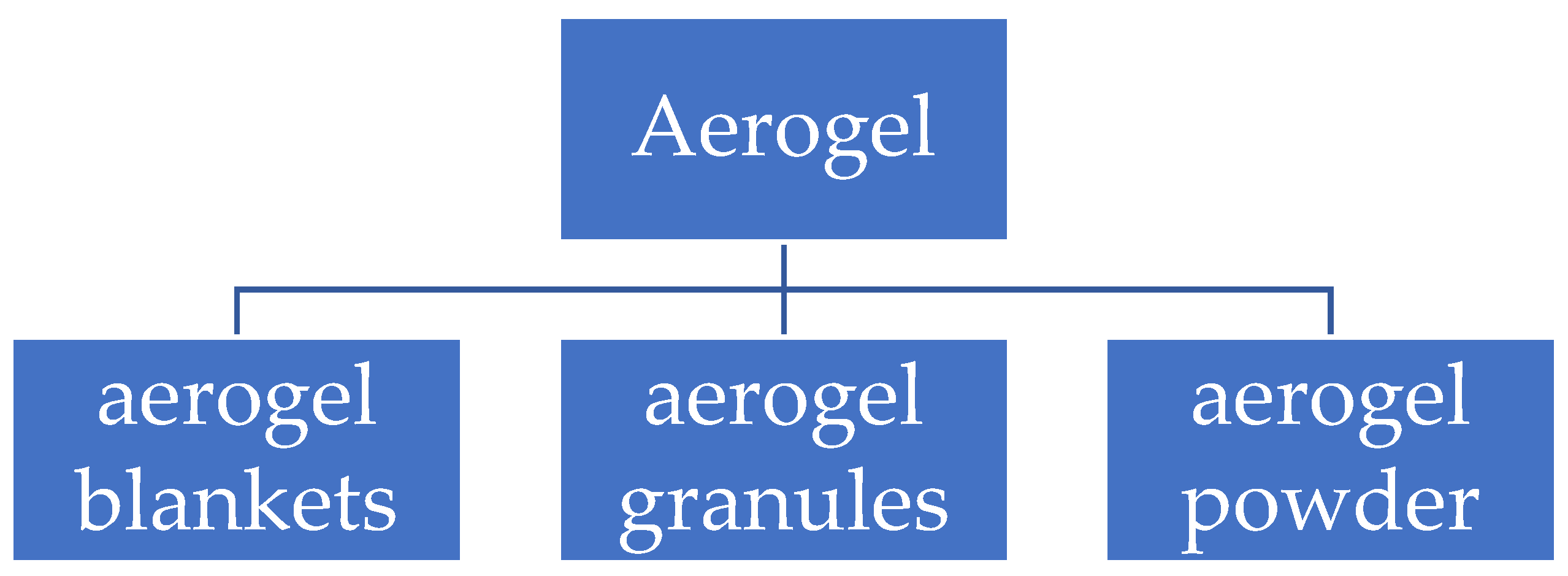
Figure 2.
The aerogel-enhanced blanket.
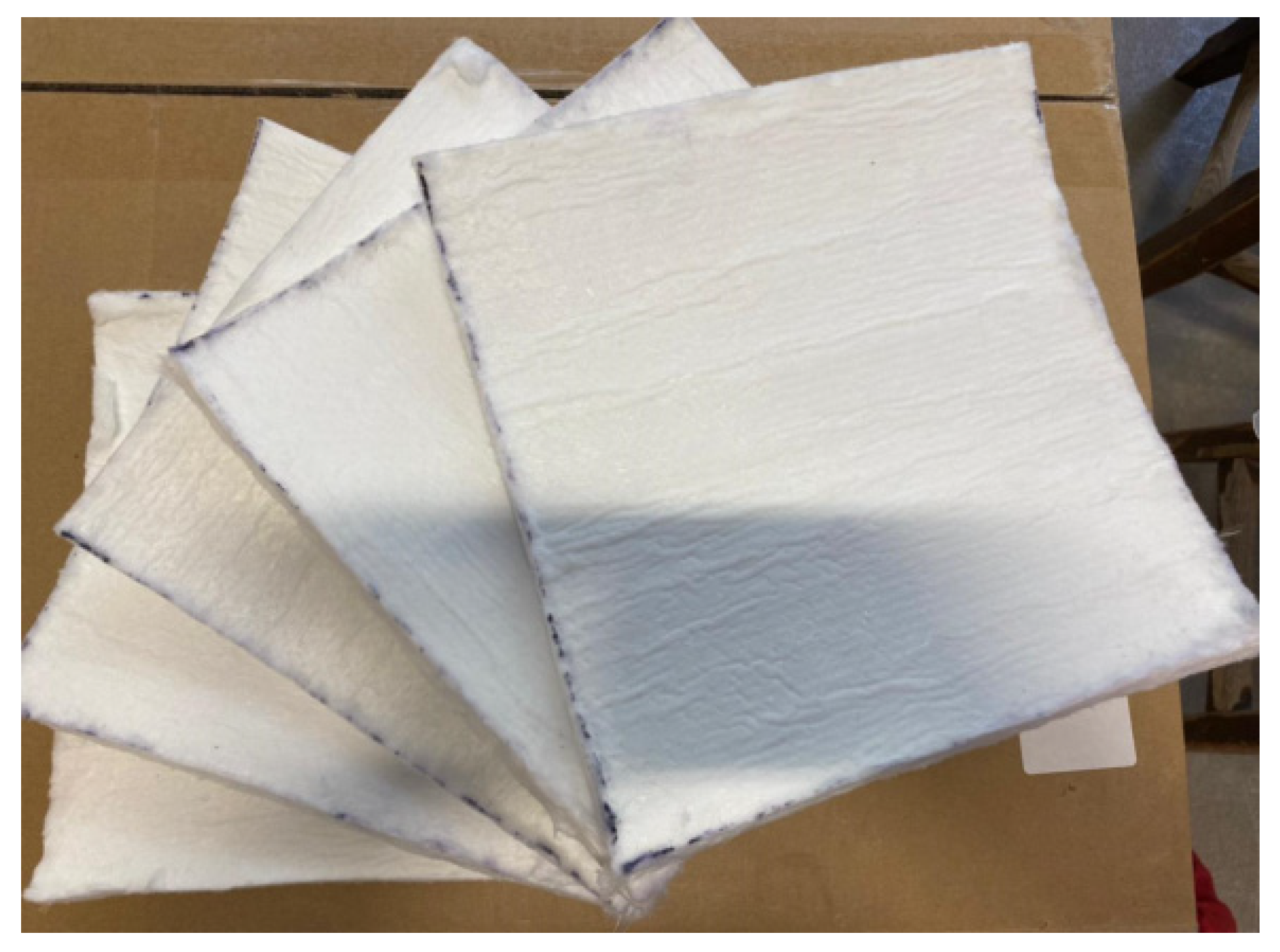
Figure 3.
The aerogel granule and aerogel powder.
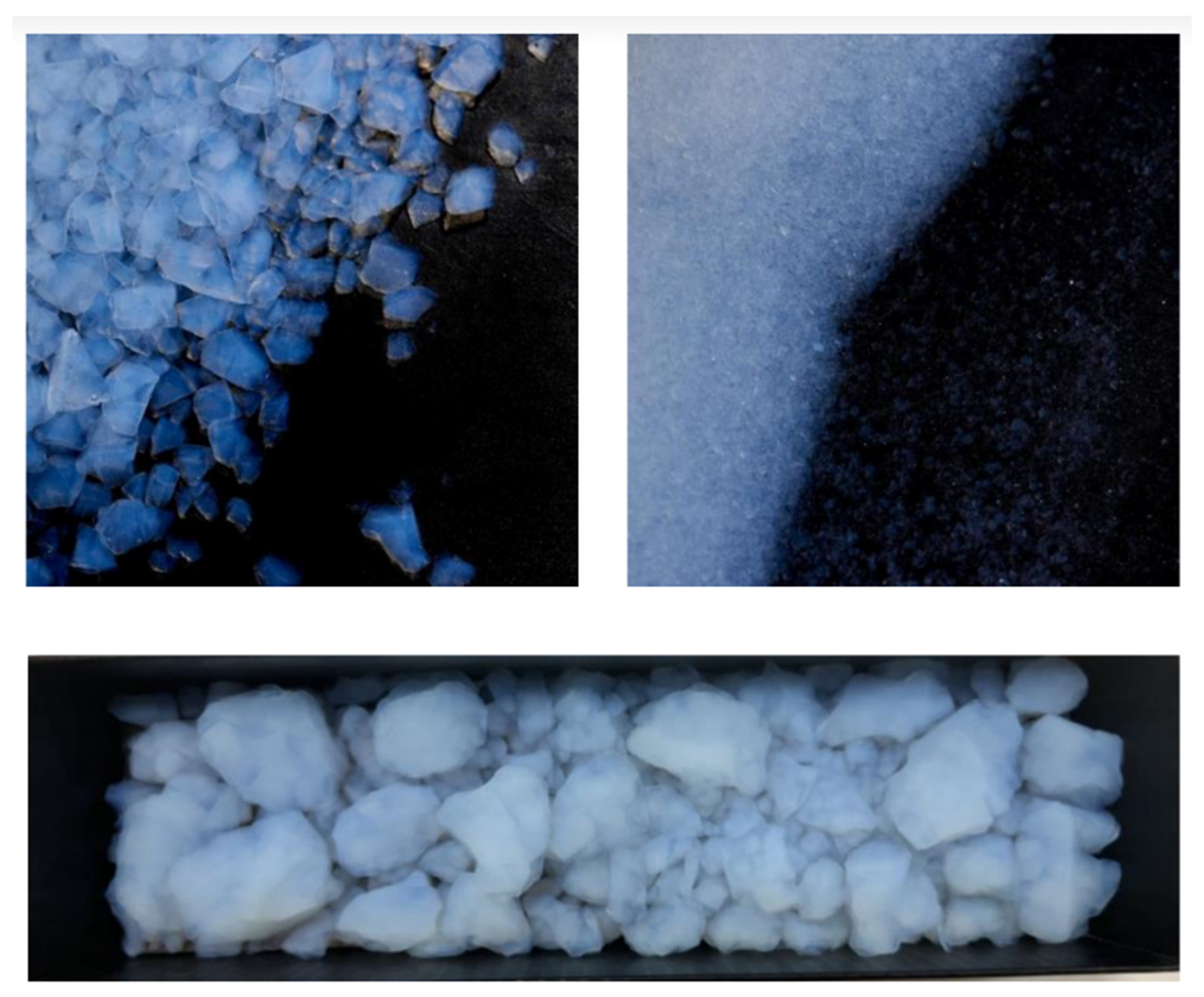
Figure 4.
Heat flow meter PIT-2.1 (a) and its schematic design (b).
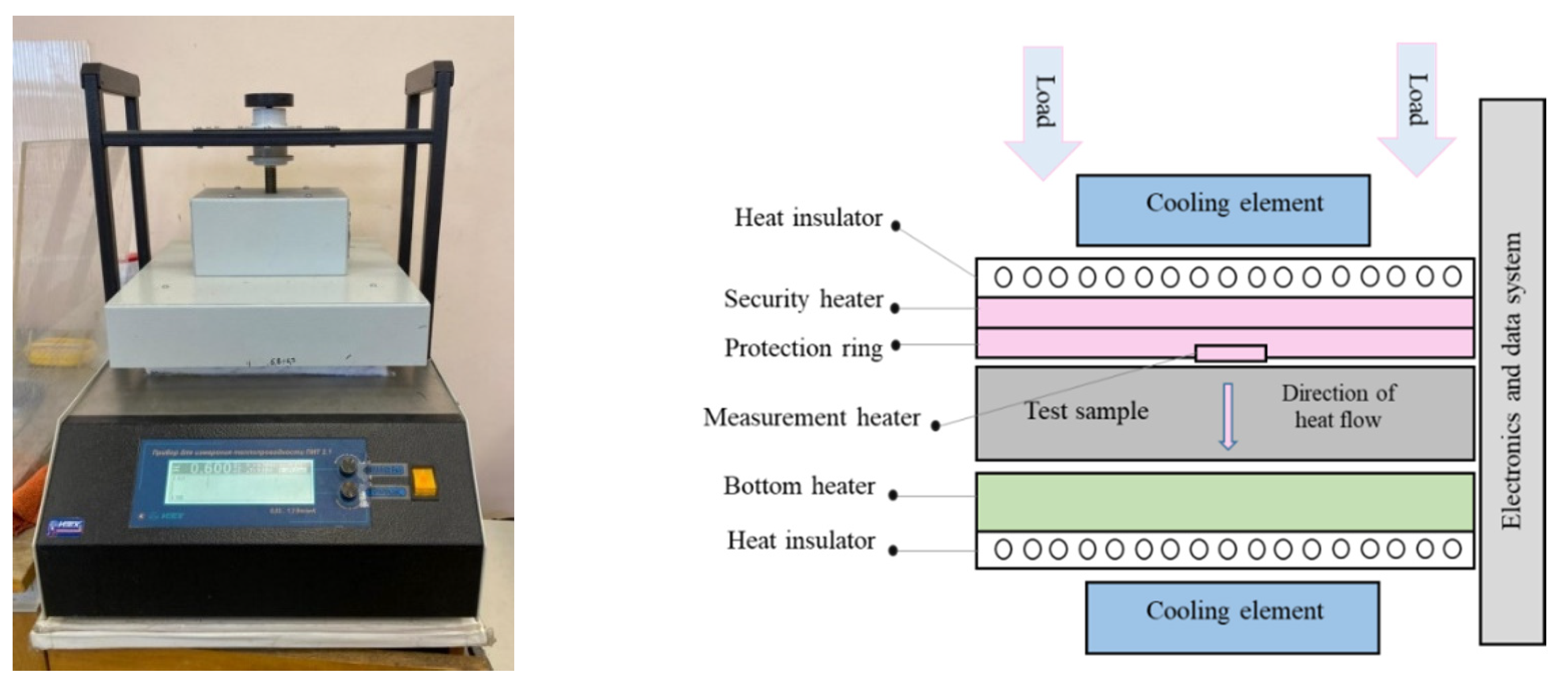
Figure 5.
The aerogel sample scheme of the thickness measuring points.
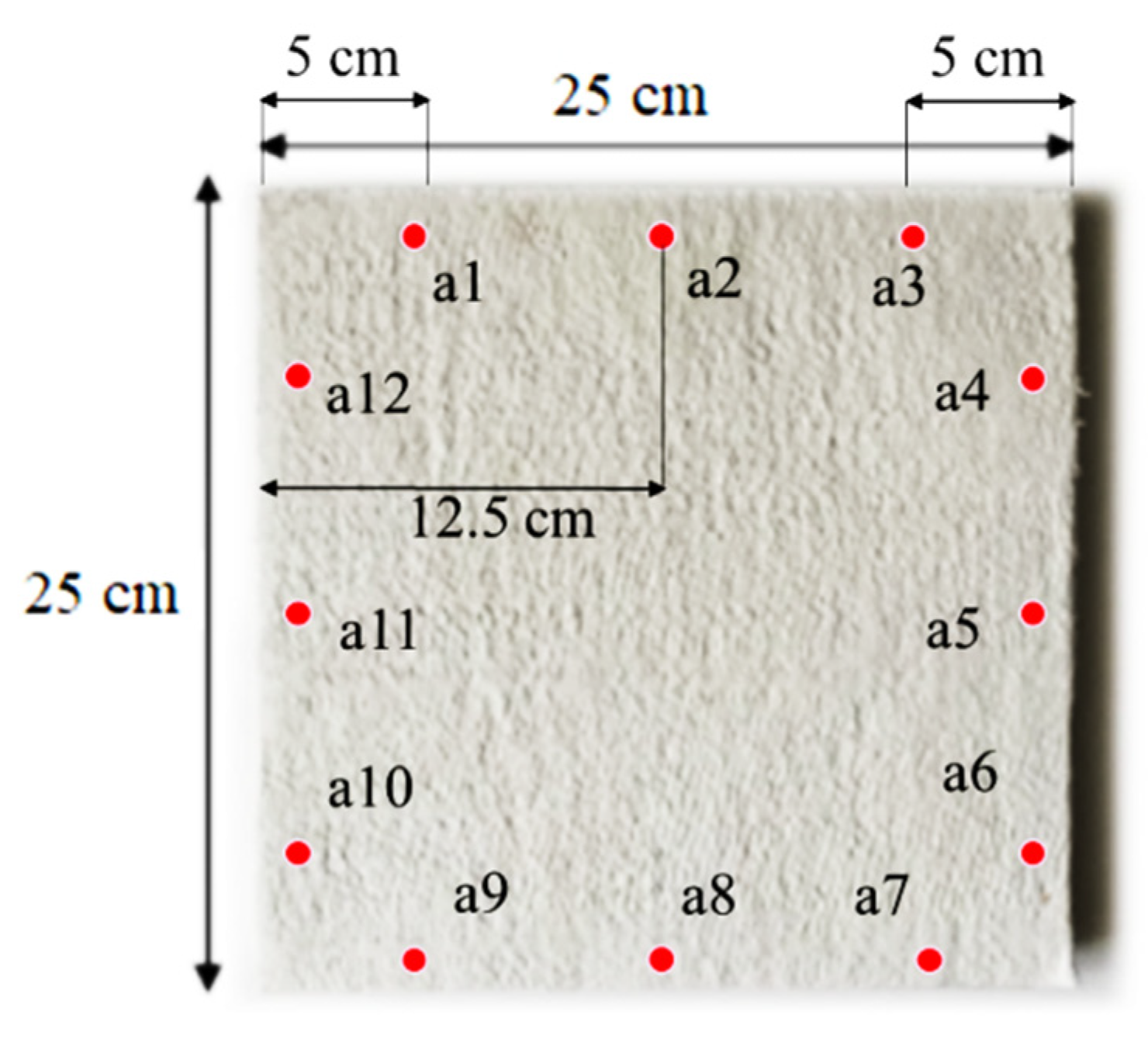
Figure 6.
Thermal conductivity of the aerogel-blanket samples.
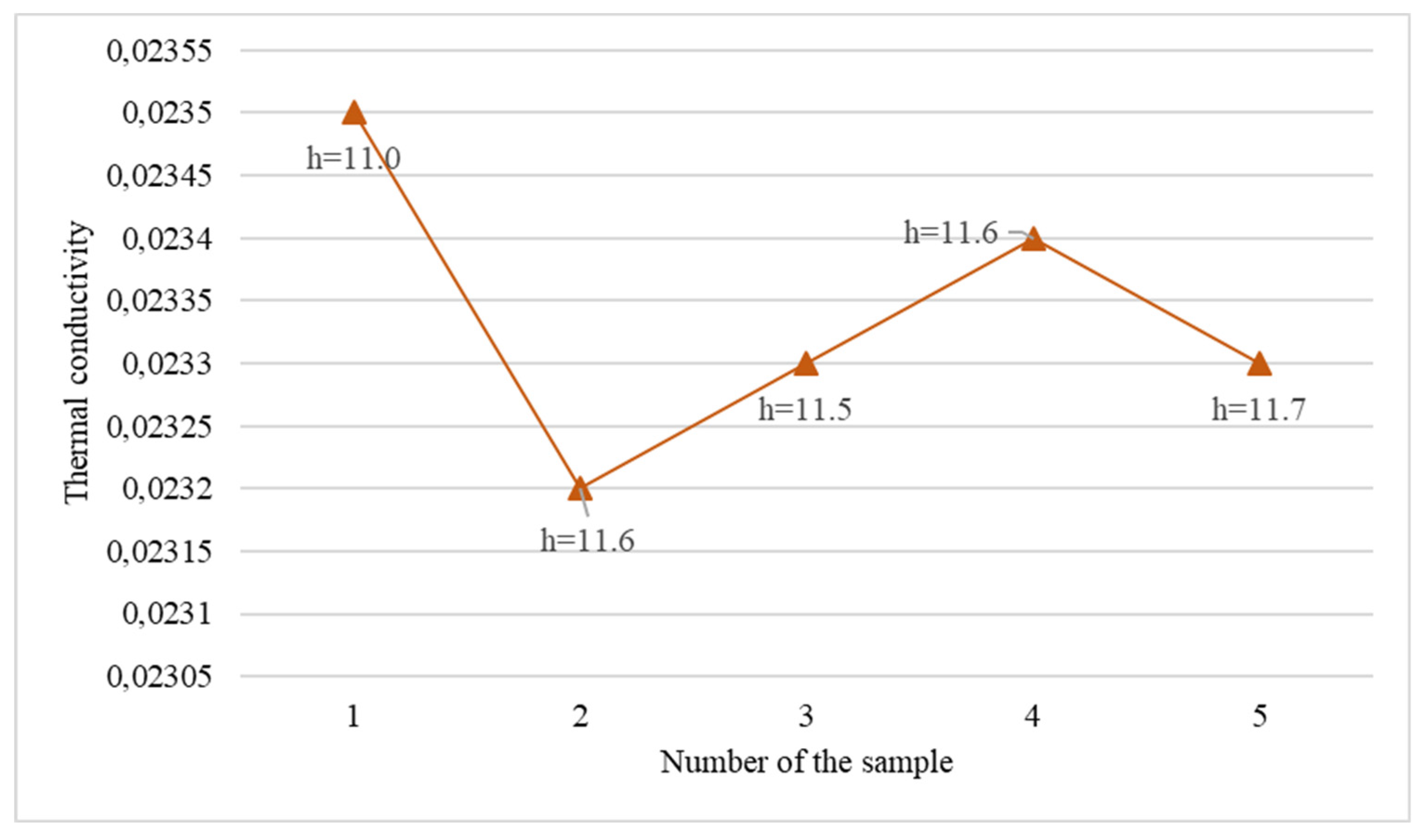
Figure 7.
The thermal conductivity dependence from temperature for Alison Aerogel Blanket DRT06 series3.
Figure 7.
The thermal conductivity dependence from temperature for Alison Aerogel Blanket DRT06 series3.
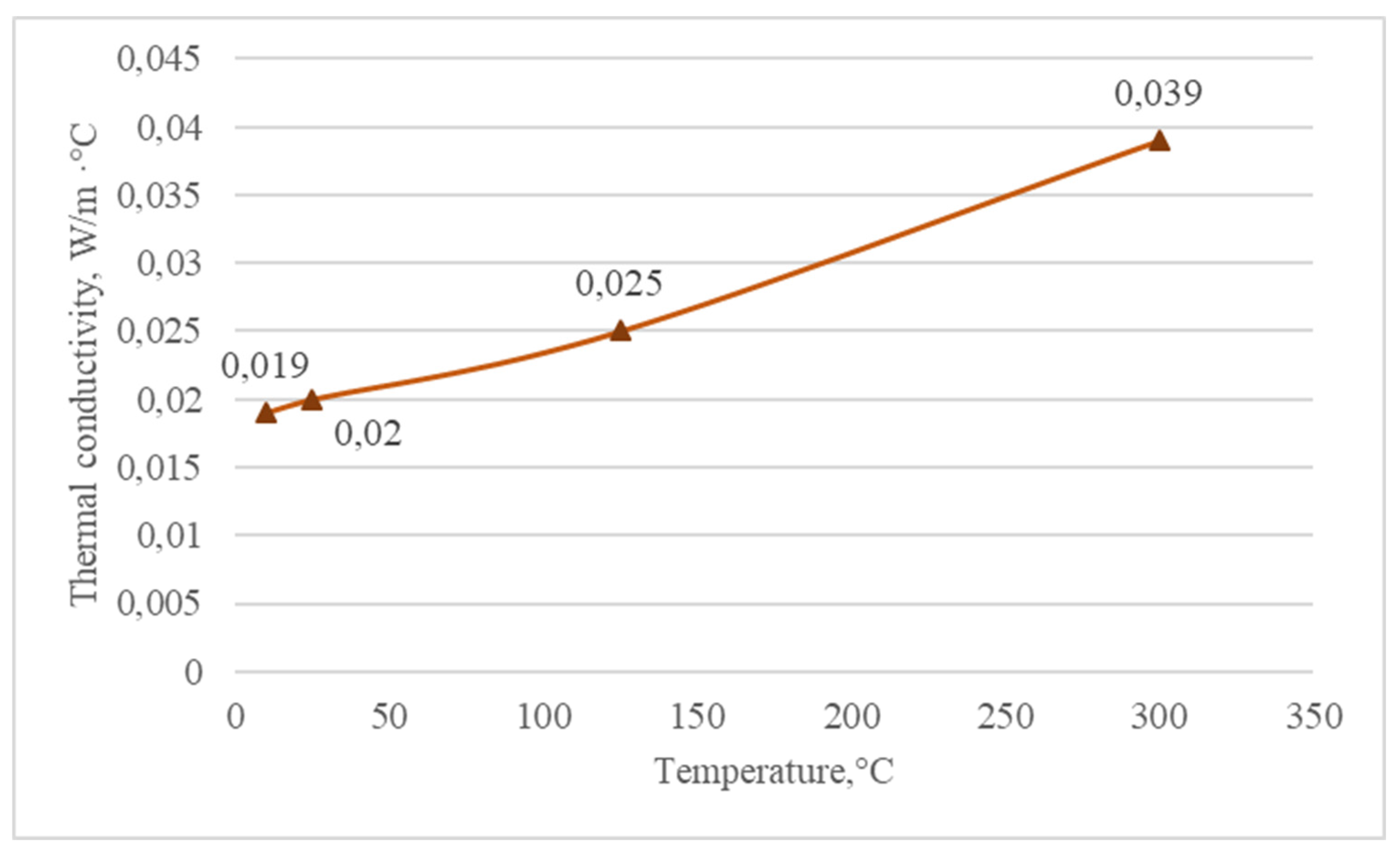
Figure 8.
Aerogel-enhanced building envelope by 3D printer.
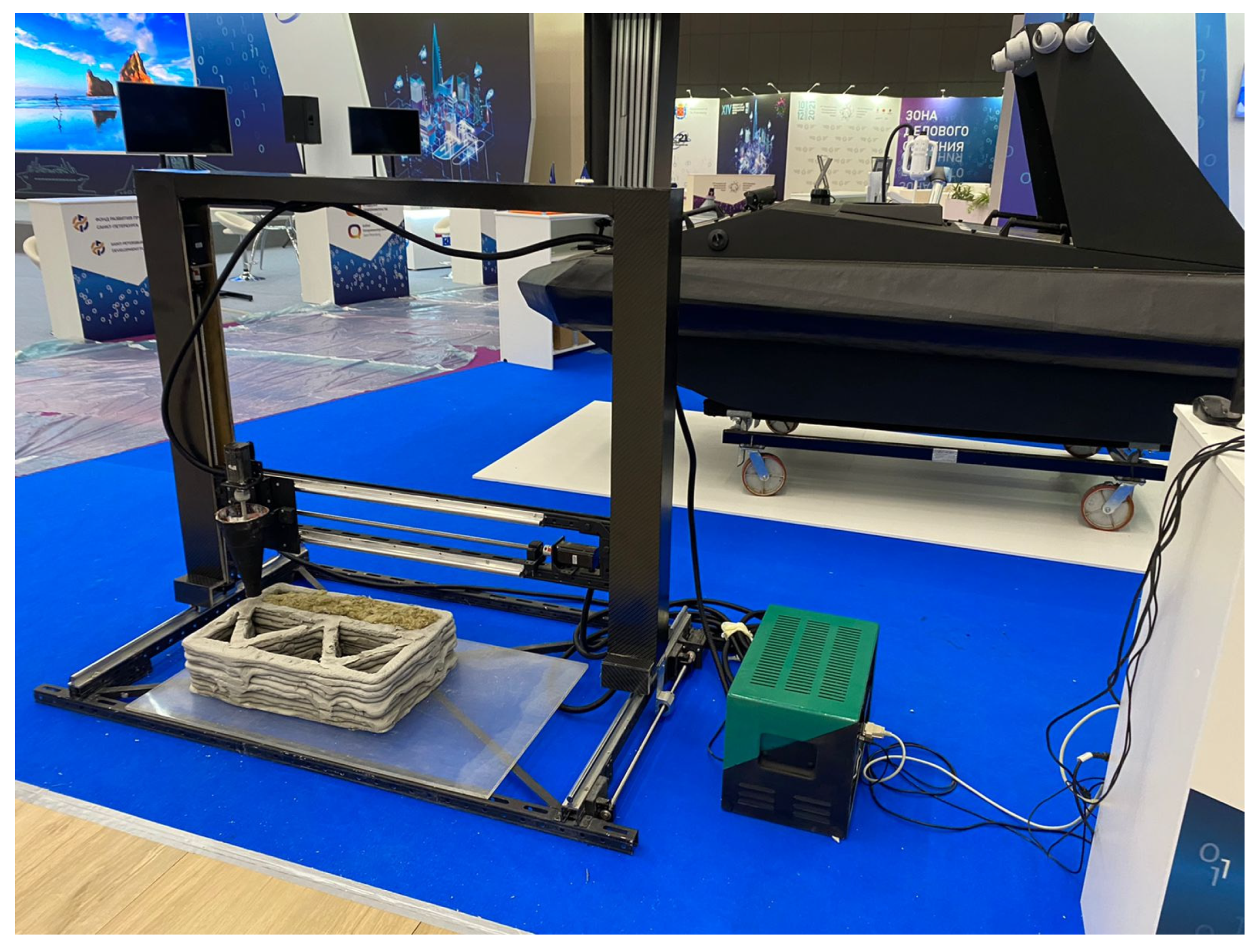
Figure 9.
Additive building structure a) no insulation b) with aerogel-blanket insulation material.
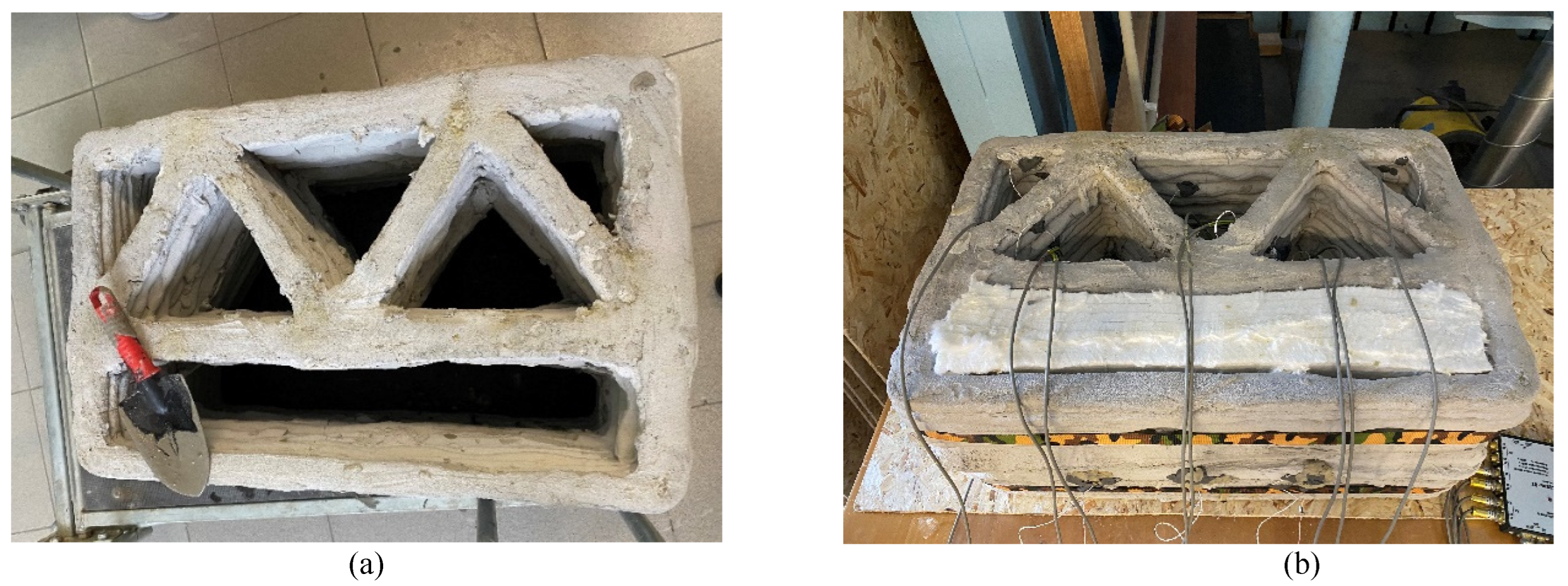
Figure 10.
Experimental setup of Additive building structure.
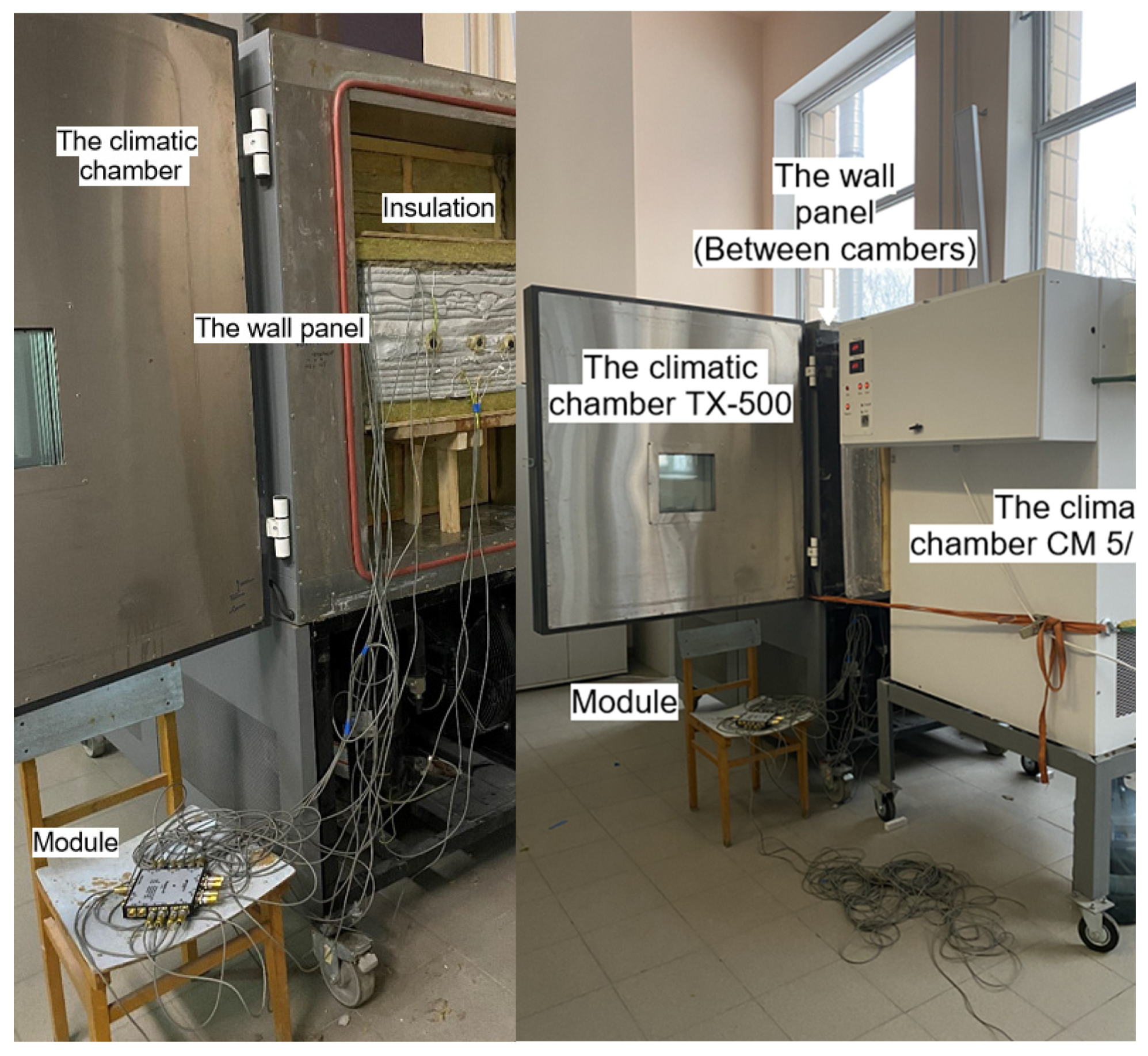
Figure 11.
The aerogel-enhanced building structure sample by additive technologies. The temperature sensor’s points location.
Figure 11.
The aerogel-enhanced building structure sample by additive technologies. The temperature sensor’s points location.
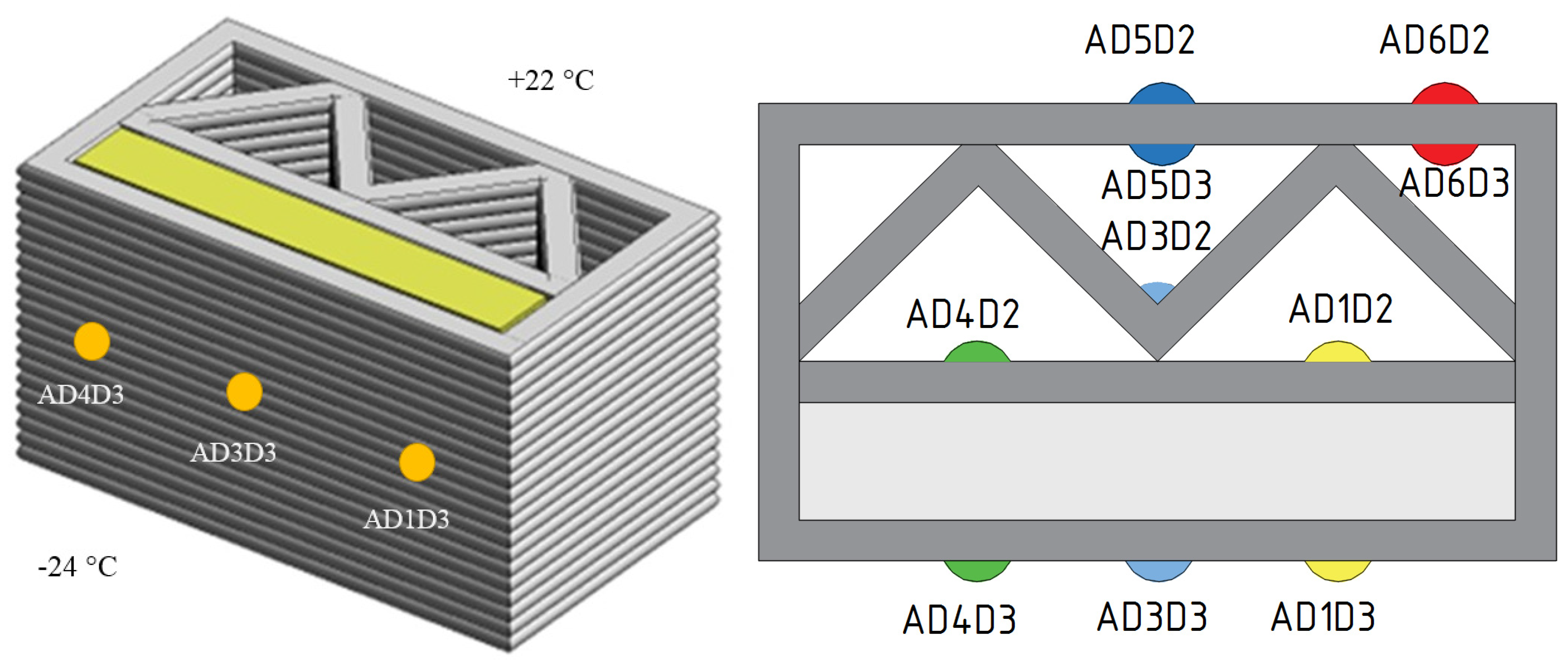
Figure 12.
The concreting sample processes.
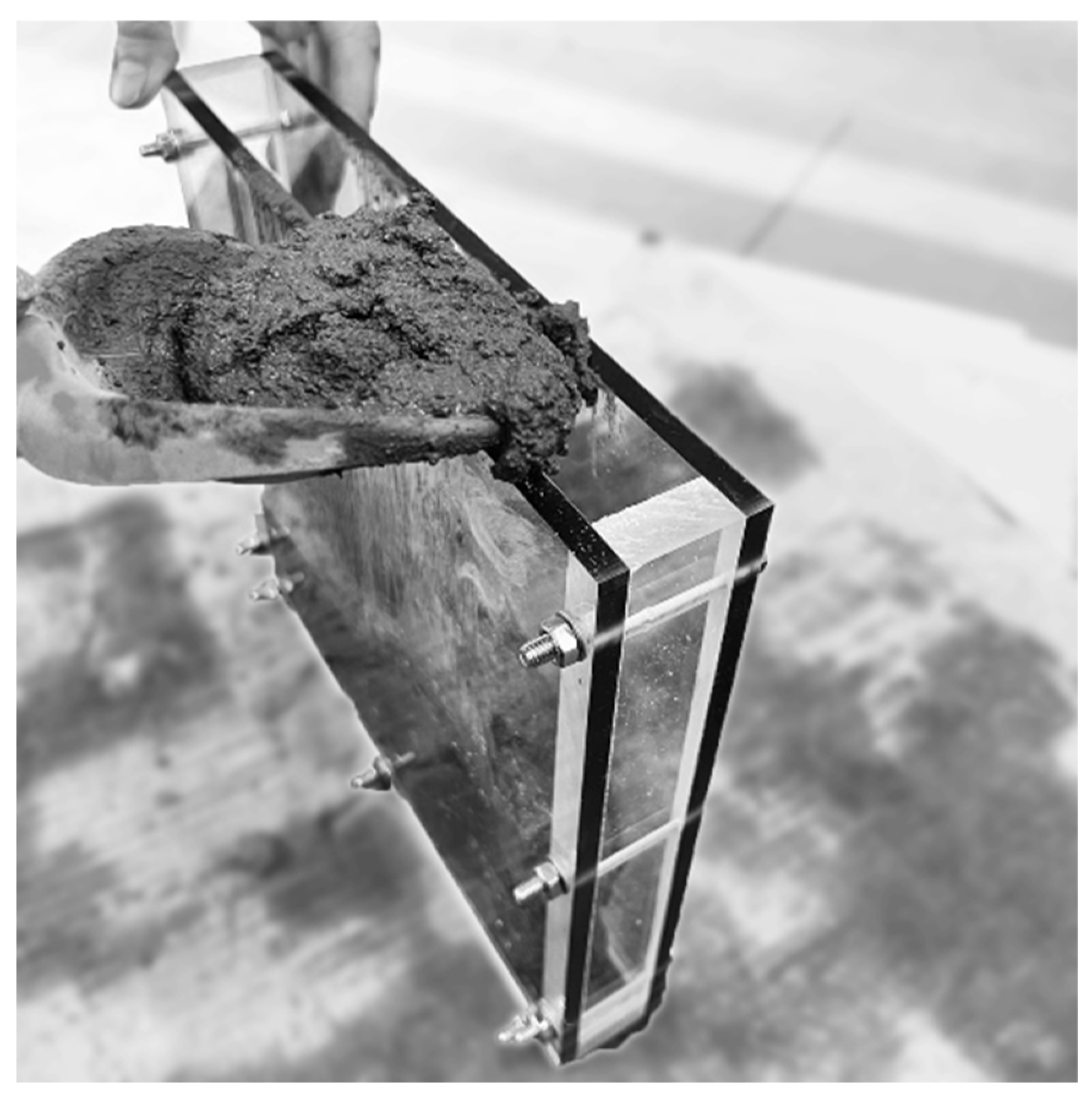
Figure 13.
Aerogel a) at the granules state b) at the powder state.
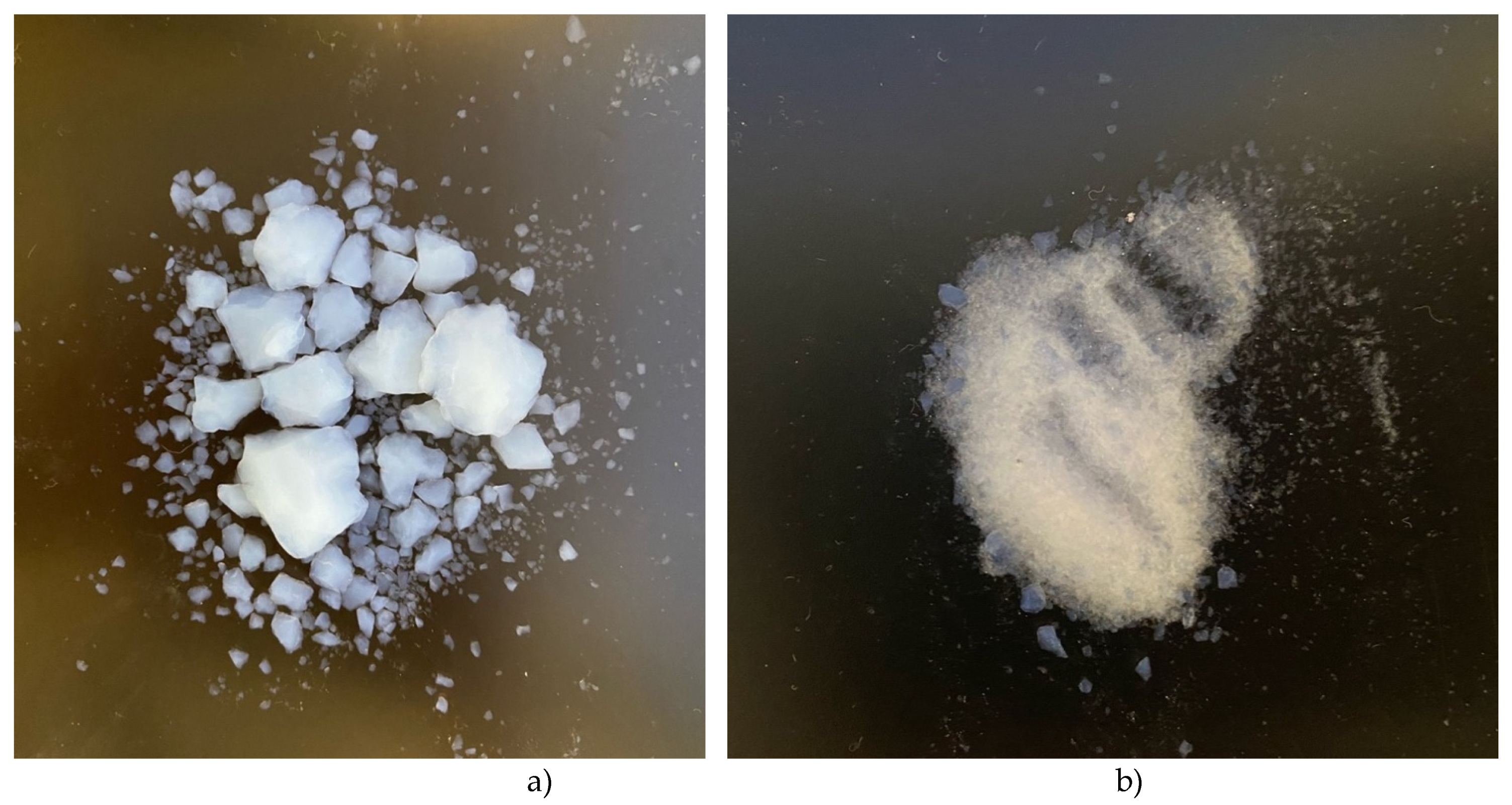
Figure 14.
The samples thicknesses scheme.
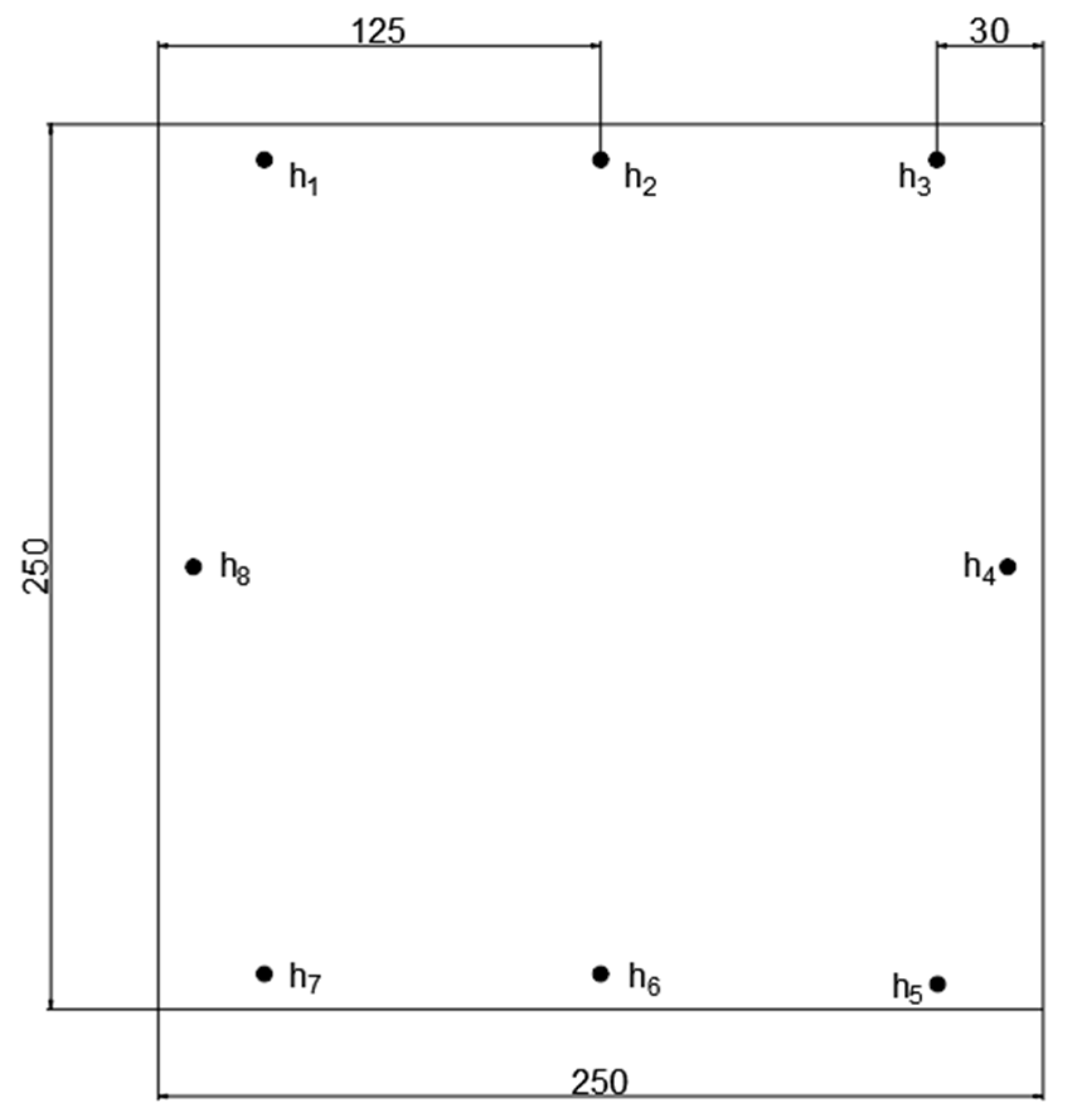
Figure 15.
Temperature distribution inside the structure for 7200 minutes.
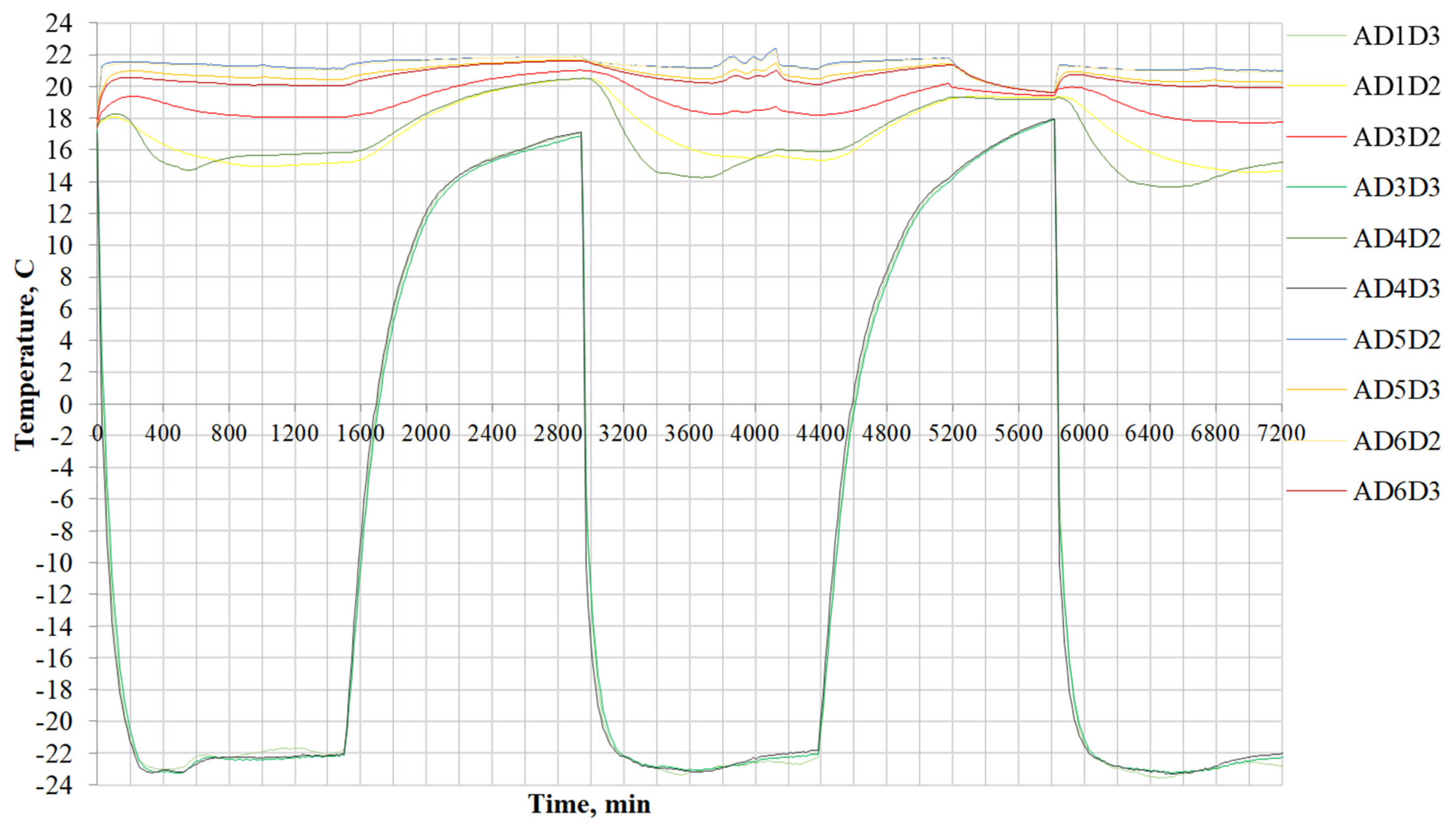
Figure 16.
Cooling temperature profile of the additive building structure for the time.
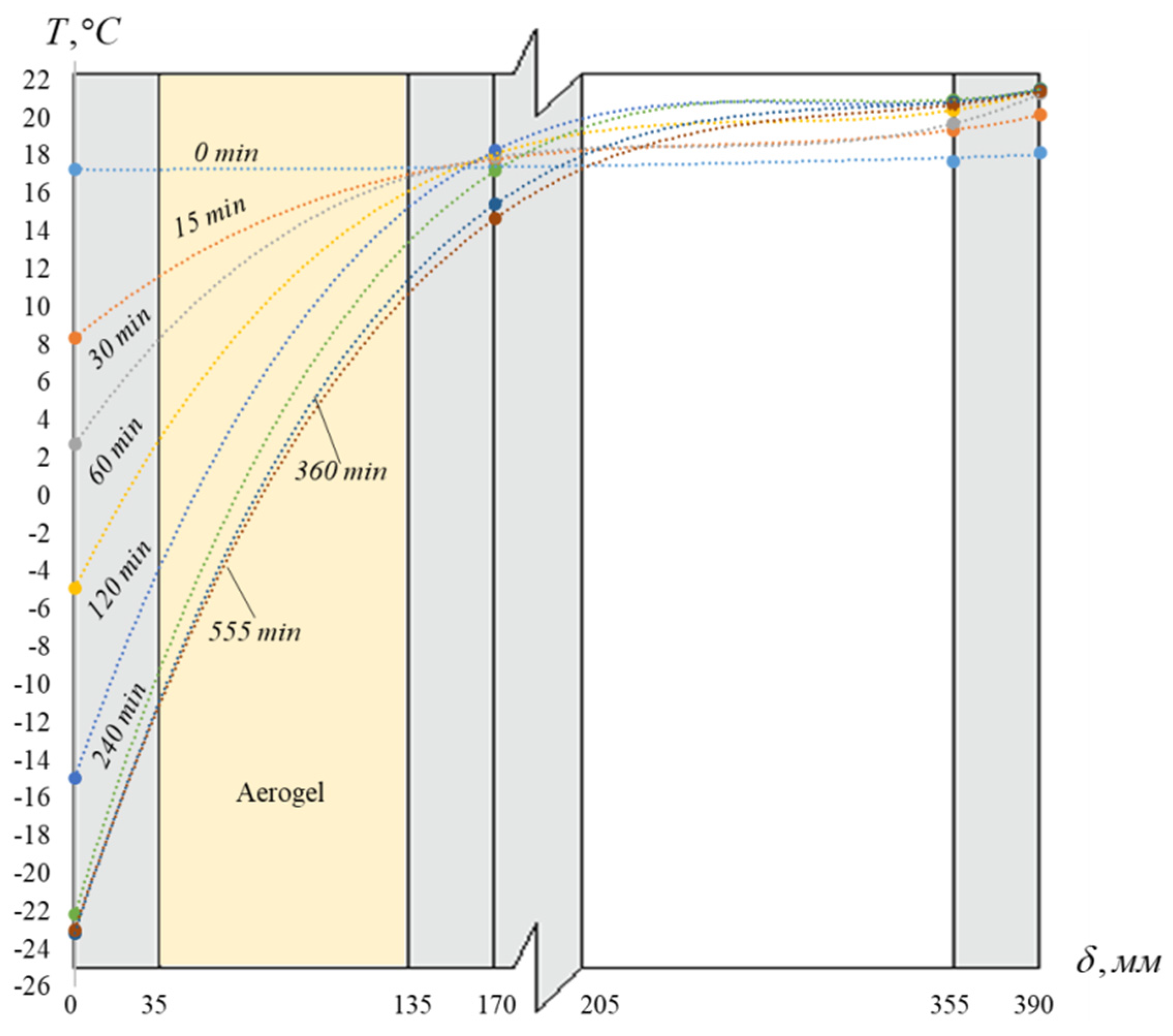
Figure 17.
Temperature distribution inside the structure for 7200 minutes.
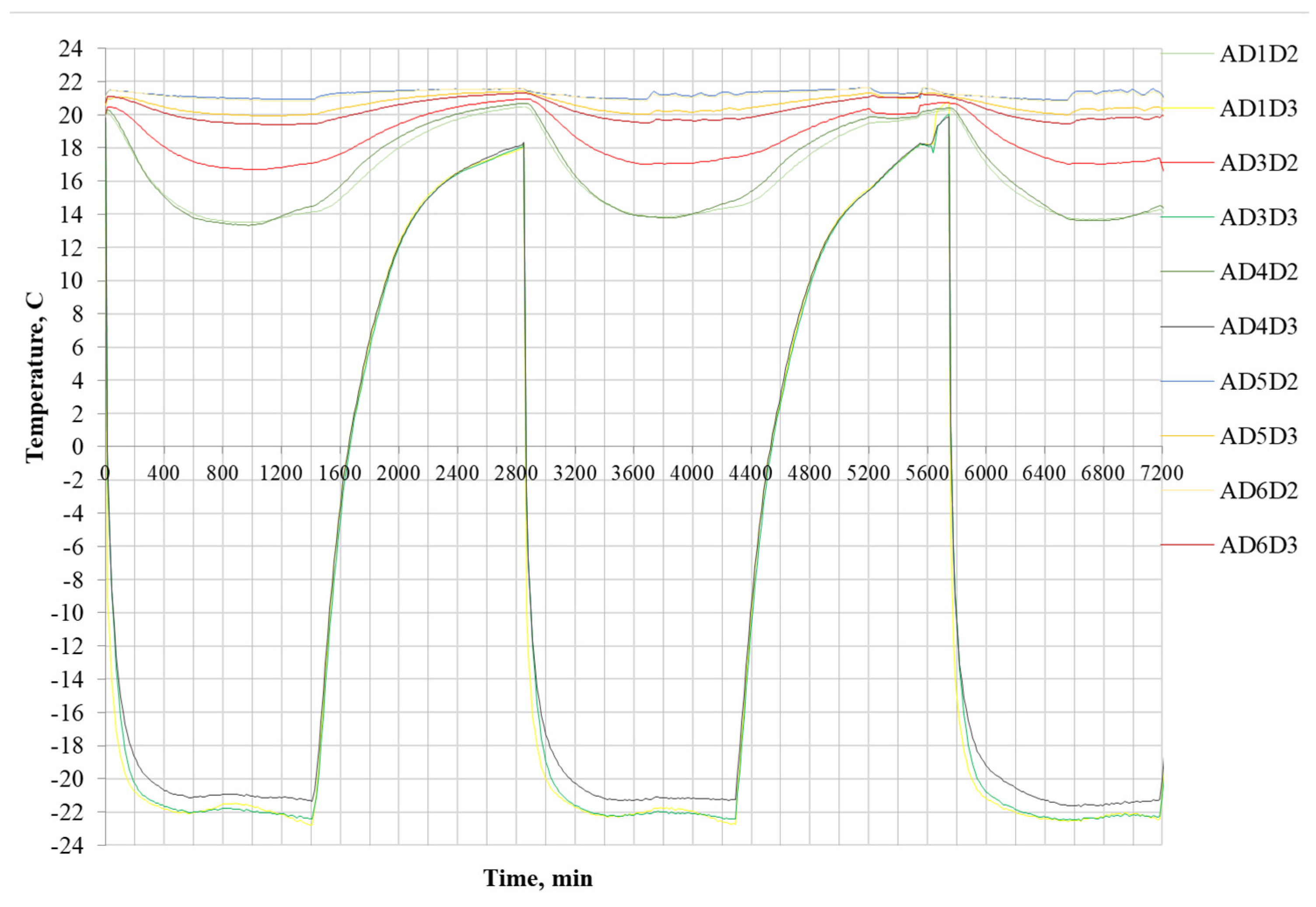
Figure 18.
Cooling temperature profile of the additive building structure for the time.
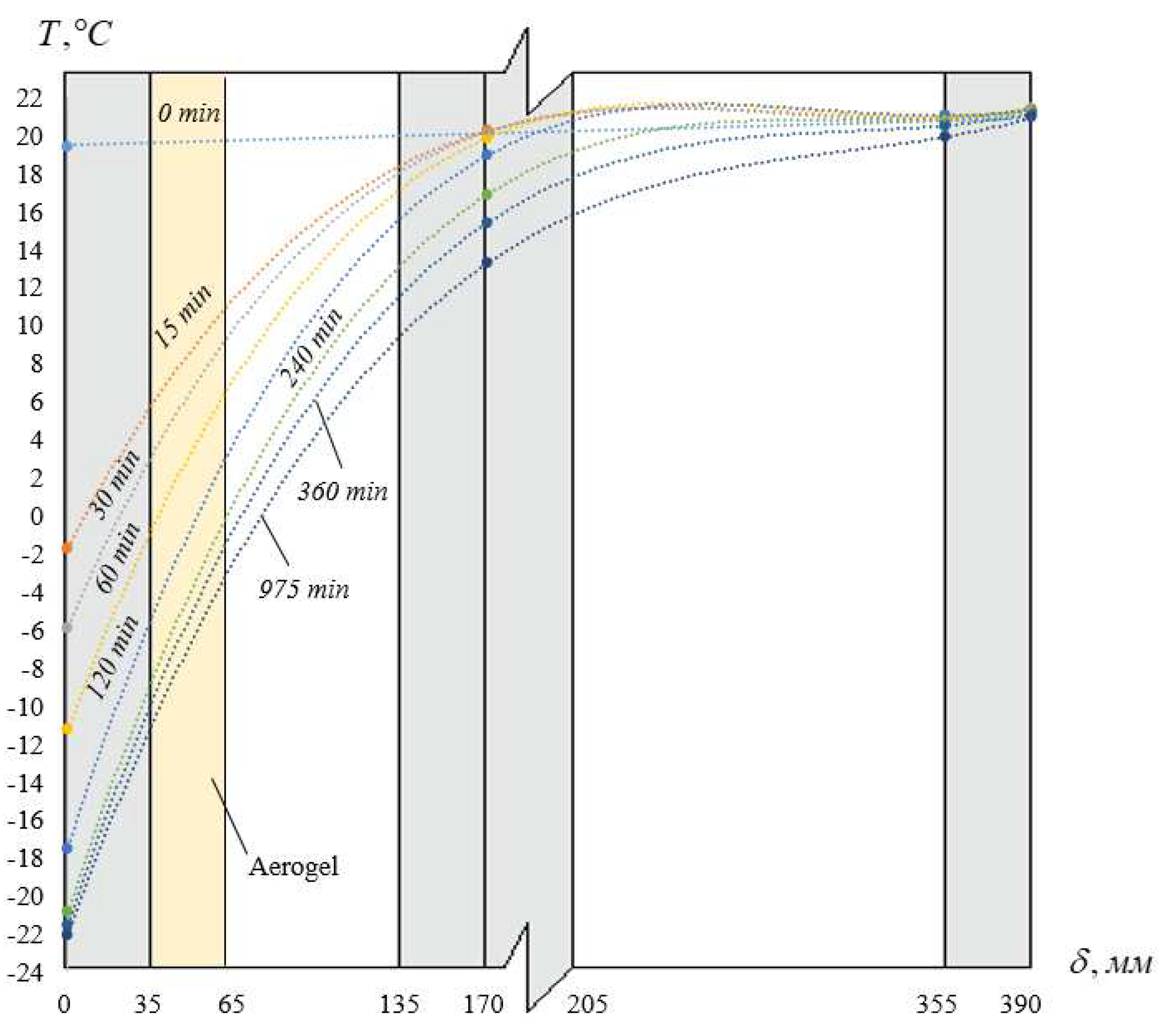
Figure 19.
Aerogel Insulated Additive Manufacturing Structure.
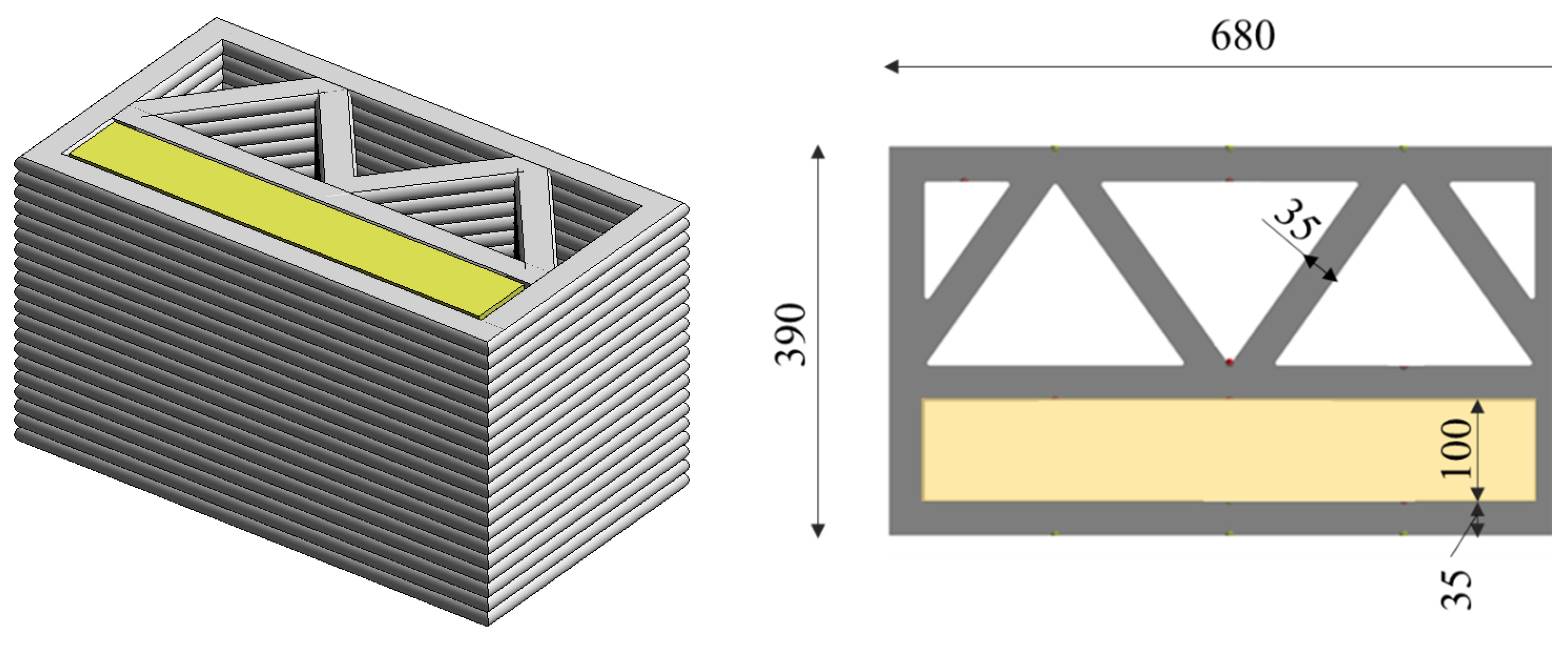
Figure 20.
Temperature distribution for additive design a) without aerogel b) with aerogel.
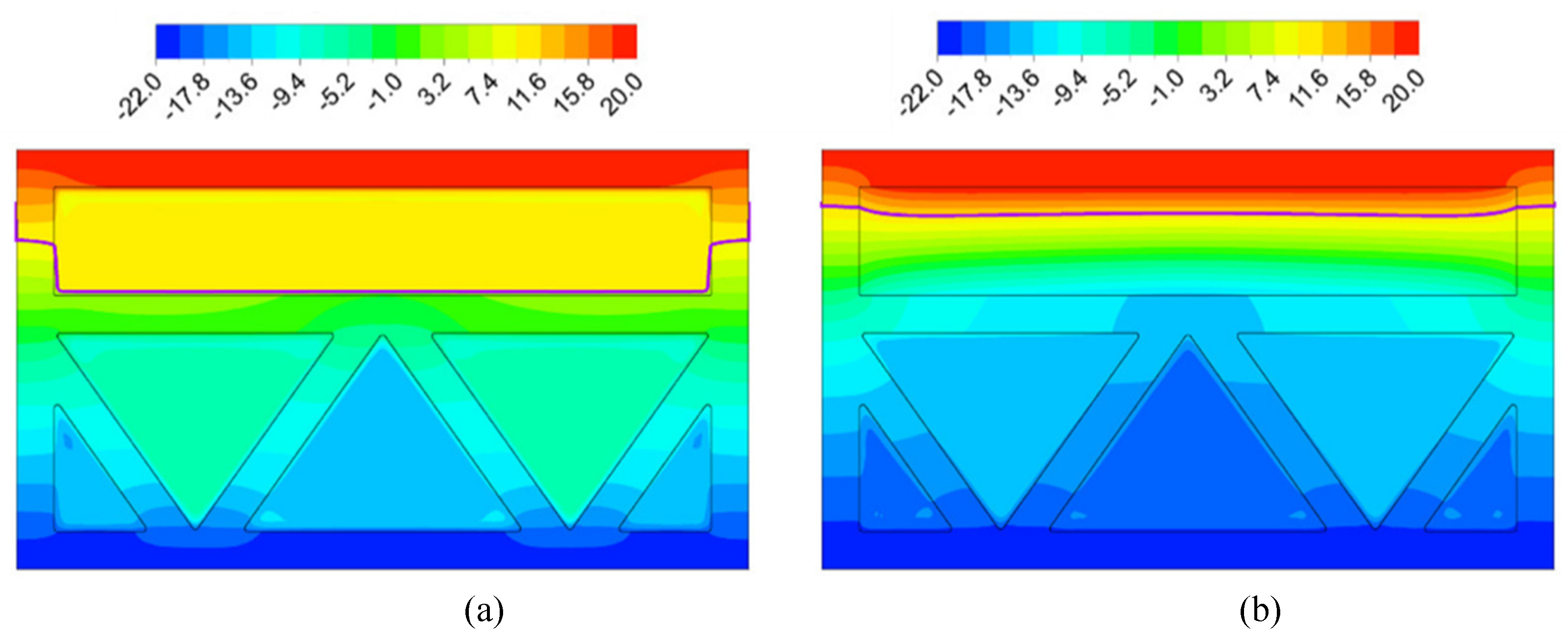
Figure 21.
The thermal conductivity of the samples with and without aerogel.
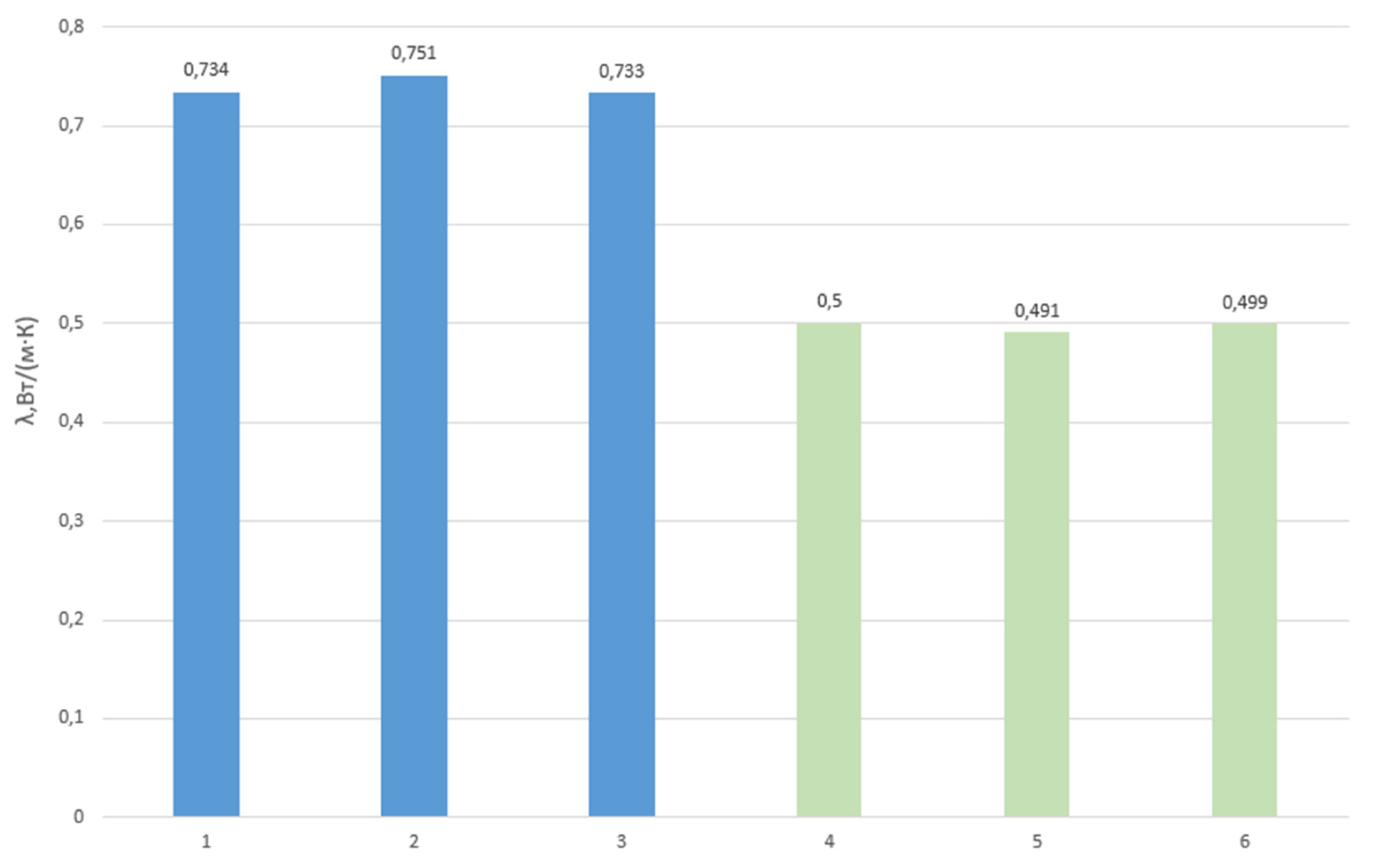

Table 1.
The estimation results of aerogel-blanket sample thickness.
| № sampl. |
а1 | a2 | a3 | a4 | a5 | a6 | a7 | a8 | a9 | a10 | a11 | a12 | Avg. value |
|---|---|---|---|---|---|---|---|---|---|---|---|---|---|
| 1 | 11.3 | 11.1 | 10.8 | 11.2 | 11.2 | 11.0 | 10.8 | 10.9 | 11.1 | 10.6 | 11.2 | 10.9 | 11.0 |
| 2 | 11.4 | 11.5 | 11.8 | 11.6 | 11.8 | 11.8 | 11.6 | 11.3 | 11.8 | 11.8 | 11.7 | 11.1 | 11.6 |
| 3 | 11.5 | 11.4 | 11.4 | 11.4 | 11.6 | 11.5 | 11.4 | 11.3 | 11.5 | 11.5 | 11.6 | 11.4 | 11.5 |
| 4 | 11.5 | 11.5 | 11.4 | 11.4 | 11.7 | 11.5 | 11.6 | 11.3 | 11.6 | 11.7 | 11.7 | 11.7 | 11.6 |
| 5 | 11.6 | 11.6 | 11.4 | 11.5 | 11.7 | 11.5 | 11.7 | 11.5 | 11.6 | 11.7 | 11.7 | 11.7 | 11.7 |
Table 2.
Measurement of thermal conductivity of an aerogel-based material.
| Average temperature of the sample, °С |
Thermal conductivity, λ, W/m·°С |
|---|---|
| 10 | 0.019 |
| 25 | 0.020 |
| 125 | 0.025 |
| 300 | 0.039 |
Table 3.
The mixture parameters of concrete samples without aerogel.
| Dry mix, kg | Water, l | Volume, l | Comment |
|---|---|---|---|
| 19.50.14 = 2.73 | 10 | Manufacturer data | |
| 1.95 | 0.273 | 1 | Specific |
| 3.66 | 0.512 | 1.875 | 1 form |
| 7.32 | 1.024 | 3.75 | 2 forms |
Table 4.
The mixture parameters of concrete samples with aerogel 15%.
| Dry mix, kg | Water, l | Aerogel, l | Volume, l | Comment |
|---|---|---|---|---|
| 1.66 | 0.232 | 0.15 | 1.0 | Specific |
| 3.11 | 0.435 | 0.281 | 1.875 | 1 form |
| 6.22 | 0.870 | 0.562 | 3.75 | 2 forms |
| 6.842 | 0.957 | 0.618 | 4.125 | 2 forms + 10% assurances |
| 6.842 | 1.057 | 0.618 | 4.225 | + 100 ml of water |
Table 5.
The thermal conductivity coefficient of concrete samples.
| No | Sample type | Sample thickness, mm | The thermal conductivity coefficient |
|---|---|---|---|
| 1 | with aerogel | 30.1 | 0.917 |
| 2 | with aerogel | 29.8 | 1.11 |
| 3 | without aerogel | 30.2 | 1.5 |
| 4 | without aerogel | 30.1 | 1.22 |
Table 6.
Thickness of concrete samples.
| No | t | |||||||||
|---|---|---|---|---|---|---|---|---|---|---|
| 1 | 30.3 | 29.75 | 29.9 | 29.7 | 30.3 | 30.3 | 30.2 | 30.2 | 30.1 | 36.8 |
| 2 | 29.05 | 28.8 | 30.0 | 30.0 | 30.1 | 30.1 | 30.25 | 30.1 | 29.8 | 36.5 |
| 3 | 30.0 | 30.5 | 29.65 | 30.05 | 30.0 | 30.85 | 30.6 | 30.2 | 30.2 | 36.9 |
| 4 | 29.65 | 30.65 | 30.2 | 30.2 | 30.05 | 30.1 | 30.0 | 30.1 | 30.1 | 36.8 |
Table 7.
Powder component’s proportion.
| No | Component | Unit | Value | 15% |
|---|---|---|---|---|
| 1 | Dry plaster mixture by gypsum binder | kg/l | 2.25/3.1 | 1.91/2.635 |
| 2 | Aerogel (Alison Aerogel Blanket) | l | - | 0.5/0.465 |
| 3 | Water | kg/l | 1.46/1.46 | 1.46/1.46 |
| Water-binding ratio | - | 0.65 | ||
Table 8.
The samples thicknesses measurement.
| No | h1, mm | h2, mm | h3,mm | h4,mm | h5,mm | h6,mm | h7,mm | h8,mm | havrg,mm |
|---|---|---|---|---|---|---|---|---|---|
| 1 | 30.1 | 30.2 | 30.3 | 30.2 | 29.8 | 30.3 | 29.9 | 30.1 | 30.1 |
| 2 | 30.1 | 30.2 | 30.3 | 30.2 | 29.8 | 30.3 | 29.9 | 30.1 | 30.1 |
| 3 | 30.1 | 30.2 | 30.3 | 30.2 | 29.8 | 30.3 | 29.9 | 30.1 | 30.1 |
| 4 | 30.4 | 30.5 | 30.3 | 30.6 | 30.4 | 30.4 | 30.7 | 30.6 | 30.5 |
| 5 | 30.4 | 30.5 | 30.3 | 30.6 | 30.4 | 30.4 | 30.7 | 30.6 | 30.5 |
| 6 | 30.4 | 30.5 | 30.3 | 30.6 | 30.4 | 30.4 | 30.7 | 30.6 | 30.5 |
Table 9.
Temperature distribution on the inner surfaces (sensor AD4D2).
| 1 day | 2 days | 3 days | 4 days | 5 days | |
|---|---|---|---|---|---|
| Temperature reduction | -3.5 °С | -6°С | -5°С | ||
| Temperature increase | +5°С | +5°С |
Table 10.
Temperature distribution of building structure sample for the first 555 minutes.
| Time, min | AD3D3 | AD4D2 | AD5D3 | AD5D2 |
|---|---|---|---|---|
| 0 | 17.27 | 17.47 | 17.73 | 18.19 |
| 15 | 8.35 | 17.83 | 19.37 | 20.16 |
| 30 | 2.74 | 17.93 | 19.71 | 21.28 |
| 60 | -4.89 | 18.11 | 20.42 | 21.47 |
| 120 | -14.92 | 18.28 | 20.85 | 21.54 |
| 240 | -22.15 | 17.21 | 20.97 | 21.55 |
| 360 | -23.16 | 15.45 | 20.86 | 21.48 |
| 555 | -22.96 | 14.7 | 20.7 | 21.41 |
| Coordinate, mm | 0 | 170 | 355 | 390 |
Table 11.
Temperature distribution on the inner surfaces (sensor AD4D2).
| 1 day | 2 day | 3 day | 4 day | 5 day | |
|---|---|---|---|---|---|
| Temperature reduction | -6.5 °С | -7°С | -6.7°С | ||
| Temperature rise | +7.5°С | +5.5°С |
Table 12.
Temperature distribution of building structure sample for the first 975 minutes.
| Time, min | AD3D3 | AD4D2 | AD5D3 | AD5D2 |
|---|---|---|---|---|
| 0 | 19.55 | 20.05 | 20.54 | 21.15 |
| 15 | -1.65 | 20.29 | 20.98 | 21.38 |
| 30 | -5.8 | 20.24 | 20.91 | 21.51 |
| 60 | -11.23 | 19.91 | 21.02 | 21.47 |
| 120 | -17.38 | 19.01 | 21.06 | 21.41 |
| 240 | -20.84 | 16.95 | 20.85 | 21.3 |
| 360 | -21.48 | 15.47 | 20.55 | 21.19 |
| 975 | -21.97 | 13.33 | 19.96 | 20.96 |
| Coordinate, mm | 0 | 170 | 355 | 390 |
Table 13.
The thermal conductivity coefficient of concrete samples.
| No | Sample type | Sample thickness, mm | The thermal conductivity coefficient |
|---|---|---|---|
| 1 | with aerogel | 30.1 | 0.917 |
| 2 | with aerogel | 29.8 | 1.11 |
| 3 | without aerogel | 30.2 | 1.5 |
| 4 | without aerogel | 30.1 | 1.22 |
Table 14.
The thermal conductivity measurement of samples without aerogel material.
| No | Results on the panel | λ, W/(m∙K) |
|---|---|---|
| 1 | 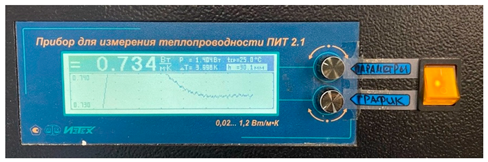 |
0.734 |
| 2 | 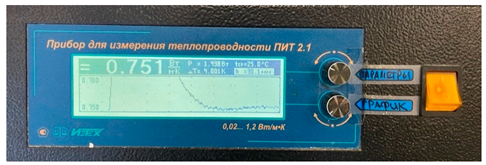 |
0.751 |
| 3 | 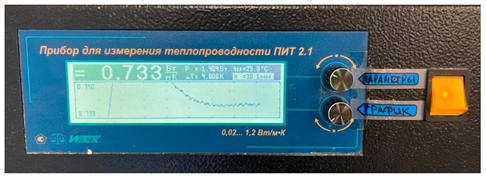 |
0.733 |
Table 15.
The thermal conductivity measurement of samples with aerogel material.
| No | Results on the instrument panel | λ, W/(m∙K) |
| 4 | 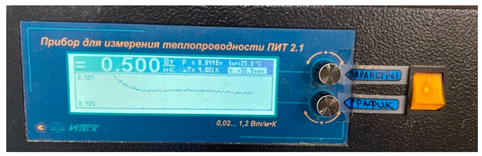 |
0.500 |
| 5 | 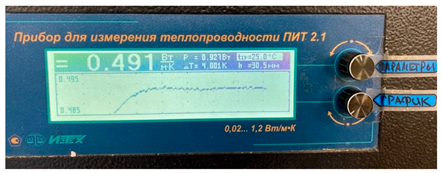 |
0.491 |
| 6 | 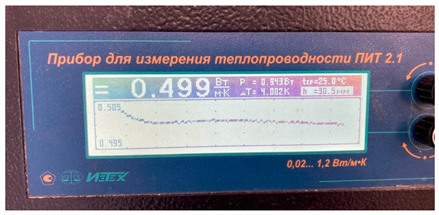 |
0.499 |
Disclaimer/Publisher’s Note: The statements, opinions and data contained in all publications are solely those of the individual author(s) and contributor(s) and not of MDPI and/or the editor(s). MDPI and/or the editor(s) disclaim responsibility for any injury to people or property resulting from any ideas, methods, instructions or products referred to in the content. |
© 2023 by the authors. Licensee MDPI, Basel, Switzerland. This article is an open access article distributed under the terms and conditions of the Creative Commons Attribution (CC BY) license (http://creativecommons.org/licenses/by/4.0/).
Copyright: This open access article is published under a Creative Commons CC BY 4.0 license, which permit the free download, distribution, and reuse, provided that the author and preprint are cited in any reuse.


