

Submitted:
14 December 2023
Posted:
14 December 2023
You are already at the latest version
Abstract
Recent years have experienced an increase in construction and demolition waste (C&DW), which is the most significant solid waste stream. C&DW is contributing to exceeding all planetary boundaries and presents a range of other issues. In order to better understand the existing research on C&DW, a global bibliographic analysis was undertaken through seven groups of keyword searches and the results visualised using VOCviewer. The results show that C&DW receives only a modest research attention compared to other areas of waste, and this is despite an exponential increase in C&DW research since 2016. The analyses also show that concrete is the most researched material in terms of C&DW, and that reuse, recycling, and circular economy are so far attracting only proportionally modest research attention. This signals a need for further acceleration of the C&DW research, and specifically for more research on reuse, recycling, and circular economy for materials other than concrete.
Keywords:
construction and demolition waste
; construction waste
; demolition waste
; bibliometric analysis
; VOSviewer
; global C&DW trends
; planetary boundaries
1. Introduction
In recent years, the generation of construction and demolition waste (C&DW) has been rapidly increasing due to the population growth and the global acceleration of construction activities [1]. Construction and demolition waste (C&DW) has been defined by the US EPA as ’the waste generated by all activities carried out during the construction, maintenance, demolition, and deconstruction of any type of building and civil work, or during natural disasters’ [2]. In the 1990s, the UK Construction Industry Research and Information Association reported that the construction and demolition sites generated around 70 million metric tons of waste in UK, annually [3]. Around the same time the US EPA estimated that the US generated around 120 million tons of C&DW, also annually [4]. But these figures rose two- to five-fold, and by 2018, in the UK, Defra estimated that C&DW had reached 138 million metric tons and, in the US, the US EPA estimated this had reach 600 million tons [2,5]. China is estimated to produce the most C&DW globally, with 1.13 billion metric tons of waste produced in 2014 [6,7]. Globally, it is estimated that C&DW derived about 1.68kg per person per day in 2018 [8]. It is also estimated that global waste generation will double by 2025 compared to the year 2000, and that by 2050 it will double, compared to 2016 [1]. Another area of concern is the lack of waste data from developing regions [9-11].
Despite some variations in waste generation data, and criticism of the data’s accuracy, it is generally agreed that the construction industry accounts for around 30-40% of global solid waste production, indicating that industry is one of largest sole generators of waste [1,12-16]. However, C&DW presents a range of other adverse impacts also. Among those, C&DW is usually landfilled rather than being separated or recycled [14,17]. Illegal dumping also occurs, which contributes to inability to have accurate waste generation data [9,14]. Landfilling and illegal dumping not only consume a large amount of land resources, but also can pose a large risk of environmental pollution [17]. Human health is also of concern, as the pollutants and gas emissions from the waste risk adverse health effects [14,18]. It is also estimated that, due to the current levels of solid waste, 2.5 billion people worldwide do not have adequate sanitation [19]. Combined with these issues of waste disposal, is the lack of recycling and conservation of resources as a substitute for further raw material extraction [20]. The material extraction and the material processing create various types of emissions and pollutants which cause serious strain on the environment [21]. Although effort is already invested into these areas, more needs to be achieved.
This context indicates that C&DW is a rapidly growing and unsustainable problem, and therefore it is important to understand better the issue and gaps in research in order to support development of more effective solutions. This article presents results of a global bibliometric review of research on C&DW, and evaluates if it is possible to identify key high-level patterns in global C&DW research. Therefore the results can be used to inform and guide future research.
2. Context for C&DW research
There is a range of issues associated with C&DW. Broadly those could be divided into issues associated with the unsustainable impacts C&DW present on the planet, and issues with managing and reducing these adverse impacts. This section provides a background for a range of core issues facing C&DW considerations.
2.1 Planetary boundaries and C&DW
C&DW can be seen to adversely affect all the planetary boundaries, harming a range of fragile balances. Humans have been identified as the main driver for global environmental change and our current activities are estimated to disrupt planetary systems, creating an unstable environment with irregular temperatures, freshwater availability, and biochemical flows [22]. These are described through the planetary boundary framework [22,23]. Rockström et al. introduced the idea in 2009 and refined the thresholds in 2023. The nine boundaries are: 1) atmospheric CO2 concentration; 2) rate of biodiversity loss; 3) levels of novel anthropogenic introductions to the planetary systems; 4) levels of ocean acidification; 5) biochemical flows (which currently considers the levels of nitrogen and phosphorus); 6) percentage of land system change; 7) levels of available fresh water; 8) atmospheric aerosol loading; and 9) levels of ozone depletion [22,23]. These thresholds can be valuable to sustainable reviews as they allow a quantifiable analysis of the areas of sustainability.
The most noticeable impacts from the C&DW is through the novel anthropogenic introductions of synthetic chemicals and substances, radioactive materials, or genetically modified organisms to the environment [23]. The boundary for this novel anthropogenic introduction, without adequate safety testing, is zero [23]. Construction and demolition materials include heavy metals, organic matter and synthetic chemicals (plastics, paints, and glues) which all contaminate soil and groundwater [17,18]. The anaerobic degradation of C&DW produces CO2 and methane which also leads to soil, water and air pollution and can cause adverse effects to human health [14,18,24]. It is also currently estimated that C&DW has over 200 different dioxin compounds which alone causes a range of major impacts to the environment and human health [25].
Another large impact of C&DW to the planetary boundaries can be seen in CO2 concentrations. The planetary boundary for CO2 concentration is 350ppm, which has been set to maintain an internationally agreed atmospheric temperature of 1.5°C [23]. However, as of 2022, the concentration is at 417ppm [23]. It is estimated that construction and demolition activities contribute up to 50% of greenhouse gas emissions, (largely CO2) due to the common use of fossil fuels in material extraction, processing, construction, demolition, and transportation of C&DW [25-27]. A further creator of CO2 are the landfills from the anaerobic degradation of materials [24]. A follow-on consequence of these concentrations of CO2 is an increased level of ocean acidification [23,25]. Landfill waste can also cause eutrophication, which creates an increase of levels of nitrogen and phosphorus, damaging the natural balance of biochemical flows [25].
The boundary for biodiversity loss is 10 species, per million species, per year but unfortunately as of 2009 this has exceeded loss of 100 species, per million species, per year [19]. It is estimated that 90% of biodiversity loss is associated with the extraction of raw materials and water stress, and a large proportion of these is estimated used in construction [21,26,28]. The extraction of raw materials, as well as occupancy of land and dumping, landfilling sites, also affects the boundary of land system change [17,24,25]. This boundary focuses on the percentage of forest biome cover, which is 15% below the threshold and is continuing to decrease [23]. The extraction of forest biomes for building materials or for human use are contributing factors [23,25]. The boundary around freshwater use defines the level of available clean water for the ecosystem and has been exceeded over a century ago [23]. Buildings are estimated to consume a global average of 30% of fresh water over their entire lifecycle for use in material extraction, manufacturing, construction, and occupation [25]. Demolition waste is also a polluter of freshwater [24,26,27]. The final two planetary boundaries are the levels of ozone depletion and atmospheric aerosol loading [23]. These are mainly affected by construction actives, rather than demolition, through the use of foam blowing (i.e. spray foam insulation), halons (in fire suppressants) and bituminous aerosols and polycylic aromatic hydrocarbons from asphalt and fossil fuel emissions [25].
Construction and demolition activities and C&DW are contributing to degradation and the transgression of the boundaries and this should be seen as part of their high environmental cost. This signals a high level of urgency for more sustainable construction and demolition practices and provide a quantifiable level of ‘sustainability’ that needs to be reached for the safety of the environment and human life on Earth.
2.2. Material flows: extraction, construction, waste
There is a range of reasons why raw material extraction has been increasing, but primarily this is because of the global population growth, and the rise of consumption and industrialization levels throughout the world [27,29,30]. The global population has doubled since the 1970s, and the global gross value of produced goods and services (GDP) has quadrupled [27]. In part, this quadrupling of the global GDP is explained by the middle-income countries (like China and India) catching up with the higher-income countries in terms of material consumption [31]. The growth trends in raw material extraction can also be closely related to GDP, as a growing GDP leads to an increase in infrastructure and construction requirements [30]. Therefore, the levels of global material extraction have followed a similar trend, to fuel these growing levels of consumption [29,30]. From 1970 to 2017 the annual global extraction of raw materials has tripled to reach 97 gigatons [21]. Most reports on material extraction group materials into biomass, fossil fuels, metal ores, and non-metallic minerals [21,29-31]. Building materials are made from each of these, mostly non-metallic minerals (e.g., gravel, sand, clay), as well as biomaterials (e.g., wood), fossil fuels (e.g., plastics) and metal ores (e.g., steel, aluminium). In 2017, half the global extraction was for non-metallic minerals and were primarily used for building materials [21]. Since building materials feature in all the groups, it is reasonable to estimate that in 2017, building and construction accounted for around half of all the materials extracted globally, or perhaps even more. Unfortunately, very few reports are available on the total global extraction of for building and construction. Some earlier reports have estimated that the construction industry consumes up to 40% of global raw materials [32]. According to an estimate from 2014 in Europe, the construction industry consumes more than 50% of total materials [33].
A material flow analysis can be used to form an understanding of the expected levels of end-of-life waste associated with construction and demolition activities. Material flows, analysed through a material flow analysis (MFA) is a method that has been growing in interest to predict or estimate waste beyond what is statistically reported [34]. MFA analyses the materials that are entering the economy as a way to estimate the amounts that will later come out of use. It is generally expected that the reported input materials are growing faster than the reported materials output [35], due to materials which stay in use. This difference is called Net Additions to Stock (NAS) and is used to estimate the potential future waste [34]. Because buildings last for a long time, and used to be built to last for centuries [36], construction materials are considered to dominate NAS [34]. However, following the principle of MFA, the growth of C&DW should be predicted to continue rising, following the increasing levels of raw material extraction [37]. Further to that, there are some reports of practices of buildings lasting only around 50 years [36]. Currently, many building parts and materials have short lifespan, which leads to the need for refurbishments and can drive the overall life of the building down [38]. A study in the US found that 30% of demolished buildings were less than 30 years old and that 27% of the buildings that existed in the year 2000 are expected to be replaced by 2030 [39].
However, another important problem with these statics is the variations between the definition and coverage of C&DW for each country [11,40]. For example, in Japan, asphalt concrete and cement concrete waste data are not placed within the C&DW category [34]. This causes large amounts of construction and demolition materials to not be accounted for as ‘construction and demolition waste’. Similar issues occur with recycling data, as it can be difficult to define and quantity [40]. Another problem is inaccurate estimation of waste data from countries that do not have waste data collection, processing, and publishing systems in place [11]. Therefore, MFA can be a valuable way to estimate possible growth, or decline, in quantities of waste, and based on the exponential increases in the global consumption of materials, further global exponential increases in global C&DW should be reasonably expected.
2.3. C&DW regulation issues
C&DW management policies and strategies, such as sorting and recycling, have been implemented in many countries [41]. However, the policies are often found to be insufficient to combat the management of the levels of waste, due to a range of factors. The expected growth of C&DW gives an urgency for a deeper understanding of these issues, and the gaps in the current research to inform appropriate and effective control measures and regulations.
Currently, in Spain, there is a legal obligation to prepare a construction and demolition site waste management plan (CDSWMP), as well as a legal obligation for sorting and separating waste for recycling, if it is estimated to be over a certain weight (e.g., 80 metric tons of concrete) [41]. However, the cost of the recycled materials over new materials, and regulations around the application of the recycled materials, have negatively impacted the levels of recycling that does occur [42].The regulations have, therefore, been insufficient to enhance the reuse and recycling of the C&DW [42]. In England, a CDSWMP was compulsory for sites over 300,000 GBP, but this was abolished in 2013 [41,43]. While this was enforced there was a reported lack of engagement and it was eventually abolished to ’remove unnecessary legislation to free-up business’ [43]. Hong Kong has legal policies around of on-site sorting of inert (e.g., sand, bricks, and concrete) and non-inert materials (e.g., paper, plastic, wood) before it is sent to the categorised landfills [24,44]. However, much research has shown that the practical implementation has seen challenges [24,44,45]. For example, Poon et al, completed a survey on Hong Kong contractors and found that due to the difficult nature and labour-intensive process of sorting the materials, contractors were often reluctant to carry this out, even when a high tipping fee was imposed [44]. In Canada, in 1999, the Environment Canada’s office of waste management proposed a plan to reduce and recycle 50% of C&DW [46]. However, the plan was unsuccessful as well. They found that the recycling of waste from demolitions sites needed much more processing than expected and only a few constructions companies managed to successfully implement this, while most used the incentive as a marketing tool [46].
These policies all deal with construction waste as an end-of-life issue. However, many researchers have concluded that due to the complexity of construction and waste management it should not be restrained to the end-of-life management (e.g., onsite waste sorting and landfilling) [47]. Rather, just as much effort should be placed towards the reduction of waste at its source, i.e., at the design stage, project planning stage, and avoiding activities that cause waste in construction [47], but also in reuse and recycling of the materials which are no longer needed in buildings.
2.3. Avoiding C&DW
Many technical measures to utilise and minimise C&DW have been researched, with some practices beginning to mature, such as material recycling. It is reported that some European countries have managed to recycle around 70% of their C&DW [17]. In 2010, it was reported that, globally, 77% of metal, 20% of biomass materials and 37% of non-metallic minerals were recycled globally [48]. Much of these materials are used in construction. Success in this area can be seen in Japan where 96% of concrete waste was reported to be recycled already in 2000, and 98% by 2006 [49]. This was after the enactment of the construction material recycling law [49]. The recycled concrete was used for road-base materials, backfill materials and in some cases even for structural applications [49,50]. Concrete recycling is also recommended in Australia, but there recycling procedures are still developing due to its more recent implementation in 2002 [49]. Their recycling rate stands at around 40%, and it is only used for low grade applications [49].
Methods of reducing C&DW before it becomes waste, has also been a popular research field. This includes, increasing awareness and training for stakeholders, design accuracy (e.g., BIM modelling), and proper estimations of waste [10]. The quantity of research within these fields has been increasing since the 2000’s [10,17-19,51,52]. However, despite the growing quantities of research, it is evaluated that the construction and demolition industry is still in its early phases of reducing its environmental impact [6] and that the research is still in its early stages of development [10].
Additionally, a reported tendency of the construction industry to give importance to the economy and productivity over environmental impact [10], reinforces the need for a better understanding of C&DW research. This could also help improve communication between stakeholder groups about the C&DW [52].
This sets the scene of a range of complex and compelling reasons for active reductions of C&DW, but also signals some clear barriers. In order to understand the context better, this article reports on the results of a global review of research on C&DW.
3. Context of bibliometric research on C&DW
Bibliometric reviews have been used in numerous academic studies to map the evolution of literature and is gaining polarity with the growing comprehensiveness of modern network visualising software [52]. This section summarises that field.
3.1. Global increases in research
Alongside the global increases of GDP, population, consumption, industrialization, material extraction and waste generation, is an increase in the production of research [53]. Fire & Guestrin published an analysis of academic publishing metrics from the combination of the Microsoft Academic Graph, AMiner and SCImago Journal Ranking datasets [53]. The study analysed >120million papers and >20,000 journals and observed that over the last few decades the numbers of publications have considerably increased. The analysis observed that in 1990 around 200,000 papers were published, in 2000 around 450,000 papers, in 2010 around 1.1 million papers and by 2014 >7 million papers had been published, no data after 2014 was provided [53]. From 1990 to 2014 a 3400% increase in publications can be seen. Broken down, this is a 125% increase from 1990-2000, a 144% increase from 2000-2010 and a steep 530% increase from 2010 to 2014 [53]. Fire & Guestrin’s analysis reported a steady increase from 2000 to 2010 and steep increase from 2010 to 2014 [53].
These increases are comparable to the increases seen in the numbers of C&DW publications. Existing C&DW bibliometric reviews have already discussed this (Table 1). The numbers of increasing research were then translated into periods of ’research development’ to understand how the research is proceeding in this field, and as a basis for this bibliometric review. This understanding was completed by reviewing six previous C&DW related bibliometric reviews.
Each of the bibliometric reviews show an increase in the numbers of research produced in the field (Table 1). Across all the reviews, two general periods of ’research development’ from the annual quantity of published articles could be seen: minor to moderate development from 2000 to around 2013-2015 and rapid development from around 2013-2015 onwards. Each review has slight disparities in dates and development trends but on average they align, and all show an upwards trend. This framework of periods of research development was also observed in the bibliometric reviews completed by Wang & Zhong [51] and Viswalekshmi et al. [10]. Wang & Zhong pulled the conclusion that the periods of development were: ‘the exploration phase (1998-2009), the initial growth phase (2009-2013), and the rapid development phase (2013-2021)’ [51]. Viswalekshmi et al. stated wider periods, 1991–2000, 2001–2010, and 2011–2020 [10]. These periods of development translate into periods of growing recognition of the importance of improving the management of C&DW. An initial recognition of the issues around C&DW happened around the 2000’s and a much larger recognition can be seen from 2015 onwards.
3.2. Existing previous C&DW bibliometric reviews
Six previous bibliometric reviews have been identified in relation to C&DW. The motivation for these articles is similar as for this article: to provide a wider perspective of the field and to guide future engagement with this topic. Therefore, it is valuable to analyse these past reviews to identify any gaps and guide the engagement from this analysis.
The review from Li et al. [17] was completed in response to previous reviews having subjective evaluations, with small sample sizes and lacked visual representations. The review concluded that a large research focus has been placed on the recycling of materials and noted a gap in technical solutions for the reduction and re-use [17]. It was also noted that analyses should be extended to include the whole life-cycle process and that more emphasis should be placed on the different kinds of C&DW. The review by Wang and Zhong [51] focused on the phase of exponential publications that they observed from 2013 onwards, as they noted that previous reviews had rather investigated the research before this period. The most relevant guidance provided by this review was that a larger emphasis should be placed on the disparities between the industrial practices and academic research, as well as more wholistic views of the lifecycle of C&DW that includes human behaviour and culture [51]. The Wu et al. [18] review was completed in response to past reviews providing an unclear evolution of C&DW research and aimed to analyse weather the C&DW discipline was reshaped in response to past research. The most significant guidance provided from this review was that a deeper understanding of the interdisciplinary lifecycle flow of C&DW is needed to address the management of this waste [18]. Jin et al. [14] completed a bibliometric review with similar reasoning to the Wu et al. [18] review. It concluded that more emphasis should be placed on C&DW during the planning and design phase and that a more comprehensive understanding of C&DW is needed from a lifecycle point of view [14]. An emphasis was placed on the need for a comparison of C&DW management practices between developed and developing countries for a wholistic global understanding [14]. Elshaboury et al. [51] completed a bibliometric review with the aim to provide a robust framework for future research paths. The review concluded that, a greater understanding of the material life-cycle flow is needed, combined with a greater understanding of the management programs or incentives within this flow [52]. The effectiveness of these strategies should be compared, as well as a deeper understanding of the global social, economic and environmental effects of these strategies [52].
What is noticeable from this review is a relatively limited overlaps between the objectives and conclusions of the existing reviews. This signals a need for a high-level review of research activities signalling the key patterns in the global C&DW. Therefore, this article reports on the findings of such review.
4. Methodology
VOSviewer was used for the analysis due to the comprehensiveness of the software. It provides immediate digital 2D bibliometric graphs with the distance-based approach. According to Viswalekshmi et al. [10] this is the most used network mapping tool within the field of C&DW studies. It has also been widely used to assist in the review of topics such as system dynamic applications, building information modelling (BIM) and construction safety management and technologies [52]. More generally, VOSviewer is one of the software systems that help navigate emerging area of bibliometric research as a way of navigating the significant increase in publication and availability of information [54-56]. VOSviewer is optimised for larger quantities of articles and performs well when processing more than 1,000 articles in an area.
VOSviewer was used to analyse seven searches from the Scopus database. The results of these searches were imported into the software to create a bibliographic visualisation of nodes, links and clusters. This allowed for the analysis of a large quantity of biometric networks from each search. VOSviewer displays the nodes, links and clusters as 2D graphs with a distance-based approach; this is a tradition that has been used for visualising bibliographic networks since 1974 by Griffith et al. [57,58]. Nodes appear as different sized circles with labels; links appear and lines between these nodes; and clusters are the colours of the node groups [59]. The nodes are highly occurring elements extracted from the publications in the search, such as the keywords, publication country, author details. The size of the nodes depict the frequency with which these elements occur, larger nodes are more frequent occurrences. The distance between the nodes indicates their relatedness, with a smaller distance between nodes indicating the elements are more closely related, and more commonly found in the same articles, than nodes at larger distances between these. As well as distance, the nodes are clustered by colour, indicating sets of closely related nodes. The links indicate the relationships between these nodes, with a thicker line indicating a stronger relationship than a thinner line.
4.1. Search strategies
Multiple searches were used in order to avoid the main limitation of a singular search of overly narrow focus, and rather enable a deeper analysis of more than one possible body of literature on C&DW. When preparing these the aim was to approach C&DW from a reasonably broad range of perspectives in order to potentially identify some differences or overlaps between these. This approach should result in a more accurate overview of the available research and allows for comparisons between specific subfields and the prominent topics or trends which are present within them. The undertaken review focused on seven searches defined through groups of keywords. The specific focus for each is defined at the start of the section reporting the results.
VOSviewer has been designed for three general scientific databases: Scopus and Web of science and the PubMed biomedical database [59]. PubMed was ruled out because it is a biomedical database therefore it is less likely to contain articles about C&DW. The Scopus database was chosen over the Web of Science because Scopus has a wider global range of articles than Web of Science [60], and Scopus is the largest citation database for multidisciplinary scientific literature [61,62].
All searches were completed during the first half of 2023, and no set date limits were used.
4.2. Visualisations
For each search, a set of four visualisations (A-D) was prepared showing: (A) the quantity of publications per year; (B) overlay visusationsation of the publication countries over time; (C) co-occurrence of keywords; and (D) overlay visusationsation of the co-occurrence of keywords over time. The overlay visualisations show chronological patterns in publications [59]. This is where the colour of the nodes represents the year when these elements occurred the most. The patterns visualised through the 2D network maps produced by VOSviewer are reported, discussed, and linked to other research in the area.
4.3. Opportunities and limitations
By tapping into the noted characteristics, this analysis will achieve a higher-level perspective of the current state of research within the field of C&DW than what has been previously provided. This will produce a more comprehensive high-level map of the current research to measure progress within the field, identify emerging trends and identify research gaps. This will allow future researchers to gain insight into the conceptual, social, and intellectual structure of the research to inform their steps forward. However, it is also relevant to acknowledge that a global approach could lead to averaging of smaller and more localised trends, and the results from this analysis should not be taken as directly applicable to local contexts.
Any analysis using bibliometric software such as VOSviewer can be seen as vulnerable to quantitative biases, especially language and size bias. It is designed to use databases which are dominated by scholarship in English (92.64% for Scopus, and 95.37% for Web of Science), and it is estimated that these exclude 19-38% of non-English articles [63]. Further to that, larger countries or countries with better research support could quantitatively stand out. Therefore, in the results which follow it is reasonable to expect that research from English speaking countries, more populous countries, and those with better research funding will stand quantitatively out. Finally, because the searches were not limited in terms of time, it is possible that some of the more established, but older, areas of research will come through more compared to more emerging areas.
Because the search was undertaken early in 2023, in all graphs that year is only partially recorded, creating a false appearance of a drop in publications in (A) figures.
5. Results and findings
5.1. Search 1: C&DW management
C&DW management is one commonly used term which is why the first search focused on it. This search should enable a good general overview of the themes and patterns in publications about C&DW. The search was completed on the Scopus database using the keywords: ‘construction AND demolition AND waste AND management.’ This resulted in 1,821 results, with publication dates ranging from 1966-2023 (Figure 1A).
Figure 1A shows an exponential growth in research activity in this area from around 2015. Figure 1B shows that the US, the UK, Germany, and the Netherlands appear to have lead the research in this area around 2015, with many other developed European countries, and Hong Kong, following close behind. However, nearing 2020, China, India and Australia dominate research outputs, with more accelerated research only starting to emerge in countries like Russian Federation, Egypt and Poland (Figure 1B).
Comparing the node sizes in Figure 1C shows the most researched areas are C&DW, waste management, recycled aggregate and lifecycle assessments (LCA). ‘LCA’ and ‘waste management’ are the most discussed keywords in C&DW research and have the strongest links to C&DW. The green and red clusters dominate Figure 1C visualisation. The nodes in the green cluster are more spread out in comparison to the nodes in the red cluster, which is indicative of lesser focus and overlaps in the green cluster, and higher homogeneity of discussion in the red cluster (Figure 1C). The node of ‘recycled aggregate’ has the third strongest link to C&DW, a strong link with the waste management, and lies in the centre of the green cluster. Some of the other nodes in this cluster include fly ash, aggregate, mechanical properties, strength. Although concrete is not explicitly mentioned that is the primary use of recycled aggregate, and a range of other nodes appear to relate to practices associated with recycling concrete or other waste into concrete. This suggests that concrete recycling dominates C&DW research. These concrete recycling nodes have also formed subclusters, which can be summarised by the nodes of ‘mechanical properties’ and ‘environmental sustainability’. This suggests that a range of recycled concrete topics have been explored, but the research generally lies around the physical properties or the sustainability around recycled aggregate. Nevertheless, some of the other nodes in the green cluster discuss a range of considerations which might not be fully about concrete, such as disposal, material flow analysis, urban planning, environmental impact, carbon emissions, and some specific materials like gypsum and copper (Figure 1C).
The red cluster has a focus on methodical planning within C&DW, such as building information modelling (BIM), waste minimisation, zero waste, selective demolition and cost benefit analysis (Figure 1C). It also includes important nodes about separation and material recovery.
It is almost possible to talk about a light green cluster, which transverses across the Figure 1C and includes waste management, LCA, green building, waste generation developing countries, and some smaller nodes. This could be seen as capturing a range of efforts to consider C&DW more broadly and generally do better.
Figure 1D shows that all of the key topics in C&DW management literature became pronounced research terms since 2016, and that LCA emerged as a strong focus of discussion after C&DW and waste minimisation. It also shows that the terms such as renovation, separation, waste generation, strength and copper waste were among some of the topics which peaked in interest early in 2000s, while zero waste, green building and, building information modelling, all appear as the most recently discussed topics.
This reasonably general first search shows is that concrete is the most examined building material when considering C&DW, with all of the other building materials being significantly less researched, mainly absent as nodes. It also shows that much of the research effort is about how to manage C&DW either through design or at the end of life. However, absence of nodes about recycling, reuse, and circular economy suggests that, by comparison, such aspects need more research.
5.2. Search 2: Green evaluations
The second search was completed to overview of a reasonably broad range of terminology used when evaluating if a particular approach can be seen green or sustainable in built environment, against construction and demolition practices. This search should capture the research about the way the range of existing evaluation tools are approaching C&DW. The search used the keywords of: ‘Life Cycle assessment OR embodied energy OR carbon footprint OR green building OR living building challenge AND construction AND demolition.’ This resulted in 1003 results, with publication dates ranging from 1995-2023 (Figure 2A).
Figure 2A shows there has been an exponential increase in research since 2016, with a take-off phase around the early 2000s. Comparing this with Figure 2B, this exponential increase seems to be led by publications produced in US, in 2016, with small numbers of publications coming from Sweden, Japan, Canada, South Korea, and Hong Kong. The UK, Australia, Italy, and Spain are prominent countries that followed the research trend from 2017-19, with China following very soon after. India is the largest contributor of the most recent publications since around 2020, with a range of other Asian countries making a weaker presence also most recently.
When evaluating for keyword co-occurrences, three clusters can be seen in Figure 2C. The red cluster is the largest, takes up about half of the visualisation, and focuses on the environmental impact of buildings. The cluster’s largest nodes are ‘LCA’ and ‘environmental impact’ which both have strong links to global warming. The nodes in the cluster are related energy use and emissions, with the prominent nodes of ‘energy utilization ‘greenhouse gasses’ and ‘carbon dioxide’. Because the word ‘waste’ was not included in this search, this cluster is probably reflective of the considerations related to green assessments which do not explicitly deal with it. The green cluster focuses on C&DW, waste management, waste disposal, landfill, and similar considerations which can all be seen as the most common themes in the C&DW research. The blue cluster appears to capture the same focus on concrete, concrete aggregate, and recycling strategies possible with those as discussed with the first search.
Figure 2D shows that research in the red cluster has occurred first, around 2017, which is to be expected. The other half of the visualisation, centred around C&DW, has occurred later, with recycling of concrete being the most recent addition, and possibly taking place in two waves. However, the whole timeline captured in Figure 2D is only four years, not making it possible to draw many conclusions from this timeline.
The second search examined how the existing green evaluation tools are approaching C&DW, and it shows that because of the absence of nodes for reuse, recycling, and circular economy more is still to be desired in the area also. Similarly to the first search, concrete is the only specific material which appears as a set of nodes, so recycling paths for other materials is an area of need for further research.
5.3. Search 3: Reuse and recycling
Given the gaps noted in the first two searches, the third search was completed to examine the patterns with discussions of reuse and recycling of materials within construction and demolition process. The keywords used in the search were: ‘Reuse OR recycle OR reclaim OR (salvaged AND material) OR upcycle AND construction AND demolition.’ This resulted in 1081 results, with publication dates ranging from 1976-2023 (Figure 3A).
Research around the reuse and recycling of materials within construction and demolition processes saw moderate development from 2000 onwards and a rapid development from 2016 (Figure 3A). Figure 3B shows that the research in this area first matured in the US, the Netherlands, Japan, UK, and Hong Kong around 2014-1016. China, Italy and India are the more recently emerging significant contributors.
Visualisation of keyword co-occurrence in Figure 3C shows that concrete related research is also here a dominating cluster, shown as the green cluster. The largest node in this green cluster is ‘concrete aggregate’. Concrete is the only material mentioned suggesting that the recycling and salvaging of concrete aggregate is the most researched recycled building material. This takes up just over a third of the research produced in the field of reuse and recycling.
Nevertheless, the largest cluster in the Figure 3C visualisation is red, which focuses on waste management, disposal, and landfills, taking up around half of the research. The node of ‘waste management’ is the largest in the red cluster. Two very small clusters are also evident: blue and yellow. The blue cluster is about research around environmental impacts, lifecycle assessments and greenhouse gasses, while yellow cluster is associated with specific discussions of the C&DW.
Comparing this to Figure 3D, the nodes of ‘landfill’, ‘solid waste’ and ‘project management’ are the leading keywords used in salvaging/reuse research, with average publishing dates around 2012. The nodes of ‘waste disposal’ occur around 2013-14 and the node of ‘waste management’ occurs in 2015. Research related to concrete in this group seems to have been generally published around 2015-2018, and possibly in waves. The most recent clustering of keywords seems to be about C&DW, greenhouse gasses and some specific aspects related to recycling of concrete.
The third search specifically examined the reuse and recycling of construction and demolition materials and this is the first time a small node about reuse and recycling appeared around 2015 (Figure 3D). However, circular economy was still not found as a large enough node to show. Also, just as with the earlier searches, no material stood out apart from concrete. Therefore, more research is needed about reuse, recycling, and circular economy, just as more should be known about better management of C&DW from materials other than concrete.
5.4. Search 4: Reusing buildings
The fourth search considered the body of literature discussing reusing buildings as a whole because retaining the buildings in use for a long time could have a beneficial impact on the C&DW levels. The keywords used in the search were: ‘Refurbishment OR renovation OR (heritage AND restoration) AND building AND construction.’ This resulted in 4665 results, with publication dates ranging from 1960-2023 (Figure 4A).
Refurbishment, renovation, and restoration research has seen rapid development much earlier than the other searches, starting in the 2000s (Figure 4A). Figure 4B shows that the US and larger European countries as leaders in this area, with Italy standing out as one of the key leaders in research in this area.
The visualisation of keyword co-occurrences in Figure 4C, shows three main clusters: green, red, and blue, each taking up around a third of the research. None of these clusters are centred around concrete, despite its dominance in the previous searches, and both reinforced concrete and concrete construction appearing as part of the red cluster. Green is the most prominent cluster with a focus on heating and energy. The nodes of ‘energy efficiency’ and ‘energy utilization’ are largest and the nodes of ‘housing’ and retrofitting’ are also prominent. The research from this cluster appears to have a focus on renovation or restoration of buildings to improve their warmth and energy use, and possibly more so to achieve this for housing. Within this cluster there is a node of ‘Investment’ and there is no mention of the environment or sustainability, suggesting that this cluster of research is mainly around improvements of buildings towards cost savings.
The red cluster, has a focus on the architectural and structural design side of renovations, including heritage restoration, structure, and maintenance. This research appears to focus on restoration or renovations to save the architecture of the building. No nodes in this cluster mention of sustainably either.
The third blue cluster has a focus on environmental impacts and LCA but also mentions intelligent buildings. The nodes of ‘environmental impacts’ and ‘life cycle assessment’ have strong links to the ‘energy efficiency’ node in the green cluster.
Comparing this analysis against the timeline overlay in Figure 4D, it seems that the red cluster might be the earliest research comparatively to the other clusters, which makes sense given maintenance a heritage significance has been discussed for a very long time. Consequently, this search has a much longer timeline analysed in Figure 4D. In addition, some aspects of the energy efficiency cluster, such as ventilation, seem to appear as early as in 2012. Heating and energy conservation became prominent around 2015 and energy efficiency became prominent in 2017. Within this context, environmental impacts and especially LCA appear only more recently, around 2018.
The fourth search examined the research on reusing buildings as a whole, which could significantly reduce the overall need for new material extraction and C&DW levels. Unfortunately, this search did not record common terminology associated with C&DW. This signals that reuse of buildings as a whole is currently not seen as a way of reducing C&DW. As before, reuse, recycling, and circular economy also did not appear as recorded nodes.
5.5. Search 5: Circularity
The fifth search was completed to explore the trends in discussion of a range of terms associated with circularity in relation to C&DW. This search used some of the popular terminology when discussing efforts to decrease the total material flow by keeping materials in use for longer. The keywords used in the search were: ‘Circular economy OR closing the loop OR zero waste OR narrowing the loop AND construction OR demolition.’ This resulted in 3235 results, with publication dates ranging from 1973-2023 (Figure 5A).
Although the early publications in this field appeared in the early 1970s, overall the exponential development occurred since 2016, and especially since 2018 (Figure 5A), making this one of the more recent areas of research focus. Figure 5B shows that the US was an early prominent leader for research published in this field, with a cluster of larger European countries. Virtual absence of China, a modest node for India, and low levels of representation of non-European countries are also noteworthy.
This search resulted in three clusters (Figure 5C). The largest cluster is red with the focus on the environmental impact and necessity to close the loop, such as climate change and environmental management. This cluster also has a prominent node of ‘economics’. Overall, the largest nodes are ‘LCA’, ‘environmental impact’, ‘waste management’, ‘C&DW’ and ‘environmental impacts.’ The green cluster on waste management contained nodes already seen in earlier searches but also ‘environmental protection’, ‘environmental economics’ and ‘industrial waste’ signalling that this search included a different body of literature. However, the blue cluster reiterated the already seen concerns related to C&DW of concrete (Figure 5C).
Figure 5D shows that in this search topics of landfill, waste disposal, concrete, and economics are among the early discussions from 2018, while the environmental impact comes later, and the most recently discussed topics are LCA, greenhouses gasses and climate change.
The fifth search evaluated if discussions about circularity and retaining materials in use for longer offer new approaches to C&DW, but showed that even when the search terms included ‘circular economy,’ ‘closing the loop,’ and ‘zero waste’ none of those were among the nodes based on the identified literature, which possibly signals that these areas of study are still in their infancy. This is supported by the Figure 5D which covers only the range between 2018 and 2021.
5.6. Search 6: Waste minimisation of C&DW
The sixth search was completed to look for patterns in the ways waste minimisation was discussed in relation to construction and demolition, because waste minimisation can be a useful planned activity to reduce C&DW. The keywords used in the search were: ‘Waste minimization OR waste minimisation OR zero waste AND construction.’ This resulted in 1,356 results, with publication dates ranging from 1973-2023 (Figure 6A).
Figure 6A shows that discussions on waste minimisation in relation to construction and demolition started in the early 1970s and sustained a decent level of interest since. The rapid increase in research in this area started from 2018, but based on an already established pattern of steady and somewhat linear increase and some of those characteristics have been since retained. The US has been a leader in the field of waste minimisation since before 2012, and dominates the research produced in this area (Figure 6B). Japan, Germany and Canada formed smaller research nodes around the same time. This has then been followed by the UK around 2014 which is the other significant contributor to research in this area. Post-2018 research has seen prominent contributions from India with a range of smaller nodes emerging.
Figure 6C does not show concrete as a cluster. This is the second search where concrete did not emerge as a cluster, suggesting that concrete recycling research is more commonly associated with waste disposal strategies and the end of the material flow, rather than a pre-planned waste minimisation strategy. Nevertheless, small nodes of ‘fly ash’, ‘slags’ and ‘cement’ are present within the red cluster, which is where concrete absorbs waste from other industrial processes helping their waste minimisation (Figure 6C). The research on waste minimisation appears to be grouped in three clusters. The green cluster is the largest, and includes the nodes of ‘conservation’, ‘architectural design’, ‘project management’ and ‘surveys’. The cluster seems to have a focus on design, planning, and conservation strategies to minimise C&DW before it is created. The blue cluster is second largest and has focused on C&DW disposal and landfill, with a focus on waste once it is created. These two clusters have many links between them, with the strongest links between the nodes of ‘waste disposal’, ‘landfill’ and ‘waste management’. Finally the third, red, cluster is much smaller and more dispersed and focused on environmental impacts, LCA, energy and carbon. The green and blue clusters both focus on solid C&DW while the red can be seen as focused on energy waste, carbon, and emissions.
Figure 6D shows a reasonably clear progression in development of research topics overtime, with waste minimisation, waste disposal and landfills are the first topics discussed around 2012. Then, environmental impact, waste minimisation, conservation and project management are discussed around 2014-2015. This means that generally, the topics captured within the green and blue clusters in Figure 6C were discussed between 2012-2015, while the red cluster shows more recently researched topics, with publication dates from around 2015 (pale green to yellow in Figure 6D). The keywords of ‘environmental impact’ were discussed around 2015, and the keywords of ‘lifecycle assessment’, ‘energy utilisation’ and ‘waste heat’ were discussed around 2017 (Figure 6D). The most recently discussed topics within waste minimisation are ‘zero waste’, ‘carbon’, and ‘greenhouse gasses’ (Figure 6D).
The sixth search evaluated literature on C&DW minimisation and showed similar trends as already noted in previous searches of absence of nodes for specific building materials other than concrete, and no nodes about reuse, recycling, or circular economy.
5.7. Search 7: Waste minimization generally
The seventh search was completed to overview trends of waste minimisation efforts more generally, and without a specific focus on construction and demolition. However, this search also would have included all research analysed in the sixth search, and therefore this search can examine how the research on C&DW compares against other waste minimisation efforts. This is the most voluminous search undertaken in this series. The keywords used in the search were: ‘Waste minimization OR waste minimisation OR zero waste.’ This resulted in 19693 results, with publication dates ranging from 1943-2024 (Figure 7A).
Figure 7A shows that the levels of waste minimisation research have followed an exponential trend, which started in the 1970s and 1980s and saw rapid development from the 2000s onwards. Figure 7B shows that the US, UK, Germany, Japan, France, and Canada have all been leading and early producers of research in this broad area. Later, in 2014-16, many other European countries accelerated their research, with countries like India, Egypt, and Saudi Arabia joining the efforts more recently.
Due to the much larger number of publications found in this search, Figure 7C shows more complex web of keyword co-occurrences. Two main groups of research efforts stand out. In the visualisation these coloured as minor red cluster and a major green/blue/yellow cluster. The minor red cluster focuses mainly on solid waste, with a small focus waste energy. Overall, the red cluster is significantly smaller than the major green/blue/yellow cluster. Waste management, disposal and landfills is the dominating focus of this cluster. The major cluster has been broken into three colour clusters, which focus on pollution (green), wastewater treatment (blue) and a water purification (yellow). These three subclusters are all strongly linked together suggesting that these areas tend to have strong crossovers in research. The larger nodes of ‘water pollutants, chemical’, ‘iron’, ‘wastewater treatment’, ‘water purification’ summarise the green, blue, and yellow clusters. The size of this major cluster group, and numbers of nodes and links within it, show that majority of waste research has been this in this interrelated area.
However, Figure 7D shows that research on solid waste was generally produced earlier than the research in the group of interrelated clusters, with some strong nodes of activity from 2010-2012. Within the interrelated group of clusters there is also a clear progression through time of moving from water treatment to purification, and more recently more articulated consideration of pollution (Figure 7D). Another trend worth observing is that energy and heat waste can be seen in this analysis as emerging fields of research, with majority produced after 2017, and even more recently, since 2018, research on zero waste and nanoparticles appear as nodes (Figure 7D).
From the perspective of the C&DW it is important to observe that C&DW did not emerge as a node in this analysis despite all research on C&DW being included in this general search. This is showing the relatively small size of the C&DW area of research compared to other considerations of waste. Further to that, C&DW would be primarily part of the smaller, red, cluster, rather than the group of densely interrelated clusters, which again reinforces the relatively small size of the research on C&DW compared to other areas of waste consideration.
6. Discussion
6.1. Research development phases
Through all of the C&DW undertaken searches, the quantity of publications follows a similar three-phase trend to what was found by the previous bibliometric reviews completed by Elshaboury et al. [52], Li et al. [17], Wu et al. [18], Wang & Zhong [51], and Jin et al. [14]. Figure 8 shows that despite some variations between examined searches, a general trend in this area can be observed of a minor level of research development observed before 2002, a moderate level from 2002 to 2016, and a rapid development from 2016-2022. The most research produced within the ‘moderate’ phase appears to be generally centred around the topics of C&DW management and minimisation, and somewhat about the reuse of buildings (Figure 8). After 2016, the topics around circularity become increasingly popular, seen through a considerable development in levels of research (Figure 8). A rapid development can be seen in most of the C&DW research just at a lesser extent.
However, this general exponential increase in research publications about C&DW also correlates with the exponential increases in publications generally and on C&DW discussed (see sections 3.1 and 5). This makes it challenging to be certain to what extent these factors are influencing the patterns observed here.
6.2. Geographical distribution of C&DW publications
Taking note of the limitations noted in section 3.1, it is unsurprising that the US and China appear as the main producers of research. The US is a leader for across all the searches, with research evident well before 2015, while the research from China generally appears from around 2016-2018. However, China does not appear in all searches signalling some specialisation of the research interests. UK is one of the other countries which appear in all the searches, especially from around 2016 and could be said to stand out in the volume of research compared to its size, and it covers the full range of topics examined here. Other countries that stand out in terms of volume of produced research are Australia, India, Italy, and Spain. India can also be seen to be an emerging producer of research across all searches, with majority of articles published after 2018. The minor emerging producers of research in this area are Malaysia, Egypt, Switzerland, South Africa, and South Korea.
6.3. Overall patterns
As the last search about waste minimisation generally showed, the C&DW receives a proportionally modest level of research attention compared to general discussions about waste minimisation research. This is despite its sizable contribution to the solid waste globally, and the range of issues associated with it. This in itself signals one area that needs improvement.
Considering all reviewed searches, it is possible to observe three general clusters which dominate C&DW research: i) C&DW management, ii) concrete C&DW, and iii) life cycle assessment. The waste management cluster mainly focuses on landfilling and waste disposal and with a minor focus on waste minimisation and economics. The overlay visualisations show that this cluster has led the C&DW research. The concrete recycling cluster has a general focus on the physical or mechanical properties of the recycled concrete or recycling into concrete and the research appears an emerging in waves of focus. The LCA has a focus towards economics, cost effectiveness and sustainable topics such as environmental impacts and energy efficiency. This cluster varies in its publication dates, but it can be seen as generally emerging after the C&DW management research.
Three areas of focus appear the most. The LCA cluster appears in every search, which makes it clear that this method is commonly used within C&DW research either for environmental or economic purposes. The concrete cluster appears in all searches wither as a full cluster or a handful of nodes. Similarly, the waste minimisation cluster appears in all searches apart from the search on reusing buildings research.
The undertaken searches clear signal that the management of concrete C&DW has been significantly more researched in comparison to other building materials, and consequently, as discussed in section 2.3, come countries are already achieving high recycling rate of concrete. From around 2015-2019, the recycled aggregates were the commonly occurring keyword nods, and this was often one of the larger nods. Most of the other keywords were around the physical and mechanical properties of the concrete. This is likely to support regulating of recycled material in concrete. Other materials generally did not appear as nodes. This high level of interest in concrete is expected because concrete is estimated to be the most used material in the construction [64]. However, timber and steel are also significant construction materials, yet the visualisations make it apparent that these have not received the same level of research.
Across many of the searches, the earliest keywords are centred around the topics of waste disposal, waste management and waste minimisation, which generally peak around 2010. Disposal by landfilling appears to be the first discussed topic across most of the searches. Waste management and minimisation comes later around 2014-15 and the topics around recycling, reuse, and selective demolition peak around 2014-2016. Around 2016 the conversation shifts towards more holistic research approaches such as ‘circular economy’ and ‘life cycle assessments’ (LCA). LCA is a prominent research field that appears as its own cluster all C&DW searches. Zero waste, energy efficiency, green building and the discussions around greenhouse gasses are the most recently occurring keywords, occurring from 2018 onwards.
However, this analysis also revealed some important absences. Reuse and recycling node appeared only once, as a very small node when the search specifically focused on this area. Further to that, despite demonstrated recent steep increase in publications on circularity, circular economy does not appear in any of the searches. Jointly these absences suggest that more research is needed about reusing, recycling, and keeping materials in use for longer. This is especially the case for materials other that concrete, because of the current relative underrepresentation of all other materials in the C&DW research.
Author Contributions
Conceptualization, methodology, supervision, and writing—review and editing, E.K.P.; investigation, visualisation, data curation, writing—original draft preparation, C.T.; formal analysis, C.T. and E.K.P. All authors have read and agreed to the published version of the manuscript.
Funding
This research was internally funded by the SHEADI Faculty Strategic Research Grant no.410115, and the FoADI Research Support 400025, Te Herenga Waka – Victoria University of Wellington, New Zealand.
Institutional Review Board Statement
Not applicable.
Informed Consent Statement
Not applicable.
Data Availability Statement
All data was sourced for open access sources.
Conflicts of Interest
The authors declare no conflict of interest.
References
- Ferdous, W., Manalo, A., Siddique, R., Mendis, P., Zhuge, Y., Wong, H. S., Lokuge, W., Aravinthan, T., & Schubel, P. (2021). Recycling of landfill wastes (tyres, plastics and glass) in construction – A review on global waste generation, performance, application and future opportunities. Resources, Conservation and Recycling, 173, 105745. [CrossRef]
- US EPA. (2018). Sustainable Management of Construction and Demolition Materials. Overviews and Factsheets [Government Website]. US EPA. Available online: https://www.epa.gov/smm/sustainable-management-construction-and-demolition-materials.
- Ling, Y.-Y., & Teo, P. W. L. (2001). A Survey of Contractors’ Opinions on Methods of Waste Minimisation. Architectural Science Review, 44(3), Article 3. [CrossRef]
- Clark, C., Jambeck, J., & Townsend, T. (2006). A Review of Construction and Demolition Debris Regulations in the United States. Critical Reviews in Environmental Science and Technology, 36(2), Article 2. [CrossRef]
- Adams, K., & Thornback, J. (2022). How much waste is produced by the construction sector? (Construction Waste – How Much Is There?) [Briefing Paper]. CPA UK. Available online: https://www.constructionproducts.org.uk/media/557062/how-much-construction-waste-is-there.pdf.
- Kabirifar, K., Mojtahedi, M., Wang, C., & Tam, V. W. Y. (2020). Construction and demolition waste management contributing factors coupled with reduce, reuse, and recycle strategies for effective waste management: A review. Journal of Cleaner Production, 263, 121265. [CrossRef]
- Menegaki, M., & Damigos, D. (2018). A review on current situation and challenges of construction and demolition waste management. Current Opinion in Green and Sustainable Chemistry, 13, 8–15. [CrossRef]
- Kaza, S., Yao, L. C., Bhada-Tata, P., & Van Woerden, F. (2018). What a Waste 2.0: A Global Snapshot of Solid Waste Management to 2050. Washington, DC: World Bank. [CrossRef]
- Kofoworola, O. F., & Gheewala, S. H. (2009). Estimation of construction waste generation and management in Thailand. Waste Management, 29(2), Article 2. [CrossRef]
- Viswalekshmi, B. R., Bendi, D., & Opoku, A. (2023). Exploring the Trends in Construction Waste Reduction Research: A Bibliometric Analysis. Science & Technology Libraries, 42(2), Article 2. [CrossRef]
- Lu, W., Lou, J., Webster, C., Xue, F., Bao, Z., & Chi, B. (2021). Estimating construction waste generation in the Greater Bay Area, China using machine learning. Waste Management, 134, 78–88. [CrossRef]
- Chinda, T. (2016). Investigation of factors affecting a construction waste recycling decision. Civil Engineering and Environmental Systems, 33(3), Article 3. [CrossRef]
- Hoornweg, D., & Bhada-Tata, P. (2012). What a waste: A global review of solid waste management. Urban Dev Ser Knowl Pap, 15, 87–88.
- Jin, R., Yuan, H., & Chen, Q. (2019). Science mapping approach to assisting the review of construction and demolition waste management research published between 2009 and 2018. Resources, Conservation and Recycling, 140, 175–188. [CrossRef]
- Oluleye, B. I., Chan, D. W. M., Saka, A. B., & Olawumi, T. O. (2022). Circular economy research on building construction and demolition waste: A review of current trends and future research directions. Journal of Cleaner Production, 357, 131927. [CrossRef]
- Purchase, C. K., Al Zulayq, D. M., O’Brien, B. T., Kowalewski, M. J., Berenjian, A., Tarighaleslami, A. H., & Seifan, M. (2021). Circular Economy of Construction and Demolition Waste: A Literature Review on Lessons, Challenges, and Benefits. Materials, 15(1), Article 1. [CrossRef]
- Li, Y., Li, M., & Sang, P. (2022). A bibliometric review of studies on construction and demolition waste management by using CiteSpace. Energy and Buildings, 258, 111822. [CrossRef]
- Wu, H., Zuo, J., Zillante, G., Wang, J., & Yuan, H. (2019). Construction and demolition waste research: A bibliometric analysis. Architectural Science Review, 62(4), Article 4. [CrossRef]
- Rahaman, M. S., Ansari, K. M. N., Kumar, H., & Shah, K. (2022). Mapping and Visualizing Research Output on Global Solid Waste Management: A Bibliometric Review of Literature. Science & Technology Libraries, 41(2), Article 2. [CrossRef]
- Huang, T., Shi, F., Tanikawa, H., Fei, J., & Han, J. (2013). Materials demand and environmental impact of buildings construction and demolition in China based on dynamic material flow analysis. Resources, Conservation and Recycling, 72, 91–101. [CrossRef]
- Oberle, B., Stefan Bringezu, Steve Hatfield-Dodds, Stefanie Hellweg, Heinz Schandl, Jessica, & Jessica Clement. (2019). Global Resources Outlook 2019 Natural Resources for the Future We Want. UN Environment Programme and International Resource Panel. Available online: https://www.resourcepanel.org/reports/global-resources-outlook.
- Rockström, J., Steffen, W., Noone, K., Persson, Å., Chapin, F. S., Lambin, E. F., Lenton, T. M., Scheffer, M., Folke, C., Schellnhuber, H. J., Nykvist, B., de Wit, C. A., Hughes, T., van der Leeuw, S., Rodhe, H., Sörlin, S., Snyder, P. K., Costanza, R., Svedin, U., … Foley, J. A. (2009). A safe operating space for humanity. Nature, 461(7263), Article 7263. [CrossRef]
- Richardson, K., Steffen, W., Lucht, W., Bendtsen, J., Cornell, S. E., Donges, J. F., Drüke, M., Fetzer, I., Bala, G., von Bloh, W., Feulner, G., Fiedler, S., Gerten, D., Gleeson, T., Hofmann, M., Huiskamp, W., Kummu, M., Mohan, C., Nogués-Bravo, D., … Rockström, J. (2023). Earth beyond six of nine planetary boundaries. Science Advances, 9(37), Article 37. [CrossRef]
- Yuan, H., Lu, W., & Jianli Hao, J. (2013). The evolution of construction waste sorting on-site. Renewable and Sustainable Energy Reviews, 20, 483–490. [CrossRef]
- Tunji-Olayeni, P., Omuh, I., Afolabi, A., Ojelabi, R., & Eshofonie, E. (2019). Effects of construction activities on the planetary boundaries. Journal of Physics: Conference Series, 1299(1), Article 1. [CrossRef]
- Kuittinen, M. (2023). Building within planetary boundaries: Moving construction to stewardship. Buildings and Cities, 4(1), Article 1. [CrossRef]
- Oberle, B., Stefan Bringezu, Steve Hatfield-Dodds, Stefanie Hellweg, Heinz Schandl, Jessica, & Jessica Clement. (2019). Global Resources Outlook 2019 Natural Resources for the Future We Want. UN Environment Programme and International Resource Panel. Available online: https://www.resourcepanel.org/reports/global-resources-outlook.
- Herczeg, M., McKinnon, D., Milios, L., Bakas, I., Klaassens, E., Svatikova, K., & Widerberg, O. (2014). Resource efficiency in the building sector (Final Report; Issue Final Report). ECORYS. Available online: https://www.academia.edu/29998370/Resource_efficiency_in_the_building_sector_Final_report_Client_DG_Environment.
- Schandl, H., Fischer-Kowalski, M., West, J., Giljum, S., Dittrich, M., Eisenmenger, N., Geschke, A., Lieber, M., Wieland, H., Schaffartzik, A., Krausmann, F., Gierlinger, S., Hosking, K., Lenzen, M., Tanikawa, H., Miatto, A., & Fishman, T. (2018). Global Material Flows and Resource Productivity: Forty Years of Evidence: Global Material Flows and Resource Productivity. Journal of Industrial Ecology, 22(4), Article 4. [CrossRef]
- Schandl, H., & Eisenmenger, N. (2008). Regional Patterns in Global Resource Extraction. Journal of Industrial Ecology, 10(4), Article 4. [CrossRef]
- Plank, B., Streeck, J., Virág, D., Krausmann, F., Haberl, H., & Wiedenhofer, D. (2022). From resource extraction to manufacturing and construction: Flows of stock-building materials in 177 countries from 1900 to 2016. Resources, Conservation and Recycling, 179, 106122. [CrossRef]
- Darko, A., & Chan, A. P. C. (2016). Critical analysis of green building research trend in construction journals. Habitat International, 57, 53–63. [CrossRef]
- Herczeg, M., McKinnon, D., Milios, L., Bakas, I., Klaassens, E., Svatikova, K., & Widerberg, O. (2014). Resource efficiency in the building sector (Final Report; Issue Final Report). ECORYS. Available online: https://www.academia.edu/29998370/Resource_efficiency_in_the_building_sector_Final_report_Client_DG_Environment.
- Hashimoto, S., Tanikawa, H., & Moriguchi, Y. (2007). Where will large amounts of materials accumulated within the economy go? – A material flow analysis of construction minerals for Japan. Waste Management, 27(12), Article 12. [CrossRef]
- Bringezu, S., Schütz, H., & Moll, S. (2003). Rationale for and Interpretation of Economy-Wide Materials Flow Analysis and Derived Indicators. Journal of Industrial Ecology, 7(2), Article 2. [CrossRef]
- Storey, J., & Baird, G. (2001). Sustainable cities need sustainable buildings. Available online: https://www.researchgate.net/publication/242221407_Sustainable_cities_need_sustainable_buildings/citations.
- Krausmann, F., Lauk, C., Haas, W., & Wiedenhofer, D. (2018). From resource extraction to outflows of wastes and emissions: The socioeconomic metabolism of the global economy, 1900–2015. Global Environmental Change, 52, 131–140. [CrossRef]
- Crowther, P. (2015, May). Re-Valuing Construction Materials and Components through Design for Disassembly. Unmaking Waste 2015 Conference Proceedings, Adelaide, South Australia. Available online: https://core.ac.uk/download/pdf/33502744.pdf.
- Guy, B., & Ciarimboli, N. (2003). Design for Disassembly in the built environment. Pennsylvania State University. Available online: https://www.lifecyclebuilding.org/docs/DfDseattle.pdf.
- Moriguchi, Y., & Hashimoto, S. (2016). Material Flow Analysis and Waste Management. In R. Clift & A. Druckman (Eds.), Taking Stock of Industrial Ecology (pp. 247–262). Springer International Publishing. [CrossRef]
- Gálvez-Martos, J.-L., & Istrate, I.-R. (2020). Construction and demolition waste management. In Advances in Construction and Demolition Waste Recycling (pp. 51–68). Elsevier. [CrossRef]
- Rodríguez-Robles, D., García-González, J., Juan-Valdés, A., Morán-del Pozo, J. M., & Guerra-Romero, M. I. (2015). Overview regarding construction and demolition waste in Spain. Environmental Technology, 36(23), Article 23. [CrossRef]
- Defra UK. (2013). Proposed repeal of construction Site Waste Management Plan Regulations (2008) (Defra Public Consultations) [Summary of responses and Government response]. UK Department for Environment, Food and Rural Affairs. Available online: https://assets.publishing.service.gov.uk/government/uploads/system/uploads/attachment_data/file/237398/site-waste-manage-consult-sum-resp-20130830.pdf.
- Poon, C. S., Yu, A. T. W., & Ng, L. H. (2001). On-site sorting of construction and demolition waste in Hong Kong. Resources, Conservation and Recycling, 32(2), Article 2. [CrossRef]
- Lu, W., & Tam, V. W. Y. (2013). Construction waste management policies and their effectiveness in Hong Kong: A longitudinal review. Renewable and Sustainable Energy Reviews, 23, 214–223. [CrossRef]
- Karlin. (1991). Canada targets C & D debris. Biocycle, 32(1), Article 1.
- Fikri Hasmori, M., Faizul Md Zin, A., Nagapan, S., Deraman, R., Abas, N., Yunus, R., & Klufallah, M. (2020). The on-site waste minimization practices for construction waste. IOP Conference Series: Materials Science and Engineering, 713(1), Article 1. [CrossRef]
- Krausmann, F., Wiedenhofer, D., Lauk, C., Haas, W., Tanikawa, H., Fishman, T., Miatto, A., Schandl, H., & Haberl, H. (2017). Global socioeconomic material stocks rise 23-fold over the 20th century and require half of annual resource use. Proceedings of the National Academy of Sciences, 114(8), Article 8. [CrossRef]
- Tam, V. W. Y. (2009). Comparing the implementation of concrete recycling in the Australian and Japanese construction industries. Journal of Cleaner Production, 17(7), Article 7. [CrossRef]
- anaka, R., Miura, S., & Ohaga, Y. (2002). Experimental Study on the Possibility of Using Permanently Recycled Concrete for Reinforced Concrete Structures. Journal of the Society of Materials Science, Japan, 51(8), Article 8. [CrossRef]
- Wang, L., & Zhong, M. (2022). The Evolution of Construction and Demolition Waste Development Research: A Bibliometric Study. 284–290. [CrossRef]
- Elshaboury, N., Al-Sakkaf, A., Mohammed Abdelkader, E., & Alfalah, G. (2022). Construction and Demolition Waste Management Research: A Science Mapping Analysis. International Journal of Environmental Research and Public Health, 19(8), Article 8. [CrossRef]
- Fire, M., & Guestrin, C. (2019). Over-optimization of academic publishing metrics: Observing Goodhart’s Law in action. GigaScience, 8(6), Article 6. [CrossRef]
- McAllister, J. T., Lennertz, L., & Atencio Mojica, Z. (2022). Mapping a discipline: a guide to using VOSviewer for bibliometric and visual analysis. Science & Technology Libraries, 41(3), 319-348.
- National Natural Science Foundation of China (NSFC); National Science Library, Chinese Academy of Sciences (NSL); CAS (American Chemical Society). (2022). Synthetic Chemistry Research Trends Report. Accessed April 2023. Available online: https://www.cas.org/resources/cas-insights/synthetic-chemistry/nsfc-report.
- S. (2021). Vosviewer [Tools directory]. SAGE Research Methods: Data Visualization. [CrossRef]
- van Eck, N. J., & Waltman, L. (2014). Visualizing Bibliometric Networks. In Y. Ding, R. Rousseau, & D. Wolfram (Eds.), Measuring Scholarly Impact (pp. 285–320). Springer International Publishing. [CrossRef]
- Griffith, B. C., Small, H. G., Stonehill, J. A., & Dey, S. (1974). The Structure of Scientific Literatures II: Toward a Macro- and Microstructure for Science. Science Studies, 4(4), Article 4. JSTOR.
- Eck, N. J. van, & Waltman, L. (2018). VOSviewer Manual (Software Manual Version 1.6.8; VOSviewer, Issue Version 1.6.8). University of Liden. Available online: https://www.vosviewer.com/documentation/Manual_VOSviewer_1.6.8.pdf.
- Mongeon, P., & Paul-Hus, A. (2016). The journal coverage of Web of Science and Scopus: A comparative analysis. Scientometrics, 106(1), Article 1. [CrossRef]
- Chadegani, A. A., Salehi, H., Yunus, M. M., Farhadi, H., Fooladi, M., Farhadi, M., & Ebrahim, N. A. (2013). A Comparison between Two Main Academic Literature Collections: Web of Science and Scopus Databases. Asian Social Science, 9(5), Article 5. [CrossRef]
- Tariq, S., Hu, Z., & Zayed, T. (2021). Micro-electromechanical systems-based technologies for leak detection and localization in water supply networks: A bibliometric and systematic review. Journal of Cleaner Production, 289, 125751. [CrossRef]
- Vera-Baceta, M. A., Thelwall, M., & Kousha, K. (2019). Web of Science and Scopus language coverage. Scientometrics, 121(3), 1803-1813.
- Marinova, S., Deetman, S., van der Voet, E., & Daioglou, V. (2020). Global construction materials database and stock analysis of residential buildings between 1970-2050. Journal of Cleaner Production, 247, 119146. [CrossRef]
Figure 1.
A: Quantity of publications per year from the search of ‘construction AND demolition AND waste AND management’ on the Scopus database. Search and graph completed on the 13th of March 2023. B: Overlay visualisation for the publication countries over time for the search of ‘construction AND demolition AND waste AND management.’ Search and visualisation created on the 13th of March 2023. C: Bibliographic visualisation of the co-occurrence of keywords within the 1,821 publications from the search of ‘construction AND demolition AND waste AND management.’ Search and visualisation completed on the 13th of March 2023. D: Overlay visualisation for the co-occurrence of keywords over time within the 1,821 publications from the search of ‘construction AND demolition AND waste AND management.’ Search and visualisation completed on the 13th of March 2023.
Figure 1.
A: Quantity of publications per year from the search of ‘construction AND demolition AND waste AND management’ on the Scopus database. Search and graph completed on the 13th of March 2023. B: Overlay visualisation for the publication countries over time for the search of ‘construction AND demolition AND waste AND management.’ Search and visualisation created on the 13th of March 2023. C: Bibliographic visualisation of the co-occurrence of keywords within the 1,821 publications from the search of ‘construction AND demolition AND waste AND management.’ Search and visualisation completed on the 13th of March 2023. D: Overlay visualisation for the co-occurrence of keywords over time within the 1,821 publications from the search of ‘construction AND demolition AND waste AND management.’ Search and visualisation completed on the 13th of March 2023.
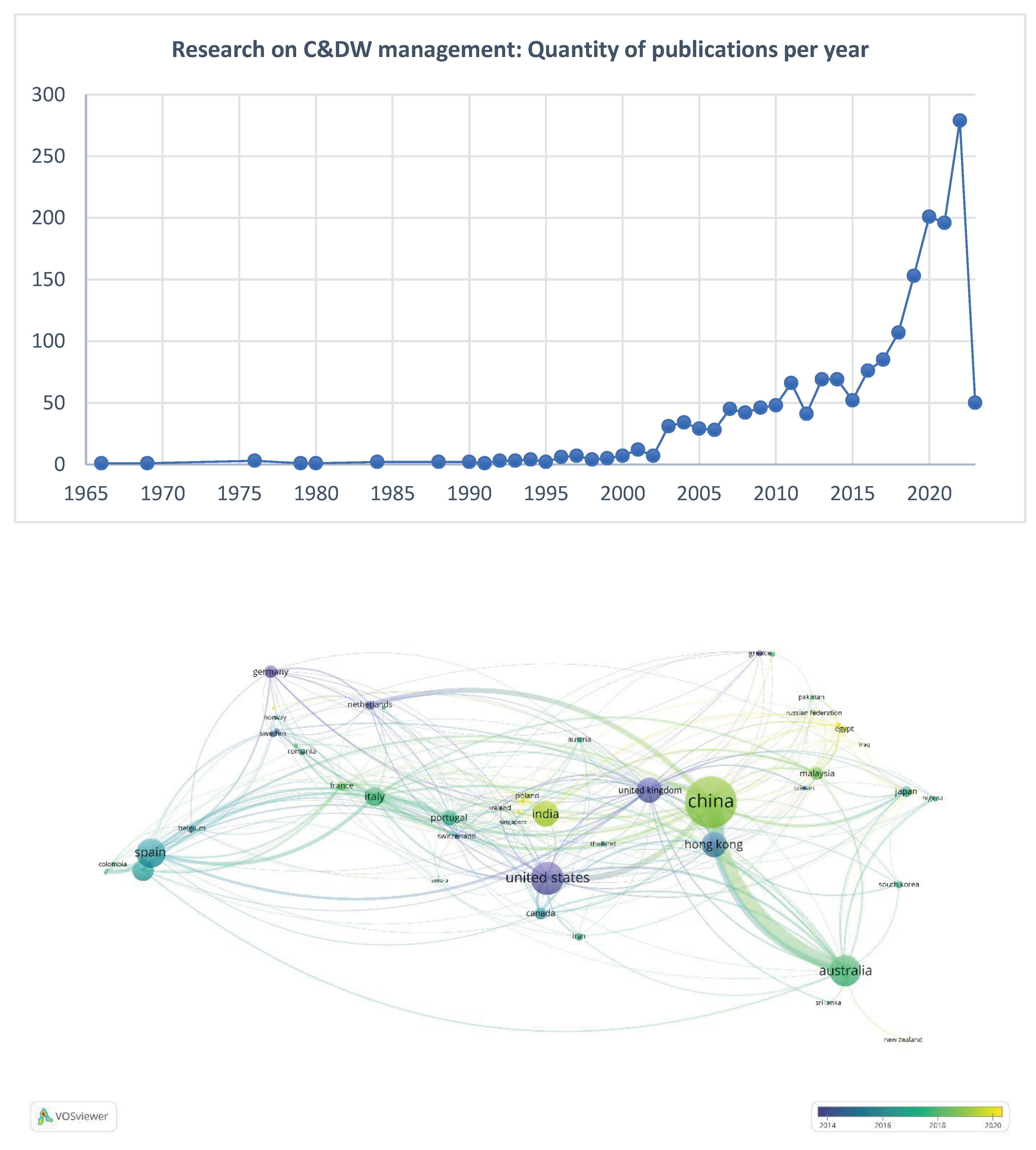
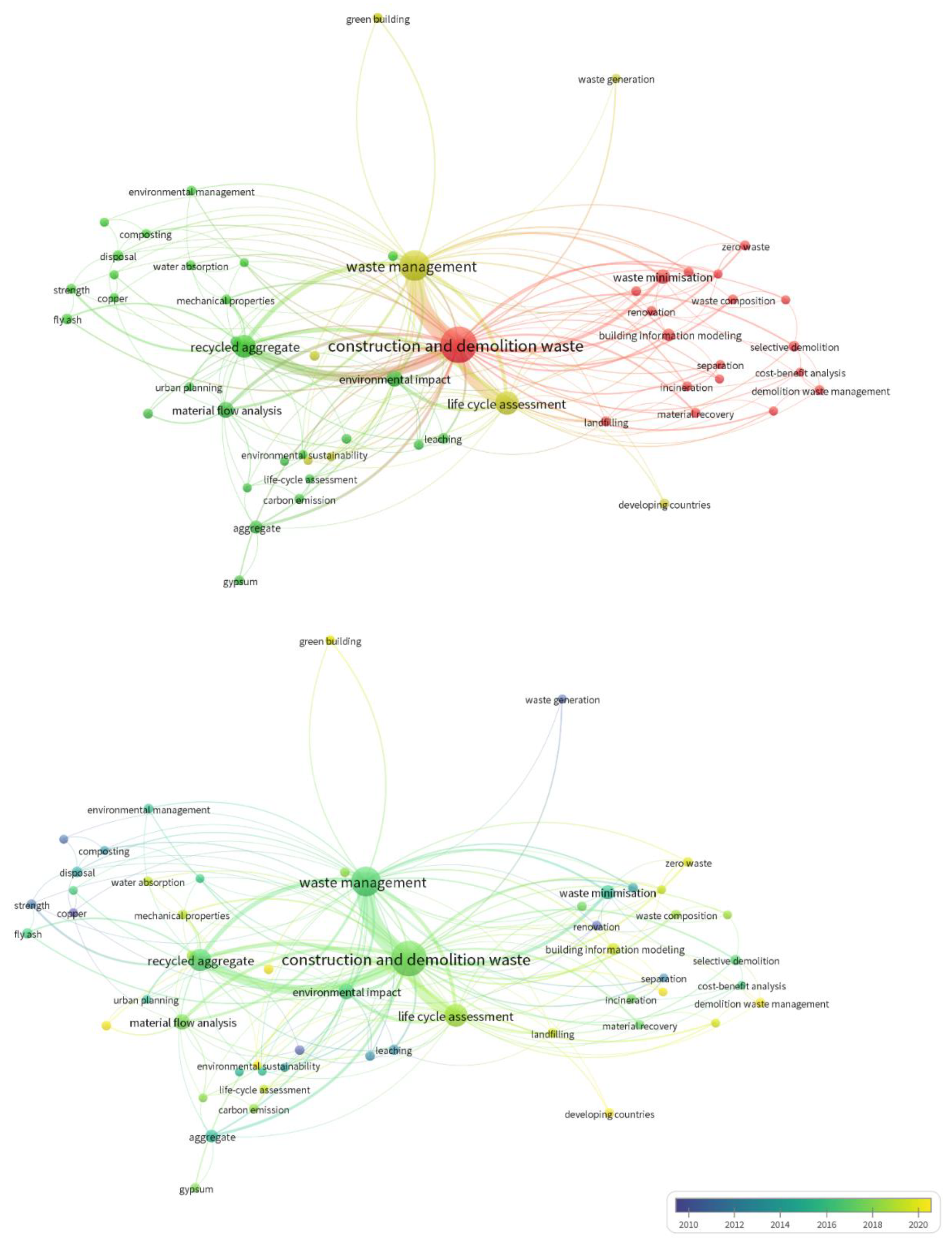
Figure 2.
A: Quantity of publications per year from the search of ‘Life Cycle assessment OR embodied energy OR carbon footprint OR green building OR living building challenge AND construction AND demolition’ on the Scopus database. Search and graph completed on the 6th of April 2023. B: Overlay visualisation for the publication countries over time, from the 1003 publications from the search of ‘Life Cycle assessment OR embodied energy OR carbon footprint OR green building OR living building challenge AND construction AND demolition.’ Search and visualisation completed on the 6th of April 2023. C: Bibliographic visualisation of the co-occurrence of keywords within the 1003 publications from the search of ‘Life Cycle assessment OR embodied energy OR carbon footprint OR green building OR living building challenge AND construction AND demolition.’ Search and visualisation completed on the 6th of April 2023. D: Overlay visualisation for the co-occurrence of keywords over time within the 1003 publications from the search of ‘Life Cycle assessment OR embodied energy OR carbon footprint OR green building OR living building challenge AND construction AND demolition.’ Search and visualisation completed on the 6th of April 2023.
Figure 2.
A: Quantity of publications per year from the search of ‘Life Cycle assessment OR embodied energy OR carbon footprint OR green building OR living building challenge AND construction AND demolition’ on the Scopus database. Search and graph completed on the 6th of April 2023. B: Overlay visualisation for the publication countries over time, from the 1003 publications from the search of ‘Life Cycle assessment OR embodied energy OR carbon footprint OR green building OR living building challenge AND construction AND demolition.’ Search and visualisation completed on the 6th of April 2023. C: Bibliographic visualisation of the co-occurrence of keywords within the 1003 publications from the search of ‘Life Cycle assessment OR embodied energy OR carbon footprint OR green building OR living building challenge AND construction AND demolition.’ Search and visualisation completed on the 6th of April 2023. D: Overlay visualisation for the co-occurrence of keywords over time within the 1003 publications from the search of ‘Life Cycle assessment OR embodied energy OR carbon footprint OR green building OR living building challenge AND construction AND demolition.’ Search and visualisation completed on the 6th of April 2023.
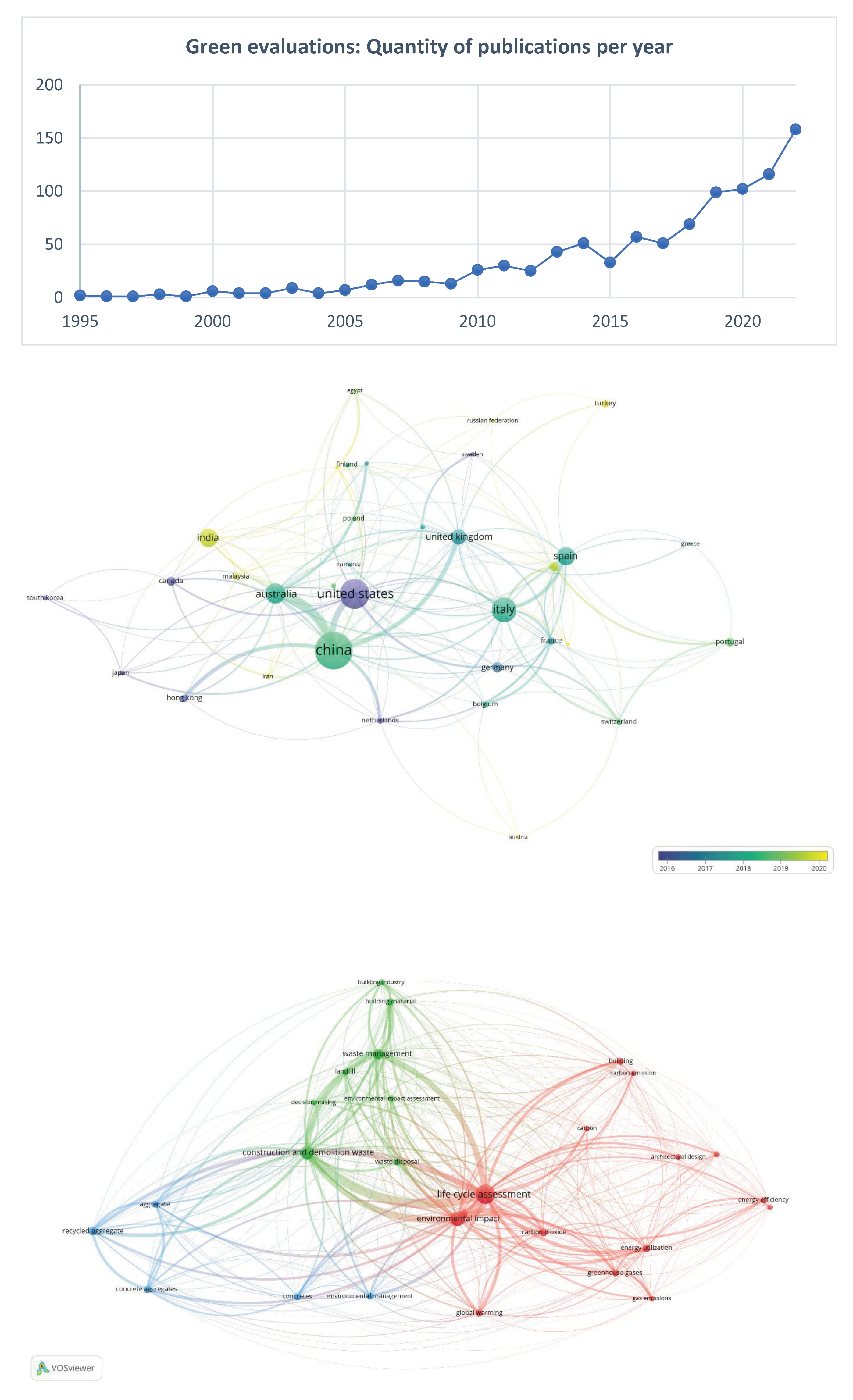
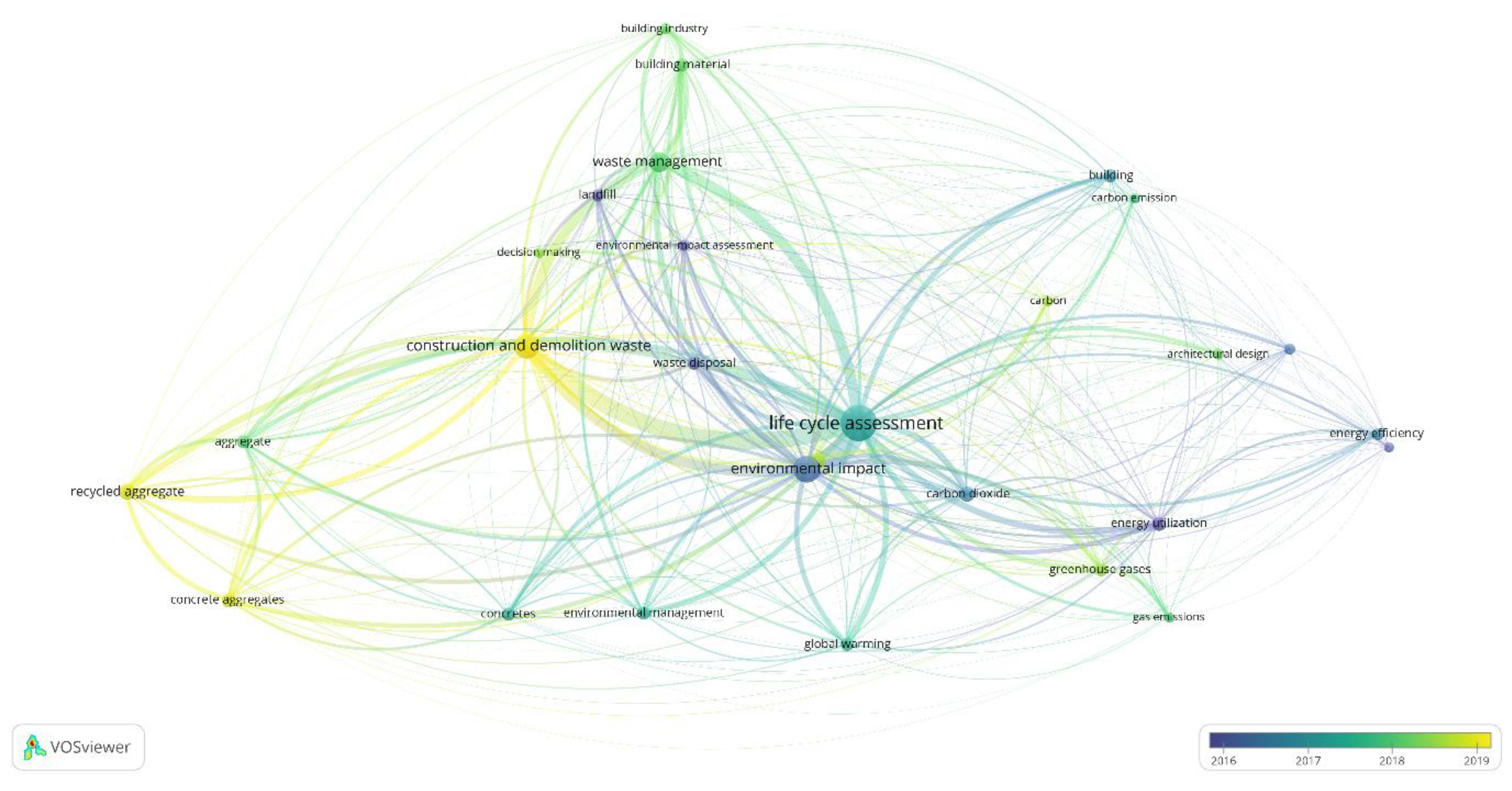
Figure 3.
A: Quantity of publications per year from the search of ‘Reuse OR recycle OR reclaim OR (salvaged AND material) OR upcycle AND construction AND demolition’ on the Scopus database. Search and graph completed on the 29th May 2023. B: Overlay visualisation for the publication countries over time, from the 1081 publications from the search of ‘Reuse OR recycle OR reclaim OR (salvaged AND material) OR upcycle AND construction AND demolition.’ Search and visualisation completed on the 29th of May 2023. C: Bibliographic visualisation of the co-occurrence of keywords within the 1081 publications from the search of ‘Reuse OR recycle OR reclaim OR (salvaged AND material) OR upcycle AND construction AND demolition.’ Search and visualisation completed on the 29th of May 2023. D: Overlay visualisation for the co-occurrence of keywords over time within the 1081 publications from the search of ‘Reuse OR recycle OR reclaim OR (salvaged AND material) OR upcycle AND construction AND demolition.’ Search and visualisation completed on the 29th of May 2023.
Figure 3.
A: Quantity of publications per year from the search of ‘Reuse OR recycle OR reclaim OR (salvaged AND material) OR upcycle AND construction AND demolition’ on the Scopus database. Search and graph completed on the 29th May 2023. B: Overlay visualisation for the publication countries over time, from the 1081 publications from the search of ‘Reuse OR recycle OR reclaim OR (salvaged AND material) OR upcycle AND construction AND demolition.’ Search and visualisation completed on the 29th of May 2023. C: Bibliographic visualisation of the co-occurrence of keywords within the 1081 publications from the search of ‘Reuse OR recycle OR reclaim OR (salvaged AND material) OR upcycle AND construction AND demolition.’ Search and visualisation completed on the 29th of May 2023. D: Overlay visualisation for the co-occurrence of keywords over time within the 1081 publications from the search of ‘Reuse OR recycle OR reclaim OR (salvaged AND material) OR upcycle AND construction AND demolition.’ Search and visualisation completed on the 29th of May 2023.
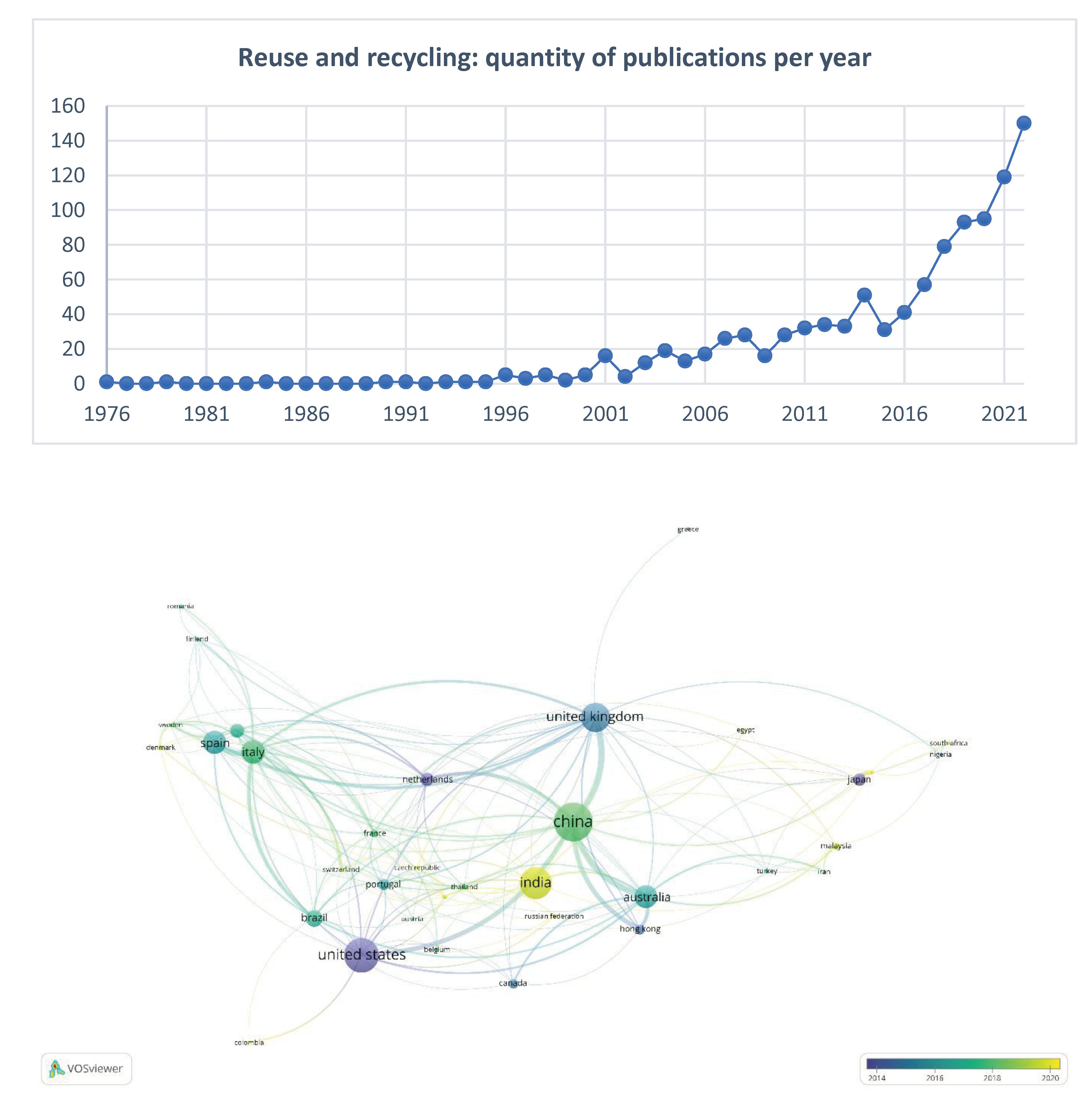

Figure 4.
A: Quantity of publications per year from the search of ‘Refurbishment OR renovation OR (heritage AND restoration) AND building AND construction’ on the Scopus database. Search and graph completed on the 29th May 2023. B: Overlay visualisation for the publication countries over time, from the 4665 publications from the search of ‘Refurbishment OR renovation OR (heritage AND restoration) AND building AND construction.’ Search and visualisation completed on the 29th of May 2023. C: Bibliographic visualisation of the co-occurrence of keywords within the 4665 publications from the search of ‘Refurbishment OR renovation OR (heritage AND restoration) AND building AND construction.’ Search and visualisation completed on the 29th of May 2023. D: Overlay visualisation for the co-occurrence of keywords over time within the 4665 publications from the search of ‘Refurbishment OR renovation OR (heritage AND restoration) AND building AND construction.’ Search and visualisation completed on the 29th of May 2023.
Figure 4.
A: Quantity of publications per year from the search of ‘Refurbishment OR renovation OR (heritage AND restoration) AND building AND construction’ on the Scopus database. Search and graph completed on the 29th May 2023. B: Overlay visualisation for the publication countries over time, from the 4665 publications from the search of ‘Refurbishment OR renovation OR (heritage AND restoration) AND building AND construction.’ Search and visualisation completed on the 29th of May 2023. C: Bibliographic visualisation of the co-occurrence of keywords within the 4665 publications from the search of ‘Refurbishment OR renovation OR (heritage AND restoration) AND building AND construction.’ Search and visualisation completed on the 29th of May 2023. D: Overlay visualisation for the co-occurrence of keywords over time within the 4665 publications from the search of ‘Refurbishment OR renovation OR (heritage AND restoration) AND building AND construction.’ Search and visualisation completed on the 29th of May 2023.
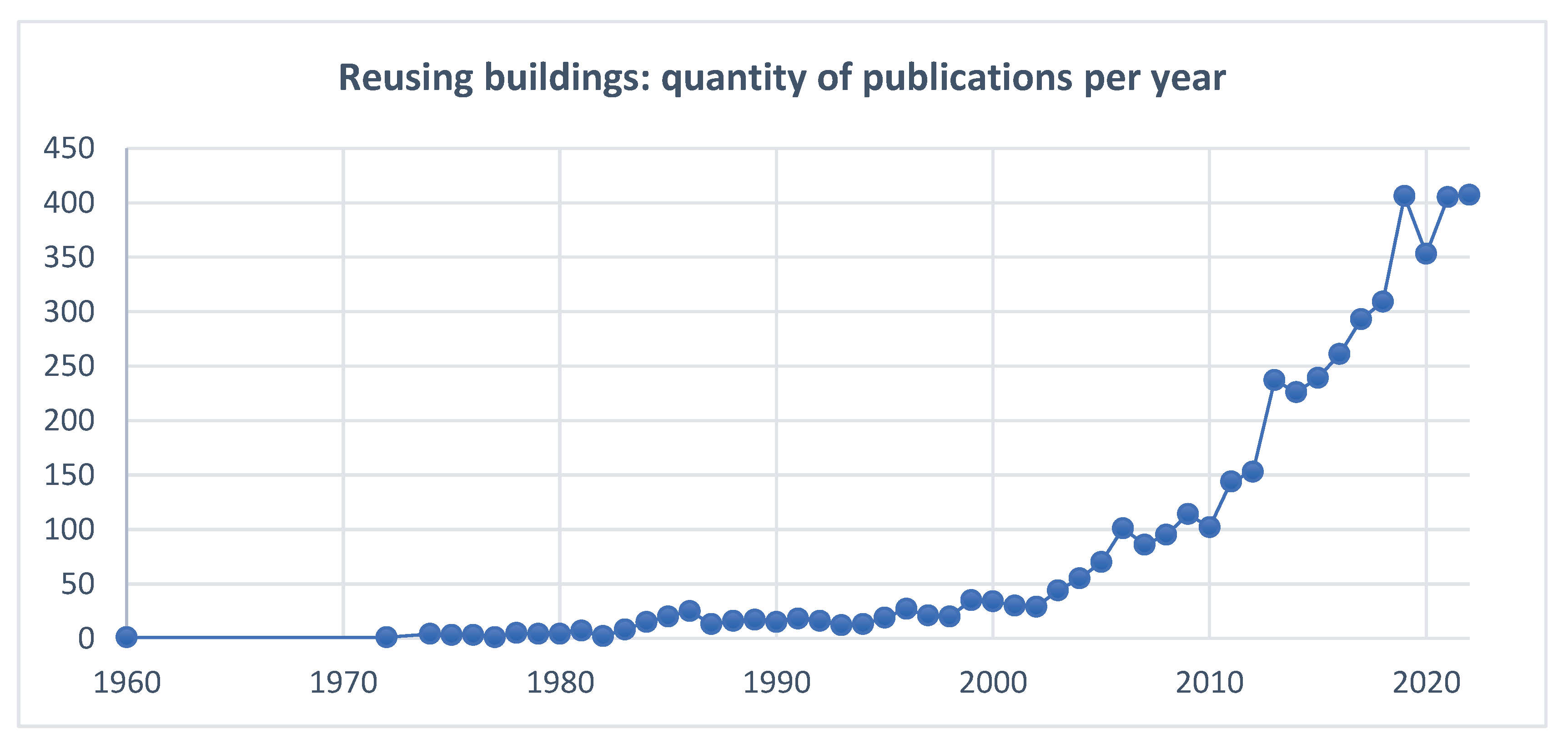
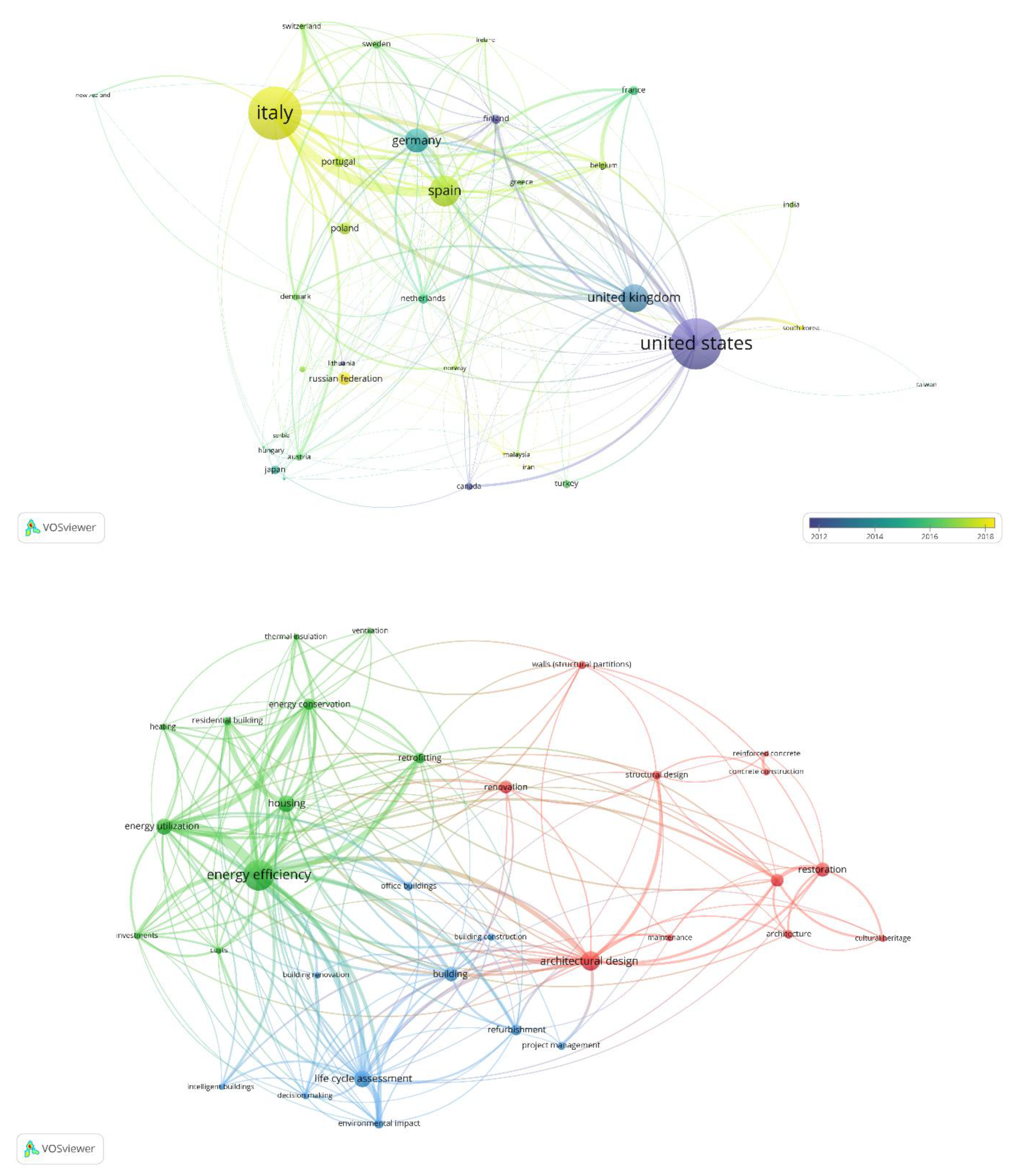
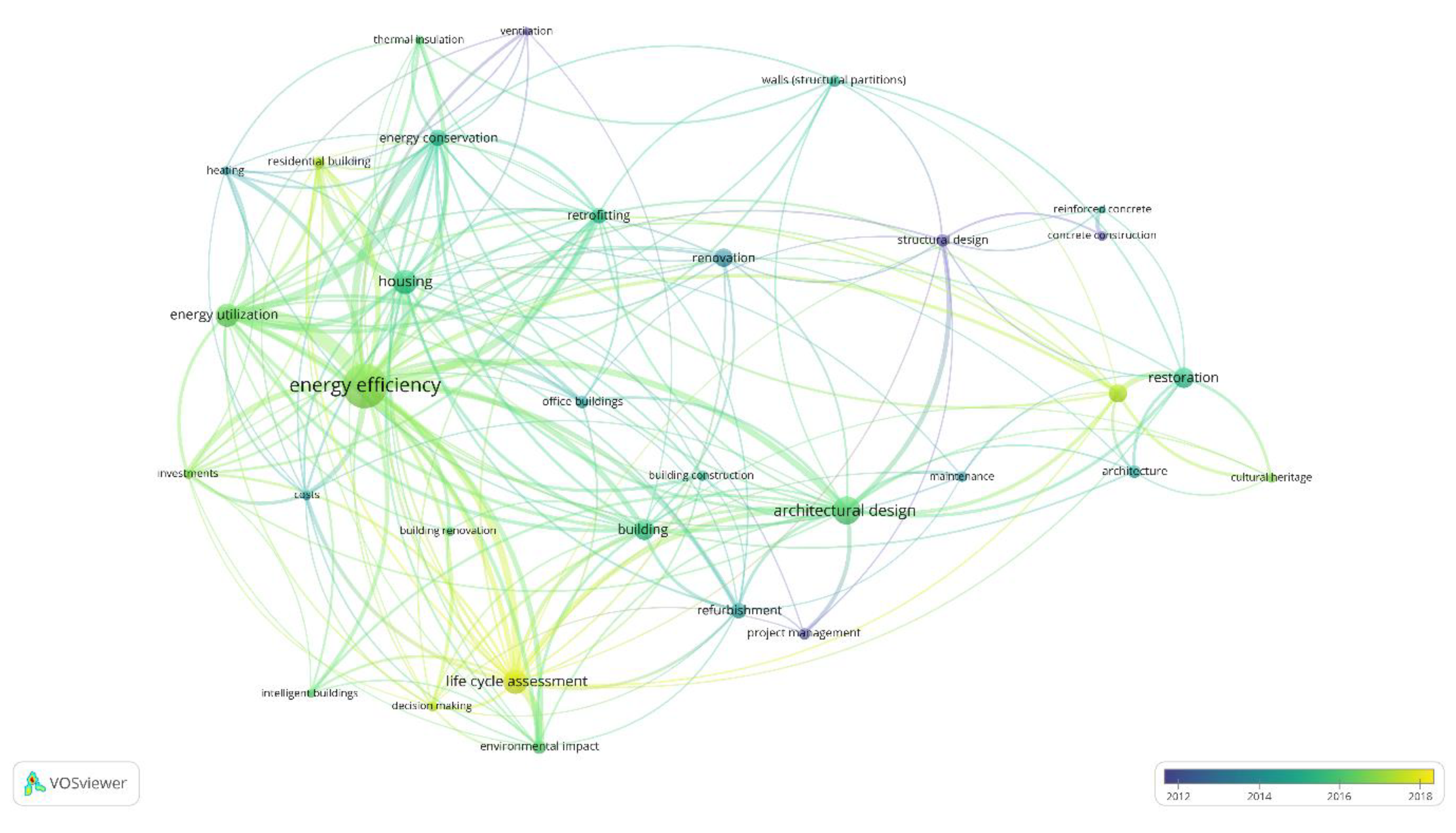
Figure 5.
A: Quantity of publications per year from the search of ‘Circular economy OR closing the loop OR zero waste OR narrowing the loop AND construction OR demolition’ on the Scopus database. Search and graph completed on the 29th May 2023. B: Overlay visualisation for the publication countries over time, from the 3235 publications from the search of ‘Circular economy OR closing the loop OR zero waste OR narrowing the loop AND construction OR demolition.’ Search and visualisation completed on the 29th of May 2023. C: Bibliographic visualisation of the co-occurrence of keywords within the 3235 publications from the search of ‘Circular economy OR closing the loop OR zero waste OR narrowing the loop AND construction OR demolition.’ Search and visualisation completed on the 29th of May 2023. D: Overlay visualisation for the co-occurrence of keywords over time within the 3235 publications from the search of ‘Circular economy OR closing the loop OR zero waste OR narrowing the loop AND construction OR demolition.’ Search and visualisation completed on the 29th of May 2023.
Figure 5.
A: Quantity of publications per year from the search of ‘Circular economy OR closing the loop OR zero waste OR narrowing the loop AND construction OR demolition’ on the Scopus database. Search and graph completed on the 29th May 2023. B: Overlay visualisation for the publication countries over time, from the 3235 publications from the search of ‘Circular economy OR closing the loop OR zero waste OR narrowing the loop AND construction OR demolition.’ Search and visualisation completed on the 29th of May 2023. C: Bibliographic visualisation of the co-occurrence of keywords within the 3235 publications from the search of ‘Circular economy OR closing the loop OR zero waste OR narrowing the loop AND construction OR demolition.’ Search and visualisation completed on the 29th of May 2023. D: Overlay visualisation for the co-occurrence of keywords over time within the 3235 publications from the search of ‘Circular economy OR closing the loop OR zero waste OR narrowing the loop AND construction OR demolition.’ Search and visualisation completed on the 29th of May 2023.
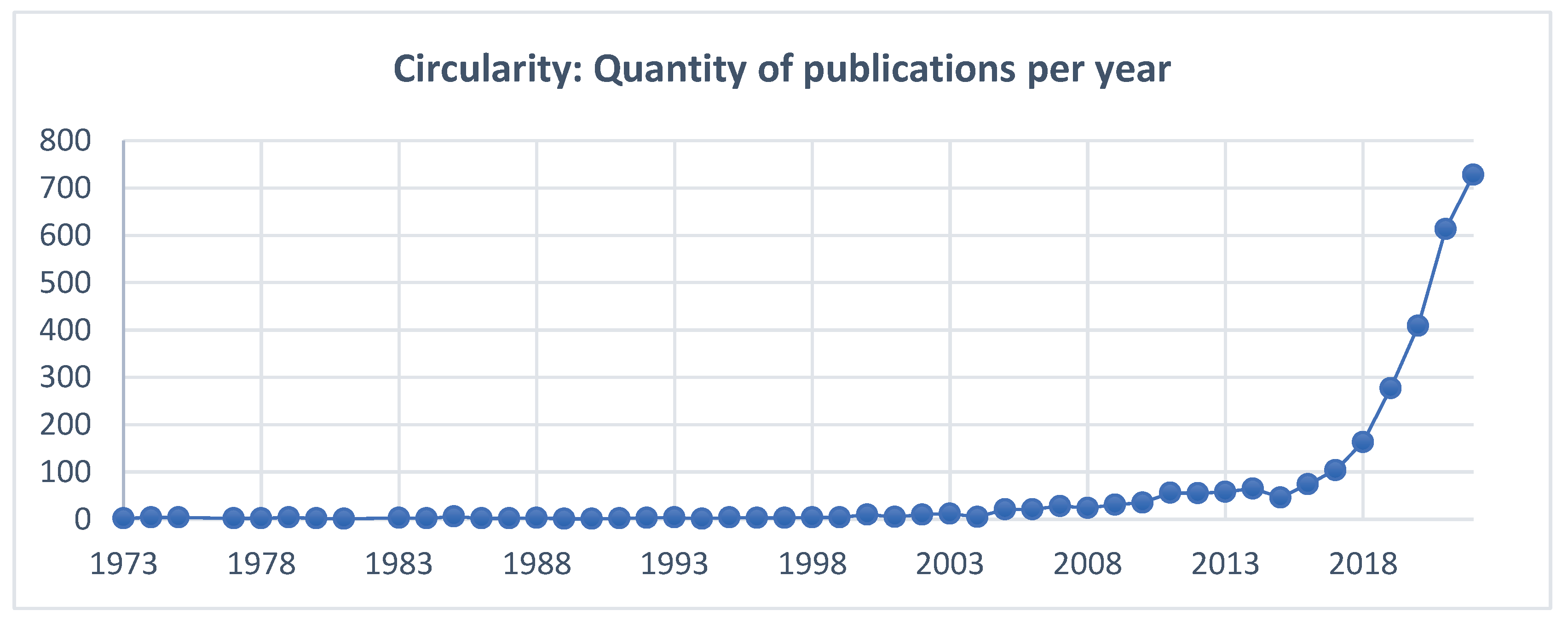
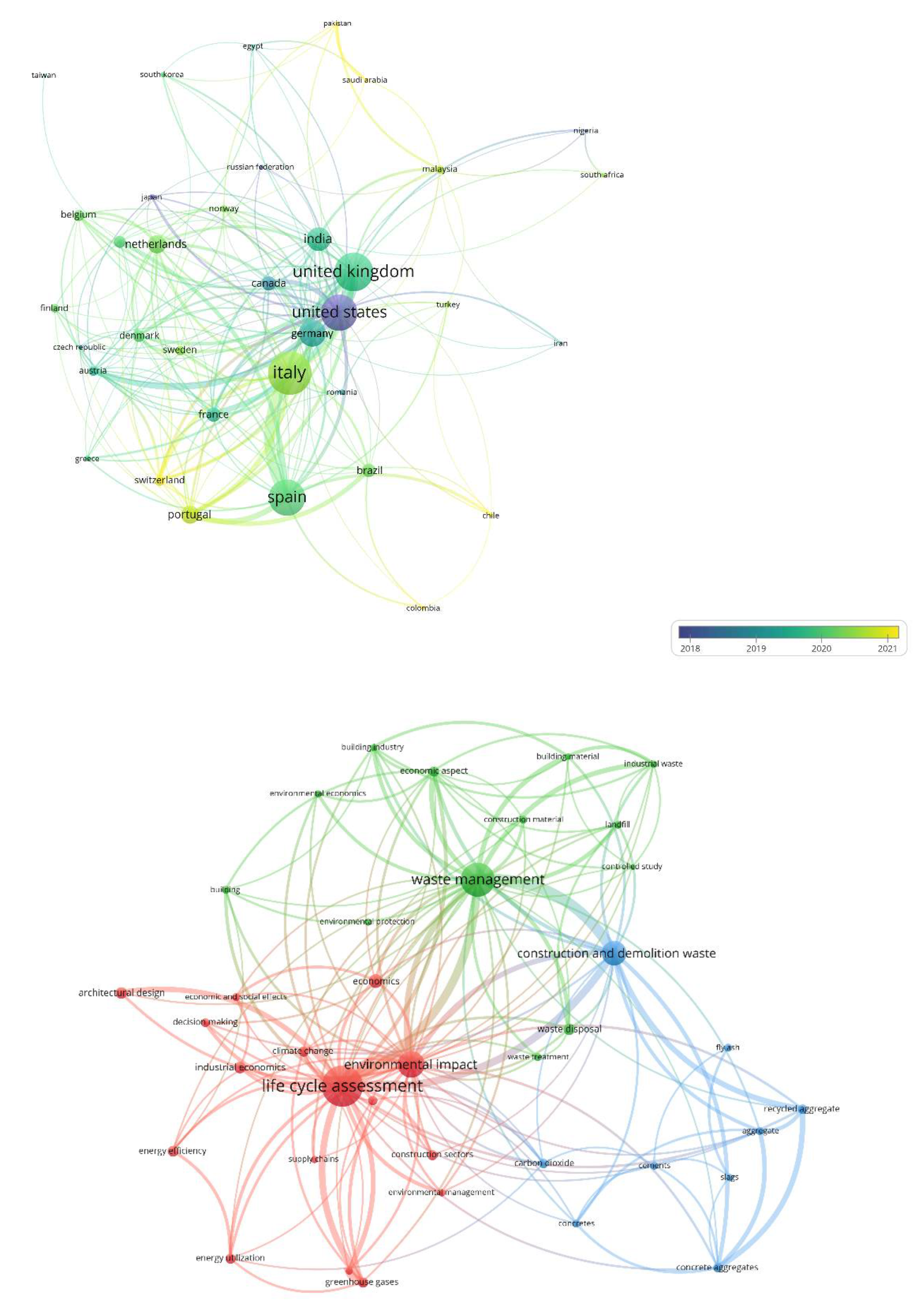
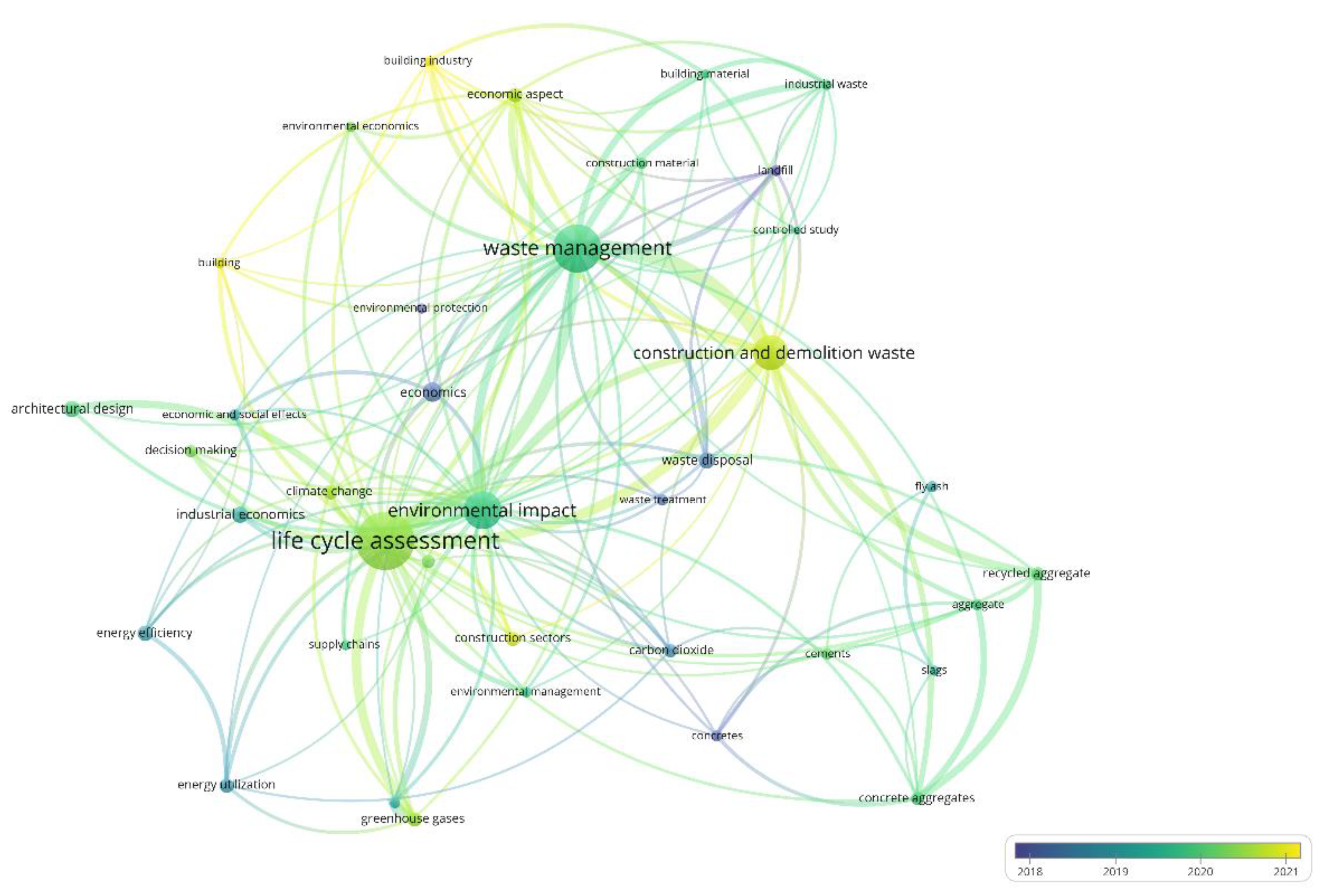
Figure 6.
A: Quantity of publications per year from the search of ‘Waste minimization OR waste minimisation OR zero waste AND construction’ on the Scopus database. Search and graph completed on the 29th of May 2023. B: Overlay visualisation for the publication countries over time, from the 1356 publications from the search of ‘Waste minimization OR waste minimisation OR zero waste AND construction.’ Search and visualisation completed on the 29th of May 2023. C: Bibliographic visualisation of the co-occurrence of keywords within the 1356 publications from the search of ‘Waste minimization OR waste minimisation OR zero waste AND construction.’ Search and visualisation completed on the 29th of May 2023. D: Overlay visualisation for the co-occurrence of keywords over time within the 1356 publications from the search of ‘Waste minimization OR waste minimisation OR zero waste AND construction.’ Search and visualisation completed on the 29th of May 2023.
Figure 6.
A: Quantity of publications per year from the search of ‘Waste minimization OR waste minimisation OR zero waste AND construction’ on the Scopus database. Search and graph completed on the 29th of May 2023. B: Overlay visualisation for the publication countries over time, from the 1356 publications from the search of ‘Waste minimization OR waste minimisation OR zero waste AND construction.’ Search and visualisation completed on the 29th of May 2023. C: Bibliographic visualisation of the co-occurrence of keywords within the 1356 publications from the search of ‘Waste minimization OR waste minimisation OR zero waste AND construction.’ Search and visualisation completed on the 29th of May 2023. D: Overlay visualisation for the co-occurrence of keywords over time within the 1356 publications from the search of ‘Waste minimization OR waste minimisation OR zero waste AND construction.’ Search and visualisation completed on the 29th of May 2023.
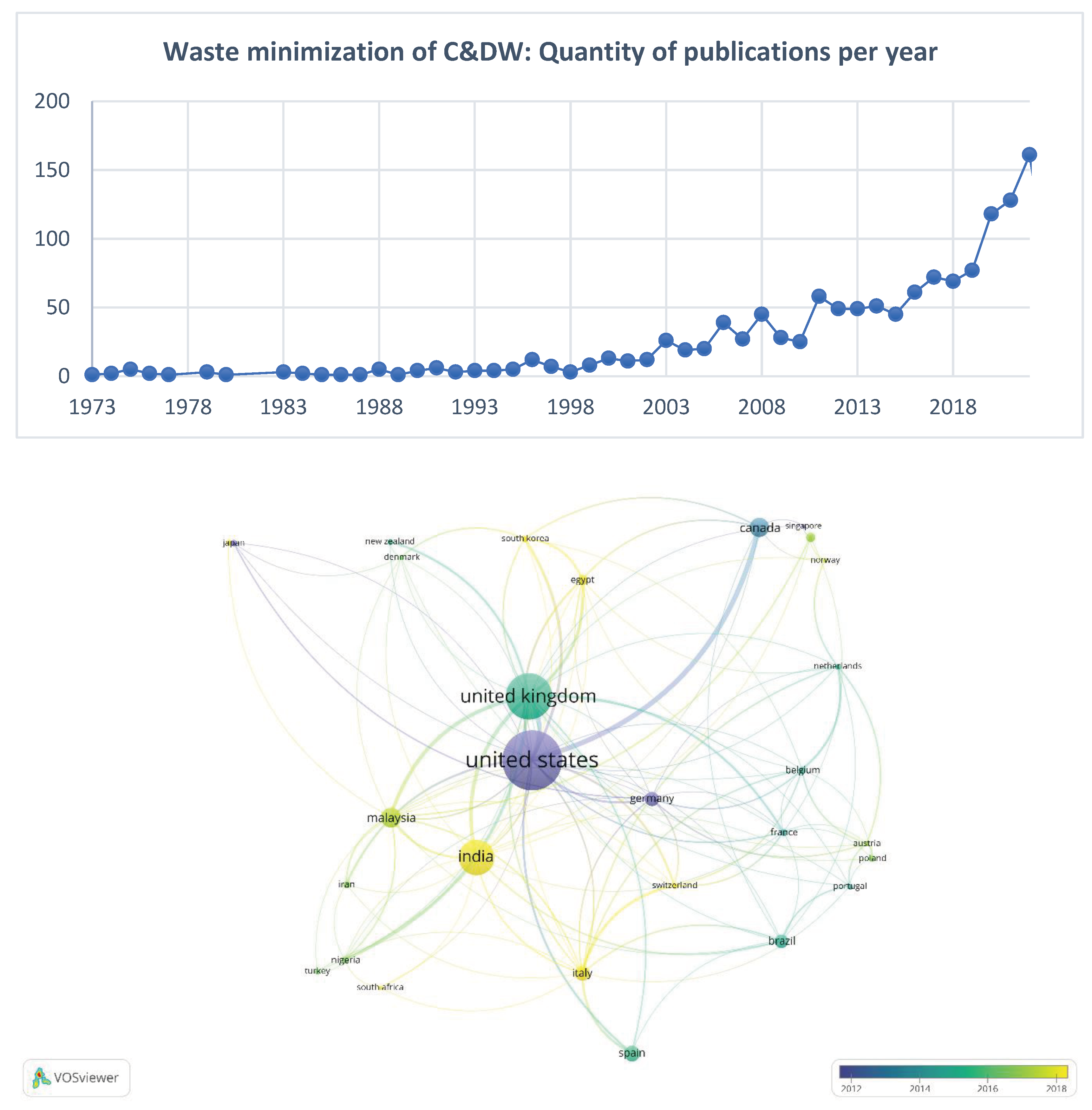
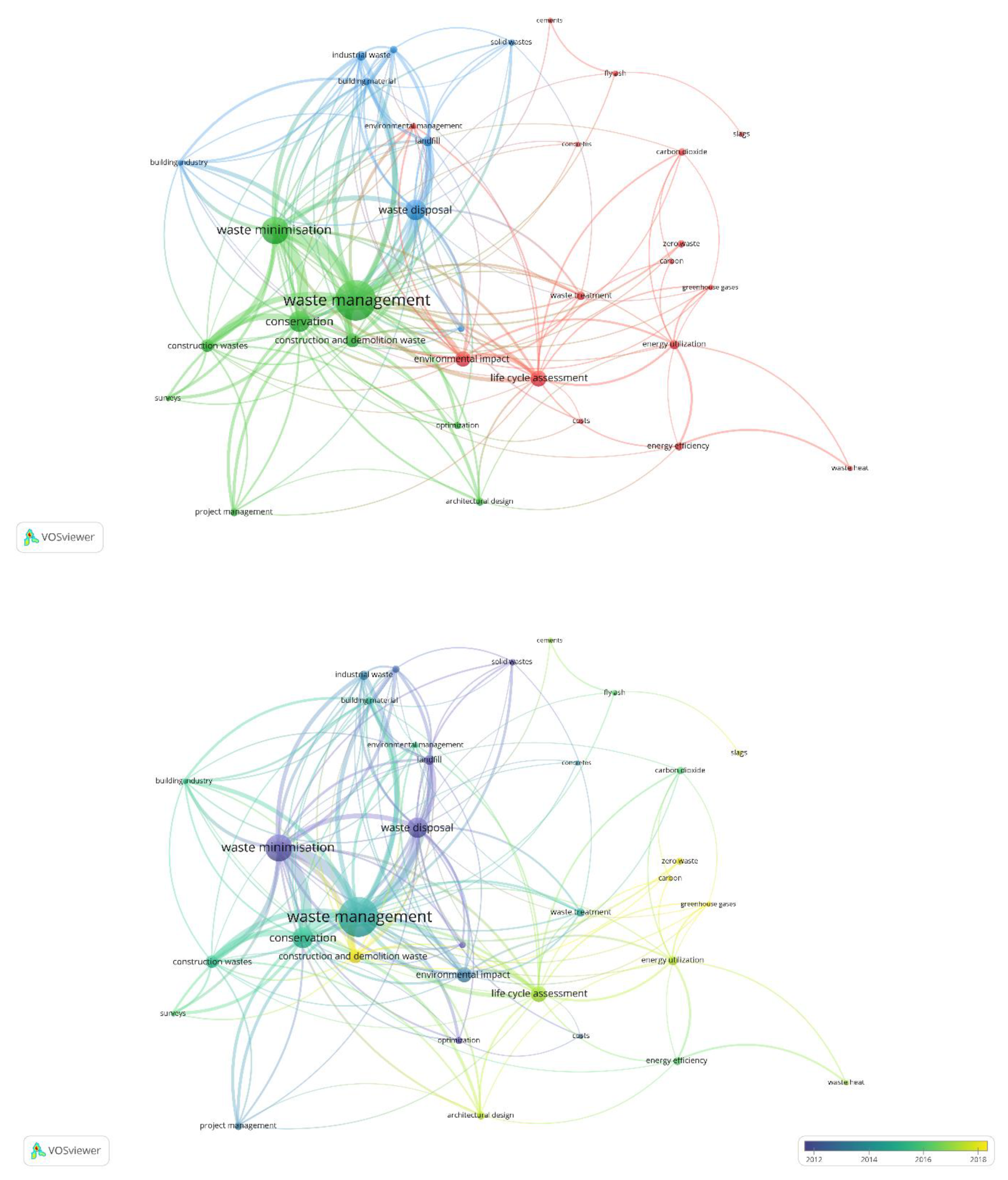
Figure 7.
A: Quantity of publications per year from the search of ‘Waste minimization OR waste minimisation OR zero waste’ on the Scopus database. Search and graph completed on the 29th of May 2023. B: Overlay visualisation for the publication countries over time, from the 19693 publications from the search of ‘Waste minimization OR waste minimisation OR zero waste.’ Search and visualisation completed on the 29th of May 2023. C: Bibliographic visualisation of the co-occurrence of keywords within the 19693 publications from the search of ‘Waste minimization OR waste minimisation OR zero waste.’ Search and visualisation completed on the 29th of May 2023. D: Overlay visualisation for the co-occurrence of keywords over time within the 19693 publications from the search of ‘Waste minimization OR waste minimisation OR zero waste.’ Search and visualisation completed on the 29th of May 2023.
Figure 7.
A: Quantity of publications per year from the search of ‘Waste minimization OR waste minimisation OR zero waste’ on the Scopus database. Search and graph completed on the 29th of May 2023. B: Overlay visualisation for the publication countries over time, from the 19693 publications from the search of ‘Waste minimization OR waste minimisation OR zero waste.’ Search and visualisation completed on the 29th of May 2023. C: Bibliographic visualisation of the co-occurrence of keywords within the 19693 publications from the search of ‘Waste minimization OR waste minimisation OR zero waste.’ Search and visualisation completed on the 29th of May 2023. D: Overlay visualisation for the co-occurrence of keywords over time within the 19693 publications from the search of ‘Waste minimization OR waste minimisation OR zero waste.’ Search and visualisation completed on the 29th of May 2023.
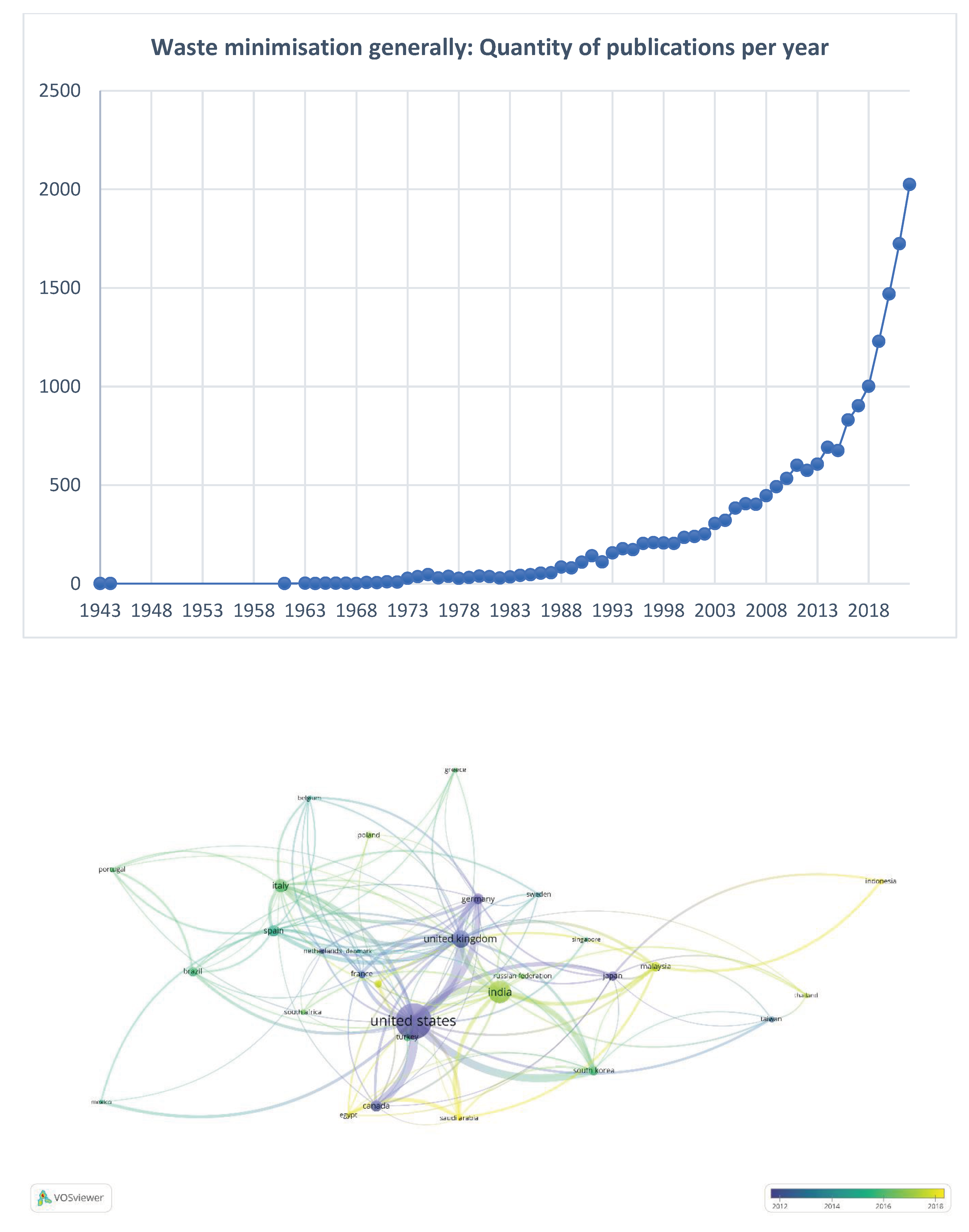
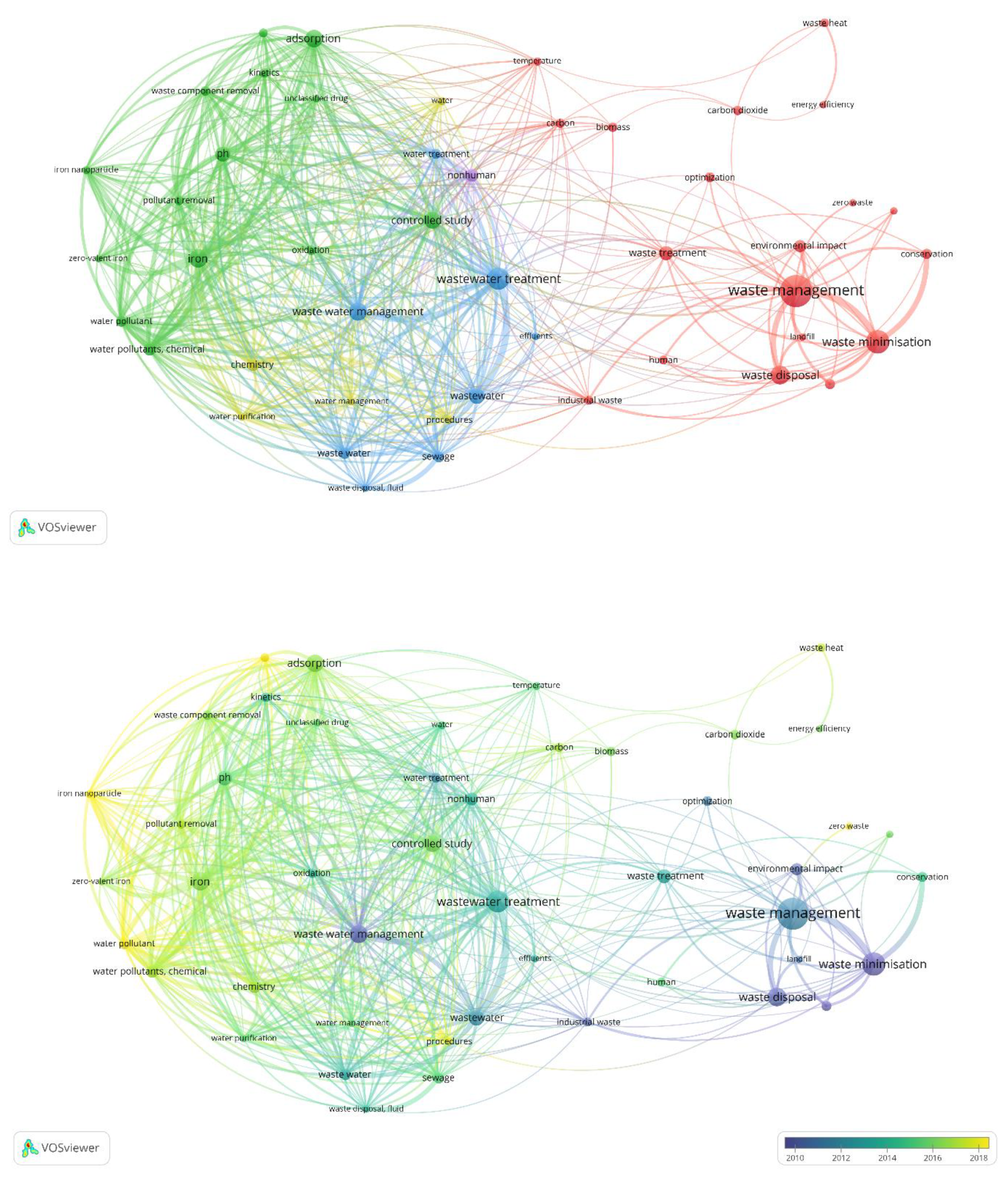
Figure 8.
Quantity of publications per year from all searches showing the shared three-phase trend.
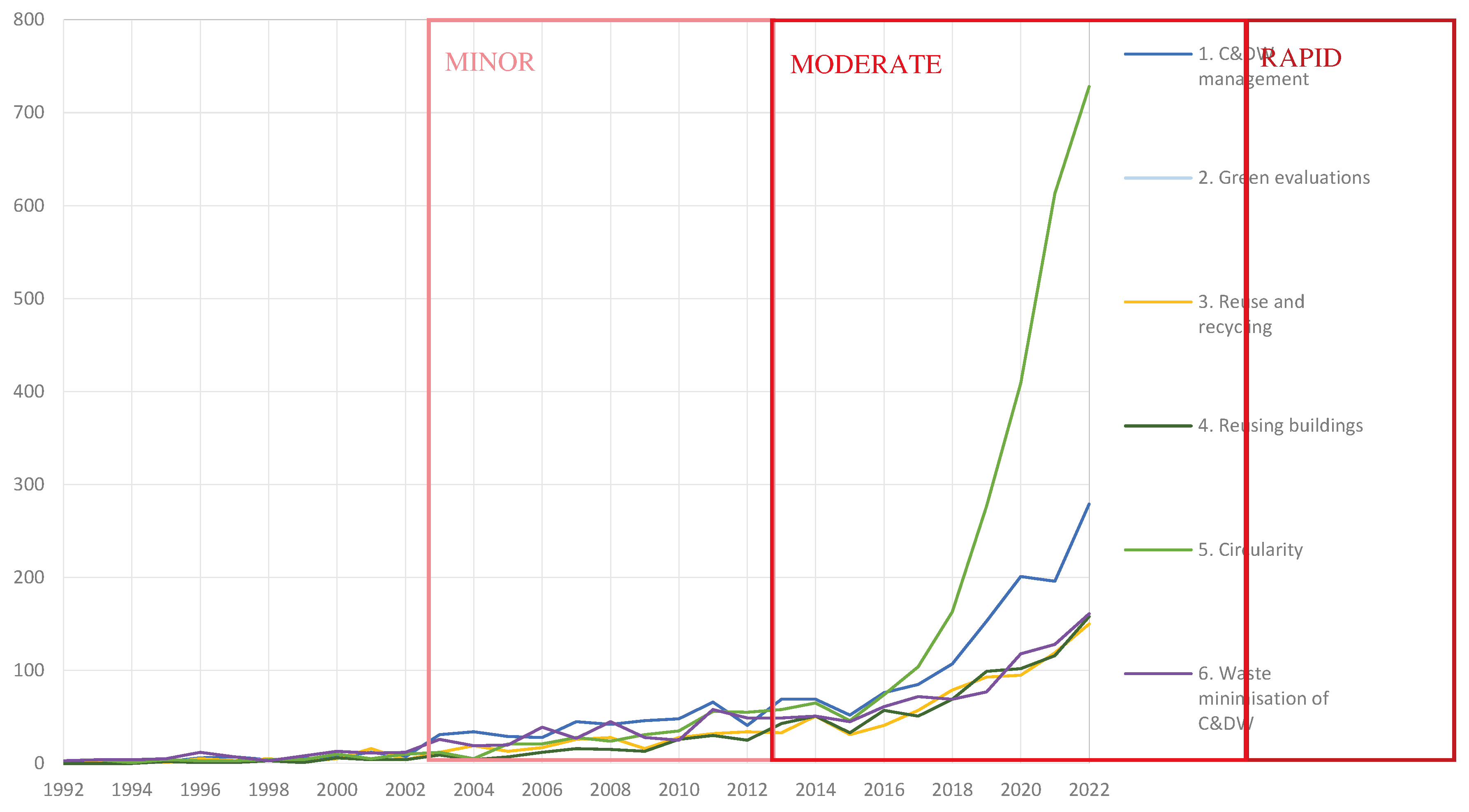

Table 1.
Overview of each of the six reviews, analysing the levels of research growth.
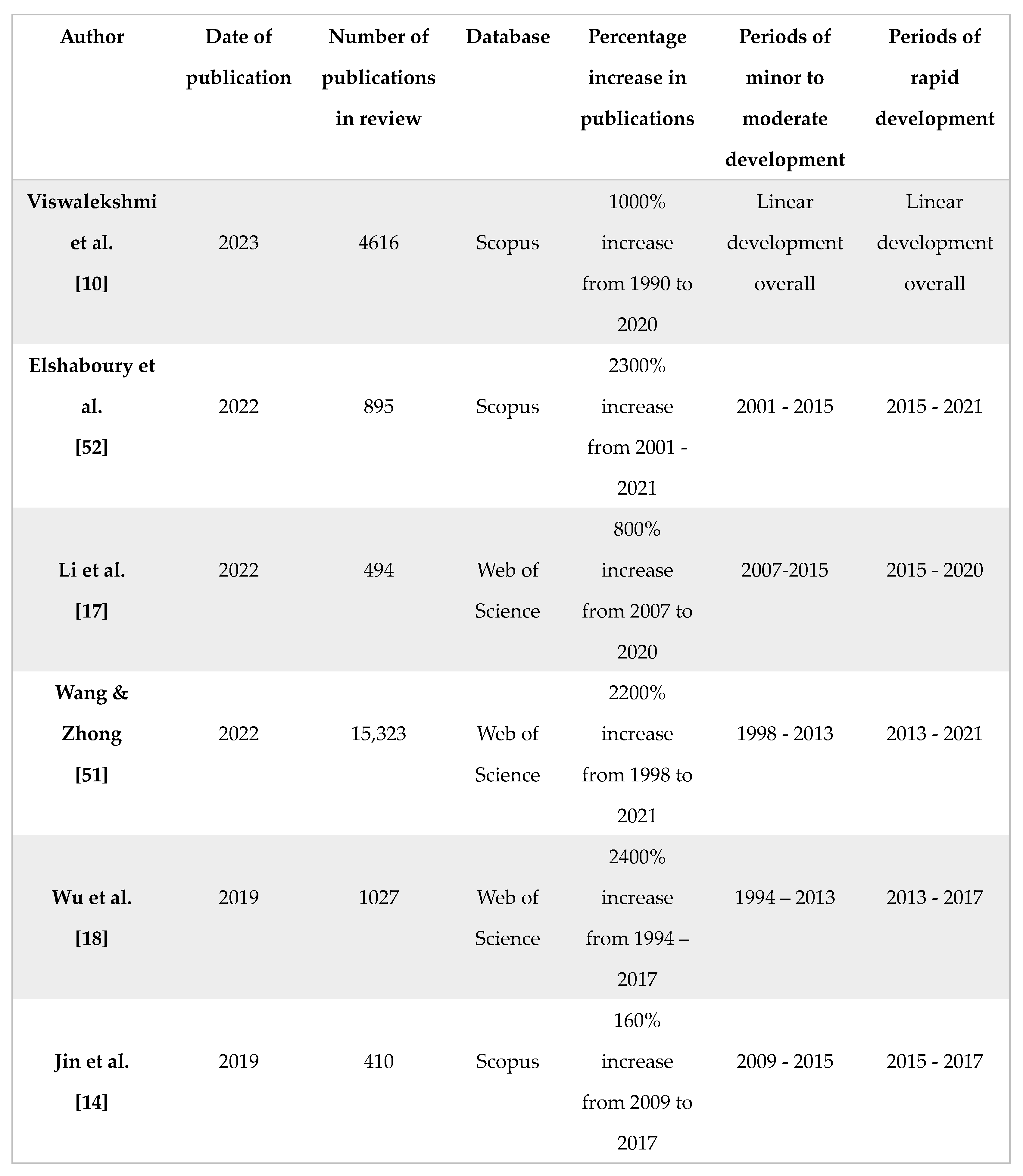
Disclaimer/Publisher’s Note: The statements, opinions and data contained in all publications are solely those of the individual author(s) and contributor(s) and not of MDPI and/or the editor(s). MDPI and/or the editor(s) disclaim responsibility for any injury to people or property resulting from any ideas, methods, instructions or products referred to in the content. |
© 2023 by the authors. Licensee MDPI, Basel, Switzerland. This article is an open access article distributed under the terms and conditions of the Creative Commons Attribution (CC BY) license (http://creativecommons.org/licenses/by/4.0/).
Copyright: This open access article is published under a Creative Commons CC BY 4.0 license, which permit the free download, distribution, and reuse, provided that the author and preprint are cited in any reuse.


