

Submitted:
05 December 2023
Posted:
06 December 2023
You are already at the latest version
Abstract
The adoption of sustainable forest management practices emerged as a contemporary imperative for forest biodiversity preservation, functional integrity, and mitigation of climate change. Within the spectrum of these practices, thinning is recognized as an environmentally sustainable strategy. The primary objective of thinning is the equitable redistribution of aboveground growth, diverting resources from younger trees to promote the accelerated development of more valuable specimens compared to unthinned forests. Thinning, while fostering aboveground changes, induces substantial alterations in soil chemical and biochemical properties. This review addresses the often-debated consequences of thinning on soil characteristics, focusing on the intricate interplay involving different thinning intensities and their impact on soil chemical and biochemical parameters. Specifically, the analysis delves into the modulation of organic carbon levels, microbial biomass, and enzymes crucial to the organic matter cycle. Two key aspects are scrutinized: firstly, the influence of thinning intensity and the temporal dimension post-thinning on soil properties; secondly, the comparative impact of thinning intensity versus the time elapsed from the thinning event on soil properties and associated biological processes. The findings underscore pivotal insights: a) temporal dynamics significantly affect soil organic matter across broadleaved (excluding beech), coniferous, and mixed forests, manifesting as early as 2-7 years post-thinning; b) thinning intensity, up to a threshold of 50%, enhances soil quality by augmenting organic carbon content, bolstering microbial communities, and amplifying associated enzyme activities. This review consolidates valuable information for forest managers, providing guidance to optimize natural processes in tandem with achieving specific management objectives. By illuminating the nuanced interactions between thinning practices and soil dynamics, this knowledge equips stakeholders to make informed decisions in the pursuit of sustainable forest management and ecological resilience.
Keywords:
Enzyme activities
; forest
; microbial biomass
; organic matter
; thinning intensity.
1. Introduction
Thinning, the strategic removal of a specific number of trees from a woodland to redirect tree growth toward fewer, more valuable stems, constitutes a pivotal silvicultural operation essential for effective forest ecosystem management [1]. This practice plays a crucial role in enhancing nutrient availability, productivity, biodiversity [2,3], and processes integral to the soil ecosystem [4]. Forest management practices, in general, exert a profound influence on key factors such as organic carbon storage and sequestration [5,6], nutrient concentrations [7], soil enzyme activities [8], soil biodiversity, and water retention [9,10]. Understanding the impact of forest management practices on soil properties is imperative for preserving the essential functions of forest ecosystems.
Thinning, by reducing tree density, induces changes in microclimate [11,12,13], resulting in elevated soil temperature and reduced soil moisture [14,15,16,17]. This alteration also affects soil properties by increasing compaction [18,19], soil bulk density, and reducing water-holding capacity and nutrient levels [20,21]. Thinning operations, influencing the undergrowth and decomposition in woodland soil, have a substantial impact on the trend of organic matter and the structure of the soil microbial community [22,23,24,25], which are crucial determinants of soil quality and health [26,27,28,29,30,31].
While numerous studies have investigated the effects of thinning on soil organic carbon (SOC) stocks, soil microbial biomass, and enzyme activity, varying and contradictory results have emerged concerning thinning intensity, methods employed, and the time elapsed since thinning [8,31,32,33,34]. Moreover, these effects differ across forest types (broadleaf, coniferous, and mixed forest), where differences in litter quality can also influence soil carbon stocks and dynamics differently [35,36].
Through a comprehensive literature review, it became evident that the predominant focus of studies has been on the impacts of thinning intensity rather than the time elapsed since thinning. The effects of thinning intensities and the time elapsed from thinning on soil properties exhibit distinct characteristics. Here, we delineate the key disparities between the influences of thinning intensities and the time elapsed from thinning on soil properties:
1.1. Immediate vs. Long-term Effects
Thinning Intensity:
Thinning intensity predominantly exerts immediate or short-term changes in soil properties. The degree of tree removal and the consequential soil disturbance during thinning operations can promptly affect soil compaction, erosion, and nutrient availability. Higher thinning intensities typically yield more pronounced immediate impacts on soil properties.
Time Elapsed from Thinning:
The time elapsed from thinning refers to the duration that has transpired since the thinning operation was executed. It predominantly influences the long-term or cumulative effects on soil properties. Over time, critical soil processes, such as organic matter decomposition, nutrient cycling, and vegetation regrowth, come into play and shape soil properties. The enduring impacts of thinning become increasingly prominent as the time since thinning extends.
1.2. Magnitude of Change
Thinning Intensity:
The degree of thinning intensity serves as a direct determinant of the magnitude of change in soil properties. Elevated thinning intensities, involving the removal of a larger proportion of trees, typically result in more pronounced and immediate alterations in soil properties. These changes encompass reduced tree competition, shifts in nutrient dynamics, and heightened soil disturbance.
Time Elapsed from Thinning:
The time elapsed from thinning exerts its influence on soil properties in a gradual and cumulative fashion. Changes in soil properties unfold progressively over time, driven by factors such as vegetation regrowth, inputs of organic matter, and the recovery of the soil microbial community. The magnitude of change in soil properties tends to escalate with the duration since thinning.
1.3. Direct vs. Indirect Effects
Thinning Intensity:
Thinning intensity manifests direct effects on soil properties through factors like soil disturbance, alterations in microclimate conditions, and modified nutrient availability arising from reduced tree competition. It directly shapes soil physical and chemical properties, culminating in immediate changes in soil conditions.
Time Elapsed from Thinning:
The time elapsed from thinning predominantly exerts indirect effects on soil properties. This temporal dimension allows for secondary processes to unfold, including vegetation regrowth, shifts in organic matter inputs, and dynamics within the soil microbial community. These indirect effects gradually mold soil properties over an extended period.
1.4. Reversibility
The impact of thinning intensity on soil properties is, to some extent, reversible, contingent upon post-thinning management practices. Implementation of appropriate soil conservation measures can effectively mitigate risks associated with soil compaction and erosion, fostering the gradual recovery of soil properties over time.
Conversely, the effects of the time elapsed since thinning on soil properties tend to be generally irreversible to some degree. Although soil processes and properties may undergo evolution over time, the initial impacts of thinning on soil characteristics cannot be fully reversed. Nevertheless, judicious management practices, coupled with the natural recovery of soil processes, can contribute to the restoration of soil properties to some extent.
In summary, thinning intensities primarily precipitate immediate and direct changes in soil properties, while the time elapsed since thinning exerts a more gradual and cumulative influence over the long term. Thinning intensities exhibit a larger and immediate impact on soil properties, whereas the time elapsed since thinning facilitates secondary processes, influencing soil conditions progressively. Both factors are crucial considerations in forest management, and understanding their distinct effects can inform thinning strategies and long-term soil health management.
This comprehensive review consolidates the latest insights into the influence of various thinning intensities and the time elapsed since thinning, with a specific focus on vegetation types, on soil chemical and biochemical properties. The emphasis is particularly on organic carbon (SOC), soil microbial biomass, and enzyme activity implicated in the organic matter cycle. This consolidated resource aims to provide forest managers with precise information to align thinning practices with specific management objectives, promoting environmental sustainability and positioning thinning as a sustainable forest practice.
Additionally, this review discriminates the effects of thinning on soil chemical and biochemical properties, both crucial aspects of soil analysis that differ in the type of information they provide and the assessment methods employed. Soil chemical properties elucidate the composition and concentration of various chemical constituents, encompassing pH, nutrient levels, cation exchange capacity (CEC), soil organic matter content, and soil texture. On the other hand, soil biochemical properties delve into biological processes, assessing the activities of soil microorganisms, enzymes, and other biological components that impact nutrient cycling, organic matter decomposition, and overall soil health. This distinction allows for a more nuanced understanding of soil fertility, nutrient availability, and overall soil health.
In essence, soil chemical properties focus on the physical and chemical composition of the soil, while soil biochemical properties provide insights into the biological interactions within the soil ecosystem. Together, they offer a comprehensive assessment of soil properties, enriching our understanding of soil health and fertility. The uniqueness of this review lies in its evaluation and discrimination of the effects of thinning intensity and time elapsed since thinning on these distinct yet essential soil properties, providing valuable insights into sustainable forest management practices.
2. Materials and Methods
The current review serves as a robust methodological framework, offering valuable insights to assess theories and evidence within the field. This comprehensive analysis is based on a meticulous examination of pertinent literature and research projects, utilizing diverse sources and search engines, including Scopus, Google Scholar, Elsevier Science Direct, and the Web of Science databases. The data collection process involved strategically chosen keywords, ensuring a focused exploration of relevant topics. These keywords encompassed: thinning, thinning intensity, soil chemical properties, soil biochemical properties, soil organic matter trend, soil microbial biomass, and soil enzyme activities. Employing this refined set of keywords facilitated a thorough and targeted retrieval of information. To ensure the inclusion of the latest empirical findings, manuscripts published up until 2023 were meticulously selected for review. This deliberate temporal scope ensures that the synthesis of knowledge within this review is current and reflective of the most recent advancements in the field.
2.1. Thinning intensity effects on soil chemical and biochemical properties
Silvicultural management exerts considerable influence on soil organic carbon (SOC) stocks through its impact on the carbon cycle, microclimate, and soil organic matter (SOM) mineralization, leading to the release of carbon dioxide (CO2). Forest soils harbor a substantial reservoir of carbon, and the implementation of forest management practices raises concerns about potential reductions in soil C stock. This can result from decreased litter input or accelerated decomposition rates due to elevated temperatures and moisture at the soil level. The magnitude of carbon stock in forest soil is intricately linked to factors governing site productivity.
Numerous studies indicate that transitions from primary forests to secondary forests or clear-cut harvesting, involving the removal of wood/tree residues, significantly diminish soil C stock. Conversely, other researchers suggest that thinning intensity may not markedly affect soil C stock [6,35,36,37]. Thinning intensity within forest stands can influence nutrient availability by reducing tree competition for resources and enhancing organic matter decomposition. It has been demonstrated that thinning intensity regulates biogeochemical cycles in P. koraiensis plantation ecosystems by impacting soil nutrients [38]. When accompanied by increased organic matter inputs from litterfall and root turnover, thinning intensity can also enhance soil cation exchange capacity (CEC). Organic matter serves as a source of negatively charged sites that can bind and retain cations, thereby increasing the overall CEC of the soil.
Findings from Settineri et al. [20], revealed that high thinning intensity had the most significant impact on increasing the stable fraction of soil organic matter (SOM) and the humification ratio. This indicates a higher degree of humification and a greater CEC [39]. Ma et al. highlight that the specific effects of thinning intensity on soil chemical properties can vary based on factors such as initial soil conditions, tree species, climate, and site management practices [15]. Additionally, the interactions among soil chemical properties are complex, necessitating consideration of the overall impacts of thinning intensity within the broader ecosystem context.
Sustainable thinning practices, coupled with appropriate post-thinning site management, emerge as crucial strategies to maintain or enhance soil chemical properties. These practices play a pivotal role in promoting the long-term health and productivity of coniferous stands.
The intensity of thinning significantly influences soil biochemical properties, particularly impacting soil microbial activity—an essential contributor to organic matter decomposition [40]. As thinning intensity escalates, microclimate conditions undergo substantial changes, exerting a pronounced effect on microbial communities and their associated enzymes. Higher thinning intensities can disrupt microbial habitats, leading to a temporary reduction in microbial biomass and activity. Nevertheless, as the ecosystem undergoes recovery and vegetation regrowth, microbial activity rebounds, contributing positively to nutrient cycling processes in the soil.
Extensive research indicates that in both broad-leaved and coniferous stands, soil carbon sequestration predominantly occurs at the forest floor level, with minimal carbon loss observed in the mineral soil (layer 0–30 cm) [41]. Recent studies suggest that to enhance carbon stock in managed forests, it is crucial to increase the spread of the forest floor and to mitigate intensive thinning practices [42]. The impact of thinning intensity on carbon stock in the soil has been a focal point of numerous investigations. Bravo-Oviedo et al. demonstrated a decrease in carbon sequestration when an average residual basal area of 65-79% was removed, whereas no reduction was observed with up to 50% basal area removed compared to unthinned conditions or moderate thinning [43,44]. In a meta-analysis, Zhang et al. found that light thinning (removing ≤33% of stand basal area or stems volume) increased soil carbon by 17%, while heavy thinning (≥65% removal) decreased soil carbon by 8%. Moderate thinning (33–65% removal) did not significantly alter soil carbon stocks [17].
Thinning intensity, as studied by Cheng et al. [45], exhibited a considerable impact on soil organic carbon (SOC), labile carbon fractions, and soil physical and chemical properties over a short period (2 years). SOC, dissolved organic carbon (DOC), and light fraction organic carbon (LFOC) significantly increased in the heavily thinned plots (36%) compared to unthinned plots. The authors attributed this enhancement to the release of nutrients from the forest floor undergoing rapid decomposition after thinning, contributing to improved soil labile carbon fractions and nutrient availability.
Settineri et al. evaluated carbon storage in Pinus laricio stands, testing carbon pool trend in forest underwent to diverse thinning intensity (no thinning, moderate (25% basal area removal 1354 N ha−1) and intense (45% basal area removal, 780 N ha−1) and clear cut (Figure 1) in winter and summer seasons, to check if climate (temperature and rainy) influenced at brief time soil carbon pool (Figure 2) [20].
The authors evidenced that under an intense thinning soil carbon content and carbon/nitrogen (C/N) ratio remarkably increased in respect to the other treatments and possessed as well the highest enzymatic activities, microbial biomass carbon and colonies of fungi and bacteria (Table 1).
These results in short evidenced how the intensity more than season affected soil properties and that independently of the three species the changes occurred in the upper soil layer.
Molina et al. studied the middle-time influence of thinning intensity on forest floor and soil properties 13 years after thinning, in a Pinus Aleppo plantation [46]. The survey was conducted on plots managed under 3 thinning intensities: high thinning intensity (16% of forest cover, 178 trees ha−1), moderate thinning intensity (46% of forest cover, 478 trees ha−1), and low thinning intensity (64% of forest cover, 689 trees ha−1). Results showed that thinning intensity markedly affected organic carbon fractions in the forest floor, diminishing the quantity of litterfall material coming from the aboveground vegetation. Total organic content, labile and stable organic carbon fractions, and basal respiration were the highest in the forest floor of the not managed plot. On the contrary, remarkable dissimilarity were not seen in the mineral soil for soil carbon fractions under the different thinning treatments. The results evidenced as thinning intensity little impacted on soil carbon accumulation 13 years after thinning. Comparable findings were previously reported [47].
Gong et al. carried on a meta-analysis of 270 computations from 77 articles to study how forest thinning influenced SOC stocks in mineral soil (0–30 cm) in planted green wood in China [48]. They found that light (thinning intensity < 35%) and moderate thinning (thinning intensity 35-55%) remarkably raised SOC stocks after five years of recovery, whereas heavy thinning (thinning intensity > 55%) caused a decline in SOC stocks. The variation in SOC stocks were strictly linked to the variation in total nitrogen (TN) stocks. Therefore, forest thinning is considered as an appropriate forest management operation to accumulate carbon in soil.
Yang et al. studied, in a pine forest in northern China, four thinning treatments: control (no thinning), light thinning (20% of basal area took away), moderate thinning (40% of basal area took away), and heavy thinning (60% of basal area took away) [21]. Their data evidenced that after 9 years of treatments heavy tinning remarkably decreased SOC by an average of 39.15% in comparison to control. This trend was probable caused by the reduction in litter production, soil nutrients, and fine root biomass. They also identified that heavy thinning (60%) caused the losing of soil C in the pine forest; thus, they advised that less than 60% thinning intensity would be satisfactory to soil C sequestration in managed pine plantations.
Cheng et al. put in light that thinning in Cunninghamia lanceolata stands in Eastern China did not influenced total SOC, even if thinning positively impacted soil quality. In fact, in the heavy thinning treatment (33%), soil water holding capacity and porosity enhanced in the topsoil layers (0–20 cm), as well as increased total nitrogen, hydrolysable nitrogen, and zinc concentrations [49].
Different results were found by Ma et al. that studied how thinning intensity impacted soil structure, organic carbon and labile carbon of larch plantation, in North China [15]. Thinning decreased soil structure of forest in the initial period of thinning, diminished the quantity of macro aggregates weakening their stability. After 7 years of thinning, the storage of soil organic carbon and labile carbon was more in mild (a density of 1835 plants·ha−1, 15% reduction) and intermediate (a density of 1413 plants·ha−1, 30% reduction) thinning plots than in control, and the accumulation of soil organic carbon and labile carbon was less in severe (a density of 1086 plants·ha−1, 50% reduction ) thinning plots than in control (a density of 2160 plants·ha−1). The thinning intensity of about 30% was most favorable to store soil organic carbon and labile carbon in the Larix principis rupprechtii plantation.
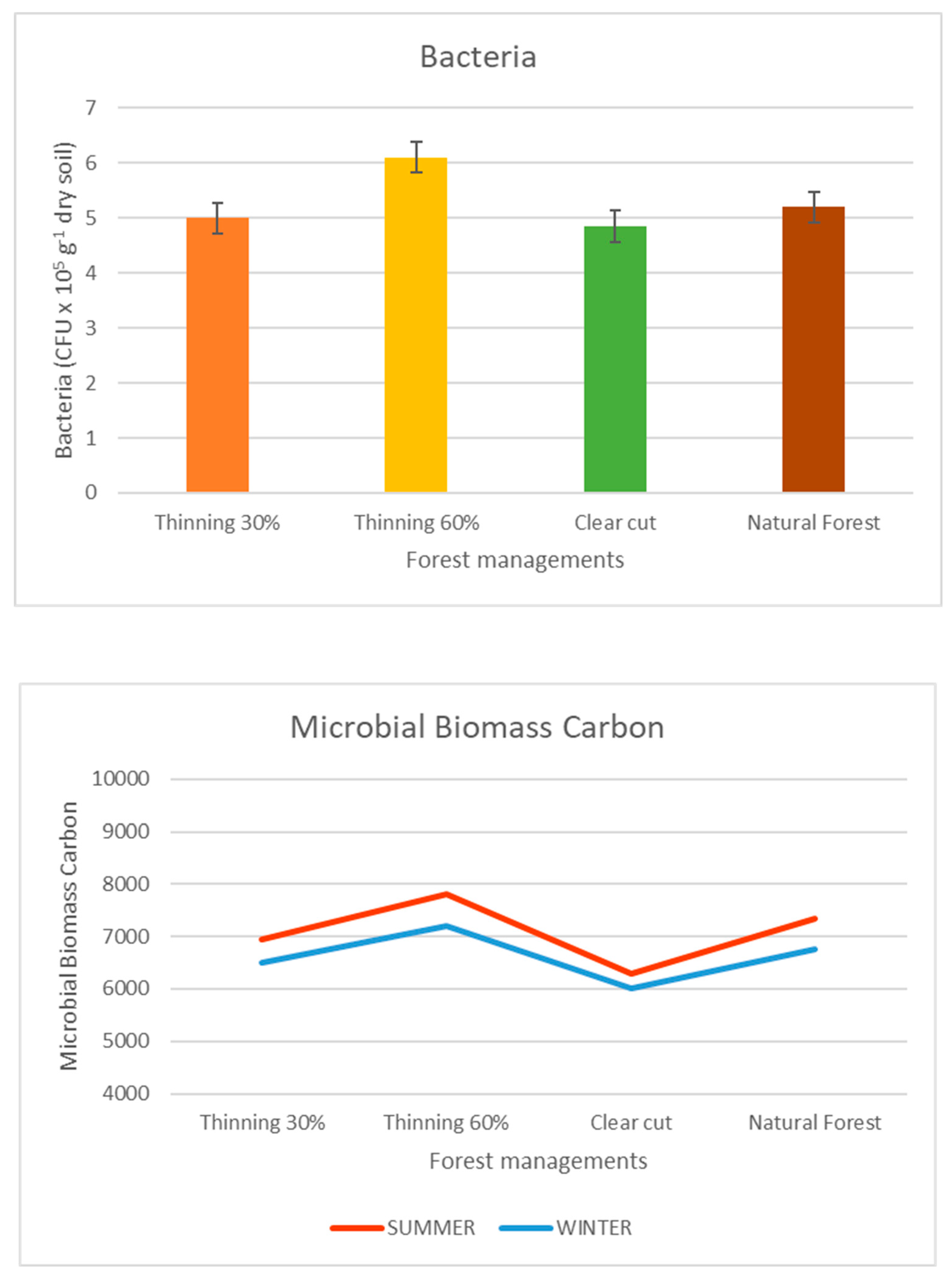
Settineri et al. [20] with a study on thinning operations in a Pinus laricio stand, evidenced that the lower density of trees due to the intense thinning practice (60%), caused different light, temperature and humidity intensity at ground and soil levels, enhancing herbaceous vegetation and easy degradable litter, which caused an enhancement of soil microbial biomass and overall, bacteria amount (Figure 3) [20].
Figure 3.
Changes in organic Matter and C/N ratio in a selective” thinning system based on the number of plants removed: low thinning intensity (LTI, 30% plants removed), high thinning intensity (HTI, 60% plants removed), and clear cutting (CC; no plants).
Figure 3.
Changes in organic Matter and C/N ratio in a selective” thinning system based on the number of plants removed: low thinning intensity (LTI, 30% plants removed), high thinning intensity (HTI, 60% plants removed), and clear cutting (CC; no plants).
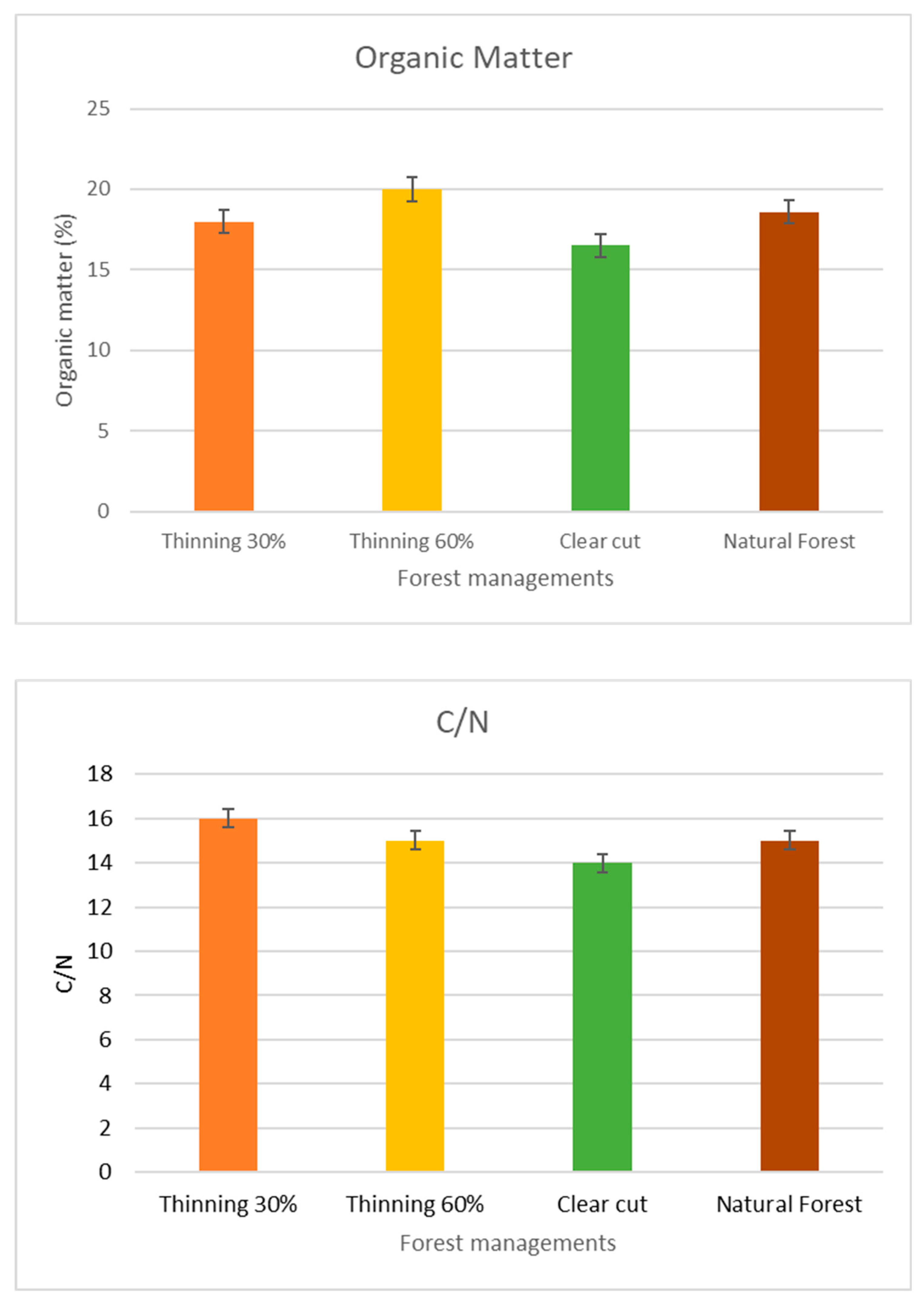
Figure 4.
Influence of different thinning intensities based on the number of plants removed: low thinning intensity (LTI, 30% plants removed), high thinning intensity (HTI, 60% plants removed), and clear cutting (CC; no plants) on bacteria amount and soil microbial biomass.
Figure 4.
Influence of different thinning intensities based on the number of plants removed: low thinning intensity (LTI, 30% plants removed), high thinning intensity (HTI, 60% plants removed), and clear cutting (CC; no plants) on bacteria amount and soil microbial biomass.
Similar results were also observed by Wu et al. in a Larix principis-rupprechtii Mayr plantation, in northern China, were medium (35%) and high (50%) thinning positively affected soil organic carbon, microbial biomass carbon, soil microbial abundance, and soil enzyme activities. Actinomycetes and gram-negative bacteria were among the soil microbial community the microorganisms that more affected the function relating to carbon decomposition [29].
Romeo et al. [50] used biological indicators (dissolved organic matter (DOC), fluorescein diacetate hydrolase (FDA), catalase, fungi and pedofauna) in a beech forest in Calabria (Italy) to assess as thinning influenced soil properties [50]. The authors evidenced an increase in nutrients, DOC, catalase and FDA enzyme activities and a contemporaneous decrease in SOM in traditional thinning with a moderate intensity (ca. 12% of total volume removed), five years after thinning, putting in evidence that a moderate thinning significantly improved soil quality, emerging as a sustainable forest management practice, even if the organic matter amount decreased. These decrease in SOM under beech may be considered a short-term perturbation induced by thinning. In fact, a study of Tejedor et al. (2017) evidenced that thinning in a European beech stand did not remarkably affect SOC stocks at a timescale of ca. one decade after logging, highlighting the goodness of thinning as a sustainable beech forestry treatment from a soil ecological perspective [51].
The results of Romeo et al. [50] in agreement with the findings of Bardgett et al., Lee and Jose, Allison, De Deyn et al. and Billings et al. [50,52,53,54,55,56], evidenced that the microflora had a central role in the decomposition of organic matter making nutrients more available for mineral plant nutrition [57]. Furthermore, these data showed that organic matter, total nitrogen, C/N ratio and water content cannot be assumed, alone or in combination, as indicators of soil quality to estimate the consequences of thinning, but it is necessary to cross data of microbiota and ions with organic matter compounds to have more exact information on how the thinning can influence soil biological properties that are closely connected to soil fertility and quality.
Muscolo et al. [58], in a Pinus laricio stand, found the greatest biodiversity and the highest amounts of arthropods, fungi, and bacteria under intense thinning (45% BA removed, 780 tree ha−1). In summer, the authors observed a greater amount of Collembola, Acarina, Diptera, Hymenoptera, and Pseudoscorpionida. All these arthropods, have a well-recognized pivotal role in the ecosystem functioning keeping a balance between the decomposition and mineralization of litter and are considered important bio-indicators of soil health [59,60], because they comprehend countless groups that respond rapidly to outer perturbances, varying their distribution and amount in space and time [61]. In winter, the authors observed the apparition of other groups (Chilopoda, Psocoptera, Symphyla, and Thysanoptera) that were fully missing either in plots of the other treatments either in high intensity thinning plots in summer.
Results of Caihong, et al. [38], in P. koraiensis plantation, evidenced as all medium (30%) and high (50%) intensity thinning treatments significantly increased soil nutrient content, including total carbon, total nitrogen, total phosphorus, total potassium, as well as available phosphorus and available potassium. Fungal diversity was higher in both thinned plots but lower in abundance than the control. The results of Caihong et al [38] evidenced that thinning intensity modulates biogeochemical cycles by affecting soil nutrients and fungal community structure. Wu et al. [29] showed that thinning intensity, improved soil microbial abundance, because caused an in soil organic carbon. The increase in soil microbial abundance caused in turn variation in soil enzyme activities substrate availability [8]. Controversial results such as increase [20,29,31,62], decrease [63,64], or no changes [37,65,66] in enzyme activities resulted from soils under forest management. The variations in soil enzyme activities can be retained responsible for the changes in nutrient dynamics and ecosystem functioning [67].
A meta-analysis [68] pointed out the crucial role of microbial C-degrading enzymes (ligninases and cellulases) in piloting soil C sequestration after thinning. Thinning enhanced SOC stocks, soil labile organic C and recalcitrant organic carbon as well as ligninase activity. These increases have been related to an increase in soil moisture and temperature. Soil cellulase activity diminished when thinning intensity boosted. A rise in SOC stocks after thinning were mostly linked with an increase in ligninase activity. An increment in C-degrading enzyme activity caused by moderate thinning may facilitate microorganisms in harvesting residues and soil organic matter, contributing to the stability of SOC. In short, changes in the activities of soil ligninase and cellulase can explain of how thinning is able to affect SOC pool stability.
2.2. Thinning time effects on soil chemical and biochemical properties
Hwang and Son [69], in a brief-term study evaluated how thinning elapsed time affected forest soils of pitch pine and Japanese larch plantations in central Korea and attributed the increases in SOC and total soil N concentrations after 2 years of thinning (50% of standing density) to the increase in organic matter decomposition and root death, evidencing how the time have a role in influencing thinning effects on soil properties. Numerous subsequent manuscripts have been focused on the role of thinning time on changing soil properties. Rytter et and Rytter [70], studied the effect of 4-8-16 years of thinning on soil characteristics and their results evidenced that pH and bulk density were unaffected during the study period and few significant effects on mineral soil properties after eight years of thinning have been observed. Conversely, numerous studies evidenced that the time elapsed from thinning can have varying effects on soil pH. While there isn’t a uniform pattern observed across all studies, the following general trends can be reported: immediately after thinning, there can be a temporary decrease in soil pH. This is often attributed to increased microbial activity and accelerated organic matter decomposition, leading to the release of organic acids that can temporarily lower pH levels. over time, soil pH tends to recover and return towards its initial levels. This recovery can occur through natural processes such as mineral weathering, nutrient cycling, and the re-establishment of a balanced soil microbial community. The recovery period can vary depending on factors such as the intensity of thinning, tree species, soil type, and environmental conditions. Long-term changes in soil pH may occur following thinning. These changes can be influenced by factors such as altered nutrient availability, changes in soil organic matter content, and shifts in microbial community composition. The direction and magnitude of pH changes can be site-specific and may depend on the interplay of various factors [71].
Kim et al. demonstrated in South Korea in soil under Pinus densiflora that after 7 years thinning enhanced microbial biomass, but did not affect the enzyme activities [66]. Microbial biomass was the highest under 30% basal area thinning and was positively correlated to total soil C and N. Kim et al. put in light the relationship between soil properties and microbes showing that the effects of thinning that appeared inconsistent on soil properties, were instead able to change microbial biomass and enzyme functioning in thinned oak and larch forests, in South Korea [8].
Budiaman et al., showed as thinning decreased the morphospecies composition of Entomobryomorpha and increased the abundance of Entomobryomorpha insects [72]. The abundance of the Entomobryomorpha order correlated significantly with humidity, litter thickness, and canopy cover that decreased overtime.
Successively, Lull et al. evidenced that, in a Mediterranean Holm oak forest, thinning treatment affected a bit soil property and at different extent on the basis of time elapsed since the treatment [73]. After seven years soil carbon pools, basal respiration and enzyme activities were not influenced by thinning treatments.
Xu et al. with meta-analysis showed as the time also influenced the thinning effects on soil organic matter trend [68]. Soil C enhanced only in the early stages (≤2 years) after thinning (+30%), but it returned almost comparable to unmanaged stand (control) in the medium (2–5 years) and in the late stages (>5 years) after thinning.
Van Damme et a. showed that surprisingly, no significant difference in the whole ecosystem C stock for after 15 years of management was observed highlighting that the time had less impact on the ecosystem C storage than intensity [74].
Erkan et al. in Brutia pine plantations, evidenced that C stocks in the litter, and soil were not significantly influenced by the thinning intensity [39]. The nutrients in the litter and soil, and other soil properties, were not significantly different among thinning parcels. This put in light as changes in C and other nutrients in litter and soil can be ascribed mainly to the stand volume and biomass, which were not changed by thinning in time.

Table 2.
Summary of the effects of thinning on organic matter (OM), microbial biomass C (MBC) and enzyme activity (average activity of all enzymes, hydrolytic and oxidative) in different stands studied. ns= no significant changes; + = significant increases; - = significant decreases.
Table 2.
Summary of the effects of thinning on organic matter (OM), microbial biomass C (MBC) and enzyme activity (average activity of all enzymes, hydrolytic and oxidative) in different stands studied. ns= no significant changes; + = significant increases; - = significant decreases.
| Forest type | Location | Thinning intensity % BA |
Years after thinning | OM | MBC | Enzyme activity | References |
| Larix principis-rupprechtii | Northern China | 15 35 50 |
3 | ns + + |
ns + + |
+ + + |
Wu et al. 2019 |
| Pinus sylvestris | Central Spain | 15-20 21-35 |
2 | ns | ns | ns | Bravo-Oviedo et al. 2015 |
| Quercus ilex | Valencia, Spain | 41 | 4-7 |
ns | ns | Lull et al. 2020 | |
| Cunninghamia lanceolata | Eastern China | 21 36 |
2 | + + |
Cheng et al. 2018 | ||
| Cunninghamia lanceolata | northern China | 15 20 33 |
15 | Ns Ns ns |
Cheng et al. 2017 | ||
| Pinus halepensis | Eastern Spain | 36 54 84 |
13 | - - - |
Molina et al. 2022 | ||
|
Quercus variabilis, Quercus mongolica, Larix kaempferi |
South Korea | 5-23 30-44 |
6 | + + |
+ + |
ns ns |
Kim et al. 2019 |
| Pinus densiflora | South Korea | 15 30 |
7 | + + |
+ + |
ns ns |
Kim et al. 2018 |
| Larix kaempferi | South Korea | 20 30 |
3 | + + |
ns ns |
Kim et al. 2016 | |
| Pinus tabulaeformis | northern China | 20 40 60 |
9 | ns ns ns |
+ - |
Yang et al. 2022 | |
|
Larix principis-rupprechtii, Pinus tabulaeformis, Betula platyphylla, Quercus liaotungensis |
North China | 15 30 50 |
7 | + + + |
ns + - |
Ma et al. 2022 | |
|
Pinus rigida, Larix leptolepis |
central Korea | 50 | 2 | + | Hwang and Son 2006 | ||
| Pinus nigra | Turkey | 30 | 2 | ns | + | Bolat 2014 | |
| Pinus massoniana | China | 15 70 |
3 | ns - |
+ + |
- - |
Shen et al 2018 |
3. Discussion and conclusion
In conclusion, this review highlights the importance of considering thinning duration and thinning intensity when assessing their effects on soil properties. While the impact of thinning on soil properties can vary depending on multiple factors, including forest types, plant species, stand ages, management of woody debris, soil characteristics, climate, and temporal factors, some general trends can be observed.
Thinning duration plays a crucial role in shaping soil responses. Studies have shown that positive effects on soil organic matter trends are typically observed in broadleaved (except beech), coniferous, and mixed forests 2-7 years after thinning. This suggests that the short-term benefits of thinning can result in increased soil organic matter content, promoting soil health and ecosystem functioning.
Thinning intensity is another important factor to consider. Research indicates that thinning intensities between 15% and 50% tend to have positive effects on soil quality. These effects include an increase in soil organic carbon levels, enhanced microbial community abundance, and improved soil enzymatic activities. Thus, carefully planned thinning practices within this intensity range can contribute to long-term soil sustainability and support forest management goals.
However, it is worth noting that the specific outcomes of thinning on soil properties can vary based on the aforementioned factors. Therefore, a comprehensive understanding of site-specific conditions and a tailored approach to thinning implementation are essential to achieve desired outcomes.
Overall, further research on the long-term effects of thinning, considering both duration and intensity, is crucial for monitoring soil ecological responses and informing forest policy management decisions. By integrating these findings into forest management practices, we can enhance our ability to sustainably manage forests, support biodiversity, and promote the overall health and resilience of forest ecosystems.
Author Contributions
For research articles with several authors, a short paragraph specifying their individual contributions must be provided. The following statements should be used “Conceptualization, Adele Muscolo (A.M.); methodology Francesco Canino (F.C.); software, Mariateresa Oliva (Mt.O.) and validation, A.M. formal analysis, Carmelo Mallamaci (C.M.); investigation, C.M.; resources, A.M.; data curation, Mt.O; writing—original draft preparation, A.M.; writing—review and editing, A.M.; visualization, F.C.; supervision, A.M.; project administration, A.M. All authors have read and agreed to the published version of the manuscript.” Please turn to the CRediT taxonomy for the term explanation. Authorship must be limited to those who have contributed substantially to the work reported.
Funding
This research did not receive any specific grant from funding agencies in the public, commercial, or not-for-profit sectors.
Conflicts of Interest
The authors declare that they have no conflict of interest.
References
- Weiskittel A.R.; Hann D.W.; Kershaw J.A. Jr.; Vanclay J.K. Forest growth and yield modeling. Wiley-Blackwell, Chichester 2011 p. 425.
- Jandl R.; Bauhus J.; Bolte A.; Schindlbacher A.; Schüler S. Effect of climate-adapted forest management on carbon pools and greenhouse gas emissions. Curr Forestry Rep 2015 1:1-7. [CrossRef]
- Menyailo O.V.; Sobachkin R.S.; Makarov M.I.; Cheng C-H. Tree species and stand density: The effects on soil organic matter contents, decomposability and susceptibility to microbial priming. Forests 2022 13 (2): 284. [CrossRef]
- Bengtsson J.; Nilsson S.G.; Franc A.; Menozzi P. Biodiversity, disturbances, ecosystem function and management of European forests. For Ecol Manage 2000 132 (1): 39-50.
- LAL, R. Soil carbon sequestration in Latin America. In: Carbon sequestration in soils of Latin America. CRC Press, 2006 p. 77-92.
- Jandl R.; Lindner M.; Vesterdal L.; Bauwens B.; Baritz R.; Hagedorn F.; Johnson D.W.; Minkkinen K.; Byrne K.A. How strongly can forest management influence soil carbon sequestration? Geoderma 2007 137(3-4): 253-268.
- Ashagrie Y.; Zech W.; Guggenberger G.; Miano T. Soil aggregation, and total and particulate organic matter following conversion of native forests to continuous cultivation in Ethiopia. Soil Till Res 2007 94 (1):101-108.
- Kim S.; Li G.; Han S.H.; Kim C.; Lee S.T.; Son Y. Microbial biomass and enzymatic responses to temperate oak and larch forest thinning: Influential factors for the site-specific changes. Sci Total Environ 2019 651: 2068-2079.
- Lukac M. Soil biodiversity and environmental change in European forests. Cent Eur For J 2017 63 (2-3): 59-65. [CrossRef]
- Resck D.V.S.; Ferreira E.A.B.; Figueiredo C.C.; Zinn Y.L Dinâmica da matéria orgânica no Cerrado. In: Santos G.A.; Silva L.S.; Canellas L.P.;Camargo F.O. (eds) Fundamentos da matéria organica do solo: Ecossistemas tropicais e subtropicais Metrópole, Porto Alegre 2008 pp 359-417.
- Masyagina O.V.; Hirano T.; Ji D.H.; Choi D.S.; Qu L.; Fujinuma Y.; Sasa K.; Matsuura Y.; Prokushkin S.G.; Koike T. Effect of spatial variation of soil respiration rates following disturbance by timber harvesting in a larch plantation in northern Japan Forest Sci Technol 2006 2 (2): 80-91.
- Chen X-L.; Wang D.; Chen X.; Wang J.; Diao J-J; Zhang J-Y; Guan Q-W. Soil microbial functional diversity and biomass as affected by different thinning intensities in a Chinese fir plantation Appl Soil Ecol 2015 92: 35-44.
- Trentini C.P.; Campanello P.I.; Villagra M.; Ritter L.; Ares A.; Goldstein G. Thinning of loblolly pine plantations in subtropical Argentina: Impact on microclimate and understory vegetation. For Ecol Manage 2017 384: 236-247. [CrossRef]
- Ryu S.R.; Concilio A.; Chen J.; North M.; Ma S. Prescribed burning and mechanical thinning effects on belowground conditions and soil respiration in a mixed-conifer forest, California. For Ecol Manage 2009 257 (4): 1324-1332.
- Ma Y.; Cheng X.; Kang F.; Han H. Effects of thinning on soil aggregation, organic carbon and labile carbon component distribution in Larix principis-rupprechtii plantations in North China. Ecol Ind 2022 139: 108873. [CrossRef]
- Bolat I. The effect of thinning on microbial biomass C, N and basal respiration in black pine forest soils in Mudurnu, Turkey. Eur J Forest Res 2014 133: 131-139. [CrossRef]
- Zhang X.; Guan D.; Li W.; Sun D.; Jin C.; Yuan F.; Wang A.; Wu J. The effects of forest thinning on soil carbon stocks and dynamics: A meta-analysis. For Ecol Manage 2018 429: 36-43. [CrossRef]
- Marchi E.; Picchio R.; Spinelli R. Verani S.; Venanzi R.; Certini G. Environmental impact assessment of different logging methods in pine forests thinning. Ecol Eng 2014 70: 429-436. [CrossRef]
- Picchio R.; Spina R.; Calienno L.; Venanzi R.A.; Lo Monaco A. Forest operations for implementing silvicultural treatments for multiple purposes. It J Agron 2016 11 (1S): 156-161.
- Settineri G.; Mallamaci C.; Mitrović M.; Sidari M.; Muscolo A. Effects of different thinning intensities on soil carbon storage in Pinus laricio forest of Apennine South Italy. Eur J For Res 2018 137: 131-141. [CrossRef]
- Yang L.; Wang J.; Geng Y.; Niu S.; Tian D.; Yan T.; Liu W.; Pan J.; Zhao X.; Zhang C. Heavy thinning reduces soil organic carbon: Evidence from a 9-year thinning experiment in a pine plantation. Catena 2022 211: 106013.
- Smolander A.; Kitunen V.; Kukkola M.; Tamminen P. Response of soil organic layer characteristics to logging residues in three Scots pine thinning stands. Soil Biol Biochem 2013 66: 51-59. [CrossRef]
- Muscolo A.; Settineri G.; Attinà E. Early warning indicators of changes in soil ecosystem functioning. Ecol Indic 2015 48: 542-549. [CrossRef]
- Muscolo A.; Settineri G.; Bagnato S.; Mercurio R.; Sidari M. Use of canopy gap openings to restore coniferous stands in Mediterranean environment. iForest 2017 10 (1): 322-327. [CrossRef]
- Zhou X.; Zhou Y.; Zhou C.; Wu Z.; Zheng L.; Hu X.; Chen H.; Gan J. Effects of cutting intensity on soil physical and chemical properties in a mixed natural forest in Soutph eastern China. Forests 2015 6: 4495-4509. [CrossRef]
- Tang J.; Qi Y.; Xu M.; Misson L.; Goldstei A.H. Forest thinning and soil respiration in a ponderosa pine plantation in the Sierra Nevada. Tree Physiol 2005 25 (1): 57-66. 10.1093/treephys/25.1.57. PMID: 15519986. [CrossRef]
- Overby S.T.; Owen S.M.; Hart S.C.; Neary D.G.; Johnson N.C. Soil microbial community resilience with tree thinning in a 40-year-old experimental ponderosa pine forest. Appl Soil Ecol 2015 93: 1-10. [CrossRef]
- Richter A.; Schoning I.; Kahl T.; Bauhus J.; Ruess L. Regional environmental conditions shape microbial community structure stronger than local forest management intensity. For Ecol Manage 2018 409: 250-259. [CrossRef]
- Wu R.; Cheng X.; Han H. The effect of forest thinning on soil microbial community structure and function. Forests 2019 10 (4): 352.
- Zhou T.; Wang C.; Zhou Z. Impacts of forest thinning on soil microbial community structure and extracellular enzyme activities: A global meta-analysis). Soil Biol Biochem 2020 149, 107915. [CrossRef]
- Lei L.; Xiao W.; Zeng L.; Frey B.; Huang Z.; Zhu J.; Cheng R.; Li M-H. Effects of thinning intensity and understory removal on soil microbial community in Pinus massoniana plantations of subtropical China. Appl Soil Ecol 2021 167: 104055. [CrossRef]
- Asaye Z.; Zewdie S. Fine root dynamics and soil carbon accretion under thinned and un-thinned Cupressus lusitanica stands in Southern Ethiopia. Plant Soil 2013 366:261271. [CrossRef]
- Jonsson A.; Sigurdsson B.D. Effects of early thinning and fertilization on soil temperature and soil respiration in a poplar plantation. Icel Agric Sci 2010 23 (2): 97-109. [CrossRef]
- Clarke N.; Gundersen P.; Jönsson-Belyazid U.; Kjönaas O.J.; Persson T.; Sigurdsson B.D.; Stupak I.; Vesterdal L. Influence of different tree-harvesting intensities on forest soil carbon stocks in boreal and northern temperate forest ecosystems. For Ecol Manage 2015 51: 9-19. [CrossRef]
- Nave L.; Vance E.D.; Swanston C.W.; Curtis P.S. Harvest impacts on soil carbon storage in temperate forests. For Ecol Manag 2010 259 (5): 857-866. [CrossRef]
- Zhou D.; Zhao S.Q.; Liu S.; Oeding J. A meta-analysis on the impacts of partial cutting on forest structure and carbon storage. Biogeosciences 2013 10: 3691-3703.
- Kim S.; Han S.H.; Li G.; Yoon T. K.; Lee S-T.; Kim C.; Son Y. Effects of thinning intensity on nutrient concentration and enzyme activity in Larix kaempferi forest soils. J Ecol Environ 2016 40 (2). [CrossRef]
- Caihong Z.; Nier S.; Hao W. et al. Effects of thinning on soil nutrient availability and fungal community composition in a plantation medium-aged pure forest of Picea koraiensis. Sci Rep 2023 13, 2492. [CrossRef]
- Erkan N.; Güner Ş.T.; Aydın A.C. Thinning effects on stand growth, carbon stocks, and soil properties in Brutia pine plantations. Carbon Balance Manage 2023 18, 6. [CrossRef]
- Liu K-L.; Chen B-Y.; Zhang B.; Wang R-H.; Wang C-S. Understory vegetation diversity, soil properties and microbial community response to different thinning intensities in Cryptomeria japonica var. sinensis plantations. Front. Microbiol. 2023 14 :1117384. [CrossRef]
- Vesterdal L.; Dalsgaard M.; Felby C.; Raulund-Rasmussen K.; Jørgensen B.B. Effects of thinning and soil properties on accumulation of carbon, nitrogen and phosphorus in the forest floor of Norway spruce stands. For Ecol Manage 1995 77 (1-3): 1-10. [CrossRef]
- Laganiere J.; Angers D.A.; Pare D. et al. Carbon accumulation in agricultural soils after afforestation: A meta-analysis. Global Change Biology 2010 16(1): 439–453.
- Bravo-Oviedo A.; Ruiz-Peinado R.; Modrego P.; Alonso R.; Montero G. Forest thinning impact on carbon stock and soil condition in Southern European populations of P. sylvestris L. For Ecol Manage 2015 357: 259-267. [CrossRef]
- Bárcena T.G.; Kiær L.P.; Vesterdal L.; Stefánsdóttir H.M.; Gundersen P; Sigurdsson B.D. Soil carbon stock change following afforestation in Northern Europe: a meta-analysis. Glob Change Biol 2014 20: 2393-2405. [CrossRef]
- Cheng X.; Yu M.; Li ZShort term effects of thinning on soil organic carbon fractions, soil properties, and forest floor in Cunninghamia lanceolata plantations. J Soil Sci Environ Manage 2018 9(2): 21-29. 10.5897/jssem2017.0661. [CrossRef]
- Molina A.J.; Bautista I.; Lull C.; del Campo A.; González-Sanchis M.; Lidón A. Effects of thinning intensity on forest floor and soil biochemical properties in an Aleppo pine plantation after 13 years: Quantity but also quality matters. Forests 2022 13(2): 255. [CrossRef]
- Bautista I.; Lidón A.; Lull C.; González-Sanchis M.; del Campo A.D. Thinning decreased soil respiration differently in two dryland Mediterranean forests with contrasted soil temperature and humidity regimes. Eur J For Res 2021 140: 1469-1485. [CrossRef]
- Gong C.; Tan Q.; Liu G.; Xu M. Forest thinning increases soil carbon stocks in China. For Ecol Manage 2021 482: 118812. [CrossRef]
- Cheng X.; Yu M.; Wang G.G. Effects of thinning on soil organic carbon fractions and soil properties in Cunninghamia lanceolata stands in Eastern China. Forests 2017 8 (6): 198. [CrossRef]
- Romeo F.; Settineri G.; Sidari M.; Mallamaci C.; Muscolo A. Responses of soil quality indicators to innovative and traditional thinning in a beech (Fagus sylvatica L.) forest. For Ecol Manage 2020 465:118106. [CrossRef]
- Tejedor J.; Saiz G.; Rennenberg H.; Dannenmann M. Thinning of beech forests stocking on shallow calcareous soil maintains soil C and N Stocks in the long run. Forests 2017 8 (5):167. [CrossRef]
- Bardgett R.D.; Streeter T.C.; Bol R. Soil microbes compete effectively with plants for organic-nitrogen inputs to temperate grasslands. Ecology 2023 84 (5): 1277-1287. [CrossRef]
- Lee K.H.; Jose S. Soil respiration, fine root production, and microbial biomass in cottonwood and loblolly pine plantations along a nitrogen fertilization gradient. For Ecol Manage 2023 185 (3): 263-273.
- Allison S.D. Soil minerals and humic acids alter enzyme stability: implications for ecosystem processes. Biogeochemistry 2006 81 (3): 361-373. [CrossRef]
- De Deyn G.B.; Quirk H.; Yi Z.; Oakley S.; Ostle N.J.; Bardgett R.D. Vegetation composition promotes carbon and nitrogen storage in model grassland communities of contrasting soil fertility. J Ecol 2009 97 (5): 864-875. [CrossRef]
- Billings S.A.; Lichter J.; Ziegler S.E.; Hungate B.A.; Richter D.B. A call to investigate drivers of soil organic matter retention vs. mineralization in a high CO2 world. Soil Biol Biochem 2010 42 (4): 665-668. [CrossRef]
- Nazari M.; Pausch J.; Bickel S.; et al. Keeping thinning-derived deadwood logs on forest floor improves soil organic carbon, microbial biomass, and enzyme activity in a temperate spruce forest. Eur J Forest Res 2023 142, 287–300. [CrossRef]
- Muscolo A.; Settineri G.; Romeo F.; Mallamaci C. Soil biodiversity as affected by different thinning intensities in a Pinus laricio stand of Calabrian Apennine, South Italy. Forests 2021 12 (1): 108. [CrossRef]
- Tsurho K.; Ao B. Community analysis of soil Acarina in a Natural Forest and Jhum land ecosystem of Mokokchung, Nagaland. JOSR J Appl Phys 2014 6 (4): 50-54.
- Menta C.; Renelli S. Soil health and arthropods: from complex system to worthwhile investigation. Insects 2020 11 (1): 54. 0.3390/insects11010054.
- Nsengimana V.; Kaplin B.A.; Francis F.; Nsabimana D. Use of soil and litter arthropods as biological indicators of soil quality in forest plantations and agricultural lands: A Review. Faun Entomol 2018 l7: 1-12.
- Chen X.; Chen H.Y.; Chen X.; Wang J.; Chen B.; Wang D.; Guan Q. Soil labile organic carbon and carbon-cycle enzyme activities under different thinning intensities in Chinese fir plantations. Appl Soil Ecol 2016 107: 162-169.
- Geng Y.; Dighton J.; Gray D. The effects of thinning and soil disturbance on enzyme activities under pitch pine soil in New Jersey Pinelands. Appl Soil Ecol 2012 62: 1-7. [CrossRef]
- Shen Y.; Cheng R.; Xiao W.; Jang S.; Guo Y.; Wang N.; Zeng L.; Lei L.; Wang X. Labile organic carbon pools and enzyme activities of Pinus massoniana plantation soil as affected by understory vegetation removal and thinning. Sci Rep 2018 8: 573. [CrossRef]
- 65. Hedo de Santiago J.; Lucas-Borja M.E.; Wic-Baena C.; Andrés-Abellán M.; de las Heras J. Effects of thinning and induced drought on microbiological soil properties and plant species diversity at dry and semiarid locations. Land Degrad Dev 2015 27(4): 1151-1162. [CrossRef]
- 66. Kim S.; Li G.; Han S.H.; Kim H-J.; Kim C.; Lee S-T.; Son Y. Thinning affects microbial biomass without changing enzyme activity in the soil of Pinus densiflora Sieb. et Zucc. forests after 7 years. Ann For Sci 2018 75: 13. [CrossRef]
- 67. Sinsabaugh R.L.; Lauber C.L.; Weintraub M.N.; Ahmed B.; Allison S.D.; Crenshaw C.; Contosta A.R.; Cusack D.; Frey S.; Gallo M.E.; Gartner T.B.; Hobbie S.E.; Holland K.; Keeler B.L.; Powers J.S.; Stursova M.; Takacs-Vesbach C.; Waldrop M.P.; Wallenstein M.D.; Zak D.R.; Zeglin L.H. Stoichiometry of soil enzyme activity at global scale. Ecol Lett 2008 11(11):1252-1264. [CrossRef]
- 68. Xu M.; Liu H.; Zhang Q.; Zhang Z.; Ren C.; Feng Y.; Yang G.; Han X.; Zang W. Effect of forest thinning on soil organic carbon stocks from the perspective of carbon-degrading enzymes. Catena 2002 218: 106560.
- 69. Hwang J.; Son Y. Short-term effects of thinning and liming on forest soils of pitch pine and Japanese larch plantations in central Korea. Ecol Res 2006 21: 671-680. [CrossRef]
- 70. Rytter R-M.; Rytter L. Effects on soil characteristics by different management regimes with root sucker generated hybrid aspen (Populus tremula L. × P. tremuloides Michx.) on abandoned agricultural land. iForest 2018 11: 619-627. – [online 2018-10-04]. [CrossRef]
- 71. Akburak S.; Makineci E. Thinning effects on soil and microbial respiration in a coppice-originated Carpinus betulus L. stand in Turkey. iForest 2016 9: 783-790. [CrossRef]
- 72. Budiaman A.; Haneda N.F.; Syaidah K.H. Temporal effects of forest thinning on spring tails (Entomobryomorpha: Collembola) assemblages at pulai (Alstonia scholaris) forest plantation in Banten. IOP Conf. Ser.: Earth Environ. Sci. 2020 528 012027.
- 73. Lull C.; Bautista I.; Lidón A.; del Campo A.D. González-Sanchis M.; García-Prats A. Temporal effects of thinning on soil organic carbon pools, basal respiration and enzyme activities in a Mediterranean Holm oak forest. For Ecol Manage 2020 464: 118088. [CrossRef]
- 74. Van Damme F.; Mertens H.; Heinecke T.; Lefevre L.; De Meulder T.; Portillo-Estrada M.; Roland M.; Gielen B:; Janssens I.A.; Verheyen K.; Campioli M. The Impact of Thinning and Clear Cut on the Ecosystem Carbon Storage of Scots Pine Stands under Maritime Influence in Flanders, Belgium. Forests 2022 13: 1679. [CrossRef]
Figure 1.
thinning system based on the number of plants removed: low thinning intensity (LTI, 30% plants removed), high thinning intensity (HTI, 60% plants removed), and clear cutting (CC; no plants).
Figure 1.
thinning system based on the number of plants removed: low thinning intensity (LTI, 30% plants removed), high thinning intensity (HTI, 60% plants removed), and clear cutting (CC; no plants).
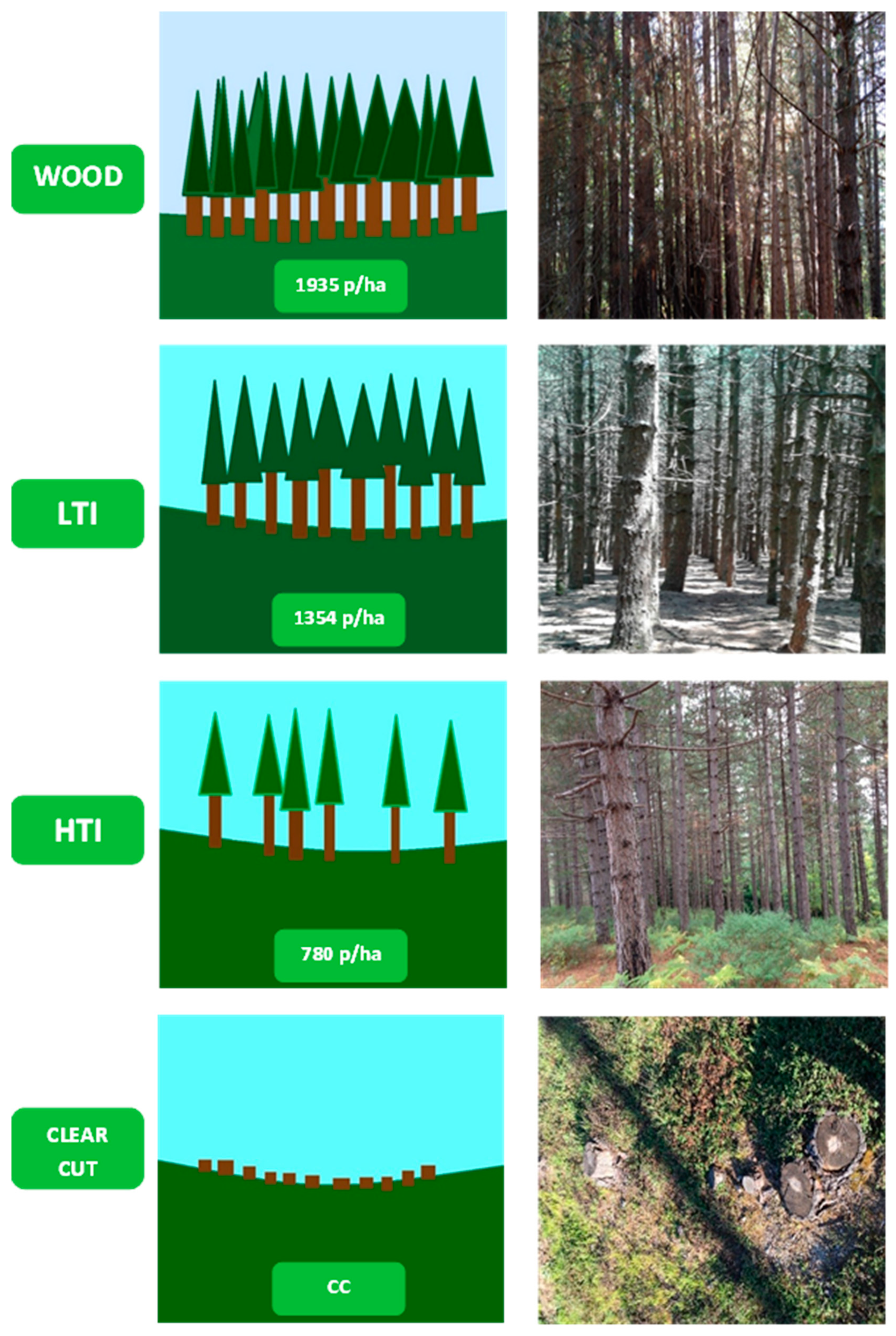
Figure 2.
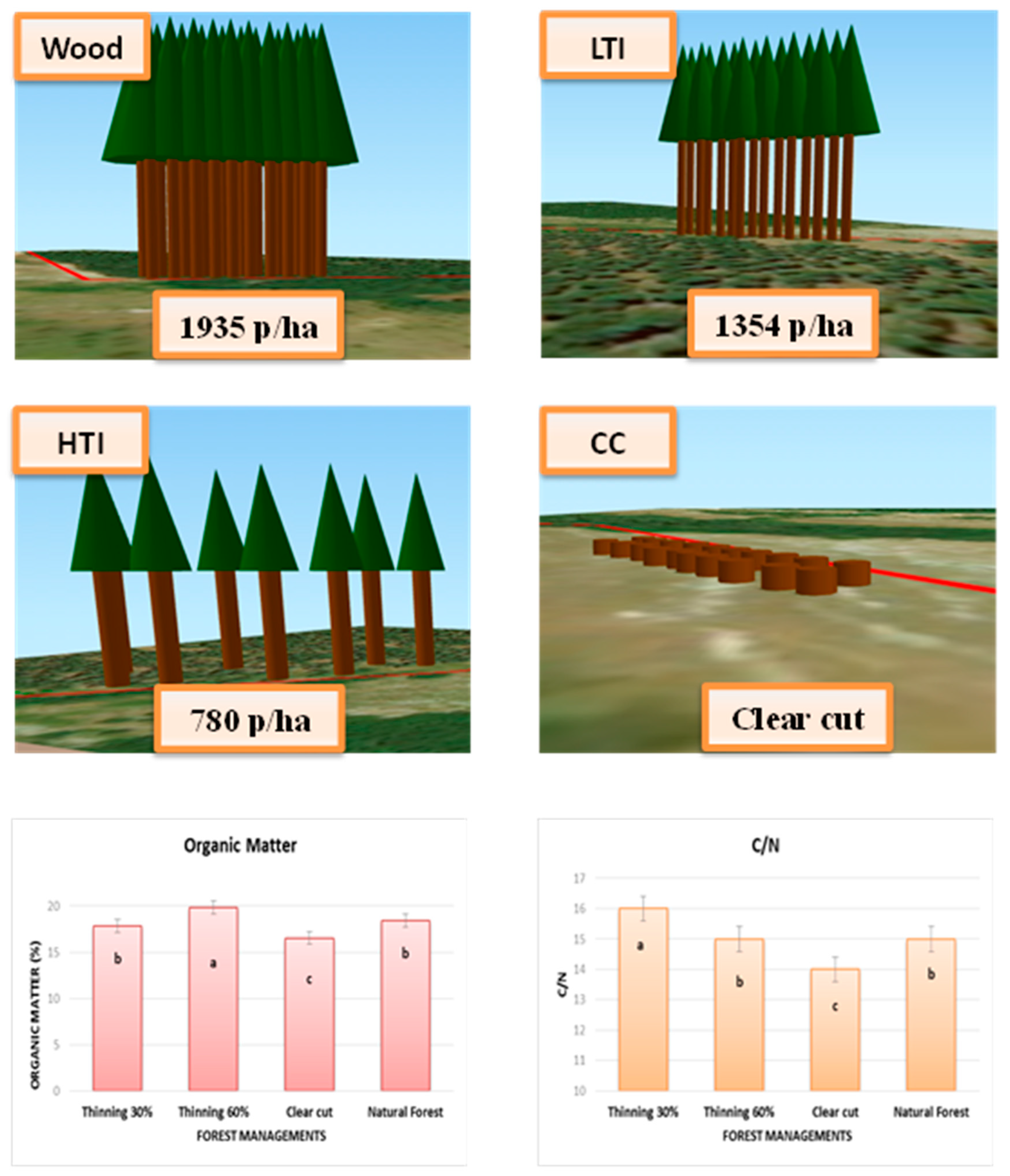
Table 1.
- Percentage changes in selected chemical and biochemical soil properties due to different thinning intensity related to no-thinning: organic matter (OM); microbial biomass carbon (MBC); fluorescein diacetate hydrolase (FDA); catalase (CAT); dehydrogenase (DHA). Research studies were conducted 4 years after thinning in a Pinus laricio forest (T1*= 25% BA removal; T2* =45% BA) and in a Fagus sylvatica forest (T3§=12% BA; T4§=27% BA) in Apennine, South Italy.
Table 1.
- Percentage changes in selected chemical and biochemical soil properties due to different thinning intensity related to no-thinning: organic matter (OM); microbial biomass carbon (MBC); fluorescein diacetate hydrolase (FDA); catalase (CAT); dehydrogenase (DHA). Research studies were conducted 4 years after thinning in a Pinus laricio forest (T1*= 25% BA removal; T2* =45% BA) and in a Fagus sylvatica forest (T3§=12% BA; T4§=27% BA) in Apennine, South Italy.
| Thinning intensity | OM | MBC | FDA | CAT | DHA |
| T1* | 140 | 18 | 28 | 128 | 25 |
| T2* | 215 | 25 | 57 | 154 | 89 |
| T3§ | -43 | -40 | 3 | 27 | 51 |
| T4§ | -73 | -51 | -50 | -35 | 130 |
Disclaimer/Publisher’s Note: The statements, opinions and data contained in all publications are solely those of the individual author(s) and contributor(s) and not of MDPI and/or the editor(s). MDPI and/or the editor(s) disclaim responsibility for any injury to people or property resulting from any ideas, methods, instructions or products referred to in the content. |
© 2023 by the authors. Licensee MDPI, Basel, Switzerland. This article is an open access article distributed under the terms and conditions of the Creative Commons Attribution (CC BY) license (http://creativecommons.org/licenses/by/4.0/).
Copyright: This open access article is published under a Creative Commons CC BY 4.0 license, which permit the free download, distribution, and reuse, provided that the author and preprint are cited in any reuse.


