

Submitted:
04 December 2023
Posted:
04 December 2023
You are already at the latest version
Abstract
This study aimed to investigate the current status of the Sustainable Workplace Equality Policy (SWEP) in an emerging country—Kuwait—and how it impacts firms’ financial and market performance. The study included companies listed in the Kuwait Boursa (Boursa Kuwait is the operator of the Kuwait Stock Exchange) in the period between 2012 and 2020. A disclosure index was prepared for SWEP based on guidelines provided by a combination of various sources and standards such as the Global Reporting Initiatives (GRI) standard, S&P global corporate sustainability assessment, Dow Jones sustainability index, United Nations global compact, and KPMG sustainability reporting standards. Time series regression analysis was used to examine the study hypotheses. The analysis revealed a strong positive relationship between the SWEP disclosure and firm measures of financial performance. The results indicate that SWEP is value-relevant and affects firms’ market value, suggesting that investors should consider firms’ disclosure of the SWEP when making investment decisions. The results of the current study are of interest to several stakeholders, especially investors and policymakers. Specifically, the study is relevant to the Kuwaiti Government, which has defined a clear path for sustainable growth with the Vision 2035/New Kuwait that is aimed at transforming the country into a financial and commercial hub for the region by 2035.
Keywords:
CSR
; SWEP
; Workplace
; Firm Performance
; Firm Value
; Kuwait
1. Introduction
It is true that in addition to public pressure and research on sustainability, businesses and organizations have also been criticized for their environmental management practices (Waddock et al. 2002; Van and Were 2003; Alfred and Adam 2009; Pfeffer 2010; Aragòn-Correa et al. 2020). In the past two decades, a growing number of corporations, both within and outside the United States, have been involved in activities that promote positive social change (Aguilera et al. 2007; Aguilera et al. 2007; Bies et al. 2007; Wang et al. 2016; Marullo and Edwards 2000). A social movement is defined as “an organized effort by a significant number of people to change (or resist change in) some major aspects of society” (Marshall 1994, p. 489). As a result, they are often active outside of mainstream politics and involved in reshaping governance, as in civil rights (United States), anti-nuclear arms ((Europe), McGehee and Santos 2005), and social justice (Hossain et al. 2019). Generally, social justice refers to a system or structure in which inequalities (i.e. discrimination based on race, gender, class, religion, nationality, ethnicity, sexual orientation, or disability status) are not justifiable from the standpoint of the greater social good or unfairly imposed. (Marullo and Edwards 2000). According to the literature on corporate sustainability, organizational culture plays a crucial role in incorporating environmental considerations into entire organizations (Linnenluecke and Griffiths 2010; Thomas and Lamm 2012; Engert et al. 2016; Wesselink et al. 2017). Scholars have found that supportive work environments foster environmentally oriented behavior in the workplace (Dane and Brummel 2014; Süßbauer and Schäfer 2019).
The sustainability of welfare, social protection, and living conditions in the workplace are crucial elements of a sustainable workplace (Abrahamsson 2021; Conigliaro 2021; Sheehy and Farneti, 2021). Management must be effective within an increasingly diverse workforce to achieve or maintain a sustainable competitive advantage (Cox and Blake,1991; Samuel and Odor 2018). Most organizations have gender, ethnic, religious, and racial diversity (Murphy and Gibson 2010; Edwards et al. 2013). Sustainability has become a priority for many companies, as consumers, shareholders, employees, and other stakeholders contribute to a normative context for greater sustainability awareness (Baumgartner and Ebner 2010; Hengst et al. 2020; Hennig et al. 2023). This raises questions about how sustainability strategies can be implemented in conjunction with mainstream competitive strategies (Margolis and Walsh 2003; Hahn et al. 2016).
A typical goal of organizational scholarship is to reconcile the apparently inhospitable economic logic of corporate social initiatives, i.e CSR (Hess et al. 2002; Margolis and Walsh 2003; Wang et al. 2020). A number of business leaders and firms are responding to the call for enhanced corporate social responsibility (CSR) (Abbott and Monsen 1979; Margolis and Walsh 2003). CSR humanizes companies in a way that other aspects of the job cannot; rather than being a profit-centered entity, it is seen as a contributor to society (Bhattacharya et al. 2008). Furthermore, for a CSR strategy to be successful, it must be based on clear input–output perspectives; it must also cater to employee needs, encourage employee engagement, and be co-created with employees (Bhattacharya et al. 2008). According to Bhattacharya et al. 2008, "CSR works most effectively when employees are the actual actors, with the company acting as an enabler" (p. 44). Often, organizations seek employee diversity to boost their human and social capital, as well as broaden the range of perspectives considered in decision making (Bacharach et al. 2005; Cox et al. 1991); it appears that such benefits can be achieved when diverse employee groups are able to cooperate, share, and synthesize the knowledge they each bring to the workplace (Cummings 2004; Gersick et al. 2000).
In response to climate change, lower carbon emissions, electrification, and new forms of employment, job shifts, career development, and workplace learning are becoming increasingly important. An unhealthy work environment, a lack of influence and co-determination, low job dignity and enjoyment, and weak or nonexistent employment relations are the bane of sustainable work. There are also inequalities, gender gaps, and discrimination against migrants on the negative side of the coin. It is not only social justice and respect that are needed to combat inequalities in the workplace. The pursuit of equality also has a productive purpose and is beneficial to economic growth and development. In this context, it is necessary to examine ’the current status of workplace equality and non-discrimination in Kuwaiti organizations, under Rawls' Theory of Justice.
2. Theoretical Framework
A great deal of attention has been paid to Rawls's Theory of Justice (1971) by scholars across many disciplines (Bond and Park 1991; Chapman 1975; Hossain et al. 2020; Töns,2021). In this theory, freedom and equality are rationally accommodated (Chapman 1975; Richardson 1999; Farrelly 2007). In addition, the demand for justice is linked to a more general mode of reasoning by establishing a foundation based on the idea of fairness (Sen 19995; Subramanian 2010). This theory of justice is remarkably effective, as it emphasizes fairness as a social good (Rawls 1971; 1999), and Rawls uses the principles of rationality, reasonableness, objectivity, and reflective equilibrium (Schwartz 1997; De Maagt 2017). There is evidence that attitudes of legitimacy and correctness are closely linked to the toleration of gender inequality (Sen 1995; Gibson et al. 1998; Konow 2003). The state should guarantee all its citizens freedom and liberty, human rights, the rule of law, participation, fairness, and justice (Diamond and Morlino 2004; Freeman 2006; Petersmann 2008), and in the same vein, the firm should guarantee equality of opportunity (Norman 2017). This means that no group should face discrimination (legal or de facto) based on their values (De Hart 1994; Simpson 2013; Gavrilovic 2016). In Rawls' opinion, the organizational institution has the resources and opportunities to treat everyone fairly on the basis of their work competence within the institution rather than based on socio-demographic characteristics such as race, religion, and gender (Rawls 1971; Anand 2001; Gotsis and Kortezi 2013; Bozani et al. 2020).
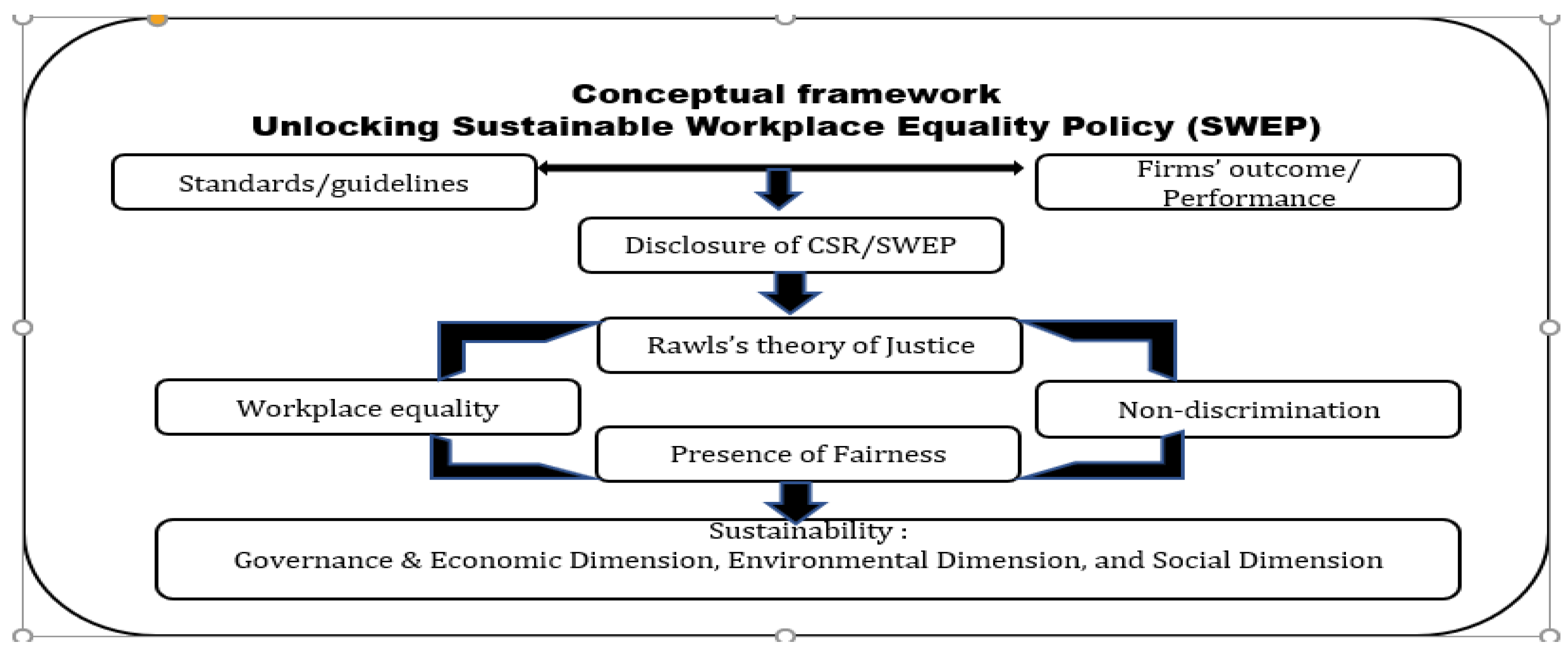
Rawls argues that because the organization has the opportunity to advance fairness and meritocracy in society, it has a greater ethical imperative to force these values (Rawls 1971; Slote 1993; Arneson 1999; Taylor 2009). It is the employees of a company who have the opportunity to advance the fairness principle in the workplace (Cropanzano et al. 2003; Errigo 2016). There is a growing trend among organizations to adopt policies that support employees (Gilliland 1993; Ragins and Cornwell 2001; Pichler et al. 2017; Livingston 2020). Traditionally, employee creativity has been viewed as the micro foundation for firm innovation (Oldham and Cummings 1996; Anderson et al. 2014; Liu et al. 2017), which ultimately produces competitive advantages (Liu et al. 2017). The componential theory of creativity emphasizes domain-relevant skills as a core driver of creativity (Amabile 1996; Liu et al. 2016). This theory holds that “all humans with normal capacities are able to produce at least moderately creative work in some domain, some of the time—and that social environment (the workplace) can influence both the level and frequency of creative behavior” (Amabile 1997, p. 42). It has been shown that workplace equality practices within a given human resource system may create synergy and thus improve firm performance (Armstrong et al. 2010; Combs et al. 2006). The importance of innovation for long-term corporate success cannot be overstated (Miller 1992; Koller 1994; Amabile 1997). Business is not static, and the pace of change is accelerating rapidly; therefore, no company can continue to deliver the same products and services in the same way for an extended period of time (d'Aveni 1995; Amabile 1997; Flyvbjerg 2021). Research has indicated that employee human capital may play a role in mediating the relationship between human resource diversity systems and employee outcomes (Barro 2001; Jackson et al. 2014; Chung et al. 2021). Liu et al. (2017) argued that employee outcome is determined by “creativity,” which is simply the production of novel, appropriate ideas within any area of human activity, such as science, art, business, education, and everyday life. Several researchers and theorists suggest that creativity and innovation are fostered when one is given a great deal of freedom to conduct his or her work (Amabile and Gryskiewicz 1989; Anderson et al. 2014; Rampa and Agogué 2021). According to the componential theory, innovation requires three elements—management practices, resources, and organisational motivation (Fosfuri and Tribó 2008; Amabile and Pratt 2016)—and individuals and teams generate innovation within an organization through their creativity (McAdam and McClelland 2002; Fosfuri and Tribó 2008). This theory asserts that the work environment influences individual creativity (Amabile 1997; McAdam and McClelland 2002; Rasulzada 2007). Employers discriminate against qualified applicants based on their sexual orientation, limiting their available talent pool (Tilcsik 2011; Hossain et al. 2020; Triana et al. 2021). Since diversity in the workplace is related to increased innovation (Kochan et al. 2003), it can be concluded that there is a relationship between diversity management in the workplace and firm performance. Various stakeholders and employers have suggested that sustainable workplace equality policies (SWEP) would bring about two specific benefits that would positively impact the corporate bottom line (Porter and Kramer 2006; Sears and Mallory 2011): (1) retention of talented employees and (2) generation of new ideas and innovations by drawing on a workforce with a wide range of characteristics and experiences that accommodate CSR and firm performance. Therefore, the theoretical framework of this study is as follows:
3. Related Literature and Hypotheses
Researchers, employers, and policymakers worldwide have studied the impact of globalization of markets on demographic characteristics of work forces (Chand and Tung 2014; Sharma 2016). A diverse workforce consists of individuals belonging to different cultures, who have different characteristics, aspirations, and expectations (Findler et al. 2007; Cennamo and Gardner 2008). Employees from different backgrounds have different needs and all wish to be respected in their workplace and experience equality (Cascio 2000; Pearson and Porath 2005). Management must understand the needs of these diverse groups of people to avoid employee tensions and conflicts (Jehn 1997; Hill et al. 2003; Gabrielova and Buchko 2021). Maintaining workplace harmony and/or an equality policy is important for increasing an organization’s productivity (Inegbedion et al. 2020). In this scenario, CSR measures are aimed at connecting the lines of action of organizations with desirable outcomes in societies (Bowen 1953; Barauskaite and Streimikiene 2021; Singh and Misra 2022). CSR practices have the potential to enhance firm performance and, under certain conditions, even compensate for firm weaknesses, e.g., poor corporate ability (Berens et al. 2007; Cao et al. 2023). CSR takes many forms among which corporate volunteering, employee fairness, non-discrimination, environmental programs, and responsible investing are most commonly considered (Ailawadi et al. 2014; Inoue et al. 2017; Wang et al. 2020; Carroll 2021).
Most empirical studies on CSR focus on investigating factors that help to align CSR activities with company financial performance and pay particular attention to the interest of shareholders (Andrew and Baker 2020). The findings are varied (Barauskaite and Streimikiene 2020; Cavaco and Crifo 2014; Tang et al. 2012). Another stream of research considers the impact of CSR on particular stakeholders like consumers (Chernev and Blair 2015; Inoue et al. 2017; Lee and Shin 2010) and employees (Onkila and Sarna 2021). These studies explain the mechanism underlying CSR’s impact on company performance, highlighting potential conflicts of interest among company stakeholders (Du et al. 2023).
Hossain et al. (2020) study confirmed that Rawls’ Theory of Justice to shows that firms with workplace diversity policies are likely to be more innovative and perform better than those without such policies based on the human rights campaign’s corporate equality index of the USA. Porcena et al. (2020) examined three manifestations of diversity management (diversity recruitment, diversity staffing, and valuing diversity) and their relationship with firm performance as mediated by internal and external ethics. Their findings indicate that the value of diversity management and its impact on corporate ethics contribute positively beyond their intended purpose and may encourage managers to continue to implement such efforts, which could lead to more diverse and ethical workplaces and increased firm performance (Procena et al. 2020). Sharma (2018) found a significant direct effect of corporate ethical values on both organizational citizenship behaviors and alienation from work; however, they found that perceived fairness does not moderate these relationships. According to the findings of their research, perceptions of fairness may suppress the impact of ethical transgressions on employee performance in the short term but have multiple implications in the long run (Sharma 2018). Celma et al. (2018) confirmed that a higher job quality generally increases employee wellbeing at work but that some practices are more effective than others for each wellbeing dimension. It is also noteworthy that some practices, such as job security and good environmental working conditions, positively affect all domains of employee wellbeing at work (Ganster and Rosen 2013; Parent-Lamarche et al. 2021; Stankevičienė 2021). As a consequence of the procedural justice theory, Brooke and Tyler (2010) examined two approaches to diversity management in the workplace: (1) maximizing the benefits of diversity in the workplace and (2) minimizing the negative effects of diversity. In their study, they found that the procedural justice theory created conditions under which employees from all backgrounds felt comfortable contributing their unique perspectives, which maximized diversity's benefits (Brooke and Tyler 2010). In contrast, through the procedural justice theory, a diverse workforce can also be encouraged to behave respectfully, preventing problems arising from prejudice (Brooke and Tyler 2010).
Studies by Lee et al. (2012) and Vilanova et al. (2009) showed that a well-established CSR and workplace equality cum diversity has an appositive effect on business performance. Managing diversity and equality in the workplace is critical because there is a widespread public commitment to equality and diversity, which have been judged by different attitude surveys (Colgan et al. 2007; Liff 1999; Liff and Cameron 1997; Soni 2000). Managing diversity and equality is also important because it impacts all the members working in an organization, and if properly managed, an organization could potentially improve productivity, opportunity, and competitiveness (Moore 1999; Cox and Blake 1991; Dover et al. 2020). The value of workforce diversity in improving the quality of management's decisions and providing innovative ideas and superior solutions to organizational problems is widely recognized (Shen et al. 2009; Konrad et al. 2021). Several empirical studies have shown that companies with effective diversity management generate bottom line returns (Richard 2000; Barnett and Salomon 2006; Ely and Thomas 2020). Sharing information and fostering constructive conflict management are the keys to proving the value of diversity (Cox 1991; Herring 2009; Leroy et al. 2022). Managing diversity is premised upon recognizing diversity and differences as positive attributes of an organization rather than as problems to be solved (Thompson 1977; Bunderson and Sutcliffe 2002). Indeed, one of Kuwait’s main messages is the commitment to all-inclusive, rights-based, equal-opportunity and dignifying development of human capital and economic, social, and environmental sustainability. Based on the above discussions, the following hypothesis was developed:
H1: The sustainable workplace equity policy (SWEP) disclosure is positively associated with firm performance.
In the financial markets, a company's valuation is determined by its future profitability (Konar and Cohen 2001; Jiao 2011). After recent corporate scandals, disclosures by corporations (both mandatory financial reports and voluntary disclosures) have received significant attention (Jiao 2011; Camfferman and Wielhouwer 2019). By facilitating communication between management and the equity market, high-quality disclosures reduce valuation and managerial myopia due to information asymmetry and short-term market pressure (Jiao 2011; del Río et al. 2023; Geng et al. 2023). In contrast, CSR refers to the economic, legal, ethical, and philanthropic responsibilities of companies (Carroll 1999). Corporate bodies increasingly face stakeholder and external pressures to comply with sustainability norms; such pressures have perhaps intensified in the aftermath of the Global Financial Crisis (Gonzalez and Martinez 2004; Boddy 2011; Demirgüç-Kunt et al. 2020). Therefore, CSR constitutes a major area of disclosure and compliance for publicly-listed entities; researchers have demonstrated that the overarching objective is to encourage both corporate growth and wider sustainability (Matten and Moon 2008; Almunawar and Low 2014; Bae et al. 2021). Under the umbrella of CSR concepts, the impact of SWEP disclosures on market value was evaluated in the current study.
Researchers have shown that the positive association between CSR and firm value is stronger when the cultural environment places a greater demand for CSR (Griffin et al. 2020; Bardos et al. 2020). There are three primary areas covered here by firms: (1) compliance with environmental regulations, (2) worker and consumer rights, and (3) philanthropy and charitable work (Griffin and Prakash 2014; Farag and Mallin 2016, McGuinness et al. 2017). However, the literature on CSR recognizes the possible influence of social, economic, and political factors on the above issues, especially non-regulation (Grosser and Moon 2008; Halme et al. 2020). In contrast, employers are increasingly realizing how important human capital management is in knowledge-based and service-based economies (Quinn 1999; Scarbrough and Elias 2002; Mathew et al. 2021) and how high standards of human capital management can enhance performance, particularly by enhancing employee skills base, motivation, and retention (Scarbrough and Elias 2002; Vijayakumar et al. 2021). Moreover, practicing CSR helps organizations build sustainable business models (Jenkins 2009; Lüdeke-Freund and Dembek 2017). Based on critical mass, human capital, and institutional theories, diversity and CSR policies are directly related (Cook and Glass 2018; Saridakis et al. 2020; Vijayakumar et al. 2021). CSR engagement can encompass various dimensions, with different levels of involvement in each dimension. Several studies have identified five major dimensions of CSR: diversity, employee relations, product, environment, and community (Choi and Wang 2009; David et al. 2007; Hou and Reber 2011; Saridakis et al. 2020). In the real world, these dimensions are indicative of a company's general stance on many social issues, such as the treatment of women, minorities, and employees; sustainable investment; environmental management; and community relations (Graves and Waddock 1999; Galbreath 2010; Jamali et al. 2009; Saridakis et al. 2020). In reality, companies may prioritize different CSR activities by deciding which stakeholders’ expectations to satisfy, in what order, and to what extent (Van and Gossling 2008; Mason and Simmons 2014; Mukhtar and Bahoroz 2022). A company may engage in multiple activities, such as promoting equality in the workplace, safety, and quality in design, manufacture, sales, and after-sales services and protecting the environment and local communities (Du and Vieira 2012; Saridakis et al. 2020). In this study, the aim of the index is to measure CSR “practices” in the term's broadest sense, covering sustainability reporting, membership in CSR organizations and networks, certification practices, and different rankings of CSR performance along the triple bottom line. Managers can present CSR performance information using both quantitative/quantifiable and qualitative/non-quantifiable indicators (Davis et al. 2015; Du and Yu 2021). Indeed, CSR reports contain credible information about CSR performance and are relevant for assessing firm performance (Franco et al. 2015; Wang et al. 2018). CSR may directly impact firm value, but it also enhances customer satisfaction, reputation, and market perception, all of which have a positive impact on financial performance (Saeidi et al. 2015). Based on the above discussions, the second hypothesis was developed:
H2: There is a positive association between sustainable workplace equity policy (SWEP) disclosure and a firm’s market value.
In the last half century, several studies explored how firm characteristics impact CSR disclosure levels (McWilliams and Siegel 2001; Cordeiro and Tewari 2015; Ali et al. 2017; Ren er al. 2023). Companies undertake CSR for various reasons (Blowfield 2007; De Jongn and van der Meer 2017), and many more create CSR policies and practices because they believe it will increase their bottom line (Lin-Hi and Müller 2013; Connors et al. 2017).
The impact of CSR on existing key business metrics can be significant (Raghubir et al. 2010). The concept and application of CSR, however, may differ depending on firm characteristics, such as size, age, corporate governance (CG), and financial characteristics (Martínez-Ferrero and Frias-Aceituno 2015). The stakeholder theory suggests that the involvement of CSR increases with the age and size of a company (Van der Laan et al. 2008; Cordeiro and Tewari 2015; Waheed and Zhang 2022). Older firms are more responsible when it comes to diversity and environmental awareness (Jo and Harjoto 2012; Withisuphakorn and Jiraporn 2016). It is necessary for young companies to build their image through CSR activities and get greater marginal returns from CSR activities. Generally, large companies are considered more socially responsible because they are more visible (Porter and Kramer 2006; Bhattacharya et al. 2008). CG and CSR have mainly been studied and debated separately (Zaman et al. 2022). However, it has been hypothesized that there is a close connection between CG and CSR (Jamali et al. 2008). The literature on CSR emphasizes the need for the highest standards of internal governance, especially regarding internal CSR initiatives (Grosser and Moon 2005; Perrini, Pogutz, and Tencati 2006; Wang et al. 2016). Based on CSR, companies with better governance tend to be more socially responsible (Jo and Harjoto 2012; Ntim and Soobaroyen 2013), and the composition of a company’s board plays a significant role in determining its general performance (Al-Shammari et al. 2022) as well as its commitment to CSR (Harjoto 2017; Bolourian et al. 2021). Based on the above discussions, the following hypothesis was developed:
H3: The sustainable workplace equity policy (SWEP) disclosure is positively associated with firm characteristics.
4. Current Status of the Workplace Equality Policy in Kuwait
Kuwait, a small city-state on the Persian-Arabian Gulf, has undergone massive political, economic, and social development throughout the 20th century (Tétreault 2001). It has achieved one of the highest levels of per capita income in the world through the successful development of its oil resources since the 1940s (World Bank 2021). With a crude oil production capacity of around 3 million barrels per day, Kuwait, along with Saudi Arabia and the UAE, has been part of the steady OPEC producers in recent years (World Bank 2021). The Kuwaiti Government has defined a clear path for sustainable growth with the Vision 2035/New Kuwait which is aimed at transforming the country into a financial and commercial hub for the region by 2035. The seven pillars of the Vision will be realized through the Third Kuwait National Development Plan (KNDP-3) 2020–2025 and subsequent national development plans (World Bank 2021).
Established in 2014, Boursa Kuwait is the operator of the Kuwait Stock Exchange, the national stock market of Kuwait. Since 2016, it has been responsible for driving engagement, growth, and innovation in the Kuwaiti capital market, while supporting the Capital Markets Authority, issuers, investors, and various other key stakeholders (https://www.boursakuwait.com.kw). Since its inception, Boursa Kuwait has played a pivotal role in the development of Kuwait’s capital market and the diversification of the national economy, in line with the goals of Kuwait Vision 2035 (Almujamed et al. 2017). Keeping that view,the goals of Kuwait Vision 2035 include transforming Kuwait into a financial and trade center that is attractive to investors, where the private sector leads the economy; creating competition; and promoting production efficiency under the umbrella of enabling government institutions, which accentuates values, safeguards social identity, and achieves human resource development as well as balanced development, providing adequate infrastructur. Therefore, a sustainable work environment in Kuwaiti companies is important to achieve the goals of Kuwait Vision 2035. Currently, a total of 168 companies are listed in the Kuwait Stock Exchange under both “main and premier market.” The premier” market is the flagship of the Boursa Kuwait markets, targeting companies with high liquidity and a medium-to-big market capitalization. The “main” market comprises companies that do not qualify to be listed in the “premier” market but nonetheless enjoy enough liquidity to be listed among the most active market participants.
5. Research Design and Method
5.1. Sample Size
The present study examined the relationship between the SWEP index and firm characteristics and performance, using a sample of firms that were listed in the Kuwait Stock Exchange (Boursa Kuwait) in the period between 2012 and 2020. The final sample included 148 firms. The Kuwait Stock Exchange was chosen because the researchers identified that the Kuwaiti Government has defined a clear path for sustainable growth with the Vision 2035/New Kuwait which is aimed at transforming the country into a financial and commercial hub for the region by the year 2035.
5.2. Measurement of SWEP Disclosure
To calculate SWEP, various sources from which to we prepare a list of items to be in the annual reports and or sustainability reports:
GRI standard;
S&P global corporate sustainability assessment;
Dow Jones sustainability index;
UN Global compact and the world business council for sustainable development; and
KPMG sustainability reporting survey.
A research assistant was appointed for this purpose, and initially, 75 sets of information were included in the SWEP. However, to reduce subjective judgment and after careful investigation by the first two authors, 64 items which are always reported/disclosed in annual reports or sustainable reporting by the sample companies were chosen. Three dimensions—“Governance and Economic Dimension”, “Environmental Dimension”, and “Social Dimension”—were considered in the list. Appendix A contains the detailed list of information.
A dichotomous scoring system was developed, where if an item is disclosed, it scores one, and if it is not disclosed, it scores zero. As a result, each firm's score was calculated using the formula below:
where SWEP indexby is the SWEP score for Firm b in the year y; MAXby is the maximum possible score; i is each item in the TCFD index, and SCORE iby is the score for item i, Firm b in the year y.
5.3. Regression Models
The objective of the current study was threefold. First, it examined the association between the SWEP index and firm characteristics (Equation 1); then, it investigated the relationship between the SWEP index and firm financial (Equation 2) and market (Equation 3) performance. Hence, three OLS regression models were developed to test the study hypotheses as follows:
To perform value relevance analysis in the current study, the valuation model of Ohlson (1995) was adopted; this model underpins a large body of value relevance studies that have been conducted over the last two decades in both developed and developing countries (Harris et al. 1994; Francis and Schipper 1999; Hellstrom 2006, Ahmed et al. 2015; Tahat et al. 2016; Tahat and Alhadab 2017). The Ohlson model is based upon three fundamental assumptions: (i) the value of equity is equal to the present value of expected future dividends; (ii) a clean surplus arises which means that all changes in assets and liabilities, except those relating to dividends, should pass through the income statement; and (iii) information changes in a linear fashion (Ohlson 1995, p. 667). Ohlson’s (1995) model was extended by including other variables (Log TA, Firm_Age, and firm industry) to ensure that the results gotten are not affected by any omitted variables. The linear regression equation of the Ohlson (1995) model yielded Equation 3:
All variables employed in the regression models above are shown in Table 1
5.4. Control Variables
As shown in Table 1 where all variables were defined, the current paper uses a set of control variables based on previous studies that affect CSR performance. Firm size (SIZE) was included since larger firms have greater visibility and face more intense stakeholder pressure to engage in CSR (Smith 2003). SIZEt is the natural logarithm of total assets at the end of year t. ROAt was also included to control for the positive association between financial performance and CSR performance (Margolis and Walsh 2003). ROAt is the return on assets, which is calculated as net income divided by total assets at the end of year t. Financial leverage was controlled for because firms with constrained financial resources are less likely to engage in CSR (Waddock and Graves 1997; Surroca et al. 2010). In addition, firm age, cash flow from operations, and independent directors were employed as control variables as needed.
6. Finding and Analysis
6.1. Descriptive Statistics
Table 2 gives valuable insights into the variables examined in the dataset by providing the descriptive statistics. The SWEP index ranged from 0.6 to 0.75, with a mean of approximately 0.65 and a standard deviation of 0.035. Likewise, the log TA, which is the logarithm of total assets, ranged from 10.8 to 19.6, with a mean of 15.8 and a standard deviation of 2.6. Furthermore, the logarithm of price had a standard deviation of 0.7 and a mean of 4.5, with a range of 3.3 to 5.6. Regarding earnings per share, a range of -1.05 to 17.5 was observed, with a mean of 6.5 and a standard deviation of 5.5. CFO had a mean of 0.03 and a standard deviation of 0.045, while ROA ranged from 0.004 to 0.065, with a mean of 0.027 and a standard deviation of 0.02. For Leverage, a range of 0.075 to 0.92 was observed, with a mean of 0.6 and a standard deviation of 0.28. Firm Age ranged from 2 to 69, with a mean of approximately 37.5 and a standard deviation of 16.6. The “Independent Directors” variable had a mean of around 1.0, with a minimum of 0 and a maximum of 3 and a slightly high standard deviation of 0.89. Overall, Table 2 offers a detailed overview of the central tendency and variability of each variable, providing valuable insights into the datasets used in the current study.
6.2. Correlation Matrix
Table 3 outlines the correlation matrix among the variables examined in the current study. The correlation coefficients ranged from -0.621 to 0.864, suggesting a wide range of relationships between the variables. For instance, a significantly positive relationship was observed between Log TA and Log Price, with a coefficient of 0.864, suggesting that companies with larger total assets tend to command higher market prices. Likewise, earnings per share (EPS) and book value per share ( BVPS) showed a significantly positive association, with a coefficient of 0.816, implying that firms with a higher EPS typically have higher BVPS since earnings contribute significantly to book value. A notable positive correlation was observed between ROA and Leverage, with a coefficient of 0.621, indicating that firms with higher ROAs tend to be more leveraged. In contrast, Leverage showed a significantly negative correlation with the SWEP index, with a coefficient of -0.621, suggesting that companies with a higher SWEP index tend to be less leveraged. Table 3 also reports a significant negative association between leverage and Ind Directors, with a coefficient of -0.382, suggesting that highly leveraged firms have fewer independent directors on their boards. Overall, Table 3 provides an insightful correlation analysis of all variables, unveiling a diverse set of associations between the examined variables.
6.3. Regression Analysis
Table 4 provides the results of the analysis to examine the relationship between SWEP and firm performance variables. CFO shared a marginally significant positive relationship with SWEP, with a coefficient of 0.089 and a p-value of 0.058, suggesting that firms with higher CFO values disclose higher SWEP. Similarly, Firm_Age and Ind Directors exhibited a significant positive relationship with the SWEP index, with coefficients of 0.015 and 0.012 and p-values of less than 0.01, implying that older firms with larger Ind directors report higher SWEP values. In contrast, Leverage showed a significant negative relationship with the SWEP index, with a coefficient of -0.027 and p-value of 0.019, indicating that as leverage increases, SWEP reporting tends to decrease. Furthermore, the industry control variables revealed significant negative coefficients for Basic Materials, Financial Services, Industrial, Real Estate, and Telecommunications, indicating that firms in these industries tend to have lower SWEP index values. Moreover, a relatively high Adjusted-R2 of 0.65 was observed, suggesting that the model explain a significant portion of the variation in SWEP. Finally, F-test was statistically significant, indicating that the model was a good fit for the data. Therefore, Hypothesis 1, which states that all firm performance variables examined in the current are positively associated with the SWEP, is accepted.
The results of the regression analysis presented in Table 5 show the impact of the SWEP index on firm performance, as measured by ROA. The results indicate a statistically significant positive relationship between SWEP and ROA, suggesting that companies with higher SWEP indexes tend to have higher ROAs, which implies that effective management of financial risk factors, as reflected by higher SWEP indexes, can lead to improved financial performance. In particular, Table 5 indicates a statistically positive relationship between the SWEP index and ROA, with a coefficient of 47.01 and a p-value of less than 0.05, suggesting that companies with better SWEP indexes generate higher returns on their investments. In addition, Table 5 indicates normal results between ROA (firm performance measure) and the set of control variables including CFO, Leverage, Firm_Age, and Ind Directors, with statistically positive coefficients and p-values of less than 0.05. Additionally, the table reports an Adjusted-R2 of 0.31, which indicates that the model explains a moderate portion of the variation in ROA. Table 5 concludes a significant F-test, indicating that the model is a good fit for the datasets. Accordingly, Hypothesis 2, which states that the ROA reports a significantly positive association with the SWEP index, is supported, suggesting that SWEP performance improves firm performance. The findings of the present study regarding the relationship between the SWEP and the firm performance measures and firm characteristics are consistent with the extant literature (Quinn 1999; Grosser and Moon 2008; Lee and Shin 2010; Tang et al. 2012; Scarbrough and Elias 2002; Griffin and Prakash 2014; Cavaco and Crifo 2014; Chernev and Blair 2015; Farag and Mallin 2016; McGuinness et al. 2017; Inoue et al. 2017; Barauskaite and Streimikiene 2020; Halme et al. 2020; Andrew and Baker 2020; Mathew et al. 2021; Onkila and Sarna 2021; and Du et al. 2023).
Table 6 presents the results of the regression analysis of the effect of SWEP (Sustainable and Environmental Performance) on firm value as measured by year-end closing stock price. An analysis of Table 6 reveals a statistically positive relationship between the SWEP and Log_Price, with a coefficient of 5.7 and a p-value of 0.026, indicating a positive relationship between SWEP and firm value and suggesting that an increase in the SWEP is associated with higher firm value. In addition, Table 6 shows that EPS does have a positive relationship with firm value, as indicated by its coefficient of 0.042 and a p-value of 0.02. Also, the table reports an adjusted R-squared value of 0.90, suggesting that the regression model explains 90% of the variation in firm value. The F-test result (F = 40.364, p = 0.000) indicates that the overall regression model is statistically significant. Accordingly, Hypothesis 3, which states that firm value has a significantly positive relationship with the SWEP, is accepted. This finding reaffirmed previous research findings (McWilliams and Siegel 2001; Blowfield 2007; Ahmed et al. 2015; Cordeiro and Tewari 2015; Ali et al. 2017; De Jongn and van der Meer 2017; Tahat et al. 2017; Ren et al. 2023c).
7. Conclusion
In this study, CSR and workplace equality in the Gulf region, particularly in Kuwait, were examined. The concept of CSR has been widely adopted by firms in developed countries for decades but has recently gained traction in transition economies as well. The objectives of the Kuwait Vision 2035 include taking actions that will lead to the transformation of Kuwait into a financial and trade center which is attractive to investors, where the private sector leads the economy, creating competition and promoting production efficiency under the umbrella of enabling government institutions, which accentuate values, safeguard social identity, and achieve human resource development as well as balanced development, providing adequate infrastructure. To achieve the Kuwait Vision 2035, Kuwait companies must maintain a sustainable work environment. In fact, Kuwait's main message is its commitment to all-inclusive, rights-based, equal-opportunity, and dignified development of human capital as well as to sustainable economic, social, and environmental development.
In conclusion, this study focused on the SWEP in Kuwait and its impact on firms’ financial and market performance. By examining companies listed in the Kuwait Boursa from 2012 to 2020 and utilizing a disclosure index based on the S&P global corporate sustainability assessment ESG criteria, the study employed time series regression analysis to test its hypotheses. The findings demonstrated a strong positive relationship between the SWEP disclosure and firm measures of financial performance, suggesting that the SWEP is valued by investors and influences firm market value and indicating that investors consider firm disclosure of SWEP when making investment decisions. These results are particularly significant for various stakeholders, including investors and policymakers. Notably, the study holds importance for the Kuwaiti Government as it aligns with the Kuwait Vision 2035/New Kuwait initiative which aims to transform the country into a financial and commercial hub for the region by 2035.
The study has several limitations that should be acknowledged. First, the findings may not be easily generalizable beyond the listed companies in Kuwait during the specified time period, limiting the external validity of the results. Additionally, the researchers’ reliance on publicly available data and the construction of the SWEP disclosure index based on data sources may have led to potential subjective judgement. Furthermore, the study's use of time series regression analysis raises concerns about endogeneity, as unobserved factors could influence both SWEP disclosure and financial performance. Future research could address these limitations by including companies from various countries, utilizing more comprehensive datasets, employing panel data models or experimental designs to establish causality, and investigating long-term effects and potential mediating or moderating factors. Such research efforts would contribute to a deeper understanding of the impact of SWEP on firm performance and inform the development of effective sustainable workplace policies and practices.
Appendix A
| List of items | |
| A | Governance & Economic Dimension |
| 1 | Corporate Governance: |
| General Disclosure related to reporting: | |
| 1.1 | Organizational details |
| 1.2 | Entities included in the organization’s sustainability reporting |
| 1.3 | Reporting period, frequency, and contact point |
| 1.4 | Restatements of information |
| 1.5 | External assurance |
| 1.6 | Reasons for omission for disclosures and requirements |
| 1.7 | Reporting principles |
| 1.8 | Role of the highest governance body in sustainability reporting |
| Disclosure related to Board of Director: | |
| 1.9 | Information on governance structure, including committees of the highest governance body |
| 1.10 | Information on the role of the highest governance body and of senior executives in achieving sustainable development. |
| 1.11 | Size of Board of Directors (BOD) |
| 1.12 | Executive directors identified in the BOD |
| 1.13 | Non-executive directors identified in the BOD |
| 1.14 | Independent directors identified in the BOD |
| 1.15 | Board of directors’ member photo |
| 1.16 | Women representation of the BOD |
| 1.17 | CEO duality |
| 1.18 | Stakeholders’ representation in the BOD |
| 1.19 | Employees’ representation in the BOD |
| 1.20 | Audit committee composition |
| 2 | Code of Business Conduct: |
| 2.21 | Code of conduct or ethics |
| 2.22 | Industry assurance ISO |
| 3 | Risk and Crisis Management: |
| 3.23 | Risk management committee |
| 3.24 | Risk assessment |
| 3.25 | Early warning systems (EWS) |
| B | Environmental Dimension |
| 4 | Environmental reporting: |
| 4.26 | Annual environmental reporting |
| 4.27 | Non-compliance with environmental laws and regulations |
| 4.28 | Disclosure about biodiversity |
| 4.29 | Environmental protection and resources disclosure |
| 5 | Operational Eco-efficiency |
| 5.30 | Information on protection of ecosystems |
| 5.31 | Water utilization information |
| 5.32 | Water recycling issues |
| 5.33 | Energy consumption information |
| 5.34 | Environmental footprint |
| 6 | Climate Strategy |
| 6.35 | Discussions about direct greenhouse gas emissions |
| 6.36 | Climate change-related disclosures |
| C | Social Dimension |
| 7 | Human Rights: |
| 7.37 | Disclosure of how the organization seeks to ensure it respects employees’ human rights |
| 7.38 | Information on specific policy commitment to respect human rights |
| 7.39 | Information on the covers of policy commitment for internationally recognized human rights |
| 7.40 | Information on how it manages employment, i.e. its policies or practices |
| 7.41 | A description of policies and practices of overall working condition and ethical dilemma |
| 7.42 | A description of policies and practices on non-discrimination |
| 7.43 | A description of policies and practices on promotion |
| 7.44 | A description of policies and practices on privacy |
| 7.45 | A description of policies and practices on human resource development |
| 7.46 | A description of policies and practices on compensation |
| 7.47 | A description of policies and practices on industrial relation |
| 7.48 | Information on support for collective bargaining |
| 7.49 | Information about employee overtime management |
| 7.50 | Total number and rate of employee turnover during the reporting period, by age group and gender |
| 7.51 | Information about employee benefits including health care, life insurance, and retirement provisions |
| 7.52 | Information about disability and invalidity coverage |
| 7.53 | Information about parental leave |
| 7.54 | Information about maternity leave |
| 7.55 | Information about employees who leave the organization voluntarily or due to dismissal, retirement, or death in service |
| 7.56 | Information about the number and types of grievances filed during the reporting period |
| 8 | Human Capital Development |
| 8.57 | Information about employee training and education |
| 8.58 | Information about average hours of training that the organization’s employees have undertaken during the reporting period by gender or employee categories |
| 8.59 | Information about programs for upgrading employee skills |
| 8.60 | Information about the percentage of employees receiving regular performance and career development reviews |
| 9 | Corporate Citizenship & Philanthropy |
| 9.61 | Information about the organization’s policy commitments for responsible business conduct |
| 9.62 | Disclosure of CSR activities |
| 9.63 | Disclosure of amount paid or committed to the CSR purpose |
| 9.64 | Information about climate change and carbon emission |
| Source: Prepared by the authors as discussed in the methodology section. | |
References
- Abbott, W.F. , Monsen, R.J.: On the measurement of corporate social responsibility: Self-reported disclosures as a method of measuring corporate social involvement. Acad. Manage. J. 22, 501–515 (1979). [CrossRef]
- Abrahamsson, K. : Editors comments our common futures of sustainable work-concluding reflections. Eur. J. Workplace. Innov. 6, 245–255 (2021). [CrossRef]
- Aguilera, R.V. , Rupp, D.E., Williams, C.A., Ganapathi, J.: Putting the S back in corporate social responsibility: A multilevel theory of social change in organizations. Acad. Manage. Rev. 32, 836–863 (2007). [CrossRef]
- Ahmed, A.H. , Tahat, Y.A., Burton, B.M., Dunne, T.M.: The value relevance of corporate internet reporting: The case of Egypt. Adv. Account. 31, 188–196 (2015). [CrossRef]
- Ailawadi, K.L. , Neslin, S.A., Luan, Y.J., Taylor, G.A.: Does retailer CSR enhance behavioral loyalty? A case for benefit segmentation. Int. J. Res. Mark. 31, 156–167 (2014). [CrossRef]
- Alfred, A.M. , Adam, R.F.: Green management matters regardless. Acad. Manag. Perspect. 23, 17–26 (2009). [CrossRef]
- Ali, W. , Frynas, J.G., Mahmood, Z.: Determinants of corporate social responsibility (CSR) disclosure in developed and developing countries: A literature review. Corp. Soc. Responsib. Environ. Manag. 24, 273–294 (2017). [CrossRef]
- Almujamed, H. , Tahat, Y., Omran, M., Dunne, T.: Development of accounting regulations and practices in Kuwait: An analytical review. J. Corp. Account. Finance. 28, 14–28 (2017). [CrossRef]
- Al-Shammari, M.A. , Banerjee, S.N., Rasheed, A.A.: Corporate social responsibility and firm performance: A theory of dual responsibility. Manag. Decis. 60, 1513–1540 (2022). [CrossRef]
- Amabile, T.M. , Pratt, M.G.: The dynamic componential model of creativity and innovation in organizations: Making progress, making meaning. Res. Organ. Behav. 36, 157–183 (2016). [CrossRef]
- Anand, P. : Procedural fairness in economic and social choice: Evidence from a survey of voters. J. Econ. Psychol. 22, 247–270 (2001). [CrossRef]
- Anderson, N. , Potočnik, K., Zhou, J.: Innovation and creativity in organizations: A state-of-the-science review, prospective commentary, and guiding framework. J. Manag. 40, 1297–1333 (2014). [CrossRef]
- Andrew, J. , Baker, M.: Corporate social responsibility reporting: the last 40 years and a path to sharing future insights. Abacus. 56, 35–65 (2020). [CrossRef]
- Aragòn-Correa, J.A. , Marcus, A.A., Vogel, D.: The effects of mandatory and voluntary regulatory pressures on firms’ environmental strategies: A review and recommendations for future research. Acad. Manag. Ann. 14, 339–365 (2020). [CrossRef]
- Armstrong, C. , Flood, P.C., Guthrie, J.P., Liu, W., MacCurtain, S., Mkamwa, T.: The impact of diversity and equality management on firm performance: Beyond high performance work systems. Hum. Resour. Manage. 49, 977–998 (2010). [CrossRef]
- Arneson, R.J. : Egalitarianism and responsibility. J. Ethics. 3, 225–247 (1999). [CrossRef]
- Bacharach, S.B. , Bamberger, P.A., Vashdi, D.: Diversity and homophily at work: Supportive relations among white and African-American peers. Acad. Manag. J. 48, 619–644 (2005). [CrossRef]
- Bae, K.H. , El Ghoul, S., Gong, Z.J., Guedhami, O.: Does CSR matter in times of crisis? Evidence from the COVID-19 pandemic. J. Corp. Finance. 67, 101876 (2021). [CrossRef]
- Barauskaite, G. , Streimikiene, D.: Corporate social responsibility and financial performance of companies: The puzzle of concepts, definitions and assessment methods. Corp. Soc. Responsib. Environ. Manag. 28, 278–287 (2021). [CrossRef]
- Bardos, K.S. , Ertugrul, M., Gao, L.S.: Corporate social responsibility, product market perception, and firm value. J. Corp. Finance. 62, 101588 (2020). [CrossRef]
- Barnett, M.L. , Salomon, R.M.: Beyond dichotomy: The curvilinear relationship between social responsibility and financial performance. Strateg. Manag. J. 27, 1101–1122 (2006). [CrossRef]
- Baumgartner, R.J. , Ebner, D.: Corporate sustainability strategies: Sustainability profiles and maturity levels. Sustain. Dev. 18, 76–89 (2010). [CrossRef]
- Bhattacharya, C.B., Sen, S., Korschun, D.: Using corporate social responsibility to win the war for talent. MIT Sloan Manag. Rev. 49 (2008).
- Bies, R.J. , Bartunek, J.M., Fort, T.L., Zald, M.N.: Corporations as social change agents: Individual, interpersonal, institutional, and environmental dynamics. Acad. Manage. Rev. 32(3), 788–793 (2007). [CrossRef]
- Blowfield, M. : Reasons to be cheerful? What we know about CSR’s impact. Third World Q. 28, 683–695 (2007). [CrossRef]
- Boddy, C.R. : The corporate psychopaths theory of the global financial crisis. J. Bus. Ethics. 102, 255–259 (2011). [CrossRef]
- Bolourian, S. , Angus, A., Alinaghian, L.: The impact of corporate governance on corporate social responsibility at the board-level: A critical assessment. J. Clean. Prod. 291, 125752 (2021). [CrossRef]
- Bowen, H.: Social responsibilities of the businessman. Harper (1953).
- Bozani, V. , Drydakis, N., Sidiropoulou, K., Harvey, B., Paraskevopoulou, A.: Workplace positive actions, trans people’s self-esteem and human resources’ evaluations. Int. J. Manpow. 41, 809–831 (2020). [CrossRef]
- Brooke, J.K., Tyler, T.R.: Diversity and corporate performance: A review of the psychological literature. N. C. L. Rev. 89, 715–748 (2010).
- Bunderson, J.S. , Sutcliffe, K.M.: Comparing alternative conceptualizations of functional diversity in management teams: Process and performance effects. Acad. Manage. J. 45, 875–893 (2002). [CrossRef]
- Camfferman, K. , Wielhouwer, J.L.: 21st century scandals: towards a risk approach to financial reporting scandals. Account. Bus. Res. 49, 503–535 (2019). [CrossRef]
- Cao, S. , Yao, H., Zhang, M.: CSR gap and firm performance: An organizational justice perspective. J. Bus. Res. 158, 113692 (2023). [CrossRef]
- Carroll, A.B. : Corporate social responsibility: Evolution of a definitional construct. Bus. Soc. 38, 268–295 (1999). [CrossRef]
- Carroll, A.B. : Corporate social responsibility: Perspectives on the CSR construct’s development and future. Bus. Soc. 60, 1258–1278 (2021). [CrossRef]
- Cascio, W.F. : Managing a virtual workplace. Acad. Manag. Perspect. 14, 81–90 (2000). [CrossRef]
- Celma, D. , Martinez-Garcia, E., Raya, J.M.: Socially responsible HR practices and their effects on employees’ wellbeing: Empirical evidence from Catalonia, Spain. Eur. Res. Manag. Bus. Econ. 24, 82–89 (2018). [CrossRef]
- Cennamo, L. , Gardner, D.: Generational differences in work values, outcomes and person organization values fit. J. Manag. Psychol. 23, 891–906 (2008). [CrossRef]
- Chand, M. , Tung, R.L.: The aging of the world's population and its effects on global business. Acad. Manag. Perspect. 28, 409–429 (2014). [CrossRef]
- Choi, J. , Wang, H.: Stakeholder relations and the persistence of corporate financial performance. Strateg. Manag. J. 30, 895–907 (2009). [CrossRef]
- Chung, B.G. , Dean, M.A., Ehrhart, K.H.: Inclusion values, practices and intellectual capital predicting organizational outcomes. Pers. Rev. 50, 709–730 (2021). [CrossRef]
- Colgan, F., Creegan, C., McKearney, A., Wright, T.: Equality and diversity policies and practices at work: Lesbian, gay and bisexual workers. Equal Oppor. Int (2007). [CrossRef]
- Conigliaro, P. : Between social sustainability and subjective well-being: The role of decent work. Soc. Indic. Res. 157, 139–174 (2021). [CrossRef]
- Connors, S. , Anderson-MacDonald, S., Thomson, M.: Overcoming the ‘window dressing’ effect: Mitigating the negative effects of inherent skepticism towards corporate social responsibility. J. Bus. Ethics. 145, 599–621 (2017). [CrossRef]
- Cook, A. , Glass, C.: Women on corporate boards: Do they advance corporate social responsibility? Hum. Relat. 71, 897–924 (2018). [CrossRef]
- Cordeiro, J.J. , Tewari, M.: Firm characteristics, industry context, and investor reactions to environmental CSR: A stakeholder theory approach. J. Bus. Ethics. 130, 833–849 (2015). [CrossRef]
- Cortina, L.M. : Unseen injustice: Incivility as modern discrimination in organizations. Acad. Manage. Rev. 33, 55–75 (2008). [CrossRef]
- Cox Jr, T. : The multicultural organization. Acad. Manag. Perspect. 5, 34–47 (1991). [CrossRef]
- Cox, T.H. , Blake, S.: Managing cultural diversity: Implications for organizational competitiveness. Acad. Manag. Perspect. 5, 45–56 (1991). [CrossRef]
- Cox, T.H. , Lobel, S.A., McLeod, P.L.: Effects of ethnic group cultural differences on cooperative and competitive behavior on a group task. Acad. Manag. J. 34, 827–847 (1991). [CrossRef]
- Cropanzano, R. , Goldman, B., Folger, R.: Deontic justice: The role of moral principles in workplace fairness. J. Organ. Behav. 1019–1024 (2003). [CrossRef]
- Cummings, J.N. : Work groups, structural diversity, and knowledge sharing in a global organization. Manage. Sci. 50, 352–364 (2004). [CrossRef]
- Dane, E. , Brummel, B.J.: Examining workplace mindfulness and its relations to job performance and turnover intention. Hum. Relat. 67, 105–128 (2014). [CrossRef]
- d'Aveni, R.A. : Coping with hypercompetition: Utilizing the new 7S's framework. Acad. Manag. Perspect. 9, 45–57 (1995). [CrossRef]
- David, P. , Bloom, M., Hillman, A.J.: Investor activism, managerial responsiveness, and corporate social performance. Strateg. Manag. J. 28, 91–100 (2007). [CrossRef]
- Davis, A.K. , Ge, W., Matsumoto, D., Zhang, J.L.: The effect of manager-specific optimism on the tone of earnings conference calls. Rev. Account. Stud. 20, 639–673 (2015). [CrossRef]
- Davis, G.F. , Thompson, T.A.: A social movement perspective on corporate control. Adm. Sci. Q. 141–173 (1994). [CrossRef]
- De Jong, M.D. , van der Meer, M.: How does it fit? Exploring the congruence between organizations and their corporate social responsibility (CSR) activities. J. Bus. Ethics. 143, 71–83 (2017). [CrossRef]
- De Maagt, S. : Reflective equilibrium and moral objectivity. Inquiry, 60, 443–465 (2017). [CrossRef]
- del Río, C. , López-Arceiz, F.J., Muga, L.: Do sustainability disclosure mechanisms reduce market myopia? Evidence from European sustainability companies. Int. Rev. Financial Anal. 87, 102600 (2023). [CrossRef]
- Demirgüç-Kunt, A. , Peria, M.S.M., Tressel, T.: The global financial crisis and the capital structure of firms: Was the impact more severe among SMEs and non-listed firms? J. Corp. Finance. 60, 101514 (2020). [CrossRef]
- Diamond, L. , Morlino, L.: The quality of democracy: An overview. J. Democr. 15, 20–31 (2004). [CrossRef]
- Dickens, L. : The business case for women′ s equality: Is the carrot better than the stick? Empl. Relat. 16, 5–18 (1994). [CrossRef]
- Dipboye R.L., Halverson S.K.: Subtle (and not so subtle) discrimination in organizations. In: Griffin R. W.O'Leary-Kelly A.M. (eds.) The dark side of organizational behavior, pp. 131–158. San Francisco: Jossey-Bass (2004).
- Dover, T.L. , Kaiser, C.R., Major, B.: Mixed signals: The unintended effects of diversity initiatives. Soc. Issues. Policy. Rev. 14, 152–181 (2020). [CrossRef]
- Du, S. , Vieira, E.T.: Striving for legitimacy through corporate social responsibility: Insights from oil companies. J. Bus. Ethics. 110, 413–427 (2012). [CrossRef]
- Du, S. , Yu, K.: Do corporate social responsibility reports convey value relevant information? Evidence from report readability and tone. J. Bus. Ethics. 172, 253–274 (2021). [CrossRef]
- Du, S. , El Akremi, A., Jia, M.: Quantitative research on corporate social responsibility: A quest for relevance and rigor in a quickly evolving, turbulent world. J. Bus. Ethics. 187, 1–15 (2023). [CrossRef]
- Edwards, K.L. , Christerson, B., Emerson, M.O.: Race, religious organizations, and integration. Annu. Rev. Sociol. 39, 211–228 (2013). [CrossRef]
- Eisenhardt, K.M. , Graebner, M.E., Sonenshein, S.: Grand challenges and inductive methods: Rigor without rigor mortis. Acad. Manage. J. 59, 1113–1123 (2016). [CrossRef]
- Elias, J. , Scarbrough, H.: Evaluating human capital: An exploratory study of management practice. Hum. Resour. Manag. J. 14, 21–40 (2004). [CrossRef]
- Ely, R.J., Thomas, D.A.: Getting serious about diversity. Harv. Bus. Rev. 98, 114–122 (2020).
- Engert, S. , Rauter, R., Baumgartner, R.J.: Exploring the integration of corporate sustainability into strategic management: A literature review. J. Clean. Prod. 112, 2833–2850 (2016). [CrossRef]
- Farag, H. , Mallin, C.: The impact of the dual board structure and board diversity: Evidence from Chinese initial public offerings (IPOs). J Bus. Ethics. 139, 333–349 (2016). [CrossRef]
- Farrelly, C. : Justice in ideal theory: A refutation. Polit. Stud. 55, 844–864 (2007). [CrossRef]
- Findler, L. , Wind, L.H., Barak, M.E.M.: The challenge of workforce management in a global society: Modeling the relationship between diversity, inclusion, organizational culture, and employee well-being, job satisfaction and organizational commitment. Admin. Soc. Work. 31, 63–94 (2007). [CrossRef]
- Flyvbjerg, B.: Make megaprojects more modular. Harv. Bus. Rev. 58–63 (2021).
- Fosfuri, A. , Tribó, J.A.: Exploring the antecedents of potential absorptive capacity and its impact on innovation performance. Omega, 36, 173–187 (2008). [CrossRef]
- Francis, J. , Schipper, K.: Have financial statements lost their relevance? J. Account. Res. 37, 319–352 (1999). [CrossRef]
- Franco, G. , Hope, O.K., Vyas, D., Zhou, Y.: Analyst report readability. Contemp. Account. Res. 32, 76–104 (2015). [CrossRef]
- Gabrielova, K. , Buchko, A.A.: Here comes Generation Z: Millennials as managers. Bus. Horiz. 64, 489–499 (2021). [CrossRef]
- Galbreath, J. : Drivers of corporate social responsibility: The role of formal strategic planning and firm culture. Br. J. Manag. 21, 511–525 (2010). [CrossRef]
- Ganster, D.C. , Rosen, C.C.: Work stress and employee health: A multidisciplinary review. J. Manage. 39, 1085–1122 (2013). [CrossRef]
- Geng, H., Zhang, C., Zhou, F.S.: Financial reporting quality and myopic investments: Theory and evidence. Account. Rev. 98 (2023). [CrossRef]
- Gersick, C.J. , Dutton, J.E., Bartunek, J.M.: Learning from academia: The importance of relationships in professional life. Acad. Manage. J. 43, 1026–1044 (2000). [CrossRef]
- Gibson, J.L. , Caldeira, G.A., Baird, V.A.: On the legitimacy of national high courts. Am. Polit. Sci. Rev. 92, 343–358 (1998). [CrossRef]
- Gilliland, S.W. : The perceived fairness of selection systems: An organizational justice perspective. Acad. Manage. Rev. 18, 694–734 (1993). [CrossRef]
- Gotsis, G. , Kortezi, Z.: Ethical paradigms as potential foundations of diversity management initiatives in business organizations. J. Organ. Chang. Manag. 26, 948–976 (2013). [CrossRef]
- Graves, S.B. , Waddock, S.A.: A look at the financial-social performance nexus when quality of management is held constant. Int. J. Value-Based. Manag. 12, 87–99 (1999). [CrossRef]
- Griffin, D.W., Guedhami, O., Li, K., Lu, G.: National culture and the value implications of corporate social responsibility: A channel analysis, (Available at SSRN 3250222) (2020).
- Griffin, J.J. , Prakash, A.: Corporate responsibility: Initiatives and mechanisms. Bus. Soc. 53, 465–482 (2014). [CrossRef]
- Grosser, K. , Moon, J.: Developments in company reporting on workplace gender equality?: A corporate social responsibility perspective. Account. Forum. 32, 179–198 (2008). [CrossRef]
- Hahn, T. , Pinkse, J., Preuss, L., Figge, F.: Ambidexterity for corporate social performance. Organ. Stud. 37, 213–235 (2016). [CrossRef]
- Halme, M. , Rintamäki, J., Knudsen, J.S., Lankoski, L., Kuisma, M.: When is there a sustainability case for CSR? Pathways to environmental and social performance improvements. Bus. Soc. 59, 1181–1227 (2020). [CrossRef]
- Harjoto, M.A. : Corporate social responsibility and degrees of operating and financial leverage. Rev. Quant. Finance. Account. 49, 487–513 (2017). [CrossRef]
- Harris, T.S. , Lang, M., Mőller, H.P.: The value relevance of German accounting measures: An empirical analysis. J. Account. Res. 32, 187–209 (1994). [CrossRef]
- Hellström, K. : The value relevance of financial accounting information in a transition economy: The case of the Czech Republic. Eur. Account. Rev. 15, 325–349 (2006). [CrossRef]
- Hengst, I.A. , Jarzabkowski, P., Hoegl, M., Muethel, M.: Toward a process theory of making sustainability strategies legitimate in action. Acad. Manage. J. 63, 246–271 (2020). [CrossRef]
- Hennig, J.C. , Firk, S., Wolff, M., Coskun, H.: Environmental management control systems: Exploring the economic motivation behind their implementation. J Bus. Res. 169, 114283 (2023). [CrossRef]
- Herring, C. : Does diversity pay?: Race, gender, and the business case for diversity. Am. Sociol. Rev. 74, 208–224 (2009). [CrossRef]
- Hess, D. , Rogovsky, N., Dunfee, T.W.: The next wave of corporate community involvement: Corporate social initiatives. Calif. Manage. Rev. 44, 110–125 (2002). [CrossRef]
- Hill, R.P. , Stephens, D., Smith, I.: Corporate social responsibility: An examination of individual firm behavior. Bus. Soc. Rev. 108, 339–364 (2003). [CrossRef]
- Hossain, M. , Atif, M., Ahmed, A., Mia, L.: Do LGBT workplace diversity policies create value for firms? J. Bus. Ethics. 167, 775–791 (2020). [CrossRef]
- Hou, J. , Reber, B.H.: Dimensions of disclosures: Corporate social responsibility (CSR) reporting by media companies. Public. Relat. Rev. 37, 166–168 (2011). [CrossRef]
- Inegbedion, H. , Sunday, E., Asaleye, A., Lawal, A., Adebanji, A.: Managing diversity for organizational efficiency. SAGE Open, 10, 2158244019900173 (2020). [CrossRef]
- Inoue, Y. , Funk, D.C., McDonald, H.: Predicting behavioral loyalty through corporate social responsibility: The mediating role of involvement and commitment. J. Bus. Res. 75, 46–56 (2017). [CrossRef]
- Jamali, D. , Safieddine, A.M., Rabbath, M.: Corporate governance and corporate social responsibility synergies and interrelationships. Corp. Gov.: Int. Rev. 16, 443–459 (2008). [CrossRef]
- Jamali, D. , Sidani, Y., El-Asmar, K.: A three country comparative analysis of managerial CSR perspectives: Insights from Lebanon, Syria and Jordan. J. Bus. Ethics. 85, 173–192 (2009). [CrossRef]
- Jehn, K.A. : A qualitative analysis of conflict types and dimensions in organizational groups. Adm. Sci. Q. 530–557 (1997). [CrossRef]
- Jenkins, H. : A ‘business opportunity’ model of corporate social responsibility for small-and medium-sized enterprises. Bus. Ethics: Eur. Rev. 18, 21–36 (2009). [CrossRef]
- Jiao, Y. : Corporate disclosure, market valuation, and firm performance. Financ. Manage. 40, 647–676 (2011). [CrossRef]
- Jo, H. , Harjoto, M.A.: The causal effect of corporate governance on corporate social responsibility. J. Bus. Ethics. 106, 53–72 (2012). [CrossRef]
- Joshi, A. , Liao, H., Jackson, S.E.: Cross-level effects of workplace diversity on sales performance and pay. Acad. Manage. J. 49, 459–481 (2006). [CrossRef]
- Koller, T.: What is value-based management? McKinsey Q. 87 (1994).
- Konar, S. , Cohen, M.A.: Does the market value environmental performance? Rev. Econ. Stat. 83, 281–289 (2001). [CrossRef]
- Konow, J. : Which is the fairest one of all? A positive analysis of justice theories. J. Econ. Lit. 41, 1188–1239 (2003). [CrossRef]
- Konrad, A.M. , Richard, O.C., Yang, Y.: Both diversity and meritocracy: Managing the diversity-meritocracy paradox with organizational ambidexterity. J. Manag. Stud. 58, 2180–2206 (2021). [CrossRef]
- Lee, Y.K. , Lee, K.H., Li, D.X.: The impact of CSR on relationship quality and relationship outcomes: A perspective of service employees. Int. J. Hosp. Manag. 31, 745–756 (2012). [CrossRef]
- Leroy, H. , Buengeler, C., Veestraeten, M., Shemla, M., Hoever, I.J.: Fostering team creativity through team-focused inclusion: The role of leader harvesting the benefits of diversity and cultivating value-in-diversity beliefs. Group Organ. Manag. 47, 798–839 (2022). [CrossRef]
- Liff, S. : Diversity and equal opportunities: Room for a constructive compromise? Hum. Resour. Manag. J. 9, 65–75 (1999). [CrossRef]
- Liff, S. , Cameron, I.: Changing equality cultures to move beyond ‘women’s problems’. Gend. Work Organ. 4, 35–46 (1997). [CrossRef]
- Lin-Hi, N. , Müller, K.: The CSR bottom line: Preventing corporate social irresponsibility. J. Bus. Res. 66, 1928–1936 (2013). [CrossRef]
- Linnenluecke, M.K. , Griffiths, A.: Corporate sustainability and organizational culture. J. World Bus. 45, 357–366 (2010). [CrossRef]
- Liu, D. , Gong, Y., Zhou, J., Huang, J.C.: Human resource systems, employee creativity, and firm innovation: The moderating role of firm ownership. Acad. Manage. J. 60, 1164–1188 (2017). [CrossRef]
- Liu, D. , Jiang, K., Shalley, C.E., Keem, S., Zhou, J.: Motivational mechanisms of employee creativity: A meta-analytic examination and theoretical extension of the creativity literature. Organ. Behav. Hum. Decis. Process. 137, 236–263 (2016). [CrossRef]
- Livingston, R.: How to promote racial equity in the workplace. Harv. Bus. Rev. 98, 64–72 (2020).
- Lüdeke-Freund, F. , Dembek, K.: Sustainable business model research and practice: Emerging field or passing fancy? J. Clean. Prod. 168, 1668–1678 (2017). [CrossRef]
- Margolis, J.D. , Walsh, J.P.: Misery loves companies: Rethinking social initiatives by business. Adm. Sci. Q. 48, 268–305 (2003). [CrossRef]
- Marshall: Oxford dictionary of sociology. Oxford University Press, New York (1994).
- Martínez-Ferrero, J. , Frias-Aceituno, J.V.: Relationship between sustainable development and financial performance: international empirical research. Bus. Strategy Environ. 24, 20–39 (2015). [CrossRef]
- Marullo, S. , Edwards, B.: From charity to justice: The potential of university-community collaboration for social change. Am. Behav. Sci. 43, 895–912 (2000). [CrossRef]
- Mason, C. , Simmons, J.: Embedding corporate social responsibility in corporate governance: A stakeholder systems approach. J. Bus. Ethics. 119, 77–86 (2014). [CrossRef]
- Mathew, N. , Javalgi, R., Dixit, A., Gross, A.: Drivers of emerging market professional service firm success: The role of internal firm competencies and capabilities. Manag. Res. Rev. 44, 547–567 (2021). [CrossRef]
- Matten, D. , Moon, J.: “Implicit” and “explicit” CSR: A conceptual framework for a comparative understanding of corporate social responsibility. Acad. Manage. Rev. 33, 404–424 (2008). [CrossRef]
- McAdam, R. , McClelland, J.: Individual and team-based idea generation within innovation management: Organisational and research agendas. Eur. J. Innov. Manag. 5, 86–97 (2002). [CrossRef]
- McGehee, N.G. , Santos, C.A.: Social change, discourse and volunteer tourism. Ann. Tour. Res. 32, 760–779 (2005). [CrossRef]
- McGuinness, P.B. , Vieito, J.P., Wang, M.: The role of board gender and foreign ownership in the CSR performance of Chinese listed firms. J. Corp. Finance. 42, 75–99 (2017). [CrossRef]
- McWilliams, A. , Siegel, D.: Corporate social responsibility: A theory of the firm perspective. Acad. Manage. Rev. 26, 117–127 (2001). [CrossRef]
- Miller, D. : The Icarus paradox: How exceptional companies bring about their own downfall. Bus. Horiz. 35, 24–35 (1992). [CrossRef]
- Mukhtar, S.M. , Bahormoz, A:. An integrative framework for stakeholder engagement: Reconciling and integrating stakeholders’ conflicting CSR priorities in management decision-making. J. Decis. Syst. 31, 407–432 (2022). [CrossRef]
- Murphy, J.E.F., Gibson, J.W.: Analyzing generational values among sustainable organizational effectiveness. SAM Adv. Manage. J. 75, 33–55 (2010).
- Norman, D. : Equality of what: Welfare, resources, or capabilities? 1. In: John Rawls pp. 169–192. Routledge (2017). [CrossRef]
- Ntim, C.G. , Soobaroyen, T.: Corporate governance and performance in socially responsible corporations: New empirical insights from a Neo-Institutional framework. Corp. Gov.: Int. Rev. 21, 468–494 (2013). [CrossRef]
- Parent-Lamarche, A. , Marchand, A., Saade, S.: How do work organization conditions affect job performance? The mediating role of workers’ well-being. J. Workplace. Behav. Health. 36, 48–76 (2021). [CrossRef]
- Pearson, C.M. , Porath, C.L.: On the nature, consequences and remedies of workplace incivility: No time for “nice”? Think again. Acad. Manag. Perspect. 19, 7–18 (2005). [CrossRef]
- Pfeffer, J. : Building sustainable organizations: The human factor. Acad. Manag. Perspect. 24, 34–45 (2010). [CrossRef]
- Porcena, Y.R. , Parboteeah, K.P., Mero, N.P.: Diversity and firm performance: Role of corporate ethics. Manag. Decis. 59, 2620–2644 (2020). [CrossRef]
- Porter, M.E., Kramer, M.R.: The link between competitive advantage and corporate social responsibility. Harv. Bus. Rev. 84, 78–92 (2006).
- Quinn, J.B.: Strategic outsourcing: Leveraging knowledge capabilities. MIT Sloan Manag. Rev. 40, 9 (1999).
- Raghubir, P. , Roberts, J., Lemon, K.N., Winer, R.S.: Why, when, and how should the effect of marketing be measured? A stakeholder perspective for corporate social responsibility metrics. J. Public Policy Mark. 29, 66–77 (2010). [CrossRef]
- Rampa, R. , Agogué, M.: Developing radical innovation capabilities: Exploring the effects of training employees for creativity and innovation. Creativity Innov. Manag. 30, 211–227 (2021). [CrossRef]
- Rasulzada, F.: Organizational creativity and psychological well-being. (Published Doctoral Thesis). Lund University Department of Psychology, http://www. Farida. Se/Farida_Rasulzada_book. Pdf, 18, 2014 (2007).
- Rawls, J.: A theory of justice. Harvard: Belknap Press of Harvard University (1971).
- Ren, S. , Huang, M., Liu, D., Yan, J.: Understanding the impact of mandatory CSR disclosure on green innovation: Evidence from Chinese listed firms. Br. J. Manag. 34, 576–594 (2023). [CrossRef]
- Richard, O.C. : Racial diversity, business strategy, and firm performance: A resource-based view. Acad. Manage. J. 43, 164–177 (2000). [CrossRef]
- Richardson, H.S. (ed.).: Development and main outlines in Rawls's Theory of Justice (Vol. 1). Taylor Francis (1999).
- Saeidi, S.P. , Sofian, S., Saeidi, P., Saeidi, S.P., Saaeidi, S.A.: How does corporate social responsibility contribute to firm financial performance? The mediating role of competitive advantage, reputation, and customer satisfaction. J. Bus. Res. 68, 341–350 (2015). [CrossRef]
- Samuel, A.P., Odor, H.O.: Managing diversity at work: key to organisational survival. Culture, 10 (2018).
- Saridakis, C. , Angelidou, S., Woodside, A.G.: What type of CSR engagement suits my firm best? Evidence from an abductively-derived typology. J. Bus. Res. 108, 174–187 (2020). [CrossRef]
- Scarbrough, H., Elias, J:. Evaluating human capital. CIPD Publishing (2002).
- Schwartz, J. : Relativism, reflective equilibrium, and justice. Leg. Stud. 17, 128–168 (1997). [CrossRef]
- Sharma, A. : Managing diversity and equality in the workplace. Cogent. Bus. Manag. 3, 1212682 (2016). [CrossRef]
- Sharma, D. : When fairness is not enough: Impact of corporate ethical values on organizational citizenship behaviors and worker alienation. J. Bus. Ethics. 150, 57–68 (2018). [CrossRef]
- Shen, J. , Chanda, A., D'netto, B., Monga, M.: Managing diversity through human resource management: An international perspective and conceptual framework. Int. J. Hum. Resour. Manag. 20, 235–251 (2009). [CrossRef]
- Sheehy, B., & Farneti, F. (2021). Corporate social responsibility, sustainability, sustainable development and corporate sustainability: What is the difference, and does it matter?. Sustainability, 13(11), 5965. [CrossRef]
- Simpson, R.M. : Dignity, harm, and hate speech. Law. Philos. 32, 701–728 (2013). [CrossRef]
- Singh, K. , Misra, M.: The evolving path of CSR: Toward business and society relationship. J. Econ. Finance Adm. Sci. 38, 304–332 (2022). [CrossRef]
- Slote, M. : Virtue ethics and democratic values. J. Soc. Philos. 24, 5–37 (1993). [CrossRef]
- Soni, V. : A twenty-first-century reception for diversity in the public sector: A case study. Public Adm. Rev. 60, 395–408 (2000). [CrossRef]
- Stankevičienė, A. , Tamaševičius, V., Diskienė, D., Grakauskas, Ž., Rudinskaja, L.: The mediating effect of work-life balance on the relationship between work culture and employee well-being. J. Bus. Econ. Manag. 22, 988–1007 (2021). [CrossRef]
- : ThinkiSubramanian, S.: Thinking through justice. Econ. Polit. Wkly. 45, 33–42 (2010)ng through justice. Econ. Polit. Wkly.
- Süßbauer, E. , Schäfer, M.: Corporate strategies for greening the workplace: Findings from sustainability-oriented companies in Germany. J. Clean. Prod. 226, 564–577 (2019). [CrossRef]
- Tahat, Y.A. , Alhadab, M.: Have accounting numbers lost their value relevance during the recent financial credit crisis? Q. Rev. Econ. Finance. 66, 182–191 (2017). [CrossRef]
- Tahat, Y. , Dunne, T., Fifield, S., Power, D.: The value relevance of financial instruments disclosure: Evidence from Jordan. Asian Rev. Account. 24, 445–473 (2016). [CrossRef]
- Taylor, R.S. : Rawlsian affirmative action. Ethics, 119, 476–506 (2009). [CrossRef]
- Tétreault, M.A. : A state of two minds: State cultures, women, and politics in Kuwait. Int. J. Middle East. Stud. 33, 203–220 (2001). [CrossRef]
- Thomas, T.E. , Lamm, E.: Legitimacy and organizational sustainability. J. Bus. Ethics. 110, 191–203 (2012). [CrossRef]
- Thompson, N.: Anti-discriminatory practice: Equality, diversity and social justice. Bloomsbury Publishing (2020).
- Töns, J.: John Rawls and environmental justice: implementing a sustainable and socially just future. Routledge (2021). [CrossRef]
- Triana, M.D.C. , Gu, P., Chapa, O., Richard, O., Colella, A.: Sixty years of discrimination and diversity research in human resource management: A review with suggestions for future research directions. Hum. Resour. Manag. 60, 145–204 (2021). [CrossRef]
- Van der Laan, G. , Van Ees, H., Van Witteloostuijn, A.: Corporate social and financial performance: An extended stakeholder theory, and empirical test with accounting measures. J. Bus. Ethics. 79, 299–310 (2008). [CrossRef]
- Van Marrewijk, M. , Werre, M:. Multiple levels of corporate sustainability. J. Bus. Ethics. 44, 107–119 (2003). [CrossRef]
- Vijayakumar, P. , Morley, M.J., Heraty, N.: Impact of critical mass on internal CSR: Moderating role of critical actor, position and culture. In: Academy of Management Proceedings, p. 15958. Briarcliff Manor, NY 10510: Academy of Management (2021). [CrossRef]
- Vilanova, M. , Lozano, J. M., Arenas, D.: Exploring the nature of the relationship between CSR and competitiveness. J. Bus. Ethics. 87, 57–69 (2009). [CrossRef]
- Waddock, S.A. , Bodwell, C., Graves, S.B.: Responsibility: The new business imperative. Acad. Manag. Perspect. 16, 132–148 (2002). [CrossRef]
- Waheed, A. , Zhang, Q.: Effect of CSR and ethical practices on sustainable competitive performance: A case of emerging markets from stakeholder theory perspective. J. Bus. Ethics. 175, 837–855 (2022). [CrossRef]
- Wang, H. , Gibson, C., Zander, U.: Editors’ comments: Is research on corporate social responsibility undertheorized? Acad. Manage. Rev. 45, 1–6 (2020). [CrossRef]
- Wang, H. , Tong, L., Takeuchi, R., George, G.: Corporate social responsibility: An overview and new research directions: Thematic issue on corporate social responsibility. Acad. Manage. J. 59, 534–544 (2016). [CrossRef]
- Wang, Z. , Hsieh, T.S., Sarkis, J.: CSR performance and the readability of CSR reports: Too good to be true?. Corp. Soc. Responsib. Environ. Manag. 25, 66–79 (2018). [CrossRef]
- Wesselink, R. , Blok, V., Ringersma, J.: Pro-environmental behaviour in the workplace and the role of managers and organisation. J. Clean. Prod. 168, 1679–1687 (2017). [CrossRef]
- Withisuphakorn, P. , Jiraporn, P.: The effect of firm maturity on corporate social responsibility (CSR): do older firms invest more in CSR?. Appl. Econ. Lett. 23, 298–301 (2016). [CrossRef]
- World Bank.: World bank country engagement framework 2021 – 2025: Country engagement framework for the state of Kuwait, World Bank Group: Washington, D.C (2021).
- Zaman, R. , Jain, T., Samara, G., Jamali, D.: Corporate governance meets corporate social responsibility: Mapping the interface. Bus. Soc. 61, 690–752 (2022). [CrossRef]

Table 1.
Definition of Variables.
| Variables | Definition |
|---|---|
| SWEP Index | Sustainable Workplace Equality Policy |
| log TA | Logarithm of total assets |
| Log Price | Logarithm of the closing share price at year-end |
| EPS | Earning per share |
| BVPS | Book value per share |
| CFO | Net operating cash flows/total assets |
| ROA | Net income of common capital/total assets |
| Leverage | Total Liabilities/total assets |
| Firm Age | Firm age since the establishment |
| Ind Directors | Independent members of the board of directors |
Note: This table defines the variables examined.
Table 2.
Descriptive Statistics.
| Variable | Obs | Mean | Std. Dev. | Min | Max |
|---|---|---|---|---|---|
| SWEP Index | 150 | 0.656 | .035 | 0.6 | 0.75 |
| log TA | 148 | 15.8 | 2.6 | 10.8 | 19.6 |
| Log Price | 148 | 4.5 | 0.7 | 3.3 | 5.6 |
| EPS | 150 | 6.5 | 5.5 | -1.05 | 17.5 |
| BVPS | 150 | 16.5 | 36.2 | 0 | 126.2 |
| CFO | 148 | 0.03 | .045 | -0.045 | 0.125 |
| ROA | 148 | 0.027 | 0.02 | 0.004 | 0.065 |
| Leverage | 148 | 0.6 | 0.28 | 0.075 | 0.92 |
| Firm Age | 148 | 37.5 | 16.6 | 2 | 69 |
| Ind Directors | 150 | 1.05 | 0.89 | 0 | 3 |
Note: This table reports the descriptive analysis of the variables examined.
Table 3.
Pairwise Correlations.
| Variables | (1) | (2) | (3) | (4) | (5) | (6) | (7) | (8) | (9) | (10) |
| (1) SWEP_Index | 1.000 | |||||||||
| (2) log_TA | -0.357 | 1.000 | ||||||||
| (0.000) | ||||||||||
| (3) Log_Price | -0.301 | 0.864 | 1.000 | |||||||
| (0.088) | (0.000) | |||||||||
| (4) EPS | 0.204 | 0.081 | 0.816 | 1.000 | ||||||
| (0.012) | (0.326) | (0.000) | ||||||||
| (5) BVPS | -0.375 | 0.286 | 0.289 | 0.149 | 1.000 | |||||
| (0.000) | (0.000) | (0.103) | (0.069) | |||||||
| (6) CFO | -0.015 | 0.202 | 0.464 | 0.403 | 0.210 | 1.000 | ||||
| (0.854) | (0.014) | (0.007) | (0.000) | (0.010) | ||||||
| (7) ROA | -0.245 | 0.219 | 0.277 | 0.596 | 0.300 | 0.456 | 1.000 | |||
| (0.003) | (0.008) | (0.119) | (0.000) | (0.000) | (0.000) | |||||
| (8) Leverage | 0.437 | -0.315 | 0.287 | -0.051 | -0.394 | -0.241 | -0.621 | 1.000 | ||
| (0.000) | (0.000) | (0.105) | (0.534) | (0.000) | (0.003) | (0.000) | ||||
| (9) Firm_Age | 0.105 | -0.099 | 0.688 | 0.144 | -0.005 | -0.192 | -0.199 | 0.235 | 1.000 | |
| (0.203) | (0.230) | (0.000) | (0.081) | (0.950) | (0.019) | (0.015) | (0.004) | |||
| (10) Ind_Directors | -0.123 | 0.195 | -0.218 | -0.137 | 0.014 | 0.066 | 0.188 | -0.382 | -0.156 | 1.000 |
| (0.133) | (0.018) | (0.223) | (0.095) | (0.865) | (0.427) | (0.022) | (0.000) | (0.058) | ||
Note: This table outlines the correlation matrix of the variables examined.
Table 4.
The Relationship Between SWEP and Firm Characteristics.
| SWEP Index | Coef. | St. Err. | t-value | p-value | [95% Conf | Interval] | Sig |
|---|---|---|---|---|---|---|---|
| Log_TA | .001 | .001 | 0.94 | .349 | -.001 | .003 | |
| CFO | .089 | .047 | 1.91 | .058 | -.003 | .182 | * |
| Leverage | -.027 | .011 | -2.38 | .019 | -.049 | -.005 | ** |
| Firm_Age | .015 | .001 | 3.17 | .002 | .002 | .001 | *** |
| Ind_Directors | .012 | .002 | 4.82 | 0 | .007 | .016 | *** |
| Industry control | |||||||
| Basic Materials | -.073 | .01 | -6.95 | 0 | -.093 | -.052 | *** |
| Financial Services | -.071 | .007 | -9.88 | 0 | -.085 | -.057 | *** |
| Industrial | -.054 | .01 | -5.52 | 0 | -.073 | -.035 | *** |
| Real Estate | -.103 | .009 | -11.46 | 0 | -.121 | -.085 | *** |
| Telecommunications | -.023 | .011 | -2.17 | .032 | -.045 | -.002 | ** |
| Constant | .676 | .019 | 35.85 | 0 | .639 | .713 | *** |
| Adjusted R2 | 0.65 | Number of observations | 148 | ||||
| F-test | 25.880 | Prob > F | 0.000 | ||||
| Significance Level: *** p<.01, ** p<.05, * p<.1 | |||||||
Note: This table regresses SWEP on the firm characteristics.
Table 5.
The impact of SWEP on the firm performance.
| ROA | Coef. | St.Err. | t-value | p-value | [95% Conf | Interval] | Sig |
|---|---|---|---|---|---|---|---|
| SWEP_Index | 47.01 | 19.7 | 2.38 | .019 | 7.973 | 86.045 | ** |
| Log_TA | .168 | .23 | 0.73 | .465 | .622 | .286 | |
| CFO | 35.2 | 10.9 | 3.22 | .002 | 13.56 | 56.838 | *** |
| Leverage | -6.04 | 2.65 | -2.28 | .024 | -11.276 | -.807 | ** |
| Firm_Age | -.066 | .031 | -2.12 | .036 | -.127 | -.004 | ** |
| Ind_Directors | .461 | .603 | 0.77 | .446 | -.731 | 1.653 | |
| Industry control | |||||||
| Basic Materials | -1.11 | 2.8 | -0.40 | .693 | -6.66 | 4.45 | |
| Financial Services | 1.267 | 2.16 | 0.59 | .559 | -3.01 | 5.55 | |
| Industrials | 3.384 | 2.5 | 1.35 | .178 | -1.55 | 8.33 | |
| Real Estate | 4.464 | 2.9 | 1.54 | .127 | -1.28 | 10.2 | |
| Telecommunications | -1.143 | 2.53 | -0.45 | .652 | -6.15 | 3.86 | |
| Constant | -21.669 | 14.04 | -1.54 | .125 | -49.433 | 6.1 | |
| R-squared | 0.31 | Number of observations | 148 | ||||
| F-test | 5.6 | Prob > F | 0.000 | ||||
| Significance Level: *** p<.01, ** p<.05, * p<.1 | |||||||
This table regresses SWEP on the firm performance.
Table 6.
The impact of SWEP on the firm value.
| Log_Price | Coef. | St.Err. | t-value | p-value | [95% Conf | Interval] | Sig |
|---|---|---|---|---|---|---|---|
| SWEP_Index | 5.7 | 2.4 | 2.3 | .026 | .75 | 10.63 | ** |
| BVPS | .001 | .004 | 0.20 | .842 | -.008 | .01 | |
| EPS | .042 | .017 | 2.4 | .02 | .007 | .077 | ** |
| log_TA | .29 | .052 | 5.65 | 0 | .185 | .398 | *** |
| Firm_Age | 035 | .022 | 1.5 | .145 | .019 | .032 | |
| Industry control | |||||||
| Financial Services | -.195 | .155 | -1.26 | .219 | -.514 | .123 | |
| Real Estate | -.233 | .915 | -0.25 | .801 | -2.118 | 1.652 | |
| Constant | -2.322 | 1.829 | -1.27 | .216 | -6.088 | 1.444 | |
| Adjusted-R2 | 0.90 | Number of observations | 148 | ||||
| F-test | 40.364 | Prob > F | 0.000 | ||||
| Significance Level: *** p<.01, ** p<.05, * p<.1 | |||||||
Note: This table regresses SWEP on the firm Value.
Disclaimer/Publisher’s Note: The statements, opinions and data contained in all publications are solely those of the individual author(s) and contributor(s) and not of MDPI and/or the editor(s). MDPI and/or the editor(s) disclaim responsibility for any injury to people or property resulting from any ideas, methods, instructions or products referred to in the content. |
© 2023 by the authors. Licensee MDPI, Basel, Switzerland. This article is an open access article distributed under the terms and conditions of the Creative Commons Attribution (CC BY) license (http://creativecommons.org/licenses/by/4.0/).
Copyright: This open access article is published under a Creative Commons CC BY 4.0 license, which permit the free download, distribution, and reuse, provided that the author and preprint are cited in any reuse.


