

Submitted:
25 November 2023
Posted:
28 November 2023
You are already at the latest version
Abstract
Nanoscience is a rapidly growing science stream that has been one of the cost-effective and energy-efficient approaches with wide applications. Water pollution is a major issue that is increasing continuously due to anthropogenic activities and several organic and inorganic contaminants. To overcome this issue, nanoparticles (NPs) have been successfully used to treat water. These NPs possess many beneficial applications in many fields like agriculture, cosmetics, photoconductors, environmental biotechnology, glass and alloy production, solar cells, nanomedicine and drug deliveries, biosensors, food industries, etc. The properties comprising high surface area, greater chemical reactivity, and mechanical properties play a vital role in imparting such beneficiary properties. As a result, there has been an increasing demand for the synthesis of NPs. However, excess usage of NPs further creates toxic by-products. Therefore, scientists and researchers are now focussing on the biogenic synthesis of NPs. The biological routes of NP synthesis have been crucial because they are eco-friendly and environmentally safe. This chapter highlights the usage of different approaches and biogenic sources for the production of NPs. It also discusses the recent advancement in the use of biogenic NPs with respect to applications for wastewater treatment.
Keywords:
Nanoparticles (NPs)
; Biogenic/Green synthesis
; Wastewater treatment
; Water pollutants
1. Introduction
In recent years, the escalating global concern over water pollution has driven intensive research into novel and sustainable solutions for wastewater treatment. Among these solutions, the synthesis of biogenic nanoparticles (NPs) has emerged as a promising avenue of exploration. Nanomaterials (NMs) are substances with at least one dimension as ≤100 nm. They could be of various shapes which are particles, tubes, rods, and fibres. Nanoparticles (NPs) are categorized into four types. These are: (1) inorganic (2) organic (3) carbon-based and (4) composite-based (Bhardwaj et al., 2022a). Various R&D and industries have focussed on the synthesis of NPs for many purposes. The synthesis of NPs broadly follows two approaches: a top-down approach, and a bottom-up approach (Baig et al., 2021). During the process of the top-down approach, the bulk materials are divided to produce nanostructured substances; while during the process of the bottom-up approach, NPs are synthesized by means of chemical reactions involving atoms/ions/molecules (Singh et al., 2020; Baig et al., 2021). There have been few studies that have reported the side effects and challenges due to excessive NPs usage (Buzea et al., 2007; Verma and Kumar, 2019). The conventional routes of NPs synthesis have been observed to be associated with hazardous and volatile chemicals; thus NPs further create secondary pollution (Gautam et al., 2019). For example, use of chemicals like sodium borohydrate (NaBH4), hydrazine hydrate (N2H4), amines (RNH2), and thiols (R−SH) during the synthesis of NPs have been utilized as agents for reduction, capping and stabilization. These chemicals have also been reported to be causing hazardous impacts on the environment and the health of living beings (Hannah and Thompson, 2008). Toxic hydrazine compounds have been reported to cause disruption to the aquatic ecosystem, while affecting organs and body systems like liver, central nervous system (CNS), kidneys, and cardio-vascular system of animals (Oh and Shin, 2015).
Studies have, therefore, now focussed on the biosynthesis of NPs using plants, microbes, etc. Biogenic NPs are synthesized using biological organisms. Such organisms could be cultured easily and have high metal uptake intracellularly. The metabolic activities of such microorganisms enable extracellular/intracellular synthesis of NPs utilizing a different route of synthesis (Khan and Jamil Khan, 2017). The biogenic methods provide an ecological and economically feasible way and replace the hazardous chemicals used with the natural products (Vaseghi et al., 2018). These natural compounds such as amino acids, classes of vitamins, polyphenols, carbohydrate moieties, etc. are derived from plants, and microbes like bacteria, fungi, yeast, etc. The synthesis, processing and application of biogenic NPs have been considered to be safe, simple, cost-effective, sustainable as well as eco-friendly techniques for fabrication of NPs that would comply with “green chemistry” objectives (Iravani and Varma, 2020). These biogenic NPs have been observed to exhibit remarkable efficiency in removing a wide range of contaminants, including heavy metals, inorganic pollutants, pharmaceutical residues, and organic compounds. According to the study of Klaus-Joerger and team, the usage of biological organisms to be utilized as potential bio-nano factories has been a novel approach for the production of various nano-sized particles (Klaus-Joerger et al., 2001). For example, a cadmium sulfide nanoparticle (CdS-NPs) of the dimension range of 20-200 nm were produced inside the cells of Klebsiella aerogenes bacterium. Similarly, gold (Au) and silver (Ag) nano-sized particles were amalgamated by using Verticillium sp. and fungus Fusarium oxysporum, and Ag nanocrystals of specific size and morphology were amalgamated by using Pseudomonas stutzeri bacterium (Klaus-Joerger et al., 2001).
Previous research studies have been carried out to tackle water pollution problems using NPs as they possess beneficial properties like high surface area, high chemical reactivity, low cost, lesser energy, effectively regenerating for reusage (Gautam et al., 2019). The applications of biogenic NPs for treatment of wastewater have been a rapid escalating area of research. A study reported tin oxide-NPs (SnO2-NPs) were synthesized from bacterial biomass Escherichia. harbicola effectively sequestrate dyes such as methylene blue, erichrome black T, methyl orange, from samples of wastewater through the process of photocatalytic degradation (Srivastava and Mukhopadhyay, 2014). Similarly, a study comprised of removing 98 % of toxic organic dyes bromophenyl blue within approx. 12 minutes of treatment of Ag-NPs of size 8-10 nm which were synthesized using aqueous extract of Cercidiphyllum japonicum (Khan et al., 2016). Similar works have been carried out with marine algae (Lemanea fluviatilis), it can biosynthesised Au-NPs of size 5.9 nm and these NPs have been utilised for water purification (Rauwel et al., 2015; AlNadhari et al., 2021). Plant extracts of Mentha spicata L. have been used to synthesize iron-nanoparticles (Fe-NPs) of size 20-45 nm that effectively sequestered arsenic (As III & V) from wastewater (Prasad et al., 2014). Similarly, the leaves of mango (Mangifera indica), have been used to biosynthesize polycrystalline Fe-nanorods that effectively treated 38-49 % of heavy viscosity of oil (Al-Ruqeishi et al., 2019).
Such studies have highlighted the successful applications of biogenic NPs for treatment of wastewater. This review provides an insight about biosynthesis of various NPs using plants, bacteria, fungi, yeast, and its potential applications for wastewater treatment. This synthesis aims to provide an in-depth exploration of biogenic NP synthesis techniques, their applications in wastewater treatment, and the challenges and opportunities inherent in their commercialization. By delving into the cutting-edge research and potential of biogenic NPs, we embark on a journey towards cleaner and more sustainable water resources for our planet. The authors have suggested some recommendations for successful application of biogenic NPs for wastewater remediation purposes.
2. Routes of Synthesis of Biogenic Nanoparticles (NPs)
Many physical, biological, and chemical techniques have been studied and employed to synthesize NPs. Biological techniques utilize plants, bacteria, fungi, yeasts, and viruses to synthesize metal as well as metal-oxide NPs (Akhtar et al., 2013). The brief procedure of biosynthesis of NPs has been depicted in Figure 1.
2.1. Plants
As an eco-friendly and reliable method of synthesis of NPs, plants have successfully been explored for quick and extracellular bio-synthesis of metal-NPs such as Au- and Ag-NPs (Akhtar et al., 2013). Synthesis of NPs of platinum (Pt), palladium (Pd) has been synthesized using the extracts of various parts of different plant species. Sugar-derived moieties undergo cross-coupling reactions in the presence of isopropanol under controlled thermal and microwave heating conditions to yield metal-NPs. Addition of 5 mol % (or calculated as mole fraction of a compound multiplied to 100 times) of glucose into the above reaction mixture leads to an increase in yield of the products (Camp et al., 2014). A recent study has highlighted the synthesis of Ag- and Au-NPs from extracts of lemongrass leaf. For example synthesis of Au-NPs by using leaves/stem extracts of Hyptis capitata with aqueous tetrachloroaurate (AuCl4-) ions (Revathy et al., 2022). Similarly, Ag-NPs were prepared using 10 mL of the leaf extract with 90 mL of aqueous silver nitrate (AgNO3) solution and subjecting to microwave irradiation (Revathy et al., 2022). Stable and crystalline Au-NPs (16-40 nm) were synthesized by exposing the aqueous extracts of the leaves of geranium and fruit extracts of amla (Embalica officinalis) with AgNO3 solution (Tu et al., 2022). Similarly, leaf extracts of tamarind, neem (Azadirachta indica), geranium, aloe vera have been observed to reduce Au ions into Au-NPs, and Ag ions into Ag-NPs (Jannathul Firdhouse and Lalitha, 2022).
2.2. Microorganisms
Researchers are focussed on synthesis of NPs using microbial sources and have emerged as a promising field in nanobiotechnology. Microorganisms, like bacteria, fungi, yeasts and viruses, have been studied to possess intra- and extra-cellular potentiality to produce metal-NPs and are therefore considered as bio-factories (Zambonino et al., 2023). Biosynthesis of NPs by using microbes is a rapid, multistep, and comparatively costlier process as it includes microbial isolation, culturing process, and maintenance, etc.
2.2.1. Bacteria
Bacterial cells have been studied to possess properties related to biomineralization, bioaccumulation, bioleaching, etc. The biotransformation of metals by bacteria has been observed by researchers and has generated interest in fabrication of NPs using bacteria (Ramanathan et al., 2013; Bhardwaj et al., 2019). A study conducted on Lactobacillus sp. and Sachharomyces cerevisae successfully synthesized titanium nanoparticles (Ti-NPs) of size 8-35 nm under controlled pH, partial pressure of hydrogen gas, and redox potential possessed by culture solutions (Jha et al., 2009). Biosynthesis of NPs of Pd, Ag, Fe, cobalt (Co), rhodium (Rh), nickel (Ni), Pt, lithium (Li), etc. has been achieved using the bacterial strain Pseudomonas aeruginosa. To obtain respective NPs, the species were grown under static conditions in uniform solutions of 0.001 M of sodium tetrachloropalladate (Na2PdCl4), AgNO3, iron(III)nitrate (Fe(NO3)3), cobalt(II)chloride hexahydrate (CoCl2.6H2O), rhodium sodium chloride (Na3RhCl6.2H2O), nickel(II) chloride hydrate (NiCl2.6H2O), ammonium hexachloroplatinate ((NH4)2PtCl6), and lithium chloride (LiCl) (Srivastava and Constanti, 2012).
Similarly, bacterial species like E. coli, Staphylococcus aureus, Enterobacteria, P. stutzeri, Geobacter metallireducens GS-15, etc have been reported to synthesise metallic-NPs of various sizes (Mandal et al., 2006; Narayanan & Sakthivel, 2010; Jiang et al., 2020). For example E. coli K-12 strain was utilized for synthesizing Au-NPs that were used for catalytically degrading 4-nitrophenol pollutants from water bodies (Srivastava et al., 2013). A study established a simple method for synthesizing Au-NPs from Aspergillum sp. WL-Au strain was incubated with different concentrations of chloroauric acid (HAuCl4) in phosphate-buffered saline (PBS) systems at 30°C, 150 rpm for 7 days (Zhang et al., 2021).
2.2.2. Fungi
Myco-nanotechnology has been used for synthesizing NPs from kingdom fungi. Fungi possess diversity, tolerance to high metals, ability to accumulate metal ions, etc. (Moghaddam et al., 2015). Mechanisms of biosynthesis of NPs are intracellular/extracellular. During intracellular mechanisms, metal precursors are mixed with fungal culture. It then gets internalized by biomass and is synthesized. The NPs are subsequently extracted using chemical treatments, centrifugation, and filtration, etc. (Molnár et al., 2018). During extracellular synthesis, desired metal precursors are mixed with aqueous filtrate that consists of fungal biomolecules, which results in formation of free-formed NPs in dispersion/solution (Costa Silva et al., 2017; Gudikandula et al., 2017).
Filamentous fungus, Verticillium sp., Fusarium oxysporum, etc. have been utilized for the biosynthesis of metallic NPs, such as Ag-NPs of dimensions 25±12 nm. This was achieved by growing the biomass in respective metallic ion solutions (Priyabrata Mukherjee et al., 2001). Similarly, Aspergillus fumigatus has been used for synthesizing zinc oxide nanoparticles (ZnO-NPs), and Rhizopus, Fusarium, Schizophyllum radiatum, Candida albicans, etc. have been used for synthesizing Au- and Ag-NPs (Moghaddam et al., 2015; Naraian and Abhishek, 2020). Nicotinamide adenine dinucleotide (NADH) as well as its dependent enzymes such as nitrate reductase have been studied to be one of the key steps in biosynthesis of metallic-NPs (Baymiller et al., 2017). The proposed method includes pathways of NADH dependent reductases along with shuttle quinone extracellular procedures. It was reported that depending upon the quantity of NADH formed, the synthesis of alloy of Au-Ag NPs with a variety of compounds was possible (Mubarakali et al., 2012; Bhardwaj and Naraian, 2021). The size of NPs formed has been observed to be dependent on synthesis conditions like fungal species used, temperature, pH, dispersion medium, etc. (Lee and Jun, 2019).
2.2.3. Yeast
Marine yeast species Yarrowia lipolytica has been observed to biosynthesize Au-NPs upon exposure to chloroauric acid (HAuCl4) (Agnihotri et al., 2009). In another study, a marine yeast strain Rhodosporidium diobovatum has been studied to synthesize lead sulphide nanoparticles (PbS-NPs) of size 2–5 nm with a ratio of 1:2::Pb:S (Seshadri et al., 2011). Various strains of Saccharomyces genus have been used to synthesize NPs of zinc sulfide (ZnS), Ag, and titanium dioxide (TiO2) (Sandana Mala and Rose, 2014). Research conducted by Venkat and team successfully synthesized intracellular phytochelatin-coated cadmium sulphide nanoparticles (CdS-NPs) of size 50-60 nm by using C. albicans and CdS solution. The synthesized CdS-NPs showed antibacterial activities against bacterial species Salmonella typhi and S. aureus (Kumar et al., 2019). Biogenesis of selenium nanoparticles (Se-NPs) was obtained using yeast derived extracts of Magnusiomyces ingens LH-F1 by growing it in 2 mM SeO2, 500 mg/L protein at pH 7 (Lian et al., 2019). Saccharomyces cerevisiae has been studied to synthesize NPs of ZnS, TiO2, CdS, using solutions of zinc sulphate (ZnSO4), titanic acid (TiO (OH)2), cadmium chloride (CdCl2) with hydrogen sulfide (H2S) respectively (Patel et al., 2021). Another study was conducted on baker’s yeast S. cerevisiae biosynthesized Ag-NPs of size 3-60 nm using cell extracts. The synthesized Ag-NPs were observed to possess antimicrobial activities against pathogens such as E. coli, S. aureus, P. aeruginosa, Bacillus subtilis, C. albicans (Bhardwaj et al., 2022b; Salem, 2022).
3. Applications of Biogenic Nanoparticles (NPs) for the Treatment of Wastewater
Biogenic NPs have broad applications in context to chemical engineering, manufacturing of textiles, tissue engineering, clinical diagnostics (nanobots), nanomedicines, electronics, as well as organ implantations (Santhoshkumar et al., 2011) biosensors (Probin Phanjom et al., 2012), biological imaging (Nagaraj et al., 2021), biomarkers, cell labelling, etc. (Le et al., 2011; Singh and Nalwa, 2011). Gautam and team studied the removal of inorganic/organic pollutants, pharmaceutical pollutants, and toxic heavy metals found in wastewater by using biogenic NPs (Gautam et al., 2019; Singh et al., 2021). The diagrammatic representation of the use of NPs for the treatment of wastewater is shown in Figure 2.
3.1. Removal of Organic Pollutants
Due to the expansion of urbanization, and the activities of industries and agriculture, water is polluting (Gupta et al., 2023). Organic pollutants are made up of mostly carbon and hydrogen. These pollutants are pesticides, insecticides, synthetic dyes, polychlorinated biphenyls (PCBs), polycyclic aromatic hydrocarbons (PAHs), as well as phenols (Lapworth et al., 2012). Persistent organic pollutants (POPs) are harmful in nature and have been reported as hazardous to the environment (Bhardwaj and Jindal, 2019; Bhardwaj et al., 2020; Bhardwaj et al., 2021). These organic pollutants enter aquatic bodies through agricultural runoff, industrial effluents, as well as sewages of domestic sectors. After that these pollutants enter the food chain and accumulate in the tissue of aquatic plants and animals and then human beings.
Nanotechnology (NT) is an emerging technique for the removal of various pollutants from different commodities (Bhardwaj et al., 2022a). Nano-adsorbents, nano-films, as well as nano-catalysts are NT based products that are used to remove organic pollutants. Wastewater contaminated with monochlorobenzene, for example, was treated using degradation techniques based upon fenton like oxidation that were mediated by Fe-NPs that were simultaneously reduced or capped by polyphenols from tea (Kuang et al., 2013). Research showed synthesis of Fe and Fe/Pb bi-metallic NPs using tea extracts. The formed NPs are sized between 20-30 nm (Smuleac et al., 2011). The NPs were used for eliminating highly toxic pollutants, trichloroethane (TCE) from wastewater through the reductive degradative mechanisms. Biogenic Ag nanocatalysts have substantiated their potency in removing/degrading many organic pollutants. Besides Ag, and other biogenic NPs have also been studied for their effectiveness in disassembling some toxic organic contaminants found in wastewater (Smuleac et al., 2011).
Photo-catalytically removing naphthalene found in aqueous phase was carried out using biologically fabricated NPs doped with Fe and Zn (Muthukumar et al., 2017). The photo-catalytic efficiencies of Fe/Zn-NPs were observed to be superior as compared to Zn-NPs. Aqueous extracts of fungal strains Trichoderma viride and Hypocrea lixii were utilized for synthesizing extracellular Au-NPs for treating 4-nitrophenol present in wastewater (Mishra et al., 2014). Au-NPs were used to convert 4-nitrophenol into 4-aminophenol. A research study developed biocompatible Au-NPs from Aspergillum sp. for effectively removing the presence of aromatic water pollutants such as o-nitroaniline, 2-nitrophenol, m-nitroaniline 3-nitrophenol, and 4-nitrophenol (Qu et al., 2017).
Arora and team studied phenolic pollutants and their toxicity and stated that they are carcinogens and can damage the liver as well as red blood cells (RBCs) (Arora et al., 2014). After interaction with the microorganisms, they may generate other compounds that could be similarly toxic to the original compound. Wang and team described the mechanism of the production of manganese oxides (BioMnOx) nano-biocomposite from green algal species Desmodesmus sp. WR1 and reported that it is helpful for removing bisphenol from samples of wastewater (Wang et al., 2017). A study reported synthesizing manganese nanocatalysts using manganese (Mn)-oxidizing bacterial species Pseudomonas sp. G7 and it is helpful in the oxidative degradation of 2,4-dichlorophenol, 2,4,6-trichlorophenol, and 2-chlorophenol (Tu et al., 2015). A list of different sources of biogenic NPs which were used in various applications have been highlighted in Table 1.
3.2. Removal of Pharmaceutical Pollutants
Several pharmaceutical compounds such as hormones, antibiotics, endocrine disrupting compounds (EDCs), and steroids might create problems for the health of the wildlife and humans if these compounds enter in the water supply system (Kim et al., 2007). Malik and team suggested the nano-based approach for the removal of these compounds (Malik et al., 2017). A team led by Forrez developed biogenic bio-palladium (Bio-Pd) and manganese oxides (BioMnOx) which were nano-sized particles and are being use for removing different pharmaceutical compounds from wastewater (Forrez et al., 2011). There are various pharmaceutical pollutants that were reported in sewage runoff and were successfully removed by BioMnOx-MBR like diclofenac (86 %), triclosan (78 %), iopromide (68 %), codeine (93 %), clarithromycin (75 %), N-acetyl-sulfamethoxazole (92 %), sulfamethoxazole (52 %), diuron (94 %), mecoprop (81 %), iomeprol (63 %), naproxen (95 %), ibuprofen (95 %), iohexol (72 %), and chlorophene (89 %) (Forrez et al., 2011). Martins and team synthesized bio-Pd and bio-Pt using Desulfovibrio vulgaris for the removal of 17 β-estradiol, ciprofloxacin, and sulfamethoxazole (Martins et al., 2017).
De Corte and team synthesized bio-Pd-NPs from the metal-reducing bacteria and used in the treatment of diclofenac-bearing water (De Corte et al., 2012). De Gusseme and team synthesized Pd-NPs using Shewanella oneidensis for the removal of Diatrizoate from the effluent (De Gusseme et al., 2011). Au/Pd nanocatalyst was prepared using S. oneidensis and used to purify trichloroethylene and diclofenac contaminated water (De Corte et al., 2012). De Corte and team reported that bio-Au and bio-Pd nano catalysts are failed to remove the pollutants individually while the combined effectiveness of Au and Pd nano catalysts was notable and remove > 78 % of pollutants (De Corte et al., 2012). Furgal and team synthesized Bio manganese oxide nanoparticles (MnO2-NPs) using P. putida for the elimination of various micropollutants from aquatic samples (Furgal et al., 2015). Xu and team studied the combined effectiveness of bio-synthesized Pd-NPs, that were chemically developed MnO2, and iron oxide (Fe3O4) NPs for degrading various pharmaceutical pollutants (Xu et al., 2018).
3.3. Removal of Inorganic and Radioactive Pollutants
Due to several nuclear activities, the aquatic bodies have been contaminated by radioactive waste. These wastes may pollute the surface water as well as ground water through leaching from mines and run off from nuclear reactors and nuclear power plants. These wastes can cause chronic and acute toxic effects on living beings (Gawande and Jenkins-Smith, 2001). Researchers studied the contamination level in the PET bottled drinking water and lake water (Bhardwaj and Sharma, 2021; Bhardwaj, 2022). Handley-Sidhu and team developed biogenic hydroxyapatite materials (Bio-HAPs) using Serratia sp. for the remediation of such waste (Handley-Sidhu et al., 2011a). The remediation efficiency of Bio-HAP for strontium (Sr2+) was higher than commercial HAP. Bio-HAP-NPs successfully scavenged some biohazard materials such as Sr, Co, uranium (U), and europium (Eu) from samples of groundwater (Handley-Sidhu et al., 2014). Handley-Sidhu and team used Bio-HAP-NPs (20 to 90 nm) for the elimination of Sr2+, Co2+, etc from the water (Handley-Sidhu et al., 2011b). The surface area of Bio-HAP-NPs was found to be more than commercial HAP-NPs. Bio-HAP-NPs with a size < 40 nm and a surface area > 70 m2g-1 showed greater removal of radioactive waste. It was stated that calcium ions (Ca2+), magnesium ions (Mg2+), and sodium ions (Na+) showed a minimal impact on removing the ability of Bio-HAP-NPs. Nano-scale Bio-HAP-NPs was also described for the elimination of radionuclides from the water (Gangappa et al., 2017). Choi and team synthesized biogenic Au-NPs (Bio-Au-NPs) using a bacterial species, Deinococcus radiodurans for eliminating radioactive iodine (125I-) (Choi et al., 2017).
Nitrate (NO3-) contamination in samples of water is a serious problem because of its great solubility and persistent nature. Higher concentrations of NO3- can cause methaemoglobinaemia, malformations in congenital, and cancers (Fewtrell, 2004). NO3- can enter water bodies through agricultural activities and cause eutrophication which is harmful to aquatic ecosystems (Camargo et al., 2005). A research study stated that various nanotechnological approaches are present to remove the contamination of NO3- from samples of wastewater (Tyagi et al., 2018). Wang and team studied the batch adsorption method and synthesized iron nano adsorbents from extracts of eucalyptus leaves and green tea (Wang et al., 2014). Copper nanoparticles (Cu-NPs) synthesized from the flowers extract of Hibiscus sabdariffa and were impregnated with activated carbon which was prepared using the biomass of babassu coconut. These carbon complexes were utilized for removing NO3- at varying temperatures (Paixão et al., 2017). The capacities of adsorption of the nano-carbon complexes were expected by Langmuir and Freundlich isotherm and were superior than simple activated carbon. Katata-Seru and team synthesized eco-friendly Fe-NPs from the leaf and seed of Moringa oleifera for the elimination of NO3- from the ground water and surface water samples (Katata-Seru et al., 2017).
Phosphorus (P) is also known to cause eutrophication by promoting algal growth. Yong and team synthesized hydroxyapatite crystalline nano material using Serratia sp. for the remedy of phosphate (PO43-) present in wastewater (Yong et al., 2004). Cao and team synthesized Fe-NPs treated with a cationic surfactant (CTAB) from Eucalyptus leaf extract for the elimination of PO43-. The PO43- elimination efficiencies of CTAB-coated NPs were higher as compared to uncoated NPs (Cao et al., 2016). Gan and team reported the efficient elimination of PO43- via Fe3O4-NPs which were synthesized from the extract of Eucalyptus leaf (Gan et al., 2018).
3.4. Removal of Heavy Metals
Heavy metals are well acknowledged for their toxic effect on human health and the environment. Lead (Pb), mercury (Hg), nickel (Ni), arsenic (As), cadmium (Cd), and chromium (Cr) are extremely toxic and poisonous due to their affinity for bioaccumulation (Chipasa, 2003; Sadre Alam et al., 2023; Bhardwaj et al., 2023a; Bhardwaj et al., 2023b). Domestic and industrial effluents, agricultural run-off, and acid mine drainage are the main contributors to heavy metals pollution of the aquatic environment. Mukherjee along with team synthesized Fe2O3-NPs by using Aloe vera leaves extract for the removal of As from the aqueous phase (Mukherjee et al., 2016). A study organically synthesized magnetic Fe3O4-NPs from tea waste for the elimination of As (III) and As (V) (Lunge, Singh and Sinha, 2014). Martinez-Cabans and team manufactured Fe3O4-NPs by using eucalyptus extract for the elimination of As from the wastewater (Martínez-Cabanas et al., 2016). Andjelkovic and team extracted Fe3O4 nanowires from a chemoautotrophic bacteria Mariprofundus ferrooxydanson for the removal of As (V) and As (III) (Andjelkovic et al., 2017).
Cr is well acknowledged for its lethal effects on living beings. Rao and team synthesized Fe-NPs using Punica granatum extract for eliminating Cr (VI) from the wastewater. The NPs surface was altered by two strains (NCIM 3590 and NCIM 3589) of yeast and Yarrowia lipolytica used for the removal of Cr (VI) present in aqueous solution (Rao et al., 2013). Fe-NPs sized between 50-80 nm were synthesized using the leaves extract of Eucalyptus for eliminating Cr (VI) from samples of wastewater (Madhavi et al., 2013). Fe-NPs were synthesized using the extracts of fruit and plant (eg: Mentha spicata, P. granatum, Syzygium aromaticum, and Camellia sinensis) for the elimination of Cr (VI) from the aqueous phase (Mystrioti et al., 2016). Xiao and team reported that the sorption of Cr was greater in acidic medium because of the charge on the surface of Fe-NPs (Xiao et al., 2016). Lingamdinne and team synthesized Fe-NPs from the seed extract of Cnidiummonnieri (L.) Cuss for eliminating Pb (II) and Cr (III) from the aqueous medium (Lingamdinne et al., 2017).
Cd toxicity in water may be the source of itai-itai and other medical or health concerns by damaging the normal acting of the cardiovascular system, liver, and kidney (Nordberg, 2004). Biogenic NPs have been extensively used to clean the water from toxicity of Cd. Raj and team synthesized CdS-NPs from a marine bacterium P. aeruginosa JP-11 for the elimination of Cd from samples of wastewater (Raj et al., 2016). Another study reported the elimination of Cd from the aqueous phase through the Fe-NPs which were synthesized from the extract of tangerine peel (Ehrampoush et al., 2015).
Some heavy metals like Zn and Cu are considered micro-nutrients but they may become poisonous for aquatic life and humans at high concentration. Jain and team reported biogenic Se-NPs by mixing and incubating Se with cultured anaerobic sludge for minimizing Zn (II) in samples of wastewater (Jain et al., 2015).A team led by Kandasamy, synthesized biogenic Fe-NPs from Streptomyces thermolineatus for the elimination of Cu ions from the effluents of the pigment industry (Kandasamy, 2017). A group of researchers engineered Se-NPs from bacterial extracellular polymeric substances (EPS) for removing elemental Hg from groundwater (Wang et al., 2018). Srivastava and team synthesized MgO-NPs by utilizing biocompatible acacia gum for eliminating Cd (II), Mn (II), Pb (II), Ni (II), Zn (II), Cu (II), and Co (II) from synthetic wastewater (Srivastava et al., 2015). Zhou and team informed the synthesis of BMO-NPs by using P. putida MnB1 for removing Zn (II), Cd (II), as well as Pb (II) (Zhou et al., 2018).
4. Conclusions and Future Recommendations
The escalating and persistent increase in water body pollution, stemming from various organic and inorganic pollutants, is a growing source of concern. Novel technologies have been extensively researched to combat water pollution, with a particular focus on wastewater treatment. Traditional methods of NP synthesis often involve the use of volatile and hazardous chemicals, leading to the generation of secondary pollution. Consequently, there is a strong emphasis on exploring the biogenic synthesis of NPs, known for their environmental safety and cost-effectiveness. Biogenic NPs are synthesized using natural compounds such as carbohydrates, polymers, proteins, flavonoids, alkaloids, polyphenols, and more, sourced from fungi, plants, yeast, and bacteria. These compounds have demonstrated their efficacy as stabilizing and capping agents during NP synthesis. This study highlights the significance of and recent advancements in biogenic NP synthesis. It explores various biosynthesis routes utilizing plants, bacteria, fungi, and yeast, showcasing the potential applications of these NPs in wastewater treatment. Biogenic NPs show promise in the removal of heavy metals, inorganic and radioactive pollutants, pharmaceutical residues, and organic contaminants from wastewater. While this field of research is rapidly expanding, the commercial application of these techniques remains underexplored. Challenges, primarily related to cost-effectiveness, hinder their large-scale implementation for wastewater purification. Additionally, there is a pressing need to develop modified NPs that are more efficient, easily manageable, sustainable, and environmentally friendly. In summary, the rise in water pollution necessitates innovative solutions. Biogenic NPs, synthesized from natural compounds, hold great potential for addressing this issue. Although their applications in wastewater treatment are still emerging, their environmental benefits are substantial. However, scaling up and commercializing these techniques present challenges that must be addressed to fully harness their potential for sustainable water purification.
Funding
This study was not supported by any funding agency.
Author’s Contributions
All authors have equal contributions.
Acknowledgements
The authors are grateful to the Amity University for providing the platform to do this study.
Conflicts of Interest/Competing Interest
The authors declare that they have no competing financial interest or personal relationship that could have appeared to influence the work reported in this chapter.
Availability of Data and Materials
Not applicable
Code Availability
Not applicable
References
- Agnihotri: M. et al. (2009) ‘Biosynthesis of gold nanoparticles by the tropical marine yeast Yarrowia lipolytica NCIM 3589’, Materials Letters, 63(15), pp. 1231–1234. [CrossRef]
- Akhtar, M.S., Panwar, J. and Yun, Y.S. (2013) ‘Biogenic synthesis of metallic nanoparticles by plant extracts’, ACS Sustainable Chemistry and Engineering, 1(6), pp. 591–602. [CrossRef]
- Al-Ruqeishi, M.S., Mohiuddin, T. and Al-Saadi, L.K. (2019) ‘Green synthesis of iron oxide nanorods from deciduous Omani mango tree leaves for heavy oil viscosity treatment’, Arabian Journal of Chemistry, 12(8), pp. 4084–4090. [CrossRef]
- AlNadhari, S. et al. (2021) ‘A review on biogenic synthesis of metal nanoparticles using marine algae and its applications’, Environmental Research, 194, p. 110672. [CrossRef]
- Andjelkovic, I. et al. (2017) ‘Bacterial iron-oxide nanowires from biofilm waste as a new adsorbent for the removal of arsenic from water’, RSC Advances, 7(7), pp. 3941–3948. [CrossRef]
- Arora, P.K., Srivastava, A. and Singh, V.P. (2014) ‘Bacterial degradation of nitrophenols and their derivatives’, Journal of Hazardous Materials, 266, pp. 42–59. [CrossRef]
- Arya, A., Mishra, V. and Chundawat, T.S. (2019) ‘Green synthesis of silver nanoparticles from green algae (Botryococcus braunii) and its catalytic behavior for the synthesis of benzimidazoles’, Chemical Data Collections, 20. [CrossRef]
- Baig, N. et al. (2021) ‘Nanomaterials: a review of synthesis methods, properties, recent progress, and challenges’, Materials Advances, 2(6), pp. 1821–1871. [CrossRef]
- Baymiller, M., Huang, F. and Rogelj, S. (2017) ‘Rapid one-step synthesis of gold nanoparticles using the ubiquitous conzyme NADH’, Matters [Preprint]. [CrossRef]
- Bharathi, S. et al. (2020) ‘Extracellular synthesis of nanoselenium from fresh water bacteria Bacillus sp., and its validation of antibacterial and cytotoxic potential’, Biocatalysis and Agricultural Biotechnology, 27, p. 101655. [CrossRef]
- Bhardwaj, A.K. et al. (2019) ‘Bacterial killing efficacy of synthesized rod shaped cuprous oxide nanoparticles using laser ablation technique’, SN Applied Sciences, 1(11), pp. 1–8. [CrossRef]
- Bhardwaj, L.K. and Jindal, T. (2019) ‘Contamination of Lakes in Broknes Peninsula, East Antarctica through the Pesticides and PAHs’, Asian-Journal of Chemistry, 31(7), pp. 1574–1580. [CrossRef]
- Bhardwaj, A.K. et al. (2022b) ‘Biogenic and Non-Biogenic Waste for the Synthesis of Nanoparticles and Their Applications’, in Bioremediation. CRC Press, pp. 207–218. [CrossRef]
- Bhardwaj, A.K. and Naraian, R. (2021) ‘Cyanobacteria as biochemical energy source for the synthesis of inorganic nanoparticles, mechanism and potential applications: a review’, 3 Biotech, 11(10). [CrossRef]
- Bhardwaj, L. K. et al. (2020) ‘Persistent organic pollutants in lakes of Broknes peninsula at Larsemann Hills area, East Antarctica’, Ecotoxicology, 28(5), pp. 589–596. [CrossRef]
- Bhardwaj, L.K., Rath, P. and Choudhury, M. (2022a) ‘A Comprehensive Review on the Classification, Uses, Sources of Nanoparticles (NPs) and Their Toxicity on Health’, Aerosol Science and Engineering, pp. 1–18. [CrossRef]
- Bhardwaj, L.K. and Sharma, A. (2021) ‘Estimation of Physico-Chemical, Trace Metals, Microbiological and Phthalate in PET Bottled Water’, Chemistry Africa, 4(4), pp. 981–991. [CrossRef]
- Bhardwaj, L.K. (2022) ‘Evaluation of Bis (2-ethylhexyl) phthalate (DEHP) in the PET Bottled Mineral Water of Different Brands and Impact of Heat by GC-MS/MS’, Chemistry Africa, 5(4), pp. 929–942. [CrossRef]
- Bhardwaj, L.K., Sharma, S. and Jindal, T. (2021) ‘Occurrence of Polycyclic Aromatic Hydrocarbons (PAHs) in the Lake Water at Grovnes Peninsula Over East Antarctica’, Chemistry Africa, 4(4), pp. 965–980. [CrossRef]
- Bhardwaj, L.K., Kumar, D. and Kumar, A. (2023a) ‘Phytoremediation Potential of Ocimum Sanctum: A Sustainable Approach for Remediation of Heavy Metals’. [CrossRef]
- Bhardwaj, L.K., Sharma, S. and Jindal, T. (2023b) ‘Estimation of Physico-Chemical and Heavy Metals in the Lakes of Grovnes & Broknes Peninsula, Larsemann Hill, East Antarctica’, Chemistry Africa, pp. 1–18. [CrossRef]
- Bhargava, A. et al. (2016) ‘Utilizing metal tolerance potential of soil fungus for efficient synthesis of gold nanoparticles with superior catalytic activity for degradation of rhodamine B’, Journal of environmental management, 183, pp. 22–32. [CrossRef]
- Buzea, C., Pacheco, I.I. and Robbie, K. (2007) ‘Nanomaterials and nanoparticles: Sources and toxicity’, Biointerphases, 2(4), p. MR17. [CrossRef]
- Camargo, J.A., Alonso, A. and Salamanca, A. (2005) ‘Nitrate toxicity to aquatic animals: a review with new data for freshwater invertebrates’, Chemosphere, 58(9), pp. 1255–1267. [CrossRef]
- Camp, J.E. et al. (2014) ‘Glucose-derived palladium(0) nanoparticles as in situ-formed catalysts for suzuki-miyaura cross-coupling reactions in isopropanol’, ACS Sustainable Chemistry and Engineering, 2(3), pp. 500–505. [CrossRef]
- Cao, D. et al. (2016) ‘Removal of phosphate using iron oxide nanoparticles synthesized by eucalyptus leaf extract in the presence of CTAB surfactant’, Chemosphere, 159, pp. 23–31. [CrossRef]
- Chatterjee, S. et al. (2020) ‘Biofabrication of iron oxide nanoparticles using manglicolous fungus Aspergillus niger BSC-1 and removal of Cr(VI) from aqueous solution’, Chemical Engineering Journal, 385, p. 123790. [CrossRef]
- Chipasa, K.B. (2003) ‘Accumulation and fate of selected heavy metals in a biological wastewater treatment system’, Waste management (New York, N.Y.), 23(2), pp. 135–143. [CrossRef]
- Choi, M.H. et al. (2017) ‘Efficient bioremediation of radioactive iodine using biogenic gold nanomaterial-containing radiation-resistant bacterium, Deinococcus radiodurans R1’, Chemical Communications, 53(28), pp. 3937–3940. [CrossRef]
- Colin, J.A. et al. (2018) ‘Gold nanoparticles synthesis assisted by marine algae extract: Biomolecules shells from a green chemistry approach’, Chemical Physics Letters, 708, pp. 210–215. [CrossRef]
- Costa Silva, L.P. et al. (2017) ‘Extracellular biosynthesis of silver nanoparticles using the cell-free filtrate of nematophagous fungus Duddingtonia flagrans’, International Journal of Nanomedicine, 12, p. 6373. [CrossRef]
- De Corte, S. et al. (2012) ‘Biosupported bimetallic Pd-Au nanocatalysts for dechlorination of environmental contaminants’, Environmental science & technology, 45(19), pp. 8506–8513. [CrossRef]
- De Gusseme, B. et al. (2011) ‘Biogenic palladium enhances diatrizoate removal from hospital wastewater in a microbial electrolysis cell’, Environmental Science and Technology, 45(13), pp. 5737–5745. [CrossRef]
- Dhandapani, P. et al. (2020) ‘Ureolytic bacteria mediated synthesis of hairy ZnO nanostructure as photocatalyst for decolorization of dyes’, Materials Chemistry and Physics, 243, p. 122619. [CrossRef]
- Ehrampoush, M.H. et al. (2015) ‘Cadmium removal from aqueous solution by green synthesis iron oxide nanoparticles with tangerine peel extract’, Journal of Environmental Health Science and Engineering, 13(1), pp. 1–7. [CrossRef]
- Fewtrell, L. (2004) ‘Drinking-Water Nitrate, Methemoglobinemia, and Global Burden of Disease: A Discussion’, Environmental Health Perspectives, 112(14), p. 1371. [CrossRef]
- Forrez, I. et al. (2011) ‘Biogenic metals for the oxidative and reductive removal of pharmaceuticals, biocides and iodinated contrast media in a polishing membrane bioreactor’, Water research, 45(4), pp. 1763–1773. [CrossRef]
- Furgal, K.M., Meyer, R.L. and Bester, K. (2015) ‘Removing selected steroid hormones, biocides and pharmaceuticals from water by means of biogenic manganese oxide nanoparticles in situ at ppb levels’, Chemosphere, 136, pp. 321–326. [CrossRef]
- Gan, L. et al. (2018) ‘Effects of cetyltrimethylammonium bromide on the morphology of green synthesized Fe3O4 nanoparticles used to remove phosphate’, Materials science & engineering. C, Materials for biological applications, 82, pp. 41–45. [CrossRef]
- Gangappa, R., Farrier, A. and Macaskie, L.E. (2017) ‘Eu3+ Sequestration by Biogenic Nano-Hydroxyapatite Synthesized at Neutral and Alkaline pH’, Geomicrobiology Journal, 34(9), pp. 753–759. [CrossRef]
- Gautam, P.K. et al. (2019) ‘Synthesis and applications of biogenic nanomaterials in drinking and wastewater treatment’, Journal of Environmental Management, 231, pp. 734–748. [CrossRef]
- Gawande, K. and Jenkins-Smith, H. (2001) ‘Nuclear Waste Transport and Residential Property Values: Estimating the Effects of Perceived Risks’, Journal of Environmental Economics and Management, 42(2), pp. 207–233. [CrossRef]
- González-Ballesteros, N. et al. (2017) ‘Green synthesis of gold nanoparticles using brown algae Cystoseira baccata: Its activity in colon cancer cells’, Colloids and surfaces. B, Biointerfaces, 153, pp. 190–198. [CrossRef]
- Gudikandula, K., Vadapally, P. and Charya, M.A.S. (2017) ‘Biogenic synthesis of silver nanoparticles from white rot fungi: Their characterization and antibacterial studies’, OpenNano, 2, pp. 64–78. [CrossRef]
- Gupta, P., Sharma, A. and Bhardwaj, L.K. (2023) ‘Solid Waste Management (SWM) and Its Effect on Environment & Human Health’. [CrossRef]
- Handley-Sidhu, S. et al. (2011a) ‘Nano-crystalline hydroxyapatite bio-mineral for the treatment of strontium from aqueous solutions’, Biotechnology letters, 33(1), pp. 79–87. [CrossRef]
- Handley-Sidhu, S. et al. (2011b) ‘Uptake of Sr 2+ and Co 2+ into biogenic hydroxyapatite: Implications for biomineral ion exchange synthesis’, Environmental Science and Technology, 45(16), pp. 6985–6990. [CrossRef]
- Handley-Sidhu, S. et al. (2014) ‘Bacterially produced calcium phosphate nanobiominerals: Sorption capacity, site preferences, and stability of captured radionuclides’, Environmental Science and Technology, 48(12), pp. 6891–6898. [CrossRef]
- Hannah, W. and Thompson, P.B. (2008) ‘Nanotechnology, risk and the environment: a review’, Journal of environmental monitoring : JEM, 10(3), pp. 291–300. [CrossRef]
- Hulikere, M.M. and Joshi, C.G. (2019) ‘Characterization, antioxidant and antimicrobial activity of silver nanoparticles synthesized using marine endophytic fungus-Cladosporium cladosporioides’, Process biochemistry, 82, pp. 199–204. [CrossRef]
- Iravani, S. and Varma, R.S. (2020) ‘Greener synthesis of lignin nanoparticles and their applications’, Green Chemistry, 22(3), pp. 612–636. [CrossRef]
- Jain, R. et al. (2015) ‘Adsorption of zinc by biogenic elemental selenium nanoparticles’, Chemical Engineering Journal, 260, pp. 855–863. [CrossRef]
- Jannathul Firdhouse, M. and Lalitha, P. (2022) ‘Biogenic green synthesis of gold nanoparticles and their applications – A review of promising properties’, Inorganic Chemistry Communications, 143, p. 109800. [CrossRef]
- Jha, A.K., Prasad, K. and Kulkarni, A.R. (2009) ‘Synthesis of TiO2 nanoparticles using microorganisms’, Colloids and surfaces. B, Biointerfaces, 71(2), pp. 226–229. [CrossRef]
- Jiang, Z., Shi, M. and Shi, L. (2020) ‘Degradation of organic contaminants and steel corrosion by the dissimilatory metal-reducing microorganisms Shewanella and Geobacter spp.’, International Biodeterioration & Biodegradation, 147, p. 104842. [CrossRef]
- Joshi, C.G. et al. (2017) ‘Biogenic synthesis of gold nanoparticles by marine endophytic fungus-Cladosporium cladosporioides isolated from seaweed and evaluation of their antioxidant and antimicrobial properties’, Process Biochemistry, 63, pp. 137–144. [CrossRef]
- Kandasamy, R. (2017) ‘A novel single step synthesis and surface functionalization of iron oxide magnetic nanoparticles and thereof for the copper removal from pigment industry effluent’, Separation and Purification Technology, 188, pp. 458–467. [CrossRef]
- Katata-Seru, L. et al. (2017) ‘Green synthesis of iron nanoparticles using Moringa oleifera extracts and their applications: Removal of nitrate from water and antibacterial activity against Escherichia coli’, Journal of Molecular Liquids, 256, pp. 296–304. [CrossRef]
- Khan, N.T. and Jamil Khan, M. (2017) ‘Biogenic Nanoparticles: An Introduction to What They Are and How They Are Produced’, International Journal of Biotechnology and Bioengineering, 3(3), pp. 66–70. [CrossRef]
- Khan, Z.U.H. et al. (2016) ‘Enhanced photocatalytic and electrocatalytic applications of green synthesized silver nanoparticles’, Journal of Molecular Liquids, 220, pp. 248–257. [CrossRef]
- Kim, S.D. et al. (2007) ‘Occurrence and removal of pharmaceuticals and endocrine disruptors in South Korean surface, drinking, and waste waters’, Water research, 41(5), pp. 1013–1021. [CrossRef]
- Klaus-Joerger, T. et al. (2001) ‘Bacteria as workers in the living factory: Metal-accumulating bacteria and their potential for materials science’, Trends in Biotechnology, 19(1), pp. 15–20. [CrossRef]
- Kuang, Y. et al. (2013) ‘Heterogeneous Fenton-like oxidation of monochlorobenzene using green synthesis of iron nanoparticles’, Journal of colloid and interface science, 410, pp. 67–73. [CrossRef]
- Kumar, S.V. et al. (2019) ‘Preparation of yeast mediated semiconductor nanoparticles by candida albicans and its bactericidal potential against Salmonella typhi and Staphylococcus aureus’, Int. J. Res. Pharm. Sci., 10(2), pp. 861–864. [CrossRef]
- Lapworth, D.J. et al. (2012) ‘Emerging organic contaminants in groundwater: A review of sources, fate and occurrence’, Environmental pollution (Barking, Essex : 1987), 163, pp. 287–303. [CrossRef]
- Le, A.T. et al. (2011) ‘Novel silver nanoparticles: Synthesis, properties and applications’, International Journal of Nanotechnology, 8(3–5), pp. 278–290. [CrossRef]
- Lee, S.H. and Jun, B.H. (2019) ‘Silver Nanoparticles: Synthesis and Application for Nanomedicine’, International Journal of Molecular Sciences, 20(4), p. 865. [CrossRef]
- Lian, S. et al. (2019) ‘Characterization of biogenic selenium nanoparticles derived from cell-free extracts of a novel yeast Magnusiomyces ingens’, 3 Biotech, 9(6), pp. 1–8. [CrossRef]
- Lingamdinne, L.P. et al. (2017) ‘Biogenic reductive preparation of magnetic inverse spinel iron oxide nanoparticles for the adsorption removal of heavy metals’, Chemical Engineering Journal, 307, pp. 74–84. [CrossRef]
- Lunge, S., Singh, S. and Sinha, A. (2014) ‘Magnetic iron oxide (Fe3O4) nanoparticles from tea waste for arsenic removal’, Journal of Magnetism and Magnetic Materials, 356, pp. 21–31. [CrossRef]
- Madhavi, V. et al. (2013) ‘Application of phytogenic zerovalent iron nanoparticles in the adsorption of hexavalent chromium’, Spectrochimica acta. Part A, Molecular and biomolecular spectroscopy, 116, pp. 17–25. [CrossRef]
- Majhi, K.C. and Yadav, M. (2021) ‘Synthesis of inorganic nanomaterials using carbohydrates’, Green Sustainable Process for Chemical and Environmental Engineering and Science: Green Inorganic Synthesis, pp. 109–135. [CrossRef]
- Malik, B. et al. (2017) ‘Biosynthesis of Nanoparticles and Their Application in Pharmaceutical Industry’, Nanotechnology: Food and Environmental Paradigm, pp. 235–252. [CrossRef]
- Mandal, D. et al. (2006) ‘The use of microorganisms for the formation of metal nanoparticles and their application’, Applied Microbiology and Biotechnology, 69(5), pp. 485–492. [CrossRef]
- Manikandakrishnan, M. et al. (2019) ‘Facile green route synthesis of gold nanoparticles using Caulerpa racemosa for biomedical applications’, Journal of Drug Delivery Science and Technology, 54, p. 101345. [CrossRef]
- Martínez-Cabanas, M. et al. (2016) ‘Green synthesis of iron oxide nanoparticles. Development of magnetic hybrid materials for efficient As(V) removal’, Chemical Engineering Journal, 301, pp. 83–91. [CrossRef]
- Martins, M. et al. (2017) ‘Biogenic platinum and palladium nanoparticles as new catalysts for the removal of pharmaceutical compounds’, Water research, 108, pp. 160–168. [CrossRef]
- Markus, J. et al. (2016) ‘Intracellular synthesis of gold nanoparticles with antioxidant activity by probiotic Lactobacillus kimchicus DCY51T isolated from Korean kimchi’, Enzyme and microbial technology, 95, pp. 85–93. [CrossRef]
- Mathivanan, K. et al. (2019) ‘Biologically synthesized silver nanoparticles against pathogenic bacteria: Synthesis, calcination and characterization’, Biocatalysis and Agricultural Biotechnology, 22, p. 101373. [CrossRef]
- Mishra, A. et al. (2014) ‘Biocatalytic and antimicrobial activities of gold nanoparticles synthesized by Trichoderma sp’, Bioresource technology, 166, pp. 235–242. [CrossRef]
- Moghaddam, A.B. et al. (2015) ‘Nanoparticles Biosynthesized by Fungi and Yeast: A Review of Their Preparation, Properties, and Medical Applications’, Molecules, 20(9), p. 16540. [CrossRef]
- Molnár, Z. et al. (2018) ‘Green synthesis of gold nanoparticles by thermophilic filamentous fungi’, Scientific Reports, 8(1), pp. 1–12. [CrossRef]
- Mourdikoudis, S., Pallares, R.M. and Thanh, N.T.K. (2018) ‘Characterization techniques for nanoparticles: comparison and complementarity upon studying nanoparticle properties’, Nanoscale, 10(27), pp. 12871–12934. [CrossRef]
- Mughal, B. et al. (2021) ‘Biogenic Nanoparticles: Synthesis, Characterisation and Applications’, Applied Sciences, 11(6), p. 2598. [CrossRef]
- Mubarakali, D. et al. (2012) ‘Synthesis and characterization of CdS nanoparticles using C-phycoerythrin from the marine cyanobacteria’, Materials Letters, 74, pp. 8–11. [CrossRef]
- Mukherjee, D. et al. (2016) ‘Green synthesis of α-Fe2O3 nanoparticles for arsenic(V) remediation with a novel aspect for sludge management’, Journal of environmental chemical engineering, 4(1), pp. 639–650. [CrossRef]
- Muthukumar, H. et al. (2017) ‘Biogenic synthesis of nano-biomaterial for toxic naphthalene photocatalytic degradation optimization and kinetics studies’, International Biodeterioration & Biodegradation, 119, pp. 587–594. [CrossRef]
- Mystrioti, C. et al. (2016) ‘Comparative evaluation of five plant extracts and juices for nanoiron synthesis and application for hexavalent chromium reduction’, The Science of the total environment, 539, pp. 105–113. [CrossRef]
- Nagaraj, S., Cheirmadurai, K. and Thanikaivelan, P. (2021) ‘Visible-light active collagen-TiO2 nanobio-sponge for water remediation: A sustainable approach’, Cleaner Materials, 1, p. 100011. [CrossRef]
- Naraian, R. and Abhishek, A.K.B. (2020) ‘Green Synthesis and Characterization of Silver NPs Using Oyster Mushroom Extract For Antibacterial Efficacy’, Journal of Chemistry, Environmental Sciences and its Applications, 7(1), pp. 13–18–13–18. [CrossRef]
- Narayanan, K.B. and Sakthivel, N. (2010) ‘Biological synthesis of metal nanoparticles by microbes’, Advances in Colloid and Interface Science, 156(1–2), pp. 1–13. [CrossRef]
- Nordberg, G.F. (2004) ‘Cadmium and health in the 21st century--historical remarks and trends for the future’, Biometals : an international journal on the role of metal ions in biology, biochemistry, and medicine, 17(5), pp. 485–489. [CrossRef]
- Oh, J.A. and Shin, H.S. (2015) ‘Simple and sensitive determination of hydrazine in drinking water by ultra-high-performance liquid chromatography–tandem mass spectrometry after derivatization with naphthalene-2,3-dialdehyde’, Journal of Chromatography A, 1395, pp. 73–78. [CrossRef]
- Paixão, R.M. et al. (2017) ‘Activated carbon of Babassu coconut impregnated with copper nanoparticles by green synthesis for the removal of nitrate in aqueous solution’, Environmental technology, 39(15), pp. 1994–2003. [CrossRef]
- Pantidos, N. and Horsfall, L.E. (2014) ‘Biological Synthesis of Metallic Nanoparticles by Bacteria, Fungi and Plants’, Journal of Nanomedicine & Nanotechnology, 5(5), p. 1000233. [CrossRef]
- Patel, A. et al. (2021) ‘Integrating biometallurgical recovery of metals with biogenic synthesis of nanoparticles’, Chemosphere, 263, p. 128306. [CrossRef]
- Patil, M.P. et al. (2019) ‘Extracellular synthesis of gold nanoparticles using the marine bacterium Paracoccus haeundaensis BC74171T and evaluation of their antioxidant activity and antiproliferative effect on normal and cancer cell lines’, Colloids and surfaces. B, Biointerfaces, 183. [CrossRef]
- Prasad, K.S., Gandhi, P. and Selvaraj, K. (2014) ‘Synthesis of green nano iron particles (GnIP) and their application in adsorptive removal of As(III) and As(V) from aqueous solution’, Applied Surface Science, 317, pp. 1052–1059. [CrossRef]
- Priyabrata Mukherjee et al. (2001) ‘Fungus-Mediated Synthesis of Silver Nanoparticles and Their Immobilization in the Mycelial Matrix: A Novel Biological Approach to Nanoparticle Synthesis’, Nano Letters, 1(10), pp. 515–519. [CrossRef]
- Probin Phanjom et al. (2012) ‘Green Synthesis of Silver Nanoparticles using Leaf Extract of Myrica esculenta ’, International Journal of NanoScience and Nanotechnology, 3(2), pp. 73–79https://p.urbanpro.com/tv-prod/documents%2Fnull-Paper+publication.pdf (Accessed: 21 March 2023).
- Qu, Y. et al. (2017) ‘Biosynthesis of gold nanoparticles by Aspergillum sp. WL-Au for degradation of aromatic pollutants’, Physica E: Low-dimensional Systems and Nanostructures, 88, pp. 133–141. [CrossRef]
- Raj, R. et al. (2016) ‘Extracellular polymeric substances of a marine bacterium mediated synthesis of CdS nanoparticles for removal of cadmium from aqueous solution’, Journal of colloid and interface science, 462, pp. 166–175. [CrossRef]
- Ramanathan, R. et al. (2013) ‘Aqueous phase synthesis of copper nanoparticles: A link between heavy metal resistance and nanoparticle synthesis ability in bacterial systems’, Nanoscale. [Preprint]https://pubmed.ncbi.nlm.nih.gov/23223802/ (Accessed: 21 February 2023).
- Rao, A. et al. (2013) ‘Removal of hexavalent chromium ions by Yarrowia lipolytica cells modified with phyto-inspired Fe0/Fe3O4 nanoparticles’, Journal of contaminant hydrology, 146, pp. 63–73. [CrossRef]
- Rauf, M.A. et al. (2017) ‘Biomimetically synthesized ZnO nanoparticles attain potent antibacterial activity against less susceptible S. aureus skin infection in experimental animals’, RSC Advances, 7(58), pp. 36361–36373. [CrossRef]
- Rauwel, P. et al. (2015) ‘Silver Nanoparticles: Synthesis, Properties, and Applications’, Advances in Materials Science and Engineering, 2015. [CrossRef]
- Revathy, R. et al. (2022) ‘Synthesis and catalytic applications of silver nanoparticles: a sustainable chemical approach using indigenous reducing and capping agents from Hyptis capitata’, Environmental Science: Advances, 1(4), pp. 491–505. [CrossRef]
- Sadre Alam et al. (2023) ‘Estimation of Heavy Metals and Fluoride Ion in Vegetables Grown Nearby the Stretch of River Yamuna, Delhi (NCR), India’, Indian Journal of Environmental Protection, 43(1), pp. 64–73https://www.e-ijep.co.in/43-1-64-73/ (Accessed: 21 March 2023).
- Salem, S.S. (2022) ‘Baker’s Yeast-Mediated Silver Nanoparticles: Characterisation and Antimicrobial Biogenic Tool for Suppressing Pathogenic Microbes’, BioNanoScience, 12(4), pp. 1220–1229. [CrossRef]
- Salem, D.M.S.A., Ismail, M.M. and Aly-Eldeen, M.A. (2019) ‘Biogenic synthesis and antimicrobial potency of iron oxide (Fe3O4) nanoparticles using algae harvested from the Mediterranean Sea, Egypt’, The Egyptian Journal of Aquatic Research, 45(3), pp. 197–204. [CrossRef]
- Sandana Mala, J.G. and Rose, C. (2014) ‘Facile production of ZnS quantum dot nanoparticles by Saccharomyces cerevisiae MTCC 2918’, Journal of Biotechnology, 170(1), pp. 73–78. [CrossRef]
- Santhoshkumar, T. et al. (2011) ‘Synthesis of silver nanoparticles using Nelumbo nucifera leaf extract and its larvicidal activity against malaria and filariasis vectors’, Parasitology research, 108(3), pp. 693–702. [CrossRef]
- Seshadri, S., Saranya, K. and Kowshik, M. (2011) ‘Green synthesis of lead sulfide nanoparticles by the lead resistant marine yeast, Rhodosporidium diobovatum’, Biotechnology Progress, 27(5), pp. 1464–1469. [CrossRef]
- Singh, J.P. et al. (2020) ‘Bottom-Up and Top-Down Approaches for MgO’, Sonochemical Reactions [Preprint]. [CrossRef]
- Singh, M.P. et al. (2021) ‘Biogenic and Non-Biogenic Waste Utilization in the Synthesis of 2D Materials (Graphene, h-BN, g-C2N) and Their Applications’, Frontiers in Nanotechnology, 3, p. 685427. [CrossRef]
- Singh, R. and Nalwa, H.S. (2011) ‘Medical applications of nanoparticles in biological imaging, cell labeling, antimicrobial agents, and anticancer nanodrugs’, Journal of biomedical nanotechnology, 7(4), pp. 489–503. [CrossRef]
- Smuleac, V. et al. (2011) ‘Green synthesis of Fe and Fe/Pd bimetallic nanoparticles in membranes for reductive degradation of chlorinated organics’, Journal of Membrane Science, 379(1–2), pp. 131–137. [CrossRef]
- Srinath, B.S. and Rai, V.R. (2015) ‘Rapid biosynthesis of gold nanoparticles by Staphylococcus epidermidis: its characterisation and catalytic activity’, Materials Letters, 146, pp. 23–25. [CrossRef]
- Srivastava, N. and Mukhopadhyay, M. (2014) ‘Biosynthesis of SnO2 Nanoparticles Using Bacterium Erwinia herbicola and Their Photocatalytic Activity for Degradation of Dyes’, Industrial and Engineering Chemistry Research, 53(36), pp. 13971–13979. [CrossRef]
- Srivastava, S.K. et al. (2013) ‘Biogenic synthesis and characterization of gold nanoparticles by Escherichia coli K12 and its heterogeneous catalysis in degradation of 4-nitrophenol’, Nanoscale Research Letters, 8(1), p. 70. [CrossRef]
- Srivastava, S.K. and Constanti, M. (2012) ‘Room temperature biogenic synthesis of multiple nanoparticles (Ag, Pd, Fe, Rh, Ni, Ru, Pt, Co, and Li) by Pseudomonas aeruginosa SM1’, Journal of Nanoparticle Research, 14(4), pp. 1–10. [CrossRef]
- Srivastava, V., Sharma, Y.C. and Sillanpää, M. (2015) ‘Green synthesis of magnesium oxide nanoflower and its application for the removal of divalent metallic species from synthetic wastewater’, Ceramics International, 5 Part B(41), pp. 6702–6709. [CrossRef]
- Srivastava, S. et al. (2019) ‘Production, characterization and antibacterial activity of silver nanoparticles produced by Fusarium oxysporum and monitoring of protein-ligand interaction through in-silico approaches’, Microbial pathogenesis, 129, pp. 136–145. [CrossRef]
- Tu, J., Yang, Z. and Hu, C. (2015) ‘Efficient catalytic aerobic oxidation of chlorinated phenols with mixed-valent manganese oxide nanoparticles’, Journal of Chemical Technology & Biotechnology, 90(1), pp. 80–86. [CrossRef]
- Tu, W. et al. (2022) ‘The CO3O4 nanosheet hybridized with silver nanoparticles affords long-acting synergetic antimicrobial and catalytic degradation activity’, Journal of Alloys and Compounds, 914, p. 165284. [CrossRef]
- Tyagi, S. et al. (2018) ‘Strategies for Nitrate removal from aqueous environment using Nanotechnology: A Review’, Journal of Water Process Engineering, 21, pp. 84–95. [CrossRef]
- Vaseghi, Z., Nematollahzadeh, A. and Tavakoli, O. (2018) ‘Green methods for the synthesis of metal nanoparticles using biogenic reducing agents: A review’, Reviews in Chemical Engineering, 34(4), pp. 529–559. [CrossRef]
- Verma, N. and Kumar, N. (2019) ‘Synthesis and Biomedical Applications of Copper Oxide Nanoparticles: An Expanding Horizon’, ACS Biomaterials Science and Engineering, 5(3), pp. 1170–1188. [CrossRef]
- Vijayanandan, A.S. and Balakrishnan, R.M. (2018) ‘Biosynthesis of cobalt oxide nanoparticles using endophytic fungus Aspergillus nidulans’, Journal of environmental management, 218, pp. 442–450. [CrossRef]
- Wang, R. et al. (2017) ‘Biogenic manganese oxides generated by green algae Desmodesmus sp. WR1 to improve bisphenol A removal’, Journal of hazardous materials, 339, pp. 310–319. [CrossRef]
- Wang, T. et al. (2014) ‘Green synthesized iron nanoparticles by green tea and eucalyptus leaves extracts used for removal of nitrate in aqueous solution’, Journal of Cleaner Production, 83, pp. 413–419. [CrossRef]
- Wang, X. et al. (2018) ‘Interactions between biogenic selenium nanoparticles and goethite colloids and consequence for remediation of elemental mercury contaminated groundwater’, The Science of the total environment, 613–614, pp. 672–678. [CrossRef]
- Xiao, Z. et al. (2016) ‘Plant-mediated synthesis of highly active iron nanoparticles for Cr (VI) removal: Investigation of the leading biomolecules’, Chemosphere, 150, pp. 357–364. [CrossRef]
- Xu, H. et al. (2018) ‘Effect of anodes decoration with metal and metal oxides nanoparticles on pharmaceutically active compounds removal and power generation in microbial fuel cells’, Chemical Engineering Journal, 335, pp. 539–547. [CrossRef]
- Yong, P. et al. (2004) ‘Synthesis of nanophase hydroxyapatite by a Serratia sp. from waste-water containing inorganic phosphate’, Biotechnology Letters, 26(22), pp. 1723–1730. [CrossRef]
- Zambonino, M.C. et al. (2023) ‘Biogenic Selenium Nanoparticles in Biomedical Sciences: Properties, Current Trends, Novel Opportunities and Emerging Challenges in Theranostic Nanomedicine’, Nanomaterials, 13(3), p. 424. [CrossRef]
- Zhang, M. et al. (2021) ‘High Stability Au NPs: From Design to Application in Nanomedicine’, International Journal of Nanomedicine, 16, p. 6067. [CrossRef]
- Zhang, C.L. et al. (2020) ‘The controlled synthesis of Fe3C/Co/N-doped hierarchically structured carbon nanotubes for enhanced electrocatalysis’, Applied Catalysis B: Environmental, 261, p. 118224. [CrossRef]
- Zhang, H. et al. (2019) ‘Biosynthesis of selenium nanoparticles mediated by fungus Mariannaea sp. HJ and their characterization’, Colloids and Surfaces A: Physicochemical and Engineering Aspects, 571, pp. 9–16. [CrossRef]
- Zhou, N.Q. et al. (2018) ‘Continuous degradation of ciprofloxacin in a manganese redox cycling system driven by Pseudomonas putida MnB-1’, Chemosphere, 211, pp. 345–351. [CrossRef]
Figure 1.
Procedure for Synthesis of Biogenic Nanoparticles (NPs)
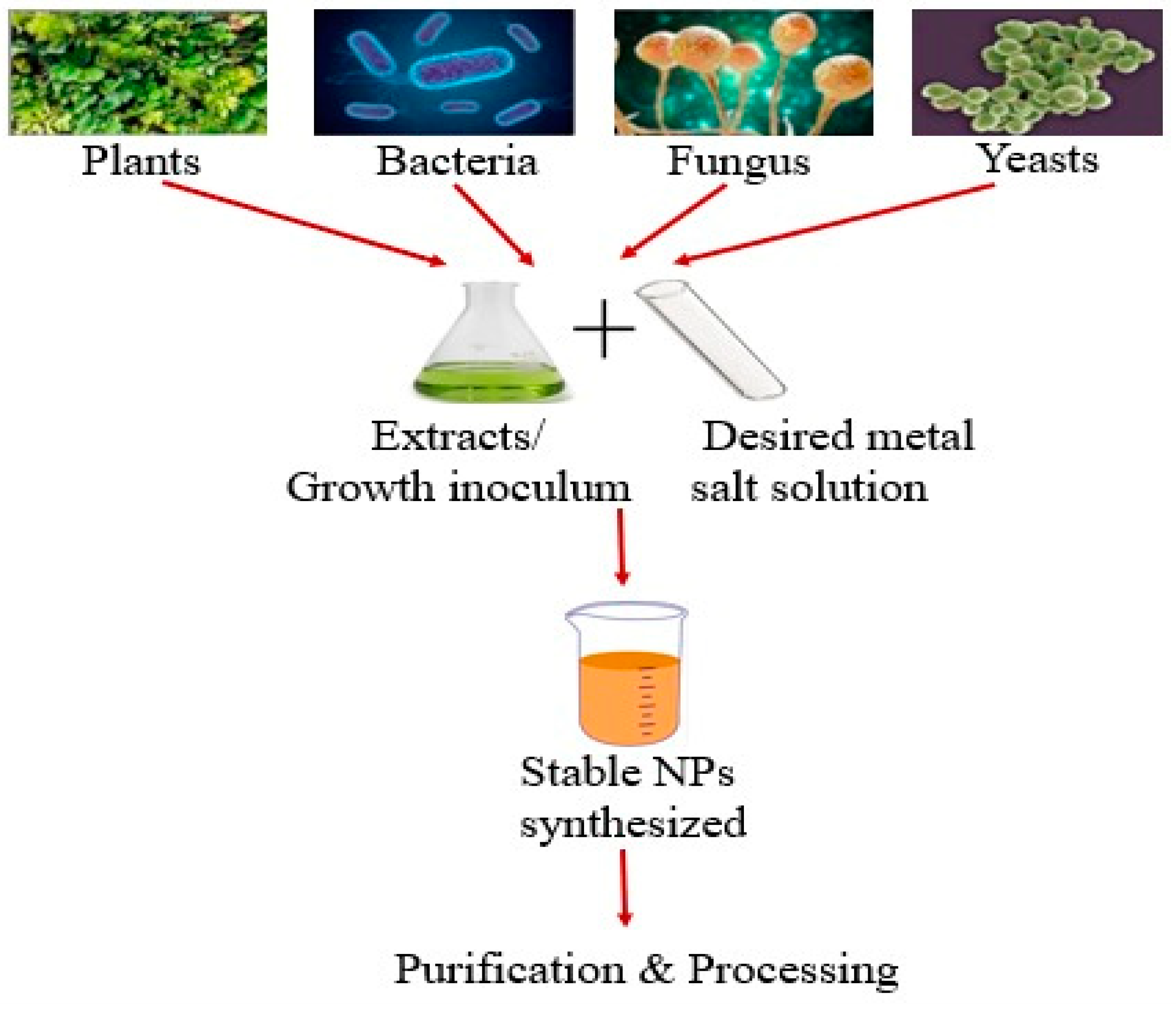
Figure 2.
Use of Nanoparticles (NPs) for the Treatment of Wastewater
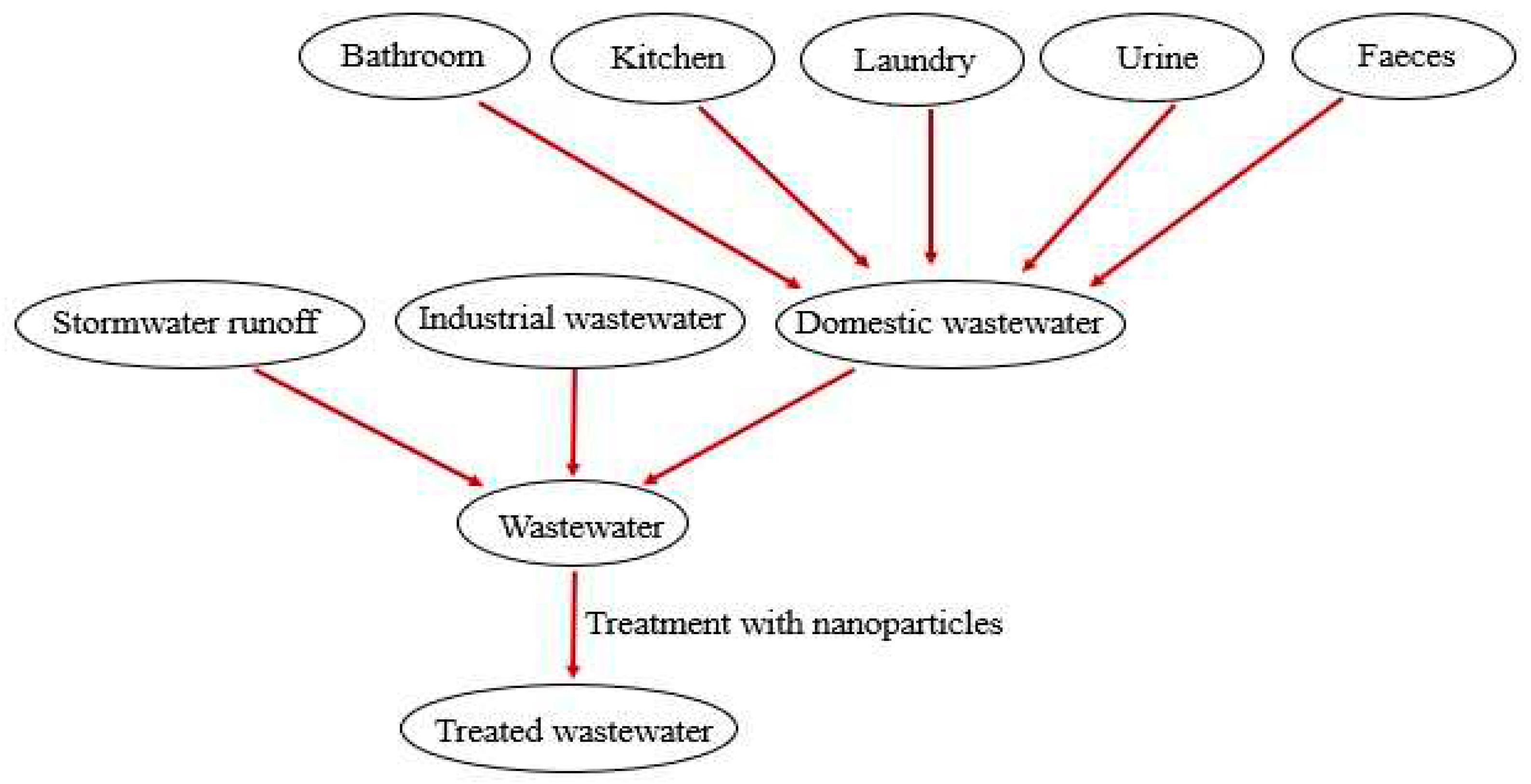

Table 1.
Different Sources (Bacteria/Fungi/Algae) of Biogenic Nanoparticles (NPs) with their Applications
Table 1.
Different Sources (Bacteria/Fungi/Algae) of Biogenic Nanoparticles (NPs) with their Applications
| S. No. | Biogenic Sources (Bacteria/Fungi/Algae) | Nanoparticles (NPs) | Applications | References |
|---|---|---|---|---|
| Bacteria | ||||
| 1 | Lactobacillus kimchicus | Gold | Drug delivery, cancer diagnostic | Mathivanan et al., 2019 |
| 2 | Staphylococcus epidermidis | Catalysts | Pantidos and Horsfall, 2014 | |
| 3 | Paracoccus haeundaensis | Antioxidants | Srinath and Rai, 2015 | |
| 4 | Cupriavidus sp. | Silver | Antibacterial | Markus et al. 2016 |
| 5 | Bacillus subtilis | Patil et al., 2019 | ||
| 6 | Staphylococcus aureus | Zinc oxide | Rauf et al., 2017 | |
| 7 | Bacillus subtillis | Synthetic dyes | Dhandapani et al., 2020 | |
| 8 | Bacillus sp. | Nanoselenium | Biomedical | Bharathi et al., 2020 |
| 9 | Desulfovibrio vulgaris | Platinum and palladium | Catalysts | Martins et al., 2017 |
| Fungi | ||||
| 10 | Aspergillus niger | Iron oxide | Wastewater treatment | Mughal et al., 2021 |
| 11 | Aspergillus terreus | Silver | Antibacterial, anticancer | Hulikere and Joshi, 2019 |
| 12 | Cladosporium cladosporioides | Antioxidant, antimicrobial | Zhang et al., 2020 | |
| 13 | Aspergillus niger | Copper | Antidiabetic and Antibacterial | Zhang et al., 2019 |
| 14 | Mariannaea sp. HJ | Selenium | Medicinal and electronics | Vijayanandan and Balakrishnan, 2018 |
| 15 | Aspergillus nidulans | Cobalt oxide | Energy storage | Joshi et al., 2017 |
| 16 | Cladosporium cladosporioides | Gold | Antioxidant, antimicrobial | Bhargava et al., 2016 |
| 17 | Cladosporium oxysporum | Catalysis | Srivastava et al., 2019 | |
| 18 | Fusarium oxysporum | Platinum | Nano medicine | Chatterjee et al., 2020 |
| Algae | ||||
| 19 | Botryococcus braunii | Silver | Catalysis | Manikandakrishnan et al., 2019 |
| 20 | Portieria hornemannii | Antibacterial | Arya et al., 2019 | |
| 21 | Colpomenia sinuosa and Pterocladia capillacea | Iron oxide | Colin et al., 2018 | |
| 22 | Caulerpa racemosa | Gold | Biomedical | Salem et al., 2019 |
| 23 | Egregia sp. | Gonzalez-Ballesteros et al., 2017 | ||
| 24 | Cystoseira baccata | Cancer | Mourdikoudis et al., 2018 | |
Disclaimer/Publisher’s Note: The statements, opinions and data contained in all publications are solely those of the individual author(s) and contributor(s) and not of MDPI and/or the editor(s). MDPI and/or the editor(s) disclaim responsibility for any injury to people or property resulting from any ideas, methods, instructions or products referred to in the content. |
© 2023 by the authors. Licensee MDPI, Basel, Switzerland. This article is an open access article distributed under the terms and conditions of the Creative Commons Attribution (CC BY) license (http://creativecommons.org/licenses/by/4.0/).
Copyright: This open access article is published under a Creative Commons CC BY 4.0 license, which permit the free download, distribution, and reuse, provided that the author and preprint are cited in any reuse.


