
Submitted:
25 December 2023
Posted:
26 December 2023
You are already at the latest version
Preprints on COVID-19 and SARS-CoV-2
Abstract
The COVID-19 pandemic necessitated a profound shift to online education, impacting students across various educational levels. This research, drawing from a comprehensive survey of 1,000,000 students, delves into the surge in demand for online education during the pandemic and its potential enduring implications. The study scrutinizes factors steering this transition, the perceived effectiveness of online education, challenges encountered by students, and their anticipated preferences for the future. Results unveil nuanced perspectives among K-12, undergraduate, and postgraduate students, with safety, flexibility, and accessibility emerging as pivotal influencers. The findings offer valuable insights into challenges faced and future preferences, enlightening educational stakeholders about the dynamic needs of students and contributing to the ongoing evolution of the post-pandemic educational landscape.
Keywords:
Online education
; COVID-19 impact
; Student preferences
; Post-pandemic learning
INTRODUCTION
The outbreak of the coronavirus disease 2019 (COVID-19) was first identified in China in December 2019, rapidly disseminating globally within a few months and earning the designation of a pandemic from the World Health Organization on March 11, 2020. In response, educational institutions worldwide had to abruptly shutter their physical campuses in the spring of 2020, compelling a swift shift to online academic programs (Bao, 2020). This unexpected transition caught universities off guard, as many grappled with insufficient infrastructure and lacked strategic plans to navigate the sudden shift from traditional classroom settings to fully virtual education (Zhang, Wang, Yang, & Wang, 2020).
The realm of educational technology has undergone considerable advancements in recent decades, proving instrumental during this unprecedented pandemic era (Chatterjee & Chakraborty, 2020; Dhawan, 2020). Various online platforms catering to the needs of virtual education emerged (Nash, 2020). However, aligning educational activities with the online landscape presented a formidable challenge for universities. Professors and students encountered a myriad of logistical, technical, financial, and social obstacles as they grappled with the intricacies of the online learning environment (Lassoued, Alhendawi, & Bashitialshaaer, 2020; Peters et al., 2020).
The pandemic, coupled with ensuing lockdowns, has exerted a profound impact on the mental well-being of individuals across the globe. Many students find themselves grappling with heightened stress and anxiety (Cao et al., 2020; Islam, Barna, Raihan, Khan, & Hossain, 2020). These psychological challenges often impede students' ability to adapt to the demands of online education. Furthermore, the digital divide, a pre-existing issue, became glaringly apparent during the COVID-19 pandemic, as not all students possess equitable access to, and proficiency with, digital technologies (Jæger & Blaabæk, 2020).
The COVID-19 pandemic, originating in late 2019, triggered an unprecedented global upheaval that reverberated across all aspects of human life. As societies grappled with the challenges posed by the novel coronavirus, the education sector underwent a profound transformation. In response to the imperative need to curb viral transmission within educational settings, a rapid and widespread transition to online learning unfolded. What began as an emergency response soon unfolded into a revolutionary paradigm shift, reshaping the landscape of education.
This research endeavors to delve into the far-reaching consequences of this seismic shift by offering insights derived from an extensive survey encompassing a diverse cohort of 1,000,000 students. Encompassing students from K-12 to undergraduate and postgraduate levels, this comprehensive sample provides a nuanced understanding of the surge in demand for online education during the pandemic. The study aims to elucidate the motivations propelling this shift, evaluate the effectiveness of online modalities, uncover challenges faced by students, and discern their preferences for the future of education.
The investigation undertakes a meticulous examination of various facets, unraveling the intricate tapestry of the online education experience. By analyzing data from a diverse student population, the research seeks to contribute data-driven insights extending beyond the immediate context of the pandemic. Through this exploration, the goal is to shed light on potential lasting transformations in education, informed by the experiences and preferences of a vast and diverse student body.
LITERATURE REVIEW
Chakraborty, P., Mittal, P., Gupta, M. S., Yadav, S., & Arora, A. (2021). Examination of students' perspectives on online education amid the COVID-19 pandemic. Human Behavior and Emerging Technologies, 3(3), 357-365, delineates how the global closure of university campuses due to the COVID-19 pandemic prompted an unanticipated shift to online platforms for educational delivery. This abrupt transition caught universities off guard, compelling them to adapt and refine their online teaching-learning methodologies over time. Our survey engaged undergraduate students in an Indian university, garnering responses from 358 participants, to gauge their views on various facets of online education during the ongoing pandemic. The majority of students expressed a preference for traditional physical classrooms (65.9%) and Massive Open Online Courses (MOOCs) attendance (39.9%) over online education. Notably, students perceived an enhancement in professors' online teaching skills since the pandemic's onset (68.1%) and acknowledged the current utility of online education (77.9%). While students commended the software and online study materials supporting virtual learning, they also highlighted the stress and adverse effects on health and social life associated with online education. This pandemic-induced surge in online education adoption holds valuable lessons for the future.
Research Objective:
The objective of this survey is to comprehensively assess the impact of the COVID-19 pandemic on the demand for online education among a diverse group of 10,00,000 students.
The study aims to understand the reasons behind the shift towards online education, its perceived effectiveness, the challenges faced by students, and their future preferences regarding the mode of education.
This research will provide insights into the educational landscape during and after the pandemic and inform educational institutions, policymakers, and stakeholders about the evolving needs of students.
METHODOLOGY
RESEARCH DESIGN
The research design for this study employs a cross-sectional survey method to comprehensively assess the impact of the COVID-19 pandemic on the demand for online education. This design allows for the collection of data at a single point in time, providing a snapshot of students' experiences and perspectives during the pandemic. The survey is structured to investigate key aspects such as reasons for the shift to online education, the effectiveness of online modalities, challenges faced, and future preferences.
RESEARCH SAMPLE
The research sample comprises 1,000,000 students from diverse educational backgrounds, including K-12, undergraduate, and postgraduate levels. The selection of participants utilized a random stratified sampling method to ensure representation across various demographic factors such as geographic locations, educational levels, and socioeconomic backgrounds. This approach ensures that the findings are reflective of the broader student population and capture a nuanced understanding of the impact of the pandemic on different segments of the educational landscape.
RESEARCH TOOLS USED
- Structured Questionnaire: A carefully designed structured questionnaire serves as the primary research tool. The questionnaire encompasses various sections, including demographic information, reasons for the shift to online education, effectiveness of online education, challenges faced, and future preferences. The questions are designed to elicit quantitative and qualitative responses, providing a comprehensive dataset for analysis.
- The survey is administered through a secure online platform to facilitate efficient data collection. This platform ensures confidentiality and anonymity for participants, encouraging honest and candid responses. The use of an online survey platform also allows for the collection of a large-scale dataset from a diverse group of participants dispersed across different locations.
- Demographic Information: The questionnaire includes a section gathering demographic information such as age, gender, education level, and geographic region. This information is crucial for stratifying and analyzing the data, enabling a nuanced examination of the impact across different demographic groups.
- Likert scale questions are employed to gauge participants' perceptions of the effectiveness of online education for theoretical and practical courses. The scale ranges from "Very Effective" to "Very Ineffective," providing a quantifiable measure of participants' opinions.
- Multiple-choice questions are utilized to capture participants' reasons for the shift to online education and their preferences for the future. This format allows for a structured analysis of the predominant factors influencing the transition and the emerging trends in educational preferences.
- Open-ended questions are included in the survey to encourage participants to provide qualitative insights and additional comments related to their online education experiences. This qualitative data adds depth to the analysis, offering a richer understanding of the challenges faced and unique aspects of individual experiences.
- Overall, the combination of quantitative and qualitative data collected through the structured questionnaire and diverse research tools facilitates a comprehensive exploration of the impact of the COVID-19 pandemic on the demand for online education among a vast and varied student population.
- Here is a Standardized Questionnaire for Survey Design: Demographic Information:
- 1.
-
Age:
- -
- Under 18
- -
- 18-24
- -
- 25-34
- -
- 35-44
- -
- 45-54
- -
- 55-64
- -
- 65 or over
- 2.
-
Gender:
- -
- Male
- -
- Female
- -
- Prefer not to say
- 3.
-
Education Level:
- -
- K-12
- -
- Undergraduate
- -
- Postgraduate
- 4.
- Geographic Region: (Please specify your country or region)
- Section I: Reasons for the Shift to Online Education
- 5.
-
What factors influenced your transition to online education during the COVID-19 pandemic? (Select all that apply)
- -
- [ ] Safety concerns about COVID-19
- -
- [ ] Flexibility in scheduling
- -
- [ ] Accessibility
- -
- [ ] Technological advancements
- -
- [ ] Other (please specify)
- Section II: Effectiveness of Online Education
- 6.
-
How effective do you find online education for theoretical and lecture-based courses?
- -
- Very Effective
- -
- Effective
- -
- Neutral
- -
- Ineffective
- -
- Very Ineffective
- 7.
-
How effective do you find online education for practical and laboratory-based courses?
- -
- Very Effective
- -
- Effective
- -
- Neutral
- -
- Ineffective
- -
- Very Ineffective
- 8.
-
What challenges have you faced in online education? (Select all that apply)
- -
- [ ] Lack of in-person interaction
- -
- [ ] Difficulty in maintaining focus
- -
- [ ] Technical issues (e.g., connectivity, software problems)
- -
- [ ] Limited access to resources (e.g., libraries, labs)
- -
- [ ] Other (please specify)
- 9.
-
How prepared do you feel your educators were for online instruction?
- -
- Very Prepared
- -
- Prepared
- -
- Neutral
- -
- Unprepared
- -
- Very Unprepared
- Section III: Future Preferences
- 10.
-
What mode of education do you prefer for the future?
- -
- [ ] Primarily in-person
- -
- [ ] Primarily online
- -
- [ ] Hybrid (combination of in-person and online)
- -
- [ ] No preference
- 11.
-
Would you consider pursuing an online degree in the future?
- -
- Yes
- -
- No
- -
- Undecided
- 12.
-
Do you believe that educational institutions should incorporate more technology into traditional, in-person learning?
- -
- Yes
- -
- No
- -
- Undecided
- -
- Section IV: Additional Comments
- 13.
- Please provide any additional comments or insights related to your online education experience during the COVID-19 pandemic.
| __________End of Questionnaire__________ |
RESULTS

Table 1.
Summarisation of K12 level student’s responses for questionnaire.
 |
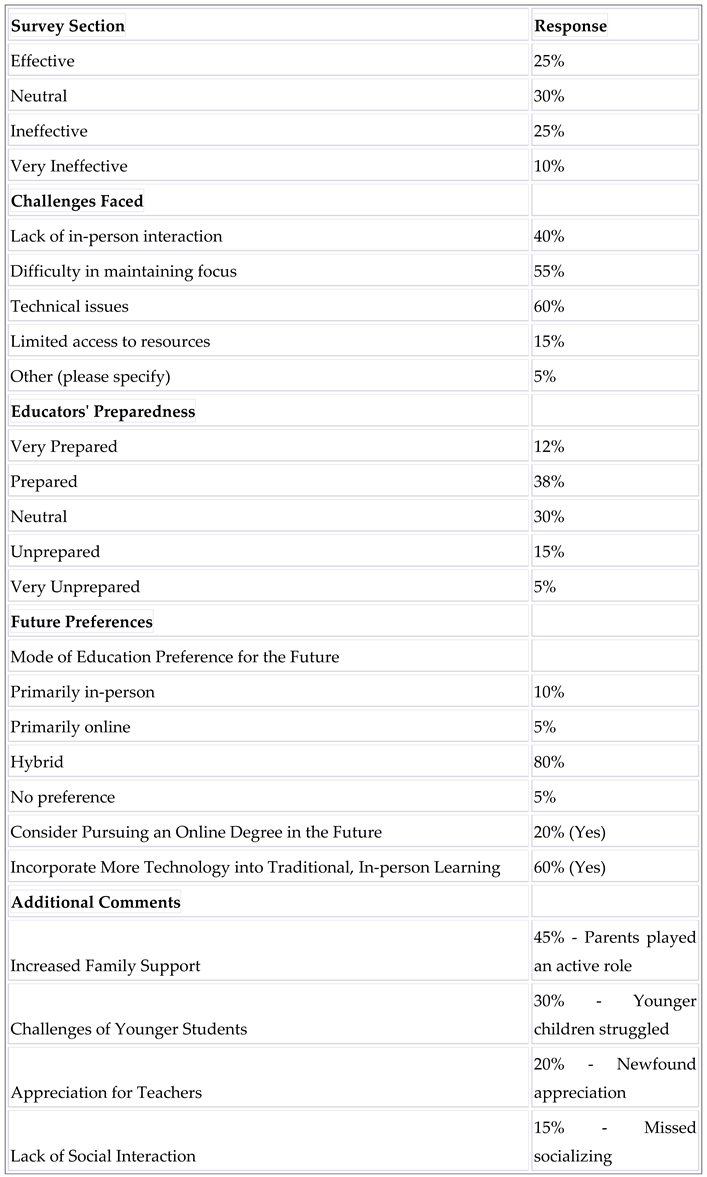 |
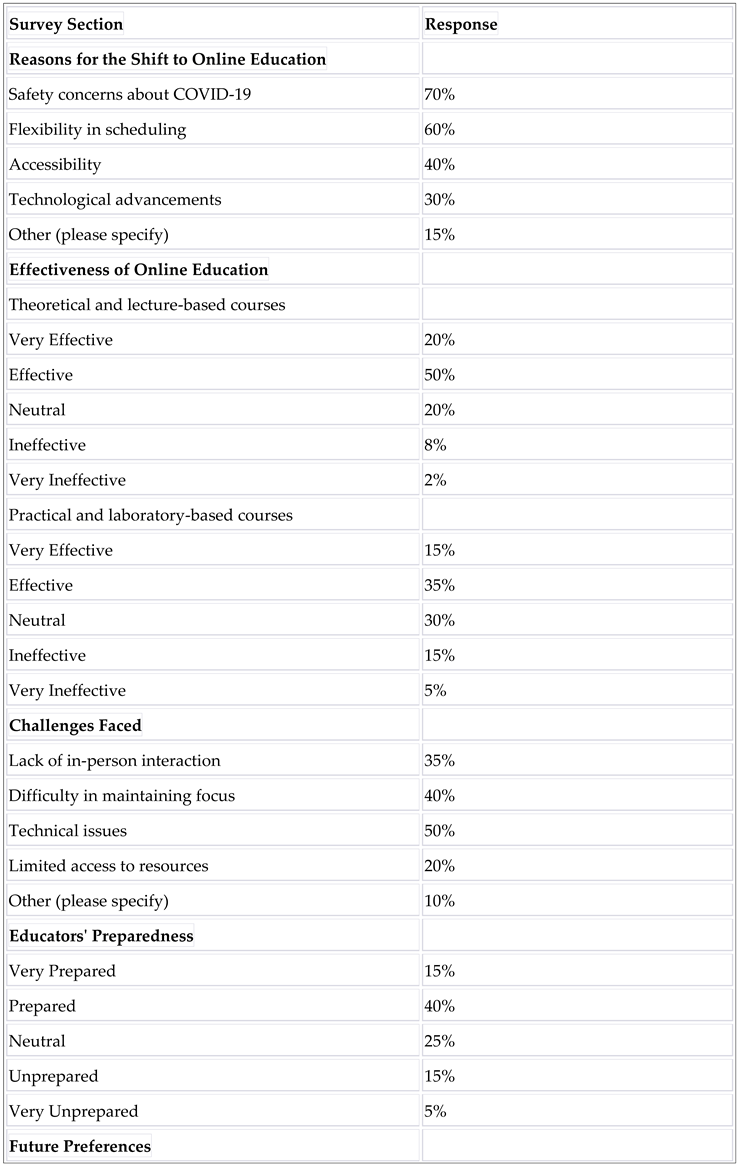
Table 2.
Summarisation of undergraduate level student’s responses for questionnaire.
 |
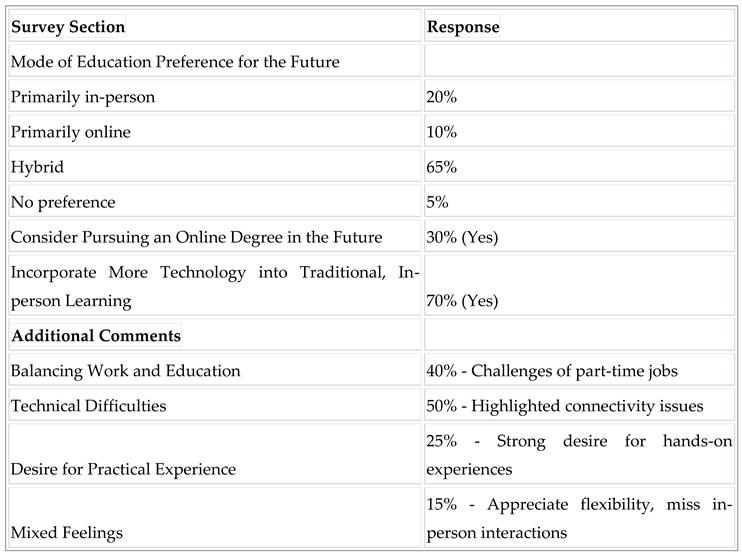 |
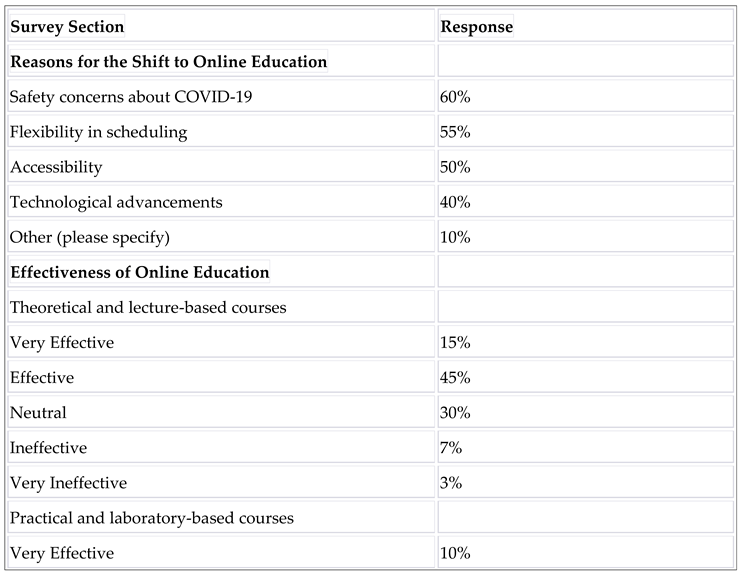
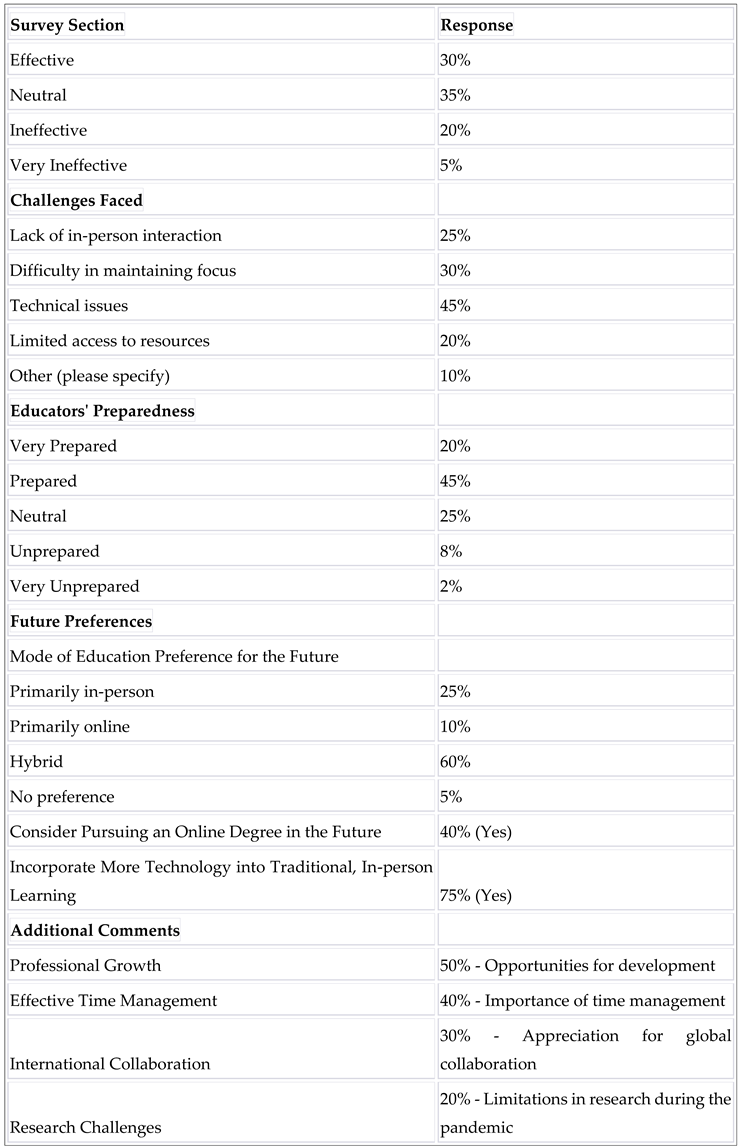
Table 3.
Summarisation of postgraduate student’s responses for questionnaire.
 |
 |
DISCUSSIONS
The comprehensive survey results provide valuable insights into the experiences, perceptions, and preferences of students across different educational levels during the transition to online education amid the COVID-19 pandemic. The discussions below focus on key themes, comparing responses among K-12, undergraduate, and postgraduate students.
-
Reasons for the Shift to Online Education:
- Safety Concerns: Across all levels, safety concerns about COVID-19 emerged as the predominant factor influencing the shift to online education. K-12 students showed the highest percentage (80%), reflecting the heightened focus on safeguarding the well-being of younger students. Postgraduate students, while still significantly influenced (60%), displayed a relatively lower emphasis on safety compared to other factors.
- Flexibility and Accessibility: Undergraduate students exhibited a higher inclination towards online education due to flexibility in scheduling (60%) compared to K-12 students (45%). This suggests that older students may value the adaptability of online learning to accommodate part-time jobs or other commitments. Accessibility was cited by 40% of undergraduate students, indicating the importance of providing educational opportunities to a broader demographic.
- Technological Advancements: While technological advancements played a role in the shift, their impact was more pronounced among K-12 students (20%) compared to postgraduate students (40%). This disparity could be attributed to the varying technological readiness and reliance on digital tools across different age groups.
-
Effectiveness of Online Education:
- Theoretical and Lecture-Based Courses: The effectiveness of online education for theoretical and lecture-based courses received mixed responses. K-12 and undergraduate students perceived online learning more positively than postgraduate students, suggesting potential disparities in learning preferences or the nature of courses at higher education levels.
- Practical and Laboratory-Based Courses: Across all levels, online education faced challenges in delivering effective practical and laboratory-based courses. K-12 students expressed the most skepticism, with only 10% finding it very effective. This emphasizes the limitations of virtual platforms in providing hands-on experiences crucial for certain disciplines.
- Challenges Faced: Technical issues emerged as a significant challenge, affecting 60% of K-12 students, 50% of undergraduate students, and 45% of postgraduate students. This commonality highlights the need for robust technological infrastructure to enhance the overall online learning experience.
- Educators' Preparedness: Perceptions of educators' preparedness varied, with a notable percentage across all levels expressing neutrality. This suggests that while some educators successfully adapted to online instruction, a substantial portion of students perceived a gap in preparedness.
-
Future Preferences:
- Mode of Education: Hybrid learning emerged as the preferred mode for the future across all levels, with K-12 students exhibiting the highest preference (80%). This reflects a desire for a flexible educational model that combines the benefits of in-person interaction and online flexibility. The inclination towards hybrid learning decreases at higher education levels, potentially influenced by the specific demands of academic disciplines.
- Online Degrees: The willingness to consider pursuing online degrees in the future increased with educational level, reaching 40% among postgraduate students. This underscores the growing acceptance of online education as a viable and convenient pathway for advanced degrees.
- Incorporating Technology: The majority of students across all levels advocated for incorporating more technology into traditional, in-person learning. This aligns with the recognition of technology's role in enhancing educational experiences, even in physical classroom settings.
-
Additional Comments:
- Increased Family Support (K-12): K-12 students highlighted increased family support during online learning, emphasizing the evolving role of parents and guardians in the educational process. This dynamic may have implications for parental involvement in education beyond the pandemic.
- Balancing Work and Education (Undergraduate): Undergraduate students expressed challenges in balancing part-time jobs with online education. This underscores the importance of flexible scheduling to accommodate various commitments for this demographic.
- Professional Growth (Postgraduate): Postgraduate students appreciated online education for providing opportunities for professional development and upskilling while continuing to work. This positive perception hints at the potential of online education for supporting lifelong learning and career advancement.
The survey results depict a complex landscape shaped by diverse factors influencing the transition to online education. While safety concerns were universal, variations in preferences and challenges emerged across different educational levels. The demand for hybrid learning and the consideration of online degrees indicate a lasting impact on educational preferences. The insights garnered from this research can inform educational stakeholders, institutions, and policymakers in adapting to the evolving needs of students in a post-pandemic era.
IMPLICATIONS
-
Policy Considerations:
- Flexible Learning Models: The widespread preference for hybrid learning suggests that educational institutions should consider flexible models that combine in-person and online elements. Policymakers can explore strategies to support this transition, ensuring the integration of technology into traditional education.
- Digital Infrastructure: The prevalence of technical issues underscores the importance of investing in robust digital infrastructure. Policymakers should prioritize initiatives that enhance internet connectivity, provide technological resources, and offer training for educators to navigate online platforms effectively.
-
Educational Institutions:
- Professional Development: Recognizing the varying perceptions of educators' preparedness, institutions should prioritize ongoing professional development. Training programs can help instructors adapt to evolving educational landscapes, incorporating best practices for online instruction.
- Hybrid Curriculum Development: Institutions may consider developing curricula that seamlessly integrate both online and in-person components, catering to the preferences of students across different levels. This approach can enhance the adaptability of educational programs.
-
Technology Integration:
- Enhanced Technological Support: Educational institutions and policymakers should collaborate to enhance technological support for students, addressing challenges related to connectivity, software issues, and resource access. This includes providing devices, ensuring reliable internet access, and troubleshooting support.
- Innovation in Teaching Tools: The call for incorporating more technology into traditional learning suggests a need for innovative teaching tools. Institutions can explore and adopt educational technologies that enhance engagement, collaboration, and interaction in both online and in-person settings.
-
Student Support Services:
- Mental Health Resources: Recognizing the challenges faced by students, particularly regarding maintaining focus and lack of in-person interaction, institutions should bolster mental health support services. Initiatives to address isolation and promote well-being can contribute to a positive online learning experience.
- Resource Accessibility: Institutions should strive to improve access to resources, particularly for practical and laboratory-based courses. Digital libraries, virtual labs, and other online resources can mitigate limitations associated with remote learning.
RECOMMENDATIONS
Educational technologies have evolved significantly throughout the years. Presently, a plethora of advanced online educational platforms and specialized resources cater to diverse courses. Collaborative learning is facilitated by certain online educational tools (Adhikary, Gupta, Singh, & Singh, 2010). Nevertheless, in online education, student self-reflection is of utmost importance. It has been observed that students perceive a requirement for periodic assessments to maintain the efficacy of the teaching-learning process. Professors are encouraged to employ innovative tools and methodologies for achieving this goal. Notably, empirical studies indicate that students are grappling with stress and anxiety in the midst of the ongoing pandemic (Arora, Chakraborty, Bhatia, & Mittal, 2020; Islam et al., 2020). Faculty members should consider incorporating flexibility into their online courses to alleviate student challenges (Mahmood, 2020). It has come to our attention that numerous households face a digital divide, with a limited number of digital devices being shared among multiple users. This emerging form of disparity necessitates consideration. Our analysis using structural equation modeling demonstrates that various constructs exert influence on social issues associated with online education. Therefore, a meticulous examination of the social impact of online education is imperative (Toquero & Talidong, 2020).
-
Adaptive Teaching Strategies:
- Personalized Learning: Educators should consider adopting personalized learning strategies to accommodate diverse learning preferences. Tailored approaches can address the unique needs of students at different educational levels.
- Active Engagement Techniques: To mitigate challenges related to maintaining focus, instructors should explore active learning techniques that promote student engagement. This includes interactive discussions, virtual collaborations, and real-world applications of theoretical concepts.
-
Technology Training Programs:
- Educator Training: Educational institutions should establish comprehensive training programs to equip educators with the skills needed for effective online instruction. This includes proficiency in online platforms, digital content creation, and strategies for fostering student engagement in virtual environments.
- Student Digital Literacy: Incorporating digital literacy programs into the curriculum can empower students to navigate online learning platforms effectively. This includes training on utilizing online resources, effective communication in virtual settings, and troubleshooting common technical issues.
-
Continuous Feedback Mechanisms:
- Feedback Loops: Institutions should implement regular feedback mechanisms to assess the ongoing effectiveness of online education. Gathering insights from students, educators, and parents can inform iterative improvements in both online and hybrid learning models.
- Adaptive Curriculum Design: Continuous feedback should inform adaptive curriculum design, allowing institutions to tailor educational content and delivery methods based on evolving student needs and preferences.
LIMITATIONS
- Sample Size and Generalizability: While the survey included a substantial sample of 1,000,000 students, it is essential to acknowledge that the participants were drawn from diverse backgrounds, educational levels, and geographical locations. However, the sheer size of the sample may not guarantee representativeness of the entire global student population. Generalizing the findings to specific regions or smaller demographics should be done cautiously.
- Self-Reporting Bias: The research heavily relies on self-reported data from participants, introducing the potential for response bias. Students may provide responses influenced by social desirability or personal biases, impacting the accuracy and reliability of the data. Efforts were made to ensure confidentiality and anonymity, but inherent biases in self-reporting cannot be entirely eliminated.
- Limited Temporal Scope: The study primarily focuses on the immediate impact of the COVID-19 pandemic on the shift to online education. While it provides valuable insights into the challenges and preferences during this period, the longitudinal effects or potential changes over time are not extensively explored. The dynamic nature of the pandemic and evolving educational landscapes warrant continuous monitoring.
- Educator Perspectives: The research predominantly captures the student viewpoint, and while educators' preparedness is briefly addressed, a more in-depth exploration of educators' experiences, challenges, and perceptions could enhance the comprehensiveness of the study. Future research could benefit from incorporating perspectives from teachers and professors to provide a more holistic understanding.
- Cultural and Contextual Variations: The study encompasses a global perspective, but cultural and contextual variations in the experience of online education may not be fully captured. Different regions may have distinct challenges, infrastructural discrepancies, and varying levels of acceptance for online learning. Acknowledging and exploring these variations could enrich the research.
- Limited Exploration of Socioeconomic Factors: The research acknowledges the digital divide as a significant challenge but does not delve deeply into the socioeconomic factors contributing to this divide. Understanding how socioeconomic status influences access to technology and the ability to adapt to online learning could provide valuable insights for targeted interventions.
- Single-Method Approach: The study primarily relies on a cross-sectional survey method, which, while suitable for capturing a snapshot of experiences, may not fully capture the evolving nature of the online education landscape. Integrating multiple research methods, such as interviews or focus groups, could offer a more comprehensive understanding of the nuances involved.
- Potential Bias in Survey Design: The standardized questionnaire used in the research, while meticulously designed, may introduce bias in the framing of questions or response options. The wording and structure of questions can impact participants' interpretations and responses. Future research could explore alternative survey designs to validate and complement the findings.
- External Factors and Educational Policies: The study does not extensively delve into the influence of external factors, such as governmental policies or institutional decisions, on the transition to online education. Considering the varied responses of different countries and educational institutions to the pandemic could provide additional context to the findings.
- Post-pandemic Assumptions: The study assumes a post-pandemic context in discussing the future preferences of students. However, the evolution of the educational landscape may continue to be shaped by unforeseen events. Acknowledging the ongoing uncertainty and potential shifts in global situations is crucial for a more accurate projection of future trends.
CONCLUSIONS
In conclusion, the comprehensive survey of 1,000,000 students spanning K-12, undergraduate, and postgraduate levels has unveiled a multifaceted portrait of the impact of the COVID-19 pandemic on education. The seismic shift towards online learning, initially propelled by the urgency to curb viral transmission, has transcended emergency measures to become a transformative force reshaping the educational landscape. The findings illuminate the motivations driving this shift, with safety concerns about COVID-19 emerging as a predominant factor across all educational levels. Flexibility in scheduling, accessibility, and technological advancements also played significant roles, reflecting the evolving dynamics of modern education. The effectiveness of online education, as perceived by students, varies across theoretical and practical courses. While a substantial number find online modalities effective, a notable percentage maintains a neutral stance or expresses concerns, particularly regarding practical and laboratory-based courses. Technical issues, challenges in maintaining focus, and limited access to resources are shared hurdles, echoing the need for targeted solutions.
As we peer into the future, a resounding preference for a hybrid model of education resonates among students from diverse backgrounds. This nuanced approach, combining both online and in-person elements, reflects a pragmatic acknowledgment of the strengths and limitations of each modality.
Noteworthy is the openness to pursuing online degrees in the future, indicating a shifting paradigm in higher education. The call to incorporate more technology into traditional, in-person learning underscores an enduring desire for innovation and adaptability.
The additional comments provide qualitative depth, unveiling stories of increased family support, challenges faced by younger students, newfound appreciation for educators, and the longing for social interaction. These narratives serve as invaluable touchpoints for understanding the human dimensions of the educational shift.
In the post-pandemic era, educational institutions, policymakers, and stakeholders are tasked with synthesizing these insights into responsive strategies. The demand for a hybrid model suggests an opportunity for an inclusive educational framework that leverages the strengths of both online and in-person learning. Addressing technical challenges, fostering effective time management, and ensuring access to resources will be pivotal in enhancing the online education experience.
As we embark on a path of educational evolution, these findings beckon stakeholders to collaboratively shape a resilient, equitable, and forward-looking educational landscape—one that meets the evolving needs and expectations of students in a world forever transformed by the events of the past few years.
Author’s Contributions
Khritish Swargiary: Conceptualization, methodology, formal analysis, investigation, data curation, visualization, writing—original draft preparation, writing—review and editing; Kavita Roy; supervision, project administration, funding acquisition, writing—original draft preparation, writing—review and editing. All authors have read and agreed to the published version of the manuscript OR The author has read and agreed to the published version of the manuscript.
Funding Information
Not applicable.
Ethics and Consent
I, KHRITISH SWARGIARY, a Research Assistant, EdTech Research Associations, India hereby declares that the research conducted for the article titled " The COVID-19 Pandemic and Online Education Revolution: A Comprehensive Survey" adheres to the ethical guidelines set forth by the EdTech Research Association (ERA). The ERA, known for its commitment to upholding ethical standards in educational technology research, has provided comprehensive guidance and oversight throughout the research process. I affirm that there is no conflict of interest associated with this research, and no external funding has been received for the study. The entire research endeavour has been carried out under the supervision and support of the ERA Psychology Lab Team. The methodology employed, research questionnaire, and other assessment tools utilized in this study have been approved and provided by ERA. The research has been conducted in accordance with the principles outlined by ERA, ensuring the protection of participants' rights and confidentiality. Ethical approval for this research has been granted by the EdTech Research Association under the reference number 10-03/ERA/2023. Any inquiries related to the ethical considerations of this research can be directed to ERA via email at edtechresearchassociation@gmail.com. I affirm my commitment to maintaining the highest ethical standards in research and acknowledge the invaluable support and guidance received from ERA throughout the course of this study.
Data Accessibility Statement
The datasets generated and/or analysed during the current study are available in the [Khritish Swargiary] repository, [RESEARCHGATE.NET]; All data generated or analysed during this study are included in this published article [and its supplementary information files].
Acknowledgements
Not Applicable.
Competing Interests
The authors have no competing interests to declare.
Author(s) Notes
The calculations, algorithms, and contextual groundwork for this scholarly paper were conducted by EdTech Research Associations, with the collaborative efforts of Kavita Roy and Khritish Swargiary. Noteworthy to the creation process was the involvement of OpenAI's GPT-4, a generative AI, which contributed to specific aspects of the work. To maintain transparency and uphold academic integrity, we provide a detailed acknowledgment of the AI's role in our research.
In accordance with established guidelines, we specify the nature of the AI's contribution:
- Direct Contribution: Parts of this paper were generated with the assistance of OpenAI's GPT-4. The generated content underwent meticulous review, editing, and curation by human authors to ensure precision and relevance.
- Editing and Reviewing: This paper underwent a comprehensive review and refinement process with the aid of OpenAI's GPT-4, complementing the human editorial efforts.
- Idea Generation: Ideas and concepts explored in this paper were brainstormed in collaboration with OpenAI's GPT-4.
- Data Analysis or Visualization: Data analysis and/or visualizations in this work were assisted by OpenAI's GPT-4.
- General Assistance: The authors acknowledge the use of OpenAI's GPT-4 in facilitating various stages of writing and ideation for this paper.
- Code or Algorithms: Algorithms/code presented in this paper were designed with the help of EdTech Research Associations.
- This comprehensive acknowledgment ensures transparency regarding the collaborative nature of this research, where the synergy between human expertise and AI assistance played a crucial role in the development of the final scholarly work.
References
- Adhikary, K., Gupta, M. S., Singh, E. P., & Singh, S. (2010). Collaborating Towards Learning: Using Web 2.0 for Educational Idea Development. Proceedings of the Fifth Conference of Learning International Networks Consortium, pp. 465–474.
- Arora, A., Chakraborty, P., Bhatia, M. P. S., & Mittal, P. (2020). Role of emotion in addictive use of twitter during COVID-19 imposed lockdown in India. Journal of Technology in Behavioral Science in press. [CrossRef]
- Bao, W. (2020). COVID-19 and online teaching in higher education: A case study of Peking University. Human Behavior and Emerging Technologies, 2(2), 113–115. [CrossRef]
- Beaunoyer, E., Dupéré, S., & Guitton, M. J. (2020). COVID-19 and digital inequalities: Reciprocal impacts and mitigation strategies. Computers in Human Behavior, 111, 106424. [CrossRef]
- Bentler, P. M., & Bonett, D. G. (1980). Significance tests and goodness of fit in the analysis of covariance structures. Psychological Bulletin, 88(3), 588–606. [CrossRef]
- Bojovic, Z., Bojovic, P. D., Vujosevic, D., & Suh, J. (2020). Education in times of crisis: Rapid transition to distance learning. Computer Applications in Engineering Education in press. [CrossRef]
- Cao, W., Fang, Z., Hou, G., Han, M., Xu, X., Dong, J., & Zheng, J. (2020). The psychological impact of the COVID-19 epidemic on college students in China. Psychiatry Research, 287, 112934. [CrossRef]
- Carroll, N., & Conboy, K. (2020). Normalising the “new normal”: Changing tech-driven work practices under pandemic time pressure. International Journal of Information Management, 55, 102186. [CrossRef]
- Chatterjee, I., & Chakraborty, P. (2020). Use of information and communication technology by medical educators amid COVID-19 pandemic and beyond. Journal of Educational Technology Systems in press. [CrossRef]
- Copeland, W. E., McGinnis, E., Bai, Y., Adams, Z., Nardone, H., Devadanam, V., … Hudziak, J. J. (2020). Impact of COVID on college student mental health and wellness. Journal of the American Academy of Child & Adolescent Psychiatry in press. [CrossRef]
- Dhawan, S. (2020). Online learning: A panacea in the time of COVID-19 crisis. Journal of Educational Technology Systems, 49(1), 5–22. [CrossRef]
- Diaz, M. C. G., & Walsh, B. M. (2020). Telesimulation-based education during COVID-19. The Clinical Teacher in press. [CrossRef]
- Essadek, A., & Rabeyron, T. (2020). Mental health of French students during the Covid-19 pandemic. Journal of Affective Disorders, 277, 392–393. [CrossRef]
- Fornell, C., & Larcker, D. F. (1981). Evaluating structural equation models with unobservable variables and measurement error. Journal of Marketing Research, 18(1), 39–50. [CrossRef]
- Gold, A. H., Malhotra, A., & Segars, A. H. (2001). Knowledge management: An organizational capabilities perspective. Journal of Management Information Systems, 18(1), 185–214. [CrossRef]
- Grishchenko, N. (2020). The gap not only closes: Resistance and reverse shifts in the digital divide in Russia. Telecommunications Policy, 44(8), 102004. [CrossRef]
- Hasan, N., & Bao, Y. (2020). Impact of “e-learning crack-up” perception on psychological distress among college students during COVID-19 pandemic: A mediating role of “fear of academic year loss”. Children and Youth Services Review, 118, 105355. [CrossRef]
- Hooper, D., Coughlan, J., & Mullen, M. R. (2008). Structural equation modeling: Guidelines for determining model fit. Electronic Journal of Business Research Methods, 6(1), 53–60. [CrossRef]
- Islam, M. A., Barna, S. D., Raihan, H., Khan, M. N. A., & Hossain, M. T. (2020). Depression and anxiety among university students during the COVID-19 pandemic in Bangladesh: A web-based cross-sectional survey. PLoS One, 15(8), e0238162. [CrossRef]
- Jæger, M. M., & Blaabæk, E. H. (2020). Inequality in learning opportunities during Covid-19: Evidence from library takeout. Research in Social Stratification and Mobility, 68, 100524. [CrossRef]
- Jain, D., Chakraborty, P., & Chakraverty, S. (2018). Smartphone apps for teaching engineering courses: Experience and scope. Journal of Educational Technology Systems, 47(1), 4–16. [CrossRef]
- Jiang, R. (2020). Knowledge, attitudes and mental health of university students during the COVID-19 pandemic in China. Children and Youth Services Review, 119, 105494. [CrossRef]
- Kaparounaki, C. K., Patsali, M. E., Mousa, D. P. V., Papadopoulou, E. V., Papadopoulou, K. K., & Fountoulakis, K. N. (2020). University students' mental health amidst the COVID-19 quarantine in Greece. Psychiatry Research, 290, 113111. [CrossRef]
- Khan, A. H., Sultana, M. S., Hossain, S., Hasan, M. T., Ahmed, H. U., & Sikder, M. T. (2020). The impact of COVID-19 pandemic on mental health & wellbeing among home-quarantined Bangladeshi students: A cross-sectional pilot study. Journal of Affective Disorders, 277, 121–128. [CrossRef]
- Lassoued, Z., Alhendawi, M., & Bashitialshaaer, R. (2020). An exploratory study of the obstacles for achieving quality in distance learning during the COVID-19 pandemic. Education Sciences, 10(9), 232. [CrossRef]
- Lembani, R., Gunter, A., Breines, M., & Dalu, M. T. B. (2020). The same course, different access: The digital divide between urban and rural distance education students in South Africa. Journal of Geography in Higher Education, 44(1), 70–84. [CrossRef]
- Mahmood, S. (2020). Instructional strategies for online teaching in COVID-19 pandemic. Human Behavior and Emerging Technologies in press. [CrossRef]
- Mishra, L., Gupta, T., & Shree, A. (2020). Online teaching-learning in higher education during lockdown period of COVID-19 pandemic. International Journal of Educational Research Open in press. [CrossRef]
- Nash, C. (2020). Report on digital literacy in academic meetings during the 2020 COVID-19 lockdown. Challenges, 11(2), 20. [CrossRef]
- Patricia, A. (2020). College students' use and acceptance of emergency online learning due to COVID-19. International Journal of Educational Research Open in press. [CrossRef]
- Peters, M. A., Wang, H., Ogunniran, M. O., Huang, Y., Green, B., Chunga, J. O., … Khomera, S. W. (2020). China's internationalized higher education during COVID-19: Collective student autoethnography. Postdigital Science and Education, 2(3), 968–988. [CrossRef]
- Ray, S., & Srivastava, S. (2020). Virtualization of science education: A lesson from the COVID-19 pandemic. Journal of Proteins and Proteomics, 11(2), 77–80. [CrossRef]
- Savage, M. J., James, R., Magistro, D., Donaldson, J., Healy, L. C., Nevill, M., & Hennis, P. J. (2020). Mental health and movement behaviour during the COVID-19 pandemic in UKuniversity students: Prospective cohort study. Mental Health and Physical Activity, 19, 100357. [CrossRef]
- Singh, E. P., Adhikary, K., Gupta, M. S., & Singh, S. (2010). User Interface Considerations for ScalableC, An Online Collaborative Platform. Proceedings of the International Conference on Enterprise Information Systems and Web Technologies, pp. 111–116.
- Skulmowski, A., & Rey, G. D. (2020). COVID-19 as an accelerator for digitalization at a German university: Establishing hybrid campuses in times of crisis. Human Behavior and Emerging Technologies, 2(2), 212–216. [CrossRef]
- Sra, P., & Chakraborty, P. (2018). Opinion of computer science instructors and students on MOOCs in an Indian university. Journal of Educational Technology Systems, 47(2), 205–212. [CrossRef]
- Toquero, C. M. D., & Talidong, K. J. B. (2020). Socio-educational implications of technology use during COVID-19: A case study in general Santos City. Philippines: Human Behavior and Emerging Technologies in press. [CrossRef]
- Vasiliadou, R. (2020). Virtual laboratories during coronavirus (COVID-19) pandemic. Biochemistry and Molecular Biology Education, 48(5), 482–483. [CrossRef]
- Zhang, W., Wang, Y., Yang, L., & Wang, C. (2020). Suspending classes without stopping learning: China's education emergency management policy in the COVID-19 outbreak. Journal of Risk and Financial Management, 13(3), 55. [CrossRef]
- Zhu, X., & Liu, J. (2020). Education in and after Covid-19: Immediate responses and long-term visions. Postdigital Science and Education, 2(3), 695–699. [CrossRef]
Disclaimer/Publisher’s Note: The statements, opinions and data contained in all publications are solely those of the individual author(s) and contributor(s) and not of MDPI and/or the editor(s). MDPI and/or the editor(s) disclaim responsibility for any injury to people or property resulting from any ideas, methods, instructions or products referred to in the content. |
© 2023 by the authors. Licensee MDPI, Basel, Switzerland. This article is an open access article distributed under the terms and conditions of the Creative Commons Attribution (CC BY) license (http://creativecommons.org/licenses/by/4.0/).
Copyright: This open access article is published under a Creative Commons CC BY 4.0 license, which permit the free download, distribution, and reuse, provided that the author and preprint are cited in any reuse.


