

Submitted:
20 November 2023
Posted:
20 November 2023
You are already at the latest version
Abstract
This study examines the impact of GenAI tools on the daily tasks of designers within corporations. It investigates both the operational changes and employee anxieties regarding job security. The research employs a qualitative approach: one without the use of ChatGPT and one with its use. The findings indicate significant improvements in operational experience and subjective perceptions across various tasks, as demonstrated through a user experience map. Moreover, the study highlights the potential of AI for enhancing managerial efficiency, streamlining workflows, and improving collaboration. However, it also addresses challenges concerning information authenticity, copyright protection, and professional identity. The goal of this study is to comprehend AI's current role in businesses, evaluate its effects on designers, and offer balanced recommendations that emphasize the integration of AI thinking into future corporate workflows from a human-centric perspective.
Keywords:
design brief
; ai thinking
; generative ai
; design management
; user experience
1. Introduction
1.1. Background
Artificial intelligence has evolved over a span of about 70 years, starting as a theoretical notion, progressing to a study topic in laboratories, and then gaining popularity and practical use among the general population [1,2]. Since 2023, there has been a significant surge in the progress and utilization of AI, particularly due to the introduction of ChatGPT, which has made AI accessible and practical for all individuals. Reports from the McKinsey Global Institute and the World Economic Forum indicate that the rapid advancement of AI and machine learning may result in significant job reductions. However, it also has the potential to generate new career prospects. OpenAI's market research suggests that the labor market may experience substantial transformations by March 2023, with the possibility of at least 10% of occupational duties being impacted by large language models (LLMs). Approximately 19% of workers may encounter alterations in at least 50% of their tasks [4]. While this research paper does not explicitly state that AI tools such as ChatGPT would directly affect design professions, it is anticipated that there will be an unavoidable impact as AI capabilities advance. Hence, designers involved in many domains must be ready to embrace alterations in work methodologies. Due to ChatGPT's attributes, such as its efficacy as an analytical tool for complex taxonomies and its adaptability to variations in language and focus, designers are currently exploring its potential in aiding the design process, spanning from requirement organization and concept development to final implementation [4]. Furthermore, research has demonstrated that combining AI with design thinking concepts can augment the effectiveness and originality of product design, while simultaneously enhancing user experience [3].
The participants of our study are User Experience Designers who possess a minimum of 5 years of professional experience. The primary objective of our research is to investigate the influence of AI technologies on the work of this specific group. Experience design, in its broadest sense, refers to the role of organizing the interaction between users and systems. Designers employ a range of cognitive tools to enhance their work and optimize efficiency during the execution phase [5,17]. Contrary to popular belief, the workflow is rarely a straightforward progression, and many jobs necessitate frequent repeat, particularly during the initial phases of a project. Prior to advancing to the subsequent stage, designers must possess a comprehensive comprehension of their own circumstances, the client's circumstances, and the client's requirements. The Design Brief is a highly practical tool [6], commonly employed at the early phase of a design work or new product development project [8,9]. The document captures the first concepts and thoughts of the customer and other individuals involved in the project. These ideas will be refined and expanded upon through collaboration with the designer or design team [7]. While there is theoretical backing, practical implementation still exhibits considerable divergence, including disparities in consultation, absence of systematicity, and other concerns [10]. Inadequate control of resources at the project's outset can result in negative consequences, including ambiguous project needs, challenges in communication, and escalated expenses. An effective process should consider crucial elements such as production efficiency, precision of requirements, and customer satisfaction. The primary objective of the Design Brief is to arrange design resources and clarify needs. In this context, the designer's activities primarily involve generating text. ChatGPT is a highly proficient AI tool that operates through text, and in theory, it can provide valuable support to designers [4]. Nevertheless, ChatGPT is subject to specific limitations, including database constraints, absence of empathy, reliance on timely correctness, and other factors that may lead to variances in the final output [11]. However, its distinctive neural network inference algorithm can aid designers in examining existing design resources and customer requirements and combine information to pinpoint fundamental problems prior to project implementation.
1.2. Research Aims and and Methods
This study employs a qualitative research methodology to examine the utilization of artificial intelligence (AI) tools in the routine tasks of designers. The particular focus is to assess the viability of employing ChatGPT's text generation capabilities in aiding and enhancing the creation of Design Briefs. To gather perspectives on AI tools and evaluate the effects of human-AI collaboration on their work, the study will involve the observation and interviews of designers employed in various firms.
The testing will be divided into two key stages. In the first stage, designers will be required to create a Design Brief without AI assistance, following the standard procedure outlined in the Design Brief requirements [12]. Throughout this process, we will document the designers' actions and the challenges they encounter. In the second stage, designers will be asked to use ChatGPT to generate the corresponding content, and we will thoroughly document this process. The objective of the experiment is to gain a deep understanding of the effectiveness and potential value of AI assistance by comparing and analyzing the differences between the Design Briefs written by designers themselves and the versions generated by ChatGPT. During the research process, we will collect two sets of different data:
1. The first set of data will include the complete workflow and results of designers creating Design Briefs under regular conditions.
2. The second set of data will focus on the process and output of designers using ChatGPT to create Design Briefs.
After completing the data collection, we will categorize and organize the raw data, and visually analyze the comparison using user journey maps [13]. We will examine the feedback and experience data from designers using ChatGPT to create Design Briefs, to verify whether this innovative working method improves the quality of work and meets the requirements.
1.3. Research Questions
Organizations have developed their own standardized processes that may effectively address most production issues, both from an academic and practical standpoint. Nevertheless, because of the project's dynamic character, unforeseen circumstances may arise, including inadequate information dissemination, evolving client demands, and time and financial constraints [10,14,15,16]. Therefore, prior to commencing the project, it is crucial to create a comprehensive project plan to minimize redundancy in the designers' tasks throughout the implementation phase and to economize the company's expenses. Resolving these issues typically requires designers to possess substantial expertise in design management. AI big language models have achieved substantial advancements in practical applications [27]. These models have demonstrated their ability to support designers in many tasks [26,28,29,30,31]. However, there is a scarcity of research specifically focused on the production of design briefs and a lack of understanding regarding how AI impacts the workflow and psychological acceptance of both designers and clients. Numerous studies have investigated the capabilities and practicality of AI tools using questionnaires or interviews. As a researcher with over a decade of corporate work experience, I am intrigued by this subject and aspire to delve into its intricate workings. We will investigate the following question:
RQ1. What are the prevalent obstacles and concerns that designers encounter while formulating design briefs in their routine professional endeavors?
RQ2. What criteria do designers consider when utilizing ChatGPT to develop a design brief?
RQ3. What disparities exist in terms of efficiency, cost, accuracy, and demand-side satisfaction between the utilization of ChatGPT and conventional approaches in creating design profiles?
RQ4. What are the advantages and constraints at the company level of using AI tools into the workflow?
1.4. Research Framework
In order to gain a comprehensive understanding of the impact of AI on designers within enterprises and fill the research gap, we conducted interviews with 8 on-the-job design experts. Despite the existence of numerous quantitative research studies exploring the effects of AI on careers and work [4], there remains a lack of detailed field investigations and in-depth interviews that focus on the real experiences of designers in this field. Therefore, the purpose of this study was to observe the entire process of designers using AI tools, while documenting their behaviors and thoughts in the production of design briefs. By doing so, we aimed to gain insights into the boundaries of AI capabilities from the perspective of designers in enterprise settings.
Figure 1.
Research Framework.
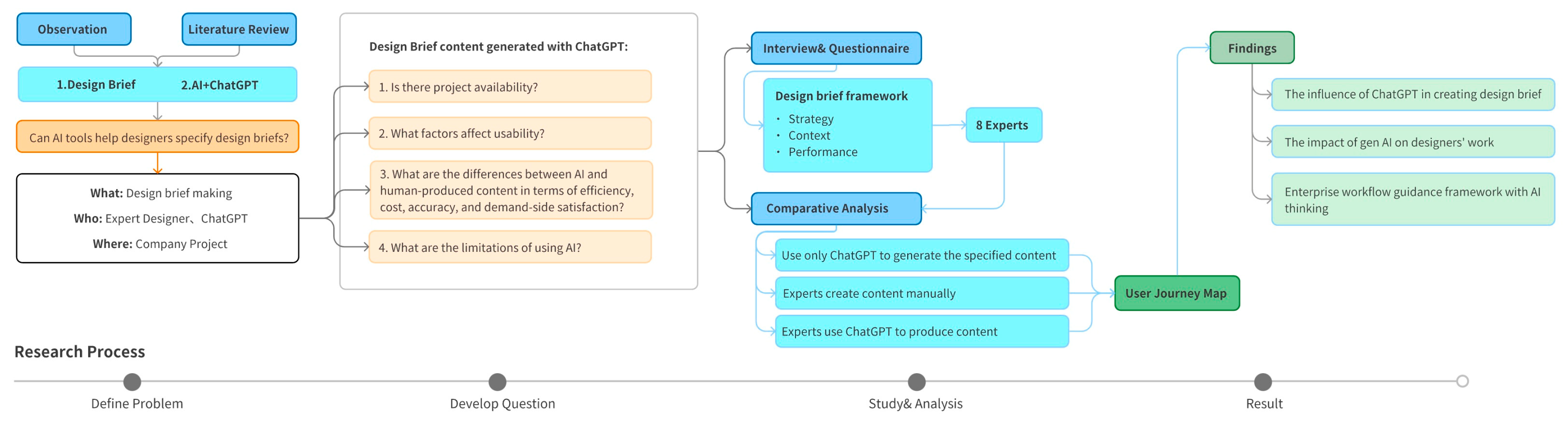
The contributions of this study are as follows:
1. Identifies the primary characteristics that impact the use of AI technologies by designers during the project creation phase in the corporate work setting.
2. Thoroughly analyze the utilization of ChatGPT in the entire design summary creation process and enhance the original production framework.
3. Incorporate AI principles into the workflow, with the goal of enabling designers to successfully utilize AI technologies to enhance job productivity and quality.
2. Literature Review
Our research focuses on the feasibility of AI tools in assisting designers to improve the process efficiency and promote practice, specifically in the production process of Design Brief in projects. From the results obtained, various applications based on LLM generative AI have been utilized in various fields [37,38,39,40]. For instance, in the area of product research and development, these applications have proved to be useful in tasks such as business plan writing, product concept output, product detail design, front and back end code editing, product landing, and marketing applications, effectively assisting employees across all stages of production [41]. It is worth noting that, from the perspective of enterprises, one important indicator that managers focus on is "reducing cost and increasing efficiency."
2.1. Design Brief with Workflow
The design brief is a critical tool in project initiation, serving as a bridge between business and design [19]. It enables designers and clients to reach consensus and clarify project goals and expected outcomes [7]. The design brief's importance lies not only in providing a collaborative framework, including task assignments, resource organizing, tracking of key project milestones, and a step-by-step roadmap, but also in providing resources and processes that can be easily followed. Cross-functional collaboration is imperative in the process of product design. Parkman and Malkewitz (2019) further emphasize the significance of the design brief, viewing it as a product of knowledge cross-functional collaboration [20]. The Design Brief has three core functions: 1) Assessment: It serves as an evaluation tool to reflect the needs of stakeholders at the beginning of a project. 2) Agreement: It is an agreement between the client and the designer and serves as a critical validation tool that integrates business and innovation. 3) Documentation: As a working document for iterative development, the Design Brief guides the project continuously until completion.
The project brief is a process of organizing information by incorporating ideas from various stakeholders and writing it in a specific format. Although this format may vary from one organization or company to another, the logical process remains the same. To clarify and validate the intentions and roles of all parties involved in the design process, the design briefing should cover three stages: project initiation, project execution, and project completion. In these three stages, different stakeholders are responsible for writing the brief [18], as shown in Table 1. The client is responsible for defining the requirements and goals of the initial project brief, while the design team develops the brief based on this and proposes alternative solutions for constraints and costs, as well as validating the project implementation plan. Finally, after the completion of the design briefing, key content points are confirmed with the client, reducing deviations during formal project execution.

Table 1.
Design brie's 3-Stage Process.
| Stage | Responsible | Missions |
|---|---|---|
| Prepared | Designer, client | Define customer goals and expectations |
| Proceed | Designer | Create a plan list for the project design |
| Evaluation | Designer, client | Organize the final production resources and materials and confirm with customers. |
To assess and evaluate the behavior patterns of designers when creating design briefs, it is necessary not only to understand the process but also to explore guiding principles and methods of template creation. Philip's widely accepted template creation method, presented in his 2004 work "Creating the Perfect Design Brief," summarizes seven key elements including "Project Overview and Background, Category Review, Target Audience Review, Company Portfolio, Business Objectives and Design Strategy, Project Scope, Timeline, and Budget, Research Data & Appendix"[21]. Similarly, Stone proposed a framework in 2010 consisting of ten elements including "Background summary, Overview, Driver, Audience, Competitors, Tone, Message, Visuals, Details, People" as headings for the structure and content. Regardless of which framework is adopted, the goal is to serve as a strategic manual to guide successful project outcomes. In addition to creating a content guideline, we also need an evaluation framework for design briefs. In this regard, we reference the Design Quality Criteria (DQC) framework as an evaluative model for the outputs of design briefs [9,22].
Table 2.
Design Quality Criteria framework [22].
Table 2.
Design Quality Criteria framework [22].
| Dimension | Evaluation criteria |
|---|---|
| Strategy | Philosophy: the company's history, values, beliefs, vision, mission, and strategy |
| Structure: The company's field, business model, and competitive advantage | |
| Innovation: The company's innovation areas and types | |
| Content | Society: the needs and activities of individual or group consumers |
| Environment: Requirements and expectations for environmental issues | |
| Feasibility: Expectations of economic efficiency | |
| Performance | Process: Project budget and schedule |
| Function: the nature of the deliverables, including the unique point of sales | |
| Expression: the sensory style and aesthetics of the product |
The structure of creating a Design Brief may vary depending on the characteristics and complexity of the project [32]. Jones and Askland (2012) have identified seven key elements to ensure comprehensive production: 1) project overview; 2) market background and competitive analysis; 3) target audience evaluation; 4) company portfolio; 5) business goals and design strategy; 6) project scope; 7) research data and attachments [12]. These requirements clearly demonstrate the high demands on the designer's abilities when creating a Design Brief. The study also pointed out potential issues that may arise during the production process, such as a lack of real business logic, insufficient understanding of the design, and a lack of budget relevance. Designers often need to invest a significant amount of time in bridging the cognitive gap with clients [33]. GenAI, with its rich data sources and advanced neural networks, demonstrates impressive "knowledge transfer" capabilities [42]. This allows designers to better understand and meet project requirements, facilitating more effective design outputs, even when they face a lack of interdisciplinary knowledge in creating a Design Brief. In the following section, we will introduce AI tools and analyze their suitability for the role of an "assistant".
2.2. AI Tools in Design
In enterprise projects, the execution of design briefs is typically led by the product design manager. They possess extensive design experience and comprehensive design skills, enabling them to effectively manage design teams and control costs. To further explore how AI can assist these experts, it is essential to clarify the specific applications and potential of AI in the design field.
The application of GenAI based on large language models is expanding across various fields. According to McKinsey's analysis, over 70% of companies have deployed at least one type of artificial intelligence technology, and by 2030, the potential impact of artificial intelligence on global economic activity could be around $13 trillion. Within organizations, AI has a positive impact on management theory, including decision-making, knowledge management, customer service, human resources management, and administrative tasks [35]. In the field of design, GenAI's influence is continuously expanding, ranging from basic text and image generation to predicting user behavior and optimizing design decisions [27]. This provides designers with unprecedented efficiency improvements and innovation possibilities. The emergence of various AI tools is gradually changing the way user experience (UX) designers work and deeply influencing workflow within companies.
After preliminary investigation, we found that there are two main voices of designers' attitude toward AI in the company: one is "great, my work efficiency has been greatly improved, and I can focus on creativity and quickly generate expression"; The other is "my job has been replaced by AI, and I may lose my job." From a manager's point of view, they want their teams to be able to do their jobs more efficiently and cheaply, and when new productivity tools come out, they are willing to experiment, calling it a "revolution."
In Girling's (2017) research, he predicted that artificial intelligence would have a profound impact on the field of design [23]. He proposed that with advances in design technology, the learning curve would significantly decrease, allowing anyone to become a designer. Furthermore, he predicted a shift in the role of designers from creators to curators. These forecasts are highly far-sighted in today's context. We further explore how this transformation affects specific design practices. For instance, for designers focusing on 2D graphic design, they used to spend a substantial amount of time learning specialized 3D modeling software and setting parameters to create 3D models. However, with the development of artificial intelligence technology, this process has become simpler and more intuitive. Now, if designers can clearly articulate their ideas and convey them to AI through text prompts, they can quickly generate 3D models. This transition significantly lowers the barriers for designers to transition from 2D to 3D design, making the design process more convenient and efficient.
However, despite providing designers with new tools and possibilities, a study conducted by Bertão and Joo (2021) suggests that designers currently tend to view AI as an assistant to enhance workflow efficiency rather than a creative partner. This may be due to the limited ability of AI tools to understand and generate innovative designs [24]. Presently, AI's influence is primarily concentrated in fields such as UX/UI design, visual arts, industrial design, graphic design, and architecture. Nonetheless, this does not imply that other design fields such as architecture and fashion will not be impacted by AI. In fact, with the continuous development and application of AI technology, we can anticipate its influence spreading to more design domains. While we cannot list all possible impacts here, it is evident that most influences thus far are positive.
Table 3.
The impact of GenAI on designers in design fields.
| Domain | Impact on designers | Reference |
|---|---|---|
| UX/UI | Create scenarios, assist decision-making, improve efficiency | [24] |
| Fine Art | Inspire creativity, new expressions, and work with machines | [26] [30] |
| Graphic Design | Role transformation, efficiency improvement, innovation and experimentation, customization | [28] [31] |
| Industrial Design | Quickly generate and evaluate many options, improve innovation and efficiency | [29] |
GenAI plays several common roles in the workflow. Firstly, it aids in cost forecasting [48,49,50]by utilizing precise data analysis and predictive models to assist enterprises in predicting and controlling project costs. Secondly, it optimizes project schedules [51,52] by employing algorithms and data analysis to ensure projects are completed on time. Thirdly, it enhances quality control [53] by monitoring and guaranteeing project quality, thereby reducing errors and defects. Furthermore, AI facilitates sustainability assessment [54,55,56] by assisting in environmental and sustainability evaluations, promoting green building and sustainable development. AI provides visualizations [57] that offer intuitive representations of data, enabling teams to better understand and analyze information.
When discussing the positive impact of artificial intelligence, we must also consider its controllability and boundaries. Once AI is implemented, there is no turning back, as computing power continues to evolve, rendering discussions on "boundary capabilities" short-sighted. With the constant emergence of new models, these boundaries may be redefined. However, we must remember that despite being a tool, AI's ultimate users are humans, and its development and application must be guided by human needs. Therefore, the continuous development of AI depends not only on technological advancement but also on human requirements and decision-making. This person-centered perspective is particularly crucial in the design industry.
Take ChatGPT as an example, which is a LLM-based. Despite its versatility, it fails to meet customization needs effectively and relies on user input and decision. The decision-making process of AI lacks transparency and poses various risks, such as inaccuracy, inherent bias, vision, privacy issues, and false information during output [4]. To address these issues, external plug-ins are currently used for correction, although achieving 100% accuracy is not possible. As demonstrated in Ferrara's (2023) research, the capabilities boundaries of AI and ChatGPT include fairness, bias and ethics, explainability and interpretability, auditability and accountability, controllability and security, and social impact. The usage of ChatGPT also entails challenges and risks related to data sourcing and filtering, as well as internal bias [34] Hence, designers need to be aware of these potential risks and learn how to effectively control and apply AI tools to avoid over-reliance.
Under the new wave of artificial intelligence, many work task processes are undergoing major adjustments and even disruption. A large body of literature [43,44,45,46,47] has demonstrated that AI can assist designers in their work in various ways. However, these studies often lack detailed descriptions of specific work scenarios and action processes, relying mainly on quantitative analysis of big data and literature inference. Moreover, few literatures directly discuss the feasibility and effect of using AI assistance in the production of Design briefs at the enterprise level. To fill this research gap and based on our hypothesis, we propose adding AI assistance to the production process of Design Brief, which can solve some problems in the manual production process. In the following sections, we will conduct in-depth research through interviews and experiments to test this hypothesis. We will communicate directly with the designer and conduct comprehensive interviews and records in the actual working scenarios. We expect that through this empirical research approach, we will be able to gain a deeper understanding of the application of AI in workflow.
3. Methodology
During the investigation, we conducted interviews with participants to document their behavior and cognitive processes as they utilized AI technologies to create Design Briefs. This qualitative research methodology allows for the uncovering of underlying purposes and emotions related to the research issue. It also enables adjustment of the research strategy based on real-time findings [58]. To analyze and visually represent the experiences of participants, a user experience map was created as an analytical tool. This map serves to uncover underlying opinions and behavioral patterns. By gaining a more intuitive comprehension of the application's impact and worth of ChatGPT in the creation of Design Briefs, we seek to validate and scrutinize the viability of utilizing artificial intelligence technology for this purpose.
3.1. Experiment Design
Participants
This study examines senior designers with over 5 years of experience, noted for their problem-solving skills and ability to secure clear design requirements through trust with clients. However, clear goals and requirements documents are often difficult to obtain at once. The requirements received by designers in enterprises are often ambiguous and manifested as "one-sentence requirements". The study targets senior designers with over 7 years of experience who can foresee project risks and minimize operational costs and risks. Eight such designers, leading various projects, were chosen for the test to ensure study reliability. To further enhance the fairness and objectivity of the research results, an independent expert was invited to anonymously evaluate the experimental output. The evaluation focused on three dimensions of "operability", "intelligibility", and "accuracy" to ensure impartiality.
Study Process
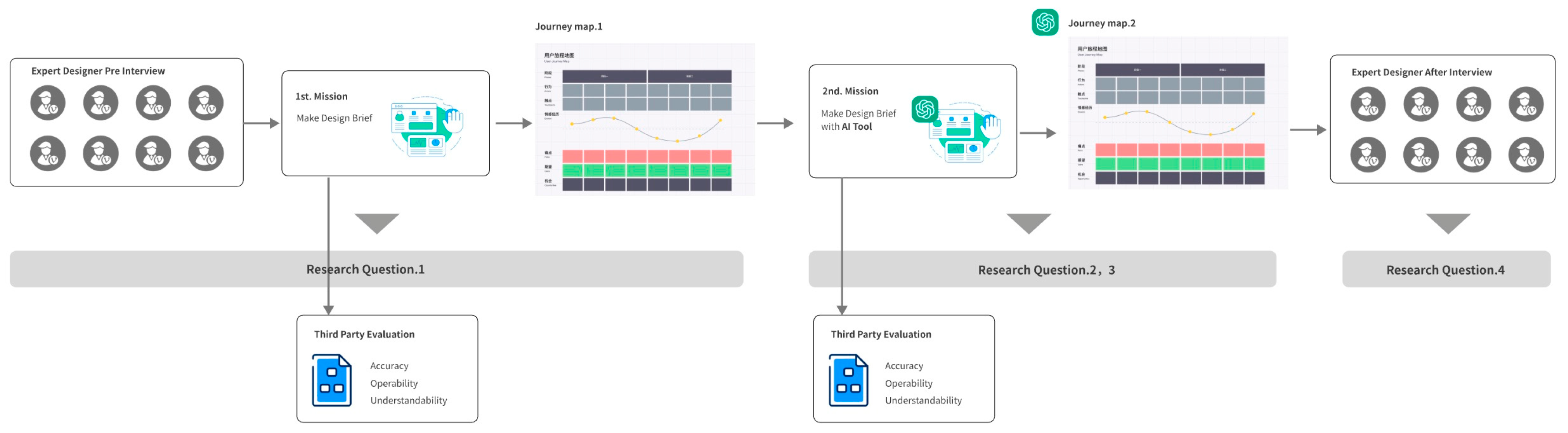
The study examined designer experiences in creating design briefs across two phases. Initially, semi-structured interviews and tasks assessed designers' standard processes and challenges, focusing on RQ 1 and mapping key tasks and difficulties. Then, AI tools like ChatGPT were introduced to observe designers' performance with AI assistance, with further interviews exploring RQ2, 3, and 4, enabling a comparative analysis of outcomes with and without AI tools.
To maintain internal consistency and reduce bias, our qualitative study used a Within-Subject Design, accounting for environmental constraints and participant limits. This method enabled thorough examination and sampling of data. To mitigate the impact of order effects on the experimental findings, we divided the experimental procedure for each participant into two distinct stages. The initial stage aimed at alleviating psychological strain, consisting of a comprehensive interview lasting around 30 minutes. The second stage involved participants creating a Design Brief at regular intervals within the predetermined virtual project environment. We recorded the completion status and time of this stage, limiting it to one hour. Following the initial experiment, we invited participants again after a week, utilizing artificial intelligence methods to aid in the creation of the Design Brief. Throughout the exercise, we instructed participants to utilize the "Think Aloud" [36] to document their cognitive processes and decision-making rationale.
Figure 2.
Experimental Process.
3.2. Experiment Setup
Questionnaire and Interview
We conducted in-depth interviews to gather information on the preparation and implementation methods employed by designers in their work, to provide an empirical foundation for our research. The questionnaire was designed based on the Design Brief creation process and the fundamental components outlined in Chapter II. We acknowledge the existence of a disparity between theory and practice. However, by bridging this disparity, we can gain a deeper comprehension of the difficulties and possibilities that designers encounter.
The questionnaire was separated into two parts and seven sub-sections, which included basic information, briefing on the design process, problems, and suggestions for improvement. Each part seeks to collect precise information regarding how designers adjust and react to different project requirements and limitations.
In the first stage, "As Is" to understand the situation of designers making design brief.
- -
- Basic information: Background information of the designers was collected, including their experience, expertise, and types of previous projects.
- -
- Brief Design: Focuses on understanding how designers formulate and implement their design strategies based on the Design Brief.
- -
- Challenges: Specific problems and difficulties encountered by designers in implementing design strategies are explored.
- -
- Improvements: Specific suggestions and strategies from designers for improving the design process and overcoming challenges were collected.
The second stage, "To Be", is to understand how designers feel about using AI tools to create a design brief.
- -
- AI design brief experience: collect designers' subjective feelings on the use of AI in this project.
- -
- AI potential and challenges: Explore the potential and shortcomings of AI in workflows.
- -
- AI expectations: expectations for the future of AI-assisted workflows.
To achieve the main goal of this stage, which is to identify and analyze the differences and connections between real behavior and theory, a case-by-case approach is required. Understanding and documenting the real behavior and thinking of designers is necessary as each designer has their own unique work habits that are shaped by their experience and the specific needs and constraints of a project. Therefore, it is important to dedicate ourselves to this task.
User Experience map
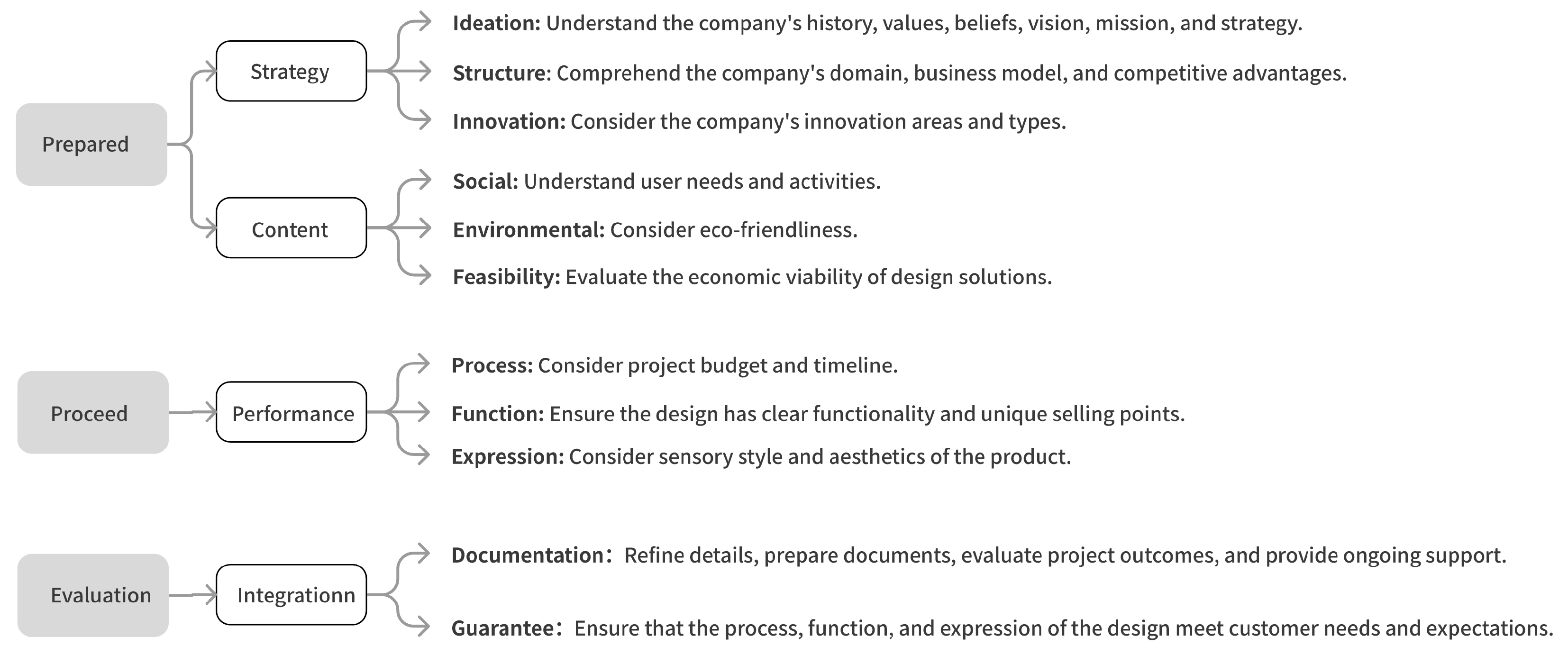
We utilize the user experience map as an assessment instrument to enhance the clear and concise representation of user behavior throughout usage [59]. Based on the prior literature review on "design brief production", the workflow of a designer can be categorized into three stages. During the prepare, the designer's primary focus is on engaging in effective communication with the client to establish the project goals and completing thorough market research to gain a comprehensive understanding of industry trends and user requirements. Given this knowledge, the designer will establish explicit design objectives and evaluate the project's time and resource demands. During the “Proceed” phase, the primary emphasis shifts towards generating design concepts, creating preliminary designs or prototypes, and engaging in design iteration and optimization through user feedback. At last, designers concentrate on enhancing the design specifics, compiling, and delivering comprehensive design papers, and collaboratively assessing the project outcomes with the client to ensure the successful conclusion of the project and offer following design assistance. The three stages mentioned above collectively form the entire process of design briefing production. This method guarantees the meticulous implementation and thoughtful examination of all project components. The table presented below delineates the fundamental framework of this experiment and serves as a methodical point of reference for the study.
Figure 3.
Experience Map Framework based on design brief make [10].
Figure 3.
Experience Map Framework based on design brief make [10].
Task Design
To maintain control over the experimental conditions, we created a simulated project in which we established a sequence of pertinent tasks. To address the intricate nature of project management and the task of establishing project direction and objectives in real-world scenarios, we have endeavored to streamline this process while ensuring its practical applicability. This study specifically examines the essential tasks involved in the Design Brief process and integrates pertinent components of the UX map. Our meticulously crafted work scope encompasses the fundamental elements of the UX map, spanning from the beginning phase to the subsequent phase, with the objective of aiding designers in effectively visualizing the Design Brief process. Furthermore, the context in which these tasks are carried out serves as a reliable foundation for subsequent assessment of the designer's job performance.
Table 4.
Task Design based on design brief.
| Stage | No. | Task description | Execute |
|---|---|---|---|
| Prepared | 1 | study the company's history, values, beliefs, vision, mission, and strategies. | O |
| 2 | Understand the company's field, business model, and competitive advantage. | O | |
| 3 | research the innovation field and type of the company. | X | |
| 4 | Conduct market surveys to understand consumer needs and activities. | O | |
| 5 | Economic feasibility assessment: Evaluate the cost and expected return of the design proposal. | O | |
| Proceed | 6 | Develop project budgets and schedules. | O |
| 7 | Clarify the function of the design scheme and ensure that it has a unique point of sales. | O | |
| 8 | Consider and design the sensory style and concept of the product. | O | |
| Evaluation | 9 | Based on feedback and test results, improve design details. | X |
| 10 | Prepare complete design documents, including drawings, specifications, etc. | X | |
| 11 | the benefit growth that can be brought after product production or optimization. | O | |
| 12 | Provide customers with follow-up design support and services. | O |
As indicated in the table, the executable process in the virtual project has a total of 12 key tasks. The time required to create a Design Brief depends on the size of the project. For instance, in the case of an online game community platform, the initial draft is often developed by a team of 2~3 designers within a day's worth of work. Considering the nature of the experiment, we did not mandate designers to complete the entire Design brief. Instead, we chose specific tasks for testing purposes. In the “prepared” stage, we focused on tasks 1, 2, 4, and 5. In the “Proceed” stage, we examined tasks 6, 7, and 8. In the “Evaluation” stage, we assessed tasks 11 and 12. For simplified activities, like item 10, there is no requirement for the creation of a comprehensive design document, so it will be excluded during the testing phase.
ChatGPT 4.0 features a conversational interface, minimal learning requirements, and enables participants to effectively perform the job without the need for extra instruction or training [4]. This ensures the experiment progresses smoothly and guarantees the dependability of the collected data.
In the document evaluation step, a third-party expert evaluation was included, assessing operability, understandability, and accuracy across three dimensions. This project evaluation system is widely utilized throughout the firm. Operability pertains to assessing whether the actions outlined in the document can effectively accomplish the project objective. Understandability is employed to evaluate the ease with which the information in the document can be comprehended by the executor, thereby impacting the efficiency of communication. Accuracy ensures that all actions are aligned with the goal and contribute to its achievement.
Ultimately, we depict the phases, actions, interactions, emotions, challenges, and user experience diagrams of the testers involved in the production process of the Design brief. This allows for a clear and intuitive comprehension of the user behavior and process experience in the subsequent stages.
We studied designers' workflows and challenges in creating design briefs through interviews and questionnaires. We used user experience maps to visualize and compare workflows before and after AI tool implementation. Virtual tasks were created to control the experiment, and designer productivity was evaluated based on usability, comprehensibility, and precision.
4. Results
We interviewed 8 design leaders with significant roles in their companies, including 5 with UX backgrounds and 3 from visual design. They all have experience using AI tools like ChatGPT for tasks. Their companies, prioritizing data security, developed AI models using internal data. For this study, ChatGPT and the virtual project were isolated from company data, used only for analysis.
There is currently no well-developed and flawless application definition for implementing AI in enterprise workflow. While numerous institutions and research organizations are endeavoring to include the operational framework of AI, the true impact and practical utility necessitate extensive and ongoing experimentation and evaluation [1,2]. According to this study, designers are using the technology at a rate of 100%. Each designer is actively using and implementing it in their work, with only little variations in the level of reliance. Within the observation sample, two designers exhibited a substantial utilization of AI tools, while the remaining six designers did not heavily rely on such tools. However, they effectively streamlined and expedited the processing of Design Briefs in their daily workflow.
Table 5.
Designer status.
| Working | Business type | Skill background | Frequency of daily use of AI tools | Common AI tools | |
|---|---|---|---|---|---|
| Designer.1 | 5 years | Automobile User Experience | UX Designer | High | ChatGPT |
| Designer.2 | 7 years | Game experience design | UX Designer | Medium | ChatGPT, Midjourney |
| Designer.3 | 9 years | Internet social experience design | UX Designer | Low | ChatGPT, Stable Defusion, Other |
| Designer.4 | 11 years | E-commerce experience design | Graphic Designer | Medium | ChatGPT |
| Designer.5 | 10 years | E-commerce experience design | UX Designer | Medium | ChatGPT |
| Designer.6 | 8 years | Short Video Platform Experience Design | Graphic Designer | High | ChatGPT, Stable Defusion, Midjourney |
| Designer.7 | 10 years | E-commerce experience design | Graphic Designer | Low | ChatGPT, Stable Defusion |
| Designer.8 | 9 years | AR experience design | UX Designer | Medium | ChatGPT |
4.1. The creation of the traditional design brief
We used in-depth interviews to understand the actual situation of designers dealing with design profiles, confirming the processes and elements of the previous literature review. The accuracy of the design profile is directly linked to the project schedule and cost. The following table lists the key points that the interviewed designers focused on and the factors that influenced the production of the design profile.
Table 6.
Design brief production elements and executor concerns.
| Key Elements | Description | Requirements |
|---|---|---|
| Clear goals | The correct goals can lay the foundation for the active promotion of the entire project. | Accuracy |
| Vague goals can lead to confusion in team management. | Accuracy | |
| Functional scope | The functional scope involves the cost estimation of the project, which will affect the allocation of manpower and time. | Accuracy |
| Collaboration and scheduling affect all design functions. | Efficiency | |
| Evaluate the scope to judge the workload | Efficiency | |
| Historical data and documents | Understanding the past information of the demand side can correct goals and avoid repeated mistakes. | Accuracy |
| Have overall control over the development of the current project. | Accuracy | |
| Stakeholder communication | Maintain consistency among all parties regarding project objectives. | Accuracy |
| Reduce the loss of information transmission. | Efficiency | |
| Improve project execution efficiency. | Efficiency | |
| Actively communicate to ease conflicts of interest. | Accuracy | |
| End users | Always keep its design goals in mind | Accuracy |
| Improve the mining of correct requirements | Accuracy | |
| Known constraints | Can strengthen control over team resources | Efficiency |
| Correct task boundaries to prevent resource waste | Accuracy | |
| Rapidly verifiable prototype | Used to quickly report or persuade stakeholders in non-design functions | Efficiency |
| Improve the production efficiency of design introduction documents | Efficiency |
The design brief's key components, including well-defined goals, functional boundaries, historical information, and documentation, significantly contribute to the project's success. Our data study revealed that accuracy and efficiency are the primary indicators of team performance in benefit-oriented organizations. The project's accuracy is crucial for ensuring it progresses in the correct path, and it contributes to 59% of the overall effectiveness of team management. Efficiency, which encompasses cost control, resource allocation, and teamwork, accounts for the remaining 41%. In the work, designers frequently encounter the necessity for repetitive revisions. The primary issues they confront are around ensuring the precision of goal setting and the judicious allocation of staff resources. Hence, designers require a method to enhance their productivity that is both precise and effective. Although it may not be flawless, if it reduces time and effort, it remains a viable choice to be considered.
We possess knowledge not just of the regular creation of design profiles, but also a preliminary comprehension of the assessment of existing AI technologies by designers. Feedback such as "The ChatGPT tool helped me clarify my needs," "It saved me a lot of time," and "ChatGPT's information needs to be handled carefully and occasionally shows inaccuracies and needs to be double-checked", showcases both the efficacy and constraints of the AI tool. Although most of the comments was favorable, there were a few reservations and worries. To gain a comprehensive understanding of how AI tools specifically affect designers' work, we will thoroughly examine the functioning and consequences of AI in practical scenarios during the second round of testing. The objective is to furnish helpful comments and recommendations for the subsequent advancement and utilization of AI solutions.
4.2. Execution of specified projects without the use of artificial intelligence
For the study, we chose a virtual project of moderate size, specifically the construction of a "game community" platform. This project kind is prevalent in the industry, encompassing several dimensions and being illustrative. Throughout the task execution, the designers shown enhanced proficiency in controlling operation time, understanding the task, and mastering background knowledge. These results align with the anticipated outcomes of the experiment. On average, it took 21 minutes to comprehend the project context, which involved knowing the pertinent strategy and content. The empirical findings indicate that participants can promptly comprehend the project environment and task requirements. To establish a defined objective, we furnish essential instructions and direction in our experiments.
During the period of collecting dialogue material, we discovered that designers typically required an average of 3.2 confirmations of goals. The current average duration for confirmation, cost estimation, resource allocation, and final document output is 72 minutes. To address the potential weariness produced by prolonged testing and to minimize task-related stress, we implemented a two-stage approach for task execution. The document production task was specifically planned for the second stage.
During the initial testing phase, we observed and assessed the actions and emotions of the designers while performing the task, using a five-point scale. The evaluation comprised two components: the designer's subjective assessment in creating the design brief, and the objective evaluation conducted by a third party on the final output report. The findings indicated subpar performance in budget and project outcome assessment, while demonstrating superior performance in defining functions and delivering subsequent support services. This suggests that designers still have areas for enhancement in certain elements of task implementation.
4.3. Execution of specified projects using artificial intelligence
Following the 1st testing, which occurred one week prior, we enlisted the participation of 8 designers for a subsequent round of testing. This time, we employed artificial intelligence techniques to execute and manage the identical work consistently. We conducted another round of testing using the prearranged material as a basis. The second testing procedure was performing the test followed by conducting the interview. Initially, in terms of the duration of the operation, this evaluation took 37 minutes, which is 48.6% longer than the previous round of testing, and the impact is noteworthy. The entire subjective experience has significantly enhanced, as evidenced by favorable feedback such as "the AI-generated report is exceptionally comprehensive", "it assists me in generating unexpected content" and "it efficiently searches for information based on my specific criteria." Additional recommendations include the necessity to re-validate the accuracy of the results, the requirement for manual correction due to the excessive length of the content, and the suggestion for a visual representation of the output.
During the same task evaluation, we saw a substantial enhancement in both operational experience and subjective perceptions with the assistance of AI. More precisely, designers that possess knowledge about the background of the target organization (client) see a 13.2% boost in their utilization of AI. Similarly, conducting market study leads to an 18.8% gain, while engaging in user and market research results in a 5.3% improvement. The economic feasibility assessment experienced a 16.7% increase. Budget and schedule management saw a 20.0% improvement. Feature clarification and optimization increased by 12.5%. Concept and style design improved by 7.1%. Project outcome estimates increased by 7.1%. Follow-up support and service also experienced a 12.5% increase. This data unequivocally illustrates the tangible advantages and prospective worth of AI tools in the daily tasks of designers.
Table 7.
Comparison of two tests.
| No. | Task | Average score without using AI |
Average score using AI |
Difference |
|---|---|---|---|---|
| 1 | Understand the background of the target company (customer) | 3.8 | 4.3 | ↑ 13.2% |
| 2 | Market analysis | 3.2 | 3.8 | ↑ 18.8% |
| 4 | User and market research | 3.8 | 4.0 | ↑ 5.3% |
| 5 | Economic feasibility assessment | 3 | 3.5 | ↑ 16.7% |
| 6 | Budget and schedule management | 2.5 | 3 | ↑ 20.0% |
| 7 | Function clarification and optimization | 4 | 4.5 | ↑ 12.5% |
| 8 | Concept and style design | 2.8 | 3 | ↑ 7.1% |
| 11 | Estimation of project results | 2.8 | 3 | ↑ 7.1% |
| 12 | Follow-up support and services | 4 | 4.5 | ↑ 12.5% |
Figure 4.
User experience map of actions and feedback from designers during the two tests.
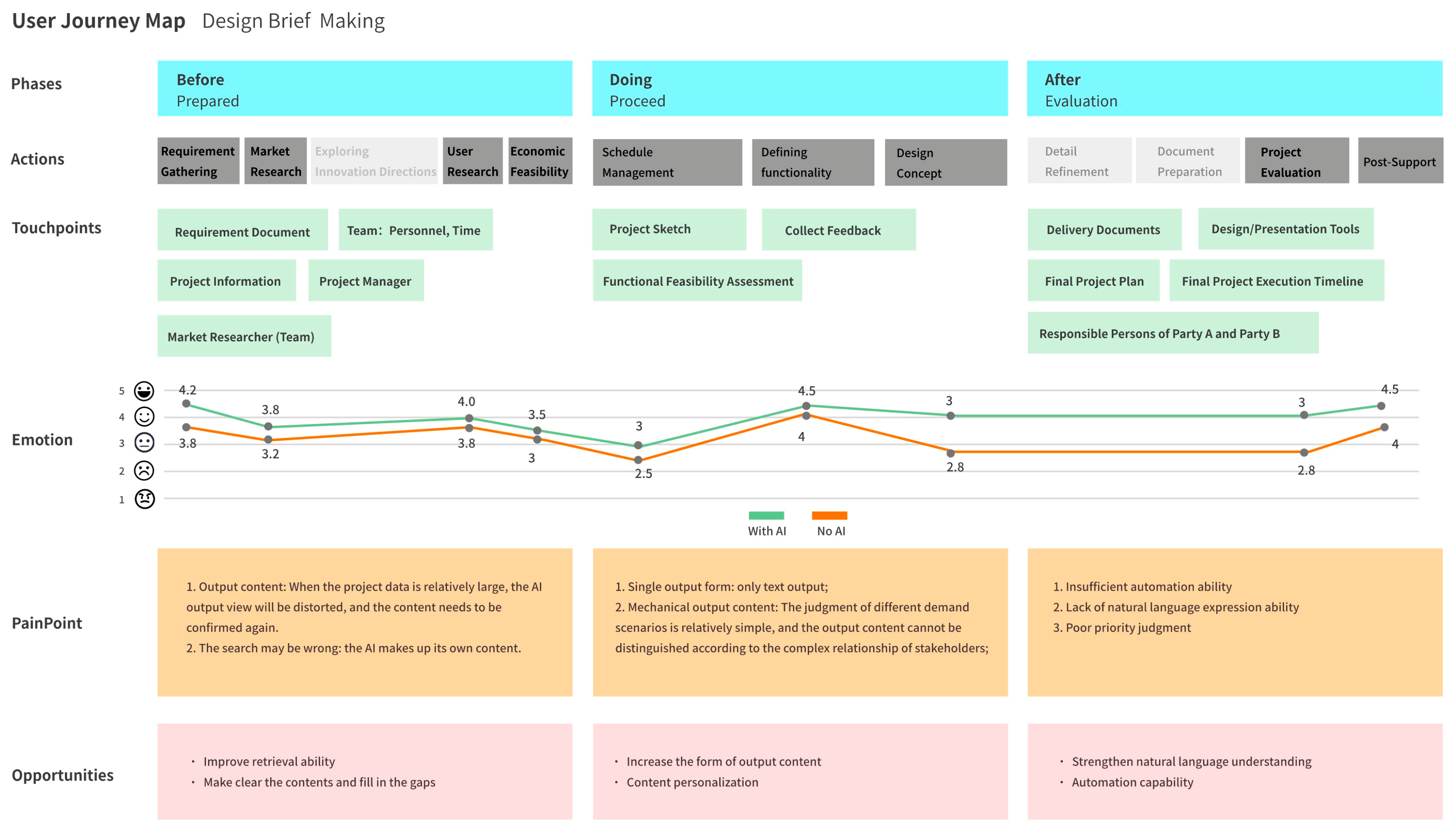
The main problem faced by the designers at the beginning of the project was the accuracy of the output of AI tools when processing a large amount of project data. For example, when working on a large project, ChatGPT's output may be distorted, requiring designers to double-check and correct it. Additionally, AI sometimes generates content, increasing the burden on designers to ensure accuracy. The output form of ChatGPT is relatively unitary, primarily producing literal output, which restricts designers' flexibility in addressing diverse needs. Moreover, the output content of AI tools demonstrates a certain degree of mechanical nature and limited judgment in different demand scenarios, lacking distinction and personalization based on complex stakeholder relationships. Designers also identified the lack of automation and prioritization of complex tasks in the AI tools. These problems partially limit the efficiency and effectiveness of applying AI tools in designers' daily work.
In the early stage of task testing, designers believed that AI tools could enhance their practical value by improving retrieval ability and explicitly checking the content. However, mid-term feedback revealed that increasing the form and personalization of the output content was the optimal direction for AI tools. For instance, in suggestion provision, ChatGPT can provide detailed feasibility assessments of solutions based on the requirements. Surprisingly, as depicted in the diagram, the content turned out to be much richer than what the designers had initially expected. Furthermore, designers identified automation as a crucial capability they anticipated from AI tools.
We presented two iterations of design brief reports to external experts for assessment, focusing on three criteria: usability, comprehensibility, and precision. The evaluation results were generally consistent with predictions, with improvements observed in the operability and understandability of the two rounds of reports. However, there was a minor drop in accuracy, although the total difference was not significant. AI provides a more thorough study of the alignment between tasks and requirements. Illustrating the case of "Scheduling task of human workload," ChatGPT promptly provided three distinct possibilities with the assistance of the operator and evaluated their advantages and disadvantages. Conversely, human evaluation predominantly depends on designers' own experience to make conclusions and judgments, which is susceptible to hasty circumstances. Given the constraints of the testing period, the AI delivered more extensive responses in this area, resulting in good ratings for usability and comprehensibility. Nevertheless, ChatGPT's accuracy falls short compared to human evaluation due to the verbosity of the generated material and the potential distortion of information in the absence of a network connection.
Table 8.
Design brief production elements and executor concerns.
| Evaluation | 1st group | 2nd group | Difference |
|---|---|---|---|
| Operability | 4.5 | 4.7 | ↑ 4.44% |
| Understandability | 4.2 | 4.4 | ↑ 4.76% |
| Accuracy | 4.8 | 4.6 | ↓ 4.17% |
| Time | 72min | 37min | ↑ 49% |
5. Discussion
This investigation scrutinizes the way AI tools are altering the design brief creation process in enterprises and their influence on work outcomes. Conducted through qualitative interviews and experiments, the study is divided into two phases: designers did not employ AI tools in the first phase, while fully integrating them in the second phase. The findings reveal that the utilization of AI tools significantly enhanced the designers' operational experience and satisfaction in most tasks, which were visually portrayed through the user experience map.
The intervention of AI has the potential to revolutionize the entire workflow of enterprises, particularly in terms of improving management efficiency and operational fluency. The study found that although the design brief is a key part of the production process of enterprises, there are still some uncontrollable factors in its production process. For instance, the subjectivity of demand interpretation can lead to an increase in production cost and a prolongation of production time [14,16,17,18]. However, the use of ChatGPT by designers brings convenience, it also exposes some problems such as data distortion and the dependence of results on the way questions are asked [60]. These findings provide valuable insights into how to effectively utilize AI tools.
5.1. Back to the research questions
Returning to the research questions, we now possess definite answers:
RQ.1 Designers commonly face specific obstacles and concerns while formulating design briefs in their routine professional endeavors.
Designers need to pay a lot of effort to obtain accurate information for the implementation of developed documents. This effort mainly includes the collection of data, the verification of requirements, and the integration and sorting of a large amount of information. However, due to limited project time, the implementation may have various problems, which often necessitate continuous revision. As a result, the project team's workload increases significantly, leading to substantial costs.
RQ.2 Designers adhere to certain criteria when utilizing ChatGPT to develop a design brief.
Designers use ChatGPT to create a design brief, with a focus on elements such as information retrieval, verification, analysis, communication, and decision making. They take advantage of ChatGPT's generative nature for fast information gathering and collation. Additionally, designers rely on AI for immediate feedback to pinpoint and rectify potential issues and for in-depth data analysis to gain a better understanding of customer needs.
RQ.3 There are noticeable disparities in terms of efficiency, cost, accuracy, and demand-side satisfaction between the utilization of ChatGPT and conventional approaches in creating design brief.
Using ChatGPT for design briefs can quickly yield relevant content and data-driven advice, enhancing productivity. However, its accuracy may falter with lengthy or distorted outputs. AI tools like ChatGPT can cut costs by reducing human resource needs and improve customer satisfaction through in-depth user data analysis.
RQ.4 Integrating AI tools into the workflow brings about specific advantages and constraints at the company level.
AI tools in workflows can boost efficiency, streamline production, and foster collaboration, aiding task completion. Yet, they also pose challenges, such as ensuring information authenticity, copyright protection, and job security.
5.2. Design with AI Thinking
AI Thinking in Enterprise Workflows
In traditional design methodologies, designers frequently encounter obstacles involving data collection, requirement validation, and the integration and organization of vast amounts of information. Obtaining accurate data can be time-consuming and necessitate considerable effort [32,33]. Nonetheless, due to project time constraints, the resulting documentation may occasionally encounter execution difficulties, leading to continuous revisions. This not only escalates the workload but also results in substantial cost losses for the project team. To address these issues, Jones, W. M., & Askland, H. H. (2012) propose an open and flexible approach to the production of a design brief. [12]
For business managers, their primary concern is the data related to production costs. Any tool that can improve efficiency and optimize production processes deserves their attention. As a result, nearly all production processes, not merely in the design brief, hold the potential to benefit from the integration of such tools. Drawing upon current trends, AI transcends being merely an efficiency tool and necessitates standardization and profound integration into the thinking of the production process.
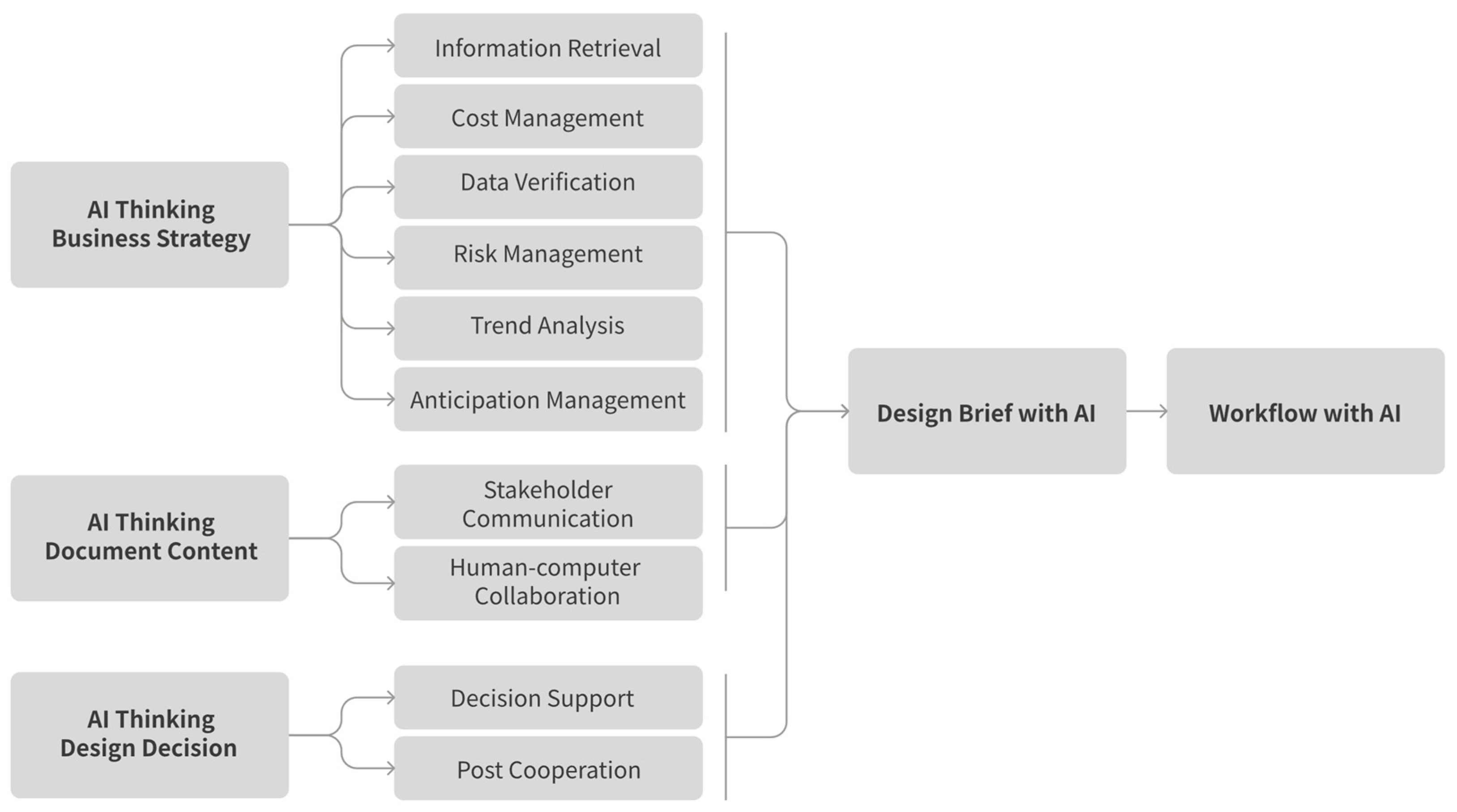
For enterprises, the following are the findings of this study:
AI Workflow Management
- -
- Cost management: In the realm of task execution engineering, we observe that numerous processes are predefined, necessitating the automation of tasks, optimization of resource allocation, and reduction of human error, particularly in data processing
- -
- Risk management:During the testing phase, ChatGPT surprised us by providing suggestions related to market risks and personnel allocation constraints based on the existing data. For example, it advised that due to the complexity of the task and the current personnel allocation, there was a potential risk of delay in completing the task within the stipulated time. This suggestion was later confirmed by evaluation from design experts.
- -
- Anticipation management:The analysis of client needs is a crucial part of project execution. AI technology enables businesses to better understand and meet customer needs and expectations. For example, by analyzing market data and user feedback, companies can predict market trends and customer demands, helping them provide more personalized products or services.
Collaboration
- -
- Human-computer collaboration:The involvement of AI prompts us to reconsider the collaboration between humans and computers. Computers excel at handling large amounts of data and repetitive tasks, while designers possess unique advantages in creativity, strategy, and emotional interaction. Effective human-computer collaboration not only enhances work efficiency but also allows designers to focus more on innovation and high-level decision-making.
- -
- Post collaboration:The differences in knowledge systems among various functions necessitate a significant time cost for effective communication during collaboration. However, the characteristics of AI can overcome the cognitive gap between functions. For instance, by utilizing AI analysis, users can predict project timelines and resource requirements with greater accuracy, thus enabling better task allocation and team management.
The Impact of AI on Designers
In the previous section's analysis, we clearly observed the significant impact of AI tools on improving the efficiency of designers. Human-computer interaction (HCI) primarily focuses on the interaction process between humans and information, and with the intervention of AI, many tasks related to information exchange have been automated. This has led to the emergence of the advanced concept of "Human-Computer AI Interaction" (HCAI) [40]. In this context, AI is not just a simple tool; it represents a completely new way of thinking. Mastering and skillfully applying this AI thinking will be crucial for future product development and project planning. Through interviews and testing tasks, we identified five points that highlight the views of designers on AI tools when using ChatGPT.
Searching: Traditionally, a significant amount of time is required to acquire background knowledge when establishing an information framework. However, ChatGPT's generative capabilities enable direct management of relevant content, acting as both a search and retrieval tool. For instance, by inputting a keyword, the AI can rapidly provide a substantial amount of related information, facilitating designers in swiftly gathering and organizing data.
Verification: AI can process vast amounts of data and information efficiently, offering immediate multiple-choice feedback to the operator. This feedback aids the designer in identifying and rectifying potential issues early on, minimizing the need for extensive revisions in the future.
Analysis:AI tools can analyze extensive user data, improving designers' comprehension of customer requirements.
Communication: To enhance communication among designers, team members, clients, and stakeholders, it is essential to explore new frontiers of knowledge.
Decision Making: AI can offer designers data-driven recommendations to support decision-making. Through extensive data analysis, AI can predict the potential outcome of specific design decisions, enabling designers to make more informed choices.
The feedback above indicates that AI technology has improved efficiency for designers through fast information retrieval, immediate feedback, in-depth data analysis, and decision-making recommendations. Additionally, it has facilitated communication between designers, teams, and clients. However, it also presents challenges, such as concerns about the authenticity of information, copyright issues, and potential job displacement, leading to professional anxieties.
Error Messages: Designers generally express concerns about the credibility of AI information. These inaccuracies may originate from biased training data, algorithm limitations, or other factors. Therefore, designers should maintain critical thinking when using AI tools and verify and review the information provided.
Content Copyright: We used ChatGPT as our primary research tool for this study. However, copyright issues pose a significant challenge when it comes to multimedia content such as images, videos, or audio. To address these issues effectively, the industry needs to establish robust standards that clearly define the copyright ownership and usage rights of AI-generated content. Additionally, internal company policies and guidelines should be developed to ensure the proper handling of copyright issues and mitigate potential legal risks when using AI tools.
Expert Status: During our initial research, we found that many companies are reevaluating their workflow processes, especially in the design and software development departments, which have been significantly impacted by AI. For instance, in the field of graphic design, approximately 50% of the work is now being replaced by graphic AI tools like MidJourney and Stable Diffusion. Similarly, in software development, there are tools such as co-pilot that help developers. While these AI tools enhance productivity, they may also result in the elimination of certain positions, leading to career concerns among employees.
The application of AI is not limited to the production of concise designs. Instead, it can play a role in the entire workflow, aiding businesses in achieving their goals and enabling employees to complete their tasks more effectively. As shown in the diagram below, we integrate AI thinking into key processes like formulating business strategies, generating document content, and making design decisions. We also specify the specific tasks that AI can undertake at each stage.
Figure 5.
AI Thinking in Workflow.
5.3. Limited research
In this study, we need to consider several limitations. Firstly, the use of only qualitative research methods and small sample sizes may have affected the depth and breadth of the study. Secondly, our interviews predominantly focused on designers with more than 5 years of experience, excluding groups of designers who are new to the industry or have less experience. This limitation may restrict the universality of our findings. Additionally, there are limitations in the experiment's setup. We conducted a group test based on a virtual project, which may deviate from the real working environment.
Therefore, caution should be exercised when applying the research results to practical situations. These limitations could potentially impact the accuracy and broad applicability of our research conclusions. Future researchers should acknowledge these limitations when citing or building upon our study and make efforts to overcome or mitigate these deficiencies.
6. Conclusion
This study explores the impact of the AI tool -ChatGPT on the process of designers creating design profiles in enterprises. It assesses the effect on work with and without the use of AI tools. The experiment employed a qualitative research method and was conducted in two phases. In the first phase, AI tools were not used, while in the second phase, designers were required to use AI tools throughout. The results indicate that the use of AI tools significantly improved the operational experience and subjective feelings associated with most tasks. The entire testing process was visualized and compared using a user experience map. The study also investigates the application of AI in the overall workflow of enterprises, highlighting its potential value in enhancing management efficiency and operational fluency.
Perspectives for future research:
This study examined the role of AI tools in creating design briefs for corporate projects. While confirming AI's positive impact, we also identified new research opportunities.
HCAI (Human-Computer AI Interaction)
Given the continuous development and evolution of AI tools, future research should focus on integrating AI thinking into experience design, which is known as "HCAI-Human Computer AI Interaction." This concept explores how new thinking can be incorporated into production processes. By conducting comparative studies between AI-assisted and traditional design processes, we can examine aspects such as efficiency, creativity, and innovation, offering deeper insights into the role and potential of AI in transforming design practices. Exploring designers' adaptation strategies and their relationship with the ever-evolving AI can provide valuable perspectives for developing more intuitive, collaborative, and efficient AI design tools.
AI Automation
Although AI technology is accessible to everyone, its use must adhere to certain standards and guidelines. Our research has uncovered varying approaches among different designers when utilizing AI tools, resulting in significant disparities in output. To standardize the usage process and enhance efficiency, we propose the standardization of operational procedures within specific industries. This can be achieved by establishing appropriate prompts and parameters to guide the AI processing. In this mode, operators only need to make choices and decisions, enabling automated completion of tasks. We believe this approach holds great potential as a future direction for research and development.
AI and Employee Career Confidence
During the process of conducting desktop research, we observed that emerging AI tools have had a significant impact on the professional beliefs of designers with varying levels of work experience. This impact is perceived differently among junior, intermediate, and senior designers. Despite variations in perception, there is currently a lack of quantitative evaluation and analysis. Exploring this phenomenon in depth and conducting a systematic study on it is a promising direction for future research.
Author Contributions
Writing- review & editing and Visualization, Z.ZJ.; Supervision, PY.C., All authors have read and agree to the published version of the manuscript.
Funding
This research received no external funding.
Informed Consent Statement
Informed consent was obtained from all subjects involved in thestudy.
Conflicts of Interest
The authors declare no conflict of interest.
Appendix A
It consists of two parts, including questionnaire design and virtual project setup.
Survey Design
Table A1.
First interview
| Basic information | How long have you been working in the design field? What type of design projects are you primarily responsible for? |
| Design Briefing Production Process | What preparations do you usually make before starting a design project? How do you determine the project requirements and goals in the design brief? How do you identify the problems that need to be addressed and the target audience? How do you handle constraints and limitations in design briefs? |
| Challenges encountered | Have you ever encountered ambiguity or ambiguity when defining project requirements? If so, how did you handle it? Have you ever faced a challenge due to a lack of sufficient information or research? If so, how did you solve it? Have you ever encountered conflicting expectations from different stakeholders? If so, how did you balance them? Have you ever produced a design brief with limited time and resources? If so, how did this affect your work? Have you ever encountered communication and collaboration issues with customers or other stakeholders? If so, how did you solve them? |
| Suggestions for improvement | How do you think we can improve the production process of design briefs? What suggestions do you have to help designers better cope with the challenges before starting a project? |
Table A2.
Second interview.
| Experience of AI-generated design brief | 1. What role do you think AI can play in the design brief production process? 2. In what ways do you think AI can help improve the production process of design briefs? |
| The potential and challenges of AI | 1. What potential do you think AI has in the design brief production process? 2. What challenges do you think you may encounter when using AI to help create design briefs? |
| Expectations for AI | 1. What functions or assistance do you hope future AI tools can provide in the design briefing process? |
Appendix B
Virtual Project Setting
Table A3.
The content below is a hypothetical project and is only used for user testing.
| Company Name: NexaGamer | ||
| Company background | ||
| Vision | To become the world's leading gaming community platform, providing players with a space for interaction, learning, and sharing. | |
| Mission | Connect gamers around the world and provide them with a safe, friendly, and innovative environment to share their passion, knowledge, and experience. | |
| Strategy | ||
| Content strategy | Offer unique game content and exclusive events to attract players. | |
| Cooperation strategy | Collaborate with game developers to bring exclusive offers and content to the community. | |
| Technology strategy | Utilize advanced technologies such as AI and VR to provide players with an immersive community experience. | |
| Business areas | ||
| Field | NexaGamerHub mainly focuses on multiplayer online games, including role-playing, strategy, shooting, and sports games. In addition, the community also provides game tutorials, competitions between players, and online and offline player gatherings. | |
| Business model | ||
| Membership system | Players can join for free, but paid members can enjoy exclusive content, offers, and activities. | |
| Advertising | Collaborate with game companies and related brands to provide targeted advertising. | |
| Virtual merchandise sales | Players can purchase virtual goods such as skins, equipment, and badges. | |
| Partnership | Collaborate with game developers and other brands to jointly promote events and products. | |
| Competitive advantage | ||
| Exclusive content | Collaborate with top game developers to bring exclusive game content and offers to the community. | |
| Technological innovation | Utilize AI technology to provide personalized content recommendations for players and use VR technology to provide immersive community experiences for players. | |
| Global network | With a global player network, international events and competitions can be organized. | |
| Security and privacy | Provide advanced security measures to ensure the security and privacy of player data. | |
| Target vision | Through these strategies and advantages, NexaGamerHub aims to provide a unique, fun, and valuable community experience for gamers around the world. | |
| Competing product research | ||
| GameLinker | User request: Provide multi-platform game synchronization, instant chat between players, in-game item trading. Main activities: monthly online game competitions, partner promotion, virtual item auctions. | |
| PlayConnect | User request: social network combined with game, allowing players to create game-related social circles and share game progress. Main activities: weekly exclusive game news release, AMA (Ask Me Anything) activities with game developers. | |
| GamerPulse | User request: Pay attention to game health, provide players with game time tracking and health advice. Main activities: Healthy Game Challenge, cooperate with health brands to promote. | |
| Design proposal and expected return evaluation | ||
| Design Plan: Combine the core advantages of NexaGamerHub, provide exclusive content, technological innovation, and global network, while integrating the advantages of competing products, such as multi-platform synchronization, health advice, etc. Expected return: Expected to attract 1 million registered users within the first year, of which 10% are paid members. Expected revenue from advertising and virtual goods sales is $5 million. | ||
References
- Manyika, J., et al. Jobs Lost, Jobs Gained: What the Future of Work Will Mean for Jobs, Skills, and Wages. McKinsey Global Institute, 2023.
- WEF. The Future of Jobs Report 2023. World Economic Forum, 2023.
- Al-Sa’di, A.; Miller, D. Exploring the Impact of Artificial Intelligence language model ChatGPT on the User Experience. Int. J. Technol. Innov. Manag. 2023, 3(1), 1–8. [Google Scholar] [CrossRef]
- Eloundou, T.; Manning, S.; Mishkin, P.; Rock, D. GPTs are GPTs: An Early Look at the Labor Market Impact Potential of Large Language Models. 2023. [Google Scholar] [CrossRef]
- Hassenzahl, M.; Tractinsky, N. User experience - a research agenda. Behav. Inf. Technol. 2006, 25(2), 91–97. [Google Scholar] [CrossRef]
- Bertão, R. A.; De Souza Brum, A. L.; Joo, J. The design brief as a pivotal tool: A study of Centro Brasil Design’s practices to promote design. Des. J. 2023, 26(2), 188–209. [Google Scholar] [CrossRef]
- Paton, B.; Dorst, K. Briefing and Reframing: A Situated Practice. Des. Stud. 2011, 32(6), 573–587. [Google Scholar] [CrossRef]
- Jevnaker, B. H. Vita Activa: On Relationships between Design(Ers) and Business. Des. Issues 2005, 21(3), 25–48. [Google Scholar] [CrossRef]
- Petersen, S. O.; Phillips, P. C. Inspiring Design-Informed by Metrics. Des. Manag. Rev. 2011, 22(2), 62–71. [Google Scholar] [CrossRef]
- Petersen, S. E. DEVELOPING AN INSPIRATIONAL DESIGN BRIEF. In Proceedings of DESIGN 2010, the 11th International Design Conference, Dubrovnik, Croatia; 2010; pp. 1173–1182. [Google Scholar]
- Al-Sa’di, A.; Miller, D. Exploring the Impact of Artificial Intelligence language model ChatGPT on the User Experience. Int. J. Technol. Innov. Manag. 2023, 3, 1–8. [Google Scholar] [CrossRef]
- Jones, W. M.; Askland, H. H. Design Briefs: Is there a Standard? In Proceedings of the 14th International Conference on Engineering & Product Design Education (E&PDE12) Design Education for Future Wellbeing; 2012; pp. 115–120. [Google Scholar]
- Stickdorn, M.; Schneider, J. This is Service Design Thinking: Basics – Tools – Cases. 2012, pp:151-154.
- Tang, V.; Liu, B.; Kellam, K.; Otto, K.; Seering, W. Comparison of success factors. ICED05 Melbourn 2005.
- Cooper, R. G. Product Leadership - Creating and Launching Superior New Products. Perseus Books: Cambridge MA, 1998.
- Petersen, S. Design Quantification – Design Concept Argumentation as related to product performance Metrics. Stanford University, 2009.
- Berni, A.; Borgianni, Y. FROM THE DEFINITION OF USER EXPERIENCE TO A FRAMEWORK TO CLASSIFY ITS APPLICATIONS IN DESIGN. Proc. Des. Soc. 2021, 1, 1627–1636. [Google Scholar] [CrossRef]
- Blyth, A.; Worthington, J. Managing the Brief for Better Design. Routledge eBooks, 2010. [CrossRef]
- Jevnaker, B. H. Vita Activa: On Relationships Between Design(ers) and Business. Des. Issues 2005, 21(3), 25–48. [Google Scholar] [CrossRef]
- Parkman, I. D.; Malkewitz, K. Design briefs in design-driven new product development. J. Des. Bus. Soc. 2019, 5(1), 35–58. [Google Scholar] [CrossRef] [PubMed]
- Stone, T. L. Managing the Design Process: Implementing Design: An Essential Manual for the Working Designer. 2010.
- Petersen, S. O.; Joo, J. Inspirational Design Briefing. In John Wiley & Sons, Inc. eBooks, 2015; pp. 13–26. [CrossRef]
- Girling, R. AI and the future of design: What will the designer of 2025 look like? O’Reilly Media, 2017. Available online: https://www.artefactgroup.com/ideas/ai_design_2025/ (accessed on [date]).
- Bertão, R. C.; Joo, J. Artificial intelligence in UX/UI design: a survey on current adoption and [future] practices. In Blucher Design Proceedings, 2021. [CrossRef]
- Dellermann, D.; Calma, A.; Lipusch, N.; Weber, T.; Weigel, S.; Ebel, P. The Future of Human-AI Collaboration: A Taxonomy of Design Knowledge for Hybrid Intelligence Systems. 2019. [Google Scholar] [CrossRef]
- DiPaola, S.; Gabora, L.; McCaig, G. Informing artificial intelligence generative techniques using cognitive theories of human creativity. Procedia Comput. Sci. 2018, 145, 158–168. [Google Scholar] [CrossRef]
- Zhu, Q.; Luo, J. Generative Transformers for Design Concept Generation. J. Comput. Inf. Sci. Eng. 2022, 1–61. [Google Scholar] [CrossRef]
- Forrester. Generative AI Needs Design. Forbes, 2023. Available online: https://www.forbes.com/sites/forrester/2023/02/17/generative-ai-needs-design/?sh=71727c6e6575 (accessed on [date]).
- RedBlink. Generative AI in Product Design & Development - Benefits & Tips. 2023. Available online: https://redblink.com/generative-ai-in-product-design/ (accessed on [date]).
- Mukherjee Chakraborty, M. How Generative AI is Disrupting Traditional Art and Design Industries. Tech Blogger, 2023. Available online: https://contenteratechspace.com/how-generative-ai-is-disrupting-traditional-art-and-design-industries/ (accessed on [date]).
- Shevde, R. How Generative AI is affecting Graphic Design in 2023. 2023. Available online: https://designwizard.com/blog/how-generative-ai-is-affecting-graphic-design/ (accessed on [date]).
- Phillips, P. L. Creating the Perfect Design Brief: How to Manage Design for Strategic Advantage. Allworth Press: New York, 2012.
- Dewulf, K. Integrating Sustainability in the Strategic Stage of an Innovation Process: A Design Brief Perspective. In IntechOpen eBooks, 2020. [CrossRef]
- Ferrara, E. Should ChatGPT be Biased? Challenges and Risks of Bias in Large Language Models. 2023. [CrossRef]
- Korzynski, P.; Mazurek, G.; Altmann, A.; Ejdys, J.; Kazlauskaite, R.; Paliszkiewicz, J.; Wach, K.; Ziemba, E. Generative artificial intelligence as a new context for management theories: analysis of ChatGPT. Cent. Eur. Manag. J. 2023, 31(1), 3–13. [Google Scholar] [CrossRef]
- Birns, J. H.; Joffre, K. A.; Leclerc, J. F.; Paulsen, C. A. Getting the whole picture: Collecting usability data using two methods––Concurrent think aloud and retrospective probing. In Proceedings of UPA Conference, 2002; pp. 8-12.
- Olga, A.; Saini, A.; Zapata, G.; Searsmith, D.; Cope, B.; Kalantzis, M.; Kastani, N. P. Generative AI: Implications and Applications for Education. arXiv preprint arXiv:2305.07605, 2023.
- Jeong, C. A Study on the Implementation of Generative AI Services Using an Enterprise Data-Based LLM Application Architecture. arXiv preprint arXiv:2309.01105, 2023.
- Singh, A.; Jia, T.; Nalagatla, V. Generative AI Enabled Conversational Chatbot for Drilling and Production Analytics. In Abu Dhabi International Petroleum Exhibition and Conference, 2023; p. D021S065R002. SPE.
- Fui-Hoon Nah, F.; Zheng, R.; Cai, J.; Siau, K.; Chen, L. Generative AI and ChatGPT: Applications, challenges, and AI-human collaboration. J. Inf. Technol. Case Appl. Res. 2023, 25(3), 277–304. [Google Scholar] [CrossRef]
- Ghimire, P.; Kim, K.; Acharya, M. Generative AI in the Construction Industry: Opportunities & Challenges. arXiv preprint arXiv:2310.04427, 2023.
- Ritala, P.; Ruokonen, M.; Ramaul, L. Transforming boundaries: how does ChatGPT change knowledge work? J. Bus. Strateg. 2023. [CrossRef]
- MayankAgarwal, J. J. Barroso, T. Chakraborti, E. M. Dow, K. Fadnis, B. Godoy, M. Pallan, and K. Talamadupula. Project clai: Instrumenting the command line as a new environment for ai agents. arXiv preprint arXiv:2002.00762, 2020. arXiv:2002.00762, 2020.
- Ryan Louie, A. Coenen, C. Z. Huang, M. Terry, and C. J. Cai. Novice-AI music co-creation via AI-steering tools for deep generative models. In Proceedings of the 2020 CHI Conference on Human Factors in Computing Systems, 2020; pp. 1–13.
- Jiao Sun, Q. Vera Liao, M. Muller, M. Agarwal, S. Houde, K. Talamadupula, and J. D. Weisz. Investigating Explainability of Generative AI for Code through Scenario-based Design. In 27th International Conference on Intelligent User Interfaces, 2022; pp. 212–228.
- JustinDWeisz, M. Muller, S. Houde, J. Richards, S. I. Ross, F. Martinez, M. Agarwal, and K. Talamadupula. Perfection Not Required? Human-AI Partnerships in Code Translation. In 26th International Conference on Intelligent User Interfaces, 2021; pp. 402–412.
- JustinDWeisz, M. Muller, S. I. Ross, F. Martinez, S. Houde, M. Agarwal, K. Talamadupula, and J. T. Richards. Better together? an evaluation of ai-supported code translation. In 27th International Conference on Intelligent User Interfaces, 2022; pp. 369–391.
- Ghimire, P.; Pokharel, S.; Kim, K.; Barutha, P. MACHINE LEARNING-BASED PREDICTION MODELS FOR BUDGET FORECAST IN CAPITAL CONSTRUCTION. 2023.
- Baduge, S. K., et al. Artificial intelligence and smart vision for building and construction 4.0: Machine and deep learning methods and applications. Autom. Constr. 2022, 141, 104440. [CrossRef]
- Mahmoodzadeh, A.; Nejati, H. R.; Mohammadi, M. Optimized machine learning modeling for predicting the construction cost and duration of tunneling projects. Autom. Constr. 2022, 139, 104305. [Google Scholar] [CrossRef]
- Abioye, S. O., et al. Artificial intelligence in the construction industry: A review of present status, opportunities and future challenges. J. Build. Eng. 2021, 44, 103299. [CrossRef]
- Xu, Y.; Zhou, Y.; Sekula, P.; Ding, L. Machine learning in construction: From shallow to deep learning. Dev. Built Environ. 2021, 6, 100045. [Google Scholar] [CrossRef]
- Saravanan, V.; Pourhomayoun, M.; Mazari, M. A Proposed Method to Improve Highway Construction Quality Using Machine Learning. In 2018 International Conference on Computational Science and Computational Intelligence (CSCI), 2018; pp. 1218–1221. [CrossRef]
- Kar, A. K.; Choudhary, S. K.; Singh, V. K. How can artificial intelligence impact sustainability: A systematic literature review. J. Clean. Prod. 2022, 376, 134120. [Google Scholar] [CrossRef]
- Debrah, C.; Chan, A. P. C.; Darko, A. Artificial intelligence in green building. Autom. Constr. 2022, 137, 104192. [Google Scholar] [CrossRef]
- Fathi, S.; Srinivasan, R.; Fenner, A.; Fathi, S. Machine learning applications in urban building energy performance forecasting: A systematic review. Renew. Sustain. Energy Rev. 2020, 133, 110287. [Google Scholar] [CrossRef]
- Seo, J.; Park, H.; Choo, S. Inference of Drawing Elements and Space Usage on Architectural Drawings Using Semantic Segmentation. Appl. Sci. 2020, 10(20), Art. no. 20. [CrossRef]
- Kim, H.; Sefcik, J. S.; Bradway, C. Characteristics of qualitative descriptive studies: A systematic review. Res. Nurs. Health 2017, 40(1), 23–42. [Google Scholar] [CrossRef]
- Lallemand, C.; Lauret, J.; Drouet, L. Physical Journey Maps: Staging Users’ Experiences to Increase Stakeholders’ Empathy towards Users. In CHI Conference on Human Factors in Computing Systems Extended Abstracts, 2022; pp. 1-7.
- Li, J.; Cao, H.; Lin, L.; Hou, Y.; Zhu, R.; El Ali, A. B. D. A. L. L. A. H. User Experience Design Professionals’ Perceptions of Generative Artificial Intelligence.
Disclaimer/Publisher’s Note: The statements, opinions and data contained in all publications are solely those of the individual author(s) and contributor(s) and not of MDPI and/or the editor(s). MDPI and/or the editor(s) disclaim responsibility for any injury to people or property resulting from any ideas, methods, instructions or products referred to in the content. |
© 2023 by the authors. Licensee MDPI, Basel, Switzerland. This article is an open access article distributed under the terms and conditions of the Creative Commons Attribution (CC BY) license (http://creativecommons.org/licenses/by/4.0/).
Copyright: This open access article is published under a Creative Commons CC BY 4.0 license, which permit the free download, distribution, and reuse, provided that the author and preprint are cited in any reuse.


