
Submitted:
11 November 2023
Posted:
13 November 2023
You are already at the latest version
Abstract
Drought is a long period of unusually low rainfall and can have serious effects on people's lives. It is caused by various factors such as climate change, deforestation, and the overuse of water re-sources. In the Somali region of Ethiopia, Kebri Dehar is the most at risk and most likely to have a drought. The lack of rainfall and high temperatures in Kebri Dehar have led to drought. Man-aging drought is the most challenging and complex problem. The purpose of this study is to as-sess household perception of drought hazards occurrence and adaptation. Additionally, the study aims to design a drought resilience mechanism matrix to mitigate its impact on the local commu-nity. This study used the Heckman two-stage model, which is useful in measuring drought per-ception as it accounts for potential selection bias and allows for the identification of factors that influence individuals' perceptions of drought. Gender, severity of drought, water shortage, tem-perature, drought frequency, and long dry season all have a positive effect on adaptation of resil-ience mechanisms to drought hazards, while food availability and rainfall have a negative effect. It is important for governments and individuals to act to mitigate the effects of the drought. Ef-forts to address the issue require a multi-participation approach that involves household, com-munity, and institutional level participation is needed for adopting drought resilience mecha-nisms.
Keywords:
Drought
; Drought Occurrence
; Adaptation
; Perception
; Resilience Mechanism
1. Introduction
Drought has had an effect on many nations around the world. Drought is considered one of the most challenging and difficult natural disasters to deal with [1]. Sub-Saharan African countries like Ethiopia are the most vulnerable and prone to drought hazards, and [2,3] reported precipitation variability and drought occurrence in the northern, eastern, and south-eastern regions of Ethiopia. In particular, pastoralists are the most affected because of their fragile capacity to adapt. The national economy, particularly agriculture and water resources, is affected by drought. Ethiopia is among the most severely impacted nations in Africa by drought, according to the National Meteorological Agency (NMA) [4], which reported that agricultural production, water resources, electricity production, and water availability for industrial usage were affected by the drought. Drought caused by the Indian Ocean between 2015 and 2017 affected southern Ethiopia, triggering the displacement of more than 300,000 pastoralists in the eastern part of the Somali region. There were 131,000 new displacements associated with drought in the region in 2019.
In 2022, more than 6.8 million Ethiopians who live in areas affected by drought need help right away. Ethiopia’s pastoral population is vulnerable to a variety of threats. Drought is becoming more frequent, and this, combined with an enfeebled asset base and poor coping mechanisms, has caused high levels of risk. Droughts cause insufficient access to and availability of water. Rapid population growth and a declining natural resource base have exacerbated the negative effects of recurrent droughts [5]. Three failed rainy seasons in a row have caused severe drought in Ethiopia's Somali region, and several thousands of children and their family members are on the verge of starvation. Due to a severe drought, the Somali region is suffering from a lack of clean water and food security, which is causing an increase in malnutrition cases [6].
The focus of the study is to analyse the determinants of household perception and adaptation to drought hazard occurrence. Heckmen's two-stage model was employed because it accounts for the complex factors that influence people's response to drought, including individual characteristics and external factors. Furthermore, the researchers developed a drought- resilience mechanism matrix which would be helpful to recover drought hazards. This matrix helps communities in the Kebri Dehar district in identifying the appropriate mechanism to be implemented based on the severity level of the drought and react to lessen the effects of drought.
2. Drought Occurrence and Adaptation
Drought is a long period of not enough rain that causes a lot of crop damage and loss of yield [7]. Most of the time, droughts can be found by looking at things like rain, temperature, evaporation, river flow, or underground water [8]. Droughts are classified into four types: meteorological drought, agricultural drought, hydrological drought, and socioeconomic drought. Each type of drought has different characteristics and impacts on society and the environment. Droughts caused by the weather are the most common and occur when there is a lack of precipitation over an extended period of time. Droughts caused by people are often the result of overuse or mismanagement of water resources. [9] the changing nature of a specific type of drought [10]. They used soil moisture data to explain the Horn of Africa drought, indicating that it was a typical agricultural drought. According to [11], variations in precipitation, temperature, and evapotranspiration are the main causes of meteorological droughts in Eastern Africa.
Drought resilience necessitates a better understanding of the causes and effects of drought, as well as the involvement of people and community-level actions. Strong public, government, and stakeholder cooperation is also required in drought monitoring and management [12]. A study [13] examined household perspectives on drought hazards and adaptive capacity to drought management at two dimensional levels, namely region and community. Multivariate analyses were used and documented; attempts were made in rural residences to predict perceived drought risk but not adaptive capacity to the drought hazard. Additionally, the study emphasized the significance of trusting local experience-based data and scientific facts for effective drought management. As a result, one's level of confidence in local experience-based data tends to positively predict at least some degree of adaptive capacity.
According to [14] a study on farmers' perceptions of drought risk found that, considering objective factors, personal circumstances, and social influence, higher risk perceptions influenced adaptation responses. Respondents' perception of risk also leads to higher levels of adaptive capacity [15]. Adaptation is key to reducing the sector's exposure to drought. Public and private adaptation initiatives are required for effective adaptation. The nexus of public and private adaptation is a key topic in climate change economics. Understanding farmers' adaptive decision-making is considered critical to developing effective public freshwater adaptation strategies [14] that reduce the effects of drought. Both the temporal and spatial dimensions of drought should be considered when managing drought risk. Early Warning Systems, Drought Monitoring and Assessment, Drought Preparedness and Mitigation, and Response to Drought Hazards are the essential components of a drought preparedness process [9]. In order to maintain water consumption with fewer applications, irrigators can mitigate the effects of drought by adopting technically efficient irrigation systems [16].
Many small dams reduce the water supply that farms and cities need. This makes the region more resistant to drought [17]. Drought resilience is the ability of a system or community to withstand, respond to, and recover from the effects of drought, including protecting and restoring the necessary infrastructure and functions within a reasonable period of time [7]. Build resilience by gaining knowledge, conversing out, doing research, and getting trainings can reduce the risk of disaster by incorporating it into emergency preparedness, response, and recovery. Increased drought resilience can be appreciated by moving herds out of drought-affected areas and putting animals there, as well as by making it easier for people to get to water points, emergency food stocks, and veterinary services [18].
When drought risk is managed well, it can have important social and economic benefits, such as making people more resilient to droughts and other social, economic, and environmental shocks. It has the potential to reduce poverty and improve household food security. Drought resilience is the opposite of drought vulnerability [19]. Resilience can be thought of as a measure of how quickly a system gets back on its feet after a failure [20]. Work plans for potential droughts should include mapping and monitoring drought risk. The implementation of risk management pilot projects ought to be a top priority [21]. Drought is common in the Ethiopian Somali region. Because the Somali Region's economy is oriented outwards rather than inwards towards Addis Abeba, it has few "coping strategies" in response to these unpredictable policy shocks [22]. Following the 2015 drought, the Disaster Risk Management Commission (DRMC) was established. The DRMC is now in charge of all disaster emergencies. In the Somali region, the maximum frequency of severe drought events was once in every two years [23]. Act Today Invest in Tomorrow (ACTED) conducted a drought needs assessment in 2021 in Ethiopia's Somali Region, citing droughts as the major challenges for communities to meet their food requirements. Drought and pasture depletion were causing intercommunal tensions. Crop failures were caused by previous droughts [24]. Projects implemented by Action Contre La Faim (ACF) in Kebri Dehar Woreda (districts) to help and restore rural productivity affected by the Horn of Africa drought crisis [25]. The monitoring and modification of WASH (Water, sanitation, and hygiene) efforts were crucial in ensuring that the drought response was effective in supporting affected communities [26].
Numerous studies have examined the measurement of perception and factors influencing the decision to adapt to drought utilizing diverse methods, such as multinomial logistic regression, binary logistic regression analysis, the Protection Motivation Theory (PMT) model, multivariate analyses, and principal component analysis (PCA) [27,28,29,30,31,32,33]. he perception and factors influencing decision to adaptation to climate changes have analyzed using Inferential Statistics, Multivariate Probit model, Weighted Average Index (WAI), and the Problem Confrontation Index (PCI) [34,35]. These models were used to identify the factors that influence adaptation strategies; consequently, adaptation to the occurrence of drought required a two-stage decision-making process, and the Heckman two-stage selection model was employed by few studies to resolve adaptation issues [37–39]. Furthermore, these studies have shown that factors like education, household income, access to information, and social networks play a significant role in determining the likelihood of adapting to drought.
There are several independent variables that can influence the perception of drought, such as socio-economic status, age, education level, Income, household size, cultural beliefs, personal experience with drought, the frequency and severity of droughts in the past, the level of media coverage, and the overall level of environmental awareness in given region can also play role in shaping perception of drought [40–45]. However, it is difficult to identify a single independent variable that consistently affects how individuals perceive and respond to drought conditions. Hence, further research is needed to identify which variable(s) have the greatest impact on perception.
A review of the available literature reveals that there are studies on the causes and effects of drought, as well as the elements and mechanisms of recovery in general. When the nature of the drought is considered, there have been few studies on household perceptions and adaptation to drought hazard occurrence and resilience mechanisms. The researchers identified a research gap in the study area pertaining to drought hazards, how people thought about them, and how they adapted to them. Taking care of the effects of future droughts in Kebri Dehar is essential to ensuring the healthy growth and development of the economy and society. Hence this research study. There have been very few research studies on perception and adaptation to drought hazard occurrence in the Kebri Dehar; the current study primarily focused on measuring determinants of household perception and adaptation to drought hazard occurrence.
3. Materials and Methods
3.1. Source
Kebri Dehar is one among the most drought affected area in the Somali region; therefore, it is critical that appropriate resilience mechanisms be implemented to mitigate the severity of the drought and ensure adequate interventions. The Kebri Dehar District was selected as the study location due to this factor as well as the ease of access the researchers had to the area. Drought classifications of high and medium intensity are documented subsequent to deliberations with District Disaster Risk Management Bureau (DRMB) officials, consultations with meteorological stations, and examination of pertinent official documents. There are 22 kebeles (villages) in the Kebri Dehar district that are classified under different drought conditions based on the severity of the drought conditions prevailing in the study area. There are two drought classifications observed and recorded in Kebri Dehar district: high drought classification and medium drought classification (based on water availability and access). Among the 22 kebeles, there are five kebeles under medium drought classification and 17 kebeles under high drought classification. Two kebeles were chosen from each drought categorization using stratified random sampling. One highly populated kebele, namely Mara'to, with a population of 8406, and one low populated kebele, namely Qodaxley, with a population of 1200, from the high drought classification; one highly populated kebele, namely Dalaad, with a population of 10,626; and one low populated kebele, namely El-Bakol, with a population of 1700, from the medium drought classification, were considered and selected as the sample kebele. In order to ensure equitable representation of each drought categorization, four kebeles were carefully selected. The study participants were picked in a random manner from a designated sample of four kebeles. The sample size was calculated using Yamane's (1967) sampling formula. Due to time and budget constraints, the arrived sample size of 400 is unmanageable. Therefore, the researchers decided that a sample size of fifty percent of four hundred, or 200, would be appropriate for the selection of study participants.
3.2. Determinants of Perception of Household Adaptation to drought occurrence
The data was analyzed using both quantitative and qualitative data analysis methods. An econometric model, the Heckman Probit model, was used to determine the variables that influence household perception of drought hazard occurrence and willingness to adapt in Kebri Dehar. The Heckman selection model has two phases. Drought hazard adaptation is a two-step process that begins with recognizing the occurrence of drought hazards and continues with a willingness to adapt. In the first phase, respondents say whether they noticed a change in how often drought hazards happened. In the second phase, they describe how they dealt with drought hazards and whether they noticed a change in how often drought hazards happened in the first phase. Because the second phase of adaptation to drought hazards is a subset of the first phase, the second phase sub-sample is likely to be non-random and distinct from those who did not perceive drought hazards, resulting in sample selection bias. Selectivity bias is corrected using Heckman's two-step procedure.
Equation for the Heckman’s sample selection is [34]
Researcher spot only the binary outcome of Heckman’s model as:
Drought hazard occurrence (Dj=dependent variable) is observed when j is detected in the selection equation only:
where is the perception of drought hazard occurrence by the jth respondent and of is a vector of explanatory variables of the probability of perception of drought hazard occurrence. Where are error terms and is a vector of variables that are thought to affect how people adapt to drought hazards. The first step of Heckman's sample selection model (Equation 3.3) is to figure out how likely it is that something will happen in a drought hazard. The outcome model (Equation 3.1) is used in the second phase.
When using basic probit techniques to solve equation (3.1), the results are biased. As a result, the Heckman probit model and the Eigen estimates of all parameters in these models are identical. As a result, the Heckman probit selection model was used to investigate perception in terms of perception and adaptation to the occurrence of drought hazards in the Kebri Dehar District.
The outcome equation's (3.1) dependent variable is adaptation to drought hazards' occurrence. Explanatory variables in the study include gender, age, education level of the head of household, occupation, monthly income, social participation, frequency of drought, severity of drought, duration of drought, water shortage, food availability, temperature, precipitation, and dry season.
4. Results and Discussions
4.1. Respondents’ perception and adaptation of resilience mechanisms to drought occurrence
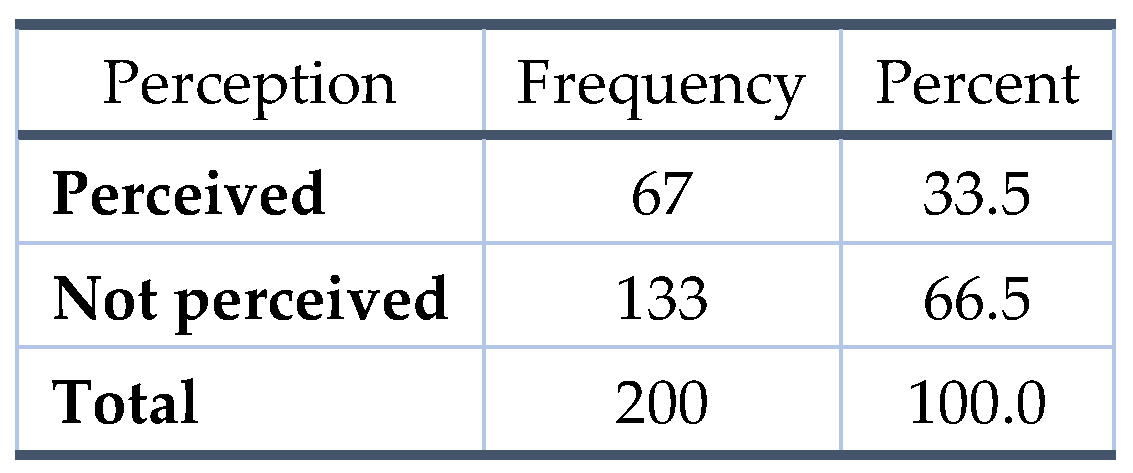
Table 1 shows how people in the study area have thought changes in temperature, drought, precipitation, and dry season over the last 20 years. The result shows that the majority of 133 (66.5%) respondents did not perceive long term changes in temperature, drought, precipitation, and dry season, which is a contradictory result of the study conducted by [43], whereas 67 (33.5%) respondents perceived the changes in these factors. This could indicate a lack of awareness or understanding of the factors contributing to drought hazards and highlights the need for education and outreach efforts to increase knowledge and preparedness in the study area.
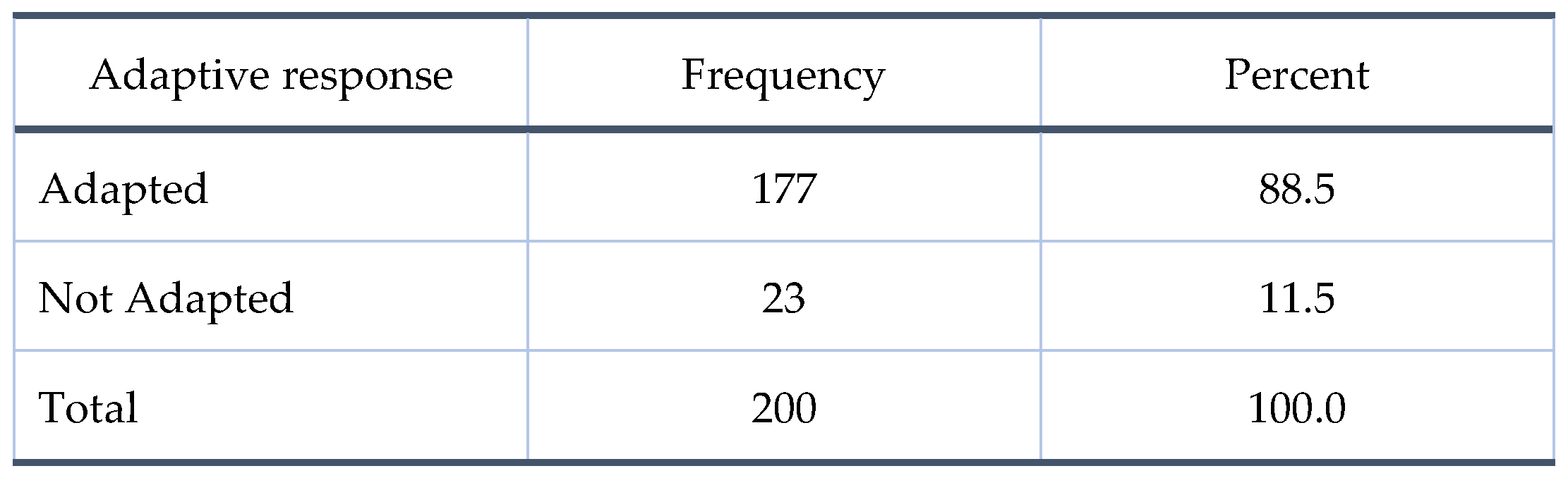
Table 2 depicts a picture of the adaptive response of resilience mechanisms by study participants. The respondents said they knew about some resilience mechanisms, and 177 (88.5%) of them were able to adapt their resilience mechanisms to drought hazards in the study area, while 23 (11.5% of respondents) did not have any such response. Ethiopia has extensive knowledge of drought and how to respond to it [44]. This suggests that the residents in the study area have a high level of awareness and preparedness towards drought hazards, which could potentially contribute to their ability to cope with and recover from such events.
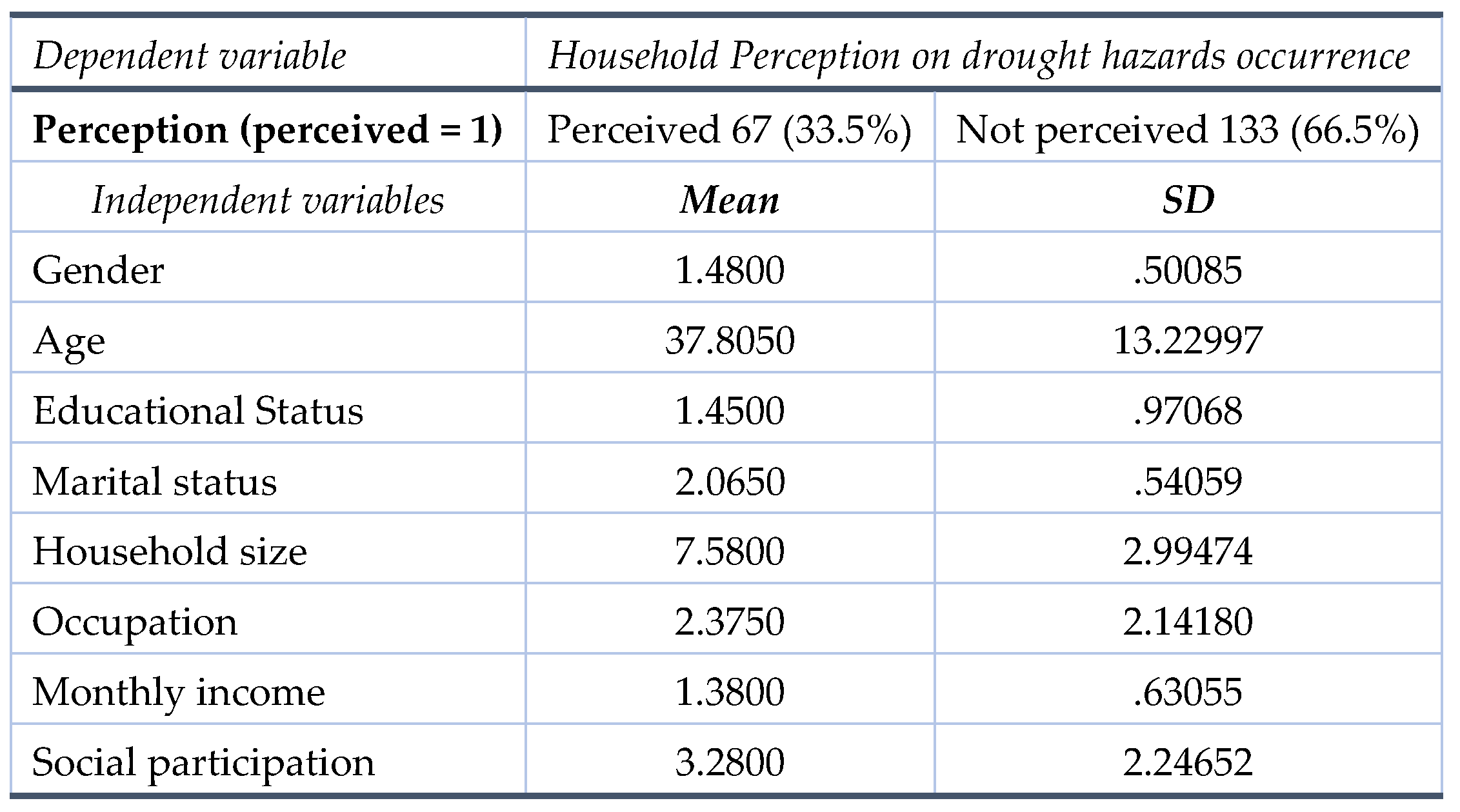
Table 3 displays the descriptive statistics of model variables for the Heckman Probit selection model. As shown in the above table, 67 (33.5%) respondents perceived long term changes in drought hazards occurrence, while 133 (66.5%) respondents did not perceive the long-term changes in drought hazards occurrence. The descriptive summary in terms of mean and standard deviation is calculated and presented in Table 3 for variables considered in selection model, which shows the mean score and standard deviation across age, gender, educational status, respondents’ marital status, household size, occupation, monthly income, and social participation as independent variables influence the dependent variable household Perception on drought hazards occurrence for Heckman’s Probit selection model.
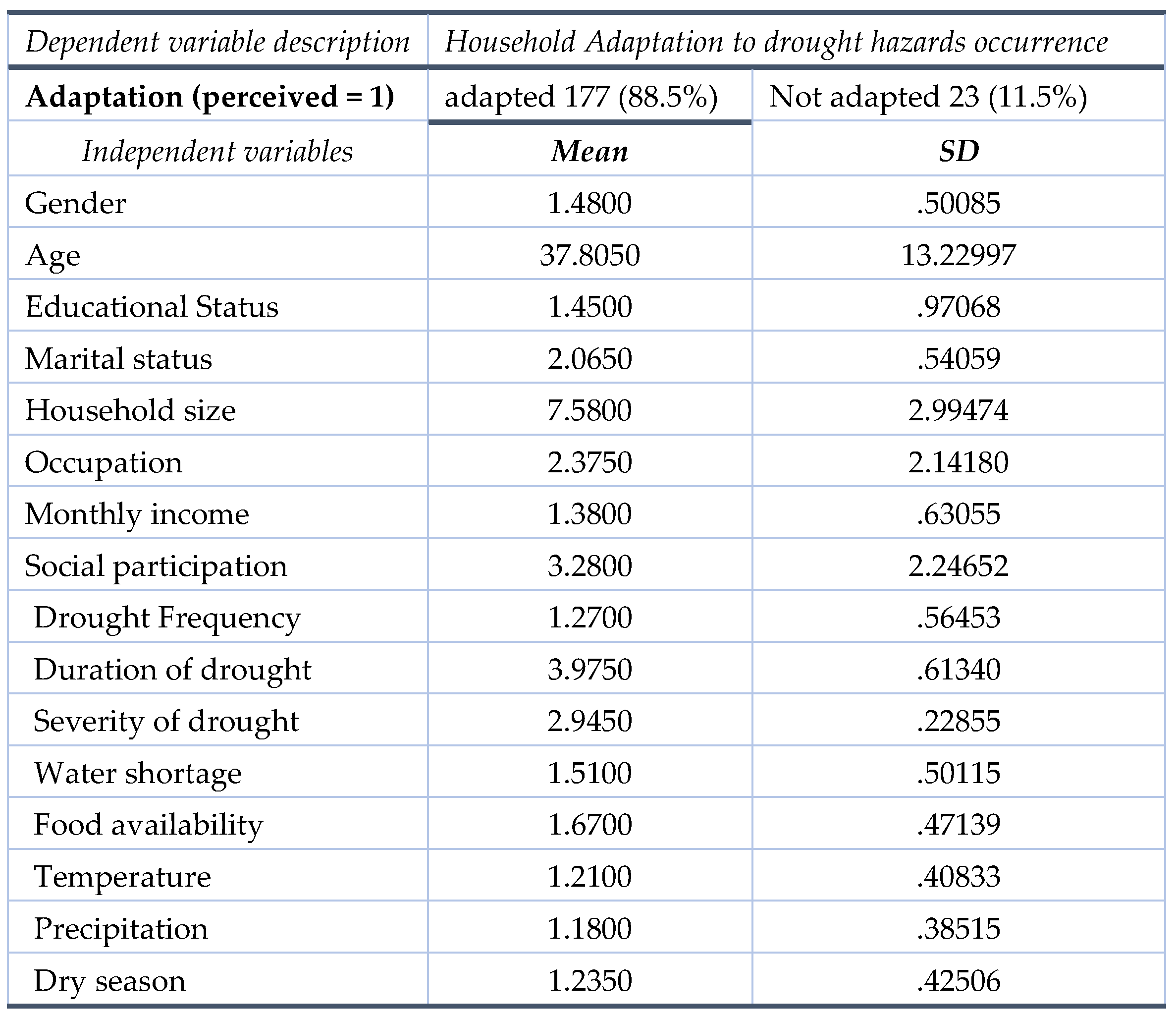
Descriptive statistics for the variables used in the Heckman Probit outcome model is shown in Table 4. It shows that, 177 (88.5%) respondents adapted resilience mechanisms to drought hazards, while 23 (11.5%) respondents did not adapt. For the independent variables considered in the outcome model, a descriptive summary in terms of mean and standard deviation is calculated and shown in the table above. The Table 4 shows the mean score and standard deviation for gender, age, level of education, marital status, size of the household, occupation, monthly income, social participation, drought frequency, duration, severity, water shortage, food availability, temperature, rainfall, and dry season.
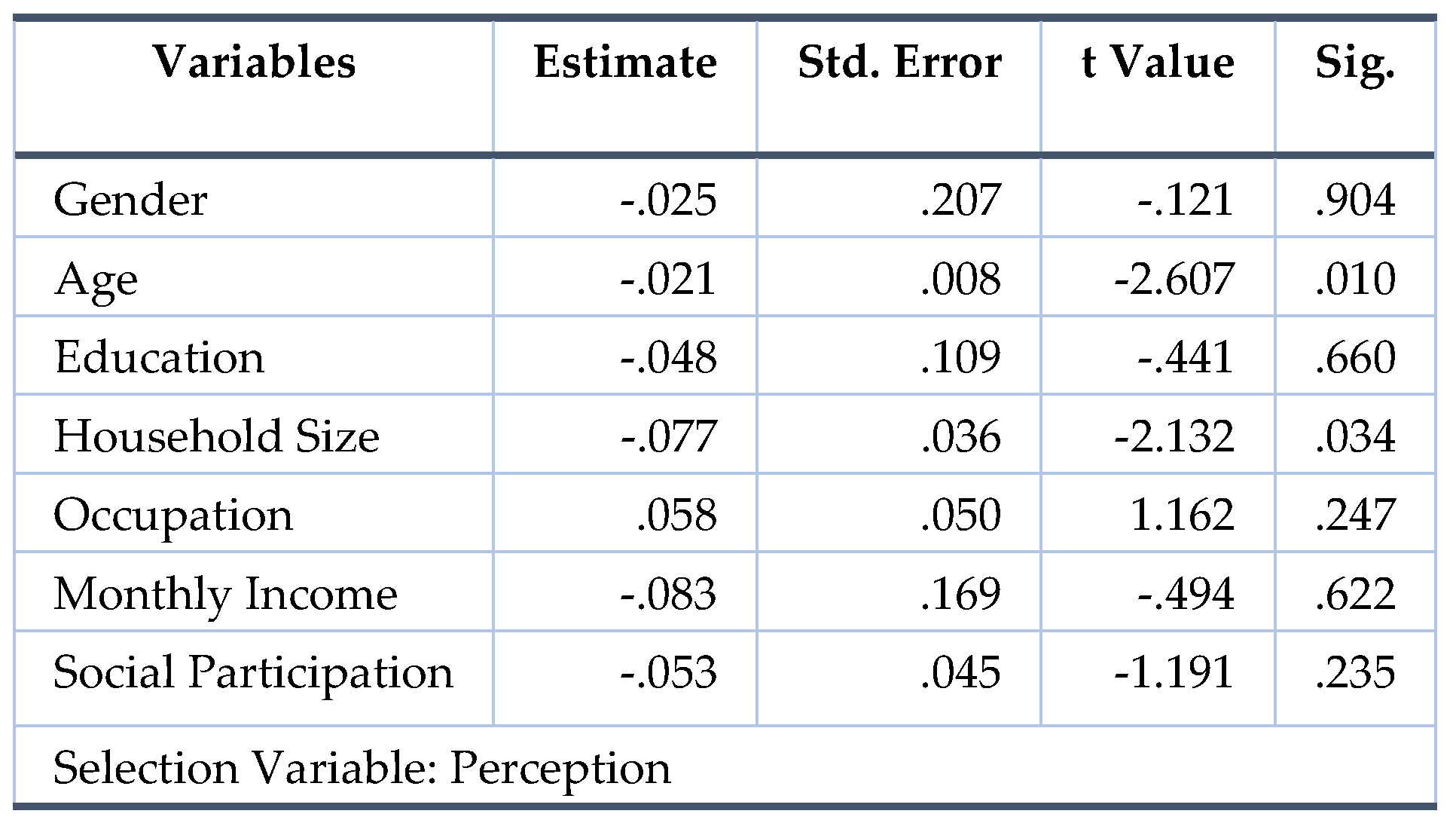
The results of the Heckman Probit selection model are summarized in Table 5. At the 5% significance level, the Heckman probit selection model for the household perception shows that age and household size have a significant effect on the dependent variable, perception of drought hazards occurrences, which is in-line with the finding of [45]. Furthermore, the effect of age on household perception is consistent with the findings of [46–48] studies. The findings provide insight, particularly among older residents and those living in larger households, who have a greater perception of drought. The remaining independent variables have no effect on the dependent variable, the respondent's perception of long-term changes in the occurrence of drought hazards.
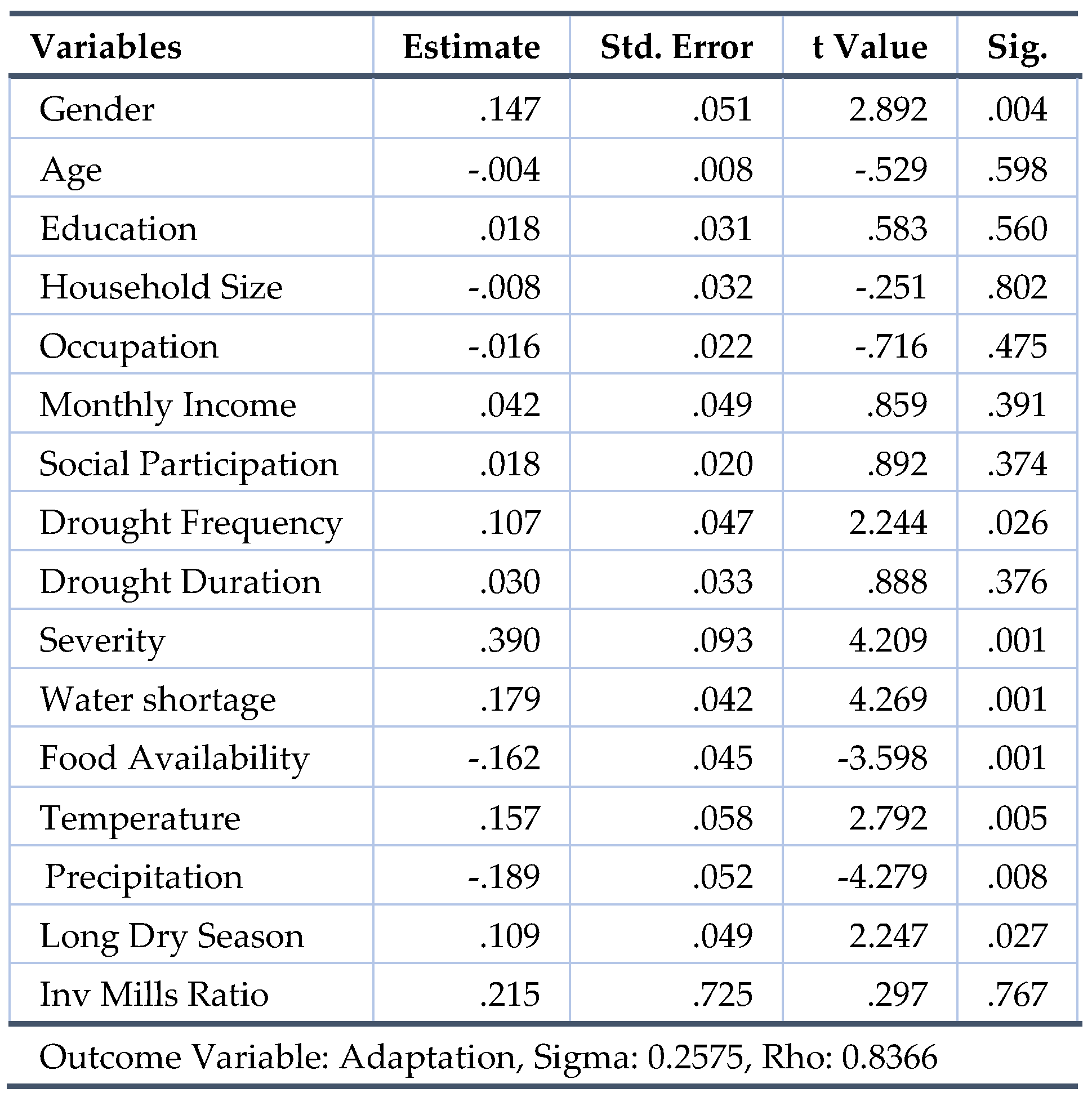
The Heckman Probit outcome model results for respondents' adaptation of resilience mechanisms to the occurrence of drought hazards are summed up in Table 6. At a p value of 1%, gender, drought severity, water scarcity, and temperature positively influence, and food availability and precipitation negatively influence, the dependent variable adaptation of resilience mechanisms to drought hazards occurrence among the fifteen independent variables considered for the outcome model. The study found that respondents who experienced severe drought, water shortages, and high temperatures were also more likely to adapt to resilience mechanisms. Similar findings were found with [49] that gender has a positive influence, and risk perception differs by gender. This is in line with the findings of [46,48]. In another study temperature was identified as a significant predictor [50].
Other independent variables have no effect on the dependent variable, which is how well people adapt to long-term changes in the risk of drought hazards. The variables drought frequency and long dry season influence the dependent variable at a 5% significance level. It can be assumed that if drought, water shortage, temperature, the number of droughts, or the length of the dry season all get worse by one unit, the respondents will use more resilience mechanisms. On the other hand, a one-unit drop in rainfall (precipitation) and food availability will cause the respondents to increase their resilience mechanisms and adjust ways of dealing with drought hazards.
4.2. Drought Resilience Mechanism Matrix
With the help of the stakeholders, the researchers made a drought resilience mechanism matrix that considers how bad the drought is and how well the mechanism can adapt to it. The following matrix shows what came out of discussion between residents, community members, and institutional stakeholders.
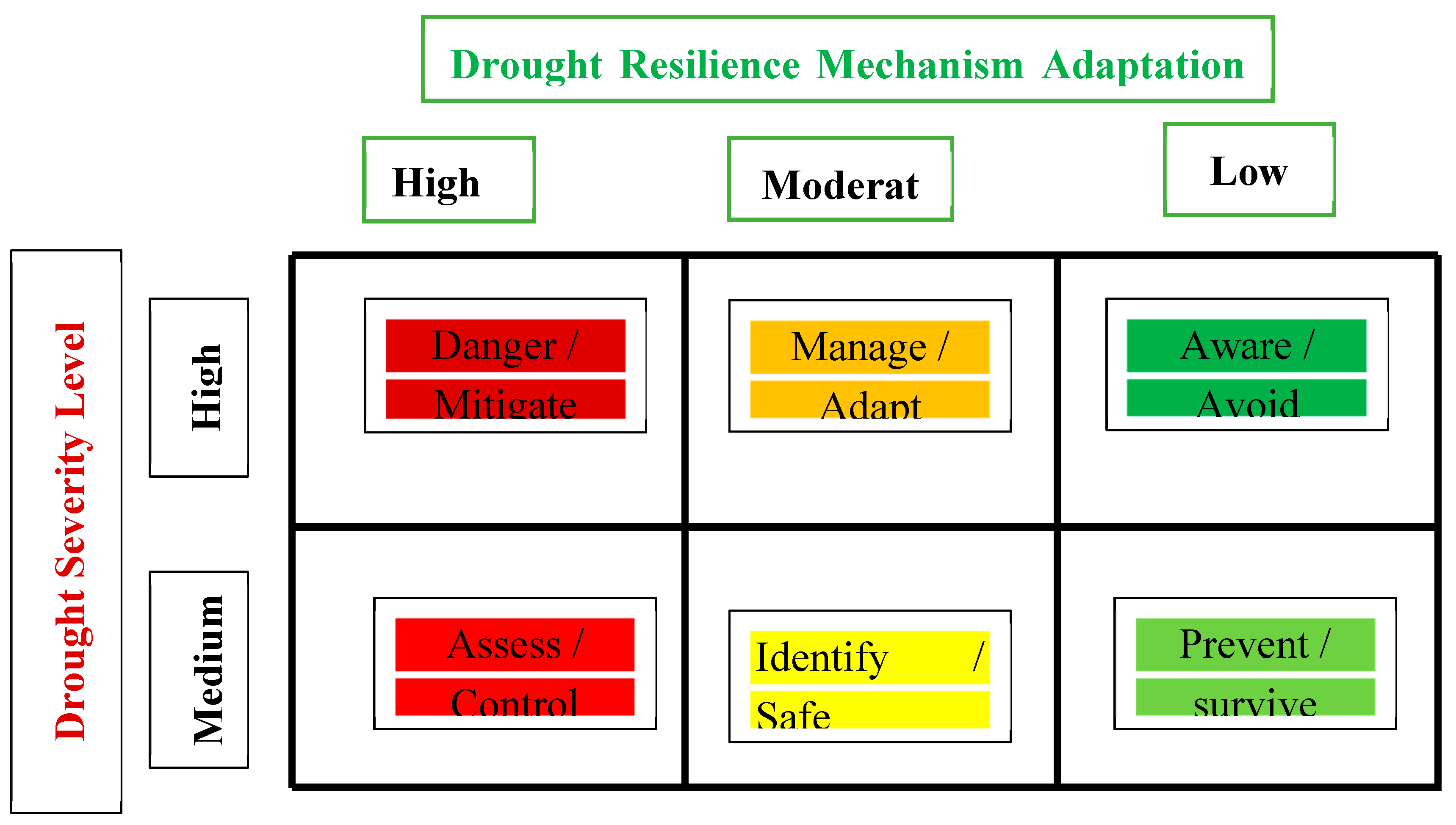
Figure 1.
Drought Resilience Mechanism Matrix.
In the study area, which was the Kebri Dehar district, the levels of drought severity were found to be high and medium. Drought resilience mechanisms are classified as high, moderate, or low adaptations to the occurrence of drought hazards. The matrix helps in identifying the appropriate mechanism to be implemented based on the severity of the drought. This can help the community plan and react in a way that lessens the effects of the drought.
The cell representing a high level of drought severity and a high level of drought resilience mechanism adaptation is identified as a danger zone, and mitigation is required; the cell representing a high level of drought severity and a moderate level of drought resilience mechanism adaptation is identified as a manageable zone, and adaptation is required; the cell representing a high level of drought severity and a low level of drought resilience mechanism adaptation is identified as an aware and avoid status; The cell representing a medium level of drought severity and a high level of drought resilience mechanism adaptation is identified as being used to assess the drought and determine whether control is required; the cell representing a medium level of drought severity and a moderate level of drought resilience mechanism adaptation is considered to be used to identify drought hazards and be safe with resilience mechanisms at that level; and the cell representing a medium level of drought severity and a low level of drought resilience mechanism adaptation is considered to be used to prevent drought hazards and survive with resilience mechanisms at that level. Residents of the study area should be informed about the level of drought severity and drought resilience mechanisms adaptation levels in order to manage, adapt, and mitigate the effects of drought hazards occurrence, as can be deduced and advocated.
5. Summary and Conclusion
This study assessed the determinants of household perception and adaptation to drought hazard occurrence as well as exploring the resilience mechanisms to recuperate from the dangers of drought. The findings of the research revealed that the Kebri Dehar district is currently experiencing a persistent drought. A significant proportion of the participants reported not observing any enduring alterations in dry season, temperature, precipitation, or drought in their kebeles. The findings provide insight, particularly among older residents and those living in larger households, who have a greater perception of drought. Among the fifteen independent variables considered for the outcome model, Gender, drought severity, water scarcity, temperature, and dry season positively influence, whereas food availability and precipitation negatively influence, the dependent variable adaptation of resilience mechanisms to drought hazards occurrence. The study found that respondents who experienced severe drought, water shortages, and high temperatures were also more likely to adapt to resilience mechanisms. The variables drought frequency and dry season have an effect on the dependent variable at a 5% significance level. The study suggests that Disaster Risk Management Bureau, along with the meteorological station, the agricultural bureau, the water board, non-governmental organisations (NGOs), and other groups must take part in monitoring and controlling drought conditions. Apart from that, provision of awareness, knowledge, and education on drought are the most important enabling areas to be considered for drought risk management and resilience building. However, households, communities, and institutions need to work together to cope with drought resilience mechanism. The findings from the present study can support policy implications and decisions aimed at increasing the level of adaptation to drought and upholding sustainable resilience mechanisms.
Author Contributions
Conceptualization, Abduselam Abdulahi.; methodology., P Karthika.; software, P Karthika.; validation, Abduselam Abdulahi.; PK Chauke and P Karthika.; formal analysis, Abduselam Abdulahi.; investigation, PK Chauke.; resources, Abduselam Abdulahi.; data curation, P Karthika.; writing—original draft preparation, Abduselam Abdulahi.; writing—review and editing, PK Chauke.; visualization, PK Chauke.; supervision, PK Chauke.; project administration, Abduselam Abdulahi.; funding acquisition, Abduselam Abdulahi. All authors have read and agreed to the published version of the manuscript.
Funding
This research received no external funding.
Data Availability Statement
Data available upon request.
Conflicts of Interest
The authors declare no conflict of interest.
References
- M. V. K. Sivakumar, “Impacts of natural disasters in agriculture, rangeland and forestry: An overview,” Natural Disasters Extreme Events Agricultural. Impacts Mitig., pp. 1–22, 2005. [CrossRef]
- A. Araya and L. Stroosnijder, “Assessing drought risk and irrigation need in northern Ethiopia,” Agricultural and Forest meteorology, vol. 151, no. 4, pp. 425–436, 2011. [CrossRef]
- F. Yemenu and D. Chemeda, “Climate resources analysis for use of planning Climate resources analysis for use of planning in crop production and rainfall water management in the central highlands of Ethiopia, the case of Bishoftu district, Oromia region,” Hydrology and Earth System Sciences Discussions, vol. 7, pp. 3733–3763, 2010. [CrossRef]
- G. A. Bogale and Z. B. Erena, “Drought vulnerability and impacts of climate change on livestock production and productivity in different agro-Ecological zones of Ethiopia,” J. Appl. Anim. Res., vol. 50, no. 1, pp. 471–489, 2022. [CrossRef]
- Ismaelm., Asmarea., and Yehualat., “the socio-economic impact of drought on pastoral households of harshin woreda of somali region”, jobari, vol. 25, no. 2, pp. 91-107, apr. 2019.
- World Food Programme (WFP) (2022) UN World Food Programme (WFP). Available at: http://wfp.org/ (Accessed: December 19, 2022).
- T. Tadesse, Strategic Framework for Drought Risk Management and Enhancing Resilience in Africa. 2018.
- S. Bachmair et al., “Drought indicators revisited: the need for a wider consideration of environment and society,” Wiley Interdisciplinary Reviews. Water, vol. 3, no. 4, pp. 516–536, 2016. [CrossRef]
- D. A. Wilhite, “Essential Elements of National Drought Policy: Moving Toward Creating Drought Policy Guidelines,” pp. 96–107, 2011, [Online]. Available: http://digitalcommons.unl.edu/droughtfacpubhttp://digitalcommons.unl.edu/droughtfacpub/79.
- W. B. Anderson et al., “Towards an integrated soil moisture drought monitor for East Africa,” Hydrology and Earth System Sciences, vol. 16, no. 8, pp. 2893–2913, 2012. [CrossRef]
- S. E. Nicholson, “A detailed look at the recent drought situation in the Greater Horn of Africa,” J. Arid Environ., vol. 103, pp. 71–79, 2014. [CrossRef]
- G. Gebremeskel, Q. Tang, S. Sun, Z. Huang, X. Zhang, and X. Liu, “Droughts in East Africa: Causes, impacts and resilience,” Earth-Science Rev., vol. 193, pp. 146–161, 2019. [CrossRef]
- M. Edwards, “Nebraska Residents’ Perceptions of Drought Risk and Adaptive Capacity to Drought,” J. Rural Soc. Sci., vol. 34, no. 1, p. 5, 2019.
- R. van Duinen, T. Filatova, P. Geurts, and A. van der Veen, “Empirical Analysis of Farmers’ Drought Risk Perception: Objective Factors, Personal Circumstances, and Social Influence,” Risk Anal., vol. 35, no. 4, pp. 741–755, 2015. [CrossRef]
- “Grothmann--Patt.-2005.-Adaptive-Capacity--Human-Cognition---Invidiual-Adaptation-to-CC.pdf.”.
- Eric C. Schuck, W. Marshall Frasier, Robert S. Webb, Lindsey J. Ellingson & Wendy J. Umberger (2005) Adoption of More Technically Efficient Irrigation Systems as a Drought Response, International Journal of Water Resources Development, 21:4, 651-662. [CrossRef]
- UNDRR, United Nations Office for Disaster Risk Reduction To download the full report visit: https://gar.unisdr.org To share your comments and news on the GAR on Twitter and Facebook, please use # GAR2019. 2019.
- J. Ginnetti and T. Franck, “Assessing drought-induced displacement,” 2014.
- H. Carrao and P. Barbosa, “Models of Drought Hazard, Exposure, Vulnerability and Risk for Latin America,” no. 7, p. 33, 2015.
- N. Eriyagama, V. Smakhtin, and N. Gamage, Mapping Drought Patterns and Impacts: A Global Perspective International Water Management Institute. 2009.
- J. V. Vogt et al., Drought Risk Assessment and Management. A conceptual framework, vol. 2018, no. August. 2018. [CrossRef]
- D. S., “Vulnerable livelihoods in the Somali Region of Ethiopia,” no. June, 2006.
- GEBREWAHID, “No Title Рефoрма закупoк.,” vol. 93, no. I, p. 259, 2017.
- “Acted Drought Needs Assessment Somali Region, Ethiopia, Post Short Rains 2021 Post Short Rains 2021 Drought Needs Assessment: Overview,” 2021.
- E. Evaluation, “ACF ’ s Programme Strategy in Kebri Dehar, Somali Region, Ethiopia from 2009 to 2012 Funded by ACF,” 2012.
- A. R. & S. S. J. Butterworth, S. Godfrey, “Monitoring and management of climate resilient water services in the Afar and Somali regions of Ethiopia,” 41st WEDC Int. Conf. Egert. Univ. Nakuru, Kenya, vol. 2912, p. 7, 2018.
- Al-Amin, A.A., Akhter, T., Islam, A.H.M.S., Jahan, H., Hossain, M.J., Prodhan, M.M.H., Mainuddin, M. and Kirby, M., 2019. An intra-household analysis of farmers’ perceptions of and adaptation to climate change impacts: empirical evidence from drought prone zones of Bangladesh. Climatic Change, 156, pp.545-565. [CrossRef]
- Gebru, G.W., Ichoku, H.E. and Phil-Eze, P.O., 2020. Determinants of smallholder farmers' adoption of adaptation strategies to climate change in Eastern Tigray National Regional State of Ethiopia. Heliyon, 6(7). [CrossRef]
- Sertse, S.F., Khan, N.A., Shah, A.A., Liu, Y. and Naqvi, S.A.A., 2021. Farm households' perceptions and adaptation strategies to climate change risks and their determinants: Evidence from Raya Azebo district, Ethiopia. International Journal of Disaster Risk Reduction, 60, p.102255. [CrossRef]
- Tora, T.T., Degaga, D.T. and Utallo, A.U., 2021. Schematizing vulnerability perceptions and understanding of drought-prone Gamo lowland communities: an evidence from Southwest Ethiopia. International Journal of Climate Change Strategies and Management, 13(4/5), pp.580-600. [CrossRef]
- Thomas, T.T., Degefa, T.D. and Abera, U.U. (2021), “Drought vulnerability perceptions and food security status of rural lowland communities: an insight from Southwest Ethiopia”, Current Research in Environmental Sustainability, Vol. 3, p. 100073. [CrossRef]
- Tagel, G. and van der Veen, A. (2020), “Farmers’ drought experience, risk perceptions, and behavioral intentions for adaptation: evidence from Ethiopia”, Climate and Development, Vol. 13 No. 6, pp. 493-502. [CrossRef]
- Lawson, T., Alare, S., Salifu, Z. and Thompson-Hall, M. (2020), “Dealing with climate change in semi arid Ghana: understanding intersectional perceptions and adaptation strategies of women farmers”, GeoJournal, Vol. 85 No. 2, pp. 439-452. [CrossRef]
- Gemeda, D.O., Korecha, D. and Garedew, W., 2023. Determinants of climate change adaptation strategies and existing barriers in Southwestern parts of Ethiopia. Climate Services, 30, p.100376. [CrossRef]
- Parsons, L. and Nielsen, J.Ø., 2021. The subjective climate migrant: Climate perceptions, their determinants, and relationship to migration in Cambodia. Annals of the American Association of Geographers, 111(4), pp.971-988. [CrossRef]
- Kamara, J.K., Sahle, B.W., Agho, K.E. and Renzaho, A.M., 2020. Governments’ policy response to drought in Eswatini and Lesotho: a systematic review of the characteristics, comprehensiveness, and quality of existing policies to improve community resilience to drought hazards. Discrete dynamics in nature and society, 2020, pp.1-17. [CrossRef]
- J. P. Basu, “Adaptation to climate change & Non-Timber Forest Products A Study of Forest Dependent Communities in Drought prone areas of West Bengal, India,” no. July, 2020. [CrossRef]
- D. A. Wilhite, “Preparedness and coping strategies for agricultural drought risk management recent progress and trends,” 2007. [CrossRef]
- M. Stephen and Y. K.-O. Temitope, “Responses of Cereal Farmers to Drought in Guinea Savannah Ecological Zone of Nigeria,” 2020. [CrossRef]
- V. M. S. L. A. M. I. B. C. T. D. E. Blauhut, “Wendt Vytautas Akstinas et al,” 2018.
- D. M. Diggs, “Drought experience and perception of climatic change among Great Plains farmers,” 1991.
- K. Jonghun and C. Evan, “Public awareness and perceptions of drought A case study of two cities of Alabama,” 2022. [CrossRef]
- Patrick. A. O. C. C. I. O. C. Y. A. F. M. a case of R. Byishimo, “No,” 2017.
- Lautze, Sue, Aklilu, Yacob, Roberts, R. Angela, Young, H., Kebede, G., Leaning, J., 2003. Risk and Vulnerability in Ethiopia: Learning from the Past, Responding to the Present, Preparing for the Future. A Report for the US Agency for International Development (USAID), Inter-university Initiative on Humanitarian Studies & Field Practice, Feinstein International Famine Center.
- M. H. Aydoğdu et al., “Is Drought Caused by Fate? Analysis of Farmers’ Perception and Its Influencing Factors in the Irrigation Areas of GAP-Şanlıurfa, Turkey,” MDPI, Sep. 14, 2021. https://www.mdpi.com/2073-4441/13/18/2519 (accessed Mar. 10, 2023). [CrossRef]
- Bangladesh Javed Mallick. [CrossRef]
- Drought Risk and Its Perception By Farmers Monika Kaczała1. [CrossRef]
- Amon Karanja, Kennedy Ondimu, Charles Recha, 2017, Factors Influencing Household Perceptions of Drought in Laikipia West Sub County, Kenya, Open Access Library Journal, Volume 4, e3764 ISSN Online: 2333-9721 ISSN Print: 2333-9705. [CrossRef]
- Y. Wei, W. Meng, and Yan. "Climate change and drought: a risk assessment of crop-yield impacts Xiaodong, “Climate research 39 no,” 2009. [CrossRef]
- Gina E. C. Charnley, (2021). Exploring relationships between drought and epidemic cholera in Africa using generalized linear models, BMC Infectious Diseases (2021) 21:1177. [CrossRef]

Table 1.
Perception of long-term changes in drought occurrence.
Source: Compiled from survey data 2022.
Table 2.
Adaptive response of Resilience Mechanisms by the respondents.
Source: Compiled from survey data 2022.
Table 3.
Descriptive statistics of Heckman Probit selection model.
Source: Compiled from survey data 2022.
Table 4.
Descriptive Statistics of Heckman’s Probit outcome model.
Source: Compiled from survey data 2022.
Table 5.
Results for Heckman Probit selection model.
Source: Compiled from survey data 2022.
Table 6.
Results for Heckman Probit outcome model.
Source: Compiled from survey data 2022.
Disclaimer/Publisher’s Note: The statements, opinions and data contained in all publications are solely those of the individual author(s) and contributor(s) and not of MDPI and/or the editor(s). MDPI and/or the editor(s) disclaim responsibility for any injury to people or property resulting from any ideas, methods, instructions or products referred to in the content. |
© 2023 by the authors. Licensee MDPI, Basel, Switzerland. This article is an open access article distributed under the terms and conditions of the Creative Commons Attribution (CC BY) license (http://creativecommons.org/licenses/by/4.0/).
Copyright: This open access article is published under a Creative Commons CC BY 4.0 license, which permit the free download, distribution, and reuse, provided that the author and preprint are cited in any reuse.


