

Submitted:
25 October 2023
Posted:
25 October 2023
You are already at the latest version
Abstract
The link between tourism and the agricultural sector offers on the one hand authentic cultural experiences to tourists and on the other hand a competitive advantage to tourism businesses seeking to differentiate themselves. This research attempts to empirically investigate the organizational readiness, perceived benefits, and intention of hotels to include local agri-food products in their menus. The data collection was carried out through a questionnaire using a 5-point Likert scale and the readiness was evaluated in terms of its three dimensions (organizational culture, organizational climate, organizational capacity), as well as the perceived benefits in 112 hotels of the PE of Kavala and Thassos in Greece. Following a cluster analysis, 3 categories of hotels emerged, namely “Committed”, “Hesitant”, and “Indifferent”. The findings make an important contribution to the scientific community and more specifically the one dealing with both the primary sector and tourism issues. The research also has important managerial implications and can be used for policy-making by stakeholders.
Keywords:
Local Agri-food products
; Hotel Readiness
; Hotel menu
; Perceived Benefits
; Gastronomic Tourism
1. Introduction
Agri-food is increasingly attracting the interest of researchers for its potential links with tourism, as it has been found to have positive benefits for local communities and lead to economic growth in tourist destinations [1,2,3,4,5,6].
It is established that tourists’ nutrition is not only about satisfying their dietary needs, but also about their contact with local agri-food products and the local recipes associated with them [5,7,8,9]. Local agri-food products are part of the culture of the place that produces them [7,10,11,12,13] and thus, through the consumption of such products, tourists get to appreciate and understand this culture.
Food and beverage (F&B) departments are becoming increasingly important for hotels, not only because of the economic importance of their share revenue but also because they are an important factor in shaping their image and prestige [2,14], through customer satisfaction [4,14,15]. Moreover, it has been found that these departments contribute to the creation of loyal customers (repeaters) [14,15]. Loyalty can be built through the gastronomic experience hotels offer that reflects the culture of the destination tourists are visiting [4,5,9,14,15]. This offer can result in; a) the reduction of the purchase cost of raw materials [1,2], which in turn results in the reduction of production costs and the increase of their profit margins, b) the opportunity to offer cheaper prices in their menus [2] and c) the enhancement of the nutritional value of the dishes offered [8,14,16]. As a result of these, it seems that there is a growing trend for food and beverage (F&B) departments of hotels to become more familiar with the availability of such products, as they recognize the need to include local agri-food products in menu dishes so that they meet their customers’ demand for authentic culinary experiences [14].
Research so far is mainly limited to investigating the organizational readiness of hotels to adopt innovative practices, such as readiness for Information and Communication Technology introduction or crisis management, etc. [17,18,19,20,21,22]. Furthermore, Bondzi-Simpson and Ayeh’s [2] research explores the readiness of hotels in terms of deciding on menu content but focuses only on the introduction of local traditional recipes in hotel menus. However, to assess organizational readiness for traditional recipes, local agri-food products must have been previously included in them to define them as local, since they play a key role in their composition [10]. Despite the established importance of the integration of local agri-food products in hotel menus [23], the research on hotels’ organizational readiness for such practices remains very limited.
This research comes to address this gap by investigating the integration of local agri-food products in hotels. Understanding hotels’ organizational readiness to include local agri-food products allows for the formulation of targeted policies and the implementation of more effective promotional activities that focus on gastronomic tourism. This research aims to; a) assess the level of readiness of hotels regarding the integration of local agri-food products in their menus, b) group the sampled hotels based on their degree of readiness, c) record the perceived benefits of the integration of local agri-food products in hotel menus, d) investigate the intentions to include local agri-food products in the menu.
This research contributes to the extant literature by incorporating the concept of organizational readiness in decision-making in the context of hotel menus. Understanding attitudes, such as readiness, could result in more accurate predictions of actual hotel behavior, which in turn can be used as an indicator of an organization’s future success. Furthermore, this research studies the relationship between organizational readiness and managers’ menu intentions and perceived benefits, putting forward the idea of the integration of local agri-food products as an important tool for gastronomic tourism.
From a practical point of view, the research helps hotel F&B managers understand that in order to decide whether they will include local agri-food products in menus, they must first consider the importance of the hotel’s organizational readiness, and motivate the hotels’ managers to integrate the organizational readiness into their strategy. In addition, through the categorization of hotels according to their readiness, agencies promoting gastronomic tourism or branding a destination, can focus on advertising those hotels that have the capacity to provide local agri-food products in their menus, while helping those that are left behind understand their importance.
The article is structured as follows; first, a review of the pertinent literature is presented, followed by a discussion of the methodology used. Then, the data analysis and results are presented and the paper concludes with a discussion of the main findings and a brief overview of theoretical and managerial implications, followed by an analysis of the main research limitations and avenues for future research.
2. Literature Review
2.1. Organizational Readiness
Organizational readiness in business management has attracted the interest of researchers because it is crucial for the successful introduction and implementation of innovative ideas [2,17,23,24]. According to Bondzi-Simpson & Ayeh [2], it is a multidimensional system that includes three dimensions: organizational climate, organizational culture, and organizational capacity of the firm. Organizational climate refers to the set of perceptions, feelings, and attitudes that staff have about the fundamental elements of the firm in which they work. It is related to the cohesion of the firm’s members, i.e., their sense of belonging, the communication, trust, and cooperation they develop with each other, and the quality of leadership [20,25,26,27]. Organizational Culture includes the values, norms, and behaviors shared by and subconsciously influencing the staff of a company. It is the most important dimension of organizational readiness [2], which influences how the firm’s internal environment deals with any obstacles in its external environment [23,25]. Finally, “organizational capacity” is related, as Lehman et al. [20] point out, to the firm’s resources which may include facilities, equipment, staff training, staff skills, knowledge adequacy, etc.
2.2. The Organizational Readiness of Hotels for the Integration of Local Agri-Food Products
The introduction of local agri-food products by a hotel improves its value and enhances its competitiveness by expanding its market share [14]. By incorporating local agri-food products in their menus, hotels seek to respond to the increasing demand of guests for authentic tourist experiences linked to the place, thus exploiting the comparative advantage of the gastronomic identity of the tourist destination [12,14].
Kalaitzidakis [14] suggests that the use of local agri-food products in menus as a strategic choice for hotels should be adopted and implemented by senior management, as well as the heads of the catering departments, and supported by all hotel staff. It should also be linked to the company’s vision, which stems from pride in the local traditions and culture represented by these products. However, it is impossible to be achieved, as the same author points out when the attitude of the hotel staff is opposed to or indifferent to the value that these products add to the menus and the business. Consequently, the decision to introduce local products into menus and its successful implementation depend on whether the hotel management can understand and influence the attitude and beliefs of the staff who will be called upon to implement the project.
When deciding to include local agri-food products in the menus, food service managers are required to assess the readiness of the hotel [2], considering factors such as whether staff perceives the added value that local products bring to menus and whether they feel pride in the local identity these products represent, compared to imported ones [14,28]. In addition, managers and supervisors of food service departments can positively influence the staff’s mindset regarding this affiliation [2,14]. This, of course, depends on the quality of communication that exists between the firm members and the leadership’s abilities to convey the vision of introducing innovation [20,25,26,27]. Furthermore, they assess the hotel’s capacity to support such a venture in terms of necessary facilities, equipment, storage, and cooling space, as well as required human resource competencies and skills [2,14]. To facilitate the integration of local agri-food products, hotels need to develop appropriate networks of partners and suppliers that can support this practice, as the hotel’s needs for consistent quality, price, availability, packaging, sourcing, and deliveries of local agri-food products are crucial [1,14].
Bondzi-Simpson and Ayeh [2] identified three groups of hotels: the “Embedded” hotels that feature local traditional recipes in their menus and perceive many benefits from this integration, the “Interested” hotels that exhibit a neutral organizational culture, and the “Laggards” hotels that are in a prospective stage. They found that the “Embedded” hotels are mainly low category (1* and 2* stars), with the food service manager holding a position high up in the hierarchy of the organization. On the contrary, higher category hotels (3* stars) with the food service manager being mainly the Chef, tended to be classified as “Laggards”. They suggested that this is probably because low-category hotels in Ghana cater mainly to domestic customers who prefer traditional cuisine to foreign customers of 3* star hotels, but also because there is probably a lack of required skills and competencies of Chefs to cook local traditional recipes and that people in high ranking hierarchical positions are more positive to take such a decision.
Similarly, Anderson [1] argues that problems that arise from the integration of such products in hotel menus, such as inconsistent quality, availability, and prices, are mostly related to hotel size and financial resources adequacy. Contrary to this finding, Torres [29] suggests that mainly hotels of large size and with sufficient financial resources can benefit from small value chains and avoid increased price gaps from the intermediation of intermediaries and transport companies, as they can have their transport means for direct supply of products from local producers.
2.3. Perceived Benefits and Intention to Introduce Local Agro-Food Products in Hotel Menus
For a firm’s leadership to make the most advantageous decision about an idea, they must perceive that benefits accrue [2,23], so managers can consider the cost of introducing the proposed idea about the benefits it may bring to the firm [20].
A significant number of studies [1,4,5,15,29] have highlighted the benefits of integration, such as the tourism increased earnings from meals, allowing hotels to increase their revenue. Several studies illustrate that this practice can reduce menu production costs [1,28] and enable hotels to become more competitive by reducing their prices [2] and attracting price-sensitive consumers [1,3]. Economic benefits further arise from the small supply chains formed by this linkage [1], which blunt the price gap in local products from the limited involvement of intermediaries [1,3,5,29]. This benefits the hotel sector because it achieves more cost-effective ways of sourcing agri-food products, to meet the nutritional needs of its guests [1,5,6,29], particularly where the linkage is achieved through direct contracting between the producer and the hotel [3,5,29].
Furthermore, the use of local agri-food products by hotels helps to increase guests’ length of stay in hotels [9,30], increase their occupancy rate, and enhance repeat visits [7,14,28,31]. An additional benefit from this practice includes the potential increase in their market share, as they can target new tourist groups, including those whose main trip motivation is food [4,15,30], as well as those whose purpose of their trip may not be directly related to food, but are interested in experiencing local agri-food as the “living” intangible cultural heritage of the destination [4,15,32]. As Ji et al. [15] state, even in the case of tourists who are afraid to try agri-food products and dishes that are foreign to their personality and habits, when presented creatively, they may be persuaded to try them and be satisfied.
The use of local agri-food products by hotels is also an important factor in shaping their image and prestige [2,14]. It can also enhance their social image, in that it allows them to develop their corporate responsibility, contributing substantially to the development of the local rural economy. Such an image of a hotel is increasingly appreciated by customers, but also by hotel employees, who feel a sense of pride in their local identity and satisfaction with the business they work for [14], which ultimately leads to an increase in their efficiency [27]. In conclusion, as Thomas-Francois [28] argues, the decision to include local agri-food products in hotel menus is determined by perceived benefits or barriers, but also by the hotel’s strategy.
3. Materials and Methods
3.1. Research Context and Procedure
The link between the primary sector and tourism was investigated through quantitative research and the use of a questionnaire. The research was conducted in Greece and specifically in the Regional Unit (RO) of Kavala-Thassos (Nuts 3 region), which belongs to the Region of Eastern Macedonia and Thrace (REMTH) (Nuts 2 region) and includes the island of Thassos [33]. This particular choice was made because the region concentrates the majority of hotels in REMTH [33,34] and a significant agro-food production [35,36,37]. At the same time, it combines geographically the city of Kavala, which mainly attracts visitors for city breaks and business trips [38], and the island of Thassos, where the mass tourism development model has prevailed [37]. In addition, local stakeholders are pursuing the development of tourism in this region by exploiting the comparative advantage of its agri-food wealth [36].
Out of the 261 registered hotels of the Hellenic Chamber of Hotels [39] for the Prefecture of Kavala and the island of Thassos, 122 hotels were selected to be included in the sample, based on the existence of a restaurant and the provision of main meals by the hotel. Apartments and rooms for rent were not included in the survey, because the offer of meals is usually not included in their basic facilities, and for this reason, they do not serve the research objectives.
The participants of the survey were chosen to be hotel managers. Hotel managers belong to senior leadership and thus, they are in the position to decide on the strategies implemented by the hotels, shape the organizational climate and culture, and have a holistic knowledge of the organizational capacity, participating directly or indirectly in all decisions made by all supervisors in the hotel [17,18,19,20,21,22].
A pre-test was conducted with managers of 3 hotels, which were later excluded from the main study. For the main study, all hotel managers of the remaining 122 hotels were sent an email inviting them to participate in the study, and 112 valid responses were received from the 125 sampled hotels, whose validity was checked for missing or completion errors as suggested by the literature [40,41].
3.2. Measures
The questionnaire consisted of 4 sections, namely hotel profile, hotel readiness, perceived benefits, and hotel intention. For the hotel profile, one open-ended question, 7 dichotomous questions with a “Yes” or “No” option, and 7 questions with predefined choices were formulated. Hotel readiness, as demonstrated in the literature is a three-dimensional construct, consisting of organizational culture, organizational climate, organizational capacity, and also perceived benefits were investigated using a 5-point Likert scale (1-strongly disagree to 5-strongly agree), the composition of which was the product of a literature review [2,20]. Finally, the intention of hotels was investigated through a question with predefined choices.
3.3. Data Analysis
Data analysis was performed using SPSS (Version 27). Hierarchical cluster analysis of hotels’ organizational readiness to include local agri-food products in their menus was then performed using Ward’s method [42], which created clusters with as much homogeneity between them as possible [43,44]. From the resulting hierarchical dendrogram, a non-hierarchical cluster analysis was then performed using the k-Means algorithm to confirm the result of the Ward method and further interpret the data [2,42,43,44]. The results of the non-hierarchical cluster analysis were tested with ANOVA and F-Test to enhance the internal validity of the results to determine how significant the contribution of each indicator was in shaping the clusters (p<0.05) [43]. To enhance external validity, One Way ANOVA was conducted with the Wellch Test, chosen due to the dissimilarity of the variables in the groups, and the Post Hoc Test [2,42]. Organizational readiness of the hotels in the clusters was used as the independent variable and two external variables (perceived benefits, and intention) were used as the dependent variable. To create the profile of the clusters and to conduct a second test on the intention to include local agri-food products in the hotel menus, a correlation was performed with an X2 independence test (Chi-Square Test).
4. Results
4.1. Hotel Profile
Most of the hotels were established mainly 16-31 years ago (60%) and are 2* star rated (35%) hosting foreign customers (85%). Almost all of them offer Breakfast (99%), more than half Lunch (52%), and even more, Dinner (66%). The decision to include products in the menus is mostly made by the hotel manager or owner (82%) and the hotel’s Chef is mostly local (45%) (Table 1).
4.2. Organizational Readiness Segment Identification with Multivariate Statistical Analysis
Testing for internal consistency/reliability yielded Cronbach’s Alpha values for the scales of organizational readiness (0.958) and perceived benefits (0.922), allowing further statistical analysis of the data.
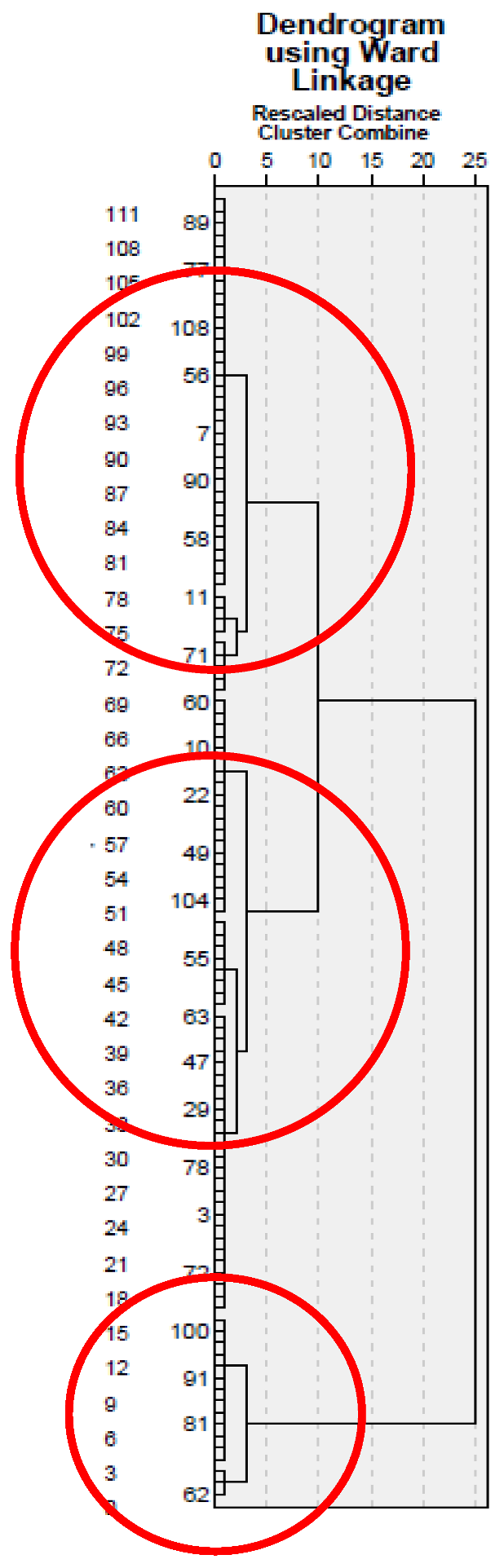
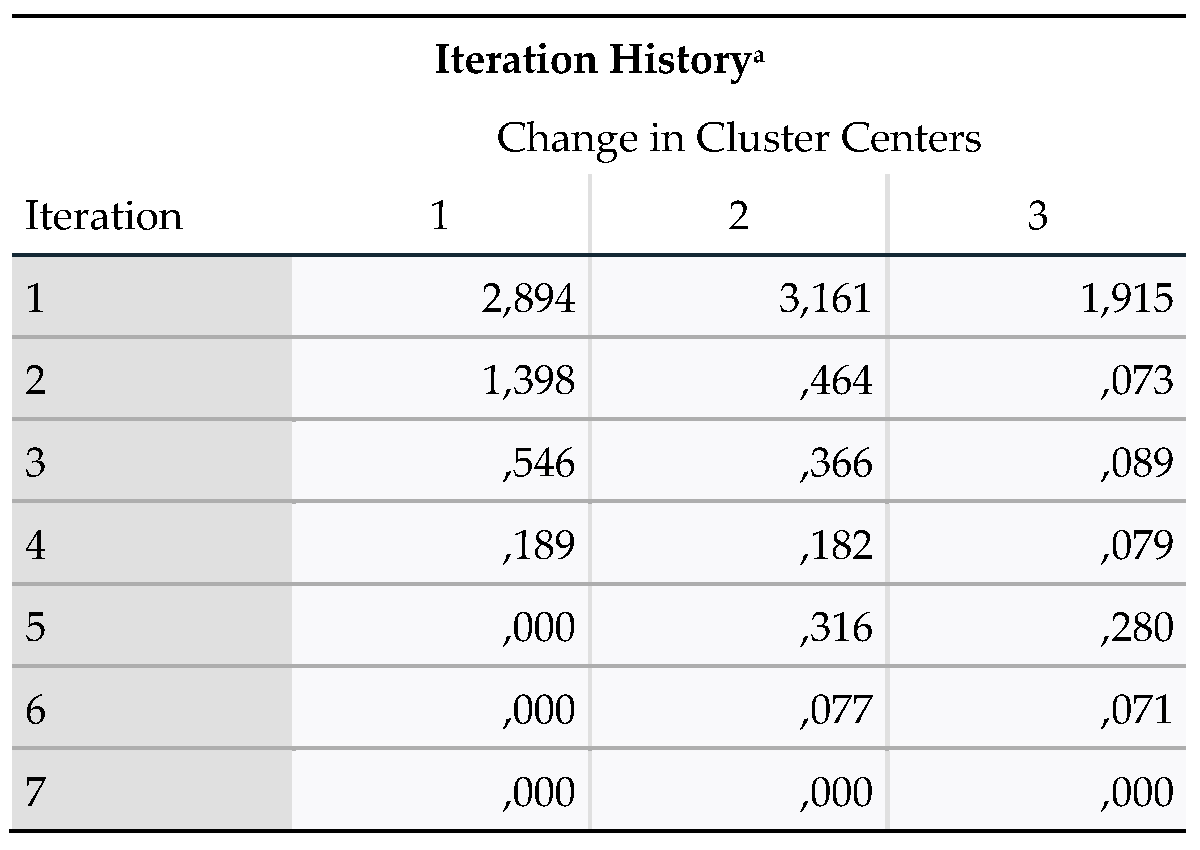
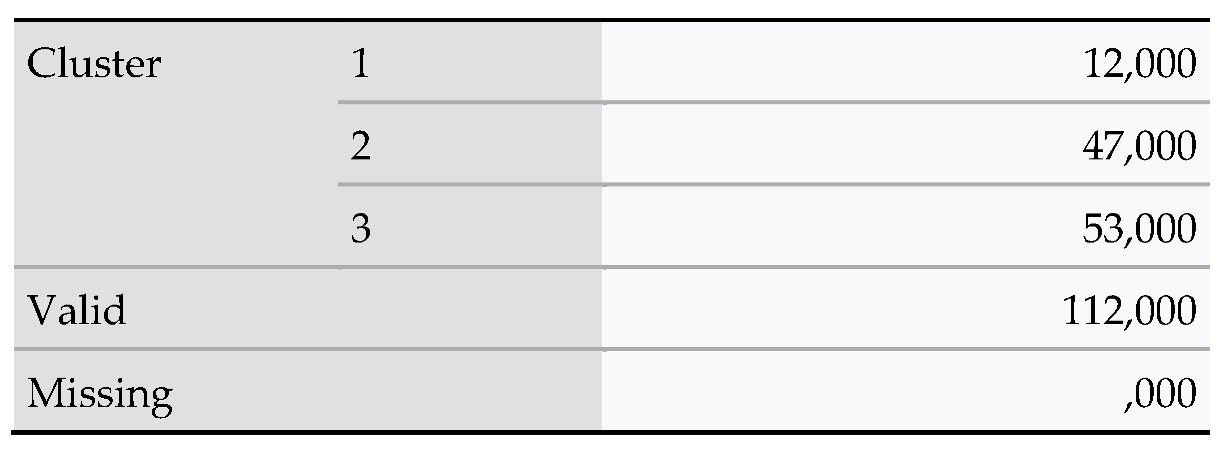
Ward’s hierarchical analysis indicated three clusters of hotels in terms of organizational readiness (Appendix A). This was confirmed by the non-hierarchical analysis with the k-Means algorithm after seven iterations (Appendix B), with cluster I including 12 hotel cases, cluster II 47 hotels, and cluster III 53 hotels (Appendix C). The ANOVA test shows that internal validity exists in the cluster analysis, with all indicators of organizational readiness being statistically significant (p=0.001) in differentiating the clusters (Table 2). The k-means of cluster weights (Table 2) shows that the group of hotels in Cluster III has formed a strong organizational culture (M=4.79), appropriate organizational climate (M=4.77), and has the required organizational capacity (M=4.53). For this reason, they can be classified as “Committed” to including local agri-food products in their menus. Hotels in Cluster II show moderate organizational culture (M=3.89), organizational climate (M=3.79), and organizational capacity (M=3.74) and can be classified as “Hesitant”. Finally, hotels in Cluster I have poor organizational climate (M=2.75), weak organizational culture (M=2.17), and lack of organizational capacity (M=2.58) and can therefore be classified as “Indifferent”.
4.2.1. Cluster Profiling with External Variables
Chi-Square Tests show statistically significant differences and correlations (p<0.05) in the organizational readiness of the hotels among the clusters for the following dimensions: hotel category, provision of meals (breakfast, lunch, and dinner), a la carte meals offered in a restaurant, and Chef’s locality, which suggests that the cluster discriminates based on these characteristics. This finding provides evidence for the external validity of the cluster analysis (Table 3).
More specifically, as can be observed in Table 3, the “Indifferent” hotels (cluster I) are 1* (33.3%) and 2* (58.3%) star hotels, they mainly provide only breakfast (92%) to their customers and although their chef is mainly local (58.3%) and a large part of their management (33.3%) are not aware of the chef’s origin. The “Hesitant” (cluster II) is 2* (45%) and 3* star hotels (41%), a few choose to offer their meals a la carte in a restaurant and their chef is mostly a person who stays in the area only during the hotel’s operating period (36%). Finally, the “Committed” hotels (cluster III) are mostly 3* (30%) and 4* (30%) star hotels, and 5* star category (11%), most of them choose a part from providing breakfast (100%) also lunch (66%) and dinner (77%) to their guests and offer their meals a la carte in a restaurant (68%), while their chef is mostly a local (53%) and only in a few of them the management team is unaware of his locality (8%).
The external validity test of the cluster analysis with One Way ANOVA, reveals a statistically significant difference between the clusters of hotels in terms of the correlation between organizational readiness for the inclusion of local agri-food products in their menus and perceived benefits, both by Wellch Test (p=0.001) and Post Hoc Test (Games-Howell) (p<0.05). The management of “Committed” hotels (Cluster III) perceive many benefits, those of “Hesitant” (Cluster II) perceive fewer, while “Indifferent” (Cluster I) find it difficult to identify any benefits from the integration of local products. Surprisingly, all three hotel clusters do not perceive the benefits of the integration of local products in their menus such as “Reduces menu prices” (M=1.33 to M=2.68) and “Reduces menu production costs” (M=1.50 to M=2.66) (Table 4).
One Way ANOVA analysis also reveals a statistically significant difference between clusters in terms of the association between organizational readiness and the intention of food service managers to integrate local agri-food products in their menus, both by Wellch’s Test (p=0.001) and Post Hoc Test (Games-Howell) (p=0.001). The intention coding was formulated with a value of 1: “I have no intention...”, 2: “Sometime in the future (after 5 years)”, 3: “In the next few years (2-5 years)” and 4: “Immediately (this year)” (Table 5).
The external validity of the cluster analysis is confirmed by the Chi-Square Test (p=0.001). It emerges that the intention of the “Committed” hotels (cluster III) is the immediate integration of local agri-food products in their menus (this year) (75%), of the “Hesitant” hotels (cluster II) within the next 2 to 5 years (49%) and the “Indifferent” hotels (cluster I) in the distant future (after 5 years) (41.7%) or not at all (41.7%) (Table 6).
5. Discussion and Conclusions
Hotels can be competitive when they respond to the increased demand for tourism experiences linked to the “taste of place” [12,14,32] and the strategy they implement is important for such a purpose [2,28]. Moreover, tourists’ stay can be strongly linked to food, since in hotels, tourists are usually in daily contact with local agri-food products [1,2,4,6,14,28] and when they return to their countries, they are likely to seek them out [4,45]. Therefore, enhancing the dynamic involvement of hotels in promoting gastronomy tourism can be beneficial for the destination [31].
From the study, three groups of hotels emerged, in terms of readiness for the integration of local agri-food products. More specifically, the “Committed” hotels with high organizational readiness, are 4* and 5*star hotels, that serve breakfast, lunch, and dinner in their a la carte restaurant and are interested in the localness of the chef they employ so they choose their chef to be local. Those with neutral organizational readiness, the “Hesitant”, are mainly mid-range 2* and 3* star hotels, all provide breakfast, and a significant number provide lunch and evening meals, with a few offering a la carte in their restaurants, and the chef they choose only stay in the area during hotel operation. Finally, the hotels that show the lowest organizational readiness, the “Indifferent” hotels, are in the 1* and 2* star categories, none of them serve lunch, while very few serve dinner meals in their restaurant and they do not care to know the locality of the chef they employ.
Contrary to the results provided by Bondzi-Simpson and Aye [2] in Ghana, this research demonstrates that organizational readiness to include local agri-food products is higher among high-star hotels. Torres [29] also in her research in Mexico concludes that high-end hotels are not interested in including local agri-food products in their menus, because the majority of customers are Americans, not domestic, who avoid local cuisine, holding “misguided” stereotypical perceptions of poor quality and health and safety problems of local products.
Four- and five-star hotels are luxurious and therefore have a wide selection of restaurants and bars for their guests to choose from. They also tend to serve long-stay guests [46], which suggests that local food/cuisine among other food selections is a particularly important alternative for them to offer. In addition, superior-class hotels tend to have better resources (financial, human, logistics) at their disposal [2,29], and host mainly foreign guests, who are not price sensitive and are really interested in having gastronomic experiences connected to their passion and personal satisfaction [47]. The food sector and more specifically the local food has an impact on the “cognitive and emotional pleasure consumers gain from savoring the multisensory, communal and cultural meanings of food experience” [48] (p. 392).
It is also noteworthy that the local products of the study area are internationally recognized as part of the Mediterranean Diet [10,14,49], which is known for promoting healthy eating [16,50,51,52], adherence to health and safety rules [53], and the expression of local production, cooking and eating way [54]. Their reputation resulted in foreign customers being particularly interested in them, seeking them out in high-quality hotels [14].
As Kalaitzidakis [14] argues, the policy of including local agri-food products in hotel menus is a strategic decision for high-class hotels and this could suggest a competitive advantage for these hotels. On the contrary, the policy of low-class hotels, as the research shows, is not favorable in this direction maybe due to business resources unavailability, so it is necessary to rethink the strategy they follow in order to become more competitive. As most of them don’t offer lunch and only a few provide dinner, locality can be integrated through agri-food products in breakfast, which has a significant nutritional relevance but most importantly, for the guest, it may have an additional importance because it is the first meal of the day and is often included in the daily rate. In addition, a gastronomic experience can be offered if the local agri-food products at breakfast are described on labels based on their origin and with various cultural elements (for example, reference to the name of the local producer or local farm producing the product, the nutritional characteristics, the date of production to indicate freshness, the variety or quality level of the product and the place of origin).
It is also important to emphasize the relation between high organizational readiness to the increased offer of a la carte meals in “Committed” hotel restaurants, and this may be due to the existence of a menu catalog, which enables the creative description of local products, enhancing their promotion to customers [14]. Menu local item descriptions in a la carte meals contribute both to guest interest and restaurant sales. Accurate descriptions of menu items are a critically important aspect of meeting guest expectations and promoting guest satisfaction [55]. The menu items’ description creates an image in the guests’ mind about the hotel as well as raises the perceptions of value [56]. It is also recommended by researchers that hotels operating with an a la carte menu system should include local agri-food products in their menu and serve it both visually and in writing [57]. On the contrary, a hotel that does not display a detailed description of the menu items on its restaurant menu represents a lost opportunity in a highly-competitive marketplace [58].
Finally, the results highlight a significant correlation between the organizational readiness of hotels and the localness of the chef in high-class hotels. This forms a strategic choice that may stem from the knowledge that a local chef prefers local products on menus by appreciating their value to guests [5,8,29]. Chefs are indeed revalorizing “local” in the cuisine and menus they serve, which is frequently equated with traceable and “healthy”, and they try to respond to the growing interest among hotel guests in associations with place and “terroir” in the food they consume. This is an indicator of their personal knowledge about food and cultural capital and is a more deliberate niche strategy [59]. In contrast, in hotels with low organizational readiness, preferring a local chef does not seem to be a strategic choice, as the management seems to be unaware of the chef’s origin. This is in line with Kalaitzidakis’s [14] research, which shows that local product integration must be supported by all hotel staff as it is the result of a team effort.
In terms of benefits, the results of the survey show that the “Committed” hotels perceive many benefits from the integration of local agri-food products in menus, the “Hesitant” hotels perceive fewer, while the “Indifferent” hotels perceive no benefits. A noteworthy finding is that no hotel group perceives that economic benefits arise from integration and more specifically as many studies claim either a reduction in menu production costs [1,2,28] or a reduction in menu prices [2]. This may be because the hotels have failed to develop strong links with the agri-food sector, thus preventing them to form synergies and networks to develop small supply chains [1]. The latter blunts the price gap in local agri-food products due to the limited involvement of intermediaries, as other studies have observed [1,3,5,29]. To address this problem, local actors have to play a coordinating role to mitigate the differences between stakeholders and strengthen the supply network [6]. Furthermore, certifying the quality of local agri-food products and joining certification networks can substantially help in this direction as well [32]. Such actions as mentioned by Karamustafa and Ülker [8] increase the benefits resulting from membership and positively influence the intentions of food service managers in hotels.
Finally, the intention of including local products in their menus for the “Committed” hotels is immediately (within the year), for the “Hesitant” hotels in the next few years (2-5 years), and for the “Indifferent” hotels sometime in the future (after 5 years) or not at all.
In conclusion, as several researchers have identified the menu as the most important marketing and sales tool for a hotel restaurant [60,61,62], in that it is an important factor for customer loyalty. Thus, the integration of local products in menu development and marketing is a critical aspect of product development by hotels and is essential to maintain their competitiveness [61,63]. Therefore, hotels should be ready to provide authentic food experiences, which is an upward trend [64] and is rewarded by the market, turning hotel dining venues into great ambassadors of local food traditions [65]. This will satisfy both their guests, who are increasingly seeking local food experiences [66] as well as hoteliers by increasing their customer base, and revenue and lengthening the season [67].
This research provides evidence to the scientific community in order to fill the gap in the existing literature with an in-depth understanding of the link between local agri-food products and hotels in a destination, through the contribution of organizational readiness. Furthermore, the results of the research highlight the importance of the relationship between organizational readiness, benefits, and intentions in all hotel categories.
From a practical point of view, the findings of the research contribute to the hotel industry by highlighting the critical role of the organizational readiness of hotels to include local agri-food products in their menus to be competitive and sustainable. This results in a rethinking on the part of hotels of the strategy they follow in terms of the staff they employ, the formulation of the marketing program they will follow regarding the image, vision, and mission of the hotel, the selection of the target market and more generally the customer attraction policy. For the latter, the promotion of hotel menus should be global but the food experience ought to remain local because gastronomy tourism is about tasting the quality and authenticity of the local agri-food product.
At the same time, the results can also be used by the relevant policymakers for the development of gastronomic tourism promotion strategies and through the hotel sector, considering the organizational readiness, the perceived benefits, and the intentions of the hotels for the formulation and development of incentives, customized educational programs, and synergies.
5.1. Limitations and Future Research
No study comes without limitations. One of the main limitations of this study is the focus on a specific region in Greece. Future research could investigate this issue including all of the Greek regions so that scholars and practitioners obtain an in-depth understanding of the link between the primary sector and tourism, assisting in the formulation of a national policy for a more effective link between the primary and the tertiary sector.
This study examined readiness, perceived benefits, and intentions from the hotel’s perspective. Future research could investigate the same issues but from the producer side, to facilitate the link between the primary sector and tourism. In addition, research into the opportunities and obstacles to the creation of synergies between the two sectors would provide a multi-faceted approach that would lead to useful conclusions for all parties.
Author Contributions
Conceptualization, C.V., and O.K.; methodology, C.V., and O.K; formal analysis, C.V., O.K., and N.T.S.; investigation, data curation, O.K.; writing—original draft preparation, O.K.; writing—review and editing, C.V and N.T.S.; supervision, C.V.; All authors have read and agreed to the published version of the manuscript.
Funding
This research received no external funding.
Conflicts of Interest
The authors declare no conflict of interest.
Appendix A: Ward Analysis Dendrogram in grouping hotels’ readiness to integrate local agri-food products in their menus
Appendix B: Iteration History
Appendix C: Number of Cases in each Cluster (k-means cluster analysis)
References
- Anderson, W. Linkages between tourism and agriculture for inclusive development in Tanzania: A value chain perspective. Journal of hospitality and tourism insights 2018, 1(2), 168-184. [CrossRef]
- Bondzi-Simpson, A.; Ayeh, J. Assessing hotel readiness to offer local cuisines: a clustering approach. International journal of contemporary hospitality management 2019, 31(2), 998-1020. [CrossRef]
- FAO. Report on a scoping mission to Samoa and Tonga agriculture and tourism linkages in Pacific island countries, 2012. Available online: https://www.fao.org/3/an476e/an476e.pdf (accessed 20.05.2020).
- Madaleno, A.; Eusebio, C.; Varum, C. The promotion of local agro-food products through tourism: a segmentation analysis. Current issues in tourism 2019, 22(6), 643-663. [CrossRef]
- Torres, R.; Momsen, J. Tourism and agriculture: new geographies of consumption, production, and rural restructuring; Routledge: Abington Oxon, 2011. ISBN: 978-0-415-58429-6.
- Vourdoubas, J. The Nexus Between Agriculture and Tourism on the Island of Crete. Greece Journal of Agricultural Studies 2020, 8(2), 393-406. [CrossRef]
- Caliskan, O.; Yilmaz, G. (2016). Gastronomy and tourism. In Global Issues and Trends in Tourism; Avcikurt, C., Dinu, M., Hacioglu, N. Efe, R., Soukan, A, Tetik, N., Eds.; St. Kliment Ohridski University Press: Sofia, 2016; pp. 33-50. ISBN 978-954-07-4138-3.
- Karamustafa, K.; Ülker, M. Chefs’ intentions to use local food: its relation with local food qualities and chefs’ local food familiarisations. Proceedings of 4th International Congress of Tourism & Management Researches, Gyraine, Northern Cyprus, 12-14 May 2017; 2017; 1; pp. 752-768, ISBN: 978-605-65701-6-2.
- UNWTO. Affiliate members global report; Global report on food tourism 2012, 4. [CrossRef]
- Ball, E. Greek Food After Mousaka: Cookbooks, ‘Local Culture, and the Cretan Diet. Journal of Modern Greek Studies 2003, 21(1), 1-36. [CrossRef]
- Damer, S. Legless in Sfakia: Drinking and Social Practice in Western Crete. Journal of Modern Greek Studies 1988, 6(2), 291-310. [CrossRef]
- Hillel, D.; Belhassen, Y.; Shani, A. What makes a gastronomic destination attractive? Evidence from the Israeli Negev. Tourism Management 2013, 36, 200-209. [CrossRef]
- Sims, R. Food, place, and authenticity: local food and the sustainable tourism experience. Journal of Sustainable Tourism 2009, 17(3), 321-336. [CrossRef]
- Kalaitzidakis, D. The pursuit of excellence in Food & Beverage through the use of local products in Grecotel Resorts Hotel in Rethymno. In Crete: Challenges and Opportunities in a 35-year journey. In Tourman 2018 Conference Proceedings, Rhodes, Greece, 25-28 October 2018; Christou, A., Alexandris, K., Fotiadis, A. Eds.; 2018; pp. 546-549. ISBN: 978-960-287-159-1.
- Ji, M.; Wong, I.; Eves, A.; Scarles, C. Food-related personality traits and the moderating role of novelty-seeking in food satisfaction and travel outcomes. Tourism Management 2016, 57, 387-396. [CrossRef]
- Giazitzi, K.; Palisidis, G.; Boskou, G.; Costarelli, V. Traditional Greek vs conventional hotel breakfast: a nutritional comparison. Nutrition & Food Science 2019, 50(4), 711-723. [CrossRef]
- Anser, M.; Yousaf, Z.; Usman, M.; Yousaf, S. Towards Strategic Business Performance of the hospitality sector: nexus of ICT, E-marketing, and organizational readiness. Sustainability 2020, 12(4), 1346. [CrossRef]
- Dwyer, L.; Cvelbar, L.; Edwards, D.; Mihalic, T. Fashioning a destination tourism future: the case of Slovenia. Tourism Management 2012, 33(2), 305-316. [CrossRef]
- Hinson, R.; Boateng, R. Perceived Benefits and Management Commitment to E-Business Usage in Selected Ghanaian Tourism Firms. The Electronic Journal on Information Systems in Developing Countries 2007, 31(1), 1-18. [CrossRef]
- Lehman, W.; Greener, J.; Simpson, D. Assessing organizational readiness for change. Journal of Substance Abuse Treatment 2002, 22(4), pp. 197-209. [CrossRef]
- Nilashi, M.; Samad, S.; Manaf, A.; Ahmadi, H.; Rashid, T.; Munshi, A.; . . Ahmed, O. Factors influencing medical tourism adoption in Malaysia: a DEMATEL-Fuzzy TOPSIS approach. Computers & Industrial Engineering 2019, 137, 106005. [CrossRef]
- Rousaki, B.; Alcott, P. Exploring the crisis readiness perceptions. Tourism and Hospitality Research 2006, 7(1), 27-38. [CrossRef]
- Hall, G.; Hord, S. Implementing Change: Patterns, Principles, and Potholes, 4th Ed.; Pierson’s Publications: Upper Saddle River, NJ, 2015.
- Arica, R.; Çalışkan, C.; & Kodal, S. Organizational change and sectoral transformation: tourism perspective. In Current Debates in Tourism & Development Studies, 1st ed.; S.Dilek, S., Dursun, G., Eds.; London: Ijopec Publication, 2018, Vol. 17, pp. 13-30. ISBN: 978-1-912503-29-2.
- Georgopoulos, A. Human Factors and Organizational Conflict Management in Reorganization. In Reorganization and change management in business; Kallipos, Open academic publications: Athens, Greece, 2015; pp. 171-197. http://hdl.handle.net/11419/1647.
- Laloumis, D. Tourism Business Management; Kallipos, Open academic publications: Athens, Greece, 2015. ISBN: 978-960-603-007-9. http://hdl.handle.net/11419/5283.
- Laloumis, D. (2015). Human Resources Management in Tourism Enterprises; Kallipos, Open academic publications: Athens, Greece, 2015. ISBN: 978-960-603-008-6. http://hdl.handle.net/11419/5295.
- Thomas-Francois, K; Von Massow, M.; Joppe, M. Strengthening farmer-hotel supply chain relationships: a service management approach. Tourism planning & development 2016, 14(2), 198-219. [CrossRef]
- Torres, R. Linkages Between Tourism and Agriculture in Mexico. Annals of Tourism Research 2003, 30(3), 546-566. [CrossRef]
- UNWTO. Guidelines for the Development of Gastronomy Tourism; UNWTO & Basque Culinary Center: 2019. ISBN: 978-92-844-2094-0. https://www.e-unwto.org/doi/book/10.18111/9789284420957 ISBN: 978-92-844-2094-0.
- Gordin, V.; Trabskaya, J.; Zelenskaya, E. The role of hotel restaurants in gastronomic place branding. International Journal of culture, tourism and hospitality research 2016, 10(1), pp. 81-90. [CrossRef]
- Vassiliou, M.; Manitsa, K.; Tsakopoulou, K. Gastronomic tourism: Greek flavors and local development; Theophrastos Digital Library: Aristotle University of Thessaloniki, Department of Geology, 2015.
- Enterprise Greece. Region of Eastern Macedonia-Thrace Investment Profile, 2017. Available online: https://www.enterprisegreece.gov.gr/images/public/synergassia/Synergasia_2017_Profile_Eastern_Macedonia-Thrace_final.pdf (accessed 07.01.2021).
- Hellenic Chamber of Hotels. Hotel Potential of the Region of Eastern Macedonia and Thrace, 2019. Available online: https://www.grhotels.gr/wp-content/uploads/2020/02/2019-Campings_regions.pdf (accessed 09.10.2020).
- Pavlidis, G.; Markantonatou, S. Gastronomic tourism in Greece and beyond a thorough review. International Journal of Gastronomy and Food Science 2020, 21, 100229. [CrossRef]
- REMTH. Regional Operational Programme of Eastern Macedonia - Thrace 2014-2020, Special Service for the Management of OP REMTH. Available online: https://www.eydamth.gr/index.php/extras/to-programma (accessed 14.07.2020).
- REMTH. Strategic and Operational Plan for Tourism Development of the Region of EMTH, Special Management Service of the REMTH Regional Development Programme. Available online: https://www.eydamth.gr/lib/articles/newsite/ArticleID_657/sxedio_tourist_anapt_AMTH.pdf (accessed 18.10.2020).
- Demofelia of Kavala. Communication Policy - Tourism Promotion Plan of the Municipality of Kavala, 2019. Available online: http://www.kavalagreece.gr/wp-content/uploads/2018/11/parartima-5-sxedio-draseon-touristikis-probolis.pdf (accessed 05.01.2021).
- Hellenic Chamber of Hotels. Detailed Hotel Search. Available online: https://services.grhotels.gr/el/searchaccomodation/ (accessed 09.10.2020).
- Bryman, A. Social Research Methods, 5th ed.; Oxford University Press, 2016.
- Zafeiropoulos, K. How is a scientific paper done? Scientific research and paper writing, 2nd ed.; Kritiki S.A.: Athens, 2015. ISBN 978-960-586-077-6.
- Christodoulides, G.; Michaelidou, N.; Siamagka, T. A typology of internet users based on comparative affective states: evidence from eight countries. European Journal of Marketing 2013, 47(1/2), 153-173. [CrossRef]
- Kyrkos, E. Cluster analysis. In Business Intelligence and Mining; Kallipos, Open academic publications: Athens, Greece, 2015; pp. 261-281. http://hdl.handle.net/11419/1238.
- Petridis, D. Cluster analysis. In Analysis of multivariate techniques; Kallipos, Open academic publications: Athens, Greece, 2015; pp. 158-193. http://hdl.handle.net/11419/2126.
- Adongo, C.; Anuga, S.; Daynour, F. Will they tell others to taste? International tourists’ experience of Ghanaian cuisines. Tourism Management Perspectives 2015, 15, 57-64. [CrossRef]
- Seyitoglu, F. Components of the menu planning process: the case of five-star hotels in Antalya. British Food Journal 2017, 119 (7), 1562-1577. [CrossRef]
- Iloranta, R. Luxury tourism – a review of the literature. European Journal of Tourism Research 2021, 30, 3007. [CrossRef]
- Batat, W.; Peter, P.C.; Moscato, E.M.; Castro, I.A.; Chan, S.; Chugani, S.; Muldrow, A. The experiential pleasure of food: A savoring journey to food well-being. Journal of Business Research 2019, 100, 392-399. [CrossRef]
- Richards, G. Gastronomy: an essential ingredient in tourism production and consumption. In Tourism and Gastronomy; Hjalager, A.M., Richards, G, Eds.; Routledge: London, NY, 2002; pp. 3-20. ISBN 0-203-27406-7.
- Kafatos, A.; Verhagen, H.; Moschandreas, J.; Apostolaki, I.; Van Westerop, J. Mediteranian diet of Crete: foods and nutrient content. Journal of the American Dietetic Association 2000, 100(12), 1487-1493. [CrossRef]
- Vasilopoulou, E.; Trichopoulou, A. Green pies: the flavonoid-rich Greek snack. Food Chemistry 2011, 126, 855-858. [CrossRef]
- Zoidou, E.; Melliou, E.; Gikas, E.; Tsarbopoulos, A.; Magiatis, P.; Skaltsounis, A. Identification of Throuba Thassos, a Traditional Greek Table Olive Variety, as a Nutritional Rich Source of Oleuropein. Journal of Agricultural and Food Chemistry 2010, 58(1), 46-50. [CrossRef]
- Panagou, E.; Nychas, G.; Sofos, J. Types of traditional Greek foods and their safety. Food Control 2013, 29(1), 32-41. [CrossRef]
- UNESCO. Mediterranean diet. Cyprus, Croatia, Spain, Greece, Italy, Morocco and Portugal. Inscribed in 2013 (8. COM) on the Representative List of the Intangible Cultural Heritage of Humanity. Available online: https://ich.unesco.org/en/RL/mediterranean-diet-00884 (accessed 18.10.2020).
- Reynolds, D.; Merritt, E.A.; Pinckney, S. Understanding menu psychology: An empirical investigation of menu design and customer response. International Journal of Hospitality & Tourism Administration 2005, 6(1), 1–9. [CrossRef]
- Shoemaker, S.; Dawson, M.; Johnson, W. How to increase menu prices without alienating your customers. International Journal of Contemporary Hospitality Management 2005, 17(7), 553-568. [CrossRef]
- Ginigen, D.; Aydın, B.; & Güçlü, C. Local food availability in menus of hotels: The case of Batman, Turkey. Journal of Mediterranean Tourism Research 2022, 1(2), 81-99. https://www.doi.org/10.5038/2770-7555.1.2.1007.
- Baiomy, A.E.; Jones, E.; Goode, M.H. The influence of menu design, menu item descriptions, and menu variety on customer satisfaction. A case study of Egypt. Tourism and Hospitality Research 2019, 19(2), 213–224. [CrossRef]
- Duram, L.A.; Cawley, M. Irish Chefs and Restaurants in the Geography of “Local” Food Value Chains. The Open Geography Journal 2012, 5, 16-25. doi: 10.2174/1874923201205010016.
- Davis, B.; Lockwood, A.; Pantelidis, I.; Alcott, P. Food and Beverage Management, 4th ed.; Butterworth-Heinemann: Oxford, UK, 2008. ISBN 13: 978-0-7506-6730-2.
- Frei, B.T. The menu is a money maker. Restaurants and Institutions 1995, 105(6), 144-145.
- Mills, J.E.; Thomas, L. Assessing Customer Expectations of Information Provided On Restaurant Menus: A Confirmatory Factor Analysis Approach. Journal of Hospitality & Tourism Research 2008, 32(1), 62 - 88. [CrossRef]
- McVety, P.J.; Ware, B.J.; Ware, C.L. Fundamentals of menu planning, 3rd ed.; John Wiley & Sons, New Jersey, USA, 2008. ISBN: 978-0-470-07267-7.
- WFTA. State of the Food Travel Industry Report. World Food Travel Association: 2020. Available online: https://www.researchgate.net/profile/Roberta-Garibaldi-2/publication/343255792_2020_State_of_the_Food_Travel_Industry_Report/links/5f20037d299bf1720d6ac9c3/2020-State-of-the-Food-Travel-Industry-Report.pdf (accessed 14.07.2021).
- UNWTO. Annual Report; World Tourism Organization, 2017. ISBN: 978-92-844-1980-7.
- Yeoman, I. Tomorrow’s Tourist: Scenarios & Trends; Elsevier: Oxford, UK, 2008. ISBN 978-0-08-045339-2.
- SETE. Gastronomy in the Marketing of Greek Tourism. Association of Greek Tourism Enterprises, 2009. Available online: https://sete.gr/_fileuploads/gastro_files/100222gastronomy_f.pdf (accessed 20.05.2020).
Disclaimer/Publisher’s Note: The statements, opinions, and data contained in all publications are solely those of the individual author(s) and contributor(s) and not of MDPI and/or the editor(s). MDPI and/or the editor(s) disclaim responsibility for any injury to people or property resulting from any ideas, methods, instructions, or products referred to in the content. |

Table 1.
Hotels’ Profile (N=112).
| Ν | % | ||
| Area | Thassos | 87 | 78 |
| Kavala | 25 | 22 | |
| Age of the hotel | 32+ years old | 17 | 15 |
| 16 -31 years old | 67 | 60 | |
| <15 years old | 28 | 25 | |
| Hotel category (stars) | 1* | 9 | 8 |
| 2* | 39 | 35 | |
| 3* | 36 | 32 | |
| 4* | 19 | 17 | |
| 5* | 9 | 8 | |
| Hotel capacity (rooms) | 1-20 rooms (very small) | 28 | 25 |
| 21-50 (small) | 58 | 52 | |
| 51-100 (medium size) | 17 | 15 | |
| ≥101 (large) | 9 | 8 | |
| Hotel opening period | Seasonal | 89 | 79,5 |
| All year round | 23 | 20,5 | |
| Nationality of customers | Foreigners | 95 | 85 |
| Greeks | 17 | 15 | |
| Meals | Breakfast | 111 | 99 |
| Lunch | 58 | 52 | |
| Dinner | 74 | 66 | |
| Meal Service Mode | All-inclusive | 8 | 7 |
| Buffet | 88 | 79 | |
| a la carte | 69 | 62 | |
| The food service manager at the hotel | Owner/Director | 92 | 82 |
| Chief | 14 | 12 | |
| F& B Manager | 4 | 4 | |
| Procurement Officer | 2 | 2 | |
| The locality of the Chef of the hotel | Local | 50 | 45 |
| Non-permanent resident | 32 | 29 | |
| Permanent resident | 15 | 13 | |
| Unknown locality | 15 | 13 |
Table 2.
Final Clusters Center (k-means cluster analysis).
| Hotel readiness indicators * | Cluster Ι Indifferent (Ν=12) |
Cluster ΙΙ Hesitant (Ν=47) |
Cluster ΙΙΙ Committed (Ν=53) |
ANOVA | ||||
|---|---|---|---|---|---|---|---|---|
| Mean | SD** | Mean | SD | Mean | SD | F | Sig | |
| Organisational Culture | ||||||||
| Satisfactorily serves the hotel’s target clientele | 2,17 | 0,72 | 3,87 | 0,54 | 4,79 | 0,41 | 143,33 | 0,001 |
| Fits the hotel’s image | 2,17 | 0,72 | 3,89 | 0,38 | 4,77 | 0,42 | 180,24 | 0,001 |
| It coincides with the hotel’s vision and mission | 2,08 | 0,67 | 3,83 | 0,56 | 4,75 | 0,48 | 130,16 | 0,001 |
| It fits with the marketing strategy of the hotel | 2,00 | 0,60 | 3,85 | 0,55 | 4,70 | 0,58 | 115,67 | 0,001 |
| Organizational Climate | ||||||||
| Food service managers can persuade staff to use and promote them | 2,75 | 0,87 | 3,79 | 0,83 | 4,77 | 0,42 | 55,50 | 0,001 |
| The staff is willing to learn how to use them in the menu recipes | 2,75 | 0,75 | 3,74 | 0,44 | 4,62 | 0,53 | 77,30 | 0,001 |
| The staff is willing to show them from the menu list | 2,67 | 0,78 | 3,64 | 0,53 | 4,60 | 0,53 | 74,58 | 0,001 |
| Organizational Capacity | ||||||||
| The appropriate infrastructure and equipment | 2,58 | 1,00 | 3,74 | 0,61 | 4,49 | 0,67 | 42,47 | 0,001 |
| The necessary networks of partners and suppliers | 2,42 | 0,67 | 3,60 | 0,77 | 4,43 | 0,57 | 50,61 | 0,001 |
| The necessary human resources | 2,00 | 0,74 | 3,34 | 0,70 | 4,53 | 0,61 | 87,56 | 0,001 |
| The financial resources required | 1,58 | 0,67 | 3,23 | 0,76 | 4,19 | 0,74 | 66,49 | 0,001 |
| Notes: *Measured on a 5-point scale (1) Strongly disagree - (5) Strongly agree; **Standard Deviation | ||||||||
Table 3.
Statistically significant dimensions of hotels’ profile in grouping their readiness (Chi-Square Test).
Table 3.
Statistically significant dimensions of hotels’ profile in grouping their readiness (Chi-Square Test).
| Variable | Cluster membership | chi-square test | ||
|---|---|---|---|---|
| I (%) | II (%) | III (%) | ||
| Hotel category (stars) | ||||
| 1* | 33,3 | 2 | 8 | p=0.001 |
| 2* | 58,3 | 45 | 21 | |
| 3* | 8,3 | 41 | 30 | |
| 4* | - | 6 | 30 | |
| 5* | - | 6 | 11 | |
| Breakfast | 92 | 100 | 100 | p=0.015 |
| Lunch | - | 53 | 66 | p=0.001 |
| Dinner | 17 | 62 | 77 | p=0.001 |
| Offer a la carte meals in a restaurant | 25 | 36 | 68 | p=0.020 |
| The locality of the Chef | ||||
| Local | 58,3 | 32 | 53 | p=0.039 |
| Permanent resident | 8,3 | 17 | 11 | |
| Non-Permanent resident | - | 36 | 28 | |
| Unknown Locality | 33,3 | 15 | 8 | |
Table 4.
Hotels’ perceived benefits among clusters.
| Perceived benefits indicators * | Cluster | N | Mean | SD** | Wellch’s F | Post hoc test (Games-Howell) |
||
|---|---|---|---|---|---|---|---|---|
| F | Sig. | Clusters | Sig. | |||||
| Enhances the nutritional value of menus | I | 12 | 3,33 | 0,65 | 36,69 | 0,001 | I & II | 0.015 |
| II | 47 | 4,00 | 0,66 | I & III | 0.001 | |||
| III | 53 | 4,72 | 0,46 | II & III | 0.001 | |||
| Contributes to the positive image and prestige of the hotel | I | 12 | 3,00 | 1,13 | 29,74 | 0,001 | I & II | 0.040 |
| II | 47 | 3,94 | 0,57 | I & III | 0.001 | |||
| III | 53 | 4,66 | 0,52 | II & III | 0.001 | |||
| Shapes culinary experiences for customers | I | 12 | 3,00 | 0,85 | 27,55 | 0,001 | I & II | 0.003 |
| II | 47 | 4,09 | 0,65 | I & III | 0.001 | |||
| III | 53 | 4,64 | 0,48 | II & III | 0.001 | |||
| It gives staff a sense of pride in their “local” identity | I | 12 | 2,75 | 1,06 | 24,99 | 0,001 | I & II | 0.013 |
| II | 47 | 3,83 | 0,84 | I & III | 0.001 | |||
| III | 53 | 4,60 | 0,66 | II & III | 0.001 | |||
| Improves the demand (attractiveness) for menus | I | 12 | 2,83 | 0,94 | 32,18 | 0,001 | I & II | 0.016 |
| II | 47 | 3,77 | 0,79 | I & III | 0.001 | |||
| III | 53 | 4,60 | 0,57 | II & III | 0.001 | |||
| Offers the hotel a competitive advantage | I | 12 | 2,92 | 0,67 | 30,82 | 0,001 | I & II | 0.004 |
| II | 47 | 3,77 | 0,84 | I & III | 0.001 | |||
| III | 53 | 4,51 | 0,70 | II & III | 0.001 | |||
| Helps to increase the repeatability of hotel guests (Repeaters) | I | 12 | 2,42 | 0,80 | 18,96 | 0,001 | I & II | 0.002 |
| II | 47 | 3,49 | 0,78 | I & III | 0.001 | |||
| III | 53 | 4,06 | 0,99 | II & III | 0.005 | |||
| Facilitates access to raw materials for menus (short transport distance) | I | 12 | 1,92 | 1,08 | 21,76 | 0,001 | I & II | 0.002 |
| II | 47 | 3,32 | 0,94 | I & III | 0.001 | |||
| III | 53 | 3,96 | 0,78 | II & III | 0.001 | |||
| Reduces the prices of menus | I | 12 | 1,33 | 0,65 | 17,93 | 0,001 | I & II | 0.001 |
| II | 47 | 2,40 | 0,85 | I & III | 0.001 | |||
| III | 53 | 2,68 | 0,89 | II & III | 0.261 | |||
| Reduces the cost of menu production | I | 12 | 1,50 | 0,91 | 7,93 | 0,002 | I & II | 0.010 |
| II | 47 | 2,49 | 0,93 | I & III | 0.003 | |||
| III | 53 | 2,66 | 0,90 | II & III | 0.621 | |||
| Notes: *Measured on a 5-point scale (1) Strongly disagree - (5) Strongly agree; **Standard Deviation | ||||||||
Table 5.
Hotels’ intention to include local agri-food products in their menus among clusters (Wellch’s F & Post Hoc Test).
Table 5.
Hotels’ intention to include local agri-food products in their menus among clusters (Wellch’s F & Post Hoc Test).
| Variable* Intention |
Cluster | N | Mean | SD** | Wellch’s F | Post Hoc Test (Games-Howell) | ||
|---|---|---|---|---|---|---|---|---|
| F | Sig. | Clusters | Sig. | |||||
| The hotel’s intention to include (more) local products on the menus | I | 12 | 1,75 | 0,75 | 46,55 | 0,001 | I & II | 0.001 |
| II | 47 | 3,06 | 0,75 | I & III | 0.001 | |||
| III | 53 | 3,75 | 0,43 | II & III | 0.001 | |||
| Notes: *Measured with (1) I have no intention of...; (2) Sometime in the future (after 5 years); (3) In the coming years (2-5 years); (4) Immediately (this year); **Standard Deviation | ||||||||
Table 6.
Hotels’ intention to include local agri-food products in their menus among clusters (Chi-Square Test).
Table 6.
Hotels’ intention to include local agri-food products in their menus among clusters (Chi-Square Test).
| Hotel intention | Cluster membership | chi-square test | ||
|---|---|---|---|---|
| I (%) | II (%) | III (%) | ||
| Immediately (this year) | 32 | 75 | p=0.001 | |
| In the coming years (2-5 years) | 16,7 | 49 | 25 | |
| Sometime in the future (after 5 years) | 41,7 | 13 | ||
| I have no intention of... | 41,7 | 6 | ||
Disclaimer/Publisher’s Note: The statements, opinions and data contained in all publications are solely those of the individual author(s) and contributor(s) and not of MDPI and/or the editor(s). MDPI and/or the editor(s) disclaim responsibility for any injury to people or property resulting from any ideas, methods, instructions or products referred to in the content. |
© 2023 by the authors. Licensee MDPI, Basel, Switzerland. This article is an open access article distributed under the terms and conditions of the Creative Commons Attribution (CC BY) license (http://creativecommons.org/licenses/by/4.0/).
Copyright: This open access article is published under a Creative Commons CC BY 4.0 license, which permit the free download, distribution, and reuse, provided that the author and preprint are cited in any reuse.