

Submitted:
22 October 2023
Posted:
23 October 2023
You are already at the latest version
Abstract
The study of coordination practices in health policy and, especially in emergency situations is a central aspect. The COVID-19 pandemic has highlighted the need for further research on such practices, especially those that are deployed in complex and unforeseen situations to respond quickly while minimising errors. These dialogic coordination practices (DP) have been identified through case studies but have not been validated. The purpose of this study is to develop and validate a DP questionnaire for healthcare teams. The development of the items was based on a literature review and the content validation was carried out by means of a Delphi study. A total of 10 experts assessed the clarity and appropriateness of the items and their corresponding measurement scales. Consensus was reached after the second round, with a percentage of agreement greater than or equal to 90% for all items. The validation of these items constitutes a methodological innovation that responds to the call in the literature to open up new avenues for comparative studies, the possibility of generalising the findings obtained and the possibility of bringing together different approaches to the problem of coordination, key in health policy.
Keywords:
Dialogic Coordination Practices
; Relational Coordination
; health work teams
; content validation
; health policy
; fast-response organisations
; communication networks
; Delphi Method
1. Introduction
Work coordination has been addressed from different disciplines and perspectives in the literature, and is considered a central aspect of organisational management and crisis and disaster management [1,2]. The more traditional approaches emerged in the area of organisational theory and were based on the assumption that the environment is predictable, and that coordination should take place through stable, pre-designed coordination structures and mechanisms. Changes in the nature of work, the proliferation of Fast-Response Organisations (FROs) and the extraordinary importance of coordination in extreme and emergency situations prompted researchers to adopt a new approach based on on-site observation of coordination practices in different contexts and organisations [3,4]. This approach views coordination as an emergent, contextual and situated phenomenon in which coordination mechanisms are the result of “dynamic social practices” that are continuously constructed and reconstructed rather than stable entities [5] (p. 907). One of the definitions of coordination that best represents this approach and is most widely accepted among researchers is provided by Faraj and Xiao [6] (p. 1157) as the “temporally unfolding and contextualised process of input regulation and interaction articulation to realise a collective performance”.
However, the obstacles identified by Okhuysen and Bechky [4] to developing a unified theoretical framework on coordination still persist: (a) different approaches to the problem of coordination depending on the disciplinary field from which the research is approached; (b) difficulty in comparing and generalising empirical findings obtained in different case studies due to their rootedness in particular contexts and the great terminological diversity used by researchers to describe similar mechanisms, practices, and processes; and (c) lack of explanation of how coordination occurs in real time.
Numerous studies are making important advances on how coordination occurs in groups and organisations facing legislative and structural changes [5], frequent surprises [7], uncertainty [8], new tasks and problem-solving [9,10], extreme situations, emergency and disaster management [1,11,12,13,14,15,16,17,18,19,20], and FRO coordination [6,21]. However, no progress has yet been made in overcoming the remaining obstacles. The great diversity of terminology, the different approaches to the problem of coordination acting autonomously, and the virtual absence of comparative studies and generalisable findings make the goal of obtaining a unified theoretical framework a long way off.
The COVID-19 pandemic has highlighted these shortcomings. According to [22], although coordination is recognised as a central aspect in the literature on health system resilience and emergency management, there is very little scientific evidence on the subject. At the intra-organisational and team level this also occurs [23,24], but there is clear evidence of the critical role of dialogue in the process of knowledge transformation and integration, the important role of informal coordination practices in contexts of high uncertainty, and the alternation between formal and informal coordination practices in FRO [5,6,8,10,25].
Although the pandemic has come as a shock to all levels and sectors of activity, the health sector has been the most affected due to the huge increase in demand for its services, the scarcity of resources and scientific evidence, and the threat to the health of workers themselves. This scenario is a hyperbole of the extreme situations in which the problem of coordination in healthcare organisations has been studied. However, studies on the response capacity of hospitals to the pandemic are anecdotal [24].
Two important practice-based approaches to the coordination problem are Relational Coordination (RC) and Dialogical Coordination Practices (DP).
RC is defined as “a mutually reinforcing process of communicating and relating for the purpose of task integration” [26] (p. 301). Today, RC is both a theory and a set of analytical methods aimed at understanding the relational dynamics of work coordination, both within and between organisations [27] (p. 16). This theory has been applied and empirically validated across different sectors of activity and geographical areas around the world, especially in the healthcare sector [28]. It argues that when coordination takes place through frequent, quality, problem-oriented communication and is based on mutually respectful relationships with shared goals and knowledge, organisations are better able to achieve the desired results [27,29]. RC influences the quality of teamwork [30,31] and fosters organisational flexibility to adapt to changing, highly uncertain and interdependent environments [32]. In this regard, recommendations for US health service managers to increase the resilience of health care facilities during and after the COVID-19 pandemic are summarised as improving RC [33] (p.9).
DPs fall under the umbrella of informal coordination practices and were identified in the influential work of Faraj and Xiao in a trauma hospital [6]. The authors identified two types of practices: expertise practices and DPs. Unlike the former, DPs occur in unforeseen, complex and urgent situations that require a rapid response and in which the usual procedures (manuals, protocols, routines) are not sufficient or adequate to resolve the situation. DPs are reactions and decisions made on the fly in response to the evolution of problematic, unforeseen and complex situations that challenge the mental models of the work team and whose resolution requires dialogue between different specialities and/or professional groups. Four types of DPs were identified: epistemic contestation, joint sensemaking, cross-boundary intervention and protocol breaking. The management of the COVID-19 emergency led to an intensification of DP deployment [34] (p.166).
This paper is aimed to assess the impact of the COVID-19 pandemic on the coordination of teamwork in a general hospital in Spain. One of the proposals is that RC and DPs are related and mutually reinforcing.
This proposal has not yet been explored in the literature. At the theoretical level, several authors have suggested links between RC and DPs. In [35] and [36] it is suggested that RC is an inducer of DPs in organisations.
Furthermore, [10] shows how DPs are used to “transcending” knowledge gaps in novel and urgent situations between different communities of practice and how these practices condition the way they communicate and relate to each other in the future. However, the relationship between RC and DPs needs to be further investigated at both theoretical and empirical levels. To this end, it is necessary to develop a set of DP metrics that are compatible with existing RC metrics in order to propose and validate an improved RC model that takes into account the influence of the DPs.
Based on the above, this work aims to develop and validate a set of items on the four types of DPs, previously identified in the literature, through which it will be possible to identify the use (deployment) and frequency of such practices in hospital work teams in complex and unforeseen situations where the trajectory of events is not as expected, and which require a rapid response.
This work has several implications. On the one hand, it will help health care FROs and their different professional groups to highlight the importance of dialogue and informal coordination practices in contexts of high uncertainty. On the other hand, it provides researchers in the field with a new tool that opens the door to comparative studies, the generalisation of findings obtained in case studies and the possibility of establishing relationships between different ways of approaching the problem of coordination.
The remainder of this paper is structured as follows: section 2 describes the Delphi methodology and the phases followed to validate the questionnaire developed around the DPs. Section 3 details the results obtained in the different rounds of expert consultation and their corresponding discussion. Finally, the most relevant conclusions reached in this study are presented.
2. Materials and Methods
The Delphi methodology is a widely used method in the context of research, especially in the field of Health and Social Sciences [37,38,39]. Its usefulness for the validation of questionnaires has been demonstrated in many studies[40,41,42]. Through Delphi, valuable information on the clarity and relevance of the items included in the questionnaire can be obtained from the opinion of several experts on the topic being evaluated [42,44]. The Delphi technique is an iterative, controlled and anonymous expert consultation process with statistical feedback on the results obtained in successive rounds [38].
The process of preparing and conducting a Delphi study involves several steps that are usually grouped into different stages. The number and naming of these stages vary in the literature. However, the step sequence is very similar, although grouped in different ways. In this paper, we have grouped the steps followed in the study into three phases, following [43,45]: preliminary, exploratory and final.
Preliminary phase: the following steps were undertaken during this phase:
- -
- Configuration of the coordinating group: the coordinating group is made up of the 4 authors of this study.
- -
- Literature review: an exhaustive search for papers related to the DPs identified by Faraj and Xiao [6] was carried out through direct observation and interviews. Although these practices have been widely cited in the literature on coordination, especially in FRO and emergency management, [24,46,47] among others, there are hardly any replications of the empirical study conducted by these authors, nor have metrics been developed to measure the presence of DPs in the healthcare context. The review of the literature made it possible to recognise the particularities of dialogic coordination in the healthcare setting and, in this way, to formulate a group of items adapted to this scenario in relation to the DPs.
- -
- Development and review of the DP questionnaire to be validated. The coordinating team prepared the questionnaire, and after its revision, 8 items were included, 2 for each DP. These items were submitted for evaluation through the Delphi during the second half of July 2022.
- -
- Preparation of the questionnaire for the first round of the Delphi. In this questionnaire, the experts were asked for their opinion on the clarity and appropriateness of the items related to each DP and their corresponding measurement scales.
- -
- Selection of the panel of experts: the selection of experts was one of the key aspects for the validity of the Delphi results. In this sense, the criteria for selecting experts and the number of experts selected depended on the subject matter to be addressed and the objective to be achieved in the application of the Delphi method [38,48,49]. In this case, the problem to be addressed and the scope of application were very specific. Two categories of experts from the health and academic fields were defined. In the healthcare field, experts were selected according to these criteria: 1. they are representative of the target population for the final questionnaire and 2. they met the following criteria: healthcare personnel with extensive professional experience who worked on the front line during the COVID-19 pandemic. In the academic field, experts whose research activity is related in one way or another to coordination and teamwork and/or hospital care were selected.
Given the specificity of the object of study, a small panel of experts was chosen. The coordinating team invited 12 potential experts who met the selection criteria. In the end, 10 of them agreed to participate in the study.
Table 1 shows the details of the experts who finally made up the panel.
- -
- Pre-check of the questionnaire of the 1st round of the Delphi-DP: consultation with two experts not included in the panel of experts, one with a health profile and the other with an academic profile was done. In this pre-check, some aspects were detected that could be improved in relation to the measurement scales and terminology commonly used in the health sector. The suggestions were analysed and approved by the coordinating team.
- -
- Preparation of the final questionnaire for the 1st round of the Delphi. The above suggestions were incorporated into the questionnaire that was finally sent to the panel of experts. Before proceeding with the submission, the coordinating team made a video describing the purpose and schedule of the Delphi process (https://www.youtube.com/watch?v=OKX08fvG_64).
Exploratory phase: during this phase, two rounds of expert consultation were carried out to reach consensus on the appropriateness and validity of the DP items and their measurement scale.
- -
- First round: the questionnaire proposed by the coordinating team was sent out for the 10 experts to give their opinion on the appropriateness of the items chosen for the measurement of the DPs. The questionnaire was divided into four blocks corresponding to the four DPs. In each block, the expert is asked to indicate whether they believe that these questions correctly measure the aspects they are intended to measure. If they consider the question to be inadequate, they are asked to propose an alternative question and/or make any suggestions or appreciations they may have in this respect. At the end of the questionnaire, the expert was asked whether, based on their professional experience, they could identify other DPs not covered by the study. This first round was carried out during the week of 18-24 July 2022.
- -
- Second round: once the responses had been processed and the overall results of the first round had been analysed, the coordinating team prepared a report with the results obtained in the first round. After analysing the comments and suggestions made by the experts, the questionnaire to be sent out in the second round was drafted, including information on the degree of agreement on each question and most of the suggestions that revolved around the terminology used. This second round was carried out during the week of 25-31 July 2022.
In this second round, experts were asked to reassess their responses in the light of new information obtained in the first round in the search for consensus.
Final phase: once the responses had been processed and the overall results of the second round had been analysed, the coordinating team prepared a report with the results obtained in the second round. After analysing the comments and suggestions made by the experts, consensus was reached on all the items and measurement scales, and the Delphi process was therefore concluded.
As a result of the whole process, the definitive and validated DP items were generated and incorporated into the RC and DP questionnaire. In the second phase of the project, this questionnaire will be launched to all healthcare staff in the hospital where the research project is being carried out.
Figure 1 shows an outline of the steps followed in the 3 phases that have been carried out in this study.
Ethical aspects
The study was approved by the Research Ethics Committee from the hospital that participated in the study.
In accordance with the parameters established in Spanish Organic Law 3/2018, of 5 December, on the Protection of Personal Data and the guarantee of digital rights and the Declaration of Helsinki promulgated by the World Medical Association (WMA) in 1975, anonymity was preserved both in the application and feedback of the questionnaire and the acceptance of participation by experts both in the successive rounds of the Delphi and in the preliminary check in which two additional experts took part.
3. Results
Once the information for round 1 had been collected, the responses of the 10 experts on the 8 items grouped in pairs around each of the 4 identified DPs were analysed: one on the appropriateness of the question about each DP and one on the appropriateness of the measurement scale.
The experts responded on a Likert scale from 1 to 5, where 1 was strongly disagree, 2 disagree, 3 neither agree nor disagree, 4 agree and 5 strongly agree.
Although there is no single way of determining when consensus is reached among the different experts consulted in the Delphi, in this study, it is understood to be reached when the criteria established by the various authors cited in [50] and [49] are met. As shown in Table 2, for ordinal data the median has been chosen as an indicator of central tendency supported by the interquartile range (IQR)[49,51,52]. Furthermore, the median value is very close to the mean, indicating that the distribution is approximately symmetrical.
Table 3 shows the results of the first round of the Delphi.
As can be seen in Table 3, for all questionnaire items in the first Delphi round, the median is equal to 4 (≥ 4 = agree) and this value remains in the second and third quartiles, indicating that most responses are concentrated in the Likert scale rating 4 or 5 and again confirming that the distribution is relatively symmetrical. The IQR reaches a maximum value of 1 (≤ 1.5). The frequency of values 4 and 5 (agree, strongly agree) has a minimum value of 80% (>=70%), reaching 100% in some cases.
Therefore, the above data show that consensus has already been reached among the experts in the first round of the Delphi, both on the appropriateness and clarity of the DP items, as well as on the measurement scales proposed.
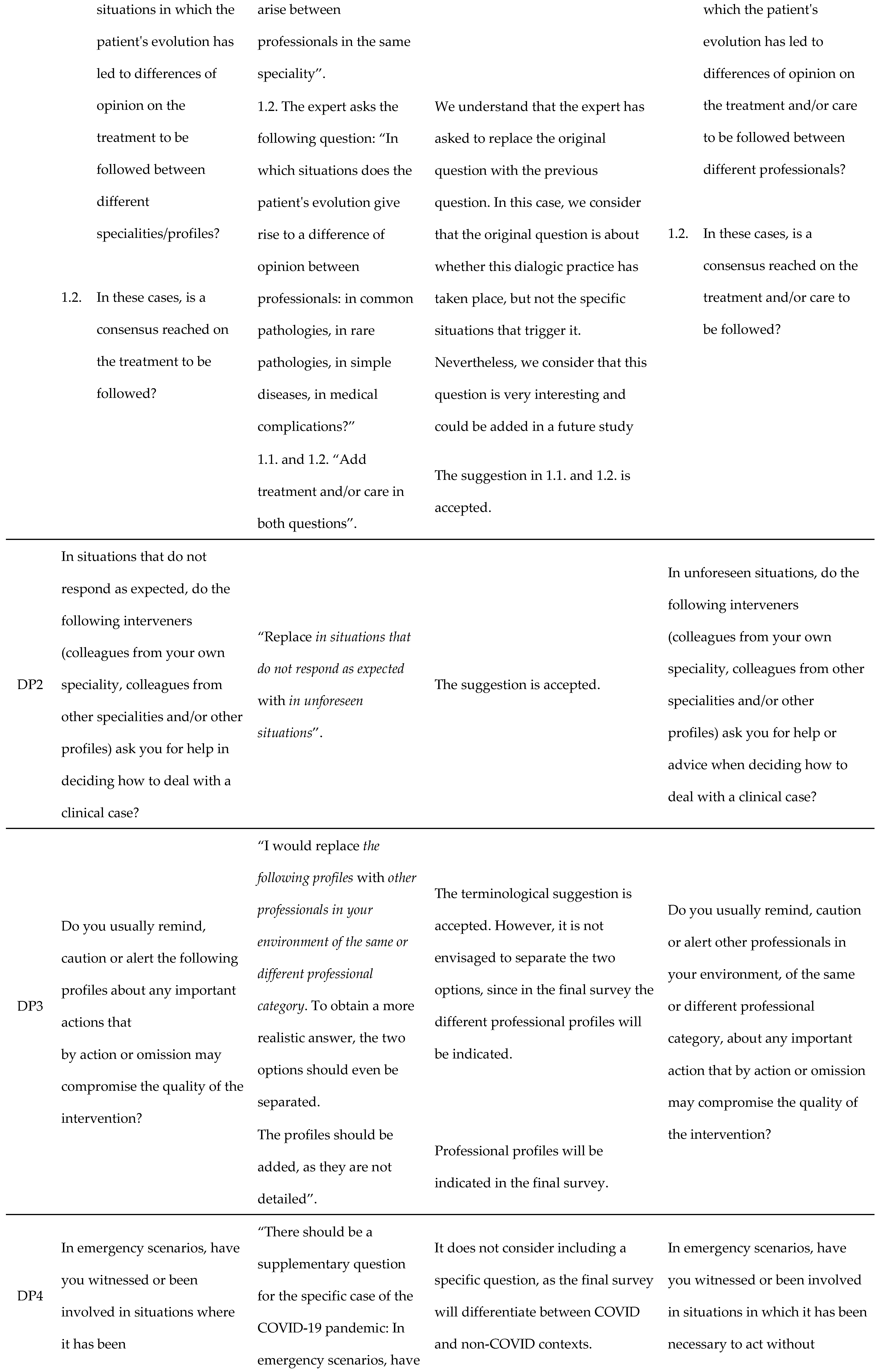
However, even though there was agreement, some experts made some suggestions to better adapt the questions to the language used by healthcare personnel. The coordinating group proceeded to carry out a new round that included the new wording of the questions, incorporating the suggestions of the experts set out in Table 4.
As mentioned above, at the end of the questionnaire, the experts were asked whether, based on their professional experience, if they could identify other DPs not covered by the study. One of the experts included a comment to this effect that “lack of communication between team members may prevent the exercise of dialogic practices in situations where it is necessary to call on the team to resolve them”. The expert recognises that there must be minimum levels of communication for the DPs to be deployed, in line with the proposal we made in the introduction to this paper and in agreement with [35,36].
In round II, only the questions regarding the DPs were included, as the questions regarding the scales of measurement reached full consensus in the first round. In this round, all experts who participated in the first round participated. The results of the second round are shown in Table 5.
As shown in Table 5, the values of all statistical parameters improve with respect to the previous round, indicating that the redrafting of the questions following the suggestions of the experts has strengthened the degree of consensus among them. For items related to DP1, DP3 and DP4, the frequency of ratings 4 and 5 on the Likert scale is 100%, and for DP2 90%. Applying the acceptance criteria, we observe that for all items the median ≥ 4 and IQR ≤ 1.5 are met.
In Table 6, the results of both rounds are compared in order to analyse the stability of the panel, which is conceived as the consistency in the experts' opinions between successive rounds of the Delphi, regardless of their degree of convergence [53]. In this table, we compare the different parameters analysed in both rounds, showing how they all improve.[6]
We understand that stability occurs if the variation of the interquartile range between rounds is less than 0.30 and consensus is considered to be reached if the variation of the coefficient of variation between rounds is less than 0.40 [50], as shown in Table 7.
Based on the results obtained, the Delphi is closed after the second round, given that the criteria for closing the Delphi are met, as there is a high degree of consensus (median and interquartile range) and great stability in the opinions of the experts between rounds (variation in RIR and CV between rounds).
4. Discussion and Conclusions
The main objective of this study was to develop and validate a questionnaire to identify the presence and frequency of the four types of DPs that occur in hospital teams in complex and unforeseen situations, where the trajectory of events is not as expected and which require a rapid response: epistemic contestation, joint sensemaking, cross-boundary intervention and protocol breaking.
The validation of a questionnaire prior to its launch is essential to guarantee the quality, reliability, and validity of the data obtained, as well as to ensure that the questionnaire is appropriate and understandable for the population to be surveyed. The Delphi method is a sound research methodology, particularly useful in contexts where information and knowledge are limited and emerging, especially in the social and health sciences, and has been widely used to validate the content of questionnaires of many different kinds.
In this study, through the two rounds of expert consultation following the Delphi method, the items of the DP questionnaire and their corresponding measurement scales have been improved and validated by the panel of experts. A high degree of agreement, stability, and concordance has been achieved from the statistical analysis of the results of the two rounds. The experts agreed with a consensus of over 80% for all items in the first round and 90% in the second round. Although in the first-round sufficient agreement was reached to validate the questionnaire, the experts were given the opportunity to include suggestions and comments in an open-ended manner. The second round allowed the questions to be reformulated in response to suggestions made by some of the experts to improve the appropriateness and clarity of the items included in the questionnaire on the DPs detected by [6] and adapted to the healthcare context, using terminology from the jargon used by healthcare professionals.
Although there are no standard quality criteria to assess the quality of the Delphi, the essential parameters to be applied during the expert consultation process have been met: selection and anonymity of experts, iteration, controlled feedback and statistical stability of the consensus.
Before launching the final questionnaire to the study population, a pre-test will be carried out with a sample of the population in which it will be subjected to complementary tests of reliability, validity and internal consistency.
It can be concluded that the validated questionnaire constitutes a new methodological tool that will help:
- -
- To understand how much dialogic practices matter to healthcare professionals.
- -
- To test the proposition that RC and DP are interrelated and mutually reinforcing. This will allow connections to be made between different approaches to the problem of coordination, recognising their influence on the quality of teamwork and the results they achieve.
- -
- Other researchers to detect the presence and intensity of DPs in the health care setting or in other contexts, adapting it to their particularities. This will allow for comparative studies and the possible generalisation of findings obtained in case studies.
Supplementary Materials
The Delphi study referred to in this paper was conducted in Spanish. Supplementary materials such as databases from different rounds, the results reports, and the instructional video are available in Spanish if required to evaluate this work.
Author Contributions
Conceptualization, M.S., C.P. and R.P..; methodology, M.S., M.M., C.P. and R.P.; software, M.M.; validation y formal analysis, M.S., M.M. and R.P; writing—original draft preparation, M.S., M.M. and R.P..; writing—review and editing, M.S., M.M., C.P. and R.P.; visualization, M.S., M.M., C.P. and R.P; supervision, C.P.; project administration, C.P. and R.P. All authors have read and agreed to the published version of the manuscript.
Funding
This research received no external funding.
Institutional Review Board Statement
The study was conducted in accordance with the Declaration of Helsinki, and approved by the Ethics Committee of the hospital where this project is being developed.
Informed Consent Statement
Not applicable.
Data Availability Statement
The data that support the findings of this research are available on request from the corresponding author [R.P.]
Conflicts of Interest
The authors declare no conflict of interest.
References
- Isabelle, B.; Cécile, G.; Carole, D.-G.; Pascal, L.; Jean, N.; François, P. Coordination Practices in Extreme Situations. Eur. Manag. J. 2012, 30, 475–489. [Google Scholar] [CrossRef]
- Wolbers, J.; Boersma, K.; Groenewegen, P. Introducing a Fragmentation Perspective on Coordination in Crisis Management. Organ. Stud. 2018, 39, 1521–1546. [Google Scholar] [CrossRef]
- Aubry, M., Lièvre, P., Eds. Project Management in Extreme Situations: Lessons from Polar Expeditions, Military and Rescue Operations, and Wilderness Explorations; CRC Press/Taylor & Francis Group: Boca Raton, FL, 2017; ISBN 978-1-315-37392-8.
- Okhuysen, G.A.; Bechky, B.A. 10 Coordination in Organizations: An Integrative Perspective. Acad. Manag. Ann. 2009, 3, 463–502. [Google Scholar] [CrossRef]
- Jarzabkowski, P.A.; Lê, J.K.; Feldman, M.S. Toward a Theory of Coordinating: Creating Coordinating Mechanisms in Practice. Organ. Sci. 2012, 23, 907–927. [Google Scholar] [CrossRef]
- Faraj, S.; Xiao, Y. Coordination in Fast-Response Organizations. Manag. Sci. 2006, 52, 1155–1169. [Google Scholar] [CrossRef]
- Bechky, B.A.; Okhuysen, G.A. Expecting the Unexpected? How SWAT Officers and Film Crews Handle Surprises. Acad. Manage. J. 2011, 54, 239–261. [Google Scholar] [CrossRef]
- Bechky, B.A.; Chung, D.E. Latitude or Latent Control? How Occupational Embeddedness and Control Shape Emergent Coordination. Adm. Sci. Q. 2018, 63, 607–636. [Google Scholar] [CrossRef]
- Majchrzak, A.; More, P.H.B.; Faraj, S. Transcending Knowledge Differences in Cross-Functional Teams. Organ. Sci. 2012, 23, 951–970. [Google Scholar] [CrossRef]
- Kou, C.-Y.; Harvey, S. A Dialogic Perspective on Managing Knowledge Differences: Problem-Solving While Building a Nuclear Power Plant Safety System. Organ. Stud. 2022, 43, 1355–1378. [Google Scholar] [CrossRef]
- Kotlarsky, J.; van den Hooff, B.; Geerts, L. Under Pressure: Understanding the Dynamics of Coordination in IT Functions under Business-as-Usual and Emergency Conditions. J. Inf. Technol. 2020, 35, 94–122. [Google Scholar] [CrossRef]
- Godé, C.; Lenesley, P.; Buthion, V. A Polycentric View of Coordination in Extreme Action Teams: Insights from Pre-Hospital Emergency Teams: Rech. En Sci. Gest. 2019, N° 133, 163–190. [CrossRef]
- Andreassen, N.; Borch, O.J.; Sydnes, A.K. Information Sharing and Emergency Response Coordination. Saf. Sci. 2020, 130, 104895. [Google Scholar] [CrossRef]
- Schmid, S.R.; Pawlowsky, P. Emergency management in extreme situations – towards a multi team learning process model. Management, 2018, vol. 16., p.18.
- Opdyke, A. Emergent Coordination Practice in Post-Disaster Planning of Infrastructure Systems. Engineering Project Organization Conference, Edinburgh, Scotland, UK,24-26 june 2015, 2015.
- Bye, R.J.; Almklov, P.; Antonsen, S.; Nyheim, O.M.; Aalberg, A.L.; Johnsen, S.O. The Institutional Context of Crisis. A Study of the Police Response during the 22 July Terror Attacks in Norway. Saf. Sci. 2019, 111, 67–79. [Google Scholar] [CrossRef]
- Drabek, T.L.; McEntire, D.A. Emergent Phenomena and Multiorganizational Coordination in Disasters: Lessons from the Research Literature. Int. J. Mass Emergencies Disasters 2002, 20, 197–224. [Google Scholar] [CrossRef]
- Wolbers, J.; Boersma, K.; Groenewegen, P. Introducing a Fragmentation Perspective on Coordination in Crisis Management. Organ. Stud. 2018, 39, 1521–1546. [Google Scholar] [CrossRef]
- Sohrabizadeh, S.; Yousefian, S.; Bahramzadeh, A.; Vaziri, M.H. A Systematic Review of Health Sector Responses to the Coincidence of Disasters and COVID-19. BMC Public Health 2021, 21, 709. [Google Scholar] [CrossRef] [PubMed]
- Hossain, L.; Kuti, M. Disaster Response Preparedness Coordination through Social Networks. Disasters 2010, 34, 755–786. [Google Scholar] [CrossRef] [PubMed]
- Schakel, J.K.; Wolbers, J. To the Edge and beyond: How Fast-Response Organizations Adapt in Rapidly Changing Crisis Situations. Hum. Relat. 2021, 74, 405–436. [Google Scholar] [CrossRef]
- Gooding, K.; Bertone, M.P.; Loffreda, G.; Witter, S. How Can We Strengthen Partnership and Coordination for Health System Emergency Preparedness and Response? Findings from a Synthesis of Experience across Countries Facing Shocks. BMC Health Serv. Res. 2022, 22, 1441. [Google Scholar] [CrossRef]
- Llorente-Parrado, C.; Mejon-Berges, R.; Cossio-Gil, Y.; Romea-Lecumberri, M.S.; Roman-Broto, A.; Barba-Flores, M.A.; Salazar-Soler, A. Modelo de evaluación del plan de respuesta frente a la pandemia de COVID-19 en un hospital de tercer nivel. J. Healthc. Qual. Res. 2020, 35, 339–347. [Google Scholar] [CrossRef]
- Donelli, C.C.; Fanelli, S.; Zangrandi, A.; Elefanti, M. Disruptive Crisis Management: Lessons from Managing a Hospital during the COVID-19 Pandemic. Manag. Decis. 2022, 60, 66–91. [Google Scholar] [CrossRef]
- Mayo, A.T. Teamwork in a Pandemic: Insights from Management Research. BMJ Lead. 2020, 4, 53–56. [Google Scholar] [CrossRef]
- Gittell, J.H. Relationships between Service Providers and Their Impact on Customers. J. Serv. Res. 2002, 4, 299–311. [Google Scholar] [CrossRef]
- Gittell, J.H.; Ali, H.N. Relational Analytics: Guidelines for Analysis and Action; Routledge, 2021; ISBN 1-00-039163-9.
- Bolton, R.; Logan, C.; Gittell, J.H. Revisiting Relational Coordination: A Systematic Review. J. Appl. Behav. Sci. 2021, 57, 290–322. [Google Scholar] [CrossRef]
- Gittell, J.H. Coordinating Mechanisms in Care Provider Groups: Relational Coordination as a Mediator and Input Uncertainty as a Moderator of Performance Effects. Manag. Sci. 2002, 48, 1408–1426. [Google Scholar] [CrossRef]
- De Pablos Heredero, C.; Haider, S.; García Martinez, A. Relational Coordination as an Indicator of Teamwork Quality: Potential Application to the Success of e-Learning at Universities. Int. J. Emerg. Technol. Learn. IJET 2015, 10, 4. [Google Scholar] [CrossRef]
- Margalina, V.M.; De-Pablos-Heredero, C.; Montes-Botella, J.L. Achieving Quality in E-Learning through Relational Coordination. Stud. High. Educ. 2017, 42, 1655–1670. [Google Scholar] [CrossRef]
- Gittell, J.H.; Weiss, L. Coordination Networks Within and Across Organizations: A Multi-Level Framework*. J. Manag. Stud. 2004, 41, 127–153. [Google Scholar] [CrossRef]
- Rangachari, P.; Woods, J.L. Preserving Organizational Resilience, Patient Safety, and Staff Retention during COVID-19 Requires a Holistic Consideration of the Psychological Safety of Healthcare Workers. Int. J. Environ. Res. Public. Health 2020, 17, 4267. [Google Scholar] [CrossRef]
- Margherita, A.; Elia, G.; Klein, M. Managing the COVID-19 Emergency: A Coordination Framework to Enhance Response Practices and Actions. Technol. Forecast. Soc. Change 2021, 166, 120656. [Google Scholar] [CrossRef]
- Deneckere, S.; Euwema, M.; Van Herck, P.; Lodewijckx, C.; Panella, M.; Sermeus, W.; Vanhaecht, K. Care Pathways Lead to Better Teamwork: Results of a Systematic Review. Soc. Sci. Med. 2012, 75, 264–268. [Google Scholar] [CrossRef]
- Noël, P.H.; Lanham, H.J.; Palmer, R.F.; Leykum, L.K.; Parchman, M.L. The Importance of Relational Coordination and Reciprocal Learning for Chronic Illness Care within Primary Care Teams. Health Care Manage. Rev. 2013, 38, 20–28. [Google Scholar] [CrossRef]
- Cabero Almenara, J.; Infante Moro, A. Empleo Del Método Delphi y Su Empleo En La Investigación En Comunicación y Educación. Edutec Rev. Electrónica Tecnol. Educ. 2014, a272. [CrossRef]
- Reguant-Alvarez, M.; Torrado-Fonseca, M. El Método Delphi. REIRE Rev. Innovació Recer. En Educ. 2016. [CrossRef]
- Nasa, P.; Jain, R.; Juneja, D. Delphi Methodology in Healthcare Research: How to Decide Its Appropriateness. World J. Methodol. 2021, 11, 116–129. [Google Scholar] [CrossRef]
- Krebs, F.; Engel, S.; Vennedey, V.; Alayli, A.; Simic, D.; Pfaff, H.; Stock, S. ; on behalf of the Cologne Research and Development Network (CoRe-Net) Transforming Health Care Delivery towards Value-Based Health Care in Germany: A Delphi Survey among Stakeholders. Healthcare 2023, 11, 1187. [Google Scholar] [CrossRef]
- Hayek, R.; Saad, O.; Springer, S. Self-Reported Questionnaire to Evaluate Functional Abilities in Middle Age: A Call for Delphi Expert Panel. Healthcare 2023, 11, 1040. [Google Scholar] [CrossRef]
- Phoi, Y.Y.; Bonham, M.P.; Rogers, M.; Dorrian, J.; Coates, A.M. Content Validation of a Chrononutrition Questionnaire for the General and Shift Work Populations: A Delphi Study. Nutrients 2021, 13, 4087. [Google Scholar] [CrossRef]
- Vélez Álvarez, C.; Vidarte Claros, J.A.; Arango Arenas, A.; Patiño Palma, B.E.; Rondón Villamil, Y.A. Adaptation and Validation of Content of the Sedentary Behavior Questionnaire. Hacia Promoc. Salud 2021, 26, 148–162. [Google Scholar] [CrossRef]
- Arribas, M.C.M. Diseño y validación de cuestionarios. Matronas Profesión 2004, 5, 23–29. [Google Scholar]
- Bravo Estévez, M. de L.; Arrieta Gallastegui, J.J. El Método Delphi. Su Implementación En Una Estrategia Didáctica Para La Enseñanza de Las Demostraciones Geométricas. Rev. Iberoam. Educ. 2005, 36, 1–10. [CrossRef]
- Margherita, A.; Elia, G.; Klein, M. Managing the COVID-19 Emergency: A Coordination Framework to Enhance Response Practices and Actions. Technol. Forecast. Soc. Change 2021, 166, 120656. [Google Scholar] [CrossRef] [PubMed]
- Isabelle, B.; Cécile, G.; Carole, D.-G.; Pascal, L.; Jean, N.; François, P. Coordination Practices in Extreme Situations. Eur. Manag. J. 2012, 30, 475–489. [Google Scholar] [CrossRef]
- Landeta, J. El Método Delphi. Una Técnica de Previsión Para La Incertidumbre; Ariel: Barcelona, 1999. [Google Scholar]
- López-Gómez, E. El Método Delphi en la invstigación actual en educación: una revisión teórica y metodológica. Educ. XX1 2017, 21. [Google Scholar] [CrossRef]
- Mengual-Andrés, S.; Roig-Vila, R.; Mira, J.B. Delphi Study for the Design and Validation of a Questionnaire about Digital Competences in Higher Education. Int. J. Educ. Technol. High. Educ. 2016, 13, 12. [Google Scholar] [CrossRef]
- Williams, P.E. Roles and Competencies for Distance Education Programs in Higher Education Institutions. Am. J. Distance Educ. 2003, 17, 45–57. [Google Scholar] [CrossRef]
- Kothari, C.R. Research Methodology: Methods & Techniques, 2nd rev. ed.; New Age International (P) Ltd.: New Delhi, 2004; ISBN 978-81-224-2488-1. [Google Scholar]
- Pozo, M.T.; Gutierrez, J.; Rodríguez, P. El Uso Del Método Delphi En La Definición de Los Criterios Para Una Formación de Calidad En Animación Socio-Cultural y Tiempo Libre. Rev. Investig. Educ. 2007, 25, 351–366. [Google Scholar]
Figure 1.
Stages in the Delphi method.
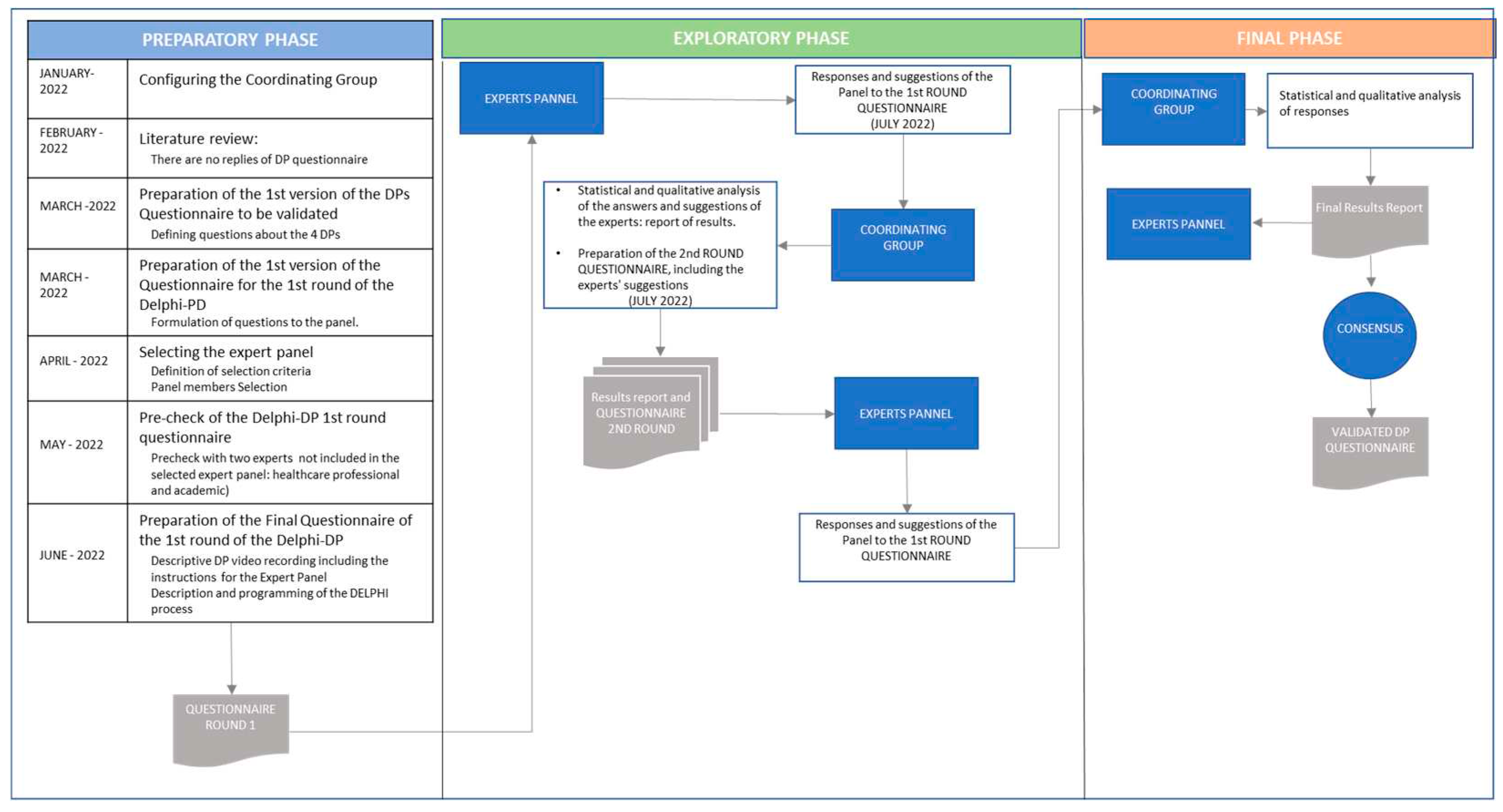

Table 1.
Panel of experts who participated in the study.
| ID | Professional Profile | Years of Experience | Academic qualifications |
|---|---|---|---|
| 1 | Emergency Physician | + 25 years | Degree in Medicine |
| 2 | Deputy Director of Nursing | + 25 years | Graduate in Nursing |
| 3 | General Nursing Supervisor | + 25 years | Graduate in Nursing |
| 4 | Associate Professor of Nursing | + 12 years | PhD in Nursing |
| 5 | ICU Nurse and Supervisor | + 25 years | Graduate in Nursing |
| 6 | Medical Internist | + 25 years | Degree in Medicine |
| 7 | Internal Medicine Nurse | + 25 years | Graduate in Nursing |
| 8 | University Professor of Strategy and Leadership | + 12 years | PhD in Business Organisation |
| 9 | University Professor of Preventive Medicine | + 25 years | Doctor of Medicine and Surgery |
| 10 | Out-of-Hospital Emergency Physician | + 25 years | Degree in Medicine |
Table 2.
Criteria for measuring the degree of consensus taken from [50].
Table 2.
Criteria for measuring the degree of consensus taken from [50].
| Level of Consensus | ||
|---|---|---|
| (Agreement) (A) | Neutral (N) | Disagreement (D) |
| If Mdn ≥ 4 and IQR ≤ 1.5 | Mdn≤3.5 and IQR≤1.5 | |
| or | If Mdn ≥ 3,5 and IQR ≤ 2 | or |
| If Mdn ≥ 4 and IQR ≤ 2 and f [4,5] ≥ 70 % | Mdn ≤ 3.5 and IQR ≤ 2 and f [1,2,3] ≥ 70 %1 |
1 Mdn = Median; f = Frequency; IQR = Interquartile Range.
Table 3.
Round I Delphi Results.
| Quartile | ||||||||||||
| Mdn | Mean | SD | CV | 1 | 2 | 3 | IQR | RIR | f (4-5) | CONS1 | ||
| DP1 | DP Item | 4.00 | 3.70 | 0.64 | 0.17 | 3.75 | 4.00 | 4.00 | 0.25 | 0.06 | 80% | A |
| Scale Item | 4.00 | 3.90 | 0.70 | 0.18 | 4.00 | 4.00 | 4.00 | 0.00 | 0.00 | 90% | A | |
| DP2 | DP Item | 4.00 | 4.10 | 0.54 | 0.13 | 4.00 | 4.00 | 4.25 | 0.25 | 0.06 | 90% | A |
| Scale Item | 4.00 | 4.10 | 0.54 | 0.13 | 4.00 | 4.00 | 4.25 | 0.25 | 0.06 | 90% | A | |
| DP3 | DP Item | 4.00 | 4.10 | 0.54 | 0.13 | 4.00 | 4.00 | 4.25 | 0.25 | 0.06 | 90% | A |
| Scale Item | 4.00 | 4.30 | 0.46 | 0.11 | 4.00 | 4.00 | 5.00 | 1.00 | 0.25 | 100% | A | |
| DP4 | DP Item | 4.00 | 3.90 | 0.83 | 0.21 | 3.75 | 4.00 | 4.25 | 0.50 | 0.13 | 80% | A |
| Scale Item | 4.00 | 4.10 | 0.54 | 0.13 | 4.00 | 4.00 | 4.25 | 0.25 | 0.06 | 90% | A | |
1 Mdn = Median; Mean = Arithmetic Mean; SD = Standard Deviation; CV = Coefficient of Variation; IQR = Interquartile Range; RIR = Relative Interquartile Range; f (4-5) = Frequency of assessment 4 and 5; CONS = Level of Consensus.
Table 4.
Experts’ qualitative feedback in the first round.

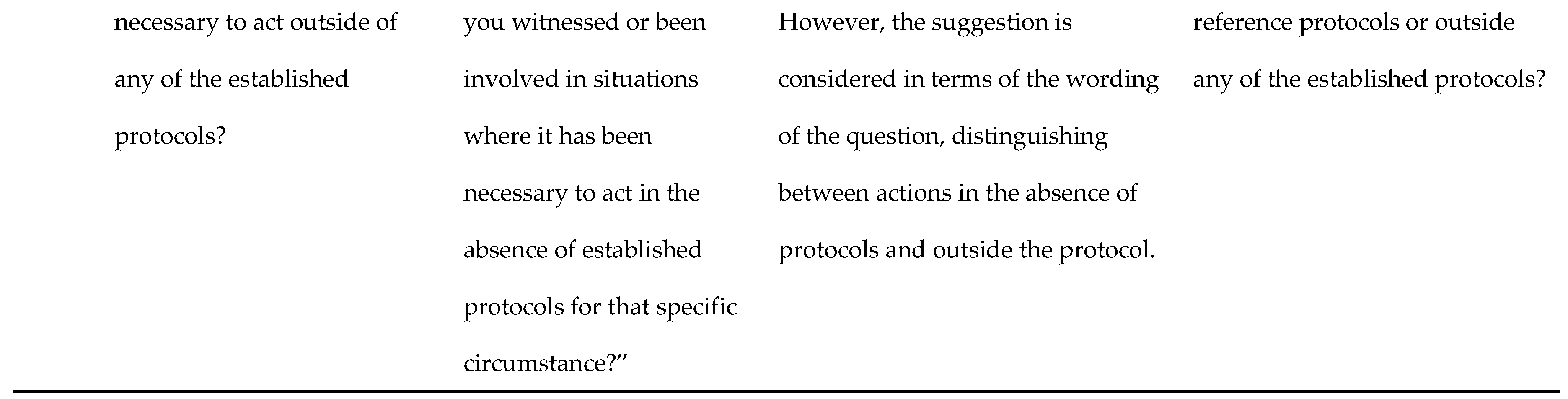
1 DP1 = Epistemic contestation; DP2 = Joint sensemaking; DP3 = Cross-boundary intervention; DP4 = Protocol breaking.
Table 5.
Round II Delphi Results.
| Quartile | ||||||||||||
|---|---|---|---|---|---|---|---|---|---|---|---|---|
| Mdn | Mean | SD | CV | 1 | 2 | 3 | IQR | RIR | f (4-5) | CONS1 | ||
| DP1 | DP Item | 4.50 | 4.50 | 0.50 | 0.11 | 4.00 | 4.50 | 5.00 | 1.00 | 0.22 | 100% | A |
| DP2 | DP Item | 4.00 | 4.30 | 0.64 | 0.15 | 4.00 | 4.00 | 5.00 | 1.00 | 0.25 | 90% | A |
| DP3 | DP Item | 4.50 | 4.50 | 0.50 | 0.11 | 4.00 | 4.50 | 5.00 | 1.00 | 0.22 | 100% | A |
| DP4 | DP Item | 5.00 | 4.60 | 0.49 | 0.11 | 4.00 | 5.00 | 5.00 | 1.00 | 0.20 | 100% | A |
1 Mdn = Median; Mean = Arithmetic Mean; SD = Standard Deviation; CV = Coefficient of Variation; IQR = Interquartile Range; RIR = Relative Interquartile Range; f (4-5)= Frequency of assessment 4 and 5; CONS = Level of Consensus.
Table 6.
Comparison of results in Rounds I and II.
| Quartile | ||||||||||
|---|---|---|---|---|---|---|---|---|---|---|
| DP | Rounds | Mdn | Mean | SD | 1 | 2 | 3 | IQR | f (4-5) | CONS1 |
| DP1 | R1 | 4.00 | 3.73 | 0.67 | 3.75 | 4.00 | 4.00 | 0.25 | 80% | A |
| R2 | 4.50 | 4.50 | 0.53 | 4.00 | 4.50 | 5.00 | 1.00 | 100% | A | |
| DP2 | R1 | 4.00 | 4.09 | 0.57 | 3.00 | 4.00 | 4.00 | 1.00 | 90% | A |
| R2 | 4.00 | 4.27 | 0.67 | 4.00 | 4.00 | 5.00 | 1.00 | 90% | A | |
| DP3 | R1 | 4.00 | 4.27 | 0.48 | 4.00 | 4.00 | 4.00 | 0.00 | 100% | A |
| R2 | 4.50 | 4.50 | 0.53 | 4.00 | 4.50 | 5.00 | 1.00 | 100% | A | |
| DP4 | R1 | 4.00 | 4.09 | 0.57 | 3.00 | 4.00 | 4.00 | 1.00 | 90% | A |
| R2 | 5.00 | 4.64 | 0.52 | 4.00 | 5.00 | 5.00 | 1.00 | 100% | A | |
1 Mdn = Median; Mean = Arithmetic Mean; SD = Standard Deviation; IQR = Interquartile Range; f (4-5)= Frequency of assessment 4 y 5; CONS = Consensus Level.
Table 7.
Variation of RIR and CV between rounds.
| DP1 | DP2 | DP3 | DP4 | |
|---|---|---|---|---|
| Variation of CV1 | 0.06 | -0.02 | 0.02 | 0.11 |
| Variation of RIR2 | -0.16 | -0.19 | -0.16 | -0.08 |
1 . 2 .
Disclaimer/Publisher’s Note: The statements, opinions and data contained in all publications are solely those of the individual author(s) and contributor(s) and not of MDPI and/or the editor(s). MDPI and/or the editor(s) disclaim responsibility for any injury to people or property resulting from any ideas, methods, instructions or products referred to in the content. |
© 2023 by the authors. Licensee MDPI, Basel, Switzerland. This article is an open access article distributed under the terms and conditions of the Creative Commons Attribution (CC BY) license (http://creativecommons.org/licenses/by/4.0/).
Copyright: This open access article is published under a Creative Commons CC BY 4.0 license, which permit the free download, distribution, and reuse, provided that the author and preprint are cited in any reuse.


