
Submitted:
19 October 2023
Posted:
20 October 2023
You are already at the latest version
Abstract
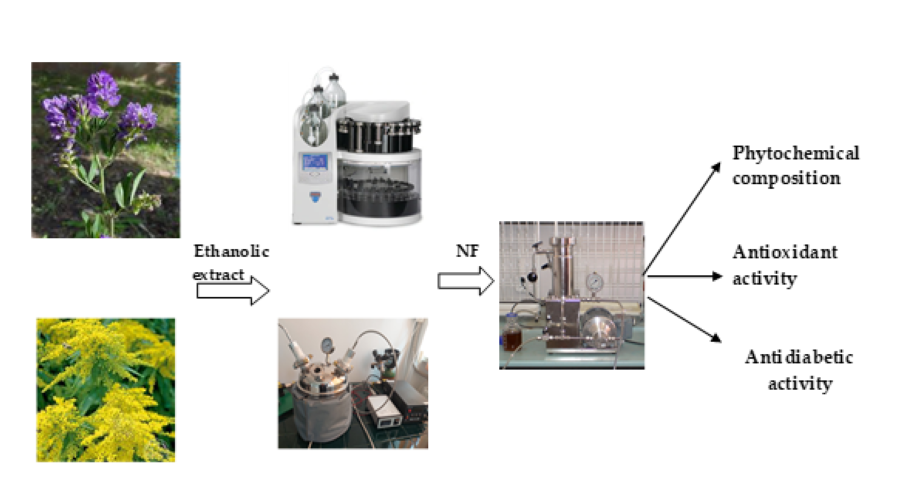
The present study evaluated the antioxidant, antidiabetic properties, and biocompatibility of Medicago sativa and Solidago virgaurea extracts enriched in flavonoid and isoflavonoid compounds. The extracts were obtained by accelerated solvent extraction and laser irradiation. Then, nanofiltration was used for the concentration of flavonoid and isoflavonoid compounds from extracts. The extracts were analyzed for antioxidant capacity using DPPH radical scavenging and reducing power methods, while the antidiabetic property was tested by α-amylase and α-glucosidase inhibition and in vitro on a murine insulinoma cell line (β-TC-6). M. sativa obtained by laser irradiation and concentrated by nanofiltration had the highest DPPH• scavenging (IC50 = 105.2±1.1 and reducing power activities (IC50 = 40.98±0.2 µg/mL). M. sativa extracts had higher inhibition on α-amylase (IC50 = 23.9±1.2, respectively 26.8±1.1), while S. virgaurea had the highest α-glucosidase inhibition (9.3±0.9 ?g/mL respectively 8.6±0.7 ?g/mL). The results obtained after evaluating the antidiabetic in vitro activity showed that the treatment with M. sativa and S. virgaurea flavonoid- and isoflavonoid-rich extracts stimulated the insulin secretion of β-TC-6 cells, both under normal conditions as well as in hyperglycemic conditions. This paper argued that M. sativa and S. virgaurea flavonoid-rich and isoflavonoid-rich extracts could be an excellent natural source with promising antidiabetic potential.
Keywords:
green extraction
; antioxidant
; antidiabetic
; Medicago sativa
; Solidago virgaurea
; flavonoidrich extract
; isoflavonoid-rich extract
1. Introduction
Flavones and isoflavones are polyphenolic compounds of widespread interest in the nutritional and medicinal fields. These natural compounds are considered essential components due to their antioxidative, anti-inflammatory, antimicrobial, anti-mutagenic, estrogenic effects, and anticancer properties, combined with their ability to modulate critical cellular enzyme functions [1,2,3].
The interest in natural biologically active compounds comes from the recognition that they have very few side effects compared to synthetic compounds, and that research in recent decades has demonstrated the importance of the synergistic effect of bioactive compounds in a natural mixture.
Studies show that a good choice of extraction technique, solvents, and extraction conditions can favor the content of target bioactive compounds in the final extract, leading to increased efficacy of the final product. Although intensive investigations have been needed in recent decades, researchers are still seeking stable plant sources of natural antioxidants and highly efficient extraction technologies. At present, there is more interest in green and sustainable extraction methods [4,5,6,7]. Green methods offer the advantages of a shorter extraction time, higher selectivity, and lower organic solvent expenditure. Among green extraction methods ultrasound-assisted and, accelerated solvent extractions are high-performance techniques and have been intensively studied in the last time in different areas, including biology, and the pharmaceutical and food industries [8,9,10,11]. Recently, a new method, laser irradiation earned a great value in extractive technology, but there is only a study about this method [12]. Laser irradiation is used to intensify the heat process and biomass accumulation in the medium, modify the structure of macromolecules, and increase the quantity of bioactive compounds in the final extract (e.g., polysaccharides, proteins, polyphenolics, minerals, etc.).
Regarding the species-rich in isoflavonoids and flavonoids, Medicago sativa (lucerne; Fabaceae family) contains significant quantities known as phytoestrogens [13,14]. M. sativa is one of the most prevalent forage crops but also has a long tradition of use in folk medicine for central nervous and digestive system disorders and also for the cure of differing other ailments, including cancer disease [15,16,17,18]. However, only a few research studies have been directed at the antidiabetic potential of M. sativa [19,20].
Solidago virgaurea (goldenrod; Asteraceae family) is a medicinal plant used in popular medicine for the treatment of numerous diseases, especially as a urological agent in kidney and bladder inflammation [21,22]. According to the literature, its pharmacodynamic activity is attributable to the presence of biologically active compounds, especially flavonoids which are considered the most essential [14,23,24].
Since flavonoids are thermolabile compounds, high consideration was paid to the extraction and concentration of these compounds in the present study. In this context, the aim of the present study was to compare the accelerated solvent extraction and laser irradiation extraction, coupled with concentration by nanofiltration, on the antidiabetic and antimicrobial activities of the extracts enriched in isoflavones and flavones from the two medicinal plants.
2. Materials and Methods
2.1. Materials
Flavonoid and isoflavonoid compounds: rutin, quercitrin, quercetin 3-β-D-glucoside, quercetin, isorhamnetin, formononetin, genistein, naringenin, biochanin A, and vitexin were purchased from Sigma–Aldrich (Schnelldorf, Germany), daidzein was obtained from Fluka (Buchs, Switzerland), luteolin and kaempferol were purchased from Carl Roth (Karlsruhe, Germany); 2,2-difenil-1-picrilhidrazil (DPPH), potassium ferricyanide, sodium carbonate (Na2CO3), dinitrosalicylic acid (DNS), α-amylase from hog pancreas, α-glucosidase from Saccharomyces cerevisiae, and 4-nitrophenyl α-D-glucopyranoside (NPG) have been purchased from Sigma–Aldrich, and iron chloride was bought from Fluka. All other used reagents, methanol (Riedel-de Haen), and ethanol (Chemical Company) were of chromatographic or analytical purity; the ultra-pure water was obtained using the distillation apparatus from Evoqua Water Technologies (Pittsburgh, USA).
The medicinal plants were collected from Cluj county (Romania), and voucher specimens were stored in the Herbarium of Babes-Bolyai University from Cluj-Napoca (code: 868.786 for Solidago virgaurea L.; code: 622172 for Medicago sativa).
2.2. Extracts Preparation
Two green extraction methods were used to study bioactive compound extraction’s influence: accelerated solvent extraction (ASE) and laser irradiation (LE).
2.2.1. ASE Extraction
Accelerate solvent extraction of dried and grounded M. sativa and S. virgaurea was realized by Dionex ASE 350 System (Thermo Scientific, USA). Each cell (100 mL) equipped with a cellulose filter was filled with 15 g of dried plant and diatomaceous earth and the ASE conditions were set as: solvent – ethanol/water (50/50, v/v), temperature –60 °C, static time – 10 min, number of cycles – 3. According to the ASE extracts volume, the concentration of the extracts was 9% (w/v).
2.2.2. Laser Irradiation Extraction
LE extraction was performed in the same conditions with ASE: 9 g of the dry plant (aerial parts) was mixed with 100 mL of ethanol/water (50/50, v/v), and extracted for 30 minutes assisted with laser radiation at a combined 1270 and 1550 nm. The LE extraction used a steel extractor provided with a lid with two windows through which laser irradiation was done (Figure 1).
Subsequently, all extracts were micro-filtrated through a Millipore membrane (0.45 µm pores) and concentrated by nanofiltration through Sterlitech membranes NF90 with a cut-off 150-300 Da using a KMS Laboratory Cell CF-1 module. The concentrated extracts were stored in a freezer at −20 °C for use in further analysis.
2.3. Analysis of Flavonoids and Isoflavonoids
2.3.1. Quantification of Total Flavonoids
Total flavonoid content was quantified using the aluminum chloride colorimetric method [25]. 2 mL of extract and 3 mL of methanol were mixed. After filtration, to 1 mL filtrate was added 1 mL sodium acetate solution, 0.6 mL of aluminum chloride solution, and 2.4 mL methanol. The absorbance was measured at 430 nm and the flavonoid content was calculated based on a rutin calibration curve (y = 0.0073x - 0.0357; R² = 0.9959).
2.3.2. HPLC-MS Analysis
HPLC analysis was realized using an HPLC Shimadzu system consisting of a SIL-20AC autosampler, two LC-20AD pumps, a DGU-20A degasser, and a CTO-20A column oven with an LC Solution software. The HPLC was coupled to a mass spectrometer detector, LCMS-2010 with an ESI interface using negative ionization mode and the following parameters: detector voltage, 1.8 kV; interface voltage 4 kV; heat block temperature, 200°C; CDL temperature, 200°C; interface temperature, 250°C and nebulization gas (N2) flow rate, 1.5 L min-1. A previously developed HPLC-MS method [26,27] was used for the identification and quantification of polyphenol compounds, and analyses were performed on a Kromasil 100-5-C18 2.1x150 mm column and with an elution gradient of mobile phase (solvent A, formic acid in water, pH=3 and solvent B, formic acid in MeCN, pH=3) and a gradient of flow rate. The selected ion monitoring (SIM) mode was used and the corresponding peaks of the compound fragment ions ([M-H]-: 163, 169, 179, 253, 267, 269, 271, 283, 285, 301, 315, 317 353, 431, 447, 463, and 609) were obtained for quantitative analysis.
2.4. Antioxidant Assays
2.4.1. DPPH Radical Scavenging
The DPPH assay was carried out as described by Bondet et al. [28] with slight modifications. 100 µL extract with different concentrations was mixed with 1000 µL DPPH (2,2-diphenyl-1-picrylhydrazyl) 0.25 mM solution and 1.9 mL methanol. The absorbance was measured at 517 nm, and the extracts’ scavenging activity was determined by the formula:
where RSA = radical scavenging activity; Ac = control absorbance, and As = sample absorbance. Results were presented as inhibition, in EC50 (μg/mL). The values are reported as the mean ± SD.
RSA (%) = [(Ac - As)/Ac] x 100,
2.4.2. Fe (III) Reducing Power Assay
Reducing power assay is based on the reduction of Iron (III) to Iron (II) and was performed using Berker’s method [29]. The flavonoids and isoflavonoids-rich extracts (0.1 mL with varying concentrations) were mixed with 2.5 mL sodium phosphate buffer (0.2 M) and 2.5 mL potassium ferricyanide (1%) and then were kept at 50°C for 20 min. Thereafter, 2.5 mL of trichloroacetic acid (10%) was added. Finally, an aliquot of 2.5 mL mixture was combined with 2.5 mL water followed by 0.5 mL of iron chloride solution (0.1%) and UV absorbance was read at 700 nm. Results were presented as inhibition, in EC50 (μg/mL). The values are reported as the mean ± SD.
2.5. Antidiabetic Assay
2.5.1. α-. Amylase and α-Glucosidase Inhibitory Activities
The ability of extracts to inhibit α-amylase and α-glycosidase enzymes was examined to establish the plant’s potential as an antidiabetic.
The α-amylase inhibition analysis was achieved according to our previous study [30]. Shortly, 100 μL of the extracts were to 250 μL α-amylase from hog pancreas (EC 3.2.1.1) solution in phosphate buffer (pH 6.9) and was maintained at 37°C for 20 min. Then, 250 μL starch solution was added and incubated at 37°C for 30 min. Subsequently, 500 μL DNS was added, and the mixture was heated at 90°C for 5 min. Absorbance measurements were performed at 540 nm.
The α-glucosidase inhibitory activity was evaluated using a slightly modified method of Ranilla et al. [31], with slight modifications. Samples, (60 μL) with different concentrations were incubated with 120 μL of α-glucosidase from Saccharomyces cerevisiae (EC 3.2.1.20) solution (0.5 U/mL) and 720 μL phosphate buffer (0.1 M, pH 6.9), at 37°C, for 15 minutes. After that, 120 μL of NPG substrate solution was added, and the mixture was incubated at 37°C, for 15 minutes. Then, 480 μL of 0.2 M Na2CO3 solution was added to this mixture to stop the reaction, and the absorbance was read at 405 nm. The results were calculated using the formula:
Values were compared with the standard drug acarbose. IC50 values (concentration of the extract that inhibits 50% enzyme activity) were obtained from the nonlinear regression curve.
2.5.2. In Vitro Insulin Secretion Assay
In vitro, evaluation of antidiabetic activity was conducted on a mice insulinoma cell line (βTC-6). βTC-6 cells were purchased from Cell Lines Service (CLS, Germany) and were grown in DMEM medium supplemented with 10% FBS and 1% PSN antibiotic mixture at 370C and 5% CO2.
βTC-6 cells were seeded in a 24-well plate, at a density of 1x10⁵ cells/mL. After 24 h of cultivation in standard conditions, βTC-6 cells were cultivated in normal (5.6 mM) and hyperglycemic (16.7 mM) conditions in the absence and presence of extracts for 1 hour, at 37°C. The culture medium was then collected, centrifuged for 10 minutes at 1500 rpm, and stored at -20°C until insulin measurement. Insulin secretion was determined by ELISA assay according to the manufacturer’s recommendations (Sigma-Aldrich). L-alanine (10 mM) was used as the reference stimulant of insulin secretion from pancreatic beta cells.
2.6. Statistical Analysis
Three independent experiments were carried out and the obtained data were presented as mean ± standard deviation (SD) (n = 3). The sample pair of interest was analyzed using the paired Student’s t-test (Microsoft Excel 2018 software). Significant statistical differences were considered p<0.05.
3. Results and Discussion
3.1. HPLC-MS Analysis
As mentioned in the Introduction, one of the objectives of the study was to obtain the flavonoids and isoflavonoids-rich extracts of Medicago sativa and Solidago virgaurea using two green extraction methods: accelerated solvent extraction and laser irradiation extraction, coupled with concentration by nanofiltration.
The previous results of the authors demonstrated the efficiency of the nanofiltration process in the concentration of the processes of polyphenolic compounds (phenolic acids, flavonoids, isoflavonoids) [26,32].
Accelerated solvent extraction (ASE) involves the use of solvents at high temperatures and pressures. High temperatures accelerate the kinetics of the extraction process, while increased pressure keeps the solvent below its boiling point, thus obtaining fast and safe extractions. However, taking into account the particularities of the compounds of interest, the use of high temperatures can cause their destructuring and loss of activity, the extraction was carried out in 3 extraction cycles at a temperature of 60°C.
The HPLC-MS method has been used for the flavonoid and isoflavonoid profile characterization of plant extract samples. The target bioactive compounds are presented in Table 1.
The data obtained showed that laser irradiation is a more efficient extraction method for some flavonoids and isoflavonoids (eg, quercetin 3-D glucoside, quercitrin, naringenin, and vitexin) than ASE extraction. Hence, this method that efficiently extracts these valuable compounds is of particular interest, especially since it has been very little studied. Lasser irradiation is a very new method of selective extraction, which demonstrated the efficiency in the extraction of polyphenols from plants at 552 nm, 660 nm, and 785 nm [12].
Our studies were carried out with laser radiation at a combined 1270 and 1550 nm because we found that at wavelengths over 1200 nm the flavonoid compounds are extracted with much greater efficiency. This method was very efficient in the case of flavonoid and isoflavonoid compounds extraction from our studied plants, being able to obtain large amounts of extract, depending on the capacity of the extractor, with a lower time.
However, this is the first study that uses this combination of wavelengths in laser extraction, and that demonstrates the high efficiency in the extraction of flavonoids and isoflavonoids.
At the same time, by ASE, higher values were obtained for other compounds from the class of flavonoids and isoflavonoids. The comparison of the total flavonoid and isoflavonoid compound values in the samples indicates close values for the extracts obtained by both methods. Using a 50% (v/v) hydroalcoholic solution represents a reduction in the cost of the extraction process versus using pure solvents while maintaining a high extraction yield of the targeted compounds.
Several studies indicated that M. sativa is a rich source of phytoestrogens. HPLC-MS analysis showed that the highest rutin content was the dominant flavonoid from all plant extracts (Figure 2 and Figure 3). Rutin, quercetin, kaempferol, naringenin, formononetin, and genistein were also reported in other studies [13,14,33]. However, biochanin A and vitexin were detected only in M. sativa seeds and sprouts not in the aerial part [34]. Among the isoflavones, vitexin is found in the largest quantity. The determined values of the phytoestrogens investigated in this research differed from the results obtained by the above-mentioned studies, which are most likely related to the type of cultivar, stages of maturity, extraction method, and other factors.
The HPLC–MS analysis of S. virgaurea extracts showed a significant content of rutin, quercetin 3-β-D-glucoside, and vitexin. Daidzein was not detected in S. virgaurea extracts. Our data confirmed those of previously published studies reporting significant amounts of rutin in S. virgaurea species [14,24]. To the best of our knowledge formononetin, biochanin A, and vitexin were not reported previously in goldenrod hydroalcoholic extracts.
3.2. Total Antioxidant Activity
Flavonoids are a group of natural compounds with a biologically active potential; hence, they have an antioxidant effect. The results for the total flavonoid content and antioxidant activity (DPPH and Fe(III) reducing power methods) in the various extracts compared with ascorbic acid (vitamin C) as standard, known for its antioxidant properties are displayed in Table 2.
The DPPH scavenging assay is a frequently utilized method to evaluate antioxidant activity. The IC50 values related to the DPPH radical scavenging activity for all extracts were higher than vitamin C showing a moderate antioxidant activity, M. sativa obtained by laser irradiation and concentrated by nanofiltration being the most active extract (IC50 = 105.2±1.1 µg/mL). The free radical inhibition results for M. sativa are in accord with the previous study which showed strong antioxidant activity of extracts obtained from M. sativa [35,36]. Comparing the obtained results, we can observe that although the extracts of S. virgaurea have a much higher content of flavonoids, they have a lower antioxidant activity than M. sativa. This result can be explained by a higher content of other compounds with the antioxidant activity present in the extracts of M. sativa like phenolic acids or other isoflavone compounds not quantified in the studied extracts. Our results about the antioxidant activity of S. virgaurea extracts confirm the results of the other research, but it must be taken into account that the antioxidant activity is dependent on the solvent and the extraction method applied [37,38].
The reducing power showed significant differences between the examined extracts compared to ascorbic acid as a standard, which showed the highest IC50. M. sativa flavonoid- and isoflavonoid-rich extracts had the highest reducing power activity. The reducing power results revealed that all tested extracts had good abilities to donate electrons that were involved in the antioxidant activity.
3.3. Antidiabetic Activity
α-amylase and α-glucosidase inhibition
One of the alternative approaches regarding the prevention/modulation of postprandial hyperglycemia is natural therapeutic inhibitors of α-amylase and α-glucosidase, as they are key enzymes in starch digestion. Our results for these enzymes’ inhibition by the tested flavonoids and isoflavonoids-rich extracts are presented in Table 3.
M. sativa extracts had higher inhibitory activity on α-amylase (IC50 = 23.9±1.2, respectively 26.8±1.1), while S.virgaurea had the highest α-glucosidase inhibition compared with acarbose, used as standard. S.virgaurea extracts showed the best α-glucosidase inhibition (IC50 of 9.3±0.9 µg/mL respectively 8.6±0.7 µg/mL) with almost 7 times lower than acarbose (IC50 of 66.5±4.2 µg/mL). The inhibitory activities of the rutin, the main compound identified in extracts were higher than those of the acarbose and it can be considered one of the compounds responsible for the activity of the extracts. The milder inhibition of α-amylase than α-glucosidase of all studied extracts could eliminate the major drawback of current drugs with side effects [39].
Flavonoids, such as rutin, quercitrin, and isoquercitrin (quercetin 3-β-D-glucoside) present in large quantities in the extracts from the present study, but also isoflavones (daidzein, genistein, vitexin) have been previously reported to have a hypoglycemic effect and stronger inhibitory effect on α-glucosidase [40,41,42]. This study suggests that combinations of flavonoid and isoflavonoid compounds from the studied plants have a synergic effect on α-amylase and α-glucosidase inhibition.
Effect of extracts on insulin secretion by β-TC6 cell lines
In this study, we investigated complementary in vitro the antidiabetic activity of M. sativa and S. virgaurea flavonoid-rich and isoflavonoids-rich extracts, at the tested concentrations (10-250 μg/mL), on a murine insulinoma cell line (β-TC-6).
The obtained results showed that higher insulin concentrations were obtained after treatment with all the tested extracts compared to the control, both in normal conditions (5.6 mM) and in hyperglycemic conditions (16.7 mM) (Figure 4).
Effect of extracts on insulin secretion by β-TC6 cell lines
In this study, we investigated complementary in vitro the antidiabetic activity of M. sativa and S. virgaurea flavonoid-rich and isoflavonoids-rich extracts, at the tested concentrations (10-250 μg/mL), on a murine insulinoma cell line (β-TC-6).
The obtained results showed that higher insulin concentrations were obtained after treatment with all the tested extracts compared to the control, both in normal conditions (5.6 mM) and in hyperglycemic conditions (16.7 mM) (Figure 4).
P1 – S. virgaurea concentrated extract obtained after ASE extraction; P2 - S. virgaurea concentrated extract obtained after LE extraction; P3 – M. sativa concentrated extract obtained after ASE extraction; P4 – M. sativa concentrated extract obtained after LE extraction.
In normal glycemic conditions (5.6 mM), the highest concentration of secreted insulin was obtained after treatment with S. virgaurea concentrated extract obtained after ASE extraction at 50 µg/mL (~134 µU/mL) and S. virgaurea concentrated extract obtained after LE extraction 100 µg/mL (~132 µU/mL). In the case of the control stimulated with 5.6 mM glucose and untreated, the secreted insulin concentration was ~84 μU/mL.
Likewise, similar results of the effectiveness of stimulating insulin secretion were also obtained in hyperglycemic conditions (16.7 mM). Thus, the best results were obtained after the treatment with S. virgaurea concentrated extract obtained after ASE extraction at 50 µg/mL (~249 µU/mL) and S. virgaurea concentrated extract obtained after LE extraction at 100 µg/mL (~286 µU/mL) and respectively M. sativa extracts 250 µg/mL (~226 μU/mL, and 215 µU/mL, respectively), for the stimulated and untreated control the secreted insulin concentration was ~178 μU/mL. Alanine was used as a positive control, demonstrating its ability to significantly stimulate insulin secretion.
Recent in vivo studies showed the anti-hyperglycemic effect of S. virgaurea, but the antidiabetic activity of S. virgaurea has rarely been studied [43,44]. However, the α-amylase and α-glucosidase inhibition by S.virgaurea extract wasn’t found in the literature.
Interestingly, even though M. sativa, a related and well-known phytotherapeutic plant, is traditionally used as an anti-diabetic agent, its α-glucosidase- and α-amylase-inhibitory properties were very few investigated [45].
The correlation analysis for the bioactivity of flavonoids and isoflavonoids-rich extracts presented in Table 4 showed positive and negative correlations.
The correlation of DPPH radical scavenging ability, and reducing power with total flavonoid content remained significant (r = 0.758 and 0.877, p < 0.05), which indicated that flavonoid compounds play an important role in the antioxidant activity of M. sativa and S. virgaurea extracts. A strong and significant relationship was also observed between α-amylase and α-glucosidase inhibitory ability and total flavonoid content (r = 0.967 and -0.976, p < 0.05). This might be assigned to the flavonoid and isoflavonoid compounds under detection in HPLC-MS analysis.
4. Conclusions
In this research, the flavonoid and isoflavonoid profile, antioxidant, in vitro antidiabetic, and cytotoxicity of Medicago sativa and Solidago virgaurea extracts obtained using accelerated solvent extraction and laser irradiation extraction, coupled with concentration by nanofiltration were studied. The laser irradiation method at 1270 and 1550 nm combined wavelengths was very efficient in the case of flavonoid and isoflavonoid compounds extraction from M. sativa and S. virgaurea and was investigated for the first time. The extracts obtained by laser irradiation and concentrated by nanofiltration had the highest antioxidant activity. M. sativa flavonoid- and isoflavonoid-rich extracts had the best values for antioxidant activity (DPPH and Fe(III) reducing power methods). The flavonoid and isoflavonoid-rich extracts from both plants showed a significative inhibition on α-amylase and α-glucosidase, correlating with their total flavonoid and isoflavonoid high contents. Adittionaly, the obtained results showed that the studied extracts stimulate insulin secretion in vitro. S. viragurea flavonoid- and isoflavonoid-rich extracts showed the strongest stimulatory effect of insulin secretion in the in vitro β-TC-6 pancreatic beta cell stimulation model. Our results revealed that the M. sativa and S. virgaurea enriched with flavonoids and isoflavonoids could be used as an alternative therapy in the management of diabetes.
Author Contributions
G. Paun conducted research; G. Paun and E. Neagu obtained, processed, and analyzed the extracts; C. Albu was implicated in the HPLC-MS characterization; A. Alecu contributed to the laser irradiation extraction; A.M. Seciu-Grama anti-diabetic investigation; G. Paun and G.L. Radu made the final drafting work. All the authors have read and approved the final manuscript. The writing was realized by G. Paun.
Acknowledgments
This research was funded by the Ministry of Research, Innovation and Digitization, CCCDI-UEFISCDI, project number PN-III-P2-2.1-PED-2021-1185, within PNCDI III and the Core-Program, developed with the support of Ministry of Research, Innovation, and Digitization, project PN 7N/23-02-0101/2023.
Conflicts of Interest
The authors declare no conflict of interest.
References
- Friedman, M. Overview of antibacterial, antitoxin, antiviral, and antifungal activities of tea flavonoids and teas. Mol. Nutr. Food Res. 2007, 51, 116–134. [Google Scholar] [CrossRef] [PubMed]
- Cushnie, T.P.; Lamb, A.J. Recent advances in understanding the antibacterial properties of flavonoids. Int. J. Antimicrob. Agents 2011, 38, 99–107. [Google Scholar] [CrossRef]
- Vitale, D.C.; Piazza, C.; Melilli, B.; Drago, F.; Salomone, S. Isoflavones: Estrogenic Activity, Biological Effect and Bioavailability. Eur. J. Drug Metab. Pharmacokinet. 2013, 38, 15–25. [Google Scholar] [CrossRef] [PubMed]
- Garcia-Vaquero, M.; Ravindran, R.; Walsh, O.; O’Doherty, J.; Jaiswal, A.K.; Tiwari, B.K.; Rajauria, G. Evaluation of Ultrasound, Microwave, Ultrasound–Microwave, Hydrothermal and High Pressure Assisted Extraction Technologies for the Recovery of Phytochemicals and Antioxidants from Brown Macroalgae. Mar. Drugs 2021, 19, 309. [Google Scholar] [CrossRef] [PubMed]
- Pereira, D. T. V., Zabot, G. L., Reyes, F. G. R., Iglesias, A. H., Martínez, J. Integration of pressurized liquids and ultrasound in the extraction of bioactive compounds from passion fruit rinds: Impact on phenolic yield, extraction kinetics and technical-economic evaluation. Innov. Food Sci. Emerg. Technol. 2021, 67, 102549. 1025.
- Mihelčič, A.; Lisjak, K.; Vanzo, A. Accelerated solvent extraction of phenols from lyophilised ground grape skins and seeds. Beverages 2023, 9(1), 4. [Google Scholar] [CrossRef]
- Khongthaw, B.; Chauhan, P. K.; Dulta, K.; Kumar, V.; Ighalo, J. O. A comparison of conventional and novel phytonutrient extraction techniques from various sources and their potential applications. J.Food Meas. Charact. 2023, 17(2), 1317–1342. [Google Scholar] [CrossRef]
- Belwal, T.; Ezzat, S.M.; Rastrelli, L.; Bhatt, I.D.; Daglia, M.; Baldi, A.; Devkota, H.P.; Orhan, I.E.; Patra, J.K.; Das, G.; et al. A critical analysis of extraction techniques used for botanicals: Trends, priorities, industrial uses and optimization strategies. Trends Anal. Chem. 2018, 100, 82–102. [Google Scholar] [CrossRef]
- Carabias-Martínez, R.; Rodríguez-Gonzalo, E.; Revilla-Ruiz, P.; Hernández-Méndez, J. Pressurized liquid extraction in the analysis of food and biological samples. J. Chromatogr. A 2005, 1089(1-2), 1-17.
- Nieto, A.; Borrull, F.; Pocurull, E.; Marcé, R. M. Pressurized liquid extraction: A useful technique to extract pharmaceuticals and personal-care products from sewage sludge. TrAC - Trends Anal. Chem. 2010, 29(7), 752-764.
- Perra, M.; Leyva-Jiménez, F. -.; Manca, M. L.; Manconi, M.; …., Lozano-Sánchez, J. Application of pressurized liquid extraction to grape by-products as a circular economy model to provide phenolic compounds enriched ingredient. J. Clean. Prod. 2023, 402; [CrossRef]
- Pirvu, L. C.; Nita, S.; Rusu, N.; Bazdoaca, C.; Neagu, G.; … . . . Enache, A. Effects of laser irradiation at 488, 514, 532, 552, 660, and 785 nm on the aqueous extracts of plantago lanceolata L.: A comparison on chemical content, antioxidant activity and caco-2 viability. Appl. Sci. (Switzerland) 2022, 12(11). [CrossRef]
- Wyse, J. M.; Latif, S.; Gurusinghe, S.; Berntsen, E. D.; Weston, L. A.; Stephen, C. P. Characterization of phytoestrogens in medicago sativa l. and grazing beef cattle. Metabolites 2021, 11(8). [CrossRef]
- Bajkacz, S.; Baranowska, I.; Buszewski, B.; Kowalski, B.; Ligor, M. Determination of flavonoids and phenolic acids in plant materials using SLE-SPE-UHPLC-MS/MS method. Food Anal. Method. 2018, 11(12), 3563–3575. [Google Scholar] [CrossRef]
- Bora, K. S.; Sharma, A. Phytochemical and pharmacological potential of medicago sativa: A review. Pharm. Biol. 2011, 49(2), 211–220. [Google Scholar] [CrossRef]
- Cohen, B. I.; Mosbach, E. H.; Matoba, N.; Suh, S. O.; McSherry, C. K. The effect of alfalfa-corn diets on cholesterol metabolism and gallstones in prairie dogs. Lipids 1990, 25, 143–148. [Google Scholar] [CrossRef]
- Gaweł, E.; Grzelak, M.; Janyszek, M. Lucerne (medicago sativa L.) in the human diet—Case reports and short reports. J. Herb. Med. 2017, 10, 8-16.
- Dutu, L. E.; Istudor, V.; Loloiu, T.; Radulescu, V. Research on polyphenolic compounds from Medicago sativa L. Farmacia 2002, 50, 44–56. [Google Scholar]
- Mansourzadeh, S.; Esmaeili, F.; Shabani, L.; Gharibi, S. Trans-differentiation of mouse mesenchymal stem cells into pancreatic β-like cells by a traditional anti-diabetic medicinal herb medicago sativa L. J. Tradit. Complement. Med. 2022, 12(5), 466–476. [Google Scholar] [CrossRef] [PubMed]
- Eruygur, N.; Dincel, B.; Kutuk Dincel, N.; Ucar, E. Comparative study of in vitro antioxidant, acetylcholinesterase and butyrylcholinesterase activity of alfalfa (Medicago sativa L.) collected during different growth stages. Open Chem. 2018, 16 (1), 963-967.
- Abdel Motaal, A.; Ezzat, S.M.; Tadros, M.G.; El-Askary, H.I. In vivo anti-inflammatory activity of caffeoylquinic acid derivatives from Solidago virgaurea in rats. Pharm. Biol. 2016, 54, 2864–2870. [Google Scholar] [CrossRef] [PubMed]
- Borchert, V.E.; Czyborra, P.; Fetscher, C.; Goepel, M.; Michel, M.C. Extracts from Rhois aromatica and Solidaginis virgaurea inhibit rat and human bladder contraction. Naunyn-Schmiedeberg’s Arch. Pharmacol. 2004, 369, 281–286.
- Jasicka-Misiak, I.; Makowicz, E.; Stanek, N. Chromatographic fingerprint, antioxidant activity, and colour characteristic of polish woundwort (Solidago virgaurea L.) honey and flower. Eur. Food Res. Technol. 2018, 244, 1169–1184. [Google Scholar] [CrossRef]
- Tămaş, M.; Vostinaru, O.; Soran, L.; Lung, I.; Opris, O.; Toiu, A.; Mogosan, C. Antihyperuricemic, anti--inflammatory and antihypertensive effect of a dry extract from solidago virgaurea l. (asteraceae). Sci. Pharm. 2021, 89(2). [CrossRef]
- Lin, J.-Y.; Tang, C.-Y. Determination of total phenolic and flavonoid contents in selected fruits and vegetables, as well as their stimulatory effects on mouse splenocyte proliferation. Food Chem. 2007, 101, 140–147. [Google Scholar] [CrossRef]
- Neagu, E.; Paun, G.; Albu, C.; Eremia, S.A.-M.V.; Radu, G.L. Artemisia abrotanum and Symphytum officinale Polyphenolic Compounds-Rich Extracts with Potential Application in Diabetes Management. Metabolites 2023, 13, 354. [Google Scholar] [CrossRef]
- Cristea, V.; Deliu, C.; Oltean, B.; Butiuc-Keul, A.; Brummer, A.; Albu, C.; Radu, G.L. Soilless Cultures for Pharmaceutical Use and Biodiversity Conservation. Acta Hortic. 2009, 843, 157–164. [Google Scholar] [CrossRef]
- Bondet, V.; Brand-Williams, W.; Berset, C. Kinetics and mechanism of antioxidant activity using the DPPH free radical method. Leb. Wiss Technol. 1997, 30, 609–615. [Google Scholar] [CrossRef]
- Berker, K.; Guclu, K.; Tor, I.; Apak, R. Comparative evaluation of Fe (III) reducing power-based antioxidant capacity assays in the presence of phenanthroline, batho-phenanthroline, tripyridyltriazine (FRAP) and ferricyanide reagents. Talanta 2007, 72, 1157–1165. [Google Scholar] [CrossRef]
- Neagu, E.; Paun, G.; Albu, C.; Eremia, S.A.-M.V.; Radu, G.L. Artemisia abrotanum and Symphytum officinale Polyphenolic Compounds-Rich Extracts with Potential Application in Diabetes Management. Metabolites 2023, 13, 354. [Google Scholar] [CrossRef]
- Ranilla, L.G.; Kwon, Y.I.; Apostolidis,E.; Shetty,K. Phenolic compounds antioxidant activity and in vitro inhibitory potential against key enzymes relevant for hyperglycemia and hypertension of commonly used medicinal plants, herbs and spices in Latin America. Biores.Technol. 2010,101, 4676–4689.
- Paun, G.; Neagu, E.; Tache, A.; Radu, G.L.; Parvulescu, V. Application of nanofiltration process for concentration of polyphenolic compounds from Geranium robertianum and Salvia officinalis extracts. Chem. Biochem. Eng. Q. 2011, 25(4), 49–56. [Google Scholar]
- Tucak, M.; Čupić, T.; Horvat, D.; Popović, S.; Krizmanić, G.; Ravlić, M. Variation of phytoestrogen content and major agronomic traits in alfalfa (medicago sativa l.) populations. Agronomy 2020, 10(1). [CrossRef]
- Chiriac, E. R.; Chiţescu, C. L.; Sandru, C.; Geană, E. -.; ….; Boscencu, R. Comparative study of the bioactive properties and elemental composition of red clover (trifolium pratense) and alfalfa (medicago sativa) sprouts during germination. Appl. Sci. (Switzerland) 2020, 10(20), 1-14.
- Raeeszadeh, M.; Moradi, M.; Ayar, P.; Akbari, A. The Antioxidant Effect of Medicago sativa L. (Alfalfa) Ethanolic Extract against Mercury Chloride (HgCl2) Toxicity in Rat Liver and Kidney: An in Vitro and in Vivo Study. Evid.-Based Complement. Altern. Med. 2021, 2021, 8388002. [Google Scholar] [CrossRef] [PubMed]
- Zagórska-Dziok, M.; Ziemlewska, A.; Nizioł-Łukaszewska, Z.; Bujak T. Antioxidant Activity and Cytotoxicity of Medicago sativa L. Seeds and Herb Extract on Skin Cells. Biores. Open Access. 2020, 23, 9(1), 229-242. [CrossRef] [PubMed]
- Apáti, P.; Szentmihályi, K.; Kristó, S. T.; Papp, I.; Vinkler, P.; Szoke, E.; Kéry, A. Herbal remedies of Solidago correlation of phytochemical characteristics and antioxidative properties. J. Pharm. Biomed. Anal. 2003, 32, 1045–1053. [Google Scholar] [CrossRef] [PubMed]
- Demir, H.; Acik, L.; Bali, E. B.; Koç, L. Y.; Kaynak, G. Antioxidant and antimicrobial activities of Solidago virgaurea extracts. Afr. J. Biotechnol. 2009, 8, 274–279. [Google Scholar]
- Pinto, M. D. S.; Ranilla, L.G.; Apostolidis, E.; Lajolo, F. M.; Genovese, M.I.; Shetty, K. Evaluation of anti-hyperglycemia and anti-hypertension potential of native Peruvian fruits using in vitro models. J Med. Food. 2009; 12, 278–291.
- Hanhineva, K.; Törrönen, R.; Bondia-Pons, I.; Pekkinen, J.; Kolehmainen, M.; Mykkänen, H.; Poutanen, K. Impact of Dietary Polyphenols on Carbohydrate Metabolism. Int. J. Mol. Sci. 2010, 11, 1365–1402. [Google Scholar] [CrossRef] [PubMed]
- Zhang, L.; Zhang, S.T.; Yin, Y.C.; Xing, S.; Li, W.N.; Fu, X. Q. Hypoglycemic effect and mechanism of isoquercitrin as an inhibitor of dipeptidyl peptidase-4 in type 2 diabetic mice. RSC Adv. 2018, 19, 8(27), 14967-14974. [CrossRef] [PubMed]
- Ruan, J. C.; Peng, R. Y.; Chen, Y. T.; Xu, H. X.; Zhang, Q. F. In vitro and in vivo Inhibitory Activity of C-glycoside Flavonoid Extracts from Mung Bean Coat on Pancreatic Lipase and α-glucosidase. Plant Foods Hum. Nutr. 2023, 78, 439–444. [Google Scholar] [CrossRef]
- Zehra, S. A.; Bhattarai, P.; Zhang, J.; Liu, Y.; Parveen, Z.; Sajid, M.; Zhu, L. In vitro and in vivo evaluation of the antidiabetic activity of solidago virgaurea extracts. Curr. Bioact. Compd. 2023, 19(4), 68–78. [Google Scholar]
- Fursenco, C.; Calalb, T.; Uncu, L.; Dinu, M.; Ancuceanu, R. Solidago virgaurea L.: A Review of its ethnomedicinal uses, phytochemistry, and pharmacological activities. Biomolecules 2020, 10, 1619. [Google Scholar] [CrossRef]
- Jakupović, L.; Kalvarešin, M.; Bukovina, K.; Poljak, V.; Vujić, L.; Zovko Končić, M. Optimization of Two Eco-Friendly Extractions of Black Medick (Medicago lupulina L.) Phenols and Their Antioxidant, Cosmeceutical, α-Glucosidase and α-Amylase Inhibitory Properties. Molecules 2021, 26, 1610. [Google Scholar] [CrossRef] [PubMed]
Figure 1.
Laser-Assisted Extraction Installation.
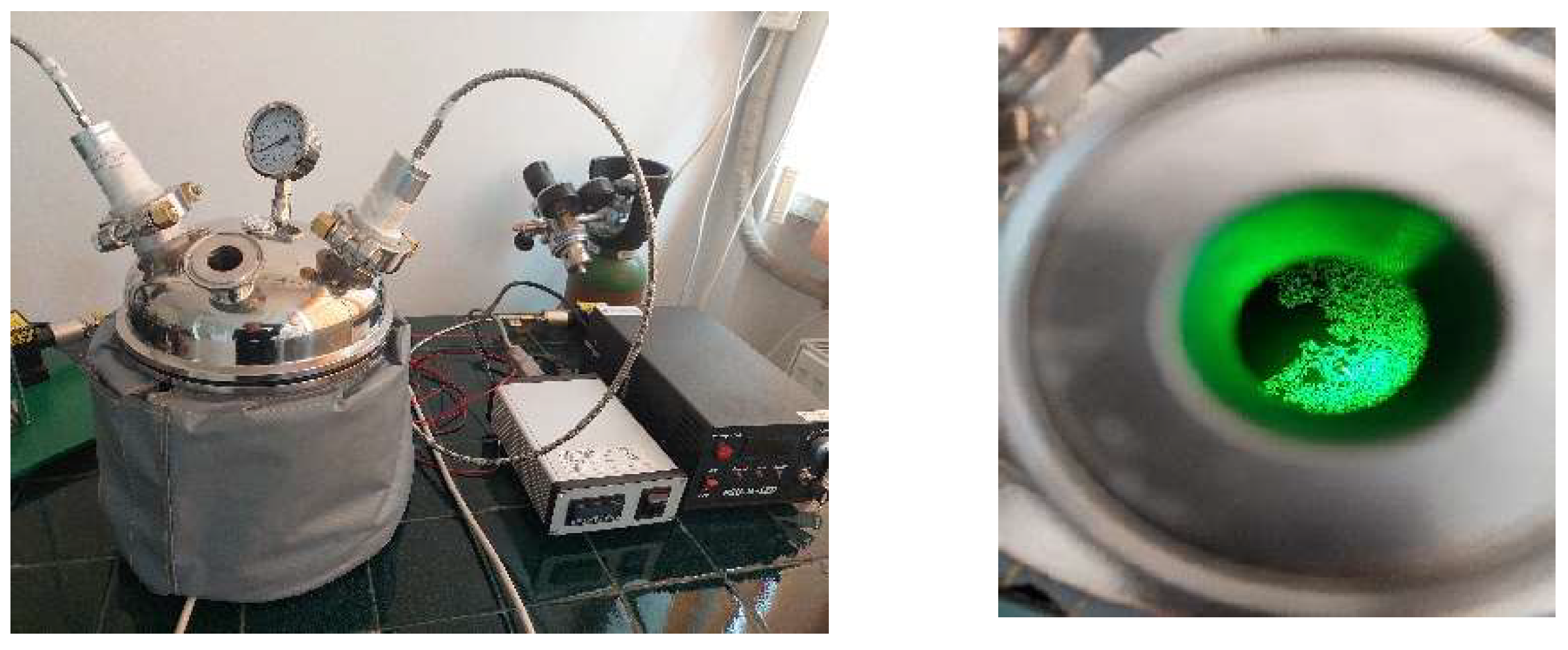
Figure 2.
HPLC profile of flavonoids and isoflavonoids-rich extract of M. sativa ([M-H]:267-formonontin; [M-H] ¯:269-genistein; [M-H] ¯:285-luteolin and kaempferol; [M-H]-:301-ellagic acid and quercetin; [M-H]¯:353-chlorogenic acid, [M-H] ¯:431-vitexin; [M-H]-:447-quercitrin; [M-H] ¯:463- quercetin 3-β-D-glucoside; [M-H] ¯:609-rutin) by HPLC-MS.
Figure 2.
HPLC profile of flavonoids and isoflavonoids-rich extract of M. sativa ([M-H]:267-formonontin; [M-H] ¯:269-genistein; [M-H] ¯:285-luteolin and kaempferol; [M-H]-:301-ellagic acid and quercetin; [M-H]¯:353-chlorogenic acid, [M-H] ¯:431-vitexin; [M-H]-:447-quercitrin; [M-H] ¯:463- quercetin 3-β-D-glucoside; [M-H] ¯:609-rutin) by HPLC-MS.
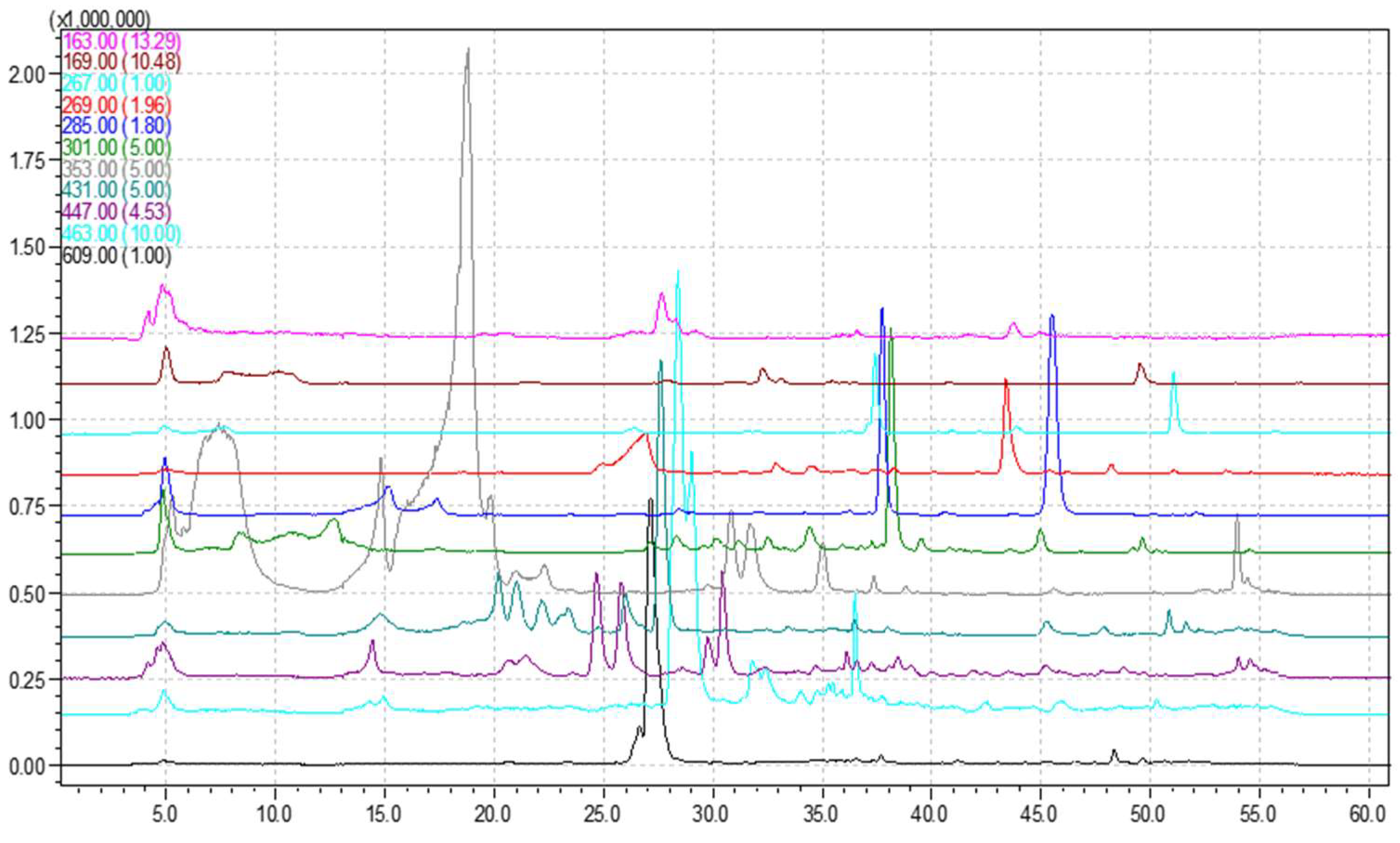
Figure 3.
HPLC profile of flavonoids and isoflavonoids-rich extract of S. virgaurea ([M-H]:267-formonontin; [M-H] ¯:269-genistein; [M-H] ¯:285-luteolin and kaempferol; [M-H]-:301-ellagic acid and quercetin; [M-H]¯:353-chlorogenic acid, [M-H] ¯:431-vitexin; [M-H]-:447-quercitrin; [M-H] ¯:463- quercetin 3-β-D-glucoside; [M-H] ¯:609-rutin) by HPLC-MS.
Figure 3.
HPLC profile of flavonoids and isoflavonoids-rich extract of S. virgaurea ([M-H]:267-formonontin; [M-H] ¯:269-genistein; [M-H] ¯:285-luteolin and kaempferol; [M-H]-:301-ellagic acid and quercetin; [M-H]¯:353-chlorogenic acid, [M-H] ¯:431-vitexin; [M-H]-:447-quercitrin; [M-H] ¯:463- quercetin 3-β-D-glucoside; [M-H] ¯:609-rutin) by HPLC-MS.
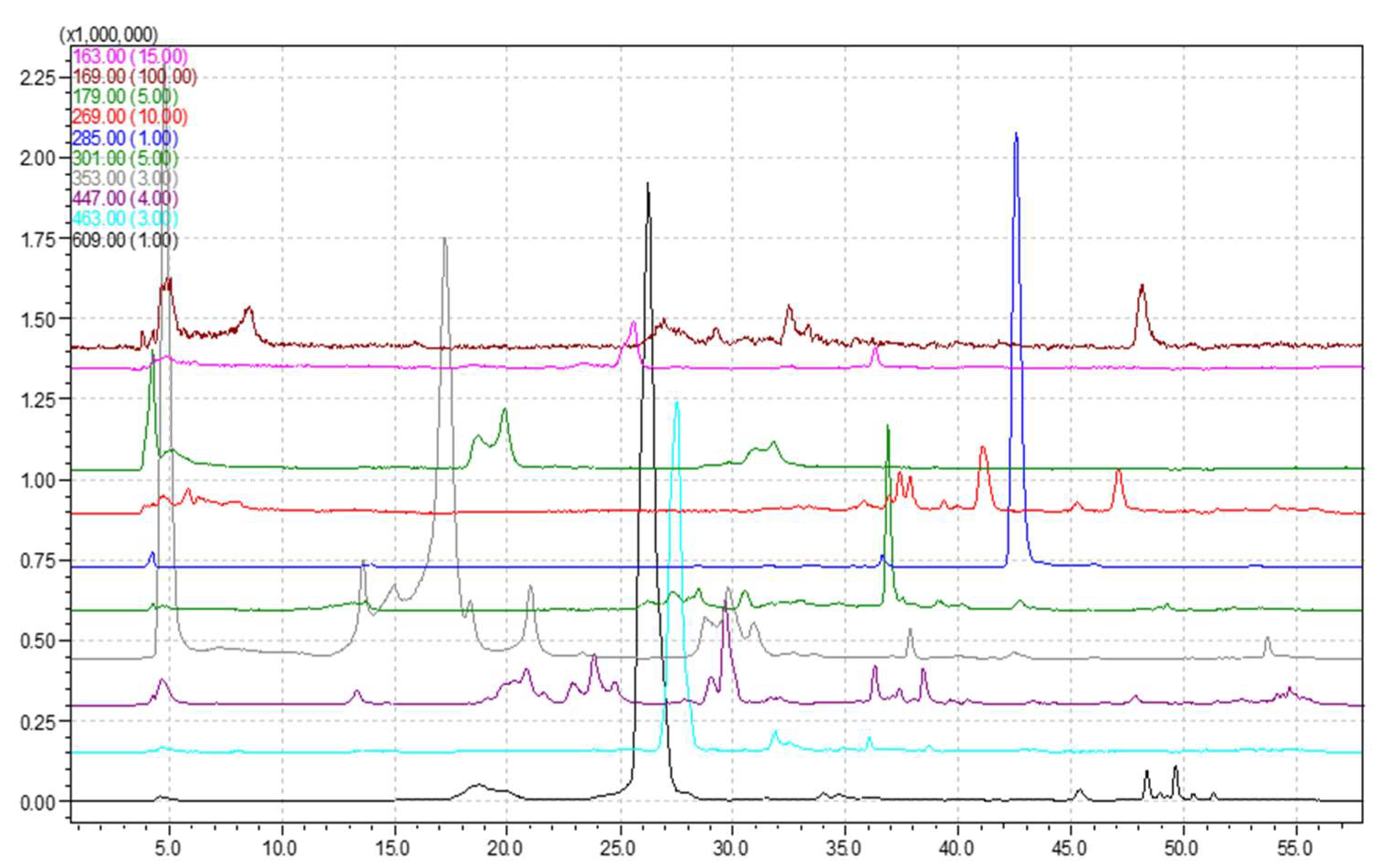
Figure 4.
Effect of flavonoids and isoflavonoids-rich extracts on insulin secretion.
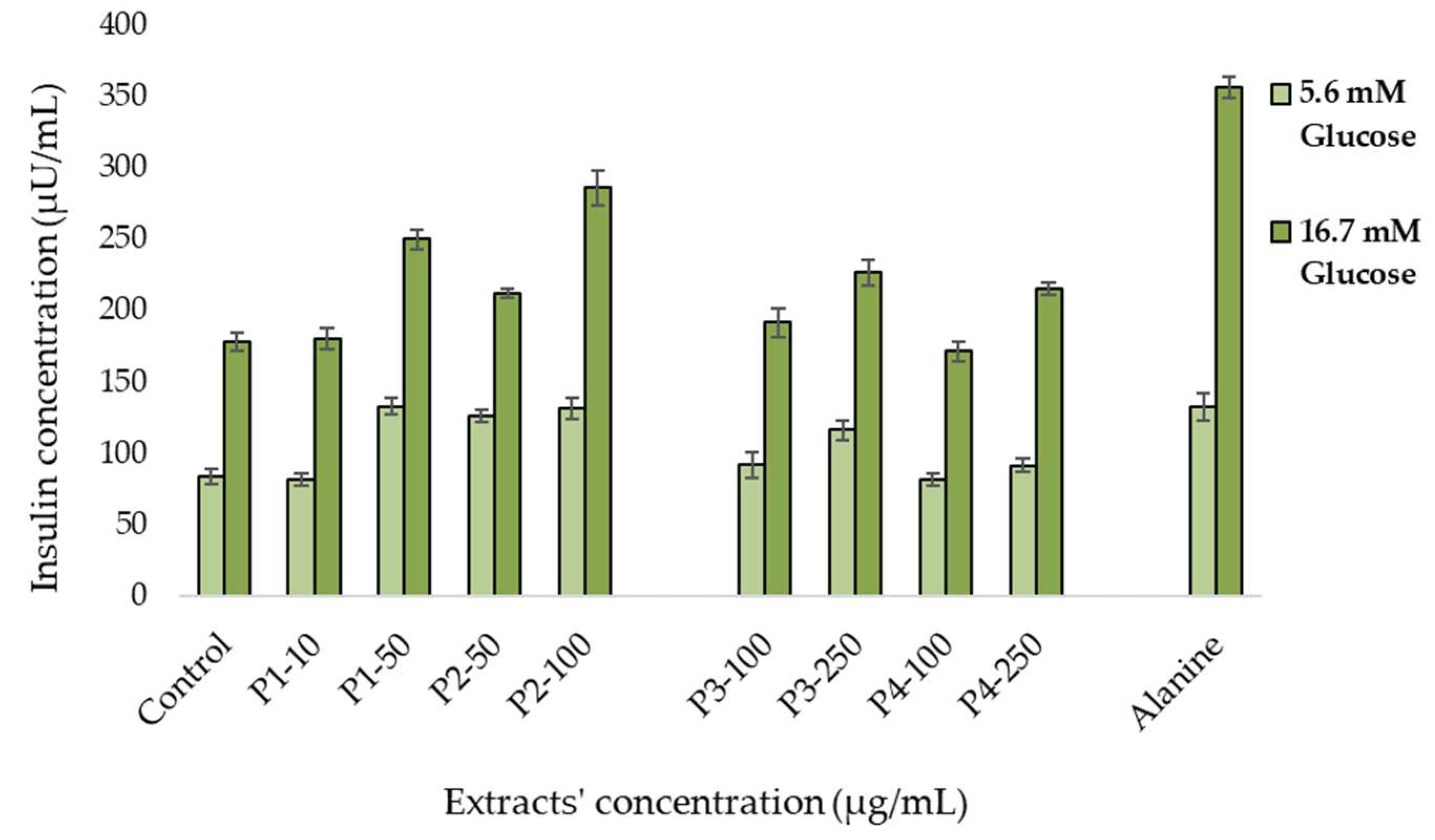

Table 1.
Contents of target compounds in the extracts.
| Compound |
M. sativa flavonoid- and isoflavonoid-rich extract (µg/mL) |
S. virgaurea flavonoid- and isoflavonoid-rich extract (mg/mL) |
||
| Conc. ASE | Conc. LE | Conc. ASE | Conc. LE | |
| Rutin | 157.16±9.6 | 58.48±4.8 | 2024.05±108.9 | 1652.05±99.7 |
| Luteolin | 10.43±1.2 | 8.43±0.7 | 2.13±0.2 | 2.88±0.2 |
| Quercitrin | 5.71±0.5 | 6.02±0.5 | 21.90±1.8 | 22.62±2.1 |
| Quercetin 3-β-D-glucoside | 23.04±2.2 | 73.07±6.2 | 175.14±11.6 | 183.11±12.9 |
| Quercetin | 1.10±0.1 | 10.69±0.9 | 2.48±0.1 | 17.09±1.4 |
| Kaempferol | 10.20±0.9 | 19.38±1.4 | 52.05±4.2 | 58.35±5.1 |
| Isorhamnetin | 1.29±0.1 | 0.47±0.04 | 6.52±0.5 | 3.59±0.3 |
| Daidzein | 2.47±0.2 | 1.65±0.1 | - | - |
| Formononetin | 4.13±0.3 | 2.72±0.2 | 0.55±0.04 | 0.30±0.02 |
| Genistein | 8.35±0.6 | 3.76±0.2 | 2.21±0.1 | 0.63±0.05 |
| Naringenin | 0.05±0.01 | 0.12±0.01 | 0.47±0.03 | 0.68±0.04 |
| Biochanin A | 0.25±0.02 | 0.36±0.02 | 0.61±0.03 | 0.67±0.03 |
| Vitexin | 7.00±0.5 | 65.30±4.9 | 126.58±8.9 | 158.15±11.8 |
| Total | 231.18±1.2 | 250.45±1.7 | 2414.69±10.5 | 2100.12±10.3 |
Conc.ASE – concentrated extract obtained after ASE extraction; Conc. LE – concentrated extract obtained after Laser extraction; Results are expressed as mean ± SD (n=3).
Table 2.
Total flavonoid content and antioxidant activity of analyzed extracts.
| Sample | Total flavonoid content, mg RE/mL |
DPPH | Fe(III) reducing power | |
|---|---|---|---|---|
| IC50, µg/mL | ||||
| M. sativa | Conc. ASE | 355.43±8.4 | 278.7±2.5 | 42.29±0.3 |
| Conc. LE | 426.70±11.2 | 105.2±1.1 | 40.98±0.2 | |
| S. virgaurea | Conc. ASE | 1398.74±15.6 | 381.3±2.9 | 58.67±0.3 |
| Conc. LE | 1382.56±13.8 | 198.4±1.6 | 56.92±0.4 | |
| Ascorbic acid | 39.4±0.1 | 125±1.1 | ||
Conc.ASE – concentrated extract obtained after ASE extraction; Conc. LE – concentrated extract obtained after Laser extraction; RE: rutin equivalent. Results are expressed as mean ± SD (n=3).
Table 3.
α-amylase and α-glucosidase enzymes inhibition of analyzed extracts.
| Sample | α-amylase inhibition | α−glucosidase inhibition | |
|---|---|---|---|
| IC50 (µg/mL) | |||
| M. sativa | Conc. ASE | 23.9±1.2 | 24.2±0.9 |
| Conc. LE | 26.8±1.1 | 25.7±1.1 | |
| S. virgaurea | Conc. ASE | 33.9±2.4 | 9.3±0.9 |
| Conc. LE | 32.1±1.9 | 8.7±0.6 | |
| Acarbose | 24.2±1.6 | 66.5±4.2 | |
| Rutin | 18.2±2.4 | 8.6±0.7 | |
Conc.ASE – concentrated extract obtained after ASE extraction; Conc. LE – concentrated extract obtained after Laser extraction.
Table 4.
Correlation coefficients between assays for flavonoids- and isoflavonoids-rich extracts.
| Pearson correlation coefficient (r) | Significance (p < 0.05) | |
|---|---|---|
| TFC | TFC | |
| DPPH | 0.758 | 0.04657 |
| RP | 0.877 | 0.02995 |
| α-AMYL | 0.967 | 0.02871 |
| α-GLUC | -0.976 | 0.02925 |
TFC: total flavonoids content; DPPH, IC50; RP: reducing power, IC50; α-AMYL: α-amylase inhibition, IC50; α-GLUC: α-glucosidase inhibition, IC50.
Disclaimer/Publisher’s Note: The statements, opinions and data contained in all publications are solely those of the individual author(s) and contributor(s) and not of MDPI and/or the editor(s). MDPI and/or the editor(s) disclaim responsibility for any injury to people or property resulting from any ideas, methods, instructions or products referred to in the content. |
© 2023 by the authors. Licensee MDPI, Basel, Switzerland. This article is an open access article distributed under the terms and conditions of the Creative Commons Attribution (CC BY) license (http://creativecommons.org/licenses/by/4.0/).
Copyright: This open access article is published under a Creative Commons CC BY 4.0 license, which permit the free download, distribution, and reuse, provided that the author and preprint are cited in any reuse.


