

Submitted:
28 September 2023
Posted:
29 September 2023
You are already at the latest version
Abstract
In times of war, civilians experience a heightened risk of exposure to traumatic experiences. This can lead to a greater risk of developing mental health conditions such as post-traumatic stress disorder (PTSD), which can impact individuals and communities. Research suggests that the severity of the reactions to traumatic events is likely to be influenced by the level of exposure to the traumatic events and personal characteristics. This paper examines the correlation between symptoms of Post-Traumatic Stress Disorder (PTSD) and various factors such as the extent of exposure to missile alarms, personal traits, and socioeconomic elements among Israeli civilians impacted by rocket attacks from Hamas. Our specific focus is on the influence of these rocket attacks on Israel's populace during the military operation conducted by the Israeli army, "Guardian of the Walls," in May 2021.Our findings suggest that, typically, individuals who have experienced less exposure to missile attacks and alarms, those belonging to larger families, and those with a higher level of education and income are less prone to experiencing post-traumatic symptoms. The study was carried out using surveys that gathered demographic information about the participants, as well as a specific questionnaire designed to evaluate the presence and extent of post-trauma symptoms.These findings could aid in devising preventative strategies to mitigate the PTSD risk among vulnerable groups. They indicate the importance of considering socio-economic elements when delivering mental health services to those impacted by violent incidents and trauma.
Keywords:
PTSD
; armed conflicts
; socioeconomic status
1. Introduction
The concept of mental trauma refers to mental harm caused by an event, which is perceived by the individual as threatening one’s essential needs, such as self-confidence, safety, social and economic status, or physical well-being (Ehlers & Clark, 2000). The trauma associated with war violence can leave a lasting impact on the mental and emotional well-being of victims and witnesses. Those who experience such traumatic events can suffer from a range of psychological difficulties, including PTSD, major depression, helplessness, fear, and anxiety. War violence can have a long-term effect on the mental health of populations living in affected regions. The long-term consequences of mass violence stem primarily from the psychological trauma it causes (MacDermid Wadsworth, 2010). Therefore, events of military conflict and stress could be perceived as traumatic events and cause post-trauma symptoms (Blevins et al., 2015; Paryente, 2021).
The impacts of such psychological stress are troubling in themselves but often extend beyond the immediate toll on mental health. Certain degrees of trauma, fear, depression, and anxiety can result in emotional burnout, disrupt social functioning, and create hurdles. These often prompt changes in the behavior and decision-making processes of the individuals impacted (Bayer, 2023; Bayer et al., 2019, Solomon and Bayer, 2022, Bayer and Shtudiner, 2023).
The protracted conflict between Israel and Hamas has led to substantial suffering and loss on both sides. Despite extensive research into the conflict itself, there’s a paucity of knowledge about the psychological toll of rocket alarms on those residing in conflict-affected regions. This article aims to bridge this informational gap by exploring the correlation between socioeconomic status and Post-Traumatic Stress Disorder (PTSD) among Israelis living in zones affected by the Israel-Hamas confrontation. We probe how PTSD is associated with the level of exposure to rocket attack warning systems, individual attributes, and socio-economic factors among Israeli civilians who experienced the intense events of the Israeli military’s “Guardian of the Walls” operation in May 2021. Our goal is to dissect how much PTSD correlates with these varied elements to garner a more comprehensive understanding of war’s psychological impact on civilian communities.
“Guardian of the Walls” operation
In May 2021, amid the 12-day confrontation between Israel and Hamas in Gaza, Hamas, along with other militant groups, launched barrages of rockets and mortar shells primarily aimed at densely populated regions of Israel. The cumulative total of rockets discharged by Hamas and other groups was 4,360, out of which 3,573 rockets impacted within the boundaries of Israel. The remaining rockets misfired, landing within the Gaza Strip or falling into the Mediterranean. The Iron Dome missile defense system effectively intercepted nearly 90% of the rockets aimed at populated regions. The rocket fire directly resulted in the death of 11 individuals, including a soldier who was killed due to an anti-tank missile strike. In addition to these fatalities, 357 people sustained injuries. Significant damage was inflicted on residential buildings, a number of educational facilities, factories, and agricultural structures, as per the 2022 report by The Meir Amit Intelligence and Terrorism Information Center. Figure 1 provides a geographic illustration of the areas where rocket alerts were triggered during Operation “Guardian of the Walls”.
2. Methodology
Questionnaires
In order to gauge the degree of Post-Traumatic Stress Disorder (PTSD), participants filled out a survey designed to measure and categorize the severity of post-traumatic symptoms, known as the Post-Traumatic Checklist for DSM-5 (PCL-5).1 The Post-Traumatic Checklist for DSM-5 (PCL-5) questionnaire is a broadly utilized instrument for determining the intensity of PTSD symptoms. The PCL-5, a self-report measure consisting of 20 items, corresponds to the 20 PTSD symptoms identified in DSM-5 (Blevins et al., 2015). It comprises 20 multiple-choice, self-administered questions and demonstrates high internal reliability with an alpha coefficient of 0.96 (Bovin et al., 2016; Wortmann et al., 2016). Participants are prompted to indicate on a 5-point Likert scale, ranging from 0 to 4, how much each of the 20 items has troubled them over the past month. The PCL-5 test is applied to quantify the severity of PTSD symptoms. The scores for all items are added together to yield a total severity score, which can range from 0 to 80. In line with prior studies (Bovin et al., 2016; Wortmann et al., 2016), we also used the PCL-5 to provide a provisional PTSD diagnosis. Any item rated as 2, signifying “Moderately,” or higher was considered an acknowledged symptom. Adheres to the DSM-5 diagnostic criteria requiring at least: 1 item from Criterion B (questions 1-5), 1 item from Criterion C (questions 6-7), 2 items from Criterion D (questions 8-14), and 2 items from Criterion E (questions 15-20), a dichotomous variable, ‘PTSD Binary,’ was assigned. This variable was assigned a value of 1 for those participants who met the diagnostic criteria, and a value of 0 otherwise. For the purpose of this study, participants who didn’t display any PTSD symptoms were categorized as “healthy,” irrespective of any existing physical illnesses.
Participants were required to respond to demographic queries (such as gender, age, income, education, and number of children) as well as questions related to their experiences during Operation “Guardian of the Walls.” Within this section, participants were asked about their place of residence. Their responses were utilized to construct a variable indicating the number of alarms triggered in their specific localities. This was accomplished by correlating the provided residential information with data from the Israeli Home Front Command on the count of alarms activated in each settlement. The number of missile alarms can be viewed as a reflection of the number of missile strikes on a residential settlement, given that the Israeli defense system initiates a missile alarm each time a missile is directed toward a specific residential area.
Additionally, we utilized a categorical variable to denote the different regions within Israel, based on the time citizens are given to seek shelter during a rocket alarm. These regions were segmented into seven categories ranging from “Immediate” to “3 minutes,” as depicted in Figure 2.
Research population
The survey was administered through an internet-based questionnaire, which was filled out by 395 individuals on various social media platforms. We had to exclude thirteen responses from the sample due to incomplete information or irrelevant responses, leading to a final participant count of 382 (78.8% of whom were female, with an average age of 38.72). There was no participation fee for the subjects and participation was voluntary. The participants originated from different regions of Israel, predominantly from areas that endured rocket attacks during the “Guardian of the Walls” operation. Among the participants, 62 displayed scores suggestive of significant PTSD, in accordance with the defined criteria. The dispersion of the participants’ PCL-5 questionnaire scores can be viewed in Figure 3.
3. Results
Table 1 provides the descriptive statistics of our sample of 382 participants. The participants are divided into two conditions based on the PTSD Binary variable, which is a dichotomous variable indicating whether they meet the criteria for suffering from post-trauma according to the DSM-5 diagnostic criteria.
Socioeconomic status and PTSD symptoms
To test and quantify the association of socio-economic characteristics with post-trauma symptomology, we examined simple probit models, which consider the dependent variable of whether an individual is suffering from PTSD or is healthy. By running single-variable models, the effects of each socioeconomic factor can be assessed separately to determine how strongly it is associated with the tendency to experience PTSD symptoms. The models are illustrated in Table 2.
The analysis of social and economic factors indicates that individuals with higher levels of education and income, as well as those who are married and have more children, are statistically significantly less likely to experience post-traumatic symptoms. Additionally, there is a negative correlation, albeit at a lower level of statistical significance, between the socioeconomic rating of the respondent’s settlement and the likelihood of having symptoms of post-traumatic stress disorder.
Socioeconomic status and PTSD symptoms - Multi-variable model
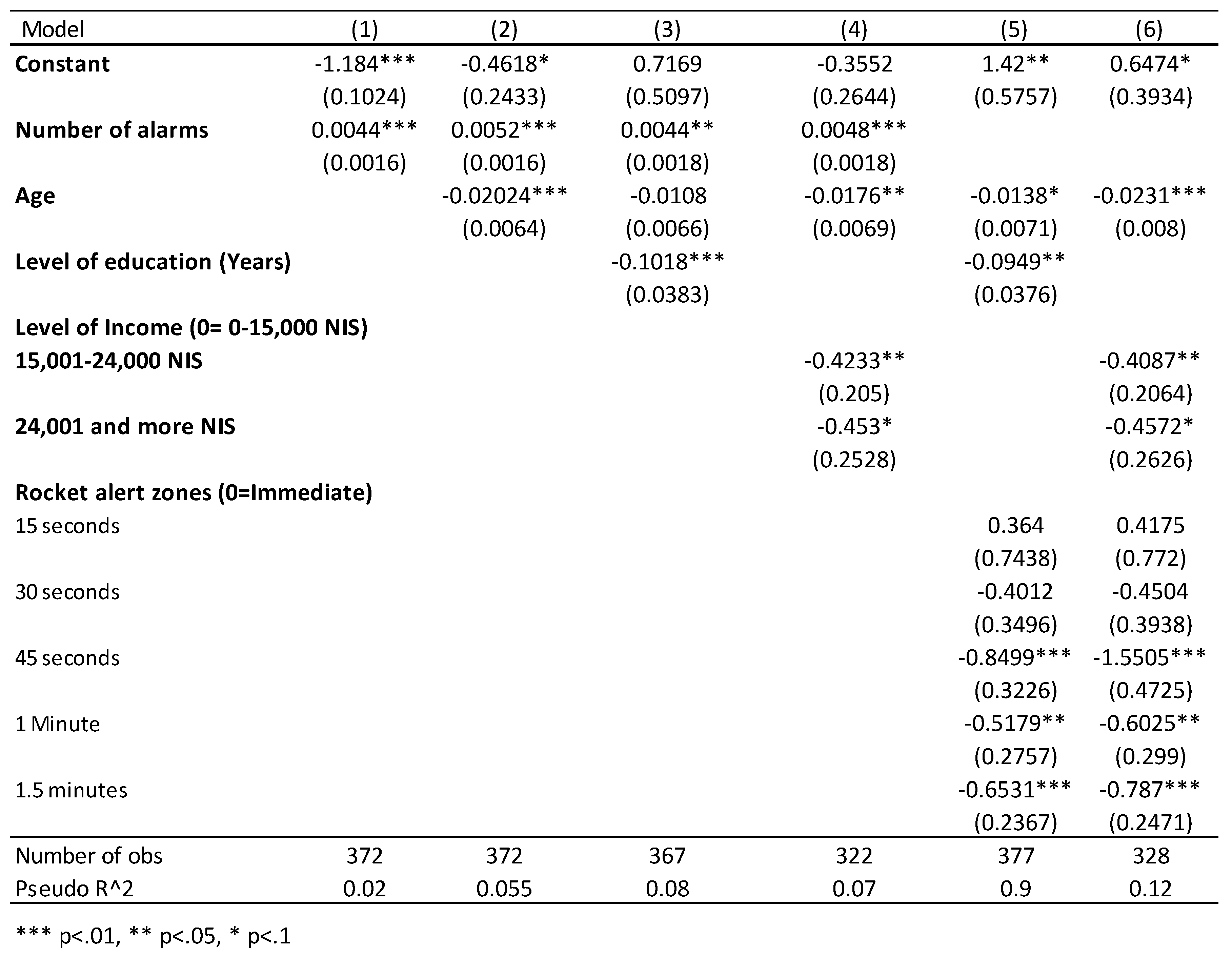
Based on the findings presented in Table 1, notable differences exist between the two groups concerning age, income, education, and the number of children. To assess the relationship between PTSD symptoms, the number of missile alarms, and demographic variables while accounting for these explanatory factors, multivariate probit models were developed. Table 3 displays probit models that utilized the binary variable as the dependent variable, measuring the presence or absence of post-traumatic stress disorder (PTSD) symptoms based on the PCL-5 test. These models were employed to examine the relationship between the results of the PCL-5 test and the number of missile alarms in the residential area, age, educational attainment, and other pertinent control variables. Through this regression model, we aimed to identify the variables that exhibited the strongest correlation with the outcomes of the PCL-5 test.
Our analysis revealed a statistically significant positive linear association between the number of alarms in the residential area and the likelihood of developing post-traumatic symptoms (p<0.01 in all tested models, models 1-4). When using the categorical area variable instead of the number of alarms variable (models 5 and 6), we observed that areas located farther away from the Gaza Strip had a lower probability of being classified in the PTSD group. Although there is a strong inverse relationship between the distance from the Gaza Strip, the number of missile attacks, and the corresponding sirens, the number of sirens is a more reliable predictor of missile attacks compared to the distance from the Gaza Strip. This can be attributed to the varying intensity of rocket fire across different areas, making the activation of sirens a more accurate indicator of missile attacks compared to the distance from the Gaza Strip.
In most models where age was considered (apart from model 3), there appears to be a statistically significant correlation between age and the tendency to develop post-traumatic symptoms, with this tendency reducing as one age. These findings are consistent with prior scholarly investigations (Kongshøj & Berntsen, 2022).
Our findings indicate that education and income play significant roles in determining an individual’s likelihood of being categorized in the PTSD group. The results of our models suggest that individuals with higher levels of education (models 3 and 5), and those with higher incomes (models 4 and 6) are more likely to exhibit fewer PTSD symptoms. It was not possible to include both education and income levels in a single model due to their high correlation. Incorporating additional variables did not enhance the model’s performance.
Discussion
Our research identified a significant association between post-traumatic symptoms and the frequency of missile siren activations, used as an estimate of exposure to missile attacks and potential harm. Our analysis reveals that individuals from lower socioeconomic backgrounds face a higher risk of manifesting PTSD symptoms compared to their wealthier counterparts, underscoring a significant public health concern.
Socioeconomic status can affect the quality and quantity of support systems an individual has access to. Those from lower-income groups may lack these support structures, making them more vulnerable to PTSD. Education also plays a pivotal role. Higher education usually equips individuals with a better understanding of mental health issues, easier access to relevant information, and improved communication with healthcare providers. In contrast, lower educational attainment might lead to a lack of awareness or misconceptions about PTSD, hindering early detection and treatment.
The complexity of the relationship between PTSD and social and economic factors is exacerbated by the considerable financial burden associated with psychiatric disorders (Langner & Michael, 1963). Those suffering from psychiatric disorders often face difficulty in maintaining employment and other commitments, leaving them in a precarious financial state (Kessler & Frank,1997). This can lead to a vicious cycle, as people with PTSD are at a greater risk of developing more severe symptoms, and are less likely to receive effective treatment. Overall, social and economic factors can have a profound effect on the risk of developing PTSD and the severity of symptoms.
Therefore, it is crucial for public health initiatives and policymakers to comprehend this correlation to develop more effective and easily accessible mental health resources for those most vulnerable. These efforts should confront the higher incidence of PTSD among less affluent individuals, and policy interventions should be designed to bridge these socioeconomic disparities. Measures could include expanding access to mental health services, providing enhanced educational opportunities, and launching initiatives to mitigate chronic stress and trauma exposure within these communities. The complex interaction between PTSD and socioeconomic status presents a significant public health challenge that necessitates a thorough and multifaceted approach.
Our research may support a government policy of evacuating civilians and reducing their exposure to missile alerts and attacks. However, the evacuation’s potential traumatic consequences must be considered, and further research must be conducted to fully assess these impacts. This is especially important for young people who do not have the support of a large family or who are in a low socio-economic situation.
In particular, the study did not evaluate the missile alerts’ effects on children, so it is essential to conduct a follow-up study that examines this, taking into account the results related to age.
Declarations
The authors of this article declare that the article is the original work of the authors, has not been published or submitted elsewhere, and that all sources used in the preparation of this article have been properly cited and referenced. Furthermore, no financial support was received for the writing of this article, and there is no direct or indirect financial involvement with any of the organizations or individuals mentioned. Additionally, no conflicts of interest exist with regard to the authorship or publication of this academic article. Before conducting any research described in this article, the authors obtained approval from the relevant institutional ethics committee and ensured that the research was conducted ethically by relevant ethical guidelines. Research data is available on OSF.io, a platform for storing, sharing, and managing research data.
| 1 | It is important to note that the questionnaire is one of the diagnostic tools for people with PTSD. A complete diagnosis of PTSD includes a clinical diagnosis that was not included in our study. Therefore, this is not a clinical diagnosis but a general and partial evaluation and assessment according to the validated questionnaire. |
References
- American Psychiatric Association (1994). Diagnostic and statistical manual of mental disorders.
- American Psychiatric Association (2000) DSM-IV-TR, 4th ed.
- Anderhub, V., Güth, W., Gneezy, U., & Sonsino, D. On the interaction of risk and time preferences: An experimental study. German Economic Review 2010, 2, 239–253.
- Bayer, Ya’akov M. (2023) Challenges in Autonomous Financial Management Among Patients with Serious Mental Illness During Long-Term Hospitalization: Insights from Israel. Preprints 2023.
- Bayer, Ya’akov M., Ruffle Bradely, Zultan Ro’i, Dwolazky Tzvi (2018) Time preferences in patients with mild cognitive impairment (MCI). Laurier Centre for Economic Research and Policy Analysis: Toronto.
- Bayer, Ya’akov M. Shtudiner, Z., Suhorukov, O., & Grisaru, N. Time and risk preferences, and consumption decisions of patients with clinical depression. Journal of Behavioral and Experimental Economics 2019, 78, 138–145.
- Bayer, Ya’akov M. and Shtudiner, Ze’ev Sirens of Stress: Financial Risk, Time Preferences, and Post-Traumatic Stress Disorder - Evidence from the Israel-Hamas Conflict. Journal of Health Psychology 2023.
- Blevins, C. A., Weathers, F. W., Davis, M. T., Witte, T. K., & Domino, J. L. The post-traumatic stress disorder checklist for DSM-5 (PCL-5): Development and initial psychometric evaluation. Journal of traumatic stress 2015, 28, 489–498.
- Bovin, M. J., Marx, B. P., Weathers, F. W., Gallagher, M. W., Rodriguez, P., Schnurr, P. P., & Keane, T. M. Psychometric properties of the PTSD checklist for diagnostic and statistical manual of mental disorders–fifth edition (PCL-5) in veterans. Psychological assessment 2016, 28, 1379.
- Ehlers, A., & Clark, D. M. A cognitive model of posttraumatic stress disorder. Behavior research and therapy 2000, 38(4), 319–345.
- Israel Central Bureau of Statistics (2012), Financial Literacy Survey: Knowledge, Opinions, and Behavior in Financial Issues, Jerusalem: Central Bureau of Statistics [Hebrew].
- Kessler, R. C.; Frank, R. G. The impact of psychiatric disorders on work loss days. Psychological medicine 1997, 27(4), 861–873. [Google Scholar] [CrossRef] [PubMed]
- Kongshøj, I. L. L.; Berntsen, D. Is young age a risk factor for PTSD? Age differences in PTSD-symptoms after Hurricane Florence. Traumatology 2022. [Google Scholar] [CrossRef]
- Langner, T. S., & Michael, S. T. (1963). Life stress and mental health: II. The midtown Manhattan study.
- MacDermid Wadsworth, S. M. Family risk and resilience in the context of war and terrorism. Journal of Marriage and Family 2010, 72, 537–556. [Google Scholar] [CrossRef]
- Mollica, R. F.; Wyshak, G.; Lavelle, J. The psychosocial impact of war trauma and torture on Southeast Asian refugees. The American journal of psychiatry 1987. [Google Scholar]
- Paryente, B. Parenting Experiences under Ongoing Life-threatening Conditions of Missile Attacks. Journal of Child and Family Studies 2021, 30, 1685–1696. [Google Scholar] [CrossRef]
- Solomon, S., & Bayer, Y. M. (2022). Reading mental harm through the lens of socio-economic rights: An empirical study of the impact of education, family, and income on the notion of civilian mental harm in warfare. Brunel University London, Ben Gurion University of the Negev.
- The Meir Amit Intelligence and Terrorism Information Center, https://www.terrorism-info.org.il/, Retrived:06/04/2022.
- Vinck, P., Pham, P. N., Stover, E., & Weinstein, H. M. Exposure to war crimes and implications for peace building in northern Uganda. Vinck, P. 2007, 298(5), 543–554.
- Wortmann, J. H., Jordan, A. H., Weathers, F. W., Resick, P. A., Dondanville, K. A., Hall-Clark, B.,... & Litz, B. T. Psychometric analysis of the PTSD Checklist-5 (PCL-5) among treatment-seeking military service members. Psychological assessment 2016, 28, 1392.
Figure 1.
A map detailing the areas where rocket alarms were triggered during the “Guardian of the Walls” operation. The data was sourced from the Home Front Command of the Israel Defense Forces (IDF), obtained through a request for information under the Freedom of Information Law.
Figure 1.
A map detailing the areas where rocket alarms were triggered during the “Guardian of the Walls” operation. The data was sourced from the Home Front Command of the Israel Defense Forces (IDF), obtained through a request for information under the Freedom of Information Law.
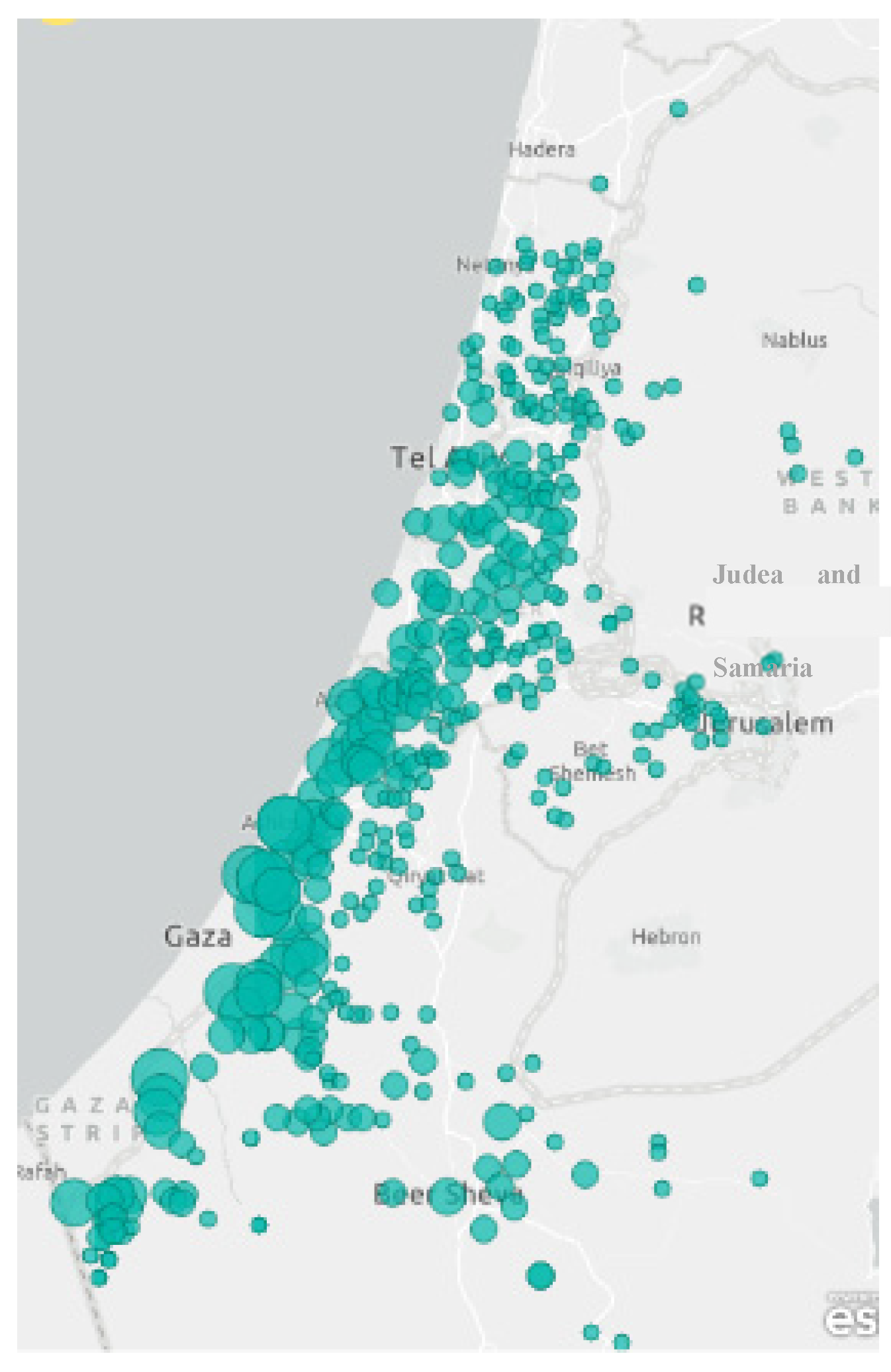
Figure 2.
Rocket alert map. Source: Israeli Home Front Command.
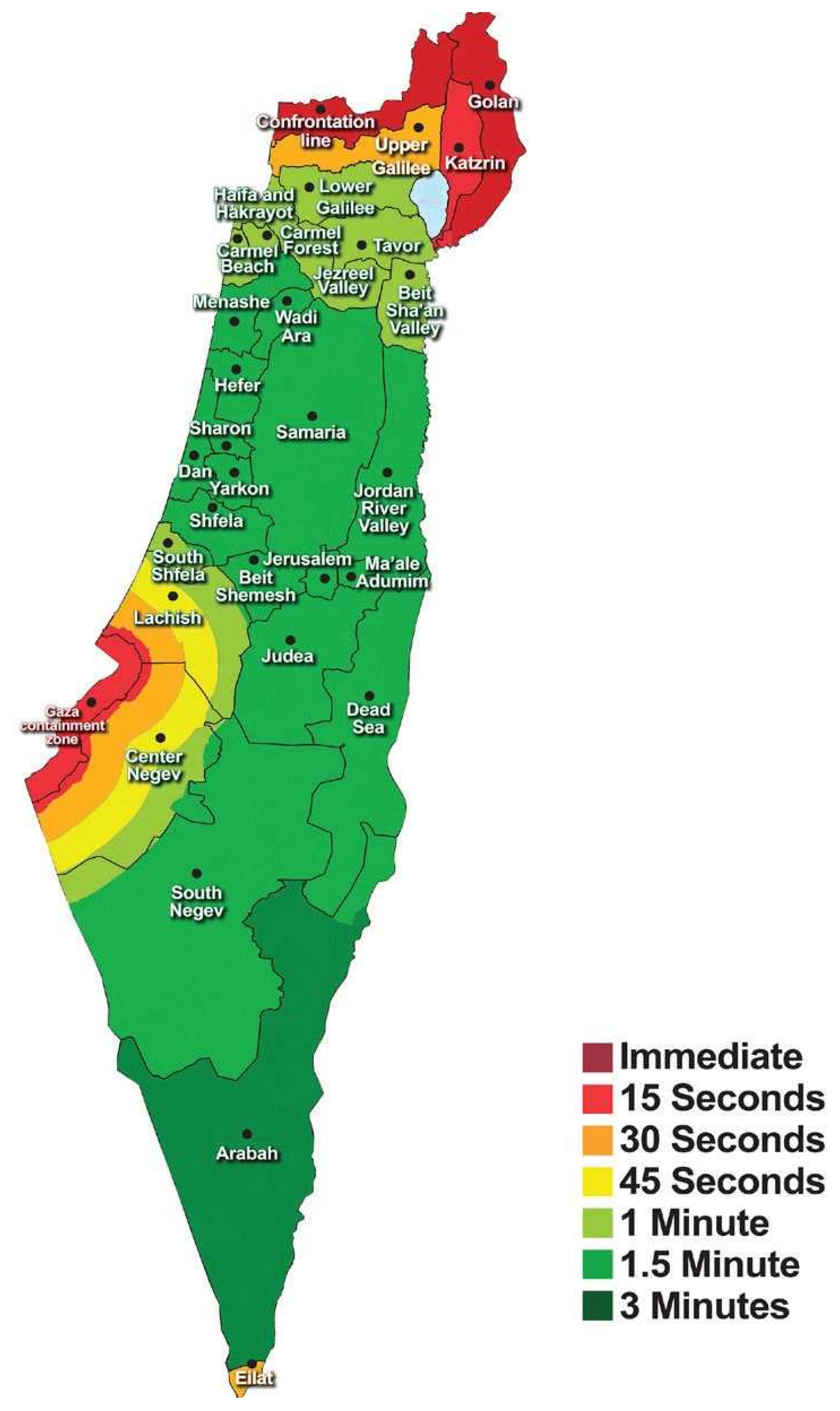
Figure 3.
Distribution of results on the PCL-5 test.
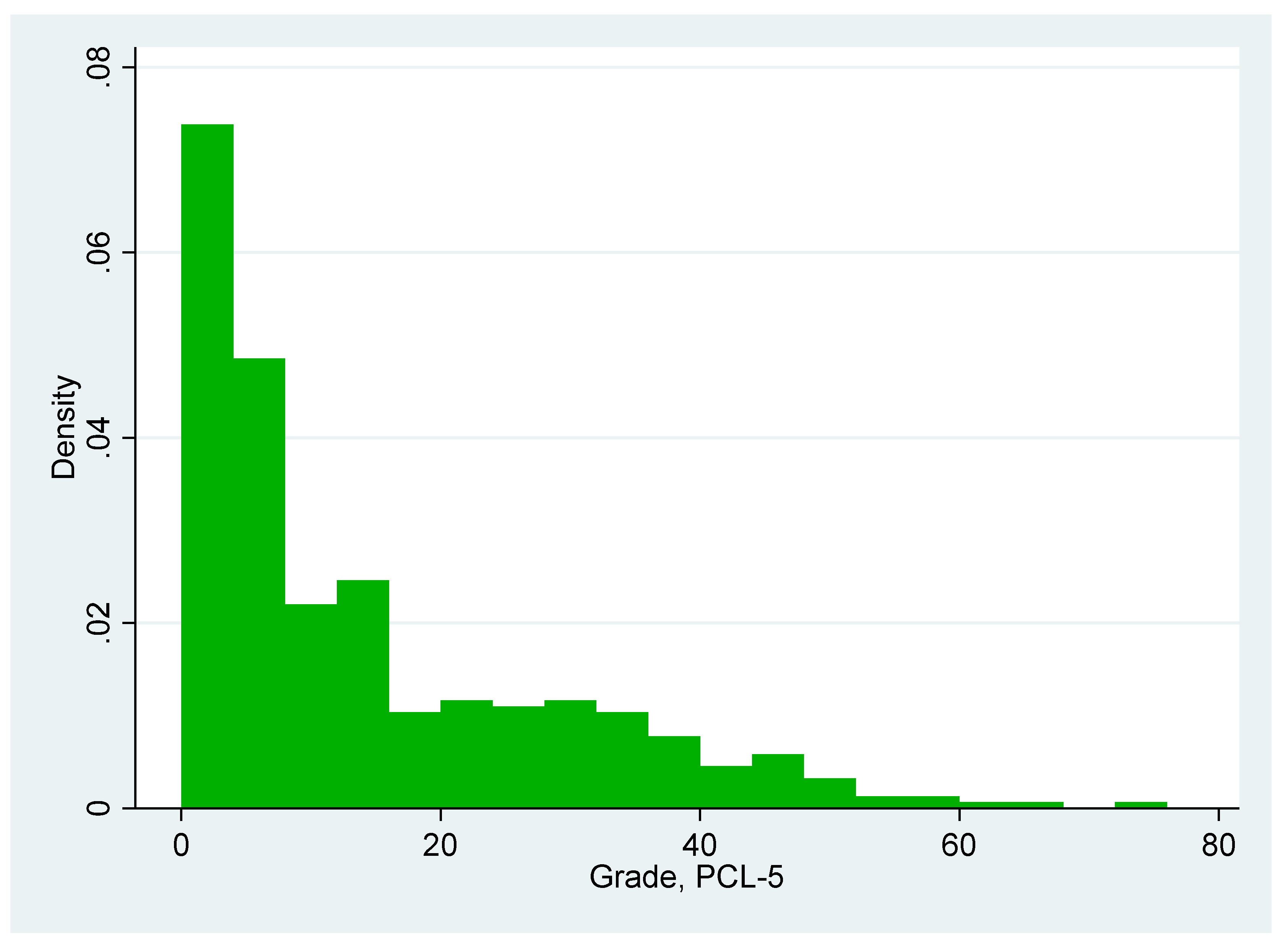

Table 1.
Subjects’ Descriptive Statistics.
| PTSD | Healthy | T Test | |
|---|---|---|---|
| Age | 34.23 | 39.81 | T = -2.900 |
| (12.36) | (13.98) | p = 0.004 | |
| Male | 0.16 | 0.22 | T = -0.995 |
| (0.37) | (0.41) | p = 0.321 | |
| Income | 4.88 | 6.27 | T = -2.914 |
| (3.15) | (2.97) | p = 0.005 | |
| Education | 13.83 | 15.61 | T = -4.274 |
| (3.11) | (2.95) | p < 0.001 | |
| Children | 1.13 | 2.01 | T = -3.525 |
| (1.45) | (1.85) | p < 0.001 | |
| N | 62 | 320 |
Note: Standard deviations appear in parentheses.
Table 2.
results of the simple probit estimation model, where the binary variable indicates the presence (1) or absence (0) of post-trauma symptoms at the clinical level. The model examines the relationship between socio-economic variables and the likelihood of experiencing post-trauma symptoms.
Table 2.
results of the simple probit estimation model, where the binary variable indicates the presence (1) or absence (0) of post-trauma symptoms at the clinical level. The model examines the relationship between socio-economic variables and the likelihood of experiencing post-trauma symptoms.
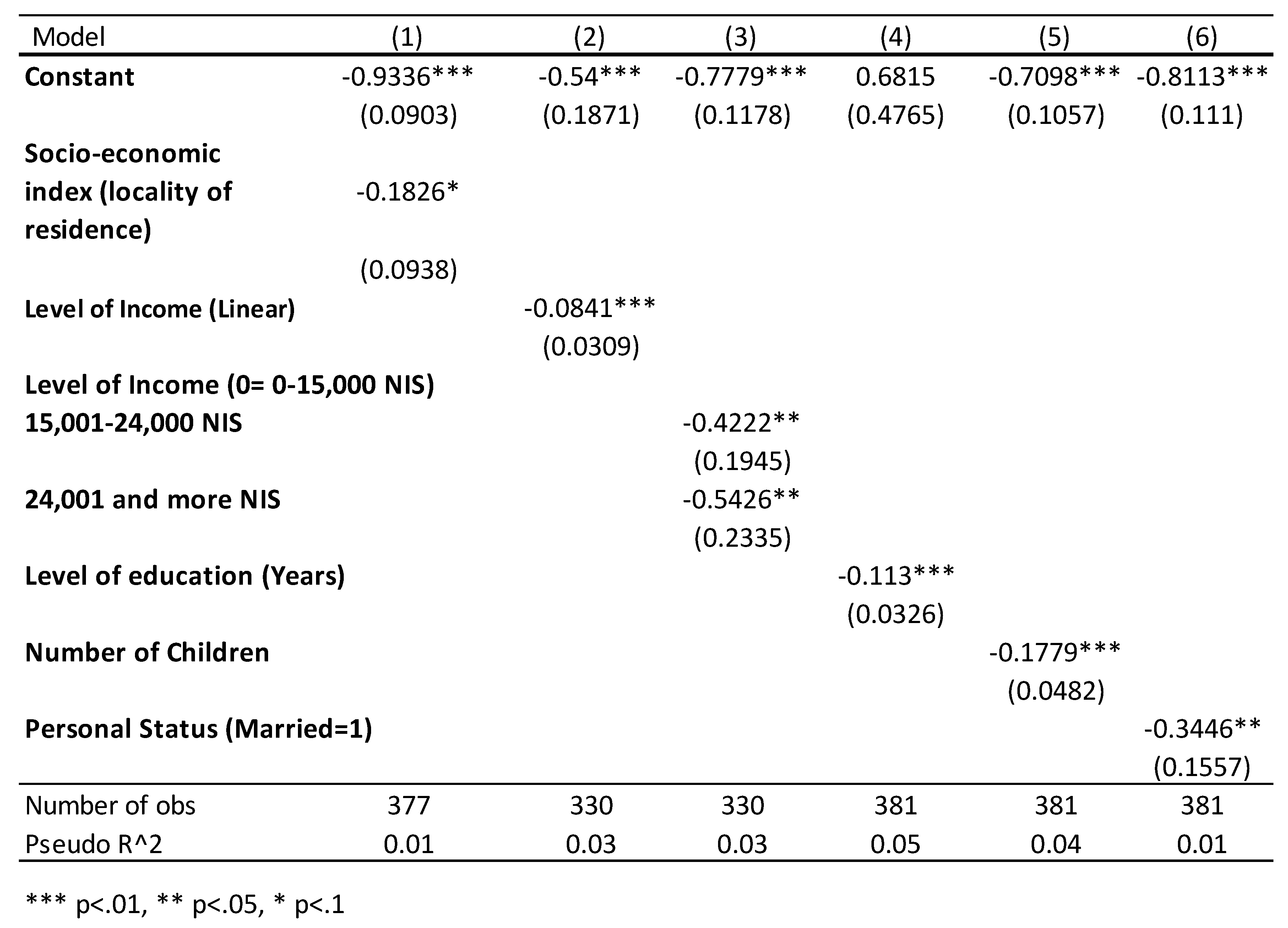
Table 3.
Multi-variables probit estimation model where the binary variable indicates the presence (1) or absence (0) of post-trauma symptoms at the clinical level.
Table 3.
Multi-variables probit estimation model where the binary variable indicates the presence (1) or absence (0) of post-trauma symptoms at the clinical level.
Disclaimer/Publisher’s Note: The statements, opinions and data contained in all publications are solely those of the individual author(s) and contributor(s) and not of MDPI and/or the editor(s). MDPI and/or the editor(s) disclaim responsibility for any injury to people or property resulting from any ideas, methods, instructions or products referred to in the content. |
© 2023 by the authors. Licensee MDPI, Basel, Switzerland. This article is an open access article distributed under the terms and conditions of the Creative Commons Attribution (CC BY) license (http://creativecommons.org/licenses/by/4.0/).
Copyright: This open access article is published under a Creative Commons CC BY 4.0 license, which permit the free download, distribution, and reuse, provided that the author and preprint are cited in any reuse.