

Submitted:
21 September 2023
Posted:
25 September 2023
You are already at the latest version
Abstract
The drastically increasing amount of plastic waste is causing an environmental crisis that requires innovative technologies for recycling post-consumer plastics to achieve waste valorization while meeting environmental quality goals. Biocatalytic depolymerization mediated by enzymes has emerged as an efficient and sustainable alternative for plastic treatment and recycling. A variety of plastic- degrading enzymes have been discovered from microbial sources. Meanwhile, protein engineering has been exploited to modify and optimize plastic-degrading enzymes. This review highlights the recent trends and up-to-date advances in mining novel plastic-degrading enzymes through state-of-the-art omics-based techniques and improving the enzyme catalytic efficiency and stability via various protein engineering strategies. Future research prospects and challenges are also discussed
Keywords:
Plastic degrading bacteria
; sustainable environment
; genetic enhancement
; recycling
; biodegradation
Introduction
Plastics are tough, moisture-resistant, long-lasting hydrocarbons that may contain other inorganic elements such as nitrogen, and sulphur and are mainly produced from fossil fuel which is a non-renewable source [1]. The introduction of plastics has remained the best complement to the convenient lifestyle due to their innate advantages of durability, ease in transportation, handling as well as affordability, thus their use is inseparable from human life [2]. The over-reliance and use of plastics today have consequently caused a sharp rise in levels of plastic waste in the environment all over [3]. Of 8.3 billion tons of plastics that were introduced into the market between the period of 1950 and 2015, 5.8 billion tons have turned into waste [4]. It is forecasted that by 2025, the world's total plastics produced would reach over 600 million tons which stands to augment the plastic waste [2] thus, the entire globe is prone to wallowing in waste if proper measures are not put in place. The problem does not lie in the rampant usage. The concern is that they are recalcitrant to biodegradation and take over 600 million years to naturally degrade completely in the environment and this threatens the environment as they keep piling up and occupying the substantial land surface area. By this, landfill is never an optional choice to manage plastics as the earth carrying capacity is likely to be pressured by human population growth [5,6] not alone seizing vast land for keeping waste at the expense of human benefits.Nevertheless, those left in the soil for farming have the potential to contaminate the soil with the inherent chemicals and additives hence can affect soil productivity and may result in food security issues [7,8]. In developing countries like Ghana, ways of managing waste are through burning [9] and this comes with its associated health challenges through the release of gases such as Carbon dioxide (CO₂), Nitrous oxide, styrene gas, chlorine gas with smoke and cause respiratory diseases such as asthma, bronchitis and heart problems. In Accra, Tema and Tamale, people who reside close to these dumpsites and landfills reiterated past sicknesses such as respiratory diseases, skin infections and headaches [10,11]. Kanhai et al. (2019) [12] through their research survey in Ghana also found that those who burn their solid waste dominated by plastics have ever encountered respiratory infections, stomach discomfort and skin infection which can be associated with the bad act of burning. In cities like Accra, plastic wastes are dumped anyhow and resulted in choked gutters. This consequently causes floods every year which claim lives and property away [13]. Also, the choked gutters with plastic waste everywhere in the country have created breeding grounds for mosquitoes being the root cause of the rampant malaria cases in Ghana [14]. Blood samples of some Ghanaians at Accra and Tema around public dumpsite was found to be contaminated with PCDD, PCDFs and PCBs, a carcinogenic compound which are released through burning of solid waste including plastics [15].
Recycling is now gaining acceptance as the only means to curtail this challenge however, this technique is limited by the different plastics types as it has even proven more efficient in HDPE as compared to LDPE [12,16]. Also, only 1% of total plastic waste generated is recycled since it is an expensive technique and the remaining is dumped in garbage grounds [17]. Recycled plastics have proved to be more detrimental than virgin plastic as, during the process of recycling, it is mixed with a lot of harmful colours, additives, stabilizers and others. Also, plastics cannot be recycled more than 3 times as each recycling results in a decrease in the strength of plastics. This leaves me with the undisputed fact that neither recycling, the usage of incinerators and burning nor landfills can remedy the dangers posed by plastics to the environment, taking into consideration the health of all life forms in it.
Two specific enzymes for PET hydrolase, PETase and MHETase have been identified from Ideonella sakaiensis 201-F6. Recombinant genes are made to increase the effectiveness of enzymes in degrading PET. Previous studies of the PETase gene have been carried out, but to produce the final degradation PET product, the enzyme MHETase is needed [18]
2.1. Overview of Plastics
Plastics are synthetic hydrocarbon polymer of high molecular weight, produced through the process of polymerization [2]. They are usually non-biodegradable, strong, moisture resistant, durable, light weight polymers that are generated from fossil fuels [1] . Plastic was coined from the Greek word "Plastikos" which means pliable and easily moulded [19]. The first plastic was invented by Alexander Parkes in 1862 who made it from cellulose. It later paved way for others to develop other kinds of plastics. John Wesley Hyatt transformed nitrocellulose into plastic by treating with heat pressure and adding of camphor and alcohol to make a celluloid which was helpful in the film industry and photography [2]. In 1907, bakelites, the first synthetic plastic, produced with no naturally occurring molecules was invented by Leo Hendrick Baekeland. Five years later, PVC was patented by Fritz Klatte. I.G. Farben discovered Polystyrene in 1931. Later on, Polyethylene, the most commonly used plastic was invented by E.W. Fawcett. Somewhere in 1968, the first plastic bottles came into be in France for packaging "Vittel Mineral Water" [20]. Now in this 21st century, plastic usage has been an integral part in humans’ life owing to the fact that, it is less costly and durable [21].
Before 1950, the use of plastic was not common. Materials bought were reused because humans had interest for things that last. After 1950 which was followed by the introduction of plastic bottle for packaging mineral water, humans began to appreciate the convenient lifestyle associated with plastic. The advent of plastics brought about the throw-away habit. Single-use plastics such as plastic bags, polystyrene plate was made to be carried along and use everywhere due to the busy schedules of modern life. [2]. There are different types of plastic and they are classified based on their thermal, designing and degradable properties [22] .
2.2. Plastics in High Demand of the World Today
The enormous usage of plastics have paved way for the great industrial revolution of today and established the new era of the world called the "Plastic Age" owing to its ease in transportation, consumption and affordability [23].
Plastics have a wide array of innovative applications that have continually shaped the whole world to offer sustainability to the world’s fast-changing needs [23].
According to the world’s plastic production data, plastic production has reached approximately 370 million tons in 2019 [24]. However, the figure was 335 million tons in 2016 [25] and rose to 348 million tons in the following year [26] which shows an annual substantial increase in global plastic production rate. China is the leading producer of plastics, followed by Europe and North America [23]. The increase in demand of plastics coupled with the inappropriate waste management techniques of handling waste lately has contributed immensely to the unbearable plastic waste situation in Ghana and the world at large. [27].
2.4.2. Factors Affecting Petro-Polymer (Synthetic Plastic) Biodegradation
The rate of polymer degradation relies on the molecular weight, chemical structure and degree of crystallinity. Highly crystalline polymers are rigid. Plastic such as polyethylene takes over 50 years to degrade completely in the natural environment, and last about 400 years in oceans owing to unavailable oxygen and lower temperature conditions of oceans [28]. Below shows table of the various plastic polymer, their density, crystallinity and life span in natural environment;

Table 1.
Types of plastics and their life span, density and crystallinity.
| Plastic Polymer | Density (g/L) | Crystallinity | Life Span (Years) |
|---|---|---|---|
| PET | 1.35 | 0-50 | 450 |
| LDPE | 0.91-0.93 | 50 | 10-600 |
| HDPE | 0.94-0.97 | 70 | >600 |
| PS | 1.03-1.09 | 0 | 50-80 |
| PP | 0.90-0.91 | 50 | 10-600 |
| PVC | 1.35-1.45 | 0 | 50-150 |
Source: [28]
2.5. Plastic Waste; the Global Environmental Issue
The world is now into mass production of plastic. Currently, China is the leading country in plastic production. About 60% of the world’s plastic has a use phase below 50 years and this has expedited the rate at which plastics turn waste in the environment [23]. The mostly used plastic that account for larger proportion of our waste today is single-use plastics as it is used once and thrown away. They are mostly used for packaging. They are dumped indiscriminately in developing countries like Ghana. Plastics remain in the environment for so many years as waste.
In quest of controlling plastic waste, the methods employed had also created environmental issue which is now a global concern. Burning is one method that pollute the environment and as well cause climate change. Burning of plastic releases detrimental gases such as furans and dioxins and cause human endocrine hormone disorders, soil pollution and depleting of ozone-layer [22].
It is forecasted that, if alternative ways of plastic control system are not adopted, there would be 5.6 Gigatonnes of carbon dioxide emission through burning of plastic waste by 2050 [2]. In Ghana, most of the plastic waste have found its way in gutters hence, blocking the water channels whenever it rains. This has caused a lot of flooding in areas of Accra, claiming many lives and property away in almost every raining season.
About 80% of plastic waste accumulated on land get pushed in water bodies and consequently, endangering aquatic lives by blocking the intestines. [29]. Not only aquatic lives, both birds and mammals take in this plastic waste and eventually die of it.
Every year, it is estimated that, one million birds and thousand marine animal die of swallowing plastics or being snared in plastic waste [22,30].
According to Raziyafathima et al. (2016) [31], annual plastic production has doubled over the past 15 years hence, augmenting plastic waste in the environment. Figure 2 shows the trend on the increase in global plastic production over the past years from 1950-2019;
Figure 1.
Plastic waste menace in Ghana.
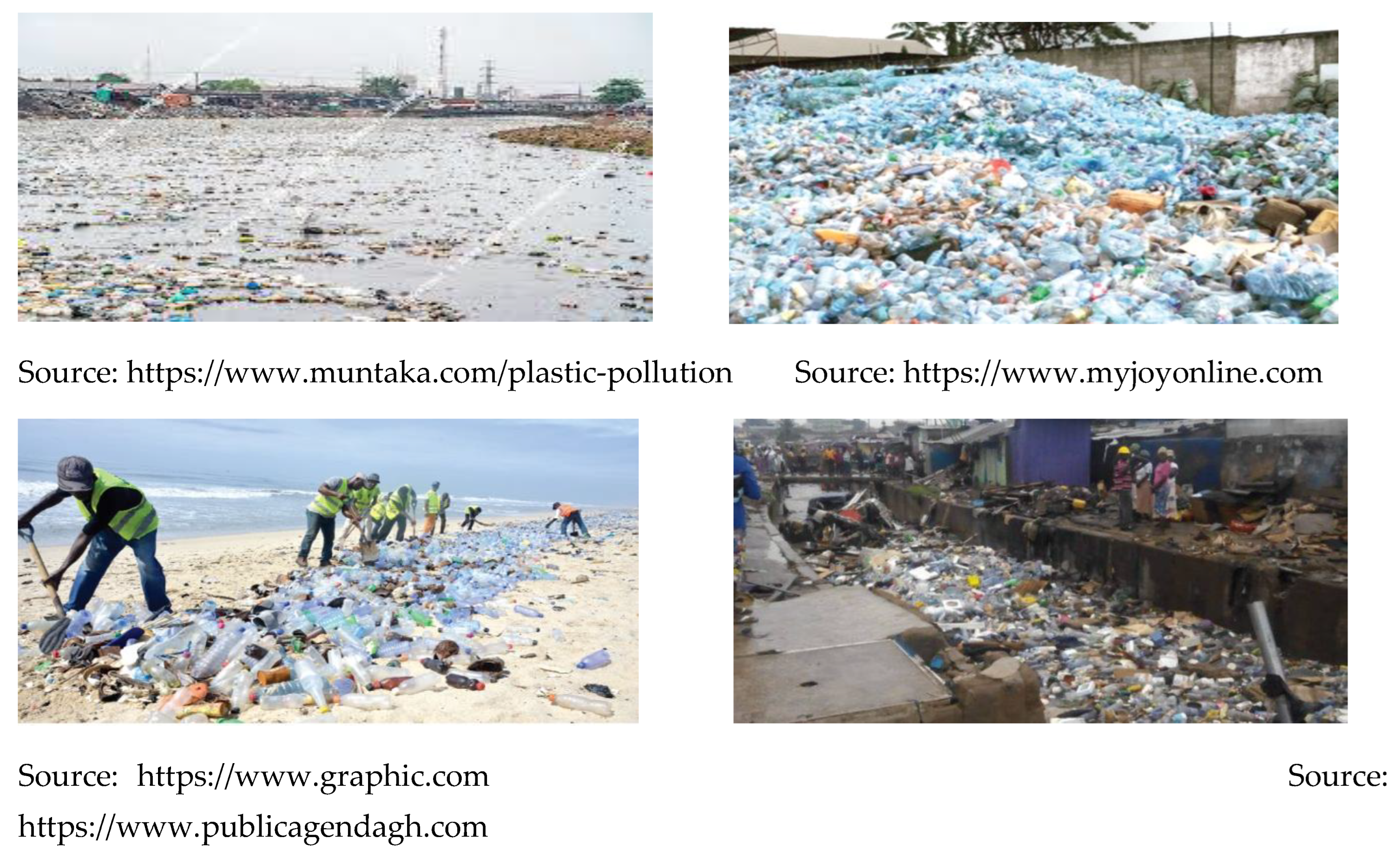
Figure 2.
The global trend on the increase in plastic production since 1950.
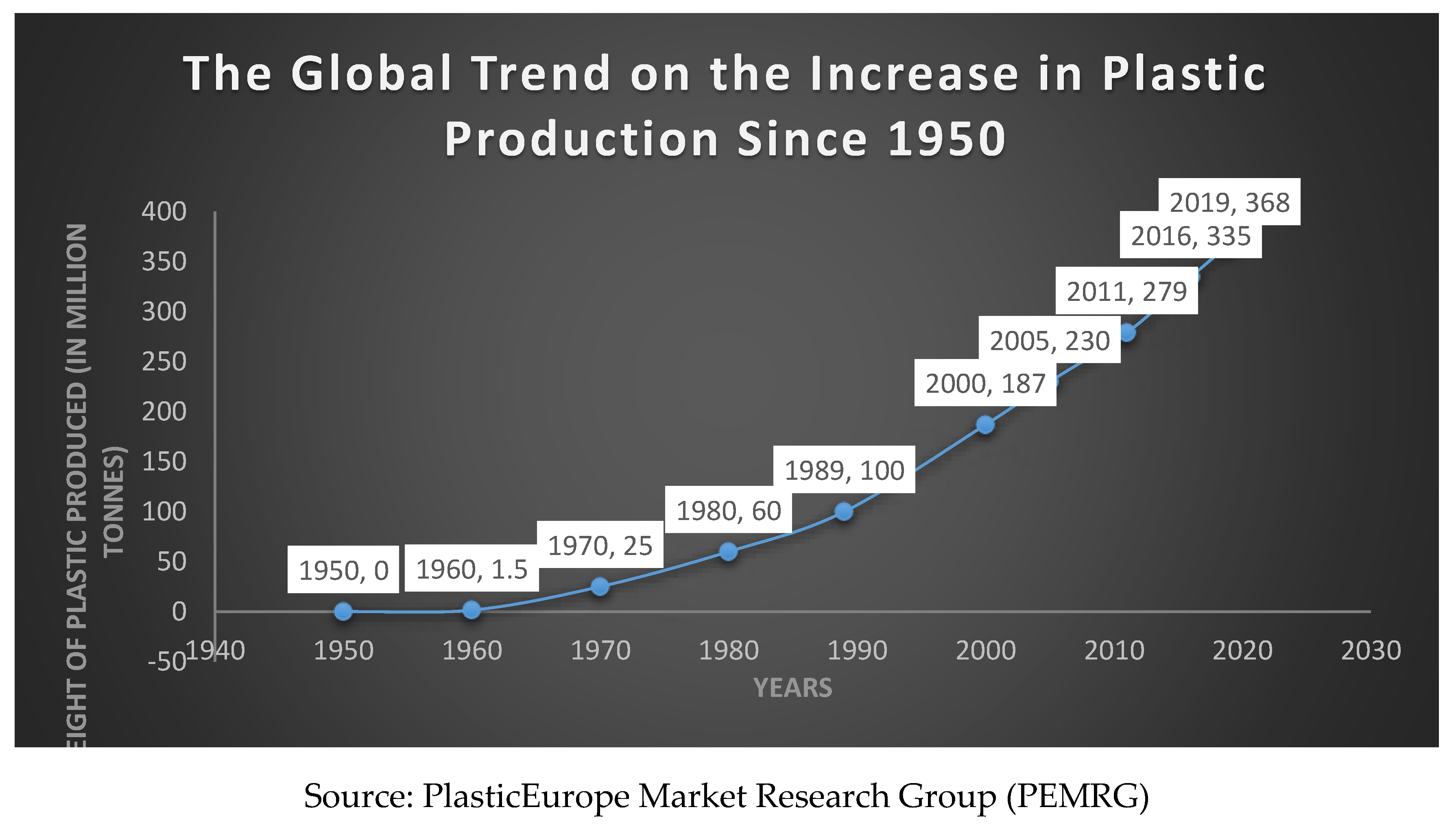
Since 1950, 8.3 billion tonnes of plastic has been produced. The average growth per year is 8.5%.
Asia is the leading country in plastic production. In 2019, China reached 31% of the production of single-use plastic. Africa only contribute 1% of world single-use plastics.
Figure 3.
The distribution of the production of single-use plastics .
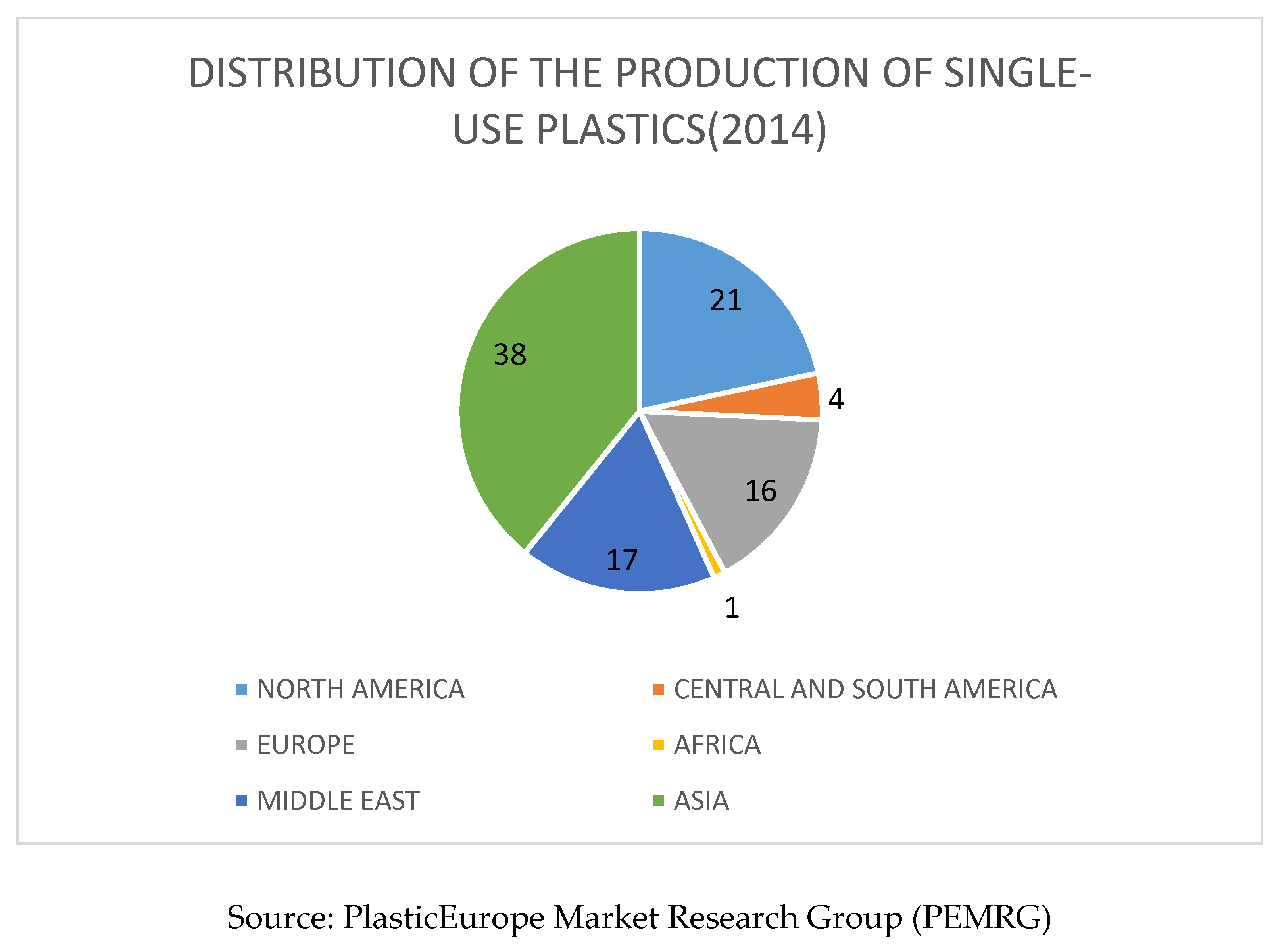
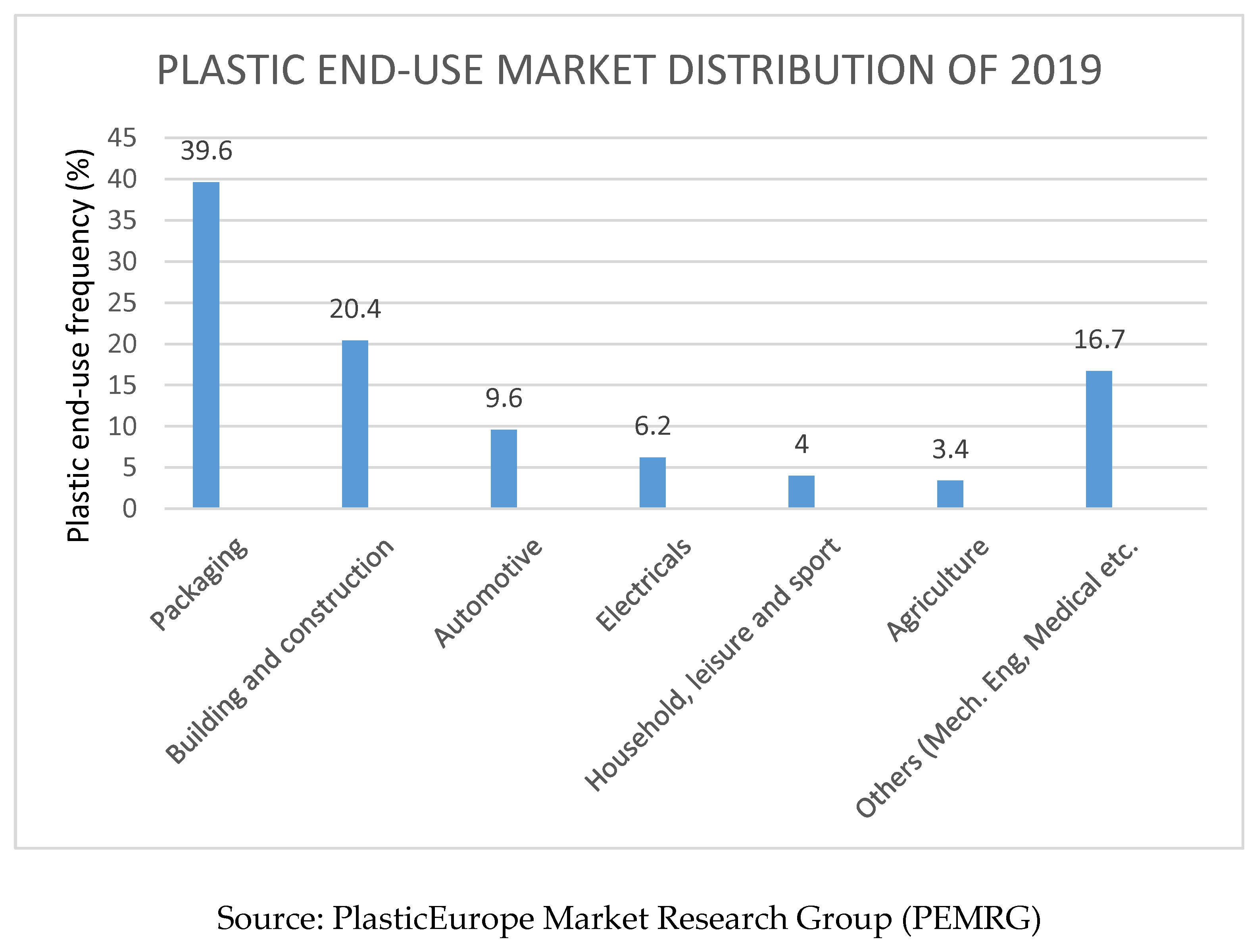
Figure 4.
Plastic end-use market distribution of 2019.
2.6. Mechanism of Biological Degradation of Polyethylene
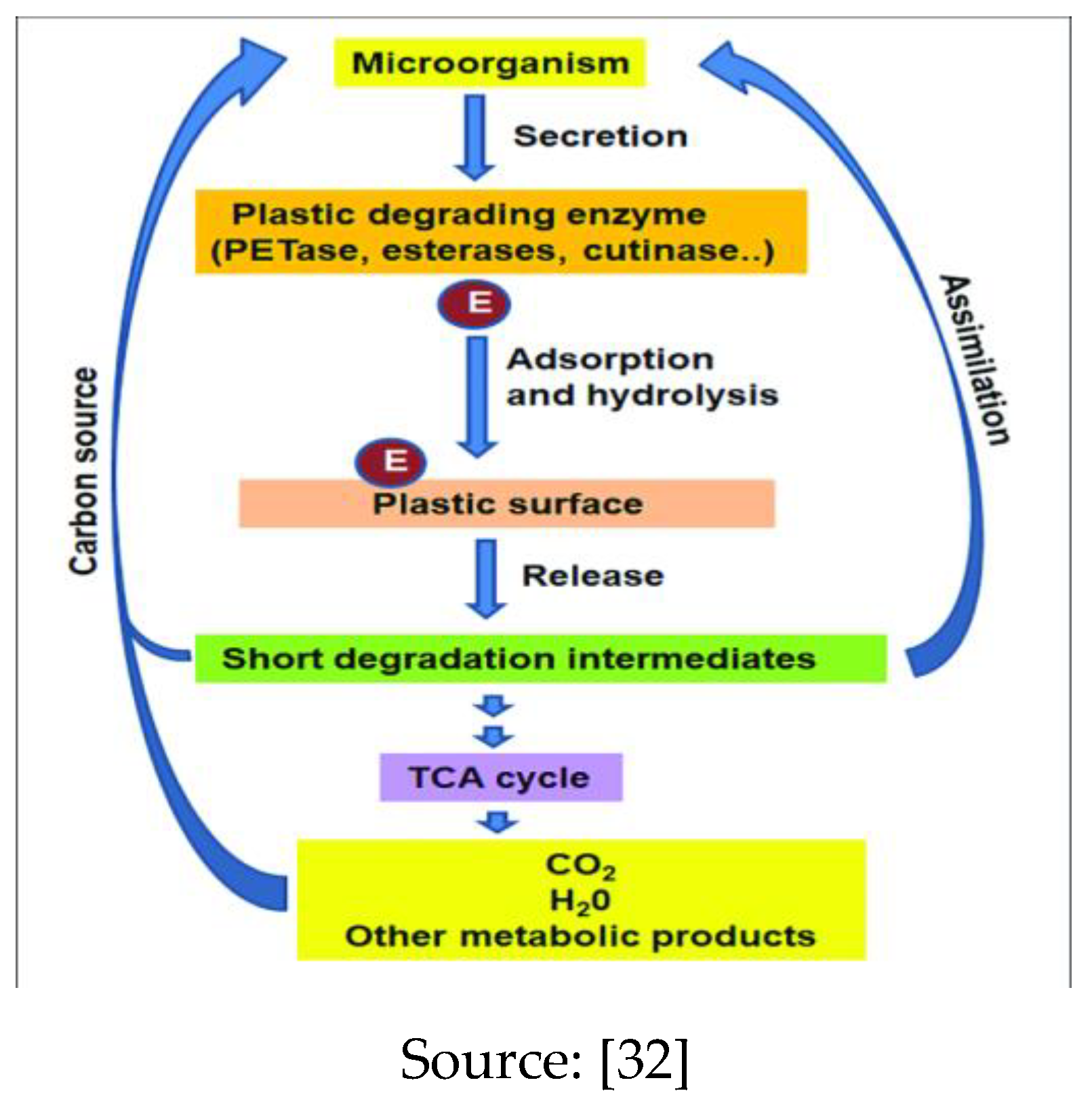
According to Mohanan et al. (2020)[32], processes that are employed by plastic degrading bacteria to decompose polyethylene comes with four stages.
The first stage of biodegradation of plastics after successful attachment of bacterium to the petro-polymer is bio-deterioration which allows the formation of carbonyl-group by the action of oxidative enzymes released by bacteria. Further oxidation generates carboxylic acids by reducing the number of carbonyl-groups.
It is then proceeded to a stage known as bio-fragmentation whereby enzymes secreted by bacteria is use to hydrolyze polymeric carbon chain of the plastic and subsequently leads to fragmentation.
Then, the third stage being referred to as bio-assimilation allows the bacteria to metabolize the fragmented hydrocarbons and takes up the metabolites into their system for bio-utilization. The final stage is termed as mineralization. There is intra-cellular conversion of hydrolyzed products to microbial biomass with the associated release of carbon dioxide and water excreted out of the cell. Below is the schematic diagram for the mechanism of biodegradation.
Figure 5.
Mechanism of biological degradation of polyethylene.
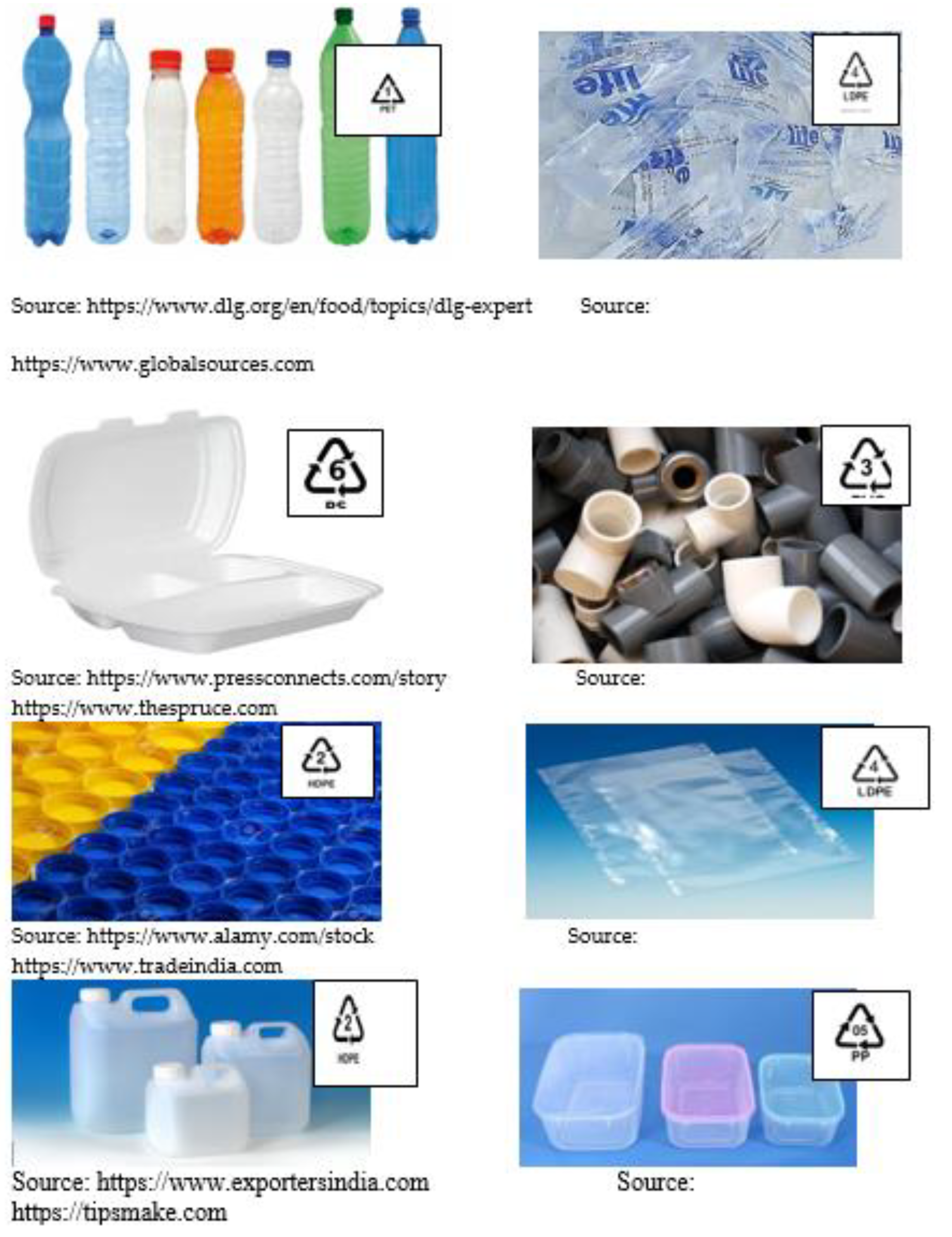
2.7.1. Pictures of the Types of Plastics Materials
Figure 6.
Plastic types materials.
2.8. Factors, Methods and Approaches for Enhancing the Bio-Degradation of Conventional Plastics (Non-Biodegradable Plastics)
2.8.2. Modifications in Growth Medium
According to Kumar and Pathak (2020), the cellular activities of microbes and other bacteria is greatly affected by the nature of growth medium and hence, growth medium must be supplied with different but specific nutrients, vitamins, minerals, metallic cations and other essential components require for optimal growth and metabolic activities of organisms. Hung et al. (2016) reported that, the incorporation of citrate to growth medium containing Pseudomonas protegens, has the tendency to increase the efficacy of degradation for the bacteria by reinforcing strong attachment between the organism and the plastic. Also in other situation it was found that, growth medium that was deficient in nitrogen and rich in carbon was able to expose the bacteria to the polymer [33].
Fe and Mn have been found to act as pro-oxidant of polymers [34]. Also, the hydrophobicity surfaces was increased in Pseudomonas sp. by the application of ammonium sulphate to the growth medium to allow strong hydrophobic-hydrophobic bond formation between plastic and microbes [35]. Notwithstanding, some additives such as nickel and cobalt added to growth medium of Pseudomonas sp. has proven inhibitors to enzymatic activities responsible for plastic degradation [36].
2.8.3. Use of Engineered Strains
Plastic degrading bacteria have so far been isolated from surfaces of plastic waste in oceans, liquid waste and landfill [37,38,39] but according to Kumar and Pathak (2020), novel microbes that has evolved over time with promising characteristics of plastic degradability may be existing somewhere else on plastic waste in the environment, causing fairly good signs of degradation to plastic waste could be isolated from such partly degraded plastic waste and further assessing the degradability of the microbes ex-situ through performance testing after providing right conditions to expedite the degradability of microbes to economically feasible results. It is believed that, the introduction of plastics as novel material to the natural environment as waste over the past century may have instigated the occurrence of evolutionary force to distort the microbial consortia of the natural environment.
In the quest of microbes to survive and adapt to the changed environment, positive mutations may be generated within the microbiome to help microbes to depend solely on plastics as it sources of carbon for nourishment. However, large number of several kinds of Bacillus and Pseudomonas species have been found to partially degrade recalcitrant petro-plastics including PE, PS, PP, PVC, PET [28].
PETase has been engineered to increase the efficiency of its host organism. The binding cleft of the enzymes has been narrowed via mutation of two active-site residues to conserved amino acids in cutinases which later was realized to improve on the PET degradation ability [40]. Engineered PETase do not only degrades PET plastic but other materials as well such as semiaromatic polyester, polyethylene-2,5-furandicarboxylate (PEF), which is an emerging, bioderived PET replacement with improved barrier properties. In contrast, PETase does not degrade aliphatic polyesters, suggesting that it is generally an aromatic polyesterase. There is therefore the need for further developments of structure or activity relationships for biodegradation of synthetic polyesters. Up to now, the PET degradation effect of PETase from Ideonella sakaiensis 201-F6 (IsPETase) variants with low stability and activity is not ideal. The degradation activity of microbes using silico guided PETase has enabled efficient biodegradation of PET [41]. Leveraging protein engineering techniques to improve the catalytic performance of plastic- degrading enzymes is a recently emerging topic. Protein engineering has two categories of approaches in general; rational design and directed evolution. Rational design modifies the protein of interest based on the knowledge of protein structure and mechanistic characteristics, computational simulation, and modeling. Almost all current reports on engineering plastic degrading enzymes utilize rational design because of available structural and mechanistic information for many of these enzymes.
Table 2.
List of plastic degrading bacteria and its degrading efficiency.
| Bacteria | Type of Plastic | Source of Material | Degradation Efficiency (%) | Days / Month | References |
|---|---|---|---|---|---|
| Bacillus cereus | Polyethylene | Dumpsite soil | 7.2-7.4 | [42] | |
| Pseudomonas putida | Milk cover | Garden soil | 75.3 | 1 month | [30] |
| Streptomyces sp. | LDPE | Garden soil | 46.7 | [43] | |
| Pseudomonas sp. | Natural and synthetic polyethylene | Sewage sliding Dumping site |
46.2 29.1 |
[44] | |
| Pseudomonas sp. | Natural and synthetic polymer | Household garbage Dumping site |
31.4 16.3 |
[44] | |
| Pseudomonas sp. | Polyethylene | Textile effluent Drainage site |
39.7 19.6 |
[44] | |
| Pseudomonas sp. | Polyethylene | Mangrove soil | 20.54 | [45] | |
| Bacillus cereus | LDPE | Municipal composite yard | 17.036 | [46] | |
| Staphylococcal sp. | LDPE | Not stated | 22 | [47] | |
| Pseudomonas sp. AKS2 | LDPE | Municipal solid waste dumping ground soil | 5 ± 1 | 45 days | [35] |
| Bacillus subtilis | PS | Soil | 58.825 | 4 months | [1] |
| Bacillus subtilis | PET | Soil | 74.59 | 4 months | [1] |
| Bacillus amylolyticus | Polyethylene | Municipal waste water | 31 | 1 month | [37] |
| Microorganism | Plastic substrate | Method | Mutations | Outcome | References |
| Cutinase modification | |||||
| Thermobifida alba AHK119 | PBSA, PBS, PCL, PLA, and PET | Introducing proline residues | A68V/T253P | Increase of Tm value from 74 to 79°C compared with the A68V variant | [48] |
| Saccharomonospora viridis AHK190 | PET | Introducing proline residues | S226P | Increase of Tm value by 3.7°C with higher compared with the wild-type enzyme | [49] |
| Fusarium solani pis | PET and PA | Enlarging the opening size of active site clef | L182A | Fivefold increase in enzyme activity compared with the wild-type enzyme | [50] |
| Thermobifida fusca | PET | Increasing both the opening size and hydrophobicity of active site | Q132A/T101A | Higher hydrolysis efficiency than the wild-type enzyme Increased |
[51] |
| PETase modification | |||||
| Ideonella sakaiensis | PET | Forming hydrogen bond | S121E/D186H | Increase of Tm value by 7.21°C and improved enzyme activity at elevated temperature relative to wild-type PETase | [52] |
| Ideonella sakaiensis | PET | Increasing the hydrophobicity of active site | L88F and I179F | 2.1 and 2.5 times increased improvement in catalytic efficiency compared with the wild-type enzyme | [53] |
| Esterase | |||||
| Clostridium botulinum | PET | Modulating the surface hydrophobicity | Truncation of 17 residues at the N-terminus | Enhanced hydrolysis efficiency relative to the wild-type enzyme Up |
[54] |
| Hydrolase | |||||
| Pseudomonas aestusnigr | PET | Enlarging the opening size of active site cleft | Y250S | Improved PET degradation activity as well as the capability of hydrolyzing crystalline PET from commercial bottle | [55,56] |
Conclusions
The discovery of a bacterium that uses plastic as a major carbon and energy source has raised significant interest in how such an enzymatic mechanism functions with such a highly resistant polymeric substrate that appears to survive for centuries in the environment. These findings open up the possibility to further utilize and combine the extensive platform of cutinase, esterase, hydrolase and PETase research over the past decades with directed protein engineering and evolution to adapt this scaffold further and tackle environmentally relevant polymer bioaccumulation and biobased industrial plastic recycling.
References
- Asmita K, Shubhamsingh T, Tejashree S, Road DW, Road DW. Isolation of Plastic Degrading Micro-organisms from Soil Samples Collected at Various Locations in Mumbai, India. Adu-boahen, K, Atampugre, G, Antwi, K B, & Osman, A (2014) Waste management practices in Ghana: challenges and prospect, Jukwa Central Region International Journal of Development and Sustainability, 3(3), 530–546. 2015;4(3):77–85.
- Plastic Atlas. Facts and figures about the world of synthetic polymers. Lili Fuhr, Heinrich Böll Foundation Matthew Franklin BFFP, editor. Heinrich Böll Foundation, Berlin, Germany and Break Free from Plastic; 2019. pp. 1-52.
- Tsakona M, Baker E, Rucevska L, Maes T, Raubenheimer K, Langeard R, et al. Drowning in Plastics: Marine Litter and Plastic Waste Vital Graphics Youth brain drain and transnational migration View project BEAST BONUS project View project [Internet]. 2021. Available from: https://www.researchgate.net/publication/355467650.
- Tsakona M. Plastic value chain is complex. 2018.
- Malthus T. An Essay on the Principle of Population [Internet]. 1998. Available from: http://www.esp.org.
- Ebenezer OS, Osumanu IK, Yahaya AK. An analysis of plastic waste collection and wealth linkages in Ghana. An Analysis of the Plastic Waste Collection and Wealth Linkages in Ghana [Internet]. Article in International Journal of Current Research. 2013. Available from: http://www.journalcra.com.
- Gomiero T. Soil degradation, land scarcity and food security: Reviewing a complex challenge. Vol. 8, Sustainability (Switzerland). MDPI; 2016. [CrossRef]
- Vijaya C, Reddy R. Impact of soil composting using municipal solid waste on biodegradation of plastics. Indian J Biotechnol. 2008 Apr;7(April):235–9.
- Ohwo O. Spatial Analysis of the Quality of Borehole Water Supply in Warri-Effurun Metropolis, Delta State, Nigeria. Ikogho. A Multi-disciplinary Journal. 2011; volume 9(103):91–112.
- Issahaku I, Nyame FK, Brimah AK. Waste Management Strategies in an Urban Setting Example from the Tamale Metropolis, Ghana. Journal of Waste Management. 2014; 2014:1–7. [CrossRef]
- Adu-boahen K, Atampugre G, Antwi KB, Osman A. Waste management practices in Ghana: challenges and prospect, Jukwa Central Region. International Journal of Development and Sustainability. 2014;3(3):530–46.
- Kanhai LDK, Johansson C, Frias JPGL, Gardfeldt K, Thompson RC, O’Connor I. Deep Sea sediments of the Arctic Central Basin: A potential sink for microplastics. Deep Sea Res 1 Oceanogr Res Pap. 2019 Mar 1; 145:137–42. [CrossRef]
- Kanhai G, Agyei-mensah S, Mudu P. Population awareness and attitudes toward waste- related health risks in Accra, Ghana. Int J Environ Health Res. 2019;00(00):1–17. [CrossRef]
- Asase, M., Yanful, E.K., Mensah, M., Stanford, J. & Amponsah S. “Comparison of municipal solid waste management sys- tems in Canada and Ghana: a case study of the cities of London, Ontario, and Kumasi, Ghana,” Waste Management. 2009; vol.29(10):2779–2786.
- Marqu M, Domingo JL. Concentrations of PCDD / Fs in Human Blood: A Review of Data from the Current Decade. Int J Environ Res Public Health. 2019;16(3566):2–18.
- Hopewell J, Dvorak R, Kosior E. Plastics recycling: Challenges and opportunities. Vol. 364, Philosophical Transactions of the Royal Society B: Biological Sciences. Royal Society; 2009. p. 2115–26.
- Central Pollution Control Board. ANNUAL REPORT 2013-14. 2014.
- Janatunaim RZ, Fibriani A. Construction and Cloning of Plastic-degrading Recombinant Enzymes (MHETase). Recent Pat Biotechnol. 2020 Mar 11;14(3):229–34. [CrossRef]
- Nicholson J and, Leighton G. Plastics come of age. Haper’s Magazine. 1942;306.
- Chalmin P. The history of plastics: from the capitol to the the history of plastics. The journal of field actions. 2019;(19):6–11.
- Trulli E, Ferronato N, Torretta V, Piscitelli M, Masi S, Mancini I. Sustainable mechanical biological treatment of solid waste in urbanized areas with low recycling rates. Waste Management. 2018; 71:556–64. [CrossRef]
- Raziyafathima M, Praseetha PK, S RIR. Microbial Degradation of Plastic Waste: A Review. Journal of Pharmaceutical, Chemical and Biological Sciences. 2016;4(August):231–42.
- PlasticEurope. Plastics – the Facts 2020, An analysis of European plastics production, demand and waste data. 2020.
- PlasticEurope. Plastic - the Facts 2019. An analysis of European plastics production, demand and waste data. 2019;
- PlasticEurope. Plastics – the Facts 2016. 2016;
- PlasticEurope. An analysis of European plastics production, demand and waste data. 2018.
- Lau, Y.W.Winnie, Shiran, Yonathan, Balley, M.Richard, Cook, Ed, Stuchey, R. Martin, Koskella, Julia, Velis, A. Costas, Godfrey, Linda, Boucher, Julien, Murphy, B. Margaret, Thompson, C. Richard, Jankowska, Emilia, Castillo, Castillo Arturo, Pilditch, D. T EJ. Evaluating Scenarios towards Zero Plastic Pollution. Human Relations. 2020;3(1):1–8.
- Mohanan N, Montazer Z, Sharma PK, Levin DB, Levin DB. Microbial and Enzymatic Degradation of Synthetic Plastics. A Review. Front Microbiol. 2020; 11:1–22. [CrossRef]
- Grover A, Gupta A, Chandra S, Kumari A, Khurana SMP. Polythene and environment. Int J Environ Sci. 2015;5(6):1091–105.
- Saminathan P, Sripriya A, Nalini K, Sivakumar T, Thangapandian V. Biodegradation of Plastics by Pseudomonas putida isolated from Garden Soil Samples. Journal of Advanced Botany and Zoology. 2014;1(3):3–6.
- Raziyafathima M, Praseetha P, Rimal Isaac RS, Author C. Impact Factor (GIF): 0.615 Impact Factor (SJ IF): 2.092 Microbial Degradation of Plastic Waste: A Review. J Pharm Chem Biol Sci. 2016;4(2):231–42.
- Mohanan N, Montazer Z, Sharma PK, Levin DB. Microbial and Enzymatic Degradation of Synthetic Plastics. Vol. 11, Frontiers in Microbiology. Frontiers Media S.A.; 2020. [CrossRef]
- Sanin SL, Sanin FD, Bryers JD. Effect of star v ation on the adhesi v e properties of xenobiotic degrading bacteria. 2003;38:909–14.
- Singh B, Sharma N. Mechanistic implications of plastic degradation. Polym Degrad Stab. 2007;93(2008):1–25. [CrossRef]
- Tribedi P, Sil AK. Low-density polyethylene degradation by Pseudomonas sp AKS2 biofilm. Environmental Science and Pollution Research. 2013;20(6):4146–53. [CrossRef]
- Suzuki T, Ichihara Y, Yamada M, Tonomura K. Some Characteristics of Pseudomonas 0-3 which Utilizes. Agr Biol Chem. 1973;37(4):747–56.
- Singh KK, Gautam K, Vaishya RC. Plastic-Degrading Bacteria From Municipal Wastewater. International Journal of Scientific Progress and Research. 2016;21(3):147–54.
- Sekiguchi1 T, Sato T, Enoki2 M, Kanehiro H, Uemats K, Kato C. Isolation and characterization of biodegradable plastic degrading bacteria from deep-sea environments. Jamstec Rep Res Dev. 2010;11(September):1–7.
- Urbanek AK, Rymowicz W, Miro AM. Degradation of plastics and plastic-degrading bacteria in cold marine habitats. A mini-review. Appl Microbiol Biotechnol. 2018;102(2018):7669–78. [CrossRef]
- Austin HP, Allen MD, Donohoe BS, Rorrer NA, Kearns FL, Silveira RL, et al. Characterization and engineering of a plastic-degrading aromatic polyesterase. Proc Natl Acad Sci U S A. 2018 May 8;115(19):E4350–7. [CrossRef]
- Jayasekara SK, Joni HD, Jayantha B, Dissanayake L, Mandrell C, Sinharage MMS, et al. Trends in in-silico guided engineering of efficient polyethylene terephthalate (PET) hydrolyzing enzymes to enable bio-recycling and upcycling of PET. Comput Struct Biotechnol J. 2023 Jun; [CrossRef]
- Sowmya H, Ramalingappa, Krishnappa’ M, Thippeswamy. Biodegradation of Polyethylene by Bacillus cereus. Advances Polymer Science Technoogy international journal. 2014;4(2):28–32.
- Deepika S JMR. Biodegradation of low density polyethylene by micro- organisms from garbage soil. journal of experimental biology and africulture science. 2015;3(1):15–21.
- Nanda S, Snigdha Smiti S, Abraham. J. Studies on the biodegradation of natural and synthetic polyethylene by Pseudomonas sp. Journal of Appl ied Science and Environmental Management. 2010;14(2):57–60.
- Kathiresan K. Polythene and plastic degrading microbes from mangrove soil. International Journal of Tropical Biology and Conservation. 2003; 51:629–40.
- Suresh B, Maruthamuthu S, Palanisamy S, Ragunathan R, Pandiyaraj KN. Investigation on biodegradability of polyethylene by Bacillus cereus strain Ma- Su isolated from compost soil. 2011; International Research Journal of Microbiology. 2011; 2:292-302.
- Chatterjee S, Roy B, Roy D, Banerjee R. Enzyme-mediated biodegradation of heat treated commer95cial polyethylene by Staphylococcal species. Polym Degrad Stab. 2010; 95:195–200.
- Thumarat U, Kawabata T, Nakajima M, Nakajima H, Sugiyama A, Yazaki K, et al. Comparison of genetic structures and biochemical properties of tandem cutinase-type polyesterases from Thermobifida alba AHK119. J Biosci Bioeng. 2015 Nov 1;120(5):491–7. [CrossRef]
- Kawai F, Kawabata T, Oda M. Current knowledge on enzymatic PET degradation and its possible application to waste stream management and other fields. Vol. 103, Applied Microbiology and Biotechnology. Springer Verlag; 2019. p. 4253–68. [CrossRef]
- Araújo SJ, Cela C, Llimargas M. Tramtrack regulates different morphogenetic events during Drosophila tracheal development. Development. 2007 Oct;134(20):3665–76.
- Silva R V., De Brito J, Saikia N. Influence of curing conditions on the durability-related performance of concrete made with selected plastic waste aggregates. Cem Concr Compos. 2013 Jan;35(1):23–31. [CrossRef]
- Son HF, Cho IJ, Joo S, Seo H, Sagong HY, Choi SY, et al. Rational Protein Engineering of Thermo-Stable PETase from Ideonella sakaiensis for Highly Efficient PET Degradation. ACS Catal. 2019 Apr 5;9(4):3519–26. [CrossRef]
- Ma Y, Yao M, Li B, Ding M, He B, Chen S, et al. Enhanced Poly (ethylene terephthalate) Hydrolase Activity by Protein Engineering. Engineering. 2018 Dec 1;4(6):888–93. [CrossRef]
- Biundo A, Ribitsch D, Guebitz GM. Surface engineering of polyester-degrading enzymes to improve efficiency and tune specificity. Vol. 102, Applied Microbiology and Biotechnology. Springer Verlag; 2018. p. 3551–9. [CrossRef]
- Pasula RR, Lim S, Ghadessy FJ, Sana B. The influences of substrates’ physical properties on enzymatic PET hydrolysis: Implications for PET hydrolase engineering. Engineering Biology. 2022 Mar;6(1):17–22. [CrossRef]
- Bollinger A, Thies S, Knieps-Grünhagen E, Gertzen C, Kobus S, Höppner A, et al. A Novel Polyester Hydrolase from the Marine Bacterium Pseudomonas aestusnigri – Structural and Functional Insights. Front Microbiol. 2020 Feb 13;11. [CrossRef]
Disclaimer/Publisher’s Note: The statements, opinions and data contained in all publications are solely those of the individual author(s) and contributor(s) and not of MDPI and/or the editor(s). MDPI and/or the editor(s) disclaim responsibility for any injury to people or property resulting from any ideas, methods, instructions or products referred to in the content. |
© 2023 by the authors. Licensee MDPI, Basel, Switzerland. This article is an open access article distributed under the terms and conditions of the Creative Commons Attribution (CC BY) license (http://creativecommons.org/licenses/by/4.0/).
Copyright: This open access article is published under a Creative Commons CC BY 4.0 license, which permit the free download, distribution, and reuse, provided that the author and preprint are cited in any reuse.


