

Submitted:
14 September 2023
Posted:
18 September 2023
You are already at the latest version
Abstract
The main purpose of the work is to indicate the effects of the implementation of the concept of sustainable production from the perspective of the well-being of employees. The diagnosis was made among manufacturers operating in the sector of agricultural technical means of transport (production of parts and subassemblies). Achieving the main goal required the formulation and implementation of partial goals, which the authors included: (C1) analysis of the concept of sustainable production from the perspective of employees' well-being (theoretical plane); (C2) compiling a research model in the form of an evaluation sheet being the result of a literature query and an expert study (theoretical and design layer); attention was paid to the articulation of categories relevant to the content and scope of research; (C3) verification of the research model (indication of the effects of the implementation of the concept of sustainable production (the perspective of employee well-being) by the surveyed enterprises).
Keywords:
sustainable development
; sustainable production
; employee welfare
; agricultural technical means of transport sector
1. Introduction
The growing level of operating conditions [1] of production enterprises requires changes in management processes, reaching for comprehensive concepts that primarily include quality criteria. Therefore, on the basis of the existing experience, alternative management concepts and methods should be sought, the overriding goal of which is improvement. Such a modern trend related to other management concepts is sustainable development. Contemporary production companies responding to various customers’ needs must shape and maintain a stable production system that combines the assumptions of mass and unit production. Therefore, it becomes justified to develop dedicated solutions that streamline and coordinate the design of variant products in order to shorten the time of the manufacturing process and ensure the appropriate quality of the product. The more so that production as one of the more complex organizational systems is characterized by specificity, and in particular by the number of problems in management. According to the authors, such a point of view confirms that the topic of sustainable production is an area in which research should be conducted, especially since the list of factors affecting sustainable functioning is getting longer [2].
Therefore, in recent years, the design of production systems has been dominated by the concept of sustainable manufacturing, in the face of which innovation, flexibility and the ability to quickly adapt to new conditions are important. It is based on producing as many goods as possible that can be sold at the lowest possible cost (while adhering to the principles of inventory optimization). Therefore, it consists in creating a flexible system that responds to the client's needs. This approach to organizing activities is not only rational, but also modern. Therefore, the issue of building sustainable development strategies is largely based on product innovations and their implementation systems, and adjusting the new production organization to these solutions.
Sustainable manufacturing can effectively influence every aspect of a company's operations. It is a strategy that consists in avoiding losses and maximizing efficiency, as well as streamlining processes through the use of modern technologies. It is aimed at achieving lasting success, creating value for the entire business environment and ensuring a fair distribution of profits between market participants. The advantages of using and implementing this method include saving time and money, broader perspectives for the organization, greater flexibility and innovation, and better relations with the social and economic environment. Using such a management model, sustainable development can be achieved while respecting the interests of employees, the local environment and the global environment [3,4]. However, it depends on the knowledge, experience and creativity of the members of the enterprises, as well as their access to information.
In connection with the above, research was undertaken, the main purpose of which is to indicate the effects (benefits) of the implementation of the concept of sustainable production from the perspective of the well-being of employees. The diagnosis was made among manufacturers operating in the sector of agricultural technical means of transport (production of parts and subassemblies). The article consists of two parts, i.e., methodological and empirical. Using the method of reconstructing and interpreting the literature on the subject - supported by practical experience, participating observation and creative discussion among deliberately selected experts (method of competent judges) - in the first part of the paper, an evaluation questionnaire was designed, referring to the key areas of postulated benefits. In the empirical dimension (part two of the publication), the authors' intention was to determine to what extent - thanks to the implementation of the postulates of sustainable production - the defined benefits are achieved by the surveyed enterprises.
The contemporary manufacturer, through its structure and management process, activates its social capital quickly and smoothly in order to generate value for the customer in the conditions of emerging market opportunities. Therefore, the organization of manufacturing systems requires not only solving many organizational problems and efficient management of these processes. In fact, the changes should be far deeper than just technological and organizational, i.e., including the improvement of production organization, the introduction of new production models and ensuring the wise positioning of the employee in all this. It is crucial to ensure that thinking about change begins with the position and good of a person. It is the employee who is to naturally benefit from the fact that the company will be better organized and sustainable, thanks to the fact that the entrepreneur will not put profit (efficiency) first with the role of the employee tailored to this goal. It is crucial that the welfare of humans becomes the basic value (human-centric). Other important goals are to be subordinated to human wellbeing.
It seems that the complexity of the problems and, so far, little scientific recognition justify treating these issues as important. Based on the query of the literature on the subject, there is an evident lack of holistic studies that would comprehensively and completely capture the issues raised in detail with regard to the indicated sector and at the same time would attempt to identify the cognitive gap. Incomplete recognition and the complexity of the problems confirm the treatment of the coexistence of sustainable production from the perspective of employee well-being as a subject of research.
This publication was created as a result of the thoughts and research of its authors; primarily their practical experience and activities in management practice. According to the authors, the study - although to a minimal extent - should help managers in making the optimal choice of human-oriented management concepts.
2. Research Framework
2.1. Research Problem Definition
During numerous meetings with representatives of business practice, the authors are asked numerous questions about the effects (benefits) that significantly determine the willingness to implement the concept of sustainable production. The above is dictated by the fact that the concept of sustainable production undoubtedly has its practical meaning. Enterprises are increasingly faced with the dilemma of whether to focus on mass production or reorient their key resources towards highly customized production.
The complexity of the description and quantification of the existing conditions in the field of sustainable production makes this issue an important problem, both theoretical and practical, bothering management and business owners, especially those who see the need for sustainable functioning. That is why work aimed at filling the existing gap in knowledge is so important. In the context of the above, the authors decided to conduct a series of studies, the subject of which was an attempt to define the factors determining the desire of enterprises to implement a concept based on the is human well-being, and significant goals are to be subordinated to human well-being.
Assuming that the employee's well-being has a significant impact on the level and pace of development of the enterprise, the concept of sustainable organization was referred to material production, where the manufacturing process is carried out using modern techniques and production technology and a developed division of labor. The study refers to production companies related to the agricultural machinery sector (technical means of agricultural transport), because primarily such institutions have been the objects of the authors' research so far (sectoral specialization). Their results were presented in separate publications and reports on own research. While articulating the issues of sustainable production, it should be emphasized that they are fragmentary and do not yet constitute a full verification of the concept presented in the project entitled: "Assessment of the readiness of production enterprises for the implementation of the postulates of sustainable production of technical parts and subassemblies of agricultural means of transport".
The assessment of readiness to implement the postulates of sustainable production, an attempt to base the improvement direction on this concept, requires the development of a set of boundary conditions and assumptions and their appropriate management. Such a concept, however, needs to be adapted to the specifics of a particular sector. However, so far, no research work has been undertaken to organize and comprehensively develop the issues related to the assessment of the postulates of sustainable production, especially in the context of production companies operating in the agricultural machinery sector. Due to the multidimensionality and diversity of the concept, concepts and models articulated within this concept, each research implementation is an extremely complex undertaking that requires a holistic approach.
The authors' conviction that there is an economic demand for application results was the key inspiration to undertake research. Especially that cognitive processes create, process and use knowledge to solve specific problems, they are the basic resource for solving all problems of acting individuals and teams of people. They are the basis and a key resource for solving management problems in enterprises.
2.2. Research Gap Exploration
The literature explores the topic of sustainability in many contexts, and sustainable production is one of them. To run bibliometric analysis the Scopus base was used. Authors decided to use multidisciplinary database, such as Scopus or Web of Science, as they support objectivity of the review thanks to indexing academic journals from numerous disciplines. Discipline specific and publishers’ databases were not used directly, however they are crucial for retrieving the full texts of articles. In the Scopus base, there are over 150 thousand documents on sustainable production (in title, abstract and keywords) and the number is growing which proves growing interest in the topic (as presented in the Figure 1).
Figure 1 Number of documents on sustainable production per year
The publications are set in various areas, including environmental science, agricultural and biology science, and business and management sciences (as presented in the Figure 2.)
However, when number of publications focusing on well-being aspect is less than 10% of the total number of publications (over 1400), only 81 of them tackle with production companies as environment in which well-being of employees is assessed and improved, and none of them refers to companies that manufacture parts and subassemblies for agricultural transport means. That makes the research problem important (due to growing number of publications on sustainable production) and original, because of limited research focused on the specific sector.
2.3. Research Goal and Research Questions
The main purpose of the work is to define the benefits resulting from ensuring the well-being of employees resulting from the implementation of the concept of sustainable production and their assessment from the perspective of Polish production companies operating in the agricultural machinery sector (specialization: production of parts and technical subassemblies for means of agricultural transport). The key aspect of the concept presented in the work is their consideration at the individual and enterprise level. When writing about the effects, the authors mean the level of a specific parameter (employee well-being) which is the key to explaining the phenomena at the level of the entire implementation process of the concept of sustainable production.
Achieving the main goal required the formulation and implementation of theoretical (cognitive), methodical and practical partial goals.
The cognitive goals included: a query of the literature on the concept of sustainable production, which may be a starting point in the process of collective searching, creating and evaluating ideas (producing a catalog of benefits and definitions reflecting them, significantly articulated in the literature on the subject). The methodological purposes included: specifying the procedure for forming the key - from the research point of view - parameters and the mechanism for determining their hierarchy. The practical goal is to give opinions on individual categories of benefits. This will allow you to compile suggestions for companies wanting to improve. In the context of the conducted analyses, research questions were formulated, such as:
- What benefits resulting from the well-being of employees resulting from the implementation of the concept of sustainable production, described in the literature, should be included in the evaluation model in the analyzed sector?
- Do the survey results reflect the benefits identified as a result of the expert discussion (level of indications)?
- What benefits resulting from the well-being of employees are articulated by the surveyed enterprises (level of fulfillment)?
- What shortcomings in the category of benefits resulting from the well-being of employees are highlighted by the surveyed enterprises (low level of fulfillment)?
The research questions presented above indicate that the subject of the argument are the benefits resulting from the well-being of employees, and the object to which they will be related is the concept of sustainable production. Although the concept refers to a production company operating in the agricultural machinery sector, the evaluation model presented (especially in the design layer) can be applied to a different industry, companies of various sizes and operating models, so it can be considered universal.
2.4. Research Thesis
The decision made by the authors requires consideration of what constitutes a reliably established and correctly interpreted factual basis. This means that two levels require a clear separation, namely: (1) reality reconstructed as part of the research process, which consists of a properly selected fragment of its assessment; (2) the assessment of this reality made according to the criteria developed at the theoretical and cognitive level.
The subject of evaluation of the research procedure are factors defined in the category of benefits, while their evaluation required the separation (selection) of a fragment of reality, as well as reference to its external and internal side. The authors are therefore responsible for what has been defined (its ontic basis), and at the same time has been subjected to normative evaluation decisions resulting from the adopted axiology.
It is easy to see that the authors have "under control" the assessments produced in the research process, because these are feelings determined only by the individual direction of perception of deliberately selected experts. The factual layer concerns the already existing reality, independent of the authors, which should not be created, but should be reconstructed as precisely as possible. It should be remembered that the fact that objectively occurred in the context of the procuring of a research model, which became the subject of discussion by competent judges, is one thing, and its subjective verification, carried out in the mind of the respondent, is another.
The subject of the authors' presumption is therefore an element of the ex post reconstructed image of reality. While it is possible for the authors to make assumptions and evaluate this element on this basis, they deliberately do not formulate hypotheses. To put the matter in a slightly simpler way - while it is possible to assume that something occurs, it is impossible to guess (and therefore not be sure) that you are evaluating something that - as it seems - may occur. However, the alleged fact - on the basis of reasoning carried out using the indicated methodological rigor - is considered sufficiently probable to be treated as an element of the reconstructed reality (of which the authors are convinced) and will not become the subject of any more or less probable suppositions (presumptions) but will be a natural consequence of the application of normative criteria, it may take the form of a research thesis. Hence, the existence of an unstated fact was assumed to exist on the basis of other established facts in connection with it, as follows:
- The research model developed as a result of the expert discussion reflects the values which are also significantly indicated by the surveyed enterprises.
- Expert assessment sheet reflecting selected values articulated in the literature on the subject.
- It is possible to diagnose the benefits that imply the legitimacy of implementing the concept of sustainable production.
The goal and scope of the research imposed a specific logic of the argument, expressed in the structure of the submitted study. The main part of the work consists of chapters, the arrangement of which corresponds to the adopted goals of the conducted research.
3. Materials and Methods
In the submitted work layer, a three-stage research procedure was used, the diagram of which is shown in Figure 3.
The Figure presents three stages approach based on literature analysis, which allowed setting the bases for research procedure justified with the experts’ opinions and conducted with scientific regime and experience-based commitment of the researchers involved. The data sources are reliable and cross-checked for their consistency with the research area. The data was collected in the last 6 months which makes them valuable and reflecting current economic situation, together with opportunities and challenges business are facing these days. Hence, the dataset obtained is useful due to its consistency and accuracy. The well-thought research realization scheme and experts-proved tools enabled high quality conclusions and recommendations definition.
4. Results
4.1. Literature Query
Implementation of the purpose of the study and verification of theses required - first of all - procuring a catalog of benefits that significantly identify the research model. The first research technique that was chosen to collect primary data focused on its development was the reconstruction and interpretation of the literature on the subject. Such action - in the design dimension - made it possible to compile a general catalog of parameters constituting the basis for the design of the research tool in the form of an assessment questionnaire. The conducted analyzes clearly indicate the dissemination of the concept of maturity. In the context of the query, it was established that the number of publications citing previously published works is systematically increasing. The above allows us to conclude that for the construction and analysis of solutions published on an ongoing basis, publications appearing in the WOS or Scopus databases are used, but also those that, due to various conditions (such as national languages, the range of the journal), were not included in these databases.
Therefore, it was decided to extend the process of creating the literature database with the so-called gray literature. This was considered important in order to include recent scientific publications as well as publications of a less scientific nature. The literature review (Green, 2005) was carried out in three stages, starting from: (1) creating a literature database, through (2) selection of works included in further analysis, and ending with (3) critical content analysis [5]. Taking into account the perceptual and time capabilities of the authors, as well as the existing limitations in practice, it was decided that publications that most significantly reflect the definition problem in question would be included in the final database.
Literature reconnaissance allowed not only for a formalized and objectivized synthesis of the hitherto scientific achievements or the assessment of research conducted so far [6,7,8,9,10,11,12], but above all, it enabled the identification of areas both explored and unexplored [13,14,15,16,17,18,19]. This gave rise to defining the framework for further research [20], the results of which may form the basis of subsequent exploratory work [20].
Accelerated obsolescence of some theories (caused by the volatility of the conditions of their application) causes great difficulties in verifying their scientificity, and thus distinguishing real, true concepts and methods from fashions and quasi-scientific products functioning on the market. Another problem is the time dissonance between the expectations of the practice and the offer of science in the form of indications and concepts of the functioning and development of the organization in postmodern conditions. In fact, there is a certain confusion around the concept of sustainable manufacturing, which is caused by the following factors:
- multiplicity of ways of interpreting this term;
- the occurrence of synonymous terms, such as: stability or durability;
- defining sustainable production through metaphors (epistemological pluralism);
- considering sustainable generation through the prism of specific parameters;
- interdisciplinarity of sciences (different research trends influence them);
- transferring scientific achievements from other countries or sciences without clearly indicating the origin and meaning of the discussed terms.
However, theory and practice show that it is far from adopting a single, universally accepted definition [22]. Despite many attempts to reconcile positions among researchers, there is no unequivocal agreement on the meaning of the concept itself. It seems that this is not a defect or limitation in the practical application of this concept. This is rather a pragmatic attitude in which definitional usefulness is more important than theoretical construction.
In the study, the authors abandon the search for a single, common and universal definition. In their opinion, it would neither enrich the knowledge nor practice of management, and at the same time could lead to distortion of the research field. Although the only proper way to practice science is the multiplicity of ways of seeing, interpreting and shaping the examined part of reality, the conducted analyzes clearly indicate that the concept of sustainable production expresses a holistic approach to business, while postulating reduction and elimination of all losses. It defines a set of rules and techniques aimed at maximally economical organization of the enterprise and the production process. A manifestation of this is the introduction of changes in the organization and technology of production, sales, internal and external logistics processes, bringing reduction of incurred - nothing justified - costs. A sustainable company therefore takes into account many aspects of organizational activity and at the same time is not limited to establishing a rigid framework of areas that can be subjected to process analysis. It takes into account the perspective of employees (well-being), companies and environmental issues. The indicated planes are considered fundamental as part of a comprehensive assessment of this concept.
Assuming the premises of creating unconventional business management instruments, especially in the era of the fifth industrial revolution, it seems completely reasonable to implement the concept that takes into account ecological dimensions at the early design stage, when the necessary materials, production technology, life cycle and durability of the product are defined [23,24,25]. A holistic approach to design, taking into account, in addition to traditional design, also environmental elements, allows you to combine customer needs with the company's responsibility for the environment [26,27] and as such should determine the level of sustainability of the organization [28]. A sustainable company focuses on identifying environmental aspects.
Similarly, activities to increase the well-being of employees arouse great interest, especially among management practitioners, due to the benefits that the company achieves in humanistic and economic terms (research in this area is conducted by, among others: [29]. Although sometimes these are initiatives focused on the implementation of single rather than comprehensive solutions, they are increasingly associated with strengthening the organizational culture [30,31]. The literature studies conducted in this area allowed to gather evidence of such a relationship [32,33,34,35,36]. The well-being of employees contributes to greater employee satisfaction and improvement of interpersonal relations, on the one hand, and, on the other hand, reduces stress, professional burnout or deterioration of mental health. The above is reflected in the research presented by the authors of the study.
To sum up, it should be clarified that well-being in the spirit of humanism consists primarily in: (1) unconditional respect for dignity, individuality and protection against exploitation of every human being (employee); (2) ethical reflection on the universal value of good, which is an integral part of business decisions; (3) the implementation of this ethical reflection into the actual conduct of the organization in the spirit of reconciling intentions with actions. It is worth noting that only recently has it been understood that life has a deeper value, and technical ordering and market optics should be treated as methods of achieving goals by organizations, not goals in themselves.
The development of the organization expected in the key vision of aspirations and mission defining the ideas of its operation is precisely conditioned by the development and argumentation of its employees. From the perspective of balance in management, this forces an evolution in the culture and cleaning behaviors initiated in the processes of shaping and communicating changes in the organization's policy, communicating their effects, methods of job evaluation, systems of evaluation, remuneration and employee development. An instrument supporting the determination of the scope of the indicated changes and modifications is a systemic analysis of the problem of the implementation of the motivational function in the sustainable management of the company.
Positive attitude combined with motivation for achievements, sacrifices and sacrifices causes employees of the organization to focus on the content of work, which increases the sustainable sustainability of the company. Attitudes result in specific behaviours, values and cultural norms. They are the core of the working environment, whose external image is the behavior of employees, for whom employers should provide an appropriate level of motivation. The point is to use their potential as much as possible. Hence, the voice of the employee is more and more often appreciated. He is treated with due respect as an expert in a specific field. It is the best and most reliable source of knowledge about a given process or technology.
The material collected - as part of the literature search - enabled the formulation of conclusions of a general and cognitive nature:
- the activity of owners and managers of enterprises is increasing, which manifests itself in the pursuit of efficiency and rationality of management;
- the level of sustainability of the enterprise changes over time as a result of changes in the enterprise itself (self-acting and those resulting from intentional management activities) and market and macro-environment impacts independent of it;
- a sustainable enterprise is one that demonstrates long-term development ability and good economic, relational and environmental condition that persists despite changes in external conditions;
- a sustainable company is able to define the configuration direction of its resources in response to the impact of both internal and external factors in order to adjust to the market;
- the well-being of employees is a codified dimension in the area of sustainable production, oriented directly to increasing the efficiency and effectiveness of the actions taken. In this sense, it is expressed through the ability of enterprises to meet the requirements of the market.
Although it has been shown that the panacea for the sustainable and sustainable functioning of the company should be the resources, abilities and competences at its disposal, a thorough query of the research directions proposed in the literature, it was clearly stated that no research was undertaken on the well-being of employees from the perspective of the concept of sustainable production emphasizing benefits and effects achieved by companies producing parts and subassemblies of technical means of agricultural transport. Thus, it was confirmed that there is a deficit of knowledge in this area.
4.2. Competent Judges Method
At the stage of formulating the list - in order to match the research tool to the researched sector and limit the number of generated features - the technique of open discussion in a group of 11 people directly related to enterprises operating in the agricultural machinery sector was used. These were managers actively participating in various types of implementation projects, directly responsible for the management strategy. The experts represented small (3 people), medium (7 people) and large (1 person) enterprises. Experts were selected on the basis of such features as competence, creativity (ability to solve creative tasks), attitude to expertise, conformism, constructive thinking and self-criticism. The implementation of research with the participation of experts was considered desirable, especially in relation to those research areas that require advanced professionalization (the authors recognized as such the recognition of benefits resulting from the implementation of the concept of sustainable production and the related well-being of employees). It should be emphasized that the area of research - specified in the work - required the "judges" to have appropriate professional knowledge (a randomly selected expert may be deprived of it); especially when it concerns specialist issues. The implementation of expert research seems to be appropriate and desirable, bringing certain cognitive benefits, which is important in the context of making research more detailed.
All members of the group were informed in advance about the topic and the rules applicable during the meeting. The first round of research took place in May 2023. The experts were asked to read the introductory materials for the study. The material prepared for this round consisted of three fragments. After the introductory part, a short theoretical introduction to the topic (project) was presented. Subsequently, a list of benefits resulting from the implementation of the concept of sustainable production from the perspective of the well-being of employees, developed as a result of previously carried out literature research, was articulated. Then the experts (competent judges) were asked to comment on the factors presented in the sheet. In addition, the experts were to provide free (descriptive) answers regarding selected indicators included in the study. The attempts at ordering at this stage were primarily of practical value, which enabled the authors to carry out the next stage of research. As a result of the experts' comments and assessments, the most important parameters were identified and revised. The proposed concept of the survey questionnaire includes twenty-eight closed questions, referring to three spaces (domains) of sustainable production (Table 1). Thus, in June 2023, a conceptual model was formulated.
According to the authors, already at the design stage, the assessment tool should have been considered in terms of its effectiveness, i.e., the possible benefits, especially since without reliable measurement results it is difficult to define conclusions and recommend any solutions. The developed assessment method is intended to be a universal and useful tool for formulating assessments.
4.3. Conclusive Research
The survey (June-August 2023) was attended by 63 respondents (representatives of companies manufacturing subassemblies and technical parts of means of agricultural transport. The surveyed enterprises included producers of products classified within groups [37]: (1) agricultural tractors [38], (2) cars and trailers [39], (3) self-propelled machines, e.g., harvester for harvesting potatoes, harvesters for harvesting species of fruit plants and vegetables [40].
For the purposes of collecting statistical material, a properly designed questionnaire was prepared, and the data collection process itself was carried out using the CASI technique.
The vast majority of the surveyed enterprises had only Polish capital (74.60%), 19.05% had mixed capital, and only 6.35% had only foreign capital. Most of the surveyed entities were natural persons conducting business activity (58.73%). The share of enterprises operating in the form of a limited liability company was also relatively high. (25.40%) and civilian (7.94%). On the other hand, the share of joint-stock companies (1.59%) and public companies (6.35%) was insignificant. Most of the companies that took part in the survey were companies with 10-50 employees. Their share in the research sample was 46.03%. The percentage of companies employing 51-250 employees was also high (36.51%). The share of small companies (up to 9 employees) was 11.11%, and large ones (over 250 employees) only 6.35%. The vast majority of enterprises have an established position on the market and have been operating on it for many years. It can be seen that there are 63.49% of companies that have been operating on the market for at least 11 years. The percentage of companies operating on the market for 6-10 years is also quite high (26.98%). On the other hand, companies that have been operating on the market for at most 5 years, a total of 9.52% participated in the survey. Most of the surveyed companies run their business on the domestic (42.86%) and European (36.51%) markets. The share of enterprises in the agricultural machinery sector (technical means of agricultural transport) operating globally amounted to 20.63%. The products manufactured by the company are 30.16% original parts, which are mainly used on the so-called first assembly (OE - Original Equipment). In the case of 23.81% of enterprises, products are manufactured on the same production line as spare parts; they are not marked with the logo of the manufacturer of the agricultural means of transport, but with the logo of the parts manufacturer (OEM - Original Equipment Manufacturer). As many as 28.57% are companies whose parts have appropriate certificates but are not delivered for the first assembly (OEQ). For 17.46% of companies, substitutes that do not have certificates are crucial.
The vast majority of the survey was filled in by people holding positions at the highest management level of the company. Most often they were owners and co-owners (46.03%) or persons from the management board of the enterprise (22.22%). The percentage of people from the company's senior management (14.29%), middle management - 9.52% and those holding lower positions in the company (7.94%) was much smaller. The vast majority of respondents (44.44%) who represented enterprises in the process of completing the questionnaire had a master's degree. It is worth emphasizing that a separate (relatively numerous) category consisted of people with not only higher education, but also post-graduate studies (14.29%). The share of people with higher education - bachelor's degree (12.70%) was also visible. On the other hand, there were only 28.57% of respondents who had lower than higher education (vocational and secondary education, with the majority of people with secondary education in this group). The majority of respondents filling in the questionnaire were people aged 45-54 (34.92%). The share of people aged 36-44 (26.98%) and 55-65 (22.22%) was also significant. Younger people, i.e., not older than 35, accounted for only 4.76% of all respondents, and those aged 65+ as much as 11.11%. The respondents were characterized by a very large experience in working in the sector, as 58.73% have more than 15 years of work experience in this industry. The share of people (in total 33.33%) was also significant, for whom the work experience in the sector of technical means of agricultural transport was in the range of 6-15 years. People with little experience (less than 5 years) accounted for only 7.94% of all respondents.
4.4. Conclusive Research
In this part of the study, an attempt was made to verify the theoretical - and resulting from expert research - assumptions about the type of specific benefits that, as a result of implementing the concept of sustainable production (taken from the perspective of the well-being of employees), are achieved by manufacturers of parts and technical subassemblies of agricultural means of transport. This verification is preceded by a thorough analysis of the literature and indications of the so-called competent judges, whose suggestions and recommendations were reflected in the form of a research tool.
Evaluation of the benefits resulting from the implementation of the concept of sustainable management is quite difficult, however, the study attempts to carry it out. Although this concept is one of the key factors determining the organization's competitive advantage, the issue of evaluation of partial activities is increasingly on the agenda of the debate on the manifestations of its effective implementation.
The concept of sustainable production (which in this case is identified with the well-being of employees) consists of specific partial dependencies. These relationships are recursive in nature, as it is difficult to talk about global effects without referring to the elements that structure these effects. As in the case of the relationship between the organization and its components, there is a synergistic effect that makes the concept of sustainable production something more than a simple arithmetic sum of partial benefits obtained.
To recapitulate, sustainable production may concern various areas related to the functioning of the enterprise: the use of machines, work, material flows, product offer, operational activity, development, size of operation, assortment portfolio, introducing new (modifying) products.
Therefore, the processes implemented in the company can be the subject of reference. Taking into account the division of processes into organizational and management. With reference to the above - as part of the organizational and management processes - the analysis of benefits was carried out highlighting twelve parameters. The test results are shown in Table 2.
First, basic descriptive statistics were determined for all analyzed factors (benefits) (respondents rated them on a five-point Likert scale, where 1 meant a definitely small benefit and 5 definitely significant). Table 2 presents the arithmetic mean values in the order of the considered factors. It can be seen that, regardless of the potential benefit, there were extreme ratings (1 and 5), and most often the determinants were rated at 4 (significant). In the case of nine factors, the average respondents' assessment of their importance is above 4 (rather important). A similar analysis regarding the degree of potential benefits was carried out taking into account the legal form, size of employment, age, seniority in the industry and company. At the same time, it was limited to providing the average values of the ratings. When analyzing the presented averages, it can be seen that the legal form, size of employment, age of the respondent, seniority in the industry and seniority in the current company do not significantly differentiate the assessment in the surveyed enterprises. In fact, in most of the components analyzed and relating to the benefits resulting from the implementation of the concept of sustainable production, the differences between the averages did not occur or were only at a low level.
Appropriate work culture, defining proper relations between the management and contractors of production tasks, determines the effectiveness of work teams, and they determine, among others, pace and type of actions aimed at obtaining a proper working environment that gives a sense of security (4.25). This requires the development of cultural values based on knowledge, reliability, qualifications and ethics - functioning in the space of the company - employees. The conditions in which all employees see the need to join in activities for the implementation of changes taking place in their enterprises have been indicated. Their activation and openness to new ideas and improvements in the way of working are visible (4.19).
A successful transformation towards a sustainable enterprise focuses on technical changes aimed at building technical stability of processes, implementing a rapid flow of value and technical improvement and improvement of procurement processes. Attention was drawn to the increase in trust and cooperation with suppliers (4.06). Procurement takes on a proactive character, it sets the network of connections and the direction of managing the networks and the processes taking place in them. Therefore, mutual use of links with suppliers is indicated. Cooperation with suppliers participating in the development of products is a source of innovative ideas, new technologies and unique solutions for enterprises.
With the support of leaders, employees know how to take full responsibility for their actions and tasks (4.14) and how to rely on themselves, they are focused on achieving valuable goals. The role of managers is evolving towards helping people do their best work and anticipating and eliminating constraints that hold back collaboration. Where there used to be constraints, competition and distrust, companies have introduced teamwork and collaboration (4,13). The elimination of barriers related to the time of order fulfillment, timeliness of deliveries or efficiency of administrative activities is indicated.
As all factors that affect the quality of the designed products should be taken into account from the beginning of their creation, i.e., from the design stage through production, attention was paid to taking into account customer expectations, referred to as voice of customer, and transferring them to product features expressed as counterpart characteristics. In the context of meeting customer requirements by designing the process and production systems, attention is paid to the development of the quality function. The company takes into account the voice of the customer and is sure that it has been transformed into the right strategy and product. The above translates into improved product quality (4.02).
In the context of the research defined within the "Technology and production layer" group, nine factors were identified. The test results are presented in Table 3.
In the case of eight factors, the average respondents' assessment of their importance is above 4 (significant benefits). Although the analysis regarding the degree of potential benefits was carried out taking into account the legal form, employment size, age, seniority in the industry and company, these characteristics do not significantly differentiate the assessment in the surveyed enterprises. The presentation of the research results was limited to giving the average values of the ratings. In fact, in most of the components analyzed and relating to the benefits resulting from the implementation of the concept of sustainable production, the differences between the averages did not occur or were only at a low level.
Among the surveyed enterprises, the use of the created, e.g., by standardizing work (4.00) the basis for determining waste in the process and improving the process by eliminating identified activities that do not bring value (4.30). A technical culture is achieved, which implies minimizing losses in the entire production process. Reducing inventories, ensuring the optimal level of energy consumption, minimizing waste production or minimizing production costs and other operating costs increase the efficiency of production and allow for safe and sustainable operation of enterprises. Companies also declare real profits in terms of minimizing the length of the production cycle (4.16) and improving the production index based on current demand (4.11). Another circumstance confirming the legitimacy of the implementation of sustainable production is the pre-orientation of a set of techniques and tools enabling a faster response to emerging problems (4.08), shortening the changeover times of machines, devices and production processes (4.06) and self-control allowing to identify typical sources of errors, which - at a later stage - it allows you to take appropriate countermeasures (4.05). This allows for production security, enables quick implementation of corrective actions and rapid adaptation to changing requirements. The realization of the existing benefits are also actions undertaken by employees to improve their workstations and the production technologies used (4.03). A properly configured production system delivers products in line with customers' expectations, i.e., of the highest possible quality, at the right place and time, and most importantly, at the lowest possible cost. This possibility depends directly on the people who create, implement and supervise the system, and on the contractors who participate in the implementation process throughout the product life cycle, focusing on their flow (4.00).
Within the research defined in the third group, nine factors were distinguished. The results are presented in Table 4.
In the context of all identified and analyzed benefits, the average rating of the respondents regarding their essence is above 4 (significant benefits). Although the analysis was carried out taking into account the legal form, size of employment, age, seniority in the industry and company, also in this case these characteristics do not differentiate the assessment in the surveyed enterprises. Therefore, presenting the results of the research was limited to providing the average values of the ratings for individual parameters. Similarly, in most of the components analyzed and relating to the benefits resulting from the implementation of the concept of sustainable production, the differences between the averages did not occur or were only at a low level.
In the context of the conducted research, it is noted that employees perform their work very well, have the appropriate knowledge and skills and are able to use them properly in changing situations. Attention is drawn to their involvement in the process of improving and raising competences (4.25). Professional competences are defined by high expectations regarding knowledge, skills, attitudes, abilities and predispositions, which are reflected in a large number of innovations proposed by them (4.27). The surveyed entrepreneurs are aware of the fact that a proper training policy allows for a conscious and deliberate influence on the knowledge, behavior and attitudes of employees, which they implement hereby, in accordance with the assumption of the concept of sustainable production and the related well-being of employees. The added value is the motives of knowledge-sharing behavior (4,13). Operating in a competitive environment, the surveyed enterprises improve their processes. The tool that encourages employees to improve is the employee idea program, which implies the possibility of freedom of action for active employees who want to implement creative ideas, which affects the matching of contractors to the level of tasks performed (4.19) and a constant increase in job satisfaction (4.17). Attention is drawn to the possibility of submitting innovative ideas without fear of disregard (4.05), which results from the organizational culture adopted and pushed by the management board.
The conducted evaluation was an excellent opportunity to exchange knowledge and experience regarding cooperation with scientific units. The research results confirmed the authors' belief that the cooperation of universities and technology parks with enterprises, which is essential for the creation and development of innovations based on scientific ideas, has an upward trend. Although some entrepreneurs in the activities of technology parks and universities see the threat of reducing the role and participation of the company in transforming the results of scientific research into technological innovations, they recognize the need for cooperation within the implemented concept.
5. Discussion and Conclusion
Although the research model created as a result of the literature search and expert discussion concerns sustainable production, it is worth emphasizing that the indicated parameters have their source in the concept of lean, agile and flexible management. Therefore, it can be presumed that the foundation of the concept of sustainable production are desiderata reflecting selected methods and concepts of management.
When assessing the benefits from the perspective of sustainable management - in order to emphasize the superior nature of this concept in relation to other concepts, methods, techniques and tools with which it is implemented - the concept of metaconcept can be introduced.
The use of a similar repertoire of concepts and methods, which are a common part, sometimes makes the concept of sustainable production undefined. In the study, however, this concept was treated as a separate paradigm.
The introduction of the concept to management practice often encounters resistance and lack of understanding. In connection with the above, the condition for the effective use of these instruments is understanding the need for their use and full commitment and support from the top management, planning and organizing activities related to the implementation of these techniques, involvement and participation of employees based on teamwork, as well as a properly conducted training program.
Many quantitative and qualitative management methods and concepts are described in the literature. They concern the quality of a product or service, compliance with standards or customer satisfaction, cost minimization, etc. The concept of sustainable production may also be supported by concepts aimed at increasing the technological and social potential of the enterprise. Although none of the concepts is more important than others, the essence of the authors' next study will be to articulate the methods and concepts of production management relevant from the perspective of assessing and improving sustainable production. The premise for the choice of the research problem formulated in this way is the fact that among the many requirements for suppliers of parts, subassemblies and ready means of agricultural transport, the repertoire of available methods and concepts is one of the most important requirements for effective management. However, when undertaking research, the authors assumed that management concepts are indeed used by the concept of sustainable production, that is. however, it is necessary to verify which ones correlate most significantly with this concept.
Although there is no discussion related to the benefits of the concept of sustainable production, especially in the group of producers of agricultural machinery, it was considered important to plan the research based on the method of literature studies, expert knowledge and interviews with selected representatives of the researched sector. Theoretical research for management practitioners can become the basis for evaluation and an inspiration to build their own business models based on a number of selected concepts, and for scientists, provide the foundation and motivation to conduct further research and development work in the submitted field.
The observed trends in the economy, science and politics create grounds for concluding that there will be an increasing interest - both in the sphere of management theory and practice - in many aspects of sustainable management. Therefore, in the diagnosis carried out by the authors, a lot of attention was devoted to this issue, relating it to well-being as one of the parameters identifying the self.
6. Summary
The analysis of the assessment of benefits from the point of view of comparing the average value did not provide clear indications as to the direction of perception of the considered factors. The vast majority of them in this approach had a high level of indications and no major differences were observed in the perception of these elements depending on the legal form, size of employment, age of the respondent, seniority in the industry or seniority in the current company. For this reason, an attempt should be made to isolate and assess the importance of the most important benefits using factor analysis. Determination of these factors would allow to create a group of components that determine the benefits derived from the well-being of employees from the perspective of the concept of sustainable production.
The developed research construct is characterized by such a high degree of compatibility that it can be assumed to justify its use in the study of sectors different from the presented one. In this regard, it is postulated to undertake research in the field of: (1) increasing the degree of adaptability and adapting the method to the study of sectors different from the sector undertaken at work (universalisation of the method), (2) systematic updating of the developed set of the most important benefits (assessment parameters); developing additional measures for each of the three assessment areas so that they help conduct further research in even more detail.
Continuation of research should also include verification of the applicability of the developed research instruments for other manufacturers of the machinery sector, as it can be assumed that there are differences that should be recognized in the course of further research and included in the constructed evaluation model.
The submitted publication specifies the benefits resulting from the well-being of employees, which is reflected in the concept of sustainable production. In principle, it allowed its authors to design the assessment process together with the indication of key factors from this point of view. An analysis and a critical assessment of the existing state of sustainable development were made, which was outlined as the main goal of the research carried out as part of the project. The evaluation process was carried out in Polish production companies operating in the agricultural machinery sector. As part of the expert research, factors were nominated, on the one hand, relevant from the point of view of the literature on the subject, and on the other, constituting a starting point in the process of collective searching, creating and evaluating ideas.
The material collected in the research procedure made it possible to verify the assumptions. Thus, it was indicated that: (1) the research model created as a result of the expert discussion reflects the values that the surveyed enterprises significantly indicate, (2) the expert assessment sheet reflected selected values articulated in the literature, (3) it is possible to diagnose the benefits that imply the legitimacy of implementing the concept of sustainable production.
In the course of the conducted research, it was confirmed that the factors determining the evaluation model are definitely similar to those previously presented in the literature on the subject, as well as those defined by competent judges. The realization of this state of affairs is the high percentage of indications - constituting a conceptual model - of the parameters (benefits) generated as part of the conducted literature query and expert research.
The results of literature research, empirical research and automatic conclusions presented in the work should not be treated as finished. This is due to the extremely high level of complexity and complexity of the environment. The obtained results are a part of the constantly developing trend of sustainable production. Although the work presents a certain cross-section of parameters illustrating the benefits of sustainable production, it should be treated as a base element for further discussions on the search for ways to stimulate attitudes that give rise to building sustainable organizations.
Funding
This research received no external funding.
Conflicts of Interest
The authors declare no conflict of interest.
References
- Profiroiu, M.C.; Radulescu, C.V.; Burlacu, S.; Guţu, C. Changes and Trends in the Development of the World Economy. In Proceedings of the Competitivitatea Si Inovarea în Economia Cunoaşterii, Chisinau, Moldova, 25–26 September 2020. [Google Scholar]
- Gupta, J.; Vegelin, C. Sustainable Development Goals and Inclusive Development. Int. Environ. Agreem. Polit. Law Econ. 2016, 16, 433–448. [Google Scholar] [CrossRef]
- Felicioni, L.; Lupíšek, A.; Gaspari, J. Exploring the Common Ground of Sustainability and Resilience in the Building Sector: A Systematic Literature Review and Analysis of Building Rating Systems. Sustainability 2023, 15, 884. [Google Scholar] [CrossRef]
- Green, S. Systematic reviews and meta-analysis. Singapore Medical Journal 2005, 46, 270–273. [Google Scholar]
- Anello, C.; Fleiss, J.L. Exploratory or analytic meta-analysis: Should we distinguish between them? Journal of Clinical Epidemiology 1995, 48, 109–116. [Google Scholar] [CrossRef] [PubMed]
- Lélé, S.M. Sustainable development: A critical review. World Development 1991, 19, 607–621. [Google Scholar] [CrossRef]
- Fischer-Kowalski, M.; Haberl, H. Sustainable development: Socioeconomic metabolism and colonization of nature. International Social Science Journal 1998, 50, 573–587. [Google Scholar] [CrossRef]
- Nakajima, N. A vision of industrial ecology: State-of-the-art practices for a circular and service-based economy. Bulletin of Science, Technology and Society 2000, 20, 54–69. [Google Scholar] [CrossRef]
- Meadows, D., Randers, J., Meadows, D. (2004) Limits to growth: The 30-year update. Earthscan, London.
- Columb, M.O.; Lalkhen, A.G. Systematic reviews & meta-analyses. Current Anaesthesia & Critical Care 2005, 16, 391–394. [Google Scholar]
- Junior, R.M.; Best, P.J.; Cotter, J. Sustainability Reporting and Assurance: A Historical Analysis on a World-Wide Phenomenon. Journal of Business Ethics 2014, 120, 1–11. [Google Scholar] [CrossRef]
- Sugiawan, Y.; Kurniawan, R.; Managi, S. Assessing the United Nations sustainable development goals from the inclusive wealth perspective. Scientific Reports 2023, 13, 1601. [Google Scholar] [CrossRef]
- Gray, R. Does sustainability reporting improve corporate behaviour?: Wrong question? Right time? Accounting and Business Research 2006, 36, 65–88. [Google Scholar] [CrossRef]
- Gray, R. Of messines, systems and sustainability: Towards a more social and environmental finance and accounting. British Accounting Review 2002, 34, 357–386. [Google Scholar] [CrossRef]
- Røpke, I. The early history of modern ecological economics. Ecological Economics 2004, 50, 293–314. [Google Scholar] [CrossRef]
- Røpke, I. Trends in the development of ecological economics from the late 1980s to the early 2000s. Ecological Economics 2005, 55, 262–290. [Google Scholar] [CrossRef]
- Feng, Z. An introduction to the circular economy; People’s Press: Beijing, 2004. [Google Scholar]
- Levy, Y.; Ellis, T.J. A systems approach to conduct an effective literature review in support of information systems research. Informing Science Journal 2006, 9, 181–212. [Google Scholar] [CrossRef] [PubMed]
- Smith, T.B.; Vacca, R.; Mantegazza, L.; Capua, I. Discovering new pathways toward integration between health and sustainable development goals with natural language processing and network science. Globalization and Health 2023, 19, 44. [Google Scholar] [CrossRef] [PubMed]
- Gimenez, C.; Tachizawa, E. Extending sustainability to suppliers: A systematic literature review. Supply Chain Management: An International Journal 2012, 17, 531–543. [Google Scholar] [CrossRef]
- King, W.R.; He, J. Understanding the role and methods of meta-analysis in IS research. Communications of the Association for Information Systems 2005, 16, 32. [Google Scholar] [CrossRef]
- Huang, Y.; Teng, Y.; Yang, S. Evaluation of the Sustainable Development of Macau, Based on the BP Neural Network. Sustainability 2023, 15, 879. [Google Scholar] [CrossRef]
- Berg, A.; Antikainen, R.; Hartikainen, E.; Kauppi, S.; Kautto, P.; Lazarevic, D.; Piesik, S.; Saikku, L. Circular economy for sustainable development. In Reports of the Finnish Environment Institute; Finnish Environment Institute: Helsinki, Finland, 2018. [Google Scholar]
- McDonough, W. Cradle to cradle: Remaking the way we make things; North Point Press: New York, 2002. [Google Scholar]
- Schneider, A. Reflexivity in Sustainability Accounting and Management: Transcending the Economic Focus of Corporate Sustainability. Journal of Business Ethics 2015, 127, 525–536. [Google Scholar] [CrossRef]
- Luttropp, C.; Lagerstedt, J. Eco-Design and The Ten Golden Rules: Generic Advice for Merging Environmental Aspects into Product Development. Journal of Cleaner Production 2006, 14, 1396–1408. [Google Scholar] [CrossRef]
- Robinson, J. Squaring the circle? Some thoughts on the idea of sustainable development. Ecological Economics 2004, 48, 369–384. [Google Scholar] [CrossRef]
- Niewiadomski, P. Ecodesign as a sign of environmental maturity of manufacturing enterprises: The vivisection of the agricultural machinery industry. Journal of Management and Financial Sciences 2020, 41, 33–44. [Google Scholar] [CrossRef]
- De Angelis, M.; Giusino, D.; Nielsen, K.; Aboagye, E.; Christensen, M.; Innstrand, S.T.; Mazzetti, G.; van den Heuvel, M.; Sijbom, R.B.L.; Pelzer, V.; Chiesa, R.; Pietrantoni, L. H-WORK Project: Multilevel Interventions to Promote Mental Health in SMEs and Public Workplaces. International Journal of Environmental Research and Public Health 2020, 17, 8035. [Google Scholar] [CrossRef] [PubMed]
- Paterson, C.; Leduc, C.; Maxwell, M.; Aust, B.; Amann, B.L.; Cerga-Pashoja, A.; Coppens, E.; Couwenbergh, C.; O'Connor, C.; Arensman, E.; Greiner, B.A. Evidence for implementation of interventions to promote mental health in the workplace: A systematic scoping review protocol. Systematic Review 2021, 10, 41. [Google Scholar] [CrossRef] [PubMed]
- Pitt, J. Beyond sustainability? (2011) Designing for a circular economy. http://www.ort.org/uploads/media/10th_Hatter_booklet.pdf.
- Soonhee, K. Participative management and job satisfaction: Lessons for management leadership. Public Administration Review 2002, 62, 231–241. [Google Scholar]
- Lok, P.; Crawford, J. The effect of organisational culture and leadership style on job satisfaction and organisational commitment: A cross-national comparison. Journal of Management Development 2004, 23, 321–338. [Google Scholar] [CrossRef]
- Chumg, H.F.; Seaton, J.; Cooke, L.; Ding, W.Y. Factors affecting employees' knowledge-sharing behaviour in the virtual organisation from the perspectives of well-being and organisational behaviour. Computers in Human Behavior 2016, 64, 432–448. [Google Scholar] [CrossRef]
- Islam, M.S.; Amin, M. A systematic review of human capital and employee well-being: Putting human capital back on the track. European Journal of Training and Development 2022, 46, 504–534. [Google Scholar] [CrossRef]
- McKinnon, L.J.; Harrison, L.G.; Chow, W.C.; Wu, A. Organisational culture: Association with commitment, job satisfaction, propensity to remain and information sharing in Taiwan. International Journal of Business Studies 2023, 11, 25–44. [Google Scholar]
- Berner, B.; Hantz, K.; Chojnacki, J.; Grieger, A. Środki transportowe do przewozu płodów rolnych. Autobusy: Technika, Eksploatacja, Systemy Transportowe 2015, 5, 33–36. [Google Scholar]
- Skrobacki, A., Ekielski, A. (2006). Pojazdy i ciągniki rolnicze. Warszawa: Wieś Jutra.
- Bujaczek, R., Dulcet, E. (2014). Przyczepa sprzęgająca jako wielozadaniowa maszyna w transporcie rolniczym. Autobusy: Technika, Eksploatacja, Systemy Transportowe, 6, 81-84.
- Kuczewski, J., Majewski, Z. (1999). Eksploatacja maszyn rolniczych. Warszawa: WSiP.
Figure 1.
Number of documents on sustainable production per year (Scopus database).
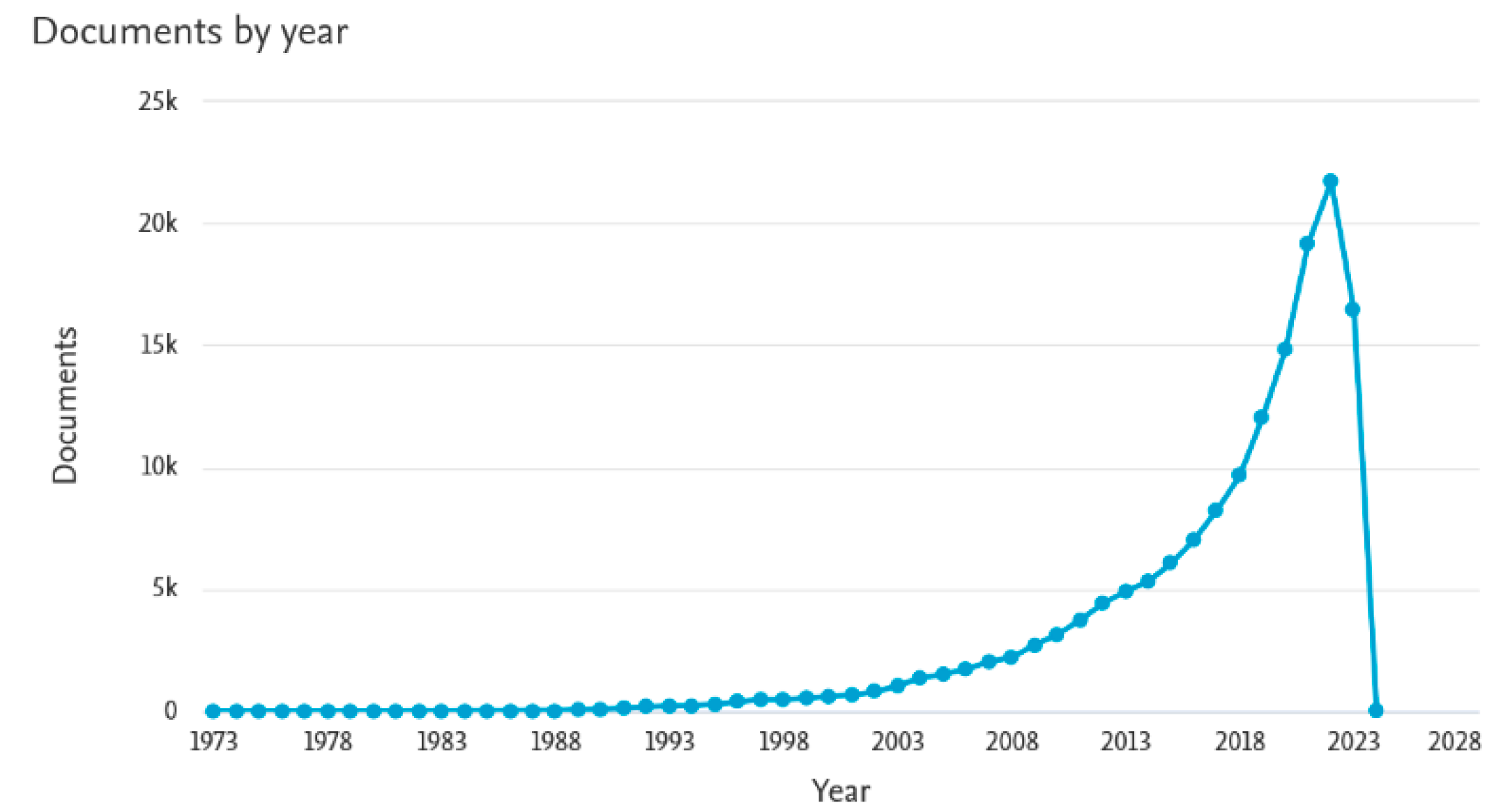
Figure 2.
Number of documents on sustainable production per subject area (Scopus database).
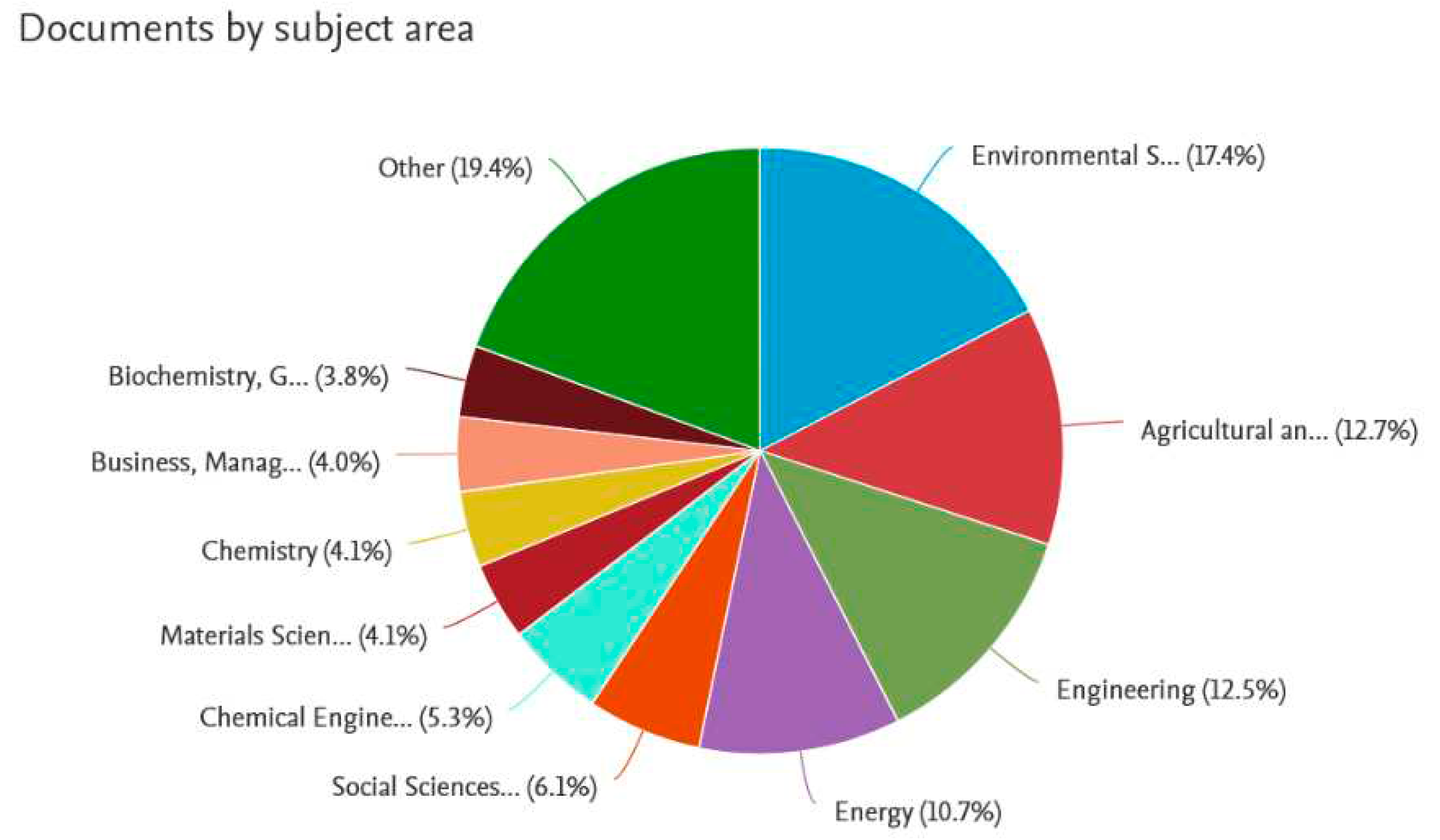
Figure 3.
Research scheme (own work).
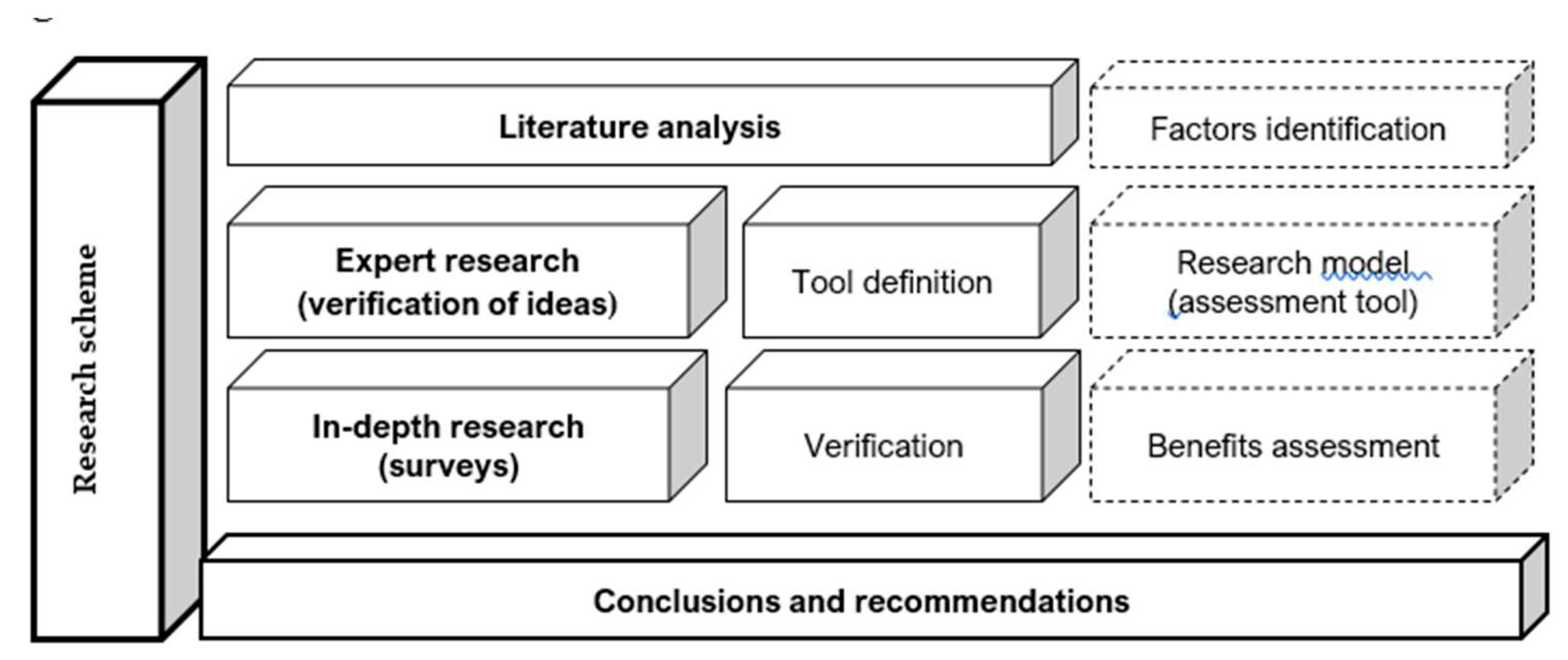

Table 1.
Selected layers of sustainable production - the concept of the survey.
| nr | Layer | number of parameters to be assessed |
|---|---|---|
| 1 | organization and management layer | 12 |
| 2 | technology and production layer | 9 |
| 3 | competences and hr layer | 7 |
| list of questions | 28 |
Table 2.
Organization and management layer – benefits analysis.
| Factors | 1 | 2 | 3 | 4 | 5 | Avr. |
| % indications | ||||||
| Sense of job security | 1,6 (1) | 1,6 (1) | 9,5 (6) | 44,4 (28) | 42,9 (27) | 4,25 |
| Activation and openness to new ideas and improvements in the way of working | 3,2 (2) | - | 15,9 (10) | 36,5 (23) | 44,4 (28) | 4,19 |
| Increased employee responsibility | 1,6 (1) | 4,8 (3) | 12,7 (8) | 39,7 (25) | 41,3 (26) | 4,14 |
| Building trust and cooperation between employees; sense of community; employee self-control | 1,6 (1) | 3,2 (2) | 11,1 (7) | 49,2 (31) | 34,9 (22) | 4,13 |
| Improving communication | 3,2 (2) | 1,6 (1) | 15,9 (10) | 39,7 (25) | 39,7 (25) | 4,11 |
| Reduction of order fulfillment time | 1,6 (1) | 4,8 (3) | 12,7 (8) | 44,4 (28) | 36,5 (23) | 4,10 |
| Increased trust and cooperation with customers, increased customer satisfaction, increased sales | 3,2 (2) | 3,2 (2) | 15,9 (10) | 38,1 (24) | 39,7 (25) | 4,08 |
| Increased trust and cooperation with suppliers | 3,2 (2) | 3,2 (2) | 14,3 (9) | 42,9 (27) | 36,5 (23) | 4,06 |
| Improving the quality of products | 1,6 (1) | 6,3 (4) | 15,9 (10) | 41,3 (26) | 34,9 (22) | 4,02 |
| Increased timeliness of deliveries | 1,6 (1) | 7,9 (5) | 22,2 (14) | 38,1 (24) | 30,2 (19) | 3,87 |
| Efficiency of administrative activities | 3,2 (2) | 7,9 (5) | 23,8 (15) | 34,9 (22) | 30,2 (19) | 3,81 |
| Flattening the organizational structure; reduction of management levels | 6,3 (4) | 15,9 (10) | 23,8 (15) | 28,6 (18) | 25,4 (16) | 3,51 |
Table 3.
Technology and production layer – benefits analysis.
| Factor | 1 | 2 | 3 | 4 | 5 | Av. |
| % indications | ||||||
| Technical culture implying minimization of losses in the entire production process (reduction of stocks, ensuring optimal level of energy consumption, minimization of waste production), | - | - | 14,3 (9) | 41,3 (26) | 44,4 (28) | 4,30 |
| Minimization of production costs and other operating costs; increase in production efficiency | 3,2 (2) | 4,8 (3) | 7,9 (5) | 41,3 (26) | 42,9 (27) | 4,16 |
| Minimizing the length of the production cycle; shortening the transition time from raw material to finished product | 1,6 (1) | 1,6 (1) | 20,6 (13) | 36,5 (23) | 39,7 (25) | 4,11 |
| Production based on current demand | 3,2 (2) | 4,8 (3) | 15,9 (10) | 33,3 (21) | 42,9 (27) | 4,08 |
| Faster response to emerging problems | 1,6 (1) | 1,6 (1) | 20,6 (13) | 41,3 (26) | 34,9 (22) | 4,06 |
| Reduction of machine changeover times | 1,6 (1) | 4,8 (3) | 14,3 (9) | 46,0 (29) | 33,3 (21) | 4,05 |
| Error prevention, self-control of production workers | 1,6 (1) | 4,8 (3) | 22,2 (14) | 31,7 (20) | 39,7 (25) | 4,03 |
| Proposed actions to improve workstations and manufacturing technologies | 3,2 (2) | 3,2 (2) | 15,9 (10) | 44,4 (28) | 33,3 (21) | 4,02 |
| Focus on the product flow process | 3,2 (2) | 3,2 (2) | 15,9 (10) | 46,0 (29) | 31,7 (20) | 4,00 |
Table 4.
Competences and HR layer – benefits analysis.
| Factors | 1 | 2 | 3 | 4 | 5 | Av |
|---|---|---|---|---|---|---|
| % indications | ||||||
| Increased employees-initiated innovation | 1,6 (1) | - | 11,1 (7) | 44,4 (28) | 42,9 (27) | 4,27 |
| Increasing competences (including, among others, environmental competences through participation in training for employees) | - | 4,8 (3) | 11,1 (7) | 38,1 (24) | 46,0 (29) | 4,25 |
| Matching contractors to the level of tasks performed | - | - | 20,6 (13) | 39,7 (25) | 39,7 (25) | 4,19 |
| Raising job satisfaction | 1,6 (1) | 1,6 (1) | 11,1 (7) | 49,2 (31) | 36,5 (23) | 4,17 |
| Greater willingness to transfer knowledge to other employees | 1,6 (1) | 1,6 (1) | 14,3 (9) | 47,6 (30) | 34,9 (32) | 4,13 |
| Cooperation with technology parks and universities | 3,2 | 1,6 | 17,5 | 36,5 | 41,3 | 4,11 |
| The ability to implement your own ideas without fear of being disregarded | 3,2 (2) | 1,6 (1) | 20,6 (13) | 36,5 (23) | 38,1 (24) | 4,05 |
Disclaimer/Publisher’s Note: The statements, opinions and data contained in all publications are solely those of the individual author(s) and contributor(s) and not of MDPI and/or the editor(s). MDPI and/or the editor(s) disclaim responsibility for any injury to people or property resulting from any ideas, methods, instructions or products referred to in the content. |
© 2023 by the authors. Licensee MDPI, Basel, Switzerland. This article is an open access article distributed under the terms and conditions of the Creative Commons Attribution (CC BY) license (http://creativecommons.org/licenses/by/4.0/).
Copyright: This open access article is published under a Creative Commons CC BY 4.0 license, which permit the free download, distribution, and reuse, provided that the author and preprint are cited in any reuse.


