

Submitted:
05 September 2023
Posted:
07 September 2023
You are already at the latest version
Abstract
Solid waste has become a tenacious issue worldwide. It has been increasing exponentially due to urbanization and the increase in the population. Since the twentieth-century technological revolution, there have been significant changes in the composition of solid waste. It poses significant challenges for waste management systems worldwide. Waste management is the process of handling waste right from its creation to its final disposal, including transport, collection, treatment, and monitoring. The present solid waste management (SWM) system is affected by unfavorable institutional, economic, technical, legislative, and operational constraints. Poor waste management is affecting ecosystems and human health, damaging our finite natural resources, impeding human economic progress, and harming people's quality of life. Now, researchers are concerned about the environment's degradation, a decline in quality of life, and risks related to waste management grow as the volume of solid waste. So, they are focusing on sustainable waste management practices which will be crucial for creating a cleaner and healthier environment for future generations. This chapter focuses on the concept of solid waste, its types, management, and its effect on the health of humans and the environment.
Keywords:
Solid Waste
; Waste Management
; Environment
; Human Health
1. Introduction
Any substance or material that is no longer wanted or needed and discarded is referred to as waste. Waste is originated from household, industrial, and agricultural activities. It may contain things like packing materials, leftover food, chemicals, sewage, and dangerous substances. It can exist as a solid, liquid, or gas. Solid waste refers to any discarded materials that are not liquid or gas. It includes semi-solid or solid household waste, commercial waste, sanitary waste, construction waste, demolition waste, institutional waste, industrial waste, market and catering waste, and agricultural waste. Solid waste can be further categorized into organic waste and inorganic waste (Arafat et al. 2015). Organic waste includes textiles, plastics, paper, wood, and food wastes while inorganic wastes include metals and glass.
Waste is a very precious resource that is kept in the wrong places (Wu et al. 2022). Waste is an inescapable by-product of human cultural and developmental activity. Waste generation is dependent on the resident infrastructure, and lifestyle. It has been recognized that an area's garbage creation is related to the average income of its residents. It has also been found that more waste generates in high-income communities. The generation of garbage and income level are typically positively correlated. The amount of waste produced is directly correlated with resource use.
Previously, people produced natural waste that was non-hazardous. The natural waste had more organic content. So, they were biodegradable in nature. But after technological innovation, new kinds of ‘synthetic material’ have emerged. Technical developments such as the green revolution and industrial revolution had affected the nature of solid waste. Over the last half-century, the fraction of cardboard and paper contained in solid waste has skyrocketed. The wastepaper found in solid waste is often made up of books, newspapers, magazines, office paper, commercial printing, tissue paper, paper packaging, and other non-packaging paper.
The percentage of plastics in solid waste has also grown dramatically over the previous 50 years (Shekdar 2009). Plastic consumption is expected to expand further, albeit at a sluggish rate than in the earlier 25 years. Polyvinyl chloride (PVC), high-density polyethylene (HDPE), polypropylene (PP), polystyrene (PS), low-density polyethylene (LDPE), and other multi-layered plastic polymers are included in solid waste (Bhardwaj and Sharma 2021; Bhardwaj 2022). Bulky objects such as damaged furniture, lamps, bookcases, file cabinets, stereos, radios, computers, television sets, stoves, refrigerators, dryers, tyres, and batteries are the key aspects of solid waste. Traditional societies created minimal and 'simple' waste, but contemporary technology societies generate huge and 'complex' waste.
China, India, and the USA are the topmost three producers of MSW (Nanda and Berruti 2021). India, being the third-largest waste generator globally, faces unique challenges due to the significant volume of waste, the predominant organic nature of waste, and an unregulated informal waste collection sector. As per the study by the Central Pollution Control Board (CPCB), an average of 1,43,449 metric tonnes of MSW were produced daily in India (CPCB 2013). As of 2021, India produces ~ 62 million tons of MSW annually, of which only 43 million tons is collected and ~ 12 million tons are treated, while the rest is dumped in landfill sites (Mohanty et al. 2022). India generates approximately 150,000 tons of solid waste per day, and this is expected to increase by 5% annually (David et al. 2019).
Each year, the world generates 2.01 billion tonnes of MSW (Lino et al. 2023). Waste created per person per day in the world averages 0.74 kilograms (Kaza et al. 2018). High-income nations that have only 16 % of the world’s population produce ~ 34 % of the world's waste and may rise by 19% by 2050 (Tayeh et al. 2020). According to recent statistics, around 2.01 billion metric tons of MSW were produced globally and this number is predictable to rise to 3.4 billion metric tons by 2050 (Iqbal et al. 2021). Due to less waste management system, it is anticipated that the overall amount of waste in low-income nations will have more than three times by 2050. The aim of the present study was to focus on solid waste, its types, management, and its effect on the environment and the health of humans.
2. Types of Solid Waste
Waste can be categorized into several types based on its nature and source (Moeller 2005).
2.1. Municipal Solid Waste (MSW)
It refers to the everyday refuse generated by households, offices, and public places. This type of waste includes food scraps, paper, plastic, and other common materials. MSW is typically handled by local governmental bodies or private waste management companies.
2.2. Hazardous Waste
It includes substances that are potentially harmful to the environment and human health. It can be in the form of solids, liquids, or gases. Examples include batteries, pesticides, medical waste, and certain industrial by-products.
2.3. Industrial Waste
It is produced by factories, industries, mills, and mines. It contains hazardous and non-hazardous materials. Hazardous industrial waste includes toxic chemicals and heavy metals (Alam et al. 2023; Bhardwaj et al. 2023a), while non-hazardous industrial waste includes paper, wood, and glass.
2.4. Electronic Waste (E-Waste)
It comprises discarded electronic devices. It is a rapidly growing category due to the fast-paced development and disposal of electronic devices. It includes items like computers, smartphones, and televisions.
2.5. Biodegradable Waste
It includes organic materials like wood, paper, and food waste. These materials can be broken down by microbes over time, reducing their environmental impact.
2.6. Inert Waste
It includes materials that do not decompose or decompose very slowly over time. Examples include construction waste like bricks, rubble, and concrete.
2.7. Radioactive Waste
It is produced by nuclear power plants, medical procedures, scientific research, and certain industrial applications. Due to its potential harm, radioactive waste must be handled with particular care and expertise.
3. Source of Solid Waste
In emerging solid waste management programs, it is significant to identify the causes of solid waste. There are diverse sources of solid waste such as garbage from restaurants, households, and hotels; trash from offices, hospitals, and clinics; throw-outs from various industries like rubber, foam, textile, automobile, leather, plastic, and metallic; and discarded goods from slaughterhouses, fruits and vegetable markets. Sources of solid waste within a community are presented very well in Table 1.
4. Solid Waste Management (SWM) and Its Importance
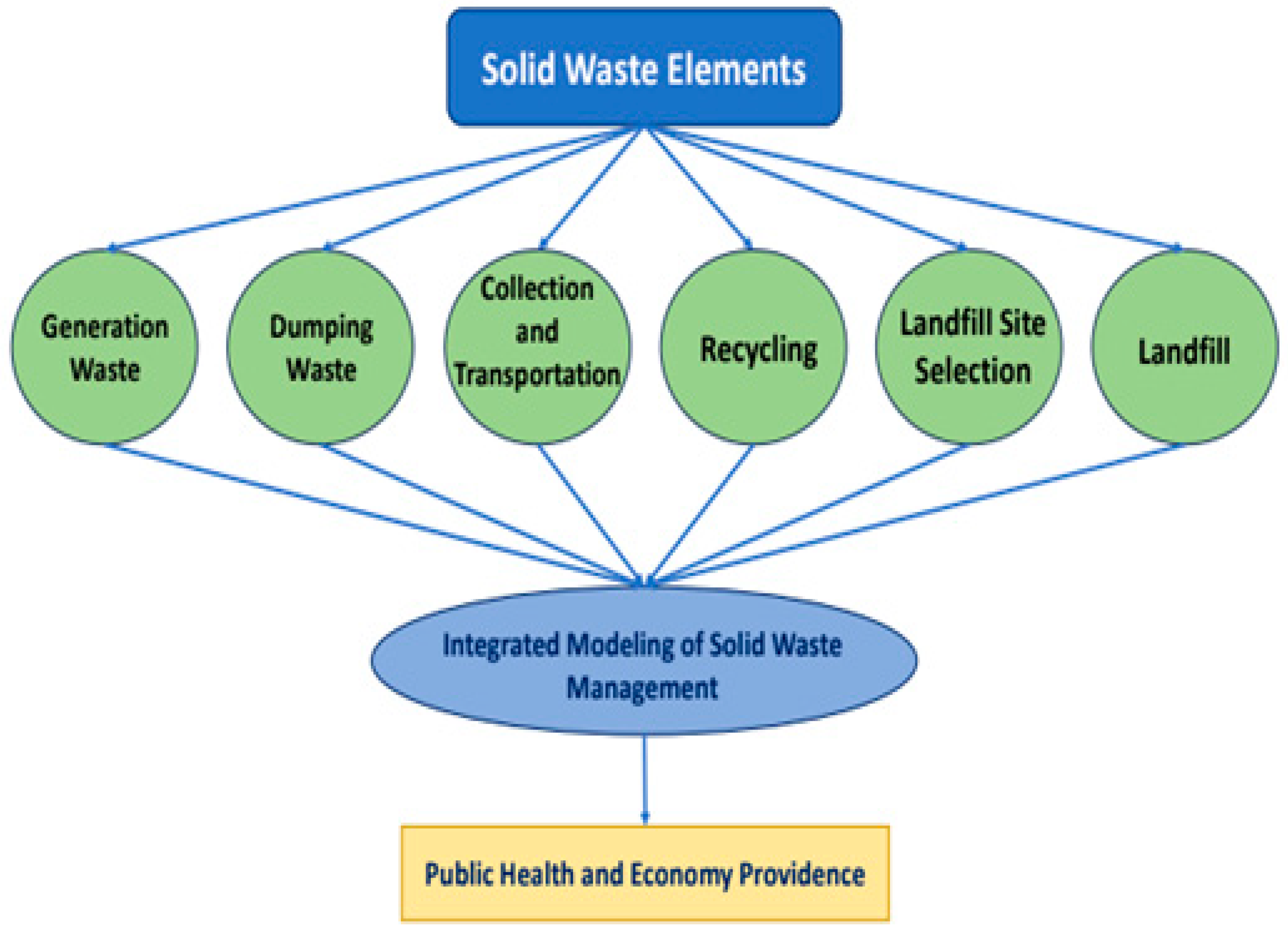
Waste management plays a crucial role in maintaining a clean and sustainable environment (Akram et al. 2021). It also plays a significant role in transitioning towards a circular economy model, where materials are kept in a continuous loop of use and reuse. The controlled management of waste materials from production to dumping is referred to as solid waste management (SWM) or municipal solid waste management (MSWM). SWM is a multipart process and involves many disciplines and technologies (Tchobanoglous and Kreith 2002). On-site handling, processing, transport, collection, monitoring, recycling, and disposal are the steps in the management of solid waste. Therefore, SWM can be characterized as the discipline concerned with the control of storage, transport, generation, processing, collection, and disposal of solid waste generated by society. SWM is an essential component of urban environmental management that affects daily life and environmental quality (Anand 2010).
There are numerous steps in waste management.
- (i)
- Waste Generation: Waste is generated from various activities such as residential, commercial, and industrial.
- (ii)
- Waste Handling and Storage: Waste is separated and stored in containers at the source point. Sorting, segregating, collection, loading, secondary storage, material recovery, baling, shredding, crushing, unloading, processing, transportation, and disposal of solid wastes are all included in waste handling.
- (iii)
- Waste Transport: Waste is gathered from the storage bins and is transported to a central location, and to waste processing units.
- (iv)
- Waste Processing: The collected waste is sorted, processed, and transformed into material that can be used in manufacturing processes, energy production, or composting. This step includes recycling, composting, and waste-to-energy technologies.
- (v)
- Waste Disposal: The final residue that cannot be recovered or recycled is disposed of in a sanitary landfill or an incineration facility.
There are "7R" principles (Refuse, Reduce, Reuse, Repair, Repurpose, Recycle, and Recover) that can contribute to effective waste management (Badola and Chauhan 2022). Refuse and Reduce refer to preventing the development of trash by refusing to purchase unnecessary items and reduction in consumption. Reuse and Repair refer to extending the use of the current product, with or without replacing specific product components. Repurposing and recycling include making the most of the materials utilized in the product while recovering embedded energy from garbage is the least favored and least effective waste management technique. Using garbage as fuel to burn, for instance, can provide heat and electricity.
There are alterations in the procedures of waste management between developing and developed nations, rural and urban regions, commercial and residential sectors, and even within the same nation. In India, proper SWM has become a significant problem (Joshi and Ahmed 2016). The Indian government has launched initiatives to improve SWM, such as the Swachh Bharat Mission and the Smart Cities Mission (Mokale 2019). Under these initiatives, waste-to-energy plants, composting facilities, and source segregation campaigns are being promoted.
The waste management industry can change the narrative that waste emits only greenhouse gases (GHGs) by using waste as an energy source. Useful materials such as paper, plastics, and metals are collected from waste during recycling and reused in the manufacturing of new products. Recycling can provide significantly greater climate benefits than any waste treatment technique. Composting is gaining popularity as a way to transform organic waste into nutrient-rich compost that can be used in agriculture. Several organizations and initiatives such as Integrated Waste Management and Cleaner Production highlight the potential of improved waste management to combat climate change. Clean Development Mechanism (CDM) projects, established by the Kyoto Protocol, encourage GHG reduction projects in the waste sector (UNEP 2008).
Waste management is important for developed and developing countries by several reasons.
- ➢ Proper waste management prevents pollution and reduces the impact of pollution on ecosystems.
- ➢ Proper waste management can prevent the spread of diseases associated with uncontrolled waste and protect public health.
- ➢ Effective waste management promotes recycling and the reuse of materials, conserving valuable resources.
- ➢ Proper waste management reduces the need for energy-intensive extraction and manufacturing.
- ➢ Implementing sustainable waste management practices can create job opportunities and generate revenue through recycling and waste-to-energy initiatives.
- ➢ Proper waste management ensures compliance with environmental regulations and laws, avoiding potential fines and penalties.
- ➢ Effective waste management helps maintain clean and attractive surroundings, enhancing the overall quality of life.
- ➢ Proper waste management can contribute to reducing the emission of greenhouse gas, thus mitigating the effects of climate change.
- ➢ Adopting sustainable waste management practices supports the goal of achieving long-term social, economic, and environmental sustainability.
- ➢ Waste management initiatives can involve the community, fostering a sense of ownership and responsibility toward waste reduction and proper disposal.
- ➢ Advancements in waste management technologies can lead to more efficient and sustainable waste treatment and disposal methods.
Figure 1.
Diagrammatic Representation of The Process of Solid Waste Management.
5. Challenges in Solid Waste Management (SWM)
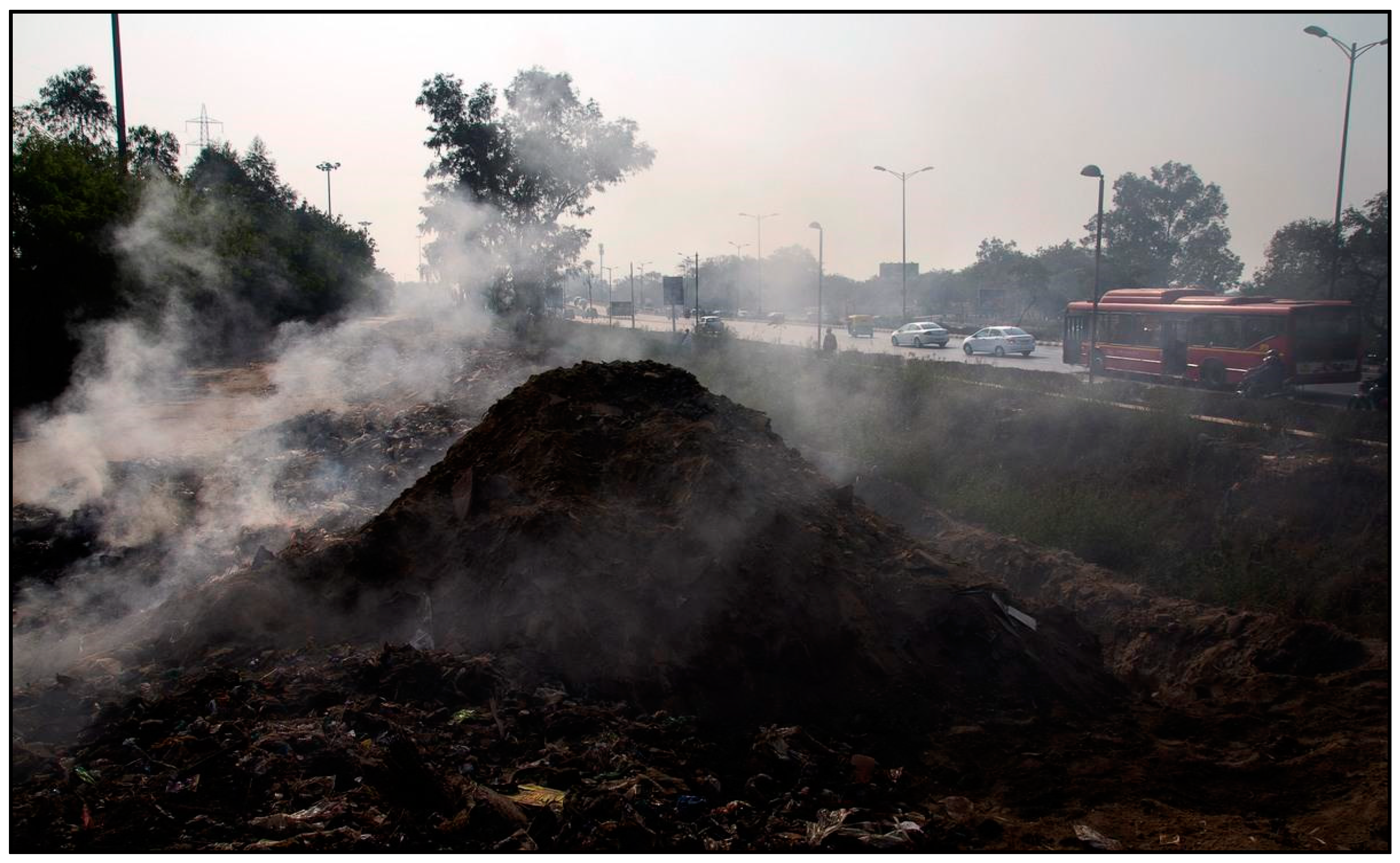
The challenges in waste management are global in nature. In the treatment and disposal procedures, each type of waste has its unique challenge. The waste management sector requires significant improvements to handle the growing amount of waste generated. The main challenge is the inadequate infrastructure, resulting in open dumping and waste burning. These practices contribute to pollution and pose health hazards. In developing countries, the management of MSW is a significant issue due to rapid urbanization and population growth.
India as a country faces significant challenges in MSWM and these challenges are multifaceted (Kumar et al. 2017). These challenges include inadequate collection and transportation systems, lack of waste segregation at source, insufficient processing capacity, and reliance on unsanitary landfills for disposal. To address these challenges, the Indian government has initiated various initiatives, including promoting waste segregation at source and encouraging the use of recycling and composting techniques (Mani and Singh 2016). However, implementing these measures on a large scale remains a key challenge. By doing so, India can mitigate the environmental and health impacts caused by improper waste disposal. While significant strides have been made in recent years, the Indian waste management sector still requires systemic changes, including enhancing waste segregation, improving waste processing facilities, and formalizing the informal sector.
Both public participation and government action are crucial to achieving a sustainable waste management system in India. By sharing knowledge, best practices, and resources, countries can work together to find innovative solutions and improve waste management practices worldwide to address these challenges effectively. This includes sharing research and technologies, collaborating on waste reduction and recycling initiatives, and implementing international agreements and regulations to ensure proper waste disposal and minimize the impact on the environment.
7. Effects of Solid Waste on Environment & Human Health
Improper waste management and poor disposal procedures have a significant negative effect on the health of humans and the environment (Sharma et al. 2018). The existing waste management infrastructure is inadequate in developing countries and may cause pollution and health hazards. The entire SWM process may connect to health problems directly and indirectly. It may connect directly through the processing of solid waste, and indirectly through the contamination of water, soil, and air. Landfill leachate that arises from garbage decomposition can have negative effects on surface waterways and aquifers. People who stay near the waste disposal sites and waste choosers who work sorting and recovering recyclable ingredients in open dumps are most negatively impacted by poor waste management and disposal practices.
Several diseases like dengue fever, diarrhea, different gastrointestinal problems, and malaria may be caused by the disposal of solid garbage in an open area. Animals such as dogs, calves, and pigs eat the garbage and transfer the disease to the people. Hazardous gases are released into the atmosphere after the burning of solid waste (Alam and Ahmade 2013; Bhardwaj and Vikram 2023). These gases can cause cancer and skin allergies. Toxic chemicals are released into the environment from plastics, batteries, and industrial trash and are harmful to human health (Bhardwaj and Jindal 2019; Bhardwaj and Jindal 2020; Bhardwaj et al. 2021; Bhardwaj and Jindal 2022).
The use of some novel chemicals/materials in the industry for advanced technology poses health risks to workers and cannot disintegrate quickly. Acids, heavy metals, and oils are released from solid waste and can change the soil’s fertility (Bhardwaj et al. 2023b). Solid waste contributes to global warming mostly through the release of greenhouse gases like carbon dioxide (CO2) and methane (CH4) (IPCC 2006; Bhardwaj 2023). CH4 is released when biodegradable garbage decomposes under anaerobic conditions in landfills while CO2 is released after the burning of fossil fuels (Barlaz et al. 2009; Andres et al. 2012).
Figure 2.
A Picture of a Huge Pile of Garbage Burning on the Side of the Road Around New Delhi.
8. Conclusion and Recommendations
Waste management is to reduce the negative consequences of waste on human health, the environment, and planetary resources. But nowadays, waste management is a pressing issue globally and many developing countries are affected. Several researchers are focusing on this issue and trying to achieve a sustainable waste management system. The sustainable management of solid waste can contribute to the circular economy where waste is seen as a valuable resource that can be reused, recycled, or transformed into energy. In current years, there has been a growing recognition of the importance of sustainable waste management practices. These practices aim to diminish the generation of waste, maximize resource recovery, and reduce the environmental impact of waste disposal. Countries can create a more sustainable and environmentally friendly future for waste management by working together.
Population growth and the close relationship between economic growth and consumption have caused garbage to be produced at an unheard-of rate. Waste can be reduced by minimizing the amount of waste generated through strategies like composting food waste, reducing packaging, and promoting reusable products. SWM is vital for maintaining urban environmental quality and public health. There is a pressing need for infrastructural development, institutional strengthening, public awareness, and financial investments to achieve sustainable SWM. Proper management of solid waste is crucial to prevent environmental pollution, public health risks, and the depletion of natural resources. Safe disposal methods like landfilling and incineration are necessary for non-recyclable and non-compostable waste. Both methods require proper planning and monitoring to minimize negative environmental impacts.
We recommend several suggestions which can help the authority in the management of solid waste.
- ➢ Effective solid waste management is essential to protect the environment and can promote composting, and energy production.
- ➢ Solid waste must be moved from one place to another using a specially designed, covered transportation system to avoid foul odors, and littering.
- ➢ Proper waste segregation and storage are essential to prevent spoilage, and littering, avoid attracting vectors and reduce odors.
- ➢ Most of the produced waste should be sorted at the source.
- ➢ Markets for recycled things need to be encouraged.
- ➢ Waste dumped underneath bridges, in culverts, along roads, and in drainage stations needs to be cleaned.
- ➢ Strict legislation and policy for waste management should be made by the authority.
- ➢ Education and responsiveness programs for the disposal of solid waste should be conducted by the authorities. This program can educate people about the importance of responsible waste disposal.
- ➢ During the treatment, solid waste should be disposed of in sanitary landfills after taking energy.
- ➢ Improved waste management techniques should be developed, and these techniques can help achieve significant greenhouse gas (GHG) reductions.
- ➢ Continuous efforts and investments are necessary to effectively address the issue of waste management and build a robust waste management infrastructure.
- ➢ International cooperation and collaboration are necessary to address transboundary waste movements and prevent illegal dumping.
Author’s Contribution
All authors have contributed equally.
Acknowledgment
The authors thank Amity University for giving them the platform to do this study.
Conflict of Interest
There is no conflict of interest between the authors.
References
- Akram, S. V. , Singh, R., Gehlot, A., Rashid, M., AlGhamdi, A. S., Alshamrani, S. S., & Prashar, D. Role of wireless aided technologies in the solid waste management: A comprehensive review. Sustainability 2021, 13, 13104. [Google Scholar]
- Alam, P. , & Ahmade, K. Impact of solid waste on health and the environment. International Journal of Sustainable Development and Green Economics (IJSDGE) 2013, 2, 165–168. [Google Scholar]
- Alam, S. , Bhardwaj, L.K., Mallick, R., Rai, S. “Estimation of Heavy Metals and Fluoride Ion in Vegetables Grown Nearby the Stretch of River Yamuna, Delhi (NCR), India”. Indian Journal of Environmental Protection 2023, 43, 64–73. [Google Scholar]
- Anand, S. (2010). Solid waste management. Mittal Publications.
- Andres, R. J. , Boden, T. A., Bréon, F. M., Ciais, P., Davis, S., Erickson, D.,... & Treanton, K. A synthesis of carbon dioxide emissions from fossil-fuel combustion. Biogeosciences 2012, 9, 1845–1871. [Google Scholar]
- Arafat, H. A. , Jijakli, K. , & Ahsan, A. Environmental performance and energy recovery potential of five processes for municipal solid waste treatment. Journal of Cleaner Production 2015, 105, 233–240. [Google Scholar]
- Badola, N. , & Chauhan, J. S. (2022). Waste Management: Challenges and Opportunities. Bioremediation of Environmental Pollutants: Emerging Trends and Strategies, 1-23.
- Barlaz, M. A. , Staley, B. L. ( 2009). Anaerobic biodegradation of solid waste. Environmental microbiology, 281–299.
- Bhardwaj, L. K. Evaluation of bis (2-ethylhexyl) phthalate (DEHP) in the PET bottled mineral water of different brands and impact of heat by GC–MS/MS. Chemistry Africa 2022, 5, 929–942. [Google Scholar] [CrossRef]
- Bhardwaj, L. K. , Sharma, S., & Jindal, T. (2023a). Estimation of Physico-Chemical and Heavy Metals in the Lakes of Grovnes & Broknes Peninsula, Larsemann Hill, East Antarctica. Chemistry Africa, 1-18.
- Bhardwaj, L. K. (2023). A Comprehensive Review on the Climate Change and Its Impact on Health. [CrossRef]
- Bhardwaj, L. K. , & Jindal, T. Contamination of lakes in Broknes peninsula, East Antarctica through the pesticides and PAHs. Asian-Journal of Chemistry 2019, 31, 1574–1580. [Google Scholar]
- Bhardwaj, L. K. , & Jindal, T. Persistent organic pollutants in lakes of Grovnes Peninsula at Larsemann Hill area, East Antarctica. Earth Systems and Environment 2020, 4, 349–358. [Google Scholar]
- Bhardwaj, L. K. , & Sharma, A. Estimation of physico-chemical, trace metals, microbiological and phthalate in PET bottled water. Chemistry Africa 2021, 4, 981–991. [Google Scholar]
- Bhardwaj, L. K. , & Vikram, V. (2023). Air Pollution and Its Effect on Human Health. [CrossRef]
- Bhardwaj, L. K. , Kumar, D., & Kumar, A. (2023b). Phytoremediation Potential of Ocimum Sanctum: A Sustainable Approach for Remediation of Heavy Metals. [CrossRef]
- Bhardwaj, L. K. , Sharma, S., & Jindal, T. Occurrence of polycyclic aromatic hydrocarbons (PAHs) in the Lake water at Grovnes Peninsula Over East Antarctica. Chemistry Africa 2021, 4, 965–980. [Google Scholar]
- Bhardwaj, L. , & Jindal, T. (2022). Polar ecotoxicology: Sources and toxic effects of pollutants. New frontiers in environmental Toxicology, 9-14.
- Central Pollution Control Board (2013) Status report on municipal solid waste management. http://www.cpcb.nic.in/divisionsofheadoffice/pcp/MSW_Report.pdfhttp://pratham.org/images/paper_on_ragpickers.pdf.
- David, A. , Thangavel, Y. D., & Sankriti, R. (2019). Recover, recycle and reuse: An efficient way to reduce the waste.
- Ipcc, I. P. C. C. (2006). Guidelines for national greenhouse gas inventories. Prepared by the National Greenhouse Gas Inventories Programme. Eggleston HS, Buendia L, Miwa K, Ngara T, Tanabe K, editors. Published: IGES, Japan.
- Iqbal, S. , Naz, T., & Naseem, M. Challenges and opportunities linked with waste management under global perspective: A mini review. Journal of Quality Assurance in Agricultural Sciences 2021, 1, 9–13. [Google Scholar]
- Joshi, R. , & Ahmed, S. Status and challenges of municipal solid waste management in India: A review. Cogent environmental science 2016, 2, 1139434. [Google Scholar]
- Kaza, S. , Yao, L., Bhada-Tata, P., & Van Woerden, F. (2018). What a waste 2.0: a global snapshot of solid waste management to 2050. World Bank Publications.
- Kumar, S. , Smith, S. R., Fowler, G., Velis, C., Kumar, S. J., Arya, S.,... & Cheeseman, C. Challenges and opportunities associated with waste management in India. Royal Society open science 2017, 4, 160764. [Google Scholar]
- Lino, F. A. , Ismail, K. A., & Castañeda-Ayarza, J. A. (2023). Municipal solid waste treatment in Brazil: A comprehensive review. Energy Nexus, 100232.
- Mani, S. , & Singh, S. Sustainable municipal solid waste management in India: A policy agenda. Procedia Environmental Sciences 2016, 35, 150–157. [Google Scholar]
- Moeller, D. W. (2005). Air in the home and community. Environmental Health. 3rd ed. Cambridge: Harvard University Press.
- Mohanty, S. , Mishra, S., & Mohanty, A. Municipality Solid Waste Management. A Case Study of Smart City Bhubaneswar, Odisha. Journal of Environmental Management & Tourism 2022, 13, 1361–1373. [Google Scholar]
- Mokale, P. Smart waste management under smart city mission—its implementation and ground realities. International Journal of Innovative Technology and Exploring Engineering 2019, 8, 3095–3103. [Google Scholar] [CrossRef]
- Nanda, S. , & Berruti, F. Municipal solid waste management and landfilling technologies: a review. Environmental Chemistry Letters 2021, 19, 1433–1456. [Google Scholar]
- Sharma, B. , Vaish, B., Srivastava, V., Singh, S., Singh, P., & Singh, R. P. (2018). An insight to atmospheric pollution-improper waste management and climate change nexus. Modern age environmental problems and their remediation, 23-47.
- Shekdar, A. V. Sustainable solid waste management: An integrated approach for Asian countries. Waste management 2009, 29, 1438–1448. [Google Scholar] [CrossRef]
- Tayeh, H. N. A. , Azaizeh, H., & Gerchman, Y. Circular economy in olive oil production–olive mill solid waste to ethanol and heavy metal sorbent using microwave pretreatment. Waste Management 2020, 113, 321–328. [Google Scholar]
- Tchobanoglous, G. , & Kreith, F. (2002). Handbook of solid waste management.
- UNEP Sustainable Building, & Construction Initiative (2008). The Kyoto protocol, the clean development mechanism, and the building and construction sector: A report for the UNEP sustainable buildings and construction initiative.
- Wu, F., Liu, X., Qu, G., & Ning, P. A critical review on extraction of valuable metals from solid waste. Separation and Purification Technology 2022, 122043.

Table 1.
Sources Where Solid Wastes Are Generated Within a Community.
| Source | Typical Waste Generators | Types of Solid Waste |
|---|---|---|
| Inhabited Waste | Single-family and multifamily dwellings | Paper, food waste, plastics, cardboard, leather, textiles, wood, yard waste, glass, tin cans, ashes, metals, special wastes (e.g, consumer electronics, bulky items, household hazardous wastes, batteries, white goods, tires, and oil) |
| Manufacturing Waste | Heavy and light manufacturing, construction sites, fabrication, chemical plants, and power plants | Packaging food wastes, housekeeping waste, demolition and construction materials, ashes, and hazardous wastes |
| Commercial Waste | Restaurants, stores, office buildings, hotels, markets, service stations, print shops, auto repair shops, etc. | Plastics, cardboard, paper, food wastes, wood, metals, metals, and hazardous wastes. |
| Institutional Waste | Schools, colleges, and government centers | Same as commercials. |
| Building and destruction Waste | Demolition of buildings, road repair, renovation sites, and new construction sites | Concrete, steel, wood, etc. |
| Municipal Waste | Beaches, landscaping parks, street cleaning, and wastewater treatment plants | Beaches, landscape and tree trimmings, general wastes from parks, street sweepings, and sludge |
| Agriculture Waste | Dairies, farms, crops, vineyards, orchards, and feedlots | Agricultural wastes, spoiled food wastes, and chemical waste like pesticides |
Disclaimer/Publisher’s Note: The statements, opinions and data contained in all publications are solely those of the individual author(s) and contributor(s) and not of MDPI and/or the editor(s). MDPI and/or the editor(s) disclaim responsibility for any injury to people or property resulting from any ideas, methods, instructions or products referred to in the content. |
© 2023 by the authors. Licensee MDPI, Basel, Switzerland. This article is an open access article distributed under the terms and conditions of the Creative Commons Attribution (CC BY) license (http://creativecommons.org/licenses/by/4.0/).
Copyright: This open access article is published under a Creative Commons CC BY 4.0 license, which permit the free download, distribution, and reuse, provided that the author and preprint are cited in any reuse.


