

Submitted:
24 August 2023
Posted:
25 August 2023
Read the latest preprint version here
Abstract
Sustainability has become increasingly important. Existing project management methodologies are underdeveloped in sustainability. PM² is a methodology developed by the European Commission that aims to provide solutions and benefits to organizations. However, it doesn't include sustainability in its guide, because it aims to be generic. PRiSMTM aims to make the project management process more sustainable, it is based on the P5™ standard that aims to align portfolios, programmes and projects with sustainability. The major difference between the two methodologies is their main objectives. PRiSMTM has P5 Impact Analysis and Sustainability Management Plan as the main differentiating deliverable compared to other approaches, including PM². The most cited characteristic of PM² was to include best practices from other bodies of knowledge, and in PRiSMTM and P5™, it was to be an extension of the Triple Bottom Line, as it also includes product and process. The CEO of the PM² Alliance believes that PM² aims to be generic and usable for any project, so a focus on sustainability would remove the "elasticity" of the methodology. However, users wishing to use PM² and consider sustainability can include it in the additional objectives and use the P5 Impact Analysis and Sustainability Management Plan.
Keywords:
P5™
; PM²
; PRiSMTM
; Project Management
; Sustainability
1. Introduction
The 17 UN Sustainable Development
Goals (SDGs) as well as the 169 targets are integrated and invisible, and thus
demonstrate the holistic view of this universal 2023 Agenda for Sustainable
Development (SD) and align with the three perspectives of SD, according to
Fonseca, Carvalho and Santos (2023) [1] as
well as other authors [2,3,4,5].
The sustainability of people,
organizations and the planet is a topic increasingly on everyone’s agendas.
Sustainability, Sustainable Development (SD) and Project Management (PM) have
been the main topics of discussion among researchers [6]. Jensen et al. (2016) [7] state
that projects are becoming a key fundamental factor for economic and social
action. According to Vrchota et al. (2021) [8]
sustainability is an integral part of PM practices that maintain the future
benefits of the Triple Bottom Line (economic, environmental and social).
Silvius (2017) [9] states that sustainability
has become an established school of thought in PM. However, current best
practice in PM does not consider environmental sustainability [10,11].
This article aims to analyze the
presence of sustainability in PM in some PM guides and in scientific
publications, obtained through the SCOPUS database. In addition, it was also
chosen to study a relatively recent methodology related to sustainability, PRiSMTM.,
It was decided to study this methodology alongside another methodology, PM², to
serve as a baseline for comparison. Thus, a comparison was made between these
two methodologies based on their guides and scientific publications. In the
search for publications on the PRiSMTM methodology, the P5™ standard was included, since PRiSMTM is based on it.
This article is divided into 4
sections. An introduction - where a brief reference is made to the motivations
behind the work, as well as the importance of the topic. Next, materials and
methods, including research methodology and methodological process, setting out
the process used to locate, select, evaluate and analyze the available studies.
The next section is dedicated to the results with the literature review, where
the basic concepts that matter to this study are presented, the occurrence of
the term "sustainability" and the analysis of PM² and PRiSMTM
methodologies. Finally, a discussion is presented with the main findings of
this paper.
2. Materials and Methods
This section presents the research
methodology and the methodological process used for the theoretical background,
the analysis of the occurrence of the term "sustainability" in PM
guides as well as in scientific publications and the process used for the
analysis of the PM² and PRiSMTM methodologies in scientific
publications and through interviews (in the case of the PM² methodology).
According to Stanitsas et al. (2021) [12],
many studies present cases regarding the need for PM to evolve on the
sustainability path, especially in some more specific sectors, such as industry
and construction [13]. The same author,
Stanitsas et al. (2021) [12], states that
Silvius (2017) [14] makes an argument in which
he claims that traditional PM (predictive methodologies) doesn’t successfully
address the basic principles of sustainability as presented in the TBL (Triple
Bottom Line) scenario - society, environment and economy.
2.1. Research Methodology
As depicted in the research onion
of Saunders et al. (2019) [15], shown in Figure 1, the research methodology of this work
has the following characteristics:
- Philosophy: interpretativism;
- Approach to theory development: deduction;
- Methodological choice: mixed-method simple;
- Strategies: survey and archival research;
- Time horizon: Cross-sectional.
Therefore, initially in this
study, a review of the state of the art was carried out on the main topics
related to this research project to produce the theoretical background using Scopus,
Elsevier, B-on and Google Scholar databases. Then, the number of occurrences of
the word “sustainability” in various PM guides was analyzed. After that, the
presence of sustainability in the academic world and over the years was
verified through a search and analysis carried out in the SCOPUS database.
Next, the PM² and PRiSMTM methodology guides were analysed and
articles that included the PM² and PRiSMTM methodology and the P5™ standard, found in various databases
(Scopus, Web of Science and B-on), were analyzed, from which the features
associated with each of them were drawn. It was reserachers option to include
the P5™ standard in the
research, since the PRiSMTM methodology is based on it.
The methodological process of
Systematic Literature Review [17] was used in
the analysis of PM² and PRiSMTM methodologies based on scientific
publications, in a structured way of search and analysis for the collection of
the maximum number of articles (valid and relevant), as recommended by Laursen
and Svejvig (2016) [18].
2.2. Methodological Process
The methodological process is
divided into three subsections: i) theoretical background (PM, sustainability,
sustainability in PM and PM² and PRiSMTM methodologies); ii) the
presence of the term "sustainability" (sustainability in PM guides
and sustainability in PM in scientific publications); and iii) PM² and PRiSMTM
(PM² and PRiSMTM in scientific publications and PM² interviews).
This section will explain the basis and methods used to obtain the results
presented in the following chapter, section 3.
2.2.1. Theoretical Background
For theoretical background, a
literature review of some topics considered relevant and fundamental to this
work was made. The literature search was carried out through Scopus, Elsevier,
B-on and Google Scholar databases.
The literature review process is
considered in most cases to be an initial activity that can then be refined
throughout the life of the research project. This literature review aims to
contextualise the present research in relation to previous research that
addresses the same subject. The literature review should analyse the most
relevant research on the topic [16]. In this
way, it was decided to review the literature on four themes: i) PM, ii)
Sustainability, iii) Sustainability in PM; iv) PM2 methodology and
vi) PRiSMTM methodoly, the results of which are presented in section
3.1.
2.2.2. The occurrence of the term "sustainability"
In the study of the occurrence of
the term "sustainability" it was decided to study this topic in PM
guides and scientific publications. This section describes the methods used to
obtain the results presented below in section 3.2, which is divided into two
sub-sections: i) sustainability in PM guides; and ii) sustainability in PM in
scientific publications.
Sustainability in PM guides
Silvius (2017) [14] argues that traditional PM, namely predictive
methodologies, do not successfully address the basic principles of
sustainability, i.e. the TBL.
As a first approach and to verify
the extent of the occurrence of the word sustainability in the various PM
guides, a search for the term "sustainab*" in the English guides and
"sustentab*" and "sustentav*" in the Portuguese guides was
conducted, to capture the largest number of words associated with
sustainability.
Five guides of traditional PM methodologies/knowledge bodies were used for the search:
- Sustainable Project Management – The Green Project Management (GPM®) Reference Guide, by GPM® [19];
- Individual Competence Baseline for Project, Programme & Portfolio Management, by International Project Management Association [20];
- A Guide to the Project Management Body of Knowledge – PMBOK® Guide by Project Management Institute [21];
- Managing Successful Projects with PRINCE2® by AXELOS [22];
- PM² Methodology Guide by PM² ALLIANCE [23].
Sustainability in PM in scientific publications
To understand the level to witch sustainability in PM is spread around the world and over the years, 6769 documents were analyzed, returned by the SCOPUS database, after entering the following search string: TITLE-ABS-KEY (sustainab*) AND TITLE-ABS-KEY ("project management") AND EXCLUDE (PUBYEAR, 2023). The search took place in 2022, however, articles with the year 2023 were returned. Therefore, it was decided to exclude this year from the search.
Figure 2 below shows the search protocol used.
2.2.3. PM² and PRiSMTM
In this section, the publications for the systematic literature review (SLR) on the PM² and PRiSMTM methodologies are selected and the interviews on the PM² methodology are organized. This section describes the methods used to obtain the results presented below in section 3.3, which is divided into three sub-sections: i) analysis based on guides; ii) analysis based on scientific publications; and iii) analysis based on interviews. For the analysis based on guides, only the guides related to the two methodologies under study, PM² and PRiSMTM, were used. The methodological process for the analysis based on scientific publications and interviews is presented below.
PM² and PRiSMTM in scientific publications
The research done previously is essential to identify the state of the art on a particular topic [24]. According to Donato and Donato (2019) [25], the SLR allows authors to become knowledgeable about the topic and can develop a range of skills including searching the literature and improving their scientific writing.
According to Furlan et al. (2001) [26], a SLR answers a specific research question and uses systematic, explicit, and predefined methods to identify, select, and critically evaluate relevant research.
To obtain articles for review on the PM² and PRiSMTM methodology a search was conducted using the SCOPUS, Web of Science and B-on databases.
Given that the PRiSMTM methodology is based on the P5™ standard, it was decided to include it in the search terms to achieve a larger number of results. The article search period considered was between 2013 and 2022 due to the release dates of the publications. The open edition of the PM² Guide was released in 2016 [27]. The GPM® Reference Guide to Sustainability in Project Management, which includes the PRiSMTM methodology and the P5™ Standard for Sustainability in Project Management, was released in 2013 [28,29].
The protocol used in the search is summarized in Figure 3.
The process and search strings are shown in Figure 4 for the PM² methodology and in Figure 5 for the PRiSMTM methodology. Initially, it was decided to conduct an extensive search that led to the constitution of a 1st sample of articles. After that, a refined search was conducted, where the time limits were introduced to the search by changing the strings, considering articles only between 2013 and 2022 and other aspects that were considered important to add, such as the exclusion of the term PM2.5 (since it refers to a different thematic) in the case of the PM² methodology and the insertion of the terms P5 and PRiSM methodology in the case of the PRiSMTM, leading to the 2nd sample. Finally, filtering was carried out where some inclusion and exclusion criteria were applied, resulting in the final set of papers for analysis. The inclusion criterion applied defined that the publications had as their main subject the keywords described above in Figure 3. The exclusion criteria applied were the removal of publications that were not in English, Portuguese or Spanish, those that were duplicated, those whose full text was not found and the documents that were not within the scope and did not reflect the main objective of the research by reading the title and abstract.
Regarding the PM² search process, as seen in the funnel represented in Figure 4, an extensive search was performed, from which 31 publications were obtained through SCOPUS, four from Web of Science, and 14 from B-on, totalling 49 publications in the 1st sample. Next, a refined search was performed, where 11 publications were obtained through SCOPUS, four from Web of Science, and 11 from B-on, completing a total of 26 publications in the 2nd sample. Lastly, a final filtering was applied (3rd sample), resulting in a total of eight publications.
Regarding PRiSMTM search process, as seen in the funnel represented in Figure 5, an extensive search was performed, from which 71 publications were obtained through SCOPUS, 22 from the Web of Science, and 38 from B-on, totalling 131 publications in the 1st sample. Next, a refined search was performed, where 11 publications were reached through SCOPUS, 10 from Web of Science, and 29 from B-on, completing a total of 50 publications in the 2nd sample. Finally, a final filtering was applied (3rd sample), resulting in a sample of 12 publications to be used in the literature review (LR).
Following the two searches above mentioned, 20 relevant publications to the research project were obtained, eight referring to the PM² methodology and 12 referring to PRiSMTM. The authors, titles and databases where the documents are founded are shown in Table 1.
PM² Interviews
The interviews were done following a four-phase process [49,50,51]: i) preparation of the interview; ii) introduction; iii) conducting the interview; and iv) synthesis and conclusion of the interview evaluation.
During the preparation of the interview, the selection of people or entities that have the necessary knowledge to meet the researcher information needs takes place. The researcher should prepare an interview script to have a guide to support conducting the interview. In this stage, the technological means to be used in the interviews should be prepared, as well as the necessary documents to request, for example, authorization to record the interview.
The introduction is the least structured and non-directive phase. This phase should contain the introduction of the subject, the explanation of the researcher’s role in the research process and the presentation of the process to the interviewee.
In conducting the interview, the researcher must obtain, from the interviewees, the information he wants and the phase should consist of two steps. The thematic step, the most in-depth of the interview, in which issues of interest to the study being carried out are addressed. And the mirror step, in which the interviewer clarifies doubts about what was said by the interviewee.
In the synthesis and conclusion of the interview evaluation, the researcher should thank the interviewee for his participation and inform him that the final results of the study, as well as the transcript of the interview, will be sent later.
To understand and explore the knowledge and experience of each of the interviewees concerning the methodologies studied, customized scripts were prepared for each of them, consisting of a range of open-ended questions. The researchers chose to interview a user of the PM² methodology - a researcher who, during the master’s thesis research, studied the PM² methodology, - and Nicos Kourounakis - coauthor of the PM² methodology, the Agile PM² Guide and the PfM² Portfolio Management Guide, and president and CEO of the PM² Alliance. The interviews were performed in Zoom platform, allowing recording with the interviewees’ permission. Before the interviews were conducted, the interviewees were asked to sign the consent statement for the interview and its recording.
Table 2 shows the scripts for the interviews conducted.
3. Results
This chapter contains the results obtained in the LR, used as a theoretical background, which is divided into PM, sustainability, sustainability in PM and PM² and PRiSMTM methodologies. In addition, there are also the results obtained from the analysis of the presence of the term "sustainability" in PM guides and scientific publications. Finally, there is the analysis of PM² and PRiSMTM methodologies based on guides, scientific publications and interviews.
3.1. Theoretical Background
This chapter will present a LR of the main concepts related to the themes under analysis – PM, sustainability, sustainability in PM and PM² and PRiSMTM methodologies. The LR was performed based on a search done on the Scopus, Elsevier, B-on and Google Scholar databases and in the guidebooks.
3.1.1. Project Management
According to Kerzner (2017) [55], companies are increasingly starting to consider PM as mandatory for their survival. To better understand the meaning of PM, it is important to start by understanding the meaning of project. Tuman (1983) [56] defines a project as an organization of dedicated people seeking to achieve a specific purpose and goal. Projects usually involve large, expensive, unique or high-risk undertakings that must be completed by a certain date, for a certain amount of money, within some expected level of performance. At a minimum, all projects need to have well-defined objectives and sufficient resources to accomplish all necessary tasks.
Once the concept of a project is understood, another concept should be defined: PM. Kerzner (2017) [57] considers that PM consists of planning, organizing, guiding and controlling the resources of a company, in a limited time, to achieve specific goals and objectives.
In addition to these definitions, there are many others in the literature. For a better understanding of the project and PM concepts, Table 3 was prepared, with their definitions according to well-known PM standards.
After understanding these two concepts, it is possible to verify and agree with the statement of Munns and Bjeirmi (1996) [62], which argue that the project relates to the definition and selection of a task that will generate future benefits for the company, while the PM is more concerned with planning and control.
In addition to, Wagner (2020) [63], highlights the changes in the world of work that have led projects to become a crucial way to implement innovations, techniques and organizational changes efficiently. According to Wagner (2020) [64], Midler’s (1995) [65] article coined the word "projectization" describing it as the diffusion of projects as a form of business organization. Midler (1995) uses the term "projectization" to describe the evolution and organizational changes of Renault, which transitioned from a classic functional organization (1960s) to project coordination (1970s) and to autonomous and powerful project teams (1989). According to Jensen et al. (2016) [66] projects have become a key factor and vehicle for economic and social action.
3.1.2. Sustainability
Sustainable Development (SD) has been on the United Nations (UN) agenda for more than 40 years, since the first conference on the Human Environment in Stockholm in 1972 [67]. In 1987, the World Commission on Environment and Development defined the concept of SD as development that meets the existing needs of current generations without compromising the needs of future generations [68]. However, some authors highlight that this definition doesn’t provide good guidance on how to identify present and future needs, the technologies and resources needed to meet these needs and how to effectively balance organizational responsibilities for the various stakeholders, which makes this definition difficult to apply in practice for organizations [69,70]. Furthermore, this definition encompasses social, environmental and economic issues that are generally operationalized through the TBL [71]. TBL is a SD concept that integrates three dimensions: profit, planet and people [72]. Figure 6 shows the interconnection of the various elements of this concept and their definitions.
Figure 6 shows that people represent the social variables, profit represents the economic variables and planet represents the environmental variables.
According to Schieg (2009) [74], TBL is a new understanding of the success of organizations, where their performance must strike a balance between economic, ecological and social criteria. This new understanding suggests that companies should be dedicated not only to socially and environmentally responsible behaviour but also to achieving positive financial gains [75].
The United Nations Commission on Sustainable Development, in 2001, developed SD indicators that encompass guidelines and methodologies to guide decision-making [76]. Gladwin et al. (1995) [77] describe SD as a process to achieve human development in an inclusive, connected, equitable, prudent and safe manner. The European Commission describes Corporate Social Responsibility (CSR) as a concept under which companies integrate social and environmental concerns into their operations and interaction with their stakeholders voluntarily [78].
A survey conducted by the UN Global Compact on Accenture CEO Study on Sustainability concludes that CEOs believe in a new era of sustainability, which encompasses a new way of assessing corporate performance. In this new era, the focus will shift to long-term value creation, involving social and environmental impact, and away from just financial profit and loss [79].
These SDGs and the targets set were intended to stimulate action for the next 15 years, through an action plan that acts in five key dimensions [81]:
- People - seeks to end poverty and hunger;
- Planet - involves meeting present and future needs, but protecting the planet from degradation;
- Prosperity - seeks to ensure that all human beings have a prosperous and fulfilling life;
- Peace - seeks just, peaceful, inclusive societies, free from fear and violence;
- Partnership - seeks the means necessary to implement this Agenda.
Projects generally affect sustainability both directly (by creating pollution and misusing resources) and indirectly (by creating products and/or services that indirectly affect sustainability) [82]. The study "Insights on Sustainable Project Management", carried out by GPM®, observed that 96% of respondents believe that projects and PM are essential for SD [83].
Tsalis et al. (2020) [84] claim that the pressure on companies to report on sustainability strategies has been increasing. According to the author, many companies have adopted strategies to achieve SD goals.
In 2019, the European Green Deal was presented in Brussels as a way forward to achieve a sustainable economy in the European Union. This pact aims to eliminate net greenhouse gas emissions by 2050, making Europe the first climate-neutral continent [85].
3.1.3. Sustainability in Project Management
Carvalho and Rabechin (2017) [86] and Ivanov et al. (2020) [87] state that it was only in 2010 that the link between PM and sustainability began. However, for other authors, this link started earlier [12,88,89]. Stanitsas et al. (2021) [12] state that sustainability, SD and PM have become the main topics of discussion among researchers in recent years. For Sabini et al. (2019) [90], sustainability influences traditional PM tools, techniques and methodologies. Huemann and Silvius (2017) [91] highlight the importance of PM concerning the SD of organizations and society.
Kerzner (2017) [57] argues that the result (and success) of a project has moved from being just a delivery, to the creation of business value in a sustainable way. However, there is a lack of a framework that enables the analysis and assessment of sustainability, i.e., a useful and applicable method for projects [92,93,94].
Kerzner (2017) [57] presents a future definition of the concept of project - a collection of sustainable business value scheduled for realization; programme - a collection of projects designed to achieve a business objective and create sustainable business value within established competing constraints; and success - achieving the desired business value within competing constraints [57]. PM’s role is to identify relevant ecological systems, recognize the internal and external dimensions of social responsibility and test existing Corporate Social Responsibility standards for their applicability in projects [95].
In PM, Corporate Social Responsibility means a systematic combination of interest in the project with interest in the public welfare [95]. For PM to add value to projects, it needs to take into account ecological and social aspects [95]. Eskerod and Huemann (2013) [96], consider that project stakeholder management in a SD context is a necessity in the future. However, PM standards do not explicitly take into account SD principles [97].
Silvius and Schipper (2014) [98] consider that sustainable PM takes into account the environmental, economic and social aspects of the life cycle of project resources, processes, deliverables and effects. However, some authors, [99,100,101], consider that there is a lack of a common framework and language to analyze and assess sustainability that can be applied to projects [99,100,101]. Schieg (2009) [95] and Goedknegt and Silvius (2012) [102] stress the importance of project managers taking responsibility for sustainability.
Also Valdes-Vasquez and Klotz (2013) [103], point out that integrating social considerations of end-users and considerations of the project’s impact on society will improve not only the long-term performance of the project but also the quality of life of those affected by the project.
Business leaders are switching from current economic models, which devalue natural resources and only consider profit as the indicator of success, to new models that reward environmentally sustainable products and services [29].
Although the presence of sustainability in PM events is intense [91], Brones et al. (2014) [104] and Silvius and Schipper (2014) [98] claim that current PM best practices do not consider environmental sustainability. In the same line of thought, Eskerod and Huemann (2013) [97] state that PM standards do not explicitly consider SD principles. According to Carboni et al. (2018) [29], PM should make greater efforts to address social and environmental impacts in each project. According to some authors, sustainability has a positive impact on project success [105,106,107]. Other authors enhance the importance of integrating sustainability into methodologies and bodies of knowledge in order to respond to market needs [108,109,110,111]. On the other hand, A. Silvius and Schipper [98], argue that performing sustainable management of a project will lead to minimizing waste.
3.1.4. PM² and PRiSMTM methodologies
This section presents in a nut shell two relatively recent methodologies, PM² and PRiSMTM, which will be studied throughout this paper.
PM²
The PM² methodology, developed by the European Commission, aims to “… enable Project Managers (PMs) to deliver solutions and benefits to their organisations by effectively managing the entire lifecycle of their project” [58] (p. 1). This methodology, although it can be used by any organization, was created to respond to the needs of the institutions and projects belonging to the European Union [58].
The PM² methodology, according to PM² ALLIANCE (2018) [58], has the following advantage:
- Uses universally accepted PM best practices;
- Has a common vocabulary, which allows easy communication and application of the concepts;
- Establishes a link to the PM² Agile and PM² Project Portfolio Management models;
- Is simple and easy to apply;
- Improves the effectiveness of PM;
- Provides templates and guidelines for the process and artefacts used.
Figure 8 summarizes all phases of the PM² methodology, with the inputs, outputs and key activities of each phase.
The PM² methodology has four phases: Initiation Phase, Planning Phase, Execution Phase and Closing Phase. In addition to these phases, the methodology provides and advocates the use of monitor and control activities throughout the project life cycle.
The Initiation Phase includes the definition of the intended results, the elaboration of the Business Case and the definition of the project scope. This phase starts with the Project Initiation Request, where an idea or need is identified. This is followed by the identification of stakeholders and their needs. After that, the project is defined in more detail and the economic justification for the project occurs, giving rise to the Business Case. Finally, the scope and organization of the project are defined and the Project Charter is created (includes more details about the scope, cost, time, quality, risk and constraints, general requirements, and establishes project milestones and deliverables). The flowchart of the Initiation Phase is shown in Figure 9, where the activities and main deliverables are presented [58].
The Planning Phase starts with a Planning Kick-off Meeting. After that, the PM² process is adapted, originating the Project Handbook and Management Plans. Then the roles and responsibilities are assigned, developing the Project Stakeholder Matrix. This is followed by the Project Work Plan, which breaks down the work and defines the project schedule. In addition, there are other important plans, such as the Outsourcing Plan, the Deliverables Acceptance Plan, the Transition Plan and the Business Implementation Plan. After the approval by the Project Steering Committee, the Execution Phase follows. The flowchart of the Planning Phase is shown in Figure 10, where the activities and main deliverables are presented [58].
The Executing Phase starts with an Execution Kick-Off Meeting. The Project Coordination starts simultaneously with the beginning of the project and ends with its completion. To certify that the project work follows the best practices and standards there is the Quality Assurance activity, defined in the Quality Management Plan (allowing to certify that the project will have the intended scope and quality requirements and that it will be considering the project constraints). In this phase, the Project Reports are elaborated, allowing to document the evolution of the project to keep the relevant stakeholders informed. After the Project Owner accepts the project deliverables and the Project Steering Committee authorizes them, the Project Manager can move on to the Closing Phase. A summary of the Executing Phase is shown in Figure 11, where the activities and main deliverables are presented [58].
The Closing Phase involves finishing all activities, drawing lessons learned and recommendations, and closing and archiving all documents relating to the project. This phase starts with a Project-End Review Meeting. All the experience taken from the project is summarized in the Project-End Report (where the lessons learned are found). Once all the activities of this phase have been completed and after the Project Owner’s approval, the project is officially closed. The flowchart of the Closing Phase, with its activities and main outputs, as recommended by the PM² methodology, is shown in Figure 12 [58].
Monitor and Control is a set of activities, according to PM², that occurs throughout the project life cycle, although it has greater relevance in the Executing Phase. Monitoring and controlling encompasses the control of all work by the Project Manager, such as measuring progress, managing changes, risks and problems, identifying and applying corrective measures and monitoring activities [58].
PRiSMTM
The PRiSMTM methodology is based on the P5™ Standard for Sustainability in Project Management and aims to make the PM process more sustainable [29]. For this reason, a short explanation of the P5™ standard is presented.
The P5™ standard is based on internationally recognized standards, among them the 2030 Agenda for SD, the UN Sustainable Development Goals (SDGs), Ten Principles of the UN Global Compact, ISO 20400:2017, ISO 37001:2016 and ISO 14001:2015. The main objective of P5™ involves the identification of possible negative and positive sustainability impacts, to be analyzed and presented to management for informed decision-making and effective resource allocation [82].
The PRiSMTM methodology has five phases: Pre-project Phase, Discovery Phase, Design Phase, Delivery Phase and Closure Phase. The Design and Delivery phases can be repeated several times. Figure 13 shows the workflow of the PRiSMTM methodology, encompassing the five phases, which are summarized below, according to the GPM® reference guide [29].
The Pre-Project Phase includes identifying the project objectives, determining the project sponsor and project manager partnership, beginning the development of the Business Case, and reviewing previous lessons learned. The Business Case may include, and in most cases does include, a high-level project plan (which has key deliverables, schedule targets, cost estimates, assumptions and possible primary constraints and risks). At the end of each phase, the Phase-End Review takes place, where the PM team must evaluate what has been accomplished to define whether the project should move on to the next phase. The summary of the Pre-Project Phase is shown in Figure 14 [29].
The Discovery Phase includes the definition of requirements, the alignment of the Business Case with the organization’s systems, and the identification, analysis and conversion into opportunities of sustainability impacts.
This phase starts with the review of the plan developed in the Pre-design Phase by the PM team to ensure it remains relevant and useful. In this stage, the process of collecting the necessary information to complete the requirements documents (sustainability, user, functional, non-functional and implementation) takes place.
After, it is necessary to reconcile the project objectives and plans with the organization’s systems. Furthermore, this phase encompasses the determination of the requirements that will be addressed in each phase of the project and in the delivery. Another step belonging to this phase involves the P5 Impact Analysis, which involves analyzing environmental, social and economic criteria, to achieve sustainable results. Also in this phase, it becomes important to check the validity of the Business Case. If necessary, it should be updated. Finally, the Phase-End Review takes place and the decision to move forward with the project to the next phase or to close it by the sponsor. The summary of the Discovery Phase is shown in Figure 15 [29].
In the Design Phase, the solution is designed, a sustainability analysis is carried out and acceptance criteria are established. The Design Phase begins with the review and validation of the plan developed by the project team in the previous phase. Next, the projection of a product or service of the project takes place, to determine the needs related to resources, costs, schedule, risk, value, benefits and impacts. After that, the definition of acceptance criteria follows, where criteria to be met before the approval of the project deliveries by the sponsor are documented. At this stage, it is also important to update the Business Case, so that it remains valid. In addition, the execution of the P5 Impact Analysis takes place, where the design processes are analyzed concerning environmental, social and economic criteria, to ensure that the results are considered sustainable. As in the previous phases, at the end of the Design Phase, the Phase-End Review takes place. The summary of the Design Phase is shown in Figure 16 [29].
The Delivery Phase includes the production of the required deliverables by the project team, to achieve the expected objectives and benefits. This phase also starts with the review and validation of the plan developed at the end of the previous phase. From that moment on, components are developed, and the project deliverables are made or purchased. In addition, the testing of the acceptance criteria takes place, so that the sponsor can decide on the project deliveries and the update of the Business Case. In this phase, a P5 Impact Analysis is also carried out, where the delivery processes are analyzed concerning environmental, social and economic criteria. At the end of this phase, the Phase-End Review also takes place. The summary of the Pre-Project Phase is shown in Figure 17 [29].
In the Closure Phase, the adoption of the project deliverables by the project team is facilitated and the project is administratively closed. This phase starts with the review and validation of the plan developed at the end of the previous phase. After that, acceptance and adoption facilitation takes place, where deliverables to relevant parties and their adoption are coordinated, which may include support to ongoing operations and maintenance, organizational changes and end-of-life planning. In addition, a final project review takes place, where successful or unsuccessful elements of the project are reviewed by the project team. Also, in this phase, information for the Sustainability Report is provided, through the production of an organizational materiality report of the Sustainability Management Plan. Finally, the formal release of the project team and the realization of business benefits as a result of the project takes place. The summary of the Closure Phase is shown in Figure 18 [29].
3.2. The presence of the term "sustainability"
This section presents the results obtained from the analysis of the presence of sustainability in some PM guides and scientific publications obtained through the SCOPUS database.
3.2.1. Sustainability in project management guides
From the previously mentioned guides, section 2.2.2., it was removed the number of times the words mentioned previously, in the same section, appeared, originating in Figure 19.
Through the analysis of this figure, it can be concluded that the standard that most mention sustainability is the GPM® standard, with a total of 276 mentions, which would already be expected since its vision focuses on the "green" PM. The PM² methodology was, among the standards analyzed, the one which mentioned sustainability the least, with only one mention. ICB4 mentions this topic 96 times, PMBOK® 10 times and PRINCE2® eight times.
3.2.2. Sustainability in project management in scientific publications
To understand to what extent sustainability in PM is disseminated throughout the world and over the years, the 6769 documents, returned by the SCOPUS database mentioned earlier in section 2.2.2., were analyzed. The results are present in Figure 20 and Figure 21.
The number of papers found is considered relatively small, a fact also noted and justified by Stanitsas et al. (2021) [12], and is due, according to the same author, to the fact that the area under analysis is relatively new and under development.
The separation of the articles by continents from which they originated is shown in Figure 20.
Through the analysis of Figure 20, it can be seen that North America, Europe, Asia and Australia have more publications on sustainability in PM than Africa and South America.
The United States, China and the United Kingdom are the three countries with more documents on this subject. It should be noted that in Portugal the number of documents on these themes seems to be relatively small.
Next, the temporal distribution of the documents was carried out to see the trend over the years, which resulted in the graph of Figure 21.
By analyzing Figure 21, it can be observed:
- The junction of the two themes appears in the 80s, more precisely in the year 1986, with only one publication;
- Between 1985 and 1994, the number of published articles can be considered insignificant;
- An abrupt growth in the number of publications between the years 1999 and 2004;
- 2004 and 2005 were the years with more papers that include the sustainability theme in PM;
- A decreasing trend in the thematic from 2004 to 2009;
- A gradual rise between 2009 and 2021, with some occasional exceptions.
The chart present in Figure 22 was elaborated to depict the most "active" areas in terms of scientific writing on the topic of sustainability in the PM.
From the analysis of the graph in Figure 22 it can be concluded that the three areas that produce the majority of the documents with the theme of sustainability in the PM are: i) engineering; ii) environmental science; and iii) business, management and accounting. The last three positions are: i) immunology and microbiology; ii) veterinary medicine; and iii) neuroscience.
After the analysis presented above, an analysis was performed, in the VOSVIEWER software, to make the separation by word clusters. The result is shown in Figure 23.
On the one hand, the ten most mentioned topics are PM, SD, construction industry, sustainability, decision-making, environmental impact, economic and social effects, strategic planning, planning, societies and institutions.
On the other hand, the ten least mentioned topics are water resources management, climate change, ecology, problem-solving, employee training, cost efficiency, waste management, innovation, marketing, and social aspects. It should be noted that the construction industry cluster is one of the clusters that, judging by the number of publications, is giving more importance to the topic of sustainability in PM.
3.3. Analysis of PM² and PRiSMTM methodologies
This subsection presents the results of the analysis carried out on the two methodologies under study - PM² and PRiSMTM - in order to verify where the differences and similarities lie, both in terms of the approaches and the tools/techniques proposed by the methodologies. This analysis is divided into three parts, analysis based on their guides, scientific publications and interviews.
3.3.1. Analysis based on guides
One of the major differences between these two methodologies can be found in their main objective:
- PRiSMTM - to make the PM process more sustainable;
- PM² - to address the needs of institutions and projects owned/funded by the European Union, although, according to PM² Alliance (2018) [58], it can be used by any organization and be applied to any project or activity. PM² allows adaptation and customization to effectively address the needs of any project.
Next, the similarities and differences between the definitions of "project" and "PM" of the two methodologies were analyzed. Results are shown in Table 4.
By analyzing Table 4 it can be observed that the project definition presented in PRiSMTM and PM² appear to be very similar. Common points are the finite period of time, with a defined beginning and end and the intention to create a unique result, which has not been created before. However, while the PRiSMTM methodology defines a project as an investment, PM² defines it as an organizational structure. PM definitions have the same objective: to coordinate projects and achieve goals effectively and efficiently.
To simplify the comparison of the life cycle of the two methodologies, a summary is presented in Figure 24.
Another difference that can be highlighted relates to the number and name of the phases of the project life cycle. The "PM² project" is divided into four phases: i) Initiating Phase; ii) Planning Phase; iii) Executing Phase; and iv) Closing Phase. The "PRiSMTM project" is divided into five phases: i) Pre-project Phase; ii) Discovery Phase; iii) Design Phase; iv) Delivery Phase; and v) Closure Phase. The only phase with a similar name is the Closing/Closure Phase.
Through the analysis of Figure 24, it can be seen that the PRiSMTM methodology identifies and analyses sustainability impacts, converts them into opportunities in the Discovery Phase and refines a sustainability analysis in the Design Phase. So there is a great focus on the question of sustainability during the design of the project. The PM² methodology doesn’t mention this issue - sustainability - directly in any of its phases. As mentioned earlier (Figure 19), the word sustainability is only mentioned once in the entire guide. The mention of the word "sustainability" appears in the appendices, in the PM² programme management in PM² extensions, in the Closing Phase: "The Lessons Learned and Post-Programme Recommendations are formulated in the Programme-End Report, facilitating the sustainability of the realised benefits after the programme has ended" [58] (p. 108). Thus, it can be verified that sustainability appears, in a direct way, only associated with the future benefits associated with the project and is never mentioned during the project Executing Phase.
Next, an analysis and comparison of the deliverables of the two methodologies was conducted (see Table 5).
By analyzing the artefacts, in Table 5, it can be observed that in the PM² methodology, there is no artefact related to sustainability. In the PRiSMTM methodology, there is the P5 Impact Analysis and the Sustainability Management Plan as an artefact directly linked to sustainability. In common, the methodologies have the Business Case and the Requirements Document. Most of the remaining deliverables seem similar, in terms of scope, but with slightly different names which may be an obstacle to their simultaneous use in the same organization. Therefore, it can be confirmed what is referred to in the methodology itself about the P5 Impact Analysis and the Sustainability Management Plan are the main differentiators from other approaches [29].
The PRiSMTM methodology establishes success criteria (Structured Success Criteria, Product Success Criteria, Project Management Success Criteria and Criteria for Good Success Criteria) concerning the product and the PM in the Business Case. In addition, in monitoring and control, the success criteria are also referred to, since the objective of controlling is presented as the best way to achieve the project success criteria. It is still proposed the application of corrective actions to improve the opportunity to achieve the success criteria and it is up to the sponsor to verify the viability of a project considering the success criteria in the various phases [29]. The PM² methodology establishes success criteria with which the project will be evaluated, in the Project Initiation Request [58]. Therefore, it can be stated that the success criteria are more detailed in the PRiSMTM methodology, which in itself is a guarantee of a better understanding by all stakeholders.
3.3.2. Analysis based on scientific publications
The 20 publications, referred to previously, were analyzed according to their areas of study, years, geographical dispersion and features of the methodologies.
Of the eight publications referring to PM², five are Conference Papers and three are Journal Papers. Of the 12 publications referring to PRiSMTM, five are Conference Papers and seven are Journal Papers. Thus, it can be seen that the publications relating to the PM² methodology are mostly Conference Papers, while those of the PRiSMTM methodology are Journal Papers.
Initially, the publications were analyzed according to their areas of study, which resulted in the histograms of Figure 25 and Figure 26.
Through the analysis of the histograms, it is clear that the publications of the PM² methodology are more concentrated in the areas of computer science and business, management and accounting. In the case of the PRiSMTM methodology, the publications are more concentrated in the areas of engineering and materials science, different from the PM² methodology.
The number of articles published per year regarding the two methodologies is shown in Figure 27.
Through the analysis of the graph (Figure 27), there is an increasing trend in the number of publications that address the PM² methodology. Those that address the PRiSMTM methodology, contrary to expectations, show a decreasing trend. From the analysis of the graph, it is also possible to conclude that the two methodologies - PM² and PRiSMTM - went in a counter-cycle: while one gained traction the other decreased in number of publications between 2015 and 2019. Only between the years 2020 and 2022, the methodologies are aligned in terms of publication number trends - when one grows the other also grows and when one declines the other also declines although with small differences in pace.
To analyze how the 20 selected publications are distributed throughout the world map - based on the identified country of publication - two graphs were produced (Figure 28 and Figure 29), one for articles referring to PM² and another for articles referring to PRiSMTM.
By analyzing Figure 28, it can be noted that most publications belong to the European continent. This fact may be due to the PM² methodology being developed by the European Commission. It should be noted that the only country which has a publication on this methodology and does not belong entirely to the European continent is Russia, a country which belongs to both the European and Asian continents. Another relevant fact is that Portugal is the country that has the most articles on the topic, with a total of four publications. However, three of these publications are related to the same theme, successful management in PM, and belong to the same authors [52,53,54].
By analyzing Figure 29, it can be verified that 50% of the previously selected publications on the PRiSMTM methodology and the P5™ standard belong to Malaysia, a Southeast Asian country and that only four out of 12 total publications belong to Europe, not including Russia, a Euro-Asian country. Contrary to the PM² methodology, the selected publications mainly belong to continents other than the European continent. The GPM® aims to encourage sustainable business and achieve the 2030 SDGs presented by the UN, an organization that is present all over the world. This may justify this dispersion across the globe.
Through the reading and analysis of the selected papers, some important considerations regarding the two methodologies under study were drawn. Some features concerning the PM² methodology are shown in Table 6.
Through the table, it can be seen that, in the opinion of the authors of the publications, the most mentioned feature relates to the fact that the methodology includes best practices from other bodies of knowledge, followed by the fact that it is a free methodology.
On the other hand, an analysis of the same authors’ articles was conducted to draw considerations concerning the PRiSMTM methodology and the P5™ standard. The respective taxonomy was built, which resulted in Table 7.
By analyzing Table 7 it can be seen that the most mentioned feature is related to the fact that it is an extension of the TBL - profit, planet and people - since it also includes the product and the process, followed by the fact that the P5™ standard can be a training path, which includes sustainability, for engineering students.
3.3.3. Analysis based on interviews
This section presents the results obtained from the interviews conducted with a user of the PM² methodology and with Mr. Nicos Kourounakis, co-author of the PM² methodology.
Interview with a user of PM² methodology
This section presents the results obtained from an interview with a former researcher from the University of Minho who carried out a project, which involved the use of the PM² methodology. Table 8 shows the key points from this interview.
Interview with Mr Nicos Kourounakis
Table 9 presents a summary table encompassing the key points of the interview with Mr Nicos Kourounakis.
4. Discussion
This study aimed to analyze the presence of sustainability in project management guides and scientific publications as well. Sustainability is a hot topic nowadays. In addition, this research project studied two relatively recent project management methodologies, PM² and PRiSMTM. To do this, the two methodologies were compared based on their guides and scientific publications about them were analyzed. Finally, interviews were also conducted about the PM² methodology.
With the analysis of the presence of sustainability in some current PM guides it was concluded that in PMBOK®, PRINCE2® and PM² the reference to sustainability is not significant. Through the analysis of the scientific publications present in the databases it was found that the United States has more publications on sustainability in project management and engineering is the area that produced more publications on this theme.
The main difference between the PM² and PRiSMTM methodologies is their main objective. The PRiSMTM methodology seeks to make the PM process more sustainable, while the PM² methodology aims to address the needs of institutions and projects belonging to the European Union. The project definitions of the two methodologies are very similar, however, PM² defines it as an organizational structure and PRiSMTM as an investment. The PRiSMTM methodology has two differentiating deliverables compared to other approaches, including PM², the P5 Impact Analysis and the Sustainability Management Plan. While in the PRiSMTM methodology, sustainability is very present in the project life cycle, in the PM² methodology this theme is not explicit in any of the project phases. The PRiSMTM methodology identifies and analyzes sustainability impacts, converts them into opportunities, and produces a sustainability analysis. The PM² methodology does not directly address the issue of sustainability in any of its phases. This may happen because the methodology aims to be generic and adaptable to any project and type of activity. Both PM² and PRiSMTM have the Business Case and the Requirements Document as deliverables. In general, the other deliverables seem to be quite similar in scope, but they have slightly different names. The Closure/Closing Phases are similar in both methodologies. Both methodologies, PM² and PRiSMTM, refer to success criteria, however, these are more developed in the PRiSMTM methodology.
The publications analyzed for the PM² methodology belong mostly to the European continent, which is expected since this methodology was developed by the European Commission. Contrary to what happens in PM², in the PRiSMTM methodology and P5™ standard, the publications belong mostly to other continents, being dispersed around the globe. The goal of the GPM® is to promote sustainable business and achieve the 17 SDGs by the horizon year 2030, as planned when it was created by the UN. Since the UN is a global organization, it is expected that there are publications all over the world, which was the case observed.
After analyzing the selected publications, it was found that the most mentioned feature regarding the PM² methodology is related to the fact that the methodology includes best practices from other bodies of knowledge, followed by the fact that it is an open and free methodology. Concerning the PRiSMTM methodology and P5™ standard it was found that the most mentioned characteristic is related to the fact that it is an extension of the Triple Bottom Line since it also includes the product and the process, followed by the fact that the P5™ standard can be a training path, which includes sustainability, for engineering students.
Lastly, through the interview with Mr Nicos Kourounakis and the user of PM² methodology, it was concluded that PM² methodology is intended to be generic and adaptable to any type of project. Therefore, adding sustainability to the PM² methodology might not be appropriate. However, users who choose to include sustainability in their project management and use another approach than PRiSMTM, such as the PM² methodology, can include it in the additional objectives of the project and use a sustainable-related deliverable, for example, the P5 Impact Analysis and the Sustainability Management Plan. These templates are available online for free. Thus, it can be concluded that PRiSMTM is an option to complement PM² in terms of integrating sustainability with its differentiating products.
Author Contributions
Conceptualization, P.M., P.F.S. and A.T.; methodology, P.M., P.F.S. and A.T.; software, P.F.S.; validation, P.M.S. and A.T.; formal analysis, P.M., P.F.S. and A.T.; investigation, P.M., P.F.S. and A.T.; resources, A.T.; data curation, P.M., P.F.S. and A.T.; writing—original draft preparation, P.M.; writing—review and editing, P.F.S. and A.T.; visualization, P.M., P.F.S. and A.T.; supervision, P.F.S. and A.T.; project administration, P.F.S. and A.T. All authors have read and agreed to the published version of the manuscript.
Funding
This work has been supported by FCT – Fundação para a Ciência e Tecnologia within the R&D Units Project Scope: UIDB/00319/2020.
Institutional Review Board Statement
Not applicable.
Informed Consent Statement
Informed consent was obtained from all subjects involved in the study.
Data Availability Statement
Not applicable.
Acknowledgments
I would like to thank Sofia Lopes and Mr Nicos Kourounakis for their availability and fundamental contribution to this project.
Conflicts of Interest
The authors declare no conflict of interest.
References
- Fonseca, L.; Carvalho, F.; Santos, G. Strategic CSR: Framework for Sustainability through Management Systems Standards—Implementing and Disclosing Sustainable Development Goals and Results. Sustainability 2023, 15, 11904. [Google Scholar] [CrossRef]
- Rosati, F.; Faria, L.G.D. Addressing the SDGs in Sustainability Reports: The Relationship with Institutional Factors. Journal of Cleaner Production 2019, 215, 1312–1326. [Google Scholar] [CrossRef]
- Fonseca; Carvalho The Reporting of SDGs by Quality, Environmental, and Occupational Health and Safety-Certified Organizations. Sustainability 2019, 11, 5797. [CrossRef]
- Fonseca, L.M.; Domingues, J.P.; Dima, A.M. Mapping the Sustainable Development Goals Relationships. Sustainability 2020, 12, 3359. [Google Scholar] [CrossRef]
- Yin, C.; Zhao, W.; Fu, B.; Meadows, M.E.; Pereira, P. Key Axes of Global Progress towards the Sustainable Development Goals. Journal of Cleaner Production 2023, 385, 135767. [Google Scholar] [CrossRef]
- Stanitsas, M.; Kirytopoulos, K.; Leopoulos, V. Integrating Sustainability Indicators into Project Management: The Case of Construction Industry. Journal of Cleaner Production 2021, 279, 123774. [Google Scholar] [CrossRef]
- Jensen, A.; Thuesen, C.; Geraldi, J. The Projectification of Everything: Projects as a Human Condition. Project Management Journal 2016, 47, 21–34. [Google Scholar] [CrossRef]
- Vrchota, J.; Řehoř, P.; Maříková, M.; Pech, M. Critical Success Factors of the Project Management in Relation to Industry 4.0 for Sustainability of Projects. Sustainability (Switzerland) 2021, 13, 1–19. [Google Scholar] [CrossRef]
- Silvius, G. Sustainability as a New School of Thought in Project Management. Journal of Cleaner Production 2017, 166, 1479–1493. [Google Scholar] [CrossRef]
- Silvius, A.; Schipper, R. Sustainability in Project Management: A Literature Review and Impact Analysis. Social Business 2014, 4, 63–96. [Google Scholar] [CrossRef]
- Brones, F.; De Carvalho, M.M.; De Senzi Zancul, E. Ecodesign in Project Management: A Missing Link for the Integration of Sustainability in Product Development? Journal of Cleaner Production 2014, 80, 106–118. [Google Scholar] [CrossRef]
- Stanitsas, M.; Kirytopoulos, K.; Leopoulos, V. Integrating Sustainability Indicators into Project Management: The Case of Construction Industry. Journal of Cleaner Production 2021, 279, 123774. [Google Scholar] [CrossRef]
- Saad, M.H.; Nazzal, M.A.; Darras, B.M. A General Framework for Sustainability Assessment of Manufacturing Processes. Ecological Indicators 2019, 97, 211–224. [Google Scholar] [CrossRef]
- Silvius, G. Sustainability as a New School of Thought in Project Management. Journal of Cleaner Production 2017, 166, 1479–1493. [Google Scholar] [CrossRef]
- Saunders, M.; Lewis, P.; Thornhill, A. Research Methods for Business Students, 8th ed.; Pearson: Harlow, 2019; ISBN 978-1292208787. [Google Scholar]
- Saunders, M.; Lewis, P.; Thornhill, A. Research Methods for Business Students, 8th ed.; Pearson: Harlow, 2019; ISBN 978-1292208787. [Google Scholar]
- Page, M.J.; McKenzie, J.E.; Bossuyt, P.M.; Boutron, I.; Hoffmann, T.C.; Mulrow, C.D.; Shamseer, L.; Tetzlaff, J.M.; Akl, E.A.; Brennan, S.E.; et al. The PRISMA 2020 Statement: An Updated Guideline for Reporting Systematic Reviews. Syst Rev 2021, 10, 89. [Google Scholar] [CrossRef] [PubMed]
- Laursen, M.; Svejvig, P. Taking Stock of Project Value Creation: A Structured Literature Review with Future Directions for Research and Practice. International Journal of Project Management 2016, 34, 736–747. [Google Scholar] [CrossRef]
- Carboni, J.; Duncan, W.; Gonzalez, M.; Milsom, P.; Young, M. Sustainable Project Management - The GPM Reference Guide; GPM Global, Ed.; 2nd Ed.; 2018.
- IPMA. ICB4 - Individual Competence Baseline for Project, Programme & Portfolio Management, Version 4.0; International Project Management Association: Nijkerk, 2015.
- PMI. PMBOK Guide - Seventh Edition; Project Management Institute, Inc.: Newton Square, Pennsylvania, 2021. ISBN 9781628256642.
- AXELOS. Managing Successful Projects with PRINCE2®; 6th Ed.; 2017.
- PM2 ALLIANCE. Metodologia de Gestão de Projetos - Guide 3.0; PM2 Alliance: Luxembourg, 2018.
- Pais Ribeiro, J.L. RESEARCH REVIEW AND SCIENTIFIC EVIDENCE. Psicologia, Saúde & Doença 2014, 15. [Google Scholar] [CrossRef]
- Donato, H.; Donato, M. Stages for Undertaking a Systematic Review. Acta Medica Portuguesa 2019, 32, 227–235. [Google Scholar] [CrossRef]
- Furlan, A.D.; Clarke, J.; Esmail, R.; Sinclair, S.; Irvin, E.; Bombardier, C. A Critical Review of Reviews on the Treatment of Chronic Low Back Pain. Spine 2001, 26, E155–E162. [Google Scholar] [CrossRef]
- European Union Evolution of PM2.
- GPM Media Release: GPM Releases New P5 Standard for Sustainable Project Management.
- Carboni, J.; Duncan, W.; Gonzalez, M.; Milsom, P.; Young, M. Sustainable Project Management - The GPM Reference Guide; GPM Global, Ed.; 2nd Ed.; 2018.
- Takagi, N.; Varajão, J. Integration of Success Management into Project Management Guides and Methodologies - Position Paper. Procedia Computer Science 2019, 164, 366–372. [Google Scholar] [CrossRef]
- Pantouvakis, J.P. How Can IPMA Contribute to New PM2 EU Commission Standard? In Proceedings of the Proceedings of the 12th International Scientific and Technical Conference on Computer Sciences and Information Technologies, CSIT 2017; Institute of Electrical and Electronics Engineers Inc., November 2017; Vol. 2; pp. 246–251.
- Moya-Colorado, A.; León-Bolaños, N.; Yagüe-Blanco, J.L. The Role of Donor Agencies in Promoting Standardized Project Management in the Spanish Development Non-Government Organizations. Sustainability (Switzerland) 2021, 13, 1–15. [Google Scholar] [CrossRef]
- Ribeiro-Lopes, S.; Tereso, A.; Ferreira, J.L.; Sousa, P.; Engrácia, P. Application of the PM2 Methodology in the Project Management of the Portuguese Project Management Observatory Creation – Initiating Phase. Procedia Computer Science 2022, 196, 816–823. [Google Scholar] [CrossRef]
- Takagi, N.; Varajão, J. Success Management in Information Systems Projects - Work-in-Progress. In Proceedings of the Atas da Conferencia da Associacao Portuguesa de Sistemas de Informacao; Associacao Portuguesa de Sistemas de Informacao, 2020; Vol. 2020-Octob.
- Takagi, N.; Varajão, J.; Ribeiro, P. Integrating Success Management into EU PM2. In Proceedings of the Atas da Conferencia da Associacao Portuguesa de Sistemas de Informacao; Associação Portuguesa de Sistemas de Informação; 2019. [Google Scholar]
- Fiddicke, U.; Pack, L.K.; Tolonen, H.; Sepai, O.; López, M.E.; Castaño, A.; Schoeters, G.; Kolossa-Gehring, M. A Phased Approach for Preparation and Organization of Human Biomonitoring Studies. International Journal of Hygiene and Environmental Health 2021, 232, 113684. [Google Scholar] [CrossRef] [PubMed]
- Katunina, I. V.; Fomina, Yu.A. In Search of Excellence in Social Entrepreneurship Project Management Experience and Standards of the European Union. Strategic decisions and risk management 2021, 12, 92–101. [Google Scholar] [CrossRef]
- Piterska, V.; Kolesnikov, O.; Lukianov, D.; Kolesnikova, K.; Gogunskii, V.; Olekh, T.; Shakhov, A.; Rudenko, S. Development of the Markovian Model for the Life Cycle of a Project’s Benefits. Eastern-European Journal of Enterprise Technologies 2018, 5, 30–39. [Google Scholar] [CrossRef]
- Turan, F.M.; Johan, K. Assessing Sustainability Framework of Automotiverelated Industry in the Malaysia Context Based on GPM P5 Standard. ARPN Journal of Engineering and Applied Sciences 2016, 11, 7606–7611. [Google Scholar]
- Piterska, V.; Rudenko, S.; Shakhov, A. Development of the Method of Formation of the Architecture of the Innovation Program in the System “Univers -State-Business. ” International Journal of Engineering and Technology(UAE) 2018, 7, 232–239. [Google Scholar] [CrossRef]
- Johan, K.; Turan, F.M. Industrial Training Approach Using GPM P5 Standard for Sustainability in Project Management: A Framework for Sustainability Competencies in the 21st Century. In Proceedings of the IOP Conference Series: Materials Science and Engineering; Institute of Physics Publishing, December 2016; Vol. 160.
- Turan, F.M.; Johan, K.; Lanang, W.N.S.W.; Nor, N.H.M. Development of Systematic Sustainability Assessment (SSA) for the Malaysian Industry. In Proceedings of the IOP Conference Series: Materials Science and Engineering; Institute of Physics Publishing, December 2016; Vol. 160.
- Johan, K.; Turan, F.M. The Development of Sustainability Graduate Community (SGC) as a Learning Pathway for Sustainability Education - A Framework for Engineering Programmes in Malaysia Technical Universities Network (MTUN). In Proceedings of the IOP Conference Series: Materials Science and Engineering; Institute of Physics Publishing, December 2016; Vol. 160.
- Wan Lanang, W.N.S.; Turan, F.M.; Johan, K. Systematic Assessment Through Mathematical Model for Sustainability Reporting in Malaysia Context. In Proceedings of the IOP Conference Series: Materials Science and Engineering; Institute of Physics Publishing, August 2017; Vol. 226.
- Trzeciak, M. Sustainable Risk Management in It Enterprises. Risks 2021, 9. [Google Scholar] [CrossRef]
- Lanang, W.N.S.W.; Turan, F.M.; Johan, K. Incorporating Attitudinal Parameter in Assessing Sustainability of Malaysia Manufacturing Industry. In Proceedings of the IOP Conference Series: Materials Science and Engineering; Institute of Physics Publishing, April 2018; Vol. 342.
- Verba, Y.; Ivanov, I. Sustainable Development and Project Management: Objectives and Integration Results. Economic and social changes: facts, trends, forecast 2015, 135–146. [Google Scholar] [CrossRef]
- Salcedo Díaz, L.; Porto Solano, A.F.; Echeverri Gutiérrez, C.; Boss Agudelo, J.; Moreno Ortiz, C.A. Responsabilidad Social Empresarial: Modelo de Procesos de Desarrollo de Productos Con Base En La Metodología PRiSM y La Estrategia P5. Producción Más Limpia 2016, 11, 111–125. [Google Scholar] [CrossRef]
- Silva, N.R. Normalização de Publicações Técnicas e/Ou Científicas: Guia Prático Para Docentes, Pesquisadores e Discentes de Cursos Técnicos, Superiores e Pós-Graduação: Atualizado Conforme a Norma ABNT NBR 6023/2018; 1a Ed.; Editora Appris, 2021. ISBN 9786525005188.
- Nogueira, A. Metodologia Do Trabalho Científico 2015.
- Moura, D.L. Pesquisa Qualitativa: Um Guia Prático Para Pesquisadores Iniciantes; 1a Ed.; Editora CRV, 2021. ISBN 9786558686118.
- Takagi, N.; Varajão, J. Integration of Success Management into Project Management Guides and Methodologies - Position Paper. Procedia Computer Science 2019, 164, 366–372. [Google Scholar] [CrossRef]
- Takagi, N.; Varajão, J.; Ribeiro, P. Integrating Success Management into EU PM2. In Proceedings of the Atas da Conferencia da Associacao Portuguesa de Sistemas de Informacao; Associação Portuguesa de Sistemas de Informação; 2019. [Google Scholar]
- Takagi, N.; Varajão, J. Success Management in Information Systems Projects - Work-in-Progress. In Proceedings of the Atas da Conferencia da Associacao Portuguesa de Sistemas de Informacao; Associacao Portuguesa de Sistemas de Informacao, 2020; Vol. 2020-Octob.
- Kerzner, H. Project Management: A Systems Approach to Planning, Scheduling, and Controlling; 12th Ed.; Wiley, 2017. ISBN 978-1119165354.
- Tuman, G.J. Development and Implementation of Effective Project Management Information and Control Systems. In Project Management Handbook; Van Nostrand Reinhold: New York, 1983; pp. 495–532. [Google Scholar]
- Kerzner, H. Project Management: A Systems Approach to Planning, Scheduling, and Controlling; 12th Ed.; Wiley, 2017. ISBN 978-1119165354.
- PM2 ALLIANCE. Metodologia de Gestão de Projetos - Guide 3.0; PM2 Alliance: Luxembourg, 2018.
- APM. APM Body of Knowledge; 6th Ed.; Association for Project Management: Reino Unido, 2012. ISBN 978-1-903494-82-0.
- APM. APM Body of Knowledge; 6th Ed.; Association for Project Management: Reino Unido, 2012. ISBN 978-1-903494-82-0.
- IPMA. ICB4 - Individual Competence Baseline for Project, Programme & Portfolio Management, Version 4.0; International Project Management Association: Nijkerk, 2015.
- Munns, A.K.; Bjeirmi, B.F. The Role of Project Management in Achieving Project Success. International Journal of Project Management 1996, 14, 81–87. [Google Scholar] [CrossRef]
- Wagner, R. Projectification and Its Impact on Societal Development in Germany. PM World Journal 2020, 2330–4480. [Google Scholar]
- Wagner, R. Projectification and Its Impact on Societal Development in Germany. PM World Journal 2020, 2330–4480. [Google Scholar]
- Midler, C. “Projectification” of the Firm: The Renault Case. Scandinavian Journal of Management 1995, 11, 363–375. [Google Scholar] [CrossRef]
- Jensen, A.; Thuesen, C.; Geraldi, J. The Projectification of Everything: Projects as a Human Condition. Project Management Journal 2016, 47, 21–34. [Google Scholar] [CrossRef]
- Sachs, J.D. The Age of Sustainable Development. In The Age of Sustainable Development; Columbia University Press, 2015. ISBN 0231173148.
- WCED. Our Common Future; First Ed.; Oxford University Press, Oxford, GB, 1987. ISBN 019282080X.
- Starik, M.; Rands, G.P. Weaving An Integrated Web: Multilevel and Multisystem Perspectives of Ecologically Sustainable Organizations. 1995, 20, 908–935. [Google Scholar] [CrossRef]
- Hart, S.L. A Natural-Resource-Based View of the Firm. The Academy of Management Review 1995, 20, 986. [Google Scholar] [CrossRef]
- Gimenez, C.; Sierra, V.; Rodon, J. Sustainable Operations: Their Impact on the Triple Bottom Line. International Journal of Production Economics 2012, 140, 149–159. [Google Scholar] [CrossRef]
- Elkington, J. Cannibals with Forks: The Triple Bottom Line of 21st Century Business; New Society Publishers: Gabriola Island, BC; Stony Creek, CT, 1998; ISBN 0865713928. [Google Scholar]
- Dalibozhko, A.; Krakovetskaya, I. Youth Entrepreneurial Projects for the Sustainable Development of Global Community: Evidence from Enactus Program. SHS Web of Conferences 2018, 57, 1009. [Google Scholar] [CrossRef]
- Schieg, M. The Model of Corporate Social Responsibility in Project Management. Verslas: teorija ir praktika 2009, 315–321. [Google Scholar] [CrossRef]
- Gimenez, C.; Sierra, V.; Rodon, J. Sustainable Operations: Their Impact on the Triple Bottom Line. International Journal of Production Economics 2012, 140, 149–159. [Google Scholar] [CrossRef]
- UNCSD. Indicators of Sustainable Development: Guidelines and Methodologies.; United Nations. 2001. [Google Scholar]
- Gladwin, T.N.; Kennelly, J.J.; Krause, T.-S. Shifting Paradigms for Sustainable Development: Implications for Management Theory and Research. Academy of management Review 1995, 20, 874–907. [Google Scholar] [CrossRef]
- European Commission. Green Paper: Promoting a European Framework for Corporate Social Responsibility, 2001.
- Lacy, P.; Cooper, T.; Hayward, R.; Neuberger, L. A New Era of Sustainability. UN Global Compact, Accenture, 2010. [Google Scholar]
- UN Transforming Our World: The 2030 Agenda for Sustainable Development. New York: United Nations, Department of Economic and Social Affairs, 2015.
- UN Transforming Our World: The 2030 Agenda for Sustainable Development. New York: United Nations, Department of Economic and Social Affairs, 2015.
- GPM. The P5 Standard for Sustainability in Project Management; GPM Global, Ed.; 2019. ISBN 9789896540821.
- GPM Insights into Sustainable Project Management - Study on the P5 TM Standard for Sustainability in Project Management 2019.
- Tsalis, T.A.; Malamateniou, K.E.; Koulouriotis, D.; Nikolaou, I.E. New Challenges for Corporate Sustainability Reporting: United Nations’ 2030 Agenda for Sustainable Development and the Sustainable Development Goals. Corporate Social Responsibility and Environmental Management 2020, 27, 1617–1629. [Google Scholar] [CrossRef]
- Comissão Europeia Pacto Ecológico Europeu.
- Carvalho, M.M.; Rabechini, R. Can Project Sustainability Management Impact Project Success? An Empirical Study Applying a Contingent Approach. International Journal of Project Management 2017, 35, 1120–1132. [Google Scholar] [CrossRef]
- Ivanov, I.; Vlasova, T.; Orlova, L. Project Management Regarded as a Driver of Sustainable Development. E3S Web of Conferences 2020, 210. [Google Scholar] [CrossRef]
- Sneddon, C.; Howarth, R.B.; Norgaard, R.B. Sustainable Development in a Post-Brundtland World. Ecological Economics 2006, 57, 253–268. [Google Scholar] [CrossRef]
- Sánchez, M.A. Integrating Sustainability Issues into Project Management. Journal of Cleaner Production 2015, 96, 319–330. [Google Scholar] [CrossRef]
- Sabini, L.; Muzio, D.; Alderman, N. 25 Years of ‘Sustainable Projects’. What We Know and What the Literature Says. International Journal of Project Management 2019, 37, 820–838. [Google Scholar] [CrossRef]
- Huemann, M.; Silvius, G. Projects to Create the Future: Managing Projects Meets Sustainable Development. International Journal of Project Management 2017, 35, 1066–1070. [Google Scholar] [CrossRef]
- Cole, R.J. Building Environmental Assessment Methods: Redefining Intentions and Roles. Building Research & Information 2005, 33, 455–467. [Google Scholar] [CrossRef]
- Deakin, M.; Huovila, P.; Rao, S.; Sunikka, M.; Vreeker, R. The Assessment of Sustainable Urban Development. Building Research & Information 2002, 30, 95–108. [Google Scholar] [CrossRef]
- Thomson, C.S.; El-Haram, M.A.; Emmanuel, R. Mapping Sustainability Assessment with the Project Life Cycle. Proceedings of the Institution of Civil Engineers: Engineering Sustainability 2011, 164, 143–157. [Google Scholar] [CrossRef]
- Schieg, M. The Model of Corporate Social Responsibility in Project Management. Verslas: teorija ir praktika 2009, 315–321. [Google Scholar] [CrossRef]
- Eskerod, P.; Huemann, M. Sustainable Development and Project Stakeholder Management: What Standards Say. International Journal of Managing Projects in Business 2013, 6, 36–50. [Google Scholar] [CrossRef]
- Eskerod, P.; Huemann, M. Sustainable Development and Project Stakeholder Management: What Standards Say. International Journal of Managing Projects in Business 2013, 6, 36–50. [Google Scholar] [CrossRef]
- Silvius, A.; Schipper, R. Sustainability in Project Management: A Literature Review and Impact Analysis. Social Business 2014, 4, 63–96. [Google Scholar] [CrossRef]
- Cole, R.J. Building Environmental Assessment Methods: Redefining Intentions and Roles. Building Research & Information 2005, 33, 455–467. [Google Scholar] [CrossRef]
- Deakin, M.; Huovila, P.; Rao, S.; Sunikka, M.; Vreeker, R. The Assessment of Sustainable Urban Development. Building Research & Information 2002, 30, 95–108. [Google Scholar] [CrossRef]
- Thomson, C.S.; El-Haram, M.A.; Emmanuel, R. Mapping Sustainability Assessment with the Project Life Cycle. Proceedings of the Institution of Civil Engineers: Engineering Sustainability 2011, 164, 143–157. [Google Scholar] [CrossRef]
- Goedknegt, D.; Silvius, A.J.G. The Implementation of Sustainability Principles in Project Management. In Proceedings of the Proceedings of the 26th IPMA World Congress, Crete; 2012; pp. 875–882. [Google Scholar]
- Valdes-Vasquez, R.; Klotz, L.E. Social Sustainability Considerations during Planning and Design: Framework of Processes for Construction Projects. Journal of construction engineering and management 2013, 139, 80–89. [Google Scholar] [CrossRef]
- Brones, F.; De Carvalho, M.M.; De Senzi Zancul, E. Ecodesign in Project Management: A Missing Link for the Integration of Sustainability in Product Development? Journal of Cleaner Production 2014, 80, 106–118. [Google Scholar] [CrossRef]
- Martens, M.L.; Carvalho, M.M. The Challenge of Introducing Sustainability into Project Management Function: Multiple-Case Studies. Journal of Cleaner Production 2016, 117, 29–40. [Google Scholar] [CrossRef]
- Carvalho, M.M.; Rabechini, R. Can Project Sustainability Management Impact Project Success? An Empirical Study Applying a Contingent Approach. International Journal of Project Management 2017, 35, 1120–1132. [Google Scholar] [CrossRef]
- Vrchota, J.; Řehoř, P.; Maříková, M.; Pech, M. Critical Success Factors of the Project Management in Relation to Industry 4.0 for Sustainability of Projects. Sustainability (Switzerland) 2021, 13, 1–19. [Google Scholar] [CrossRef]
- Økland, A. Gap Analysis for Incorporating Sustainability in Project Management. Procedia Computer Science 2015, 64, 103–109. [Google Scholar] [CrossRef]
- Sroufe, R. Integration and Organizational Change towards Sustainability. Journal of Cleaner Production 2017, 162, 315–329. [Google Scholar] [CrossRef]
- Sánchez, M.A. Integrating Sustainability Issues into Project Management. Journal of Cleaner Production 2015, 96, 319–330. [Google Scholar] [CrossRef]
- Sneddon, C.; Howarth, R.B.; Norgaard, R.B. Sustainable Development in a Post-Brundtland World. Ecological Economics 2006, 57, 253–268. [Google Scholar] [CrossRef]
- GPM Global PRiSMTM (Projects Integrating Sustainable Methods).
- Pantouvakis, J.P. How Can IPMA Contribute to New PM2 EU Commission Standard? In Proceedings of the Proceedings of the 12th International Scientific and Technical Conference on Computer Sciences and Information Technologies, CSIT 2017; Institute of Electrical and Electronics Engineers Inc., November 2017; Vol. 2, November 2017; Vol. 2, CSIT 2017; Institute of Electrical and Electronics Engineers Inc; pp. 246–251. [Google Scholar]
- Moya-Colorado, A.; León-Bolaños, N.; Yagüe-Blanco, J.L. The Role of Donor Agencies in Promoting Standardized Project Management in the Spanish Development Non-Government Organizations. Sustainability (Switzerland) 2021, 13, 1–15. [Google Scholar] [CrossRef]
- Fiddicke, U.; Pack, L.K.; Tolonen, H.; Sepai, O.; López, M.E.; Castaño, A.; Schoeters, G.; Kolossa-Gehring, M. A Phased Approach for Preparation and Organization of Human Biomonitoring Studies. International Journal of Hygiene and Environmental Health 2021, 232, 113684. [Google Scholar] [CrossRef] [PubMed]
- Katunina, I. V.; Fomina, Yu.A. In Search of Excellence in Social Entrepreneurship Project Management Experience and Standards of the European Union. Strategic decisions and risk management 2021, 12, 92–101. [Google Scholar] [CrossRef]
- Verba, Y.; Ivanov, I. Sustainable Development and Project Management: Objectives and Integration Results. Economic and social changes: facts, trends, forecast 2015, 135–146. [Google Scholar] [CrossRef]
- Turan, F.M.; Johan, K. Assessing Sustainability Framework of Automotiverelated Industry in the Malaysia Context Based on GPM P5 Standard. ARPN Journal of Engineering and Applied Sciences 2016, 11, 7606–7611. [Google Scholar]
- Turan, F.M.; Johan, K.; Lanang, W.N.S.W.; Nor, N.H.M. Development of Systematic Sustainability Assessment (SSA) for the Malaysian Industry. In Proceedings of the IOP Conference Series: Materials Science and Engineering; Institute of Physics Publishing, December 2016; Vol. 160.
- Salcedo Díaz, L.; Porto Solano, A.F.; Echeverri Gutiérrez, C.; Boss Agudelo, J.; Moreno Ortiz, C.A. Responsabilidad Social Empresarial: Modelo de Procesos de Desarrollo de Productos Con Base En La Metodología PRiSM y La Estrategia P5. Producción Más Limpia 2016, 11, 111–125. [Google Scholar] [CrossRef]
- Szabó, L. Sustainability, Creativity and Innovation in Project Management - Model Development for Assessing Organizational Performance through Projects. Vezetéstudomány / Budapest Management Review 2016, 47, 3–18. [Google Scholar] [CrossRef]
- Johan, K.; Turan, F.M. Industrial Training Approach Using GPM P5 Standard for Sustainability in Project Management: A Framework for Sustainability Competencies in the 21st Century. In Proceedings of the IOP Conference Series: Materials Science and Engineering; Institute of Physics Publishing, December 2016; Vol. 160.
- Johan, K.; Turan, F.M. The Development of Sustainability Graduate Community (SGC) as a Learning Pathway for Sustainability Education - A Framework for Engineering Programmes in Malaysia Technical Universities Network (MTUN). In Proceedings of the IOP Conference Series: Materials Science and Engineering; Institute of Physics Publishing, December 2016; Vol. 160.
- Wan Lanang, W.N.S.; Turan, F.M.; Johan, K. Systematic Assessment Through Mathematical Model for Sustainability Reporting in Malaysia Context. In Proceedings of the IOP Conference Series: Materials Science and Engineering; Institute of Physics Publishing, August 2017; Vol. 226.
- Piterska, V.; Kolesnikov, O.; Lukianov, D.; Kolesnikova, K.; Gogunskii, V.; Olekh, T.; Shakhov, A.; Rudenko, S. Development of the Markovian Model for the Life Cycle of a Project’s Benefits. Eastern-European Journal of Enterprise Technologies 2018, 5, 30–39. [Google Scholar] [CrossRef]
- Lanang, W.N.S.W.; Turan, F.M.; Johan, K. Incorporating Attitudinal Parameter in Assessing Sustainability of Malaysia Manufacturing Industry. In Proceedings of the IOP Conference Series: Materials Science and Engineering; Institute of Physics Publishing, April 2018; Vol. 342.
Figure 1.
"Research Onion" of the project. Adapted from Saunders et al. (2019) [16].
Figure 1.
"Research Onion" of the project. Adapted from Saunders et al. (2019) [16].
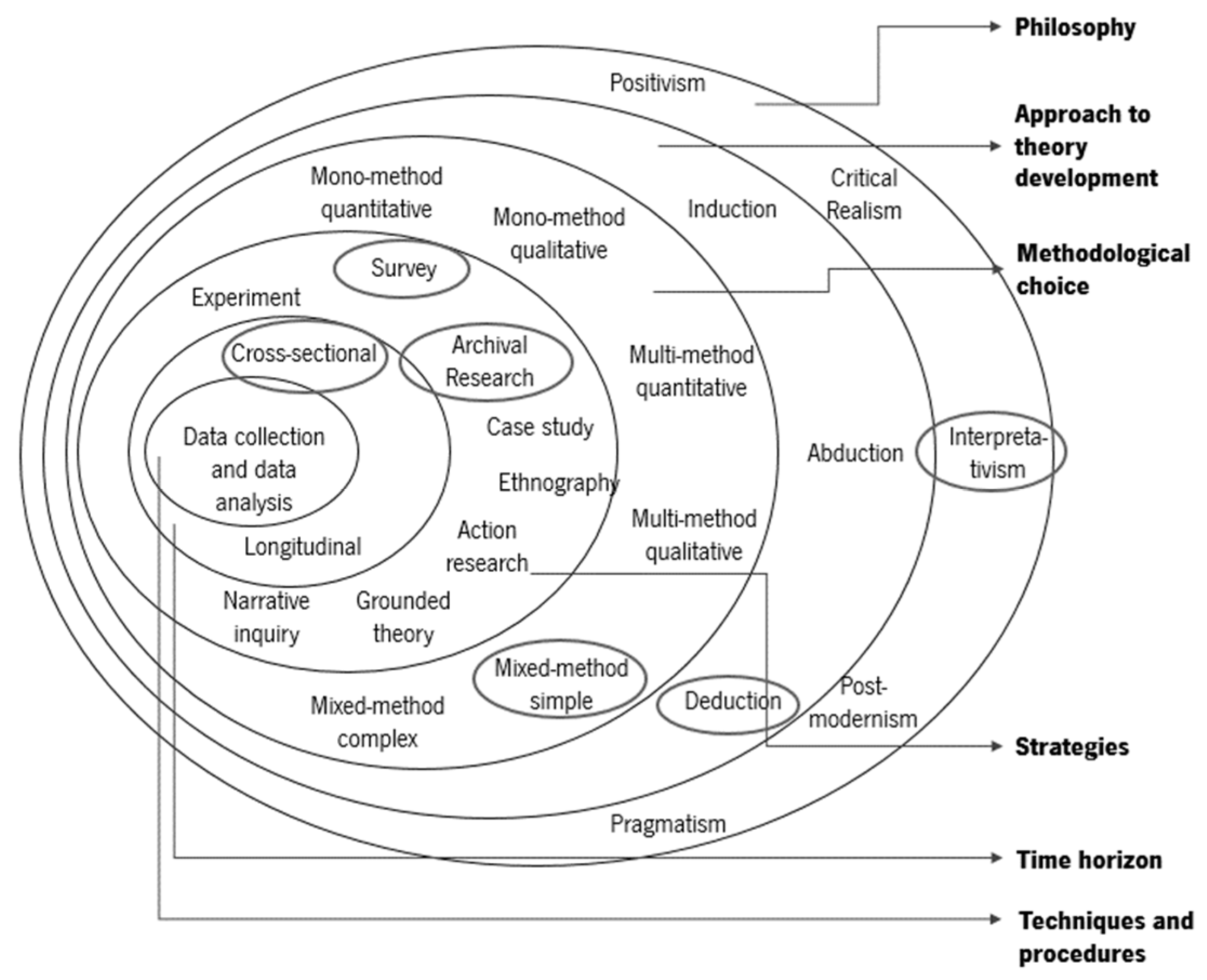
Figure 2.
Search protocol of sustainability in PM.
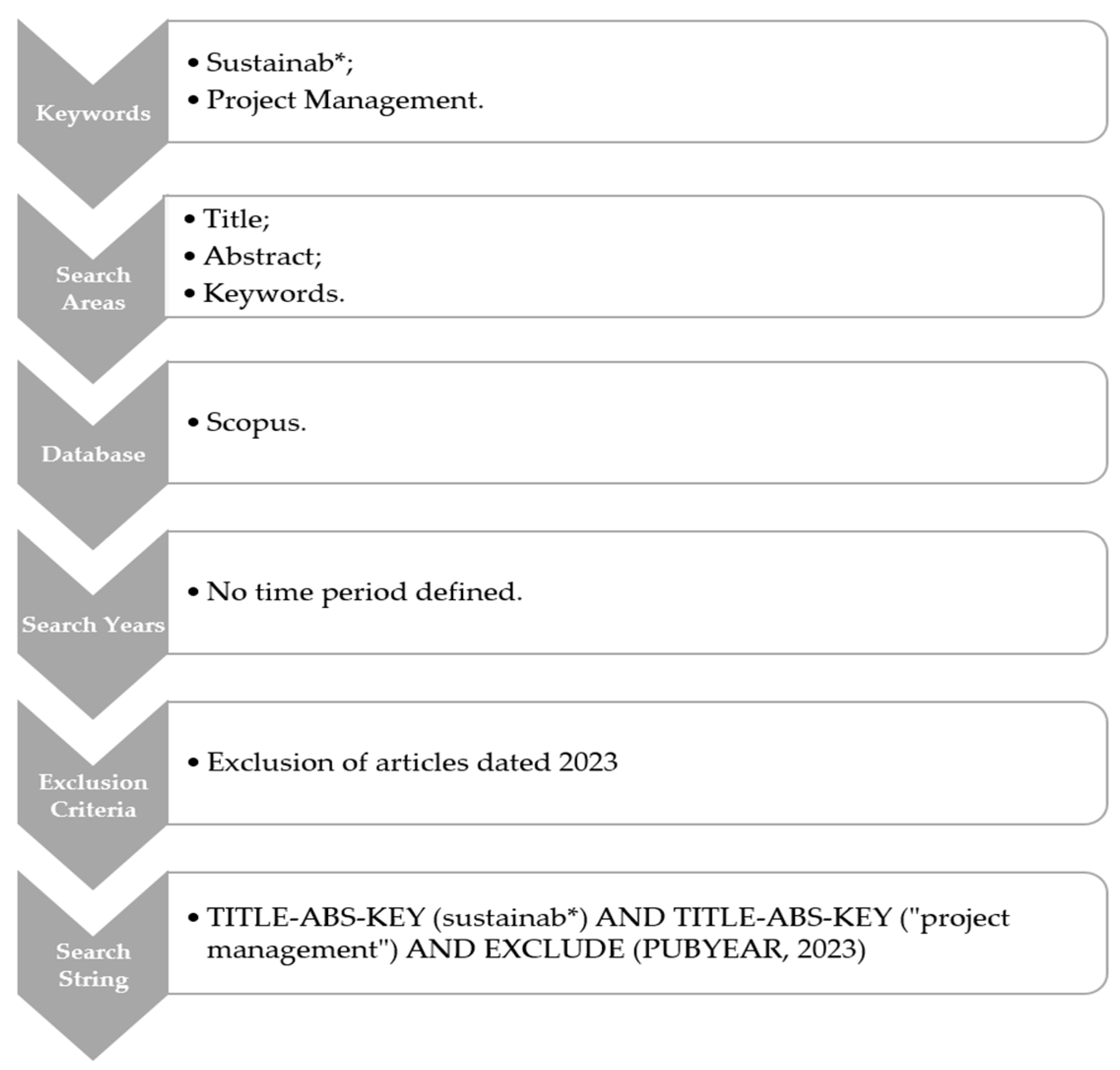
Figure 3.
Search protocol of PM² and PRiSMTM methodologies.
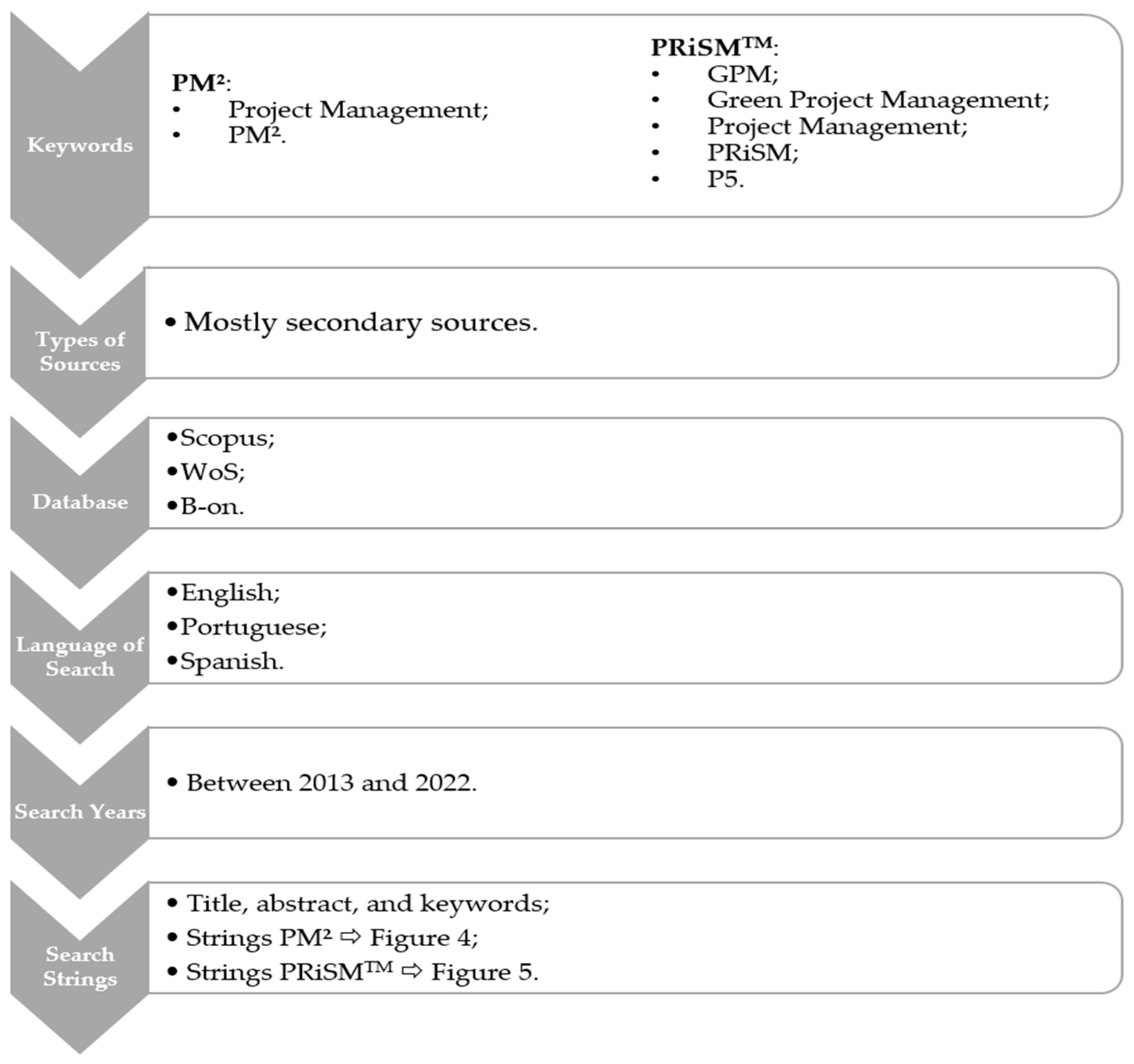
Figure 4.
PM² search funnel.
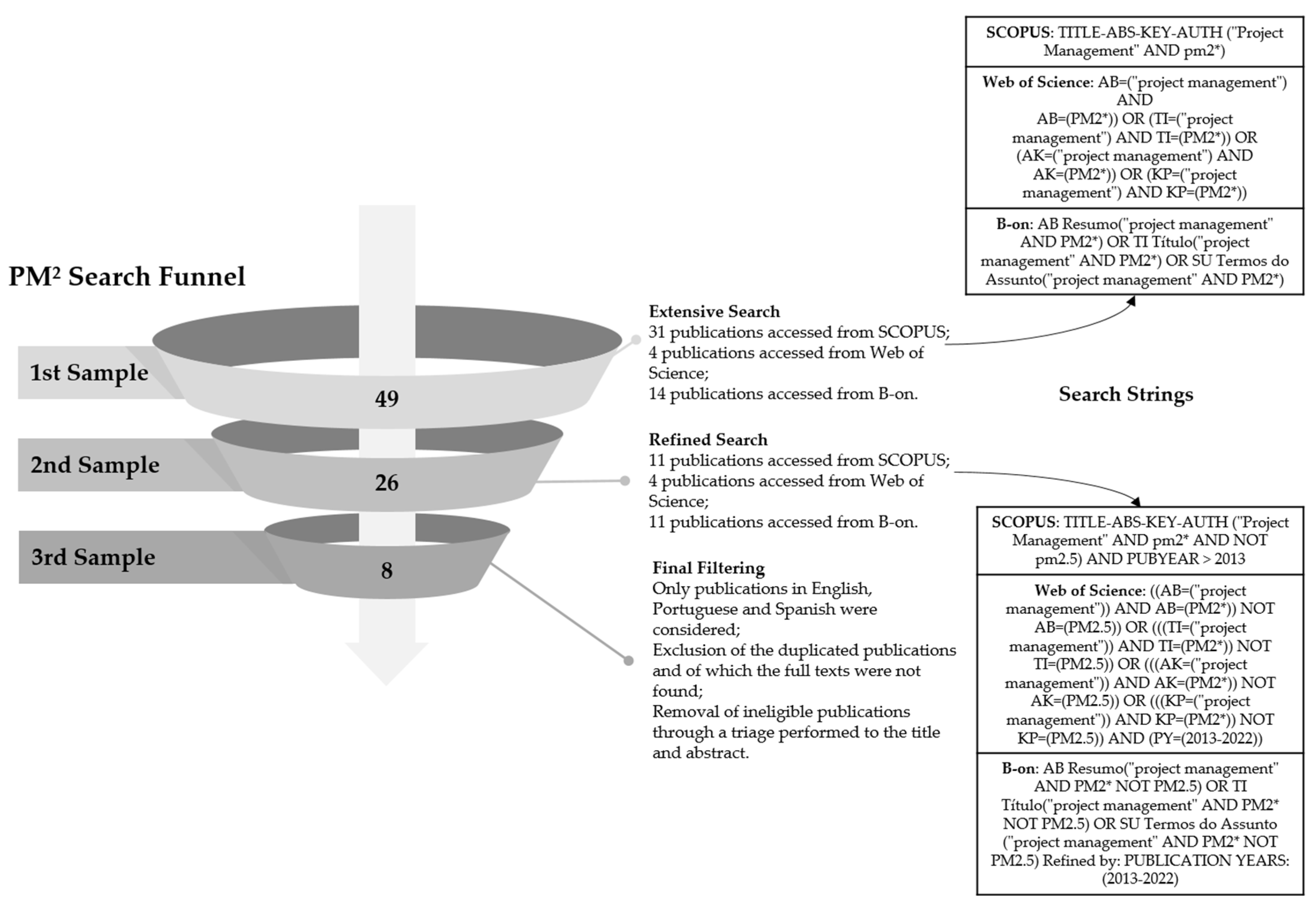
Figure 5.
PRiSMTM search funnel.
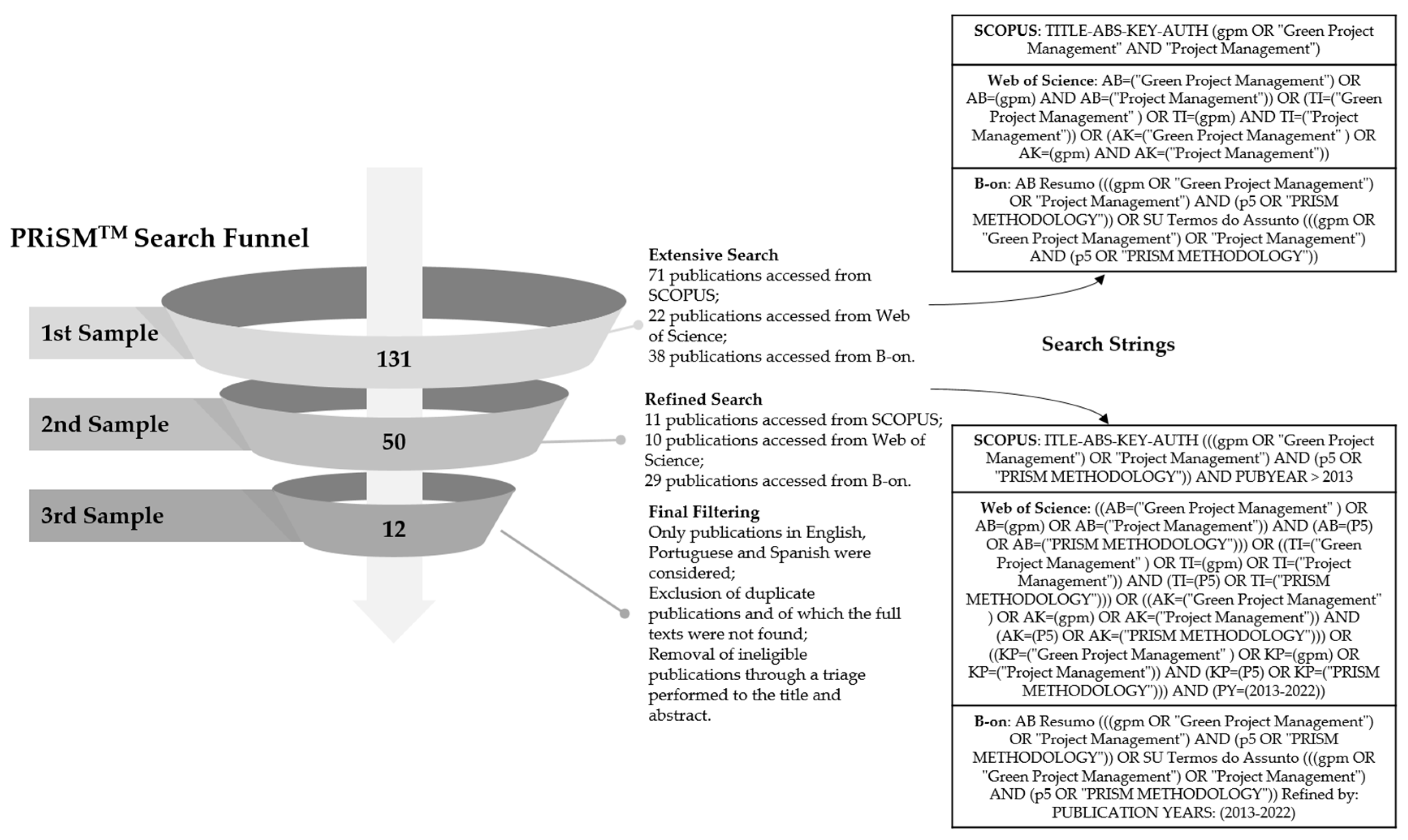
Figure 6.
The interconnection of the elements of the Triple Bottom Line concept [73] (p. 3).
Figure 6.
The interconnection of the elements of the Triple Bottom Line concept [73] (p. 3).
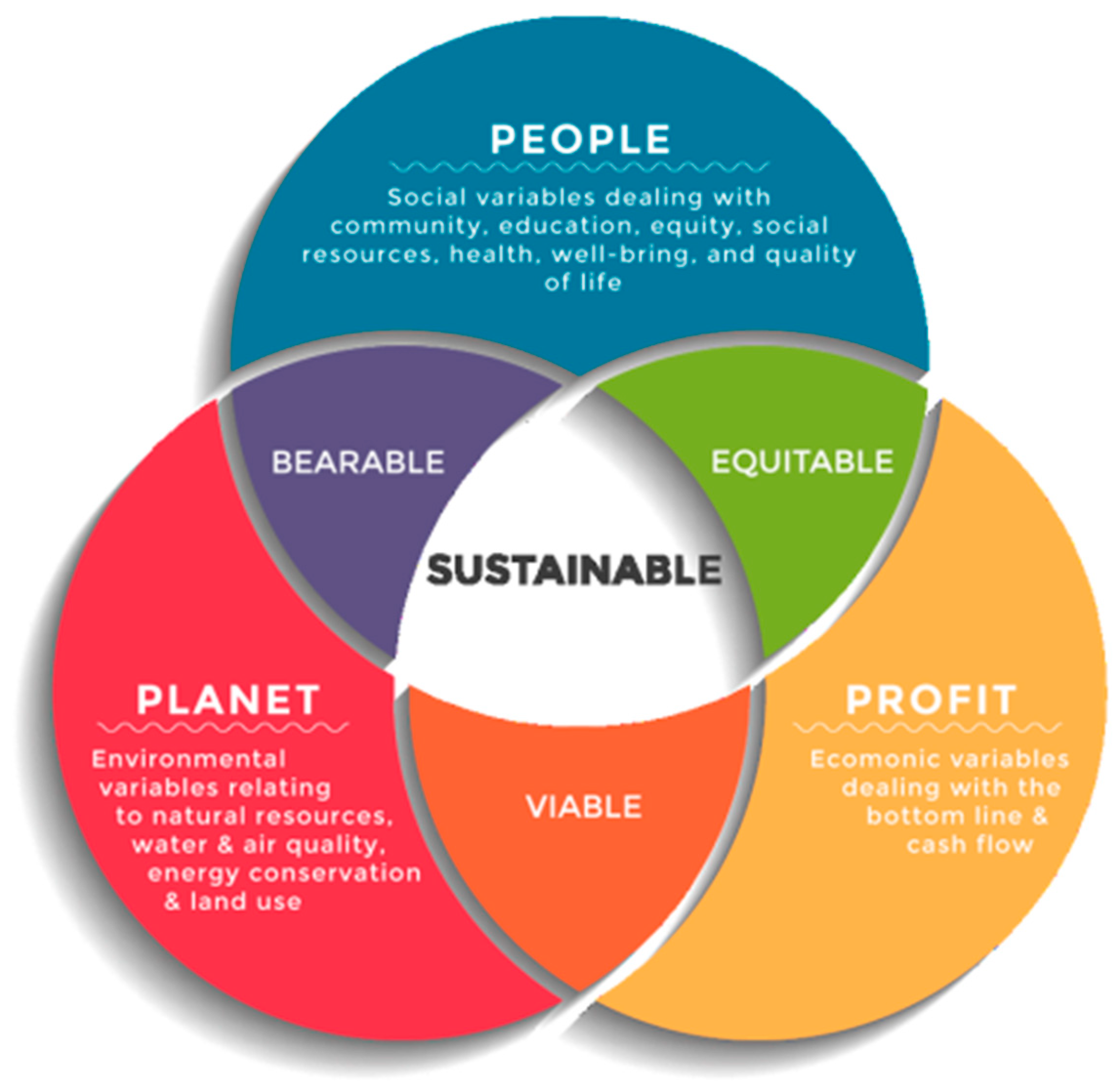
Figure 7.
United Nations Sustainable Development Goals (SDGs) [29] (p. 10).
Figure 7.
United Nations Sustainable Development Goals (SDGs) [29] (p. 10).
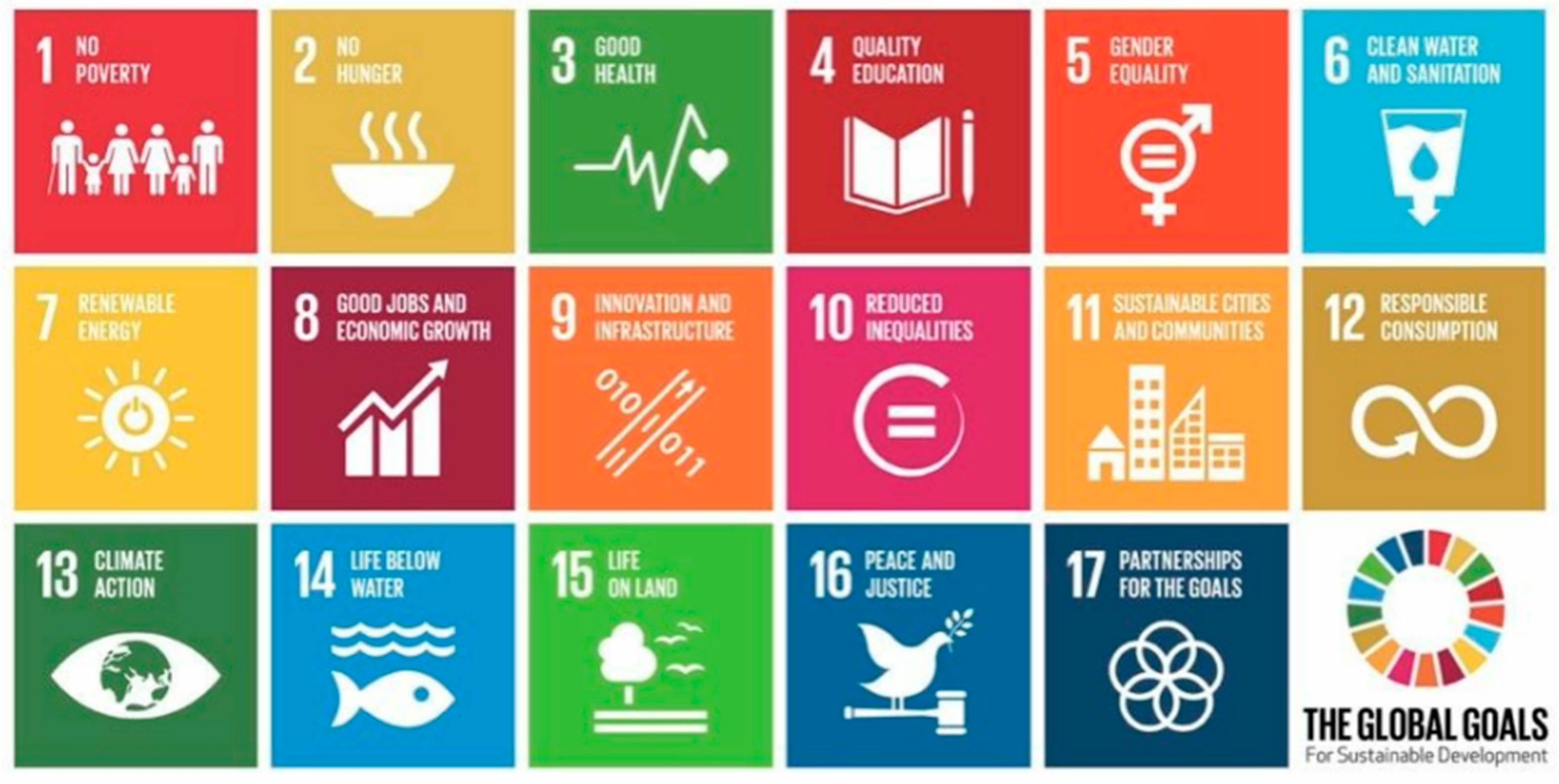
Figure 8.
PM² swimlane diagram [58] (p. 18).
Figure 8.
PM² swimlane diagram [58] (p. 18).
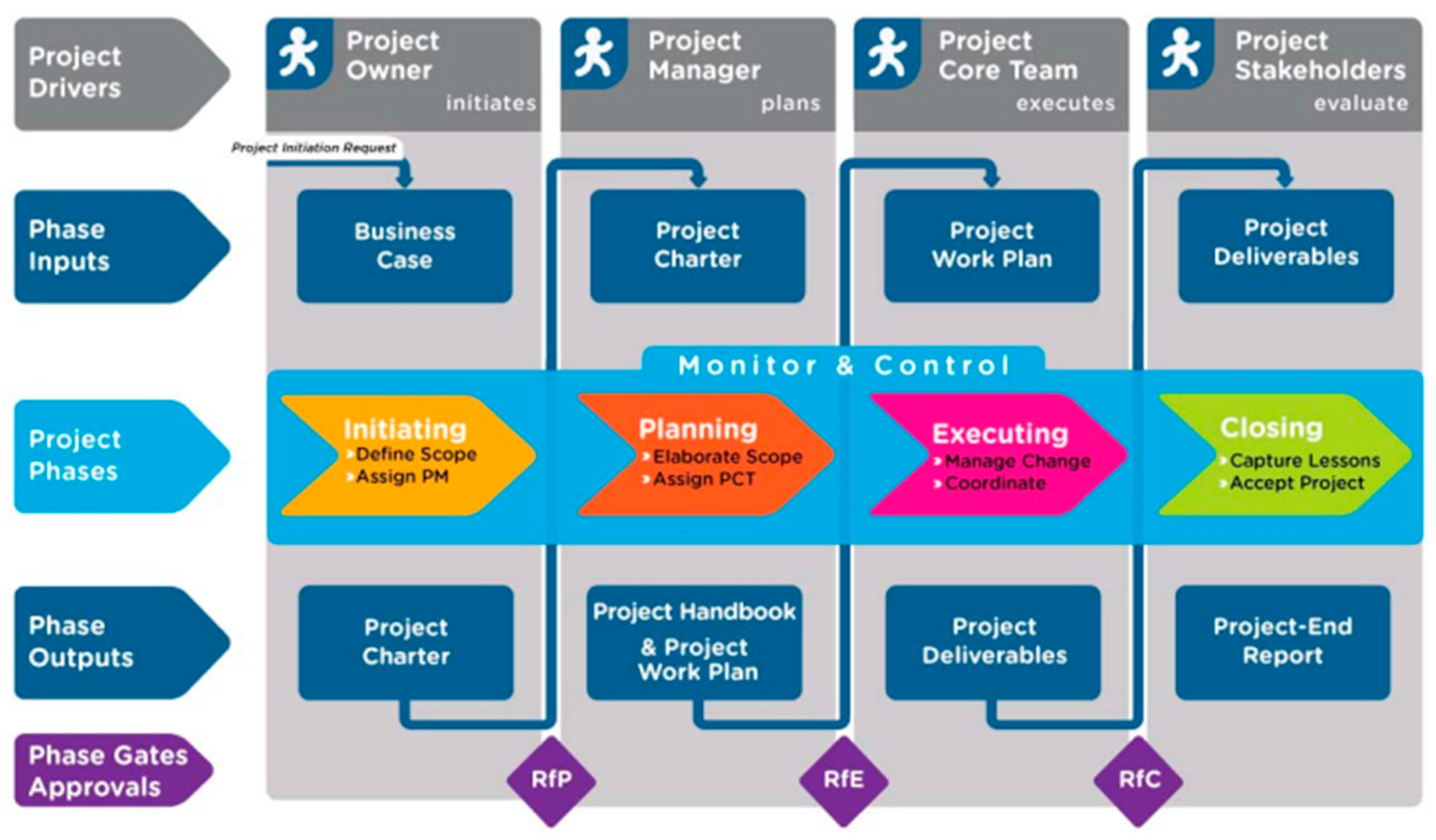
Figure 9.
Initiating phase activities and main outputs [58] (p. 31).
Figure 9.
Initiating phase activities and main outputs [58] (p. 31).
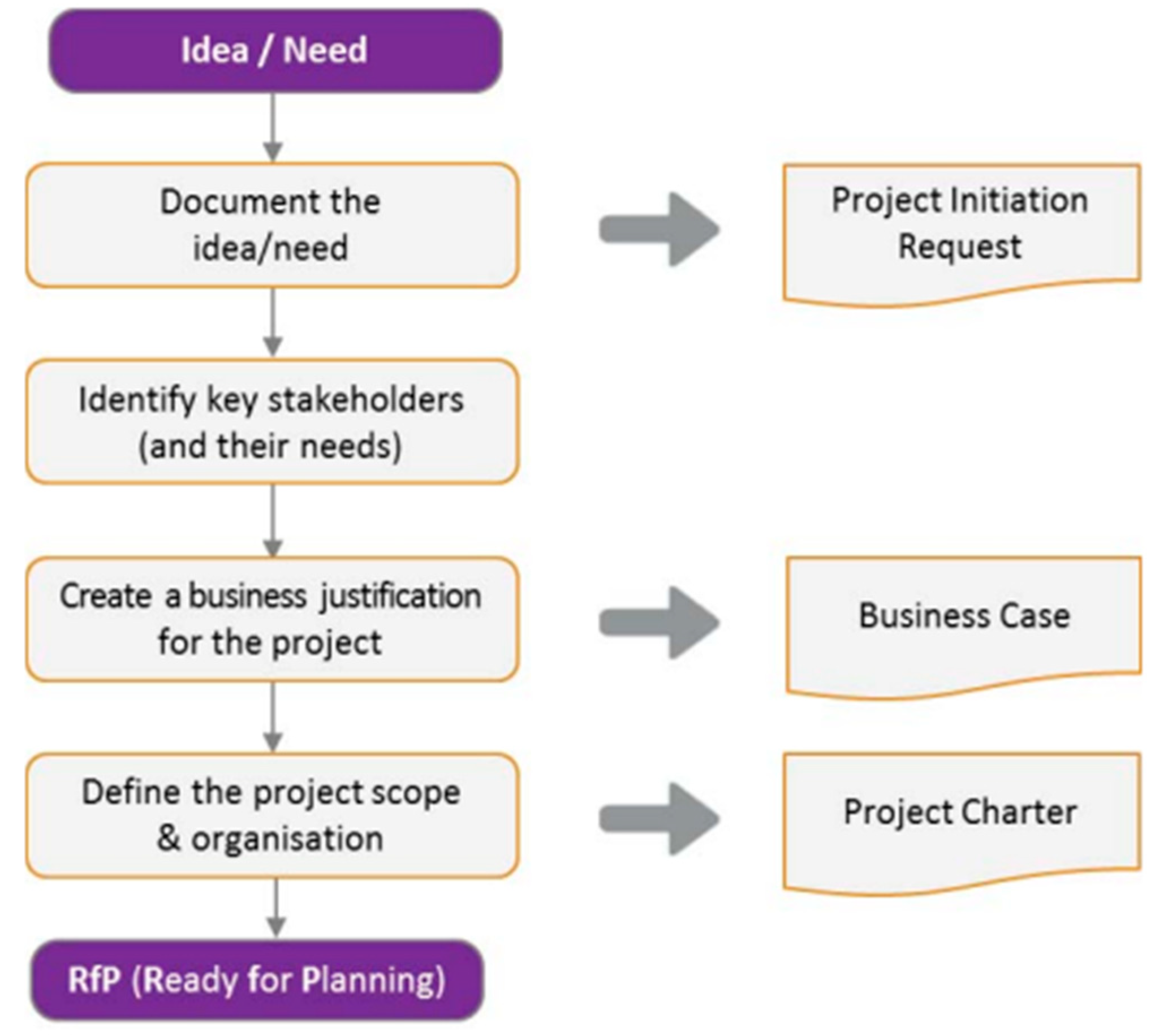
Figure 10.
Planning phase activities and main outputs [58] (p. 39).
Figure 10.
Planning phase activities and main outputs [58] (p. 39).
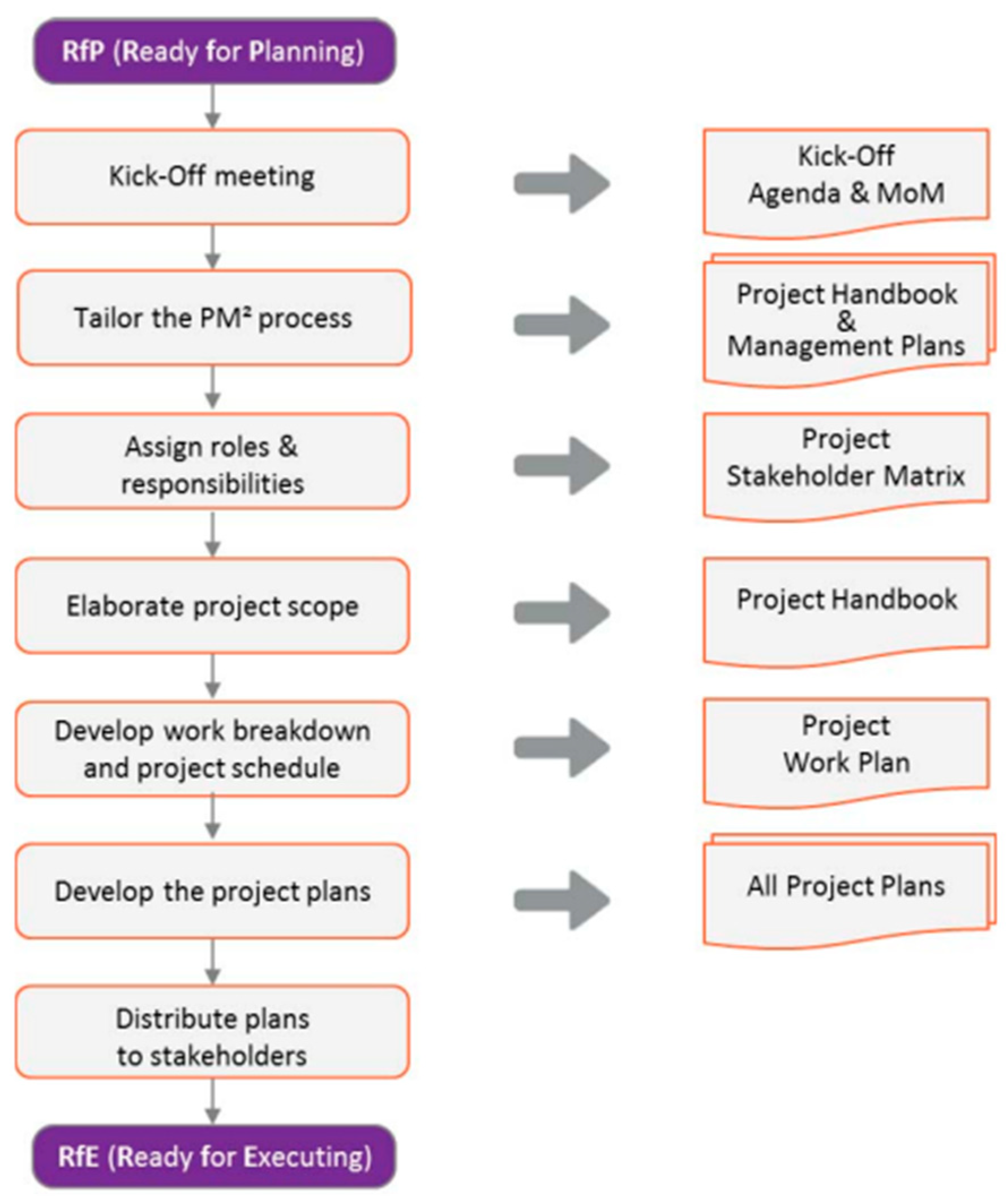
Figure 11.
Executing phase activities and main outputs [58] (p. 55).
Figure 11.
Executing phase activities and main outputs [58] (p. 55).
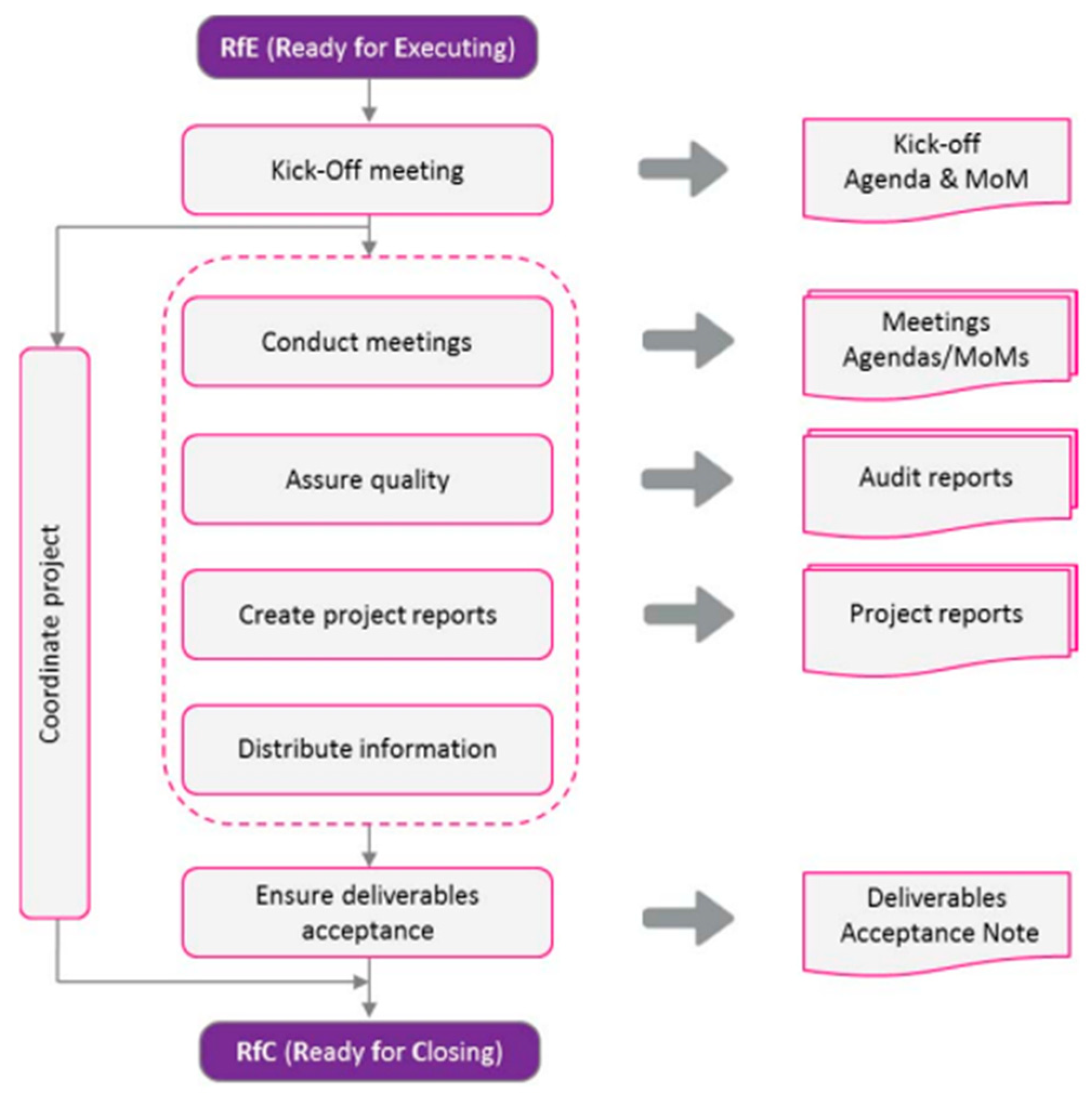
Figure 12.
Closing phase activities and main outputs [58] (p. 63).
Figure 12.
Closing phase activities and main outputs [58] (p. 63).
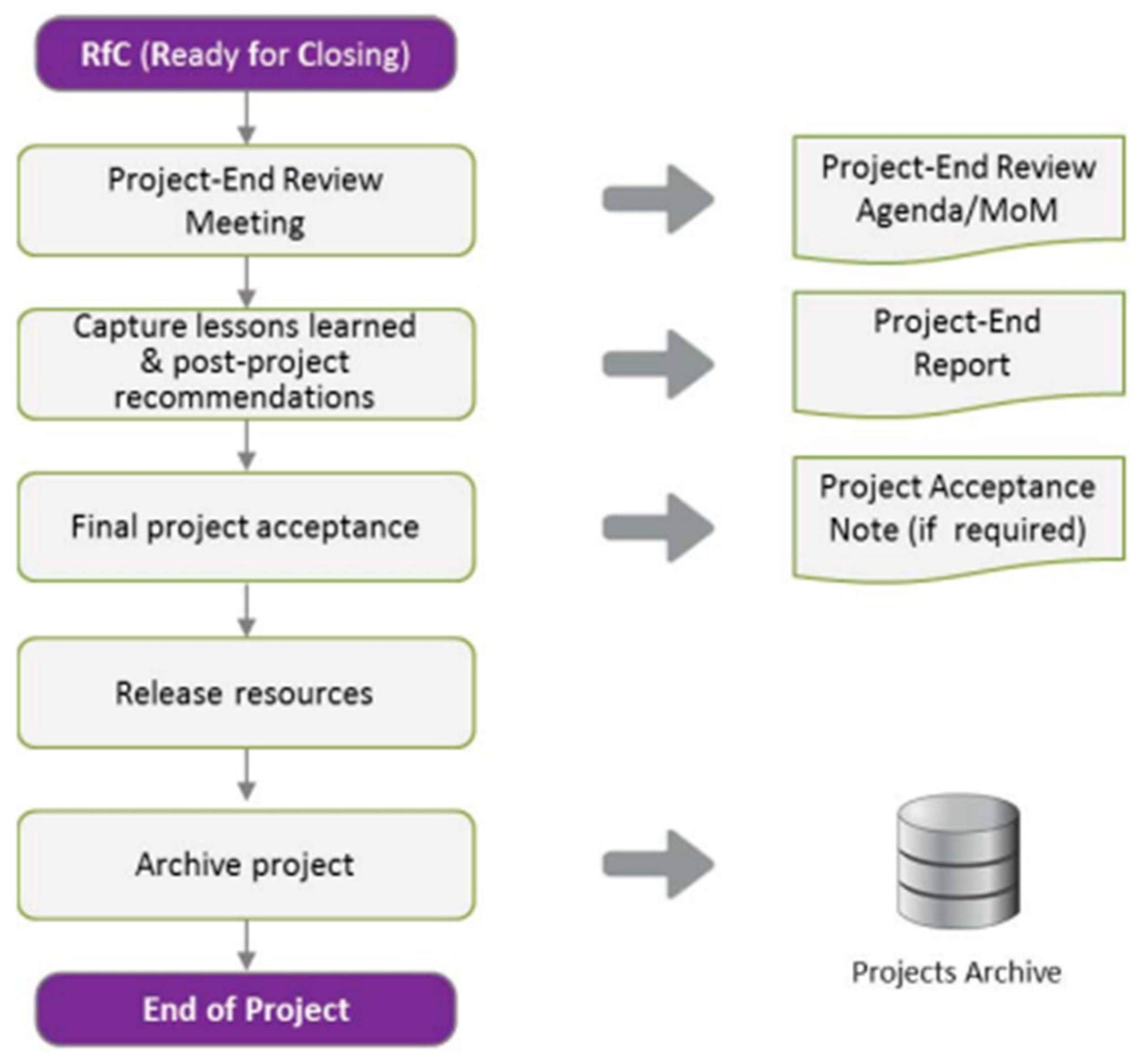
Figure 13.
PRiSMTM methodology workflow [112].
Figure 13.
PRiSMTM methodology workflow [112].
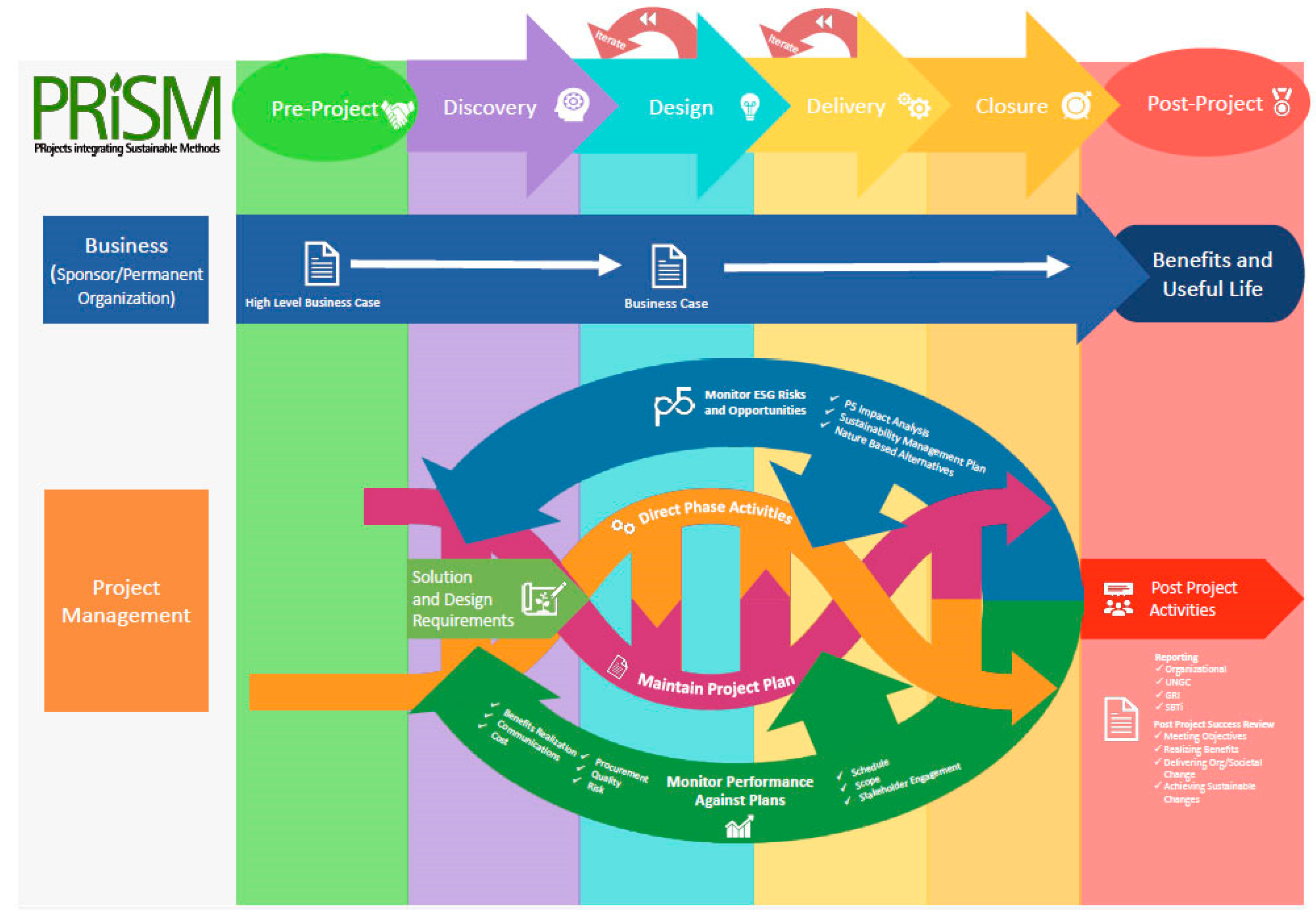
Figure 14.
Pre-project phase flowchart [29] (p. 51).
Figure 14.
Pre-project phase flowchart [29] (p. 51).
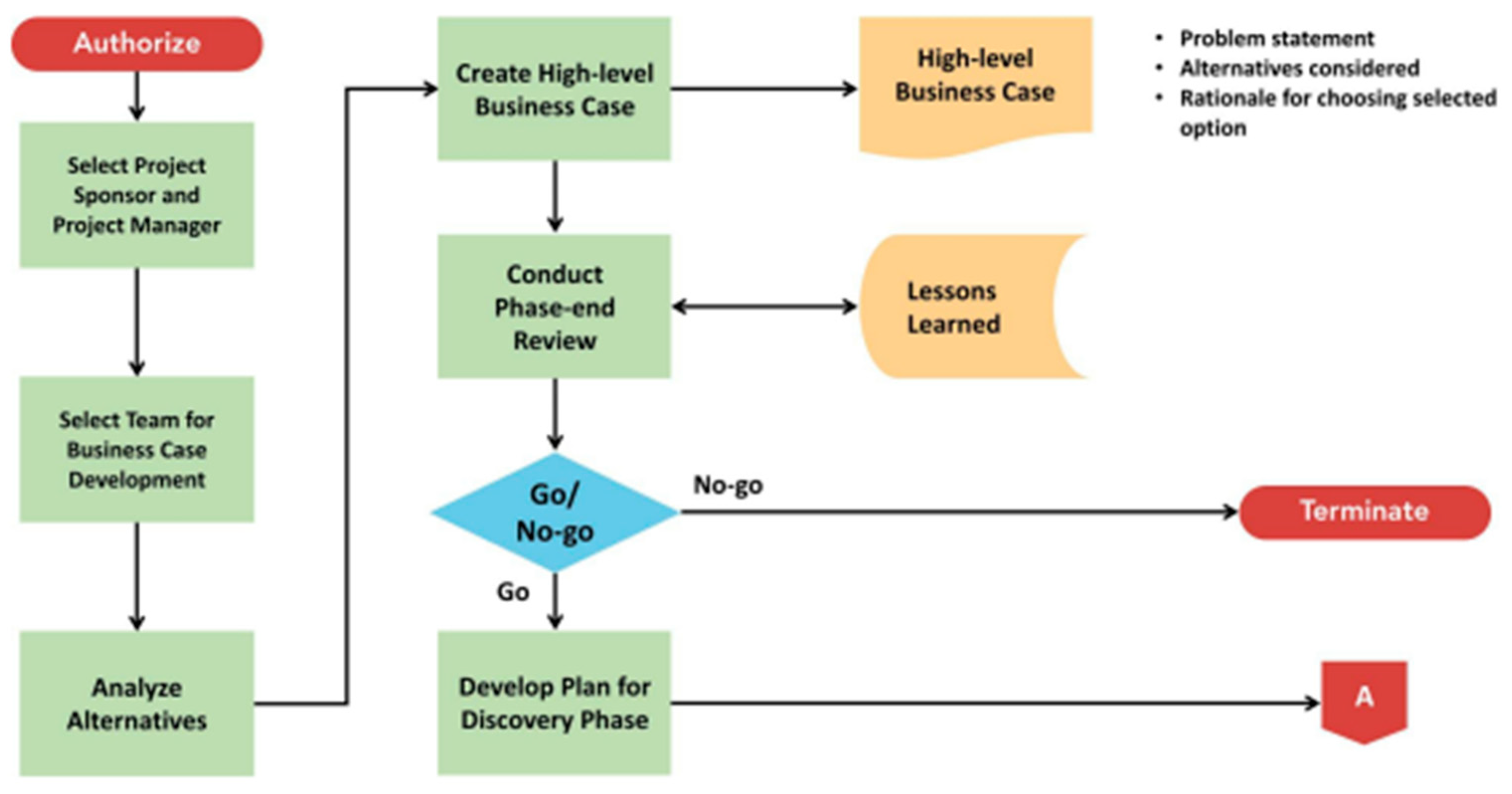
Figure 15.
Discovery phase flowchart [29] (p. 52).
Figure 15.
Discovery phase flowchart [29] (p. 52).
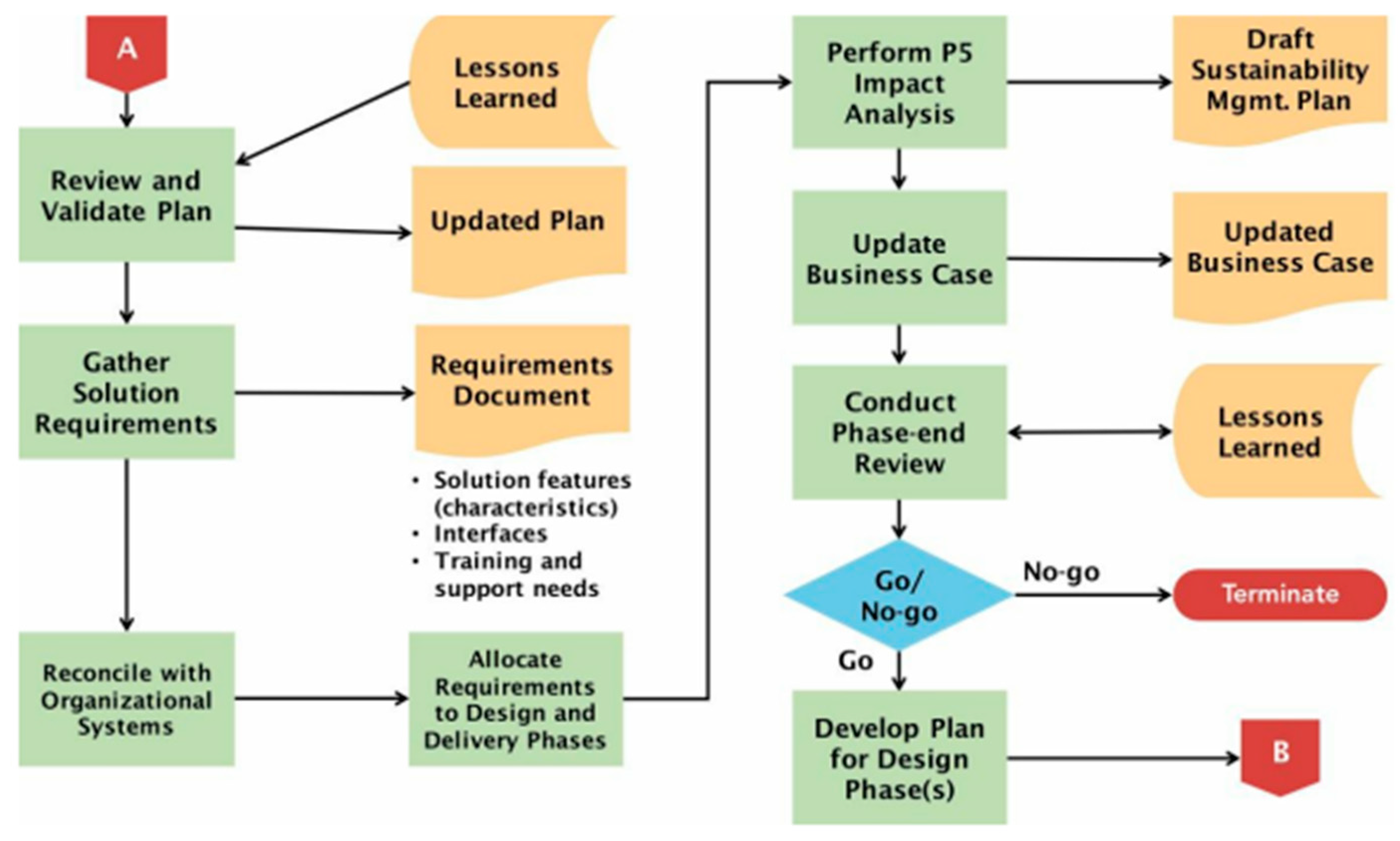
Figure 16.
Design phase flowchart [29] (p. 54).
Figure 16.
Design phase flowchart [29] (p. 54).
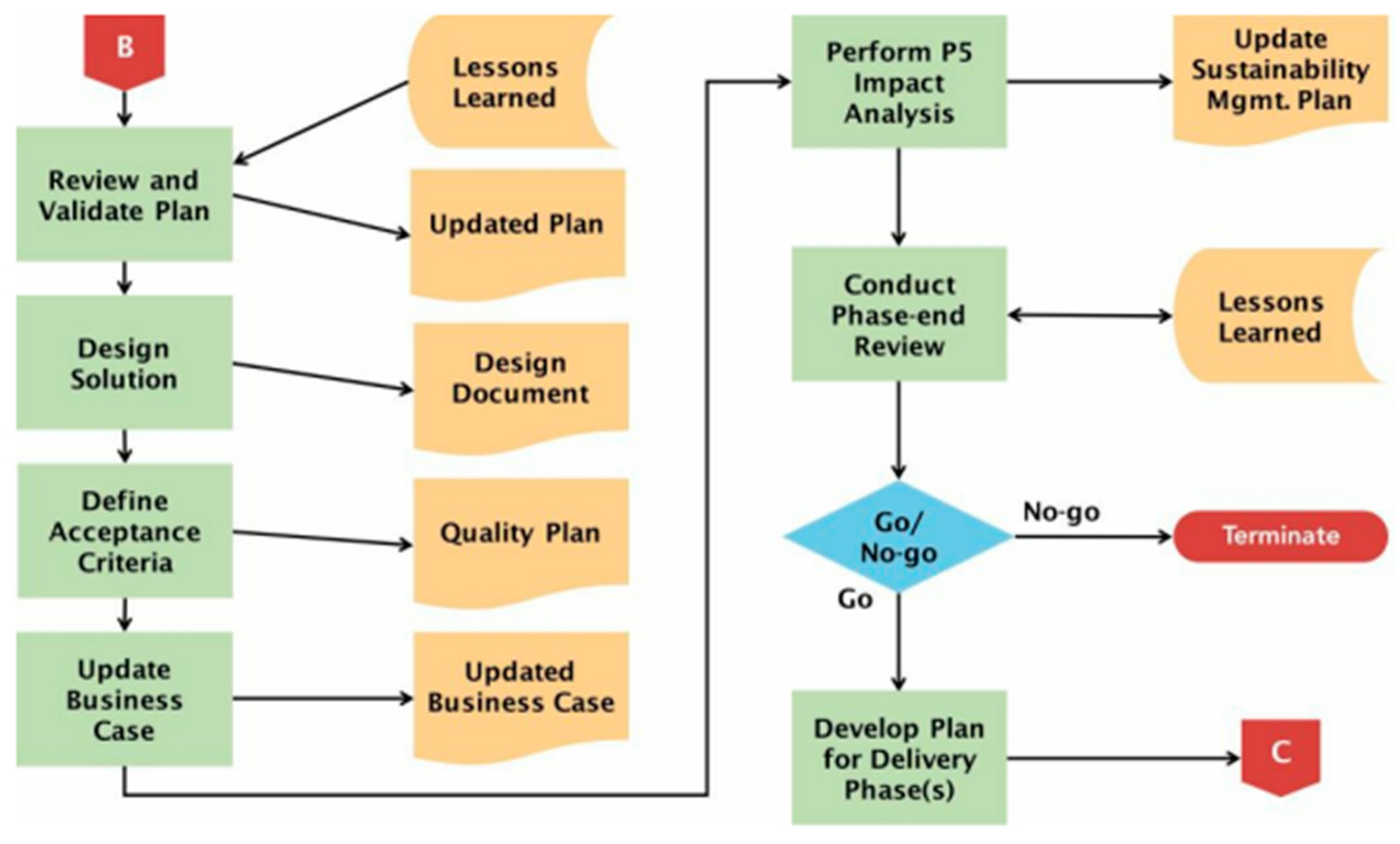
Figure 17.
Delivery phase flowchart [29] (p. 56).
Figure 17.
Delivery phase flowchart [29] (p. 56).
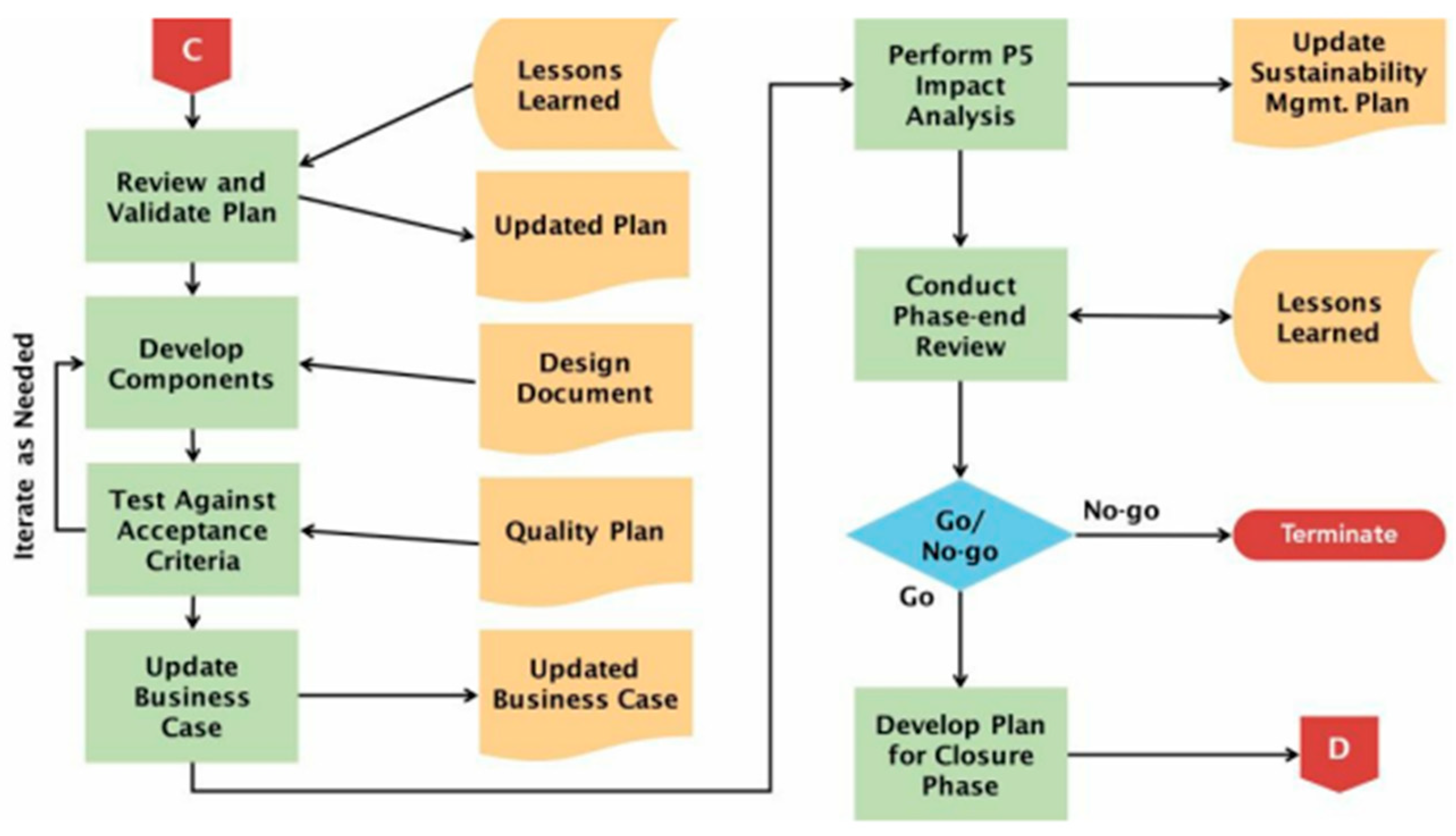
Figure 18.
Closure Phase Flowchart [29] (p. 57).
Figure 18.
Closure Phase Flowchart [29] (p. 57).
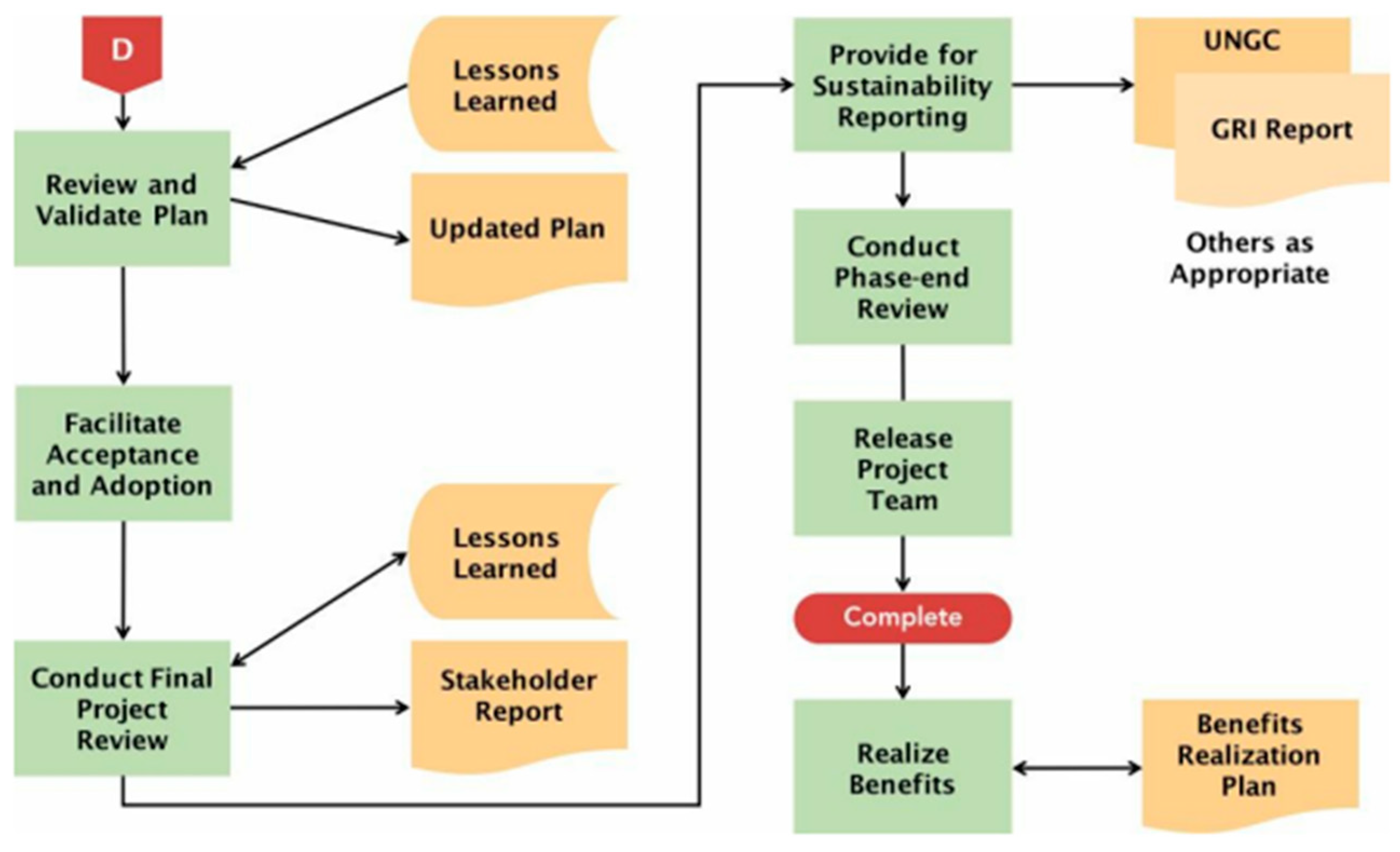
Figure 19.
Number of occurences of the word sustainability in the PM guides.
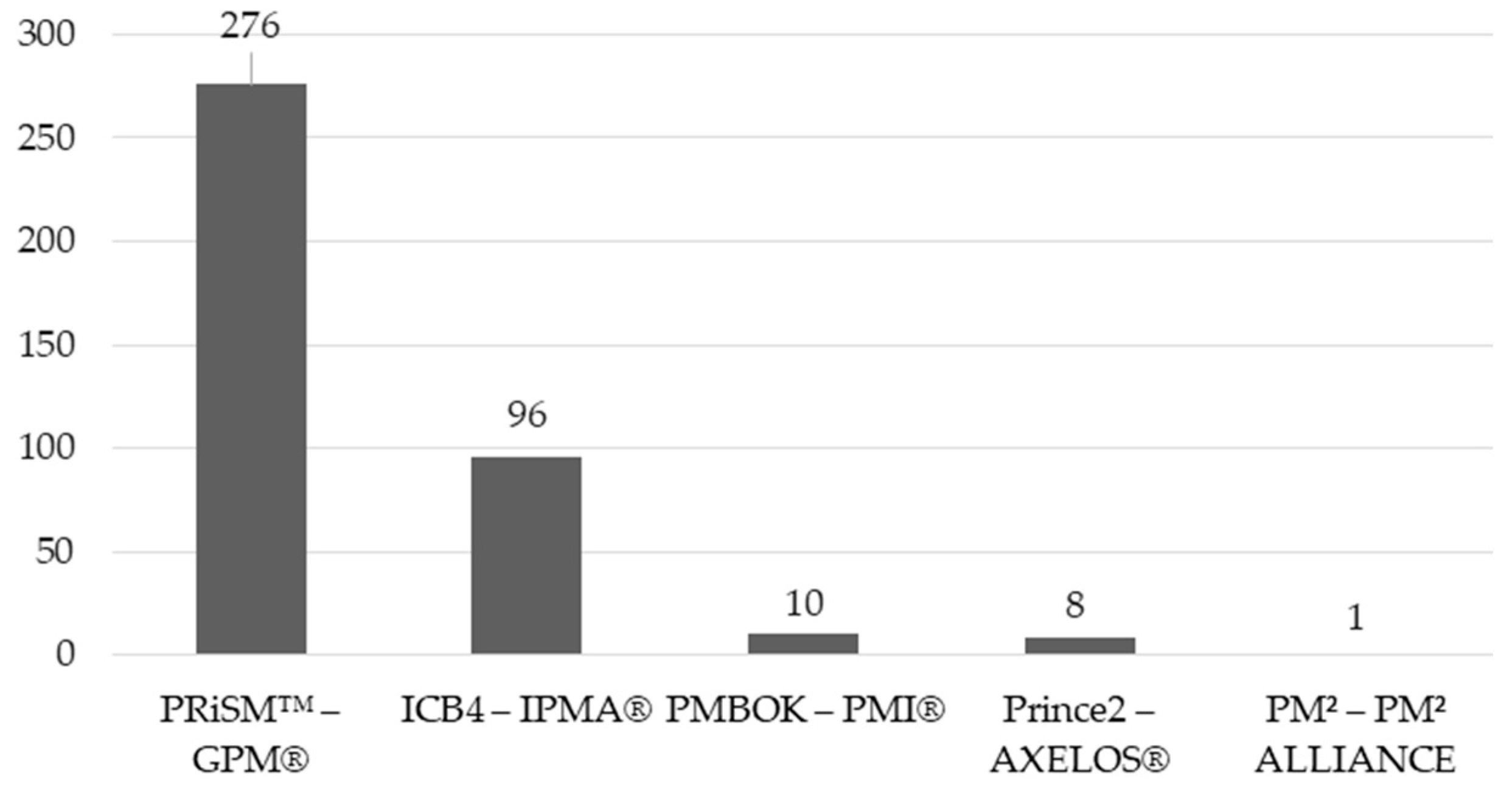
Figure 20.
Number of sustainability papers in PM around the world.
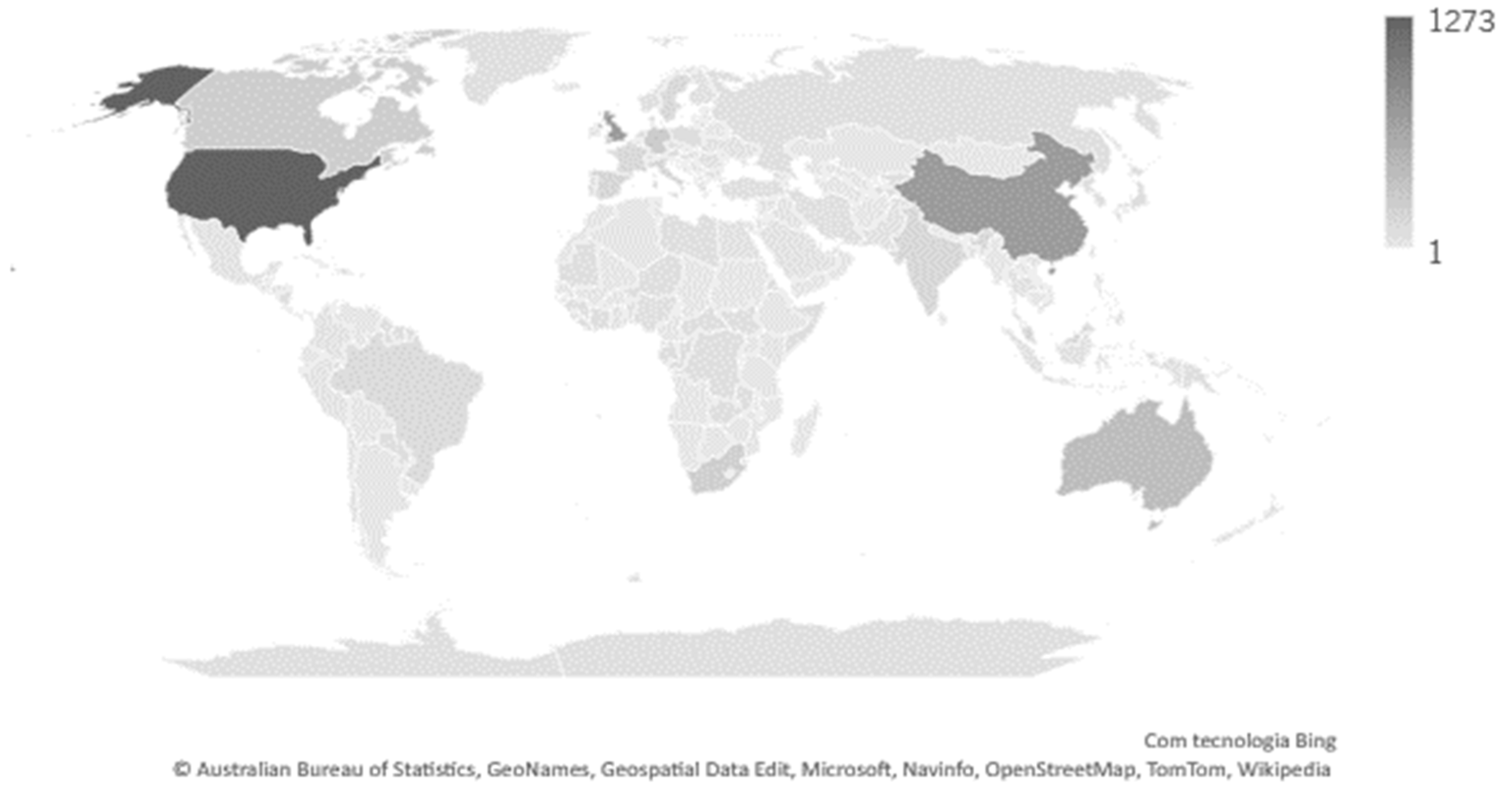
Figure 21.
The number of documents about PM sustainability per year.
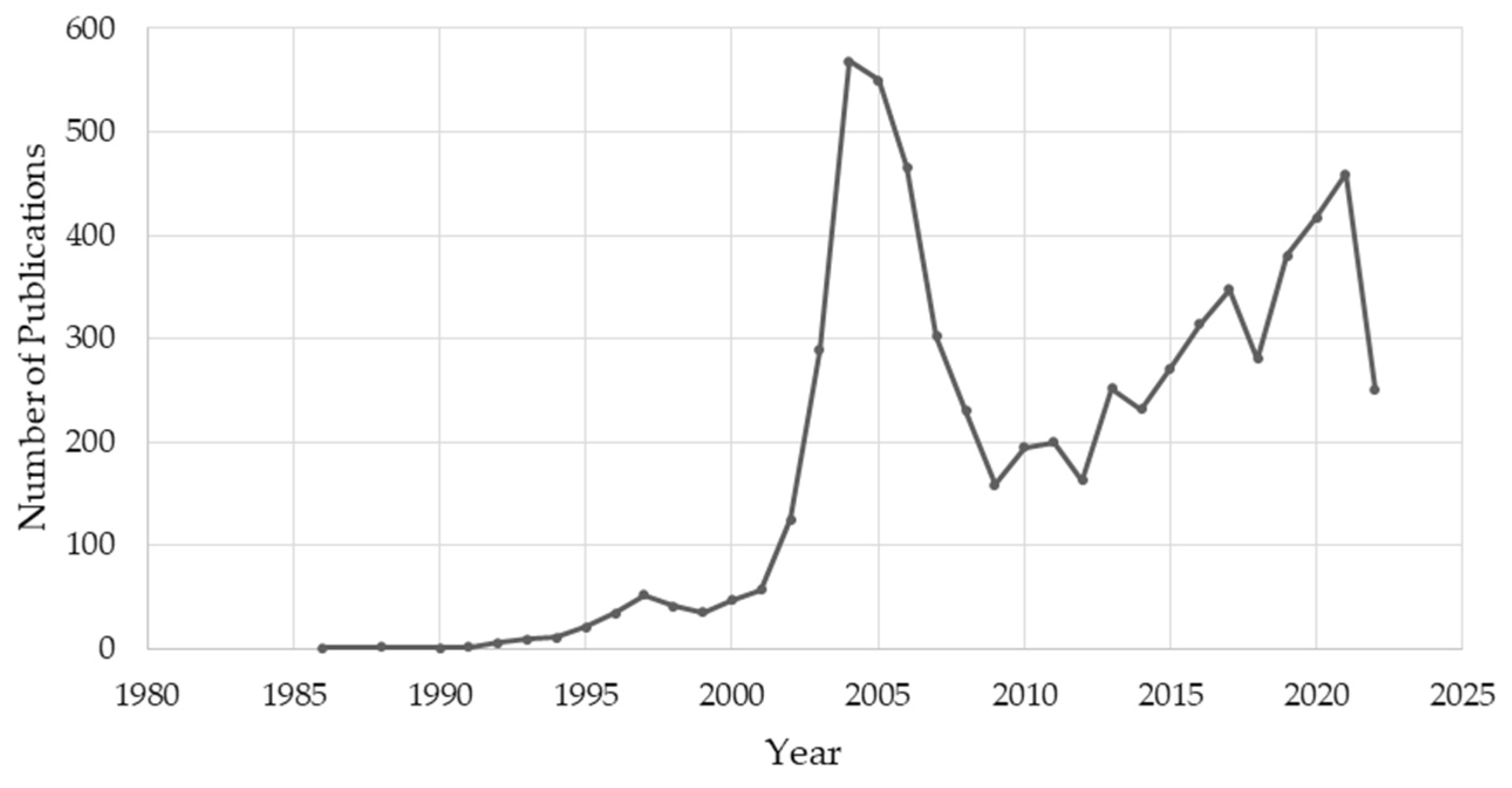
Figure 22.
Number of publications by scientific area.
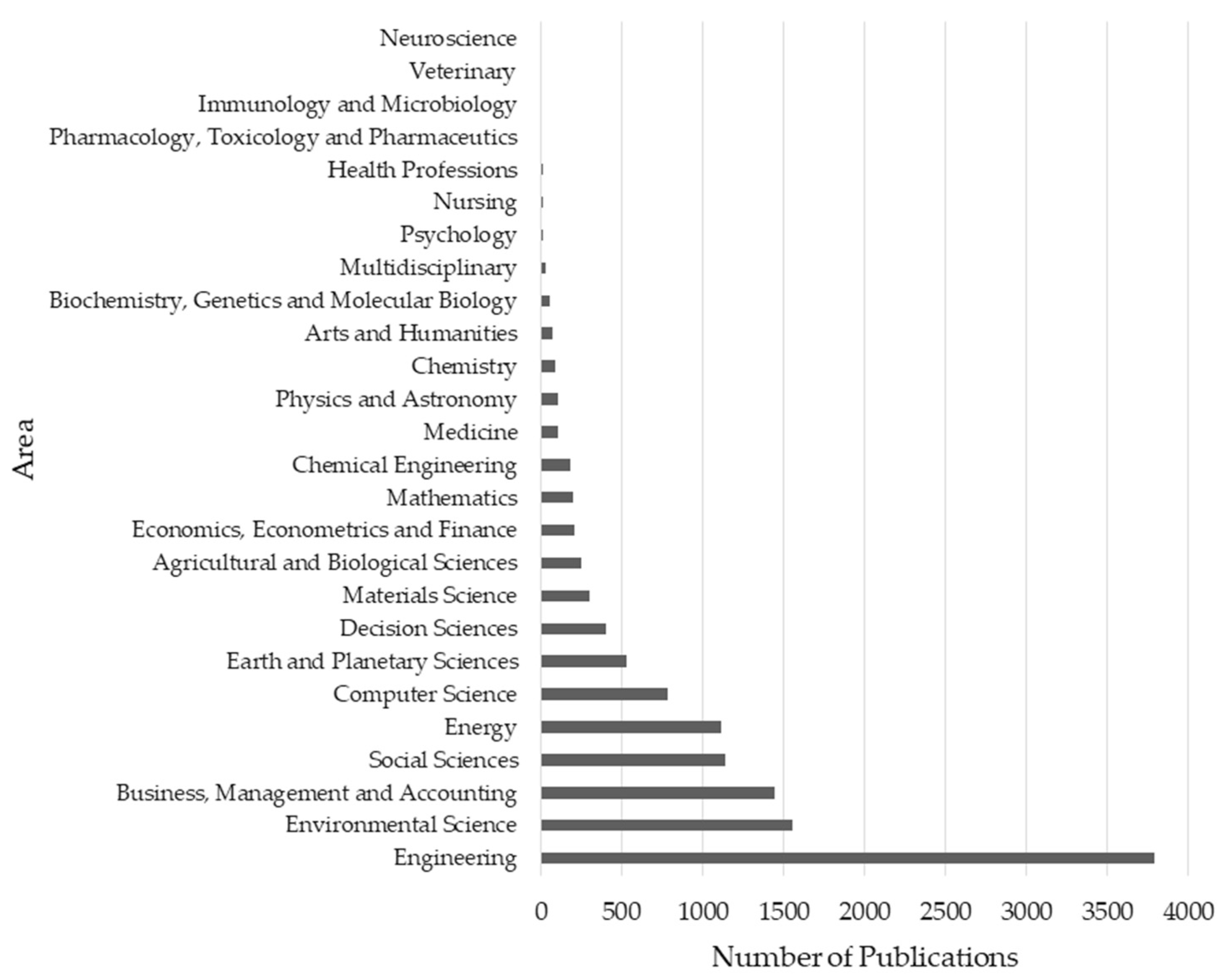
Figure 23.
Co-occurrence of terms in the 6769 documents.
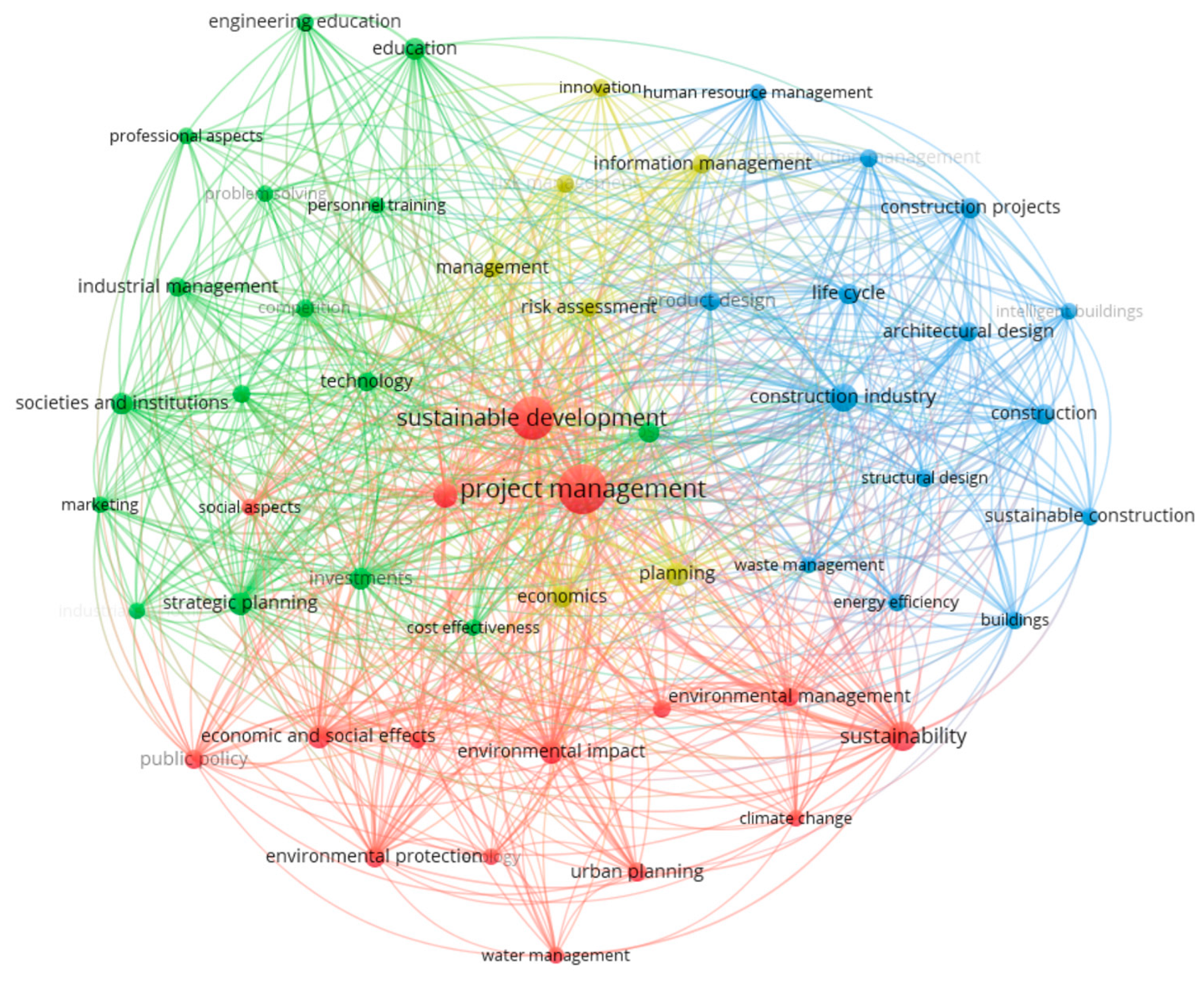
Figure 24.
Comparison between the phases of PM² and PRiSMTM methodology.
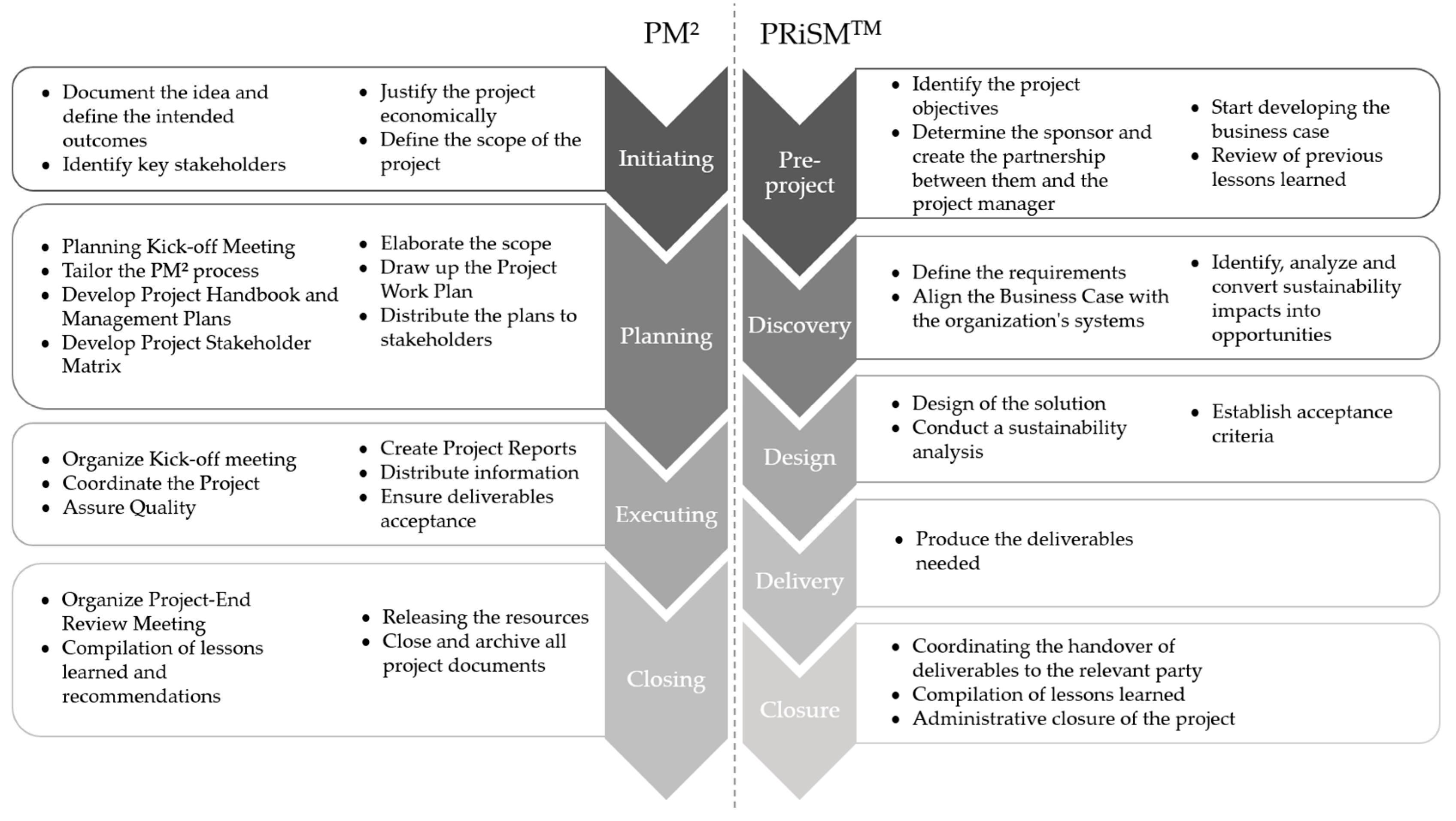
Figure 25.
Study area frequency - PM² methodology.
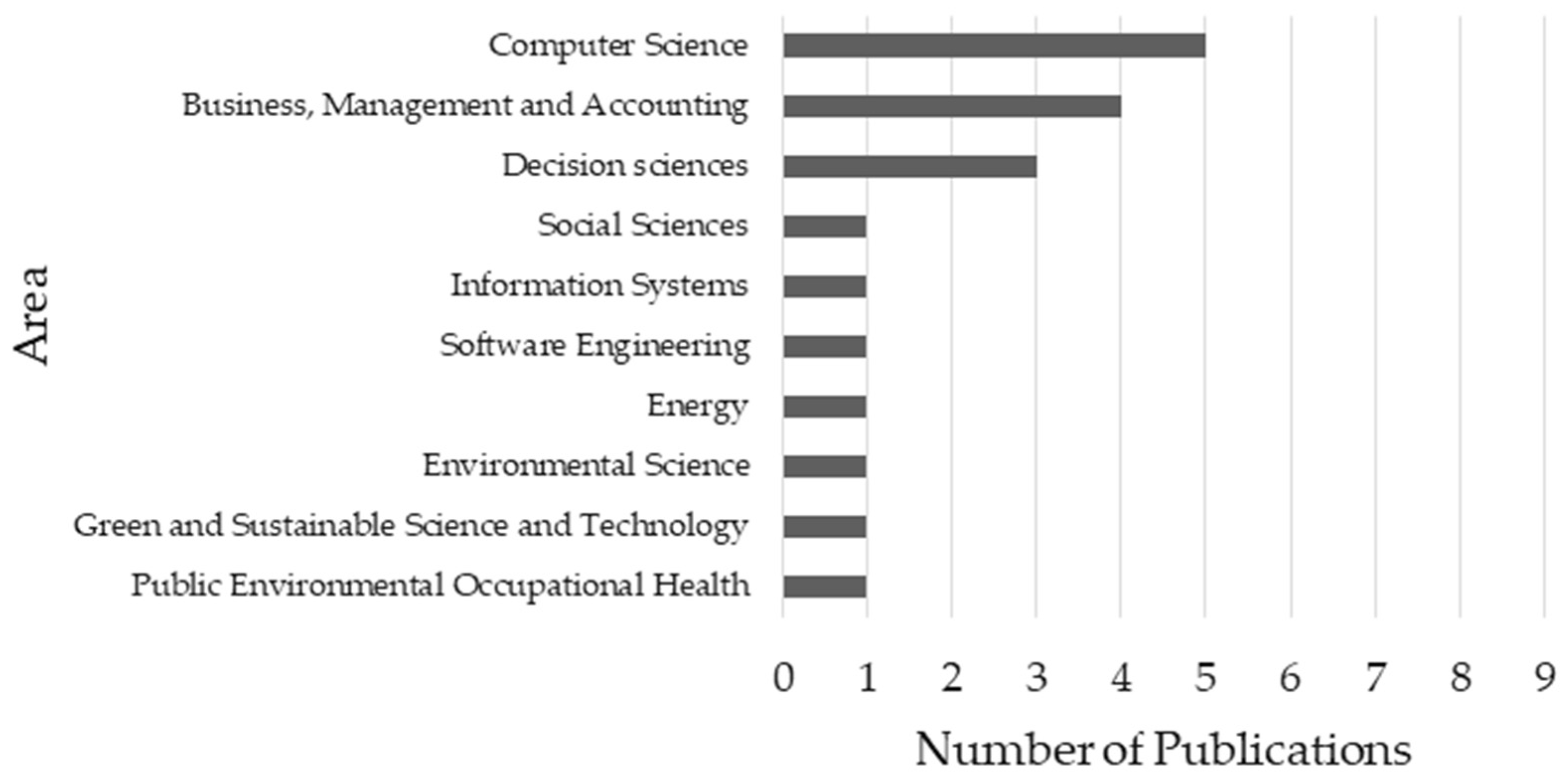
Figure 26.
Study area frequency - PRiSMTM methodology and P5™ standard.
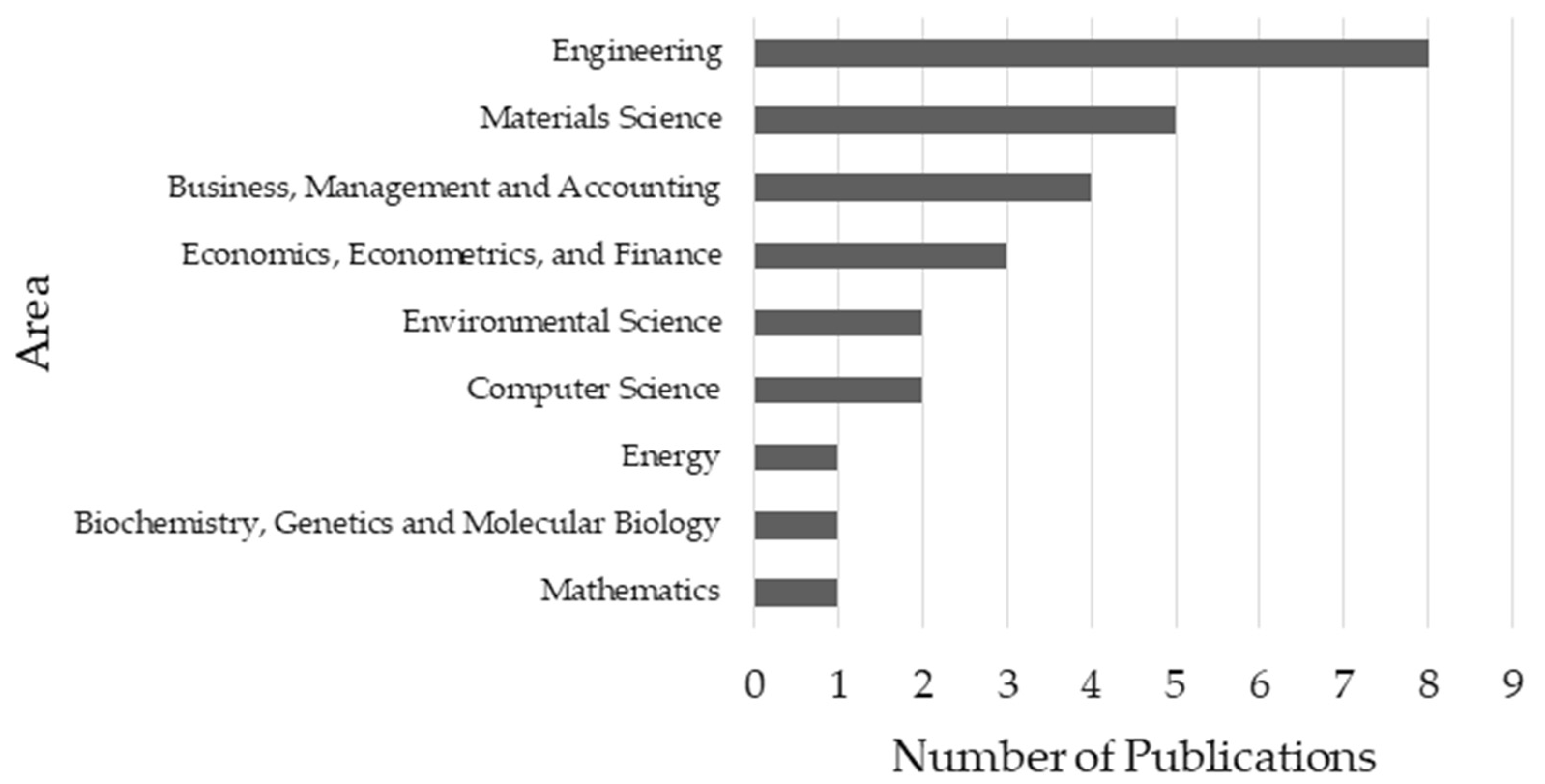
Figure 27.
Number of publications per year - PM² and PRiSMTM methodology.
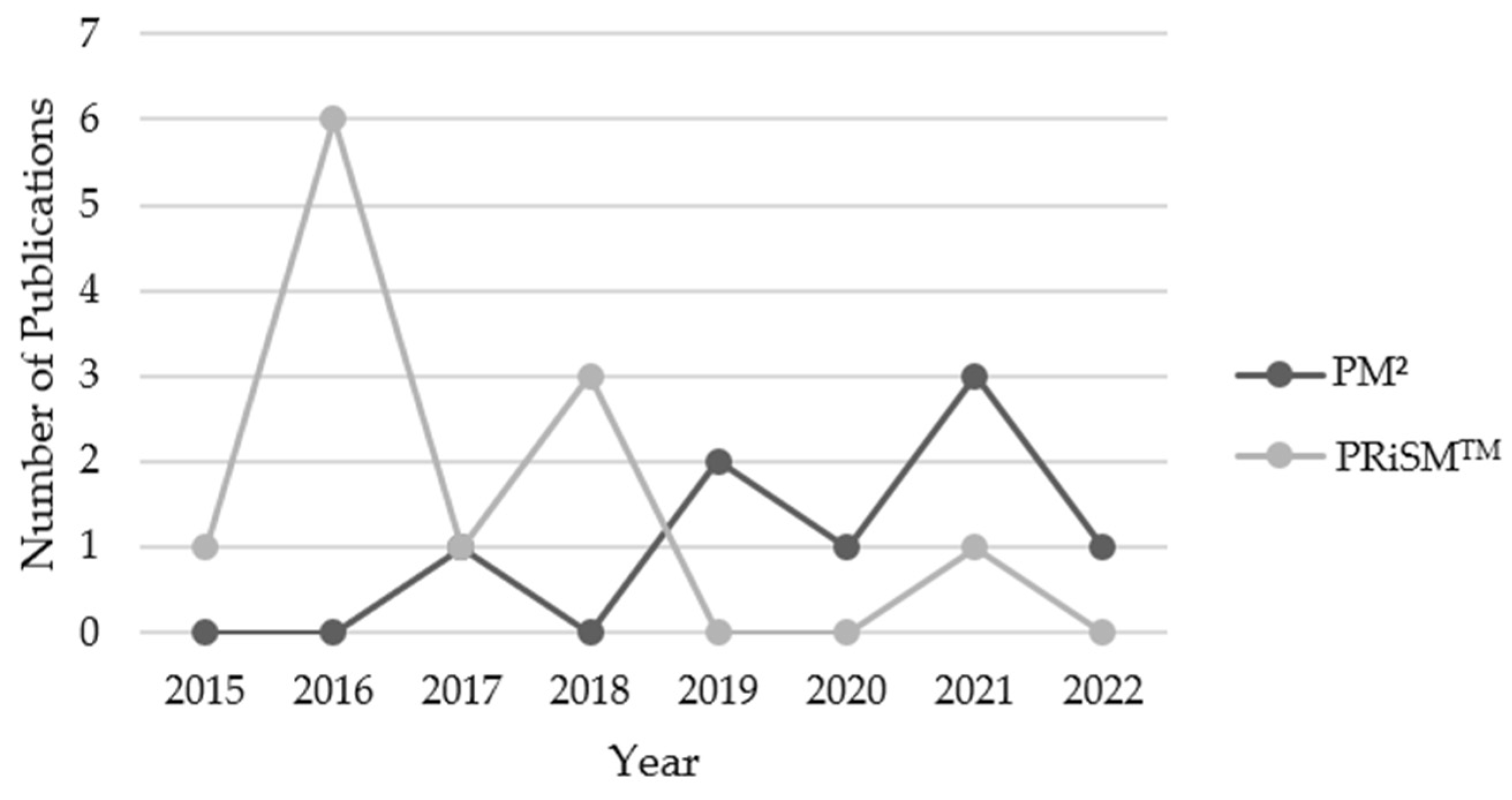
Figure 28.
Number of documents on PM² methodology per country.
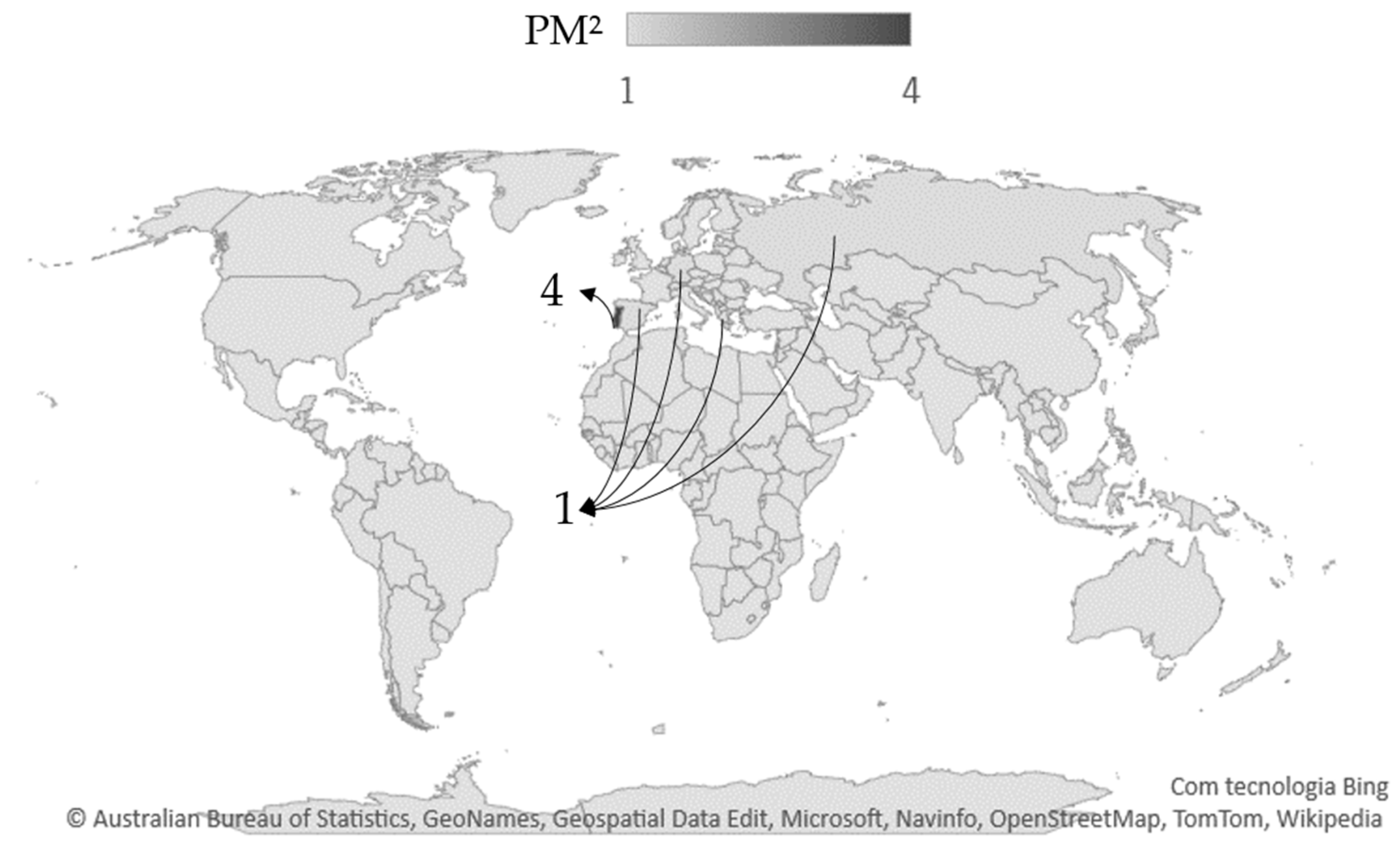
Figure 29.
Number of documents on PRiSMTM methodology per country.
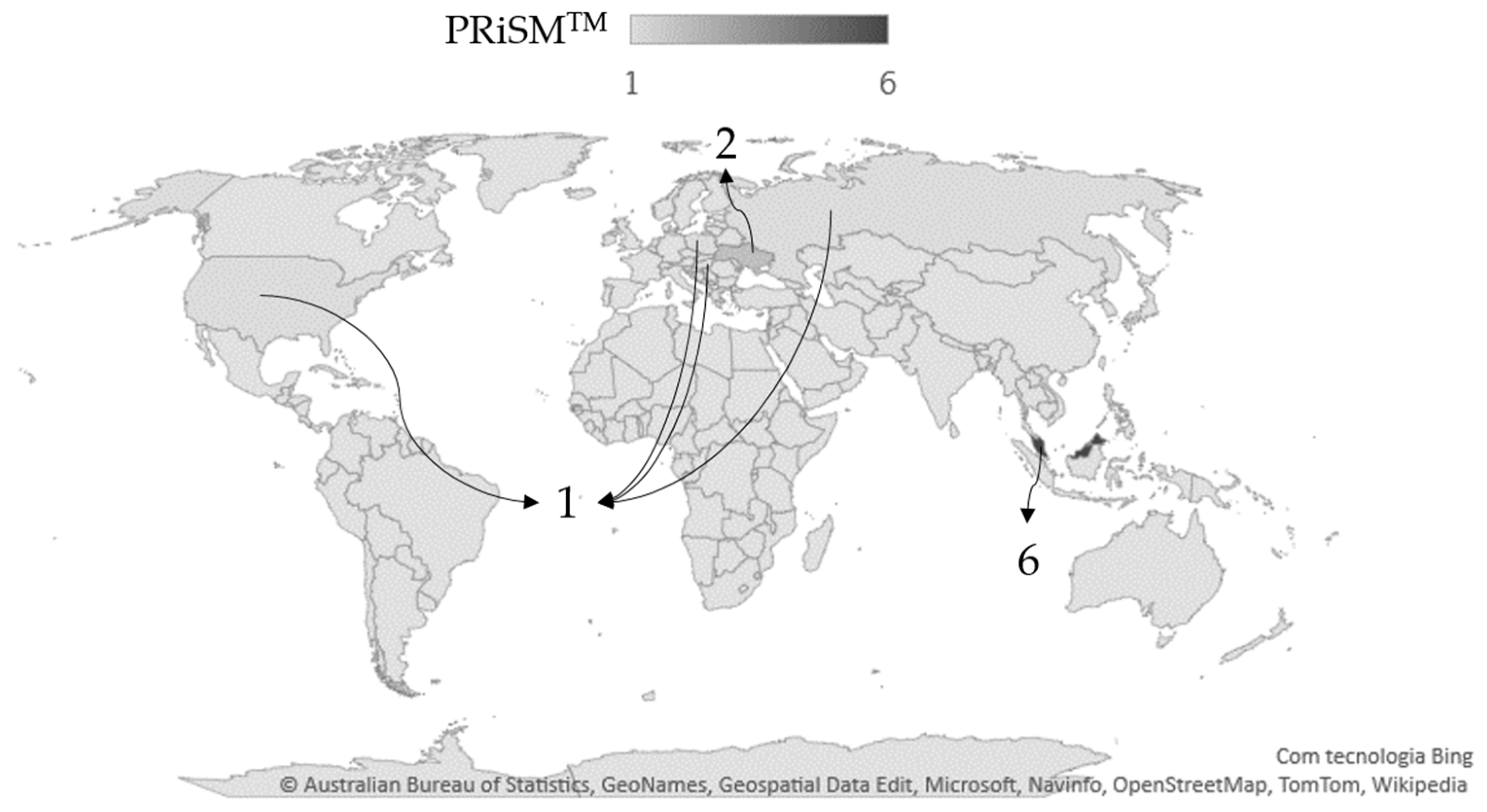

Table 1.
Articles extracted from SCOPUS, Web of Science and B-on databases.
| Authors | Title of the document | Database* | |||
|---|---|---|---|---|---|
| S | W | B | |||
| PM² | Takagi and Varajão (2019) [30] | Integration of success management into project management guides and methodologies - Position paper | ✓ | ✓ | ✓ |
| Pantouvakis (2017) [31] | How can IPMA contribute to new PM² EU commission standard? | ✓ | ✓ | ✓ | |
| Moya-Colorado et al. (2021) [32] | The role of donor agencies in promoting standardized project management in the Spanish development non-government organizations | ✓ | ✓ | ✓ | |
| Ribeiro-Lopes et al. (2022) [33] | Application of the PM² Methodology in the Project Management of the Portuguese Project Management Observatory Creation - Initiating Phase | ✓ | ✓ | ||
| Takagi and Varajão (2020) [34] | Success management in information systems projects - Work-in-progress | ✓ | ✓ | ||
| Takagi et al. (2019) [35] | Integrating success management into EU PM² | ✓ | ✓ | ||
| Fiddicke et al. (2021) [36] | A Phased Approach for preparation and organization of human biomonitoring studies | ✓ | ✓ | ✓ | |
| Katunina and Fomina (2021) [37] | In search of excellence in social entrepreneurship project management: experience and standards of the European Union | ✓ | |||
| PRiSMTM | (Piterska, Kolesnikov, et al., 2018) [38] | Development of the Markovian model for the life cycle of a project’s benefits | ✓ | ✓ | |
| (Turan & Johan, 2016) [39] | Assessing sustainability framework of automotive related industry in the Malaysia context based on GPM P5 standard | ✓ | ✓ | ||
| Piterska, Rudenko, et al. (2018) [40] | Development of the method of formation of the architecture of the innovation program in the system "University -State-Business" | ✓ | |||
| Johan and Turan (2016) [41] | Industrial training approach using GPM P5 Standard for Sustainability in Project Management: A framework for sustainability competencies in the 21st century | ✓ | ✓ | ||
| Turan et al. (2016) [42] | Development of Systematic Sustainability Assessment (SSA) for the Malaysian Industry | ✓ | ✓ | ||
| Johan and Turan, 2016b) [43] | The development of Sustainability Graduate Community (SGC) as a learning pathway for sustainability education - A framework for engineering programmes in Malaysia Technical Universities Network (MTUN) | ✓ | ✓ | ||
| Wan Lanang et al. (2017) [44] | Systematic Assessment Through Mathematical Model for Sustainability Reporting in Malaysia Context | ✓ | ✓ | ||
| (Trzeciak (2021) [45] | Sustainable risk management in it enterprises | ✓ | ✓ | ✓ | |
| Lanang et al. (2018) [46] | Incorporating attitudinal parameter in assessing sustainability of Malaysia manufacturing industry | ✓ | ✓ | ||
| Verba and Ivanov (2015) [47] | Sustainable Development and Project Management: Objectives and Integration Results | ✓ | ✓ | ||
| Salcedo Díaz et al. (2016) [48] | Corporative social responsibility: model of process development for products with base on PRiSM and the p5 strategy | ✓ | ✓ | ||
* Legend: S – SCOPUS; W – Web of Science; B – B-on.
Table 2.
Interview scripts.
| Interviewee | Previous PM² methodology masters’ researcher | CEO of PM² Alliance - Mr. Nicos Kourounakis |
|---|---|---|
| Questions | How many methodologies did you use before PM²? How did you learn about PM²? Was it only for your thesis or did you know about it before? If it was only for your thesis, ask: Was it a university thesis proposal or did you choose to use it yourself? Now I would like you to tell me about your experience of using the PM² methodology, what the project consisted of, and what it was like for you. What are the main advantages that you have observed with the use of the methodology? What are the main disadvantages you found with the use of the methodology? What challenges have arisen or had to be overcome by using the methodology? Did you use all the artefacts of the methodology? If not: Do you consider that some are not important or were not relevant to your project in particular? One disadvantage presented by the authors relates to success management. The PM² methodology identifies success factors in the initiation phase and defines the criteria for evaluating project success in the planning phase. But after this identification and definition, PM² does not provide management activities on these artefacts, and there is no monitoring and control throughout the project. Do you think these aspects should be incorporated into the methodology? What do you think is missing in the methodology, what do you think is important to be there and is not? Or do you think nothing is missing? Why? Do you think that including sustainability in this methodology would be a topic to think about in the future and an added value? If yes, why? Do you know the PRiSMTM methodology? And the P5™ of the GPM®? Do you think there is anything else we should talk about this methodology or another topic that we haven’t talked about yet that you think is important? |
After doing a literature review, it was found that sustainability is not found in almost any of the PM methodologies. Do you consider sustainability a relevant issue to be considered in PM? Do you consider that incorporating sustainability in the next version of the PM² methodology would add value? If yes, how? Are you familiar with the GPM® P5™? Do you think it could be used to complement the PM² methodology? One of the disadvantages raised by some authors [52,53,54] is related to success management. The PM² methodology identifies the success factors in the initiation phase (in the Project Initiation Request and the Business Case) and defines the project success evaluation criteria in the planning phase, which are included in the Project Handbook. However, after this identification and definition, PM² does not provide management activities on these artefacts, there is no monitoring and control throughout the project. Why were these activities not considered? Do you consider that it could be a topic to think about in the next version? As a solution to the issue, Takagi and Varajão (2019) [52] propose a success management process integrated into the PM² methodology. This integrative model aims to increase the robustness of success management and integrate the management of success criteria and factors into the planning, execution, closure, monitoring and control phases. What do you think about it? Another disadvantage raised, by some authors [33], is related to the lack of clarity and difficulty in understanding the explanation of the artefacts, even with guidance. As a solution, the authors advocate adding a project example that includes all the completed documents. What are your thoughts on this? Do you have anything else you would like to say about the PM² methodology that would be useful for research? |
Table 3.
Definitions of project and PM concepts.
| Concept Definitions | ||
|---|---|---|
| Standard | Project | PM |
| PMI® | “A temporary endeavor undertaken to create a unique product, service, or result“ [21] (p. 2). | “The application of knowledge, skills, tools, and techniques to project activities to meet project requirements“ [21] (p. 2). |
| AXELOS | “… the means by which we introduce change and, although many of the skills required are the same,there are some crucial differences between managing business as usual and managing project work” [22] (p. 8). | “… planning, delegating, monitoring and control of all aspects of the project, and the motivation of those involved, to achieve the project objectives within the expected performance targets for time,cost, quality, scope, benefits and risk” [22] (p. 9). |
| PM²ALLIANCE | “… a temporary organisation structure set up to create a unique product or service (output) within certain constraints such as time, cost and quality” [58] (p. 5). | “… activities of planning, securing, monitoring and managing the resources and work necessary to deliver specific project goals and objectives in a effective and efficient way” [58] (p. 7). |
| GPM® | “… an investment that requires a set of coordinated activities performed over a finite period of time in order to accomplish a unique result in support of a desired outcome” [29] (p. 44). | “…application of knowledge, skills, tools, and techniques to coordinate projects effectively and efficiently” [29] (p. 45). |
| APM | “… unique, transient endeavours, undertaken to bring about change and achieve planned objectives, which can be defined in terms of outputs, outcomes or benefits“ [59] (p. 12). | “… application of processes, methods, knowledge, skills and experience to achieve specific objectives for change” [60] (p. 214). |
| IPMA® | “unique, temporary, multi-disciplinary and organized endeavor to realise agreed deliverables within predefined requirements and constraints” [61] (p. 36). | “Project management is concerned with the application of methods, tools, techniques and competences to a project to achieve goals” [61] (p. 36). |
Table 4.
Project and PM definitions according to PM² ALLIANCE and GPM®.
| PM² (PM² ALLIANCE) | PRiSMTM (GPM®) | |
|---|---|---|
| Project | “A project is a temporary organisational structure set up to create a unique product or service (output) within certain constraints such as time, cost and quality” [58] (p. 5). | “GPM defines a project as “an investment that requires a set of coordinated activities performed over a finite period of time in order to accomplish a unique result in support of a desired outcome” [29] (p. 45). |
| PM | “Project Management can be described as the activities of planning, organising, securing, monitoring and managing the resources and work necessary to deliver specific project goals and objectives in an effective and efficient way” [58] (p. 7). | “Project management is the application of knowledge, skills, tools, and techniques to coordinate projects effectively and efficiently” [29] (p. 46). |
Table 5.
Deliverables of the PM² and PRiSMTM methodologies.
| Methodology | Deliverables | |||
|---|---|---|---|---|
| PM² |
Initiating
|
Planning
|
Executing
|
Closing
|
| Monitor & Control | ||||
|
|
|
|
|
| PRiSMTM |
Business Case Impact Analysis Requirements Document Design Document Sustainability Management Plan Project Success Criteria Stakeholder Engagement Plan Lessons Learned |
Management Plans (as required):
|
||
Table 6.
Features of the PM² methodology according to the authors.
| Author and Year 1 | |||||||||
|---|---|---|---|---|---|---|---|---|---|
| Feature | A 2017 | B 2019 | C 2019 | D 2020 | E 2021 | F 2021 | G 2021 | H 2022 | Total |
| Good "recipe book" | ✓ | 1 | |||||||
| Includes transition management | ✓ | ✓ | 2 | ||||||
| Embracing | ✓ | ✓ | 2 | ||||||
| Simple and easy to implement | ✓ | ✓ | ✓ | 3 | |||||
| Standardized language | ✓ | ✓ | 2 | ||||||
| Best practices from other bodies of knowledge | ✓ | ✓ | ✓ | ✓ | ✓ | ✓ | ✓ | 7 | |
| Customizable | ✓ | 1 | |||||||
| Available online | ✓ | ✓ | ✓ | 3 | |||||
| Free | ✓ | ✓ | ✓ | 3 | |||||
| Shift from traditional design to a holistic view | ✓ | 1 | |||||||
| PM² Alliance certification is available | ✓ | 1 | |||||||
| Follows a process approach | ✓ | 1 | |||||||
| Describes individual strengths/virtues | ✓ | ✓ | 2 | ||||||
| Description of skills and virtues is limited and fragmented | ✓ | 1 | |||||||
| Offers templates of the artefacts | ✓ | 1 | |||||||
| Artefacts with unclear explanations | ✓ | 1 | |||||||
| Smallest dimension | ✓ | 1 | |||||||
| Includes specific activities to identify success factors and criteria in the initiation and planning stages | ✓ | ✓ | ✓ | 3 | |||||
| Does not clearly address success management in all phases of the project | ✓ | ✓ | ✓ | 3 | |||||
| Lack of scientific papers on its use | ✓ | 1 | |||||||
Table 7.
Characteristics of the PRiSMTM methodology and P5™ according to the authors.
| Author and Year 2 | |||||||||||
|---|---|---|---|---|---|---|---|---|---|---|---|
| Feature | A 2015 | B 2016 | C 2016 | D 2016 | E 2016 | F 2016 | G 2016 | H 2017 | I 2018 | J 2018 | Total |
| Value-oriented | ✓ | 1 | |||||||||
| Principles of "green" management | ✓ | 1 | |||||||||
| P5™ can be developed at any stage of the process | ✓ | 1 | |||||||||
| Set of good practices for companies’ SD | ✓ | 1 | |||||||||
| 1st PM tool for sustainability analysis | ✓ | 1 | |||||||||
| Guide to implement sustainable objectives | ✓ | 1 | |||||||||
| Combines three basic CSR parameters | ✓ | 1 | |||||||||
| Stepping stone to effective CSR practice | ✓ | 1 | |||||||||
| Comprehensive | ✓ | 1 | |||||||||
| Extension of TBL, considers profit, planet, people, product and process | ✓ | ✓ | ✓ | ✓ | ✓ | 5 | |||||
| Set of good practices for SD | ✓ | 1 | |||||||||
| Increased longevity and profitability | ✓ | 1 | |||||||||
| P5™ can be a training pathway for engineering students | ✓ | ✓ | 2 | ||||||||
| Contains sustainability components at the organizational level | ✓ | 1 | |||||||||
| Creates difficulties in a single project context | ✓ | 1 | |||||||||
| Representation of life cycle processes only on a qualitative level | ✓ | 1 | |||||||||
| Minimal research in developing countries | ✓ | 1 | |||||||||
2 Legend: A – Verba and Ivanov (2015) [117]; B – Turan and Johan (2016) [118]; C – Turan et al. (2016) [119]; D – Salcedo Díaz et al. (2016) [120]; E – Szabó (2016) [121]; F – Johan and Turan (2016) [122]; F –Johan and Turan (2016) [123]; H – Wan Lanang et al. (2017) [124]; I – Piterska, Kolesnikov, et al. (2018) [125]; J – Lanang et al. (2018) [126];.
Table 8.
Summary of results obtained from the interview with the user of PM² methodology.
| Question Topic | Answer |
|---|---|
| PM² Advantages | Free; Small size; Well-built; Useful; Valid; Easy to apply; Similar to other guidelines; Allows customization of the documents; Artefacts are adaptable and adjustable to the project. |
| PM² Disadvantages | Difficulty in finding training related to the methodology; Confusing initial phase; Lack of follow-up regarding the success management during the project; Tools of the final part of the methodology are little explored. |
| PM² Future Suggestions | Documentation management - moving from Word, Excel documents to a digital platform. |
| PRiSMTM | No knowledge about the GPM®, the P5™ standard and the PRiSMTM methodology. |
| Sustainability | Increased appreciation and importance of sustainability area over time;Sustainability criteria should be included more and more. |
| Sustainability PM² | PM² mentions sustainability since:
The methodology doesn’t predict sustainability criteria; The insertion of sustainability is viable since the methodology is adaptable. |
Table 9.
Summary of the results obtained from the interview with Mr Nicos Kourounakis.
| Question Topic | Answer |
|---|---|
| Sustainability | Important dimension; Needs to be achieved at the organizational and cultural levels; A topic that can be addressed and improved in PM; The methodology cannot specify something in such a narrow way; After the project definition not much can be done to integrate sustainability objectives. |
| PM² Sustainability | Can improve in this direction; Addresses the broader issue of sustainability; Can be included in the Project Handbook, additional objectives, and PM² mind-sets; PM² is a generic methodology, that tries to have a holistic approach, so environmental sustainability cannot be a dominant dimension. |
| Success Management | Need to define generic ways to measure success as each project has different objectives. |
| PM² Success Management | Critical success factors and critical success criteria besides being addressed in the initiation phase, are integrated into the project objectives; The project team and the project itself have to focus on achieving the four objectives (scope, time, cost and quality); Control and monitoring verify the level of achievement of these objectives; Criteria and activities for measuring success are found in PM²: at the end of the project (lessons learned, post-project recommendations and degree of success) and at each phase of the project (phase gates and monitoring, control and management activities). |
| Examples to bridge the gap in understanding the explanation of artefacts | An excellent and valuable way to learn; Should be used at organizational and educational/training level. |
| Examples to overcome the difficulty of understanding the explanation of the artefacts in PM² | PM² is a generic methodology, which can be used by any organization and type of project, and the examples are quite specific; Inserting examples would make the methodology more complex. |
Disclaimer/Publisher’s Note: The statements, opinions and data contained in all publications are solely those of the individual author(s) and contributor(s) and not of MDPI and/or the editor(s). MDPI and/or the editor(s) disclaim responsibility for any injury to people or property resulting from any ideas, methods, instructions or products referred to in the content. |
© 2023 by the authors. Licensee MDPI, Basel, Switzerland. This article is an open access article distributed under the terms and conditions of the Creative Commons Attribution (CC BY) license (https://creativecommons.org/licenses/by/4.0/).
Copyright: This open access article is published under a Creative Commons CC BY 4.0 license, which permit the free download, distribution, and reuse, provided that the author and preprint are cited in any reuse.


