

Submitted:
22 August 2023
Posted:
22 August 2023
You are already at the latest version
Preprints on COVID-19 and SARS-CoV-2
Abstract
Worldwide, the COVID-19 pandemic, which was brought on by the brand-new coronavirus SARS-CoV-2, has claimed a sizable number of lives. Despite the urgency, COVID-19 does not have any particular antiviral treatments at this time. As a result, scientists are concentrating on repurposing already existing antiviral medications or creating brand-new ones. The SARS-CoV-2 main protease, which is necessary for viral replication, has been identified as a possible target for a family of medicines called main protease inhibitors (MPIs). Studies of the major proteases from SARS-CoV and MERS-CoV, which have remarkably similar structures and functions to SARS-CoV-2, have provided insight for the creation of MPIs. By analyzing the MPI trials for SARS-CoV and MERS-CoV, this review sheds light on the possible therapeutic uses of MPIs for COVID-19. The review talks about how MPIs work, how effective they are against SARS-CoV and MERS-CoV, and how safe they are. The paper also emphasizes current developments in the creation of MPIs for SARS-CoV-2, including as computational studies, in vitro and in vivo research, and clinical trials. According to the review, there is a lot of hope for MPIs in the treatment of COVID-19, and numerous medications are in the works. Although more research is needed to assess their safety and effectiveness in clinical settings, these medications may offer patients with COVID-19 a much-needed therapeutic option. The review also emphasizes the importance of ongoing research into the structure and function of the SARS-CoV-2 main protease, as this information will be critical for the development of effective MPIs and other antiviral drugs in the future.
Keywords:
Main Protease Inhibitors
; SARS-CoV-2
; COVID-19
; mutations
; vaccines
; therapeutics
; drug repurposing
; management strategies
Introduction
The global pandemic that was caused by the outbreak of the severe acute respiratory syndrome coronavirus 2 (SARS-CoV-2) in late 2019 caused a considerable amount of illness and mortality globally (1,2). The coronavirus family, which also contains the viruses causing Middle East respiratory syndrome (MERS) and severe acute respiratory syndrome (SARS), includes SARS-CoV-2. SARS-CoV-2's fast spread and mutation have posed a serious challenge to the global public health and medical communities (3). Since its appearance, a lot of work has gone into figuring out how SARS-CoV-2 is transmitted, how it presents clinically, and how to treat it (4). Understanding the virus' evolution and epidemiology has laid the groundwork for the creation of solutions to stop its spread and lessen the pandemic's negative effects on public health and the global economy (5).
The creation of efficient prevention and management plans is significantly hampered by the SARS-CoV-2 virus's continuing evolution (6). In order to provide efficient treatments and vaccines, scientists and researchers from all over the world have made enormous efforts to understand the mechanics of viral reproduction and mutation (7). A number of vaccines with high success rates against SARS-CoV-2 have been developed as a result of these efforts, and several clinical trials are ongoing to investigate additional therapeutic possibilities (8).
Due to the disease's variable clinical symptoms and uncertain course, SARS-CoV-2 care has proven difficult (9). Fever, coughing, and shortness of breath are the most typical signs of COVID-19, the illness brought on by SARS-CoV-2. However, the virus can also cause severe respiratory distress, pneumonia, and multi-organ failure (10,11). The management of COVID-19 requires a multidisciplinary approach, including supportive care, oxygen therapy, and antiviral treatments (12).
With severe morbidity and mortality, as well as extensive interruptions to everyday life and economic activities, SARS-CoV-2 has had an unprecedented worldwide impact (13). The pandemic has made it clear how crucial it is for nations to work together and have a coordinated public health response to face new infectious illnesses (14). A thorough knowledge of the virus's evolution, transmission, and clinical symptoms is necessary for the creation of efficient SARS-CoV-2 preventive and management measures.
We intend to offer a summary of the current knowledge about SARS-CoV-2, including its evolution, transmission, clinical manifestation, and management, in this in-depth review. We will review the most recent findings on the processes of viral replication, mutation, and transmission as well as the status of available therapies and vaccine research. Additionally, we will explore the global impact of the pandemic and the public health response to mitigate the spread of the virus.
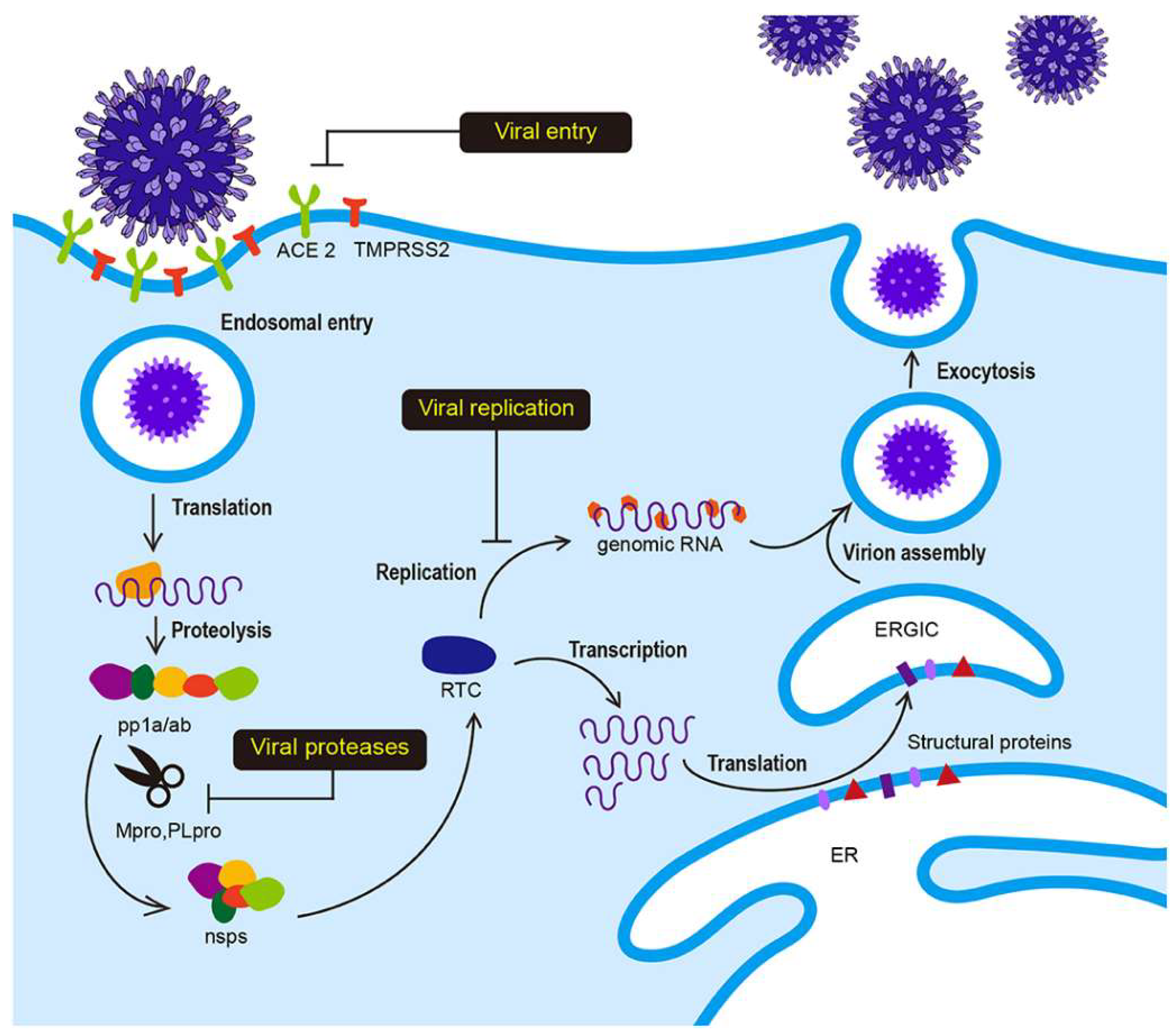
Figure 1.
viral life cycle of SARS-CoV-2 (adapted from https://www.frontiersin.org/articles/10.3389/fmicb.2020.01723/full).
Figure 1.
viral life cycle of SARS-CoV-2 (adapted from https://www.frontiersin.org/articles/10.3389/fmicb.2020.01723/full).
- I.
- Clinical description of SARS-CoV-2
Despite containment efforts, the COVID-19 pandemic, which started in Wuhan, China in December 2019, spread fast throughout the world (15,16). The respiratory system is the primary target of COVID-19 symptoms, which very frequently include cough and respiratory discomfort. Fever is present in virtually all cases (17). As with its predecessors SARS-CoV and MERS-CoV, COVID-19 is brought on by the severe acute respiratory syndrome coronavirus 2 (SARS-CoV-2), which has caused a global health emergency and high rates of morbidity and mortality (18). As of March 27, 2020, COVID-19 had a mortality rate of 1% to 5% and had affected over 510,000 people in 199 countries and territories (19). The World Health Organization has classified COVID-19 as a Public Health Emergency of International Concern due to the pandemic's intensity (20).
Similar to the SARS and MERS outbreaks, respiratory symptoms are the most frequent COVID-19 clinical signs (21). Fever, cough, and respiratory distress are the most typical clinical manifestations of the virus, while some patients may also exhibit unusual symptoms such diarrhea, headaches, and myalgia (22). The condition can be mild or catastrophic in severity, and some patients will need mechanical breathing and intensive care (22,23). Additionally, secondary infections like bacterial pneumonia, which can worsen patient outcomes, can affect the clinical course of COVID-19 (24).
Understanding the clinical characteristics of the illness is essential for providing appropriate medical care and creating successful preventative and treatment plans as the COVID-19 pandemic spreads. Healthcare specialists throughout the world are working nonstop to contain the pandemic due to the severity of the illness and its potential for spread, which have made it a global health emergency. Critical elements in the fight against COVID-19 include quick diagnostic tests, sufficient personal protective equipment for healthcare workers, and the creation of efficient vaccinations and antiviral treatments. To guide public health policy and stop the spread of the disease, more study is needed into the clinical manifestation and pathogenesis of SARS-CoV-2.
- II.
- SARS-CoV-2 prevalence and pathology
It is thought that coronaviruses like SARS-CoV, MERS-CoV, and SARS-CoV-2 were first discovered in bats and spread to humans via intermediate hosts like civet cats and camels (25). The first instances of human-to-animal transmission were recorded in Hong Kong in February 2020, but the COVID-19 pandemic has shown that companion animals like cats and dogs can also be susceptible to the virus (26). In addition, SARS-CoV-2 has been detected in monkeys, white-tailed deer, and minks, indicating a wider spectrum of possible hosts. Numerous animal species, including ferrets, hamsters, macaques, and baboons, have been shown to be susceptible to SARS-CoV or SARS-CoV-2 infection in experimental infection studies (27).
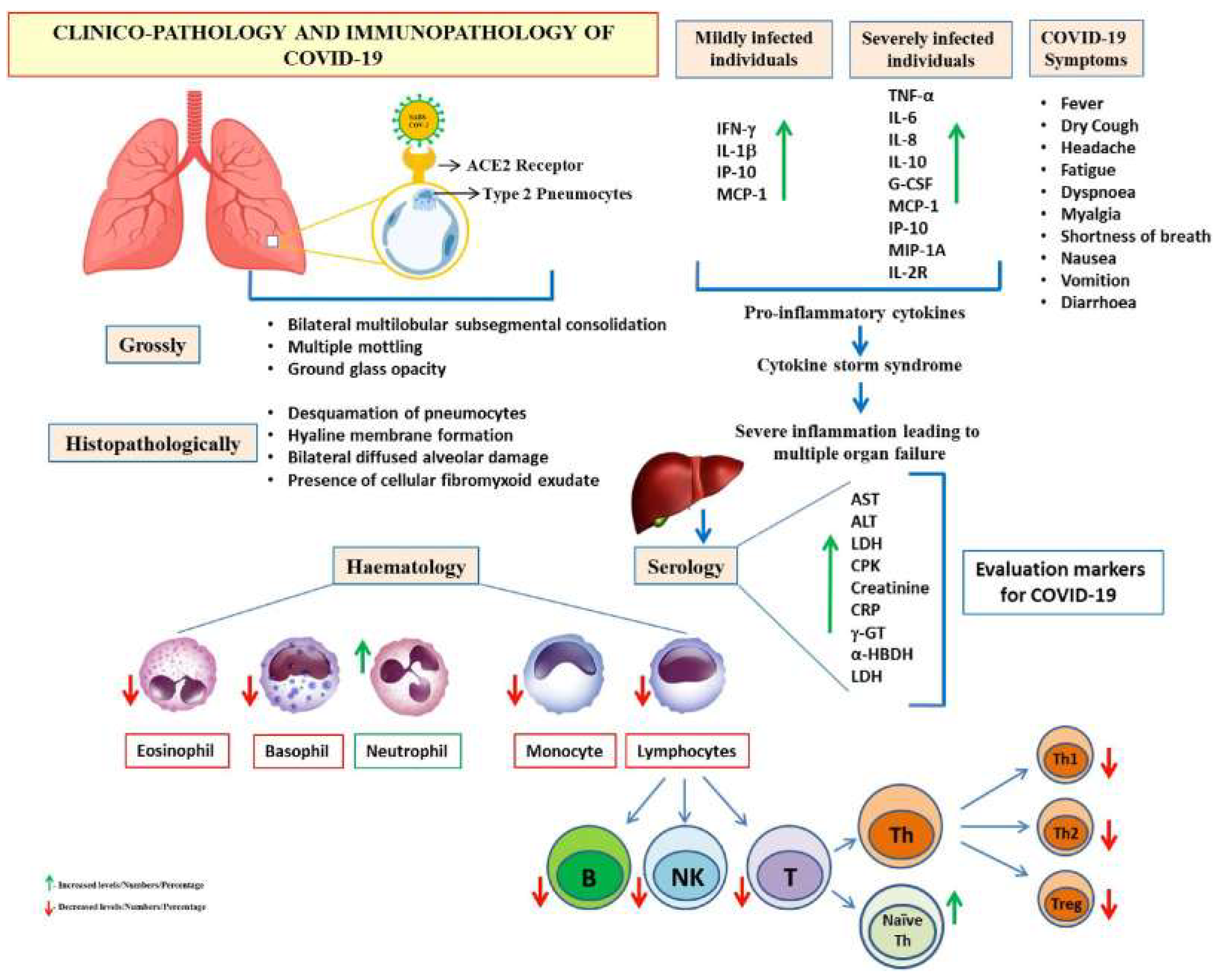
Figure 2.
An overview of COVID-19 clinical pathology, pathogenesis and immunopathology (adapted from https://www.sciencedirect.com/science/article/pii/S1477893920302349#fig2).
Figure 2.
An overview of COVID-19 clinical pathology, pathogenesis and immunopathology (adapted from https://www.sciencedirect.com/science/article/pii/S1477893920302349#fig2).
- II.1.
- SARS-CoV-2 transmission, clinical presentation, and risk factors for severe disease and fatality
The signs and symptoms of COVID-19 can include pneumonia, acute respiratory distress, dry cough, tiredness, and fever. There have been reports of gastrointestinal involvement, and the discovery of viral RNA in fecal samples raises the possibility of fecal-oral transmission. Isolation and medical monitoring are essential preventative measures since asymptomatic carriers can unintentionally spread the infection to others A median hospital stay of 12 days is required for 20% of confirmed COVID-19 patients. 25% of patients in hospitals require acute critical care (30). Adults 55 and older have been the main demographic for severe COVID-19 cases. Mortality risk increases gradually with a mortality rate of 1.4–4.9% in the 55–74 age group, 4.3–10.5% in the 75–84 age group, and 10.4–27.3% in the 85–plus age group (31). People who have underlying medical conditions like cardiovascular disease, diabetes, liver, kidney, malignant tumors, or a suppressed immune system are more likely to develop a severe form of the illness and die from it (32).
According to the available data, SARS-CoV-2 is a naturally occurring virus that is mainly spread by inhaling cough droplets (33). Another important method of transmission occurs when hands that have come into contact with droplets-contaminated surfaces touch the face, eyes, or nose. Despite the lack of certainty regarding SARS-CoV-2's seasonality, mounting evidence points to a potential role for climate factors in the spread of the virus.
There are three stages of SARS-CoV-2 clinical pathology: mild, severe, and critical, with critical being the stage that results in mortality (34). Adults who are infected typically show no symptoms or just mild, temporary symptoms, whereas those who show symptoms are most contagious the day before symptoms appear (35,36).
With a typical incubation time of 4-6 days, COVID-19 clinical signs include respiratory and intestinal problems (37). It is difficult to detect transmission chains and conduct subsequent tracing since the clinical symptoms are less severe than those associated with SARS and MERS infections. Severe COVID-19 symptoms are more likely to develop in older, immune-compromised people with pre-existing diseases such cardiovascular disease, hypertension, asthma, and diabetes (27,38).
The signs and symptoms of COVID-19 can include pneumonia, acute respiratory distress, dry cough, tiredness, and fever (39). There have been reports of gastrointestinal involvement, and the discovery of viral RNA in fecal samples raises the possibility of fecal-oral transmission. Isolation and medical monitoring are essential preventative measures since asymptomatic carriers can unintentionally spread the infection to others (40). To stop the virus's cycle of spread, preventive measures have been put in place, including limiting population movements, preventing large gatherings, and closing educational institutions.
Most individuals who recovered from COVID-19 disease had severe lung damage by the tenth day after the onset of symptoms (41). In addition, pneumonia linked to SARS-CoV-2 infection was observed to include a significant portion of the lower respiratory tract (42).
- II.2.
- Profile Characteristics and Prognostic Markers in COVID-19/SARS-CoV-2
Aspartate aminotransferase and hypersensitive troponin I levels are high in COVID-19 individuals, and they also exhibit unique blood laboratory profile traits such lymphopenia, leukopenia, thrombocytopenia, and RNAaemia (43). Procalcitonin levels start out normal but gradually rise as the disease progresses, suggesting the risk of secondary infections. Erythrocyte sedimentation rate (ESR) and C-reactive protein (CRP) levels have increased in COVID-19, whereas platelet count and procalcitonin levels are normally within range. Aspartate aminotransferase (AST), alanine transaminase (ALT), lactate dehydrogenase (LDH), creatine phosphokinase (CPK), creatinine, and prothrombin time, which can be employed as diagnostic markers, are however associated with higher levels in severe instances (43,44).
Prognostic indicators for COVID-19 include lymphopenia, neutrophilia, increased levels of LDH, C-reactive protein, D-dimer, total bilirubin, hepatic transaminases, ferritin, and troponins (45). The number of T cells, B cells, and natural killer (NK) cells is also lowered in severe instances, as are the numbers of helper, regulatory, and memory T cells. Severe instances are marked by higher levels of proinflammatory cytokines and chemokines like IFN-, IL-1, IP-10, MCP-1, TNF-, G-CSF, IL-8, IL-10, and MIP-1A (44,45).
The release of pro-IL-1b and subsequent synthesis of mature IL-1b, which regulates fever, pulmonary inflammation, and fibrosis, are triggered by the interaction of SARS-CoV-2 with Toll-like receptors (TLR) (45). Therefore, IL-37 and IL-38 could be thought of as an appropriate therapeutic agent and may be highly beneficial in COVID-19 patients to reduce pulmonary inflammation by suppressing IL-1b and other proinflammatory IL-family members. The wide range of immunopathological effects caused by the 2019-nCoV novel human coronavirus in humans are influenced by different HLA types and different epitope binding affinities (46).
- III.
- Discussion on postulated hypothesis on Covid-19 mutations
In an unprecedented effort to stop the COVID-19 epidemic, the scientific community from around the world has teamed up. Similar to other RNA viruses, Covid-19 exhibits a high mutation rate that can be brought on by copying errors during viral replication, recombination, or contact with agents that can neutralize the virus, like host antibodies (47,48) The transport and load of the virus to ACE2 target cells may be improved by molecular changes that lessen the damage to the viral capsid, which is crucial for safeguarding the viral genome and replications. This would increase infectivity without necessarily changing the virus' inherent pathogenicity or virulence. Mutations that increase the affinity of spike S-protein to receptors on ACE2 cells could also increase viral load and infectivity (49).
Although many SARS-CoV-2 mutations may not directly affect the virus's virulence, they may result in increased infectivity and transmissibility (50). For instance, the D614G mutation in the SARS-CoV-2 spike protein was discovered early in the epidemic and quickly took over as the predominant form everywhere (50,51). The virus's capacity to infect cells is improved by the mutation, which may also increase its transmissibility (51). Other changes to the spike protein could make the virus more resistant to antibodies produced by the host immune system or vaccines, decreasing their effectiveness (52). Therefore, it is essential to keep track of SARS-CoV-2 mutations in order to spot any potentially dangerous variants and create workable defenses.
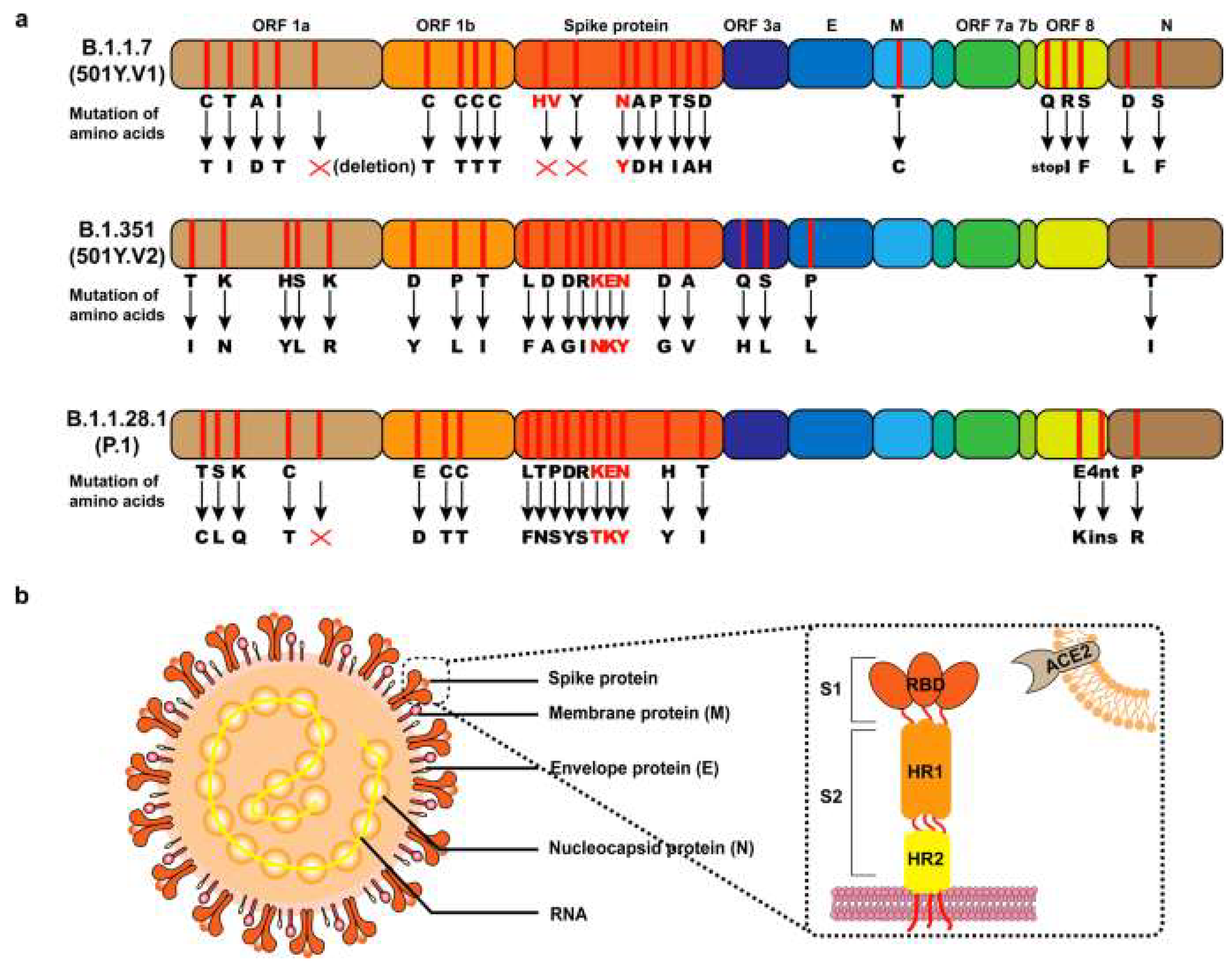
Figure 3.
Information of fast-spreading SARS-CoV-2 variants and major SARS-CoV-2 structure (adapted from https://www.nature.com/articles/s41392-021-00644-x).
Figure 3.
Information of fast-spreading SARS-CoV-2 variants and major SARS-CoV-2 structure (adapted from https://www.nature.com/articles/s41392-021-00644-x).
Studying and comprehending the underlying principles of viral evolution is essential given the rapid evolution of SARS-CoV-2 and the high mutation rates seen (53). This information will be useful in creating efficient vaccinations and therapies that can be quickly modified to address newly discovered virus strains. The progress gained thus far emphasizes the need of ongoing multidisciplinary research and collaboration in containing the ongoing covid-19 pandemic (54). The scientific community has made tremendous progress in understanding the biology of SARS-CoV-2.
- IV.
- Covid-19 therapies, vaccines, and other ongoing clinical trials therapies
Effective treatments and vaccines are urgently needed to combat the COVID-19 pandemic. While natural supplements like vitamin D and zinc are being looked into for their potential prophylactic benefits, supercomputers have been used to screen the library of already licensed medications for potential therapeutics against COVID-19 (55). Daily vitamin D supplements were found to protect against acute respiratory infections in a recent meta-analysis (56), whereas increased intracellular zinc concentrations have been demonstrated to hinder the reproduction of several RNA viruses (57). However, excessive intake of zinc can lead to undesirable sequelae, and it is not currently recommended to give elemental zinc supplementation above the recommended dietary allowance for the prevention of COVID-19 (57,58).

Table 1.
Table of current potential anti-SARS-CoV-2 agents.
| Approved SARS-CoV-2 Vaccines | |||||||
| Vaccine Name | Manufacturer | Type | Dosage | Efficacy | Target | Reference | |
| Pfizer-BioNTech | Pfizer, BioNTech | mRNA | 2 doses, 21 days apart | 95% | Spike protein | Haas, Eric J., Frederick J. Angulo, John M. McLaughlin, Emilia Anis, Shepherd R. Singer, Farid Khan, Nati Brooks et al., 2021 | |
| Moderna | Moderna | mRNA | 2 doses, 28 days apart | 94.1% | Spike protein | Baden, L.R., El Sahly, H.M., Essink, B., et al., 2021. | |
| Johnson & Johnson | Johnson & Johnson | Viral vector | 1 dose | 72% (in the U.S.) | Spike protein | Creech, C.B., Walker, S.C. and Samuels, R.J., 2021. | |
|
AstraZeneca |
AstraZeneca, University of Oxford | Viral vector | 2 doses, 4-12 weeks apart |
70.4% (average) |
Spike protein | Keeling, M.J., Moore, S., Penman, B.S. and Hill, E.M., 2023. | |
| SARS-CoV-2 therapeutics | |||||||
| Drug name | Manufacturer | Type | Target | Antiviral Agent | Status | References | |
| Remdesivir | Gilead Sciences | Antiviral | RNA polymerase | Nucleotide analogue | FDA-approved for emergency use in hospitalized patients | Pruijssers, A.J., George, A.S., Schäfer, A., et al., 2020. | |
| Baricitinib | Eli Lilly and Company | Anti-inflammatory | AP-1 | Janus kinase inhibitor | FDA-approved for emergency use in combination with remdesivir | Poduri, R., Joshi, G. and Jagadeesh, G., 2020. | |
| Tocilizumab | Roche | Anti-inflammatory | IL-6 | Monoclonal antibody | FDA-approved for emergency use in hospitalized patients | Fu, B., Xu, X. and Wei, H., 2020. | |
| Sotrovimab | GlaxoSmithKline, Vir Biotechnology | Monoclonal antibody | Spike protein | Monoclonal antibody | FDA-approved for emergency use in high-risk individuals | Gupta, A., Gonzalez-Rojas, Y., Juarez, E., et al., 2021. | |
| Molnupiravir | Merck & Co. | Antiviral | RNA polymerase | Nucleotide analogue | Currently under review for emergency use authorization | Ashour, N.A., Abo Elmaaty, A., Sarhan, A.A., et al. 2022. | |
| Ongoing clinical trials for SARS-CoV-2 | |||||||
| Study name | Sponsor | Type | Phase | Target | Antiviral Agent | Status | |
| ACTIV-6 | NIH | Therapeutic | 3 | Various | Various | Ongoing Naggie, S., Boulware, D.R., Lindsell, C.J., et al., 2023. |
|
| COMET-ICE | NIAID, Lilly | Therapeutic | 3 | Various | Various | Ongoing Gupta, A., Gonzalez-Rojas, Y., et al,2021. |
|
| REGN-COV2 | Regeneron | Therapeutic | 3 | Spike protein | Monoclonal antibody | Ongoing Baum, A., Ajithdoss, D., Copin, R., et al., 2020. |
|
| COV-BOOST | University of Oxford | Vaccine | 2/3 | Spike protein | N/A | Ongoing Chavda, V.P. and Apostolopoulos, V., 2022. |
|
| COV-FLU | Novavax | Vaccine | 2/3 | Influenza virus | N/A | Ongoing Cao, K., Wang, X., Peng, H., Ding, et al., 2022. |
|
Current knowledge of viral genomes and transcriptomics is essential to addressing the global catastrophe brought on by the unique SARS-CoV-2 virus (59). This knowledge can enable the creation of therapeutic approaches, new drugs, and vaccines as well as insights into the pathogenicity, transmission, and epidemiology of viral infections (60). The review also offers a comprehensive list of sources that will enable researchers to access a wide range of databases concerning SARS-CoV-2 OMICs and therapeutic strategies pertaining to COVID-19 treatment.
In conclusion, there has been extensive multidisciplinary research conducted all around the world due to the urgent need for new treatments and vaccines against COVID-19 (61). The research of the prophylactic advantages of natural supplements, as well as the development of structure-based designs of decoy ligands that can disrupt important processes mediating infectivity, have showed promise in the fight against the virus (62). For gaining insights into viral pathogenicity, transmission, and epidemiology as well as the origins and global spread of the virus, up-to-date knowledge on viral genomes and transcriptomics is crucial (63). In the ongoing fight against COVID-19, this understanding will be crucial in developing methods for therapeutic interventions, medication discovery, and vaccine development.
- V.
- Drug Repurposing for COVID-19
Drug repurposing has become a vital tactic in the pursuit of successful COVID-19 treatment. It is being looked at old antiviral medications and substances that are either approved or being researched for use against other viral infections (64). SOLIDARITY is a multinational clinical trial being conducted by the World Health Organization to look into the efficacy of repurposed medications in treating COVID-19 (65). Drugs like lopinavir-ritonavir, chloroquine, remdesivir, and favipiravir are among those being looked into. These medications' possible applications in the treatment of COVID-19 will be discussed in this article (66).
The FDA has approved the medication combination lopinavir-ritonavir for the treatment of HIV-1. Ritonavir boosts the efficacy of lopinavir by delaying the rate at which it is metabolized in the liver, whereas lopinavir is a protease inhibitor that prevents virus particle formation (67). The medication has shown some promise in treating COVID-19, but more clinical trial findings are needed to confirm its effectiveness (68).
An RNA-dependent RNA polymerase inhibitor called favipiravir has shown promise in combating influenza and other viral diseases (69). Initial clinical trials carried out in Shenzhen and Wuhan have demonstrated its efficacy against SARS-CoV-2 (70). Favipiravir-treated patients had a stronger therapeutic response, especially in terms of faster viral clearance and a higher rate of improvement in chest imaging (71). The National Medical Products Administration of China has approved favipiravir as the first anti-COVID-19 medication in the nation in light of these encouraging findings (70,71).
Cheap medications like chloroquine and hydroxychloroquine are used to treat autoimmune disorders and malaria. They are thought to reduce endosomal pH, which prevents virus replication (72). Recent research has demonstrated their effective antiviral activity against SARS-CoV-2. Chloroquine treatment for COVID-19 has been shown in clinical trials to be effective in reducing pneumonia exacerbations and to have a tolerable safety margin (73). An analog of chloroquine called hydroxychloroquine has been proven to hasten recovery and virus clearance in COVID-19 patients and has a better clinical safety profile (74).
Nucleotide analogue prodrug Remdesivir provides broad-spectrum antiviral action against a variety of RNA viruses (75). In contrast to protease inhibitors, which focus on the late steps of virus reproduction, it inhibits RNA-dependent RNA polymerase, preventing an early stage of viral replication (76). It has been utilized as an experimental medicine for the treatment of Ebola, MERS-CoV, and SARS-CoV-2 and has demonstrated to limit replication of SARS-CoV-2 in animal models (77). Clinical improvement was seen in 68% of patients treated with remdesivir in a sample of patients hospitalized for severe COVID-19 (78). Remdesivir has not yet received approval to treat COVID-19, and more studies are needed to determine its effectiveness (79).
To sum up, medication repurposing has been used in the effort to treat COVID-19. The effectiveness of repurposed medications such lopinavir-ritonavir, chloroquine, remdesivir, and favipiravir is currently being studied in the WHO SOLIDARITY trial (65). Although some patients with COVID-19 have responded favorably to these medications, more studies are required to confirm their efficacy and identify the most potent drug combinations (80).
- V.1.
- Vaccine Development
One of the main areas of concentration for scientific study around the world is the development of a vaccine against SARS-CoV-2. Inactivated and attenuated vaccines, protein subunit and virus-like particle vaccines, viral vector-based vaccinations, and more recent DNA- and RNA-based vaccines are a few of the techniques to vaccine creation that are being studied (81). All approaches are being developed simultaneously to create an effective vaccine, and each has advantages and disadvantages of its own. Since it is present in all coronaviruses encountered and is exposed to the immune system of a person, the spike protein is thought to be the most vaccine-promising among the structured proteins of the virus because it allows the body to mount an immune response against it and retain it for future defense (82).
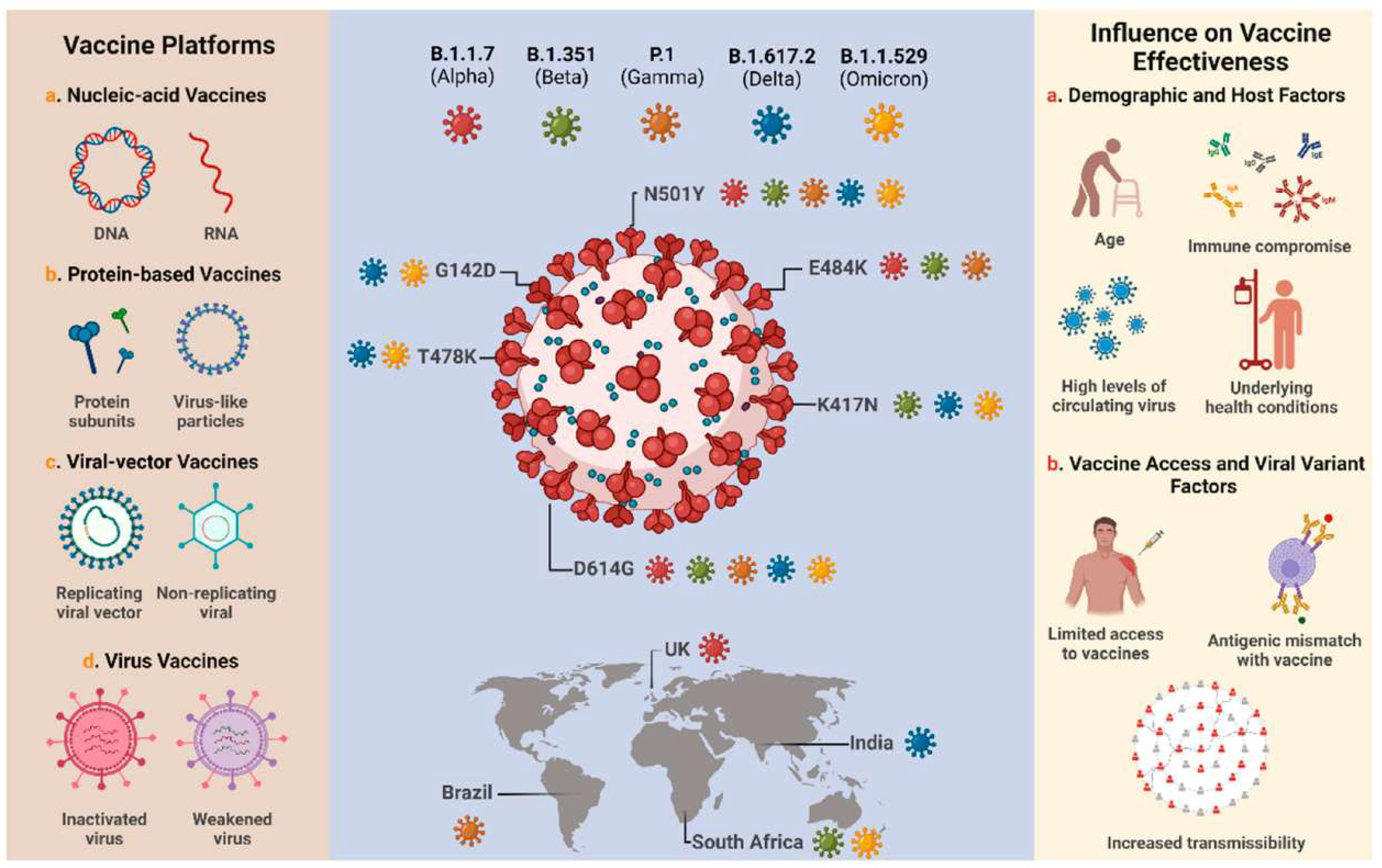
Figure 4.
Overview of the major technology platforms used for COVID-19 vaccine development, the SARS-CoV-2 variants of concern and their respective spike protein mutations, and the factors that may influence the effectiveness of available vaccines. Adapted from Tregoning et al. [44] and Mistry et al. [94]. Created with BioRender.com (accessed on 17 February 2022). (adapted from https://www.mdpi.com/2076-393X/10/4/591).
Figure 4.
Overview of the major technology platforms used for COVID-19 vaccine development, the SARS-CoV-2 variants of concern and their respective spike protein mutations, and the factors that may influence the effectiveness of available vaccines. Adapted from Tregoning et al. [44] and Mistry et al. [94]. Created with BioRender.com (accessed on 17 February 2022). (adapted from https://www.mdpi.com/2076-393X/10/4/591).
The mRNA-1273 vaccine, a revolutionary RNA-based vaccine created by Moderna Therapeutics, is the first to start clinical testing (83). In order to inject the nanoparticles into the body, it exploits a portion of the spike protein genetic code (83,84). The first phase I clinical trial of this vaccine, which had shown promise in animal research, began on March 16, 2020, in partnership with the NIH, and involved 45 healthy people between the ages of 18 and 55 (83,84). Due to pipeline, capacity building, and regulatory challenges, even if the clinical trials are successful, it will be a while before the product can be made available to the general public. There are numerous additional mRNA-based vaccines in various phases of development (85).
To address viral infection, further cutting-edge vaccine strategies and treatment interventions are also being explored. For instance, Codagenix developed a live-attenuated vaccine employing a reverse technique by changing the viral sequences by substituting its optimized codons with non-optimized ones to weaken the virus (86), and Inovio Pharmaceuticals' INO-4800 is a DNA-based vaccination using the spike gene (87). The Milken Institute COVID-19 Treatment and Vaccine Tracker provides information on the several vaccinations that are currently being developed, along with their present progress (88). Numerous innovative initiatives are being supported by significant international vaccine funding organizations in an effort to select the most promising ones for future mass production.
- V.2.
- Experimental Therapeutic Interventions
- V.2.1.
- Convalescent Plasma (CP) Therapy
Since the start of the pandemic, there has been active research into experimental therapeutic interventions for COVID-19. Convalescent Plasma (CP) therapy, one of the conventional methods, has been used successfully for more than a century to treat infectious diseases like SARS, MERS, and H1N1 (89). In order to provide this treatment, neutralizing antibody-rich plasma from a recovered patient is extracted and given to the infected patient (90). Significant improvement has been seen in preliminary tests on patients with severe COVID-19, and further clinical trials are still being conducted. Researchers are also profiling specific antibodies from recovered patients in order to create functional antibodies as a COVID-19 treatment, in addition to CP therapy (91). More than 500 distinct antibodies were found in the serum of a recovering COVID-19 patient, and companies like AbCellera and Eli Lilly are collaborating to create medicines based only on human IgG1 mAbs (92).
In addition, cutting-edge methods for treating COVID-19, such as aerosolized siRNAs and nanoviricides, are being developed (93). A technique created by Alnylam Pharmaceuticals that delivers aerosolized siRNAs directly to the lungs is undergoing in vitro and in vivo testing (94). On the other hand, "virucidal nanomicelles" are being chemically attached to the S protein to form nanoviricides (95). Additionally, because complement factor 5a has been found to be the primary contributor to tissue damage in patients, InflaRx and Beijing Defengrei Biotechnology are developing human IgG1 mAbs against it (94,95). Such antibodies have already received Chinese government approval for clinical trials. These cutting-edge treatments may be able to effectively cure COVID-19 and help to contain the current pandemic (96).
- V.2.2.
- Soluble Human Angiotensin-Converting Enzyme 2 (ACE2)
Due to its capacity to prevent SARS-CoV-2 replication, soluble human angiotensin-converting enzyme 2 (ACE2) has become recognized as a potential COVID-19 treatment option (97). The virus enters human cells through the cellular receptor ACE2, hence inhibiting this connection may be a useful therapeutic approach (98). Recent in vitro investigations have demonstrated the therapeutic potential of human recombinant soluble ACE2 (hrsACE2), which can considerably lower viral loads in Vero cells and block virus infection in constructed human blood arteries and kidney organoids (99,100). These results suggest that hrsACE2 could be used to protect patients from lung injury and SARS-CoV-2 infection by preventing viral entry into target cells (99).
Figure 5.
Schematic diagram of the renin-angiotensin system and the proposed therapeutic treatment for COVID-19 targeting SARS-CoV-2 viral entry mechanism (adapted from https://www.nature.com/articles/s41392-020-00374-6).
Figure 5.
Schematic diagram of the renin-angiotensin system and the proposed therapeutic treatment for COVID-19 targeting SARS-CoV-2 viral entry mechanism (adapted from https://www.nature.com/articles/s41392-020-00374-6).
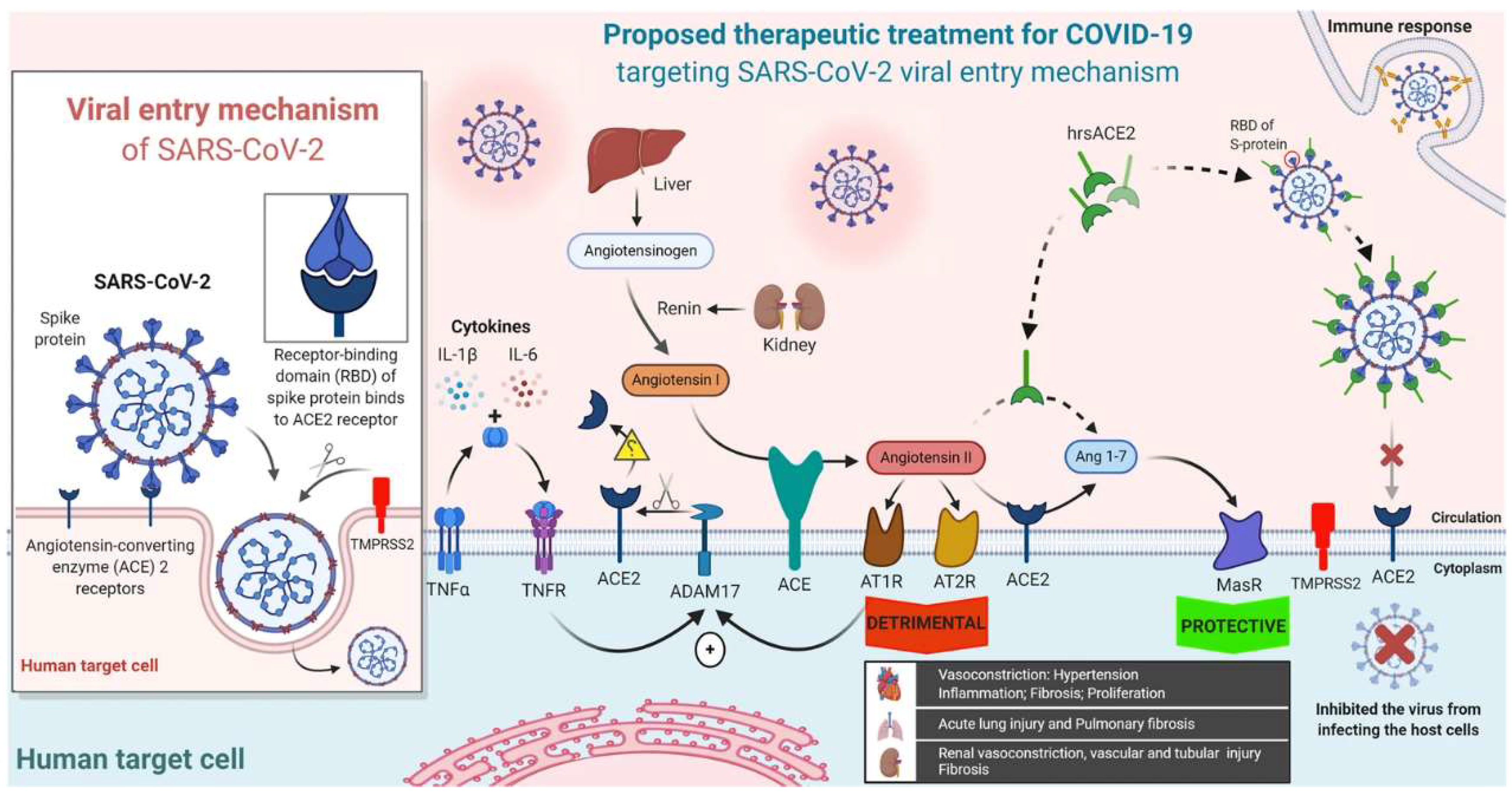
In the fight against COVID-19, using soluble ACE2 as a therapeutic intervention shows promise (101). hrsACE2 has the ability to prevent viral replication and lower viral loads by preventing the communication between the virus and its host receptor (102). Additionally, hrsACE2 has been demonstrated to be effective against SARS-CoV-2 in human blood vessels and kidney organoids, suggesting that it may be able to shield patients from the virus's severe lung damage (103). As a result, the therapy of COVID-19 patients may benefit from the use of soluble ACE2. However, more investigation is required to establish its security and effectiveness in clinical trials (104).
- VI.
- Non-Pharmacological Interventions
To successfully stop the spread of SARS-CoV-2, neither vaccinations nor particular pharmaceutical treatments are yet available (105). Effective pharmaceutical treatments and vaccinations for COVID-19 are anticipated to take several months to a year to develop. Implementing non-pharmacological interventions (NPI) is therefore the most efficient public health response to the ongoing outbreak (63,106). NPIs include early case detection and isolation, in-depth contact tracing of suspected secondary cases, travel prohibitions, tight contact reductions, physical segregation, increased cleanliness, and routine hand washing (107). Closing non-essential public areas, services, and facilities is one of these strategies. Another is for educational institutions to switch to digital learning modalities, and for enterprises to implement self-isolation/work from home programs (63). According to modeling projections, integrated NPIs are anticipated to have the biggest and fastest impact on reducing the reproductive number and slowing the rate of viral transmission if they are adopted early in the outbreak (108). The creation of efficient treatment interventions and vaccines is made possible by the knowledge gained from these NPIs, which are interim measures while the effort to better understand viral genomes continues (63,107).
Despite the fact that there aren't any specific medications or vaccines for SARS-CoV-2 yet, applying NPIs can drastically reduce the virus's transmission (109). To reduce transmission, such measures include early detection of infected persons, seclusion, and tracking of their close connections. Travel restrictions, social withdrawal, enhanced hygiene, and consistent hand washing can also help stop the virus's spread. Schools may need to switch to digital learning, and non-essential public areas and services may need to be shut down in order to execute these measures (110). Work from home efforts and self-isolation may also be required for enterprises. NPIs have the ability to reduce viral reproduction and delay viral transmission if implemented early, which would lessen the impact of the outbreak. However, while NPIs are effective in the interim, efforts must continue to develop effective therapeutic interventions and vaccines to address the ongoing crisis (111).
- VII.
- Future Directions for COVID-19 Research
Reduce infections, lower the strain on healthcare systems, and lessen the pandemic's social and economic effects are the three goals of efforts to limit the COVID-19 pandemic. Non-pharmacological therapies will continue to serve as the main line of protection while we wait for viable vaccinations. Therefore, projections and planning for anticipated healthcare capacity can be informed by accurate and current data on the daily number of new cases and the case characteristics (112). The BCG childhood vaccine as well as national immunization programs may have an impact on the pandemic's intensity. COVID-19 will undoubtedly have a large worldwide impact that could take a long time to reverse (113). To combat upcoming pandemics, healthcare systems must to think about including efficient regulatory mechanisms. The approach to the present pandemic has already been influenced by lessons learned from the earlier SARS-CoV outbreaks in Hong Kong, Singapore, and Taiwan (114,115). With regard to the pathogenicity, transmissibility, and therapeutic response of the viral isolates, genomic characterisation will also have effects on regional and global populations. Before an outbreak occurs, AI should be tested to predict and track infections. This could help us get ready for outbreaks in the future (63).
In conclusion, the international community must cooperate to make the greatest technology resources available in order to combat the current pandemic and maintain readiness for potential future epidemics (116). For the development of efficient vaccinations and the discovery of new drugs, it is essential to comprehend the genetic makeup of viral strains (117). Planning and predictions for expected healthcare capacity should be guided by data-driven initiatives (118). To combat upcoming pandemics, effective regulatory measures and national immunization strategies should be taken into consideration (63,119). To anticipate and track infections before the outbreak occurs, AI should be tested. The social, cultural, and economic infrastructures will be significantly impacted by the COVID-19 pandemic over the long term, thus it is crucial to draw lessons from this experience and improve readiness for breakouts in the future (120,121).
References
- Acter, T.; Uddin, N.; Das, J.; Akhter, A.; Choudhury, T.R.; Kim, S. Evolution of severe acute respiratory syndrome coronavirus 2 (SARS-CoV-2) as coronavirus disease 2019 (COVID-19) pandemic: A global health emergency. Science of the Total Environment 2020, 730, 138996. [Google Scholar] [CrossRef] [PubMed]
- Kamel Boulos, M.N.; Geraghty, E.M. Geographical tracking and mapping of coronavirus disease COVID-19/severe acute respiratory syndrome coronavirus 2 (SARS-CoV-2) epidemic and associated events around the world: How 21st century GIS technologies are supporting the global fight against outbreaks and epidemics. International journal of health geographics 2020, 19, 1–12. [Google Scholar]
- Jacob Machado, D.; Scott, R.; Guirales, S.; Janies, D.A. Fundamental evolution of all Orthocoronavirinae including three deadly lineages descendent from Chiroptera-hosted coronaviruses: SARS-CoV, MERS-CoV and SARS-CoV-2. Cladistics 2021, 37, 461–488. [Google Scholar] [CrossRef] [PubMed]
- Dhama, K.; Patel, S.K.; Pathak, M.; Yatoo, M.I.; Tiwari, R.; Malik, Y.S.; Singh, R.; Sah, R.; Rabaan, A.A.; Bonilla-Aldana, D.K.; Rodriguez-Morales, A.J. An update on SARS-CoV-2/COVID-19 with particular reference to its clinical pathology, pathogenesis, immunopathology and mitigation strategies. Travel medicine and infectious disease 2020, 37, 101755. [Google Scholar] [CrossRef] [PubMed]
- Seitz, B.M.; Aktipis, A.; Buss, D.M.; Alcock, J.; Bloom, P.; Gelfand, M.; Harris, S.; Lieberman, D.; Horowitz, B.N.; Pinker, S.; Wilson, D.S. The pandemic exposes human nature: 10 evolutionary insights. Proceedings of the National Academy of Sciences 2020, 117, 27767–27776. [Google Scholar] [CrossRef]
- Villa, A.; Brunialti, E.; Dellavedova, J.; Meda, C.; Rebecchi, M.; Conti, M.; Donnici, L.; De Francesco, R.; Reggiani, A.; Lionetti, V.; Ciana, P. DNA aptamers masking angiotensin converting enzyme 2 as an innovative way to treat SARS-CoV-2 pandemic. Pharmacological research 2022, 175, 105982. [Google Scholar] [CrossRef]
- Chen, Y.; Liu, Q.; Guo, D. Emerging coronaviruses: Genome structure, replication, and pathogenesis. Journal of medical virology 2020, 92, 418–423. [Google Scholar] [CrossRef]
- Awadasseid, A.; Wu, Y.; Tanaka, Y.; Zhang, W. Effective drugs used to combat SARS-CoV-2 infection and the current status of vaccines. Biomedicine & Pharmacotherapy 2021, 137, 111330. [Google Scholar]
- Hodgson, S.H.; Mansatta, K.; Mallett, G.; Harris, V.; Emary, K.R.; Pollard, A.J. What defines an efficacious COVID-19 vaccine? A review of the challenges assessing the clinical efficacy of vaccines against SARS-CoV-2. The lancet infectious diseases 2021, 21, e26–e35. [Google Scholar]
- Sanyaolu, A.; Okorie, C.; Marinkovic, A.; Patidar, R.; Younis, K.; Desai, P.; Hosein, Z.; Padda, I.; Mangat, J.; Altaf, M. Comorbidity and its impact on patients with COVID-19. SN comprehensive clinical medicine 2020, 2, 1069–1076. [Google Scholar] [CrossRef]
- Singhal, T. A review of coronavirus disease-2019 (COVID-19). The indian journal of pediatrics 2020, 87, 281–286. [Google Scholar] [CrossRef] [PubMed]
- Abu Haleeqa, M.; Alshamsi, I.; Al Habib, A.; Noshi, M.; Abdullah, S.; Kamour, A.; Ibrahim, H. Optimizing supportive care in COVID-19 patients: A multidisciplinary approach. Journal of multidisciplinary healthcare 2020, 877–880. [Google Scholar] [CrossRef] [PubMed]
- Abu Haleeqa, M.; Alshamsi, I.; Al Habib, A.; Noshi, M.; Abdullah, S.; Kamour, A.; Ibrahim, H. ; 2020. Optimizing supportive care in COVID-19 patients: A multidisciplinary approach. Jo.
- Haldane, V.; De Foo, C.; Abdalla, S.M.; Jung, A.S.; Tan, M.; Wu, S.; Chua, A.; Verma, M.; Shrestha, P.; Singh, S.; Perez, T. Health systems resilience in managing the COVID-19 pandemic: Lessons from 28 countries. Nature Medicine 2021, 27, 964–980. [Google Scholar] [CrossRef]
- Liu, N.N.; Tan, J.C.; Li, J.; Li, S.; Cai, Y.; Wang, H. COVID-19 pandemic: Experiences in China and implications for its prevention and treatment worldwide. Current cancer drug targets 2020, 20, 410–416. [Google Scholar] [PubMed]
- Chauhan, S. Comprehensive review of coronavirus disease 2019 (COVID-19). Biomedical journal 2020, 43, 334–340. [Google Scholar] [CrossRef]
- Pascarella, G.; Strumia, A.; Piliego, C.; Bruno, F.; Del Buono, R.; Costa, F.; Scarlata, S.; Agrò, F.E. COVID-19 diagnosis and management: A comprehensive review. Journal of internal medicine 2020, 288, 192–206. [Google Scholar] [CrossRef] [PubMed]
- Pal, M.; Berhanu, G.; Desalegn, C.; Kandi, V. Severe acute respiratory syndrome coronavirus-2 (SARS-CoV-2): An update. Cureus 2020, 12. [Google Scholar] [CrossRef]
- Loeffler-Wirth, H.; Schmidt, M.; Binder, H. Covid-19 transmission trajectories–monitoring the pandemic in the worldwide context. Viruses 2020, 12, 777. [Google Scholar] [CrossRef]
- Xiang, M.; Zhang, Z.; Kuwahara, K. Impact of COVID-19 pandemic on children and adolescents' lifestyle behavior larger than expected. Progress in cardiovascular diseases 2020, 63, 531. [Google Scholar] [CrossRef]
- Petrosillo, N.; Viceconte, G.; Ergonul, O.; Ippolito, G.; Petersen, E. COVID-19, SARS and MERS: Are they closely related? . Clinical microbiology and infection 2020, 26, 729–734. [Google Scholar] [CrossRef]
- Pal, M.; Berhanu, G.; Desalegn, C.; Kandi, V. Severe acute respiratory syndrome coronavirus-2 (SARS-CoV-2): An update. Cureus 2020, 12. [Google Scholar] [CrossRef] [PubMed]
- Shang, Y.; Pan, C.; Yang, X.; Zhong, M.; Shang, X.; Wu, Z.; Yu, Z.; Zhang, W.; Zhong, Q.; Zheng, X.; Sang, L. Management of critically ill patients with COVID-19 in ICU: Statement from front-line intensive care experts in Wuhan, China. Annals of intensive care 2020, 10, 1–24. [Google Scholar]
- Ghosh, S.; Bornman, C.; Zafer, M.M. Antimicrobial Resistance Threats in the emerging COVID-19 pandemic: Where do we stand? . Journal of infection and public health 2021, 14, 555–560. [Google Scholar] [CrossRef] [PubMed]
- Rabi, F.A.; Al Zoubi, M.S.; Kasasbeh, G.A.; Salameh, D.M.; Al-Nasser, A.D. SARS-CoV-2 and coronavirus disease 2019: What we know so far. Pathogens 2020, 9, 231. [Google Scholar] [CrossRef] [PubMed]
- Meekins, D.A.; Gaudreault, N.N.; Richt, J.A. Natural and experimental SARS-CoV-2 infection in domestic and wild animals. Viruses 2021, 13, 1993. [Google Scholar] [CrossRef]
- Damialis, A.; Gilles, S.; Sofiev, M.; Sofieva, V.; Kolek, F.; Bayr, D.; Plaza, M.P.; Leier-Wirtz, V.; Kaschuba, S.; Ziska, L.H.; Bielory, L. Higher airborne pollen concentrations correlated with increased SARS-CoV-2 infection rates, as evidenced from 31 countries across the globe. Proceedings of the National Academy of Sciences 2021, 118, e2019034118. [Google Scholar] [CrossRef]
- Uddin, M.; Mustafa, F.; Rizvi, T.A.; Loney, T.; Al Suwaidi, H.; Al-Marzouqi, A.H.H.; Kamal Eldin, A.; Alsabeeha, N.; Adrian, T.E.; Stefanini, C.; Nowotny, N. SARS-CoV-2/COVID-19: Viral genomics, epidemiology, vaccines, and therapeutic interventions. Viruses 2020, 12, 526. [Google Scholar] [CrossRef]
- Uddin, M.; Mustafa, F.; Rizvi, T.A.; Loney, T.; Al Suwaidi, H.; Al-Marzouqi, A.H.H.; Kamal Eldin, A.; Alsabeeha, N.; Adrian, T.E.; Stefanini, C.; Nowotny, N. SARS-CoV-2/COVID-19: Viral genomics, epidemiology, vaccines, and therapeutic interventions. Viruses 2020, 12, 526. [Google Scholar] [CrossRef]
- Bhatraju, P.K.; Ghassemieh, B.J.; Nichols, M.; Kim, R.; Jerome, K.R.; Nalla, A.K.; Greninger, A.L.; Pipavath, S.; Wurfel, M.M.; Evans, L.; Kritek, P.A. Covid-19 in critically ill patients in the Seattle region—Case series. New England Journal of Medicine 2020, 382, 2012–2022. [Google Scholar] [CrossRef]
- Callow, M.A.; Callow, D.D.; Smith, C. Older adults’ intention to socially isolate once COVID-19 stay-at-home orders are replaced with “safer-at-home” public health advisories: A survey of respondents in Maryland. Journal of Applied Gerontology 2020, 39, 1175–1183. [Google Scholar] [CrossRef]
- Azuma, K.; Yanagi, U.; Kagi, N.; Kim, H.; Ogata, M.; Hayashi, M. Environmental factors involved in SARS-CoV-2 transmission: Effect and role of indoor environmental quality in the strategy for COVID-19 infection control. Environmental health and preventive medicine 2020, 25, 1–16. [Google Scholar] [CrossRef]
- Li, H.; Liu, L.; Zhang, D.; Xu, J.; Dai, H.; Tang, N.; Su, X.; Cao, B. SARS-CoV-2 and viral sepsis: Observations and hypotheses. The Lancet 2020, 395, 1517–1520. [Google Scholar] [CrossRef] [PubMed]
- Li, H.; Liu, L.; Zhang, D.; Xu, J.; Dai, H.; Tang, N.; Su, X.; Cao, B. SARS-CoV-2 and viral sepsis: Observations and hypotheses. The Lancet 2020, 395, 1517–1520. [Google Scholar] [CrossRef]
- Killingley, B.; Mann, A.J.; Kalinova, M.; Boyers, A.; Goonawardane, N.; Zhou, J.; Lindsell, K.; Hare, S.S.; Brown, J.; Frise, R.; Smith, E. Safety, tolerability and viral kinetics during SARS-CoV-2 human challenge in young adults. Nature Medicine 2022, 28, 1031–1041. [Google Scholar] [CrossRef]
- Walsh, K.A.; Spillane, S.; Comber, L.; Cardwell, K.; Harrington, P.; Connell, J.; Teljeur, C.; Broderick, N.; De Gascun, C.F.; Smith, S.M.; Ryan, M. The duration of infectiousness of individuals infected with SARS-CoV-2. Journal of Infection 2020, 81, 847–856. [Google Scholar] [CrossRef]
- Yang, W.; Cao, Q.; Qin, L.E.; Wang, X.; Cheng, Z.; Pan, A.; Dai, J.; Sun, Q.; Zhao, F.; Qu, J.; Yan, F. Clinical characteristics and imaging manifestations of the 2019 novel coronavirus disease (COVID-19): A multi-center study in Wenzhou city, Zhejiang, China. Journal of Infection 2020, 80, 388–393. [Google Scholar] [CrossRef]
- Banerjee, D. The impact of Covid-19 pandemic on elderly mental health. International journal of geriatric psychiatry 2020, 35, 1466. [Google Scholar] [CrossRef] [PubMed]
- Baj, J.; Karakuła-Juchnowicz, H.; Teresiński, G.; Buszewicz, G.; Ciesielka, M.; Sitarz, R.; Forma, A.; Karakuła, K.; Flieger, W.; Portincasa, P.; Maciejewski, R. COVID-19: Specific and non-specific clinical manifestations and symptoms: The current state of knowledge. Journal of clinical medicine 2020, 9, 1753. [Google Scholar] [CrossRef] [PubMed]
- Yuen, K.S.; Ye, Z.W.; Fung, S.Y.; Chan, C.P.; Jin, D.Y. SARS-CoV-2 and COVID-19: The most important research questions. Cell & bioscience 2020, 10, 1–5. [Google Scholar]
- Yong, S.J. Long COVID or post-COVID-19 syndrome: Putative pathophysiology, risk factors, and treatments. Infectious diseases 2021, 53, 737–754. [Google Scholar] [CrossRef]
- Zhang, Y.; Geng, X.; Tan, Y.; Li, Q.; Xu, C.; Xu, J.; Hao, L.; Zeng, Z.; Luo, X.; Liu, F.; Wang, H. New understanding of the damage of SARS-CoV-2 infection outside the respiratory system. Biomedicine & pharmacotherapy 2020, 127, 110195. [Google Scholar]
- Dhama, K.; Patel, S.K.; Pathak, M.; Yatoo, M.I.; Tiwari, R.; Malik, Y.S.; Singh, R.; Sah, R.; Rabaan, A.A.; Bonilla-Aldana, D.K.; Rodriguez-Morales, A.J. An update on SARS-CoV-2/COVID-19 with particular reference to its clinical pathology, pathogenesis, immunopathology and mitigation strategies. Travel medicine and infectious disease 2020, 37, 101755. [Google Scholar] [CrossRef] [PubMed]
- Tjendra, Y.; Al Mana, A.F.; Espejo, A.P.; Akgun, Y.; Millan, N.C.; Gomez-Fernandez, C.; Cray, C. Predicting disease severity and outcome in COVID-19 patients: A review of multiple biomarkers. Archives of pathology & laboratory medicine 2020, 144, 1465–1474. [Google Scholar]
- Hachim, M.Y.; Hachim, I.Y.; Naeem, K.B.; Hannawi, H.; Salmi, I.A.; Hannawi, S. D-dimer, troponin, and urea level at presentation with COVID-19 can predict ICU admission: A single centered study. Frontiers in medicine 2020, 7, 585003. [Google Scholar] [CrossRef]
- Domingo, E.; García-Crespo, C.; Lobo-Vega, R.; Perales, C. Mutation rates, mutation frequencies, and proofreading-repair activities in RNA virus genetics. Viruses 2021, 13, 1882. [Google Scholar] [CrossRef] [PubMed]
- Dhama, K.; Patel, S.K.; Pathak, M.; Yatoo, M.I.; Tiwari, R.; Malik, Y.S.; Singh, R.; Sah, R.; Rabaan, A.A.; Bonilla-Aldana, D.K.; Rodriguez-Morales, A.J. An update on SARS-CoV-2/COVID-19 with particular reference to its clinical pathology, pathogenesis, immunopathology and mitigation strategies. Travel medicine and infectious disease 2020, 37, 101755. [Google Scholar] [CrossRef]
- Hassanpour, M.; Rezaie, J.; Nouri, M.; Panahi, Y. The role of extracellular vesicles in COVID-19 virus infection. Infection, Genetics and Evolution 2020, 85, 104422. [Google Scholar] [CrossRef]
- Jamwal, S.; Gautam, A.; Elsworth, J.; Kumar, M.; Chawla, R.; Kumar, P. An updated insight into the molecular pathogenesis, secondary complications and potential therapeutics of COVID-19 pandemic. Life sciences 2020, 257, 118105. [Google Scholar] [CrossRef]
- Volz, E.; Hill, V.; McCrone, J.T.; Price, A.; Jorgensen, D.; O’Toole, Á.; Southgate, J.; Johnson, R.; Jackson, B.; Nascimento, F.F.; Rey, S.M. Evaluating the effects of SARS-CoV-2 spike mutation D614G on transmissibility and pathogenicity. Cell 2021, 184, 64–75. [Google Scholar] [CrossRef]
- Korber, B.; Fischer, W.M.; Gnanakaran, S.; Yoon, H.; Theiler, J.; Abfalterer, W.; Foley, B.; Giorgi, E.E.; Bhattacharya, T.; Parker, M.D.; Partridge, D.G. Spike mutation pipeline reveals the emergence of a more transmissible form of SARS-CoV-2. BioRxiv. 2020.
- Mengist, H.M.; Kombe, A.J.K.; Mekonnen, D.; Abebaw, A.; Getachew, M.; Jin, T. Mutations of SARS-CoV-2 spike protein: Implications on immune evasion and vaccine-induced immunity. In Seminars in immunology; Academic Press, 2021; Volume 55, p. 101533. [Google Scholar]
- De Maio, N.; Walker, C.R.; Turakhia, Y.; Lanfear, R.; Corbett-Detig, R.; Goldman, N. Mutation rates and selection on synonymous mutations in SARS-CoV-2. Genome Biology and Evolution 2021, 13, evab087. [Google Scholar] [CrossRef] [PubMed]
- Karakose, T.; Polat, H.; Papadakis, S. Examining teachers’ perspectives on school principals’ digital leadership roles and technology capabilities during the COVID-19 pandemic. Sustainability 2021, 13, 13448. [Google Scholar] [CrossRef]
- Ismail, A.A. SARS-CoV-2 (Covid-19): A short update on molecular biochemistry, pathology, diagnosis and therapeutic strategies. Annals of Clinical Biochemistry 2022, 59, 59–64. [Google Scholar] [CrossRef] [PubMed]
- Jolliffe, D.A.; Camargo, C.A.; Sluyter, J.D.; Aglipay, M.; Aloia, J.F.; Ganmaa, D.; Bergman, P.; Bischoff-Ferrari, H.A.; Borzutzky, A.; Damsgaard, C.T.; Dubnov-Raz, G. Vitamin D supplementation to prevent acute respiratory infections: A systematic review and meta-analysis of aggregate data from randomised controlled trials. The lancet Diabetes & endocrinology 2021, 9, 276–292. [Google Scholar]
- Te Velthuis, A.J.; van den Worm, S.H.; Sims, A.C.; Baric, R.S.; Snijder, E.J.; van Hemert, M.J. Zn2+ inhibits coronavirus and arterivirus RNA polymerase activity in vitro and zinc ionophores block the replication of these viruses in cell culture. PLoS pathogens 2010, 6, e1001176. [Google Scholar] [CrossRef]
- Razzaque, M.S. COVID-19 pandemic: Can zinc supplementation provide an additional shield against the infection? . Computational and structural biotechnology journal 2021, 19, 1371–1378. [Google Scholar] [CrossRef]
- Mohanty, S.K.; Satapathy, A.; Naidu, M.M.; Mukhopadhyay, S.; Sharma, S.; Barton, L.M.; Stroberg, E.; Duval, E.J.; Pradhan, D.; Tzankov, A.; Parwani, A.V. Severe acute respiratory syndrome coronavirus-2 (SARS-CoV-2) and coronavirus disease 19 (COVID-19)–anatomic pathology perspective on current knowledge. Diagnostic pathology 2020, 15, 1–17. [Google Scholar] [CrossRef]
- Berekaa, M.M. Insights into the COVID-19 pandemic: Origin, pathogenesis, diagnosis, and therapeutic interventions. Frontiers in Bioscience-Elite 2020, 13, 117–139. [Google Scholar]
- Shapovalova, V. An Innovative multidisciplinary study of the availability of coronavirus vaccines in the world. SSP Modern Pharmacy and Medicine 2022, 2, 1–17. [Google Scholar] [CrossRef]
- Nitulescu, G.M.; Paunescu, H.; Moschos, S.A.; Petrakis, D.; Nitulescu, G.; Ion, G.N.D.; Spandidos, D.A.; Nikolouzakis, T.K.; Drakoulis, N.; Tsatsakis, A. Comprehensive analysis of drugs to treat SARS CoV 2 infection: Mechanistic insights into current COVID 19 therapies. International journal of molecular medicine 2020, 46, 467–488. [Google Scholar] [CrossRef]
- Uddin, M.; Mustafa, F.; Rizvi, T.A.; Loney, T.; Al Suwaidi, H.; Al-Marzouqi, A.H.H.; Kamal Eldin, A.; Alsabeeha, N.; Adrian, T.E.; Stefanini, C.; Nowotny, N. SARS-CoV-2/COVID-19: Viral genomics, epidemiology, vaccines, and therapeutic interventions. Viruses 2020, 12, 526. [Google Scholar] [CrossRef] [PubMed]
- Martinez, M.A. ; 2022. Efficacy of repurposed antiviral drugs: Lessons from COVID-19. Drug Discovery Today.
- WHO Solidarity Trial Consortium. Repurposed antiviral drugs for Covid-19—Interim WHO solidarity trial results. New England journal of medicine 2021, 384, 497–511. [Google Scholar] [CrossRef] [PubMed]
- Costanzo, M.; De Giglio, M.A.; Roviello, G.N. SARS-CoV-2: Recent reports on antiviral therapies based on lopinavir/ritonavir, darunavir/umifenovir, hydroxychloroquine, remdesivir, favipiravir and other drugs for the treatment of the new coronavirus. Current medicinal chemistry 2020, 27, 4536–4541. [Google Scholar] [PubMed]
- Zeldin, R.K.; Petruschke, R.A. Pharmacological and therapeutic properties of ritonavir-boosted protease inhibitor therapy in HIV-infected patients. Journal of antimicrobial chemotherapy 2004, 53, 4–9. [Google Scholar] [CrossRef]
- Rahman, M.T.; Idid, S.Z. Can Zn be a critical element in COVID-19 treatment? . Biological trace element research 2021, 199, 550–558. [Google Scholar] [CrossRef]
- Jain, M.S.; Barhate, S.D. Favipiravir has been investigated for the treatment of life-threatening pathogens such as Ebola virus, Lassa virus, and now COVID-19: A review. Asian Journal of Pharmaceutical Research 2021, 11, 39–42. [Google Scholar] [CrossRef]
- Hu, B.; Huang, S.; Yin, L. The cytokine storm and COVID-19. Journal of medical virology 2021, 93, 250–256. [Google Scholar] [CrossRef]
- Shiraki, K.; Daikoku, T. Favipiravir, an anti-influenza drug against life-threatening RNA virus infections. Pharmacology & therapeutics 2020, 209, 107512. [Google Scholar]
- Singh, A.K.; Singh, A.; Shaikh, A.; Singh, R.; Misra, A. Chloroquine and hydroxychloroquine in the treatment of COVID-19 with or without diabetes: A systematic search and a narrative review with a special reference to India and other developing countries. Diabetes & Metabolic Syndrome: Clinical Research & Reviews 2020, 14, 241–246. [Google Scholar]
- Li, H.; Liu, Z.; Ge, J. Scientific research progress of COVID-19/SARS-CoV-2 in the first five months. Journal of cellular and molecular medicine 2020, 24, 6558–6570. [Google Scholar] [CrossRef]
- Pastick, K.A.; Okafor, E.C.; Wang, F.; Lofgren, S.M.; Skipper, C.P.; Nicol, M.R.; Pullen, M.F.; Rajasingham, R.; McDonald, E.G.; Lee, T.C.; Schwartz, I.S. Hydroxychloroquine and chloroquine for treatment of SARS-CoV-2 (COVID-19). In Open forum infectious diseases; Oxford University Press: USA, 2020; Volume 7, p. ofaa130. [Google Scholar]
- Gordon, C.J.; Lee, H.W.; Tchesnokov, E.P.; Perry, J.K.; Feng, J.Y.; Bilello, J.P.; Porter, D.P.; Götte, M. Efficient incorporation and template-dependent polymerase inhibition are major determinants for the broad-spectrum antiviral activity of remdesivir. Journal of Biological Chemistry 2022, 298. [Google Scholar] [CrossRef]
- Stevens, L.J.; Pruijssers, A.J.; Lee, H.W.; Gordon, C.J.; Tchesnokov, E.P.; Gribble, J.; George, A.S.; Hughes, T.M.; Lu, X.; Li, J.; Perry, J.K. Mutations in the SARS-CoV-2 RNA-dependent RNA polymerase confer resistance to remdesivir by distinct mechanisms. Science translational medicine 2022, 14, eabo0718. [Google Scholar] [CrossRef] [PubMed]
- Weston, S.; Coleman, C.M.; Haupt, R.; Logue, J.; Matthews, K.; Li, Y.; Reyes, H.M.; Weiss, S.R.; Frieman, M.B. Broad anti-coronavirus activity of food and drug administration-approved drugs against SARS-CoV-2 in vitro and SARS-CoV in vivo. Journal of virology 2020, 94, e01218–e01220. [Google Scholar] [CrossRef] [PubMed]
- Grein, J.; Ohmagari, N.; Shin, D.; Diaz, G.; Asperges, E.; Castagna, A.; Feldt, T.; Green, G.; Green, M.L.; Lescure, F.X.; Nicastri, E. Compassionate use of remdesivir for patients with severe Covid-19. New England Journal of Medicine 2020, 382, 2327–2336. [Google Scholar] [CrossRef] [PubMed]
- Mechineni, A.; Kassab, H.; Manickam, R. Remdesivir for the treatment of COVID 19: Review of the pharmacological properties, safety and clinical effectiveness. Expert Opinion on Drug Safety 2021, 20, 1299–1307. [Google Scholar] [CrossRef]
- Sohag, A.A.M.; Hannan, M.A.; Rahman, S.; Hossain, M.; Hasan, M.; Khan, M.K.; Khatun, A.; Dash, R.; Uddin, M.J. Revisiting potential druggable targets against SARS-CoV-2 and repurposing therapeutics under preclinical study and clinical trials: A comprehensive review. Drug development research 2020, 81, 919–941. [Google Scholar] [CrossRef]
- Velikova, T.; Georgiev, T. SARS-CoV-2 vaccines and autoimmune diseases amidst the COVID-19 crisis. Rheumatology international 2021, 41, 509–518. [Google Scholar] [CrossRef]
- Aydillo, T.; Rombauts, A.; Stadlbauer, D.; Aslam, S.; Abelenda-Alonso, G.; Escalera, A.; Amanat, F.; Jiang, K.; Krammer, F.; Carratala, J.; García-Sastre, A. Antibody immunological imprinting on COVID-19 patients. MedRxiv 2020, 2020-10. [Google Scholar] [CrossRef]
- Malik, J.A.; Mulla, A.H.; Farooqi, T.; Pottoo, F.H.; Anwar, S.; Rengasamy, K.R. Targets and strategies for vaccine development against SARS-CoV-2. Biomedicine & Pharmacotherapy 2021, 137, 111254. [Google Scholar]
- Piperno, A.; Sciortino, M.T.; Giusto, E.; Montesi, M.; Panseri, S.; Scala, A. Recent advances and challenges in gene delivery mediated by polyester-based nanoparticles. International Journal of Nanomedicine 2021, 16, 5981. [Google Scholar] [CrossRef]
- Kumar, V.; Kumar, S.; Sharma, P.C. Recent advances in the vaccine development for the prophylaxis of SARS Covid-19. International Immunopharmacology 2022, 109175. [Google Scholar] [CrossRef]
- Khoshnood, S.; Arshadi, M.; Akrami, S.; Koupaei, M.; Ghahramanpour, H.; Shariati, A.; Sadeghifard, N.; Heidary, M. An overview on inactivated and live-attenuated SARS-CoV-2 vaccines. Journal of Clinical Laboratory Analysis 2022, 36, e24418. [Google Scholar] [CrossRef]
- Tebas, P.; Yang, S.; Boyer, J.D.; Reuschel, E.L.; Patel, A.; Christensen-Quick, A.; Andrade, V.M.; Morrow, M.P.; Kraynyak, K.; Agnes, J.; Purwar, M. Safety and immunogenicity of INO-4800 DNA vaccine against SARS-CoV-2: A preliminary report of an open-label, Phase 1 clinical trial. EClinicalMedicine 2021, 31, 100689. [Google Scholar] [CrossRef]
- Shrotri, M.; Swinnen, T.; Kampmann, B.; Parker, E.P. An interactive website tracking COVID-19 vaccine development. The Lancet Global Health 2021, 9, e590–e592. [Google Scholar] [CrossRef]
- Wang, Y.; Huo, P.; Dai, R.; Lv, X.; Yuan, S.; Zhang, Y.; Guo, Y.; Li, R.; Yu, Q.; Zhu, K. Convalescent plasma may be a possible treatment for COVID-19: A systematic review. International immunopharmacology 2021, 91, 107262. [Google Scholar] [CrossRef]
- Baldeón, M.E.; Maldonado, A.; Ochoa-Andrade, M.; Largo, C.; Pesantez, M.; Herdoiza, M.; Granja, G.; Bonifaz, M.; Espejo, H.; Mora, F.; Abril-López, P. Effect of convalescent plasma as complementary treatment in patients with moderate COVID-19 infection. Transfusion Medicine 2022, 32, 153–161. [Google Scholar] [CrossRef]
- Ochani, R.; Asad, A.; Yasmin, F.; Shaikh, S.; Khalid, H.; Batra, S.; Sohail, M.R.; Mahmood, S.F.; Ochani, R.; Arshad, M.H.; Kumar, A. COVID-19 pandemic: From origins to outcomes. A comprehensive review of viral pathogenesis, clinical manifestations, diagnostic evaluation, and management. Infez Med 2021, 29, 20–36. [Google Scholar]
- Jones, B.E.; Brown-Augsburger, P.L.; Corbett, K.S.; Westendorf, K.; Davies, J.; Cujec, T.P.; Wiethoff, C.M.; Blackbourne, J.L.; Heinz, B.A.; Foster, D.; Higgs, R.E. The neutralizing antibody, LY-CoV555, protects against SARS-CoV-2 infection in nonhuman primates. Science translational medicine 2021, 13, eabf1906. [Google Scholar] [CrossRef]
- Sahoo, P.; Dey, J.; Mahapatra, S.R.; Ghosh, A.; Jaiswal, A.; Padhi, S.; Prabhuswamimath, S.C.; Misra, N.; Suar, M. Nanotechnology and COVID-19 Convergence: Toward New Planetary Health Interventions Against the Pandemic. OMICS: A Journal of Integrative Biology 2022, 26, 473–488. [Google Scholar] [CrossRef]
- Mehta, A.; Michler, T.; Merkel, O.M. siRNA Therapeutics against Respiratory Viral Infections—What Have We Learned for Potential COVID-19 Therapies? . Advanced healthcare materials 2021, 10, 2001650. [Google Scholar] [CrossRef]
- Uddin, M.; Mustafa, F.; Rizvi, T.A.; Loney, T.; Al Suwaidi, H.; Al-Marzouqi, A.H.H.; Kamal Eldin, A.; Alsabeeha, N.; Adrian, T.E.; Stefanini, C.; Nowotny, N. SARS-CoV-2/COVID-19: Viral genomics, epidemiology, vaccines, and therapeutic interventions. Viruses 2020, 12, 526. [Google Scholar] [CrossRef] [PubMed]
- Yang, Y.; Peng, F.; Wang, R.; Guan, K.; Jiang, T.; Xu, G.; Sun, J.; Chang, C. The deadly coronaviruses: The 2003 SARS pandemic and the 2020 novel coronavirus epidemic in China. Journal of autoimmunity 2020, 109, 102434. [Google Scholar] [CrossRef] [PubMed]
- Zhang, H.; Penninger, J.M.; Li, Y.; Zhong, N.; Slutsky, A.S. Angiotensin-converting enzyme 2 (ACE2) as a SARS-CoV-2 receptor: Molecular mechanisms and potential therapeutic target. Intensive care medicine 2020, 46, 586–590. [Google Scholar] [CrossRef] [PubMed]
- Bourgonje, A.R.; Abdulle, A.E.; Timens, W.; Hillebrands, J.L.; Navis, G.J.; Gordijn, S.J.; Bolling, M.C.; Dijkstra, G.; Voors, A.A.; Osterhaus, A.D.; van Der Voort, P.H. Angiotensin-converting enzyme 2 (ACE2), SARS-CoV-2 and the pathophysiology of coronavirus disease 2019 (COVID-19). The Journal of pathology 2020, 251, 228–248. [Google Scholar] [CrossRef]
- Seyedpour, S.; Khodaei, B.; Loghman, A.H.; Seyedpour, N.; Kisomi, M.F.; Balibegloo, M.; Nezamabadi, S.S.; Gholami, B.; Saghazadeh, A.; Rezaei, N. Targeted therapy strategies against SARS-CoV-2 cell entry mechanisms: A systematic review of in vitro and in vivo studies. Journal of cellular physiology 2021, 236, 2364–2392. [Google Scholar] [CrossRef]
- Ita, K. Coronavirus disease (COVID-19): Current status and prospects for drug and vaccine development. Archives of Medical Research 2021, 52, 15–24. [Google Scholar] [CrossRef]
- Miners, S.; Kehoe, P.G.; Love, S. Cognitive impact of COVID-19: Looking beyond the short term. Alzheimer's research & therapy 2020, 12, 1–16. [Google Scholar]
- Abd El-Aziz, T.M.; Al-Sabi, A.; Stockand, J.D. Human recombinant soluble ACE2 (hrsACE2) shows promise for treating severe COVID19. Signal Transduction and Targeted Therapy 2020, 5, 258. [Google Scholar] [CrossRef]
- Zanganeh, S.; Goodarzi, N.; Doroudian, M.; Movahed, E. Potential COVID-19 therapeutic approaches targeting angiotensin-converting enzyme 2; an updated review. Reviews in Medical Virology 2022, 32, e2321. [Google Scholar] [CrossRef]
- Robinson, P.C.; Liew, D.F.; Tanner, H.L.; Grainger, J.R.; Dwek, R.A.; Reisler, R.B.; Steinman, L.; Feldmann, M.; Ho, L.P.; Hussell, T.; Moss, P. COVID-19 therapeutics: Challenges and directions for the future. Proceedings of the National Academy of Sciences 2022, 119, e2119893119. [Google Scholar] [CrossRef]
- Kustin, T.; Harel, N.; Finkel, U.; Perchik, S.; Harari, S.; Tahor, M.; Caspi, I.; Levy, R.; Leshchinsky, M.; Ken Dror, S.; Bergerzon, G. Evidence for increased breakthrough rates of SARS-CoV-2 variants of concern in BNT162b2-mRNA-vaccinated individuals. Nature medicine 2021, 27, 1379–1384. [Google Scholar] [CrossRef] [PubMed]
- Chowdhury, R.; Heng, K.; Shawon, M.S.R.; Goh, G.; Okonofua, D.; Ochoa-Rosales, C.; Gonzalez-Jaramillo, V.; Bhuiya, A.; Reidpath, D.; Prathapan, S.; Shahzad, S. Dynamic interventions to control COVID-19 pandemic: A multivariate prediction modelling study comparing 16 worldwide countries. European journal of epidemiology 2020, 35, 389–399. [Google Scholar] [CrossRef] [PubMed]
- Yang, H.; Zhang, S.; Liu, R.; Krall, A.; Wang, Y.; Ventura, M.; Deflitch, C. Epidemic informatics and control: A holistic approach from system informatics to epidemic response and risk management in public health. In AI and Analytics for Public Health- Proceedings of the 2020 INFORMS International Conference on Service Science; Springer: Berlin/Heidelberg, Germany, 2021; pp. 1–46. [Google Scholar]
- Di Domenico, L.; Pullano, G.; Sabbatini, C.E.; Boëlle, P.Y.; Colizza, V. Impact of lockdown on COVID-19 epidemic in Île-de-France and possible exit strategies. BMC medicine 2020, 18, 1–13. [Google Scholar] [CrossRef] [PubMed]
- Quinn, G.A.; Connolly, R.; ÓhAiseadha, C.; Hynds, P. ; 2021. A tale of two scientific paradigms: Conflicting scientific opinions on what “following the science” means for SARS-CoV-2 and the COVID-19 pandemic.
- Behera, R.K.; Bala, P.K.; Rana, N.P.; Kayal, G. Self-promotion and online shaming during COVID-19: A toxic combination. International Journal of Information Management Data Insights 2022, 2, 100117. [Google Scholar] [CrossRef]
- Mendez-Brito, A.; El Bcheraoui, C.; Pozo-Martin, F. Systematic review of empirical studies comparing the effectiveness of non-pharmaceutical interventions against COVID-19. Journal of Infection 2021, 83, 281–293. [Google Scholar] [CrossRef] [PubMed]
- Hanson, K.E.; Caliendo, A.M.; Arias, C.A.; Englund, J.A.; Lee, M.J.; Loeb, M.; Patel, R.; El Alayli, A.; Kalot, M.A.; Falck-Ytter, Y.; Lavergne, V. Infectious Diseases Society of America guidelines on the diagnosis of coronavirus disease 2019. Clinical infectious diseases. 2020. [Google Scholar]
- Sala, G.; Chakraborti, R.; Ota, A.; Miyakawa, T. Association of BCG vaccination policy and tuberculosis burden with incidence and mortality of COVID-19. Medrxiv 2020, 2020-03. [Google Scholar]
- Cheng, V.C.C.; Wong, S.C.; Chuang, V.W.M.; So, S.Y.C.; Chen, J.H.K.; Sridhar, S.; To, K.K.W.; Chan, J.F.W.; Hung, I.F.N.; Ho, P.L.; Yuen, K.Y. The role of community-wide wearing of face mask for control of coronavirus disease 2019 (COVID-19) epidemic due to SARS-CoV-2. Journal of Infection 2020, 81, 107–114. [Google Scholar] [CrossRef]
- To, K.K.W.; Sridhar, S.; Chiu, K.H.Y.; Hung, D.L.L.; Li, X.; Hung, I.F.N.; Tam, A.R.; Chung, T.W.H.; Chan, J.F.W.; Zhang, A.J.X.; Cheng, V.C.C. Lessons learned 1 year after SARS-CoV-2 emergence leading to COVID-19 pandemic. Emerging microbes & infections 2021, 10, 507–535. [Google Scholar]
- World Health Organization, 2021. Genomic sequencing of SARS-CoV-2: A guide to implementation for maximum impact on public health, 8 January.
- Dumache, R.; Enache, A.; Macasoi, I.; Dehelean, C.A.; Dumitrascu, V.; Mihailescu, A.; Popescu, R.; Vlad, D.; Vlad, C.S.; Muresan, C. Sars-Cov-2: An overview of the genetic profile and vaccine effectiveness of the five variants of concern. Pathogens 2022, 11, 516. [Google Scholar] [CrossRef]
- Salvatore, M.; Purkayastha, S.; Ganapathi, L.; Bhattacharyya, R.; Kundu, R.; Zimmermann, L.; Ray, D.; Hazra, A.; Kleinsasser, M.; Solomon, S.; Subbaraman, R. Lessons from SARS-CoV-2 in India: A data-driven framework for pandemic resilience. Science Advances 2022, 8, eabp8621. [Google Scholar] [CrossRef]
- Malik, J.A.; Ahmed, S.; Mir, A.; Shinde, M.; Bender, O.; Alshammari, F.; Ansari, M.; Anwar, S. The SARS-CoV-2 mutation versus vaccine effectiveness: New opportunities to new challenges. Journal of infection and public health 2022. [Google Scholar] [CrossRef] [PubMed]
- Gulseven, O.; Al Harmoodi, F.; Al Falasi, M.; ALshomali, I. How the COVID-19 pandemic will affect the UN sustainable development goals? Available at SSRN 359. 2020. [Google Scholar] [CrossRef]
- Shohel, M.M.C.; Ashrafuzzaman, M.; Alam, A.S.; Mahmud, A.; Ahsan, M.S.; Islam, M.T. Preparedness of students for future teaching and learning in higher education: A Bangladeshi perspective. In New Student Literacies amid COVID-19: International Case Studies; Emerald Publishing Limited, 2021; Volume 41, pp. 29–56. [Google Scholar]
Disclaimer/Publisher’s Note: The statements, opinions and data contained in all publications are solely those of the individual author(s) and contributor(s) and not of MDPI and/or the editor(s). MDPI and/or the editor(s) disclaim responsibility for any injury to people or property resulting from any ideas, methods, instructions or products referred to in the content. |
© 2023 by the authors. Licensee MDPI, Basel, Switzerland. This article is an open access article distributed under the terms and conditions of the Creative Commons Attribution (CC BY) license (https://creativecommons.org/licenses/by/4.0/).
Copyright: This open access article is published under a Creative Commons CC BY 4.0 license, which permit the free download, distribution, and reuse, provided that the author and preprint are cited in any reuse.


