

Submitted:
14 August 2023
Posted:
15 August 2023
You are already at the latest version
Abstract
Background: Food insecurity is an ongoing problem in the U.S. with implications for health problems and social disadvantages. Past food insecurity intervention studies have targeted barriers to accessing healthy food. Although, information barriers have not been adequately addressed by food insecurity interventions. Methods: This qualitative study involved testing a text message as an informational nudge through interviews among adults in the southwest U.S. (n = 10). Interview questions focused on the message content, persuasiveness, relevancy, clarity, and details that participants liked and disliked. A qualitative content analysis of interview responses then highlighted any necessary modifications to the text message. Results: Interview responses highlighted that the message conveyed details about how to access food assistance resources. The message was perceived as informative, clear, and friendly. Participants highlighted the need for better spacing in the message layout, more details about the Supplemental Nutrition Assistance Program (SNAP), and why SNAP is relevant. Conclusion: Text message readability and informativeness were common concerns raised during interviews. Participant-informed modifications to the text message were applied in preparation for using the message in a food insecurity intervention. Future food insecurity research efforts should similarly test novel interventions to ensure the intervention is acceptable for the target population.
Keywords:
food insecurity
; food access
; food assistance
; SNAP
; barriers
; text message
; information
; nudge
; qualitative
; interview
INTRODUCTION
Food insecurity, which involves the limited or uncertain availability of nutritionally adequate and safe foods [1], is an ongoing challenge that imposes detrimental public health and sustainability consequences on societies worldwide [2]. Greater than 10 percent of the U.S. population experiences food insecurity [3], poor health outcomes related to food insecurity pose a persistent public health burden [4]. Food insecurity creates tenuous circumstances for both human and social sustainability by contributing to the development and perpetuation of human health and societal inequities [5]. The United Nations listed 1) No Poverty, 2) Zero Hunger, and 3) Good Health and Wellbeing at the top of their 2023 Sustainable Development Goals [6]. In being relevant to three of the United Nation’s Sustainable Development Goals, preventing food insecurity could yield manifold benefits for health and sustainability.
The negative impact of food insecurity on health is often resultant of nutritional deficiencies and/or imbalances that increase the risk of chronic diseases. As a social determinant of health, food insecurity has been connected to unhealthy behaviors and poor health outcomes including disordered eating [7], low physical activity levels [8], cognitive difficulties [9], nutritional deficiencies [10], overweight and obesity [11], type-2 diabetes [12], heart disease [13], and cancer [14]. Food insecurity disparities in the U.S. persist among individuals who are low-income; Black, Indigenous, or People of Color [15]; female [16]; and/or are a single parent [17]. These vulnerable individuals live with a greater risk of experiencing food insecurity and are more likely to encounter barriers when attempting to purchase healthy food and access food assistance resources.
Various federal and non-profit food assistance programs exist that are designed to address food insecurity, such as the Supplemental Nutrition Assistance Program (SNAP); the Special Supplemental Nutrition Program for Women, Infants, and Children; The Emergency Food Assistance Program; community food banks and food pantries; and community gardens. However, for those who either do not qualify for federal food assistance or want to further supplement their access to healthy food, there are networks of food banks in the U.S. that facilitate the distribution of free food to individuals experiencing food insecurity who otherwise would not be able to access a sufficient amount of healthy food for themselves or their families [18]. Most food banks operate using a warehouse model to collect and store donated food for distribution to food pantries and other non-profit organizations that serve on the frontline in low-income communities [19]. Understandably, the prevalence of food insecurity among food pantry clients in the U.S. is substantially higher when compared to the general population [20].
A majority of food insecurity interventions conducted among food pantry clients in the U.S. have aimed to eliminate skill-related barriers relating to obtaining food and meal preparation through nutrition education and instructional cooking classes [21,22]. However, individuals experiencing food insecurity encounter several other barriers that prevent them from accessing healthy food and have been seldom addressed with research interventions. The most pervasive of these barriers include inadequate finances [23], unreliable transportation [24], low skills related to identifying and preparing healthy food [25], and insufficient information concerning the availability of food assistance resources [26]. A study that examined the impact of barriers to food assistance resources have highlighted how the prevalence of food insecurity was higher among individuals who experienced barriers to accessing food assistance in comparison to those who reported no barriers [27]. In a separate study, it was determine that individuals who were experiencing food insecurity had greater odds of encountering barriers to accessing food assistance when compared to those who were food secure [28].
Despite the advances that have been made concerning the removal of barriers to accessing healthy food among individuals who are food insecure, there has been limited progress toward removing the barrier of insufficient information that can prevent vulnerable individuals from accessing readily available food assistance. Nudging has emerged as a useful means of informing and guiding behaviors of participants in research interventions that aim to improve health-related outcomes [29]. In general, nudges are minor modifications in the environment that are simple, non-coercive, and feasible to implement [30]. A minor modification in the environment that is initiated by a nudge could involve the communication of previously unknown information detailing an available resource and prompting the recipient to utilize the specified resource. Research interventions using informational nudges have yielded improvements in dietary behaviors among adults [31]. Keeping in mind the nutritional impact of food insecurity on people, it should be considered how informational nudges might influence behaviors (e.g., food assistance utilization) toward improved food security.
When information is a prerequisite for individuals to access much needed resources, informational nudges can serve as behavioral prompts that deliver essential details about relevant and accessible resources. Informational nudges in the form of emails have been tested in a study among college students as an intervention method to remove information barriers to accessing basic needs [32]. The informational nudges used in the study communicated the presence of a campus-based resource center, a physical address, the hours of operation, a list of available services, and an invitation for students to utilize the center. Outcomes from this study emphasized how the utilization rate of services at the resource center (e.g., food pantry, clothing closet, textbook lending) was higher among individuals who received the emails compared to those who were not emailed. A separate intervention study that aimed to address basic needs insecurity used informational nudges via text messages to determine whether communicating available financial support services could increase the utilization of emergency aid [33]. Findings from this research highlighted that emergency aid application rates were greater among individuals who received the text messages when compared with those who did not receive the texts. To the authors’ knowledge, these two studies are the only known research efforts to use informational nudges in an effort to promote access to basic needs assistance.
Informational support is vital for individuals and families who need access to critical resources that are critical for their basic needs [34]. Regarding food assistance, information about accessible resources can be a key difference maker for vulnerable individuals when it comes to them being food secure or experiencing food insecurity [35], as those who are at-risk of food insecurity may have access to proximal food assistance (e.g., food pantries) while not knowing about the resources that are available to them [26]. Individuals experiencing food insecurity have reported that the information they most commonly lack concerning food assistance involves the physical location of the resource, the hours of operation, and whether or not they are eligible to receive the food assistance [27]. Vulnerable people who lack essential resources typically require key information about available assistance that can help address their specific needs. Such key information can often be delivered using informational nudges via virtual messaging to communicate relevant details concerning assistance that can help alleviate resource-related shortcomings [32].
Nudging is an increasingly common intervention approach used in research studies that aim to promote the adoption of behaviors that support a healthy lifestyle and good health [29]. Text message-based informational nudging has emerged as a practical approach for achieving desired changes in behavioral health interventions through the tailoring of message content, the initiation of the messaging dialogue, and consistent responsivity to communication [36]. A meta-analysis of intervention studies that aimed to improve health outcomes through informational nudges delivered via text messages determined that a sizeable majority of included studies were successful in achieving their desired outcomes concerning smoking cessation, weight loss, increased physical activity, reduced substance use, improved nutritional intake, healthier eating behaviors, and several other behavioral health outcomes [37]. Findings from a separate meta-analysis of studies that tested the effect of nudges on dietary behavior indicated that nudging largely increased healthy eating behaviors [31]. Although changes in food security status were not tracked, separate research involving a randomized controlled trial among adults who were food insecure was successful in applying nudges toward increased purchases of healthy fruits and vegetables [38].
Extant literature elucidates the promising potential of using informational nudging to achieve desirable food security improvements toward enhanced human health and behavior. Therefore, the aim of this qualitative study (Phase 1) was to construct and test a text message for use as an informational nudge in a feasibility study (Phase 2) designed to estimate the limited efficacy and acceptability of the food insecurity intervention. The anticipated end product of this Phase 1 study was a finalized informational nudge (e.g., text message) tailored to promote food security among adults residing in an urban southwest U.S. community.
MATERIALS & METHODS
Approach
The research processes articulated in this paper entail Phase 1 of a two-phase feasibility study that tested a novel food insecurity intervention. This Phase 1 portion of the feasibility study was conducted over the span of three months from November 8, 2022 through January 7, 2023. Phase 1 of the feasibility study involved the following three steps: 1) an original text message was created for eventual use as an informational nudge among food pantry clients in Phase 2 of the study, 2) the text message was tested by having adult community members read the message and respond to interview questions about the message, and 3) the original text message was modified according to the informed feedback of community members.
Testing the text messages involved one-time interviews with community members in the Phoenix, Arizona metropolitan area (n = 10) to prepare the message for use as an informational nudge among food pantry clients from the same community in study Phase 2. The purpose of testing the text message in personal interviews was to assess whether important food assistance-related information was comprehended by the message recipients and if any information was perceived as unclear or missing. Feedback provided during the interviews informed necessary changes to the message prior to it being used as an informational nudge. Overall, the main objective in Phase 1 of the feasibility study was to receive community member feedback on a text message that contained food assistance information and then use that input to apply necessary changes that helped tailor the message for use as an informational nudge among adult food pantry clients in the same community.
The Theory of Planned Behavior is the theoretical model that guided the research approach used with the pre-interview design and post-interview redesign of the text message that was eventually used in a novel food insecurity intervention [39]. According to the Theory of Planned Behavior, human behavior is driven by a combination of personal beliefs, social norms, and perceived behavioral control. When designing the text message to be used as an informational nudge in a food insecurity intervention, emphasis was placed on using the informational nudge to enhance the perceived behavioral control of message recipients. Perceived behavioral control is influenced by internal and external factors that facilitate or inhibit the perceived controllability of a behavior. If a specific behavior is both valued by an individual and supported by social norms, then the probability of that person engaging in the behavior is increased when a perception of being in control over the behavior is also present [40].
Efforts were made to design and develop an informational nudge that would increase the perceived behavioral control of individuals who were experiencing food insecurity by communicating critical information to them via text messages. This included details about available food assistance resources along with a prompt that encouraged them to access those resources. Before implementing the text message as an information nudge in a food insecurity intervention, it was important to first have community members participate in developing the text message by having them read an initial version of the message and provide verbal interview responses. Testing the text message among individuals from the same community as the partnering food pantry in Phase 2 of the study was necessary for appropriately tailoring the food insecurity intervention to the community [41]. Interview responses were compiled and evaluated, and changes informed by suggestions and concerns provided by the community members were applied to the text message. The revised text message was then used as an informational nudge in a food insecurity intervention among adult food pantry clients.
Participant Sample
Adults residing in the Phoenix Metro area (n = 10) were recruited to participate in one-on-one interviews for the text message testing process in Phase 1 of the study. A word-of-mouth approach was used to recruit participants in Phoenix, Arizona and Tempe, Arizona. The inclusion criteria for study participation required that participants be adults aged 18 years or older who are fluent in English and reside in the Phoenix Metro area. All participants provided informed consent prior to study participation. All participants provided their informed consent for inclusion before they participated in the study. The study was conducted in accordance with the Declaration of Helsinki, and the protocol was approved by the Arizona State University Institutional Review Board (MOD00018982).
Data Collection
Participant characteristics data was collected for each community member’s age, sex, race/ethnicity, and education. Testing the text messages in Phase 1 prior to implementing the food insecurity intervention in Phase 2 first required participants engaging in the one-on-one interviews to read the initial version of the text message. The initial script of the text message stated, “The food pantry at NourishPHX is open this week on Monday through Friday from 9 to 11 AM. Visit NourishPHX at this address: 501 S. 9th Ave, Phoenix, AZ 85007. When you visit, ask a member of NourishPHX about registering for SNAP food benefits! Take care, The Food Assistance Information Team.” After reading the text message, interviewers requested permission to begin the interview while recording the interviewee’s responses.
The participants then proceeded with their one-on-one interviews while their responses were recorded for transcription purposes. The interview questions included the following: 1) “What do you think the message is trying to convey?”; 2) “On a scale from 1–5, with 5 being the best, how persuasive or convincing do you think this message would be for food pantry clients? Why did you choose this rating?”; 3) “On a scale from 1–5, with 5 being the best, how personally relevant do you think this message would be for food pantry clients? Why did you choose this rating?”; 4) “Was this message clear? If no, why not?; 5) Was there anything about this message that you particularly liked?”; 6) “Was there anything about this message that you particularly disliked?”; 7) “What are your overall thoughts on the message that I just discussed with you?”. These interview questions had been previously validated and used in a prior study that assessed the impact of text messages on engagement with food assistance resources.[42]
Data Analysis
Recorded interview responses were organized by interview question and transcribed into text. A qualitative content analysis was then performed to identify and develop common themes that were derived by the transcribed responses to each of the seven interview questions [43]. The frequency and intensity of the identified themes were also considered throughout the content analysis process [44]. For interview questions that included a 1–5 rating, average ratings and standard deviations were calculated. The qualitative themes that were established by the participant interview responses informed all text message modifications in Phase 1 of the feasibility study. This approach helped researchers to best tailor the text message to the local community prior to using it as an informational nudge in the food insecurity intervention.
RESULTS
Community members (n = 10) who participated in the interview process for testing the text messages as informational nudges (Table 1) were an average age of 33.2 (SD = 13.9) years old, and most participants were male (60%), non-White (70%), and college graduates (90%).
The first question that participating community members were asked during their interviews was, “What do you think the message is trying to convey?” (Figure 1). Participant 1 stated, “The message is pretty informative. It gives you everything about like when [NourishPHX] is open from what time to what time its open and where it is.” Shorter responses included, “It’s trying to let people know about this SNAP food benefits” (Participant 8), and “That help is available” (Participant 9). Other answers included details that were included in the text message, like “The times available to visit the food pantry and the address” (Participant 4), and “The hours of operation, the location, and the name of the business” (Participant 6), along with “It’s trying to convey not only operational information, like time, address, whatever, but also the fact that there are SNAP food benefits” (Participant 7). Most responses to this question commented on how the message was conveying specific details about how to access available food assistance resources.
The second interview question that participants were asked was, “On a scale from 1–5, with 5 being the best, how persuasive or convincing do you think this message would be for food pantry clients?”, which was followed by, “Why did you choose this rating?” (Figure 2). Starting with the lowest rating, Participant 5 provided a rating of 2 and stated, “I don’t see an immediate benefit on why I should do this.” Five participants provided a rating of 3 (Participants 2, 3, 6, 7, and 9) and commented that, “It’s a 2-hour window through just Monday through Friday, so I feel like it makes it hard for people” (Participant 2); “It’s not persuasive, just more informational” (Participant 3); “It would have been a 5 if it would have detailed some more of the benefits” (Participant 6).Two participants gave a rating of 4 (Participants 8 and 10), and one of those participants stated, “It’s pretty convincing. Everything is very clear, but maybe in the message [you] could let people know more about what SNAP food benefits entailed” (Participant 8). Two separate participants gave the highest rating of 5 (Participants 1 and 4) while saying, “It’s really incentivizing for people to look into it” (Participant 1), and “It gives all the information needed” (Participant 4). The average rating provided by the participant sample was a mean score of 3.5 (SD = 0.97). This rating suggested that modifications to the text message could improve how persuasive or convincing it would be when communicated to food pantry clients.
The third interview question that participants were asked was, “On a scale from 1–5, with 5 being the best, how personally relevant do you think this message would be for food pantry clients?”, which was followed by, “Why did you choose this rating?” (Figure 3). Beginning with the lowest rating, Participant 5 provided a score of 2 while stating, “It’s generic.” Participant 8 gave a rating of 3 and said, “[I don’t know] what SNAP food benefits entail.” Three participants provided a rating of 4 (Participants 2, 3, and 9) while mentioning, “People that need the food, they can go out there and get it” (Participant 2); and “Very relevant” (Participant 3). The five remaining participants provided a rating of 5 (Participants 1, 4, 6, 7, and 10) and commented, “You can register for the SNAP food benefits. So I think it’s pretty relevant” (Participant 1); “If they’re looking for food then I don’t think it could be more relevant” (Participant 5); “It’s such an important benefit and asset to people in need” (Participant 6); and “Very beneficial and relevant, especially if you’re someone who is frequently visiting food pantries” (Participant 10). The average rating provided by the participant sample was a mean score of 4.2 (SD = 1.03). This rating indicated that, from the hypothetical perspective of a food pantry client, the information within the text message was perceived as reasonably relevant while still showing room for improvement.
The fourth interview question asked participants, “Was this message clear?”, followed by “Why not?”, if an answer of no was provided (Figure 4). One participant (Participant 2) indicated, “No” and followed the initial response with, “It could be clearer. I think that maybe adding a picture showing exactly where the address is.” The other nine participants (Participants 1, 3, 4, 5, 6, 7, 8, 9, and 10) stated “Yes”. Aside from one participant desiring that a visual aid accompany the message, a large majority of participants reported that the message was communicated in a clear manner.
The fifth interview question asked participants, “Was there anything about this message that you particularly liked?” (Figure 5). A primary theme that emerged from participant responses to the fifth interview question highlighted the usefulness of the informational content within the text messages, as certain replies to this question included, “How many details the message actually covers” (Participant 1), and “This is who it’s from, and, you know, a greeting is always nice that their name is known (Participant 4), along with “It presented the key elements of the information such as the hours of operation and location” (Participant 6). Responses also emphasized how participants liked the structure of the messages, as answers to this question included, “That it was short and to the point” (Participant 5), “I liked the flow of the message. The fact that it was brief” (Participant 6), and “I like that it was short.” (Participant 10).
Another theme that emerged from the fifth interview question included participants liking the friendly tone of the text message. Participants particularly liked the “Take care” sendoff at the end of the message (Participants 3, 4, and 7), and another participant liked how the nudge was “inviting me to come in” (Participant 6). Participants also suggested that they liked that the name was included in the message by stating, “It’s good to have the name” (Participant 9). A separate participant stated, “You’re trying to help people out in the community” (Participant 2). Overall, participant responses showed that what they liked most about the text message included the informational content, the wording structure, and that it was communicated in a friendly way.
The sixth interview question asked participants, “Was there anything about this message that you particularly disliked?” (Figure 6). Five participants responded with “No” (Participants 1, 4, 6, 7, and 10). One participant stated, “I kind of wish the format was a little spaced out more” (Participant 9). Two participants were uncertain what the acronym SNAP meant (Participants 5 and 8), as they commented, “The acronym SNAP. People might not know what SNAP means” (Participant 5), and “It doesn’t tell me what SNAP food benefits is about. I’d like it to give me a little bit more of something” (Participant 8). The participant responses to this question made clear that more details were needed in the message explaining what SNAP is and why SNAP is relevant.
The seventh and final interview question asked participants, “What are your overall thoughts on the message that I just discussed with you?” (Figure 7). Three participants shared thoughts that centered on SNAP (Participants 4, 7, and 10). One participant mentioned, “It takes me a minute to get to the SNAP food part. I almost wonder if it’s even the spacing. Like, if it’s as simple as that, just spacing it out more, but it took me a second read to understand that, okay, the overall goal is to understand that, yes, there are SNAP food benefits offered” (Participant 7). Two participants highlighted the need to clarify what SNAP is and why it is beneficial, in saying, “I’m not sure what SNAP is” (Participant 4), and “The message is clear and concise and simple, but I could just see again where there may need to be more clarity for the SNAP benefits” (Participant 10).
The 10 community members who were interviewed to test the text message to be used as an informational nudge in the intervention shared favorable opinions about the message and provided useful suggestions for improving it. These suggestions informed necessary modifications to produce the following finalized message: “The NourishPHX food pantry is open this week Monday through Friday from 9–11am. Come visit at 501 S 9th Ave, Phoenix, AZ. Ask a NourishPHX member about registering for SNAP food benefits! SNAP provides funds that can be used to buy food. Take care, The Food Assistance Information Team”. Changes to the original message included a brief explanation detailing the benefits of SNAP, and additional spacing by inserting a blank row in between each sentence of the message (Figure 8). The text message was then used as an informational nudge for a food insecurity intervention among food pantry clients in Phase 2 of the study.
DISCUSSION
This first phase of a feasibility study was conducted by composing, testing, and modifying a text message that was to be used as an informational nudge in a novel food insecurity intervention. The informational nudge was geared toward promoting food security by aiming to remove informational barriers that were potentially preventing individuals who were food insecure from accessing healthy food. This research added to the growing collection of food insecurity interventions that have been designed to eliminate barriers to accessing healthy food among individuals who are food insecure. Food insecurity interventions have seldom targeted the removal of information barriers, while a limited number of known studies have used informational nudges to promote basic needs security [32,33].
Basic needs security differs from food insecurity in encompassing consistent access to not only food, but also shelter, clothing, utilities, childcare, finances, and physical safety [45]. Since informational nudges that were used in previous basic needs insecurity interventions have yielded increased rates of accessing resource center services [32] and emergency aid [33], it is plausible that similar outcomes could be achieved in a food insecurity intervention that is crafted to increase utilization rates of food assistance resources. Despite most basic needs security studies having been conducted among college students, a similar method of using informational nudges to promote food security via targeting messaging could be transferrable from one food insecure population (i.e., college students) to another (i.e., food pantry clients).
Testing the informational nudge intervention through one-on-one interviews with community members was a useful method for modifying the text message in an effort to optimize its efficacy and acceptability among an eventual target population of food pantry clients. By testing the original conceptualization of the informational nudge in the first phase of this research study, unique interpretations and viewpoints of the text message that were communicated by community member interviewees shed light on aspects of the message that could be improved through specific alterations. As has been done using the same questions in past food security research [42], obtaining the perspectives of local community members regarding the informational nudge text message used in this food insecurity intervention was a vital step in appropriately tailoring the message to the eventual recipients of the message who were also members of the community.
Informational nudge testing participants perceived that the message was trying to convey to recipients the availability of food assistance resources in their community, which aligned with the intended purpose of the text message. Responses from several participants emphasized the need to provide more details about what SNAP food benefits entail. The high frequency of feedback regarding the need for more details about SNAP benefits prompted modifications to the message that aimed to strike a balance between delivering a concise message that still had sufficient details about SNAP. Overall, participants liked various aspects of the message, including how the intention of the message was to help people in the community, how the message covered key information while remaining short and to the point, and how the message was worded in a friendly manner. These positive remarks were considered when modifying the text message to retain the favorable aspects of the message. When questioned about anything that participants disliked about the message, concerns resurfaced about them not knowing what SNAP is and how the message was not adequately spaced in its initial format. These voiced concerns strengthened the case for enhancing the text message by better explaining SNAP benefits and integrating more spacing in the message format.
Important modifications were made to improve the message by providing a brief explanation clarifying the general benefits of SNAP, and through editing the format of the message to make it concise and more spaced out. Integrating community-based participation in the creative process of constructing the informational nudge used in this study was a critical step in the process of delivering a text message-based food insecurity intervention to food pantry clients in the community. Similar to past research community-based research efforts,[46] it was important to account for the cultural values, social norms, and lived experiences of residing in the same community as the study location so that this intervention component was best modified to be well received by individuals from the same community as the interviewees.
Strengths & Limitations
This study contained a couple notable strengths in its design and implementation. First, this research addressed a critical knowledge gap through qualitative research methods that allowed for an accumulation of community member input pertaining to the establishment of a novel food insecurity intervention using targeted text messages as informational nudges. Second, this study performed a novel application of informational nudges in a study focusing on food insecurity, as no other known study had used informational nudges to exclusively promote food security. Third, although the participant sample size was small, the sampled participants were racially diverse, as a majority of interview respondents were non-White. Having a racially diverse participant sample provided important and informative context to the interview responses given by participants with unique perspectives from various backgrounds.
The study also possessed several limitations. First, this research excluded all individuals who were not fluent in English by way of the participant inclusion criteria. Since the focus of this study was the development of a text message that would be acceptable to use as an informational nudge among U.S. adults, it was necessary for the message to be in a language that most U.S. adults could understand. That said, an English language informational nudge could not be used among U.S. adults who are food insecure and are not fluent in English, which has a diminished impact by excluding vulnerable people groups whose food assistance needs could go unmet due to not being fluent in English. Second, this style of informational nudge requires recipients to have regular access to a mobile phone that can receive text messages, which prevents some of the most vulnerable individuals experiencing the most severe cases of food insecurity from eventually being nudged toward accessing available food assistance. Despite a large proportion of the U.S. adult population having access to a cell phone, those who are suffering from the most extreme forms of economic hardship and food insecurity are unlikely to be able to afford a mobile phone let alone a monthly cellphone plan that includes text messaging. Third, there was potential for experimenter expectancy bias and social desirability bias, as the participants may have responded to the interview questions and prompts in accordance with what they interpreted to be a desirable or socially acceptable answer. Efforts to minimize experimenter expectancy bias and social desirability bias included having the interviewer maintain consistency between each interview by only asking and stating what was on the interview script.
CONCLUSIONS
Food insecurity remains a critical challenge to overcome toward equitable health and social outcomes. Informational nudges are in a nascent stage of development for use in food insecurity interventions. The next step in this research effort was Phase 2 of the study where the text message was applied as a weekly informational nudge among adult food pantry clients who were food insecure. Research endeavors that seek to design a novel food insecurity intervention should utilize similar participant-informed approaches to craft and modify interventions that are appropriately tailored to meet the unique needs of vulnerable populations. Future food insecurity intervention studies should be equipped to effectively alleviate and sustainably prevent food insecurity by removing barriers to accessing healthy food.
Author Contributions
Conceptualization, M.R. and C.W.; Methodology, M.R. and C.W.; Resources, M.R. and C.W.; Project Administration, M.R.; Supervision, C.W.; Investigation, M.R.; Data Curation, M.R.; Formal Analysis, M.R.; Writing – Original Draft Preparation, M.R.; Writing – Review & Editing, M.R. and C.W.
Funding
This research received no external funding.
Data Availability Statement
The data presented in this study are available on request from the corresponding author.
Conflicts of Interest
The authors declare no conflict of interest.
References
- Coleman-Jensen, A.; Rabbitt, M.P.; Hashad, R.M.; Hales, L.; Gregory, C.A. Definitions of Food Security: Ranges of Food Security and Food Insecurity. United States Department of Agriculture, Economic Research Service 2022. https://www.ers.usda.gov/topics/food-nutrition-assistance/food-security-in-the-us/definitions-of-food-security.aspx.
- Lawrence, G.; Lyons, K.; Wallington, T. Food security, nutrition and sustainability; Earthscan: 2013.
- Coleman-Jensen, A.; Hales, L. Food Security in the United States: Trends in U.S. food security. Economic Research Report - United States Department of Agriculture, Economic Research Service 2022. https://www.ers.usda.gov/topics/food-nutrition-assistance/food-security-in-the-u-s/interactive-charts-and-highlights/#trends.
- Ivers, L.C. Food insecurity and public health; CRC Press Boca Raton, Fla, USA: 2015.
- Berry, E.M.; Dernini, S.; Burlingame, B.; Meybeck, A.; Conforti, P. Food security and sustainability: can one exist without the other? Public health nutrition 2015, 18, 2293–2302. [Google Scholar] [CrossRef] [PubMed]
- United Nations - Department of Economic and Social Affairs. Sustainable Development: The 17 Goals. Availabe online: https://sdgs.un.org/goals (accessed on.
- Royer, M.F.; Ojinnaka, C.O.; Bruening, M. Food insecurity is related to disordered eating behaviors among college students. Journal of Nutrition Education and Behavior 2021, 53, 951–956. [Google Scholar] [CrossRef] [PubMed]
- To, Q.G.; Frongillo, E.A.; Gallegos, D.; Moore, J.B. Household food insecurity is associated with less physical activity among children and adults in the US population. The Journal of nutrition 2014, 144, 1797–1802. [Google Scholar] [CrossRef] [PubMed]
- Portela-Parra, E.T.; Leung, C.W. Food insecurity is associated with lower cognitive functioning in a national sample of older adults. The Journal of nutrition 2019, 149, 1812–1817. [Google Scholar] [CrossRef]
- Bhattacharya, J.; Currie, J.; Haider, S. Poverty, food insecurity, and nutritional outcomes in children and adults. Journal of health economics 2004, 23, 839–862. [Google Scholar] [CrossRef]
- Dhurandhar, E.J. The food-insecurity obesity paradox: A resource scarcity hypothesis. Physiology & behavior 2016, 162, 88–92. [Google Scholar]
- Strings, S.; Ranchod, Y.K.; Laraia, B.; Nuru-Jeter, A. Race and sex differences in the association between food insecurity and type 2 diabetes. Ethnicity & disease 2016, 26, 427. [Google Scholar]
- Sun, Y.; Liu, B.; Rong, S.; Du, Y.; Xu, G.; Snetselaar, L.G.; Wallace, R.B.; Bao, W. Food insecurity is associated with cardiovascular and all-cause mortality among adults in the United States. Journal of the American Heart Association 2020, 9, e014629. [Google Scholar] [CrossRef]
- Gany, F.; Lee, T.; Ramirez, J.; Massie, D.; Moran, A.; Crist, M.; McNish, T.; Winkel, G.; Leng, J.C. Do our patients have enough to eat? Food insecurity among urban low-income cancer patients. Journal of health care for the poor and underserved 2014, 25, 1153. [Google Scholar] [CrossRef]
- Myers, A.M.; Painter, M.A. Food insecurity in the United States of America: an examination of race/ethnicity and nativity. Food Security 2017, 9, 1419–1432. [Google Scholar] [CrossRef]
- Ivers, L.C.; Cullen, K.A. Food insecurity: special considerations for women. The American journal of clinical nutrition 2011, 94, 1740S–1744S. [Google Scholar] [CrossRef] [PubMed]
- Loopstra, R.; Tarasuk, V. Severity of household food insecurity is sensitive to change in household income and employment status among low-income families. The Journal of nutrition 2013, 143, 1316–1323. [Google Scholar] [CrossRef] [PubMed]
- Tarasuk, V.; Eakin, J.M. Food assistance through “surplus” food: Insights from an ethnographic study of food bank work. Agriculture and Human Values 2005, 22, 177–186. [Google Scholar] [CrossRef]
- Sengul Orgut, I.; Brock III, L.G.; Davis, L.B.; Ivy, J.S.; Jiang, S.; Morgan, S.D.; Uzsoy, R.; Hale, C.; Middleton, E. Achieving equity, effectiveness, and efficiency in food bank operations: Strategies for feeding America with implications for global hunger relief. In Advances in managing humanitarian operations, Springer: 2016; pp. 229–256.
- Eicher-Miller, H.A. A review of the food security, diet and health outcomes of food pantry clients and the potential for their improvement through food pantry interventions in the United States. Physiology & behavior 2020, 220, 112871. [Google Scholar]
- Caspi, C.E.; Davey, C.; Friebur, R.; Nanney, M.S. Results of a pilot intervention in food shelves to improve healthy eating and cooking skills among adults experiencing food insecurity. Journal of hunger & environmental nutrition 2017, 12, 77–88. [Google Scholar]
- Martin, K.; Shuckerow, M.; O'Rourke, C.; Schmitz, A. Changing the conversation about hunger: the process of developing Freshplace. Progress in community health partnerships: research, education, and action 2012, 6, 429–434. [Google Scholar] [CrossRef]
- Gundersen, C. Food insecurity is an ongoing national concern. Advances in Nutrition 2013, 4, 36–41. [Google Scholar] [CrossRef]
- Strome, S.; Johns, T.; Scicchitano, M.J.; Shelnutt, K. Elements of access: the effects of food outlet proximity, transportation, and realized access on fresh fruit and vegetable consumption in food deserts. International quarterly of community health education 2016, 37, 61–70. [Google Scholar] [CrossRef]
- Ramadurai, V.; Sharf, B.F.; Sharkey, J.R. Rural food insecurity in the United States as an overlooked site of struggle in health communication. Health Communication 2012, 27, 794–805. [Google Scholar] [CrossRef]
- Fong, K.; Wright, R.A.; Wimer, C. The cost of free assistance: Why low-income individuals do not access food pantries. J. Soc. & Soc. Welfare 2016, 43, 71. [Google Scholar]
- El Zein, A.; Mathews, A.E.; House, L.; Shelnutt, K.P. Why are hungry college students not seeking help? Predictors of and barriers to using an on-campus food pantry. Nutrients 2018, 10, 1163. [Google Scholar] [CrossRef] [PubMed]
- Brito-Silva, F.d.K.; Wang, W.; Moore, C.E.; Warren, C.; Miketinas, D.C.; Tucker, W.J.; Davis, K.E. College Campus Food Pantry Program Evaluation: What Barriers Do Students Face to Access On-Campus Food Pantries? Nutrients 2022, 14, 2807. [Google Scholar] [CrossRef] [PubMed]
- Ledderer, L.; Kjær, M.; Madsen, E.K.; Busch, J.; Fage-Butler, A. Nudging in public health lifestyle interventions: a systematic literature review and metasynthesis. Health Education & Behavior 2020, 47, 749–764. [Google Scholar]
- Saghai, Y. Salvaging the concept of nudge. Journal of medical ethics 2013, 39, 487–493. [Google Scholar] [CrossRef] [PubMed]
- Arno, A.; Thomas, S. The efficacy of nudge theory strategies in influencing adult dietary behaviour: a systematic review and meta-analysis. BMC public health 2016, 16, 1–11. [Google Scholar] [CrossRef] [PubMed]
- Goldrick-Rab, S.; Clark, K.; Baker-Smith, C.; Witherspoon, C. Supporting the whole community college student: The impact of nudging for basic needs security. The Hope Center for College, Community, and Justice 2021.
- Goldrick-Rab, S.; Baker-Smith, C.; Bettinger, E.; Walton, G.; Brady, S.; Gill, J.; Looker, E. Connecting Community College Students to Non-Tuition Supports During the COVID-19 Pandemic. The Hope Center for College, Community, and Justice 2022.
- Lin, N. Building a network theory of social capital. Social capital 2017, 3–28. [Google Scholar]
- Manboard, M.; Johnson, C.M.; Thornton, H.; Biediger-Friedman, L. The HOME Study: Understanding How College Students at a Hispanic Serving Institution Coped with Food Insecurity in a Pandemic. International Journal of Environmental Research and Public Health 2021, 18, 11087. [Google Scholar] [CrossRef]
- Fjeldsoe, B.S.; Marshall, A.L.; Miller, Y.D. Behavior change interventions delivered by mobile telephone short-message service. American journal of preventive medicine 2009, 36, 165–173. [Google Scholar] [CrossRef]
- Armanasco, A.A.; Miller, Y.D.; Fjeldsoe, B.S.; Marshall, A.L. Preventive health behavior change text message interventions: a meta-analysis. American journal of preventive medicine 2017, 52, 391–402. [Google Scholar] [CrossRef]
- Coffino, J.A.; Udo, T.; Hormes, J.M. Nudging while online grocery shopping: A randomized feasibility trial to enhance nutrition in individuals with food insecurity. Appetite 2020, 152, 104714. [Google Scholar] [CrossRef]
- Ajzen, I. Perceived behavioral control, self-efficacy, locus of control, and the theory of planned behavior 1. Journal of applied social psychology 2002, 32, 665–683. [Google Scholar] [CrossRef]
- DiClemente, R.J.; Salazar, L.F.; Crosby, R.A. Health behavior theory for public health: Principles, foundations, and applications; Jones & Bartlett Publishers: 2013.
- An, R.; Wang, J.; Liu, J.; Shen, J.; Loehmer, E.; McCaffrey, J. A systematic review of food pantry-based interventions in the USA. Public health nutrition 2019, 22, 1704–1716. [Google Scholar] [CrossRef]
- Ohri-Vachaspati. The Impact of Text Messages on WIC Participant Engagement and Benefit Redemption. Interview Guide: ITCA WIC Staff. Arizona State University, College of Health Solutions. 2022.
- Schreier, M. Qualitative content analysis in practice. Qualitative content analysis in practice 2012, 1–280. [Google Scholar]
- Curry, L.; Nunez-Smith, M. Mixed methods in health sciences research: A practical primer; Sage publications: 2014; Vol. 1.
- Goldrick-Rab, S.; Richardson, J.; Kinsley, P. Guide to assessing basic needs insecurity in higher education. The HOPE Center 2018. [Google Scholar]
- Satcher, D. Methods in community-based participatory research for health; John Wiley & Sons: 2005.
Figure 1.
Featured Responses to Interview Question 1.
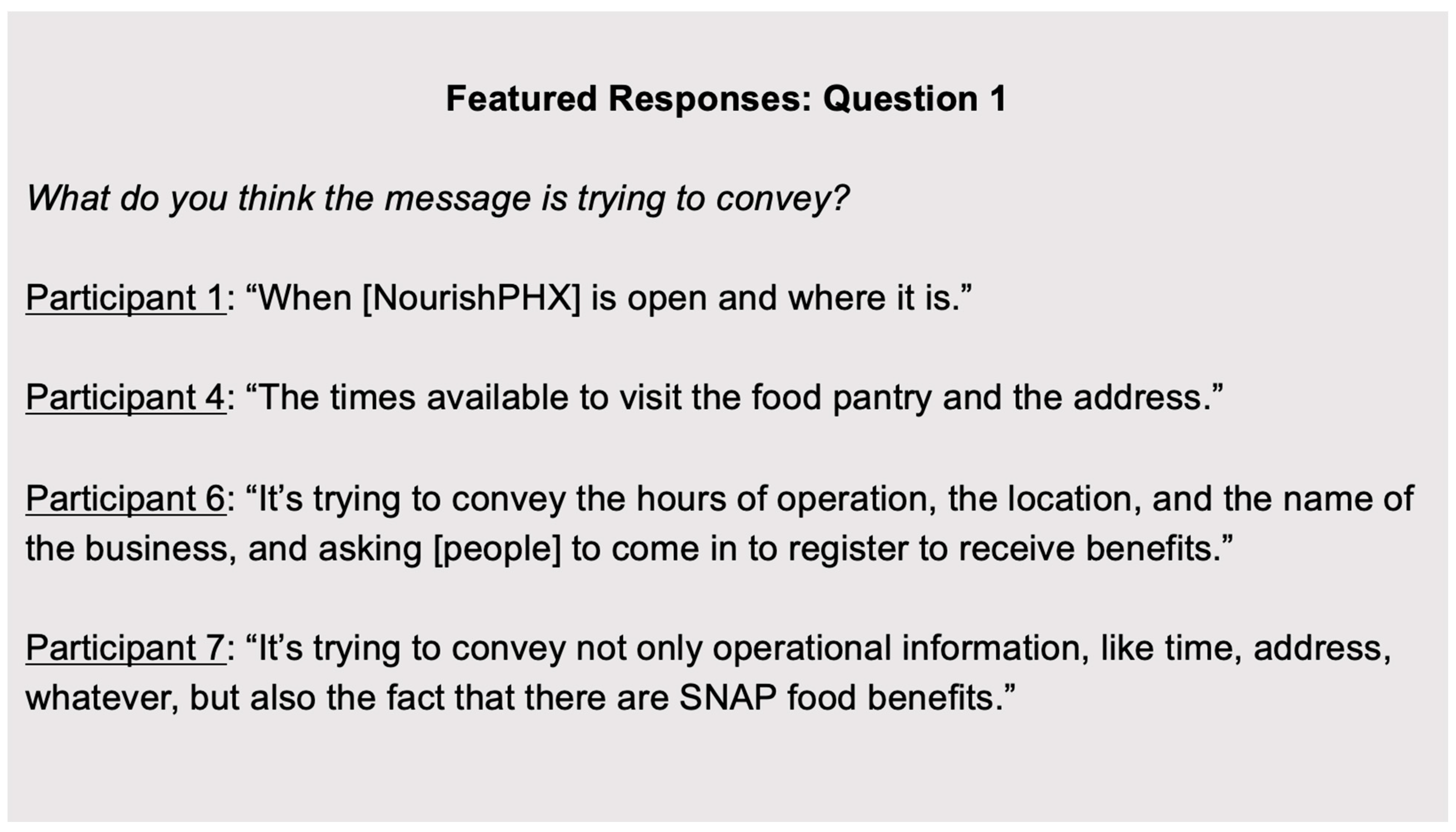
Figure 2.
Featured Responses to Interview Question 2 and Average Participant Ratings.
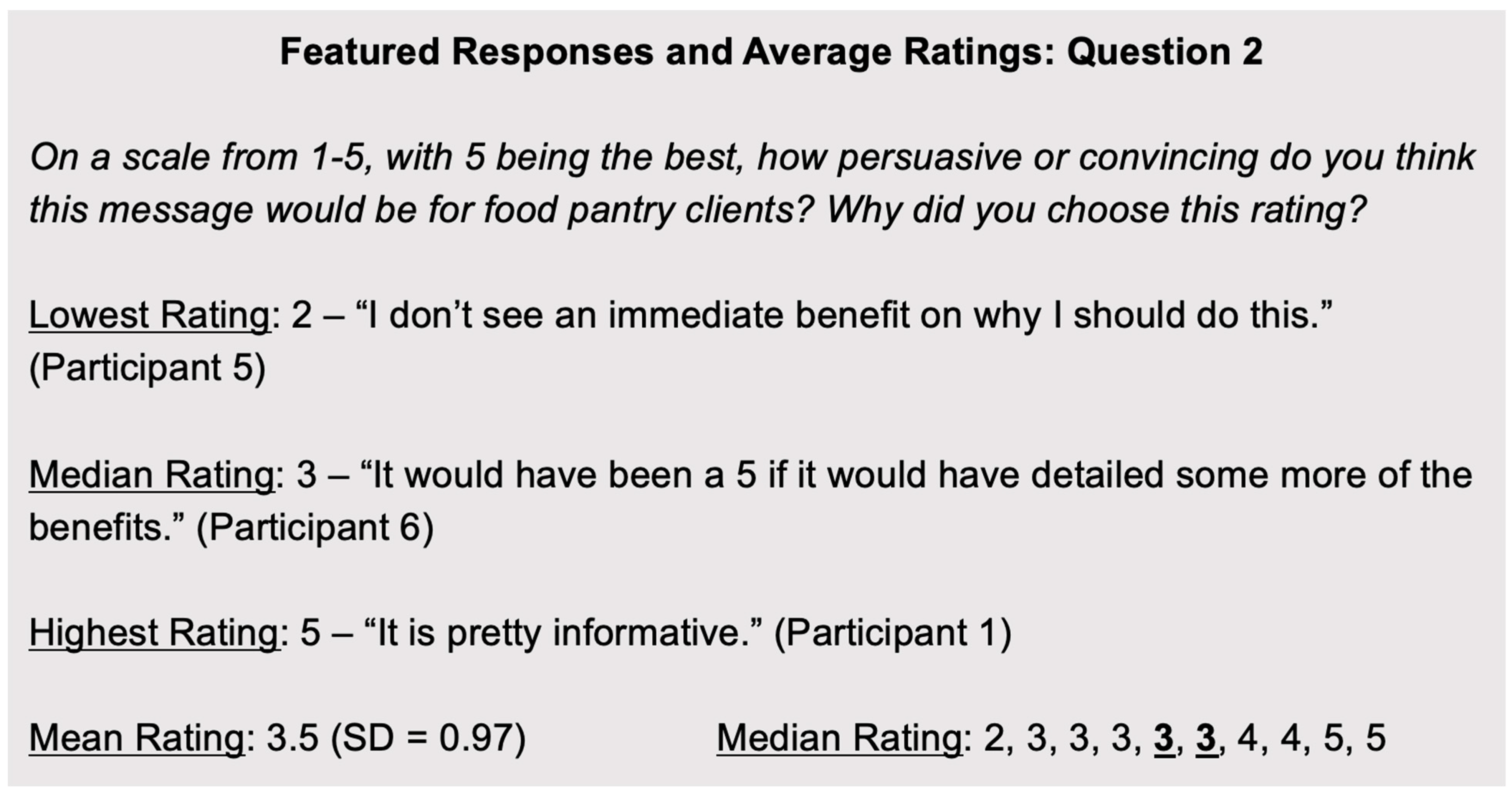
Figure 3.
Featured Responses to Interview Question 3 and Average Participant Ratings.
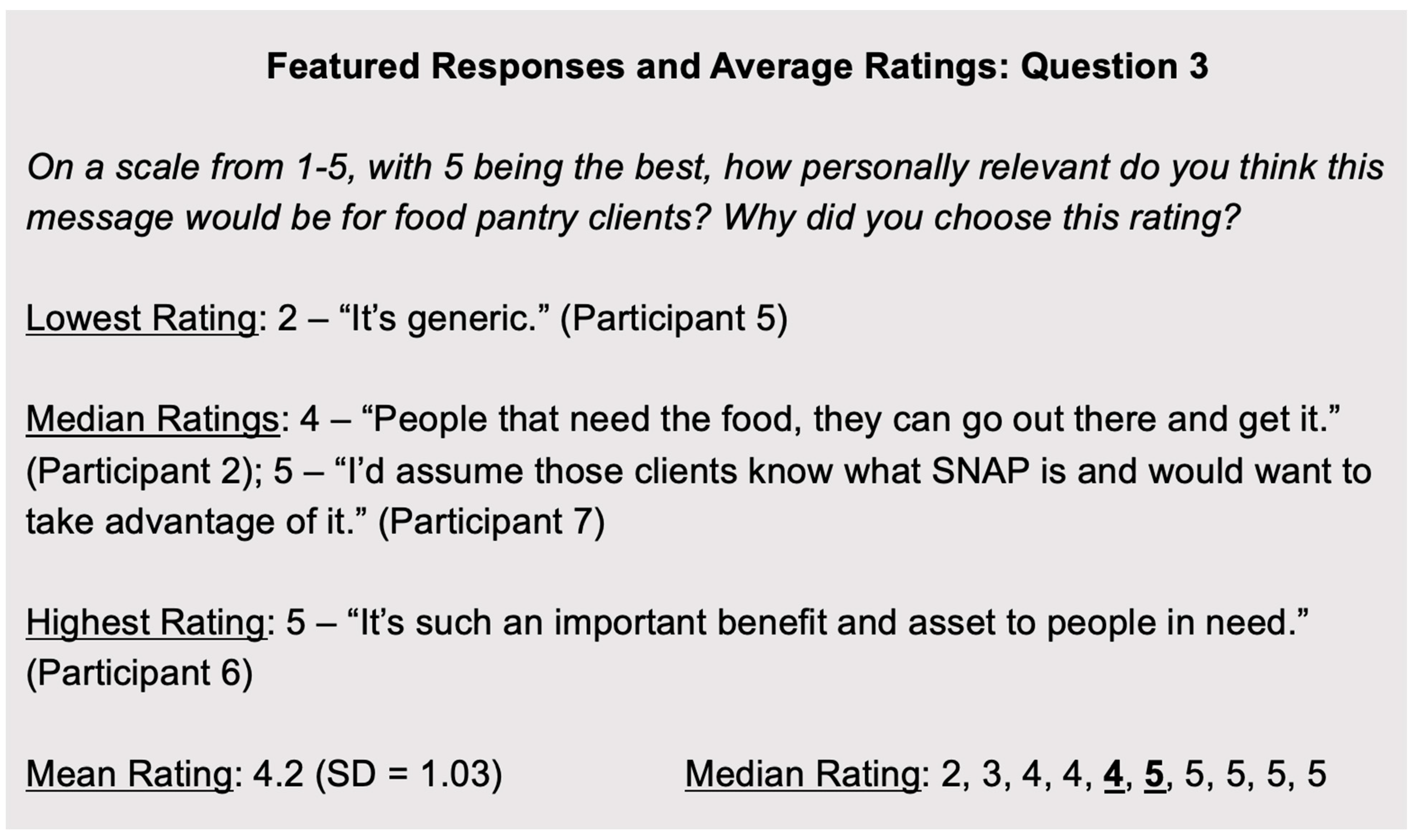
Figure 4.
Featured Responses to Interview Question 4.
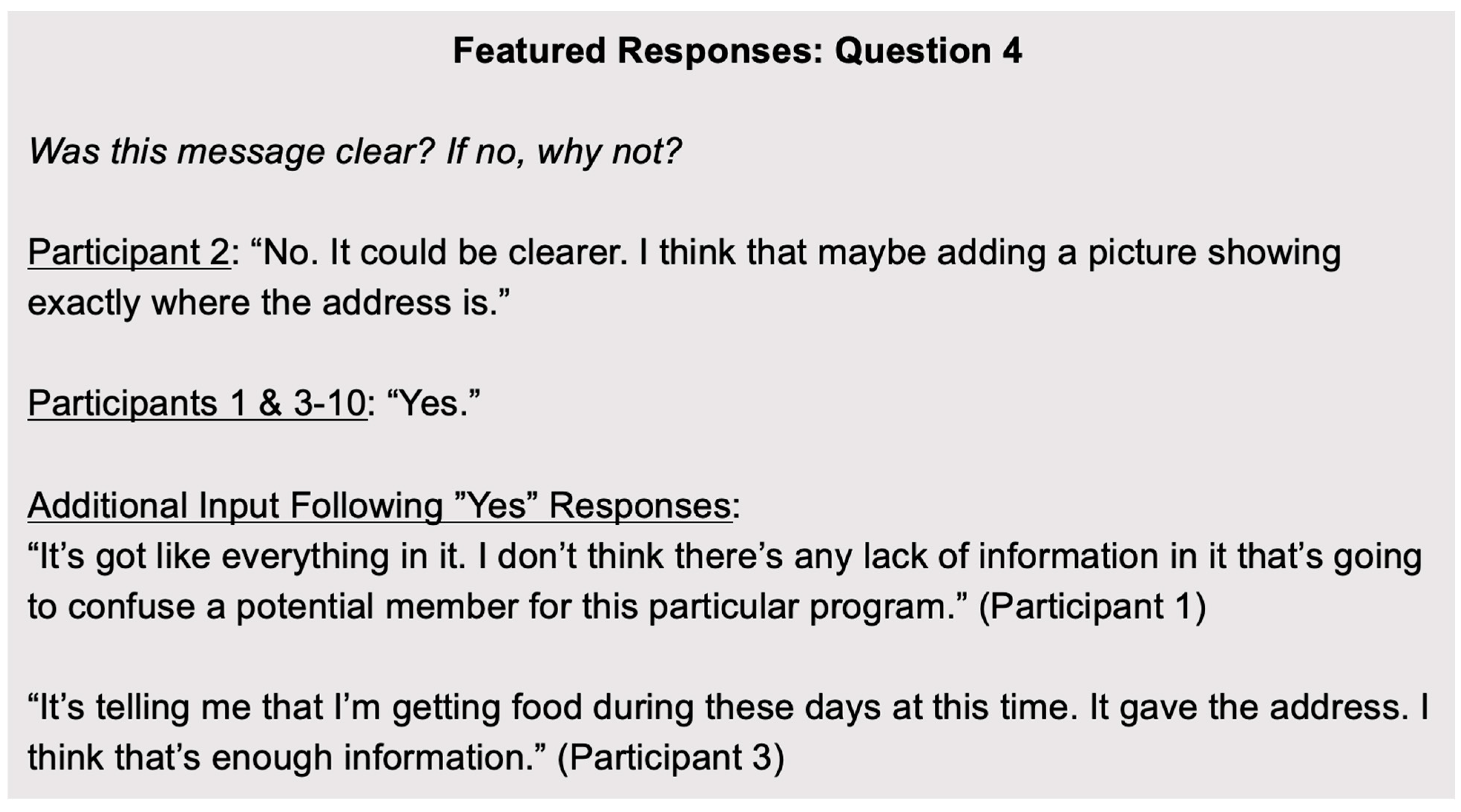
Figure 5.
Featured Responses to Interview Question 5.
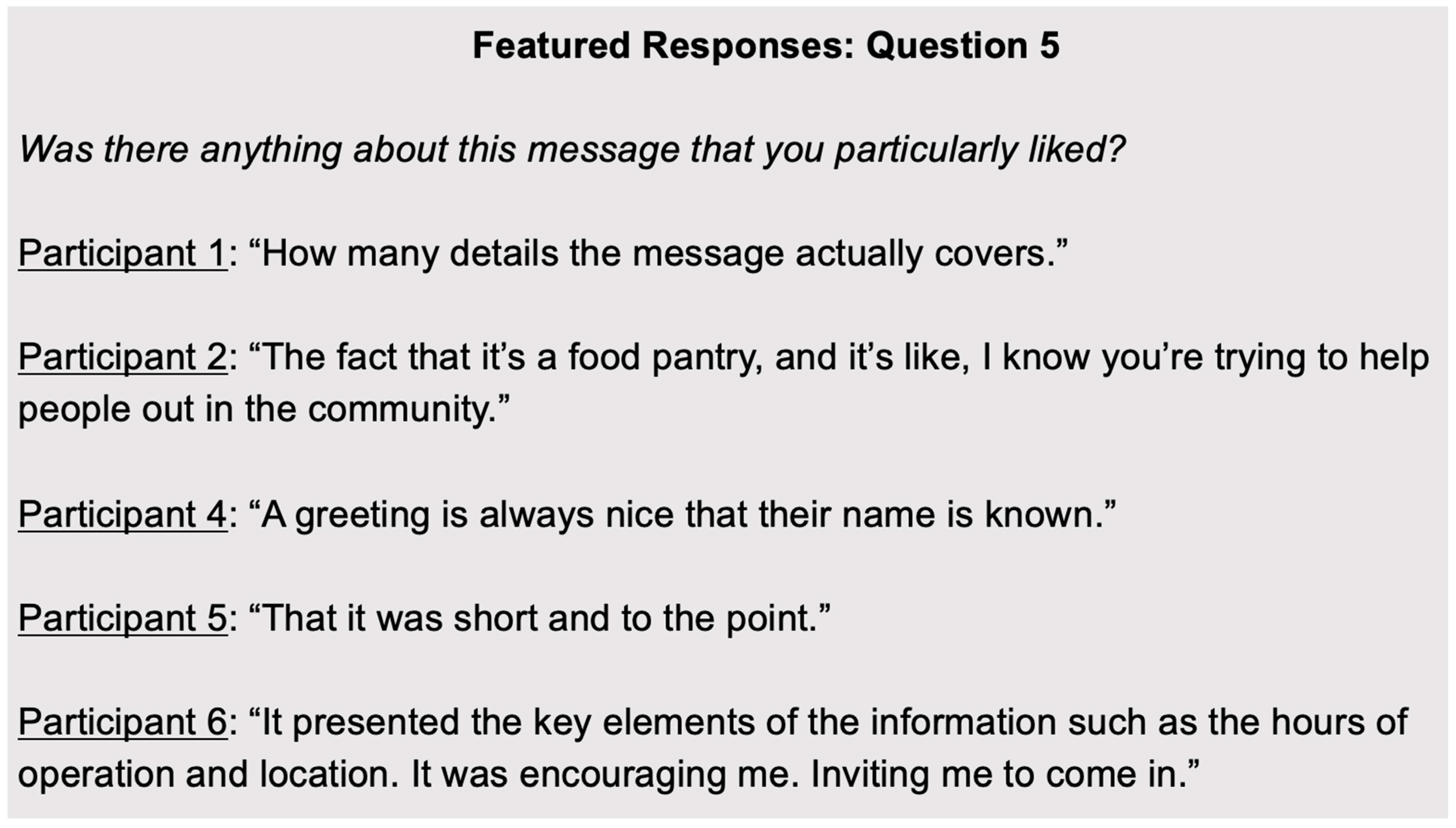
Figure 6.
Featured Responses to Interview Question 6.
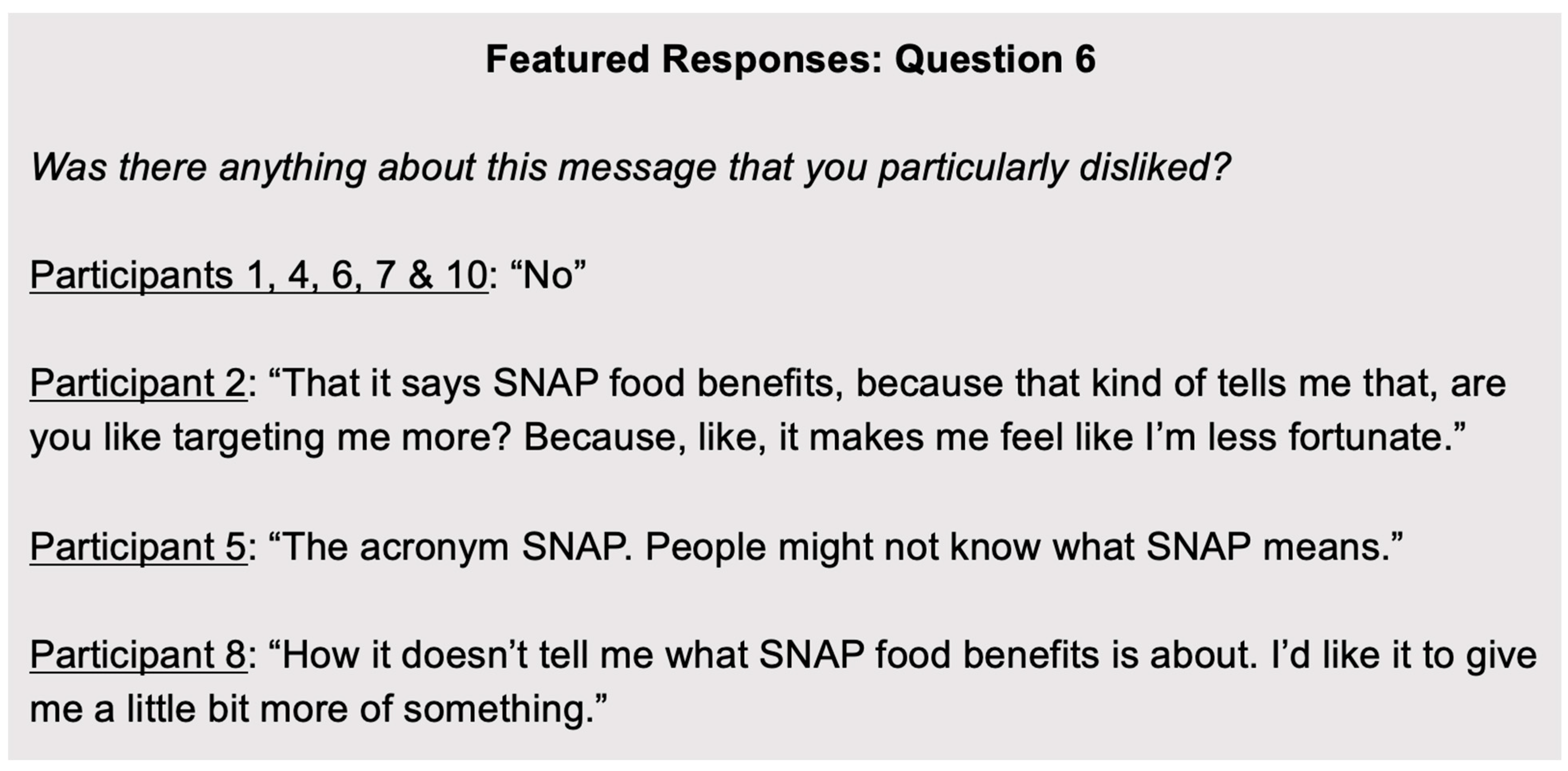
Figure 7.
Featured Responses to Interview Question 7.
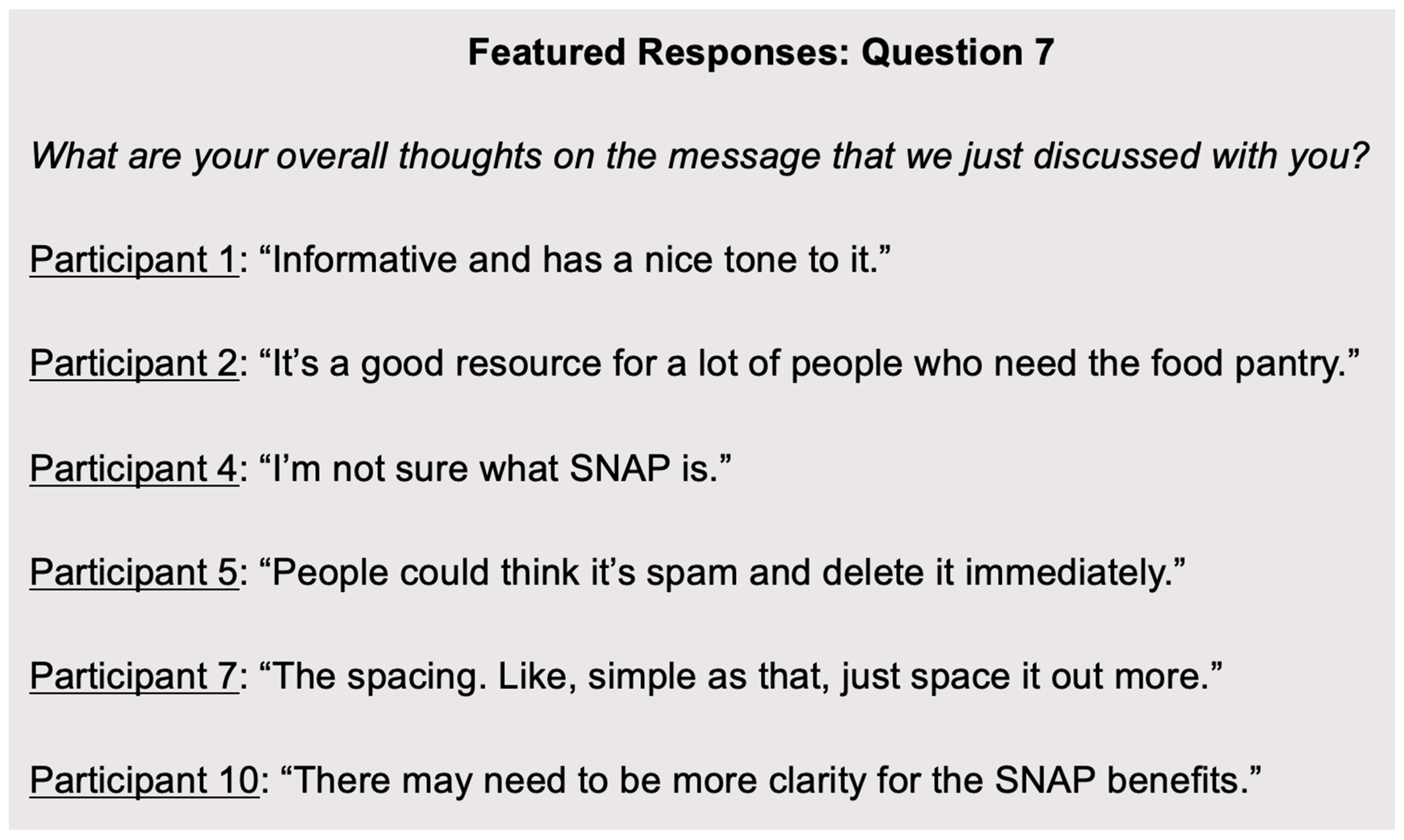
Figure 8.
Text Message Modifications Informed by Interviewed Community Members.
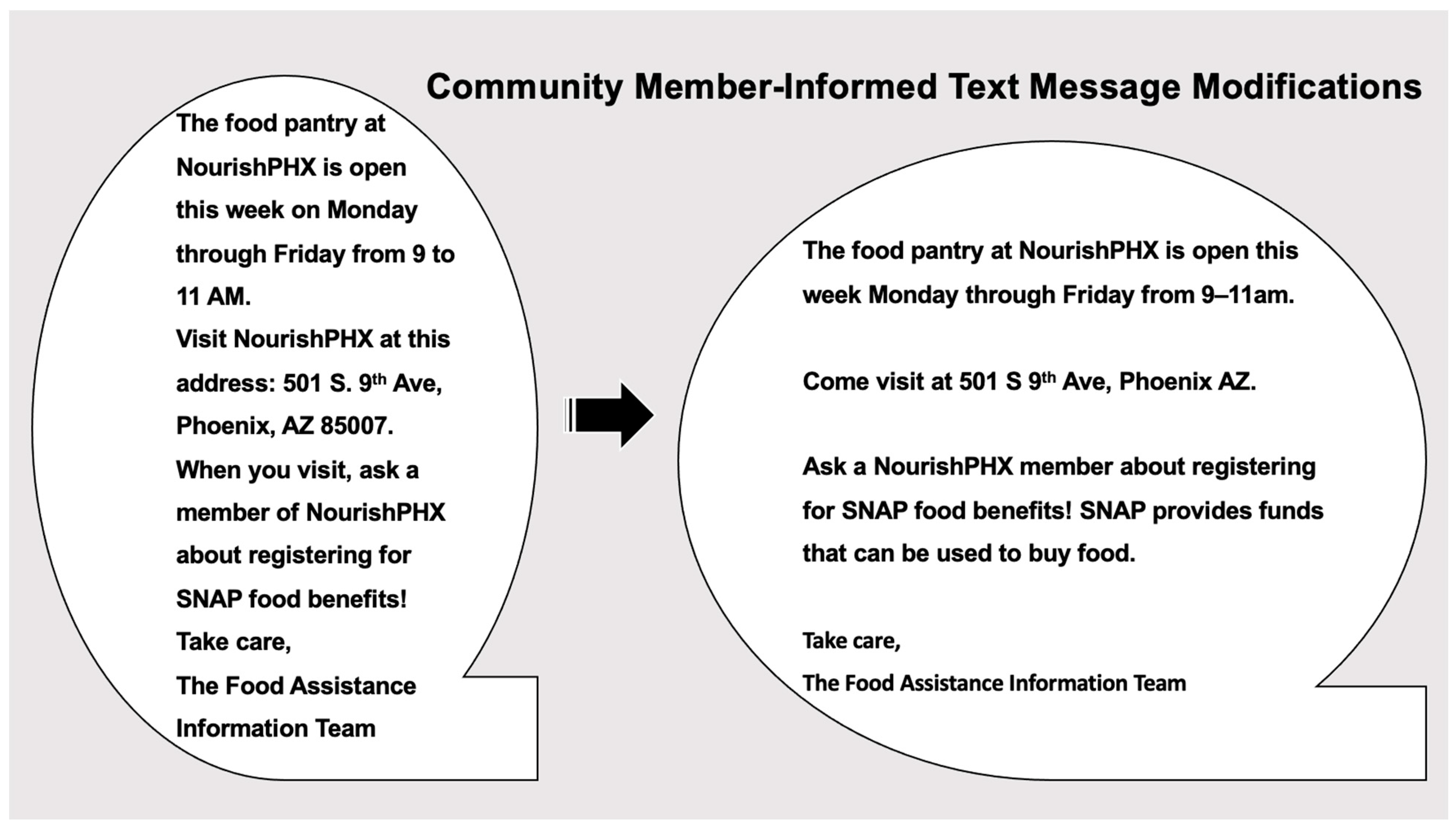

Table 1.
Participant Characteristics among Phoenix Metro Community Members (n = 10).
| Characteristics | Total (%) |
|---|---|
| Age (Years) | M = 33.2, SD = 13.9a |
| Sex | |
| Female | 4 (40) |
| Male | 6 (60) |
| Race/Ethnicity | |
| American Indian/Alaska Native | 1 (10) |
| Asian | 4 (40) |
| Black | 1 (10) |
| Hispanic/Latino | 1 (10) |
| White | 3 (30) |
| Education | |
| High School Graduate | 1 (10) |
| College Graduate | 9 (90) |
aM = Mean; SD = Standard Deviation.
Disclaimer/Publisher’s Note: The statements, opinions and data contained in all publications are solely those of the individual author(s) and contributor(s) and not of MDPI and/or the editor(s). MDPI and/or the editor(s) disclaim responsibility for any injury to people or property resulting from any ideas, methods, instructions or products referred to in the content. |
© 2023 by the authors. Licensee MDPI, Basel, Switzerland. This article is an open access article distributed under the terms and conditions of the Creative Commons Attribution (CC BY) license (http://creativecommons.org/licenses/by/4.0/).
Copyright: This open access article is published under a Creative Commons CC BY 4.0 license, which permit the free download, distribution, and reuse, provided that the author and preprint are cited in any reuse.


