

Submitted:
28 July 2023
Posted:
31 July 2023
You are already at the latest version
Abstract
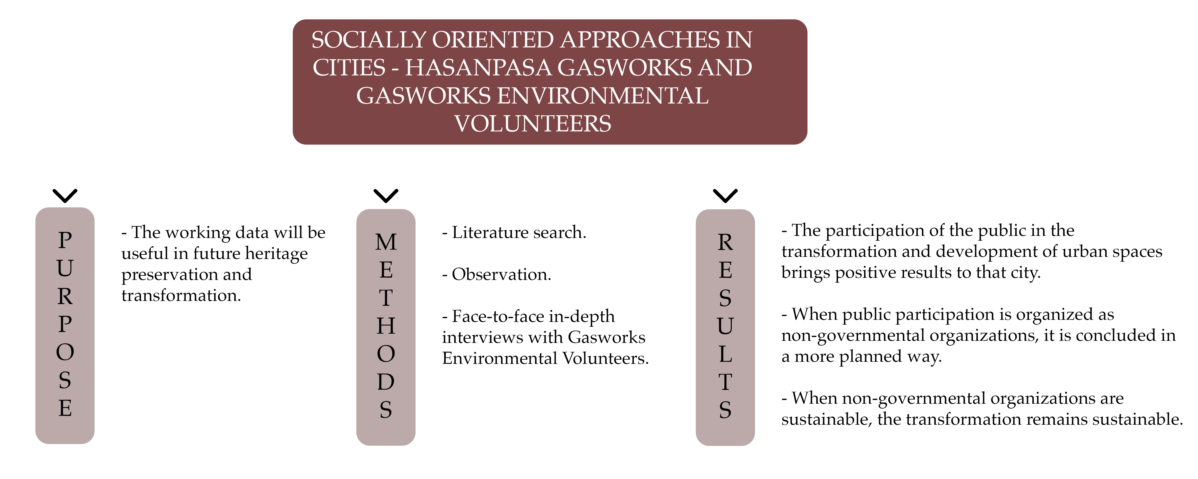
The participation of the public in the decision, use and maintenance of the heritage structures in the cities brings positive results to that city. Istanbul Kadikoy-Hasanpasa Gasworks was closed in 1993 and lost its function, and in 2021, it was reopened for use as a culture and art center. In the transformation decisions of the gasworks, the Gasworks Environmental Volunteers, consisting of the people of the environment, have played an active role for 27 years and continue to play a role after the transformation. This study examines the impact and efforts of Gasworks Environmental Volunteers before and after the transformation and describes a collective struggle in the participatory management of heritage. As a result of face-to-face interviews, observations, and literature research conducted with a qualitative research method, the effects of non-governmental organizations on heritage sites were examined. The data obtained will increase the awareness of the society on the heritage areas and contribute to the fact that the society will be a factor in the transformation decisions by protecting the heritage.
Keywords:
cultural heritage
; commons
; heritage communities
; sustainable development
1. Introduction
Cities are areas where people live together, where social, economic, political, and administrative areas exist for all citizens, and where they have a common culture and memory outside of physical space. At a time when the view that cities were more of a physical image was widespread, Lewis Mumford wrote in 1937 that the city should be seen more as a social institution. Today, it is known that cities are constantly interacting with society and that social movements directly affect the city [1].
Areas that have lost their function in cities in the historical process turn into crime scenes if they are not used, posing a threat to both the heritage area and the surrounding area’s residents. In particular, the transition from the modern city to the post-modern city has brought the re-functioning of industrial structures to the agenda. The transformation of heritage sites, which are important for sustainable development, adds value to the city by providing economic, social, and ecological benefits. The responsibility of people towards the city is becoming more important in urban areas, especially in heritage areas. When we look at the issue of heritage management, these areas need to be functioned and maintained for the benefit of the public. In this context, the participation of the public in the transformation and development of urban spaces brings positive results to that city. When public participation is organized as non-governmental organizations, it is concluded in a more planned way. When non-governmental organizations are sustainable, the transformation remains sustainable.
After the Istanbul Kadikoy-Hasanpasa Gasworks was closed due to the end of the use of coal gas, it was brought to the agenda that this area would be transformed with commercial space functions, and the residents who opposed this started to work to turn this place into a public benefit for cultural purposes. A non-governmental organization called Gasworks Environmental Volunteers was established and a struggle was started for the protection of the cultural heritage gas station area and for the transformation to be carried out for the benefit of the people. The long-term efforts of Gasworks Environmental Volunteers were concluded in 2021 and Hasanpasa Gasworks was transformed into a public benefit with its culture-art-science function under the name of Museum Gasworks. Gasworks Environmental Volunteers acted with a participatory management plan after the transformation and did not leave the Gasworks and ensured the continuity of the transformation. Today, there is increasing participation from all over Istanbul in the activities that appeal to people of all ages and are held in every subject at the Museum Gasworks. Study; In the context of the efforts of the Gasworks Environmental Volunteers during and after the transformation process of the Hasanpaşa Gasworks, the importance of public participation and non-governmental organizations in the protection and transformation of the cultural heritage in the cities was tried to be explained. In the study conducted with the qualitative research method, in addition to observation and literature research, face-to-face in-depth interviews were conducted with the members of Gasworks Environmental Volunteers. The results of the meeting revealed the importance of public participation and non-governmental organizations in heritage protection and transformation in cities. The fact that the study sets an unprecedented example in heritage conservation and transformation in Turkey and the 27 years of efforts of Gasworks Environmental Volunteers and their ongoing participation reveal the importance of the study. It is hoped that the working data will be useful in future heritage preservation and transformation.
1.1. City and Society
Cities are areas that are affected by changes and developments in the social structure over time, sometimes positively and sometimes negatively. These changes and developments in cities also affect society to a great extent. This close relationship between the city and society is becoming more intense and important in terms of quality of life in today's world where technological developments are increasing rapidly. Due to the rapid growth of cities and their resemblance to each other under the name of modernization, old settlements and cultural heritage structures here are in danger of disappearing.
In the historical process, city and community interactions are seen. In the 19th century, the establishment of industrial cities due to scientific and technological advances initiated migration from the countryside to the cities. The change in the social structure due to migration from agricultural areas to industrial cities has also carried out multifaceted transformations in cities. The establishment of factories and production sites brought urbanization and modernization. After World War II, there was great destruction of the cities, Europe was rebuilt and industrialization gained momentum [2, 3]. In the last quarter of the 20th century, the changes in modes of production, the development of industry, the information age, and information developments caused changes in the social structure and reshaped the cities. As a result of these developments, industrial cities have undergone obsolescence and have evolved from production to consumption cities. Cities that have undergone functional obsolescence and industrial structures in cities have been abandoned and turned into crime scenes. This change, which changed the physical and social structure in cities, adversely affected the city and society and destroyed heritage structures. As modernization and digitalization increased, cities began to lose their vitality and old settlements began to lose their characteristics. This situation, which endangers cultural continuity, necessitates human-centered and participatory planning and design [4].
To protect cultural heritage and improve the quality of life of the community, the reuse of heritage sites has been on the agenda, and laws and regulations have been put into practice. The adaptive reuse of these spaces, which are part of the society's sense of identity and belonging, benefits the city and society and ensures sustainability [5, 6].
1.2. Cultural Heritage and Participatory Approach
Cultural heritage is tangible and intangible values that tell the common past of the individuals of the society, strengthen the feelings of solidarity, unity, and belonging among them, and help to establish the future correctly. Cultural heritage integrates various concepts of time and serves as an indicator of these trends in time perception. It has continuity from the past. Cultural heritage has economic, social, and environmental impacts other than its historical value for sustainable development. Economically, tourism and income are obtained, and social and cultural interactions of the people take place socially, and environmentally it benefits ecologically and visually [6, 7]. In this context, inheritance should be treated as a process.
Holistic planning and a participatory approach to cultural heritage conservation and reuse will make the outcome positive and sustainable. The Council of Europe advocates for the right of access and respect for all through an integrated and interdisciplinary approach to cultural heritage [8].
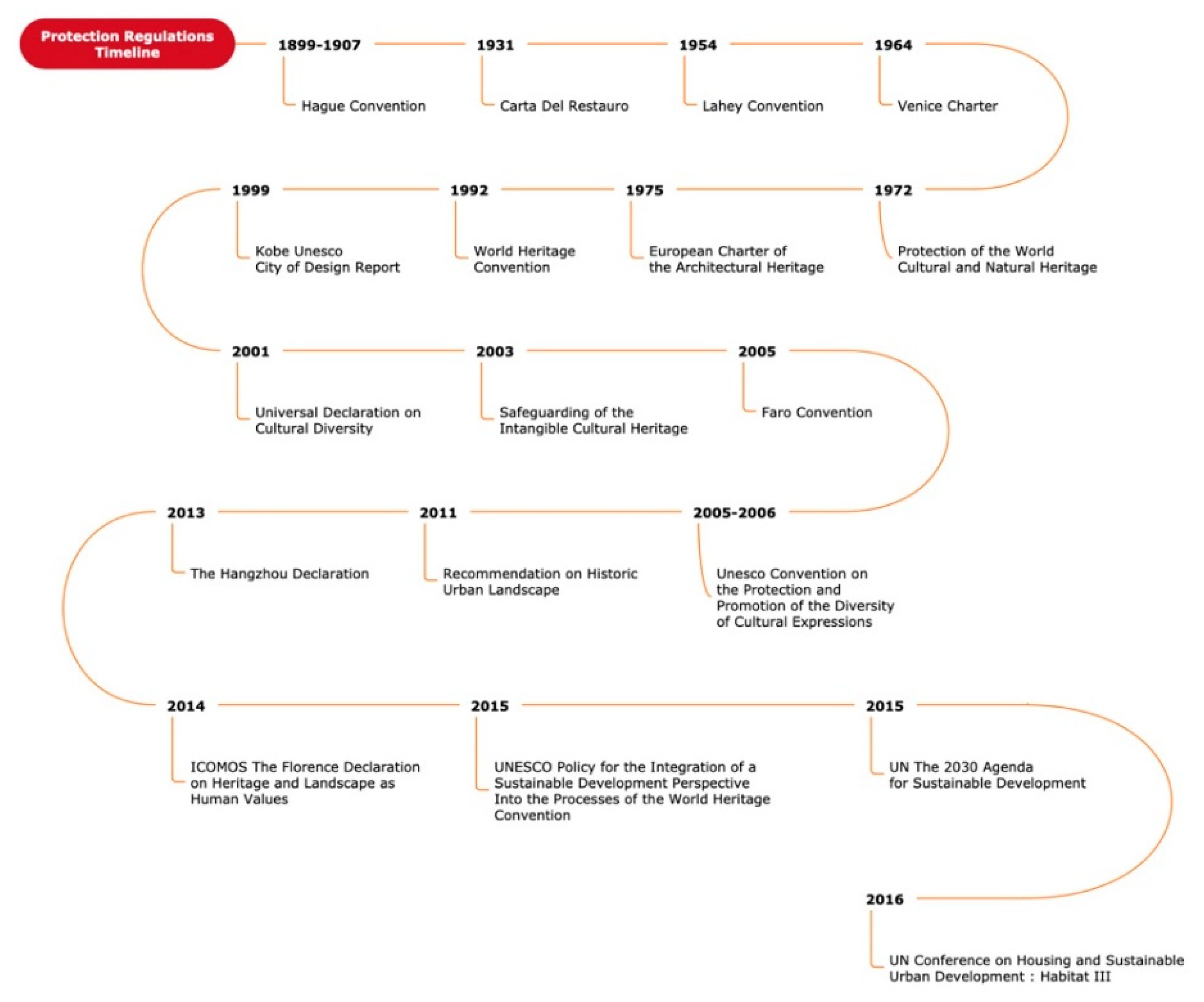
To date, statutes and conventions on inheritance protection have been made. The statutes and contracts concluded are summarized in Scheme I.
Scheme I.
and the Faro action plan was designed to translate the principles of the contract into practice; adopt a human-centered approach. It defends the right of every citizen who builds and uses heritage to own his heritage and to participate in cultural life. It puts people's values, aspirations, and needs first. According to Faro’s principles, everyone, individually or collectively, has the responsibility to respect the cultural heritage of others as much as his own. Heritage is the right of the society and the society is responsible for the inheritance. Heritage is not only a phenomenon that serves tourism. It is as local and everyday as it is universal. One of the first actions in this context is the Faro Steps, heritage walks aimed at raising public awareness through the direct experience of the place. In the Faro convention, creating, building, using, and modifying heritage is seen as an ongoing process. The emphasis on the process highlights heritage's relevance to sustainability [8,9].
Scheme I.
and the Faro action plan was designed to translate the principles of the contract into practice; adopt a human-centered approach. It defends the right of every citizen who builds and uses heritage to own his heritage and to participate in cultural life. It puts people's values, aspirations, and needs first. According to Faro’s principles, everyone, individually or collectively, has the responsibility to respect the cultural heritage of others as much as his own. Heritage is the right of the society and the society is responsible for the inheritance. Heritage is not only a phenomenon that serves tourism. It is as local and everyday as it is universal. One of the first actions in this context is the Faro Steps, heritage walks aimed at raising public awareness through the direct experience of the place. In the Faro convention, creating, building, using, and modifying heritage is seen as an ongoing process. The emphasis on the process highlights heritage's relevance to sustainability [8,9].
The main objective of the Faro convention is to strengthen social cohesion by developing a common sense of responsibility for the city in which people live. It argues that everyone has the right to benefit from cultural heritage individually or collectively and to contribute to its enrichment. It promotes the democratic participation of the public in access to and protection of cultural heritage and, in this context, the action of non-governmental organizations in the public interest. As one of the commons, non-governmental organizations that support the protection of the city and cultural heritage represent the interests of the city and its inhabitants on a legal basis [8].
In contemporary life, sustainable urban life is only possible with non-governmental organizations. This form of governance, called multi-actor management, is a way in which society and the state establish a relationship. In this approach, principles such as citizen loyalty, making it feasible, good guidance, democracy, accountability, pluralism, and being close to the place where the service is provided come to the forefront. Governance involves the creation of partnerships between non-governmental organizations, the private sector, voluntary organizations, and all actors in the country, such as individuals, public institutions, local governments, and professional organizations. Urban management and the protection of cultural heritage is a multidisciplinary issue that requires many different disciplines to work together. One of the most effective roles of this disciplinary structure, as stated in the Faro Convention, is that of non-governmental organizations, which are the associations of citizens as a field outside of state administration [9,10].
In this context, the adaptive reuse of the Hasanpasa Gasworks was realized as a result of the effort and ownership of the local people, as in the Faro convention principles.
1.3. Hasanpasa Gasworks and Gasworks Environmental Volunteers
Gasworks was realized as a result of the effort and ownership of the local people, as in the Faro convention principles.
Gasworks are facilities where coal gas obtained from coal is produced and stored for use in heating and lighting. Coal gas was first obtained at the end of the 18th century by the Belgian pharmacist Jan Pieter Minckelers. Since the 1820s, it has been used in the lighting of many cities, especially London and Paris. Coal gas, which lost its lighting function with the arrival of electricity, was used as natural gas in homes for many years. Later, it completely lost its function and the production of gasworks was stopped. Istanbul-Kadikoy Hasanpasa Gasworks was built on an area of 31,560 thousand square meters in 1891 and started production. While it was a recreation area with wooden two-storied buildings around it during the period it was built, it became a region with dense construction around it during the period when it was closed (Figure 1) [11].
The Gasworks, which serves the Kadıköy region, was closed in 1993 after its production was terminated. The abandoned Gasworks, like other industrial buildings that lost their function, was destroyed and obsolete (Figure 2) [11].
After the closure of the gas station, the construction of supermarkets, residences, hospitals, and parking lots in this area was on the agenda. However, sensitive city residents and Kadıköy District Municipality have started to draw attention to the cultural heritage in this area and work on the need to protect it and use it for the benefit of the public. In 1994, a non-governmental organization called Gasworks Environmental Volunteers was established by the residents of the Hasanpasa-Kadikoy district. As a result of the works, in 1996, Hasanpasa Gasworks was taken under protection by the Cultural and Natural Heritage Protection Board numbered II. Upon this, the residents of the neighborhood came together and decided to apply a survey of all the surrounding people about what the new function of the gasworks should be and organized panels on "Urban Consciousness and Hasanpaşa Gasworks". As a result of the survey and in line with the opinions of the experts, it was decided that the gasworks should be a cultural center and green area. But it is not an official result, it is the decision of the people of the environment. A petition was launched to implement it and 8,000 signatures were reached. With these signatures, Gasworks Environmental Volunteers has started negotiations with the Chamber of Architects and Istanbul Metropolitan Municipality. In 2001, the Metropolitan Municipality approved the preliminary project prepared by the faculty members of the Department of Architecture of Istanbul Technical University for the Gasworks. From now on, the Gasworks area will be re-functioned as a socio-cultural area. However, Gasworks Environmental Volunteers think that the facility to be restored should be managed by its purpose for many years and that the people of the environment should protect the facility by participating in the management in some way. For this purpose, at the end of 2001, Gasworks Environmental Volunteers established a "participatory management model" with the support of WALD (World Academy of Local Governments). In 2002, Gasworks Environmental Volunteers, residents, WALD representatives, Kadıköy Municipality, and the architectural project team jointly developed the participatory management model. Finally, a democratic management project called "Hasanpaşa Gasworks Culture and Art Center Alternative Strategic Management Model" was prepared and published. The objectives of this management model for Gasworks can be summarized as follows; It is a different, alternative public space that has economic and social continuity, that takes into account the characteristics of the region without breaking its ties from life, where culture and social life are not only consumed, where all relevant elements participate in production processes, where areas of power are not created but will not lead to chaos, which will minimize social and cultural alienation, where we will remember the values we have forgotten. This document is important for Turkey in two respects. First; In the process of reuse, it was produced as a combination of the views of various civil parties. Second; It envisages the participation of the people in the process of application to local governments [12, 13].
In the period leading up to the transformation of the Gasworks, Gasworks Environmental Volunteers tried to keep the area alive for the use of the residents with socio-cultural activities. They have organized festivals with international participation, exhibitions, studies, and competitions for children. They organized joint activities with the universities in the vicinity. It is possible to give the following examples of these activities. From 30 September to 19 October 2008, an art festival was held by the independent alternative/art organization Trans Yapıt. In this festival, which was held in partnership with Berlin Iacht e.V., the art and culture association in Berlin, various art activities such as music, theater, acrobatics, fire shows, dance, video-cinema, and painting were carried out with the participation of the surrounding people.
On 10-11 October 2009, a festival was organized by the Gasworks Environmental Volunteers with the residents of the surrounding area, where various art activities with the theme of 'The Pleasure of Producing Together' would take place. The festivals held in different years until the transformation took place were important for the people of the surrounding area and the gasworks [14].
In 2012, for the preparation of architectural and engineering application projects of the Gasworks preliminary projects approved in 2001, the "Kadikoy, Hasanpasa Gasworks Architectural Construction, Mechanical, Electrical Engineering Application Projects" work was tendered and the works for the supply of the projects were started. Within the scope of the study, priority was given to the construction of a perimeter wall to eliminate the interventions of the surrounding occupations in the Gasworks. In 2015, the adaptive recycling project of Gasworks, which functions as a museum and cultural center, was introduced by the Istanbul Metropolitan Municipality at a ceremony. However, restoration work began in 2017. Gasworks Environmental Volunteers continued to work during the construction process. In 2021, Hasanpasa Gasworks turned into a living space with culture-art-science content under the name of Museum Gasworks. In the Museum Gasworks; There are 2 museum exhibition halls, 2 large and small stages, a science center, a gallery gasworks, event areas, workshops, a library, an audio study area, an observation terrace, a bookstore, market place, cafeteria and restaurant, parking lot for 310 cars. The buildings of the gasworks were converted by the original, without damaging the heritage (Figure 3) [15]. The process from the closure of the Hasanpasa Gasworks to its opening as the Museum Gasworks is summarized in Table 1.
The Gasworks area, where activities are constantly held in every field, is used intensively by all Istanbulites today. Gasworks Environmental Volunteers continue their 27-year efforts today. Since the opening of the gas station, activities such as workshops, interviews, exhibitions, competitions, concerts, film screenings, competitions, concerts, and film screenings have been held at different times of the day to appeal to all age groups (Figure 4).
2. Materials and Methods
The study was carried out with a qualitative research method, literature search, observation, and interview techniques. Studies and observations made by the authors before, during, and after the conversion of the gasworks formed the background of the research [11, 16]. Since 2008, the Gasworks has been monitored and developments have been followed. The method of study consists of two steps. In the first step, observation and literature research was carried out to reveal the efforts of the Gasworks Environmental Volunteers and the role they played in the transformation of the gasworks. In the second step, face-to-face in-depth interviews were conducted with the Gasworks Environmental Volunteers and the process was monitored one-on-one with the explanation of the members.
Participants were determined using purposeful sampling. Interviews were conducted with 3 members of Gasworks Environmental Volunteers who have been working since the beginning of the process and are still effective in the management of Gasworks and 1 intern member who took part in the execution of Gasworks activities after the transformation. The average age of the 3 members is 55 – 65 years old and the trainee member is 25 years old. All of the sample group resides in the Kadikoy region around the Gasworks. Group interviews were held with the participants. Pre-prepared questions and question groups are semi-structured questions that may change or be added according to the answers given. The questions are collected under 3 headings to allow evaluation of the hypothesis of the research. In the context of Hasanpasa Gasworks; A total of 28 questions were prepared under the headings of public participation and non-governmental organizations, transformation, and sustainability. However, there were additional questions during the 2-hour interview. The meeting took place in a comfortable environment in the library of Hasanpasa Gasworks. The interview findings were evaluated under the same headings.
3. Results
The findings obtained after a semi-structured interview with Gasworks Environmental Volunteers were examined under the following headings.
3.1. Public Participation and Non-Governmental Organizations
Gasworks Environmental Volunteers is the only non-governmental organization in Turkey that has achieved success after years of struggle. Participant 1 explained the secret of their success as follows: "Behind this group is the local itself. If you have a goal, you succeed."
Participants 2 and 3 explained how they came together as Gasworks Environmental Volunteers as follows: "We organized upon the news that Hasanpasa Gasworks would be demolished. With 1 woman and 1 man, we interviewed the neighbors in the neighborhood one by one, got their opinions, and made a survey. In this way, we started to work as a non-governmental organization by organizing with the people living in the vicinity."
Emphasis was placed on the importance of public participation in the design of public spaces. Participants expressed their views on public space. "Due to the conditions of the period, we did not know concepts such as public space and participatory models, we learned them during the application in the field. We requested that Istanbul Technical University be appointed as the project author for the preparation of the project of the public space by the public institution. The academy and the locals could not speak the same language. For the residents to be involved in every stage, we organized meetings where Istanbul Technical University as the project author explained the projects to the residents."
Participant 3, who mentioned that they carried out the process by bringing all stakeholders together, said, "Istanbul Metropolitan Municipality as the owner of the commons property of the area; Istanbul Technical University as the project author; Mukhtar as local administrator; As a non-governmental organization, Gasworks Environmental Volunteers; citizens as users. We conducted a series of workshops with stakeholders to discuss the participatory approach as a management model. As Gasworks Environmental Volunteers, we intervened in the whole process and assumed a conciliatory role."
Emphasizing the importance of including all segments in the participatory approach, Participant 1 said: "In 2009, we held a festival at Hasanpaşa Gasworks under the leadership of Gasworks Environmental Volunteers. We tried to ensure that the district's schools and universities have their stands and workshops at the events, and that the educational institutions in the neighborhood are also involved in the transformation."
Participant 2, who talked about the negativities they experienced during the process that continued over the years, said: "In 2010, it was decided to restore 3 buildings during the European Capital of Culture process. A protocol was prepared between Istanbul Metropolitan Municipality, the European Capital of Culture, and Istanbul Technical University. As Gasworks Environmental Volunteers, we said "There is no protocol without us" and we intervened in the protocol. But then the protocol was not implemented. There was a break in us there as well. Because we were very hopeful, we thought we had come a long way. We weren't active for 2.5 years after that break. In 2014, the project was approved and started to be implemented. We continued to be actively involved in the process. During the implementation of the restoration project, we requested a meeting with the project contractor company to follow the process. As the project contractor company, Istanbul Metropolitan Municipality, Istanbul Technical University, and Gasworks Environmental Volunteers, we were able to hold meetings only 1 time."
3.2. Reuse
Participant 3, who conveyed the interviews with the residents as Gasworks Environmental Volunteers, said: "In the surveys and interviews we conducted, the most desired functions were the green area, the cultural center, and the library. At the point reached now, Hasanpasa Gasworks is a very important and valuable building. There are no other empty and green areas in the neighborhood where it is located. It also functions as a disaster gathering area."
Participant 2 on the adaptive re-functioning of the Gasworks: "The Istanbul Metropolitan Municipality had set 2 criteria for the transformation of the Hasanpasa Gasworks. One of them is the public space; the other was the climate museum. In 2014, the project was accepted. Its implementation lasted for 5 years. As Gasworks Environmental Volunteers, there were places where we could and could not be involved in the project and implementation phase. For example; We objected to having a parking lot at the Gasometer, but the project was done because the author found it appropriate."
Participant 1 explained the importance they attach to the re-functioning of the area as follows: "When Hasanpasa Gasworks was opened as Museum Gasworks, the women living in the neighborhood brought their rugs and broke their fasts here, ate and spent time. The fact that there is no public space in the neighborhood other than the Museum Gasworks makes this transformation more valuable."
3.3. Sustainability
Emphasizing social sustainability, Participant 2 and Intern said: "As Gasworks Environmental Volunteers, we believe that we must first be sustainable to ensure sustainability in the space. For this reason, we have young friends who have joined us in the non-governmental organization since the 90s and those who joined us in the 2000s. The next generation needs to be involved and sustained." Participant 1, who linked their continuity as a non-governmental organization to their independence, said: "We were able to maintain our independence because we did not receive financial support from any institution. We are a structure that tries to be roasted with its internal fat. It was only when we were publishing the book that the World Academy of Local Governments and Democracy funded our book. Other than that, we have not received any financial support, we do not receive it."
Emphasizing the economy to ensure sustainability in the space, Participant 3 said: "We do not look at the Museum Gasworks as a commercial space but as a space of freedom. Culture and art activities should be free of charge here. Cultural capital may exist temporarily, but it cannot belong entirely to them. As a neighborhood inhabited by middle-to-low-income families, people living in this neighborhood should be able to come here and welcome their guests. For this reason, no fee is charged for any event, concert, workshop, or museum here. There is a business called Beltur in the area, which belongs only to the Istanbul Metropolitan Municipality. In this business, food and beverages are sold and as a public institution, they try to keep their prices affordable. In this way, we aim to ensure that the residents of this neighborhood continue to use the Museum Gasworks sustainability."
In the Museum Gasworks, events called "Stride Through" are held. Participant 2 about the research activities: "In these events, we show the guests the area in the first part, telling them historically and functionally. In the second part, we have a conversation in the context of the climate crisis. In the third part, we chat about the gasworks. Incoming guests are often asked, "The places are finished, why are you still here?". When we give examples of the commercialization of public people, the transfer of public hands from the hands of capital groups, they see the difference between this place and say "Yes, you are right". We aim is to organize in a network structure with the structures in the capillary of the social who want to establish a relationship with space, with the structures that want to establish an organic relationship with space."
4. Discussion
This study investigates the effects of organized public participation in urban transformation and cultural heritage projects. The findings were examined by highlighting public participation and non-governmental organizations, transformation and sustainability criteria.
Studies clearly show that the participation of local people in re-functioning projects has a positive effect on the city and its inhabitants [10, 17]. However, our study proves that the participation of the people as non-governmental organizations in an organized way in the decisions about the city provides a more planned outcome. The fact that there are local people in the non-governmental organization and that it serves a specific purpose makes the result successful. The inclusion of local residents, as well as other institutions in the neighborhood, such as schools and universities, reinforces the participatory approach. However, everyone must have an equal voice in the group in terms of ensuring and maintaining participation. Although there are sometimes hesitations, in cooperation with other stakeholders of the project, active involvement in the whole process leads to success.
Public spaces are essential spaces for people's social interaction. Public spaces should be created in cities so that people can interact. Public spaces in cities play an important role in increasing users' sense of connectedness to the place and for social integration [18]. Museum Gasworks is a very important area in terms of meeting the public space needs of the Kadikoy Hasanpasa district. Following the surveys, the implementation of the green space, cultural center, and library projects, which are the choice of the people, has ensured that the spatial needs of the people in the region are met and their dependence on the place has increased. Thanks to this, it is an area that is actively used by all segments of the inhabitants.
Sustainability is a crucial issue in the re-adaptive transformation of cultural heritage. Sustainable use of spaces ensures that they are maintained along with regular maintenance [19]. This study shows that the sustainability of the transformation of heritage can only be achieved if the non-governmental organization leading the transformation is sustainable. Because as long as the people who will use the area with its new function can actively use it and do not withdraw their hands from the area, the spaces are socially sustainable. In this context, it is an important finding that the existence of Gasworks Environmental Volunteers primarily as a non-governmental organization is sustainable. The fact that Gasworks Environmental Volunteers have members from all generations ensures that they are sustainable as a group in themselves. However, although the transformation projects are finished, the fact that they are still actively working in the area makes their presence in the space sustainable.
Revitalization projects are expected to contribute to the city economically. The fact that it contributes to the development of the houses around the project area and ensures their valuation, as well as the fact that the people living in the neighborhood can continue their residence without causing gentrification, is one of the factors that measure the success of a transformation project [4]. The transformation of the Hasanpasa Gasworks has led to the economic appreciation of the houses in the Kadikoy Hasanpasa district. However, many of the residents continue to live in the same neighborhood. Residents of Kadıköy Hasanpaşa district, which is a district where middle-low income people live, can actively use the place thanks to the fact that the activities in the Museum Gasworks are free of charge and the institution that sells food and beverages is an institution belonging to the municipality and the prices are affordable. In this way, everyone is offered equal usage rights. The active use of spaces, especially by local people, has a positive effect on sustainability.
5. Conclusions
In this study, as an example of the effects and results of public participation in the transformation of cultural heritage, the non-governmental organization Gasworks Environmental Volunteers and their efforts were examined. The results of the study show that the participation of the local people in the district where the area is located in the project of re-functioning the cultural heritage area brings positive results. Beyond the individual participation of the public, working in an organized manner as a non-governmental organization allows for a more planned outcome. The fact that every member of the non-governmental organization has an equal voice creates a democratic environment and increases the participation of the members. However, the presence of members from every generation ensures that the non-governmental organization can continue its work sustainably for many years.
Meeting the needs of local people in transformation projects is very important as it affects the use of space after transformation. For this reason, taking the opinions of local people while determining the new function has positive results. The fact that all stakeholders involved in the project process work together throughout the process plays a very important role in the success of the re-functioning projects.
Finally, the non-governmental organizations leading the transformation must take an active role in the area after the heritage area is re-functionalized, as it is a control mechanism after the transformation of the area. The continued use of the heritage site as a public space also supports the sustainability of the place as it will perpetuate its use by the local population.
Author Contributions
All authors have read and agreed to the published version of the manuscript.
Funding
This research received no external funding.
Conflicts of Interest
The authors declare no conflict of interest.
References
- Batty, M. Mumford’s recurring challenge: What is a city? Sage J. Environ. Plan. B: Urban Anal. City Sci. 2022, 48, 2. [Google Scholar] [CrossRef]
- Mohl, R.A. The Industrial City. Environ. Sci. Policy Sustain. Dev. 1976, 18, 28–38. [Google Scholar] [CrossRef]
- Mehdipour, A.; Rashdi, H. Industrialization and City Change; the Concept and Historical Evolution of Urban Regeneration. Int. J. Sci. Basic Appl. Res. 2013, 12, 176–181. [Google Scholar]
- Oevermann, H.; Degenkolb, J.; Dießler, A.; Karge, S.; Peltz, U. Participation in the reuse of industrial heritage sites: the case of Oberschöneweide, Berlin. Int. J. Herit. Stud. 2016, 22, 43–58. [Google Scholar] [CrossRef]
- Arfa, F.H.; Zijlstra, H.; Lubelli, B.; Quist, W. Adaptive Reuse of Heritage Buildings: From a Literature Review to a Model of Practice. Hist. Environ. Policy Pr. 2022, 13, 148–170. [Google Scholar] [CrossRef]
- Dabbene, D.; Bartolozzi, C.; Coscia, C. How to Monitor and Evaluate Quality in Adaptive Heritage Reuse Projects from a Well-Being Perspective: A Proposal for a Dashboard Model of Indicators to Support Promoters. Sustainability 2022, 14, 7099. [Google Scholar] [CrossRef]
- Dümcke, C.; Gnedovsky, M. The social and economic value of cultural heritage: literature review. EENC paper 2013, 1, 101–114. [Google Scholar]
- Council of Europe. Framework Convention on the Value of Cultural Heritage Society, 2005. Available online: https://www.coe.int/en/web/culture-and-heritage/faro-action-plan (accessed on 20 July 2023).
- Fairclough, G.; et al. The Faro Convention, a new paradigm for socially-and culturally-sustainable heritage action? Culture 2014, 8, 9–19. [Google Scholar]
- Townshend, T.; Pendlebury, J. Public participation in the conservation of historic areas: Case-studies from north-east England. J. Urban Des. 1999, 4, 313–331. [Google Scholar] [CrossRef]
- Yuksel, S. Evaluation of the Kadıköy Hasanpasa Gasworks in the context of sustainable urban design. Sustain. World 2010, 142, 109–116. [Google Scholar]
- Özdemir, A.M. Hasanpaşa Gazhanesi Açılırken Gazhane Çevre Gönüllüleri Ne İstiyor? Gazete Duvar, 19.04.2021. Available online: https://www.gazeteduvar.com.tr/hasanpasa-gazhanesi-acilirken-gazhane-cevre-gonulluleri-ne-istiyor-haber-1519699 (accessed on 24.07.2021).
- Hasanpaşa Gazhanesi Süreci ve Deneyimlerimiz – 1. Çevrimiçi Seminer. Available online: https://www.youtube.com/watchv=5KxtHCpOyWY&list=PLvVyBuwhab6RDt5smBJGol_mJRS2gR7hC (accessed on 20.07.2023).
- Gazhane Çevre Kültür İşletme Kooperatifi. Hasanpaşa Gazhanesi Kültür ve Sanat Merkezi Alternatif Stratejik Yönetim Projesi Sonuç Dokümanı, Papirüs Basım, Turkey, 2003; 27. ISBN: 975-7051-31-4.
- Ayman.A. Gazhane Belleği Öyküleri, Neyya Edebiyat İBB Basın Yayın Şube Müdürlüğü Basımevi, Turkey, 2022.
- Yuksel, S.; Savas, H. Terk Edilmiş Endüstri Alanlarının Kültür-Sanat Odaklı Yeniden İşlevlendirilmesi: Hasanpaşa Müze Gazhane. VII. International Battalgazi Scientific Studies Congress, Malatya, Turkey, 07.03.2022.
- Rabbiosi, C. The frictional geography of cultural heritage: Grounding the Faro Convention into urban experience in Forli, Italy. Soc. Cult. Geogr. 2022, 23, 140–157. [Google Scholar] [CrossRef]
- Ujang, N.; Kozlowski, M.; Maulan, S. Linking place attachment and social interaction: towards meaningful public places. J. Place Manag. Dev. 2018, 11, 115–129. [Google Scholar] [CrossRef]
- Djebbour, I.; Biara, R.W. The Challenge of Adaptive Reuse Towards The Sustainability of Heritage Buildings. Int. J. Conserv. Sci. 2020, 11, 519–530. [Google Scholar]
Figure 1.
Pervititch map dated 1930 showing the Hasanpasa district (left) and Istanbul Metropolitan Municipality map dated 2023 (right). Pervititch map source: https://commons.wikimedia.org/wiki/Category:Jacques_Pervititch%27s_maps_of_Istanbul, accessed on 25.07.2023. Istanbul Metropolitan Municipality map source: https://sehirharitasi.ibb.gov.tr, accessed on 25.07.2023.
Figure 1.
Pervititch map dated 1930 showing the Hasanpasa district (left) and Istanbul Metropolitan Municipality map dated 2023 (right). Pervititch map source: https://commons.wikimedia.org/wiki/Category:Jacques_Pervititch%27s_maps_of_Istanbul, accessed on 25.07.2023. Istanbul Metropolitan Municipality map source: https://sehirharitasi.ibb.gov.tr, accessed on 25.07.2023.
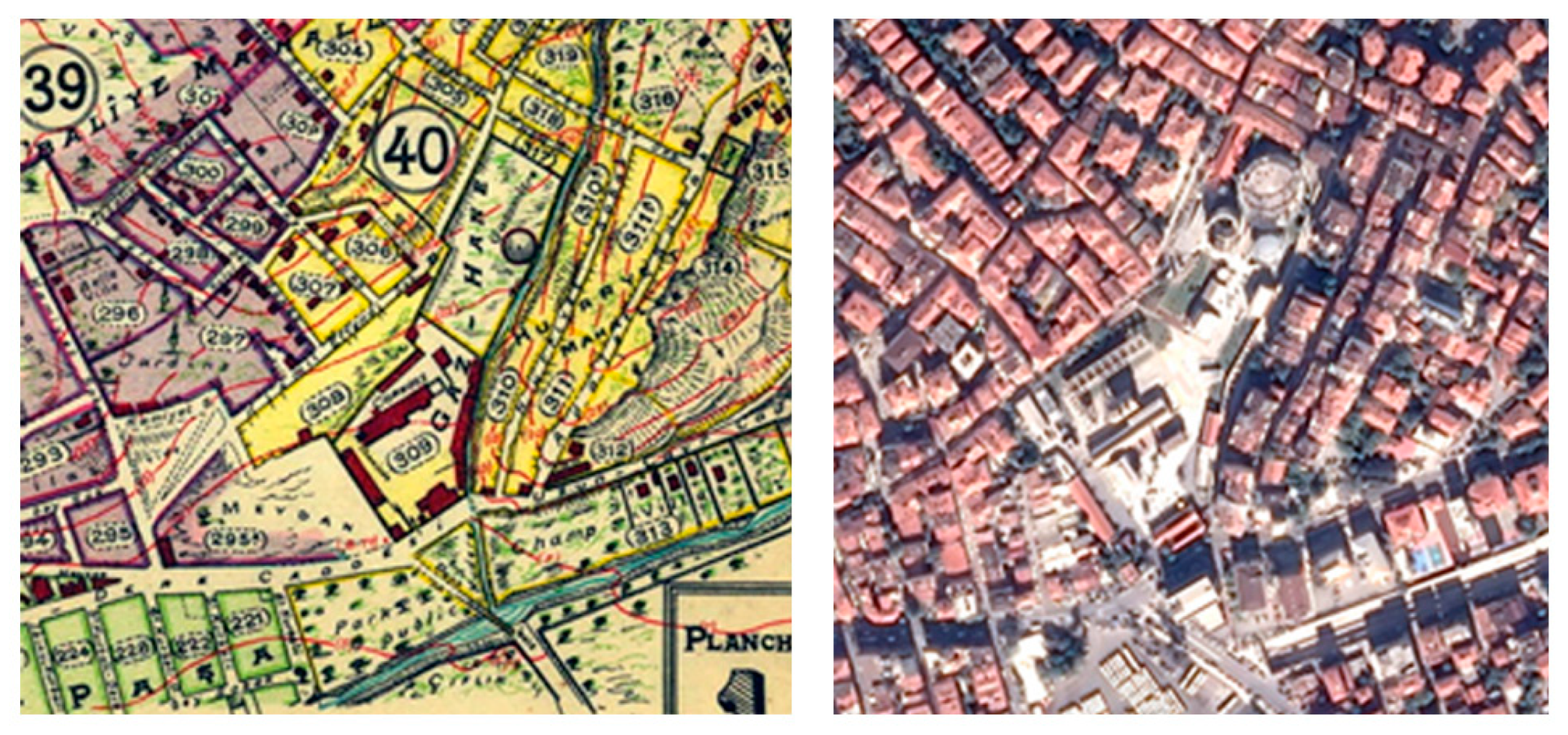
Figure 2.
Hasanpaşa Gasworks in ruins, 2008. The photographs were taken by one of the authors, Şen Yüksel.
Figure 2.
Hasanpaşa Gasworks in ruins, 2008. The photographs were taken by one of the authors, Şen Yüksel.
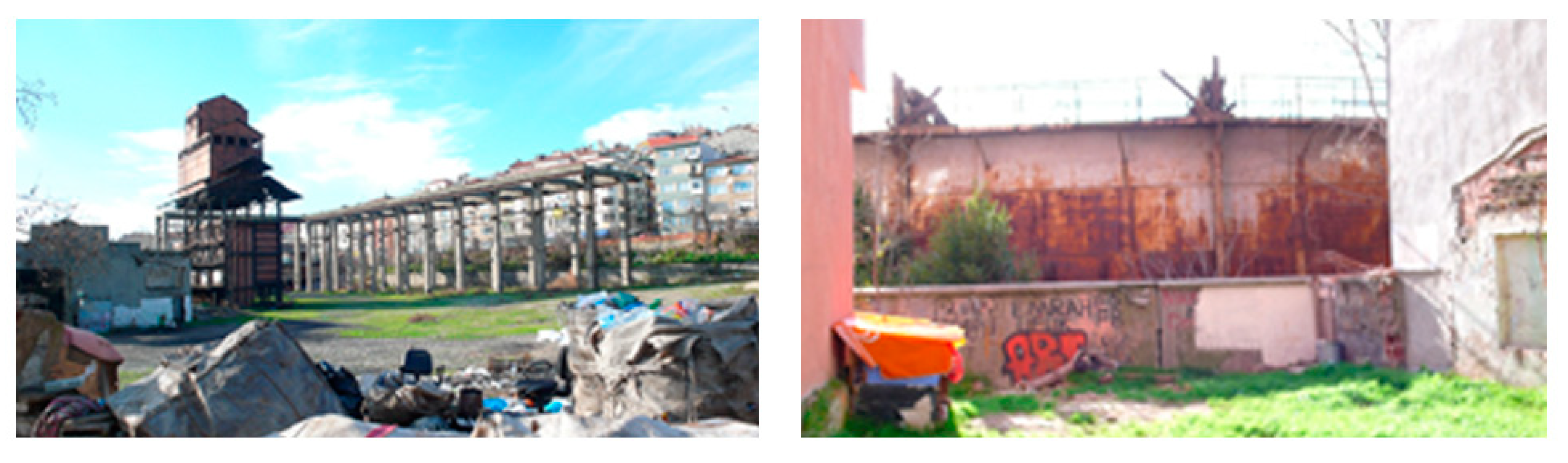
Figure 3.
After the transformation, Hasanpasa Gasworks. Photos taken by the authors.
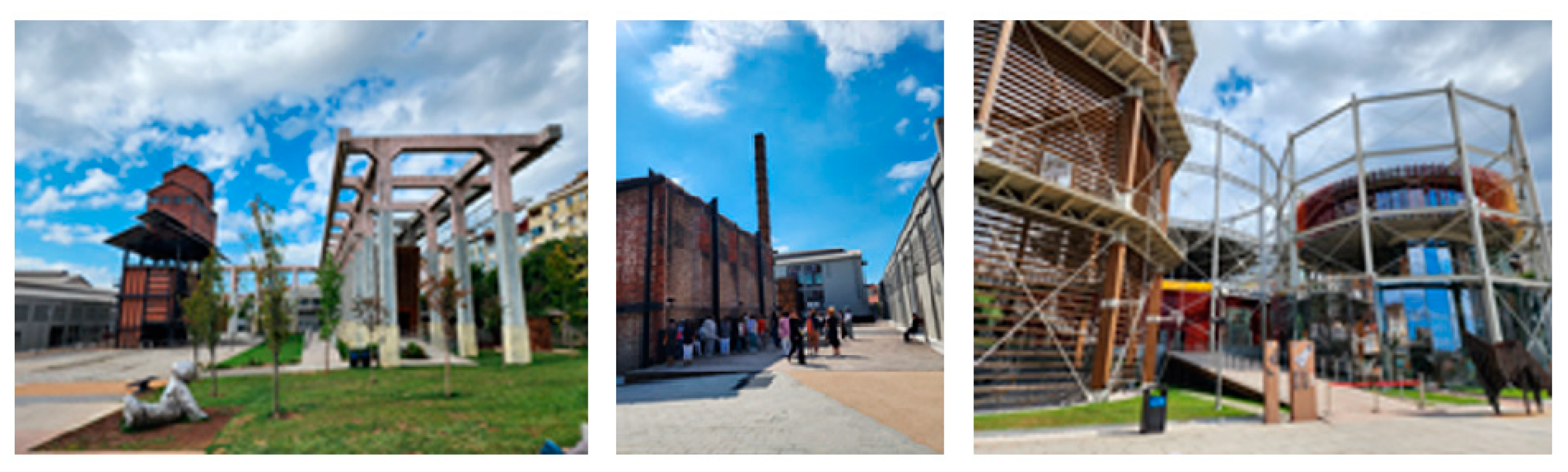
Figure 4.
Film screening event at the Museum Gasworks. Source: https://muzegazhane.istanbul/mekanlar/gazhane-meydan/, accessed on 20.07.2023.
Figure 4.
Film screening event at the Museum Gasworks. Source: https://muzegazhane.istanbul/mekanlar/gazhane-meydan/, accessed on 20.07.2023.
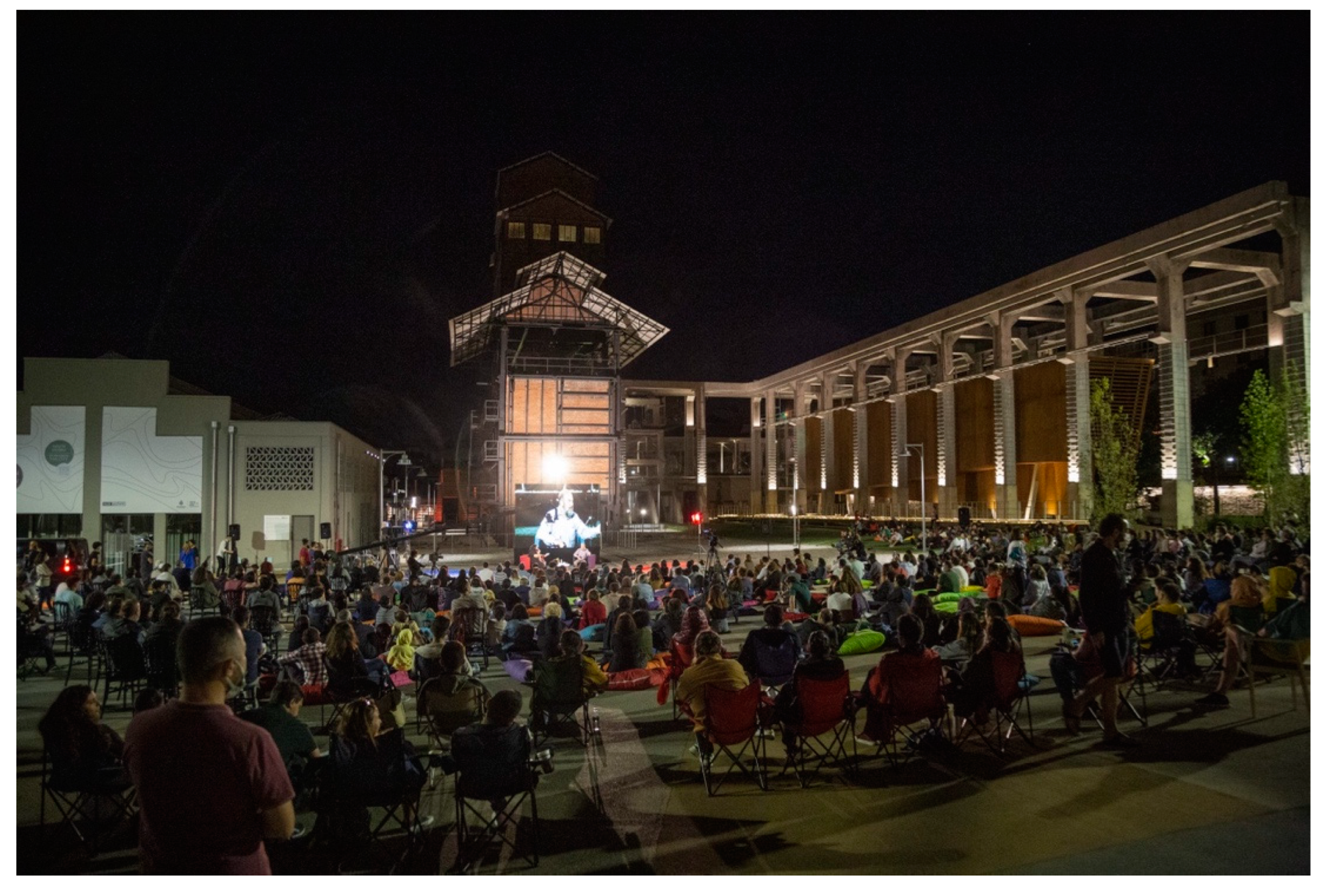

Table 1.
Table summarizing the process from the closure of the Hasanpasa Gasworks to its opening as the Museum Gasworks. Adapted from previous work by the authors [16].
Table 1.
Table summarizing the process from the closure of the Hasanpasa Gasworks to its opening as the Museum Gasworks. Adapted from previous work by the authors [16].
| Year | Actions |
|---|---|
| 1993 | Kadikoy Hasanpasa Gasworks was closed. |
| 1994 | The non-governmental organization Gasworks Environmental Volunteers was founded by residents. Hasanpasa Gasworks was declared a protected area. |
| 1995 | The public institution named IETT has started the demolition here. With the initiative of Gasworks Environmental Volunteers, the demolition was stopped by the Kadıköy Municipality. |
| 1996 | Hasanpasa Gasworks is under protection by the Council for the Protection of Cultural and Natural Heritage Number II. Survey works started with the initiative of Gasworks Environmental Volunteers. |
| 1998 | As a result of the survey applied to the residents by the Gasworks Environmental Volunteers and in line with the expert opinions, it was concluded that the Gasworks region should be a cultural center and green space. It was also decided by the Conservation Board that Gasworks would function as a cultural center. |
| 1999 | An attempt was made between the Municipality, the Chamber of Architects and Gasworks Environmental Volunteers to establish a "Kadikoy Gasworks Protection, Refunctioning, Survival Project Protocol" but it was not concluded. |
| 2000 | A project group was established at Istanbul Technical University Faculty of Architecture and a protocol was signed with the Istanbul Metropolitan Municipality on the preparation of the survey, restitution, restoration, reuse and landscaping projects of the Kadikoy Hasanpasa Gasworks. |
| 2001 | The restoration project prepared by the Istanbul Technical University Faculty of Architecture Working Group was accepted by the Conservation Board. |
| 2002 | Gasworks Environmental Volunteers created a participatory management model with the support of residents and WALD representatives. |
| 2002-2010 | Joint festivals, exhibitions, workshops and competitions were organized by Gasworks Environmental Volunteers with local and foreign, public-private institutions in the field of Gasworks. |
| 2012 | The tender for the transformation project of Hasanpaşa Gasworks has been made. |
| 2015 | Istanbul Metropolitan Municipality held a presentation ceremony for the transformation project of Hasanpasa Gasworks with the function of a museum and cultural center. |
| 2017 | Restoration works have started in Hasanpasa Gasworks. |
| 2021 | Hasanpasa Gasworks was re-opened for use under the name of Museum Gasworks. Gasworks Environmental Volunteers are still implementing the participatory management plan here. |
| data |
Disclaimer/Publisher’s Note: The statements, opinions and data contained in all publications are solely those of the individual author(s) and contributor(s) and not of MDPI and/or the editor(s). MDPI and/or the editor(s) disclaim responsibility for any injury to people or property resulting from any ideas, methods, instructions or products referred to in the content. |
© 2023 by the authors. Licensee MDPI, Basel, Switzerland. This article is an open access article distributed under the terms and conditions of the Creative Commons Attribution (CC BY) license (http://creativecommons.org/licenses/by/4.0/).
Copyright: This open access article is published under a Creative Commons CC BY 4.0 license, which permit the free download, distribution, and reuse, provided that the author and preprint are cited in any reuse.