

Submitted:
28 July 2023
Posted:
31 July 2023
You are already at the latest version
Abstract
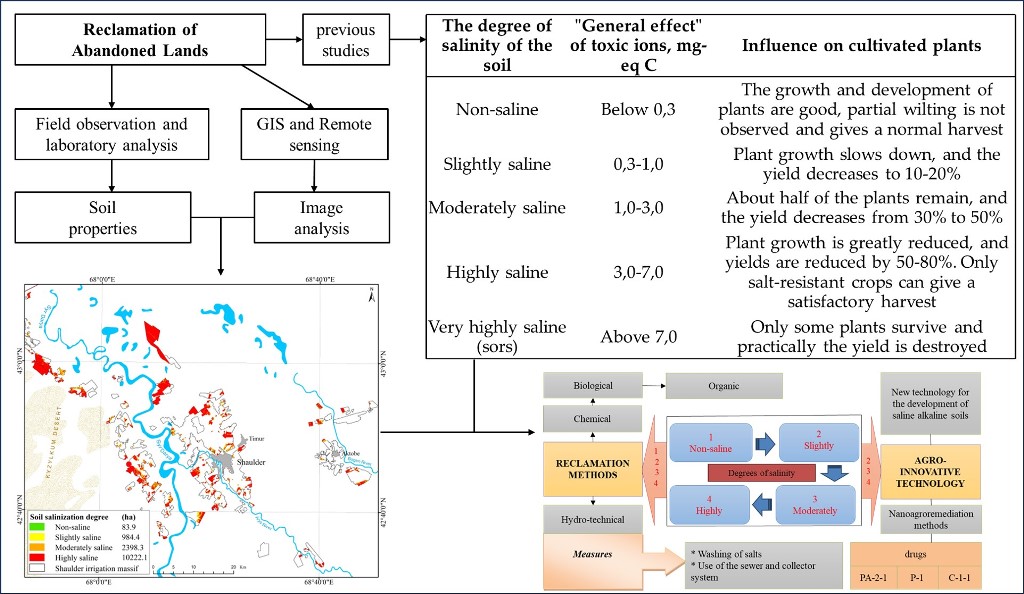
To provide the population with food, it is very important to re-cultivate "abandoned lands" that have been retired from agricultural use. Conversion of arable land into agricultural abandoned lands in the south of Kazakhstan is, first of all, was primarily associated with salinity. For the purposes of sustainable development, there is a need to develop proposals for re-mastering by studying their current state, reviewing world studies on the reclamation of salt-affected soils. Therefore, this study was devoted to the study of the current environmental and reclamation conditions of the abandoned lands of Otyrar district in the south Kazakhstan, as well as discussion and recommendations on their development. In the course of the research, the historical method is used in the study of the emergence and formation of abandoned lands, the method of geographical analysis during the territorial analysis of the research object, the statistical and comparison methods in showing the complexity and intensity of the problems, the cartographic, geo-informational and field research (reconnaissance) methods in the study of the condition of the abandoned lands in the research object and methods of grouping and analysis were used in the work with scientific data on the topic of research. By deciphering space images with the help of geoinformation technologies, it was revealed that the area of abandoned lands in the research object is 13688.9 ha, including the area of non-saline soils – 83.9 ha, weakly saline soils – 984.4 ha, medium saline soils – 2398.3 ha, highly saline soils – 10222,1 ha. A review of the methods and technologies proposed by scientists for the development and melioration of salt-affected lands was made. Taking into account the ecological and reclamation state of the object of research along with the material and technical capabilities of farms, 2 methods of developing abandoned lands (organic and agro-innovative) in the research object are proposed and the need for their use in case of soil salinization has been scientifically justified.
Keywords:
Otyrar district
; agriculture
; abandoned lands
; soil salinization
; development of abandoned lands
; organic methods
; and agro-innovative technology
1. Introduction
According to the materials of the United Nations Department of Economic and Social Affairs, every 12-13 years the world's population increases by 1 billion people. It is hypothesized that in 2024 the world's population will reach 8 billion. [1]. While the population is growing rapidly and 30 percent of the world's population is experiencing food shortages, and the population of about 800 million people is suffering from hunger (Sustainable Development Goals), along with the intensive use of existing acreage for the development of food production, there is a need to increase the area of arable land [2,3]. It is very important to increase it at the expense of abandoned agricultural land. These issues will contribute to the implementation of the UN Sustainable Development Goals: "Poverty eradication", "Eradication of hunger", "Life on land", "Responsible consumption and production" [4].
Globally, especially in high- and middle-income countries, degraded agricultural land is often transformed into natural land [5]. The transformation of agricultural land into abandoned land in North America and Europe is in most cases associated with the processes of mechanization and modernization in agriculture [6], in post–Soviet countries this process does not take place for reasons such as transformations in agriculture after independence from the Soviet Union, the influx of rural population in the city, the lack of peasants' funds for land development [2,7]. However, although there have been widespread reports of a sharp increase in abandoned lands, their scale and spatial patterns have not been fully studied [2]. According to the Agency of the Republic of Kazakhstan for Land Management, the area of such lands in Kazakhstan for 10 years after independence (1991-2000) increased by 108% and reached 566.5 thousand hectares. Out of 2,271.9 thousand hectares of irrigated land in the country, 685.8 thousand hectares or 30.2% are not used for reasons of salinization, waterlogging, flooding, lack of water resources and other reasons. Most of it corresponds to the southern regions [8]. Due to low yields, financial problems of peasants, etc., the decommissioned "abandoned lands" were also transferred to the category of fallow lands. Their introduction into agricultural circulation, or rather reuse in agriculture, occurs very slowly. Currently, the reclamation condition of abandoned lands in irrigated fields of Kazakhstan is deteriorating from year to year [9,10,11]. Despite the fact that abandoned irrigated lands have been in "a fallow state" for several years, the state of humus formation in the composition of soils is unsatisfactory. Salt marshes gradually appear on most of the lands belonging to this category and are overgrown with halophytic vegetation [10,11]. Since Kazakhstan is among the agrarian countries where irrigated agriculture occupies a leading position in crop production, the issue of studying the condition of fallow lands and their reuse is very relevant for the country. After all, according to the state plan, it is planned to gradually increase the area of irrigated land to 3 million hectares by 2030 [12].
To date, the study of ecological and soil-reclamation conditions of agricultural lands, including abandoned ones, is the main type of assessment that allows identifying positive and negative consequences of economic activity for the level of soil fertility. Conducting such studies will allow not only to determine the state and direction of degradation of agricultural lands, but also to develop recommendations for their development. Evidence-based recommendations to identify and combat factors limiting soil fertility will contribute to the effective management of agricultural land and increase production and ensure food security [13]. In order to increase food production in arid and semi-arid regions of the world, restoration of saline soils is required to maintain a sufficient level of fertility [14]. Scientists on the reclamation of salinized lands studied the effectiveness of traditionally hydrotechnical [15,16,17,18,19,20] and chemical [21,22,23,24,25], biological [26,27], organic [14,28,29,30,31]and agro-innovation technologies [10,32,33,34,35]. It is extremely important to give effective recommendations taking into account the methods proposed by scientists for the amelioration of salty soils and the agroecological state of the object of study and the material and technical state of agricultural structures (characteristic of a developing country). In view of the fact that the reclamation strategy should be adapted to the terrain conditions and soil, plant and climatic conditions [36] and the financial capabilities of farmers [10].
The purpose of the study is to study the current ecological and reclamation state of the abandoned lands of the Otyrar district and discuss issues of their development and making proposals.
2. Materials and Methods
2.1. Description of the Study Area
The Otyrar district, located in the middle reaches of the Syr Darya River, the territory of which is completely included in the desert zone, is one of the agricultural areas where agriculture has developed since ancient times.
98% of the agricultural landscapes of the Otyrar district, whose territory begins with the foothill plains of Karatau from east to west and extends to the sands of Kyzylkum, were formed under the predominant influence of the Syr Darya River. The cultivated areas here are known in the scientific literature as the Schauelder irrigated valley (Figure 1).
The rivers that provide water to the crops of the irrigated valley include the SyrDarya, Arys and Bogen rivers. Compared with other agricultural areas of the south, Otyrar is well provided with water resources. However, due to inefficient use of water resources, groundwater rises and contributes to soil salinization [37].
According to classification of the famous soil scientist Abolin R. I. [21], the soil cover of the Otyrar district is included in the gray (gray-earth) soil desert zone. Meadow-gray, light gray and grayish-brown types of soils are common here. In crop production, due to inefficient use of water resources and non-compliance with appropriate reclamation measures, degradation processes are intensively taking place on arable agricultural landscapes [38]. Ephemeral-ephemeroid, wormwood, cereal-halophytic and shrubby plants are common on the plains formed under the influence of the Syr Darya.
The climate is sharply continental. In the system of agro-climatic zoning, they refer to a very hot and very dry agro-climatic region. Annual precipitation falls in the range of 170-200 mm. Winter is short, mild and snowless, summer is characterized by dry and hot air. The number of days when the average temperature in summer exceeds +35°C is 30-40. The driest month of the year is August. This month, 1-2 mm of annual precipitation falls, or 0.2% -0.9% of the annual precipitation rate. Because of this, in the summer months, the surface of the air and soil becomes dry. The Arystandy-Karabas wind, which raises dust storms during the growing season, contributes to degradation trends in the eastern part of the district [37].
Otyrar district is one of the districts whose economy is based on agriculture. According to statistical data [39] the updated sown area of agricultural crops in the district for 2021 was 34,934 hectares. As for the share of crops, cereals (including rice) and legumes -12,247 ha, fodder crops -12,166 ha, corn (maize) – 10,861 ha, garden crops – 8078 ha, vegetable crops – 1209 ha, wheat – 645 ha, sunflower – 318 ha, safflower-260 ha, cotton – 330 hectares, vineyard – 24 hectares, seed and grain fruits-121 hectares.
Despite the large land resources and the abundance of land suitable for agriculture, the area of arable land and the volume of crop production are small. The area of arable land in the district is not more than 2% of the land resources. Therefore, the district faces the issue of increasing the production of agricultural crops.
2.2. The Data and Research Methods
It is known that the study of agricultural landscapes cannot do without the application of new principles and methods of such fields of science as ecology, geography, cartography. The application of the principles of consistency, complexity in solving complex problems that have developed in agricultural landscapes - allows you to deeply explore the laws of nature and implement appropriate measures. To do this, it is necessary to equip research works with complex research methods [37]. Therefore, in the course of the study, the historical method of determining the formation and changes in the area of fallow lands is used; the method of geographical analysis when working on the territorial analysis of the object of study; the statistical method when indicating natural and economic indicators; comparison methods when assessing the complexity and intensity of problems; cartographic and geoinformation methods when studying the state of fallow lands of the object of study and the object of study; methods of field research in the survey of contours of fallow lands (reconnaissance); and in working with scientific data on the research topic, methods of grouping and analysis, etc., were widely used.
During field studies of agricultural landscapes at the research site, several types of crops were recorded at the research site and coordinates of fallow lands. These data were used as additional data to verify their accuracy in the allocation of contours of circulating arable land and abandoned land.
Decoding of arable land and fallow lands of the object of study is carried out by using the Sentinel satellite-2 frames taken between 05.03.2021-11.09.2021. The boundaries of used and unused lands were determined using normalized vegetation indices (NDVI) calculated in the GIS program ArcGIS 10.4.1. In addition, surveys of the Sas planet program were also used to refine the contours of the fields.
When assessing the current ecological state of fallow lands, the reclamation state of soils and discussing and recommending their development, articles obtained with the help of scientific material search engines were grouped with the analysis of the results of their scientists' research.
3. Results
3.1. Definition of the Territory of Abandoned Lands
Based on the remote study data, the phenological features of plants and time differences between the biological phases of crops of the same or different species were taken into account to determine fields and abandoned lands occupied by crop species in irrigated fields. For this purpose, the time of the growth phases covering the growing seasons of crops in the study object of 2021 was chosen. As a result, 05.03.2021-11.09.2021. space surveys Sentinel-2 Download from open sites. Based on the normalized vegetation indices (NDVI) calculated using them, the phenological dynamics of plants was developed. Based on the dynamics of NDVI in the growing seasons of crop species, by the classification method we divided the abandoned lands into arable lands and determined the arable lands used and the contours of abandoned lands. Work was carried out to refine and verify the contours of the fields using satellite images of the Sas planet program and the data obtained recorded during field research. In addition, the ArcGIS 10.4.1 programs carried out work on digitization of geographical objects of the object of study, such as rivers, rural settlements, district boundaries.
The study found that the total area of agricultural land is 45265.6 hectares, of which fallow lands-13688.9 hectares (Figure 2).
Abandoned lands are often located both near settlements and in remote areas. Some of them are used for pastoral purposes. Pasture agrolandscapes occupy 96% of agricultural land in the district.
3.2. Ecological and Reclamation Condition of Abandoned Lands
In the World Atlas of Desertification [40], degradation is divided into 6 groups: (water erosion, wind erosion, reduced soil fertility, salinization, waterlogging and a decrease in the groundwater level). The problem of soil salinization among them is relevant for arid regions that do not yield crops without irrigation in agriculture. This situation is also typical for the south of Kazakhstan [38].
As a result of secondary salinization, the humus layer of the soil decreases and collapses, all energy resources accumulated in the soil are depleted, and the number of biological resources on earth decreases. Since saline soils are found in the layers reached by plant roots (rhizosphere), they create osmotic pressure, preventing the growth and development of crops and even causing wilting. All this suggests that the properties of landscapes that ensure the sustainable development of ecosystems, such as self-regulation, self-healing, self-renewal, disappear, and degenerative processes begin to occur intensively [37].
Our research group has published a number of works on mapping soil salinity in the Otyrar region [37,41,42]. Based on the methods of drawing up salinity maps in these works, we determined the levels of salinity of the soils of abandoned lands in the object of study (Figure 3).
The share of non-saline soils is 0.6% (83.9 ha), the share of slightly saline soils is 7.2% (984.4 ha), the share of moderately saline soils is 17.5% (2398.3 ha) of this area.
It is established that the share of highly saline soils is 74.5% (10222.1 ha). The distribution of saline soils is uneven to varying degrees, scattered across rural districts or fields. Scientists [35] who conducted research on Schauelder irrigation massif found that 99.1% of 500 hectares of arable land on 44 farms did not have sufficient humus and slightly hydrolyzable nitrogen, and phosphorus and potassium were distributed unevenly (from low to high).
Salinization of the soils of the Otyrar district is subject to secondary salinization. The main reason for the different degrees of salting of soils is that although the total amount of salts in the soil is the same, the composition can be different. This is due to the diversity of indicators of toxicity and the action of various salts and ions on plants. Therefore, the qualitative composition of salts is of particular importance when assessing salty soils from an agronomic point of view. As a result of the determination of the quantity of toxic salts using the data of soil water filter analysis, the limit of the toxicity of the salts in the soil, as well as the type and level of salting of the ground is determined. The threshold of toxicity is defined as the threshing amount of salts in the soil, in which inhibition of growth and development is observed in medium-salt-resistant plants, the following levels of toxics are established for individual ions in mg-equivalents per 100 g of soil at the following values: indicators: CO32-- 0,03; HSO3- - 0,8; Cl- - 0,3; SO42- - 1,7 [43].
There is a close relationship between the number of salts that accumulate in the soil and the condition of the plant at that moment. The resistance of agricultural crops and natural plants to soil salinization is evident during their growing season, each phase of growth and the production period.
As shown in Table 1, as the salt content in the soil increases and the degree of its salinity, the chances of the plant's survival and yield continue to decrease. However, the yield of the plant also directly depends on its salt resistance.
4. Discussion
Most often, "abandoned" fallow lands are formed mainly in areas with relatively unfavorable field conditions. However, the abandonment of arable land is not limited to marginal areas in terms of agricultural production [44]. The area of fallow lands in Kazakhstan increased sharply due to abandoned lands during the economic crisis of 1991-2000 and reached 504.3 thousand hectares [8]. Consequently, not only water and climatic factors, but also the material and technical conditions of peasant farms contributed to the decommissioning of arable land. In the 90s of the last centuries, the technical condition of irrigation, collector-sewer (collector-drainage) systems, pumping stations and vertical sewer pipes deteriorated. 65% of pumping stations are worn out and out of service, water supply is reduced by 40%, sewage storage water is not cleaned of pesticides and chemicals, harmful salts [9]. These phenomena also concern the Otyrar district we are studying. After all, according to our research, 1/5 of the abandoned lands of the Turkestan region are located on the territory of the Otyrar district.
Due to soil salinization in the object of study, crop yields reached a "consistently low" degree, which contributed to the transition of agricultural landscapes into an "ecological epidemic" [32]. Thus, these lands, which were subjected to secondary salting, turned into "abandoned" lands, left agricultural circulation and were added to the reserves of fallow lands.
Secondary salinization-anthropogenic salinization is caused by the rise of groundwater due to humanity's misunderstanding of the natural relationship or improper use of land and water resources during irrigation. [45]. When the ground water rises, the water rises through the capillaries into the root zone of the plant and undergoes evaporation. And the salts contained in the water remain in the root zone of the plant [16]. This process occurs intensively in southern regions, such as the Otyrar district, characterized by a hot climate and where the amount of evaporation is several times higher than the amount of precipitation.
Development of abandoned lands. For the development of agricultural lands where saline soils occur, it is necessary to thoroughly understand the mechanism of the salinization process and carry out such work as reducing or neutralizing salinization. In this regard, we focused on the species that have achieved results in the development of saline soils of the desert zone, summarizing and grouping information about reclamation methods in the scientific literature (Figure 4).
The methods of land reclamation include hydrotechnical, chemical, biological and organic methods. The most common and traditional around the world is the hydrotechnical method. According to this method, during 4-7 years, in winter-summer periods an excess of salts in the soil is washed off and transferred to river lakes and low-lying landscapes. This is done using the following 2 main measures.
Rinsing the salts. The information on the reclamation of saline lands in the scientific literature [16,20] shows the importance of work on the displacement of soluble salts from soils with water using various approaches, depending on the features of the relief and water permeability of generic soil layers. To do this, depending on the salinity of the soil, the types of flushing (current, cardinal) and the amount of tap water consumed are determined. For example, it is established that up to 17.5-25 thousand cubic meters/ha of water is used for flushing heavily saline lands in arid zones. If there is insufficient water, continuous watering is recommended (within 3-10 days) not through furrows [18]. However, in the conditions of climate change, the use of water-saving models and technologies for washing the soil with salt becomes relevant [20].
Operation of sewer and collector systems. In the spring period, due to the occurrence of groundwater above the "depth of the limit position", seeds are sown late, which leads to a decrease in yield and salinization of soils. Of great importance in solving this problem is the use of vertical sewers (vertical drains) that regulate soil moisture [15]. In winter and summer, water from soil rinsing is displaced by collector lines, and the groundwater level is regulated by sewerage. According to Ayers and Westcot [16], in arid and semi-arid climates, the salinization problem caused or exacerbated by poor drainage cannot be adequately controlled until the groundwater level is stabilized and maintained at a safe depth. However, currently all this does not work in the Otyrar district. Considering that the sewer-collector system has no analogues for lowering the groundwater level, its restoration remains an urgent problem.
To accelerate the process of removing salts from the soils of abandoned lands using the hydrotechnical method, it is advisable to use the chemical method. Saline soils can be restored with chemical fertilizers. The main chemical fertilizers used in reclamation works include: gypsum (CaSO4), lime (CaCO3), sulfuric acid (H2SO4), hydrochloric acid (HCl) and nitric acid (HNO3) [23,24]. Liming of the formed soils (the use of lime fertilizers to replace calcium ions), gypsum of the soil (the introduction of gypsum replacing sodium) can replace sodium ions in places of cation exchange during soil washing (during leaching). This process promotes the removal of sodium from the root zone of the plant [25]. However, in desert (arid) regions, chemical fertilizers without drainage cannot improve soil quality [24]. Meanwhile, acidic additives (H2SO4, HCl, HNO3) can lower the pH of the soil. Therefore, before using them, it is necessary to study the chemical composition of the soil and conduct experimental work. Many scientists [10,19,24] believe that chemical reclamation is effective only in well-drained areas.
Chemical reclamation also includes the use of organic and mineral fertilizers in high doses when growing crops. The yield of agricultural crops directly depends on the state of agrochemical indicators of the soil, the amount of organic and mineral fertilizers, the formation of a positive or deficient balance of humus and nutrients. The introduction of nutrients to obtain 10 kg of grain from corn is close to other grain crops. Under irrigation conditions, 250 kg of N, 100 kg of P2O5 and 360 kg of K2O will be required to obtain a yield of 100 kg of grain from 1 ha, and 150-180 kg of N, 50-60 kg of P2O5 and 150-200 kg of K2O will be required to produce 500-600 kg of green mass from 1 ha [22]. The crop consumes nutrients throughout the growing season - until the wax ripeness of the grain. However, their most intense absorption is observed during the period of rapid growth in a relatively short time (from panicles to flowering). However, prolonged use of chemical fertilizers worsens the condition of agricultural soils, reduces the quality and fertility of the soil and increases the risk of secondary salinization [46]. Therefore, many scientists [14]. Zhang et al. [47] call for the replacement of chemical fertilizers with organic fertilizers.
Scientists dealing with the problem of reclamation of saline soils in southern Kazakhstan [10,32,33] claim that the use of the above traditional methods is impossible for the following 3 reasons:
1) poor operation of the collector-drainage network (in most cases, the absence);
2) lack of funds for small peasant farms to carry out land reclamation works;
3) unsatisfactoriness of quantitative and qualitative indicators of water resources.
In the Otyrar district, the use of a biological method, including phytomeliorative, has many environmental advantages. Salt-resistant cultivated plants that can grow in saline conditions play a good role in the biomelioration of saline soils. These plants are used as a biological means of restoring saline lands due to the following biological features: the ability to absorb salts from the soil and accumulate them in large quantities in its terrestrial vegetative body. Later they can be removed during harvesting and mowing. Crop rotation of alfalfa and sorghum crops according to the 2:1 scheme (2 years of alfalfa + 1 year of cotton) or according to the 1:2 scheme (2 years of sorghum + 1 year of cotton) and according to the 1:2 scheme (2 years of cotton + 1 year of millet) with cultivation in the south of Kazakhstan gave positive results and reduced the concentration salts in the soil (Tagaev and Umbetaev, 2019). Crop rotations are well established in the Otyrar district (in most cases, corn with alfalfa). Because, since animal husbandry in the area is well developed, corn and alfalfa crops will be sown on an alternating basis as a fodder crop.
Rabbimov et al. [27] suggest grafting forage plants and forming forage stocks during the development of abandoned saline lands. According to their research, it is advantageous to grow Kochia scoparia, Atriplex nitens and Suaeda altissima halophytes on secondary saline lands using underground artesian waters. They even found out that it is possible to grow a Climacoptera lanata plant without watering. The peculiarity of these crops is that they absorb salt and water and salts through the roots, accumulating them in phytomass. Later they can be used in animal husbandry. However, there are large reserves of pasture lands at the object of our study. 96% of the district's lands are pasturing agricultural landscapes [11]. Therefore, the sowing of more economically efficient crops is in demand as a fodder crop. And in the conditions of climate change, we believe that the problem of growing wild halophytic plants is one of the most promising. In addition, it should be noted that harvesting with the help of phytomeliorative approaches requires a lot of work and a long time.
When providing one or another method of land reclamation, it is necessary to proceed from the ecological and reclamation state of the object of research and the material and technical capabilities of peasant farms. Farmers do not have enough opportunities to use expensive methods and fertilizers. Therefore, when developing abandoned lands, we recommend using the following 2 methods.
1. Application of organic methods. Organic fertilizers applied in unsalted soil conditions are also suitable for highly saline soils. It is very important to choose organic fertilizers, taking into account only the amount of nutrients contained in them, the timing and method of application. [14]. Zhang et al. [47] found that the use of composted chicken manure in saline and leached soils, Tejada et al. [31] compasses of chicken gin and chicken manure in saline soils not only increases the biomass of the plant compared to the control option, but also contributes to the chemical and physical properties of the soil and microbiological activity. After 4 years of continuous use of composted chicken manure, the amount of sodium cations (Na+) and chlorine cations (Cl–) significantly decreased compared to the control variant, while soil organic matter (SOM), total nitrogen (TN), total phosphorus (TP), available nitrogen (AN) and available potassium (ak) has increased significantly (Zhang et al., 2022). These organic fertilizers promote the formation of spontaneous plants that protect the soil and promote its restoration [31].
Kahlown Muhammad Akram, and Muhammad Azam [28] conducted a study of the effect of irrigation of wheat and cotton fields with saline drainage waters (EC 2.25 MZ m -1) on soil and crop yields in arid areas of Pakistan. The study showed that the use of green siderate and manure when watering with salt water increases the rate of infiltration in the soil by 88.9% compared to watering with plain salted water. In addition, in the variant with the use of manure, soil salinization during salinization slowed down by 2.8-41.3%, increasing the yield of wheat and cotton (on average 1925 and 1485 kg / ha). The use of manure turned out to be relatively more effective than other processing methods in overcoming the negative consequences of watering with poor-quality water. This method can be effective in the development of abandoned lands of the Otyrar district. After all, there are 2 reasons indicating its effectiveness:
1) The availability of manure is high. Otyrar district mainly specializes in animal husbandry, not in crop production. Animal husbandry is known to be the main source of organic manure fertilizers. According to preliminary data of the National Statistical Agency for 2022, [48] there are more than 501 thousand cattle in the area. In addition, since manure is the cheapest organic fertilizer, it is available to all farms.
2) The waters of the Syr Darya and Arys rivers used for irrigation of fields are mineralized. According to the Department of Environmental Monitoring of the Kazhydromet Agency [49], the water quality of the Syrdarya River belongs to the "very poor" group (>Grade 5), and the water quality of the Arys River belongs to the "poor" group (Grade 4). According to calculations by S. I. Koshkarov [50], on the land of Uzbekistan, the minerality of the water of the Syrdarya River increases to 0.7-1.2 g/l, on the land of Kazakhstan it increases on average to 1.5-2 g/l. Because the wastewaters of the fields in the upper and middle reaches of the Syrdarya River (water coming out of the salt washing of the fields) they flow into the river again. An experimental study by Mostafazadeh-Fard et al. [51] has shown that as the mineralization of water used in soil irrigation increases, the salinity of the soil, the absorption coefficient of sodium increases, and the moisture-retaining properties of the soil deteriorate. The impact of mineralized water especially affects the topsoil. That is, as the salinity of irrigation water increases, the efficiency of its flushing by the hydraulic method continues to decrease.
A number of scientists [29,30] show that the use of bio-coal as an organic fertilizer in saline and leached soils is productive. Bio-coal is a product of burning biomass at a temperature of 300-700 ° C in oxygen-free conditions. When applied to the soil, bio-coal improves the soil environment in agriculture. [29/30] as a result of experimental studies, it was found that the use of bio-coal effectively reduces the salinity and alkalinity of brackish soil, increases soil fertility and the number of microorganisms in the soil, increases the yield of corn.
However, for the use of organic fertilizers on large areas, it is important to conduct experimental studies first. They should be encouraged to combine with various agrotechnical methods (e.g., crop rotation, use of cover crops, etc.) [14].
2. Application of the Agro-innovation method. Developed by scientists of the Research Institute of Soil Science and Agrochemistry named after U. O. Ospanov in the development of saline abandoned lands [10,32], the effectiveness of agro-innovation technologies has been repeatedly confirmed by experiments and research [32,33,34,37]. This technology consists in the joint application of "nanoagromeliorative methods for increasing soil fertility and crop yield", consisting of the use of "new technology for the development of salt-alkaline soils (NTOZ-2)" and a multifunctional drug-adaptogens (PA-2-1, C-1-1, P-1) with the use in small volumes. The authors of this article also participated in such experimental work [34]. The technology has been experimentally tested and put into operation in order to increase the productivity of saline lands in the rice fields regions of Kazakhstan: Kyzylorda, Bakanas and Karatal [32].
In addition, experiments were conducted at our research facility, that is, in the corn fields of the Otyrar district, and good results were obtained. Depending on the degree of salinity of the soil, the yield of corn has grown on unsalted soils compared to the control variant is up to 40.0% (71.1 c/ha), on lightly salted and medium saline soils up to 30.0 - 32.1% (62.5 - 63.5 c/ha), and on highly saline soils up to 11.4% (47.1 c/ha) [34]. This technology ensures the sustainability of degraded lands and contributes to the production of environmentally friendly products [33].
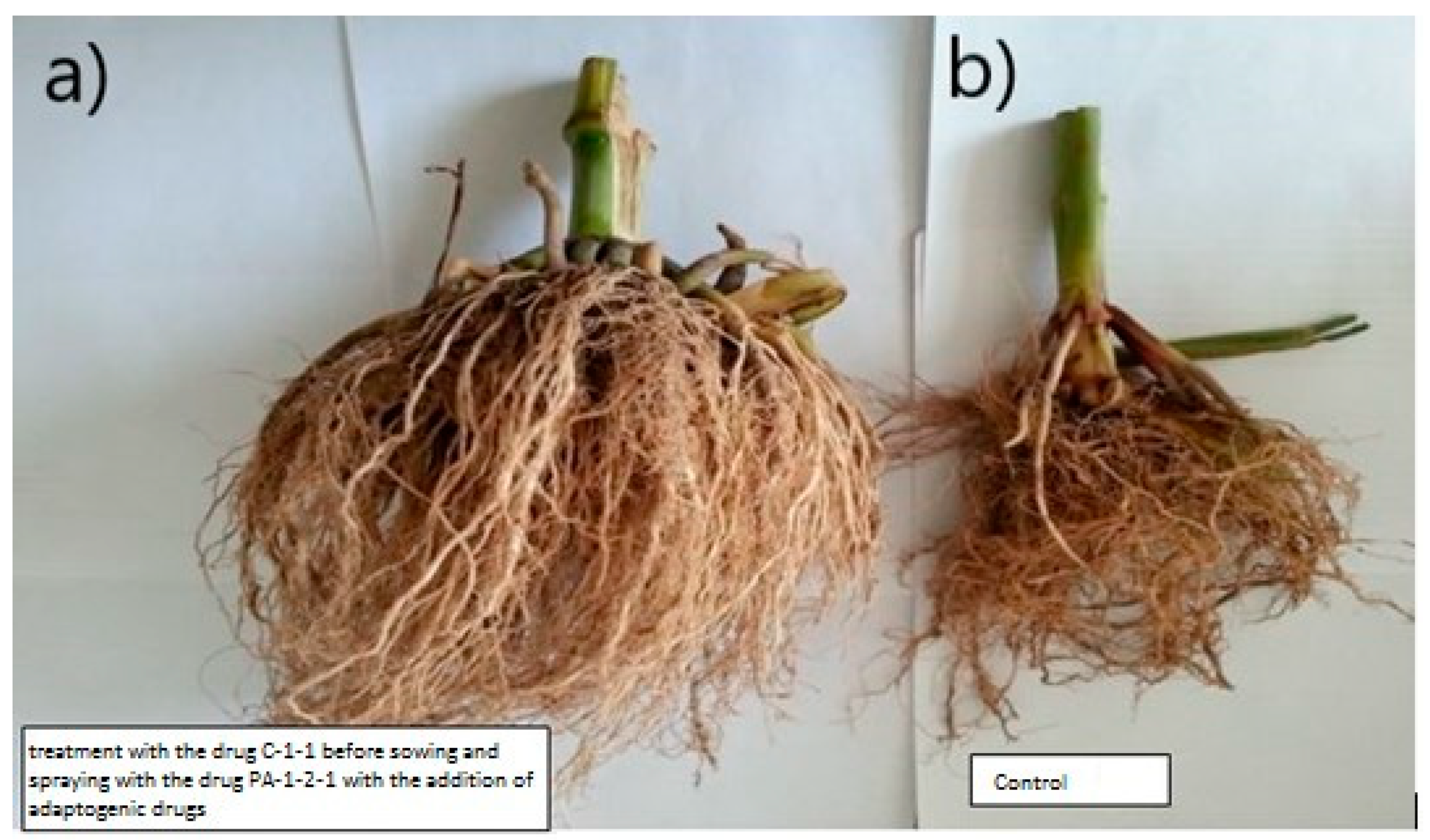
Experimental work has established that the use of agro-innovation technology contributes to an increase in volume, favorably affecting not only the yield of corn, but also its root system (Figure 5) [11]. Compared with the control variants, it was found that the corn roots grown on the experimental plot significantly increased in size, and their weight increased by 96.7-119.4% [11]. This phenomenon inevitably leads to the accumulation of a large amount of plant residues on saline soils and effective phytomeliorative changes. Plant waste is organic fertilizers that improve the physical condition of the soil [31].
5. Conclusions
In Kazakhstan "abandoned lands" that had left agricultural circulation were transferred to the category of fallow lands due to low crop yields and lack of water resources, limited financial capabilities of farmers, etc. The Otyrar district is one of the most common areas of abandoned land in the south of Kazakhstan, increased due to soil salinization. As a result of the work on decoding satellite images in the GIS program ArcGIS 10.4.1, it was found that 13688.9 hectares of abandoned land were found in the Otyrar district. Based on the methods of soil salinization, it was found that 0.6% (83.9 ha) of the abandoned lands of the research object are occupied by unsalted soils, 7.2% (984.4 ha)-slightly saline soils, 17.5% (2398.3 ha)-moderately saline soils, 74.5% (10222.1 ha)-strongly saline soils. In order to develop proposals for their development, we have collected and grouped the research of scientists on reclamation methods and scientific literature for the study of agricultural landscapes of the Otyrar district, analyzed the scientific results in them. As a result, the object of the study found that soil reclamation by traditional methods becomes impossible due to inefficient operation of collector and drainage networks, limited financial capabilities of small farms and uneven distribution of water resources and their quantitative and qualitative indicators. Taking into account the ecological and reclamation state of the object of research and the material and technical capabilities of peasant farms, we tried to scientifically substantiate, proposing to use the following 2 methods (organic, agro-innovative) in the development of abandoned (saline) lands. These methods are cheap, affordable and environmentally friendly, which allows not only to increase soil fertility, but also to obtain a stable harvest in a developing country. However, proven experimental studies of other areas cannot be successfully implemented in the form of research from a spatial point of view. Therefore, this requires further study.
Author Contributions
Conceptualization, S.L. and Z.S.; methodology, S.L., Z.S., K.K., D.A. and N.M.; software, S.L. and Z.S.; validation, S.L., Z.S., K.K. and D.A.; formal analysis, D.A. and N.M.; investigation, N.M.; resources, S.L.; data curation, S.L.; writing—original draft preparation, S.L.; writing—review and editing, S.L., K.K. and D.A.; visualization, S.L. and Z.S.; supervision, S.L.; project administration, S.L. and D.A.; funding acquisition, S.L. and D.A. All authors have read and agreed to the published version of the manuscript.
Funding
This research is funded by the Science Committee of the Ministry of Education and Science of the Republic of Kazakhstan (Grant No.AP09260017).
Institutional Review Board Statement
Not applicable.
Informed Consent Statement
Not applicable.
Data Availability Statement
Not applicable.
Acknowledgments
The authors thank the Abai Kazakh National Pedagogical University, Institute of Natural Sciences and Geography, Department of Geography and Ecology as well as anonymous reviewers for their valuable comments and suggestions.
Conflicts of Interest
The authors declare no conflict of interest.
References
- United Nations, World Population Prospects 2022: Summary of Results. 2022. Available online: https://www.un.org/development/desa/pd/content/World-Population-Prospects-2022 (accessed on 2022).
- Alcantara, C.; Kuemmerle, T.; Baumann, M.; Bragina, E.V.; Griffiths, P.; Hostert, P. . & Radeloff, V.C. Mapping the extent of abandoned farmland in Central and Eastern Europe using MODIS time series satellite data. Environmental Research Letters 2013, 3, 035035. [Google Scholar]
- Meyer, W.B.; Turner, B.L. Human population growth and global land-use/cover change. Annual review of ecology and systematics 1992, 1, 39–61. [Google Scholar] [CrossRef]
- UN official website, Sustainable Development Goals. Available online: https://www.un.org/sustainabledevelopment/sustainable-development-goals/.
- Yang, Y.; Hobbie, S.E.; Hernandez, R.R.; Fargione, J.; Grodsky, S.M.; Tilman, D.; et al. Restoring abandoned farmland to mitigate climate change on a full Earth. One Earth 2020, 2, 176–186. [Google Scholar] [CrossRef]
- Benjamin, K.; Domon, G.; Bouchard, A. Vegetation Composition and Succession of Abandoned Farmland: Effects of Ecological, Historical and Spatial Factors. Landscape Ecol. 2005, 20, 627–647. [Google Scholar] [CrossRef]
- Ruskule, A.; Nikodemus, O.; Kasparinskis, R.; Bell, S.; Urtane, I. The perception of abandoned farmland by local people and experts: Landscape value and perspectives on future land use. Landscape and Urban Planning 2013, 115, 49–61. [Google Scholar] [CrossRef]
- Committee of the Ministry of Agriculture of the Republic of Kazakhstan, Summary analytical report on the state and land use of the Republic of Kazakhstan for 2021. 2022. Available online: https://www.gov.kz/memleket/entities/land/documents/details/291911?lang=ru (accessed on 05 April 2022).
- Yessimbekov, M.B. Scientific and experimental foundations of the development of saline soils for rice culture in Kazakhstan. Doctor of Agricultural Sciences, Republican State Enterprise Scientific and Production Center for Agriculture and Plant Farming, Almaty. 2010. (in Russian).
- Otarov, A.; Ibraeva, M.A. Recommendations for the development of secondary saline "fallow" lands of irrigated zones in conditions of unfavorable reclamation situation. Kazakh Research Institute of Soil Science and Agrochemistry named after U.U.Uspanov. Almaty, Kazakhstan, 2011; p. 27.
- Laiskhanov, S. Agrolandscapes of Otrar district. Monograph.; (in Kazakh). Daryn: Almaty, Kazakhstan, 2022; p. 233. [Google Scholar]
- Official website of the president of the Republic of Kazakhstan. Nation address of the head of state Kassym-Jomart Tokayev to the people of Kazakhstan. Available online: https://www.akorda.kz/kz/addresses/addresses_of_president/memleket-basshysy-kasym-zhomart-tokaevtyn-kazakstan-halkyna-zholdauy (accessed on 02 September 2019).
- Smanov, Z.M.; Suleimenova, A.I.; Poshanov, M.N.; Duisekov, S.N.; Vyrakhmanova, A.S. The modern reclamation state of irrigated soils and the methodology of their study on the example of the SEC "Asia Agro Group". Soil science and agrochemistry. (in Kazakh). 2023, 1, 15–35. [Google Scholar]
- Diacono, M.; Montemurro, F. Effectiveness of organic wastes as fertilizers and amendments in salt-affected soils. Agriculture 2015, 5, 221–230. [Google Scholar] [CrossRef]
- Favorin, Nikolai Nikolaevich. Irrigation canals and groundwater; Publishing House of the Academy of Sciences of the USSR: Moscow; USSR, 1954; p. 93. (in Russian).
- Ayers, R.S.; Westcot, D.W. Water quality for agriculture; Food and Agriculture Organization of the United Nations: Rome, Italy, 1985; Volume 29, p. 174. [Google Scholar]
- Abrol, I.P.; Yadav, J.S.P.; Massoud, F.I. Salt-affected soils and their management (Vol. 39). Food & Agriculture Org. Rome, Italy, 1988, Vol. 39.
- Seitkaziev, A.S.; Dauletbayev, B.U. Problems of hydrochemical regime on ecosystems of gray-earth soils of the south of Kazakhstan. Dulaty University Bulletin 2007, 7, 24–27. (in Russian). [Google Scholar]
- Kiryushin, V.I. Theory of adaptative landscape agriculture and design of agricultural landscapes; Kolos: Moscow, Russia, 2011; p. 443. (in Russian) [Google Scholar]
- Yang, T.; Šimůnek, J.; Mo, M.; Mccullough-Sanden, B.; Shahrokhnia, H.; Cherchian, S.; Wu, L. Assessing salinity leaching efficiency in three soils by the HYDRUS-1D and -2D simulations. Soil and Tillage Research 2019, 194, 104342. [Google Scholar] [CrossRef]
- Abolin, R.I. To the question of the classification and terminology of soils in the desert zone of Turkestan. Irrigation, Sel. Economy and animal husbandry 1922, 3, 27. (in Russian). [Google Scholar]
- Myshko, M.N. Yield and quality of corn depending on fertilizers on the leached chernozem of Kuban. Dissertation for the degree of candidate of agricultural sciences, Kuban State University, Krasnodar, Russia,.01.06.2004. (in Russian).
- Ahmad, N.; Qureshi, R.H.; Qadir, M. Amelioration of calcareous saline-sodic soil by gypsum and forage plants. Land Degrad. Rehabil. 1990, 2, 277–284. [Google Scholar] [CrossRef]
- Birru, G.A.; Clay, D.E.; DeSutter, T.M.; Reese, C.L.; Kennedy, A.C.; Clay, S.A.; Bruggeman, S.A.; Owen, R.K.; Malo, D.D. Chemical Amendments of Dryland Saline–Sodic Soils Did Not Enhance Productivity and Soil Health in Fields without Effective Drainage. Agronomy Journal 2019, 111, 496–508. [Google Scholar] [CrossRef]
- Gonçalo Filho, F.; da Silva Dias, N.; Suddarth, S.R.P.; Ferreira, J.F.; Anderson, R.G.; dos Santos Fernandes, C.; de Lira, R.B.; Neto, M.F.; Cosme, C.R. Reclaiming Tropical Saline-Sodic Soils with Gypsum and Cow Manure. Water 2020, 1, 57. [Google Scholar] [CrossRef]
- Tagaev, A.; Umbetaev, I. Intensity of biomelioration in gray-earth soils. Science, production, business: the current state and ways of innovative development of the agricultural sector on the example of the Agricultural Holding "Bayserke-Agro", Almaty, Kazakhstan, 4-5 April 2019. Proceedings of the international scientific and practical conference dedicated to the 70th anniversary of the Honored Worker of the Republic of Kazakhstan Dosmukhambetov Temirkhan Mynaidarovich. 5 April.
- Rabbimov, A.; Bekchanov, B.; Mukimov, T. Chemical composition and palatability of some species of halophytes. Arid Ecosyst. 2011, 1, 104–109. [Google Scholar] [CrossRef]
- Kahlown, M.A.; Azam, M. Effect of saline drainage effluent on soil health and crop yield. Agricultural Water Management. 2003, 62, 127–138. [Google Scholar] [CrossRef]
- Wang, L.; Ok, Y.S.; Tsang, D.C.; Alessi, D.S.; Rinklebe, J.; Wang, H.; Hou, D. New trends in biochar pyrolysis and modification strategies: Feedstock, pyrolysis conditions, sustainability concerns and implications for soil amendment. Soil Use and Management 2020, 36, 358–386. [Google Scholar] [CrossRef]
- Wang, S.; Gao, P.; Zhang, Q.; Shi, Y.; Guo, X.; Lv, Q.; Wu, W.; Zhang, X.; Li, M.; Meng, Q. Application of biochar and organic fertilizer to saline-alkali soil in the Yellow River Delta: Effects on soil water, salinity, nutrients, and maize yield. Soil Use and Management 2022, 38, 1679–1692. [Google Scholar] [CrossRef]
- Tejada, M.; Garcia, C.; Gonzalez, J.L.; Hernandez, M.T. Use of organic amendment as a strategy for saline soil remediation: Influence on the physical, chemical and biological properties. Soil Biol. Biochem. 2006, 38, 1413–1421. [Google Scholar] [CrossRef]
- Mamonov, A.G.; Mamutov, Z.U.; Gladkiy, V.E.; Mamonov, N.A.; Argymbayev, S.M. Nanomeliorative techniques of new agrotechnologies for increasing soil fertility and crop productivity: methodological recommendations. Kazakh Research Institute of Soil Science and Agrochemistry named after U.U.Uspanov. Almaty, Kazakhstan, 2008; p. 35.
- Saparov, A.S.; Oshakbaeva, Z.O.; Atasheva, G.A. Characteristics of preparations-2-1 and C-1-1 and their mechanism of influence. Bulletin of the National academy of sciences of Republic of Kazakhstan 2015, 2, 90–92. (in Kazakh). [Google Scholar]
- Poshanov, M.N.; Laiskhanov, S.U.; Smanov, Z.M.; Kenenbayev, S.B.; Aliaskarov, D.T.; Abikbayev, Y.R.; Vyrakhmanova, A.S.; Askanbek, A. The Effects of the Degree of Soil Salinity and the Biopreparation on Productivity of Maize in the Shaulder Irrigated Massif. OnLine Journal of Biological Sciences 2022, 22, 58–67. [Google Scholar] [CrossRef]
- Ibraeva, M.A.; Saparov, A.S.; Suleimenova, A.I.; Serikbai, G.; Shaukharova, D.; Dzhumanova, M. Mineral nutrition and productivity of corn for grain in saline meadow-gray soils of the Shaulder irrigation array. Soil Science and Agrichemistry 2020, 1, 16–28. (in Russian). [Google Scholar]
- Shaygan, M.; Baumgartl, T. Reclamation of Salt-Affected Land: A Review. Soil Syst. 2022, 6, 61. [Google Scholar] [CrossRef]
- Laiskhanov, S.U.; Smanov, Z.M.; Kaimuldinova, K.D.; Myrzaly, N.B.; Ussenov, N.E.; Poshanov, M.N.; Azimkhanov, B. A Study of the Effects of Soil Salinity on the Growth and Development of Maize (Zea Mays L.) by using Sentinel-2 Imagery. OnLine Journal of Biological Sciences 2022, 22, 323–332. [Google Scholar] [CrossRef]
- Laiskhanov, S.U.; Otarov, A.; Savin, I.Y.; Tanirbergenov, S.I.; Mamutov, Z.U.; Duisekov, S.N.; Zhogolev, A. Dynamics of Soil Salinity in Irrigation Areasin South Kazakhstan. Polish Journal of Environmental Studies 2016, 6, 2469–2475. [Google Scholar] [CrossRef] [PubMed]
- Agency for Strategic planning and reforms of the Republic of Kazakhstan Bureau of National statistics. Agriculture, Forestry and Fisheries 2017-2021. 2022. Available online: https://old.stat.gov.kz/region/20243032/statistical_information/publication (accessed on January and February 2022).
- United Nations Environment Programme, World Atlas of Desertification. Available online: https://wedocs.unep.org/20.500.11822/42137 (accessed on 15 Jul 2023).
- Laiskhanov, S.U.; Poshanov, M.N.; Smanov, Z.M.; Tleubergenova, K.A.; Ashimov, T.A. A Study of the Processes of Desertification at the Modern Delta of the Ili River with the Application of Remote Sensing Data. Journal of Ecological Engineering 2021, 3, 169–178. [Google Scholar] [CrossRef]
- Smanov, Z.M.; Laiskhanov, S.U.; Poshanov, M.N.; Abikbayev, Y.R.; Duisekov, S.N.; Tulegenov, Y.A. Mapping of Cornfield Soil Salinity in Arid and Semi-Arid Regions. Journal of Ecological Engineering 2023, 1, 146–158. [Google Scholar] [CrossRef]
- Mamutov, Z.U.; Mamontov, V.G.; Esimbekov, M.B. Interpretation of the data of the aqueous extract from saline soils; Polygraphy–Service K: Almaty, Kazakhstan, 2011: p. 75.
- Hatna, E.; Bakker, M.M. Abandonment and expansion of arable land in Europe. Ecosystems 2011, 14, 720–731. [Google Scholar] [CrossRef]
- Kovda, V.A. Origin and regime of saline soils; Academy of Sciences of the USSR: Moscow; Leningrad, USSR, 1946; p. 574. (in Russian).
- Chen, M.M.; Zhang, S.R.; Liu, L.; Wu, L.P.; Ding, X.D. Combined organic amendments and mineral fertilizer application increase rice yield by improving soil structure, P availability and root growth in saline-alkaline soil. Soil and Tillage Research 2021, 212, 105060. [Google Scholar] [CrossRef]
- Zhang, Z.; Liu, H.; Liu, X.; Chen, Y.; Lu, Y.; Shen, M. . & Li, J. Organic fertilizer enhances rice growth in severe saline–alkali soil by increasing soil bacterial diversity. Soil Use and Management 2022, 38, 964–977. [Google Scholar]
- Bureau of National Statistics of the Agency for Strategic Planning and Reforms of the Republic of Kazakhstan, Brief Statistical Yearbook 2022. 2023. Available online: https://stat.gov.kz/ru/region/turkestan/collections/?year=2022&period=year&name=52710 (accessed on 30 May 2023).
- Unified ecological Internet resource of the Ministry of Ecology and Natural Resources of the Republic of Kazakhstan, Information Bulletins for 2020. Available online: https://ecogosfond.kz/orhusskaja-konvencija/dostup-k-jekologicheskoj-informacii/jekologijaly-zha-daj/orsha-an-otrany-zhaj-k-ji-turaly-a-paratty-bjulletender/ru-informacionnye-bjulleteni-za-2020-g/ (accessed on 2020).
- Koshkarov, S.I.; Baisalova, Z.A.; Kazbekov, B.M. Water quality of the Syrdarya River and ecological reclamation status of irrigated land. Bulletin 2008, 8, 38–39. (in Kazakh). [Google Scholar]
- Mostafazadeh-Fard, B.; Heidarpour, M.; Aghakhani, A.; Feizi, M. Effects of Irrigation Water Salinity and Leaching on Soil Chemical Properties in an Arid Region. International Journal of Agriculture and Biology 2007, 1, 20–29. [Google Scholar]
Figure 1.
The object of the study.

Figure 2.
ArcGIS 10.4.1 creating contours of abandoned lands.
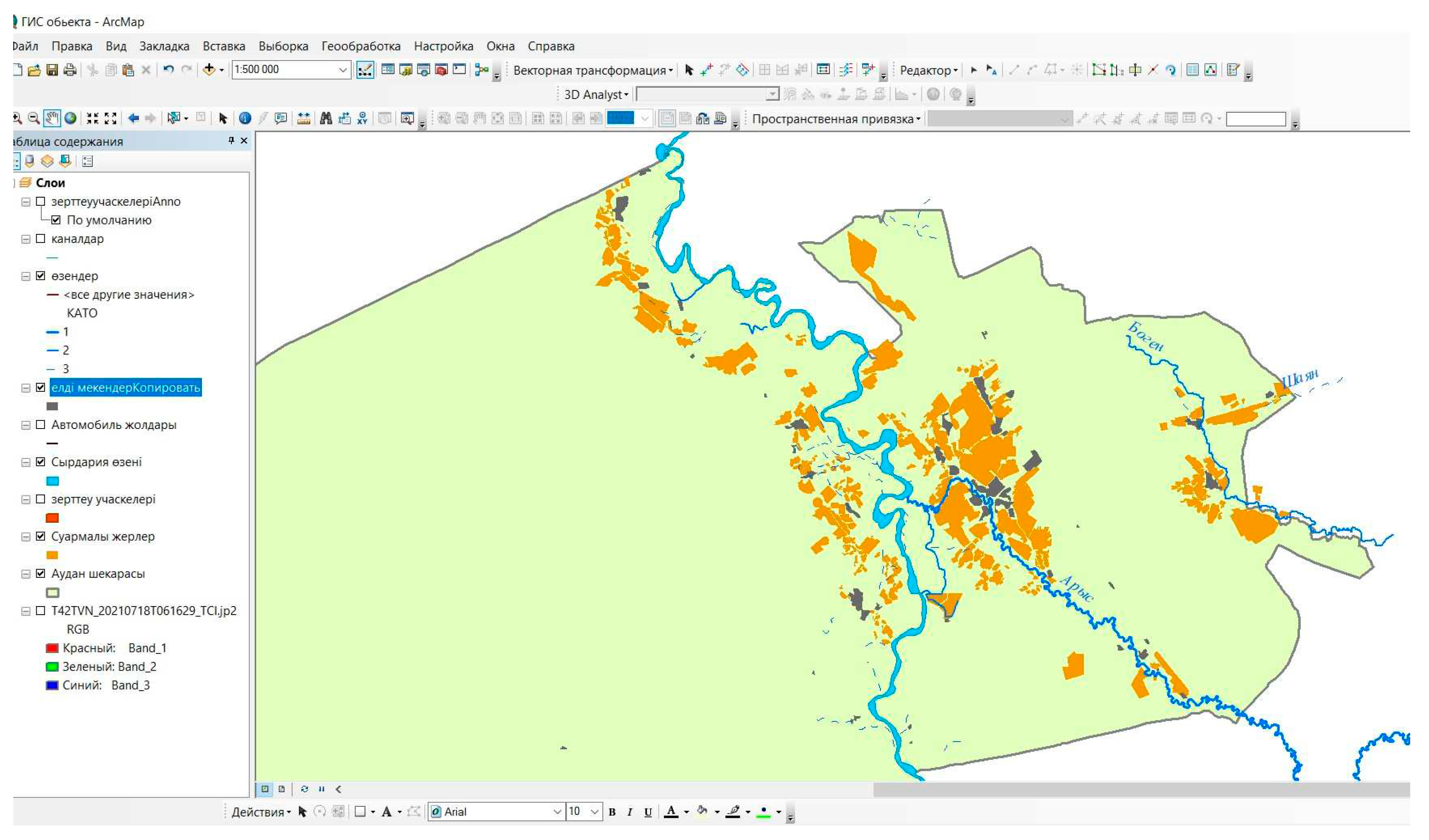
Figure 3.
Soil Salinity levels in abandoned irrigated soils in the study area.
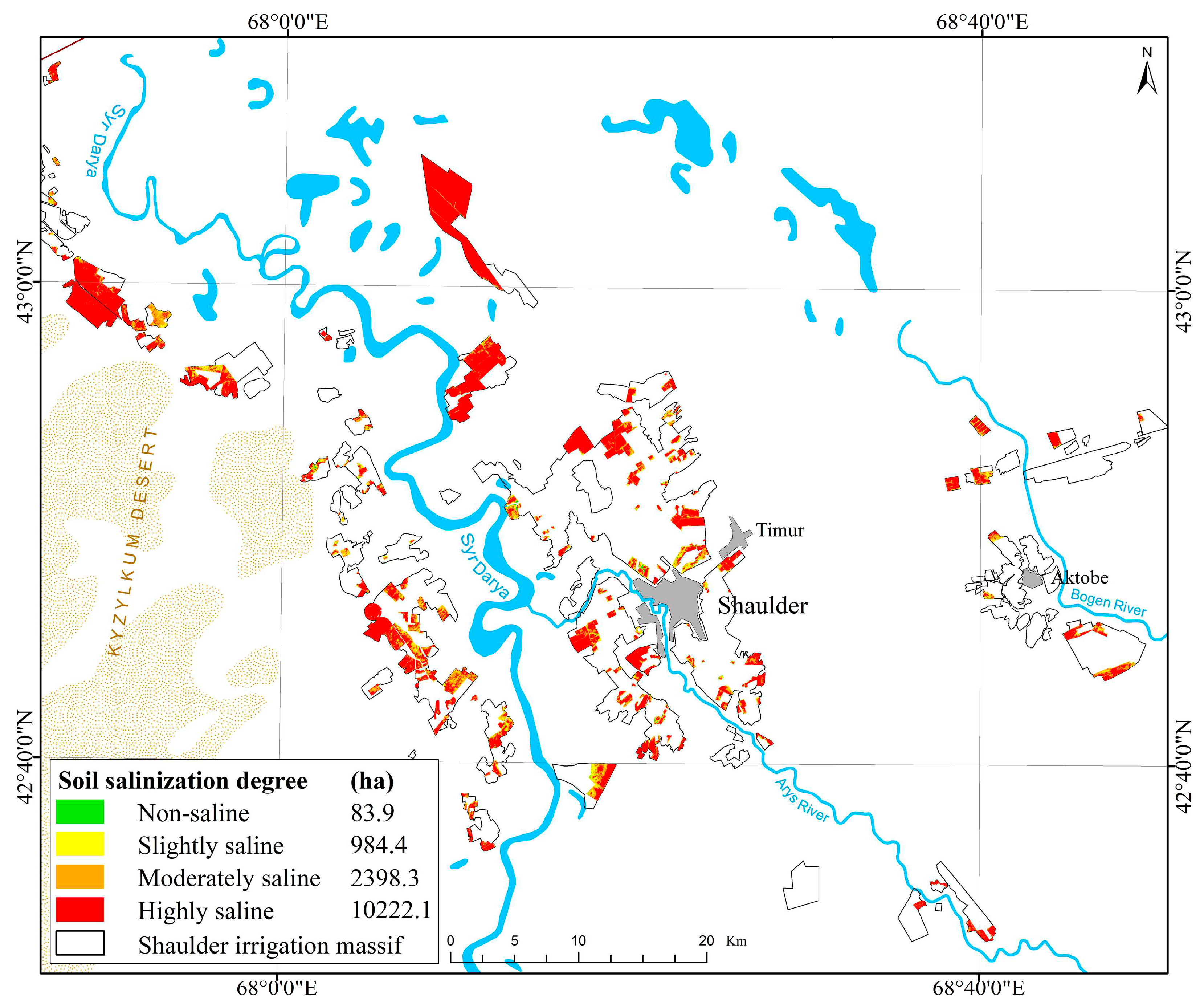
Figure 4.
methods of reclamation of saline areas of varying degrees.
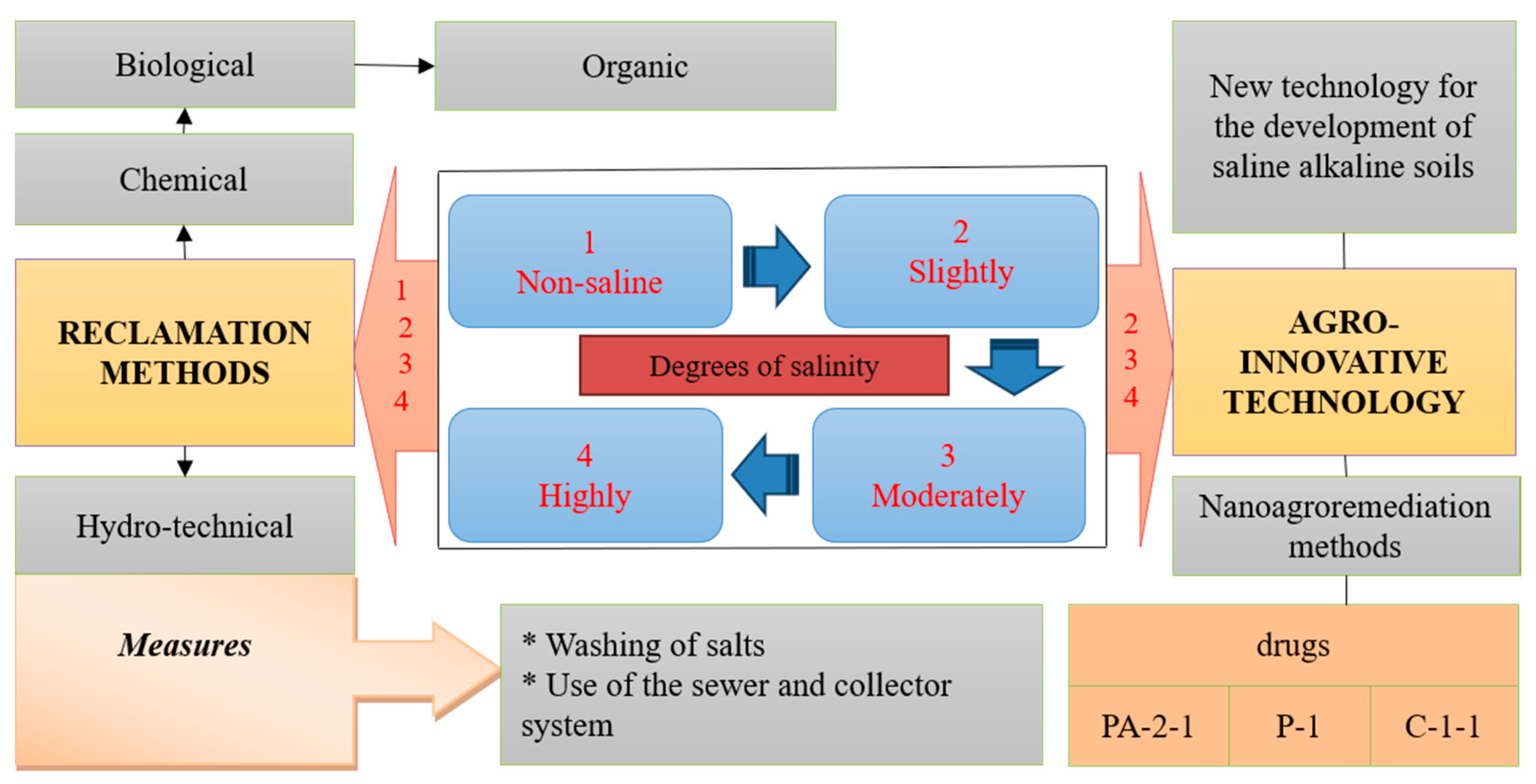
Figure 5.
the impact of agro-innovation technology on the corn root system: a) experimental version; b) control version [11].
Figure 5.
the impact of agro-innovation technology on the corn root system: a) experimental version; b) control version [11].

| The degree of salinity of the soil | "General effect" of toxic ions, mg-eq C | Influence on cultivated plants |
| Non-saline | Below 0,3 | The growth and development of plants are good, partial wilting is not observed and gives a normal harvest |
| Slightly saline | 0,3-1,0 | Plant growth slows down, and the yield decreases to 10-20% |
| Moderately saline | 1,0-3,0 | About half of the plants remain, and the yield decreases from 30% to 50% |
| Highly saline | 3,0-7,0 | Plant growth is greatly reduced, and yields are reduced by 50-80%. Only salt-resistant crops can give a satisfactory harvest |
| Very highly saline (sors) | Above 7,0 | Only some plants survive and practically the yield is destroyed |
Disclaimer/Publisher’s Note: The statements, opinions and data contained in all publications are solely those of the individual author(s) and contributor(s) and not of MDPI and/or the editor(s). MDPI and/or the editor(s) disclaim responsibility for any injury to people or property resulting from any ideas, methods, instructions or products referred to in the content. |
© 2023 by the authors. Licensee MDPI, Basel, Switzerland. This article is an open access article distributed under the terms and conditions of the Creative Commons Attribution (CC BY) license (http://creativecommons.org/licenses/by/4.0/).
Copyright: This open access article is published under a Creative Commons CC BY 4.0 license, which permit the free download, distribution, and reuse, provided that the author and preprint are cited in any reuse.


