
Submitted:
25 July 2023
Posted:
26 July 2023
You are already at the latest version
Abstract
The maternal death rate remains high in South Africa despite the availability of many existing strategies to improve the quality of service. A 30% increase in maternal mortality rate was reported between 2020-2021, with Limpopo ranking fourth highest out of nine provinces. Vhembe district remained number three with a high maternal death rate. This study explored strategies to reduce the maternal death rate and improve the provision of quality maternal healthcare services in selected hospitals of Vhembe district, Limpopo province. One hospital was purposively sampled from every four municipalities. A qualitative approach using phenomenological design was employed. Twenty-eight participants were sampled using a convenience sampling method. The semi-structured interview guide was used to collect data. An audio recorder was also used until data saturation. Data saturation was reached at the 20th participant, but the researcher continued until 28 sampled participants were interviewed. Interpretative phenomenological analysis was used following the analytical stages of interpretative data analysis. The study proposal was ethically cleared by the University of Venda Ethics Committee (FHS/22/PH/08/3108). Results indicate that despite implementing strategies to improve maternal healthcare services and reduce the maternal death rate, several factors, such as lack of material resources, shortage of staff, incompetent staff, and poor infection control, affect the quality of maternal health service in Vhembe district. Limpopo Department of Health and hospital management should ensure that hospitals have all necessary resources and support healthcare professionals through in-service training to ensure the functionality of existing strategies.
Keywords:
maternal care
; mortality rate
; quality
; services
; strategies
1. Introduction
Maternal death resulting from complications between pregnancy and childbirth remains a global public health systems challenge [1]. Approximately 287 000 women died worldwide during childbirth in 2020. Approximately 800 women died every day in 2020 due to preventable causes associated with pregnancy and childbirth globally [2]. Nearly 95% of maternal deaths occurred in poor and middle poorer countries 2020. Countries have unified to quicken Maternal Mortality Rate (MMR) decline by 2030 to reach the Sustainable development goal (SDG).
It was generally acknowledged that MMR is unacceptably high in SA [3]. A report covering 2019-2021 rates revealed that 80% of women who did not make it during childbirth received care in district hospitals where critical care, emergency medical services, and specialists may not be available [2]. Though MMR declined from 150 deaths per 100 000 births to 113 per 100 000 live births in 2019 in SA, an increase was reported between 2020-2021 [4]. The deaths were high in Limpopo, Free State, Eastern Cape, and KwaZulu-Natal. SA is dedicated to addressing concerns about inequalities through strategies implementation. Some of the strategies implemented are ESMOE, which establishes essential steps in managing obstetric emergencies [5]. ESMOE was implemented as an action plan to reduce increasing rates of MMR by building the clinical staff's self-confidence and capacity to produce desirable results in maternal care. Moreover, BANC (primary antenatal care) was also implemented to reduce MMR and improve MHC service provision targeting SDG by 2030. Furthermore, the national target is that MMR should not be more than 140 deaths per 100 000 live births [6].
Regardless of all the efforts by the Department of Health, it is evident that there are still gaps and additional work still needs to be accomplished [7]. Poor MHC service continues to be a significant concern. Moreover, most maternal deaths can be prevented, as healthcare policies, standards, and strategies are well known. The main contributing factors were the lack of resources, including human resources, and disrespect. Abuse in South African MHC services was labeled as one of the country's greatest ignominies. Physical abuse, verbal abuse, non-confidential care, and neglect were also included [2].
Limpopo was classified under some provinces with high MMR between 2020-2021. Non-pregnancy-related conditions were reported to be part of the causes of maternal deaths in Limpopo, wherein 17,6% were obstetric hemorrhage, 10,2% were pre-existing medical and surgical disorders, and 5.7% were anesthetic complications [8]. An increase in MMR in the Vhembe district was reported by saving mothers in 2018. Despite the government's effort to reduce MMR, between 2016/17 and 2018/19, there was an increase in MMR instead of a decrease in Vhembe, which emphasizes a challenge in the MHC services district [9]. Although in 2019/20, Vhembe MMR decreased to 66,5%, and it remains number 3 of districts with high MMR in Limpopo province. Against this background, this study emerged to explore strategies to improve the quality of MHC and reduce MMR in selected hospitals of Vhembe district, Limpopo province.
The following objectives were achieved:
- To explore the experiences of patients and health care professionals regarding the maternal health care services provided in selected hospitals.
- To describe factors affecting the provision of maternal healthcare services in selected hospitals.
- To explore views of midwives and doctors providing MHC services about existing strategies to reduce MMR and improve maternal health provision.
- To explore perceived strategies to improve maternal healthcare services and reduce MMR.
2. Materials and Methods
2.1. Study design
A qualitative phenomenological design was used to explore the strategies to reduce the maternal death rate and improve the provision of quality healthcare services. A qualitative phenomenological design was chosen to assist the researcher in gaining more insight into patients' and healthcare professionals' (midwives and medical doctors providing maternal health services) experiences with implemented strategies and exploring their effectiveness. The integrated guideline for reporting qualitative studies (COREQ) was utilized to generate the sections underneath, displaying how this paper addresses issues of rigor, i.e., how participants were engaged, depiction (whether the accurate participants were engaged) and reflexiveness (whether participants were engaged in a meaningful, equitable and ethical manner).
2.2. Setting
The study was conducted in four sub-districts (Thulamela, Makhado, Collins Chabane, and Musina) of Vhembe district, Limpopo province. Vhembe district is one of the five districts of Limpopo province in South Africa. The country's northernmost district shares its northern border with the Beitbridge district in Matabeleland, South Zimbabwe. The Republic of Zimbabwe surrounds the Vhembe district to the north, Mpoani (DC33) to the South, Capricorn (Dc35) to the Southwest, and the former Venda. Data were collected in four hospitals (1 per district). Interviews were conducted in a quiet room occupied by one participant at a time and the first author. A non-probability purposive sampling technique was utilized to sample hospitals. The convenience sampling method was used to sample midwives, doctors providing maternal health services, and pregnant outpatients. Twenty-eight participants formed part of the study, including three midwives, one medical doctor, and three pregnant outpatients per hospital. The first author recruited participants to participate in the study.
Furthermore, the sample size was dependent on data saturation. Out of all the participants, no one withdrew until the end of the study. Table 1, Table 2 and Table 3 Represents the biographical information of participants where M= midwives, Dr= doctors working in maternal healthcare services, and PO= pregnant outpatients.
2.3. Data collection
The first author (an MPH student on research training) conducted the interviews. A rapport was built for flawless interaction with the recruited participants. In-depth interviews were used to collect data from participants who specified their willingness to participate in the study by signing consent forms. The consent forms were signed after revealing information about the first author. That comprised researchers' characteristics such as interest in the topic, the aim of the study, and personal goals. Ethical clearance from the ethics committee of the University of Venda was obtained (FHS/22/PH/08/3108). Approval for data collection from the Limpopo Department of Health, Vhembe health district, and four selected hospitals was obtained. Data was collected for three weeks in January 2023. The interviews were guided by an interview guide encompassing three central questions: What are your views regarding the maternal health care services provided in selected hospitals? In your opinion, what factors affect the provision of maternal healthcare services in selected hospitals? What are your views regarding the existing strategies to reduce MMR and improve maternal health provision? What should be done to improve maternal healthcare services and reduce MMR?
Probing questions were asked; however, they depended on how participants responded to the central questions. Central questions were formulated in English, and during the interviews, they were explained in Tshivenda and Xitsonga to those who needed help understanding. Pretesting was conducted to test and validate the research instrument and identify any possible errors for improvement during data collection for the main study. Participants in the pretesting did not form part of the main study. Participants allowed the researcher to use audio recorders, which captured data as a backup to field notes taken throughout the interviews. The main reason for recording was to ensure that no critical information was missed. Each interview lasted for 30-40 minutes. Data saturation was reached at the 20th participant. However, the researcher covered the remaining hospital, comprising 28 sample sizes.
2.4. Data analysis
Data were analyzed using the interpretive Phenomenological Analysis (IPA) method to ensure coding and organizing emergent themes. Each transcript was read and re-read, confirming that any new insights and ideas were generated. Additionally, each audio was played multiple times to ensure that every fact was noted down. Connections across themes were identified before the following participant's transcripts and recordings were accosted. The themes that emerged from the previous cases were linked. Once all transcripts had been analyzed, outlines across transcripts were investigated, and superordinate themes were created that captured the shared experience of the participants. Participants were provided copies to ensure that the transcribed data accurately reflected what they said.
2.5. Trustworthiness
Four measures to ensure trustworthiness were followed: credibility, transferability, dependability, and conformability. Credibility was ensured by prolonged engagement with data collected and member checks, where transcribed data was sent to participants to check accuracy and resonance. Transferability was ensured by collecting detailed information and a thick description of the data. To ensure dependability, a detailed description of research methods was provided. Lastly, to ensure confirmability, notes were retained in a secure location to create an acceptable trail and determine conclusions and interpretation.
3. Results
Four superordinate themes were identified that brought together the data from all 28 participants (see Table 4). Three themes, one, two, and three (experiences in maternal health services, factors affecting maternal health services, and Recommended strategies to improve maternal healthcare and reduce MMR), were identified in all 28 transcripts. Moreover, these three (views of existing strategies/approaches) were identified in 20 transcripts, which entailed healthcare professionals only. However, some transcripts needed to be more evident. The researcher offered participants an opportunity to reflect on the care they have been receiving (patients) and the care they have provided (midwives and doctors). Some insights contributed to the creation of superordinate themes and sub-themes. Table 4 below presents superordinate themes and sub-themes that emerged from data analysis.
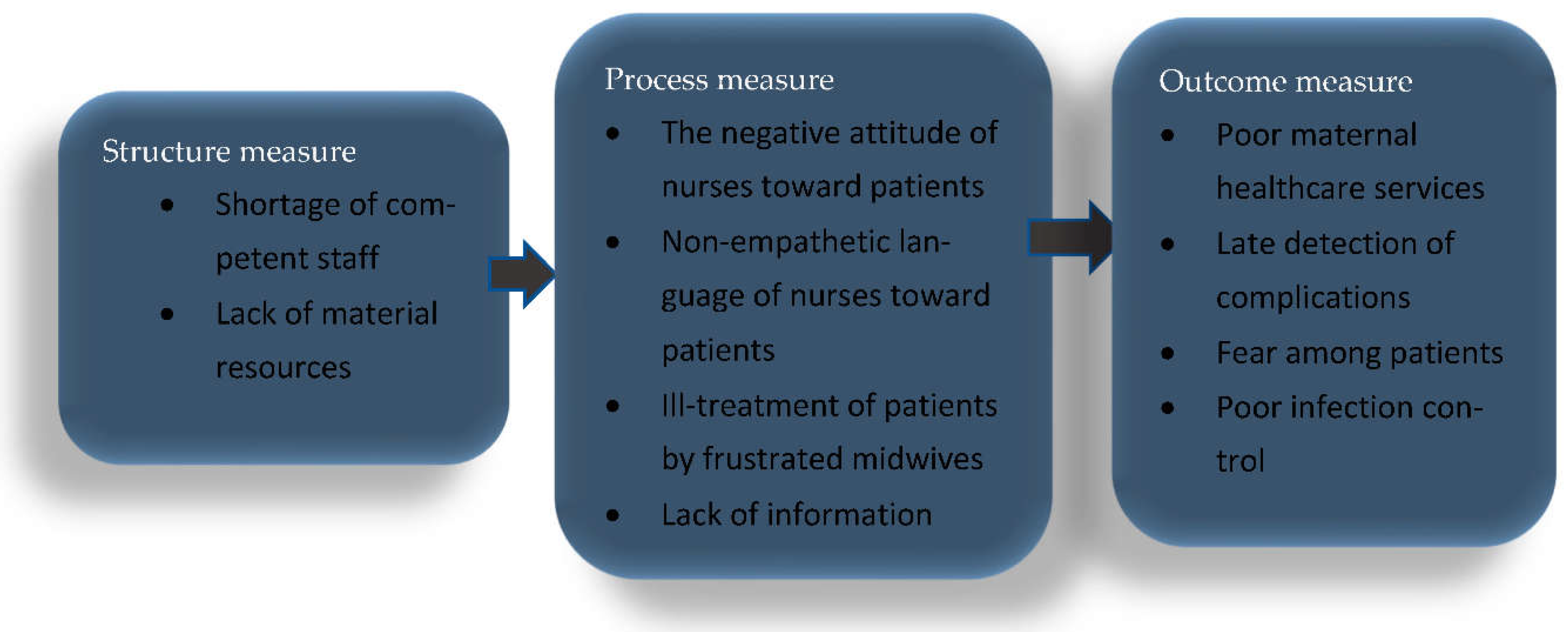
These findings can further be presented following the Donabedian framework used in this study as follows:
Figure 1.
Three components of the Donabedian model (structure, process, and outcome).
3.1. Theme 1: Patients' Experiences Regarding the maternal health care services provided in p participating hospitals
All 28 study participants narrated different experiences when asked: May you kindly share your experience of maternal health services rendered in this hospital? Shared experiences lead to poor maternal health services or maternal death. The following are subthemes that emerged from their experiences:
3.1.1. Negative attitude of nurses towards patients
To answer an open-ended question regarding their experiences, 4 participants (PO1, PO4, PO8, and PO11) revealed that they had experienced negative attitudes in the form of anger and demotivation from midwives. One (PO1) participant emphasized the issue of annoyance and ignorance and specified that she could see anger in midwives' faces. Therefore, she could not ask for help. As a result, complications may arise, leading to undesirable outcomes such as death. Some of the experiences shared are as follows:
“After giving birth, they instructed me to go to the bathroom, I was heavily bleeding, and when I got out of the bathroom there was blood everywhere. They shouted at me for using a certain bathroom, which was the closest. I apologized, and they both gave me an attitude and looked at me in a bad way as if they were disgusted” (PO8).
Participant PO1 said:
“I felt disrespected because they did not involve me in anything, I just found myself in the theatre ward for C-section without explanations. Instead of informing me that I had complications, they were just going up and down, ignoring me as if they could not see me”.
“When you fail to do something, they will ditch you and tell you to assist yourself because you know better” (PO4).
3.1.2. Non-empathetic language of nurses towards patients
Most pregnant outpatients in the study revealed that midwives use non-empathetic language accompanied by threats, scolding and rude approaches. One participant (PO5) said they mistreat them, especially if they have complications. She added that during the examination, they do not use dignified language; they use harsh tones and shout. The following are some of the experiences of participants:
“I experienced the worst with my secondborn in this hospital. I hope it will not happen again. I was slapped, and the nurse was harsh to me, using inappropriate language and telling me to push the same way I made my baby. They do not respect us at all, I arrived here for my check-up at 7, but I will leave here at 1, and when you ask them, they normally respond harshly… hmm that’s all I can say” (PO5).
“They shouted at me until I did not know what to do with myself” (PO7).
3.1.3. Frustration among Nursing and medical staff
Two participants (PO4 & PO6) disclosed that healthcare professionals are always upset. They disclosed that midwives become frustrated to such an extent that when patients ask for help, nurses shout instead of attending to them. Moreover, participants revealed that healthcare professionals fail to maintain effective communication. The following narratives evidence this:
“This will be my second time giving birth in this hospital. The experience was not that bad or good. I gave birth here in 2021, it was my first time, but the nurse that was helping me kept on leaving me alone on my own. When I told her that I was in pain, she would tell me to stop making noise because I was not the only patient in the ward. She added to say that "we are only two here, and we have two hands each, appreciate the little that you are getting." Nurses were not enough that day, if I had money, I was going straight to a private hospital" (M04).
“Midwives will shout at you from the beginning of their shifts to the end. They kept on shouting at me because I could not get some of the instructions right as I was a first mother and in pain. You could see the midwife’s frustration on her face. Later, she stopped talking to me and just performed examinations without talking to me” (PO3).
“Some midwives even instruct patients to do certain things without monitoring them closely while they are busy with their phones. I cannot wait for this week to end” (Dr1).
3.1.4. Ill-treatment of Patients by Nurses
The majority of patients reported mistreatment by healthcare professionals. Participants reported that they were being left unattended and unsupported. It was also disclosed that midwives insult and physically insult them, which explains violating their human rights (PO2). The following are some of the participants' experiences.
“I gave birth to twins in 2021 in this hospital, I was the youngest in the ward they called an older lady saying that she should come and deal with me. She kept on slapping my thighs and pinching me, I still have marks on my thighs.” (PO2)
“They were slapping a lady next to me, threatening her that if she does not push harder, they will lose her and the baby, I was scared for my life” (PO1)
3.1.5. lack of information
Most participants specified that there is a lack of information on maternal health. Two participants (PO4 & PO9) emphasized that they wanted more from the information and explanations provided by midwives. One participant (PO7) said midwives are more interested in having patients comply with their demands than allowing them to ask questions for clarity. The following narratives evidence this:
“When I gave birth for the first time my new-born baby was kept here for 3 days. They did not tell me the reasons. I asked one of the nurses she said I should ask the doctor and the following day a new doctor came in; she told me that she needs to examine the baby as her call started that day. They discharged me after three days without knowing what the problem was. As I continued attending monthly check-ups after four months, I found out that my baby has a disability called cerebral palsy” (PO4).
“I have been coming here for two months for check-ups because of some complications. They did not give me enough information on where to go to attend antenatal classes. I did not even know about those classes. I heard some ladies talking about them on the queue until I asked them. When I ask the nurse, she said I should be responsible enough to know what is expected of a pregnant woman in this hospital" (PO7).
“Nurses just do procedures without prior explanations for me to know what is happening or what to expect. I remember in 2016 they just directed me to take off my clothes without clarity” (PO9).
“I was referred from a clinic as a high-risk patient, I spent 4 hours without anyone coming to me to explain what was happening and the cause of the delay. They did not even examine me or monitor me. After 4-5 hours, I was directed to sit on a wheelchair without explanations and boom, I had a child via C-section” (PO2).
3.2. Theme 2: Factors affecting maternal care provision in participating hospitals
Based on participants’ experiences, all 28 study participants pointed out factors that lead to poor maternal health and maternal deaths in selected hospitals. Most participants disclosed that maternal health services and some deaths occurred due to a lack of material resources, shortage of staff, incompetent staff, and poor hygiene control. This observation is depicted in the following sections:
3.2.1. lack of material resource
Many participants pointed out hospitals' lack of material resources affects the maternal health system. Two participants (Dr1 & Dr3) openly stated that they use manual monitoring devices in a unit full of patients, resulting in delayed detection of conditions such as hemorrhage, which leads to death. Furthermore, midwives emphasized the shortage of birthing beds, where one participant (M4) indicated that they are forced to help patients on the floor due to the shortage of birthing beds. Moreover, pregnant women complained about water, and they disclosed that sometimes they do not bathe due to water, and the toilets are mostly not user-friendly due to water shortage. The following are some of the statements by participants:
“It is stressful to work in a hospital without proper equipment. I have been working in this hospital for three years, but we do not have proper equipment in the emergency room, and it puts our patients at risk as we must use what we have. We order every financial year, but there is no change, and their excuse is funding” (Dr1).
Participant M4 said:
“The government is failing us; we need more birthing beds. We need more of those. Women are giving birth on the floor and logging complaints directed to us. We have no control over some things here, ours is to render our services and nothing more. But one thing for sure anything can happen while a woman is lying on the floor”.
“I was admitted for three days only bathed two days, and the other day there was no water at all. They discharged me that day, and I bathed when I got home” (PO8).
3.2.2. Shortage of Staff
All 28 participants were unhappy about the lack of human resources, which was pointed out as a significant contributing factor leading to adverse outcomes in maternal healthcare services. Moreover, one participant (M9) revealed that it undoubtedly increases rates of death and dissatisfaction complaints from patients. Both parties shared their experiences concerning the shortage of staff; the following narratives were shared:
“I will take you back to when I started working in this hospital in 2020. I was assigned to a unit which had only two midwives, and the other one had recently started working, she was not that experienced. The unit was full of patients, and they all required adjacent monitoring and assessments for positive outcomes. Because of shortage of midwives, I had to assist the majority of patients alone, and as a result, one patient ended up losing her baby girl as she delivered twins, a boy, and a girl. If we had enough midwives, we would have saved that baby” (Dr2)
Participant PO4 added to say:
“This will be my second time giving birth in this hospital. The experience was not that bad or good. I gave birth here in 2021, it was my first time, but the nurse that was helping me kept on leaving me alone on my own. When I told her that I was in pain, she would tell to stop making noise because I was not the only patient in the ward. She added to say that "we are only two here, and we have two hands each, appreciate the little that you are getting." Nurses were not enough that day, if I had money, I was going straight to a private hospital."
Another participant indicated that:
“I would say there are no changes with the experience that I had while I was still a student when I gave birth and now as I am working here. I did my practical in this hospital in 2018, I used to take 15-minutes breaks because the units were always full, and the workload was just too much. There was shortage of stuff, and as students, we ended up doing some assessments without supervision. Laughter… in 2019, I gave birth here and I assisted myself somewhere somehow because I knew the challenge, and if I did not my child would have died. Even now I am assigned with an older lady she is not that active; I am doing everything alone” (M2).
3.2.3. Incompetent nursing staff
All doctors indicated that they are working with midwives who lack competence. Some pregnant women revealed that incompetent midwives were treating them. One participant doctor (Dr4) raised that the Vhembe district is still challenged by incompetent midwives who need training and supervision, especially in alternative birth positions. The following are some of the narratives shared with the researcher:
“I was assigned to a ward with an elder midwife, she does not respect me or should I say, follow my instructions. Sometimes I must rush to patients even though I am busy with others, and you will find that I instructed them to do certain things to avoid such, but I end up going to the same patient over and over again and that on its own put patients’ life and that baby is at risk” (Dr4)
A pregnant woman revealed that,
“I was referred from a clinic as a high-risk patient, I spent 4 hours without anyone coming to me to explain what was happening and the root cause of the delay. They did not even examine me or monitor me. After 4-5 hours, I was directed to sit on a wheelchair without explanations and boom I had a child via C-section. Nurses in this hospital are not competent at all, I do not wish to experience that again” (PO2).
3.2.4. Poor infection control
All categories of healthcare professionals emphasized that infection control is poor due to a shortage of sterilizers. Two midwives (M1 & M6) revealed a water shortage in hospitals, making it difficult to prevent infections as they must always wash their hands with warm water. One midwife (M8) said it is difficult to prevent infections because days can pass without water for pregnant women to bathe. The following statements support this:
“We have water problems, and this has been happening for over a year, so we find it difficult to prevent infections as we need water for that” (M 8)
“The department should ensure that we have all the resources, most especially water, because sometimes patients are forced to fetch water themselves, and if we need to sterilize some equipment, we have to go to the nearest hospital to perform that, and that tend to put patients in danger most especially if they need to be attended urgently” (M1)
Theme 3: Views on existing strategies
Participants were asked the following question, what is your view regarding existing strategies to reduce maternal death rate and improve Maternal health service provision? All 24 healthcare professionals shared their views about existing strategies implemented to improve the quality of maternal health services and reduce the maternal death rate. They shared their opinions on how they perceived those strategies. They further specified if they were effective or not.
3.3. Theme 3: Views of Healthcare Professionals regarding the existing Strategies to improve maternal care
3.3.1. ESMOE (Establishing Essential Steps in Managing Obstetric Emergencies) Formation
All doctors who formed part of the study revealed that ESMOE expands affordability and the standard of treatment for pregnant women undergoing obstetric emergencies as it shapes their confidence to function effectively. One midwife (M6) disclosed that it is effective. However, they must work as a team in maternity units to produce desirable results. The following were some of the narratives from participants:
“My view about ESMOE is that it is effective and valuable in the sense that it enhanced our knowledge and skills about maternal health services. Even though there is a modest improvement in the functionality of this hospital it has helped us in preventing direct causes of maternal deaths caused by preventable causes such as eclampsia and postpartum haemorrhage. It can also be more effective if we work as a team as healthcare professionals” (M6).
“ESMOE is essential, the department came through for us (laughter). It is very important as it can be used as an intervention in many cases, but some of the midwives in this hospital lack knowledge and they wait for the doctor to do everything, and some areas are part of their duties” (Dr4).
Another participant added to say that:
“This strategy is very helpful, but I believe that midwives need to be provided with relevant guidelines for maternity care and essential steps in the management of obstetric emergencies. I have realised that challenges are being experienced by midwives in the execution of their roles as they interface with the healthcare team” (Dr1).
3.3.2. CARMMA (Campaign for Accelerated Reduction of Maternal Mortality in Africa) implementation
Most healthcare professionals from both categories (midwives and doctors) were familiar with this strategy. They highlighted that CARMMA is a very effective strategy that enables them to promote early antenatal care, booking, and attendance of pregnant women. Moreover, they had different opinions about its effectiveness in patient adherence and willingness to make it work, especially in primary health care. This is what some of the healthcare workers said:
“CARMMA makes things easy for us as it advances access to skilled birth attendants and that on its own improves child survival. But it would have been more effective if nurses in primary healthcare refers patients on time or let me just say if obstetric ambulances arrive on time with patients. Late arrival affects CARMMA’s effectiveness as it aims to improve skilled birth by us (doctors and midwives)” (Dr2).
Participant M3 indicated that:
"As much as CARMMA advocates for "no woman should die while giving birth," we are trying our best to plan campaigns. My view about CARMMA is that it is helpful and effective because it encourages us to provide women with public information. We have midwives and health promoters teaching pregnant women about maternal health, what to do and what not to do. And I believe that if we continue like this, we are going far as a hospital".
3.3.3. BANC (Basic antenatal care) establishment
All 24 healthcare professionals specified that Banc is the essential strategy as it provides them with guidelines and knowledge to perform antenatal care effectively. Three midwives (M1, 3, and 5) highlighted that it helps them notice complications and preventable sicknesses in mothers and children on time.
“My view about BANC is that it is the best strategy that the department has ever implemented. This strategy is operational as it aids pregnant women with answers that they have about pregnancy most especially first-time mothers. Pregnant women receive health advice and guidance and that makes things easier for us as midwives” (M5).
“BANC is an essential strategy that ease maternal health service provision for us. It helps us to identify high-risk cases and come up with suitable interventions. We urge pregnant women to attend these antenatal care classes because it enables us to prevent the development of complications” (M3).
“My view about this strategy is that it is the greatest approach to prepare the family for the coming baby. BANC is beneficial, if women attend those classes it helps to lessen the stress and uncertainties of pregnant women concerning delivery process most especially first-time mothers. Those interactions and discussions help mothers to understand their states. I really enjoy antenatal classes” (M1).
3.3.4. ENAP (Every new-born action plan) Approach
Not all healthcare professionals were familiar with ENAP. Only 1 Dr (Dr3) and five midwives (M5, 8, 11,12 & 16) were familiar with it. One midwife (M3) emphasized that ENAP serves its purpose of quality maternal care improvement as they plan different interventions to achieve its purpose through ENAP. However, one doctor (Dr3) believes there is a need for periodic monitoring and reporting of progress concerning the ENAP approach. The following statements evidence this:
“Since the launch of ENAP, the district and hospitals planned actions and interventions like neonatal resuscitation and thermal care, but we do not get reports specifically for those interventions. So, my view about this strategy is just neutral. But if I am to vouch for us as healthcare professionals, I would say its working” (Dr3)
“ENAP led to progress in reducing maternal deaths rate. With the launch of this strategy, I feel more optimistic than ever about the future of new-borns and their mother’s health” (M3).
3.4. Theme 4: Perceived Strategies to Improve Maternal Healthcare and Reduce MMR
Participants were asked: What should be done to improve the provision of maternal healthcare services and reduce MMR in this hospital? All 28 participants had various suggestions that can be implemented to reduce the maternal death rate and improve the quality of maternal health services. The following are the participant's main recommendations:
3.4.1. Continuing in-service training
Eleven participants (M2, M6, M8, M9, M10, M11, M15, D1, Dr2, Dr3 & Dr4) highlighted that in-service training should be prioritized to enable healthcare professionals to provide quality services. Two Midwives (M8 & M11) believe that continuing in-service training will improve their skills and knowledge in maternal health. One doctor (Dr2) highlighted that skilled and competent healthcare professionals can achieve the reduction of MMR; therefore, they need in-service training. Participants stated the following:
“There is a gap in midwives in-service training, CTG results sometimes confuses me. I find it hard to record the baby’s heart rate and the mother’s contractions. I rely on my colleagues and that’s way too risky” (M11)
“In-service training should be provided as not all of us were not privileged enough to get caesarean workshop procedure…uhmm I still feel like I need more skills on conducting caesarean section procedure” (M8)
“If I did not take a refresher course while I was an intern as a doctor, I would not have known how to perform a caesarean section procedure” (Dr2)
3.4.2. Launching maternal outreach services
One pregnant outpatient (PO2) suggested that maternal outreaches through maternal health education in various communities could help to improve maternal health care providers and reduce the maternal death rate. She believes that if those outreaches entail free pregnancy check-ups by midwives and doctors, there might be a noticeable change in the standard of maternal health. However, one doctor (Dr1) specified that he had provided outreach programs in primary healthcare facilities and urged other healthcare professionals to consider doing that. The following are some recommendations by participants:
“Nurses and doctors need to find ways to teach us about pregnancy and what they expect from us. The clinic in my village is not functional at all and I stay far from the hospital, and when I get here you will find that they are done with antenatal classes. So, if they visit communities at least once a month, we will not miss out” (PO1)
“I visit two local clinics in this area once a month in the form of outreach programmes because I realised that they refer patients to the hospitals only to find that complications have escalated, and they could have been prevented if attended on time” (Dr1).
3.4.3. Priority equipment provision
All doctors that formed part of this study suggested that the department and hospital management ensure that all the resources are available for safer care. One doctor (Dr1) pointed out that available equipment is inadequate, and some do not function properly. Moreover, all midwives participating in the study believe that resources such as birthing beds and water should always be available.
“The department should ensure that we have all the resources, most especially water, because sometimes patients are forced to fetch water themselves, and if we need to sterilize some equipment, we have to go to the nearest hospital to perform that and that tend to put patients in danger most especially if they need to be attended to urgently” (M4).
Dr 1 indicated that:
“It is stressful to work in a hospital without proper equipment. I have been working in this hospital for three years, but we do not have proper equipment in the emergency room, and it puts our patients at risk as we have to use what we have. We order every financial year, but there is no change, and their excuse is funding”.
3.4.4. Employ more healthcare professionals
All 28 participants suggested that more healthcare professionals must be employed as that would serve as a strategy to improve the quality of maternal health services in hospitals. Two midwives (M2 & M12) highlighted that those retiring, passing away, and resigning should be replaced to avoid work overload. This is demonstrated by the following statement (s)
“More midwives and doctors should be hired; we are being overworked because we are understaffed that is the reason why we end up being demotivated…. uhhm, I’m not defending myself, but for us to be more productive, we need to be active and get enough rest” (M5).
“They need to hire more nurses because when we come here, we do not receive enough care as they will be rushing to others” (PO 9)
“They need to replace those that resigned, passed on or retired because the more they leave the more we become understaffed”. (M7)
4. Discussion
Study findings revealed that patients encounter different experiences while receiving maternal care in selected hospitals of Vhembe district, Limpopo province. Some of the experiences shared with the researcher are negative attitudes in the form of anger and demotivation from midwives. The issue of annoyance and ignorance was also pointed out; as a result, patients refrain from asking for help. This is similar to the findings of a study conducted in Bayelsa state in Nigeria that disclosed that negative attitude by midwives outweighs positive attitude as many women decide to seek care in the hands of unskilled, unexperienced and unqualified people as a way of avoiding negative attitudes in hospitals [12]. Similarly, a study conducted in Ikot Omin, Cross River estate, Nigeria, revealed that the majority of participants who were pregnant women were not satisfied with the care they received during their pregnancy because they reported negative attitudes toward midwives [13]. Contrarily a study conducted in three district hospitals of Kigali City, Rwanda, discovered that midwives have a positive attitude towards pregnant women concerning providing respectful maternity care. However, midwives reported that they face challenges such as work overload and lack of Labour monitoring materials which affects their ability to provide respectful maternal care accompanied by a positive attitude [14]. It is evident that negative attitude by healthcare professionals in African countries remains a challenge, and as a result, the standard of maternal healthcare remains poor. Consequently, women seek help from unskilled people putting their health and children's health in danger, resulting in maternal death.
The study also discovered that pregnant women experience a non-empathetic language approach by midwives. Most pregnant outpatients revealed that midwives use non-empathetic language accompanied by threats, scolding and rude approaches. This is consistent with a study conducted in a Midwife-Led Obstetric unit in the Tshwane district, South Africa, where women reported that midwives shout at them, label them, judge them, and use rude remarks while addressing them [15]. This corresponds with a study conducted in the Ndola and Kitwe districts of Zambia, where participants indicated that they were verbally abused as they were scolded, shouted at, and told hurtful words and displeasing statements and remarks [16]. Non-empathetic language is not only a concern in Limpopo province. As a result, women become scared and confused during labor because of fear of being shouted at or judged, leading to delayed detection of complications, poor maternal healthcare service, and maternal death.
Pregnant women that formed part of the study disclosed that healthcare professionals are constantly upset and become frustrated to such an extent that when they ask for help, they shout instead of attending to them. Similarly, in a study conducted in Namibia, midwives admitted that they are constantly frustrated due to a shortage of staff and workload, which leads to stress and burnout, especially during complicated Labour [17]. This is also in line with the study's findings conducted in Gauteng province, South Africa, where it was stated that irrespective of practice setting, midwives articulated frustration with procedures that prevent them from utilizing their scope of practice. Therefore they end up being frustrated while providing services [18]. A study conducted in Limpopo province also discovered that due to excessive workload, midwives experience physical exhaustion, anger, and frustration leading to poor maternal health services [19]. Due to feeling stressed and overwhelmed in the workplace, healthcare professionals are frustrated. Subsequently, they consider leaving the midwifery profession. Moreover, doctors consider opening their private practices or working for private hospitals leaving public hospitals understaffed.
Study findings revealed that the majority of patients experience mistreatment by healthcare professionals. Participants reported that they were being left unattended and unsupported. It was also disclosed that midwives insult and physically assault them, which explains violating their human rights. A study conducted in South African maternity settings reported that globally, women experience ill-treatment in a pattern of physical abuse, verbal abuse, procedures without consent, neglect, non-confidential care, and abandonment of care [20]. Similarly, a study conducted in Durban, South Africa, revealed that women described ill-treatment as verbal abuse from midwives, lack of privacy, and midwives refusing to provide care [21]. Differently, a study in Ethiopia uncovered no evidence of more systematic forms of mistreatment involving neglect and abuse by midwives.
Furthermore, healthcare professionals showed basic knowledge of patients' privacy and consent [23]. This shows there is still a concern about the ill-treatment of patients by midwives in South Africa, as previous studies also discovered mistreatment that appeared as a form of abuse. Consequently, patients stop going to hospitals where they experience mistreatment. Patients also open cases or sue those hospitals, which the other hand, will lead to a staff shortage if the healthcare professionals involved get fired or arrested.
The study's findings revealed a lack of information on maternal health in selected hospitals of Vhembe district, Limpopo province. Emphasis was laid on the fact that participants were not satisfied with the information and explanations provided by midwives. Moreover, it was revealed that midwives are more interested in having patients comply with their demands than allowing them to ask questions for clarity. This corroborates with a study conducted in Middle Eastern countries in a narrative review where women reported dissatisfaction with the information and explanations provided by health professionals, as they specified that the information was insufficient and led to feelings of insecurity [24]. This is consistent with the findings of a study conducted in India, where it was reported that midwives perform vaginal examinations without any information or consent [25]. This shows that patients' rights to information are being violated as healthcare professionals are expected to explain all procedures before implementation to allow patients to participate in the decision-making process. Therefore, patients report dissatisfaction, leading to poor treatment compliance and poor health outcomes.
The study's findings revealed several factors affecting the maternal health system in selected hospitals of Vhembe district, Limpopo province. The study's findings exposed a need for more essential materials, such as birthing beds, water, and monitoring devices, which delay the possible detection of complications in Labour wards. Similarly, a study by Mokoena exposed the lack of material resources, electronic equipment, and supplies, such as a glue meter for monitoring blood glucose and diagnosis of meningitis resulting in prolonged patient stays in the hospital. Furthermore, this corresponds with a study conducted by Musie, Peu, and Pema [26], where midwives complained that there is a shortage of equipment assisting birthing women, such as birthing stools and birthing balls. On the contrary, Moyimane, Matala & Kekana discovered that there is equipment in Hospitals; however, they must be maintained regularly. Lack of essential resources blocks healthcare professionals' ability to deliver quality healthcare services, leading to complications during labor and maternal death.
Staff shortage was identified as a significant contributing factor to poor maternal health services and maternal death. However, participants were specific enough to point out that there is a shortage of midwives, and it was revealed that they end up providing poor maternal health services as they are understaffed. These findings are consistent with a study conducted in Malawi by Makhado et al. [28], where they stated that an increment in patient-nursing proportion in maternity units is associated with a shortage of midwives, where one midwife is anticipated to assess all pregnant women, which seems to compromise and lead to poor Labour progress. According to a report published by (UNFPA), the World Health Organization (WHO) and the International Confederation of Midwives (ICM) reported that the world is facing a shortage of about 900,000 midwives globally. On the contrary, a study conducted by Moyer et al. discovered a need for more staff in various categories of healthcare professionals, i.e., laboratory technicians, doctors, and emergency medical services, not only midwives. Shortage of staff severely affects the quality of maternal health as midwives are the backbone of maternal care. The more they are affected, the more maternal health services become poor because of increased workload leading to stress and burnout.
Study findings also revealed that incompetent staff also affect the provision of maternal health services, where it was emphasized that midwives need training. This finding is in line with a study conducted in Malawi by Chirwa, Nyasulu, Modiba, and Limando [31], where it was stated that midwives are incompetent because they start working without being equipped enough to practice competency, they lack knowledge and skills as they experience difficulties in formulating data and completing assessments forms. Differently, Netshisaulu and Maputle conducted a study in Limpopo province, and they discovered that midwives are competent. However, they need more confidence in what they do, so the performance of procedures becomes slow. Midwives' incompetence results in prolonged Labour processes, complicated Labour, and an unacceptable low standard of maternal healthcare.
Poor infection control also contributes to poor maternal health and MMR. Study participants showed dissatisfaction with the state of infection control in hospitals. Findings discovered there are no sterilizers, and water shortage continues to be a problem as they need water to prevent infections. These findings are consistent with a study conducted in Turkey, where the study's main results revealed poor infection control practice in hand hygiene, glove utilization, and usage of bandages, resulting in hospital-acquired infection [33]. Similarly, a study conducted in South Africa by Maphumulo & Bhengu revealed that patients and staff confirmed that some hospital departments had unacceptable physical environments, such as dirty toilets, to deliver quality health care. This finding corresponds with Lowe, Word, Janjanin, Barnet & Graham [35], where data collection occurred in 8 countries (Central African Republic, South Sudan, Democratic Republic of the Congo, Mali, Nigeria, Lebanon, Yemen, and Afghanistan). They discovered several hospital sites needed more functional water points in patient care areas. They find it difficult to wash hands, bathe, and clean the wards; consequently, it is difficult to prevent infections. Poor infection control is a challenge globally. Due to poor infection control, patients are more likely to acquire hospital-acquired infections, which might lead to severe complications in hospitals if detected late.
The study participants had different views about strategies to reduce MMR and improve MHC. The study's findings revealed that ESMOE expands affordability and the standard of treatment for pregnant women going through obstetric emergencies as it shapes health professionals working in midwifery's confidence to function effectively. However, it was also indicated that it is effective; healthcare professionals must work as a team in maternity units to produce desirable results. This finding is consistent with the study's findings in 30 district hospitals from 8 districts throughout South Africa, which revealed that ESMOE had improved the skill and knowledge of maternity healthcare providers [36]. On the contrary, a study conducted in Kwazululu-Natal discovered that despite the implementation of ESMOE, maternal mortality remains high in Kwazulu-Natal as it cannot be effectively implemented by all midwives [37]. This finding is in line with the findings of a study by Makhado, Mangena-Netshikweta, Mulondo & Olaniyi [29], which emphasized that irrespective of ESMOE implementation, more needs to be done for midwives and doctors to be able to manage obstetric complications and reduce maternal deaths in low- and middle-income countries. This study shows that if there is no teamwork, there will always be challenges with ESMOE utilization for healthcare professionals to manage obstetric emergencies, leading to poor maternal health care and maternal death.
Study findings emphasized that CARMMA is a very effective strategy enabling healthcare professionals to promote early antenatal care, booking, and attendance of pregnant women. This finding corroborates with objectives outlined in a Northwest, South Africa study. CARMMA has improved access to skilled birth attendants by allocating dedicated obstetric ambulances to every sub-district [37]. This finding also corroborates with the South African National Department of Health [38], which highlighted that CARMMA was implemented to lower the unsatisfactorily high maternal and child death rate in SA by promoting early bookings and antenatal class attendance. The study findings firmly emphasize that antenatal classes attendance and early bookings are essential features of quality healthcare services.
The study's findings revealed that BANC is an essential strategy. It provides healthcare professionals with guidelines and knowledge to effectively perform antenatal care, helping them notice complications and preventable sicknesses in mothers and children on time. This finding is consistent with the South African Maternal, Perinatal, and Neonatal Health policy implemented by the South African National Department of Health [38], which highlighted that through BANC, pregnant women who attend antenatal classes would be screened so that healthcare professionals can detect and prevent maternal complications that might occur before and after birth. This finding aligns with a study by Spiby, Stewart, Watts, Hughes & Slade [39], which stated that the BANC strategy helps to avoid complications during birth as concerns can be detected early during antenatal screening. Complete application of BANC will continue to produce desirable outcomes of maternal health service in hospitals as complications and preventable sicknesses will be detected on time.
The study discovered that most healthcare professionals that formed part of the study needed to be more familiar with ENAP. Moreover, findings emphasized that ENAP is serving its purpose, quality of maternal care improvement, as healthcare professionals plan different interventions through ENAP. It was also highlighted that there is a need for periodic monitoring and reporting of progress with the ENAP approach. Contrarily a study conducted in Iran discovered that ENAP is impractical because they identified holdups in maternal healthcare after analyzing a tool to identify obstacles delaying maternal care through ENAP [40]. Thus far, no studies have been conducted in SA to explore ENAP's effectiveness. Additionally, based on the study's findings, it is necessary to re-introduce ENAP to monitor its effectiveness based on healthcare professionals' views and understanding.
The study discovered that various interventions could be executed to improve the quality of MHC services and reduce MMR. Participants of this study suggested that there should be continuing in-service training to enhance midwives' skills and knowledge for quality maternal health service provision. Similarly, a study in Ghana emphasized that midwives should be provided with in-service training to up-skill midwives' knowledge to deliver health care services that would increase client satisfaction in childbirth care services in public health centers [30]. This finding is consistent with the findings of the scoping review that focused on Sub-Saharan Africa by Welsh, Hounkpatin, Gross, Hanson & Moller (2022) that to reduce maternal and neonatal morbidity, midwives should have access to “evidence-based in-service training materials” that comprise routine intrapartum care and antenatal care. Therefore, to reduce MMR and improve the quality of maternal health service, midwifery healthcare providers should be provided with in-service training that comprises routine intrapartum care and antenatal care.
It is also believed that launching maternal outreach services can improve maternal health service provision and reduce MMR in Vhembe district hospitals. Participants suggested that maternal outreach through maternal health education in various communities, accompanied by free check-ups, could help improve MHC provision and reduce MMR. This finding validates the findings of the study conducted in Ethiopia that community outreach services should be implemented to improve the knowledge of pregnant women about their condition and reduce the development finding of complications [41]. Findings of a study conducted in Gert Sibande in Mpumalanga also suggested that maternal outreach services should serve as an intervention for healthcare professionals to screen and refer to appropriate healthcare professionals as that will help to reduce the number of consultations and hospital admissions [42]. The study's findings are comparable to those conducted in Australia, emphasizing that outreach programs lessen self-referrals. Therefore, outreach programs should continue in local communities [43]. As suggested in other countries, maternal outreach programs would benefit primary and secondary healthcare facilities, especially in conducting health talks and tracing high-risk pregnant women.
Priority equipment provision was also suggested as a strategy that can assist in providing quality MHC and reduce MMR, where it was suggested that the department and hospital management should ensure that all the resources, such as birthing beds, are available for safer care. Correspondingly, a study conducted in Germany suggested that to improve the quality of maternal and child healthcare as a step toward reaching the SDG, the availability of equipment should be prioritized in public healthcare facilities [44]. This finding is consistent with recommendations suggested by a study conducted in Tanzania which suggested that with high maternal and child deaths developing globally, the government and other stakeholders should ensure the provision of the necessary equipment to public hospitals and ensure the functionality of that equipment [45]. The study strongly suggests that equipment should be made available in public hospitals all the time because lack of equipment affects maternal health negatively.
The study participants also suggested that the Department of Health should employ more healthcare professionals, which would serve as a strategy to improve the quality of maternal health services in hospitals. It was also highlighted that those retiring, passing away, and resigning should be replaced to avoid workload. The findings are compatible with a study conducted in a public hospital in Tshwane, South Africa, that emphasized that more midwives need to be employed because the shortage of midwives was reported to be directly related to poor provision of quality care because of increased workload that leads to stress and burnout [46]. Similarly, a study conducted in Rundu immediate hospital and Nyangana district hospital, Kavango East region in Namibia, attested that several studies show that there is a global shortage of midwives causing significant problems in hospitals and clinics; therefore, it was suggested that more midwives need to be hired to address the shortage of staff in maternal health [47]. This finding is in line with a suggestion from a study conducted in Iran stating that to improve midwifery care, health policy should consider both the quality and quantity of midwifery education and promote midwifery education and promote midwifery human resources by employing more midwives [48]. The study implies that the government should invest in hiring more midwives in public hospitals for proper support and provision of quality maternal health.
Limitations of the study
- Some participants (pregnant outpatients) were reluctant to open up, fearing that whatever they said may be used against them.
- The findings of a study from medical doctors working under maternal health services cannot be generalized to a broader population because a smaller number of doctors were interviewed.
- The duration of the interviews was limited as participants needed to agree to set a proper appointment, they preferred to be interviewed the day the researcher visited the hospital, so it limited some to elaborating their responses as they were on duty.
- Female midwives were more willing to participate than males. Therefore, only female midwives were interviewed, and the researcher did not hear the males' views.
5. Conclusions
Even with all strategies launched throughout all the districts in SA by the National Department of Health, the standard of maternal health service still needs to improve in Vhembe district, Limpopo province. Although healthcare professionals find some strategies effective and helpful, periodic monitoring needs to be done to determine loopholes and manage them on time. Lack of material resources, shortage of staff, incompetent staff, and poor infection control contribute to maternal deaths and poor maternal healthcare services. In acknowledgment of those factors, required resources should be made available all the time; providing continuing in-service training to midwives, launching maternal health outreach services, and employing more skilled healthcare professionals will serve as interventions to assist in reducing MMR and improve the provision of quality healthcare services in Vhembe district, Limpopo province as well as assisting in reaching SDG by 2030. It is recommended that the department hire more midwives as those passing on, resigning, and retiring are not being replaced. Guarantee that hospitals always have all necessary resources, such as water and birthing beds. Furthermore, the department should ensure that midwives receive emotional and physical support as they experience excessive stress when dealing with childbirth complications with little staff support. Moreover, the study recommends frequent monitoring of the maternal healthcare system to ensure adequate functionality in healthcare facilities. Ensure that ESMOE be accompanied by immediate significant effort on the part of the Department of Health in South Africa to monitor and encourage midwives to implement the utilization of skills and protocols that they learned to manage obstetric emergencies.
Author Contributions
Conceptualization, T and TG.; methodology, T, validation, T., TG; formal analysis, T.; investigation, T.; resources, T.; data curation, T.; writing—original draft preparation, T.; writing—review and editing, TG.; supervision, TG, AG. project administration, T.; funding acquisition, T. All authors have read and agreed to the published version of the manuscript.
Funding
This study was funded by the National Research Foundation of South Africa.
Institutional Review Board Statement
The study was conducted in accordance with the Declaration of Helsinki and approved by the Institutional Ethics Committee of the University of Venda (FHS/22/PH/08/3108 August 2022).
Informed Consent Statement
Informed consent was obtained from all subjects involved in the study.
Data Availability Statement
data is available upon request at tshisikhawe01@gmail.com.
Public Involvement Statement:
No public involvement in any aspect of this research.
Guidelines and Standards Statement:
This manuscript was drafted against the integrated guideline for reporting qualitative studies (COREQ) [10].
Acknowledgments
Gratitude goes to the sampled hospitals' Chief executive officers and managers who permitted researchers to collect data from their healthcare facilities. Further gratitude goes to the National research foundation of South Africa for funding the study. Additional appreciation goes to the participants from sampled hospitals, who created time from their busy schedules to provide the information I needed. Prof T Lumadi and Dr. B Tlou for verifying the articles at no cost.
Conflicts of Interest
The authors declare no conflict of interest.
References
- References must be numbered in order of appearance in the text (including citations in tables and legends) and listed United Nations Children’s Fund. (2021). Maternal mortality data.
- World Health Organisation. (2023). Maternal mortality. Pretoria, South.
- Ramavhoya, T., Maputle, M.S., & Lebese, T.R. (2022). Developing and prioritizing strategies to improve the implementation of maternal healthcare guidelines in South Africa: The nominal group technique. African Journal of primary health care & family medicine. [CrossRef]
- Maswime, S., & Chauke, L. (2022). How to prevent maternal death. University of Venda, Limpopo.
- Tomlinson, J. (2018). Obstetric GA’s. Am I doing it right? School of Clinical Medicine: Discipline of Anaesthesiology and Critical Care, University of Kwazulu-Natal.
- Karkee, R., Budhathoki, B., Maharjan, N., & Manandhar, D.S. (2022). Policies and actions to reduce maternal mortality in Nepal: perspectives of key informants. Sexual and Reproductive Health Matters: Vol 29 (2). [CrossRef]
- Magqadiyane, S. (2022). A model for improving quality of care in maternal health facilities in South Africa. Nursing Department, University of South Africa.
- Mothapo, E.K., Maputle, S.M., Shilubne, H.N., & Netshikweta, L. (2020). Challenges Midwives in Limpopo Province Encounter when Implementing Saving Mothers Recommendations. Vol 14(1): 292-299. [CrossRef]
- Massyn N., Day, C., Ndlovu, N., & Padayachee, T. (2020). District Health Barometer. Durban: Health System Trust.
- Tong A, Sainsbury P, Craig J. Consolidated criteria for reporting qualitative research (COREQ): a 32-item checklist for interviews and focus groups. International Journal for Quality in Health Care. 2007. Volume 19, Number 6: pp. 349 – 357. 19, Number 6.
- Donabedian, A (2005) Evaluating the Quality of Medical Care, The Milbank Quarterly, 83(4):691-729.
- Olayinka, O.A., Mombel, M.O., Achi, T.O., & Azibaben, I. (2012). Perceived effects of midwives’ attitude towards women in labor in Bayelsa state, Nigeria. Scholars Research Library.
- Eko, I.E., & Edet, O.B. (2022). Women’s satisfaction with maternity care and its associated factors in Ikot Omin, Nigeria. African Journal of Midwifery and Women’s Health, vol. 16, No. 1. [CrossRef]
- Uwamahoro, V., Sengoma, J.P.S., Ndagijimana, A., & Humuza, J. (2019). Perceptions and Attitude of Midwives on Respectful Maternity Care During Childbirth: A Qualitative Study in Three District Hospitals of Kigali City of Rwanda.
- Malatji, R., & Mabiba, S. (2020). Disrespect and Abuse Experienced by Women during Childbirth in Midwife-Led Obstetric Units in Tshwane District, South Africa: A Qualitative study. Department of Public Health, Sefako Makgatho Health Science University of Venda.Int J Environ Res Public Health. Vol (22), 17 (10): 3667. [CrossRef]
- Experiences and drivers of verbal abuse among women during labor and delivery in Ndola and Kitwe districts of Zambia, Cogent Medicine. [CrossRef]
- Ndikwetepo, M.N., & Strumpher, N. (2017). Midwives’ experiences of stress due to emergency childbirths in a Namibian regional hospital. African Journal of Nursing and Midwifery, Vol 19, No. 1. [CrossRef]
- Tolsma, M., Temane, A., Tagutanazvo, O.B., Lukhele, S., & Nolte, A.G. (2021). Experiences of midwives in providing care to laboring women in varied healthcare settings: A qualitative study. Health SA. [CrossRef]
- Simane-netshisaulu, K.G. (2022). Student to midwife transition: newly qualified midwives experiences in Limpopo province. Health SA. [CrossRef]
- Honikman, S., Fawcus, S., & Meintjes, I. (2015). Abuse in South African maternity settings is a disgrace: potential solutions to the problem. S Afr Med J, 105(4):284-6. [CrossRef]
- Maphumulo, S., Haskins, L., Luthuli, S., & Horwood, C. (2021). Health workers disrespectful and abusive behavior towards women during labor and delivery: a qualitative study in Durban, South Africa. Plos One. [CrossRef]
- Burrowes, S., Holcombe, S., Jara, D., Carter, D., & Smith, K. (2017). Midwives' and patients' perspectives on disrespect and abuse during labor and delivery care in Ethiopia. Pregnancy childbirth, Vol 17 (263). [CrossRef]
- Hussein, A. A., Dahlen, H.G., Ogunsiji, O., & Schied, V. (2018). Women’s experiences of childbirth in Middle Eastern countries: A narrative review. Midwifery, Vol 59. [CrossRef]
- Mayra, K., Matthews, Z., & Padmadas, S.S. (2022). Why do some healthcare providers disrespect and abuse women during childbirth in India? BMC Pregnancy Childbirth, Vol 22 (318).
- Musie, M.R, Peu, M.D., & Pema, V. (2019). Factors hindering midwives' utilization of alternative birth positions during labor in a selected public hospital. Afr J prim healthcare fam, med online, Vol 11, No 1. [CrossRef]
- Moyimane, M.D., Matlala, S.F., & Kekna, M.P. (2017). Experiences of nurses on the critical shortage of medical equipment at a rural district hospital in South Africa: a qualitative study. Pan Afr Med J. [CrossRef]
- Makhado, L.C., Mangena-Netshikweta, M.L., Mulondo, S.A., & Olaniyi, F.C. (2022). The roles of obstetric training skills and utilization of maternity unit protocols in reducing perinatal mortality in Limpopo Province, South Africa. Vol 10(4):622. [CrossRef]
- World Health Organisation. (2021). Maternal health. Pretoria, South Africa.
- Moyer, C.A., Rominski, S., Nakau, K.E., Dzomeku, M.V., Agyei-Baffour, P., & Lori, J.R. (2016). Exposure to disrespectful patient care during training: Data from midwifery students at 15 midwifery schools in Ghana. Midwifery, vol 41: 39-44. [CrossRef]
- Chirwa, M.D., Nyasulu, J., Modiba, L., & Limando, M. (2023). Challenges faced by midwives in the implementation of facility-based maternal death reviews in Malawi. BMC pregnancy and childbirth. [CrossRef]
- Netshisaulu, K.G., & Maputle, M.S. (Expected clinical competence from midwifery graduates during community services placement in Limpopo province, South Africa. Health SA. [CrossRef]
- Scar, S., Turgut, H., Toprak, S., Cirak, B., Coskun, E, Yilmaz, O., & Tekin, K. (2006). A retrospective study of central nervous system shunt infections diagnosed in a university hospital over four years. BMC Infectious Diseases. [CrossRef]
- Maphumulo, W.T, & Bhengu, B.R. (2019). Challenges of quality improvement in the healthcare of South Africa post-apartheid: A critical review. Curations. [CrossRef]
- Lowe, H., Woodd, S., Lange, I., Janjanin, S., Barnet, J., & Graham, W. (2021). A qualitative study of challenges and opportunities for infection prevention and control in hospitals in conflict-affected settings. BMC conflict and health. [CrossRef]
- Makin, J.D., Bergh, A.M., Bezuidenhout, C.M., & Pattinson, R.C. (2015). Essential steps in managing obstetrics emergencies (ESMOE): Is onsite saturation training equivalent to off-site saturation training? University of Cape Town.
- Lubbe, W. (2013). CARMMA-The campaign for accelerated reduction of maternal mortality in Africa. Journal of Neonatal Nursing, 19 (6): 301-302. [CrossRef]
- Sewnunan, A. (2021). A critical analysis of the implementation of obstetric management guidelines, on common causes of maternal deaths, as applicable to midwives. Faculty of health sciences, Durban University of Technology.
- South African National Department of Health. (2021). South African Maternal, Perinatal, and Neonatal health policy.
- Spiby, H., Stewart, J., Watts, K.., Hughes, A.J., & Slade, P. (2022). The importance of face-to-face, group antenatal education classes for first-time mothers: A qualitative study. Midwifery, Epub.
- Mirbana-Hashemi, F., Tafeyi, B., Rampisheh, Z., Tehrani-Banihashemi, A., Ramezani, M., Khalili, N, Pournik, O., Taghizadeh-Asl, R., Habibelani, A., Heidarzarzadeh, M., & Moradi-Lakeh, M. (2021) progress towards Every New-born Action Plan (ENAP) implementation in Iran: obstacles and bottlenecks. BMC pregnancy childbirth. [CrossRef]
- Bac, M., Pattinson, R.C., & Bergh, A, M. (2019). Changing maternal and perinatal health priorities in Gert Sibande District, South Africa. University of Pretoria, Vol 109, No 11.
- Lumadi, G.T., & Matlala, S.M. (2019). Perceptions of midwives on shortage and staff retention at a public hospital in Tshwane District. ResearchGate. [CrossRef]
- Welsh, J., Houkptain, H., Gross, M.M., Hanson, C., & Moller, A.B. (2022). Do in-service training materials for midwifery care providers in Sub-Saharan Africa meet international competency standards? A scooping review 2000-2020. BMC Medical Education. [CrossRef]
- Abimbola, S., Baatiema, L., & Bigdeli, M. (2019). The impacts of decentralization on health system equity, efficiency, and resilience: a realist synthesis of the evidence. Health Policy Plan. [CrossRef]
- Goyet, S., Broch-Alvarez, V., & Becker, C. (2019). Quality improvement in maternal and new-born healthcare: lessons from programs supported by the German development organization in Africa and Asia. BMJ Glob Health. [CrossRef]
- Nyanjara, s., Machuve, D., & Nykanen, P. (2022). Maternal and Child Health Care Quality Assessment: An Improved Approach Using K-means Clustering. Journal of Data Analysis and Information Processing, vol 10, NO. 3. [CrossRef]
- Matlala, M.S., & Lumadi, T.G. (2019). Perceptions of midwives on shortage and staff retention at a public hospital in Tshwane District. Science direct. [CrossRef]
- Kandjimi, E. (2021). Effects of the shortage of midwives on performance and quality of care in the maternity ward, Rundu intermediate hospital and Nyangana district hospital, Kavango East region. Master of Nursing, University of Namibia.
- Khosvari, S., Babaey, F., & Abedi, P. (2022). Strategies to improve the quality of midwifery care and developing midwife-centered care in Iran: analyzing the attitudes of midwifery experts. BMC pregnancy childbirth. [CrossRef]

Table 1.
Biographical information of midwives.
| PARTICIPANTS (CODES) | GENDER | AGE | HOSPITAL | NO. OF YEARS WORKING IN A HOSPITAL |
|---|---|---|---|---|
| M 1 | Female | 52 | Hospital E | Two years |
| M 2 | Female | 29 | Hospital E | Eight years |
| M 3 | Female | 35 | Hospital E | Two years |
| M 4 | Female | 29 | Hospital A | Two years |
| M 5 | Female | 31 | Hospital A | 14 years |
| M 6 | Female | 42 | Hospital A | Four years |
| M 7 | Female | 40 | Hospital F | Four years |
| M 8 | Female | 56 | Hospital F | 16 years |
| M 9 | Female | 30 | Hospital F | Three years |
| M 10 | Female | 31 | Hospital C | Two years |
| M 11 | Female | 25 | Hospital C | Six years |
| M 12 | Female | 27 | Hospital C | 11 years |
Table 2.
Biographical information of doctors working in maternal health services.
| PARTICIPANTS (CODES) | GENDER | AGE | HOSPITAL | NO. OF YEARS WORKING IN A HOSPITAL |
|---|---|---|---|---|
| Dr 1 | Male | 34 | Hospital E | Three years |
| Dr 2 | Male | 38 | Hospital A | Three years |
| Dr 3 | Male | 40 | Hospital F | Five years |
| Dr 4 | Female | 31 | Hospital C | Two years |
Table 3.
Biographical information of pregnant outpatients.
| PARTICIPANTS (CODES) | GENDER | AGE | HOSPITAL |
|---|---|---|---|
| PO 1 | Female | 31 | Hospital E |
| PO 2 | Female | 33 | Hospital E |
| PO 3 | Female | 24 | Hospital E |
| PO 4 | Female | 19 | Hospital A |
| PO 5 | Female | 32 | Hospital A |
| PO 6 | Female | 23 | Hospital A |
| PO 7 | Female | 20 | Hospital F |
| PO 8 | Female | 38 | Hospital F |
| PO 9 | Female | 26 | Hospital F |
| PO 10 | Female | 29 | Hospital C |
| PO 11 | Female | 40 | Hospital C |
| PO 12 | Female | 31 | Hospital C |
Table 4.
Summary of results from data analysis.
| Experiences in maternal health services | Factors affecting maternal health services | Views on existing strategies/approaches | Recommended strategies to improve maternal healthcare and reduce MMR |
|---|---|---|---|
|
|
|
|
Disclaimer/Publisher’s Note: The statements, opinions and data contained in all publications are solely those of the individual author(s) and contributor(s) and not of MDPI and/or the editor(s). MDPI and/or the editor(s) disclaim responsibility for any injury to people or property resulting from any ideas, methods, instructions or products referred to in the content. |
© 2023 by the authors. Licensee MDPI, Basel, Switzerland. This article is an open access article distributed under the terms and conditions of the Creative Commons Attribution (CC BY) license (http://creativecommons.org/licenses/by/4.0/).
Copyright: This open access article is published under a Creative Commons CC BY 4.0 license, which permit the free download, distribution, and reuse, provided that the author and preprint are cited in any reuse.


