
Submitted:
25 July 2023
Posted:
25 July 2023
You are already at the latest version
Abstract
The construction of large-scale water diversion projects alleviated effectively the current situa-tion of uneven distribution of water resources in China. However, due to the siltation of very fine sediment and organic matter on the side wall of the open channel, and the slow velocity of the side wall flow field, it is easy to produce epipelic algae, which affects water quality. For the prototype observation cannot be used to predict the series of flow in real time, and the mathe-matical model calculation is affected by parameter limitations, these two methods often cannot truly reflect the hydrodynamic characteristics of open channel with epipelic algae. Therefore, by referring to the design parameters of the water diversion project channel, this paper takes the epipelic algae growing on the side wall of the open channel as the research object, and uses the scale of 1:30 to carry out the generalized flume experiment. Through the analysis of the physical characteristics of the prototype sample, and the simulation of the cohesive force between the oblique side wall and the epipelic algae, the multi-group and multi-series hydrodynamic tests are carried out. The flow velocity distribution law and the development and change of the tur-bulent vortex on the side wall are analyzed. It has important scientific guiding significance and practical value for water quantity regulation water regulation and water quality safety protec-tion of long-distance projects.
Keywords:
oblique side wall of open channel
; epipelic algae
; flume experiment
; prototype observation
1. Introduction
Through the investigation of the oblique side wall of the artificial open channel, it is found that due to the slow flow velocity, the precipitation of river organic matter and very fine sediment, and the nourishment of sunlight, the side wall of the open channel often produces epipelic algae that affect the water quality and landscape environment (Figure 1). In recent years, the water transfer project has attracted much attention. Through the connection between the three water transfer lines of the east, middle and west lines and the four major rivers of the Yangtze River, Yellow River, Huaihe River and Haihe River, the overall layout with 'four horizontal and three vertical' as the main body is formed, which is conducive to the realization of the rational allocation of water resources in China from north to south and from east to west. However, the problem of water quality safety in the development of water diversion projects is particularly important. Large-scale water diversion projects have many potential safety hazards of water pollution accidents due to long channels, multiple canal sections intersecting with many rivers and transportation buildings. A small amount of fine-grained sediment due to wind carrying on the side wall of the artificial channel provide nutrients for the growth of algal clusters. When natural conditions such as light are suitable in some channels with low flow rates, it is extremely easy to break out the frenzied proliferation of algal clusters.
Experts and scholars have achieved rich results in the study of planktonic algae in rivers, lakes and reservoirs. However, the research on the hydrodynamic mechanism of the erosion and shedding of algae mass is quite rare. At present, the research results on the growth of algae mass mainly focus on two aspects: hydrodynamic factors and environmental factors such as nutrients, light and temperature. The growth and reproduction of algal clusters and the occurrence of algal blooms are the results of the combined effects of water environment and hydrodynamic forces [1-2]. Their effects on the growth of different algal clusters are qualitatively consistent, but there are certain differences among algal clusters in quantification. The research results of scholars such as Desortová B [3], Li Feipeng [4-6], Wang Liping [7], Long Tianyu [8-9] all show that the slow flow rate is the main cause of frequent water blooms. Some scholars [10-12] believe that water flow affects the growth of algal clusters by using the mixing and material transport of water bodies such as dissipative vortices, and the scale of turbulent dissipative vortices is an important parameter affecting the growth of algal clusters. The growth characteristics of periphyton have a great relationship with its substrate. Pei Guofeng et al. [13] compared the growth of periphyton on different artificial substrates, and found that polyethylene plastic plate was the most suitable for the growth of benthic periphyton, compared with granite, glass and wood plate. There was no significant difference in the species and biodiversity index of periphyton on granite and natural matrix pebble. Yi Kelang and Dai Zhigang [14] found that the community establishment of the algal mass was not related to the roughness of the substrate, but determined by the living habits and structure of the algal mass. Liu Haiping et al. [15] believed that the surface roughness of the substrate can affect the growth of the algal mass, and the species richness of the algal mass growing on the rough surface is larger than that of the smooth surface substrate. The epipelic algae attached to the oblique side wall of the open channel directly determines its difference from the cohesive fine sediment incipience at the bottom of the river or channel.
The influence of algae clusters on the water environment of the channel wall is more prominent only when it is washed off into the water flow, especially when the algae clusters washed off along the way are gathered somewhere downstream, which will cause great harm to the water quality of the local channel section. Unfortunately, there are few reports on the research of the problem of the erosion and shedding of the algae group, especially the algae group and the attached mud are interwoven and mixed together on the concrete, which makes the problem more complicated and brings great difficulties to the management and water dispatching. Due to the inability to analyze the hydrodynamic changes of the epipelic algae on the side wall of the open channel in real time according to the changes of the flow conditions in the prototype observation, and the inability to simulate and observe the erosion and shedding process in the whole cycle, the rationality of the model design will directly determine the authenticity of the simulation and the reliability of the test results.
In this flume experiment, the whole epipelic algae on the oblique side wall of the open channel is taken as the research object, and the channel parameters of the water diversion project are taken as the basis of the generalized model flume. Considering the physical characteristics of the epipelic algae analyzed by the prototype sampling, the artificial cultivation and the simulation of the adhesion force of the side wall are adopted. Through the study of the channel flow field with and without epipelic algae, the hydrodynamic law is analyzed.
2. Materials and Methods
2.1. Archetypal Analysis
2.1.1. Characteristics of Mud Attached to Oblique Side Wall
The very fine sediment deposited on the oblique side wall of the open channel gradually flocculated and settled, and the organic matter was wrapped in the flocculation grid, forming the first element of the production of the epipelic algae. Therefore, the selection of the side wall sediment will directly determine the success or failure of the test. At present, many scholars have achieved relatively mature results in the study of the critical particle size of sediment flocculation in quiet water and moving water [16-18]: The critical particle size of flocculation is slightly different for different sources of sediment, but they all belong to fine-grained sediment, the particle size range belongs to silt or clay, and the critical particle size of flocculation is between 0.02 mm and 0.03 mm.
The effect of water flow on flocculation has a dual role. On the one hand, the turbulence of water flow can drive and strengthen the collision between sediment particles to promote the occurrence of flocculation, which we believe occurs in the low flow rate area. On the other hand, the strong turbulence of water flow can produce a large shear force to destroy the cohesive floc structure to inhibit the occurrence of flocculation, which we believe occurs in the high flow rate area.
According to the particle size analysis of the sediment sample on the oblique wall of the prototype channel, the median particle size (D50) is 0.025 mm, which belongs to the range of sediment flocculation (Figure 2). In addition, the flow velocity of the oblique wall is in the low velocity zone. Therefore, this study mainly considers the reference to the existing hydrodynamic flocculation results, that is, the flow of the oblique side wall of the channel has an enhanced effect on its sediment flocculation.
2.1.2. Composition of Epipelic Algae
In order to simulate the scouring process of the epipelic algae group on the side wall more realistically, to improve the reliability of the simulation test data, and to consider the characteristics of epipelic algae attached to the side wall, the samples of epipelic algae attached to the side wall in the open channel of the moat in the city are used as the standard. In order to avoid the contingency and particularity of the collected samples, each two samples were taken at the same side wall position at an interval of 1km within 5km of the channel, and a total of 10 samples with good quality were selected at the sampling site. The composition of sediment content, sediment particle size and mass ratio were analyzed as the control conditions for shaping the epipelic algae.
Considering the need to obtain sediment content and the accuracy and reliability of the proportion of mud and algae, it is necessary to separate algae and mud. In order to achieve the separation of algae and mud, two different methods of water washing and static separation were used to calculate the proportion of the components of the epipelic algae.
(1) The method of water washing: In order to avoid errors and meet the accuracy requirements as the primary condition, the epipelic algae mass is naturally dried in a windless environment and its total mass is weighed. Then, under the continuous flushing and sieving operation of the water flow, the sediment is removed, the algae part is retained, and the algae is weighed again after drying. The mass collected for the second time is the net weight of algae. The proportion of algae in the epipelic algae mass can be obtained by using the mass collected for the second time than the total mass of the first time.
(2) The method of static separation: Similarly, it is also required to weigh the epipelic algae mass after natural drying in a windless environment, and put it into a transparent test beaker with known net weight. The amount of water in the beaker can completely submerge the epipelic algae mass and has a certain distance from the bottom of the beaker. After the epipelic algae mass is completely immersed in the beaker and fully absorbs water, it is clamped with tweezers. The attached mud algae mass is washed back and forth and the cup body is continuously shaken, and then a new beaker is replaced to continue washing. Repeat the above operation several times, until the state of separation of algae and mud is stable, then the algae floating above is taken out. Finally, all beakers are dried in the sun and weighed again. The net weight of the sediment in the epipelic algae mass can be obtained by subtracting the weight of the beaker from the final measured total mass.
Through calculation, it is found that the sediment proportion of the 10 samples obtained by the two calculation methods of the proportion of epipelic algae is 50.6%, 51.0%, 49.8%, 49.9%, 50.7% and 50.4%, 50.8%, 49.9%, 50.6%, 50.8% respectively, that is, the average sediment proportion obtained by the method of water washing is 50.4%, and the average sediment proportion obtained by the method of static separation is 50.5%. In order to reflect the normalization of the test data, the average value of the above two methods is 50.45% as the standard data of the sediment proportion of the epipelic algae group in this study, that is, the sediment proportion of the epipelic algae group is 50.45%, and the algae proportion is (100-50.45)%. This provides important data support for the subsequent selection of epipelic algae required for the experiment.
2.2. Experimental Design
2.2.1. Flume Design
In order to make more targeted research and enhance the engineering value of the research results, the channel of the Henan section of the middle route of the South-to-North Water Diversion Project is referred to. The longitudinal slope is 1:26000, the slope of oblique side wall is 1: 2.5, and the maximum flow discharge is 420 m3/s. The generalized model flume is designed according to the scale of 1:30. A glass flume with a length of 30 m and a top width of 2.4 m is built indoors (Figure 3). One side of the wall is a concrete slope and the other side is a vertical glass. The implantation of epipelic algae was used to study the hydrodynamic characteristics of open channel flow of epipelic algae.
2.2.2. Simulation Design of Epipelic Algae
In order to study the effect of different flow rates on the erosion of side-wall epipelic algae, combined with the actual size of the epipelic algae in the prototype observation, nine detachable algae boxes of different sizes were designed at each interval of the side-wall slope position to place the epipelic algae clusters to distinguish the epipelic algae clusters of different sheet sizes (Figure 4). The flow rate is based on the ability to submerge attached mud algae of different sheet sizes.
If the prototype sediment of extremely fine viscous particle with a median particle size of 0.025 mm is used to shape the mud attached to the side wall, though the mud-algae-mud can be alternately shaped to a predetermined thickness, it is still impossible to achieve the corresponding ratio of mud and algae in the prototype sample analysis results after multiple sets of test comparisons. Therefore, in this experiment, the cultivated algae were selected, and the flour with a particle size of 0.025 mm was mixed with the prototype sand at the bottom to bond to the oblique wall to meet the similar proportion of mud and algae and adhesion in the prototype.
3. Results
3.1. Distribution Law of Flow Field Along the Water Depth Plane
Due to the low flow velocity area at the oblique side wall of the channel and the presence of epipelic algae, it is not known how it affects the flow velocity at different relative water depths of the side wall. Therefore, we analyzed the changes of flow velocity of channel and oblique side wall at different flow rates, with or without epipelic algae through multiple sets of experiments (Figure 5). The purpose is to explore the relative relationship between the main flow velocity and the flow velocity of side wall with epipelic algae, and to provide a theoretical basis for the quantitative analysis of the shedding of epipelic algae in the follow-up study.
(1) When the discharge is 36.53 m3/s, the average velocity of the channel is maintained at about 1.25 m/s. With the increase of the size of the epipelic algae group, the influence of the presence of the epipelic algae on the near-wall flow velocity of the side wall area is obviously increased, and the sudden change of the near-wall flow velocity is more obvious (Figure 5a-b).
(2) When the discharge is 68.03 m3/s, the average velocity of the channel is maintained at about 1.36 m/s. With the increase of the size of the epipelic algae group, the near-wall flow velocity of the side wall with epipelic algae is only 0.5m/s ~ 0.9m/s, and the influence of epipelic algae on the average flow velocity of the channel increases with the increase of the size of epipelic algae group (Figure 5c-d).
(3) As the flow discharge continues to increase, the mutation point of the near-wall velocity in the range of epipelic algae group is still at the relative depth of 0.6, but the near-wall velocity is also affected by the average velocity of the channel. The difference between the near-wall velocity and the average main velocity is slightly smaller than that of the small flow discharge. We believe that it is due to the intensification of flow turbulence at large flow rates, so it has a more obvious effect on the increase of near-wall velocity (Figure 5e-f).
(4) When the discharge is greater than 200 m3/s, the mutation point of the near-wall velocity in the range of epipelic algae group still remains at the relative depth of 0.6. At the same time, the maximum near-wall velocity is also at the relative depth of 0.6, and it is closer to the average velocity of the channel, but the distribution of the near-wall velocity along the relative depth is more uneven. When the flow discharge is large and the size of epipelic algae group is small, the near-wall flow velocity is larger and the distribution along the relative depth is more uniform. We believe that the flow conditions at this time are more conducive to the shedding of small-sized epipelic algae group (Figure 5g-h).
3.2. Distribution Law of Flow Field Along the Water Depth Plane
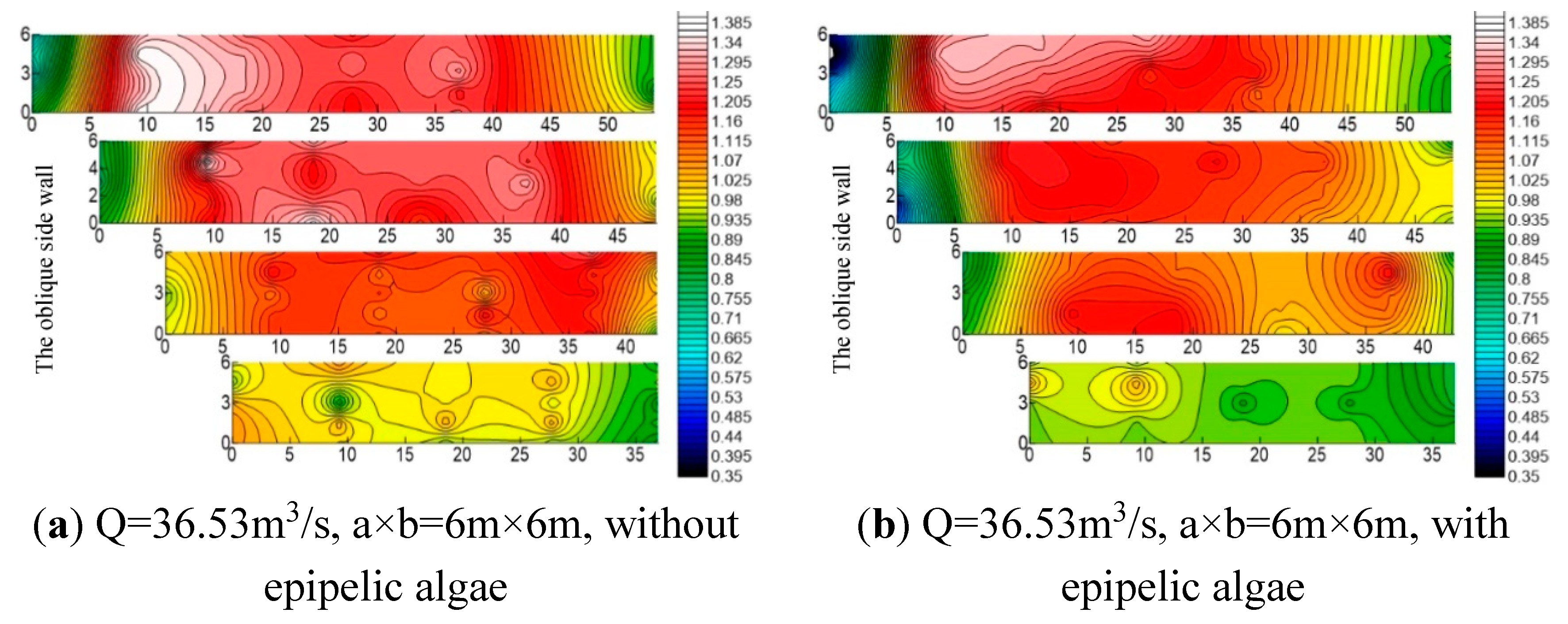
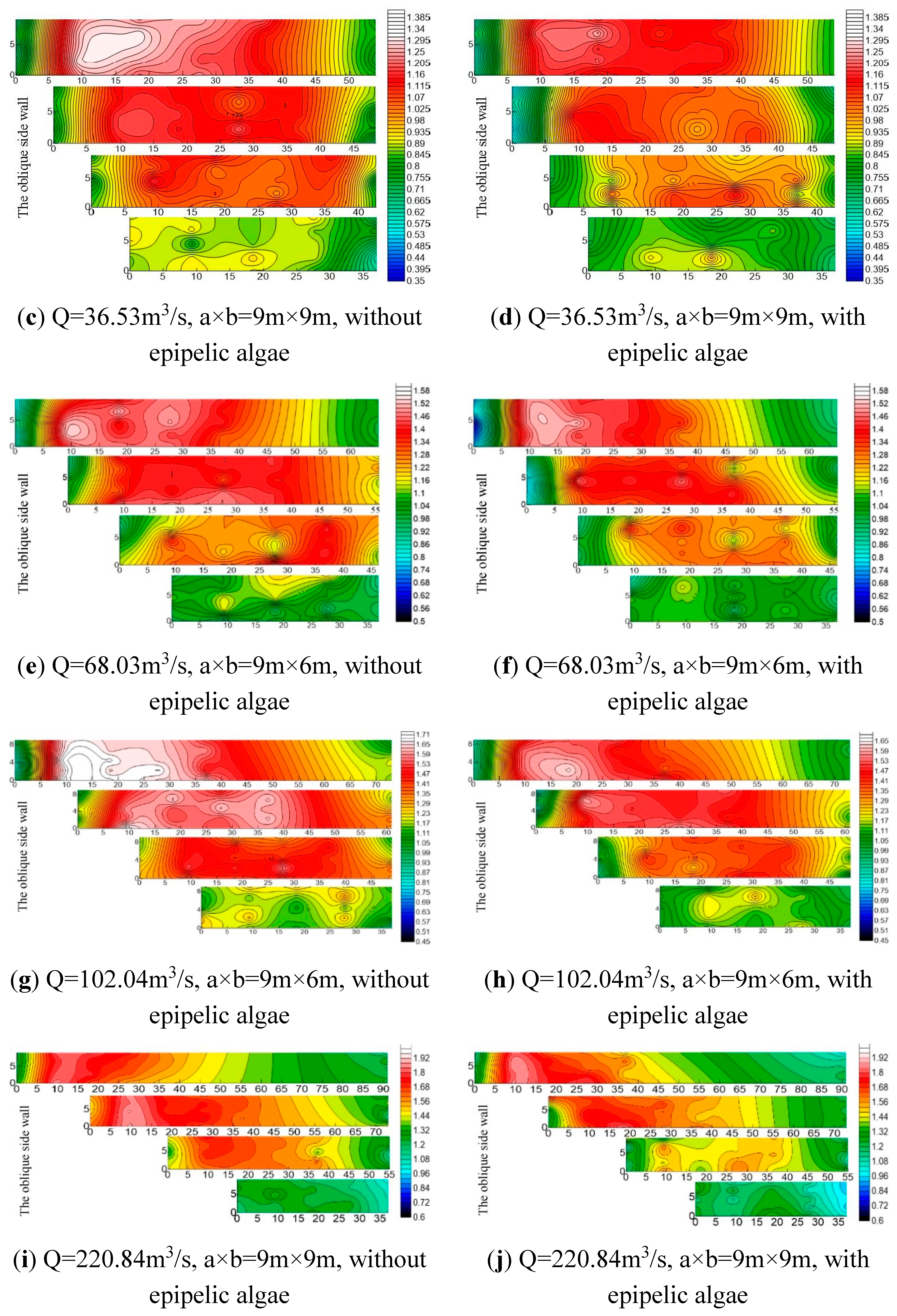
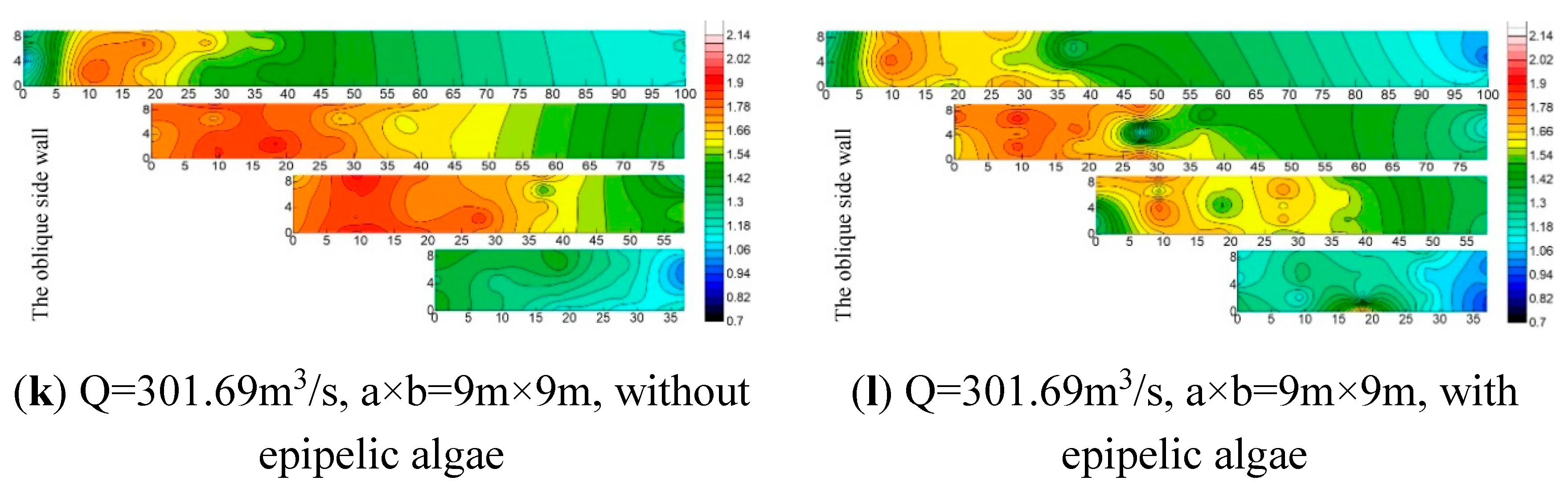
For the research of the epipelic algae group attached to the oblique side wall of open channel involves interdisciplinary knowledge such as biology, sediment mechanics and hydrodynamics, the internal decomposition form of the epipelic algae group and the distribution of the surrounding flow field are quite complicated. In this study, we took the epipelic algae group as the research object, and studied the flow field distribution under different flow level conditions. In order to more intuitively and truly reflect the flow velocity distribution along the water depth plane of the oblique side wall with the epipelic algae, we draw the flow field diagram of open channel with algae attached to the side wall according to the flow velocity grid (Figure 6).
The minimum velocity of the channel along the water depth plane is located near the wall, and the maximum velocity is not located in the middle of the channel, but in the center of the channel inclined to the side wall. Under the action of epipelic algae, the velocity of the side wall is significantly reduced (Figure 6a-d). The epipelic algae significantly reduces the range of the peak flow velocity along the water depth plane of the channel (Figure 6e-h). The closer the water flow is to the side wall, the greater the velocity gradient changes, so that the flow field becomes more uneven. The closer to the water surface, the smaller the turbulent vortex is. The turbulent vortex gradually increases with the increase of the flow rate (Figure 6i-l).
4. Discussions
4.1. The Effect of Epipelic Algae Under Vertical Distribution of Velocity
The effect of epipelic algae on the side wall makes the maximum velocity in the vertical distribution appear between the relative water depth of 0.6, which is slightly deviated from the existing results of the vertical distribution of velocity in the open channel with vegetation.
For example, Niu Mengfei et al. [19] found that the maximum velocity of the vertical distribution occurs at the relative water depth of 0.7~0.8 in the study of the distribution law of velocity of the thin layer on the slope under the condition of low sediment concentration. Xie Zhifeng et al. [94] believed that the peak value of flow velocity appeared at 1/5 of the vertical line from the water surface to the bottom. Xie Xuedong et al. [21] analyzed the evolution law of the vertical distribution of velocity under the ice cover at the three hydrological stations of Bayangaole, Sanhuhekou and Toudaoguai in the Inner Mongolia section of the Yellow River during the whole freezing period. The results show that the maximum velocity position often appears at the relative water depth of 0.6~0.8 in the early stage of freezing, and the maximum velocity position has been kept near the relative water depth of 0.4 from the early stage of freezing to the beginning of the river thawing. This is because the existing research on open channel vegetation is mostly based on the growth of vegetation at the bottom of the channel, and the particularity of this study lies in the growth of epipelic algae on the oblique side wall. The complexity of the turbulent flow on the oblique side wall and the physical and biochemical effects of epipelic algae will inevitably lead to the deviation between this research results and the existing research results of open channel vegetation.
4.2. The Effect of Epipelic Algae Under Different Flow Rates
In the case of small flow, when the size of the epipelic algae group is small, the epipelic algae group has a minimal hindrance to the average flow rate of the channel. The data results show that the epipelic algae group only reduces the average flow rate of the channel by 5%~6%. With the increase of the size of the epipelic algae group, the influence on the flow rate gradually increases; in the case of large flow, the effect of epipelic algae on the channel flow rate is minimal.
4.3. The Influence of Epipelic Algae on the Main Flow
The minimum velocity of the channel along the water depth plane is located near the wall, and the maximum velocity is not located in the middle of the channel, but in the center of the channel inclined to the side wall. The possible reason is that the existence of epipelic algae leads to turbulent energy exchange in open channel, and the convergence of turbulent energy is the maximum velocity. In addition, the presence of epipelic algae increases the roughness of the side wall. Under the action of epipelic algae, the velocity of the side wall is significantly reduced.
4.4. The Influence of Epipelic Algae on Sediment Deposition
The epipelic algae not only reduces the flow velocity of the channel, but also significantly reduces the range of the peak flow velocity along the water depth plane of the channel, which will lead to the continuous deposition of sediment on the side wall in the later period, and the amount of deposition will be significantly higher than that without epipelic algae. Therefore, we will consider the sediment deposited on the mud algae as the influencing factor of the shedding of the mud algae.
4.5. The Influence of Epipelic Algae on Turbulent Vortex
The closer the water flow is to the side wall, the greater the velocity gradient changes, so that the flow field becomes more uneven. For it is easily affected by the secondary flow near the wall, the direction of the main flow velocity and the position of the main flow are changed. The turbulent flow around the oblique side wall diverges from the bottom of the channel to the water surface. The closer to the water surface, the smaller the turbulent vortex is. The turbulent vortex gradually increases with the increase of the flow rate.
5. Conclusions
By referring to the design parameters of the water diversion project channel, this paper takes the epipelic algae growing on the side wall of the open channel as the research object, and uses the scale of 1:30 to carry out the generalized flume experiment. Through the analysis of the physical characteristics of the prototype sample, and the simulation of the cohesive force between the oblique side wall and the epipelic algae, the multi-group and multi-series hydrodynamic tests are carried out. The flow velocity distribution law and the development and change of the turbulent vortex on the side wall are analyzed. The flow field distribution law of different flow levels and different sizes of epipelic algae shows that:
(1) The effect of epipelic algae on the side wall makes the maximum velocity in the vertical distribution appear between the relative water depth of 0.6, which is slightly deviated from the existing results of the vertical distribution of velocity in the open channel with vegetation. This is because the existing research on open channel vegetation is mostly based on the growth of vegetation at the bottom of the channel, and the particularity of this study lies in the growth of epipelic algae on the oblique side wall. The complexity of the turbulent flow on the oblique side wall and the physical and biochemical effects of epipelic algae will inevitably lead to the deviation between this research results and the existing research results of open channel vegetation.
(2) In the case of small flow, when the size of the epipelic algae group is small, the epipelic algae group has a minimal hindrance to the average flow rate of the channel. The data results show that the epipelic algae group only reduces the average flow rate of the channel by 5%~6%. With the increase of the size of the epipelic algae group, the influence on the flow rate gradually increases; in the case of large flow, the effect of epipelic algae on the channel flow rate is minimal.
(3) The attached mud algae group significantly reduces the range of the peak velocity of the channel along the water depth plane, and the flow velocity of each section on the epipelic algae will be significantly reduced.
(4) It is easy to be affected by the secondary flow near the wall, which leads to the change of the main flow velocity direction and the main flow position. The maximum flow velocity of the channel along the water depth plane appears at the center of the channel inclined to the side wall.
(5) The turbulent flow around the oblique side wall diverges from the bottom of the channel to the water surface, and the turbulent vortex gradually increases with the increase of the flow rate.
Furthermore, the study provides the basic theoretical support for the later in-depth study of its erosion and shedding. And the research results of the hydrodynamic law of the oblique side wall will further improve the relevant research results of the vegetation flow. It also has important scientific guiding significance and practical value for water quantity regulation water regulation and water quality safety protection of long-distance water diversion projects.
Author Contributions
Conceptualization, M.Z.; methodology, L.P.; validation, M.Z.; formal analysis, M.Z.; investigation, L.P.; resources, L.P.; data curation, L.P.; writing—original draft preparation, L.P.; writing—review and editing, M.Z.; supervision, M.Z.; project administration, L.P.; funding acquisition, L.P. All authors contributed to the final version of the manuscript. All authors have read and agreed to the published version of the manuscript.
Funding
This research was funded by [Basic Research and Development Special Fund of Central Government for Non-profit Research Institutes], grant number [HKY-JBYW-2020-05, HKY-JBYW-2023-10, HKY-JBYW-2021-01], [Excellent Youth Science Fund of Henan Province], grant number [232300421065], [Promotion and Transformation Fund of Yellow River Institute of Hydraulic Research], grant number [HKY-YF-2022-03], [Yellow River Conservancy Commission of the Ministry of Water Resources Project of Outstanding Young Talents], grant number [HQK-202312].
Acknowledgments
We would like to thank the potential reviewer very much for their valuable comments and suggestions. We also thank my other colleagues’ valuable comments and suggestions that have helped improve the manuscript.
Conflicts of Interest
The authors declare no conflict of interest.
References
- Pannard, A.; Bormans, M.; Lagadeuc, Y. Short-term variability in physical forcing in temperate reservoirs: effects on phytoplankton dynamics and sedimentary fluxes. Freshwater Biology 2007, 52, 12–27. [Google Scholar] [CrossRef]
- Hondzo, M.; Al-Homoud, A. Model development and verification for mass transport to Escherichia coli cells in a turbulent flow. Water Resources Research 2007, 43, 199–212. [Google Scholar] [CrossRef]
- Desortová, B.; Puncochár, P. Variability of phytoplankton biomass in a lowland river: Response to climate conditions. Limnologica 2011, 41, 160–166. [Google Scholar] [CrossRef]
- Li, F.; Zhang, H.; Zhu, Y.; et al. Effect of flow velocity on phytoplankton biomass and composition in a freshwater lake. Science of the Total Environment 2013, 447, 64. [Google Scholar] [CrossRef] [PubMed]
- Li, F.; Gao, Y.; Zhang, H.; et al. Simulation experiment on the effect of flow velocity on the growth and population changes of planktonic algae. Lake Science 2015, 27, 44–49. [Google Scholar]
- Li, F.; Zhang, H.; Chen, L. Study on the spatiotemporal distribution and correlation between environmental factors and chlorophyll a in small enclosed water bodies. Environmental Science 2013, 34, 3854–3861. [Google Scholar]
- Wang, L.; Zheng, B.; Zhang, J.; et al. Impact of Three Gorges Reservoir impoundment on Eutrophication characteristics and hydrodynamics of Daning River, a tributary. Lake Science 2012, 24, 232–237. [Google Scholar]
- Long, T.; Meng, G.; Wu, L.; et al. Numerical simulation of the impact of hydrodynamic conditions on the growth of algae in the main urban section of Jialing River in Chongqing. Environmental Science 2010, 31, 1498–1503. [Google Scholar]
- Long, T.; Zhou, P.; Wu, L. Simulation experiment on the influence of environmental factors on the growth of algae in the Xiangxi River in spring China. Environmental Science 2011, 31, 327–331. [Google Scholar]
- Chen, Y.; Yu, Q.; Zhu, D.; et al. Research progress and prospects on possible influencing factors of planktonic algae growth in rivers. Journal of Hydroelectric Power 2014, 33, 186–195. [Google Scholar]
- Huisman, J.; Sharples, H.; Stroom, J.M.; et al. Changes in turbulent mixing shift competition for light between phytoplankton species. Ecology 2004, 85, 2960–2970. [Google Scholar] [CrossRef]
- Ghosal, S.; Togers, M.; Wray, A. The turbulent life of phytoplankton. Proceedings of the Summer Program, Center for Turbulence Research 2000, 31–45. [Google Scholar]
- Pei, G.; Liu, M. Comparison of the growth of benthic algae on different substrates in Wuhan East Lake. Lake Science 2009, 21, 357–362. [Google Scholar]
- Yi, K.L.; Dai, Z.G.; Liu, B.Y.; Lin, Q.W.; Zeng, L.; Xu, D.; He, F.; Wu, Z.B. Effects of vertical location and artificial substrate on colonization of algal periphyton. Acta Ecologica Sinica 2016, 36, 864–4872. [Google Scholar]
- Liu, H.; Ye, S.; Yang, X.; et al. Spatiotemporal dynamics of aquatic community in Nyang River, Tibet and its relationship with environmental factors: 2. epiphytic algae. Lake Science 2013, 25, 907–915. [Google Scholar]
- He, F. Study on the settling characteristics and flocculation mechanism of fine sediment in the Three Gorges Reservoir. Beijing: Minzu University of China, 2016.
- Jiang, G.; Yao, Y.; Tang, Z. Analysis of factors affecting the flocculation and sedimentation of fine sediment in the Yangtze River Estuary. Journal of Oceanography (Chinese Edition) 2002, 24, 51–57. [Google Scholar]
- Wang, D.; Yang, G.; Yu, M. Determination of critical particle size for flocculation of cohesive fine sediment in still water and analysis of its influencing factors. Sediment Research 2009, 74–80. [Google Scholar]
- Niu, M.; Sun, S.; Gong, Z. Experimental Analysis on Characteristics of Vertical Velocity of Overland Flow on Low Sediment Concentration. Journal of Lanzhou Jiaotong University 2022, 41, 7. [Google Scholar]
- Xie, Z. Analysis and Practice of Vertical Average Velocity Based on Mixed Length Theory. Zhejiang Univ. of Wat. Res. & Electric Pow 2022, 034. [Google Scholar]
- Xie, X.; Li, W.; Zhao, H.; et al. Analysis of the vertical velocity distribution in the Inner Mongolia section of the Yellow River during the freezing period. Yellow River 2005, 30–32. [Google Scholar]
Figure 1.
Epipelic algae attached to the oblique side wall of open channel.
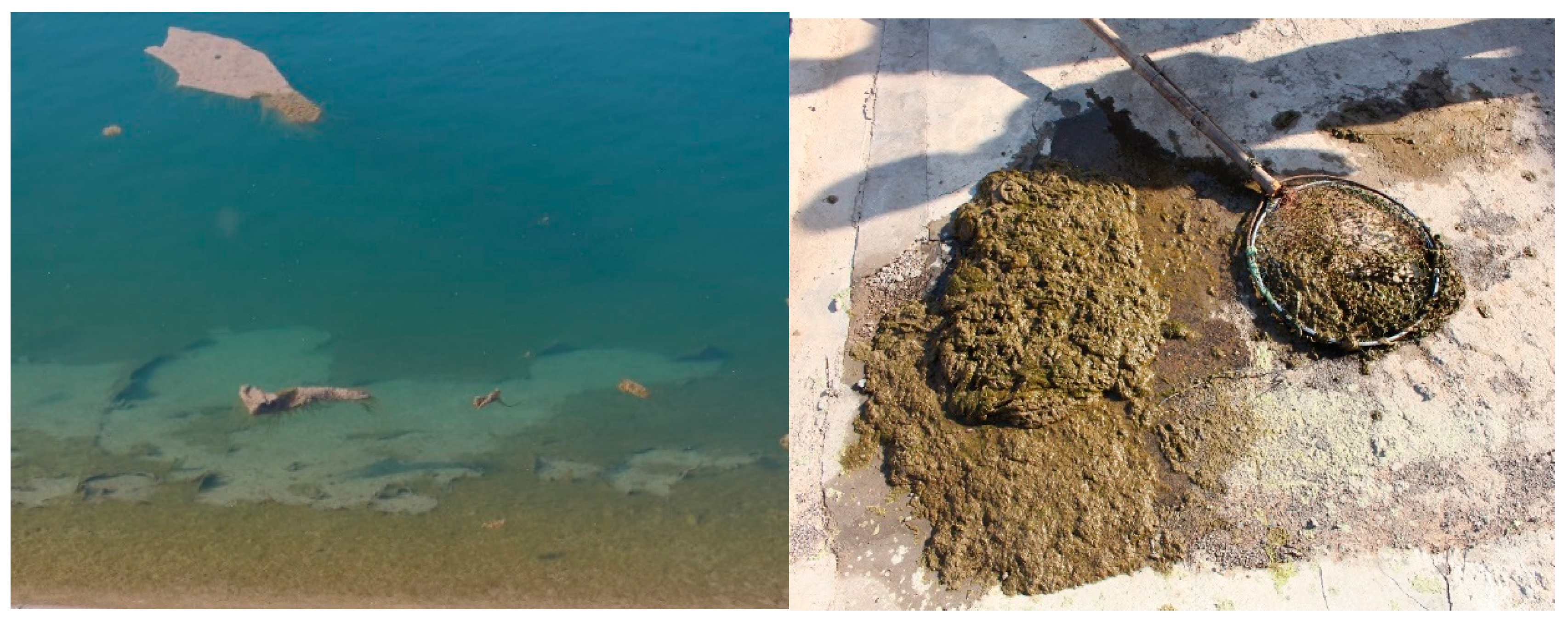
Figure 2.
Sediment gradation curve of oblique side wall of prototype channel.
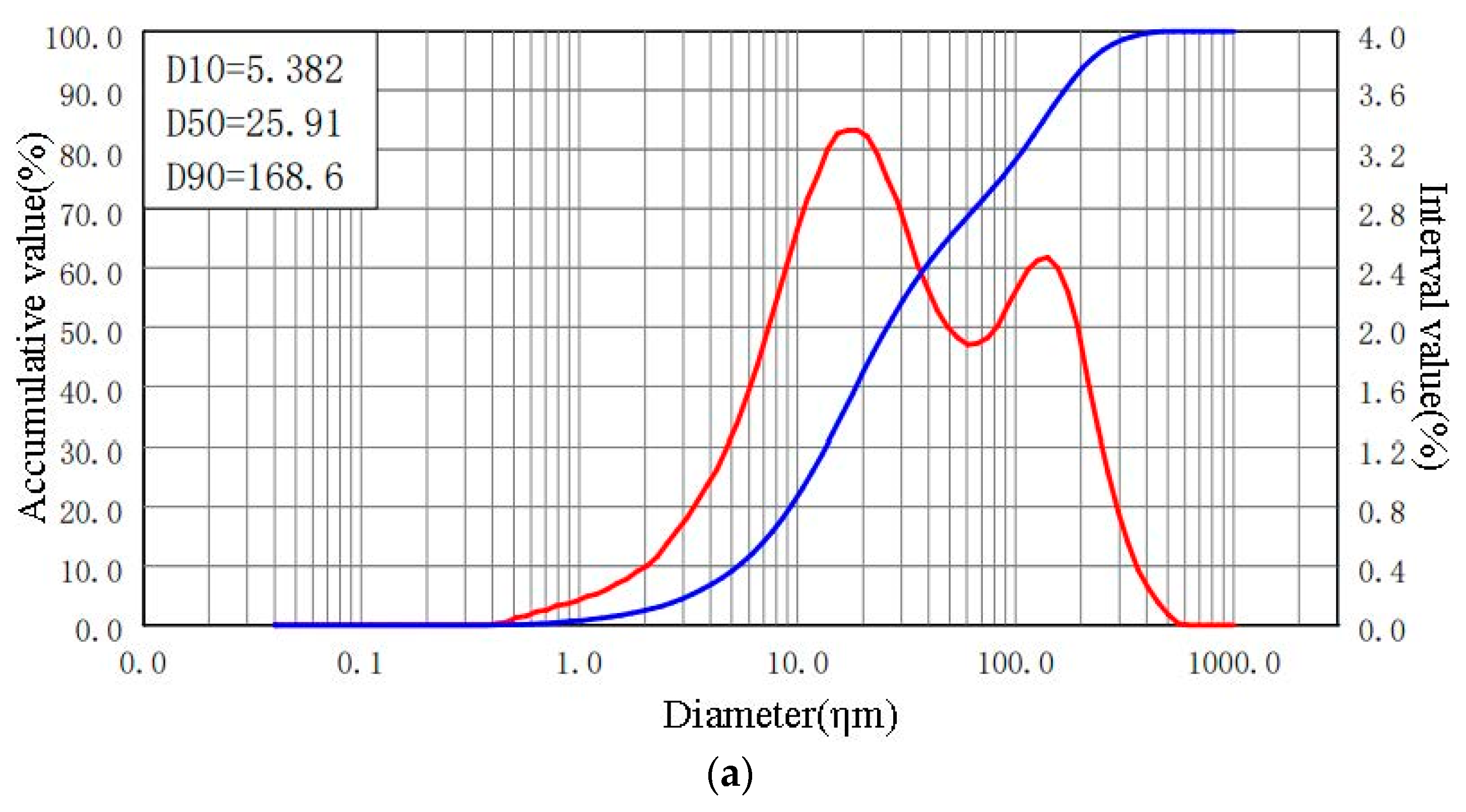
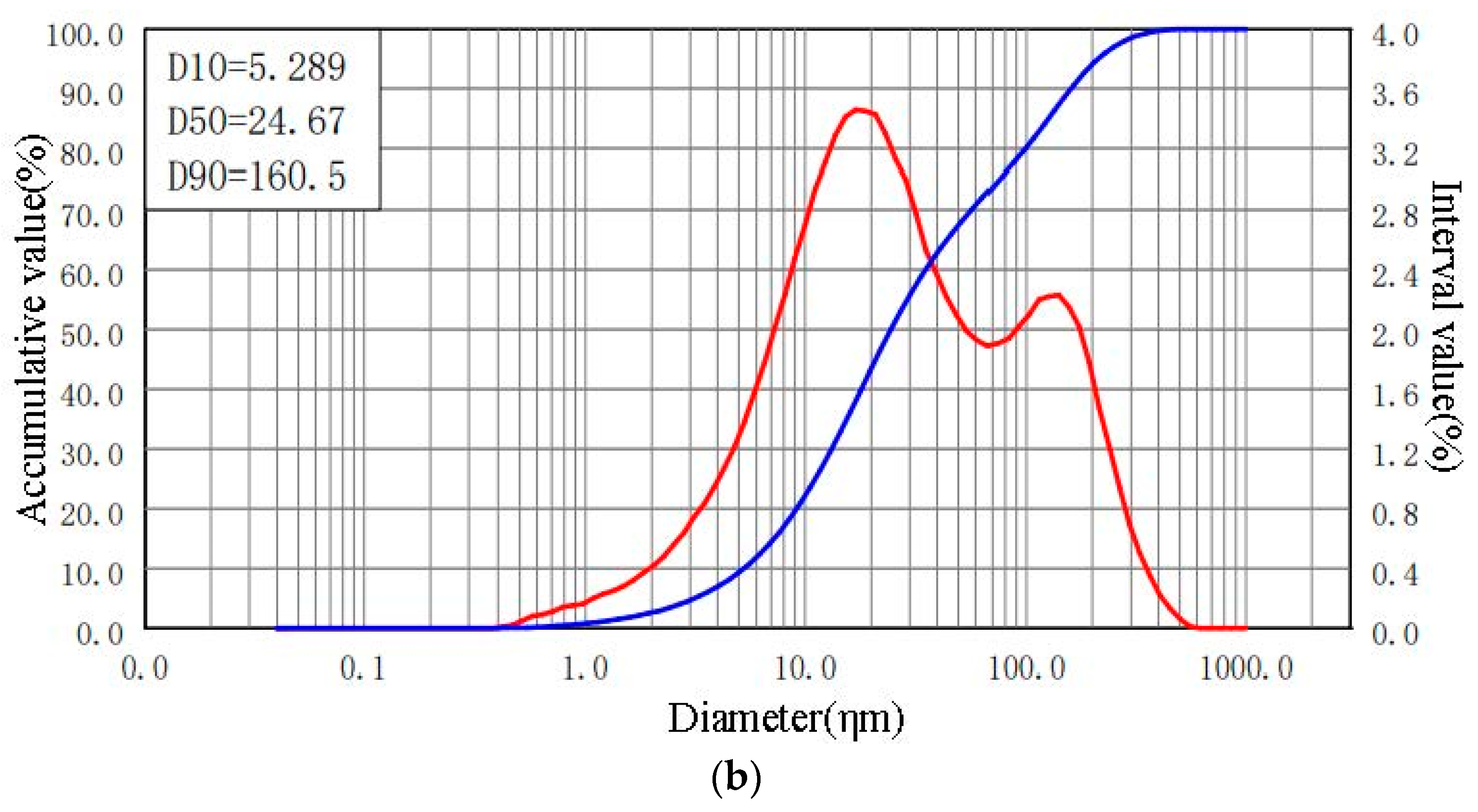
Figure 3.
schematic diagram of generalized model test: (a) Plan view of model circulation system; (b) Cross section of generalized model test; (c) Photograph of flume.
Figure 3.
schematic diagram of generalized model test: (a) Plan view of model circulation system; (b) Cross section of generalized model test; (c) Photograph of flume.
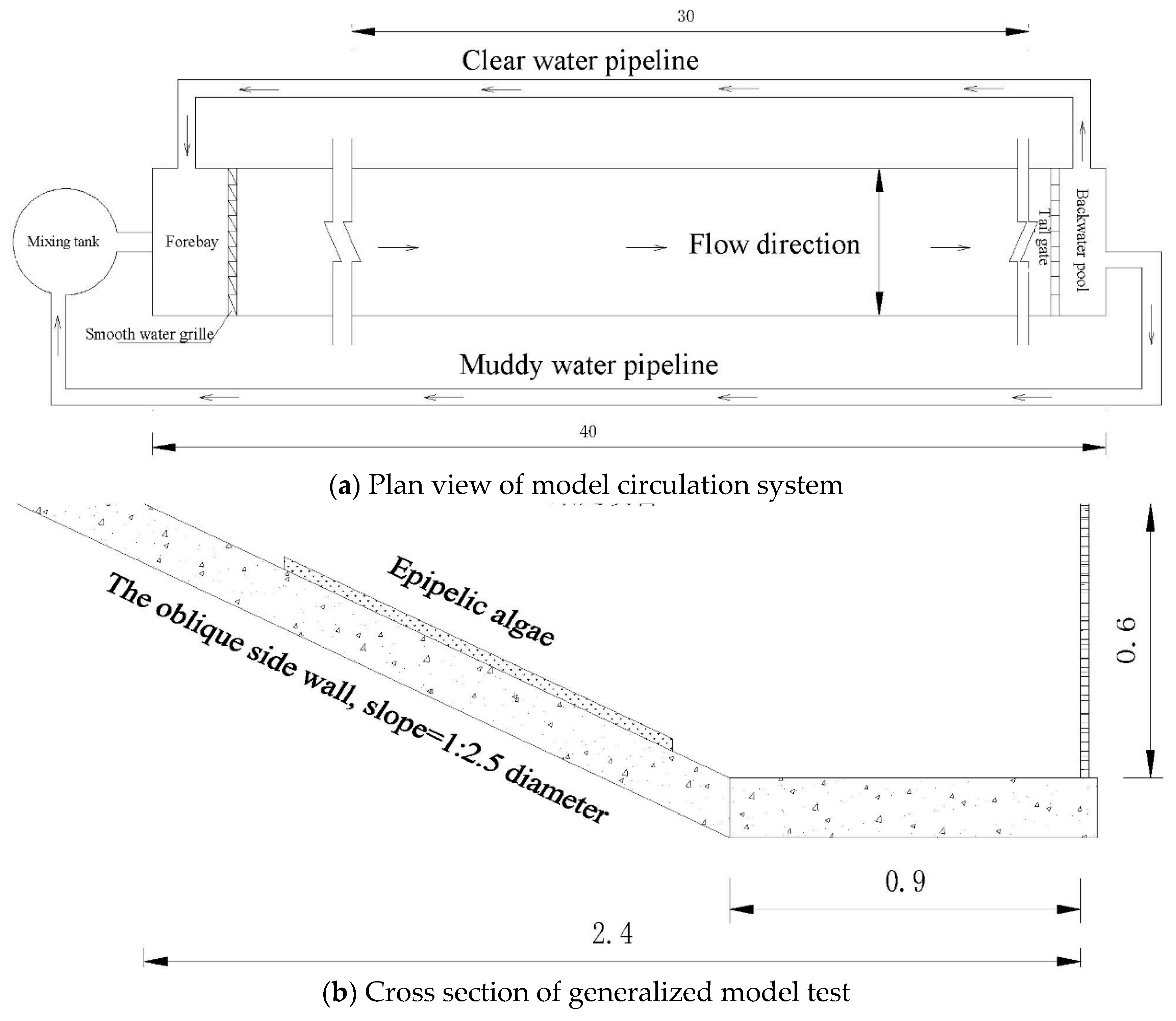
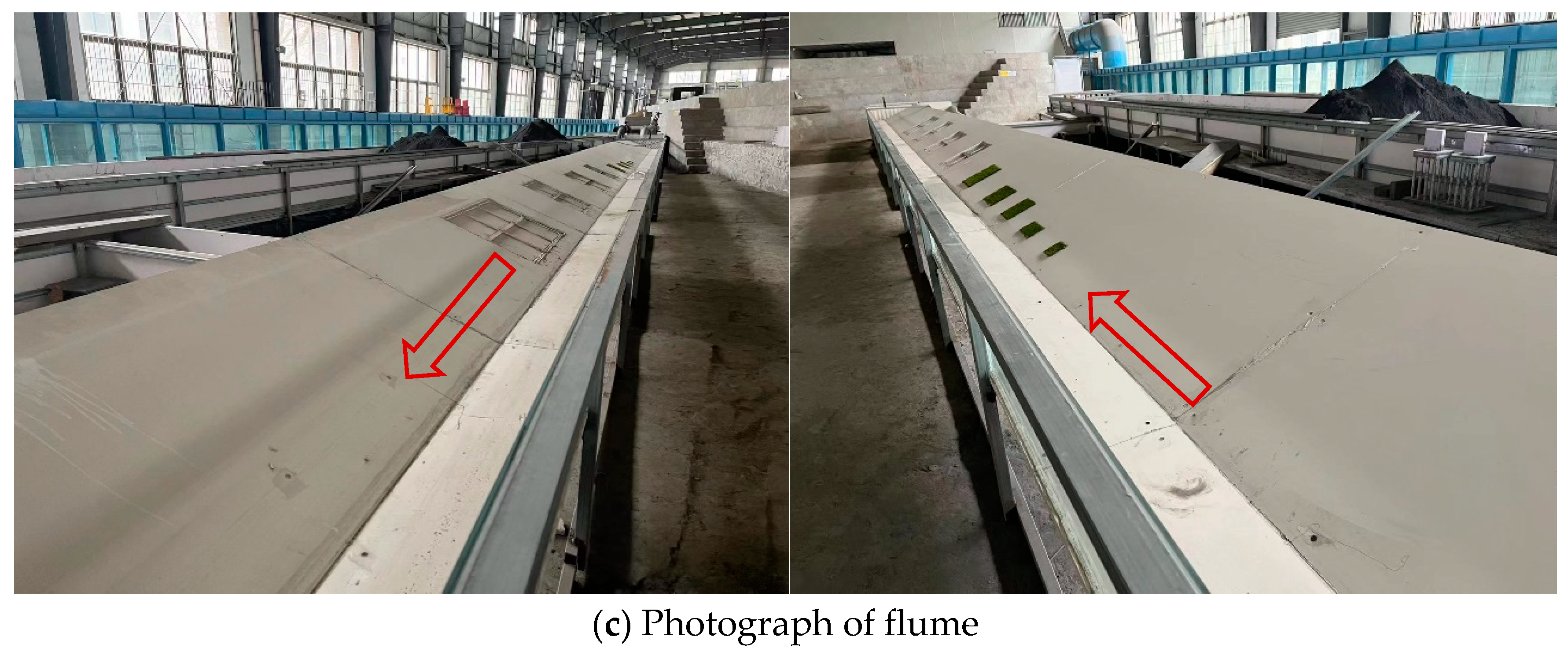
Figure 4.
Distribution of epipelic algae clusters of different sheet sizes on the side wall.
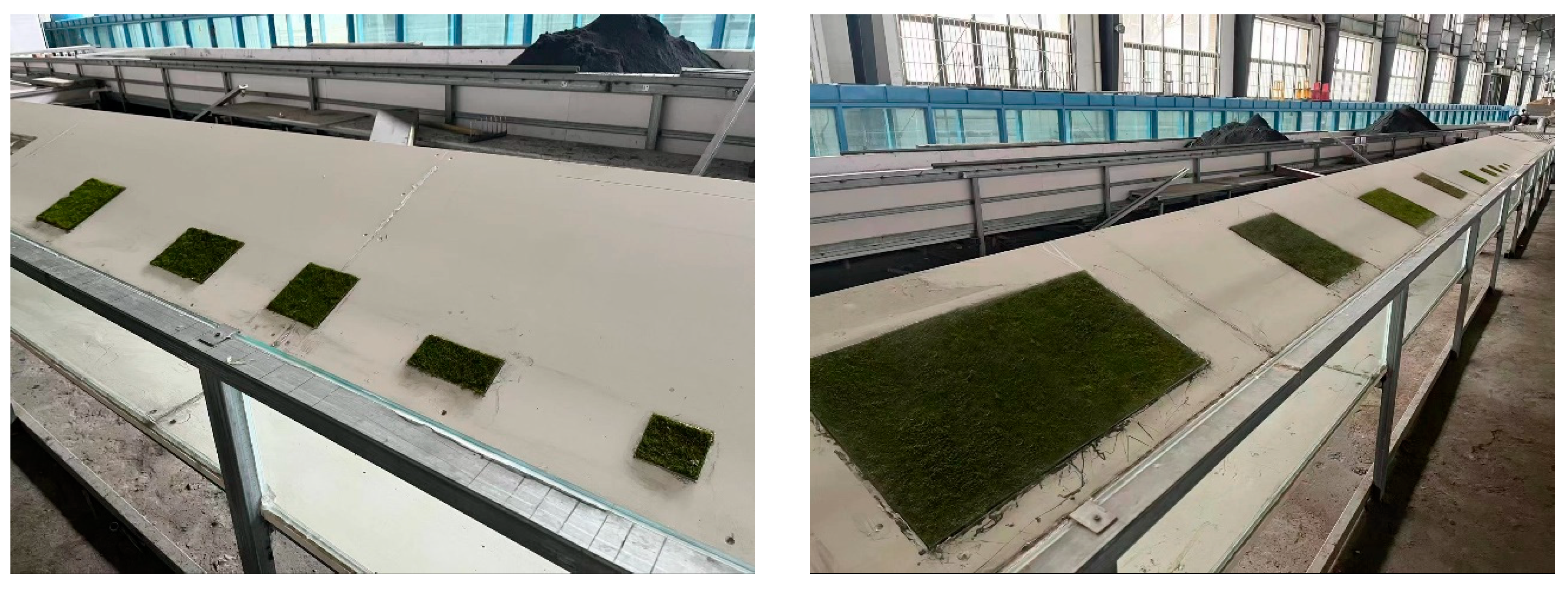
Figure 5.
Vertical distribution of flow velocity of the channel with epipelic algae group attached to the oblique side wall: (a)Q=36.53m3/s, a×b=6m×6m; (b)Q=36.53m3/s, a×b=9m×9m; (c)Q=68.03m3/s, a×b=6m×6m; (d)Q=68.03m3/s, a×b=9m×9m; (e)Q=102.04m3/s, a×b=6m×6m; (f)Q=102.04m3/s, a×b=9m×9m; (g)Q=220.84m3/s, a×b=9m×9m; (h)Q=301.69m3/s, a×b=9m×9m.
Figure 5.
Vertical distribution of flow velocity of the channel with epipelic algae group attached to the oblique side wall: (a)Q=36.53m3/s, a×b=6m×6m; (b)Q=36.53m3/s, a×b=9m×9m; (c)Q=68.03m3/s, a×b=6m×6m; (d)Q=68.03m3/s, a×b=9m×9m; (e)Q=102.04m3/s, a×b=6m×6m; (f)Q=102.04m3/s, a×b=9m×9m; (g)Q=220.84m3/s, a×b=9m×9m; (h)Q=301.69m3/s, a×b=9m×9m.

Figure 6.
Flow field of open channel along the water depth plane: (a) Q=36.53m3/s, a×b=6m×6m, without epipelic algae; (b) Q=36.53m3/s, a×b=6m×6m, with epipelic algae; (c) Q=36.53m3/s, a×b=9m×9m, without epipelic algae; (d) Q=36.53m3/s, a×b=9m×9m, with epipelic algae; (e) Q=68.03m3/s, a×b=9m×6m, without epipelic algae; (f) Q=68.03m3/s, a×b=9m×6m, with epipelic algae; (g) Q=102.04m3/s, a×b=9m×6m, without epipelic algae; (h) Q=102.04m3/s, a×b=9m×6m, with epipelic algae; (i) Q=220.84m3/s, a×b=9m×9m, without epipelic algae; (j) Q=220.84m3/s, a×b=9m×9m, with epipelic algae; (k) Q=301.69m3/s, a×b=9m×9m, without epipelic algae; (l) Q=301.69m3/s, a×b=9m×9m, with epipelic algae.
Figure 6.
Flow field of open channel along the water depth plane: (a) Q=36.53m3/s, a×b=6m×6m, without epipelic algae; (b) Q=36.53m3/s, a×b=6m×6m, with epipelic algae; (c) Q=36.53m3/s, a×b=9m×9m, without epipelic algae; (d) Q=36.53m3/s, a×b=9m×9m, with epipelic algae; (e) Q=68.03m3/s, a×b=9m×6m, without epipelic algae; (f) Q=68.03m3/s, a×b=9m×6m, with epipelic algae; (g) Q=102.04m3/s, a×b=9m×6m, without epipelic algae; (h) Q=102.04m3/s, a×b=9m×6m, with epipelic algae; (i) Q=220.84m3/s, a×b=9m×9m, without epipelic algae; (j) Q=220.84m3/s, a×b=9m×9m, with epipelic algae; (k) Q=301.69m3/s, a×b=9m×9m, without epipelic algae; (l) Q=301.69m3/s, a×b=9m×9m, with epipelic algae.
Disclaimer/Publisher’s Note: The statements, opinions and data contained in all publications are solely those of the individual author(s) and contributor(s) and not of MDPI and/or the editor(s). MDPI and/or the editor(s) disclaim responsibility for any injury to people or property resulting from any ideas, methods, instructions or products referred to in the content. |
© 2023 by the authors. Licensee MDPI, Basel, Switzerland. This article is an open access article distributed under the terms and conditions of the Creative Commons Attribution (CC BY) license (https://creativecommons.org/licenses/by/4.0/).
Copyright: This open access article is published under a Creative Commons CC BY 4.0 license, which permit the free download, distribution, and reuse, provided that the author and preprint are cited in any reuse.


