

Submitted:
05 July 2023
Posted:
06 July 2023
You are already at the latest version
Abstract
Since a few decades, the world has been facing severe global challenges with context to water, food, agriculture science, energy resources, healthcare, medicines, diseases, etc. One of the causes of these challenges is excessive human activities. So, there has arisen a necessity to tackle these challenges using sustainable solutions so as to minimize the effect of human interference. Nanotechnology (NT) has gained pace as a new technique that provides cost-effective, efficient, and eco-friendly solutions to such challenges. The advantages of the usage of NT have increased in every field of science. As compared to traditional methods, NT possesses wider use and benefits as it is designed at the nano levels and also keeps the environment clean. It is the science of tiny particles that has an important role to play in international efforts in sustainability. The innovation of NT is revolutionary and therefore subsequently will cover a wider space in terms of scientific achievements. Technology saves time, money, and human resources. This paper discusses and highlights the usage of NT with respect to its application, knowledge, and sustainable development. It also gives a broad view of the approaches, properties, and applications of NT in various sectors including the treatment of water bodies, agricultural science, drug delivery systems, medicines, and energy saving.
Keywords:
nanotechnology (NT)
; Society 5.0
; sustainable development
; human activities
; environment
1. Introduction
To live a healthy and sustainable life, every individual needs food, a house, water, energy, medical facilities, a job, clothes, etc. (Diallo et al. 2013). The biggest downfall for humans is that we have failed to provide a good life with all the basic necessities for better living. According to statistics, the world population will reach 8-10 billion by 2050. We need to lower the impact on the environment and change in climate because of human activities and race to development. Even though we are not able to meet the increasing demand for food, water, shelter, and electricity along with failure to lower the emission of gases like carbon dioxide (CO2), methane, nitrous oxide, ozone, and carbon footprints on the environment (Godfray et al. 2010; Diallo and Brinker 2011; Brinker and Ginger 2011).
In the continuous progress of NT, which refers to the construction and manipulation of matter at the nanoscale (1-100 nm) (Tahan 2007), the researchers are focusing on two major issues related to sustainable development which may occur over a period of time:
1. Will NT be able to solve the issues related to sustainability in food, water, logistics, shelter, medical facilities, energy, and employment?
2. Will NT be able to create sustainable behavior amongst people for social benefit and less effect on climate change and global warming due to human activities?
Need Towards Sustainability: Whole world and the environment are suffering from loss of ecosystem, cutting down trees, improper disposal of waste, air, water, and plastic pollution, inadequate drinking water availability, toxic harmful pollutants, climate change, and global warming (Singh and Singh 2017). Less ease of availability to medical services, education, training for skill employment, etc. Humans are moving towards a dead-end for themselves, flora, and fauna. United Nations Sustainable Development Goals (UNSDGs) have been developed by the United Nations to address the important issues of the environment, economic, and political aspects (UNSDGs 2021; Anastas et al. 2021). These goals are shown in Figure 1.
The goals have been designed in such a manner that they interconnect with each other, and one winning situation will surely be a win situation for all. Researchers have been continuously trying to advance in the path of drinking water, health, energy and environment, innovation, infrastructure, production, and consumption. Bhardwaj and Sharma (2021) & Bhardwaj (2022) have studied the different minerals which are beneficial to human health in PET bottled drinking water. These factors should help in reducing poverty, and hunger, improvement in education and equality along with economic progress. And this will turn into peaceful life, justice for all, and powerful organizations to help everyone.
How Can Nanotechnology (NT) Contribute? In lieu of step-by-step advancements to existing technologies, NT extends uncontrollable, innovative improvements that answer immediately with the best solutions for the benefit of mankind, the ecosystem, and our planet (Mercier-Laurent 2015). The domain in which NT has shown improvement is in the sector of energy, protection of the environment, management of resources, and medical facility. NT has also developed skills related to scientific communication, medical engineering, etc. (Pokrajac et al. 2021). This undoubtedly makes NT an important enabler of sustainability in materials and resources, while enhancing the quality of life for a growing world population with increasing demand for energy and materials (Hyeon et al. 2015).
Teamwork, Collaborative Approach Significant for Consequential for Society 5.0: The investment by the government has put a lot of impacts and may keep doing it in the future. A very impressive and effective example is the way mRNA vaccines for COVID-19 are processed with fatty nanoparticles (NPs), which has acted as a revolution that is on very deep research done over the past many years in nanoscience and NT (Chauhan et al. 2020).
Society 5.0: The concept of Society 5.0 was introduced by the Japanese government from 2016-2020 which is vital for science & technology and the novelty of fundamental planning (Arsovski 2019; Narvaez Rojas et al. 2021; Althabhawi et al. 2022) (Figure 2). It is a central concept in the midterm science and focuses on mankind, which will help to achieve social concerns along with economic growth with a primitive combination of cyber as well as the substantial planet, and in addition, it will contribute to achieving UNSDGs. Humans are now in the race to achieve and win in the concept of Society 5.0 after a long history of hunter-gatherer society and agricultural society, with the help of industrial society and information society.
In Society 5.0, humans and materials are interconnected to the Internet of Things (IoT), where all data & information can be shared with Artificial Intelligence (AI) whenever required. Resulting in a change of life (Rahmawati et al. 2021). A healthy life is expected from precautionary medical equipment and robots that can operate as doctors and take care of patients as a nurse at a low cost.
2. Nanotechnology (NT) and Equipment
The improved equipment of NT is going to have a very vital role in society (Pereira et al. 2020). This will take up the technological breakthrough along with an improved transformation by supplying nano-devices supposed to be used in society such as IoT sensors, self-driving vehicles, innovative robots, etc. Nano-devices are expected to take an important part in the realization of a sustainable society by providing water purification, reduction in CO2 emissions, and boosting device supply with a recyclable viewpoint (Nagar and Pradeep 2020). Technology may help in improving the health sector by providing biosensors to wear and biomaterials for reviving treatment.
Many technical challenges are to be faced on the path of advancement of NT and devices. Below are the six major issues which can be faced:
- 1.
- IoT edge and AI chips and quantum devices for innovative computing.
- 2.
- Logistics with the best security and less impact on the environment.
- 3.
- Nanobiotechnology (NBT) for medical facilities.
- 4.
- Robots to be used in the service sector and for helping human beings.
- 5.
- Smart devices for sustainable air, water, and other important necessities.
- 6.
- Energy equipment for renewable energy production and saving.
2.1. Safe and Sustainable Driving with Nanotechnology (NT)
NT and its equipment can help to make a safe and environmentally friendly drive (Roco 2005). AI chips, sensors, and other devices can really be useful and helpful for the safety of the driver as well as passengers.
2.2. Healthcare Services
Remote healthcare services are open and warmly welcomed during the pandemic COVID 19 (Udugama et al. 2020; Bhalla et al. 2020). With the help of NT devices i.e., biosensors, the healthcare data was collected from patients by the doctors. Not only it was collected but also analyzed with the help of highly efficient computers equipped with NT. Nowadays, patients do not need to travel for diagnoses from one city to another as with the help of Artificial Intelligence (AI) it can be done. Surgeries are going to be possible in the coming days with the help of nanotechnological devices such as robots, sensors, HD image sensors, 5G speed used for good communication, etc. (Mohan et al. 2021). Wearable biosensors can record complex medical information about the patient in rural regions and can be sent to big hospitals directly. Doctors who are efficient and well-informed about this technology can do surgery in rural areas remotely with the help of robots (Pokrajac et al. 2021).
2.3. Nanotechnology (NT) in Farming
NT in farming is used to increase food productivity and quality (Mousavi and Rezaei 2011). It has really attracted the agriculture industry due to its effectiveness and low-cost production with quality of food grains and vegetables. Nano-based agrochemicals can be used to provide plants with the best nutrition to grow, farmers can also use nano-based fertilizers which help plants to grow faster without any harm to the soil and mankind. For example, Nano copper fertilizer gives plants nutrition and protects them from any type of disease (Elmer et al. 2018; Guha et al. 2020).
2.4. Nanobio Technology (NBT) Against Dangerous Viruses and Diseases
Medical care sector is expecting nanobiotechnology (NBT) to help in fighting against the upcoming and new evolving viruses like COVID-19 with the help of diagnoses through nanodevices, the discovery of new vaccinations and treatment (Weiss et al. 2020; Rai et al. 2021; Singh et al. 2021). Material and photonic technologies can also help effectively in the prevention of these kinds of viruses with the help of photo-catalysis, nanoparticles (NPs), ultraviolet AIGaN light-emitting diodes, and air purification through virus capture with various membranes (Li et al. 2021; Minamikawa et al. 2021). It can also help to understand the interconnection of microorganisms that causes diseases with different types of materials (Konda et al. 2020). In the direction of progress, nanoscale simulations and data sciences can take a very important part (Mori et al. 2021).
3. Innovative Technologies Need to Save Energy and Environment
The very important need of society for saving energy and the environment is to reduce CO2 emissions, sustainable energy, and reduction of cost production of energy (Razmjoo et al. 2021). Again, nanodevices and innovative technologies can take and play a very important part in the sector of logistics and saving energy, production of renewable energy with solar power, wind turbines, and fuel cells with green hydrogen. The progressive action of developing technologies to produce hydrogen from solar energy and use it for carrying energy, development of technology related to batteries in energy transport and storing it.
4. Product Transmission
The companies should focus and work keeping in mind the development of products according to their life cycle (Nambiar 2010). Life cycle assessment should be considered in respect of economic, environmental, and governance constituents (Klopffer et al. 2007). We may understand with an example that the best quality mines are very less available and it results that statutory bodies should start developing mines of lower quality with less quantity target product and separating essential efficient minerals from toxic materials. Companies should start considering recycling products with the very first step of product development along with the waste disposal factor for less impact on air and water with saving the environment and cost. If the product is recycled, then it will help to extend the supply by canceling the point of product unavailability which will ultimately reduce the price of the product. Raising concern is less availability of lithium, nickel, and carbon monoxide along with increasing their price due to maximum usage in electric vehicles for batteries (Lu et al. 2016). Therefore, recycling the product can help in saving the above precious materials.
5. Analysis of Nanotechnology (NT) for Sustainable Development
Research and blueprint of materials used at atomic and molecular stages are involved in nanotechnology (Navalakhe and Nandedkar 2007). 10 atoms are equal to 1 Nanometer (Williams 2013). It is a frightening assignment to develop a proper and accurate definition with the meaning of nanotechnology. The researchers and students working in this field quote that it is dependent on the person who tries to describe it. For example, some scientists use this term to describe all studies with a critical size of < 1 micron (1,000 nm). However, other scientists reserve this term for studies involving sizes from 1-100 nm (Bayisa et al. 2015).
Discussions and disputes on do nanoparticles (NPs) that occur in nature like carbon black falls into the subject of nanotechnology or not (Uddin et al. 2017). In conclusion, few researchers think that the use of nanomaterials (NMs) is to design and produce products and systems with atomic accuracy. National Science Foundation (NSF), describes and frames nanotechnologies as “development in technology and research at atomic level on a scale of 1-100 nanometers (Kim et al. 2009). Because of the average dimension of nanomaterials (NMs), they are used to make and utilize devices and systems with novel features and abilities.
The significant physiochemical properties of nanomaterials (NMs), make them very eye-catching well designed, and efficient equipment for sustainable technologies (Goesmann and Feldmann 2010; Sun et al. 2020). It is very large and has most dynamic exterior than any other heavy material. Also, they can be operated with different chemical compositions to improve similarity for Particular compounds like solutes and gas (Khin et al. 2012; Lu 2014). They also can be operated with biochemical mechanisms and chemical groups that target the metabolic system or grid of viruses and bacteria present in water. It also recommends an unparalleled chance to formulate operative products with outstanding properties of electronic, optical, catalytic, and magnetic properties.
The novel operative products can be transformed into different structural elements like water-soluble supramolecular hosts, particles, fibers, and membranes. The latest development in nanotechnological usage to deal with global sustainability challenges are:
- Water purification
- Clean energy technology
- NT agricultural applications
- Greenhouse gas management
- Material supply and use
- Green manufacturing and chemistry
- NT-baseded fiber applications
Green Technologies: One of the burning issues and challenge the whole world is facing is climate change (Kumari et al. 2020). Over the past 20 years, the emission of greenhouse gases has increased the usage of fossil fuels such as coal and petroleum, which have come up as common factors to increase the emission (Ritchie et al. 2020; Yoro and Daramola 2020). To meet the increasing consumption of energy along with a reduction in CO2 emission, it needs the classification of measures to be taken for clean and renewable energy devices.
NT opens vast opportunities to progress and innovate green technologies (Wiek et al. 2016; Di Sia 2017; Palit and Hussain 2018). Solar photovoltaic has come up as one of the popular sources of renewable electrical energy because it is available in plenty, resourceful, and easy to implement with very less impact on the environment with respect to the usage of water and land (Ellabban et al. 2014; Mohtasham 2015; Jones and Olsson 2017; Gulluce 2021).
Choi et al. (2012) have discussed the production of hydrogen by solar water breaking with the help of organic toxicity in wastewater as atoning electron donors. This study is very much important as solar radiation is isolated and the execution of solar power on a major scale needs an efficient device that converts solar energy into high-density chemical fuels.
Purification of Water: In the 21st century, the whole world is facing the issue of clean drinking water, which is nowadays a big scarcity and a difficult situation to deal with. Most countries in the world are now facing the issue of a sustainable supply of water for usage for drinking supplying in the fields of agriculture, processing food, producing energy, extracting minerals, processing chemicals, and manufacturing (Diallo and Brinker 2011). As per the report of Bates et al. (2008), Global Warming and Climate Change will affect global clean water resources in the following ways:
- Raising of floods and droughts.
- Scarcity of water stored in glaciers and snowpacks.
- Lowering water quality because of the increase in salt, sediments, and pollutants in water resources all over the world.
Researchers have studied the quality of the lake water in Antarctica and reported several pollutants (Bhardwaj and Jindal 2020; Bhardwaj et al. 2021). These pollutants came from different continents through the long-range atmospheric transport mechanism and human activities. The main reason for the transfer of these pollutants is the high temperature, which is also responsible for climate change.
A “Formula” For Implementation of Sustainable Nanotechnology (NT): How can we use this formula for data and information? A circular economy means unique supervision of the flow of energy and production by manufacturing and economic system with the channel to alleviate harm to the ecosystem and society which is known to support sustainability. We disagree that the circular formation in the flow of knowledge is dangerous to making vital advances in way of sustainability by NT. The old concept of translation of information and data commencing science to society is now out-of-date and is destructive to society as well as a scientific project. We would propose reinventing and reimagining data and information, translation as a circular exchange between researchers, and practitioners, and the flow of knowledge should not be one-way.
Progress for sustainability will move fast in an efficient and meaningful manner with ongoing talks between researchers and practitioners, organizations, society, and groups of people who have knowledge of the ecosystem, also in schools and universities to motivate and outline the research for a large impact. If the governance of data and information understand the needs of the market, industries, and partners’ points of view for risk to health and the ecosystem, society only accepts innovative technology that outlines the design of research.
Based on previous data, we have done some analysis on NT and would like to share these points for future research. These points are as follows:
- Innovation of sustainable NT will lead to a decrease in poverty as it will help in real-time solving issues related to basic necessities by identifying the exact need of the citizen.
- Needs can be served by boosting agricultural production artificially with NT if the requirement of food can’t be achieved naturally.
- NT can also help in the development of effective medical drugs for saving mankind and giving more quality of healthy life.
- Science and technology are moving ahead, which can also make artificial clouds for rain in the area which is under drought. NT can help in achieving the water requirement for drinking as well as for daily purposes.
- Desalination of seawater can also be done if more effective research can be done in the field of NT.
- More effective and efficient storage techniques can be developed for saving and storing renewable energies like wind, solar, geothermal, biomass, and hydropower.
- Job opportunities can be created in the field of research on sustainable NT which will lead to more research and employment.
- Sustainable NT may help in the economic growth of the country by creating sustainable education and industries.
- Land degradation and environmental degradation can be reduced with the help of sustainable NT. It will create clean air, safe drinking water, and soil full of nutrients for the production of food grains and vegetables. This will eventually lead to combating global warming and climate change.
- Marine resources can be saved and preserved by using NT to the reduction of plastic pollution and industrial waste dumped into the seawater.
6. Applications of Nanotechnology (NT)
Several researchers have studied the different applications of this technology in various sectors (Ali et al. 2008; Misra et al. 2010; Singh et al. 2017) and these applications are shown in Figure 3.
- (i)
- Electronics: Carbon nanotubes are used for making smaller, faster, and more efficient microchips and devices (Reid et al. 2009; Wisitsoraat et al. 2010) Graphene is used in the development of flexible touchscreens (Vlasov et al. 2017; Bubnova 2021).
- (ii)
- Energy: Solar panels convert sunlight into electricity (Xiang et al. 2019). NT has improved fuel production efficiency from raw petroleum materials by using better catalysis. Carbon nanotubes are used in the production of windmill blades for the increasing amount of electricity (Ma and Zhang 2014; Elhenawy et al. 2021). Carbon nanotube scrubbers are being used to separate the power plant exhaust CO2 (Irani et al. 2017).
- (iii)
- Biomedicine: Various treatments and medicines for cancer and brain tumor may have side effects on the patients. Some nanomaterials (NMs) are used in the diagnosis and treatment of neuro vegetative diseases or cancer (Valdiglesias et al. 2015). These particles attack only infected cells instead of the whole body. Nanomaterials (NMs) are being used to enhance the efficiency of imaging devices (Wang et al. 2008). NT is also used in gene therapy, wound treatment, etc. (Mozafari 2018; Pang et al. 2021; Blanco-Fernandez et al. 2021).
- (iv)
- Environment: By the use of ions and nanobubbles, NT is used in the purification of air and wastewater (Gurung et al. 2016; Atkinson et al. 2019). Nanocatalysts are used to make chemical reactions more efficient.
- (v)
- Food: Nano biosensors are used in the detection of the presence of pathogens in the food (Vanegas et al. 2017). Nanocomposites are used in the improvement of food production by increasing thermal and mechanical resistance.
- (vi)
- Textile: NT is used in the textile industry for the development of smart fabrics which are more durable (Syduzzaman et al. 2015; Shah et al. 2022). Nowadays, water and liquid replant clothes are in a fashion that is made of nanoparticle (NP) called silica. Silica is sprayed on the fabric to make it waterproof (Mao et al. 2013).
- (vii)
- Wastewater Treatment: NT is used in the purification of water, and it is a highly effective and cheaper technique (Kumar et al. 2014). Unique nanoparticles (NPs) are used in filtration membranes to improve the quality of water by removing chemicals, heavy metals, and industrial waste. Melemeni et al. (2009) stated that photocatalytic degradation is the most popular technique in the treatment of wastewater.
- (viii)
- Agriculture: Gold-nanoparticles (Au-NPs) based biosensors have been used for the detection of enzyme activity (Hutter and Maysinger 2013; Xiao-Ming et al. 2018). Carbon nanotubes provide strength to the crops and protect them from strong winds (Yousefi et al. 2017). Nanoparticles (NPs) are used in the agricultural field as an alternative to pesticides and other chemicals to resist several plant diseases (El-Moneim et al. 2021).
- (ix)
- Cosmetics: Titanium dioxide and zinc oxide are used in sunscreen for protection from UV rays (Morganti 2010; Schneider and Lim 2019; Bhardwaj et al. 2022). Liposome nanoparticles (NPs) are used in anti-aging skin creams (Thong et al. 2007). Nanoemulsions and liposomes are used in skin care products while liposomes and ethosomes are used in hair growth products. Iron oxide nanoparticles (NPs) are used as a pigment in some lipsticks (Wiechers and Musee 2010; Ealia and Saravanakumar 2017).
- (x)
- Sports: NT in tennis balls are used to keep their bounce for a longer time (Hester and Harrison 2016; Cibo et al. 2019).
- (xi)
- Furniture: To make non-flammable furniture for the safety of all, carbon nanofibers are coated over the furniture which reduces the flammability by up to 35 % (Kim et al. 2011; Holder et al. 2016).
- (xii)
- Adhesive: The adhesives or glues lose their stickiness due to high temperatures, but nano-glue helps to stay in high temperatures with stronger adhesiveness (Rai and Saraswat 2022).
7. Nanotechnology (NT) for Renewable Energies
Nature and Human, both acts as an alarm when situation or needs are out of control. Renewable resources are somehow on the verge and will vanish in the coming years. Here comes the role of creating and developing sustainable NT to meet the requirement of mankind (Serrano et al. 2009). Not only it will fulfill the needs, but also it will help in saving the ecosystem and will create a channel for using minimal energy in the most efficient manner (Badawy 2015).
7.1. Solar Energy
Solar energy can be conserved with the help of solar cells. But the efficiency of these cells depends on their design, shape, and type according to nanostructures (Tsakalakos 2012). Nanostructured cells are breakthrough technologies that are made with the help of nanowires, nanorods, and quantum dot structures enabling highly efficient and low-costing equipment. There are two important types of solar cells, which are very efficient.
- (i)
- Dye-sensitized solar cells: They are manufactured by placing dye-sensitized films between two transparent electrodes (Lin et al. 2010; Kyaw et al. 2011). Gratzel cell with transparent glass as anode and platinum as cathode with titanium dioxide film and an electrolyte between film and platinum.
- (ii)
- Quantum dot solar cells: They are the nano semi-conductors that are clustered with high photoconductivity. They are competitive with non-renewable sources like coal and petroleum because they are highly efficient and cost-effective.
7.2. Wind Energy
Natural resources like wind energy are highly efficient and abundant in nature (Tejeda and Ferreira 2014). But still, challenges like consideration of manufacturing cost, environmental issues, and construction of specific plants for conversion of wind into channelized energy are taken into account.
The heavy turbines which are used to make wind energy into conventional energy are also a challenge with transportation and installation. Heavy turbines will initially increase the weight of the towers and their cost leading to increasing overall production costs (Rathore et al. 2021). Sustainable NT needs to be identified to overcome these challenges (Li and Lu 2014).
8. Potential of Sustainable Nanotechnology (NT) in India
In 2007, the Government of India launched a 5-year program called “Nano Mission” which allocated Rs 1,000 crores budget (Deshpande and Anand 2012; Ghosal and Chakraborty 2021). The mission is to do basic research on NT, develop the infrastructure, use skilled human resources for the identification of potential and challenges, taking global collaboration into account so that the best minds can work for making sustainable earth to live in.
9. Conclusions and Recommendations
NT has an important role to play in international efforts in sustainability. This emerging technology is used in several sectors. Several researchers are focusing on this technique and are making new nanomaterials (NMs) for keeping the product fresh with increased shelf life. There are several applications of NT at the beginning stage and most of them require a high quality of research and development for sustainable development. The research regarding the application of NT is growing every day. An understanding of the safe application of nanomaterials (NMs) will help in sustainable development. The compulsory testing of nanomodified products should be performed before they are allowed to be introduced into the market. The toxicity of nanoparticles (NPs) is poorly understood due to the lack of validated test methods.
Based on the previous research, we would like to propose some recommendations in service to attain sustainable development.
- ➢
- NT applications can be used in all sectors whether related to energy, medicines, textiles, etc. to make sustainable businesses along with protecting the environment.
- ➢
- Society 5.0 concept can surely help to achieve social and economic goals with the help of nano-devices to reduce carbon footprint and focus on renewable energy with sustainability.
- ➢
- Green technologies can help in the production of sufficient energy and the reduction of gases which are the core reason for global warming and climate change.
- ➢
- We need to work on the “formula” of remodification of old methods to gain a circular economy and sustainable development with the help of NT.
- ➢
- The policymakers and regulatory bodies should provide guidance documents for the validated protocols, safe uses, and disposal of the nanoparticles (NPs).
- ➢
- The policymakers should make procedures of filings patents easier so that it encourages the researcher/scientists/product developer.
- ➢
- Government should promote and help in the research of more sustainable nanodevices by creating more opportunities in funding schemes.
- ➢
- Standardized test procedures are needed to study the impact of nanoparticles (NPs) on humans.
- ➢
- Further research is required in-depth for the process, NT from a different perspective in life.
- ➢
- Programs should be launched as a mission to attain and sustain the process of sustainable development through NT by awarding researchers through various schemes.
- ➢
- Relaxation in taxes should be given by organizations for working on and developing NT so that both society and organizations may be benefitted.
- ➢
- More sessions should be organized by the institutes for society to create awareness of how we all can contribute by using nanodevices to achieve a sustainable future and development.
Author Contributions
All authors equally contributed to this study.
Funding
This study is not supported by any funding agency.
Conflicts of Interest
The authors declare that they have no competing financial interests or personal relationships that could have appeared to influence the work reported in this manuscript
References
- Ali Mansoori G, Bastami TR, Ahmadpour A, Eshaghi Z (2008) Environmental application of nanotechnology. Annual review of nano research 439-493. [CrossRef]
- Althabhawi NM, Zainol ZA, Bagherib P (2022) Society 5.0: A New Challenge to Legal Norms. Sriwijaya Law Review 6(1): 41-54. [CrossRef]
- Anastas P, Nolasco M, Kerton F, Kirchhoff M, Licence P, Pradeep T, Subramaniam B, Moores A (2021) The Power of the United Nations Sustainable Development Goals in Sustainable Chemistry and Engineering Research. ACS Sustainable Chemistry & Engineering 9(24): 8015-8017. [CrossRef]
- Arsovski S (2019) Quality of life and society 5.0. In 13th International Quality Conference. http://www.cqm.rs/2019/papers_iqc/81.pdf.
- Atkinson AJ, Apul OG, Schneider O, Garcia-Segura S, Westerhoff P (2019) Nanobubble technologies offer opportunities to improve water treatment. Accounts of chemical research 52(5):1196-1205. [CrossRef]
- Badawy WA (2015) A review on solar cells from Si-single crystals to porous materials and quantum dots. Journal of advanced research 6(2):123-132. [CrossRef]
- Bates B, Kundzewicz Z, Wu S (2008) Climate change and water. Intergovernmental Panel on Climate Change Secretariat. http://www.taccire.sua.ac.tz/handle/123456789/552.
- Bayisa TK, Bule MH, Lenjisa JL (2015) The potential of nano technology based drugs in lung cancer management. The Pharma Innovation 4:77. https://www.thepharmajournal.com/vol4Issue4/Issue_jun_2015/4-4-16.1.pdf.
- Bhalla N, Pan Y, Yang Z, Payam AF (2020) Opportunities and challenges for biosensors and nanoscale analytical tools for pandemics: COVID-19. ACS nano 14(7): 7783-7807. [CrossRef]
- Bhardwaj LK (2022) Evaluation of Bis (2-ethylhexyl) Phthalate (DEHP) in the PET Bottled Mineral Water of Different Brands and Impact of Heat by GC–MS/MS. Chemistry Africa 1-14. [CrossRef]
- Bhardwaj LK, Jindal T (2020) Persistent organic pollutants in lakes of Grovnes Peninsula at Larsemann Hill area, East Antarctica. Earth Systems and Environment 4(2):349-358. [CrossRef]
- Bhardwaj LK, Rath P, Choudhury M (2022) A Comprehensive Review on the Classification, Uses, Sources of Nanoparticles (NPs) and Their Toxicity on Health. Aerosol Science and Engineering 1-18.
- Bhardwaj LK, Sharma A (2021) Estimation of physico-chemical, trace metals, microbiological and phthalate in PET bottled water. Chemistry Africa 4(4): 981-991. [CrossRef]
- Bhardwaj LK, Sharma S, Jindal T (2021) Occurrence of Polycyclic Aromatic Hydrocarbons (PAHs) in the Lake Water at Grovnes Peninsula Over East Antarctica. Chemistry Africa 4(4):965-980. [CrossRef]
- Blanco-Fernandez B, Castaño O, Mateos-Timoneda MÁ, Engel E, Pérez-Amodio S (2021) Nanotechnology approaches in chronic wound healing. Advances in wound care 10(5):234-256. [CrossRef]
- Brinker CJ, Ginger D (2011) Nanotechnology for sustainability: energy conversion, storage, and conservation. In Nanotechnology Research Directions for Societal Needs in 2020 261-303. Springer, Dordrecht. [CrossRef]
- Bubnova O (2021) A decade of R2R graphene manufacturing. Nature nanotechnology 16(10):1050-1050. [CrossRef]
- Chauhan G, Madou MJ, Kalra S, Chopra V, Ghosh D, Martinez-Chapa SO (2020) Nanotechnology for COVID-19: therapeutics and vaccine research. ACS nano 14(7): 7760-7782. [CrossRef]
- Choi J, Qu Y, Hoffmann MR (2012) SnO 2, IrO 2, Ta 2 O 5, Bi 2 O 3, and TiO 2 nanoparticle anodes: electrochemical oxidation coupled with the cathodic reduction of water to yield molecular H 2. In Nanotechnology for Sustainable Development 223-234. Springer, Cham. [CrossRef]
- Ćibo M, Šator A, Kazlagić A, Omanović-Mikličanin E (2019) September. Application and impact of nanotechnology in sport. In Scientific-Experts Conference of Agriculture and Food Industry 349-362. Springer, Cham. [CrossRef]
- Deshpande Sarma S, Anand M (2012) Status of nano science and technology in India. Proceedings of the National Academy of Sciences, India Section B: Biological Sciences 82(1):99-126. [CrossRef]
- Di Sia P (2017) Nanotechnology among innovation, health and risks. Procedia-Social and Behavioral Sciences 237: 1076-1080. [CrossRef]
- Diallo M, Brinker CJ (2011) Nanotechnology for sustainability: environment, water, food, minerals, and climate. In Nanotechnology research directions for societal needs in 2020 221-259. Springer, Dordrecht. [CrossRef]
- Diallo MS, Fromer NA, Jhon MS (2013) Nanotechnology for sustainable development: retrospective and outlook. In Nanotechnology for sustainable development 1-16. Springer, Cham. [CrossRef]
- Ealia SAM, Saravanakumar MP (2017) A review on the classification, characterisation, synthesis of nanoparticles and their application. In IOP conference series: materials science and engineering 263 (3):032019). IOP Publishing. [CrossRef]
- Elhenawy Y, Fouad Y, Marouani H, Bassyouni M (2021) Performance analysis of reinforced epoxy functionalized carbon nanotubes composites for vertical axis wind turbine blade. Polymers 13(3):422. [CrossRef]
- Ellabban O, Abu-Rub H, Blaabjerg F (2014) Renewable energy resources: Current status, future prospects and their enabling technology. Renewable and sustainable energy reviews 39:748-764. [CrossRef]
- Elmer W, Ma C, White J (2018) Nanoparticles for plant disease management. Current Opinion in Environmental Science & Health 6:66-70. [CrossRef]
- El-Moneim DA, Dawood MF, Moursi YS, Farghaly AA, Afifi M, Sallam A (2021) Positive and negative effects of nanoparticles on agricultural crops. Nanotechnology for Environmental Engineering 6(2):1-11. [CrossRef]
- Ghosal M, Chakraborty A (2021) The Growing Use of Nanotechnology in the Built Environment: A Review. In IOP Conference Series: Materials Science and Engineering 1170(1):012007). IOP Publishing. https://iopscience.iop.org/article/10.1088/1757-899X/1170/1/012007/meta.
- Godfray HCJ, Beddington JR, Crute IR, Haddad L, Lawrence D, Muir JF, Pretty J, Robinson S, Thomas SM, Toulmin C (2010) Food security: the challenge of feeding 9 billion people. Science 327(5967): 812-818. [CrossRef]
- Goesmann H, Feldmann C (2010) Nanoparticulate functional materials. Angewandte Chemie International Edition 49(8):1362-1395. [CrossRef]
- Guha T, Gopal G, Kundu R, Mukherjee A (2020) Nanocomposites for delivering agrochemicals: A comprehensive review. Journal of Agricultural and Food Chemistry 68(12):3691-3702. [CrossRef]
- GULLUCE H (2021) Using of Nanotechnology for Photovoltaic Solar Energy Systems. NanoEra 1(2):39-44. https://dergipark.org.tr/en/pub/nanoera/issue/69475/1105623.
- Gurung A, Dahl O, Jansson K (2016) The fundamental phenomena of nanobubbles and their behavior in wastewater treatment technologies. Geosystem Engineering 19(3):133-142. [CrossRef]
- Hester RE, Harrison RM (2016) Nanotechnology Consequences for Human Health & the Environment (Issues in Environmental Science and Technology).
- Holder KM, Cain AA, Plummer MG, Stevens BE, Odenborg PK, Morgan AB, Grunlan JC (2016) Carbon nanotube multilayer nanocoatings prevent flame spread on flexible polyurethane foam. Macromolecular Materials and Engineering 301(6):665-673. [CrossRef]
- Hutter E, Maysinger D (2013) Gold-nanoparticle-based biosensors for detection of enzyme activity. Trends in pharmacological sciences 34(9):497-507. [CrossRef]
- Hyeon T, Manna L, Wong SS (2015) Sustainable nanotechnology. Chemical Society Reviews 44(16): 5755-5757. [CrossRef]
- Irani M, Jacobson AT, Gasem KA, Fan M (2017) Modified carbon nanotubes/tetraethylenepentamine for CO2 capture. Fuel 206:10-18. [CrossRef]
- Jones LE, Olsson G (2017) Solar photovoltaic and wind energy providing water. Global Challenges 1(5):1600022. [CrossRef]
- Khin MM, Nair AS, Babu VJ, Murugan R, Ramakrishna S (2012) A review on nanomaterials for environmental remediation. Energy & Environmental Science 5(8):8075-8109. [CrossRef]
- Kim S, Kwon K, Kwon IC, Park K (2009) Nanotechnology in drug delivery: Past, present, and future. In Nanotechnology in drug delivery 581-596. Springer, New York, NY. [CrossRef]
- Kim YS, Davis R, Cain AA, Grunlan JC (2011) Development of layer-by-layer assembled carbon nanofiber-filled coatings to reduce polyurethane foam flammability. Polymer 52(13):2847-2855. [CrossRef]
- Klöpffer W, Curran MA, Frankl P, Heijungs R, Köhler A, Olsen SI (2007) Nanotechnology and life cycle assessment: A systems approach to nanotechnology and the environment. Woodrow Wilson International Center for Scholars. https://core.ac.uk/download/pdf/13715252.pdf.
- Konda A, Prakash A, Moss GA, Schmoldt M, Grant GD, Guha S (2020) Aerosol filtration efficiency of common fabrics used in respiratory cloth masks. ACS nano 14(5):6339-6347. [CrossRef]
- Kumar S, Ahlawat W, Bhanjana G, Heydarifard S, Nazhad MM, Dilbaghi N (2014) Nanotechnology-based water treatment strategies. Journal of nanoscience and nanotechnology 14(2):1838-1858. [CrossRef]
- Kumari B, Solanki H, Kumar A (2020) Climate Change: A Burning Issue for the World. Medicine 35:501-507. www.capecomorinpublisher.com.
- Kyaw AKK, Tantang H, Wu T, Ke L, Peh C, Huang ZH, Zeng XT, Demir HV, Zhang Q, Sun XW (2011) Dye-sensitized solar cell with a titanium-oxide-modified carbon nanotube transparent electrode. Applied Physics Letters 99(2):021107. [CrossRef]
- Li R, Cui L, Chen M, Huang Y (2021) Nanomaterials for airborne virus inactivation: a short review. Aerosol Science and Engineering 5(1):1-11. [CrossRef]
- Li Y, Lu J (2014) Lightweight structure design for wind energy by integrating nanostructured materials. Materials & Design 57:689-696. [CrossRef]
- Lin CJ, Yu WY, Chien SH (2010) Transparent electrodes of ordered opened-end TiO 2-nanotube arrays for highly efficient dye-sensitized solar cells. Journal of Materials Chemistry 20(6):1073-1077. https://pubs.rsc. 2010.
- Lu B (2014) Surface Reactivity of Hematite Nanoparticles. https://www.diva-portal.org/smash/get/diva2:728316/FULLTEXT01.pdf.
- Lu J, Chen Z, Ma Z, Pan F, Curtiss LA, Amine K (2016) The role of nanotechnology in the development of battery materials for electric vehicles. Nature nanotechnology 11(12):1031-1038. [CrossRef]
- Ma PC, Zhang Y (2014) Perspectives of carbon nanotubes/polymer nanocomposites for wind blade materials. Renewable and Sustainable Energy Reviews 30:651-660. [CrossRef]
- Mao X, Chen Y, Si Y, Li Y, Wan H, Yu J, Sun G, Ding B (2013) Novel fluorinated polyurethane decorated electrospun silica nanofibrous membranes exhibiting robust waterproof and breathable performances. RSC advances 3(20):7562-7569. [CrossRef]
- Melemeni M, Stamatakis D, Xekoukoulotakis NP, Mantzavinos D, Kalogerakis N (2009) Disinfection of municipal wastewater by TiO2 phtocatalysis with UV-A, visible and solar irradiation and BDD electrolysis. Global Nest Journal 11(3):357-363. https://www.cabdirect. 2011.
- Mercier-Laurent E (2015) The innovation biosphere: Planet and brains in the digital era. John Wiley & Sons.
- Minamikawa T, Koma T, Suzuki A, Mizuno T, Nagamatsu K, Arimochi H, Tsuchiya K, Matsuoka K, Yasui T, Yasutomo K, Nomaguchi M (2021) Quantitative evaluation of SARS-CoV-2 inactivation using a deep ultraviolet light-emitting diode. Scientific Reports 11(1):1-9. [CrossRef]
- Misra R, Acharya S, Sahoo SK (2010) Cancer nanotechnology: application of nanotechnology in cancer therapy. Drug discovery today 15(19-20):842-850. [CrossRef]
- Mohan A, Wara UU, Shaikh MTA, Rahman RM, Zaidi ZA (2021) Telesurgery and robotics: an improved and efficient era. Cureus 13(3). [CrossRef]
- Mohtasham J (2015) Renewable energies. Energy Procedia 74:1289-1297. [CrossRef]
- Morganti P (2010) Use and potential of nanotechnology in cosmetic dermatology. Clinical, cosmetic and investigational dermatology: CCID 3:5. [CrossRef]
- Mori T, Jung J, Kobayashi C, Dokainish HM, Re S, Sugita Y (2021) Elucidation of interactions regulating conformational stability and dynamics of SARS-CoV-2 S-protein. Biophysical journal 120(6):1060-1071. [CrossRef]
- Mousavi SR, Rezaei M (2011) Nanotechnology in agriculture and food production. J Appl Environ Biol Sci 1(10): 414-419. https://www.researchgate.net/profile/Sayed-RohollaMousavi/publication/216346568_Nanotechnology_in_Agriculture_and_Food_Production/links/09e41504705a329946000000/Nanotechnology-in-Agriculture-and-FoodProduction.pdf.
- Mozafari M (2018) Nanotechnology in wound care: one step closer to the clinic. Molecular Therapy 26(9):2085-2086. [CrossRef]
- Nagar A, Pradeep T (2020) Clean water through nanotechnology: needs, gaps, and fulfillment. ACS nano 14(6): 6420-6435. [CrossRef]
- Nambiar AN (2010) January. Challenges in sustainable manufacturing. In Proceedings of the 2010 international conference on industrial engineering and operations management, Dhaka, Bangladesh 9-10. http://citeseerx.ist.psu.edu/viewdoc/download?doi=10.1.1.449.3565&rep=rep1&type=pdf. 3565.
- Narvaez Rojas C, Alomia Peñafiel GA, Loaiza Buitrago DF, Tavera Romero CA (2021) Society 5.0: A Japanese concept for a superintelligent society. Sustainability 13(12): 6567. [CrossRef]
- Navalakhe RM, Nandedkar TD (2007) Application of nanotechnology in biomedicine. http://nopr.niscpr.res. 1234.
- Palit S, Hussain CM (2018) Green sustainability, nanotechnology and advanced materials: A critical overview and a vision for the future. Green and sustainable advanced materials 2:1-18.
- Pang C, Fan KS, Wei L, Kolar MK (2021) Gene therapy in wound healing using nanotechnology. Wound Repair and Regeneration 29(2):225-239. [CrossRef]
- Pereira AG, Lima TM, Santos FC (2020) Industry 4.0 and Society 5.0: opportunities and threats. International Journal of Recent Technology and Engineering 8(5): 3305-3308. [CrossRef]
- Pokrajac L, Abbas A, Chrzanowski W, Dias GM, Eggleton BJ, Maguire S, Maine E, Malloy T, Nathwani J, Nazar L, Sips A (2021) Nanotechnology for a sustainable future: Addressing global challenges with the international network4sustainable nanotechnology. [CrossRef]
- Rahmawati M, Ruslan A, Bandarsyah D (2021) The Era of Society 5.0 as the unification of humans and technology: A literature review on materialism and existentialism. Jurnal Sosiologi Dialektika 16(2):151-162. [CrossRef]
- Rai JPN, Saraswat S (2022) Principles and Potentials of Nanobiotechnology. In Nano-biotechnology for Waste Water Treatment 1-40. Springer, Cham. [CrossRef]
- Rai M, Bonde S, Yadav A, Bhowmik A, Rathod S, Ingle P, Gade A (2021) Nanotechnology as a shield against COVID-19: current advancement and limitations. Viruses 13(7):1224. [CrossRef]
- Rathore N, Yettou F, Gama A (2021) Improvement in wind energy sector using nanotechnology. In 2020 6th International Symposium on New and Renewable Energy (SIENR) 1-5. IEEE. [CrossRef]
- Razmjoo A, Kaigutha LG, Rad MV, Marzband M, Davarpanah A, Denai M (2021) A Technical analysis investigating energy sustainability utilizing reliable renewable energy sources to reduce CO2 emissions in a high potential area. Renewable Energy 164:46-57. [CrossRef]
- Reid VR, Stadermann M, Bakajin O, Synovec RE (2009) High-speed, temperature programmable gas chromatography utilizing a microfabricated chip with an improved carbon nanotube stationary phase. Talanta 77(4): 1420-1425. [CrossRef]
- Ritchie H, Roser M, Rosado P (2020) CO₂ and greenhouse gas emissions. Our world in data. https://ourworldindata.org/co2-emissions?utm_source=spectra&utm_medium=referral.
- Roco MC (2005) Environmentally responsible development of nanotechnology. Environmental science & technology 39(5):106A-112A. https://pubs.acs.org/doi/pdf/10.1021/es053199u. 1021.
- Schneider SL, Lim HW (2019) A review of inorganic UV filters zinc oxide and titanium dioxide. Photodermatology, photoimmunology & photomedicine 35(6):442-446. [CrossRef]
- Serrano E, Rus G, Garcia-Martinez J (2009) Nanotechnology for sustainable energy. Renewable and Sustainable Energy Reviews 13(9):2373-2384. [CrossRef]
- Shah MA, Pirzada BM, Price G, Shibiru AL, Qurashi A (2022) Applications of nanotechnology in smart textile industry: A critical review. Journal of Advanced Research. [CrossRef]
- Singh R, Behera M, Kumari N, Kumar S, Rajput VD, Minkina TM, Adnan M, Siddiqui AJ, Kumar N (2021) Nanotechnology-Based Strategies for the Management of COVID-19: Recent Developments and Challenges. Current Pharmaceutical Design 27(41):4197-4211. [CrossRef]
- Singh R, Singh GS (2017) Traditional agriculture: a climate-smart approach for sustainable food production. Energy, Ecology and Environment 2: 296-316. [CrossRef]
- Singh T, Shukla S, Kumar P, Wahla V, Bajpai VK, Rather IA (2017) Application of nanotechnology in food science: perception and overview. Frontiers in microbiology 8:1501. [CrossRef]
- Sun Z, Liao T eds (2020) Responsive Nanomaterials for Sustainable Applications. Springer. [CrossRef]
- Syduzzaman MD, Patwary SU, Farhana K, Ahmed S (2015) Smart textiles and nano-technology: a general overview. J Text Sci Eng 5(1). [CrossRef]
- Tahan C (2007) Identifying nanotechnology in society. Advances in Computers 71:251-271. [CrossRef]
- Tejeda J, Ferreira S (2014) Applying systems thinking to analyze wind energy sustainability. Procedia Computer Science 28:213-220. [CrossRef]
- Thong HY, Zhai H, Maibach HI (2007) Percutaneous penetration enhancers: an overview. Skin pharmacology and physiology 20(6):272-282. [CrossRef]
- Tsakalakos L (2012) Application of micro-and nanotechnology in photovoltaics. Comprehensive Renewable Energy 1.
- Uddin M, Rahman MM, Asmatulu R (2017) Recent Progress on Synthesis, Characterization and Applications of Carbon Black Nanoparticles. ADVANCES IN NANOTECHNOLOGY 39.
- Udugama B, Kadhiresan P, Kozlowski HN, Malekjahani A, Osborne M, Li VY, Chen H, Mubareka S, Gubbay JB, Chan WC (2020) Diagnosing COVID-19: the disease and tools for detection. ACS nano 14(4):3822-3835. [CrossRef]
- United Nations Sustainable Development Goals (UNSDG’s) (2021) Department of Economic and Social Affairs, Sustainable Development. The 17 Goals. https://sdgs.un.org/goals (accessed 2021-05-14).
- Valdiglesias V, Kiliç G, Costa C, Fernández-Bertólez N, Pásaro E, Teixeira JP, Laffon B (2015) Effects of iron oxide nanoparticles: cytotoxicity, genotoxicity, developmental toxicity, and neurotoxicity. Environmental and molecular mutagenesis 56(2):125-148. [CrossRef]
- Vanegas DC, Gomes CL, Cavallaro ND, Giraldo-Escobar D, McLamore ES (2017) Emerging biorecognition and transduction schemes for rapid detection of pathogenic bacteria in food. Comprehensive Reviews in Food Science and Food Safety 16(6):1188-1205. [CrossRef]
- Vlasov AI, Terent’ev DS, Shakhnov VA (2017) Graphene flexible touchscreen with integrated analog-digital converter. Russian Microelectronics 46(3):192-199. [CrossRef]
- Wang X, Yang L, Chen Z, Shin DM (2008) Application of nanotechnology in cancer therapy and imaging. CA: a cancer journal for clinicians 58(2):97-110. [CrossRef]
- Weiss C, Carriere M, Fusco L, Capua I, Regla-Nava JA, Pasquali M, Scott JA, Vitale F, Unal MA, Mattevi C, Bedognetti D (2020) Toward nanotechnology-enabled approaches against the COVID-19 pandemic. ACS nano 14(6):6383-6406. [CrossRef]
- Wiechers JW, Musee N (2010) Engineered inorganic nanoparticles and cosmetics: facts, issues, knowledge gaps and challenges. Journal of biomedical nanotechnology 6(5):408-431. [CrossRef]
- Wiek A, Foley RW, Guston DH, Bernstein MJ (2016) Broken promises and breaking ground for responsible innovation–intervention research to transform business-as-usual in nanotechnology innovation. Technology Analysis & Strategic Management 28(6):639-650. [CrossRef]
- Williams HP (2013) March. A nanometer is one billionth of a meter (10” m). This is roughly four. In Nanotechnology Research Directions: IWGN Workshop Report: Vision for Nanotechnology in the Next Decade. Springer Science & Business Media.
- Wisitsoraat A, Sritongkham P, Karuwan C, Phokharatkul D, Maturos T, Tuantranont A (2010) Fast cholesterol detection using flow injection microfluidic device with functionalized carbon nanotubes based electrochemical sensor. Biosensors and Bioelectronics 26(4):1514-1520. [CrossRef]
- Xiang C, Zhao X, Tan L, Ye J, Wu S, Zhang S, Sun L (2019) A solar tube: Efficiently converting sunlight into electricity and heat. Nano Energy 55:269-276. [CrossRef]
- Xiao-Ming MA, Mi S, Yue L, Yin-Jin L, Fang LUO, Long-Hua G, Bin Q, Zhen-Yu L, Guo-Nan C (2018) Progress of visual biosensor based on gold nanoparticles. Chinese Journal of Analytical Chemistry 46(1):1-10. [CrossRef]
- Yoro KO, Daramola MO (2020) CO2 emission sources, greenhouse gases, and the global warming effect. In Advances in carbon capture 3-28. Woodhead Publishing. [CrossRef]
- Yousefi S, Kartoolinejad D, Naghdi R (2017) Effects of priming with multi-walled carbon nanotubes on seed physiological characteristics of Hopbush (Dodonaeaviscosa L.) under drought stress. International Journal of Environmental Studies 74(4):528-539. [CrossRef]
Figure 1.
Different Types of the Sustainable Development Goals (SDGs).
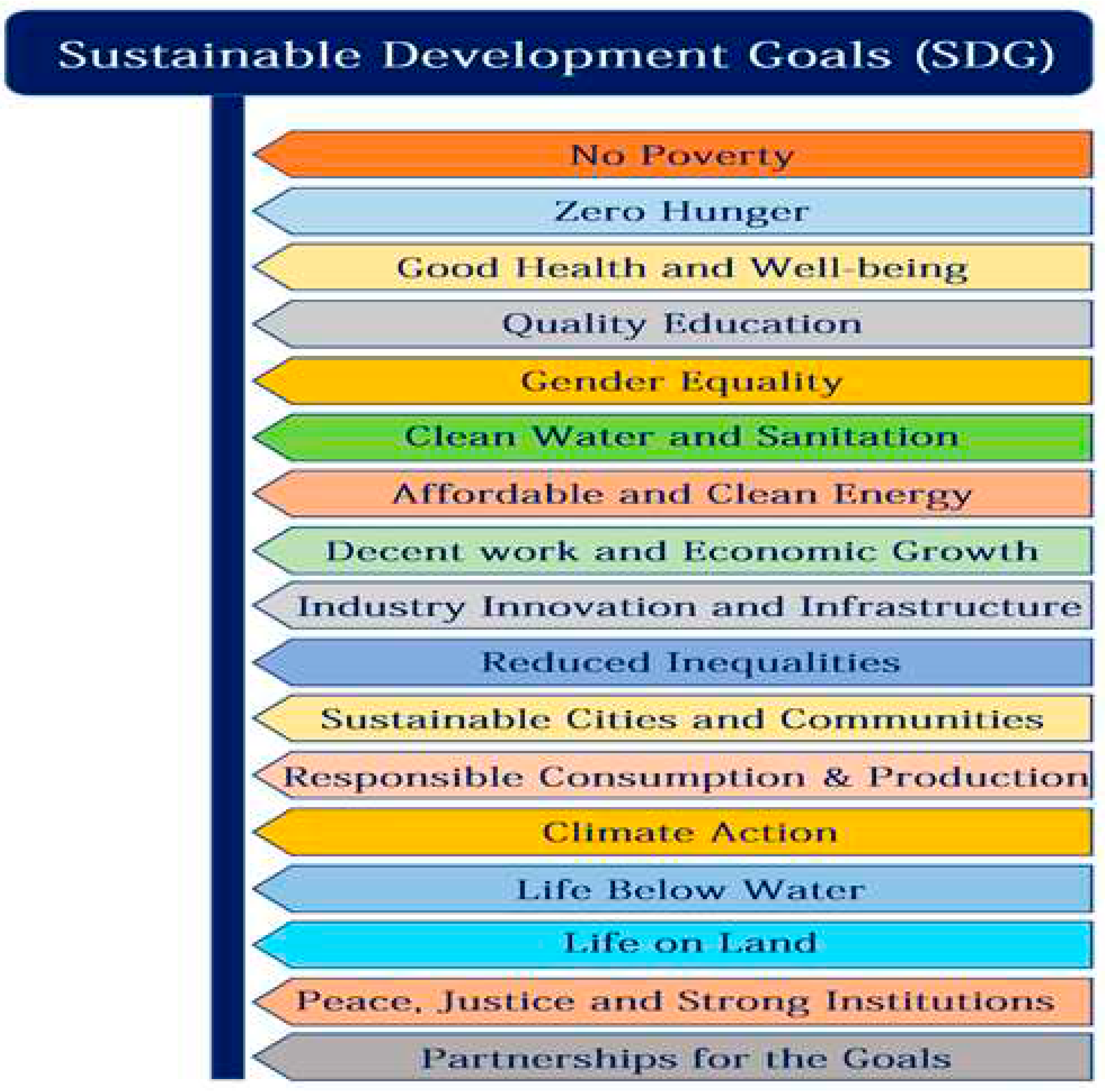
Figure 2.
Diagrammatic Representation of the Society 1.0 to 5.0.

Figure 3.
Applications of Nanotechnology (NT) in Different Sectors.

Disclaimer/Publisher’s Note: The statements, opinions and data contained in all publications are solely those of the individual author(s) and contributor(s) and not of MDPI and/or the editor(s). MDPI and/or the editor(s) disclaim responsibility for any injury to people or property resulting from any ideas, methods, instructions or products referred to in the content. |
© 2023 by the authors. Licensee MDPI, Basel, Switzerland. This article is an open access article distributed under the terms and conditions of the Creative Commons Attribution (CC BY) license (https://creativecommons.org/licenses/by/4.0/).
Copyright: This open access article is published under a Creative Commons CC BY 4.0 license, which permit the free download, distribution, and reuse, provided that the author and preprint are cited in any reuse.


