

Submitted:
29 June 2023
Posted:
30 June 2023
You are already at the latest version
Abstract
Abstract: Establishing carbon neutrality (or Net Zero) in cities appears to be an ambitious challenge, which drives urban transformation efforts around the world to enhance people-centric living. Cities launch corresponding strategies focusing mainly on the United Nations 2030 goals to form their climate-neutral future. This paper provides practical guidance on city digital transformation to achieve carbon net zero. These guidelines illustrate actionable recommendations to reduce their carbon footprint using digital technologies. Following a multi-method research approach, findings from a bibliometric literature and a standards’ gap analysis were combined with practical evidence and circulated with focus group experts to conclude to these guidelines, which are the foundation for further standardization. The outcomes provide concrete guidelines to policymakers, planners, and other stakeholders for city digital transformation to establish carbon neutrality, via emphasizing the need for digital technologies to enhance efficiency in several areas and via leveraging green ICTs for city economic growth while also transforming citizen behavior.
Keywords:
carbon net zero city
; climate neutral city
; smart city
; digital transformation
; standardization
1. Introduction
With the ever increasing need to tackle the effects of climate change, cities are increasingly turning towards sustainable solutions to reduce their carbon footprint. Information and Communication Technologies (ICT) have emerged as a key player in this transition, offering a range of innovative solutions to help cities achieve their goal of becoming carbon Net Zero. However, the adoption and integration of digital technologies in cities is not without its challenges and requires a thorough analysis of the existing context and identification of gaps that need to be addressed.
Cities are at the forefront of the global effort to address climate change and reduce greenhouse gas (GHG) emissions. With more than half of the world’s population living in urban areas, cities are responsible for a significant portion of global emissions and play a critical role in achieving sustainability and Net Zero carbon. To this end, many cities around the world have set ambitious targets to achieve net zero carbon emissions by 2050 or earlier.
Achieving Net Zero emissions requires a comprehensive approach that involves reducing emissions in numerous sectors. The path to Net Zero is complex, and cities face numerous challenges and barriers. To overcome these challenges and ensure that Net Zero efforts are effective, cities need to clearly understand what neutrality means for their systems, what pathways can follow to establish it, and develop a robust methodology for both achieving it and for assessing their progress. This methodology provides a robust framework with exemplified pathways and for continuous monitoring and evaluation to track progress and identify areas for improvement.
This paper addresses the above challenges for city carbon neutral transition with digital transformation by answering the following research questions (RQs):
- RQ1:
- Which is the terminology that defines carbon neutral city?
- RQ2:
- What are the pathways that a city can follow to achieve in carbon neutral operation and how can digital transformation contribute?
- RQ3:
- How can city carbon Net Zero progress be assessed?
All these questions are important to be answered due to the increasing efforts of cities to deal with climate change and reduce their fossil fuel dependence. In this regard, RQ1 will present how Net Zero city is defined and which terminology is used, according to literature evidence. On the other hand, RQ2 presents alternative pathways that cities can follow for their carbon Net Zero transition and the role of the ICT. Finally, RQ3 provides with useful material the cities to assess their progress in their carbon Net Zero transition. In this regard, this paper returns useful findings that can be used by city planners and decision makers: definition and terminology that clarify what carbon Net Zero means for cities; a framework for city transition to carbon Net Zero exemplified with pathways and with the role of the ICT and accompanied by assessment methodologies to measure the transition progress; and guidelines for city digital transformation to establish carbon neutrality. The outcomes from this study have been circulated with experts that work for international standardization bodies and have structured the foundation for further city carbon neutral standardization.
The rest of this paper is organized as follows: Section 2 concerns a background analysis of this article and contains the bibliometric findings. Then, Section 3 presents the research methodology, while Section 4 provides answers to the grounded RQs together with some limitations and future thoughts.
2. Bibliometric and Gap Analysis
Bibliometric analysis provides a quantitative method to evaluate research impact, understand trends, benchmark performance, and identify areas of opportunity. This comprehensive bibliometric analysis identifies key opportunities and challenges for the successful implementation of digital technologies in cities striving to achieve Net Zero. Through this analysis, it will provide a roadmap for policymakers and city planners to effectively leverage digital technologies towards a more sustainable future. The bibliometric analysis was performed during April and May 2022, with several keyword combinations to the scientific repositories Scopus and Web of Science (Table 1) that provide their results in the appropriate form (bibtex files). The RStudio® software suite was used and code in R language was structured to generate the collected outcomes. The results from the analysis are presented in the following sub-sections.
2.1. “carbon” AND “zero” AND “city”
According to the bibliometric outcomes, the conceptual map (Figure 1) and the extracted themes (Figure 2), the following topics are highlighted about carbon neutrality in cities: 912 articles that were published in 531 sources, between 1948 and 2022, written by 4097 authors, show that a) cities are seen as systems, whose energy and performance are measured, while climate change, emissions (nitrogen) and urban design affect mortality; b) management models try to measure city system’s efficiency, energy storage, consumption, and emissions; and c) CO2 emissions affect environmental performance and local temperature.
Moreover, the extracted keywords (Figure 3) show that the terminology about carbon zero city is deals with greenhouse gas (GHG) emissions, climate change, sustainability and energy performance and efficiency in cities. Another important outcome is the most productive sources in the domain (Table 2) and the schools of thought that drive carbon net zero cities (Figure 4).
2.2. “Net Zero” AND “city” | "Net Zero" AND "city" AND “digital”
According to the bibliometric outcomes, the conceptual map (Figure 5) and the extracted themes (Figure 6), the following topics are highlighted about Net Zero city: 362 articles that were published in 202 sources, between 1996 and 2022, written by 1099 authors, show that a) cities are seen as energy storage systems; b) carbon footprint is seen in terms of its cost and its sources (buildings and transmission networks); and c) Net Zero city is seen as a system, which is simulated, and its performance is calculated. Moreover, the extracted keywords (Figure 7) show that the terminology about carbon zero city is deals with climate change, (net zero energy) buildings, and energy efficiency and optimization in cities. Another important outcome is the most productive sources in the domain (Table 3), while only a few works discuss the role of ICT ("Net Zero" AND "city" AND “digital”), mainly focusing on IoT, energy grids and smart buildings.
2.3. “climate neutral” AND “city”
The bibliometric outcomes, the conceptual map (Figure 8) and the magic quadrant of top themes (Figure 9) show the following topics about climate neutral city: it is an emerging topic, containing 57 articles that were published in 39 sources, between 2011 and 2022, written by 148 authors, according which a) city sustainability is a motor theme and energy drives climate change; b) energy efficiency and transition from fossil fuels are basic themes; and c) eco-driving and eco-routing emerge. Moreover, the extracted keywords (Figure 10) show that the terminology about climate neutral city deals with climate change, GHG emissions, and energy efficiency and economics in cities. Another important outcome is the most productive sources (Table 4) and schools of thought in the domain (Figure 11) while a cluster about the role of the ICT appears to discuss about a digital ecosystem and corresponding digital services.
2.4. Definitions and terminology
The bibliometric analysis depicted the domain of carbon neutral cities briefly, while it highlighted the current trends and the corresponding terminology (keywords) according to the literature evidence, at least during the time of analysis (April-May 2022). More specifically, the following terms required definition, which provide with answer the RQ1:
- City is an urban area, which, according to the United Nations, typically begins with a population density of 1 500 people per square mile [1]. Another indicative definition from the International Standards Organization (IS0) says that “[a] city is an urban community falling under a specific administrative boundary”, which shows that a city needs some model of governance. Community is a group of people with an arrangement of responsibilities, activities, and relationships”. Moreover, “a city is a system of systems with a unique history and set in a specific environmental and societal context. In order for it to flourish, all the key city actors need to work together, utilizing all of their resources, to overcome the challenges and grasp the opportunities that the city faces” [1].
The city is not limited to the built environment that is agglomerated by the local community, but it is a broader urban system, where the built environment is interconnected with other components (i.e., natural environment, industrial areas, rural areas, interconnections with other cities etc.) (Figure 12). Additionally, as the bibliometric analysis indicated, the city is seen as an energy system that produces emissions and consists of the following components [1,3]:
- 1.
- Buildings (municipal, industrial, commercial, and residential)
- 2.
- Businesses and labor size (industry, service, and farming sectors)
- 3.
- Transportation (public and private), which now evolves to an EV charging network.
- 4.
- Public lighting (street and open space lighting, fountain operation)
- 5.
- Water and sewage treatment and distribution.
- 6.
- Waste chain operation (collection, delivery, and processing)
- 7.
- Telecommunication networks.
- 8.
- Land uses.
Municipal buildings host local government and other services and they are maintained by the municipality (e.g., schools). Commercial buildings are used for retail purposes; for offices, industries, and warehouses; for education; for leisure; and health. The ICTs that are applied concern the smart grid that upgrades energy distribution with intelligence; smart buildings that enhance their efficiency and maintenance; smart water enable intelligent water management; and smart transportation enhance transportation management [4].
- Smart and Sustainable City is an innovative city that uses ICT and other means to improve quality of life, the efficiency of urban operation and services, and competitiveness, while ensuring that it meets the needs of present and future generations with respect to economic, social, and environmental aspects [5].
- Low-carbon city decouples urban economy and activities from fossil fuel use and emphasizes energy efficiency, renewable energy, and green transportation [3].
- Net Zero carbon city radically reduces GHG emissions from urban activities while simultaneously removes GHG emissions from the atmosphere [3]. Net zero refers to the balance between the amount of greenhouse gas produced and the amount removed from the atmosphere. The Net Zero carbon city goes further than the low-carbon city in removing all fossil fuels in a bigger system boundary and in regenerating urban and regional landscapes with carbon sequestering landscapes and circular economy strategies [3]. Its synonyms are climate-neutral city, Net Zero energy city and carbon-free city.
- Emissions of Greenhouse Gases (GHG) are anthropogenic emissions of the carbon dioxide (CO2), methane (CH4), nitrous oxide (N2O), hydrofluorocarbons (HFCs), perfluorocarbons (PFCs), sulfur hexafluoride (SF6) [6]. The Unit of Measurement for GHG emissions is gigagrams (Gg) per annum. Emissions of CH4, N2O, HFCs, PFCs and SF6 can be converted to CO2 equivalents using the so-called global warming potentials (GWPs) provided in assessments of the Intergovernmental Panel on Climate Change [6].
- Decarbonization is the decrease ratio of CO2 or all GHG emissions related to primary energy production [9]. On the other hand, Deep Decarbonization is a process, by which urban activities achieve zero -or near Net Zero- CO2 emissions. Low-carbon and deep decarbonization require behavior changes, including conservation behaviors and household and industry adoption of new technologies [3].
- Climate neutrality is a process that brings all GHG to the point of zero, while eliminates all other negative environmental impacts of an organization [9].
- Carbon neutrality is the process with which all the CO2 emissions released into the atmosphere because of a company’s activities are balanced by an equivalent amount being removed [9].
- Climate change refers to a “change in the state of the climate that can be identified (e.g., using statistical tests) by changes in the mean and/or the variability of its properties, and that persists for an extended period, typically decades or longer” [10].
2.5. An approach to a carbon neutral city
The above definitions result to the following perspectives for a carbon neutral city can be identified [3]:
The territorial perspective aims to eliminate all carbon emissions produced within the city’s administrative boundaries. This could be achieved for instance, by moving emission sources out of the city’s administrative boundaries (which is not desirable) or by incorporating more carbon sinks such as planting trees. Additionally, some territorial emissions, like the ones associated with airports or harbors, are not controlled by the local government and corresponding urban policies [3].
The Community-wide infrastructure supply chain GHG footprint expands the territorial perspective via accounting GHGs along supply chains of key community-wide infrastructure and food provisioning systems that support all the local activities (residential, commercial, and industrial). The GHG protocols specify GHG emission sources (factors) and introduce methods and tools for calculating emissions (like formula (1)) and oblige data collection principles [7].
GHG emissions = Activity data × Emission factor
The consumption-based perspective implies that all households and government expenditures are Net Zero. Total community-wide GHG footprint is an emerging approach that includes upstream and downstream supply chain emissions associated with all community-wide activities, i.e., including local and final consumption by households, government, and exports [3].
The total community-wide supply chain footprint implies that not only imports to local households but also exports from local businesses are Net Zero. This will require global governance of carbon embodied in trade, inside and outside cities, which goes beyond the boundary of a city [3].
The transformation of a city to a carbon neutral is a hard process [11], regardless the perspective that is followed, since all the urban system’s components must transform to new ones that minimize their emissions or collaborate to establish the Net Zero targets. Moreover, a city cannot achieve Net Zero performance by focusing only on reducing emissions within its administrative boundaries, but they must decarbonize key transboundary supply chains and use urban and regional landscapes to sequester carbon from the atmosphere [3]. For instance, an integrated approach that results in energy-efficient buildings, smart energy infrastructure, clean electrification within a compact city can be seen as a corresponding framework [12] (Figure 13), while some indicators have been proposed to measure the city transformation progress [13].
Moreover, some standardization efforts that address carbon neutral cities concern the following (Table 5). According to these findings, the International Standards Organization (ISO) provides with standards the World Economic Forum [12] to its integrated approach to Net Zero carbon cities. Some of these standards are the ISO37101:2016; ISO50001:2018; ISO15932:2019; ISO/IEC 30145-1:2021; and ISO/CD59004. Moreover, the International Electrotechnical Committee (IEC) has undertaken efforts that address SDG13 “Climate Change” to strengthen the disaster resilience of infrastructure; make efficient use of resources; use renewable resources (hydropower, ocean power, solar energy, wind turbines, fuel cell technologies and nuclear instrumentation). The International Telecommunications Union (ITU) on the other hand, have addressed the SDG13, SDG14 and SDG15, and it has developed recommendations that help the ICT sector measuring its energy consumption and GHG emission production. Additionally, the World Resources Institute (WRI) has developed guidelines, that provide a standardized approach for estimating the greenhouse gas effect of policies and actions, as well as guidance for designing national and subnational mitigation goals and a standardized approach for assessing and reporting progress toward goal achievement. Finally, the British Standards Institute (BSI) develop standards that help combating climate change, and support organizations aligning with UN SDGs and improving business efficiency (i.e., verify organization’s carbon neutrality) and resilience.
Beyond the above standards and standardization efforts, some more indicative activities that deal with climate neutrality can be found in: the United Nations Framework Convention on Climate Change (UNFCCC) Secretariat,1 which is tasked with supporting the global response to the threat of climate change; the European Net Zero Cities [30], which derives from the European Green Deal strategy [31]; the U.S. Long-term Strategy for Net Zero GHG emissions [32]; the Chinese 2020 action plan for air pollution [33]; and the Australian Net Zero and positive energy plans [34].
Energy efficiency enhancement and demand reduction, enabled by integrated spatial planning and cross-sector urban industrial symbiosis, are some corresponding strategic options for city decarbonization [35]. Deep decarbonization pathways provide a broad framework for deep and systemic change and concern the following alternatives [3]:
- Pathway 1 - Integrated Urban Spatial Planning
Four key characteristics of urban form can affect the produced GHG emissions: density, land use mix, connectivity, and accessibility. Their calibration requires the application of effective urban mitigation strategies containing demand management measures, like co-locating high residential with high employment densities; achieving high diversity and integration of land uses; increasing accessibility and investing in public transport.
- Pathway 2: Increasing Single-Sector Efficiency
Within each sector (buildings, transportation and vehicles, and green infrastructure), new technologies offer opportunities for reducing resource requirements that builds upon an efficient urban form (Pathway #1).
- Pathway 3: Cross-Sector Urban Industrial Symbiosis
Urban industrial symbiosis refers to the exchange of waste heat and materials across sectors (industries, buildings, and city utilities; for example, water, sewage, waste, and landfills), in cities. The eco-industrial park is an example, where waste and energy exchange among multiple industrial manufacturing plants in and around urban areas is performed, and the exchange of waste heat between industrial, commercial, and residential sectors is also performed, usually as district heating systems.
- Pathway 4: Decarbonize Electricity
A Net Zero carbon electricity grid provides Net Zero carbon energy and materials to buildings, lighting, mobility, and light industrial energy use.
- Pathway 5: Electrifying Mobility and Heating/Cooling Systems
The Net Zero carbon electricity grid can contribute to a Net Zero carbon future only when the primary urban activities (i.e., mobility, heating/cooling, etc.) transform to zero-carbon electricity (i.e., renewable-electric mobility and heating/cooling systems).
- Pathway 6: Renewable Fuels and Materials via Carbon Valorization
Carbon valorization is the process that converts CO2 (in all its possible forms: gas, liquid, and solid carbon waste) into value-added products through a range of technologies.
- Pathway 7: Enhancing Urban Carbon Uptake and Stocks
Carbon uptake within city boundaries can minimize CO2 emissions. There are two main pathways for direct carbon uptake in cities. Carbonation is a slow process opposite to calcination, which is used in cement production. The second one is photosynthetic carbon uptake by green plants.
- Pathway 8: European carbon neutral pathway
The analysis of the European Net Zero Cities [30] highlighted the use cases of buildings, introducing regulations and certification systems for sustainable construction -corresponds to a 39 percent global GHG emissions-, and behavioural change regarding people lifestyle changes to minimize carbon impact.
The analysis of several cases around the world returns the following pathway outcomes from the above framework’s application, which represent alternative approaches to carbon neutral cities [3]:
- Central city walking cities are less able to install solar photovoltaic (PV) systems, but they are ideal for walkable active transport and micro mobility, as well as biophilic urbanism in the form of green roofs and green walls. Active transport, including walking, is health-promoting and supports sustainable living [36,37]. Micro mobility is a widely used term for low-speed modes of transport based on the use of electricity. They are usually personal micro vehicles such as e-scooters. Biophilic Urbanism refers to “the use of natural elements as purposeful design features in urban landscapes to address climate change issues in rapidly growing economies” [38].
- Transit city corridors are better for solar PV and batteries, and ideal for transit, micro mobility, and active transport. They have also circular economy’s potentials.
- The middle and outer suburbs of the automobile area are good for solar PV and for circular economy processing and permaculture, which need more space, while they are likely to require electric cars and buses. Permaculture is the design and maintenance of a productive agricultural ecosystem that is characterized by sustainability, diversity, stability, and durability [39].
- Rural villages and peri-urban areas form new localized centers to maximize benefits from PV and electromobility. These areas usually have railways, carpooling, electric vehicle (EV) -sharing or cooperative bus services for city access. Local transportation is mostly based on such vehicles, as well as on (electric) bikes.
Some more measures that have been deployed within cities concern:
- Community awareness: raising awareness requires extensive and successful communication efforts, which follow modern methods like gaming, simulation, citizen assemblies’ structuring, motivation, and profiting, which are being performed locally and globally [40]. Moreover, community motivation via the circular economy and individual savings can also contribute to social engagement.
- Carbon-freeing literacy: the community must realize the context of shifting from a fossil-fuel life to a carbon-free life, and this mitigation goes beyond policy and technology, to even attitude changes (i.e., car avoidance, gardening, etc.). Educating the community is a challenge, which should focus on energy demand reduction and energy flexibility [41]. ISO/DIS 14066 for instance [42], works on competence requirements about validation and verification of environmental information and has delivered the ISO14066:2011 [43].
2.6. The role of ICT to a Net Zero carbon city
The previously presented framework and protocols emphasize the role of space, policies, and natural environment to decarbonization, and they do not utilize the ICT and the SSC to a carbon neutral city, except from smart grids. In this respect, it is important to consider other technological exemplars that can contribute to carbon neutral cities:
- ICT-based measurement: IoT, drones, wearable and mobile devices can contribute to even real-time sensing and crowdsensing, which can calculate GHG (and other) emissions and measure systemic performance during specific periods of time. Measurements can respect one or more of the perspectives of to depict carbon-zeroing performance of specific areas, sectors or even processes.
- ICT-based electric mobility: smart transportation systems can integrate ICT (sensors, platforms, sharing systems, autonomous systems, etc.) with EV and maximize mobility’s efficiency in meeting demand and minimize emissions.
- ICT-based efficiency: energy efficiency is one of the perspectives identified for urban systems and services, and ICT can play a significant role in maximizing this efficiency.
- ICT frontier technologies: technologies that can be used to address climate change (i.e., Artificial Intelligence (AI), Internet of Things (IoT), 5G, Clean Energy Technologies, Digital Twin, Robotics, Space 2.0, big data, and blockchain, etc.) [10].
- ICT efficiency: the ICT systems must also be energy efficient, since technologies like blockchain, AI, autonomous vehicles and data centers demand increasing amounts of energy. The ITU Focus Group on Environmental Efficiency for Artificial Intelligence and other Emerging Technologies (FG-AI4EE) analyzed several areas and returned some useful findings even about established energy-efficient, ICT-based systems and services.
- Organizational activities that are based on the ICT: web-based services to avoid physical transactions; smart-work, teleconferencing and tele-education; install and use energy-efficient office machines; install and use green data centers; adapt Building Energy Management Systems (BEMS) [44].
The previously presented framework with the pathways and the guidelines for the ICT utilization, provide with answer the RQ2.
3. Research Methodology
The above findings shed light to the domain of a carbon neutral city, as well as of its corresponding terminology and alternative pathways for its establishment. These outcomes needed to be confirmed for their applicability on people-centered cities and in this respect, the United for Smart and Sustainable Cities (U4SSC) structured a corresponding thematic group with a specific Working Group (WG4) [45]. This working group was structured of more than 40 experts, who met several times as a focus group to circulate and validate the above outcomes and the authors consolidated with them in terms of the focus group research methodology [46]. More specifically, more than thirty (30) WG4 experts, members of the U4SSC met on April 13, 2022; June 24, 2022; September 9, 2022; and March 17, 2023, and discussed the above outcomes, while they circulated on the requested deliverables.
About the theoretical findings that were presented above, the experts expressed their complete agreement, and they insisted on the role of the additional measures regarding enabling carbon neutrality in cities, in terms of community awareness and literacy. Furthermore, the experts encouraged the calculation of carbon emissions per full life cycle of a product or service. Thus, they considered important the comparison between different types of services and products, based on their scale (i.e., the full life cycle of a car is more carbon intensive compared to the full life cycle of a cloth) and in this respect, different economies should also be able to calculate their carbon neutrality both within a city or between different cities. Additionally, the experts introduced the European carbon neutral pathway 8, which was identified by the European initiative [30]. Finally, the experts contributed on the assessment methodologies for carbon neutral progress. The editors of the WG4 deliverables introduced two (2) different alternatives: a) carbon performance assessment with carbon consumption maturity model; and b) Strategic performance assessment. The experts circulated the models, while they contributed with the strategic objectives that can be measured.
The first assessment methodology to calculate the GHG emissions was produced, and the carbon consumption performance respectively. In general, both the methodologies consider a carbon management process, like the one identified by existing standards (i.e., PAS 2080 [28]). This process considers the entire life cycle of a product or service. Moreover, formula (1) can be measured in different times for each sector and results can be compared to highlight whether the produced emissions are decreased or not.
On the other hand, for a product or service the produced emission should be calculated based on the entire life cycle of a product or service. For instance, for a construction facility product, the following formula (2) depicts the baseline calculation methodology of the produced emission ([28]:
A = Estimated cost of bridge = USD 5 million
B = Industry average of GHG emissions per $ spent = 0.224 kgCO2e per USD
A x B = 1 120 tCO2e for delivery of the construction product
Moreover, the European Union (EU) has launched a large-scale initiative called the 100 European Climate Neutral Cities [30], which defined specific indicators to measure their performance.
- Scope 1 GHG emissions for the city within the geographic boundary, which complies with the territorial perspective. This indicator will be calculated based on the emissions from buildings, industry, transport, waste treatment, agriculture, and forestry, and from other activities.
- Scope 2 GHG emissions for the city, which complies with the consumption-based perspective. This indicator will be calculated based on the emissions from indirect emissions due to production/consumption of grid-supplied electricity within the geographic boundary and indirect emissions due to production/consumption of grid-supplied heat or cold within the geographic boundary.
- Scope 3 GHG emissions for the city, which complies with the community-wide infrastructure supply chain, will be calculated based on the emissions from out-of-boundary emissions from: the treatment of waste produced within the geographic boundary; out-of-boundary emissions from transmission and distribution of energy consumed within the geographic boundary; out-of-boundary emissions from the transportation of citizens living within the geographic boundary; out-of-boundary emissions from consumption made within the geographic boundary (e.g., food, clothes, furniture, materials); and other indirect emissions.
Beyond the formulas (1) and (2) and inspired by the SSC maturity model [47] the carbon neutral city progress can be analysed in the following dimensions:
- Energy Efficiency
This dimension is used to evaluate how energy efficiency, has been improved in the city, especially based on the ICT. Some corresponding topics could be:
- ICT infrastructure
- Energy physical infrastructure
- ICT integration in the energy system
- Mobility electrification dimension
This dimension is used to evaluate the progress of mobility electrification in the city, especially based on the ICT. Some corresponding topics could be:
- Public transportation.
- Mobility sharing systems.
- Private transportation.
- Micro mobility.
- Systems’ decarbonization dimension
This dimension is used to evaluate how city systems have shifted to decarbonization, especially based on the ICT. Some corresponding topics could be:
- Renewable energy systems.
- Buildings’ upgrades.
- Circularity for waste processing.
- Demand control dimension
This dimension is used to evaluate how energy demand and general carbon behaviour in the city has changed, especially based on the ICT. Some corresponding topics could be:
- Food systems.
- Waste and recycle.
- Active mobility.
The cities can be classified in maturity levels, addressing corresponding achievements (Table 6 and Table 7).
The second assessment methodology was introduced, to calculate the strategic performance assessment. According to strategic management literature, a strategy is specified with strategic targets, which in turn are specified with strategic objectives, whose establishment is measured with specific metrics. Objectives are extremely useful because they transform strategic vision into measurable targets, while they enable progress/performance measurement and oblige the organization to be focused. The objectives’ measurement supports the stakeholders’ and employees’ satisfaction, establishes the clarity of the activities, and makes a comparison between the conditions’ evolution. Financial objectives are well-understood to an organization, but they are not enough to measure strategic progress since they depict past conditions, and they are mostly short term (less than 1 year).
According to the previous section’s findings, carbon neutrality progress is measured according to specific targets, which can be used as the indicative carbon neutrality objectives:
- Achieve Net Zero emissions by a specified year (i.e., 2050)
- Reduce emissions intensity of GDP (%)
- Reduce emissions (tons)
- Generate energy from renewable resources (%)
- Organization’s contribution to GHG emission reduction in the corresponding sector
The Balanced Scorecard (BSC) is a broadly used methodology that can measure the establishment of the strategic targets, via measuring objectives’ performance with specific metrics [48]. BSC is analysed in the following perspectives:
- Financial perspective
- Customer perspective
- Internal perspective
- Learning and growth perspective
Balanced Scorecard (BSC) concerns a valuable tool that can transform a strategy into a framework plan of actions and secure its successful implementation. Its title is explained as follows:
- Balanced: Equilibrium; multidimensional perspective; integration
- Score: Measurement; target-orientation; long-term planning; strategy
- Card: Systemic; simplification; registration; transparency; commitment
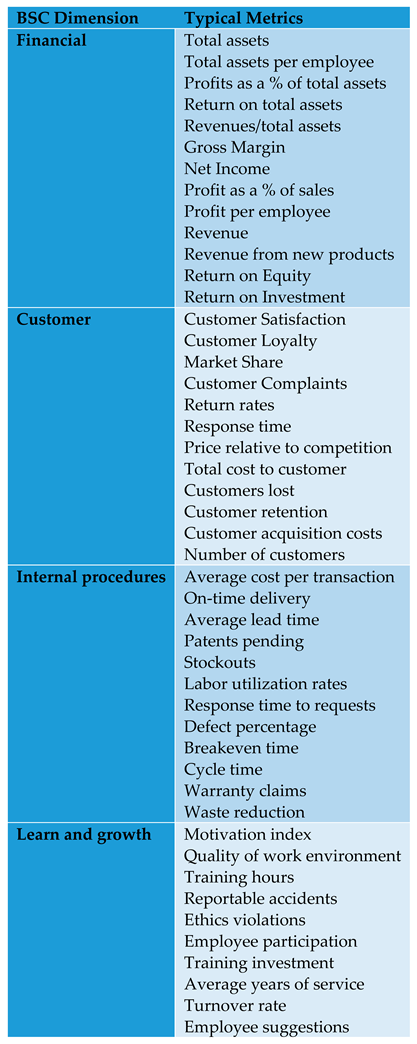
BSC starts with the vision definition and the strategic formulation, moves to the critical-success-factor determination, then goes to the identification of the appropriate indexes that measure performance, and ends with the definition of measures and activities. Moreover, the BSC translates strategic objectives into measurable business targets, which, in turn, are forces that motivate human resources in achieving in the desired outcome. BSC is a modern strategic management tool rather than a traditional controlling element. Some metrics that can be associated with the objectives are presented in the following (Table 8).
The following Figure 14 shows a representative BSC for a strategy formed for carbon neutrality.
4. Conclusions
This study was two-fold and attempted first, to depict the theoretical background and current trends in carbon neutral cities, and to define a framework for city carbon neutrality with the ICT and assessment methodologies for carbon neutral city progress. More specifically, this article grounded three research questions:
- RQ1:
- Which is the terminology that defines carbon neutral city?
- RQ2:
- What are the pathways that a city can follow to achieve in carbon neutral operation and how can digital transformation contribute?
- RQ3:
- How can city carbon Net Zero progress be assessed?
Bibliometric analysis returned useful findings about the literature of carbon neutral city. Some of the most cited articles analyzed the theoretical background and provided terminology and definitions of this topic that provided with answer the RQ1, while current trends are highlighted:
- 1)
- Cities are seen as systems for energy storage and consumption.
- 2)
- Climate change, emissions and urban design affect environmental performance, local temperature, and community’s mortality.
- 3)
- Management models try to measure city system’s efficiency, energy storage, consumption, and emission production.
- 4)
- Carbon footprint is seen for its cost, and its sources (buildings and transmission networks).
- 5)
- Urban climate neutrality is associated with sustainability and efficiency in cities, which can be achieved with energy transition to renewable sources, and eco-mobility.
Moreover, standardization efforts work in different directions: to provide toolkits for GHG measurements and pathways for a Net Zero carbon future; to provide management tools and verification mechanisms that can support businesses and organizations in the GHG Net Zero mitigation process; and standards that focus on the ICT sector. Nevertheless, none works in carbon-neutral cities.
Especially for the ICT sector, only a few works in literature discuss the role of digital technologies for carbon-neutral cities. The identified articles focus mainly on IoT, energy grids and smart buildings, while recent documents [10] uncover the role of frontier technologies to tackle with the climate change.
The background analysis identifies the carbon emissions, and shows how they are produced and calculated, while standards suggest pathways for their minimization. Eight (8) different pathways follow alternative perspectives and identify measures for carbon freeing and for city carbon neutral mitigation. However, these pathways do not focus on ICT, and some suggestions are given in this document for ICT-based measurement, mobility, and energy efficiency. In this respect, guidelines for ICT utilization were provided. All these findings provide with answer the RQ2.
Finally, two different approaches were proposed and presented in this article for the carbon neutral city assessment: The first approach is based on existing standards and on previous standardization efforts for SSC development and concerns the city carbon performance, which is measured according to the produced GHG by a city, and it is calculated with the individual sector’s assessment and the combination of the results. The overall performance classifies the city in a proposed carbon consumption maturity model, which associates carbon neutrality with digital transformation, since it recognizes the important role that digitalization and data play for carbon neutrality. The second approach measures the strategic performance of a carbon neutrality strategy. The methodology uses the BSc to align carbon neutral initiatives to corresponding strategic objectives and indexes. The overall findings can be applied either individually or in combination, and generate useful inputs to city leaders, to evaluate and monitor their strategic implementation for local carbon neutrality. Moreover, the assessment models can generate a common understanding of how carbon neutrality can be established in cities and how digital transformation (carbon consumption maturity model) are associated. These assessment approaches provide with answer the RQ3.
Some future thoughts about this article concern the application of both the framework, the guidelines for ICT utilization, and the assessment methodologies on real city cases that follow alternative pathways for their carbon neutral transformation. Moreover, the transformation of the framework and of the assessment methodologies to standards is another future thought that can maximize their impact with their adoption by several cities around the world.
5. Acknowledgements
Parts of this article were produced during the meetings and will be adopted by the deliverables of the United for Smart and Sustainable Cities (U4SSC) Thematic Group “Enabling People-Centred Cities through Digital Transformation” and more specifically of the Work Group 4 (WG4) “Guidelines for Unlocking Net Zero in Cities Through Sustainable Digital Transformation”. Moreover, inputs to this article were produced by a MSc Thesis of the MSc in Agile Management of the University of Thessaly, Greece.
Author Contributions
Conceptualization, L.A.; methodology, L.A. and E.K.; software, L.A. and C.Z.; validation, L.A. and E.K.; formal analysis, L.A., E.K. and C.Z. investigation, L.A. and E.K.; resources, L.A., E.K. and C.Z.; data curation, C.Z.; writing—original draft preparation, C.Z. and E.K.; writing—review and editing, C.Z., E.K. and L.A.; visualization, C.Z.; supervision, L.A.; project administration, L.A.; funding acquisition, L.A.. All authors have read and agreed to the published version of the manuscript.
Funding
This research received no external funding.
Institutional Review Board Statement
Not applicable.
Informed Consent Statement
Not applicable.
Data Availability Statement
Not applicable.
Conflicts of Interest
The authors declare no conflict of interest.
References
- Anthopoulos, L. Understanding Smart Cities - A tool for Smart Government or an Industrial Trick? Public Administration and Information Technology 2017, Vol. 22, Springer Science+Business Media New York.
- Nicholas, P. Unit 6 Cities and Urban Land Use Patterns And Proc. 2012. https://www.chegg.com/flashcards/unit-6-cities-and-urban-land-use-patterns-and-proc-1a440316-ccc5-4d67-816f-3a7662917184/deck (accessed on 15 June 2022).
- Seto, K.C.; Churkina, G. ; Hsu,A.; Keller, M.; Newman, P.; Qin, B.; Ramaswami, A. From Low- to Net-Zero Carbon Cities: The Next Global Agenda. Annu. Rev. Environ. Resour. 2021, 46:377–415. [CrossRef]
- International Telecommunications Union (ITU). Overview of smart sustainable cities infrastructure 2014. http://www.itu.int/en/ITU-T/focusgroups/ssc/Pages/default.aspx (accessed on 15 June 2022).
- International Telecommunications Union (ITU). Smart sustainable cities: An analysis of definitions 2014. www.itu.int/en/ITU-T/focusgroups/ssc/Documents/Approved_Deliverables/TR-Definitions.docx (accessed on 15 June 2022).
- United Nations. Emissions of Greenhouse Gases 2007. https://www.un.org/esa/sustdev/natlinfo/indicators/methodology_sheets/atmosphere/ghg_emissions.pdf (accessed on 15 June 2022).
- ICLEI, C40 Cities and World Resources Institute. Global Protocol for Community-Scale Greenhouse Gas Inventories: An Accounting and Reporting Standard for Cities Version 1.1, 2021. https://ghgprotocol.org/sites/default/files/standards/GPC_Full_MASTER_RW_v7.pdf (accessed on 16 June 2022).
- World Resources Institute (WRI). The Greenhouse Gas Protocol 2004. https://files.wri.org/d8/s3fs-public/pdf/ghg_protocol_2004.pdf (accessed on 16 June 2022).
- Lodato, M.; Xu, Q. The Carbon Neutrality Global Challenge 2021. http://www.ececp.eu/wp-content/uploads/2021/07/In3act-full-version.pdf (accessed on 19 June 2022).
- International Telecommunications Union (ITU). Frontier technologies to protect the environment and tackle climate change 2020. https://www.itu.int/en/publications/Documents/tsb/2020-Frontier-Technologies-to-Protect-the-Environment-and-Tackle-Climate-Change/files/downloads/19-00404_Frontier-Technologies.pdf (accessed on 19 June 2022).
- Viškovic, A.; Franki, V.; Bašic-Šiško, A. City-Level Transition to Low-Carbon Economy. Energies 2022, 15, 1737. [Google Scholar] [CrossRef]
- World Economic Forum. Net Zero Carbon Cities: An Integrated Approach 2021. https://www.weforum.org/reports/net-zero-carbon-cities-an-integrated-approach/ (accessed on 15 June 2022).
- Urrutia-Azcona, K.; Fontán-Agorreta, L.; Díez-Trinidad, F.J.; Rodríguez-Pérez-Curiel, F.; Gómez, J.V. Smart Zero Carbon City Readiness Level: Indicators System for City Diagnosis Towards Decarbonisation And Its Application in the Basque Country. DYNA 2018, vol. 94, no. 3, pp.332-338. [CrossRef]
- International Standards Organization (ISO). Climate action kit, 2022. https://www.iso.org/ClimateAction.html (accessed on 25 June 2023).
- IEC; ISO. IEC and ISO Climate Action Kit, 2021. https://storage-iecwebsite-prd-iec-ch.s3.eu-west-1.amazonaws.com/2021-10/iecandisoclimateactionkit.pdf (accessed on 19 June 2022).
- International Standards Organization (ISO). Building better cities for a net-zero carbon future, 2021. https://www.iso.org/news/ref2627.html (accessed on 25 June 2023).
- International Standards Organization (ISO). ISO/TC 207: Environmental management, 1993. https://www.iso.org/committee/54808.html (accessed on 19 June 2022).
- International Standards Organization (ISO). ISO/TC 207 /SC 7: Greenhouse gas and climate change management and related activities, 2007. https://www.iso.org/committee/546318.html (accessed on 19 June 2022).
- International Standards Organization (ISO). ISO/CD TR 14069 Greenhouse gases — Quantification and reporting of greenhouse gas emissions for organizations — Guidance for the application of ISO 14064-1, 2021. https://www.iso.org/standard/78492.html?browse=tc (accessed on 25 June 2023).
- International Standards Organization (ISO). ISO 14066:2011 Greenhouse gases — Competence requirements for greenhouse gas validation teams and verification teams, 2018. https://www.iso.org/standard/43277.html (accessed on 25 June 2023).
- International Standards Organization (ISO). ISO/DIS 14068 Greenhouse gas management and climate change management and related activities — Carbon neutrality, 2023. https://www.iso.org/standard/43279.html?browse=tc (accessed on 25 June 2023).
- International Standards Organization (ISO). IWA on Net-Zero Guiding Principles (IWA 42), 2022. https://share.ansi.org/Shared%20Documents/News%20and%20Publications/Links%20Within%20Stories/2022-05-18%20Circular_letter_TMB_IWA_42.pdf (accessed on 25 June 2023).
- International Electrotechnical Commission (IEC). Climate action, 2022. https://www.iec.ch/climate-action (accessed on 25 June 2023).
- International Electrotechnical Commission (IEC). TC 111: Environmental standardization for electrical and electronic products and systems, 2018. 2022. https://www.iec.ch/ords/f?p=103:7:210839073360167::::FSP_ORG_ID:1314 (accessed on 19 June 2022).
- International Telecommunications Union (ITU). Climate change, 2022. https://www.itu.int/en/mediacentre/backgrounders/Pages/climate-change.aspx (accessed on 25 June 2023).
- World Resources Institute. Policy and Action Standard. 2014. https://ghgprotocol.org/policy-and-action-standard (accessed on 16 June 2022).
- World Resources Institute. Mitigation Goal Standard, 2014. https://ghgprotocol.org/mitigation-goal-standard (accessed on 16 June 2022).
- British Standards Institute (BSI). PAS 2060 Carbon Neutrality - Supporting the energy revolution towards net zero, 2022. https://www.bsigroup.com/en-GB/pas-2060-carbon-neutrality/ (accessed on 25 June 2023).
- British Standards Institute (BSI). PAS 2080:2023 Carbon management in buildings and infrastructure, 2023. https://standardsdevelopment.bsigroup.com/projects/2021-01435#/section (accessed on 25 June 2023).
- European Commission. Net Zero Cities, 2020. https://netzerocities.eu/the-nzc-project/ (accessed on 25 June 2023).
- European Commission. A European Green Deal: Striving to be the first climate-neutral continent. 2019. https://ec.europa.eu/transport/sites/default/files/legislation/com20200789.pdf (accessed on 26 June 2022).
- United States Department of State; United States Executive Office of the President. The Long-Term Strategy of the United States: Pathways to Net-Zero Greenhouse Gas Emissions by 2050, 2021. Available online: https://www.whitehouse.gov/wp-content/uploads/2021/10/US-Long-Term-Strategy.pdf (accessed on 26 June 2022).
- Feng, H. Available online: https://chinadialogue.net/en/pollution/10711-china-releases-2-2-action-plan-for-air-pollution/ (accessed on 26 June 2022).
- Commonwealth of Australia, AUSTRALIA’S LONG-TERM EMISSIONS REDUCTION PLAN: A whole-of-economy Plan to achieve net zero emissions by 2050, 2021. Available online: https://www.dcceew.gov.au/sites/default/files/documents/australias-long-term-emissions-reduction-plan.pdf (accessed on 26 June 2022).
- Liu, Y.; Chen, S.; Jiang, K.; Kaghembega, W.S-H. The gaps and pathways to carbon neutrality for different type cities in China. Energy 2022, 244, 122596. [CrossRef]
- Gunn, L. D.; Mavoa, S.; Boulangé, C.; Hooper, P.; Kavanagh, A.; Giles-Corti, B. Designing healthy communities: creating evidence on metrics for built environment features associated with walkable neighbourhood activity centres. International Journal of Behavioral Nutrition and Physical Activity 2017, 14(164). [CrossRef]
- Grasser, G.; Titze, S.; Stronegger, W. J. Are residents of high-walkable areas satisfied with their neighbourhood? J Public Health 2016, (24), pp. 469–476. [CrossRef]
- Fazio, M.; Giuffrida, N.; Le Pira, M.; Inturri, G.; Ignaccolo, M. Planning Suitable Transport Networks for E-Scooters to Foster Micromobility Spreading. Sustainability 2021, 13. [Google Scholar] [CrossRef]
- Nath, M. K. Potentialities of Permaculture to Emerge as an Alternative for Intensive Agriculture- A Review. Indian Journal of Organic Farming 2022. Available online: https://www.cpublishingmedia.com/wp-content/uploads/2022/05/Permaculture-review.
- Creutzig, F.; Kapmeier, F. Engage, don’t preach: Active learning triggers climate action. Energy Research & Social Science 2020, 70, 101779.
- Shimoda, Y.; Yamaguchi, Y.; Iwafune, Y.; Hidaka, K.; Meier, A.; Yagita, Y.; Kawamoto, H.; Nishikiori, S. Renewable and Sustainable Energy Reviews 2020, 132, 110051. [CrossRef]
- International Standards Organization (ISO). ISO 14066: Environmental information — Competence requirements for teams validating and verifying environmental information. https://www.iso.org/standard/82544.html?browse=tc (accessed on 26 June 2022).
- International Standards Organization (ISO). ISO 14066:2011: Greenhouse gases — Competence requirements for greenhouse gas validation teams and verification teams. Available online: https://www.iso.org/standard/43277.html (accessed on 26 June 2022).
- International Telecommunications Union (ITU). ITU-T L.1420: Methodology for energy consumption and greenhouse gas emissions impact assessment of information and communication technologies in organizations, 2012. https://www.itu.int/rec/T-REC-L.1420 (accessed on 26 June 2022).
- United for Smart and Sustainable Cities (U4SSC). Enabling People-Centred Cities through Digital Transformation: WG4 Guidelines for Unlocking Net Zero in Cities Through Sustainable Digital Transformation. https://u4ssc.itu.int/digital-transformation/ (accessed on 26 June 2022).
- Saunders, M.N.K.; Lewis, P.; Thornhill, A. Research Methods for Business Students, 5th ed.; Prentice Hall: New York, NY, USA, 2009. [Google Scholar]
- International Telecommunications Union (ITU). Recommendation ITU-T Y.4904: Smart sustainable cities maturity model, 2019. https://www.itu.int/rec/T-REC-Y.4904/en (accessed on 26 June 2022).
- Kaplan, R; Norton, D. The Balanced Scorecard: Translating Strategy into Action, 1992. The Balanced Scorecard Institute.
| 1 |
Figure 1.
Conceptual structure map.
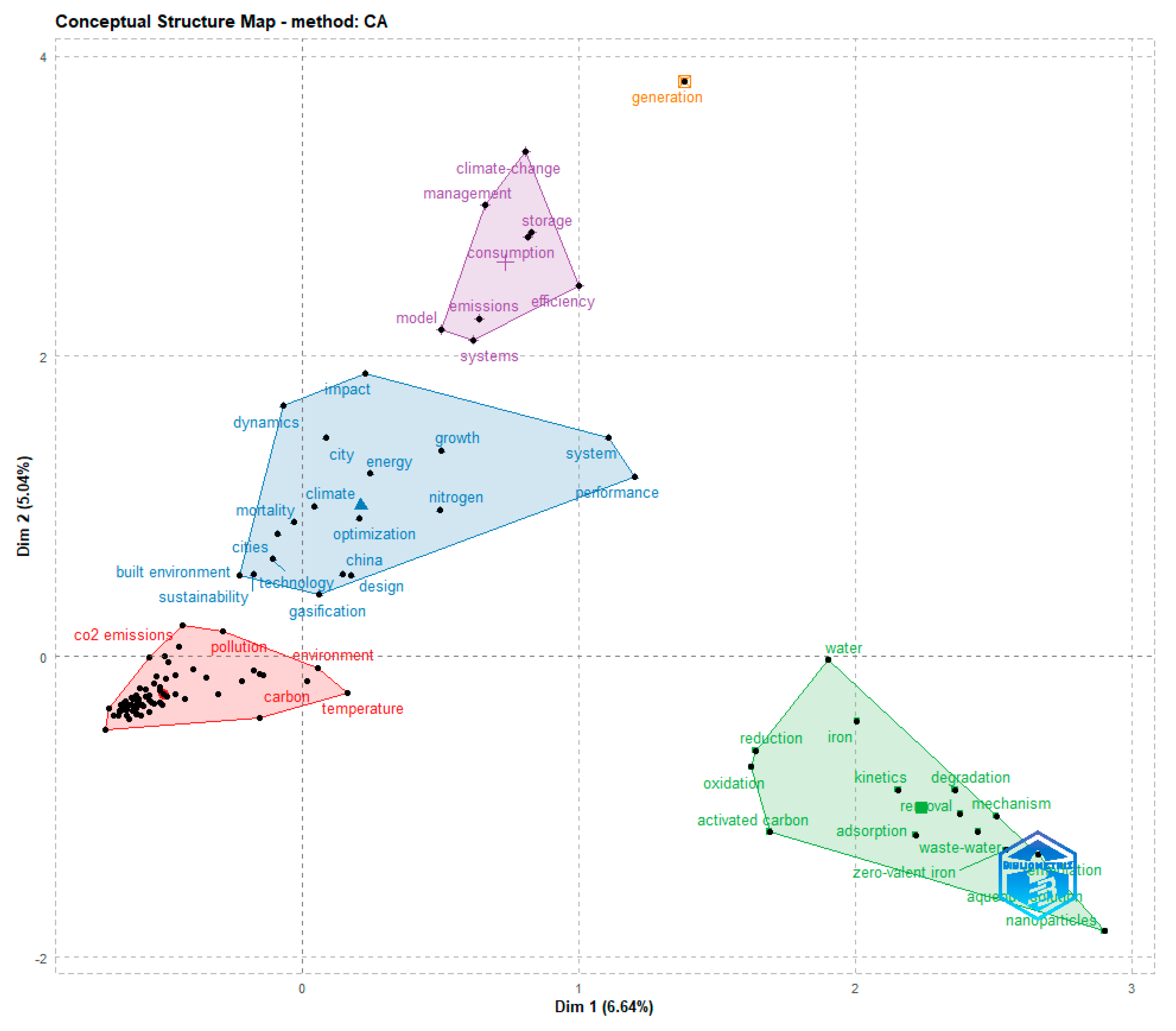
Figure 2.
Magic quadrant with extracted themes.
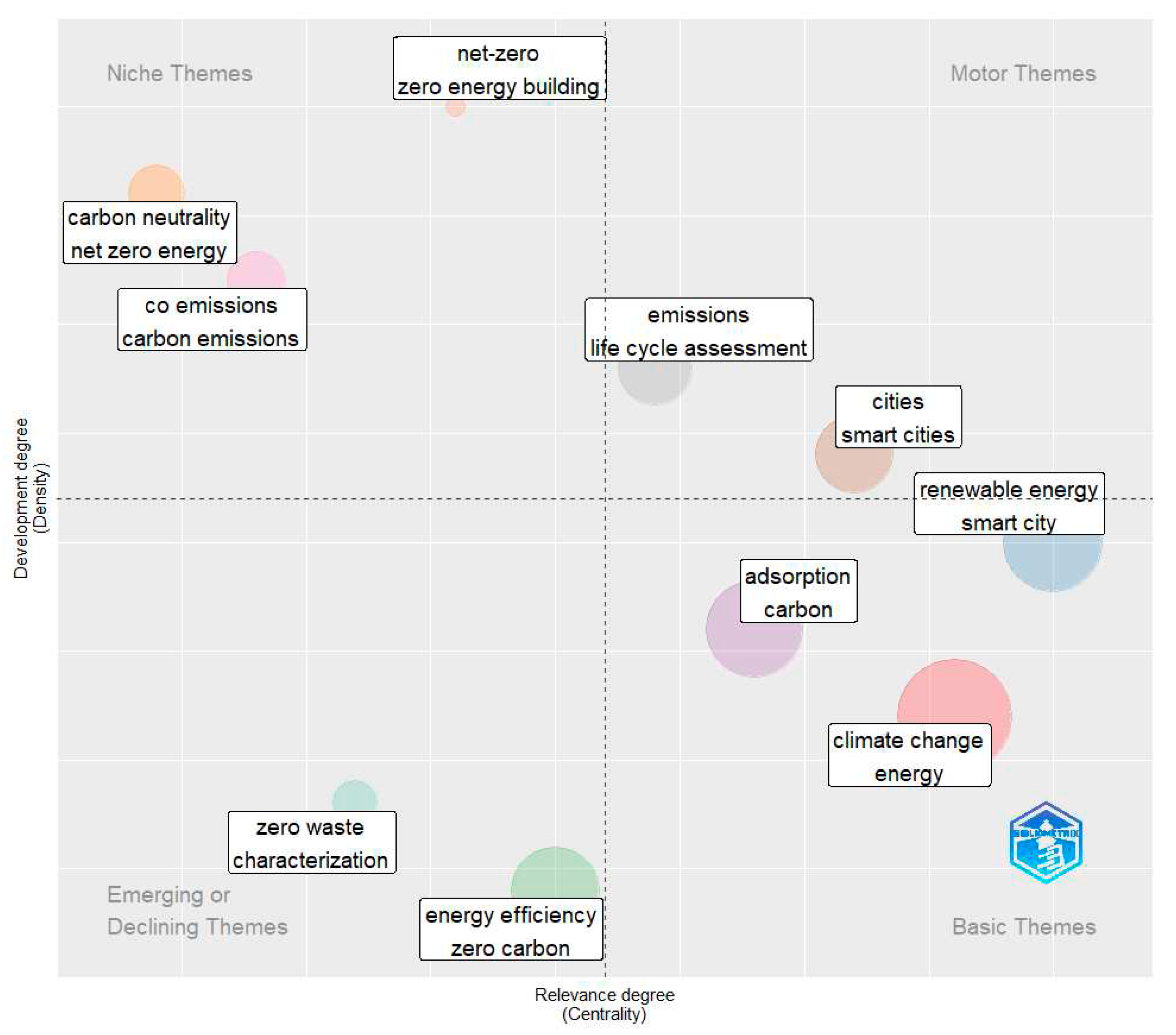
Figure 3.
top extracted keywords
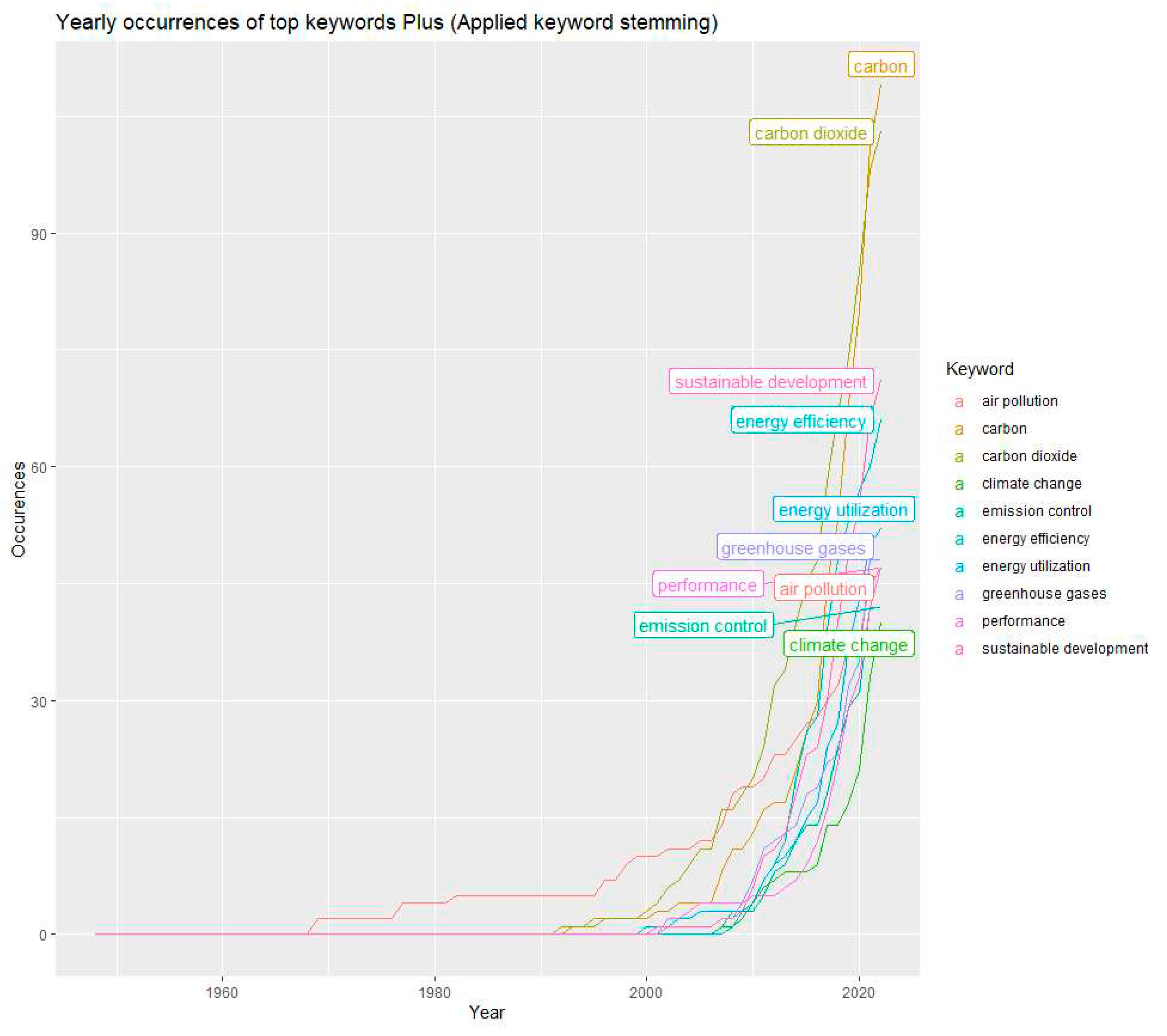
Figure 4.
Schools of thought in the domain.
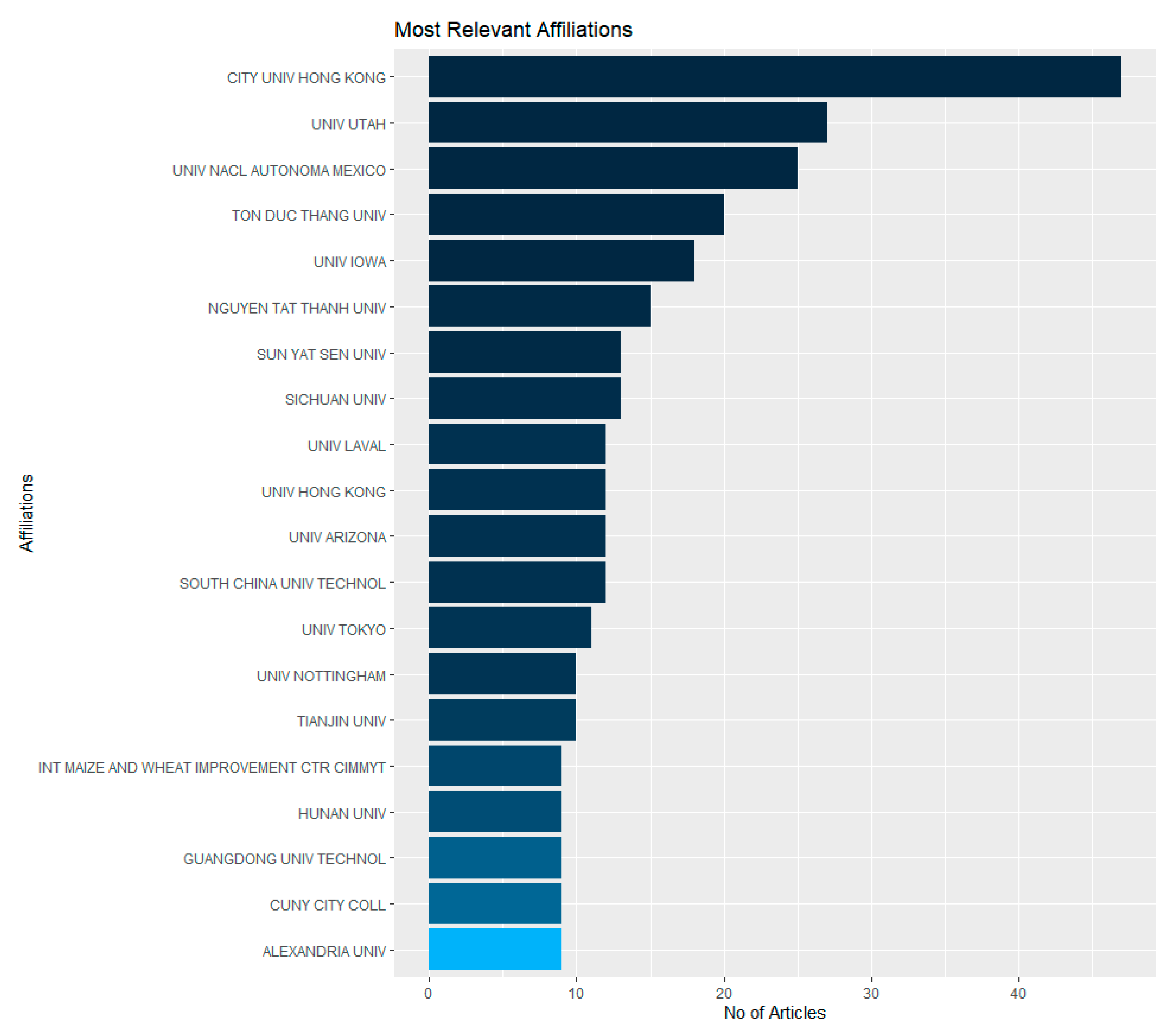
Figure 5.
Conceptual structure map.
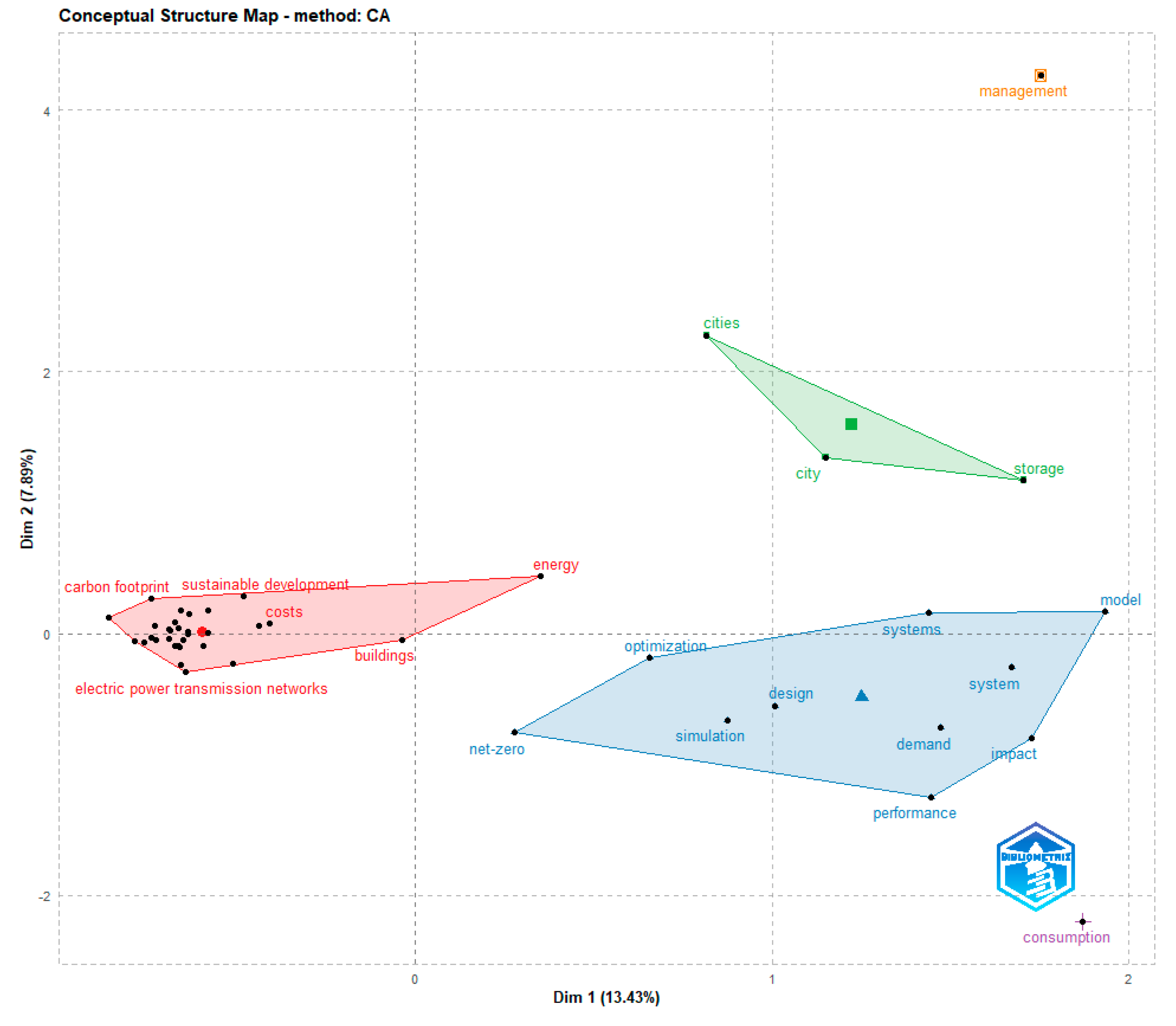
Figure 6.
Magic quadrant of the top themes.
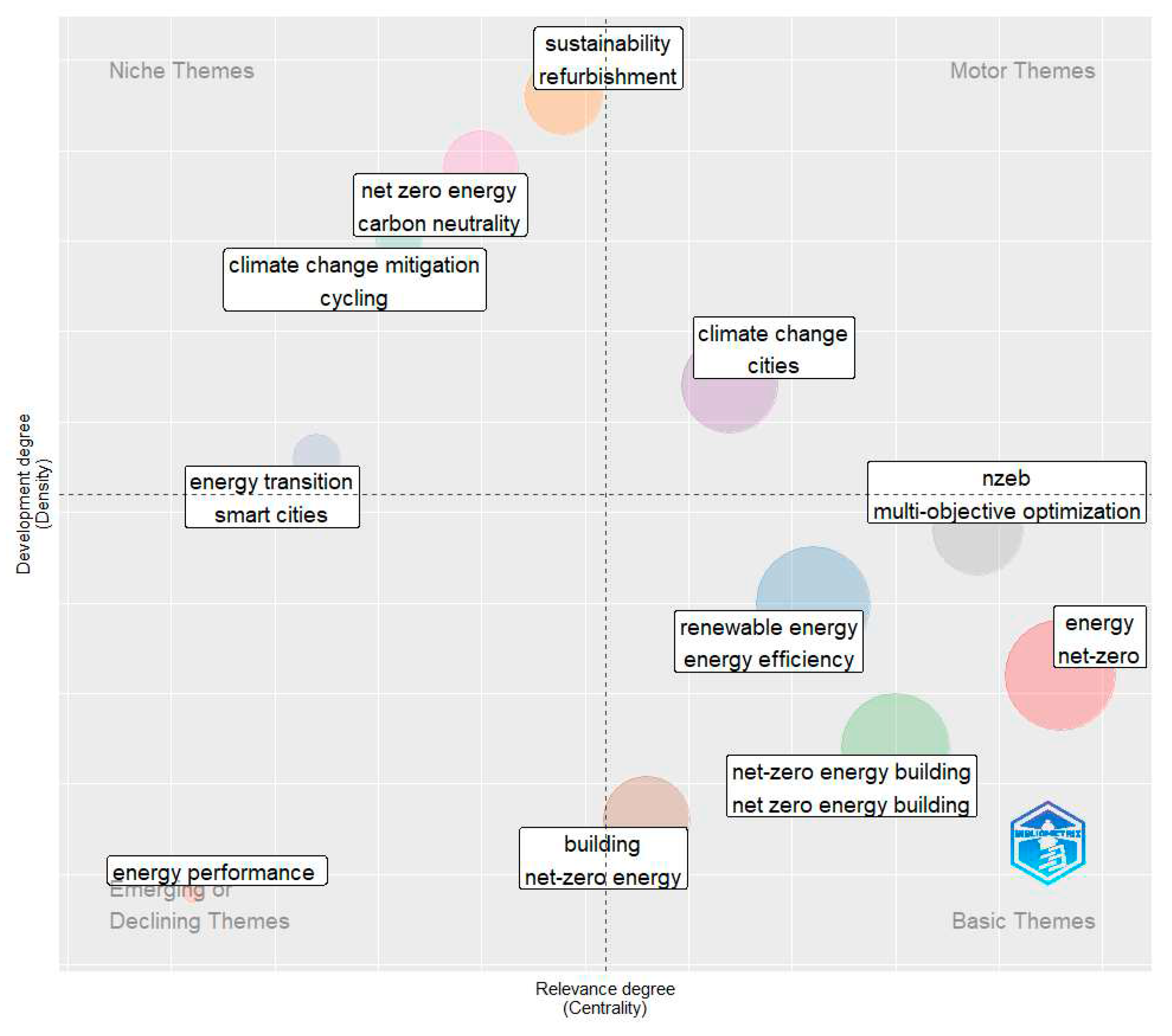
Figure 7.
top author keywords.
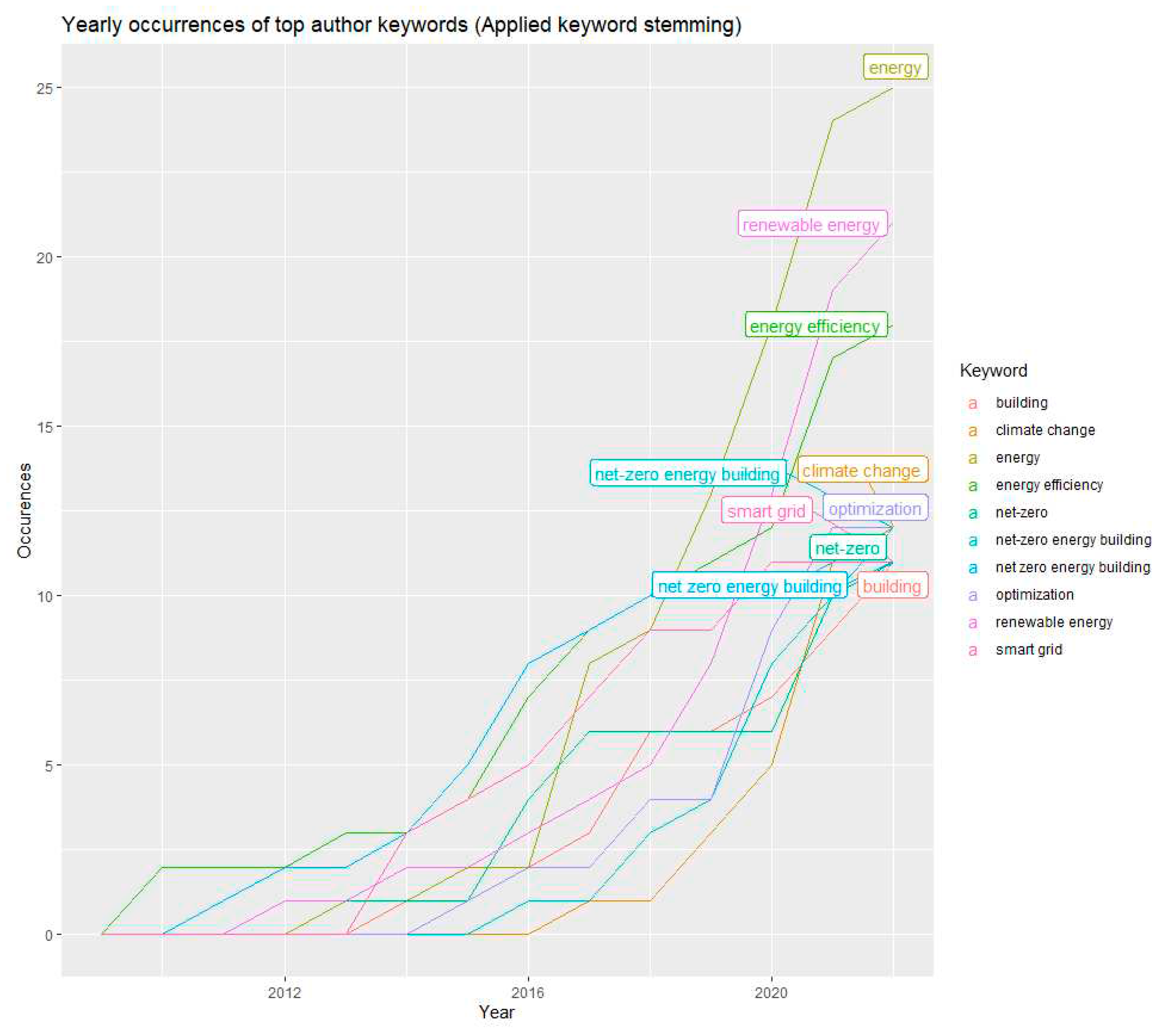
Figure 8.
Conceptual structure map.
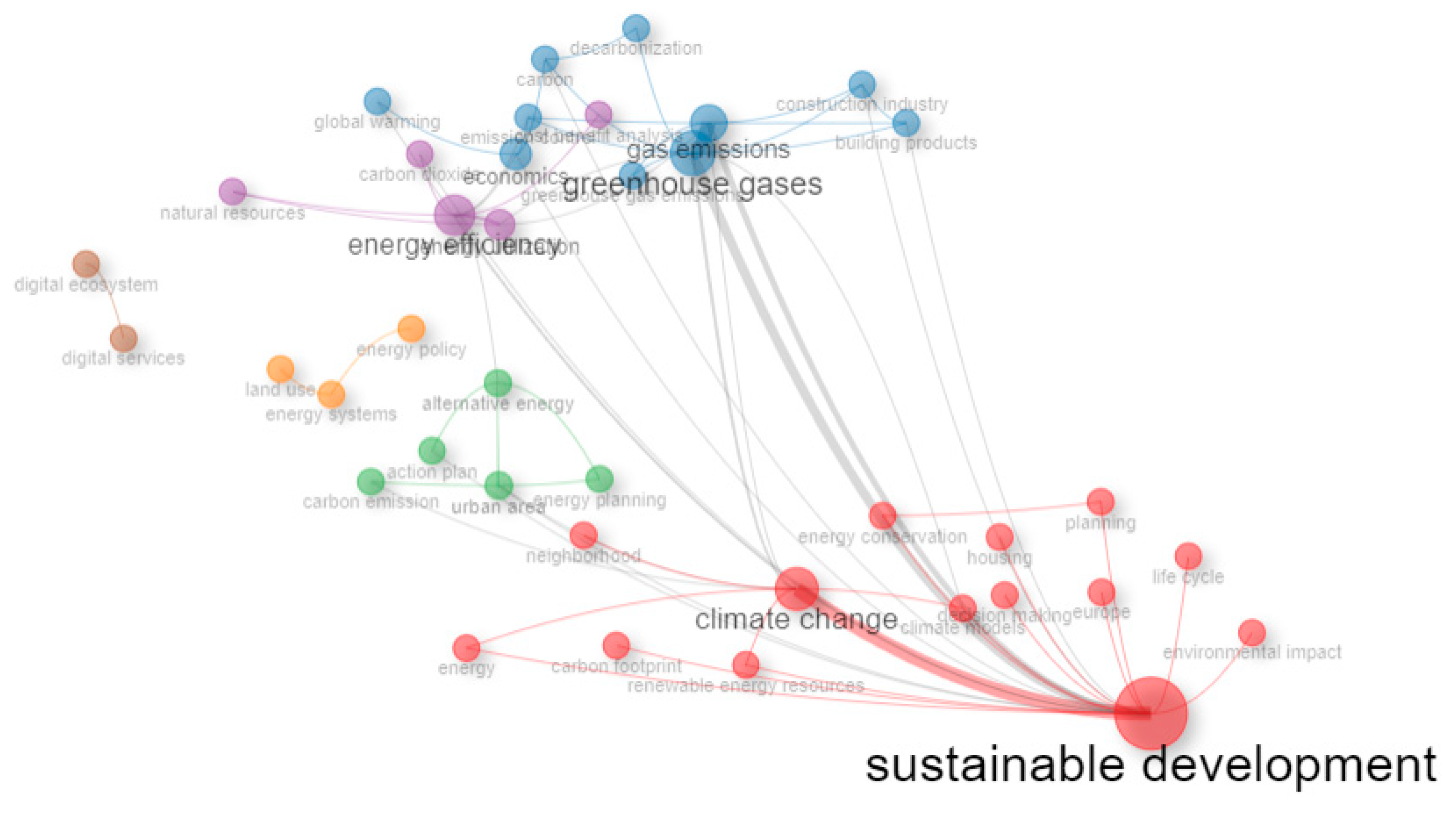
Figure 9.
Magic quadrant of the top themes.
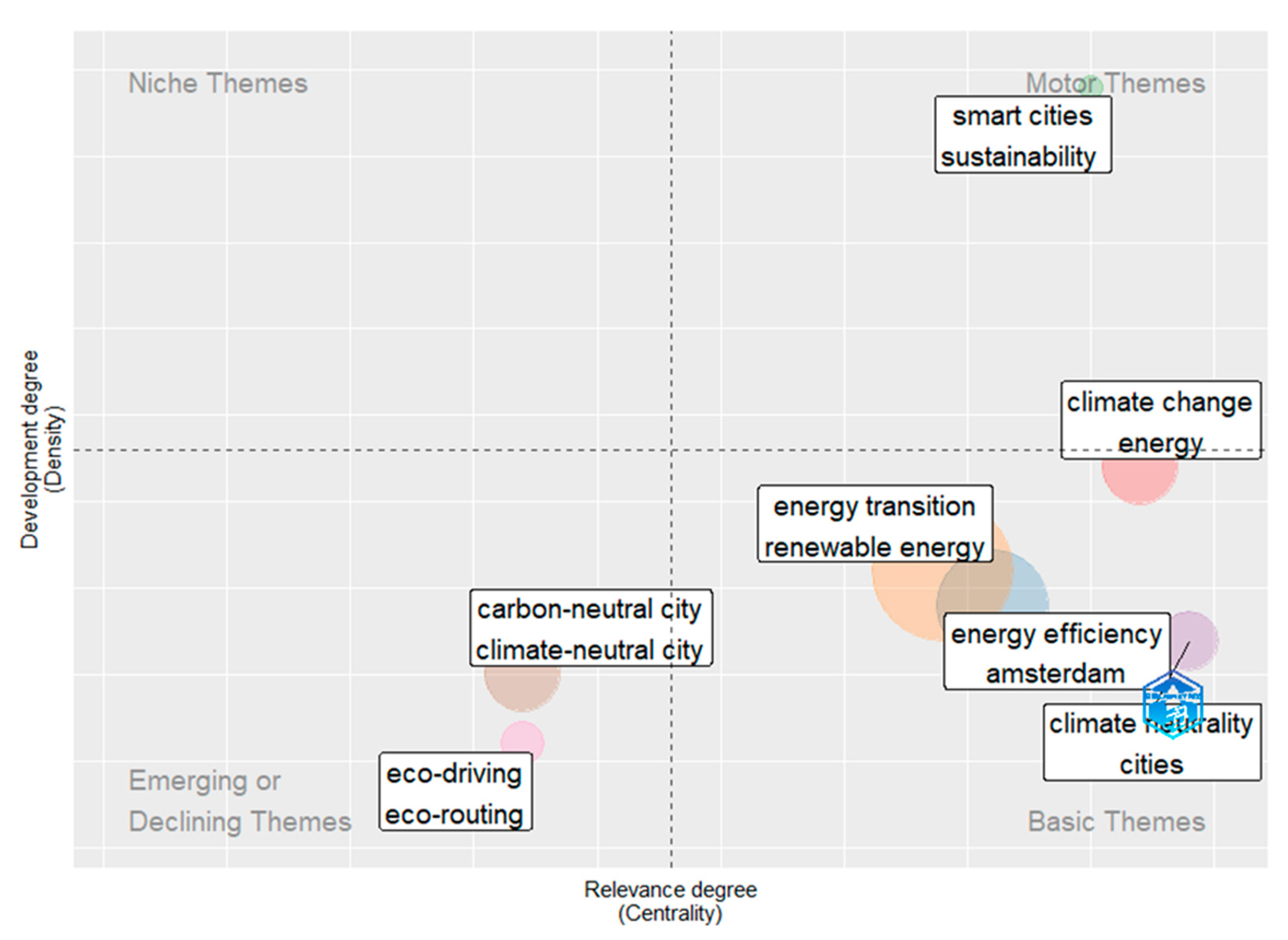
Figure 10.
top extracted keywords.
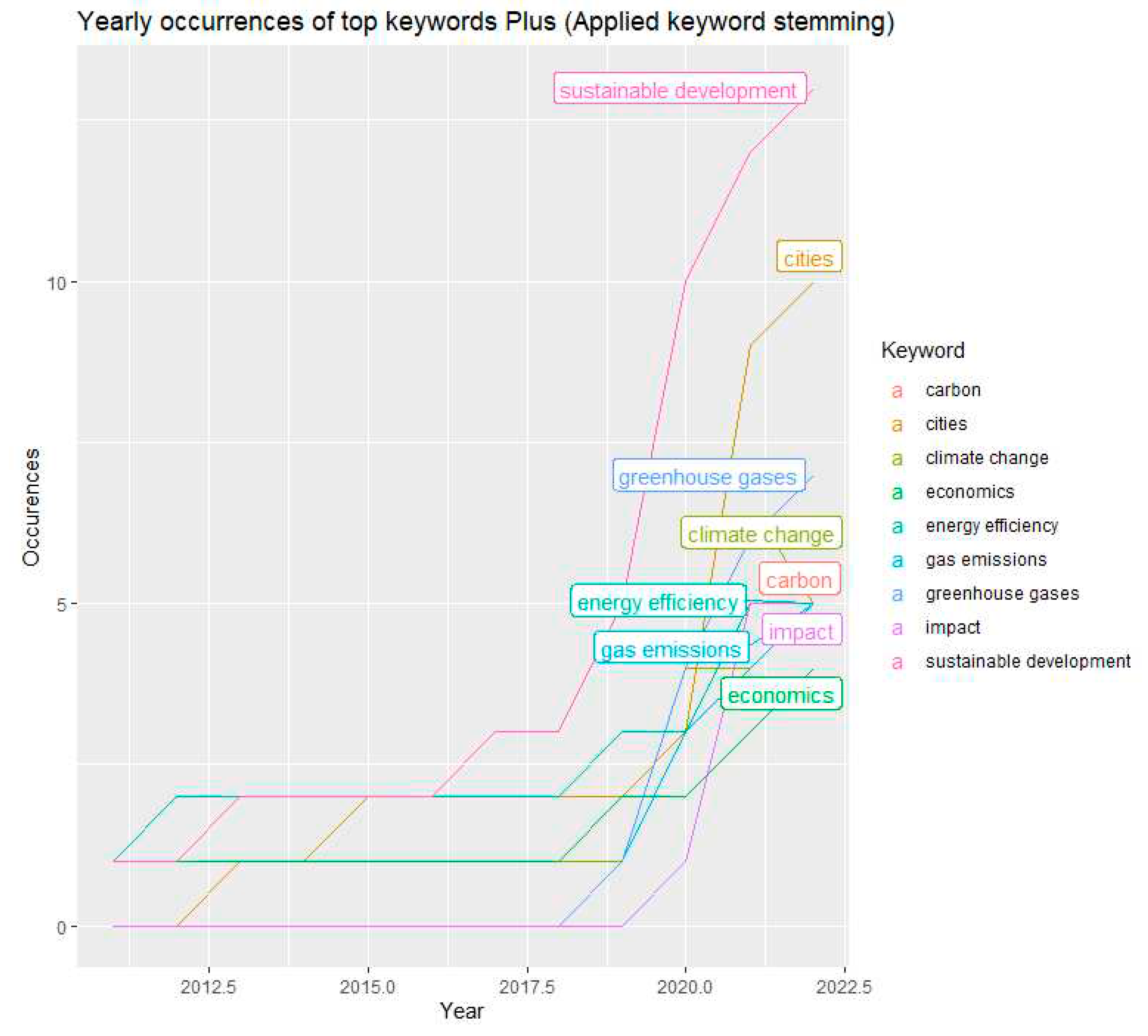
Figure 11.
Schools of thought in the domain.
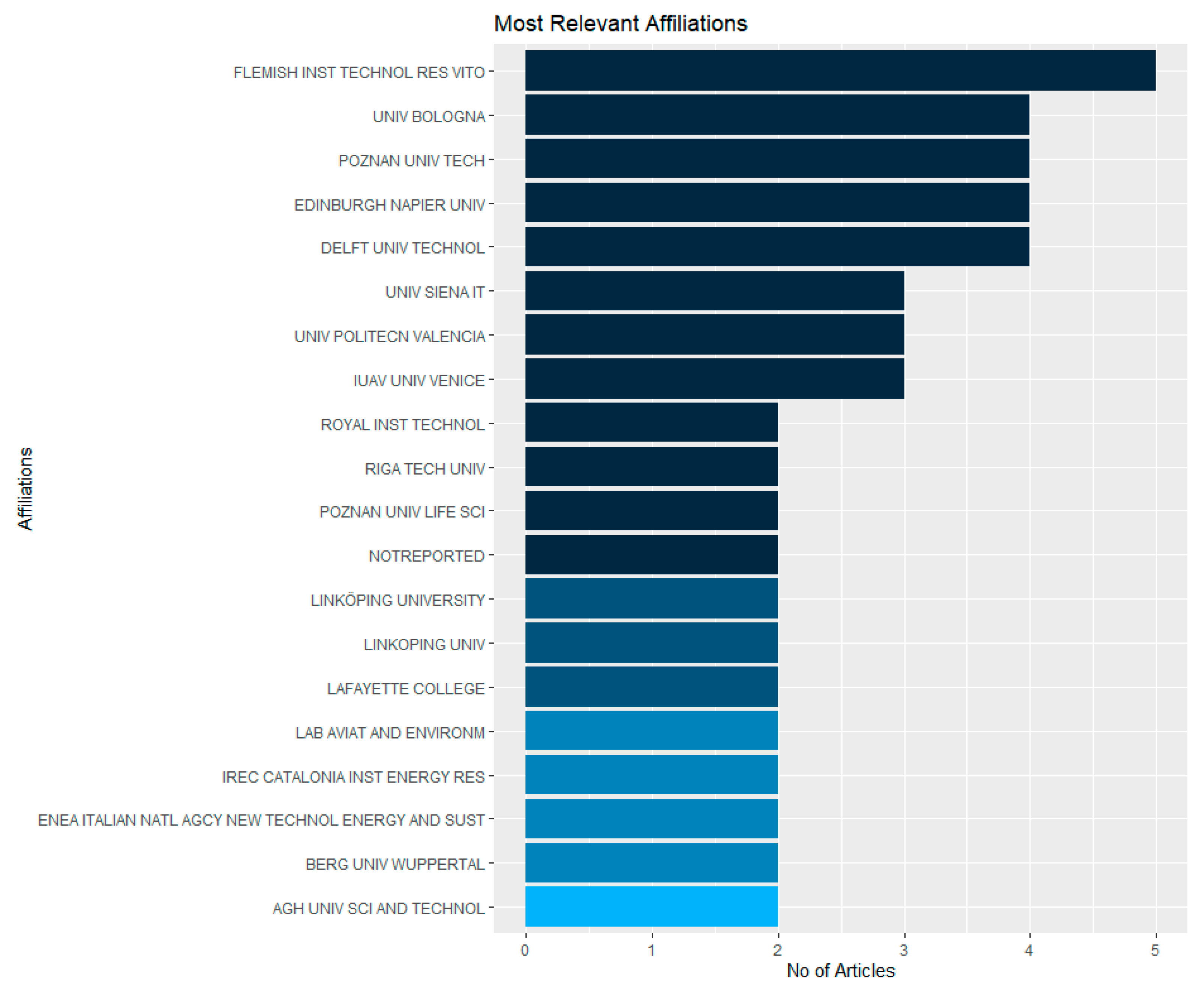
Figure 12.
The urban system [2].
Figure 12.
The urban system [2].
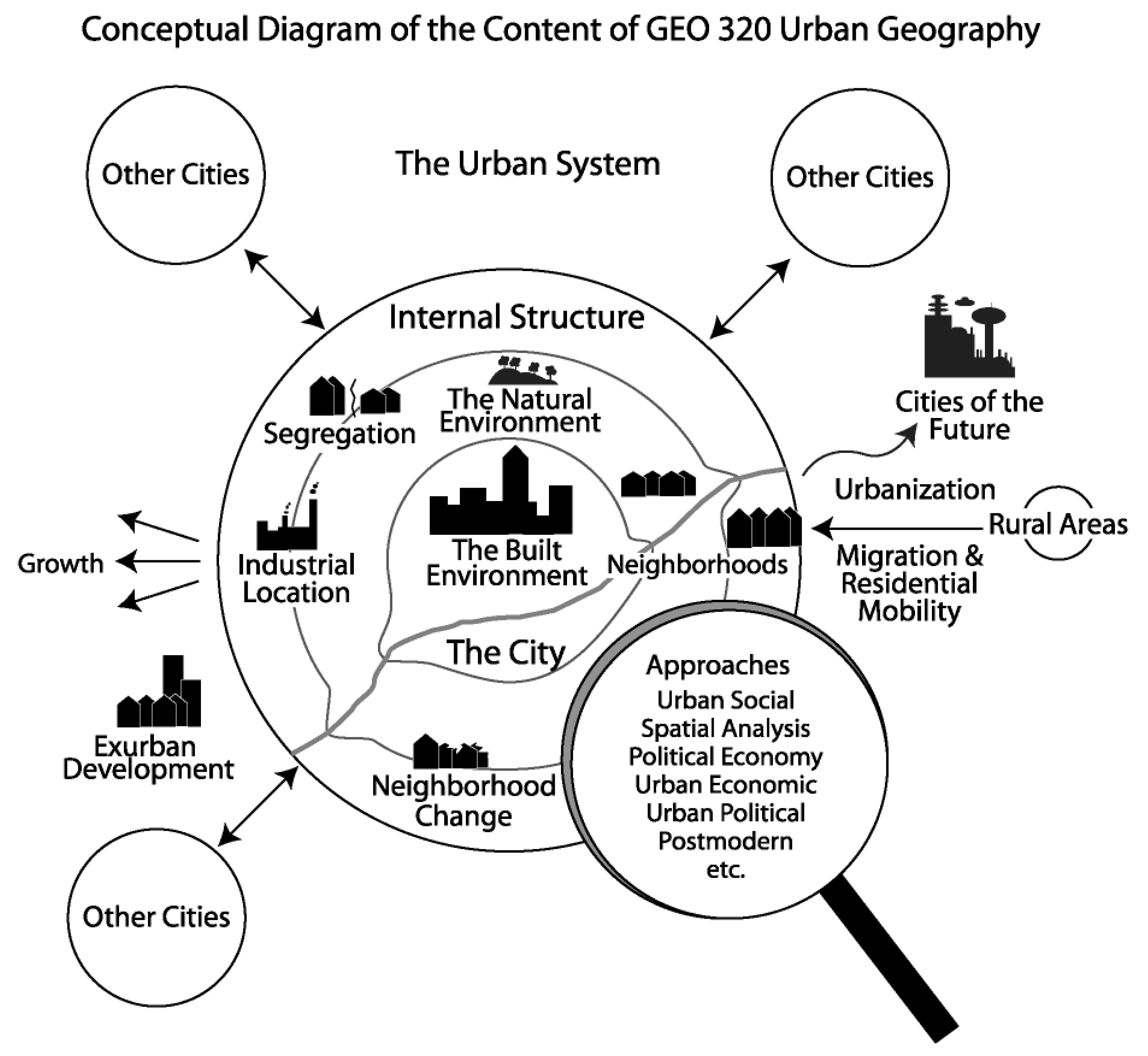
Figure 13.
An integrated approach to a Net Zero carbon city [12].
Figure 13.
An integrated approach to a Net Zero carbon city [12].
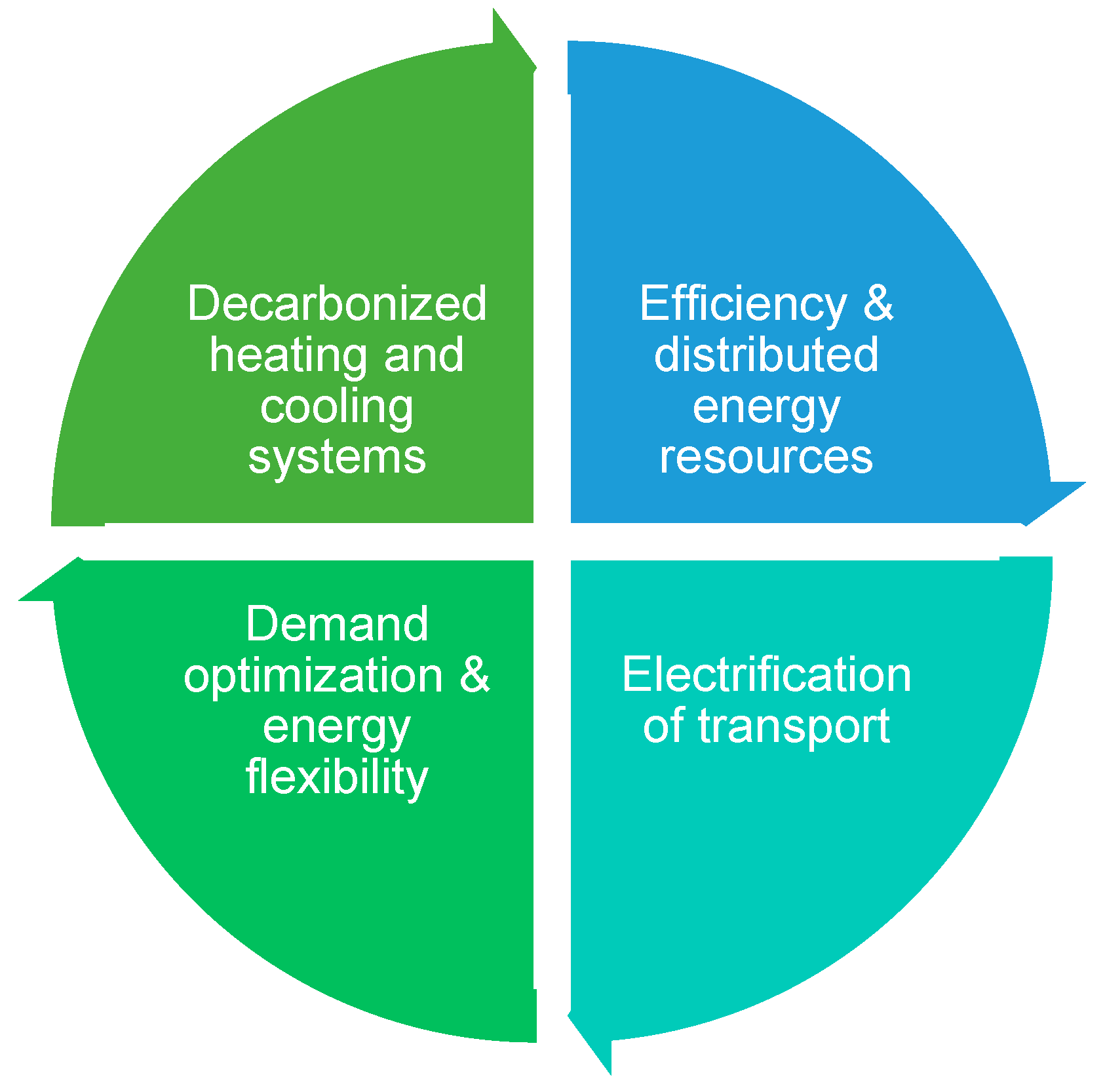
Figure 14.
BSC for city carbon neutrality strategic development.
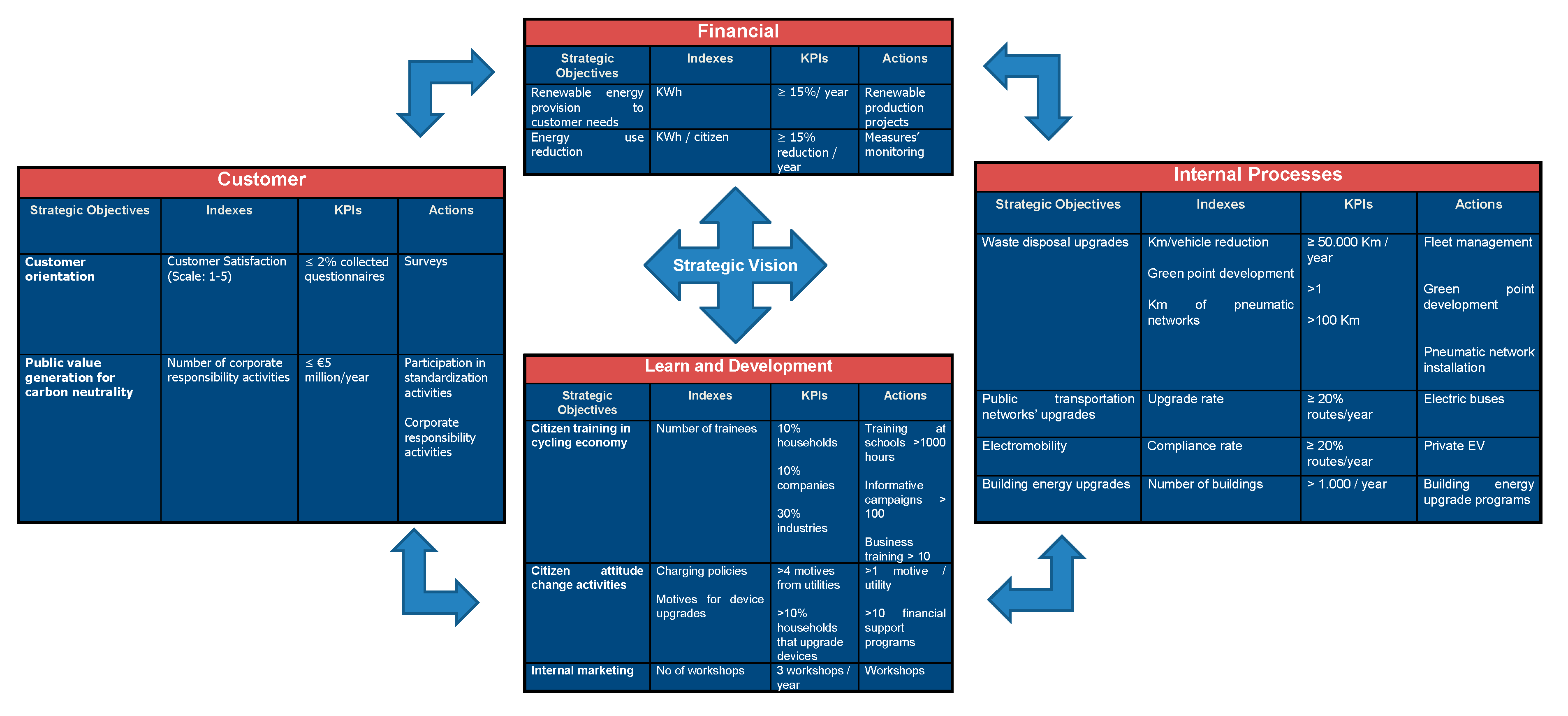

Table 1.
results collected and processed with the bibliometric analysis.
| Keywords | Scopus | Web of Science |
|---|---|---|
| “carbon” AND “zero” AND “city” | 566 | 734 |
| “Net Zero” AND “city” | 256 | 173 |
| “Net Zero” AND “city” AND “digital” | 7 | 2 |
| “climate neutral” AND “city” | 44 | 28 |
Table 2.
Most productive sources.
| Sources | Articles |
|---|---|
| JOURNAL OF CLEANER PRODUCTION | 22 |
| ENERGY AND BUILDINGS | 21 |
| SUSTAINABILITY | 18 |
| ENERGIES | 17 |
| ENERGY | 15 |
| IOP CONFERENCE SERIES: EARTH AND ENVIRONMENTAL SCIENCE | 13 |
| APPLIED ENERGY | 12 |
| SUSTAINABLE CITIES AND SOCIETY | 10 |
| JOURNAL OF HAZARDOUS MATERIALS | 9 |
| RENEWABLE ENERGY | 9 |
Table 3.
Most productive sources.
| Sources | Articles |
|---|---|
| APPLIED ENERGY | 20 |
| ENERGY | 18 |
| ENERGY AND BUILDINGS | 18 |
| SUSTAINABILITY | 14 |
| ENERGIES | 12 |
| SUSTAINABLE CITIES AND SOCIETY | 8 |
| ENERGY CONVERSION AND MANAGEMENT | 7 |
| ENERGY PROCEDIA | 7 |
| JOURNAL OF HAZARDOUS MATERIALS | 9 |
| RENEWABLE ENERGY | 9 |
Table 4.
Most productive sources.
| Sources | Articles |
|---|---|
| SUSTAINABILITY | 6 |
| ENERGIES | 5 |
| ENERGY | 2 |
| ANNUAL REVIEW OF ENVIRONMENT AND RESOURCES | 1 |
| ATMOSPHERIC ENVIRONMENT | 1 |
| CONSTRUCTION ECONOMICS AND BUILDING | 1 |
| ENERGY ECONOMICS | 1 |
| ENVIRONMENTAL AND CLIMATE TECHNOLOGIES | 1 |
| EUROPEAN PLANNING STUDIES | 1 |
| INTERNATIONAL JOURNAL OF ENVIRONMENTAL RESEARCH AND PUBLIC HEALTH | 1 |
Table 5.
Standardization efforts that address carbon neutral cities.
| Source | Title |
|---|---|
| International Standards Organization (ISO) |
|
| International Electrotechnical Commission (IEC) | Climate Action [23]; Climate Action Kit [15]; TC111 [24]. |
| International Telecommunications Union (ITU) | Climate Change [25] Frontier technologies to protect the environment and tackle climate change [10]. ICTs for Carbon Neutrality:
|
| World Resources Institute | Policy and Action Standard [26]. |
| World Resources Institute | Mitigation Goal Standard [27]. |
| British Standards Institute (BSI) | PAS 2060 Carbon Neutrality [28] PAS 2080 PAS 2080:2022 Carbon management in buildings and infrastructure [29] |
Table 6.
Recommended achievements for each maturity level.
| Strategy | ICT Infrastructure | Infrastructure upgrades | Services and utilities | Assessment | KPIs performance | |
|---|---|---|---|---|---|---|
| Maturity Level 1 | The overall strategy is developed | Key infrastructures and data are identified in the strategy | Key aspects on infrastructure upgrades are identified in the strategy | Strategy and priorities for services and utilities on city level are identified | Assessment plan is ready | Long-term targets for KPIs are set for city carbon neutral strategy and baseline values for KPIs are collected |
| MaturityLevel 2 | Carbon neutrality initiatives are aligned with the strategy | ICT infrastructures are operated, and corresponding data are produced independently | Methodology to identify and implement upgrades are agreed | Domain services and utilities contribute to carbon neutrality individually | Self-assessment of infrastructure development and services are carried out | Interim KPI targets for maturity level 2 are achieved |
| MaturityLevel 3 | Evaluation of carbon neutrality initiatives is carried out | Accessibility of ICT infrastructures and data is improved | Infrastructure upgrades are carried out independently by different sectors. | Services and utilities focus on carbon neutrality public value generation.Utility and service operation is monitored and analysed to improve carbon neutrality performance | User satisfaction assessments are carried out | Interim KPI targets for maturity level 3 are achieved |
| MaturityLevel 4 | Strategy is developed for improving integration and cooperation | Cross-domain ICT infrastructures and data exchanges are provided with interoperability capabilities | Cross-domain infrastructure upgrades are performed | Cross-domain carbon neutrality initiatives | Stakeholders' satisfaction assessments are carried out | Interim KPI targets for maturity level 4 are achieved |
| MaturityLevel 5 | Improvement and optimization potential is explored | Continuous development of infrastructure and data provision are carried out | Continuous improvements with state-of-the-art technologies for carbon reduction | Continuous improvements of services and utilities are made by applying advanced state of the art technologies for carbon reduction | Systematic assessment process is established with corresponding actions | Long term targets for KPIs are achieved |
Table 7.
Example of performance matrix with target KPI values.
| Dimension | Topic | KPIs | Long-term target KPI value for maturity level 5 |
||||
|---|---|---|---|---|---|---|---|
| Interim target KPI value for maturity level 4 |
|||||||
| Interim target KPI value for maturity level 3 |
|||||||
| Interim target KPI value for maturity level 2 |
|||||||
| Current KPI value for maturity level 1 | |||||||
| Energy Efficiency | ICT infrastructure | Household carbon neutral upgrades | Baseline collected | Interim target value e.g., 30% |
Interim target value e.g., 40% |
Interim target value e.g., 60% |
Target value e.g., 80% |
| Electricity system based on renewable sources | Baseline collected | – | Interim target value e.g., 30 mins. |
Interim target value e.g., 25 mins. |
Target value e.g., 15 mins. |
||
Table 8.
Typical metrics for the BSC dimensions.
Disclaimer/Publisher’s Note: The statements, opinions and data contained in all publications are solely those of the individual author(s) and contributor(s) and not of MDPI and/or the editor(s). MDPI and/or the editor(s) disclaim responsibility for any injury to people or property resulting from any ideas, methods, instructions or products referred to in the content. |
© 2023 by the authors. Licensee MDPI, Basel, Switzerland. This article is an open access article distributed under the terms and conditions of the Creative Commons Attribution (CC BY) license (http://creativecommons.org/licenses/by/4.0/).
Copyright: This open access article is published under a Creative Commons CC BY 4.0 license, which permit the free download, distribution, and reuse, provided that the author and preprint are cited in any reuse.


