

Submitted:
12 June 2023
Posted:
13 June 2023
You are already at the latest version
Abstract
An experimental investigation on the heat pump performance improvement equipped with the two-phase ejector called “an ejector-expansion heat pump (EEHP)” is proposed. The system performance of the EEHP is compared with a vapour-compression heat pump (VCHP). The improvement potential is determined and discussed. The heat pump test system is constructed which is based on a water-to-water heat pump. It can be experimented with both EEHP and VCHP. The two-phase ejector with the cooling load up to 2500 W is installed for experiment. The results show that the EEHP always produces a higher heating rate and COP than the VCHP throughout the specified working conditions. The heating COP is increased by 5.7-12.2% depending on the working conditions. It is also that under the same heat sink and heat source temperature, the EEHP can produce lower compressor discharge temperature and lower compressor pressure ratio than the VCHP. This is evidence that the two-phase ejector can provide better compressor working characteristics which yields a longer compressor lifetime. It is demonstrated that a key to the performance of the EEHP is the expansion pressure ratio. A larger expansion pressure ratio yields a higher improvement potential when compared with the VCHP.
Keywords:
Ejector-expansion heat pump
; expansion work recovery
; two-phase ejector
1. Introduction
For the thermal process, the heat pump plays a significant role in producing hot water or other heating processes such as air preheating, agricultural drying or many heating processes in industry. The heat pump is a thermal machine which provides better energy efficiency than the electric heater (widely used in thermal processes). The heat pump can capture heat from a low temperature (heat source) while, at the same time, it produces the heating process at a higher temperature (heat sink). Hence, it requires a refrigeration system for operation.
The vapour-compression refrigeration system is widely used as a heat pump. It uses a mechanical compressor to drive the system and, hence, it requires electricity to produce a heating process similar to an electric heater. However, the heat pump efficiency can be higher than 100% (usually it is 250 - 420%) while electric heater is close to 100%. This is because the heat pump employs the working fluid (refrigerant) to produce heat at the desired condition which results in a COP as high as 2.5 – 4.2, as proposed by Huang et al. [1], Szymiczek et al. [2], Zhou et al. [3], Navarro et al. [4] and Trancossi et al. [5].
However, for operating heat pump to produce a relatively high temperature and high heating rate, the compressor must work heavily. In such a case, the compressor discharge temperature is quite high, while at the same time the compressor pressure ratio is also quite large. Therefore, there is a limitation to the heat pump working condition. For these reasons, many efforts have made to improve the heating performance in many aspects [6,7,8,9,10,11]. Chiriboga et al. [12] and Lim et al. [13], proposed the geothermal source heat pump which aimed to produce the heating temperature of 50 – 70 °C. Their technique is that an available heat source temperature is quite high and, hence, the compression pressure ratio of the compressor (PRcomp) is decreased which results in lower electricity consumption and lower compressor discharge temperature. Ye at al. [14], Leonzio et al. [15] and Wu et al. [16], proposed an air-source heat pump to produce hot water which aims to minimize the electricity consumption via a lower compressor pressure ratio. However, even though the system is operated with a higher heat source temperature, the heat sink temperature (the main focus of any heat pump) is a problem due to being operated at a higher temperature. Therefore, many researchers have focused on the development of the high temperature compressor so that it can withstand the larger pressure ratio and the high discharge temperature. Therefore, many researchers have proposed the research based on the vapour injection heat pump.
Wu et al. [16], Huang et al. [17], Li et al. [18], Yang et al. [19], Li et al. [20], have developed the vapour injection heat pump to operate with a relatively high temperature. The compressor was designed specifically to allow the low temperature refrigerant vapour from the flash tank to be mixed with the refrigerant from the evaporator. Hence, it requires two expansion valves: first, it is used to produce the medium pressure of the refrigeration system (the conventional one has only high and low side pressure); and second, it is used to promote the refrigerating effect at the evaporator. Thus, part of liquid refrigerant changes to vapor as flowing through the first expansion device. Later, only vapour is allowed through the compressor which is developed specifically for this application in which the low temperature refrigerant can be mixed with the main refrigerant during the compression process. Hence, the refrigerant discharge temperature is reduced and it provides advantage to the compressor’s protection. However, the vapour-injection heat pump must be operated at a specified range of the operating conditions so that the system COP can be higher than the conventional vapour-compression heat pump. In addition, it requires an optimal operating medium pressure for producing a higher heating rate. As a result, the vapour-injection heat pump has not gained popularity in this research area.
A promising technology to improve the heat pump performance via mitigating the throttling loss is made possible by installing the two-phase ejector. This is because the heat pump is mostly operated under a quite high-pressure ratio between the condenser and the evaporator. This produces a quite high cooling loss (lower heat absorption at the evaporator) via the throttling process due to the refrigerant phase transition. However, the heat pump operated with the two-phase ejector must requires a vapour-separator for phase separation. The system is then called the ejector-expansion heat-pump (EEHP) as schematically shown in Figure 1.
The previous research by Boccardi et al. [21], Ghazizade-Ahsaee et al. [22], Zhu et al. [23], concentrated on the EEHP using carbon dioxide (CO2) as the working fluid because it is a natural refrigerant which is environmentally friendly and it is able to produce the heating process at relatively high temperature. In addition, CO2 is also used for the vapour-compression heat pump (VCHP) for producing a high temperature heat sink. Therefore, an EEHP working with CO2 has considered by many researchers to demonstrate the improvement potential of the EEHP compared to VCHP as discussed by Zhang et al. [24].
An EEHP working with CO2 must be operated at quite high working pressure and also it requires a high-pressure vessel and high-pressure fitting for piping work because of the thermodynamic properties of CO2. Moreover, the working condensation temperature is based on trans-critical or supercritical pressure, and, hence, a quite large expansion pressure ratio is a consequence. Therefore, the two-phase ejector is widely used for heat pumps working with CO2. However, even though many researchers have focused on the EEHP working with CO2, it is not suitable for a large-scale operation. Therefore, the hot water or other heating processes produced by the EEHP working with CO2 may not be worthy of installation because of the economic aspects.
Such a problem has encouraged many researchers to develop a heat pump based on the alternative refrigerant which has low GWP and low ODP as supported by Li et al. [25], Fan et al. [26], Al-Sayyab et al. [27]. Their studies focused on the vapour compression heat pump to produce hot water or hot air for drying, while the heat source is available from air-source, geothermal source and hot water produced by solar collectors. However, for working at a relatively high heat sink, the system based on VCHP must still be operated at the high expansion pressure ratio which results in the high throttling loss. Thus, the two-phase ejector is installed to mitigate the expansion loss. This has encouraged some researchers to investigate the EEHP working with R1234yf, R404, or R407c with the aim is of improving the cycle efficiency. However, an experimental works to clearly explain the improvement potential of the EEHP compared to the VCHP is lacking, especially for the compressor working characteristics.
A previous work of the author (Sutthivirode and Thongtip, [28]) provided experimental evidence on the refrigeration improvement of an ejector expansion refrigeration system (EERS) focusing on the cooling performance. Their interpretation showed that in addition to the COP improvements, the two-phase ejector could provide advantages to the compressor working characteristics. In such a case, a much lower compressor discharge temperature is achieved by the EERS as compared with the conventional vapour compression system (VCRS). Hence, it produces better compressor lubrication which yields a longer compressor lifetime and a better compressor isentropic efficiency. A lower exergy destruction is made possible which provides an exergoeconomic advantage as supported by Zhang et al. [29] and Nemati et al. [30]. The impact of using the two-phase ejector on the compressors discharge temperature cannot be investigated in a theoretical study, and, thus, it requires an experimental proof. Moreover, it was found experimentally that the experimental COP of the EERS was not consistent with the theoretical COP. The theoretical COP was higher than the experimental COP. This is due to the fact that the fluid property of the high speed two-phase flow is quite difficult to determine correctly. In this case, the non-equilibrium evaporation is involved and, therefore, the heat and mass transfer during the phase transition and metastable effect is believed to be the cause of the theoretical COP deviating from the experimentally determined COP. This means the experimental work is more reliable for performance assessment. Therefore, it is beneficial to develop a more accurate design model of the two-phase ejector.
Currently, there is still a lack of research to clearly explain how the two-phase ejector can enhance the overall performance of the heat pump. Even though many works have concentrated on the ejector expansion refrigerator, they focus on and emphasize the cooling performance. The existing research on the EEHP is mostly based on the CO2 which may come with a high installation cost and with high cost per unit heating energy. This may not be worthy of installation. Hence, the EEHP working with alternative refrigerants seems to provide the promising choice to produce useful heating purpose. However, experimental evidence aiming to clearly discuss the improvement potential of EEHP compared to VCHP has not been available from open literature. This is a research gap in this research area which still needs discussion. Also, the aspect of the compressor working characteristics is a point that has not been available from open literature because most research focuses mainly on the heating rate or cooling capacity. For any heat pump operation, the compressor discharge temperature (Tcomp-dis) and pressure are recognized as the important parameters which significantly affect the lifetime of the compressor and the system maintenance. Unfortunately, there is not many works that concentrate on comparing the compressor discharge temperature of the EEHP with the VCHP. This is one of the research gaps in this research area.
As aforementioned, this paper proposes the comparative performance of the EEHP with the VCHP which aims to provide the deep insights into the refrigerant flow state which reflects the entire heating performance. The experimental heat pump which can operate with both VCHP and EEHP was built to carry out the experiments. The relevant parameters including the heating rate, electricity consumption, refrigerant temperatures and pressure of the whole cycle, were observed for comparisons. The experimental heat pump system was designed to produce various hot water temperatures of 40 – 60 °C (heat sink temperature) while the heat source can be varied ranging from 4 – 16 °C. The heating rate can be determined under the steady state operation which can later be used for comparison. The temperature and pressure of the refrigerant at the compressor suction/discharge was considered carefully because it is a significant point of interest during the operation. It is found that EEHP provides better performances than the VCHP throughout the range of the considered working condition. The EEHP not only provides an advantage on the system COP, it also yields a lower compressor pressure ratio. Hence, the Tcomp-dis performed by the EEHP is much lower than that performed by the VCHP.
2. Experimental Setup
An experimental heat pump test system which is able to operate with both a vapour compression heat pump (VCHP) and an ejector expansion heat pump (EEHP) was built for the investigations. The test system uses R134a as the working fluid in the cycle. The schematic view and picture of the heat pump is presented in Figure 2. The major hardware of the test bench which were used for operating with both VCHP and EEHP are the compressor, evaporator, and condenser. This will demonstrate the improvement potential of EEHP over VCHP in which the key to performance improvement is mainly the refrigerant flow state of the refrigerant.
The compressor was a hermetic reciprocating type which is capable of producing a nominal cooling capacity of 2 kW. It was electrically driven by 220VAC with rated power of 0.75 kw (motor 1 hp). A plate heat exchanger (heat transfer capacity up to 4.5 kW) was used as the condenser. The hot water was produced by at the condenser outlet and, later, it was stored in the well-insulated tank. The water from the insulated tank was supplied to absorb heat at the condenser via the hot water circulating pump (Samson-1/2hp). Hence, the superheated vapour at the condenser inlet is condensed at high temperature and pressure. The hot water temperature was monitored by thermocouple (type-k). The heating capacity (both VCHP and EEHP) can be determined by recording the flow rate of the hot water and temperature differences at inlet/outlet condenser. To maintain the hot water temperature at the desired point, the cooling water (produced by another chiller) is pumped through the cooling coil installed within the hot water tank so that it can absorb heat from the hot water. Thus, the hot water temperature can be controlled precisely at the desired point. Hence, the heating rate under the steady state operation can be determined accurately.
The evaporator vessel was also a plate heat exchanger (heat transfer capacity up to 3.5 kW). The chilled water was produced at the evaporator outlet and store it within the well-insulated tank. The immersion heater (power up to 4.0 kW) was placed inside the chilled water tank for controlling the temperature supplied to the evaporator (considered as the heat source temperature). The chilled water temperature could be regulated precisely by controlling the heat load produced by the immersion heater by means of a PID controller together with solid-state relay. This chilled water was circulated through the evaporator via a magnetic coupling pump at the desired temperature.
2.1. Test Based on the VCHP
The experimental work based on the VCHP is made possible when valves V1 and V3 were opened while valves V2, V4, V5 and V6 were closed (seen in Figure 2). As a result, when the system is operated, the refrigerant within the evaporator is evaporated and, hence, heat is absorbed at low temperature. In this case, the water from the chilled water tank is pumped into the evaporator to apply the cooling load. Consequently, heat absorption at low temperatures (heat source) is made possible. Then low temperature vapour at the evaporator outlet is compressed by the compressor to produce the superheated vapour at the compressor discharge. This superheated vapour is condensed within the condenser. In this case, the water is supplied to promote heat rejection. Hence, the hot water can be produced and stored within the hot water tank. After the condensation process is finished, the liquid refrigerant is expanded through the expansion devices to promote a refrigerating effect at the evaporator and thus the cycle is completed.
At the pre-test, the system is run continuously to produce the desired hot water temperature. Then, the chilled water (which is produced by another chiller) is circulated through the coil installed within the hot water tank to absorb heat from the hot water. Thus, the constant heat sink temperature is made possible. Also, the heating rate can be calculated.
2.2. Test Based on the EEHP
This test can be implemented when closing valves V1 and V3 while opening valves V2, V4, V5 and V6. The liquefied refrigerant at the condenser outlet is accelerated through the primary nozzle of the two-phase ejector causing a low pressure region to be produced within the mixing chamber. Thus, the refrigerant within the evaporator is evaporated to produce the low temperature vapour (secondary fluid) which results in producing the refrigerating effects. The secondary fluid is drawn into the mixing chamber which is connected directly to the ejector mixing chamber. Later, two streams are mixed completely before entering the diffuser. Then, the mixed fluid undergoes the pressure recovery process through the diffuser before entering the vapour separator.
At the vapour separator, two phase fluid undergoes the phase separation. Hence, the vapour phase (saturated vapour) found at the top of the separator is always sucked by the compressor. It is unlike the case of VCHP in which the slight superheated vapour is compressed by the compressor. This will make significant difference in the compression process which we will discuss in this paper. After undergoing the compression process, the superheated vapour is condensed within the condenser and the heating rate is produced by circulating the water through the condenser.
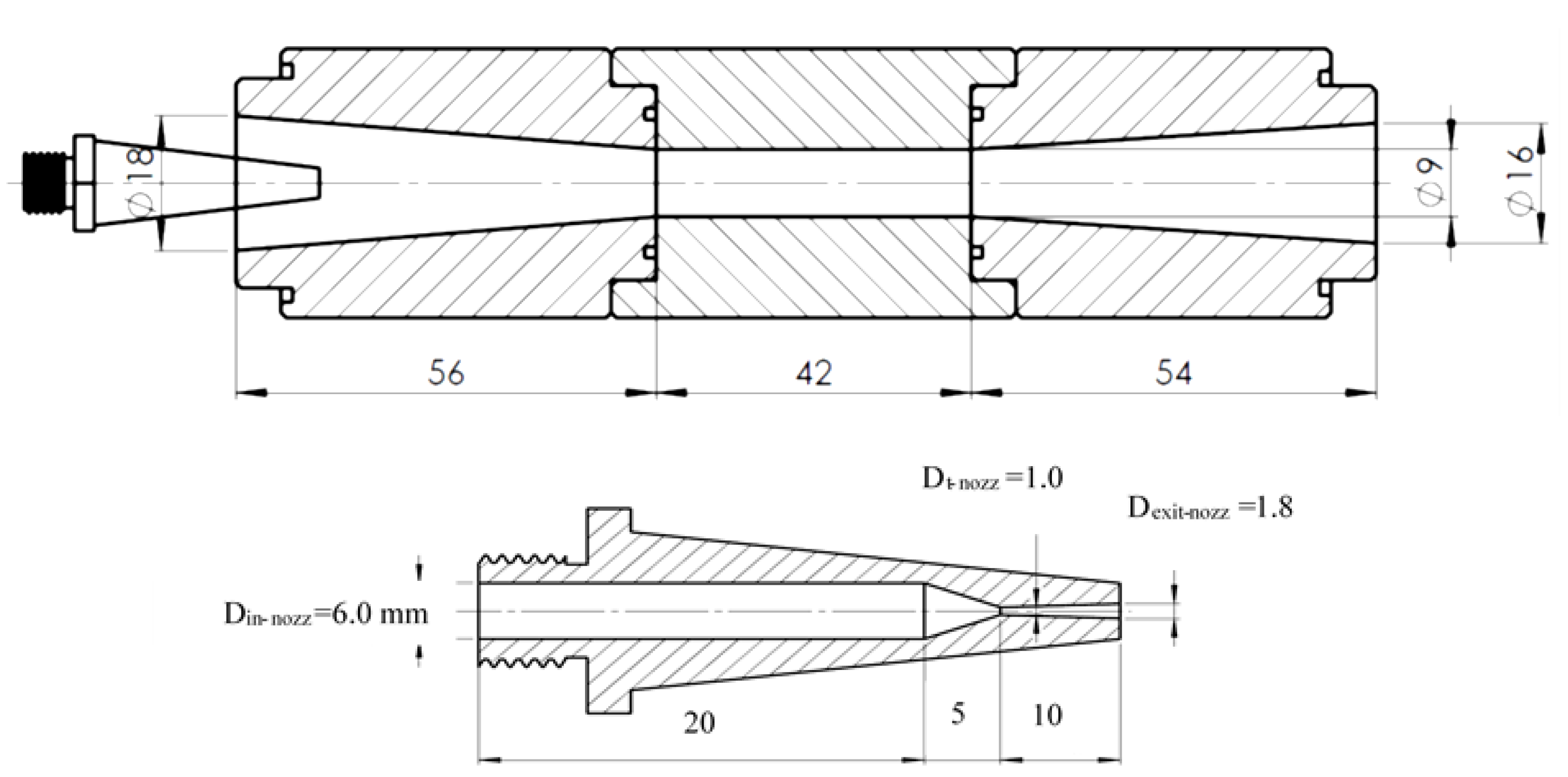
In this present work, the two-phase ejector was designed by the model proposed by Bilir et al. [31] and Ersoy et al. [32]. Figure 4 shows the drawings of the primary nozzle, mixing chamber, throat and diffuser used in this work. The suction chamber was fabricated from the stainless steel 304 (SUS-304). The mixing chamber and primary nozzle were made of brass. An internal flow profile of the primary nozzle (converging-diverging type) was obtained by electrical discharging machine (EDM).
Figure 4.
The two-phase ejector and primary nozzle.
2.4. Instrumentations and Data Reduction
During the experiments, the heating capacity, electricity consumption, and water flow rate are considered to determine the system COP of the EEHP and VCHP. Also, the temperature and the pressure at the relevant points are important to determine the system COP. Hence, the measuring devices and system control must be reliable. In this work, the temperature value is detected by type-k thermocouple. Meanwhile, the pressure value at the relevant points is detected by the digital pressure transmitter. The temperature and pressure values were recorded by the data acquisition which allows monitoring of the real time operation and steady state operation. The measuring devices and their uncertainties used for experiments is tabulated in Table 1.
During the experiments, the heat pump performance are represented by the heating coefficient of performance (COPHP). The heating COP can be calculated when the pressure, temperature, mass flow rate and electrical energy are measured from experiments. It can be calculated by eq. (2).
The heating rate produced at the condenser can be calculated by eq. (3)
The electrical energy consumption for electric motor can be determined by recording the current, voltage and power factor. Hence, the electrical energy is then determined by eq. (4).
During the experimentations, the measuring devices and experimental technique must be reliable to obtain accurate results. In this work, the type-k thermocouple probes were calibrated precisely of which uncertainty is ±3.0 – 5.0%. The temperature controller was used to regulate the temperature at the relevant points. It was used with the solid-state relay to control the heater power for achieving the desired temperature of heat sink and heat source. Also, the pressure transducers were calibrated precisely before installing them into the test system. The calibration indicates that the uncertainty of the pressure transducers was ±1.0% FS.
The volume flow rate of the hot water flowing through the condenser and the chilled water flowing through the evaporator was observed by a rotameter (1.0% of FS). The temperature and pressure values at the relevant points were indicated and recorded by data acquisition. Therefore, the steady state operation of the heat pump test system can be monitored clearly.
3. Results and Discussions
3.1. Performance Comparison of an Ejector-Expansion Heat Pump with a Vapour-Compression Heat Pump
The performance of the EEHP compared with the VCHP under various working condition is proposed and discussed. The aim is to explain how the EEHP provides advantage over the VCHP. For a particular comparison, the two systems will be tested under the same heat sink and heat source so that a fair comparison between the two systems is achieved. The heat sink temperature (TH) of between 45 and 60 °C is studied while the heat source (TL) is ranged from 8 to 16 °C. The heat rate at the condenser of the two systems is observed for discussion. The refrigerant pressure and temperature is also recorded so that the deep insight into the expansion work recovery of the two-phase ejector is explained clearly. Hence, the reason why the EEHP provides an advantage over the VCHP is then proposed. Currently, this is not many works to prove this, hence, the results proposed in this section is new information in this research field.
3.1.1. Impact of Heat Sink Temperature’s Variations
In this case, the EEHP and VCHP were tested under a fixed heat source at 8 °C, while the heat sink was increased from 40 to 60 °C. The electricity consumption and heating capacity were recorded for discussion. The tested results of the two systems are shown in Figure 5.
Figure 5 shows that the heating rate produced by the two systems decreases when increasing the heat sink temperature. This reason is that there is a larger difference in the temperature between heat sink and heat source. A larger difference temperature causes a lower cooling load to be absorbed at the evaporator of the two systems because a higher refrigerant quality (x) at the evaporator inlet is produced. This mitigates ability to absorb heat at low temperature (at the evaporator). However, it is seen that the EEHP produces a higher heating rate than the VCHP. This is due to the fact that the throttling loss of the whole cycle is mitigated by the two-phase ejector. In such a case, a two-phase ejector can increase the specific enthalpy difference under a heat absorption process at low temperature (increasing the specific cooling load). In addition, the compression pressure ratio of the compressor can also be reduced by a two-phase ejector in which the specific work for the compressor is reduced. This is because of the pressure lift effect of the two-phase ejector. To clarify this, the plot of process of the two systems on the P-h diagram shown in Figure 6 can be used.
From Figure 6, it is obvious that for the EEHP, the refrigerant enters the evaporator is the state 6 (shown in Figure 6b) while that for the VCHP is the state 4 (shown in Figure 6a). Herein, the refrigerant quality of the EEHP is much lower than that for the VCHP (closer to the saturated liquid state). This is because the pressure ratio across the expansion valve is relatively low, and a slight phase change of the refrigerant across the expansion device is the result. This causes the specific enthalpy of the refrigerant via EEHP to be lower. For the VCHP, the liquefied refrigerant pressure is decreased from high side to low side pressure via the expansion devices (undergoing the expansion process). As a result, at the evaporator inlet, the refrigerant quality of the VCHP is higher than that of the EEHP. The refrigerant quality based on VCHP is around 0.25 - 0.35 depending on the working conditions. This results in a higher specific enthalpy before entering the evaporator. Thus, the EEHP can absorb more specific cooling load as the refrigerant flows through the evaporator. A higher heat rejection at the condenser performed by the EEHP is a consequence. Additionally, the higher compressor suction pressure is performed by the EEHP because of the ability of the pressure lift effect when using the two-phase ejector. Thus, a lower compression ratio of the compressor is a consequence, resulting in lower compressor specific work (work per unit mass). Furthermore, the refrigerant temperature at the compressor’s discharge of the EEHP is much lower than that of the VCHP. Therefore, the working characteristics of the heat pump can be improved by means of the two-phase ejector which is indicated by the improvement of the heating COP.
The heating COP (COPHP) is the ratio of the heat rejection at the condenser (useful heat for the heat pump operation) to the electricity consumption. The measured electricity consumption of the two systems under the same working heat sink/heat source is shown in Figure 7 while the system COP is shown in Figure 8.
It is clearly seen from Figure 7 that the electricity consumption of the two systems increases when increasing the heat sink temperature. This is because the condenser pressure is increased while the compressor suction pressure is maintained constant, which causes a higher compressor compression ratio, resulting in higher electricity consumption. It is also seen from Figure 7 that for a certain heat sink temperature, the EEHP requires higher electricity than the VCHP. The reason is that a higher amount of the mass flow rate is compressed by the compressor as seen in Figure 7 (please see column). However, a useful heating rate is produced by the EEHP under the same heat sink temperature. Hence, the system COP of the EEHP is still higher than that of the VCHP throughout the heat sink temperature of 40 – 60 °C as shown in Figure 8. It is also seen from Figure 8 that the improvement potential of COPHP via EEHP is 3.7 – 11.2%.
For the EEHP, the higher mass flow rate is caused by the compressor suction pressure being higher than that of the VCHP. Herein, at the compressor suction port, a higher refrigerant density is produced by the EEHP. Since the compressor used is a reciprocating type (a type of positive displacement machines), the same volume flow rate at a fixed rotational speed is achieved as a consequence. Therefore, a higher mass flow rate is achieved at a fixed compressor speed because the refrigerant density at the suction port of the EEHP is higher than the VCHP. In such a case, a higher refrigerant density is produced by the EEHP because the compressor suction port is connected to the vapour-separator, and, hence, the saturated vapour refrigerant under the intermediate pressure is always drawn into the compressor suction port. As for the VCHP operation, the compressor suction port is connected to the evaporator outlet in which the low degree of the superheated vapour under the low side pressure is produced. Thus, the difference in the refrigerant density at the compressor suction port of the two systems is always found even when the evaporating temperature is similar. The measured data of the compressor suction pressure and the determined refrigerant density of the two systems against the heat sink temperature is depicted in Figure 9.
There is another advantage of operating with a higher mass flow rate for the EEHP which is that a higher heat rejection is made possible at the condenser which yields a higher heating rate for the heat pump. This is the reason why the heating capacity produced by the EEHP is higher than the VCHP throughout the range of the heat sink temperature.
As explained earlier, the compressor suction pressure (Psuc-comp) of the EEHP is higher than that that of the VCHP at various heat sink temperatures. Therefore, the EEHP always produces a lower compressor pressure ratio (PRcomp) under the same heat sink temperature. Therefore, the compressor discharge temperature (Tdis-comp) of the EEHP is always lower than the VCHP. The tested results of such phenomenon are shown in Figure 10.
From Figure 10, it is obvious that the Tdis-comp of the EEHP is much lower than that of the VCHP. This indicates another advantage of using a two-phase ejector in the heat pump which implies better lubrication of the mechanical compressor. It is well known that a higher refrigerant discharge temperature results in poorer lubrication due to the lubricant having low viscosity, and it also mitigates its ability to mix with the refrigerant for lubrication. Hence, the heat pump system working with the two-phase ejector is beneficial to a life time of the compressor and also, to the overall system performance.
As discussed in this section, the benefit of using the two-phase ejector in the heat pump for expansion work recovery (EEHP) is explained clearly. A clarification on how the EEHP provides advantage over the VCHP is proposed under various heat sink conditions. The EEHP always produces better performance throughout the range of the specified heat sink. However, it still needs an experimental proof when the low temperature heat source is varied. This will be presented in later.
3.1.1. Impact of Heat Source Temperature’s Variations
The performance of the EEHP under various heat source temperatures (TL) is discussed in this section. This is to provide the experimental performance of the two heat pump systems with a wider range of heat source temperatures. The results can later be used as a reference case for further developing a larger scale EEHP that still produces its best performance. This is beneficial to the selected heat sources for operating heat pumps, such as air source, water source, geothermal source, etc
During the experiment, the heat sink temperature of the EEHP is held constant at 50°C which means the hot water is also produced at 50°C. The heat source temperature is varied, ranging from 8 to 16°C. This is so that the performance of the EEHP will be demonstrated based on a quite high-pressure ratio. The heating capacity, electricity consumption and COP are observed for assessments.
Figure 11 depicts the heating capacity against the heat source temperatures. The heating rate increases with the heat source temperatures. At a higher heat source (TL), a decrease in the expansion pressure ratio is the result. This causes a higher heat load to be absorbed at the evaporator. As a result, more refrigerant vapour at the evaporator’s outlet is produced (higher secondary mass flow rate). In addition, the working pressure and temperature of the vapour separator is increased. This causes a higher refrigerant density to be produced and it is later compressed by the compressor. Therefore, a higher mass flow rate under a fixed volume flow rate is found at the compressor and condenser. The heating capacity is increased when increasing the heat source temperature.
Since the refrigerant mass flow rate is increased with the heat source temperature, the compressor requires higher electrical energy for operation. Figure 12 shows the increasing trend of the electricity consumption. It is evident that there is a slight increase in the electricity consumption when increasing the TL. This is because of the ability to reduce a specific work of the two-phase ejector which yields a lower compressor discharge temperature as previously discussed in section 3.1. The trade-off between electricity consumption and heating capacity can be demonstrated by the COPHP of the EEHP as depicted in Figure 13.
Figure 13 reveals that the COPHP of the two systems increases when the heat source temperature (TL) increases. More interestingly, the percent improvement of the EEHP compared with the VCHP is around 6.1 – 11.6%. This is because the EEHP can produce a higher heating capacity as presented in Figure 13. This is identical to the case of decreasing the TH while the TL is held constant as previously discussed in section 3.1. This implies that the COPHP of the EEHP is significantly dependent on the pressure ratio between the heat sink and heat source. This will significantly relate to the two-phase ejector operation as indicated by the entrainment ratio (ER) and pressure lift ratio. Hence, the two-phase ejector performance should also be focused on how the pressure ratio of the primary fluid to secondary fluid (or expansion pressure) affects the ER and the pressure recovery (pressure lift) as proposed by many researchers [28,29,30,31,32]. Thus, this present work will provide them for use as a reference case for developing a more correct model of designing the two-phase ejector.
3.2. Impact of the Expansion Pressure Ratio to the Two-Phase Ejector Performance
The performance of the two-phase ejector used in the EEHP is discussed based on the dimensionless parameters. This is so that the results can be further used for scaling up the heat pump to produce a higher heating rate. Since the experimental results on this topic are still lacking, the results based on the dimensionless parameter are useful as a base reference design or as reference data to develop a more accurate design model.
In this section, the pressure ratio of the condenser to the evaporator pressure as stated by eq. (5) (considered as the PRexpan) is used to represent the flow process of the primary nozzle (expansion process). This parameter is a key to produce a high speed two-phase stream after the two-phase refrigerant leaves the primary nozzle exit.
Also, the pressure lift ratio is introduced for representing the pressure recovery process which is defined by eq. (6).
The two-phase ejector performance is represented by the mass entrainment ratio (ER) which is stated by eq. (7). This ER is presented against the PRexpan and the PRlift to demonstrate the overall two-phase ejector performance for being a reference case.
Figure 14 depicts the variations of the pressure lift ratio against the expansion pressure ratio. It is evident that a larger expansion pressure ratio provides a higher pressure lift. This means that a larger differential pressure between heat sink (Pcond) and heat source (Pevap) causes a higher ejector discharge pressure as indicated by a higher pressure lift ratio. The higher ejector discharge pressure provides advantage to the compressor operation (lower compressor pressure ratio). A better compression process is achieved which is indicated by a lower compressor discharge temperature and a lower specific work as discussed in section 3.1. However, a higher expansion pressure ratio will affect the entrainment performance which is depicted in Figure 15.
Figure 15 reveals that a reduction in the mass entrainment ratio is found when the expansion pressure is larger. In this case, the two-phase stream produces a higher quality at the nozzle exit which implies the two-phase fluid has more vapour mixture. Since the vapour must require a larger flow area within the mixing chamber, the secondary fluid flow area is reduced. As a result, the ER decreases when increasing the expansion pressure ratio. A lower entrainment ratio yields a lower cooling load. This mitigates the capability to produce the heating rate of the EEHP. It is obviously seen that there is a trade-off between the pressure lift ratio and entrainment ratio for a certain expansion pressure ratio as depicted in Figure 13 and Figure 14. Therefore, the heating capacity of the EEHP must be designed associated with these parameters which will reflect the actual working condition. It is evident that the two-phase ejector performance plays a crucial role in the overall system performance of the EEHP because it is key to recovery expansion work. However, for providing more convenience in validating the theoretical design of the two-phase ejector, the mass entrainment ratio is plotted against the pressure lift ratio which is shown in Figure 16. This is for simplicity of further validation with the theoretical results calculated by the 1-D model as proposed by many researchers [26,27,28,29,30,31,32].
It is found that a decrease in the entrainment ratio is found when the pressure lift ratio is increased. This demonstrates that the ability to produce the mass entrainment performance of the two-phase ejector is dependent on its working condition which is associated with the heat sink and heat source condition. Hence, it is not possible to achieve a higher mass entrainment ratio while the pressure lift ratio is quite high. According to the published works [31,32], the two-phase ejector performance determined theoretically is based on the performance curve shown in Figure 16, and, hence, the results shown in Figure 16 can later be used to develop a more correct design model of the two-phase ejector.
4. Conclusions
The experimental investigation into the heat pump performance of the VCHP and EEHP was implemented. Comparative performance of the two heat pump systems was proposed to demonstrate the improvement potential of the EEHP over the VCHP. This has shown that the two-phase ejector which is used in the EEHP was really able to reduce the expansion loss of the heat pump system. The significant findings of this present work can be summarized as follows:
- The EEHP can produce a higher QH and COPHP than the VCHP under the heat sink (TL) between 40 and 60 °C. The percent improvement is 6.1 – 11.8% compared to the VCHP (conventional system). A higher percent improvement is achieved when increasing the TL.
- The key to the performance improvement is the use of the two-phase ejector. This is because of the pressure lift effect and mass entrainment performance. Additionally, an increase in the compressor suction pressure via the pressure lift causes the refrigerant density to be increased which results in a higher mass flow rate (at a fixed compressor rotational speed) through the compressor and condenser. Hence, the EEHP yields higher heating rate than the VCHP.
- As the TL is increased while the TH is held constant, the EEHP performs at a higher heating rate and COPHP than the VCHP throughout the investigated range of the heat source temperature. The percent improvement is 5.8 - 11.4%. Lower heat source temperature yields a higher percent improvement.
- The key performance improvement of the EEHP is mainly dependent on the expansion pressure ratio (pressure ratio between the heat sink and heat source) which significantly relates the two-phase ejector operation as indicated by the entrainment performance and pressure lift ratio.
- The two-phase ejector performance is important to the overall system performance of the EEHP because it is a key to recovery expansion work. There is a trade-off between the pressure lift ratio and entrainment ratio for a certain expansion pressure ratio. The heating capacity of the EEHP is associated with such parameters which demonstrates the actual working condition.
The proposed results is beneficial to further developing the high heat pump in which the system performance and also system COPHP is improved. In addition, the results based on the dimensionless parameters can be used as a reference case for developing a more correct design model. This is due to the fact that the high-speed two-phase flow is difficult to exactly predict the fluid properties which is a major factor to predict the EEHP performance.
Author Contributions
Conceptualization, Singmai W., Onthong K. and Thongtip T.; methodology, Singmai W., Onthong K. and Thongtip T.; formal analysis, Singmai W., Onthong K. and Thongtip T..; investigation, Singmai W., Onthong K. and Thongtip T.; data curation, Singmai W., Onthong K. and Thongtip T.; writing—original draft preparation, Singmai W., Onthong K. and Thongtip T.; writing—review and editing, Singmai W., Onthong K. and Thongtip T.
Funding
This research was funded by King Mongkut’s University of Technology North Bangkok. Contract no. KMUTNB-65-KNOW-24.
Data Availability Statement
Not applicable
Acknowledgments
This research was funded by King Mongkut’s University of Technology North Bangkok. Contract no. KMUTNB-65-KNOW-24. The author would like to thank Prof.Dr. Satha Aphornratana for valuable comments.
Conflicts of Interest
The authors declare no conflict of interest.
Nomenclature
| A | Cross-sectional Area (m2) |
| COP | Coefficient of Performance |
| EEHP | Ejector expansion heat pump |
| ER | Entrainment ratio |
| Elec | Electricity consumption |
| h | Refrigerant Specific enthalpy (kJ kg–1) |
| VCHP | Vapour-compression heat pump |
| m | Mass flow rate (kg s–1) |
| P | Pressure (bar) |
| PR | Pressure ratio |
| Q | Heat transfer rate (kW) |
| T | Temperature (°C) |
| Subscripts |
| chill | representing the chilled water |
| comp | representing the compressor |
| con | representing the condenser |
| dis-comp | representing the compressor discharge |
| evap | representing the evaporator |
| evap-out | representing the evaporator outlet |
| exit-nozz | condition at the primary nozzle exit |
| expan | representing the expansion process |
| H | refers to as the heat sink |
| hot | refers to hot water |
| in-nozz | inlet nozzle condition |
| lift | lift ratio |
| mix | condition at the ejector mixing |
| suc-comp | condition at the compressor suction |
| pri | representing the primary fluid |
| sec | representing the secondary fluid |
| t-ej | the ejector mixing chamber throat |
| t-nozz | the primary nozzle throat |
References
- Huang, Z. and Li, T., 2023. Experimental Investigation of Gravity Effect on a Vapor Compression Heat Pump System. Energies, 16(11), p.4412.
- Szymiczek, J. , Szczotka, K., Banaś, M. and Jura, P., 2022. Efficiency of a Compressor Heat Pump System in Different Cycle Designs: A Simulation Study for Low-Enthalpy Geothermal Resources. Energies, 15(15), p.5546.
- Zhou, Y. , Peng, B. and Zhu, B., 2023. Assessment of Optimal Operating Range and Case Verification of a Waste Heat Air-Source Heat Pump Water Heater Based on a Semiempirical Parametric Model. Energies, 16(5), p.2289.
- Navarro-Esbrí, J. and Mota-Babiloni, A., 2023. Experimental analysis of a high temperature heat pump prototype with low global warming potential refrigerant R-1336mzz (Z) for heating production above 155° C. International Journal of Thermofluids, 17, p.100304.
- Trancossi, M. , Cannistraro, G. and Pascoa, J., 2020. Thermoelectric and solar heat pump use toward self sufficient buildings: The case of a container house. Thermal Science and Engineering Progress, 18, p.100509.
- Zanetti, E. , Azzolin, M., Bortolin, S., Busato, G. and Del Col, D., 2022. Experimental data and modelling of a dual source reversible heat pump equipped with a minichannels evaporator. Thermal Science and Engineering Progress, 35, p.101471.
- hossein Shiravi, A. , Ghanbarpour, M. and Palm, B., 2023. Experimental evaluation of the effect of mechanical subcooling on a hydrocarbon heat pump system. Energy, p.127406.
- Zhang, Q. , Huang, H., Zhai, H., Zhao, W. and Lü, X., 2023. Experimental research on direct expansion heat pump flue gas waste heat recovery and humidification nitrogen reduction system. Journal of Cleaner Production, p.137000.
- Hu, Z. , Li, Y., El-Mesery, H.S., Yin, D., Qin, H. and Ge, F., 2022. Design of new heat pump dryer system: a case study in drying characteristics of kelp knots. Case Studies in Thermal Engineering, 32, p.101912.
- Yuan, Y. , Hassan, A., Zhou, J., Zeng, C., Yu, M. and Emmanuel, B., 2022. Experimental and numerical investigation on a solar direct-expansion heat pump system employing PV/T & solar thermal collector as evaporator. Energy, 254, p.124312.
- Wang, Y. , Zong, S., Song, Y., Cao, F., He, Y. and Gao, Q., 2021. Experimental and techno-economic analysis of transcritical CO2 heat pump water heater with fin-and-tube and microchannel heat exchanger. Applied Thermal Engineering, 199, p.117606.
- Chiriboga, G. , Capelo, S., Bunces, P., Guzmán, C., Cepeda, J., Gordillo, G. and Montesdeoca, D.E., 2021. Harnessing of geothermal energy for a greenhouse in Ecuador employing a heat pump: design, construction, and feasibility assessment. Heliyon, 7(12), p.e08608.
- Lim, H. , Kim, C., Cho, Y. and Kim, M., 2017. Energy saving potentials from the application of heat pipes on geothermal heat pump system. Applied Thermal Engineering, 126, pp.1191-1198.
- Ye, J. and Ni, L., 2023. Experimental study on heating performance of air source heat pump fresh air unit with fresh air and return air mixing in severe cold regions. Energy and Buildings, 283, p.112839.
- Leonzio, G. , Fennell, P.S. and Shah, N., 2022. Air-source heat pumps for water heating at a high temperature: State of the art. Sustainable Energy Technologies and Assessments, 54, p.102866.
- Wu, J. , Sun, S., Song, Q., Wang, D. and Sun, D., 2022. Subcritical recuperative air-to-water heat pump with zeotropic mixtures: Comparative and performance assessment. Energy Reports, 8, pp.13682-13697.
- Huang, M.J. and Hewitt, N.J., 2013. The experimental analysis of the effect of ambient factors on the defrosting of economised vapour injection compressor air source heat pump in marine climates. International journal of refrigeration, 36(3), pp.820-827.
- Li, K. , Ma, J., Zhang, B., Su, L., Liu, N., Zhang, H., Dou, B., He, Q., Zhou, X. and Tu, R., 2023. Experimental study on low temperature heating performance of different vapor injection heat pump systems equipped with a flash tank and economizers for electric vehicle. Applied Thermal Engineering, 227, p.120428.
- Yang, T. , Zou, H., Tang, M., Tian, C. and Yan, Y., 2022. Experimental performance of a vapor-injection CO2 heat pump system for electric vehicles in− 30° C to 50° C range. Applied Thermal Engineering, 217, p.119149.
- Li, J. , Fan, Y., Zhao, X., Bai, X., Zhou, J., Badiei, A., Myers, S. and Ma, X., 2022. Design and analysis of a novel dual source vapor injection heat pump using exhaust and ambient air. Energy and Built Environment, 3(1), pp.95-104.
- Boccardi, G. , Botticella, F., Lillo, G., Mastrullo, R., Mauro, A.W. and Trinchieri, R., 2017. Experimental investigation on the performance of a transcritical CO2 heat pump with multi-ejector expansion system. International Journal of Refrigeration, 82, pp.389-400.
- Ghazizade-Ahsaee, H. and Askari, I.B., 2020. The application of thermoelectric and ejector in a CO2 direct-expansion ground source heat pump; energy and exergy analysis. Energy Conversion and Management, 226, p.113526.
- Zhu, Y. , Huang, Y., Li, C., Zhang, F. and Jiang, P.X., 2018. Experimental investigation on the performance of transcritical CO2 ejector–expansion heat pump water heater system. Energy conversion and management, 167, pp.147-155.
- Zhang, Z. , Feng, X., Tian, D., Yang, J. and Chang, L., 2020. Progress in ejector-expansion vapor compression refrigeration and heat pump systems. Energy Conversion and Management, 207, p.112529.
- Li, S. , Lu, J., Li, W., Huang, S. and Tian, L., 2023. Comparative performance of ternary azeotropic mixtures as substitutes for R134a in dual-temperature air source heat pump combined ejector. Thermal Science and Engineering Progress, 37, p.101577.
- Fan, C. , Yan, G. and Yu, J., 2019. Thermodynamic analysis of a modified solar assisted ejector-compression heat pump cycle with zeotropic mixture R290/R600a. Applied Thermal Engineering, 150, pp.42-49.
- Al-Sayyab, A.K.S. , Navarro-Esbrí, J. and Mota-Babiloni, A., 2022. Energy, exergy, and environmental (3E) analysis of a compound ejector-heat pump with low GWP refrigerants for simultaneous data center cooling and district heating. International Journal of Refrigeration, 133, pp.61-72.
- Sutthivirode, K. and Thongtip, T., 2022. Experimental investigation of a two-phase ejector installed into the refrigeration system for performance enhancement. Energy Reports, 8, pp.7263-7273.
- Zhang, Y. , Wei, X. and Qin, X., 2022. Experimental study on energy, exergy, and exergoeconomic analyses of a novel compression/ejector transcritical CO2 heat pump system with dual heat sources. Energy Conversion and Management, 271, p.116343.
- Nemati, A. , Nami, H. and Yari, M., 2017. A comparison of refrigerants in a two-stage ejector-expansion transcritical refrigeration cycle based on exergoeconomic and environmental analysis. International journal of refrigeration, 84, pp.139-150.
- Bilir N, Ersoy HK. Performance improvement of the vapour compression refrigeration cycle by a two-phase constant area ejector. Int J Energy Res 2009;33(5):469-480.
- Ersoy HK, Bilir N. The influence of ejector component efficiencies on performance of ejector expander refrigeration cycle and exergy analysis. Int J Exergy 2010;7(4):425-438.
Figure 1.
A cycle’s description of the ejector expansion heat pump (EEHP).
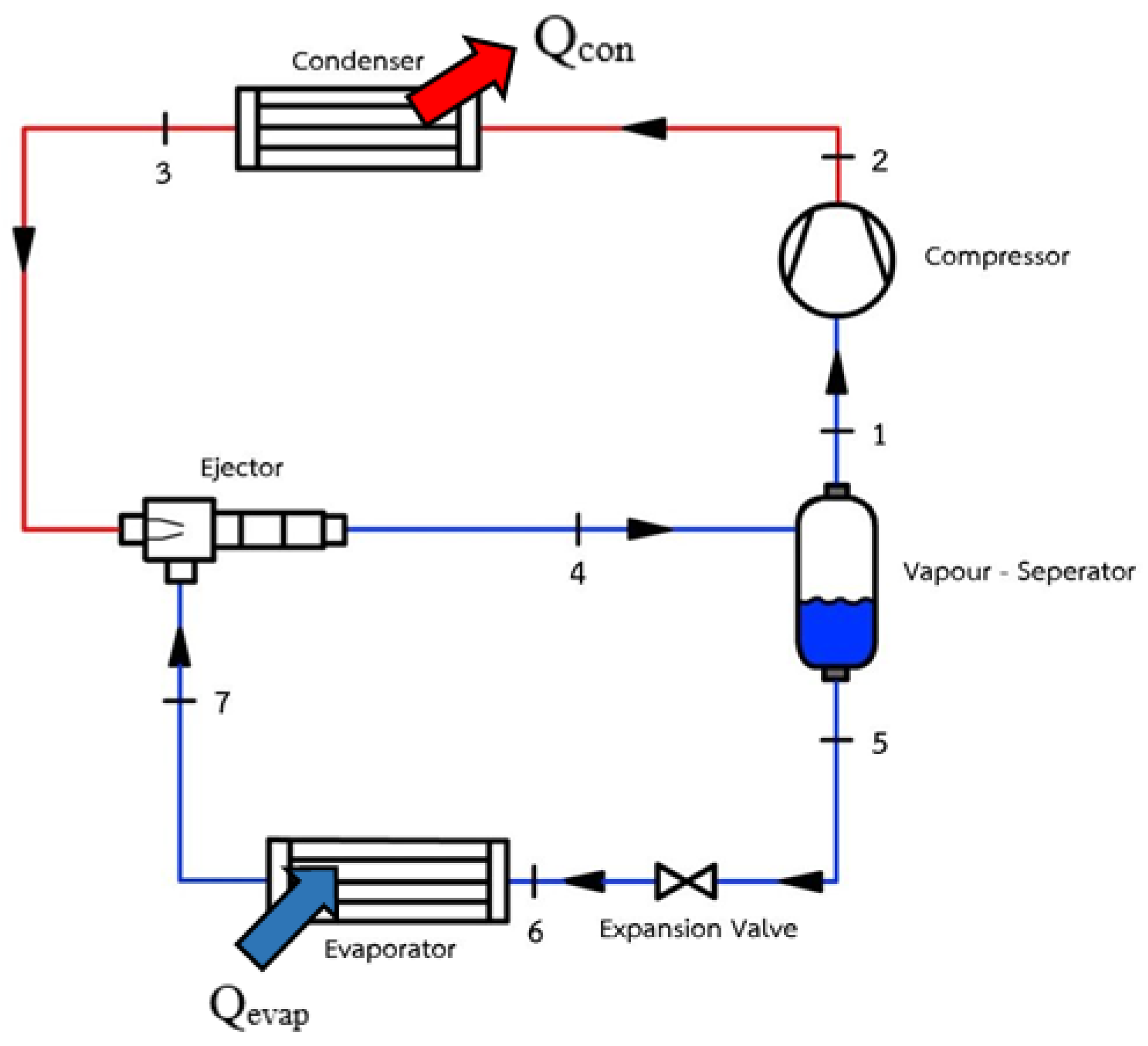
Figure 2.
A schematic view and picture of the heat pump test system.
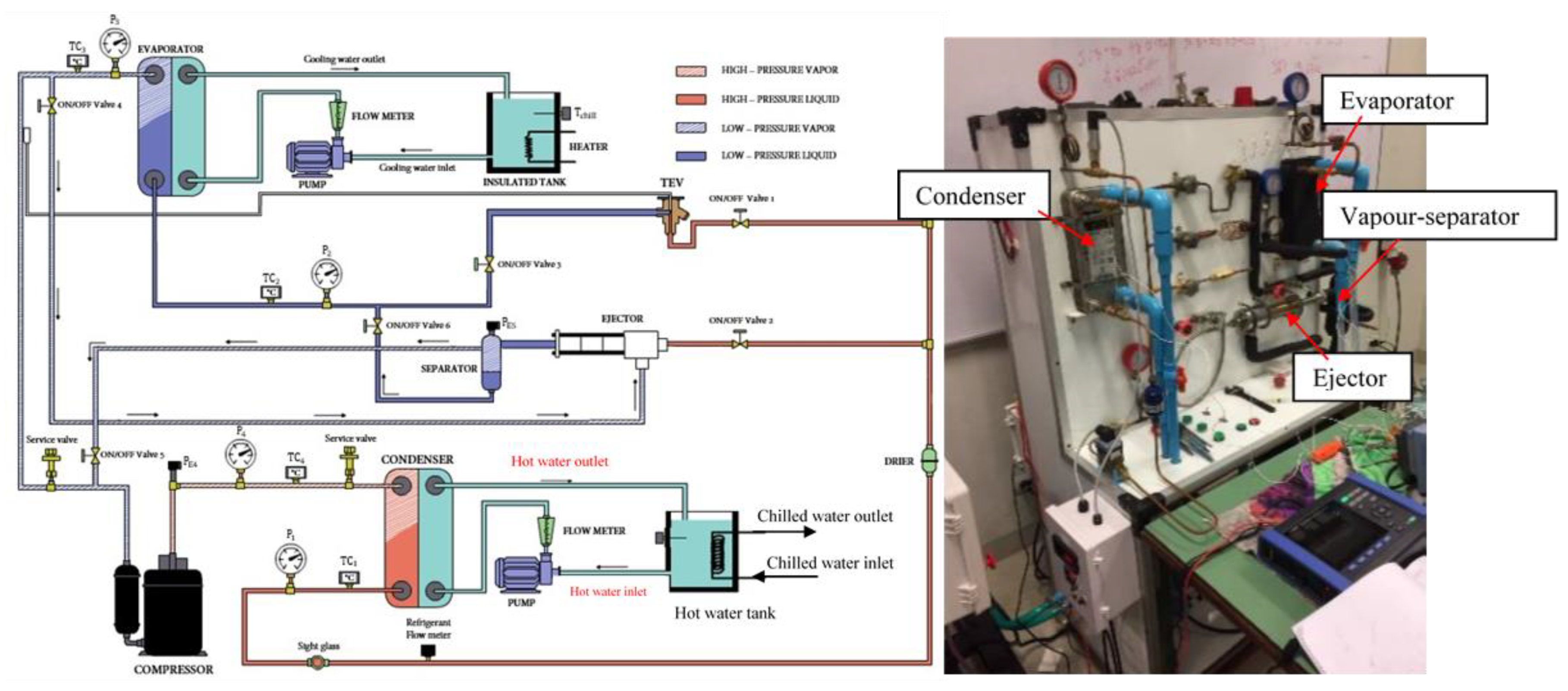
Figure 5.
The heating rate against the heat sink temperature of the EEHP and VCHP.
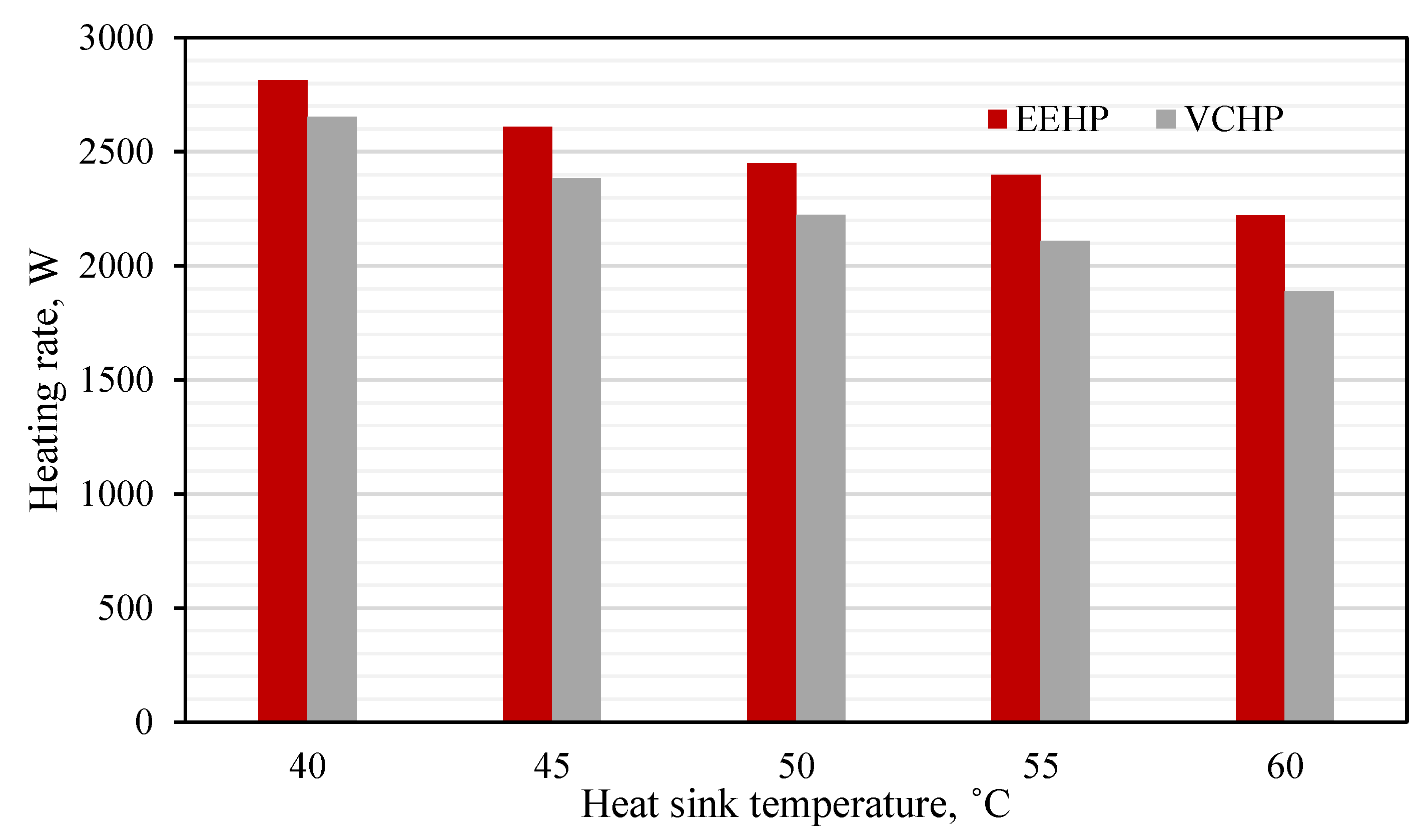
Figure 6.
The process on P-h diagram of the EEHP and VCHP.
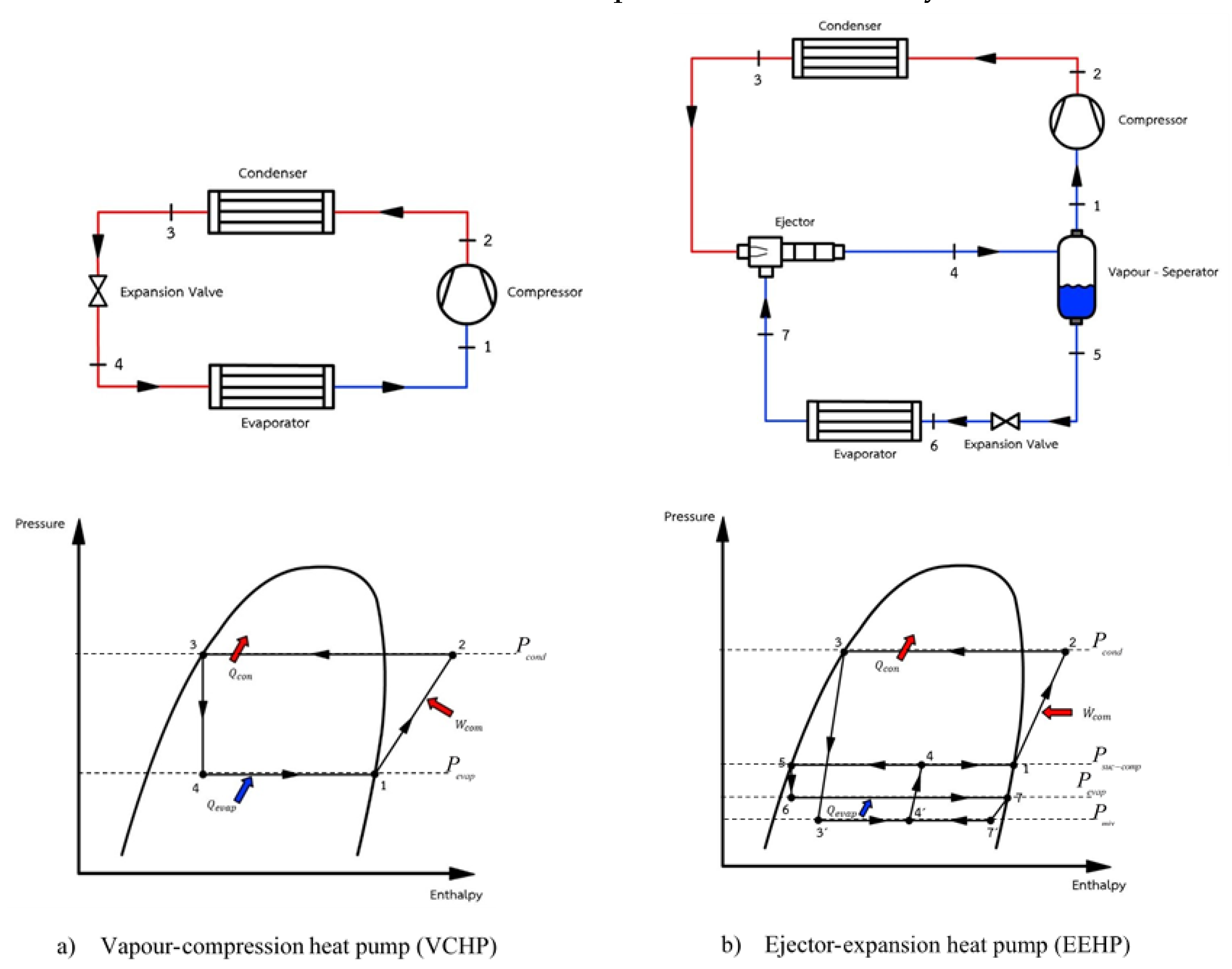
Figure 7.
The electricity consumption and mass flow rate versus the heat sink temperatures.
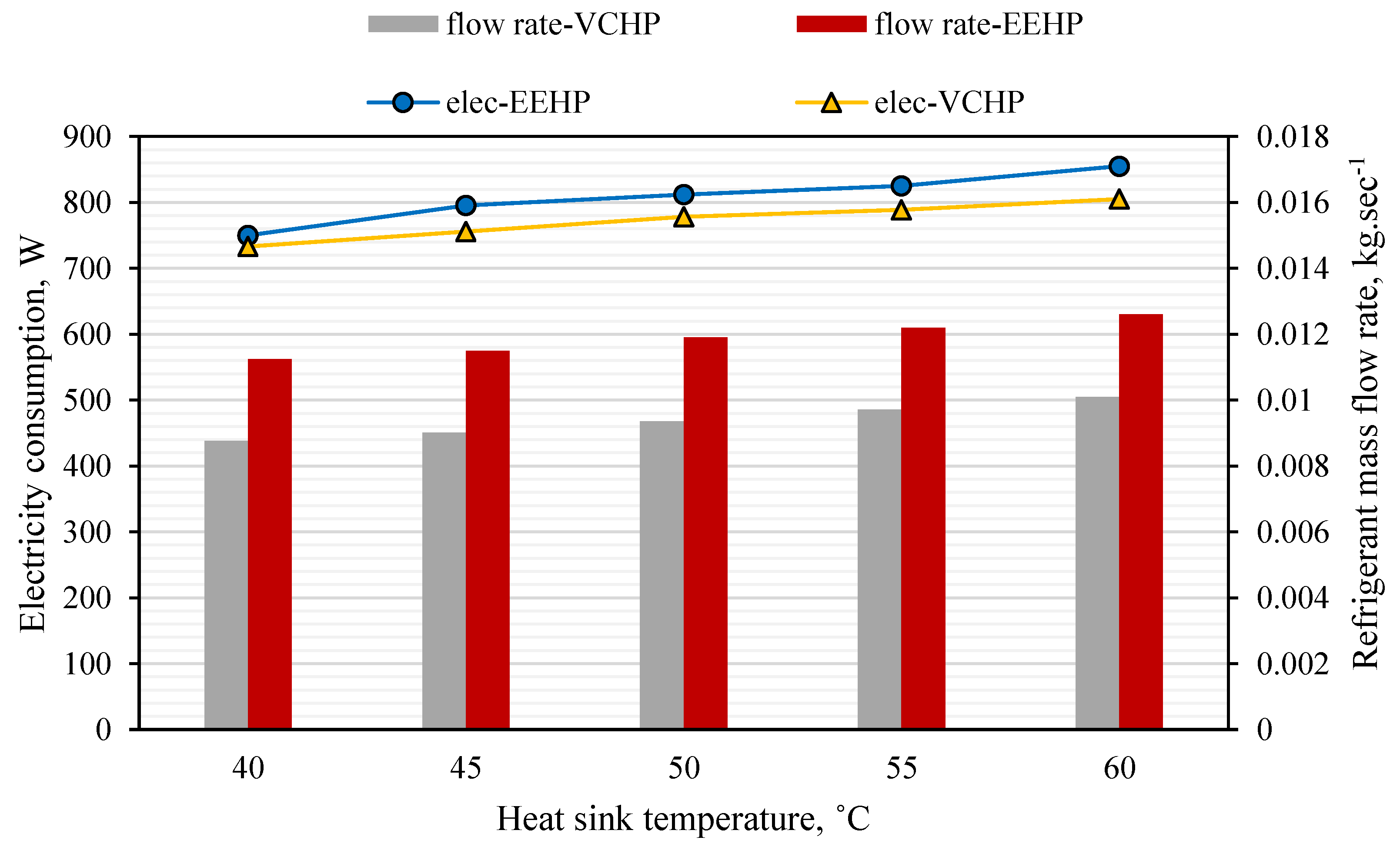
Figure 8.
The heat pump COP and percent improvement against the heat sink temperature.
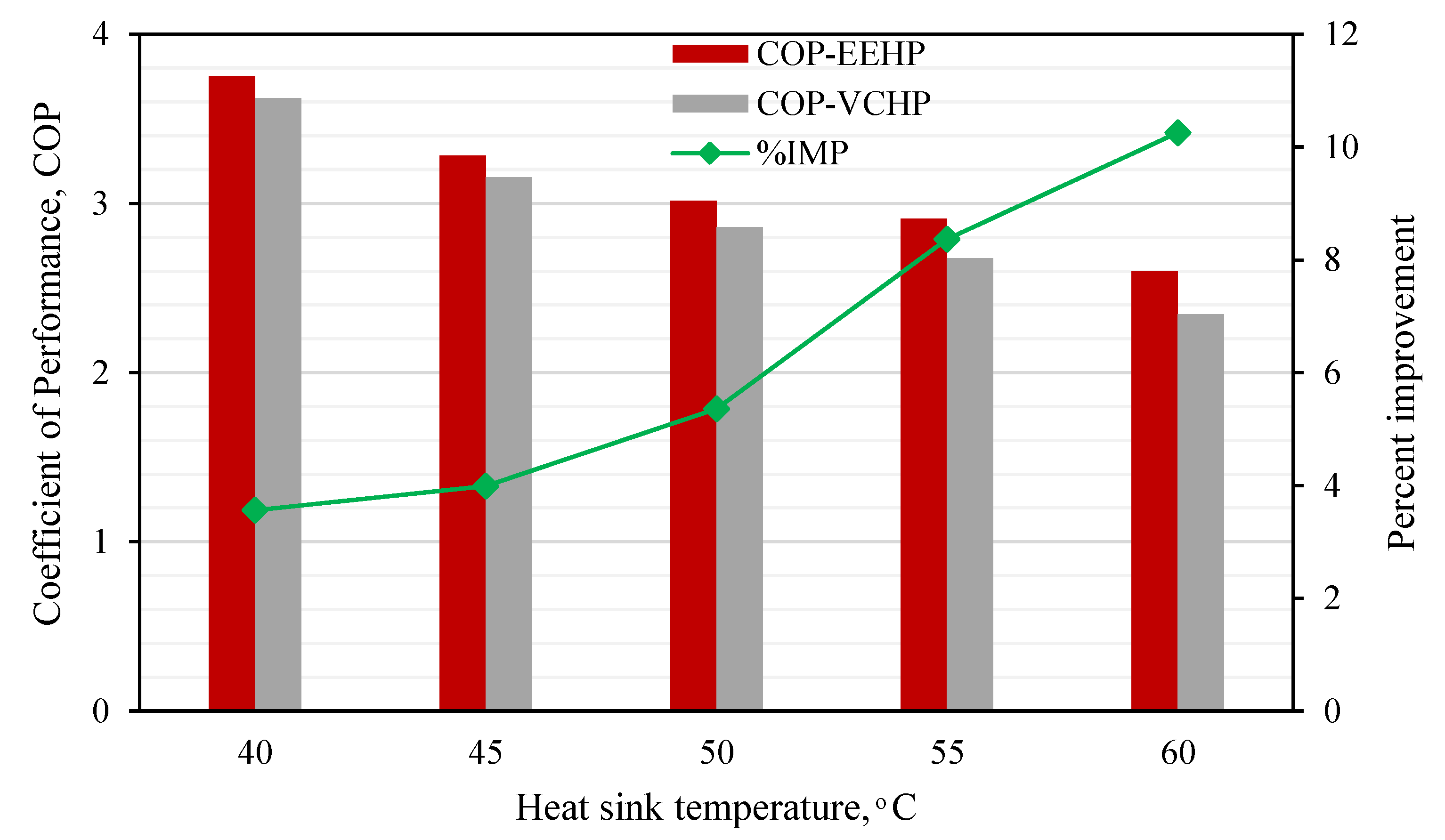
Figure 9.
The compressor suction pressure and refrigerant density of the EEHP and VCHP.
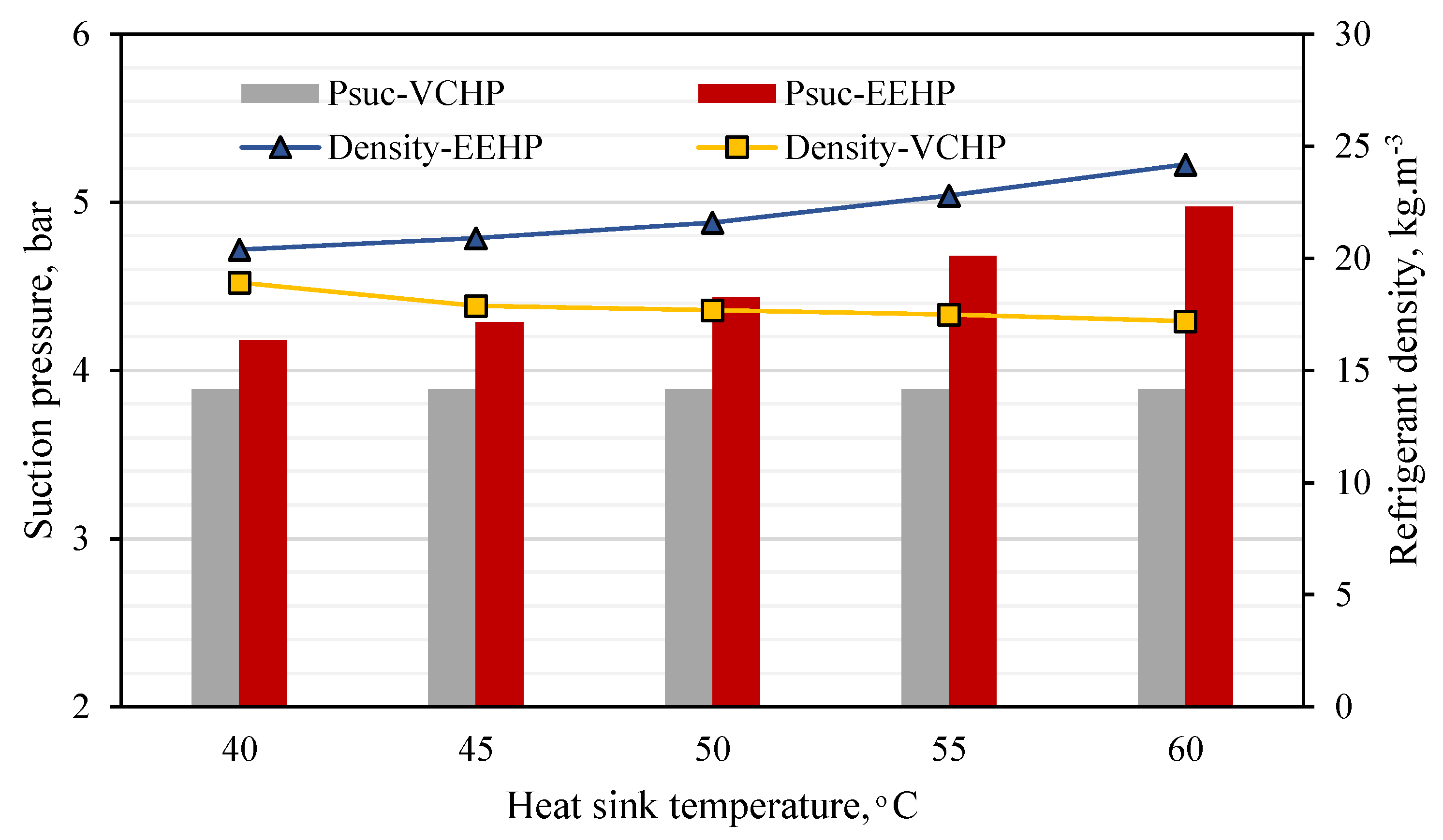
Figure 10.
The refrigerant discharge temperature and the compressor pressure ratio.
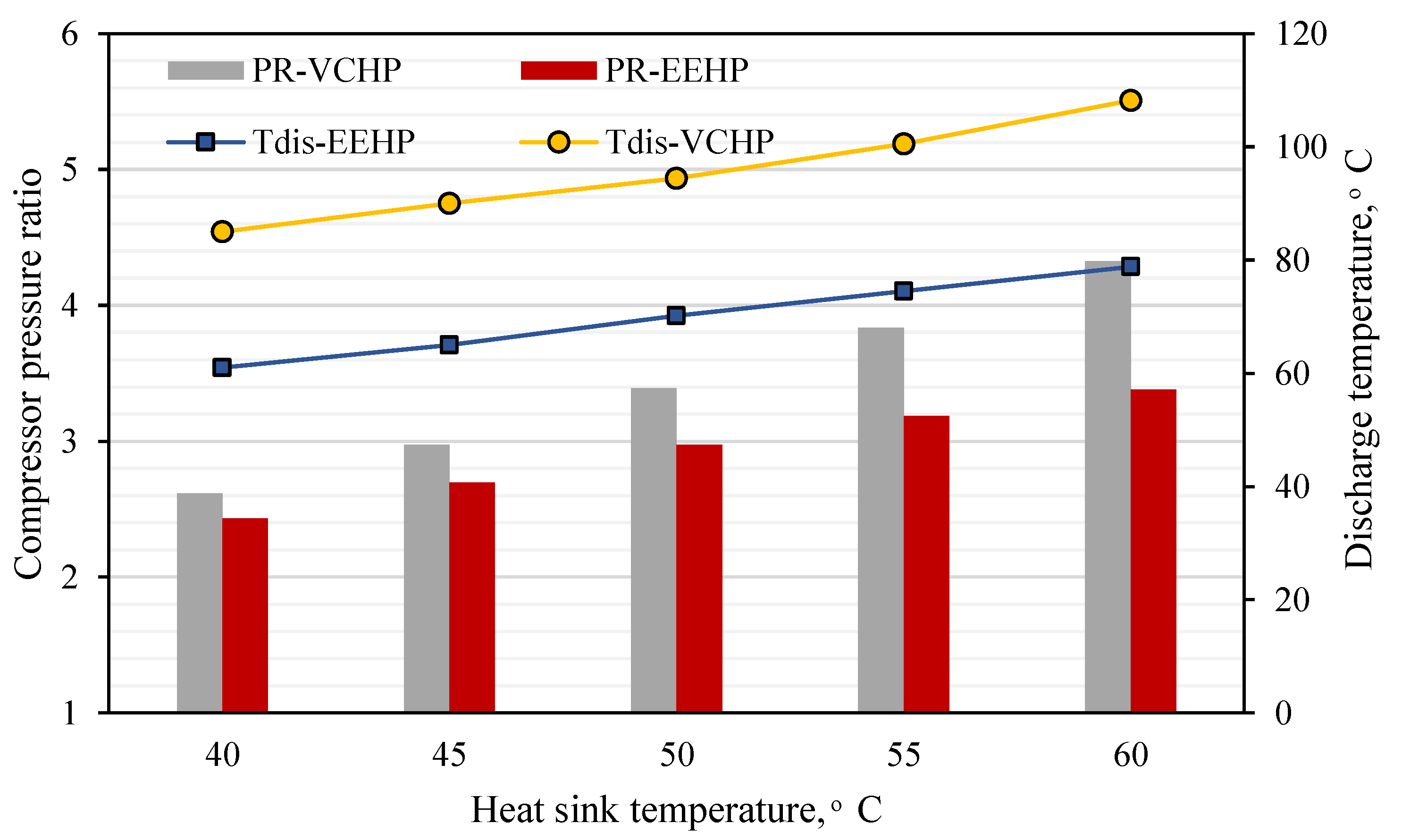
Figure 11.
The heating capacity against the heat source temperature.
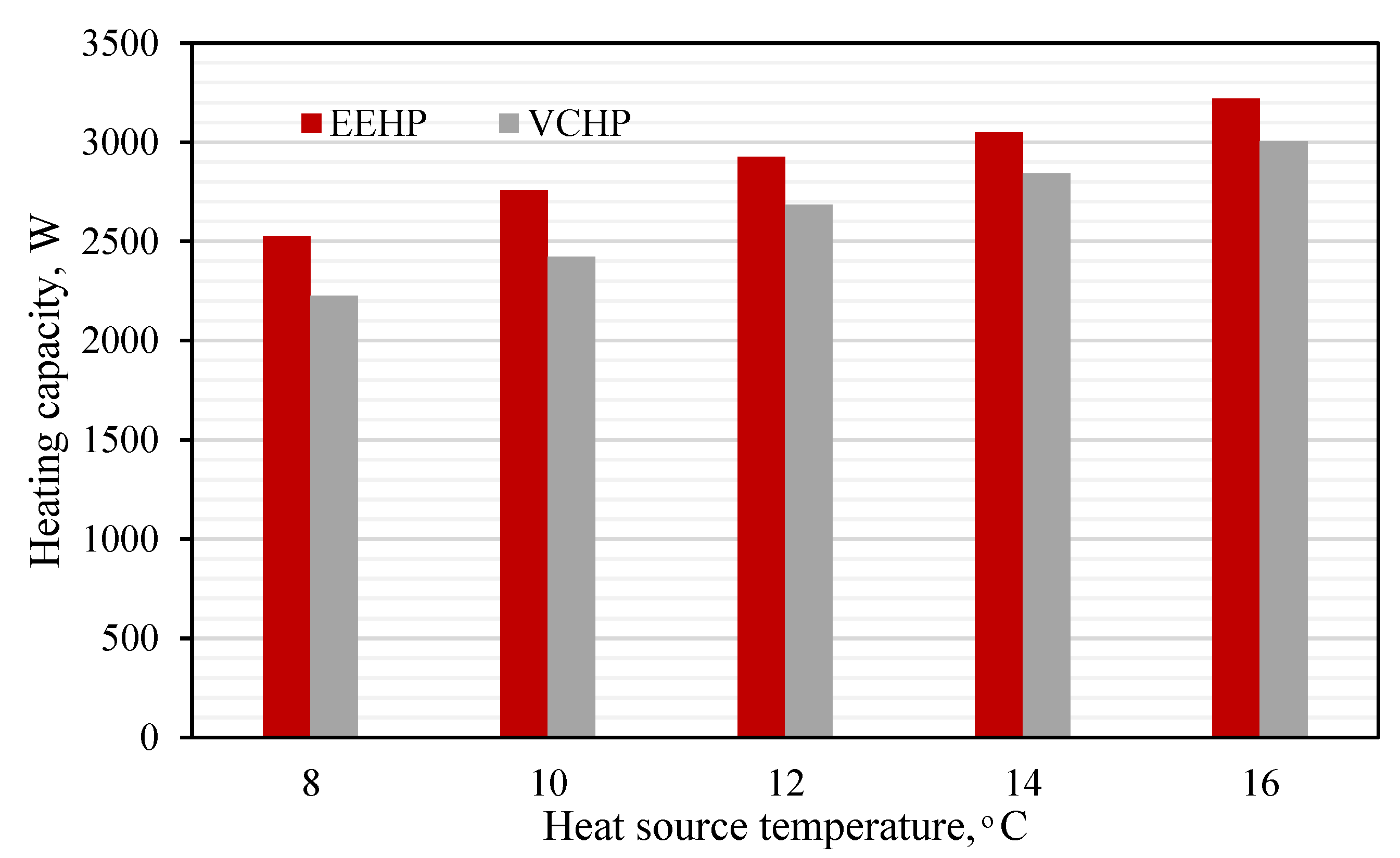
Figure 12.
The electricity consumption against the heat source temperature.
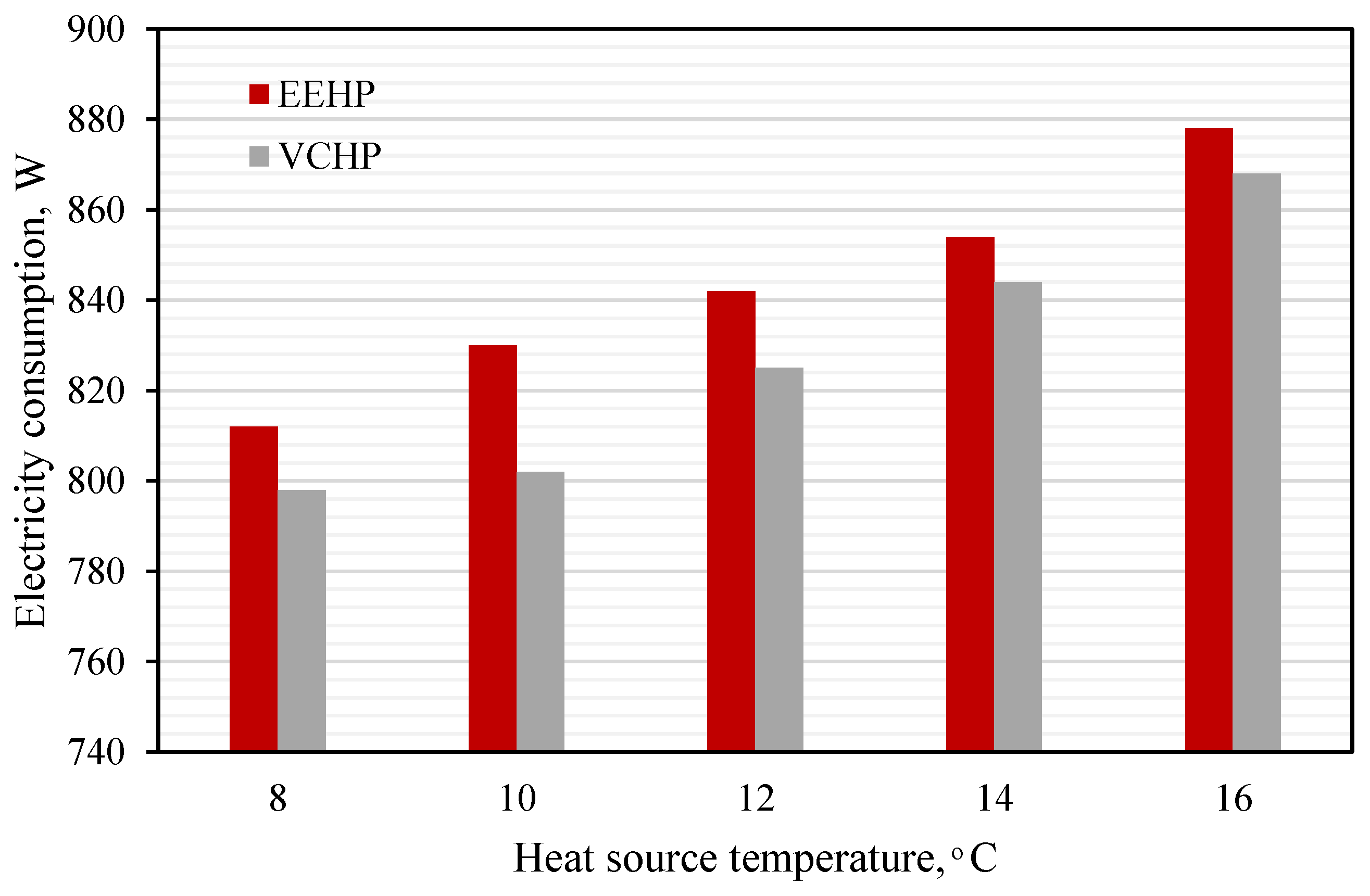
Figure 13.
COP and percent improvement against the heat source temperature.
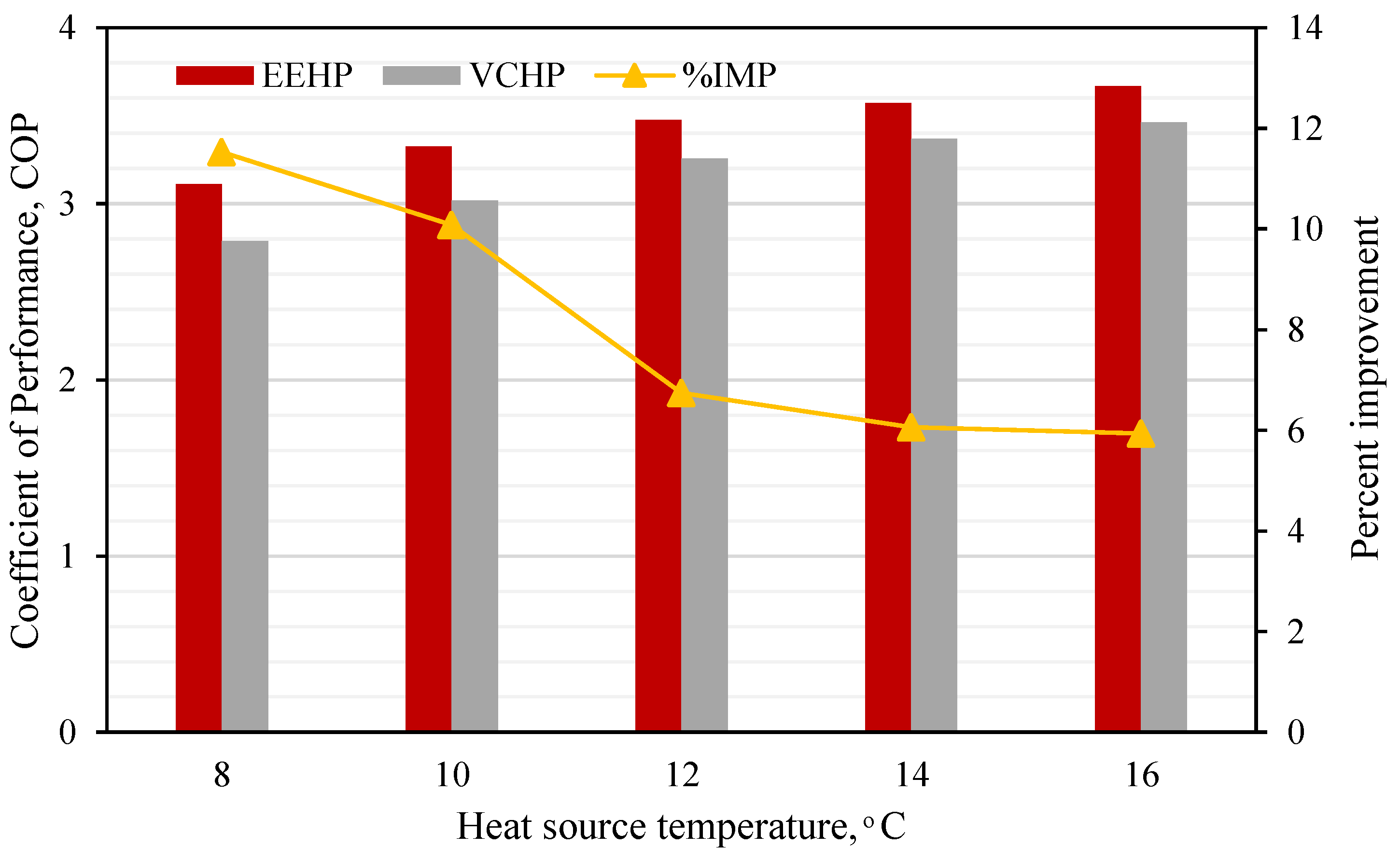
Figure 14.
The pressure lift ratio with variations of the expansion ratio.
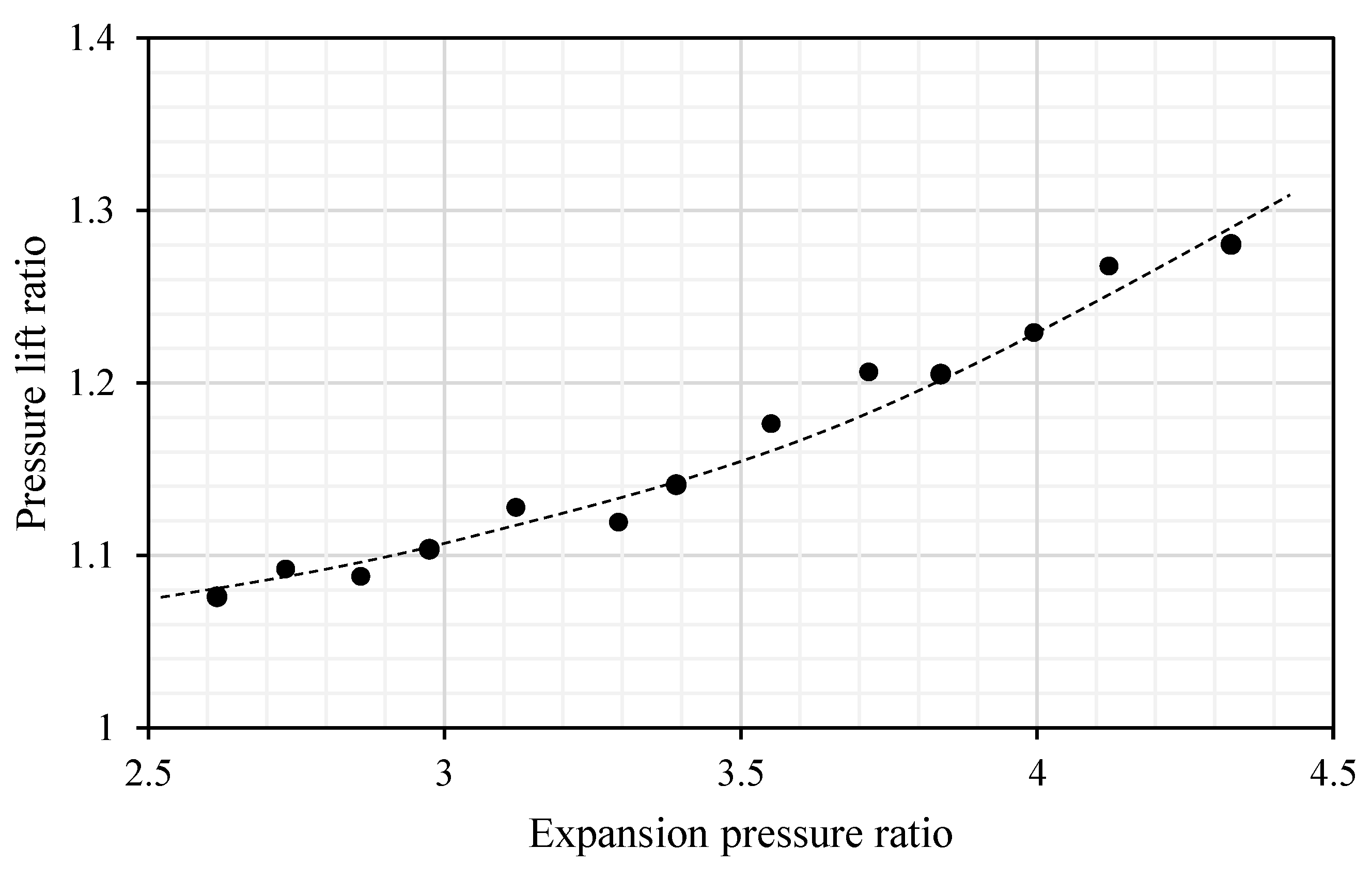
Figure 15.
The entrainment ratio with varying the expansion pressure ratio.
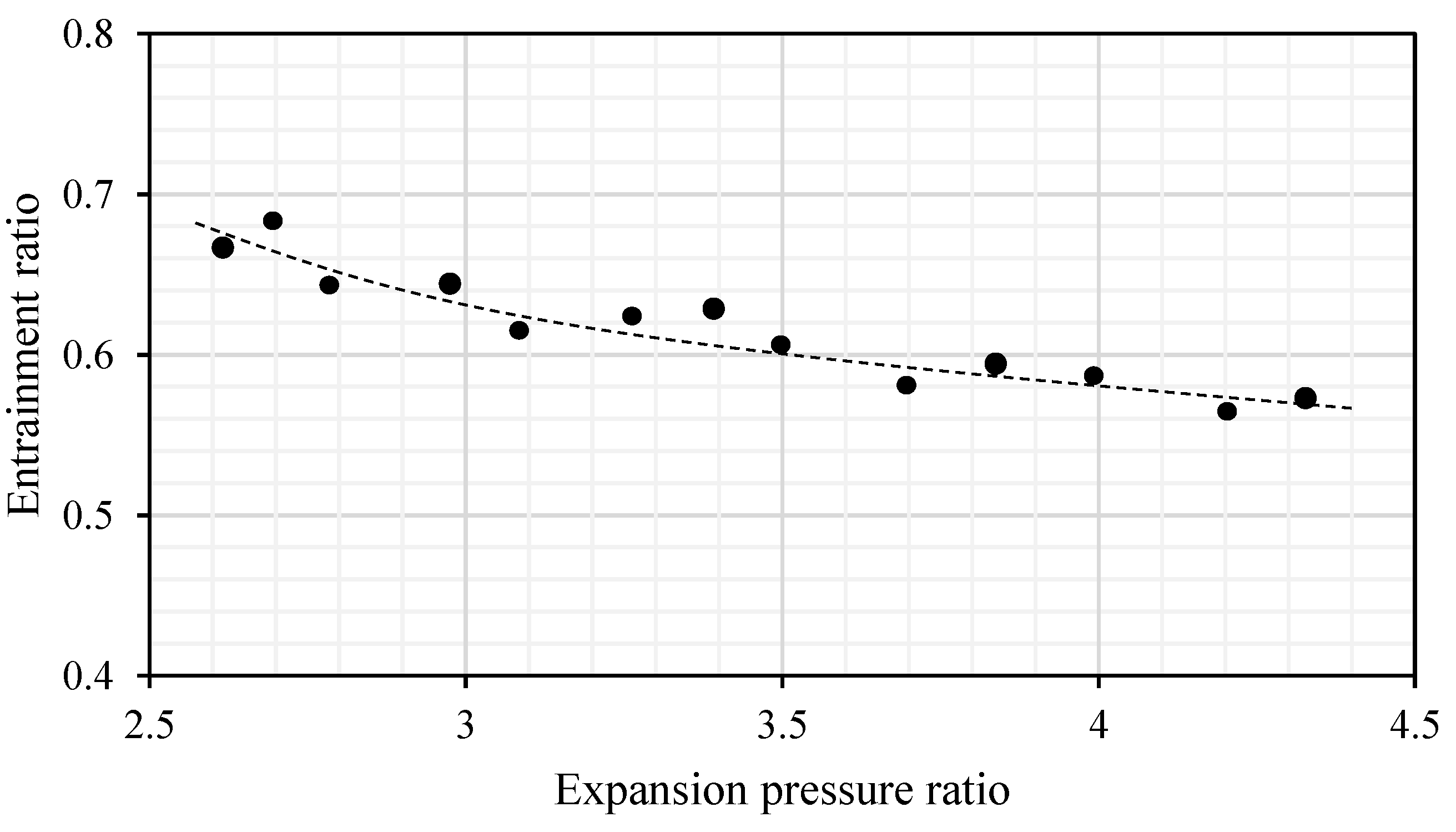
Figure 16.
The pressure lift ratio against the entrainment ratio.
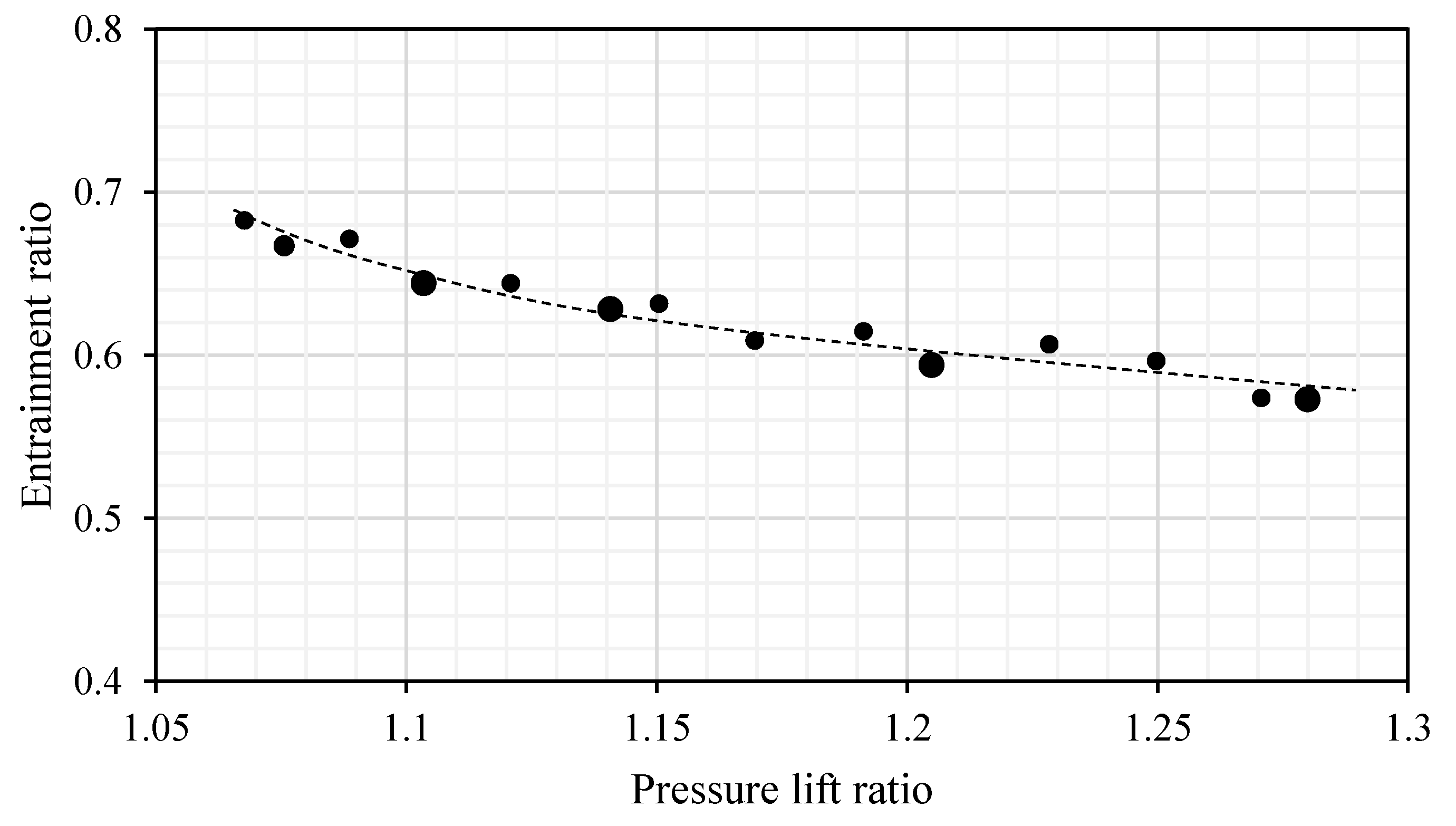

Table 1.
The measuring devices.
| Item | Uncertainty | Model |
|---|---|---|
| Data acquisition | ±0.15% | Yokogawa GP10-1-E-F/UC20 |
| Power meter | ±0.2% | Hioki PQ3100 |
| Thermocouple | 3.0 - 5.0% | Type-K |
| Pressure transducer | 1.0%FS | Dixell, PF11 |
| Volume flow meter | 3.5 - 5.0% | Burkert, 8030SE30 |
Disclaimer/Publisher’s Note: The statements, opinions and data contained in all publications are solely those of the individual author(s) and contributor(s) and not of MDPI and/or the editor(s). MDPI and/or the editor(s) disclaim responsibility for any injury to people or property resulting from any ideas, methods, instructions or products referred to in the content. |
© 2023 by the authors. Licensee MDPI, Basel, Switzerland. This article is an open access article distributed under the terms and conditions of the Creative Commons Attribution (CC BY) license (http://creativecommons.org/licenses/by/4.0/).
Copyright: This open access article is published under a Creative Commons CC BY 4.0 license, which permit the free download, distribution, and reuse, provided that the author and preprint are cited in any reuse.


