

Submitted:
06 June 2023
Posted:
07 June 2023
You are already at the latest version
Preprints on COVID-19 and SARS-CoV-2
Abstract
The Covid-19 pandemic has produced a change in the way of living, socializing and a modification in Health Systems around the world. A multicentre retrospective study was carried out to study orofacial trauma in one of the regions most affected during the first wave of the pandemic, with the participation of the five main tertiary hospitals in Madrid. The aim of this study is to evaluate the epidemiology of orofacial surgical trauma during the 1 year of COVID pandemic and compared to de prior year. Age, sex, mechanism, localization, and treatment were studied. P-value <0.05 was considered statically significative. Reduction of 39.36% (<0.001) in maxillofacial fractures was observed, without significance change in sex, localization or treatment. Significant increase in age (35,92 vs. 40,26) (p = 0.006) was observed. Significant decline in mechanism was noted (p = 0.025), decreasing personal violence (41% vs 35%) and sports (14% vs 8%); increasing in falls (27% vs 35%), precipitation (2 vs 5%), and traffic accidents (12% vs 13%). The mandible was the most frequent fractured bone. The COVID pandemic has produced epidemiological variations in orofacial trauma, making it necessary to monitor social and legal changes that may require reorganization to adjust to population needs.
Keywords:
SARS-CoV-2
; COVID-19
; orofacial trauma
; maxillofacial trauma
; epidemiology
; public health
1. Introduction
The Coronavirus disease 2019 (COVID-19) was first originated in Wuhan, China, in December 2019; with a highly rapid spread all over the world. The World Health Organization declare the COVID-19 a pandemic on March 11, 2020 [1,2]. As of November 2021, there have been more than 257.4 million cases of COVID-19 infection worldwide and 5.15 million deaths attributed to the virus. In Europe, during the first and most lethal wave, Spain and Italy were the two most affected countries, challenging the health systems and the policy makers. To stop COVID-19 after obtaining “pandemic” classification in March 2020, countries around the world implemented different measures of social distancing. To slow down its spread, in Spain, strict lockdown was declared on March 14 of 2020, for 50 days. After that, the measures implemented were being gradually relaxed. Madrid was the Spanish city most affected and required the redistribution of sanitary resources to cope with the large number of patients admitted with COVID, using operating theatres as intensive care units, cancelling surgeries, and requiring field hospitals.
The measures implemented by the Spanish government during lockdown were restriction in all outdoor activities, such as sports, closing of bars, theatres, as well as limitation in inter-territorial mobility. All these limited the way people socialized, leading to a decline in the main causes of maxillofacial trauma.
Despite various studies that explore the changes in the epidemiology of orofacial fractures, the causes of the epidemiological changes are variable among the different regions and cultures analyzed. Most studies on the epidemiology of oromaxillofacial trauma are single-center and do not compare the etiology and variability in surgical treatment with respect to previous years to assess trend changes due to COVID.
The purpose of this multicentre retrospective observational study was to assess a possible change in the epidemiology, pattern, and etiology of maxillofacial trauma attended during the pre-COVID-19 and COVID-19 periods by comparing the one-year period from the start of strict lockdown with the same period of the previous year of the patients treated for maxillofacial trauma in 5 reference university hospitals of the community of Madrid (Hospital General Universitario Gregorio Marañon, Hospital Universitario La Paz, Hospital 12 de Octubre, Hospital Ramón y Cajal and Hospital Clinico San Carlos).
2. Materials and Methods
A retrospective multicentre observational comparative study was designed. All tertiary hospitals with surgical activity in oral and maxillofacial surgery in Madrid were invited, only one of them declined. Data were collected from all patients who underwent surgery for maxillofacial fractures between March 2020 and February 2021 (COVID group), with the same data collected from patients who underwent surgery in the same period during the previous year (pre-COVID group). All patients selected through medical record analysis had at least one radiologically proven fracture of a facial bone between March 1, 2019, and February 28, 2021. This is a 2-year multicenter comparative study that compares the etiology and surgical treatment performed in patients with maxillofacial fractures during the COVID pandemic with respect to their historical cohort from the year prior to the pandemic in a region with a high incidence of COVID cases. This 1-year COVID pandemic limit was chosen because during this period the most severe government restrictions and the subsequent waves of COVID took place, limiting the social life of the population. Patients were identified based on the rates of surgical procedures provided by the medical information network of each hospital centre.
The main objective is to analyse a change in incidence and epidemiology in orofacial fractures, so the following data were collected: age, sex, causal mechanism, bone affected, and treatment performed.
The causal mechanism was divided into assault, casual fall, traffic (including road traffic, car accidents, motorbikes, bicycles, and electric scooters), sports, precipitation, and others. The affected bone was subdivided into mandible, orbit, orbitomalar and malar, zygomatic arch, nasoorbitoethmoidal, LeFort (including all three types), nasal, dentoalveolar, panfacial and others. Treatment included open reduction and internal fixation (ORIF), intermaxillary block (IMB), ORIF plus IMB, reduction with Ginestet hook or Gillies technique, closed reduction, rhinoseptoplasty, dental splinting and others.
This work adhered to the World Medical Association Declaration of Helsinki. All patients had a consultation and gave informed consent before surgery.
The statistical significance was assessed by paired Student T-test and Chi2 test. A two-tailed P-value <0.05 was considered statistically significant. The data were analysed using an Excel worksheet and the Statistical Product and Service Solutions (SPSS), IBM version 16.01.
3. Results
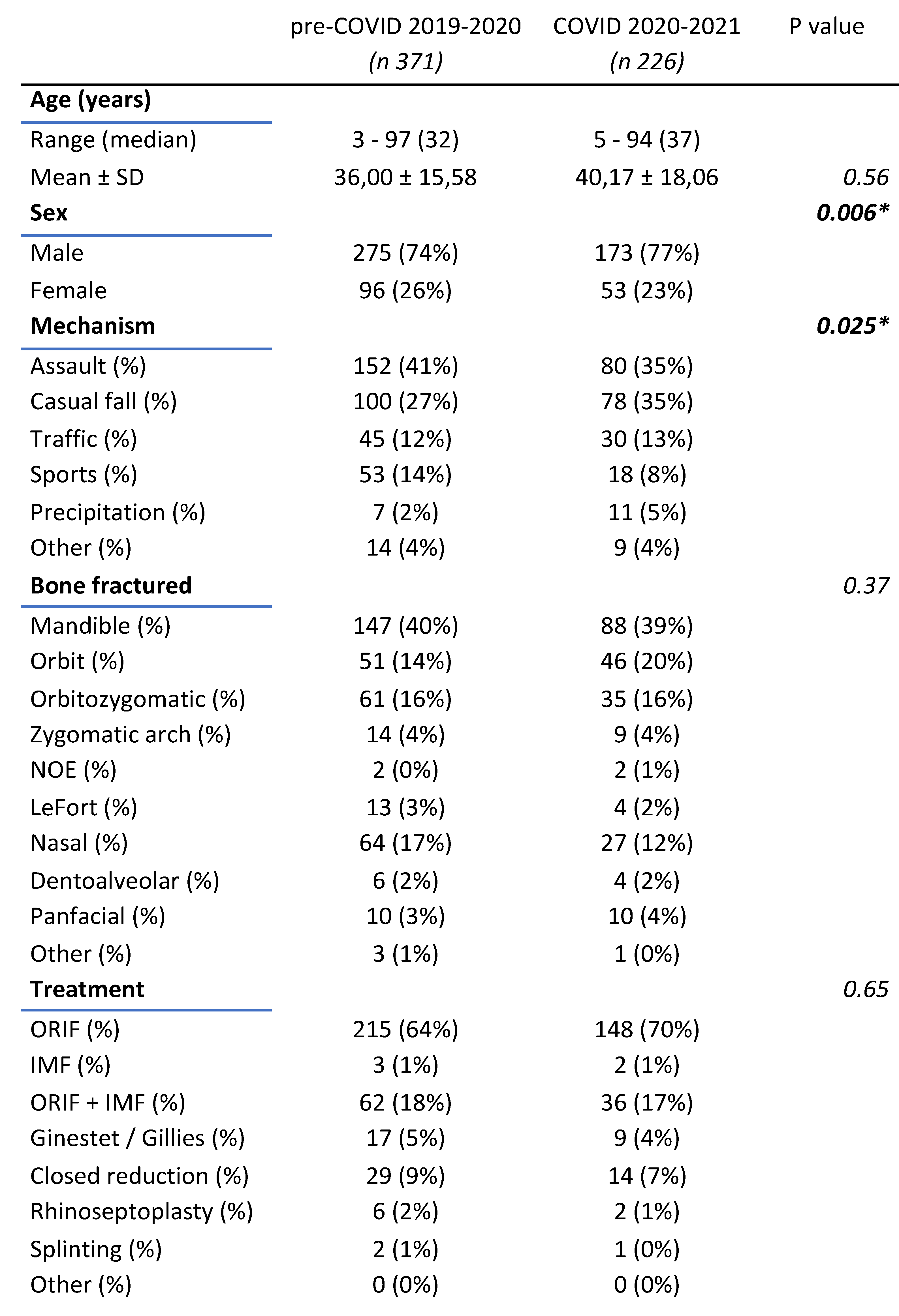
Five tertiary centres were included in the study (Hospital General Universitario Gregorio Marañón, Hospital Universitario La Paz, Hospital Universitario 12 de Octubre, Hospital Ramón y Cajal y Hospital Clínico San Carlos). A total of 371 patients with facial trauma required surgery in the preCOVID year comparing to 225 patients during de COVID year. A statistically significant decrease in the number of fractures in the COVID year in contrast to the previous year was observed (p<0.001), with an overall decline of 39.36%. Patients’ characteristics are summarized in Table 1.
No statistical difference was seen regarding to sex (p=0.56). The mean age in preCOVID period was 36,01±17,58 years, including patients between 3 and 97 years. During the COVID period the mean age was 40,17±18,06, age ranged from 5 to 94 years. Comparing the age, the mean difference was statistically significant with a p value of 0.006.
Monthly cases were compared from one year to the other, greater difference was observed coinciding with the increase in the number of cases and the implementation of restrictive measures by the government. The month with the largest difference was April (24 vs 2 fractures), which was the only month in which strict confinement lasted the whole month in Spain, with the measures being relaxed from May onwards. A further striking decrease in fracture cases was observed during the months of December, January and February, coinciding with a new wave of COVID and new restrictions, such as the cancellation of Christmas and New Year's Eve parties and restrictions on social gatherings (Figure 1).
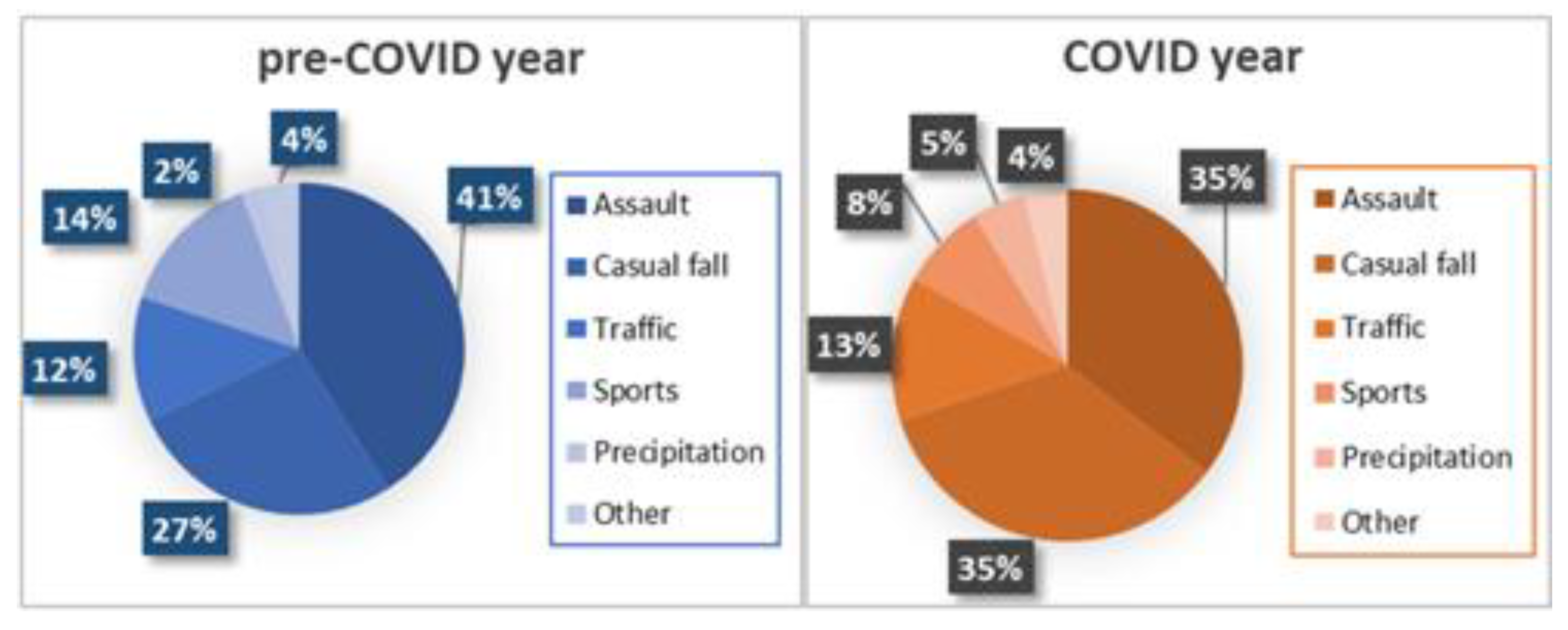
A significance difference in mechanism of fracture was noticed (p=0.025). We noticed a decrease in assault (41% vs 35%) and in sport related trauma (14% vs 8%). We registered an increase in casual falls (27% vs 35%) and precipitation (2% vs 4%), and a minimal rise in traffic accidents (12% vs 13%) (Figure 2).
No significance difference was seen regarding to the bone fractured (p=0.37). The mandible remains as the most fractured bone that requires surgery (40% vs 39%). We observed an increase in orbit fractures (14% vs 20%) and the number of nasal fractures requiring surgery was fewer (17% vs 14%). (Figure 3 and Figure 4).
No difference was found in the surgical technique made (p=0.65), with an increase in open reduction and internal fixation technique (64% vs 70%) and a decrease in rhinoseptoplasty (9% vs 7%); all the other procedures remained similar comparing preCOVID year to COVID year. (Figure 5).
4. Discussion
COVID-19 has supposed a deep change in our way of living and socializing. A reduction of non-COVID activity in the emergency department has been reported in literature [3,4,5,6]. Despite the decrease in general medical emergencies due to trauma described in the scientific literature during the COVID-19 pandemic, the occurrence of facial fractures did not decrease according to various publications [7,8]. The reason for this is that most outdoor sports have decreased, but it can be thought of as an increase in new means of transportation (e.g., electric scooters) and an increase in alcohol consumption.14–17A reduction of surgical facial trauma in Madrid of 39,36%, comparing the first year of COVID to the same period of the previous year, is described; with results similar as described by De Boutray et al. (decline of 65,5% comparing the first 2 months of the first wave with the same period the previous years) [2]; by Fama et al. (reduction of 55.86% comparing the first 6 months with de previous) [9] and Saponaro et al. (reduction of 77.5% comparing 2 first months with the previous year) [10].
It is noticed that the average age of patients in COVID period was higher compared to the previous year, which is consistent with that described in the literature [3,11,12].
According to literature the main causes of facial trauma in developed countries are traffic accidents (28,3%), assault (21%) and accidental falls (19,5%) [13]. As COVID-19 spread through Spain, the government implemented a strict lockdown period that started in March 2019, which caused a reduction in interterritorial mobilization, sporting, and social events. A reduction in assaults and sport related trauma is described; consistent with other studies published [6,10,14,15]; and an increase in casual falls, that turned to be the most frequent cause in the COVID period, and, surprisingly, traffic accidents. These increase in traffic accidents may be due to with people's preference for private transport after strict lockdown, in order to avoid becoming infected if they used public transport. An increase in precipitation during the COVID year is also described, similar with the one described by De Boutray et al. [2]; that may be related to the psychological distress related to COVID-19 and lockdown [16]. The COVID-19 pandemic has significantly changed the lifestyles of people around the world. For example, changes in alcohol consumption and means of transportation occurred as a result of the pandemic. Because of these changes, it is necessary to prepare policies and safety measures to reduce facial fractures.
Despite the change in epidemiology, neither the anatomic region affected, nor the preferred treatment was altered. The mandible remains as the most fractured bone that requires surgery in both years, and so, the preferred treatment had been the open reduction and internal fixation.
This is the first multicentric study that collects data for a one-year period comparing to the previous one. This decision is taken because although the initial period, which includes the first wave of covid, has undergone the most changes, people have not yet normalized our way of living and socializing. During this period there has been a progressive relaxation of the measures taken, with the opening of the hotel and catering business, nightlife, and the withdrawal of the mask in closed spaces. There have also been different waves caused by different variants, with increases and decreases in the incidence of patients affected by COVID, reaching the current seventh wave caused by variants BA4 and BA5 linked to Omicron, with an increase in infections and hospitalizations.
Other studies have collected data of shorter periods, all with similar results, focusing on the first’s months or weeks. Gabriele et al. conducted a 12-week study in Italy comparing to the same 12 weeks in the four previous years, with a reduction on total number of cases during lockdown period [9]. Saponaro et al. described a reduction in cases and a change in facial trauma causes in a tertiary hospital in Rome in the 2 first months of pandemic, comparing to the previous year [8]. Nhongo et al. described an incidence decrease during the two lockdown periods in Melbourne, with an increase of facial fractures in women, those due to casual falls and domestic violence and a drop in those caused by sports, assault and alcohol related [17]. Salzano et al. describe a decrease in facial trauma incidence in 6 tertiary hospitals in Italy during the first 4 months of pandemic; with an increase in mean age and, decrease of foreign patients, decrease in assault and sport-related [18]. Philip et al. conducted a one-year period in a single-centre study in India and described an increase in casual falls and heavy vehicle traffic accidents, but a decrease in outrage; they also described an increase in nose, zigomatico-maxillary complex and frontal bone fractures [19].
Different results are obtained than those described by Haapanen et al., they did not see a change in cases, although they confirm a modification in epidemiology during first months of COVID with a decrease in assaults, but not alcohol-related trauma [20].
One of the main limitations of the study is that only those patients with maxillofacial trauma that required surgical treatment are included, and the aetiology of minor facial trauma that did not require surgery cannot be included in the study. Due to this, in this multicentre study it has been possible to analyze the epidemiological changes of major orofacial injuries but not the cases of non-surgical facial injuries or minor facial trauma, which have suffered a decrease in referrals to tertiary hospitals during the COVID pandemic. We are currently in the process of reviewing the oromaxillofacial fractures produced during the year following the study presented. It would be important to carry out prospective multicenter studies on the evolution of orofacial trauma cases to monitor epidemiological changes and allocate resources efficiently for prevention and treatment and to be able to develop hypotheses about how the COVID pandemic has affected this type of pathology.
5. Conclusions
This is the first multicentre study comparing a one-year period of maxillofacial trauma after COVID-19 lockdown with the previous year. Results obtained are like those published in the literature, with an overall reduction in the number of cases, an increase in the average age, a rise in casual falls, and a decrease in assaults and sports accidents. Surprisingly, an increase in traffic accidents is observed. As people have not returned to the pre-COVID rhythm of life, with a progressive succession of waves and the collapse of health centres, identifying the changing epidemiology of orofacial trauma patients may let us prevent fracture incidence and appropriately manage these patients.
Author Contributions
Conceptualization, A.S.U. and M.T.; methodology, C.N.C. and M.T.; software, A.S.U. and M.T.; validation, J.I.S C.N.C and M.T.; formal analysis, M.T.; investigation, A.S.U., E.O., G.S.A., S.H.A., O.S.C., A.M.S.F., F.A., I.A.N., J.L.C., C.N.C., D.G., M.A.; resources, A.S.U., M.A.; data curation, A.S.U., G.S.A., O.S.C., J.L.C., M.A., M.T.; writing—original draft preparation, A.S.U.; writing—review and editing, M.T. and C.N.C.; visualization, A.S.U., M.T.; supervision, J.I.S., M.T..; project administration, A.S.U., M.T. All authors have read and agreed to the published version of the manuscript.
Funding
This research received no external funding.
Institutional Review Board Statement
The study was conducted in accordance with the Declaration of Helsinki.
Informed Consent Statement
Not applicable.
Data Availability Statement
Data available on request from the corresponding author.
Conflicts of Interest
The authors declare no conflict of interest.
References
- Lee, D. W., Choi, S. Y., Kim, J. W., Kwon, T. G., & Lee, S. T. (2021). The impact of COVID-19 on the injury pattern for maxillofacial fracture in Daegu city, South Korea. Maxillofacial plastic and reconstructive surgery, 43(1), 35. [CrossRef]
- de Boutray, M., Kün-Darbois, J. D., Sigaux, N., Lutz, J. C., Veyssiere, A., Sesque, A., Savoldelli, C., Dakpe, S., Bertin, H., Lallemant, B., Llobet, A., du Cailar, M., Lauwers, F., Davrou, J., & Foletti, J. M. (2021). Impact of the COVID-19 lockdown on the epidemiology of maxillofacial trauma activity: a French multicentre comparative study. International journal of oral and maxillofacial surgery, 50(6), 750–755. [CrossRef]
- Kim, S. J., Cho, Y. J., & Lee, D. W. (2021). The impact of COVID-19 on the epidemiologic characteristics of traumatic fractures: A systematic review of recent literature. Acta orthopaedica et traumatologica turcica, 55(5), 439–443. [CrossRef]
- Lalloo, R., Lucchesi, L. R., Bisignano, C., Castle, C. D., Dingels, Z. V., Fox, J. T., Hamilton, E. B., Liu, Z., Roberts, N. L. S., Sylte, D. O., Alahdab, F., Alipour, V., Alsharif, U., Arabloo, J., Bagherzadeh, M., Banach, M., Bijani, A., Crowe, C. S., Daryani, A., Do, H. P., … James, S. L. (2020). Epidemiology of facial fractures: incidence, prevalence and years lived with disability estimates from the Global Burden of Disease 2017 study. Injury prevention : journal of the International Society for Child and Adolescent Injury Prevention, 26(Supp 1), i27–i35. [CrossRef]
- Lee, D. W., Choi, S. Y., Kim, J. W., Kwon, T. G., & Lee, S. T. (2021). The impact of COVID-19 on the injury pattern for maxillofacial fracture in Daegu city, South Korea. Maxillofacial plastic and reconstructive surgery, 43(1), 35. [CrossRef]
- Wang, C. J., Hoffman, G. R., & Walton, G. M. (2021). The Implementation of COVID-19 Social Distancing Measures Changed the Frequency and the Characteristics of Facial Injury: The Newcastle (Australia) Experience. Craniomaxillofacial trauma & reconstruction, 14(2), 150–156. [CrossRef]
- Killgore, W. D. S., Cloonan, S. A., Taylor, E. C., Lucas, D. A., & Dailey, N. S. (2021). Alcohol dependence during COVID-19 lockdowns. Psychiatry research, 296, 113676. [CrossRef]
- Boschuetz, N., Cheng, S., Mei, L., & Loy, V. M. (2020). Changes in Alcohol Use Patterns in the United States During COVID-19 Pandemic. WMJ : official publication of the State Medical Society of Wisconsin, 119(3), 171–176.
- Famà, F., Lo Giudice, R., Di Vita, G., Tribst, J. P. M., Lo Giudice, G., & Sindoni, A. (2021). COVID-19 and the Impact on the Cranio-Oro-Facial Trauma Care in Italy: An Epidemiological Retrospective Cohort Study. International journal of environmental research and public health, 18(13), 7066. [CrossRef]
- Saponaro, G., Gasparini, G., Pelo, S., Todaro, M., Soverina, D., Barbera, G., Doneddu, P., & Moro, A. (2022). Influence of SARS-CoV-2 lockdown on the incidence of facial trauma in a tertiary care hospital in Rome, Italy. Minerva dental and oral science, 71(2), 96–100. [CrossRef]
- Canzi, G., De Ponti, E., Corradi, F., Bini, R., Novelli, G., Bozzetti, A., & Sozzi, D. (2021). Epidemiology of Maxillo-Facial Trauma During COVID-19 Lockdown: Reports From the Hub Trauma Center in Milan. Craniomaxillofacial trauma & reconstruction, 14(4), 277–283. [CrossRef]
- Vishal, Prakash, O., Rohit, Prajapati, V. K., Shahi, A. K., & Khaitan, T. (2022). Incidence of Maxillofacial Trauma Amid COVID-19: A Comparative Study. Journal of maxillofacial and oral surgery, 21(2), 420–425. [CrossRef]
- Montovani, J. C., de Campos, L. M., Gomes, M. A., de Moraes, V. R., Ferreira, F. D., & Nogueira, E. A. (2006). Etiology and incidence facial fractures in children and adults. Brazilian journal of otorhinolaryngology, 72(2), 235–241. [CrossRef]
- Olding, J., Zisman, S., Olding, C., & Fan, K. (2021). Penetrating trauma during a global pandemic: Changing patterns in interpersonal violence, self-harm and domestic violence in the Covid-19 outbreak. The surgeon : journal of the Royal Colleges of Surgeons of Edinburgh and Ireland, 19(1), e9–e13. [CrossRef]
- Gabriele, G., Nigri, A., Pini, N., Carangelo, B. R., Cascino, F., Fantozzi, V., Funaioli, F., Luglietto, D., & Gennaro, P. (2022). Covid-19 pandemic: the impact of Italian lockdown on maxillofacial trauma incidence in southern Tuscany. Annali italiani di chirurgia, 92, 135–139.
- McIntyre, R. S., & Lee, Y. (2020). Preventing suicide in the context of the COVID-19 pandemic. World psychiatry : official journal of the World Psychiatric Association (WPA), 19(2), 250–251. [CrossRef]
- Nhongo, S. S., Sklavos, A., Lee, K., Chan, S. T. F., & Austin, S. (2023). The changing face of maxillofacial trauma during the 2020 COVID-19 lockdowns in Melbourne, Australia. Oral and maxillofacial surgery, 27(1), 125–130. [CrossRef]
- Salzano, G., Dell'Aversana Orabona, G., Audino, G., Vaira, L. A., Trevisiol, L., D'Agostino, A., Pucci, R., Battisti, A., Cucurullo, M., Ciardiello, C., Barca, I., Cristofaro, M. G., De Riu, G., Biglioli, F., Valentini, V., Nocini, P. F., & Califano, L. (2021). Have There Been any Changes in the Epidemiology and Etiology of Maxillofacial Trauma During the COVID-19 Pandemic? An Italian Multicenter Study. The Journal of craniofacial surgery, 32(4), 1445–1447. [CrossRef]
- Philip, G., Dominic, S., Poorna T, A., & Ek, J. (2022). Pattern of maxillofacial fractures in a Tertiary Referral Centre in Central Kerala - A comparison between the Pre-COVID and COVID periods. Journal of oral biology and craniofacial research, 12(1), 45–48. [CrossRef]
- Haapanen, A., Furuholm, J., Uittamo, J., & Snäll, J. (2022). Effect of social distancing during the COVID-19 pandemic on the occurrence of maxillofacial fractures in a Finnish Tertiary Trauma Centre. Acta odontologica Scandinavica, 80(2), 157–160. [CrossRef]
Figure 1.
Comparation of facial fractures in each month during de pre-COVID year and the previous year.
Figure 1.
Comparation of facial fractures in each month during de pre-COVID year and the previous year.
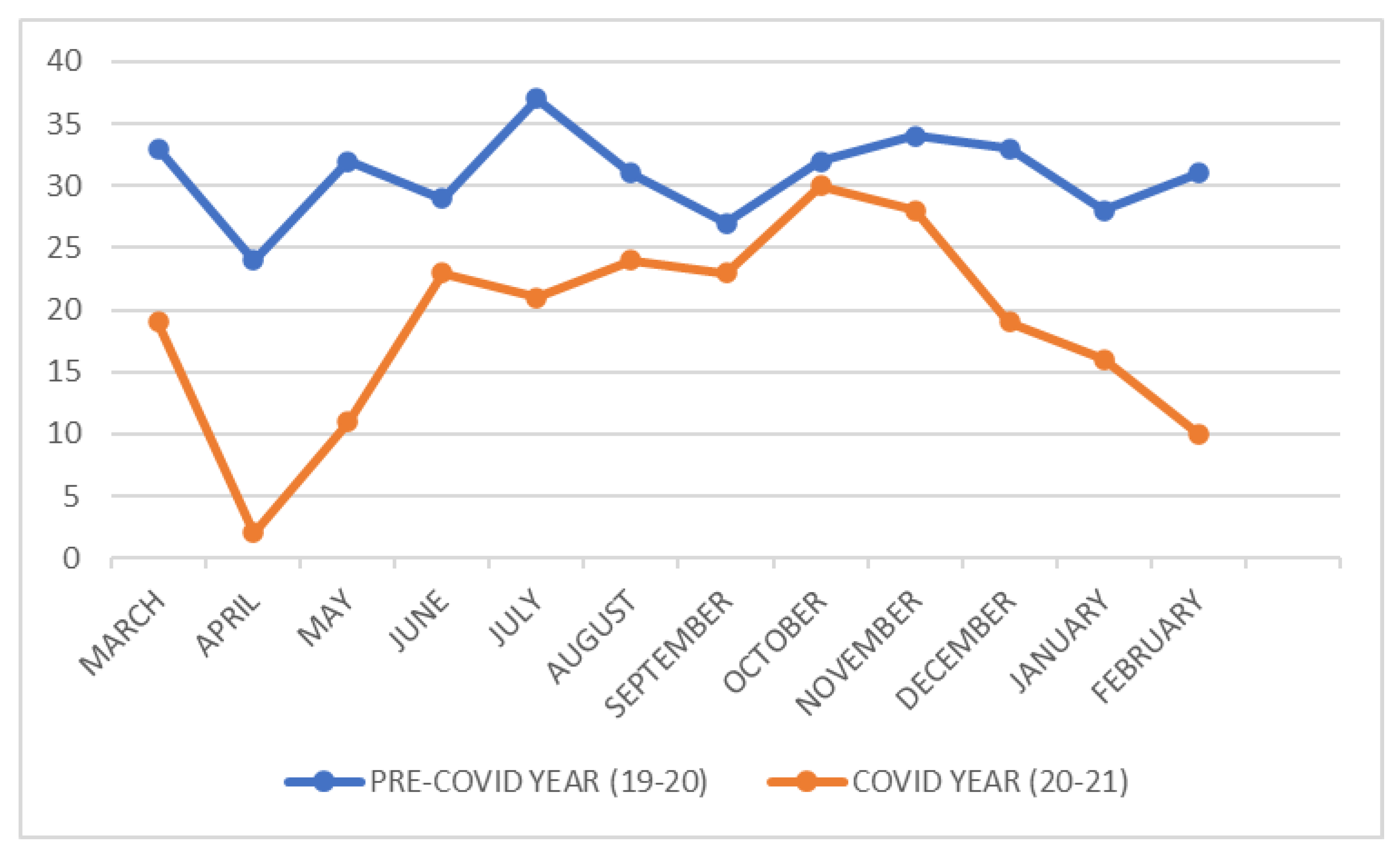
Figure 2.
Proportional cause of facial trauma during pre-COVID year and COVID year.
Figures 3 and 4.
Fracture site during pre-COVID year and COVID year.
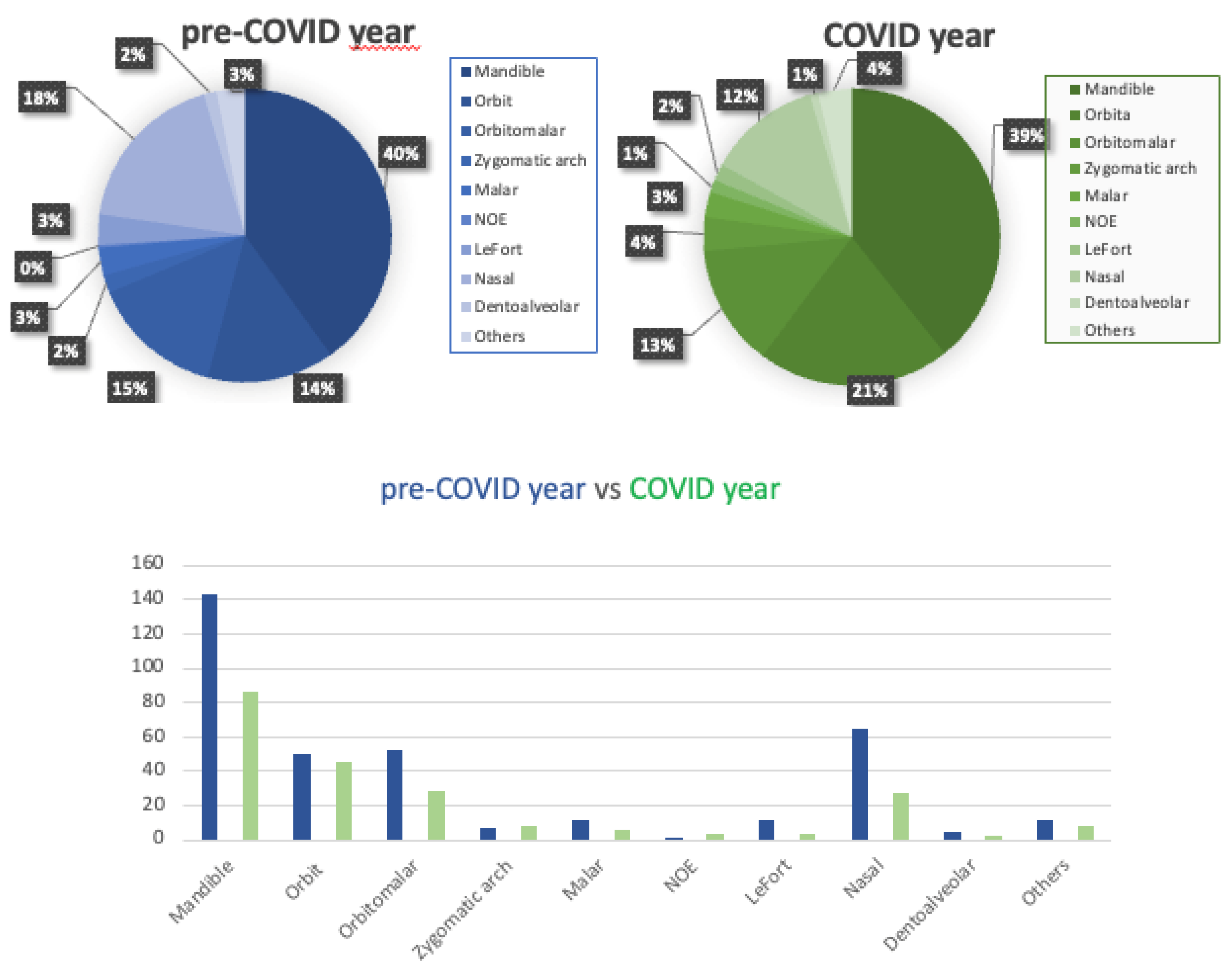
Figure 5.
Surgical treatment during pre-COVID year and COVID year.
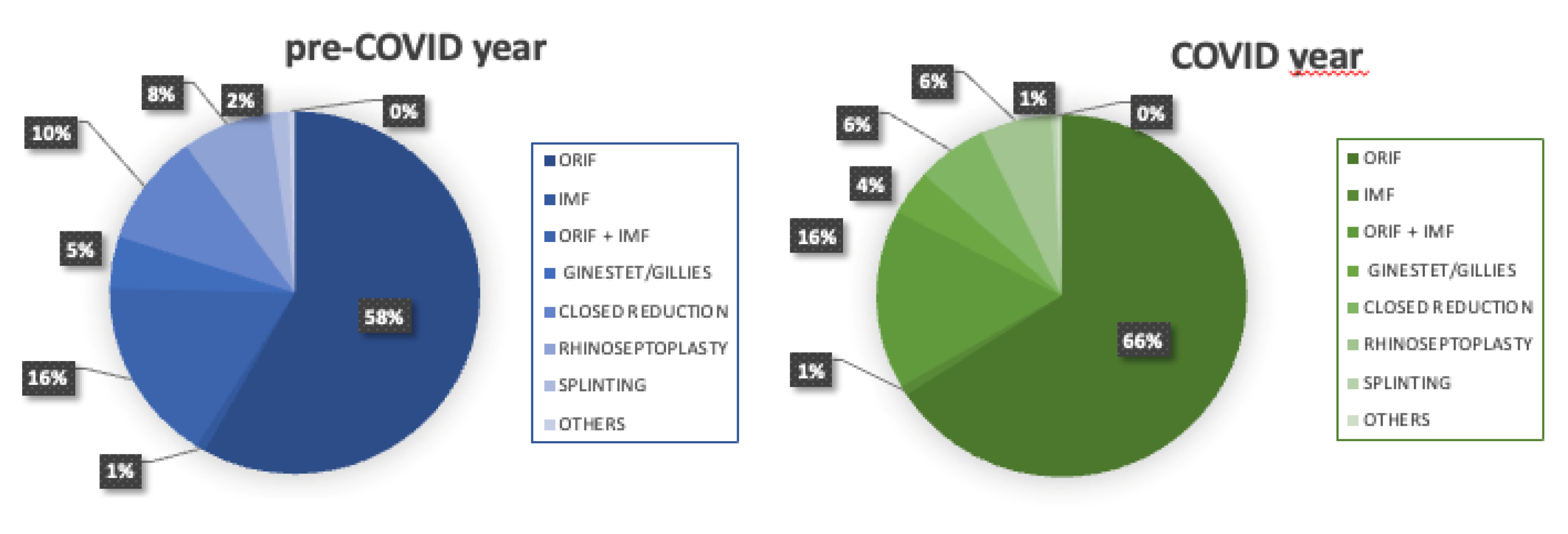

Table 1.
Summary of patient’s characteristics, fracture mechanism, bone fractured, and treatment given. Statistical significance p-value <0.05.
Table 1.
Summary of patient’s characteristics, fracture mechanism, bone fractured, and treatment given. Statistical significance p-value <0.05.
 |
Disclaimer/Publisher’s Note: The statements, opinions and data contained in all publications are solely those of the individual author(s) and contributor(s) and not of MDPI and/or the editor(s). MDPI and/or the editor(s) disclaim responsibility for any injury to people or property resulting from any ideas, methods, instructions or products referred to in the content. |
© 2024 by the authors. Licensee MDPI, Basel, Switzerland. This article is an open access article distributed under the terms and conditions of the Creative Commons Attribution (CC BY) license (https://creativecommons.org/licenses/by/4.0/).
Copyright: This open access article is published under a Creative Commons CC BY 4.0 license, which permit the free download, distribution, and reuse, provided that the author and preprint are cited in any reuse.


