

Submitted:
30 April 2023
Posted:
30 April 2023
You are already at the latest version
Abstract
In an increasingly resource-constrained era, the utilization approach of waste and by-products from grain processing, is attractive widely, considering both nutritive value and economic aspects and move towards more sustainable food systems. Following the fundamentals of a circular economy, the need of the hour lies in its effective utilization as a grain waste and by-products conversion into value-added products in food industry. The aim of this study is twofold: 1. Understanding the progress of grain waste and by-products to valorization in human nutrition, using bibliometrics; different literature databases namely Google Scholar, Web of Science and Elsevier Scopus have been evaluated for their merits and values; 2. Exploration of knowledge-based strategies, by reviewing the literature concerning the possible use of grain waste and by-products for food processing industry, reducing burden on virgin raw materials. The review allowed to unlock the latest-advances of upcycling side streams and waste from grain processing industry.
Keywords:
grain waste
; grain by-products
; valorization
; circular economy
1. Introduction
In the era of anthropogenic wastes generation, the exponential increase of need to fulfill the nutritional basis of humans, has prompted the scientific community to study growing themes and hot issues regarding this global challenge.
Worldwide, the human diet is filled by staple cereals obtained from seeds of Gramineae family such as wheat (Triticum spp.), corn or maize (Zea spp.), barley (Hordeum spp.), rice (Oryza spp.), rye (Secale spp.), oat (Avena spp.), millet (Pennisetum spp.), sorghum (Sorghum spp.) and a hybrid of wheat and rye, namely triticale (x Triticosecale Wittmack). The cereal grains contribute significantly to the global food pool in terms of global food security and nutrition. Most cereals are staple source for different amounts of proteins, fats, minerals and vitamins, and also are an important provider of dietary energy [1]. In total, the percentage of dietary energy provided by cereals appears to have remained relatively the same over time, representing about 50% of dietary energy supply [2,3]. Worldwide, for over 1 billion people, maize is a staple and its grain energy contribution to the diet can exceed 50% [4]; in second place as cultivated areas and human consumption, wheat represents almost 20% of the total dietary calories and proteins globally [5]; rice contributes 20% of global calories and is an important source of minerals, vitamins and not in the last place, bioactive phytochemicals and essential food components contained in bran [6].
Worldwide, corn is the most cultivated and used plant, being a basic ingredient in many gastronomic cultures, in addition to being important in animal feed, in the production of biofuel and many other industrial uses. As staple food, it is estimated that its production is over 1136.3 million metric tons (from Sep.2020, to Aug.2021), which is much more than wheat production (776.8 million metric tons) or rice production (504.4 million metric tons) [7]. In the latest revised forecast for globally, according to the FAO, the total production of cereals in 2022 stands at the value of 2,774 million tonnes, at the value of 1.3% less than the previous year [8].
The forecast for global cereal utilization in 2022/23 is 2 780 million tonnes and is not only pointing to a decline of 0.6 percent below the 2021/22 level, but it is above the 2022 total cereal production [8]. One of the reasons that triggered bibliographic research is the fact that, according to the latest data, published by the FAO in March 2023 (Figure 1), this excess of cereal consumption, more than the quantity produced, the demand and stocks, is predicted. Therefore, under the conditions of an increased demand for resources to feed a continuously growing population, solutions must be sought for the use of all natural sources, making the most of their potential. With this desire, the United Nations established in 2015, the Sustainable Development Goal 12, to “Ensure sustainable consumption and production patterns”. Therefore, target 12.3, which refers to food waste, stipulates that by 2030, per capita global food waste at the retail and consumer levels will be halved and food losses from the production flow will be reduced along with those from the supply chains, including post-harvest losses. The European Commission consider food waste as a priority area, in order to achieve the Sustainable Development Goal target in the European Circular Economy Action Plan [9]. In addition, the European Commission amended the Waste Framework Directive 2008/98/EC, establishing as mandatory the monitoring and reporting of food waste by member states in order to establish a baseline for monitoring the achievement of waste reduction objectives food and help identify relevant food waste streams to be utilized in a circular economy perspective [9]. In the European Union, the main grains processed are wheat, maize, rice, rye, barley and oat and their products, in the order shown in Figure 2, depending on the quantity, from 2010 to 2020.
Grain processing must and can be a sustainable option to convert waste and by-products into value-added resources for Food Industry and the need of valorization is instrumental for advocating Circular Economy. So, the other reason of this review seeks to provide an overview of Food Industry sustainable applications from the recovery and reutilization of cereal processing underutilized waste and by-products.
Humanity must develop and apply innovative methods on industrial scale, for the recovery of food waste, instead of its disposal. Currently, only conventional methods are applied on industrial scale, providing animal feed, biofuel production, or composting, which represents only a partial utilization of cereal processing waste.
2. Bibliometric Analysis
A bibliometric analysis was performed to identify, screen and analyze published research articles and reviews [10]. The aim was to retrieve and select those papers that investigate and define the current state of the art on grain by-products and grain waste recovery, with benefits for Food Industry, in order to evaluate the research trends based on literature in the Google Scholar, Web of Science and Elsevier Scopus databases, over the last decade (since 2012, until 2023). To ensure the quality of the research [11] , were selected only peer-reviewed articles. Criteria used for article selection were title, abstract, keywords, and document type limited to "articles" and "reviews," as well as year of publication from 2012 to 2023. The investigation took place in February 2023 using the terms ‘Grain AND Waste AND By-products’. The list obtained after the initial search was screened by reading the title and abstract (duplicates were excluded and also were excluded articles that only consisted of an abstract), following a full-text reading. All articles and reviews about grain waste and/or grain by-products were included, while other, not relevant papers were discarded. After database exploring, a flowchart was produced, summarizing the obtained results (Figure 3).
Following the bibliometric analysis, 520 works represented by full research articles and reviews were selected, of which 228 (44%) were published starting from 2019.
Measurements of the quality and quantity of the scientific production [12] were accomplished using VOS Viewer science mapping software tool [13]. Previously, selected data for VOS Viewer supported files types (Web of Science and Elsevier Scopus) were exported to Microsoft 365 Excel and then saved on .txt format. After a bibliographic coupling analysis (the relatedness of items is based on the number of references they share), the articles and reviews from the search, were assessed and classified according to average of documents per year (for the last decade) and distribution by journals, depicted in Figure 4. There is an increase in the number of articles related to the use of waste resulting from grain processing, starting with 2018, according to the red circles, whose diameter is proportional to the number of articles published per year, in the most productive journals, in the field. This is due to the continuous concerns at the level of the European Union, but also at the world level, regarding the regulations and also the scientific approach, to facilitate the use and valorization of grain waste and by-products from the food chain, without compromising food and feed safety.
The top of 16 most productive journals, is ranked in Table 1, with the aim to display the results more conveniently, not only in terms of the number of articles related to grain waste conversion, but also the number of related citations.
A word cloud related by searched keywords is represented by Figure 5. The font size of the given keywords means the number of times it appears in literature records. The most numerous occurrences are naturally represented by the keywords (grain waste and by-products), but also by the terms used most often in the management of waste resulting from grain processing, such as ‘circular economy’, ‘food waste’, ‘biomass’, ‘brewers spent grain’, ‘phenolic compounds’, ‘dietary fiber’, ‘pretreatment’, ‘extraction’.
Grain waste and by-products resulted across the technological chain can have a negative impact ecologically, socially and economically. Upcycling grain process side streams and waste into ingredients with added value for food, represents a challenge in ensuring increased stability of food supply chain, in the conditions of global political insecurity, severe climate change and continuously demographic growing. As a consequence, the academic world reported an increase in the number of researches during the last twenty years, related to cereal by-products and wastes [14]. This significant increase in the number of research and review articles in the field of waste recovery from cereal processing, must be closely related to the unitary legislative and food safety measures.
3. It is waste, only if we waste it!
The growing demand for food, as a result of the increase in the global population, is directly related to the growth in the amount of food waste [15]. Food waste was defined by Food and Agriculture Organization of the United Nations (2019) according to the following two indices:” Food Loss Index represented by food lost in production or in the supply chain before it reaches the retail level and Food Waste Index regarding food that is subsequently wasted by consumers or retailers”. 14% of the world’s food is lost before it reaches the retail level [16]. Food losses also include food processing by-products, which result as side streams during the obtaining of final products, in all sectors of the food industry [17,18].
Grain processing generates approximately 12.9% of all food waste worldwide [19]. Figure 7 shows the cereal losses on the last decade, according to FAOSTAT online database, for the main cereals processed in European Union, namely wheat, maize, rice, rye, barley and oat, in descending order of quantities.
Although they are rich in nutrients, cereal waste and by-products are mainly used in animal feed, the production of biofuels, or discarded. Nowadays, the grain processing industry is striving not only for the reduction of the volume of waste and by-products, but also for the sustainable valorization of the existing ones, through the recovery of compounds with added value, useful in the food industry.
The waste and by-products arise during dry milling (which, mainly, produce flour), wet milling (dedicated mainly for starch and glucose production) and brewing process. These cereal waste and by-products may be used for the extraction of bioactive compounds or may be directly used with some modifications for different purposes [20]. Food applications often try to utilize the by-product as whole, whereas within a biorefinery concept, the strategy targets specific compounds [18].
3.1. Conventional milling, the major supplier of grain losses, reused in Food Industry
Milling process has two ultimate aims: first, to provide the specified product quality and, second, to efficiently separate the main parts of the grain (bran, germ and endosperm).
First steps of milling, such as grading, storage, cleaning and conditioning are the source of grain waste represented by damaged grains (shrunken, broken, puny or sprouted grains), wild plants seeds, substandard grains (predominantly starchy), chaff, remnants of straw and weeds (with a predominance of fiber), dust. The main stages of cereal dry milling, represented by breaking, grinding and sieving, produce side streams like germ, bran and middling (Figure 8).
Unlike dry milling, wet milling consists of grinding the soaked grains and then separating the chemical compounds of the grains (starch, protein, fiber and oil) [21]. According to Serna Saldivar [22], industrial-scale wet milling of rye, barley and oats is very limited or practically non-existent today, because the extraction of starch from rye is difficult due to its higher pentosan content and low gluten forming capacity; in the same way, wet milling of oats is limited due to difficulties in fully separating the starch because of the hydrated bran and protein layers [21].
3.1.1. Dust
Beside impurities and extraneous matter disposed on the first steps of milling process, there are large amounts of dust generated during grain brushing and filtration process. There are studies on the feasibility of using organic residues from the milling industry as a fibrous component for bio composite materials and as a culture medium for a microbial cellulose with the aim to develop bio-packaging and bio-disposable items for the Food industry [23]. Awareness to reduce the environmental impact of single-use plastic items has led to the investigation of alternatives to fossil-based polymers and the exploration of the opportunities offered by green polymers [24] . There are tests done with lignocellulosic wastes from milling, such as rice husk, for their use as fillers for bio composites as a material used in food packaging and the production of disposable plates [25] . A procedure reported by Torres et all by which starch was extracted from the potato peel (a by-product of food processing), resulted in obtaining a matrix; to reinforce this starch-based matrix obtained from food waste, wheat dust was tested as a filler [26]. The experimental result consisted of biodegradable plate-shaped materials for food use. The opportunity of using wheat dust as a cheap raw material for bacterial cellulose culture medium was also explored [23], using a static cultivation method [27]. As a result of the experimental approach, a biofilm was obtained, used as plant-derived cellulose to obtain a biodegradable food packaging.
3.1.2. Grain bran and germ
Worldwide, the annual production of grain bran, obtained as a by-product of grain milling, is about 150 million tons [28], which represents 3–30% of the weight of the kernel in case of dry milling. Also, by-products of the dry grinding of cereal grain, are hulls, husks (4–14%), germ, broken grains (6–13%) and powders (7–12%) [29]. The most used of these by-products as a food ingredient are cereal bran, especially in bakery products, and its inclusion was specifically aimed at increasing the dietary fiber content, by replacing part of the flour in bread, muffins, shortbread cookies and cakes [30].
Maize bran as a milling by-product (60–70 g/kg) represents a low-cost source of dietary fiber and natural dietary antioxidants [31]. Often, in the production of bread, the high presence of fiber in the bran and the co-presence of lipids and lipase in the germ is considered a disadvantage. Due to the use of fermented by-products, through the fermentation of lactic bacteria (Lactobacillus plantarum and Weissella confusa), as ingredients, the nutritional, textural and sensory properties of wheat bread (containing 25% fermented by-products) have been improved, in the sense of a higher concentration in dietary fiber and proteins of 11 and 13% of the dry matter, of a significant increase in protein digestibility (up to 60%) and a relevant decrease in the starch hydrolysis index (13%) [32].
Maize germs from dry and wet milling processes are used in the food industry for the extraction of edible oil. For the recovery of edible oil, from the germ fraction obtained after dry milling of corn, mechanical screw presses or a combination of screw presses and solvent extraction are used [21]. In the case of bread fortification with corn germ protein hydrolyzate (1%–4%), an improvement in bread texture was demonstrated, by reducing hardness and chewiness during storage [33]. By-products rich in fiber, protein and antioxidants, obtained from the processing of corn starch, can also be added as low-calorie and low-cost agents in food products to partially replace fat or sugar [34]. A recent study concluded that dietary fiber from corn bran can be added to emulsion-based meat products without reducing their sensory and textural quality [7]. Corn bran (5-15 g) added to chicken nuggets improved the texture of the products, in terms of firmness and hardness, directly proportional to the amount of bran added [35]. Another study demonstrated that by replacing lean meat with 3% corn bran, chicken sausages had improved acceptability, higher dietary fiber content, and a longer shelf life [36].
Adding wheat bran to flour is considered a way to improve the nutritional value of bakery products. One of the negative effects of this addition of wheat bran is the fact that a high content of insoluble dietary fibers will affect the quality of the bakery products, namely their color will be darker after the baking process, the texture will be coarse and the volume will be reduced, which leads to limitations in its application [37]. Wheat bran slows down the formation of the gluten network, if too high a percentage is added. But by adding up to 24% bran content, the dough development time was increased. Another positive consequence of adding wheat bran to flour is the decrease in the electricity consumption required during mixing and the maximum power consumed, due to the weakening of the gluten structure. Regarding dough rheology, the stickiness and extensibility decreased with the increase in the amount of bran. Wheat bran added-flour improved dough aeration during mixing and dough expansion rate during fermentation. As a downsize, adding wheat bran decreased the specific volume of bread up to 10.81%, because wheat bran changes the pore size distribution in the crumb [38]. Wheat bran aqueous extracts obtained by ultrasound-assisted technology, have been used in pasta-making; the study found that enriched pasta had significantly higher antioxidant activity and improved sensory properties than control sample pasta [39]. In the case of meat food products, chicken sausages treated with 6% wheat bran showed a significant increase in gumminess and chewiness; the sensory acceptability of sausages to which 3% fiber was added was comparable to the control sample, but a further increase in fiber level resulted in a decrease in sensory acceptability [40].
Wheat germ is another major by-product of wheat milling. Although it is rich in bioactive components, it has rarely been used in food composition, mainly because of its high lipid content, which makes it subject to rancidity and reduced shelf life [41]. In another study, wheat flour bread was fortified with 15% fermented milling by-products (using Lactobacillus plantarum and Lactobacillus rossiae), using a dough composed of wheat germ and bran, obtaining a product with 6.53% dietary fiber, which means 5% more than in wheat flour bread [42]. The glycemic index in vitro and, especially, in vivo was lower for fortified bread, reaching 36.9%, a value far below the threshold required for a food product to be considered "low glycemic index” [42].
Compared to other cereals, rice is mainly consumed as a whole grain. Therefore, the rice milling industry focuses on reducing the percentage of broken grains, so that apart from the rice bran, there is no significant waste and by-products to be reused in the food industry. Rice is an important food ingredient in Asia, so there is commercial use also for rice bran as main by-product of rice processing. For example, there is a Japanese dish made from fermented rice bran called “Nukazuke”, basically it is a pickling dish prepared from a rice bran bed combined with different vegetables for improved flavor [43]. An important source of edible oil is rice bran, which can represent up to 20% of its weight [44]. Recent study indicated that substituting stabilized rice bran (after grinding a stabilization process is required to prevent rancidity) for wheat flour, resulted in a significant increase in total antioxidant activity, total dietary fiber content, ashes and bioactive compounds, however, the results indicated that up to 15% replacement of wheat flour affects the overall physical properties of the dough and the sensory attributes of the bread [45]. Stabilized rice bran improves the nutritional value, the texture characteristics and promoting bakery and pastry products that contribute to a healthy diet, such as biscuits [46,47] and muffins [48]. Another study concluded to application of the probiotic L. casei strain with rice bran, in yoghurt formulations: probiotic viability was higher as the amount of rice bran added increased (3%); rice bran enrichment resulted in an increase in water holding capacity and pH and a decrease in syneresis and viscosity values, however, rice bran yogurts had lower sensory scores compared to plain yogurt [49].
Bread containing up to 10% oat bran had acceptable properties [50] . For a higher oat bran percentage, with the intention of improving the quality of bread incorporated with 15% oat bran, individual and combined enzymes were used. In this study, to improve the rheological behavior of the dough during the bread making process, three enzymes were used: α-amylase, xylanase and cellulase [51]. A similar study stipulates that 15% oat bran added to wheat flour dough for, with an enzyme combination (α-amylase and xylanase) can significantly improve the quality of Chinese steamed bread [52]. A recent study reported the effect of adding oat bran to spaghetti pasta dough, from the point of view of cooking quality, product digestibility, antioxidant, nutritional and textural characteristics; pasta dough obtained by replacing 50% durum wheat semolina with oat bran resulted in higher cooking losses and higher water absorption index compared to the control sample prepared with 100% durum wheat semolina; also, it has been reduced the caloric content and the digestibility of its starch components, so it may represent a healthy option for food diets [53].
Rye is the cereal used predominantly in the diet of the peoples of northern Europe and it is often used as whole meal flour in the manufacture of bakery products [54]. Rye bran is a by-product of milling and can be used as a valuable additive to increase the nutritional and health properties of food [55].
3.2. Brewing process and its wastes
The brewing process generates three intrinsic wastes: the brewers spent grain (BSG), the hot trub and the residual yeast. Approximately 85% of total by-products generated by brewing industry is represented by brewers spent grain. As the main by-product, brewers spent grain is rich in cellulose and non-cellulosic polysaccharides and is the result of mashing process, which is one of the early stages in the distillery, with the role of solubilizing the malt and cereal grains to ensure proper extraction of the wort (water with the extracted matter) [56].
Brewers' spent grain consists of husk, pericarp and seed layers with residual amounts of endosperm and aleurone from barley, used mainly as raw material [57]. Due to its properties and content of essential nitrogen-containing nutrients, it is mainly sold as animal feed, but brewers' spent grain has also been shown to have a desirable nutritional value for the human diet as well [58]. Several researches have shown that brewers' spent grain can successfully been incorporated into flour used for production of bread, waffles, cookies (40% of brewers' spent grain into flour), breakfast cereals, pasta, pancakes or tortillas; the obtained results have revealed that the addition of brewers' spent grain to wheat flour bread, increases the amount of fiber and changes the fat content of the product, increases the water holding capacity and texture of the products and gives to the product a slightly sweeter taste [59,60,61,62,63]. The addition of brewers' spent grain does not adversely affect the sensory characteristics and physicochemical quality indicators of meat products, moreover, it enhances the health-promoting properties of food, such as meat sausages [64,65].
Hot trub is another brewing process by-product, represented by sediments formed in the brewing process during the boiling of the wort and is the least used by-product in the food industry due to the bitterness that comes from its ingredients [58]. There are studies focused on the development of an extraction process that leads to the reduction of the bitter taste, without changing the characteristics, even improving them; as a result, hot trub with modified composition and functionality can be used in the food industry to enrich high-fat products or as an alternative source of plant-based proteins [66].
The use of the third brewery by-product, the spent yeast, is reduced due to the presence of hops in the boiled wort which gives a strong bitter taste, although there are methods to mitigate this taste [67] . There are also studies about food products with brewer’s spent yeast used as food additive. This by-product has also been used in addition-fortified vegan cakes, resulting in higher vegetable protein, lipid and carbohydrate content [68]. According to another study, experiments were made in which spent dry yeast was added as an ingredient to homemade bread, which resulted in an increase in β-glucan intake [69]
4. Added-value Compounds for Food Industry
Grain processing wastes and by-products can be used not only directly incorporated in food products, but also for the extraction of value-added compounds that can be introduced into the production process in the food industry as functional food ingredients (Figure 9). The treatment of cereal industrial waste consists in physico-chemical and biological methods, but at high conversion costs [70]. Therefore, the extraction and use of these valuable compounds are less applied on an industrial scale in the food industry and more in biorefineries for conversion into fuel as a renewable source of energy.
Currently, cereal by-products have been linked to health promotion, due to their content rich in fiber, minerals, vitamins, phenolic compounds, phytosterols, policosanols and other phytochemicals responsible for reducing oxidative stress, mediating the inflammatory process and the excretion and absorption of lipids [71]. That is why the researches related to the recovery of the biological compounds from grain processing waste and by-products are also addressed to the benefits brought to the improvement of products in the food industry.
4.1. Carbohydrate fraction
The grain processing chain generates significant amounts of waste known as lignocellulosic biomass [9,72]. Of the total agricultural waste, 20–35% is hemicellulose, a dietary fiber that represents the most promising source for valuable applications [73]. Industrial scale applications of hemicelluloses are still underutilized at this point [74]. Hemicellulose demonstrates excellent properties, including biodegradability, biocompatibility, bioactivity, which enable it to be applied also in food industry [75]. Grain wastes that include carbohydrate fractions, especially hemicelluloses, are bran, straw, hulls/husks. The extraction of hemicelluloses (such as arabinoxylans and β-glucans) from the cell walls, fractionation and purification can lead to use in various food applications. Extraction process is possible through four main types of methods: water extraction which can be done at low temperatures or at high temperatures, chemical extraction (with acids, alkalis or organic solvents), specific enzymes extraction or mechanical treatments (microwave, ultrasound, extrusion) [73,76]. There are studies that demonstrated that it is possible to add impure hemicellulose fractions to food products to improved sensory and chemical properties; for example, according to a study, the addition of 0.15% and 0.30% nixtamalized corn bran can increase the antioxidant capacity, phenolic content and physicochemical properties of frankfurter sausages [77].
Organic acids (lactic and succinic acids), another carbohydrate fraction, obtained by fermentative production are used as acidulant, flavoring agent or as preservative in the food industry [78].
4.2. Non-carbohydrate fraction
The food industry mainly exploits the non-carbohydrate fraction represented by proteins and phenolic compounds extracted from grain processing waste and by-products.
The protein extracted from corn by-products has a unique structure, molecular shape and solubility, forming a uniform, transparent and soft film with good oil and water retention, characteristics that make it useful in food preservation [7]. One of the best potential sources of vegetable protein for the food industry is brewers' spent grain, due to its high protein content which represents about 20% in dry matter [79]. The food industry can benefit from the use of protein hydrolysates as texture improvers and as food additives [80].
Phenolic compounds can be found mainly in bran, so after its separation from the grain, an extraction process is required. The extraction of polyphenols from cereal by-products can be done with different techniques, such as: acid and alkaline hydrolysis [81,82], ultrasound assisted extraction [83,84] microwave assisted extraction [85], extraction with supercritical carbon dioxide [86], extraction by steam explosion treatment of grain by-products [87], enzymatic hydrolysis [88]. Wheat and oat bran contain the main phenolic compounds, represented by phenolic acids (ferulic acid, caffeic acid, vanillic acid, p-coumaric acid, dihydroxybenzoic acid and avenanthramide) and flavonoids sub-classes [89]. In rye bran, the most important phenolic compounds, important for antioxidant activity, include the group represented by p-hydroxybenzoic acid and its derivatives (especially vanillic and syringic acid) and the group represented by p-coumaric acid and its derivatives (ferulic and caffeic acid) [90]. Phenolic acids as antioxidant recovered compounds from grain waste and by-products, are used in the food industry as additives to extend the shelf life of food [91]. Vanillin produced through biotechnical processes from ferulic acid, it is very often used as a flavoring in the food industry [78].
5. Conclusions
Food sustainable consumption and production is an important target of circular economy, in order to sustain the livelihoods of current and future generations. In this direction, upcycling of food processing by-products and waste, is a primary duty of humanity, for securing the food supply chain of an increasing world population, due to inevitable diminishing of fossil resources.
The large volume of the low-cost by-products and waste from grain processing, gives economical advantage of its potentially valuable components for food industry benefits. The review of the literature about grain waste and by-products recovery and industrial applications in the food industry, showed that the majority of the researches focus on restricted examples and pilot-scale laboratory experiences, which are currently too costly to upscale, while just few cases contain data about economic and technical feasibility on existing full-scale studies. Main application on an industrial scale, consist in direct incorporation of grain by-products waste together with classic ingredients from the bakery, meat and dairy industries, in order to improve the nutritional, rheological or sensory properties of the final product. The review highlighted the use of grain waste and by-products mainly as additives, for texture improvement, acidulant, flavoring agent, as preservative in the food production or as biodegradable materials and biofilm for food package.
More insights and more in-depth investigations are needed to explore the applications that involve the added-value compounds from grain by-products and waste, for the production of food; there is an imperative need to develop new and innovative technologies for efficient treatment and extraction, on industrial scale and fulfill the ‘zero waste economy’ principles.
Not many specific case studies in the field of grain processing, are related to logistic concerns of industrial symbiosis, for example: the quantitative and qualitative indicators of grain processing waste and by-products obtained by a company, the geographical distribution of possible beneficiary from that grain losses, worldwide same regulatory restrictions, safety concerns, well established logistics associated with grain waste collection, transport and handling. Improving the efficiency of the food value chain could also help bring down the cost of food products directed for human consumption.
Author Contributions
Conceptualization, C.A.D. and A.T.; methodology, C.A.D.; software, C.C.; validation, C.A.D., A.T. and M.A.S.; formal analysis, M.A.S.; investigation, I.A.; resources, M.A.S.; data curation, A.T.; writing—original draft preparation, I.A.; writing—review and editing C.A.D.; visualization, C.C.; supervision, C.A.D.; project administration, C.A.D.; funding acquisition, C.A.D. All authors have read and agreed to the published version of the manuscript.
Funding
This research was funded by MOARA CIBIN SA, grant number 141/2023.
Conflicts of Interest
The authors declare no conflict of interest. The funders had no role in the design of the study; in the collection, analyses, or interpretation of data; in the writing of the manuscript; or in the decision to publish the results.
References
- Poole, N.; Donovan, J.; Erenstein, O. Viewpoint: Agri-nutrition research: Revisiting the contribution of maize and wheat to human nutrition and health. Food Policy 2021, 100, 101976. [Google Scholar] [CrossRef] [PubMed]
- 3. Global and regional food consumption patterns and trends. Available online: https://www.fao.org/3/ac911e/ac911e05.htm (accessed on 6 March 2023).
- Guerrini, A.; Burlini, I.; Lorenzo, B.H.; Grandini, A.; Vertuani, S.; Tacchini, M.; Sacchetti, G. Antioxidant and antimicrobial extracts obtained from agricultural by-products: Strategies for a sustainable recovery and future perspectives. Food Bioprod. Process. 2020, 124, 397–407. [Google Scholar] [CrossRef]
- Poole, N.; Donovan, J.; Erenstein, O. Viewpoint: Agri-nutrition research: Revisiting the contribution of maize and wheat to human nutrition and health. Food Policy 2021, 100, 101976. [Google Scholar] [CrossRef] [PubMed]
- Shiferaw, B.; Smale, M.; Braun, H.-J.; Duveiller, E.; Reynolds, M.; Muricho, G. Crops that feed the world 10. Past successes and future challenges to the role played by wheat in global food security. Food Secur. 2013, 5, 291–317. [Google Scholar] [CrossRef]
- Fukagawa, N.K.; Ziska, L.H. Rice: Importance for Global Nutrition. J. Nutr. Sci. Vitaminol. 2019, 65, S2–S3. Available online: http://www.riceassociation.org.uk/content/1/18/types- (accessed on 8 April 2023). [CrossRef] [PubMed]
- Zhang, R.; Ma, S.; Li, L.; Zhang, M.; Tian, S.; Wang, D.; Liu, K.; Liu, H.; Zhu, W.; Wang, X. Comprehensive utilization of corn starch processing by-products: A review. Grain Oil Sci. Technol. 2021, 4, 89–107. [Google Scholar] [CrossRef]
- FAO Cereal Supply and Demand Brief | World Food Situation | Food and Agriculture Organization of the United Nations. Available online: https://www.fao.org/worldfoodsituation/csdb/en/ (accessed on 6 March 2023).
- Teigiserova, D.A.; Bourgine, J.; Thomsen, M. Closing the loop of cereal waste and residues with sustainable technologies: An overview of enzyme production via fungal solid-state fermentation. Sustain. Prod. Consum. 2021, 27, 845–857. [Google Scholar] [CrossRef]
- Thürer, M.; Tomašević, I.; Stevenson, M.; Qu, T.; Huisingh, D. A systematic review of the literature on integrating sustainability into engineering curricula. J. Clean. Prod. 2018, 181, 608–617. [Google Scholar] [CrossRef]
- Zabaniotou, A.; Kamaterou, P. Food waste valorization advocating Circular Bioeconomy - A critical review of potentialities and perspectives of spent coffee grounds biorefinery. J. Clean. Prod. 2019, 211, 1553–1566. [Google Scholar] [CrossRef]
- Gutiérrez-Salcedo, M.; Martínez, M.A.; Moral-Munoz, J.A.; Herrera-Viedma, E.; Cobo, M.J. Some bibliometric procedures for analyzing and evaluating research fields. Appl. Intell. 2018, 48, 1275–1287. [Google Scholar] [CrossRef]
- Jan van Eck, N.; Waltman, L. VOSviewer Manual. 2023. [Google Scholar]
- Skendi, A.; Zinoviadou, K.G.; Papageorgiou, M.; Rocha, J.M. Advances on the Valorisation and Functionalization of By-Products and Wastes from Cereal-Based Processing Industry. Foods 2020, 9, 1243. [Google Scholar] [CrossRef] [PubMed]
- Belc, N.; Mustatea, G.; Apostol, L.; Iorga, S.; Vlăduţ, V.-N.; Mosoiu, C. Cereal supply chain waste in the context of circular economy. [CrossRef]
- MOVING FORWARD ON FOOD LOSS AND WASTE REDUCTION FOOD AND AGRICULTURE. 2019. Available online: www.fao.org/publications (accessed on 8 March 2023).
- Processing of Cereals and Derived-By-Products | Encyclopedia MDPI. Available online: https://encyclopedia.pub/entry/2020 (accessed on 4 April 2023).
- Roth, M.; Jekle, M.; Becker, T. Opportunities for upcycling cereal byproducts with special focus on Distiller's grains. Trends Food Sci. Technol. 2019, 91, 282–293. [Google Scholar] [CrossRef]
- Fărcaș, A.C.; Socaci, S.A.; Nemeș, S.A.; Pop, O.L.; Coldea, T.E.; Fogarasi, M.; Biriș-Dorhoi, E.S. An Update Regarding the Bioactive Compound of Cereal By-Products: Health Benefits and Potential Applications. Nutrients 2022, 14, 3470. [Google Scholar] [CrossRef] [PubMed]
- Tufail, T.; Ain, H.B.U.; Saeed, F.; Nasir, M.; Basharat, S.; Mahwish; Rusu, A.V.; Hussain, M.; Rocha, J.M.; Trif, M.; et al. A Retrospective on the Innovative Sustainable Valorization of Cereal Bran in the Context of Circular Bioeconomy Innovations. Sustainability 2022, 14, 14597. [Google Scholar] [CrossRef]
- Papageorgiou, M.; Skendi, A. Introduction to cereal processing and by-products. Sustainable Recovery and Reutilization of Cereal Processing By-Products 2018, 1–25. [Google Scholar]
- Serna-Saldivar, S. O. Wet-Milling Processes and Starch Properties and Characteristics. Cereal Grains 2020, 185–204. [Google Scholar] [CrossRef]
- Comino, E.; Dominici, L.; Perozzi, D. Do-it-yourself approach applied to the valorisation of a wheat milling industry's by-product for producing bio-based material. J. Clean. Prod. 2021, 318, 128267. [Google Scholar] [CrossRef]
- Ahmadzadeh, S.; Khaneghah, A. M. Role of Green Polymers in Food Packaging. Encyclopedia of Renewable and Sustainable Materials 2020, 305–319. [Google Scholar] [CrossRef]
- Sánchez-Safont, E.L.; Aldureid, A.; Lagarón, J.M.; Gámez-Pérez, J.; Cabedo, L. Biocomposites of different lignocellulosic wastes for sustainable food packaging applications. Compos. Part B: Eng. 2018, 145, 215–225. [Google Scholar] [CrossRef]
- Torres, M.D.; Fradinho, P.; Rodríguez-Seoane, P.; Falqué, E.; Santos, V.; Domínguez, H. Biorefinery concept for discarded potatoes: Recovery of starch and bioactive compounds. J. Food Eng. 2020, 275, 109886. [Google Scholar] [CrossRef]
- Azeredo, H.M.C.; Barud, H.; Farinas, C.S.; Vasconcellos, V.M.; Claro, A.M. Bacterial Cellulose as a Raw Material for Food and Food Packaging Applications. Front. Sustain. Food Syst. 2019, 3. [Google Scholar] [CrossRef]
- Duţă, D. E.; Culeţu, A.; Mohan, G. Reutilization of cereal processing by-products in bread making. Sustainable Recovery and Reutilization of Cereal Processing By-Products 2018, 279–317. [Google Scholar] [CrossRef]
- Salazar-López, N. J.; Ovando-Martínez, M.; Domínguez-Avila, J. A. Cereal/Grain By-products. Food Wastes and By-products 2020, 1–34. [Google Scholar] [CrossRef]
- Melini, V.; Melini, F.; Luziatelli, F.; Ruzzi, M. Functional Ingredients from Agri-Food Waste: Effect of Inclusion Thereof on Phenolic Compound Content and Bioaccessibility in Bakery Products. Antioxidants 2020, 9, 1216. [Google Scholar] [CrossRef] [PubMed]
- Hussain, M.; Qamar, A.; Saeed, F.; Rasheed, R.; Niaz, B.; Afzaal, M.; Mushtaq, Z.; Anjum, F. BIOCHEMICAL PROPERTIES OF MAIZE BRAN WITH SPECIAL REFERENCE TO DIFFERENT PHENOLIC ACIDS. Int. J. Food Prop. 2021, 24, 1468–1478. [Google Scholar] [CrossRef]
- Pontonio, E.; Dingeo, C.; Gobbetti, M.; Rizzello, C.G. Maize Milling By-Products: From Food Wastes to Functional Ingredients Through Lactic Acid Bacteria Fermentation. Front. Microbiol. 2019, 10, 561. [Google Scholar] [CrossRef] [PubMed]
- Karimi, A.; Gavlighi, H.A.; Sarteshnizi, R.A.; Udenigwe, C.C. Effect of maize germ protein hydrolysate addition on digestion, in vitro antioxidant activity and quality characteristics of bread. J. Cereal Sci. 2021, 97, 103148. [Google Scholar] [CrossRef]
- Grasso, S. Extruded snacks from industrial by-products: A review. Trends Food Sci.Technol. 2020, 99, 284–294. [Google Scholar] [CrossRef]
- Pathera, A.K.; Riar, C.S.; Yadav, S.; Singh, P.K. Effect of Egg Albumen, Vegetable Oil, Corn Bran, and Cooking Methods on Quality Characteristics of Chicken Nuggets Using Response Surface Methodology. Korean J. Food Sci. Anim. Resour. 2018, 38, 901–911. [Google Scholar] [CrossRef]
- Yadav, S.; Malik, A.; Pathera, A.; Islam, R.U.; Sharma, D. Development of dietary fibre enriched chicken sausages by incorporating corn bran, dried apple pomace and dried tomato pomace. Nutr. Food Sci. 2016, 46, 16–29. [Google Scholar] [CrossRef]
- Yan, J.; Lv, Y.; Ma, S. Wheat bran enrichment for flour products: Challenges and solutions. J. Food Process. Preserv. 2022, 46, e16977. [Google Scholar] [CrossRef]
- Packkia-Doss, P.P.; Chevallier, S.; Pare, A.; Le-Bail, A. Effect of supplementation of wheat bran on dough aeration and final bread volume. J. Food Eng. 2019, 252, 28–35. [Google Scholar] [CrossRef]
- Pasqualone, A.; Delvecchio, L.N.; Gambacorta, G.; Laddomada, B.; Urso, V.; Mazzaglia, A.; Ruisi, P.; Di Miceli, G. Effect of Supplementation with Wheat Bran Aqueous Extracts Obtained by Ultrasound-Assisted Technologies on the Sensory Properties and the Antioxidant Activity of Dry Pasta. Nat. Prod. Commun. 2015, 10, 1739–42. [Google Scholar] [CrossRef] [PubMed]
- Yadav, S.; Pathera, A.K.; Islam, R.U.; Malik, A.K.; Sharma, D.P. Effect of wheat bran and dried carrot pomace addition on quality characteristics of chicken sausage. Asian-Australasian J. Anim. Sci. 2018, 31, 729–737. [Google Scholar] [CrossRef] [PubMed]
- Abu-Ghannam, N.; Balboa, E. 9 - Biotechnological, food, and health care applications A2 - Galanakis, Charis M. BT - Sustainable Recovery and Reutilization of Cereal Processing By-Products. 9780. Available online: https://www.sciencedirect.com/science/article/pii/B9780081021620000095 (accessed on 9 April 2023).
- Pontonio, E.; Lorusso, A.; Gobbetti, M.; Rizzello, C.G. Use of fermented milling by-products as functional ingredient to develop a low-glycaemic index bread. J. Cereal Sci. 2017, 77, 235–242. [Google Scholar] [CrossRef]
- Spaggiari, M.; Dall’asta, C.; Galaverna, G.; Bilbao, M.D.d.C. Rice Bran By-Product: From Valorization Strategies to Nutritional Perspectives. Foods 2021, 10, 85. [Google Scholar] [CrossRef]
- (11) (PDF) Gamma-Oryzanol from rice bran oil-A review. Available online: https://www.researchgate.net/publication/ 239785419_Gamma-Oryzanol_from_rice_bran_oil-A_review (accessed on 9 April 2023).
- Espinales, C.; Cuesta, A.; Tapia, J.; Palacios-Ponce, S.; Peñas, E.; Martínez-Villaluenga, C.; Espinoza, A.; Cáceres, P.J. The Effect of Stabilized Rice Bran Addition on Physicochemical, Sensory, and Techno-Functional Properties of Bread. Foods 2022, 11, 3328. [Google Scholar] [CrossRef]
- de Souza, C. B.; et al. Development of a functional rice bran cookie rich in γ-oryzanol. Journal of Food Measurement and Characterization 2019, 13, 1070–1077. [Google Scholar] [CrossRef]
- Bultum, L. E.; Emire, S. A.; Wolde, Y. T. Influence of full fat rice bran from Ethiopian rice milling industries on nutritional qualities, physicochemical and sensory properties of bread and biscuits. Journal of Food Measurement and Characterization 2020, 14, 2253–2261. [Google Scholar] [CrossRef]
- Kaur, A.; Virdi, A.S.; Singh, N.; Singh, A.; Kaler, R.S.S. Effect of degree of milling and defatting on proximate composition, functional and texture characteristics of gluten-free muffin of bran of long-grain indica rice cultivars. Food Chem. 2020, 345, 128861. [Google Scholar] [CrossRef]
- Demirci, T.; Aktaş, K.; Sözeri, D.; Öztürk, H.I.; Akın, N. Rice bran improve probiotic viability in yoghurt and provide added antioxidative benefits. J. Funct. Foods 2017, 36, 396–403. [Google Scholar] [CrossRef]
- Saka, M.; Özkaya, B.; Saka, I. The effect of bread-making methods on functional and quality characteristics of oat bran blended bread. Int. J. Gastron. Food Sci. 2021, 26, 100439. [Google Scholar] [CrossRef]
- Liu, W.; Brennan, M.; Tu, D.; Brennan, C. Influence of α-amylase, xylanase and cellulase on the rheological properties of bread dough enriched with oat bran. Sci. Rep. 2023, 13, 1–9. [Google Scholar] [CrossRef] [PubMed]
- Liu, W.; Brennan, M.; Brennan, C.; You, L.; Tu, D. Effect of Enyzmes on the Quality and Predicting Glycaemic Response of Chinese Steamed Bread. Foods 2023, 12, 273. [Google Scholar] [CrossRef] [PubMed]
- Espinosa-Solis, V.; Zamudio-Flores, P.B.; Tirado-Gallegos, J.M.; Ramírez-Mancinas, S.; Olivas-Orozco, G.I.; Espino-Díaz, M.; Hernández-González, M.; García-Cano, V.G.; Sánchez-Ortíz, O.; Buenrostro-Figueroa, J.J.; et al. Evaluation of Cooking Quality, Nutritional and Texture Characteristics of Pasta Added with Oat Bran and Apple Flour. Foods 2019, 8, 299. [Google Scholar] [CrossRef]
- Verni, M.; Rizzello, C.G.; Coda, R. Fermentation Biotechnology Applied to Cereal Industry By-Products: Nutritional and Functional Insights. Front. Nutr. 2019, 6, 42. [Google Scholar] [CrossRef] [PubMed]
- Dziki, D. Rye Flour and Rye Bran: New Perspectives for Use. Processes 2022, 10, 293. [Google Scholar] [CrossRef]
- Helkar, P.B.; Sahoo, A.; Patil, N. Review: Food Industry By-Products used as a Functional Food Ingredients. Int. J. Waste Resour. 2016, 6, 1–6. [Google Scholar] [CrossRef]
- Chetrariu, A.; Dabija, A. Brewer’s Spent Grains: Possibilities of Valorization, a Review. Appl. Sci. 2020, 10, 5619. [Google Scholar] [CrossRef]
- Rachwał, K.; Waśko, A.; Gustaw, K.; Polak-Berecka, M. Utilization of brewery wastes in food industry. PeerJ 2020, 8, e9427. [Google Scholar] [CrossRef]
- Cappa, C.; Alamprese, C. Brewer's spent grain valorization in fiber-enriched fresh egg pasta production: Modelling and optimization study. LWT 2017, 82, 464–470. [Google Scholar] [CrossRef]
- Fărcaş, A.C.; Socaci, S.A.; Mudura, E.; Dulf, F.V.; Vodnar, D.C.; Tofană, M.; Salanță, L.C. Exploitation of Brewing Industry Wastes to Produce Functional Ingredients. Brewing Technology 2017. [Google Scholar] [CrossRef]
- Combest, S.; Warren, C. Perceptions of college students in consuming whole grain foods made with Brewers’ Spent Grain. Food Sci. Nutr. 2019, 7, 225–237. [Google Scholar] [CrossRef] [PubMed]
- Ktenioudaki, A.; Chaurin, V.; Reis, S.F.; Gallagher, E. Brewer’s spent grain as a functional ingredient for breadsticks. Int. J. Food Sci. Technol. 2012, 47, 1765–1771. [Google Scholar] [CrossRef]
- Ktenioudaki, A.; O’shea, N.; Gallagher, E. Rheological properties of wheat dough supplemented with functional by-products of food processing: Brewer’s spent grain and apple pomace. J. Food Eng. 2013, 116, 362–368. [Google Scholar] [CrossRef]
- Nagy, M.; Semeniuc, C.A.; Socaci, S.A.; Pop, C.R.; ROTAR, A.M.; Sălăgean, C.D.; Tofană, M. Utilization of brewer’s spent grain and mushrooms in fortification of smoked sausages. Food Sci. Technol. 2017, 37, 315–320. [Google Scholar] [CrossRef]
- Choi, M.-S.; Choi, Y.-S.; Kim, H.-W.; Hwang, K.-E.; Song, D.-H.; Lee, S.-Y.; Kim, C.-J. Effects of Replacing Pork Back Fat with Brewer's Spent Grain Dietary Fiber on Quality Characteristics of Reduced-fat Chicken Sausages. Korean J. Food Sci. Anim. Resour. 2014, 34, 158–165. [Google Scholar] [CrossRef] [PubMed]
- Saraiva, B.R.; Anjo, F.A.; Vital, A.C.P.; da Silva, L.H.M.; Ogawa, C.Y.L.; Sato, F.; Coimbra, L.B.; Matumoto-Pintro, P.T. Waste from brewing (trub) as a source of protein for the food industry. Int. J. Food Sci. Technol. 2019, 54, 1247–1255. [Google Scholar] [CrossRef]
- dos Santos, M.T.R.; de Aguiar, P.F.; de Almeida e Silva, J.B.; de Mello, P.P.M.; Camporese Servulo, E.F. Brewery Waste Reuse for Protease Production by Lactic Acid Fermentation. Food Technol. Biotechnol. 2017, 55, 218–224. [Google Scholar] [CrossRef]
- Coldea, T. E.; Mudura, E.; Rotar, A. M.; Cuibus, L.; Pop, C. R.; Darab, C. Brewer’s spent yeast exploitation in food industry. Hop and Medicinal Plants 2017, 25, 94–99. [Google Scholar]
- Martins, Z.E.; Erben, M.; Gallardo, A.E.; Silva, R.; Barbosa, I.; Pinho, O.; Ferreira, I.M.P.L.V.O. Effect of spent yeast fortification on physical parameters, volatiles and sensorial characteristics of home-made bread. Int. J. Food Sci. Technol. 2015, 50, 1855–1863. [Google Scholar] [CrossRef]
- Hassan, G.; Shabbir, M.A.; Ahmad, F.; Pasha, I.; Aslam, N.; Ahmad, T.; Rehman, A.; Manzoor, M.F.; Inam-Ur-Raheem, M.; Aadil, R.M. Cereal processing waste, an environmental impact and value addition perspectives: A comprehensive treatise. Food Chem. 2021, 363, 130352. [Google Scholar] [CrossRef]
- Salazar-López, N. J.; Ovando-Martínez, M.; Domínguez-Avila, J. A. Cereal/Grain By-products. Food Wastes and By-products 2020, 1–34. [Google Scholar] [CrossRef]
- Fărcaș, A.C.; Socaci, S.A.; Nemeș, S.A.; Salanță, L.C.; Chiș, M.S.; Pop, C.R.; Borșa, A.; Diaconeasa, Z.; Vodnar, D.C. Cereal Waste Valorization through Conventional and Current Extraction Techniques—An Up-to-Date Overview. Foods 2022, 11, 2454. [Google Scholar] [CrossRef] [PubMed]
- Arzami, A.N.; Ho, T.M.; Mikkonen, K.S. Valorization of cereal by-product hemicelluloses: Fractionation and purity considerations. Food Res. Int. 2021, 151, 110818. [Google Scholar] [CrossRef] [PubMed]
- Qaseem, M.F.; Shaheen, H.; Wu, A.-M. Cell wall hemicellulose for sustainable industrial utilization. Renew. Sustain. Energy Rev. 2021, 144, 110996. [Google Scholar] [CrossRef]
- Luo, Y.; Li, Z.; Li, X.; Liu, X.; Fan, J.; Clark, J.H.; Hu, C. The production of furfural directly from hemicellulose in lignocellulosic biomass: A review. Catal. Today 2018, 319, 14–24. [Google Scholar] [CrossRef]
- Valoppi, F.; Wang, Y.-J.; Alt, G.; Peltonen, L.J.; Mikkonen, K.S. Valorization of Native Soluble and Insoluble Oat Side Streams for Stable Suspensions and Emulsions. Food Bioprocess Technol. 2021, 14, 751–764. [Google Scholar] [CrossRef]
- Herrera-Balandrano, D.D.; Báez-González, J.G.; Carvajal-Millán, E.; Méndez-Zamora, G.; Urías-Orona, V.; Amaya-Guerra, C.A.; Niño-Medina, G. Feruloylated Arabinoxylans from Nixtamalized Maize Bran Byproduct: A Functional Ingredient in Frankfurter Sausages. Molecules 2019, 24, 2056. [Google Scholar] [CrossRef] [PubMed]
- Apprich, S.; Tirpanalan, Ö.; Hell, J.; Reisinger, M.; Böhmdorfer, S.; Siebenhandl-Ehn, S.; Novalin, S.; Kneifel, W. Wheat bran-based biorefinery 2: Valorization of products. LWT 2013, 56, 222–231. [Google Scholar] [CrossRef]
- Jackowski, M.; Niedźwiecki, Ł.; Jagiełło, K.; Uchańska, O.; Trusek, A. Brewer’s Spent Grains—Valuable Beer Industry By-Product. Biomolecules 2020, 10, 1669. [Google Scholar] [CrossRef]
- Lech, M.; Labus, K. The methods of brewers’ spent grain treatment towards the recovery of valuable ingredients contained therein and comprehensive management of its residues. Chem. Eng. Res. Des. 2022, 183, 494–511. [Google Scholar] [CrossRef]
- Bacha, E.G. Response Surface Methodology Modeling, Experimental Validation, and Optimization of Acid Hydrolysis Process Parameters for Nanocellulose Extraction. South Afr. J. Chem. Eng. 2022, 40, 176–185. [Google Scholar] [CrossRef]
- Ideia, P.; Sousa-Ferreira, I.; Castilho, P.C. A Novel and Simpler Alkaline Hydrolysis Methodology for Extraction of Ferulic Acid from Brewer’s Spent Grain and its (Partial) Purification through Adsorption in a Synthetic Resin. Foods 2020, 9, 600. [Google Scholar] [CrossRef] [PubMed]
- Macias-Garbett, R.; Serna-Hernández, S.O.; Sosa-Hernández, J.E.; Parra-Saldívar, R. Phenolic Compounds From Brewer's Spent Grains: Toward Green Recovery Methods and Applications in the Cosmetic Industry. Front. Sustain. Food Syst. 2021, 5. [Google Scholar] [CrossRef]
- Alonso-Riaño, P.; Sanz Diez, M.T.; Blanco, B.; Beltrán, S.; Trigueros, E.; Benito-Román, O. Water Ultrasound-Assisted Extraction of Polyphenol Compounds from Brewer’s Spent Grain: Kinetic Study, Extract Characterization, and Concentration. Antioxidants 2020, 9, 265. [Google Scholar] [CrossRef]
- Guido, L.F.; Moreira, M.M. Techniques for Extraction of Brewer’s Spent Grain Polyphenols: a Review. Food Bioprocess Technol. 2017, 10, 1192–1209. [Google Scholar] [CrossRef]
- Rebolleda, S.; José, M.L.G.-S.; Sanz, M.T.; Beltrán, S.; Solaesa, G. Bioactive Compounds of a Wheat Bran Oily Extract Obtained with Supercritical Carbon Dioxide. Foods 2020, 9, 625. [Google Scholar] [CrossRef]
- Zheng, X.; Zhang, R.; Liu, C. Extraction and antioxidant activity of phenolic compounds from wheat bran treated by steam explosion. Trop. J. Pharm. Res. 2015, 14, 1857–1863. [Google Scholar] [CrossRef]
- Radenkovs, V.; Juhnevica-Radenkova, K.; Górnaś, P.; Seglina, D. Non-waste technology through the enzymatic hydrolysis of agro-industrial by-products. Trends Food Sci. Technol. 2018, 77, 64–76. [Google Scholar] [CrossRef]
- Călinoiu, L.F.; Cătoi, A.-F.; Vodnar, D.C. Solid-State Yeast Fermented Wheat and Oat Bran as A Route for Delivery of Antioxidants. Antioxidants 2019, 8, 372. [Google Scholar] [CrossRef]
- View of RYE (SECALE CEREALE L.) PHENOLIC COMPOUNDS AS HEALTH-RELATED FACTORS. Available online: http://ojs.ihar.edu.pl/index.php/pbss/article/view/140/215 (accessed on 14 April 2023).
- Fărcaș, A.C.; Socaci, S.A.; Nemeș, S.A.; Pop, O.L.; Coldea, T.E.; Fogarasi, M.; Biriș-Dorhoi, E.S. An Update Regarding the Bioactive Compound of Cereal By-Products: Health Benefits and Potential Applications. Nutrients 2022, 14, 3470. [Google Scholar] [CrossRef]
Figure 1.
Cereal production, utilization and stocks [8]. Release date 03/03/2023, retrieve date 03/06/2023.
Figure 1.
Cereal production, utilization and stocks [8]. Release date 03/03/2023, retrieve date 03/06/2023.
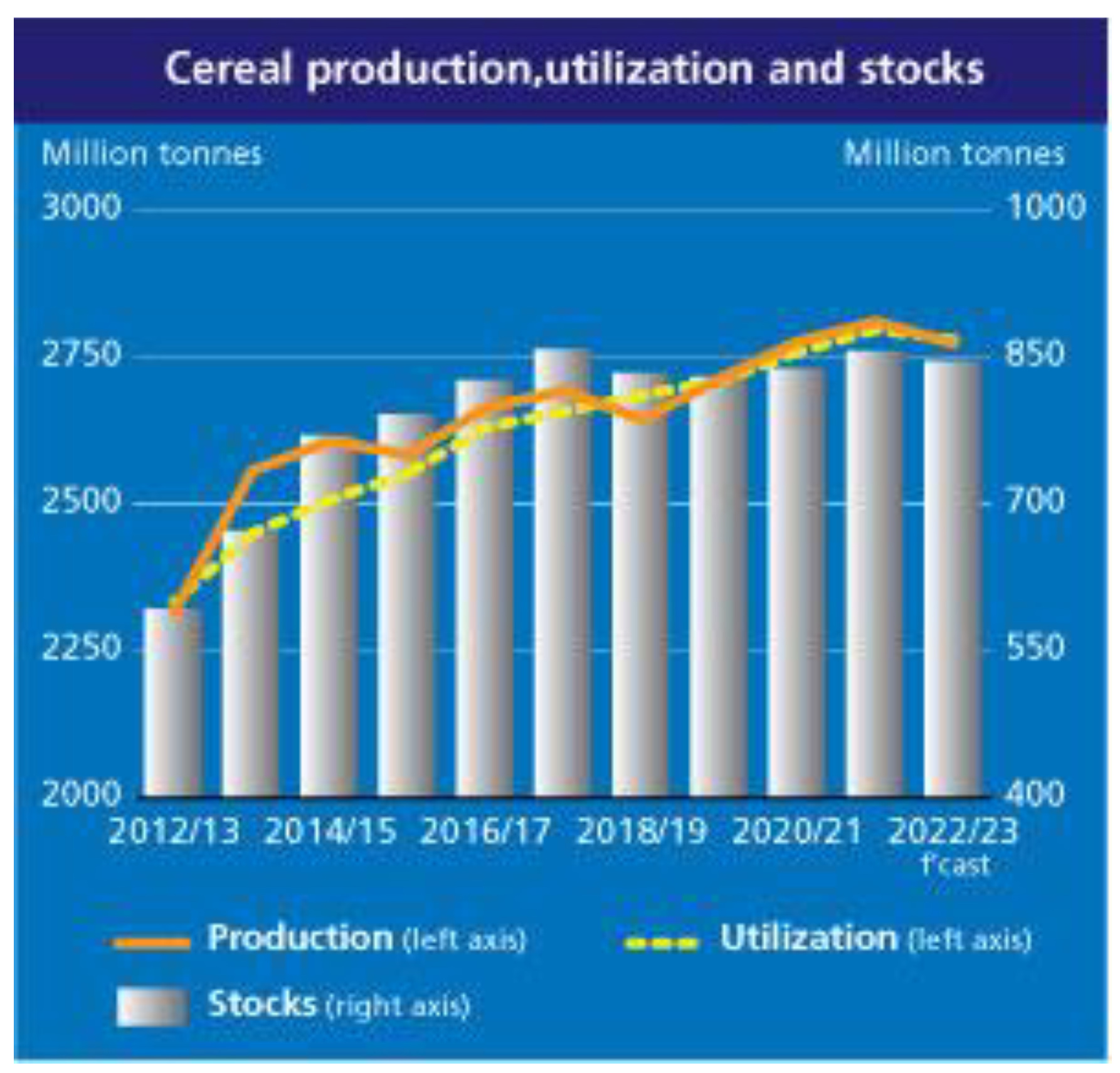
Figure 2.
Processing wheat, maize, rice, rye, barley, oat and products in European Union (27 member states). Source: Computed by authors, based on FAOSTAT online database, February 20, 2023.
Figure 2.
Processing wheat, maize, rice, rye, barley, oat and products in European Union (27 member states). Source: Computed by authors, based on FAOSTAT online database, February 20, 2023.
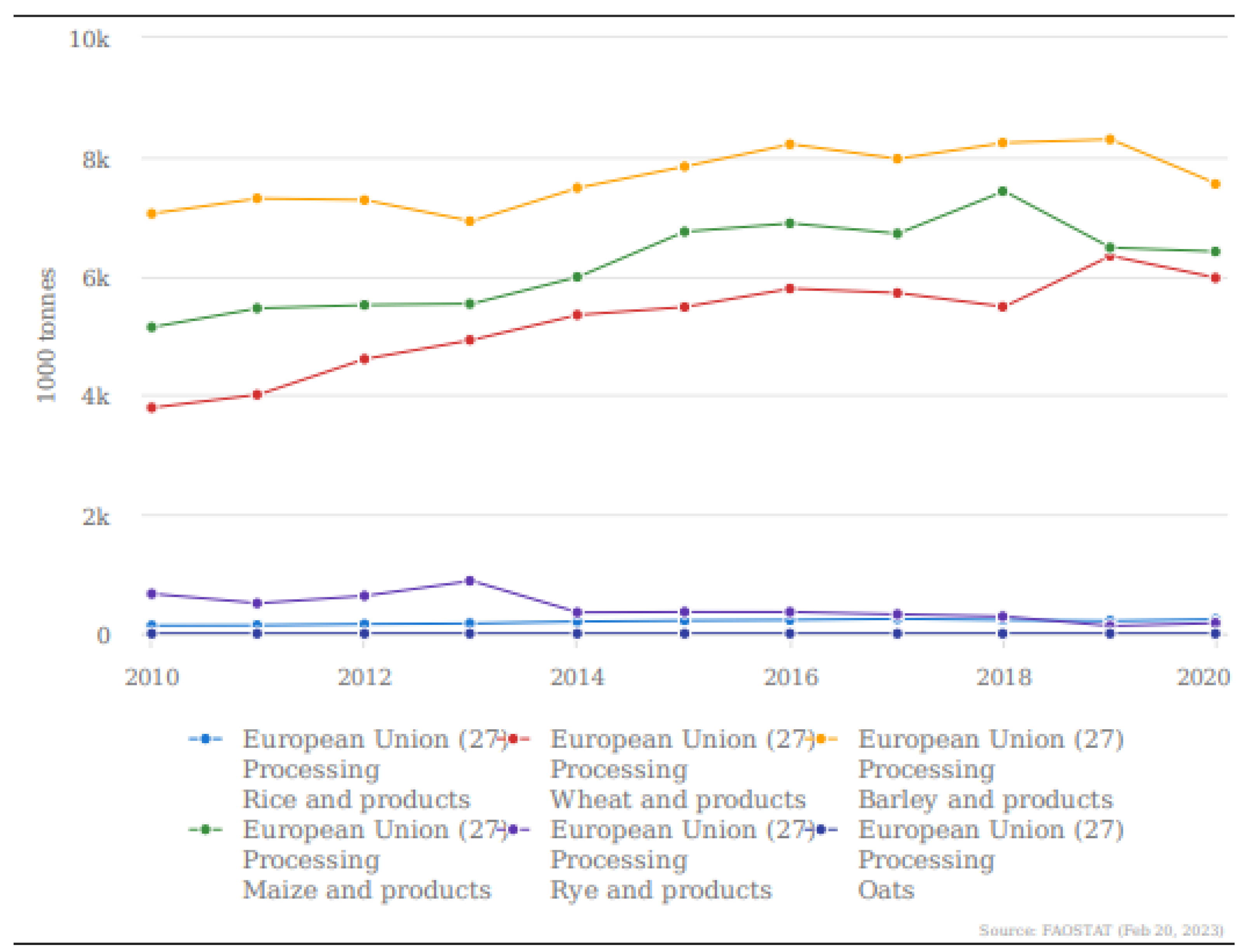
Figure 3.
Flowchart representing the selection process of articles and reviews from Google Scholar, Web of Science and Elsevier Scopus databases.
Figure 3.
Flowchart representing the selection process of articles and reviews from Google Scholar, Web of Science and Elsevier Scopus databases.
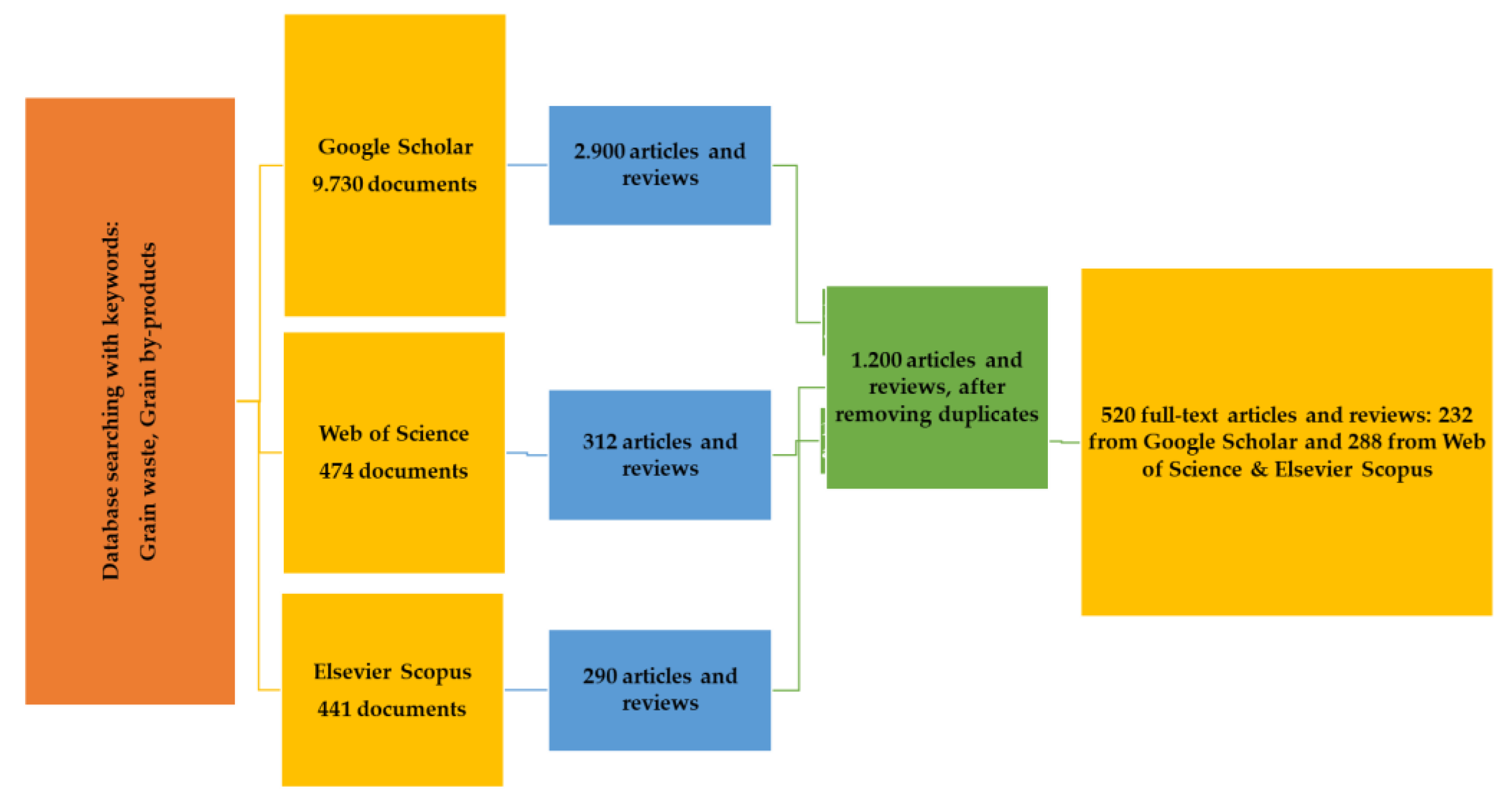
Figure 4.
Average publications per year (overlay visualization), for the last decade.
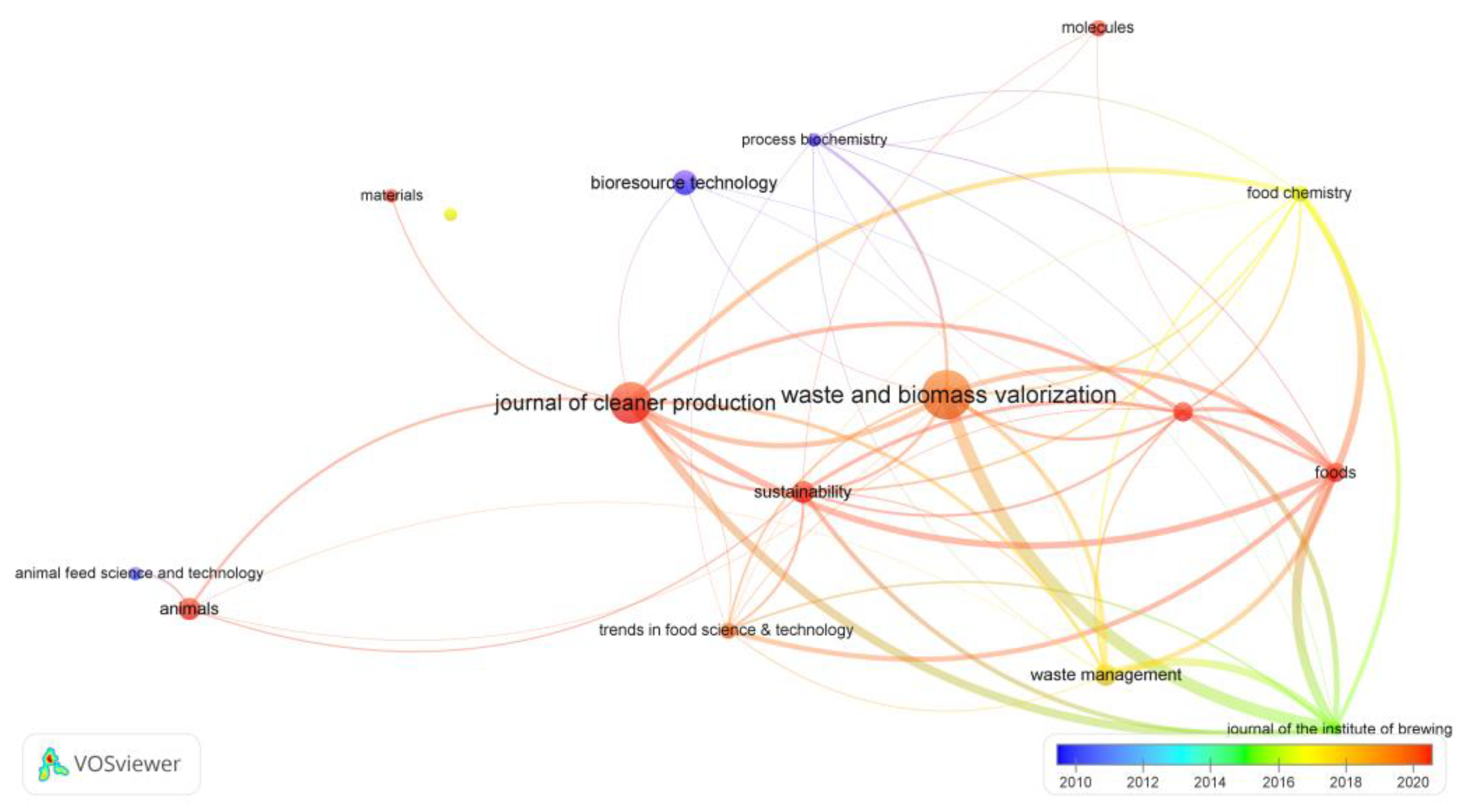
Figure 5.
Word cloud based on the main keywords in cereal waste and cereal by-products research documents (overlay visualization).
Figure 5.
Word cloud based on the main keywords in cereal waste and cereal by-products research documents (overlay visualization).
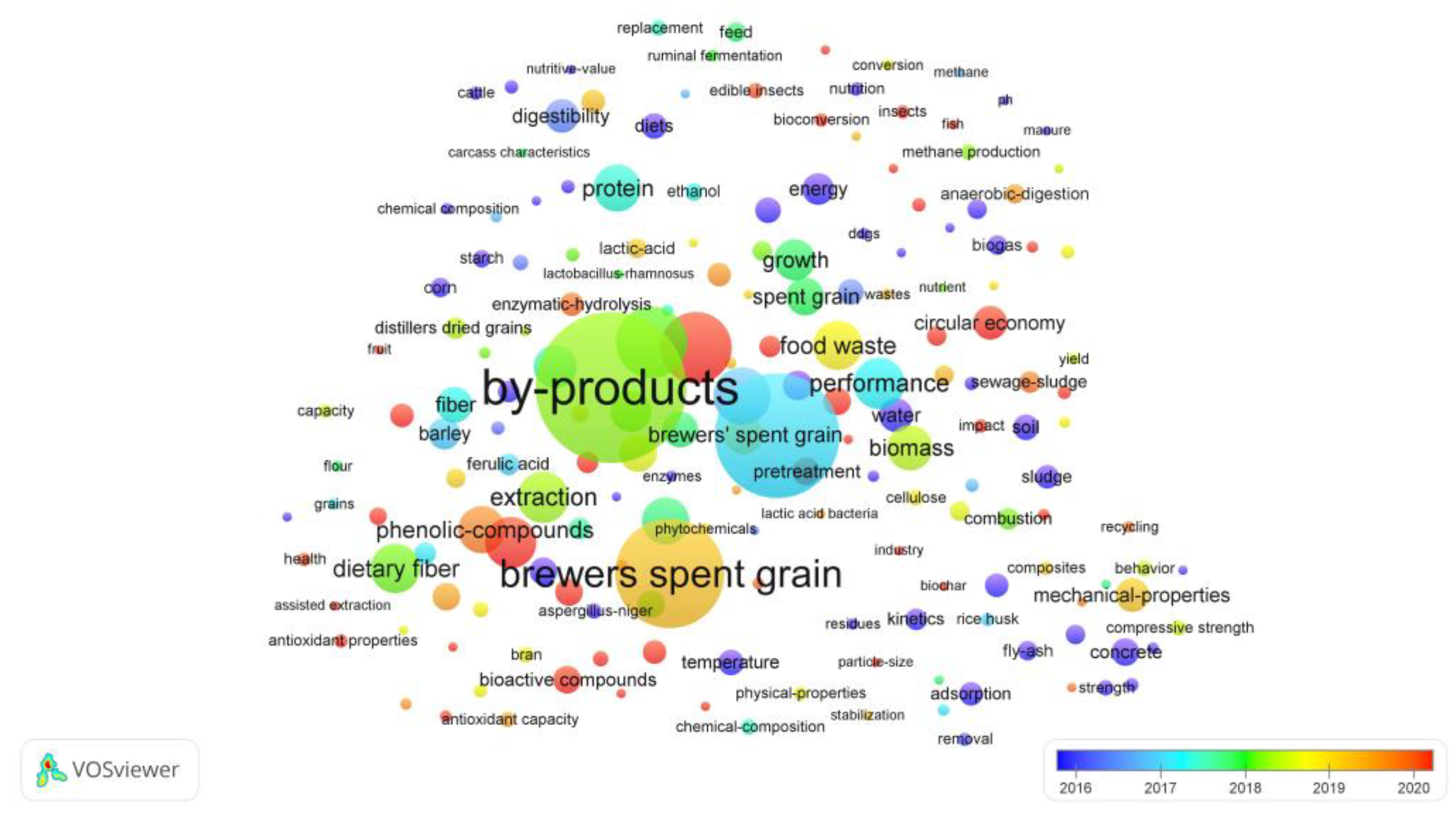
Figure 7.
Cereal losses for wheat, maize, rice, rye, barley, oat and products in European Union (27 member states). Source: Computed by authors, based on FAOSTAT online database, February 20, 2023.
Figure 7.
Cereal losses for wheat, maize, rice, rye, barley, oat and products in European Union (27 member states). Source: Computed by authors, based on FAOSTAT online database, February 20, 2023.
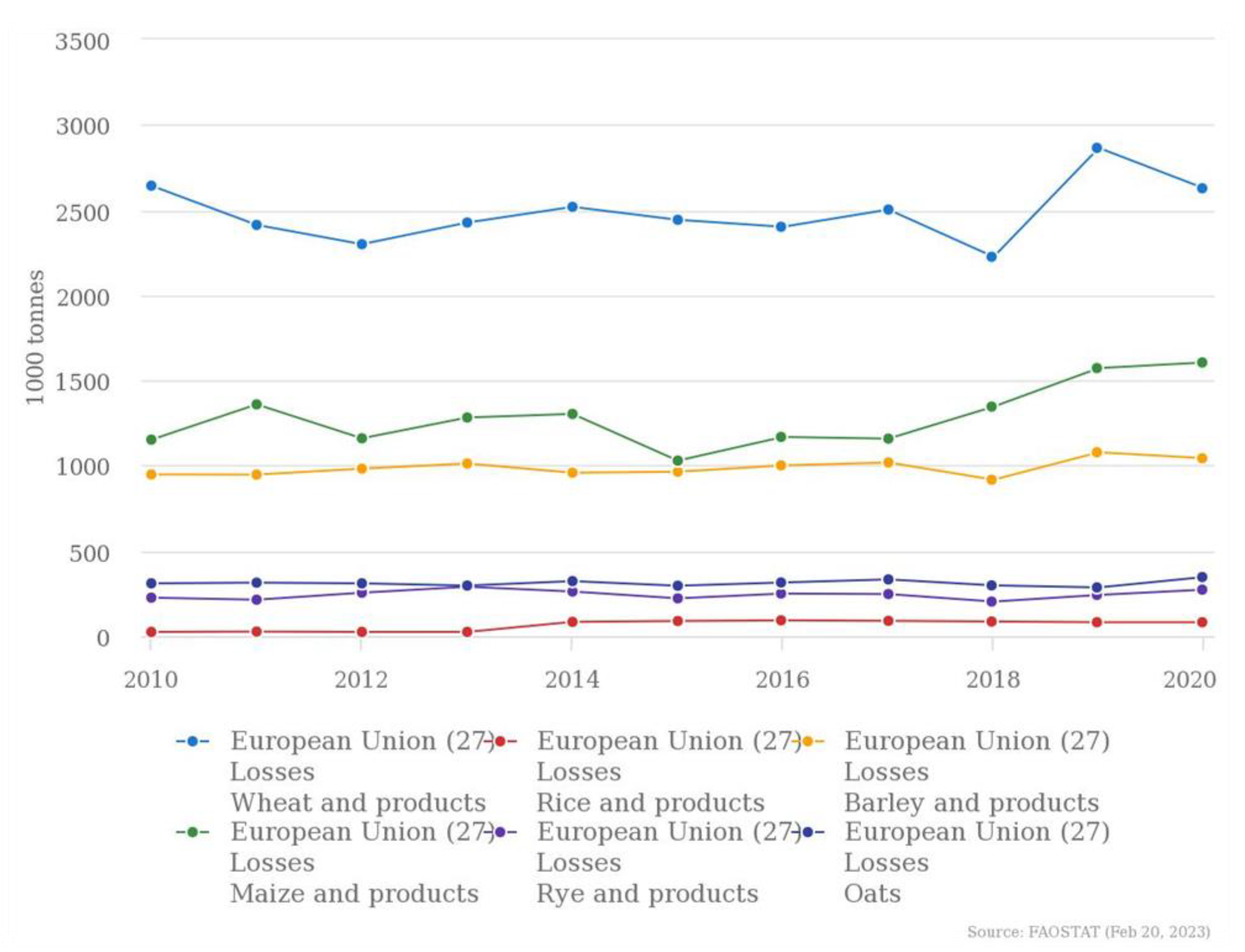
Figure 8.
Food Industry valorization of by-products and waste from dry milling.
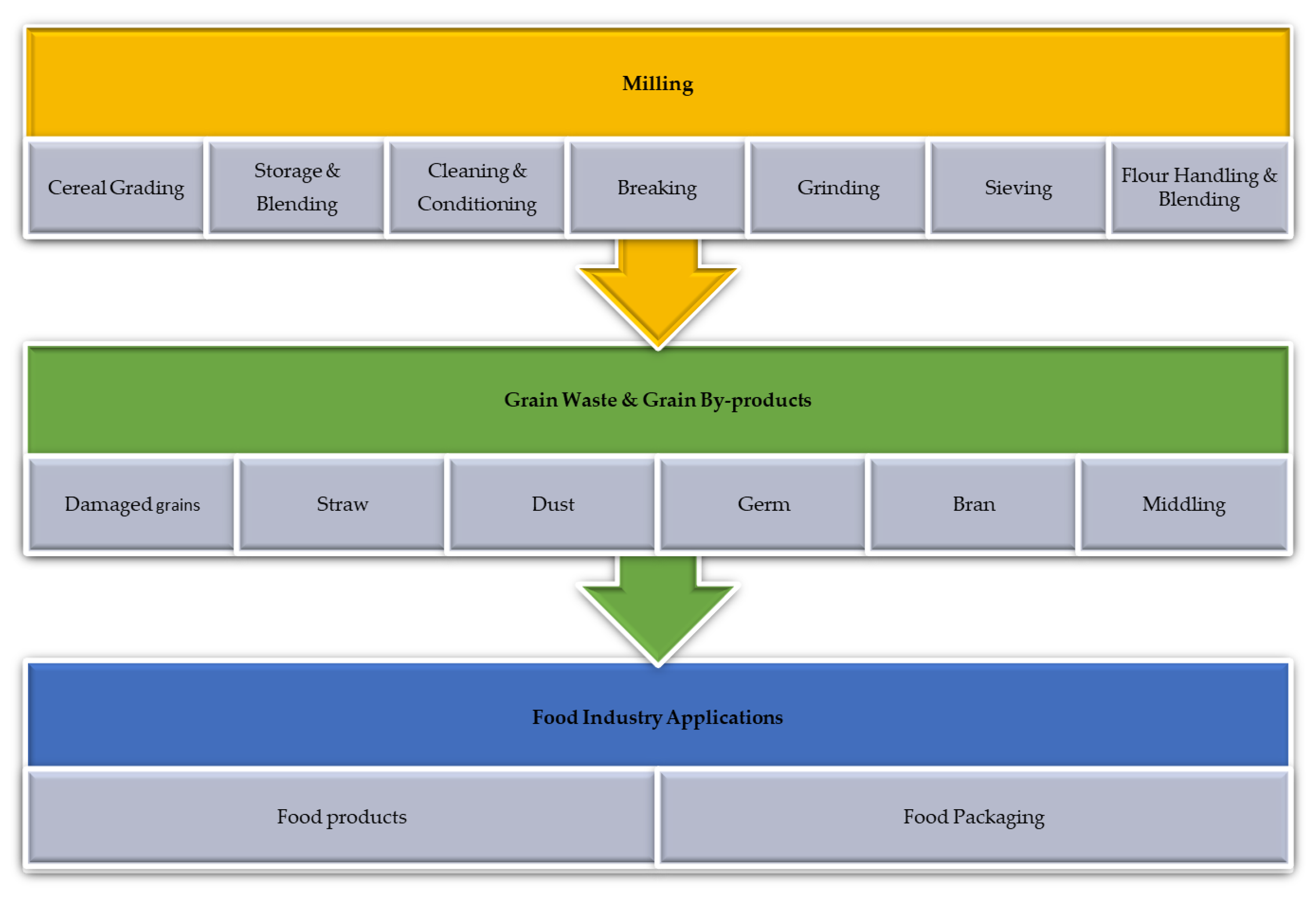
Figure 9.
Food Industry applications of added-value compounds from grain waste and grain by-products.
Figure 9.
Food Industry applications of added-value compounds from grain waste and grain by-products.
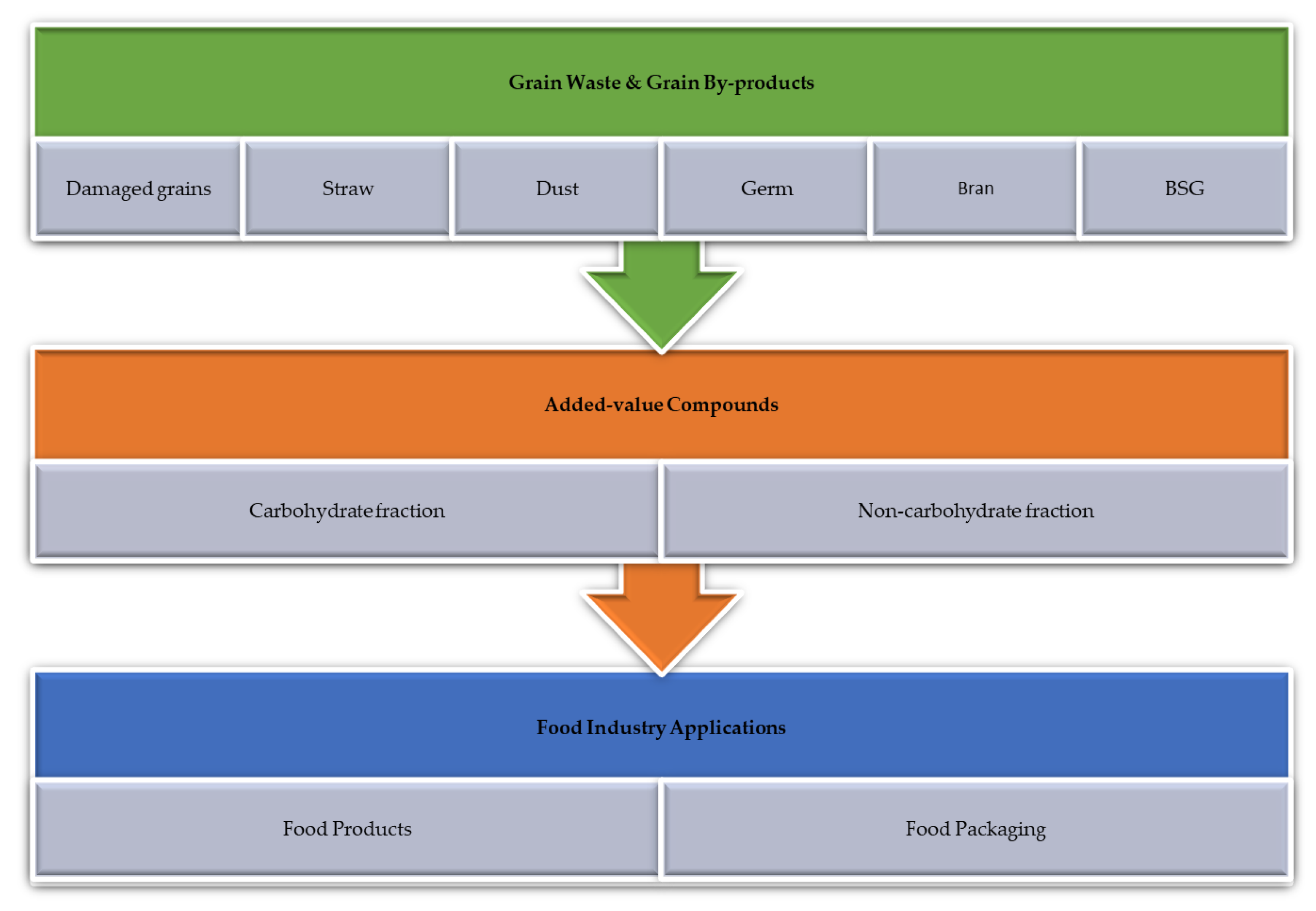

Table 1.
Top 16 productive Journals.
| Journal1 | Document/year | Citation |
|---|---|---|
| Waste and Biomass Valorization | 18 | 200 |
| Journal of Cleaner production | 15 | 410 |
| Bioresource Technology | 9 | 1800 |
| Waste Management | 8 | 172 |
| Sustainability | 8 | 59 |
| Animals | 8 | 133 |
| Foods | 7 | 57 |
| Applied Sciences - Basel | 7 | 48 |
| Food Chemistry | 6 | 273 |
| Trends in Food Science & Technology | 6 | 312 |
| Molecules | 6 | 49 |
| Journal of the Institute of Brewing | 5 | 338 |
| Process Biochemistry | 5 | 203 |
| Animal Feed Science and Technology | 5 | 220 |
| Materials | 5 | 30 |
| Resources Conservation and Recycling | 5 | 166 |
1Ranking for the last decade.
Disclaimer/Publisher’s Note: The statements, opinions and data contained in all publications are solely those of the individual author(s) and contributor(s) and not of MDPI and/or the editor(s). MDPI and/or the editor(s) disclaim responsibility for any injury to people or property resulting from any ideas, methods, instructions or products referred to in the content. |
© 2023 by the authors. Licensee MDPI, Basel, Switzerland. This article is an open access article distributed under the terms and conditions of the Creative Commons Attribution (CC BY) license (http://creativecommons.org/licenses/by/4.0/).
Copyright: This open access article is published under a Creative Commons CC BY 4.0 license, which permit the free download, distribution, and reuse, provided that the author and preprint are cited in any reuse.