

Submitted:
24 March 2023
Posted:
27 March 2023
You are already at the latest version
Abstract
Background: Bibliometric analysis provides insight into knowledge gaps of a specific field. We want to know what part of medical care has been the subject of research in a group of Mexican physicians. The Instituto de Seguridad y Servicios Sociales de los Trabajadores del Estado (ISSSTE) cares for a wide spectrum of disease and it provides a unique vision of what specialists has investigated about health. Methods: Papers belonging to “ISSSTE” affiliation were harvested and downloaded to .csv Excel files from the Scopus database including most bibliometric variables. VOSviewer, biblioshiny and bibliometric were used to conduct the bibliometric. Results: 2,063 papers were found and re-trieved; internal medicine had the greatest number of papers with 831; nine institutions were listed claiming “ISSSTE” as their mother affiliation; original papers represent 82% of the total and 52% of them were written in Spanish. Research production in Mexico City and the most productive center is Centro Médico Nacional 20 de Noviembre. Discussion: We identified main institutions, prolific authors, top-cited researchers and their affiliations, however, our paper is a call to action for the medical community in Latin America to join our efforts in building a solid group of researchers for the future of science.
Keywords:
bibliometric analysis
; Scopus database
; ISSSTE
; Mexican scientific research
; scientometrics
; manu-script writing
1. Introduction
Healthcare services in Mexico are split into public and private sectors. Government hospitals are further divided into three macro-institutions, basically according to the em-ployer of the patient. If a private employee, the Instituto Mexicano del Seguro Social (IMSS) will provide healthcare, if a government official, the Instituto de Seguridad y Ser-vicios Sociales de los Trabajadores del Estado (ISSSTE) will fulfil that role. The Secretaría de Salud will care for self-employed or unemployed patients. Those who can afford a pri-vate insurance plan or have out-of-pocket payment capacity will go to private hospitals or clinics(1,2). Other minor stakeholders are beyond the scope of this manuscript.Best Health Care in the World 2022 ranks countries around the planet according to a wide range of factors: care process, accessibility, administrative efficiency, equity, health outcomes(3), infrastructure, health care professionals and gross domestic product (GDP). Mexico ranks in the 68th position. The ISSSTE cares for about 10% of the Mexican popula-tion (around 13.7 million) (4,5). Its mission is to “contributeto improve the levels of well-ness of the workers of the State and all of their beneficiaries, by providing efficient, effec-tive and good quality services”(4).In medicine, scientific research is the cornerstone to improve patient care, to find in-novative solutions, and to make healthcare more affordable to our economic conditions. Innovation is not restricted to cutting edge technologies for the most complex pathologies, 58and novel ways of medical care can be found with modest means. By law, according to Article 25 of the General Education Act (“Ley General de Educación”), Mexico should devote 1% of the GDP to scientific research and technological development and the main stakeholders are public higher education institutions(6–8). According to the World Bank, 62Mexico’s expenditure in research and development (R&D) has never surpassed 0.5% as shown in Figure 1, and barely approaches 0.3% in 2020 (9,10).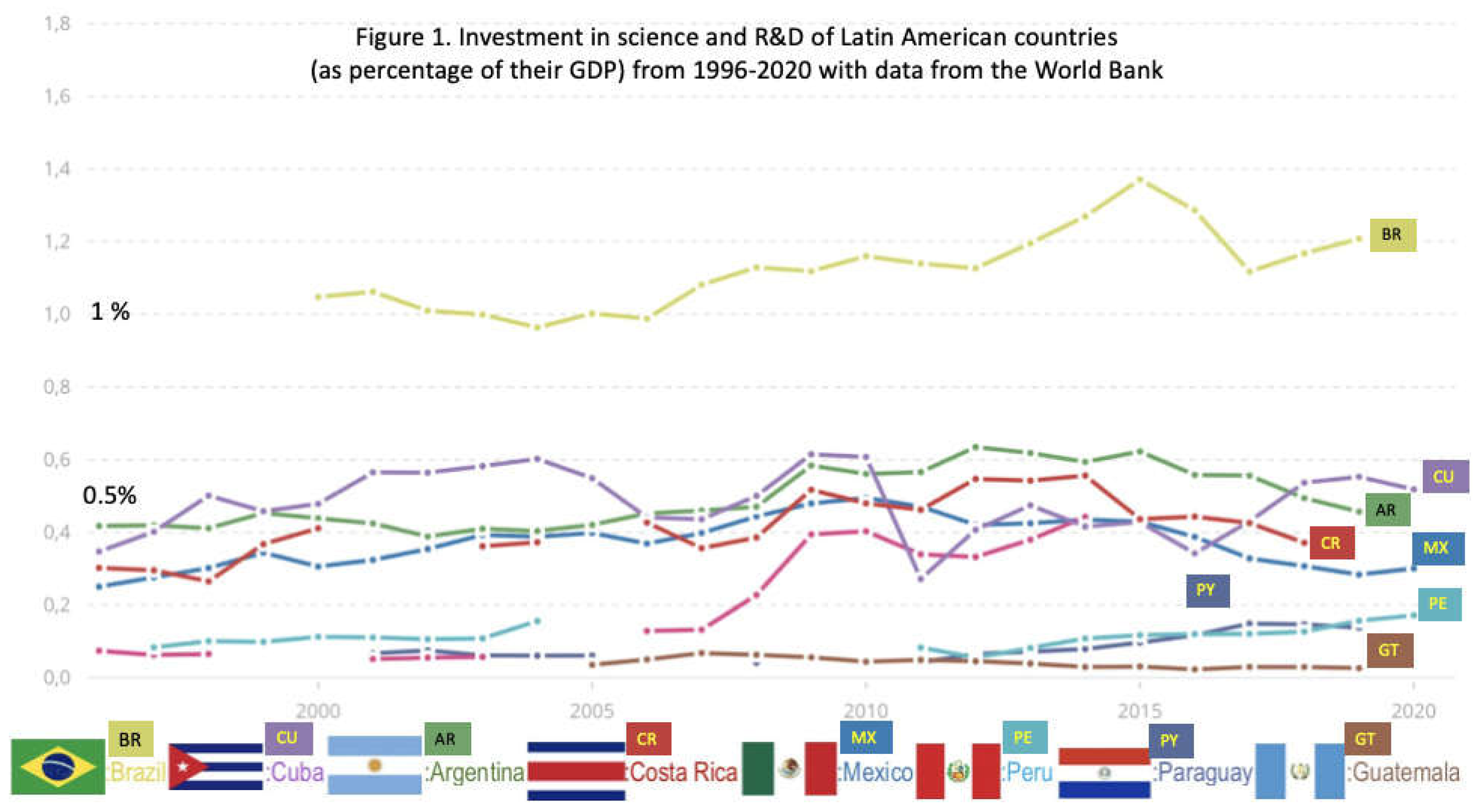
The world’s largest economies are assembled in 2 different international organizations, following different criteria: 1. G20 (Group of Twenty), and 2. OECD (Organisation for Economic Co-operation and Development). Three Latin American countries are members to the former: Argentina, Brazil, and Mexico, and another three belong to the latter: Chile, Colombia, and Mexico. By size, our economy holds position number 15 in the world, and it is larger than wealthy nations like Switzerland or the Netherlands. Mexico is the only Latin American country belonging both to the G20 and to the OECD, yet Mexico’s spending in R&D performs poorly in both groups: Argentina spends 100% more and Brazil 200% more; the average spending of the OECD is 800% larger than Mexican investment. This is an open secret, acknowledged by public personalities. In 2010, a former Minister of Health, and former Rector of the Universidad Nacional Autónoma de México declared to Nature: “Mexico does not have a public policy on research and development. If you review what has happened with science in Mexico in the past 30 years, you will see that each government has been committed to science to a different degree and therefore it has been difficult to have continuity, which is something that is important in science. The proportion of the gross domestic product that Mexico dedicates to science and development has not really grown throughout the past two or three decades” (11). We can clearly see from public data and from the former statement that the problem dates back to a few decades. Tangible and efficient efforts to bring Mexico at the forefront of the scientific arena are urgently needed. It is not a problem related to “poverty”: Mexico is the 15th economy in the world, but according to Scimago Country Ranking(12), in terms of scientific output our rank is number 26.
In the last decades, these techniques which measure and analyse the scientific production of any given country and/or institution, have emerged as powerful and popular tools (13,14). Literature production has been growing and so Bibliometrics can explore large volumes of data, analyse them on macroscopic and microscopic levels (15), and create a quantitative report with a descriptive purpose: to reflect the state of the research at a specific moment in time and space. This analysis allows to highlight research hotspots and detect research trends, enabling comparisons with similar nations and sets standards for later studies. In the case of Mexico, we might even compare our future performance with the standards defined by the current study.
Bibliometric reports for institutions are now becoming a standard in best practices across a responsible metrics scenario (13). Science indicators should encourage the creation of new strategies to improve scientific production of a country, and specifically of prestigious institutions, as the one we are targeting. At the core of bibliometrics as the application of mathematical and statistical methods as the quantitative analysis of the bibliographic features of a body of literature(15), lies its ability of showing what has been investigated and to fill in the gaps, just like any map highlights densely and sparsely populated areas. These data are a start point to improve our understanding of the psychological, behavioural, and societal aspects leading to the generation of new knowledge, which is the only purpose of medical research.
National medicine has seldom been analysed and previous papers on Mexican performance are narrow, either focusing on a specialty, a hospital, a medical society, or recording very short periods of time. Nobody has performed a truly “three-dimensional” bibliometric analysis, across space (the whole country), time (several decades), and thematic covering (all medical specialties). This type of analysis will set the foundations for further projects that would disclose the research hotspots, frontiers, and trends in the field of Mexican medical science.
Bibliometrics also identifies collaboration networks between institutions or even countries, and can therefore be a strategy to promote and develop research(16), globalizing knowledge production and using it to improve healthcare quality. As a corollary, the use of scientometric tools identifies publication trends for their comparison with commonly encountered problems in patients. Those strategies will identify research gaps in primary care and might help promoting healthcare improvement focused on the most prevalent diseases treated by the ISSSTE’s hospitals (17). This highly valuable tool can build a solid foundation for advancing any field and can certainly guide research, but has largely been underused in Mexico (18,19). Ours is a pioneer project analysing a Mexican institution with a nationwide distribution, since inception to present-time including the present COVID-19 pandemic and is a foundation stone that will support later analyses in our country or in our region.
Objective
Mexico is a leading nation in Latin America, but the scientific output of our medical community at a national level has never been analysed. In this context, the main objective of this bibliometric study is to evaluate ISSSTE’s scientific research performance and identify some research gaps; analysing and describing the scientific production in Scopus indexed journals from the ISSSTE since its foundation will set an international reference parameter describing the interests of the Mexican medical research allowing to relate them to the most prevalent health problems in our population. We will see the thematic structure and the main producers of Mexican research. Finally, an analysis of the links between publications and authors via citation networks will identify the patterns of collaboration.
2. Materials and Methods
2.1. Data source and data extraction
Our research was performed in Scopus, a database which was used in our previous bibliometric studies on Latin American research (19), COVID-19 pandemic (20–22), epilepsy (23,24), dementias (25), brain tumors (26), neurosurgery (27) and neurocysticercosis (28). We chose to use this repository is it is a well-known complete, varied, interdisciplinary and neutral source which delivers abstract and citations with a significant overview of the world’s research output in the field of medicine and other related fields. Every article authored by at least one researcher with an institutional affiliation to ISSSTE and published from 1969 to 2021 is included. Using Scopus built in functions we extracted the following bibliometric variables from each retrieved paper: author, author ID, author affiliation, article title, source journal title, year of publication, total number of citations, correspondence address (to determine to which hospital the article should be attributed to), language of original publication and type of publication (figure 2). All the retrieved papers were exported and stored to a .csv format.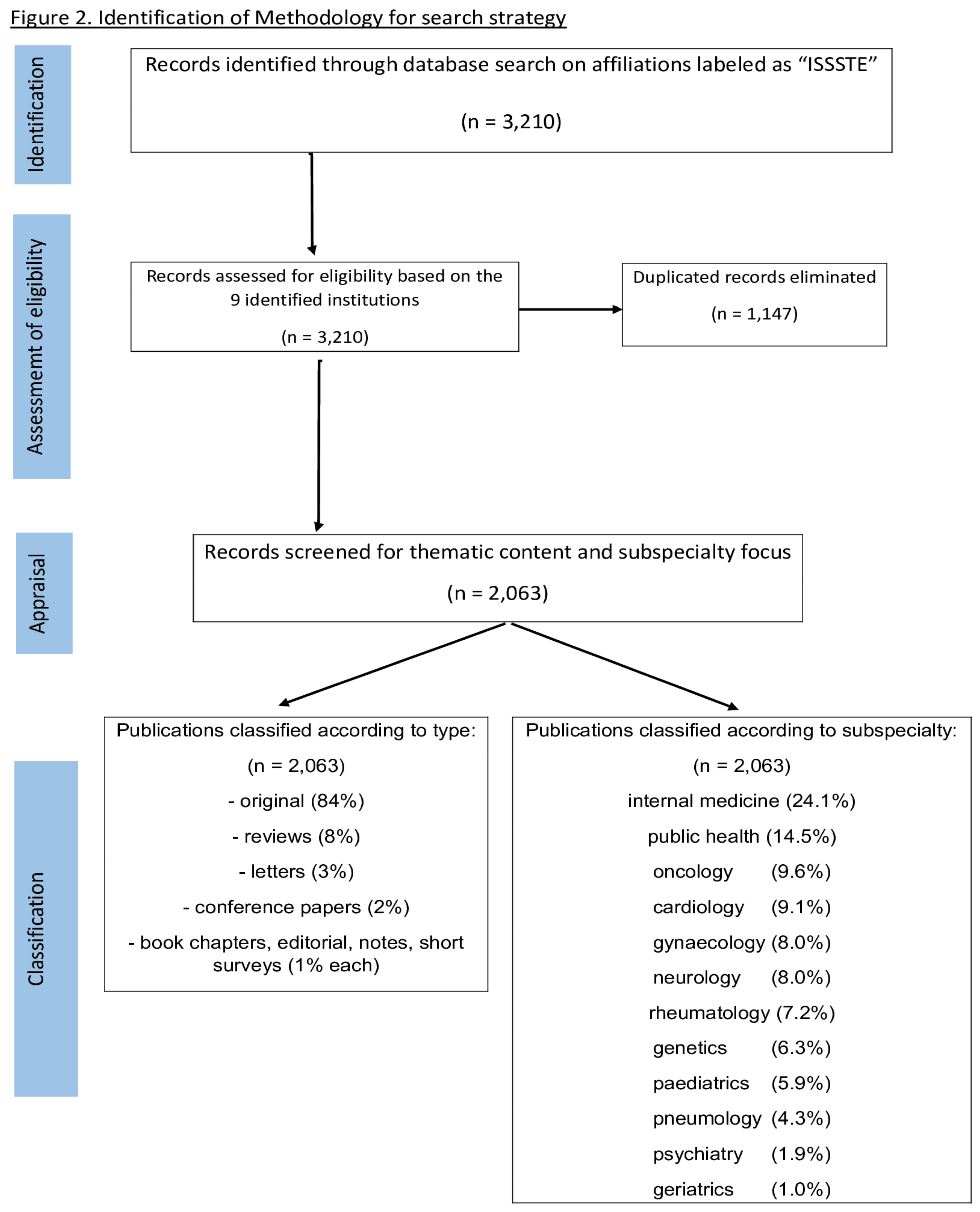
The list of publications from nine different hospitals affiliated to the ISSSTE, were downloaded separately, then merged into a single list. Some papers were written by two or more hospitals and therefore appeared several times in the merged list: we manually eliminated those duplicates to avoid counting them multiple times. Just as when counting the number of papers from “Assistance Publique-Hôpitaux de Paris” or from “Mayo Clinic” considered as a whole, you do not count as several different documents the same paper published by four French hospitals or three American Clinics belonging to the same group.
One of the major players in Mexican research are the Institutos Nacionales de Salud (CCINSHAE) which mostly are organ-oriented institutions (heart, lung, brain disorders, etc). To allow further comparisons with these institutes, we manually classified every paper depending on their topic according to 12 subcategories (selected because they are the focus of these Institutos): internal medicine and surgery (INCMNSZ1), public health (INSP2), obstetrics & gynecology (INPER3), pediatrics (INP4), psychiatry (INPRF5), neurosciences (INNN6), geriatrics (INGER7), cardiology (INCICH8), infectious and respiratory diseases, including ENT and critical medicine (INER9), rheumatology/Trauma & Orthopedics (INR10), genetics (INMEGEN11) and oncology (INCAN12).
To know how ISSSTE´s research has been developing through the years, in our Excel database we manage to organize, number and graphic the total publications per year since 1969 to 2021 (figure 3).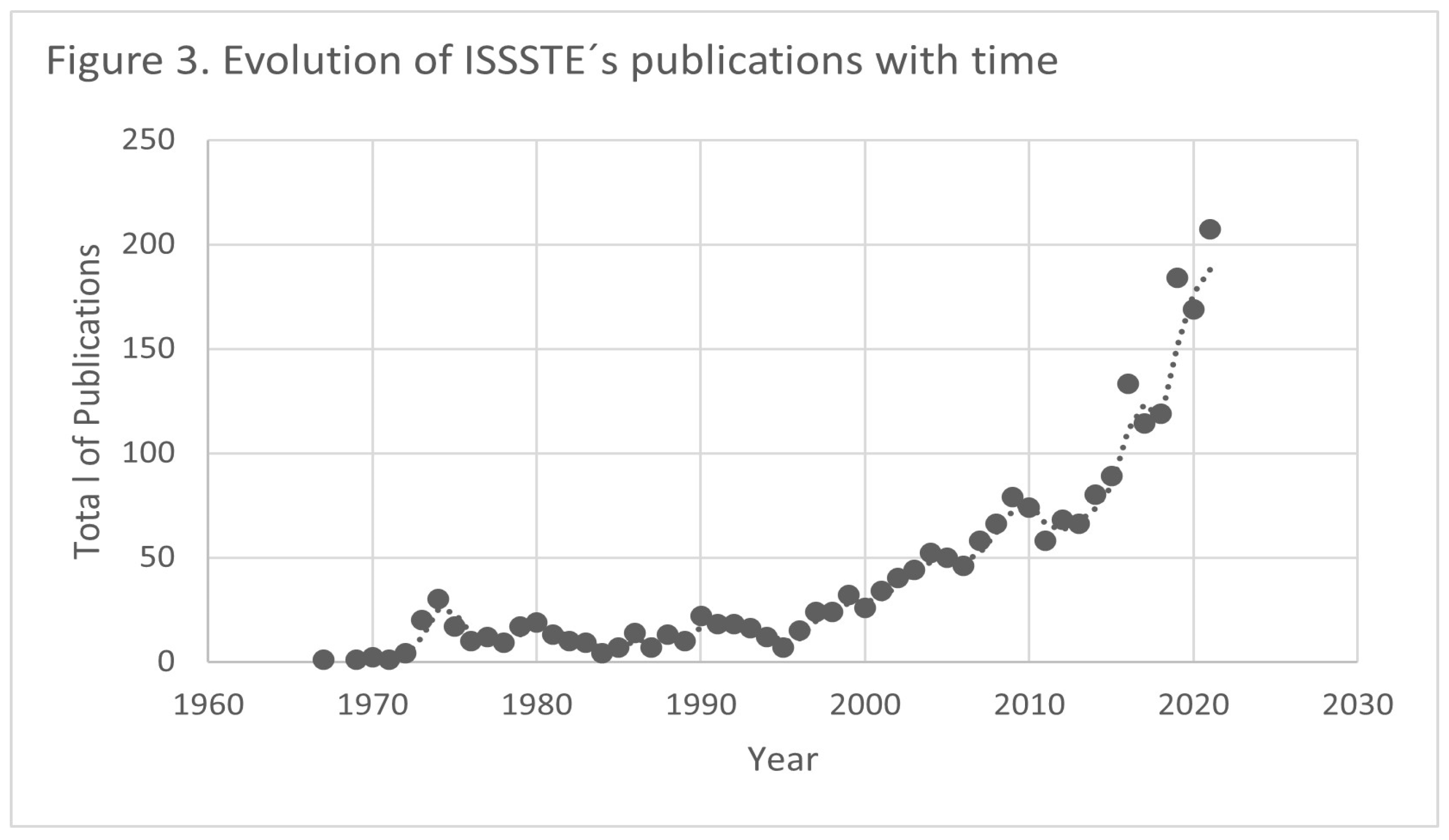
On the other hand, to depict what Mexican researchers have done, how they did it and the impact they had, we extracted the following bibliometric indicators: number of papers, number of citations, mean citations per paper and the L0 index. L0 index is a bibliometric parameter which has been proposed by Lee (2022), which is obtained by calculating the percentage of articles not cited over the total number of published articles, it is precisely the percentage of non-quoted papers (20). As in any bibliometric analysis, we also tracked. the most cited publications and leading authors (as given by Scopus). We tracked the most cited articles by sorting them directly from highest to lowest and in the same way we sort on the most prolific authors depending on their h-index and number of publications.
We also detected which journals with top impact factors have published papers from the institution. In our downloaded database we identified every journal that publishes Mexican literature, investigated their impact factor (IF) (Journal Citation Report consulted from Web of Science), ordered them from the highest to lowest and selected the top ten journals.
Regarding the 9 institutions affiliated to ISSSTE shown in table 1, being ISSSTE one affiliation itself, we search them individually in Scopus database to know how many publications from the total (2,063) are attributed to each one of them and learn how scientific investigation is distributed in Mexico and how authors and institutions interact. We investigated their addresses and in Excel we created geographic map charts showing the distribution of publications.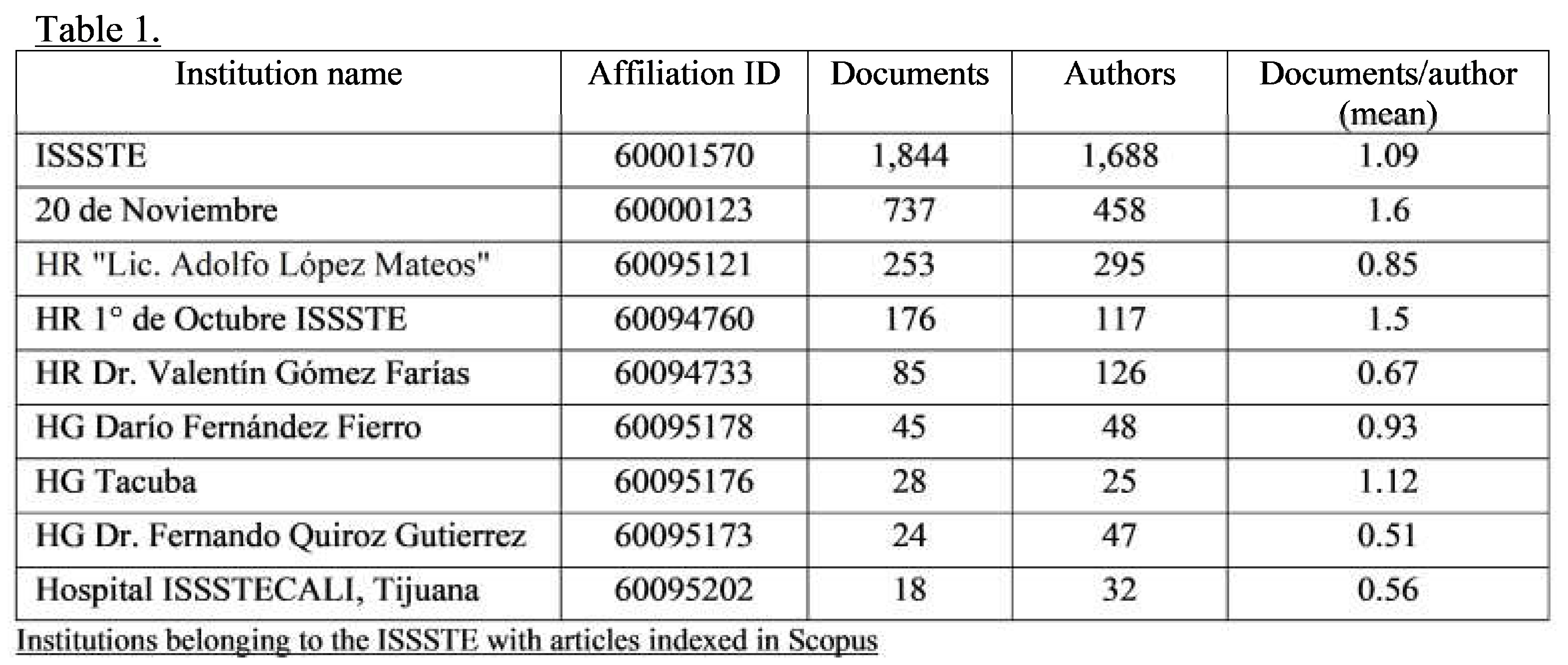
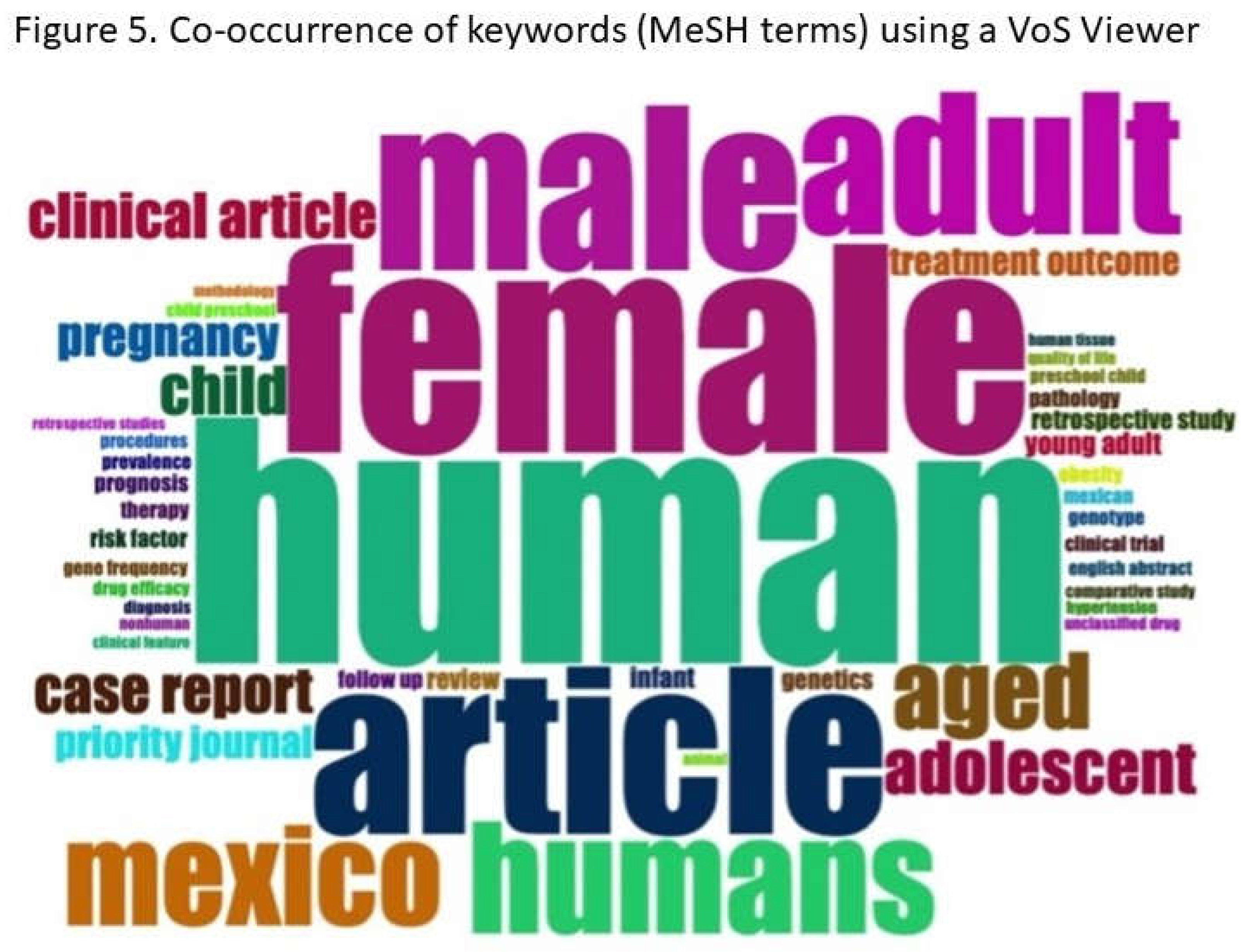
Finally, we created an authorship network showing how authors from the same institution interact one with each other. VoS Viewer (version 1.6.16) and bibliometric analysis using R with an inbuilt utility Biblioshiny (RStudio 1.4.1106, RStudio Inc., Boston, Ma., USA) for descriptive and quantitative analysis of data. The biblioshiny interface was used to identify the data to obtain co-occurrence and collaboration network, co-word analysis; word clouds (figure 4) were designed with Bibliometrix 4.0.1; to capture the content and scientific concepts presented in articles (main subjects of research), we elaborated a tree map (R Studio Bibliometrix package) with the parameters extracted from keywords plus, author keywords and the 50 most frequently used words in the abstracts listed in the CSV files downloaded from Scopus and organized using Biblioshiny (figure 5).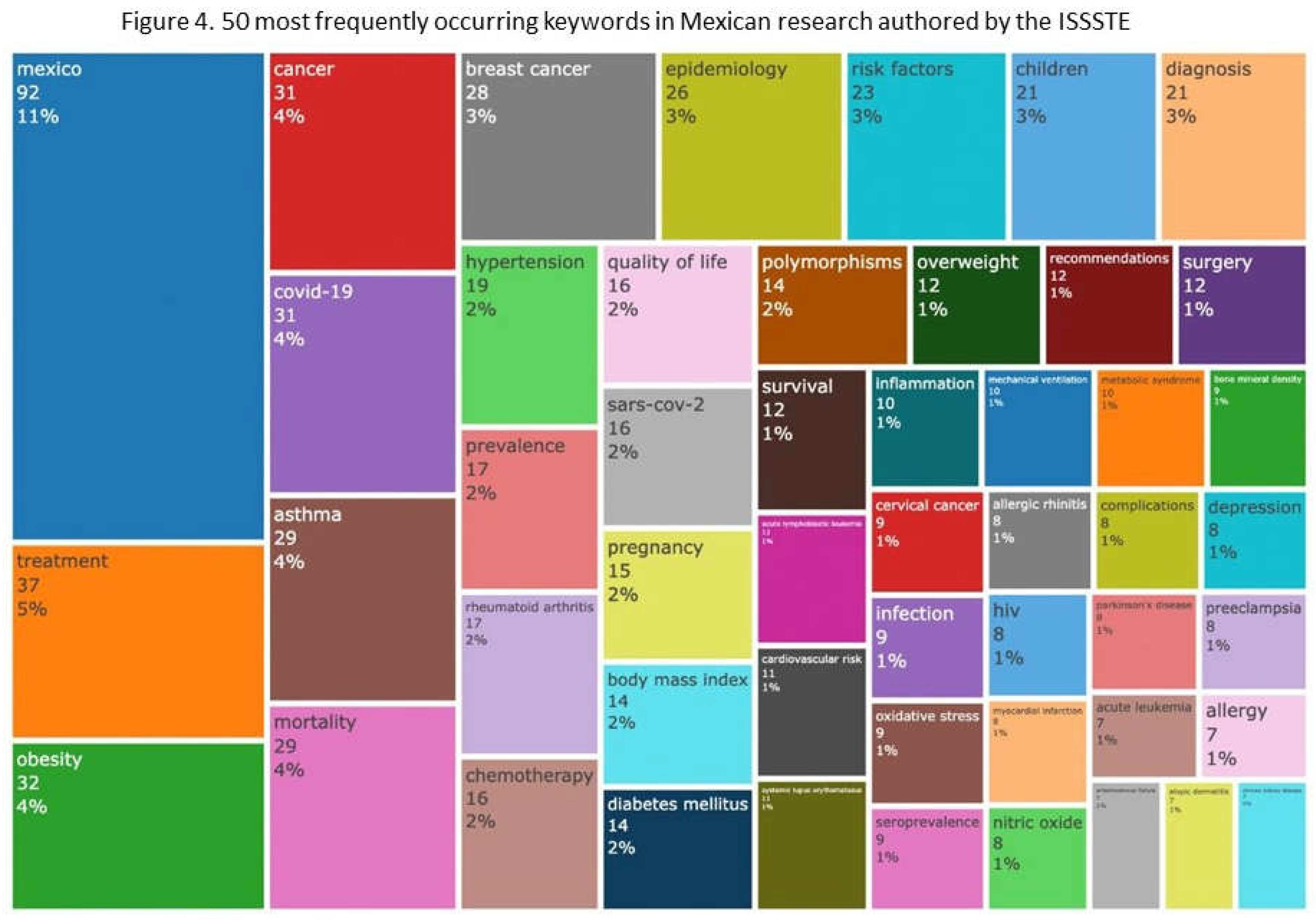
3. Results
By adding all papers retrieved from Scopus and with at least one author of the 9 institutions indexed in the database from the ISSSTE during a period spanning from 1969 (the year of appearance of ISSSTE´s first publication) to 2021 a total of 3210 titles were downloaded and listed on our Excel file nonetheless, 1147 were manually eliminated as they turned out to be duplicates as they were written and submitted under the name of more than one affiliation and therefore appeared several times in the merged list, leaving a total of 2063 publications to analyses from ISSSTE´s whole institution profile (the same number of publications displayed during our original scopus database research). The PRISMA diagram representing how the papers were selected is described in figure 2.
Prior to our publication, the interest of the scientific community on this topic was so low that in the last 70 years we could only find 5 papers in PubMed with “Mexican publications” or “publications Mexico” in their title(20): one dates back to the 50’s (21), two are from the 70’s(22,23), and the last two were written in the 90’s (24,25).
ISSSTE´s first publication in scopus database was published in 1969 and during decades publications were scarce with less than 50 publications per year, until 2005 aproximately when publication mean reached 50. Looking at figure 3, with a modest start in the sixties it was until 2010 when the first notable increased occurred and since then, the scientific production has been growing exponentially. The peak productivity managed to stay in 2021 with over 200 publications.
One main affiliation was found (Scopus affiliation ID: 60001570) which includes articles listed by authors belonging to the ISSSTE (our main inclusion criteria), but not particularly attributed to a given specific hospital. On the other side, we found eight other affiliations from the ISSSTE, where the authors specified their hospital. The name of the institutions along with their respective Scopus affiliation ID, link to their profile in Scopus, number of documents and authors are summarized in Table 1. Also shown in table 1, we calculated a mean documents/author which shows that only 4 of the 9 institutions have authors who collaborate in one or more documents however, authors from the other 5 institutions do not even reach 1.
The names of these hospitals are Centro Médico Nacional 20 de Noviembre, Hospital Regional Lic. Adolfo López Mateos, Hospital Regional 1º de Octubre, Hospital Regional Dr. Valentín Gómez Farías (in Zapopan, Jalisco), Hospital General Dr. Darío Fernández Fierro, Hospital General Tacuba, Hospital General Dr. Fernando Quiroz and Hospital ISSSTECALI (Tijuana, Baja California Norte). By the way, affiliation 60095173 (Hospital General Dr. Fernando Quiroz) is misattributed by Scopus to a different hospital with the same name, in another state (see: https://www.scopus.com/affil/profile.uri?afid=60095173)
Concerning “the real world of medicine”, the 20 most prevalent pathologies during medical visits at the institution (26) are displayed in Table 2, being the most prevalent: the respiratory disorders and infections such as COVID-19 which was recently ranked in the fifth place, urinary tract and gastrointestinal infections. Regarding chronic degenerative and metabolic diseases, arterial hypertension, type 2 diabetes, and obesity were also in the picture. And on the other hand, the “theoretical world of research”, the 50 most frequently occurring keywords in papers authored by the ISSSTE are illustrated in Figure 4 such as “Mexico”, “treatment”, “obesity”, “cancer”, “COVID-19”, “asthma”, “mortality”, “breast cancer”, “epidemiology”, “risk factors”, “children”, “diagnosis”, “hypertension”, “diabetes”, and “infection” to mention some of them. The co-occurrence of keywords (MeSH terms) using a VOSviewer in the corpus of research papers is shown in Figure 5, showing as protagonists words like: human, female, male, article, Mexico, clinical article, case report, pregnancy, treatment, child and risk factor.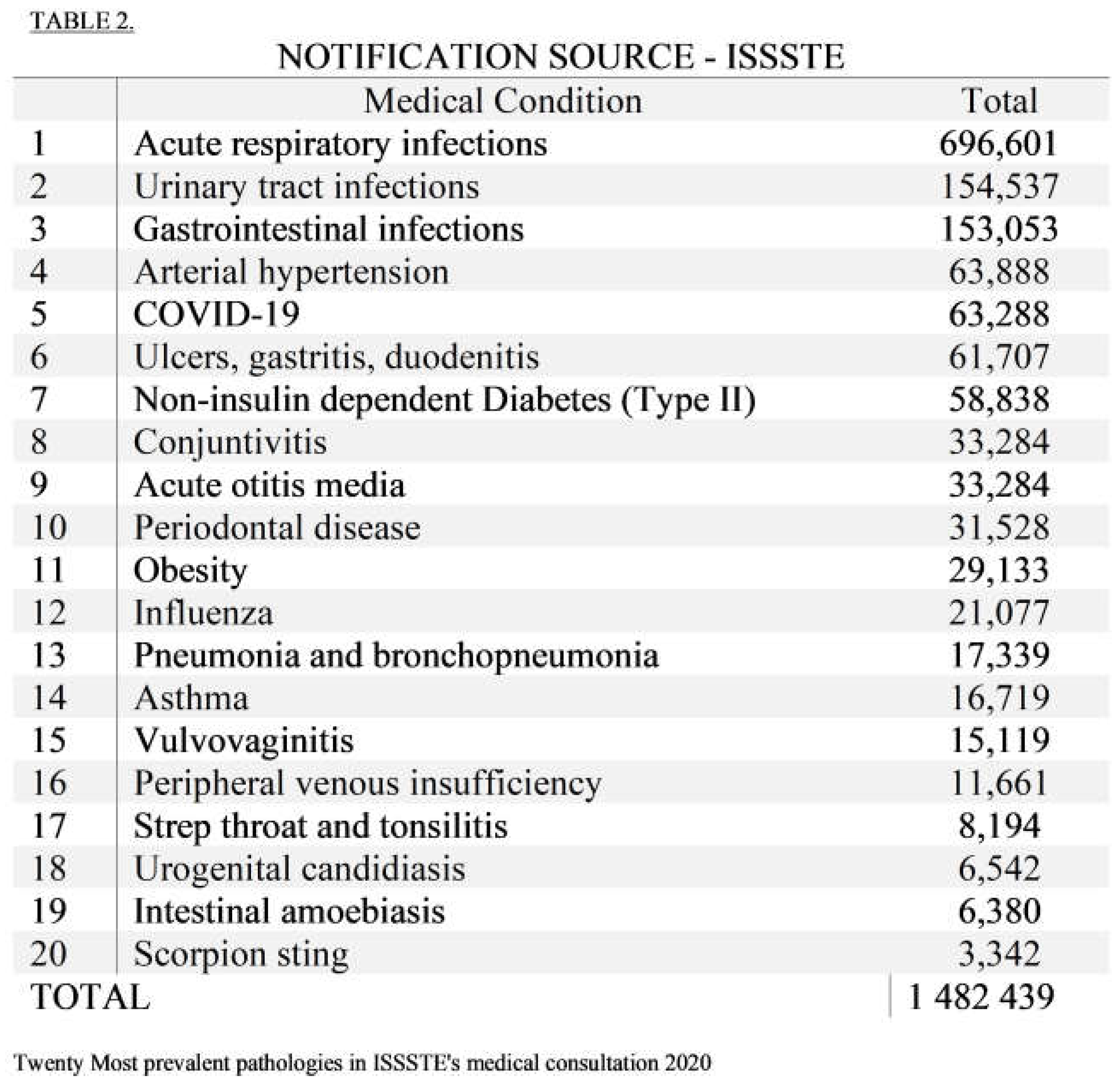
Regarding the subclassification of all the papers into medical specialties is shown in Figure 6, and this gives a panorama of which areas have been more active in terms of publications. The main specialty corresponds to internal medicine and surgery (n=831); in decreasing order, we find the other specialties: public health (n=499), oncology (N=332), cardiology (N=313), neuroscience (N=275), obstetrics and gynecology (N=275), trauma, orthopedics & rheumatology (n=249), genomics (n=218), pediatrics (n=203), respiratory diseases and intensive care (n=149), psychiatry (n=65) and geriatrics (n=35). It is important to mention that each article could be included in more than one specialty depending on the topic.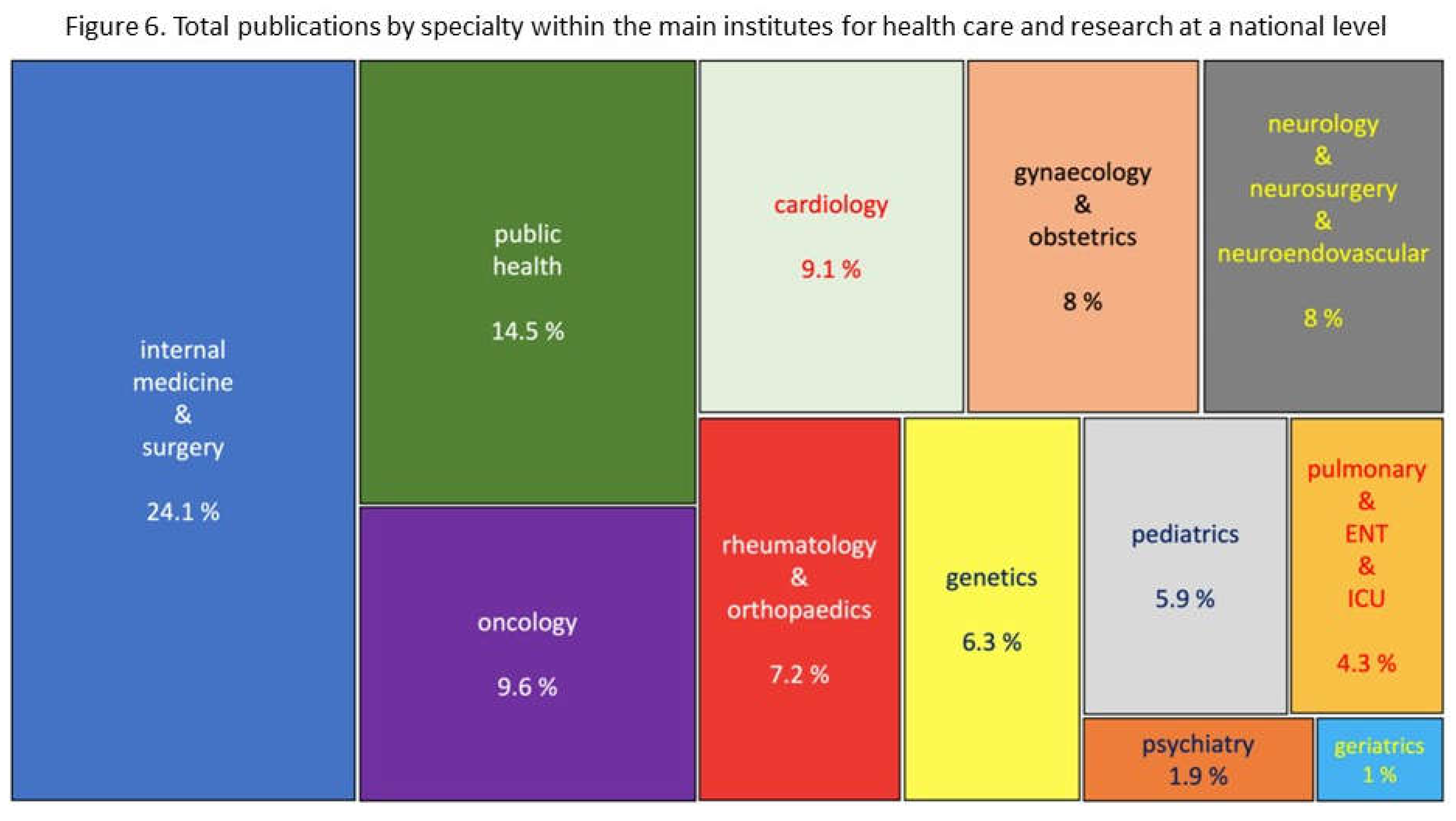
Most of the publications were originally written in Spanish (52%), followed by English (43%), both languages (7%), French (0.09%) and in German (0.94%). Among them, according to the type of document, most of them were original articles (84%), followed by reviews (8%), letters (3%), conference papers (2%), book chapters, editorial, notes and short surveys (1% each).
Furthermore, the most cited authors affiliated to ISSSTE are enlisted in table 3, showing the top ten taking as a reference their h-index. These authors were affiliated to ISSSTE as a general institution, Hospital Regional 1º de Octubre and Hospital Regional Adolfo López Mateos. The author identified as one of the authors who contributed the most to the scientific production of the ISSSTE, according to Scopus is Fiacro Jiménez-Ponce with a total of 55 publications and the highest h-Index 25. Followed by Juan-Antonio González-Barrios from Hospital Regional 1º de Octubre with 50 publications and a h-Index of 15. The two least authors listed are from Hospital Regional Adolfo López Mateos and both have a h-Index of 9 but with 28 and 14 publications respectively.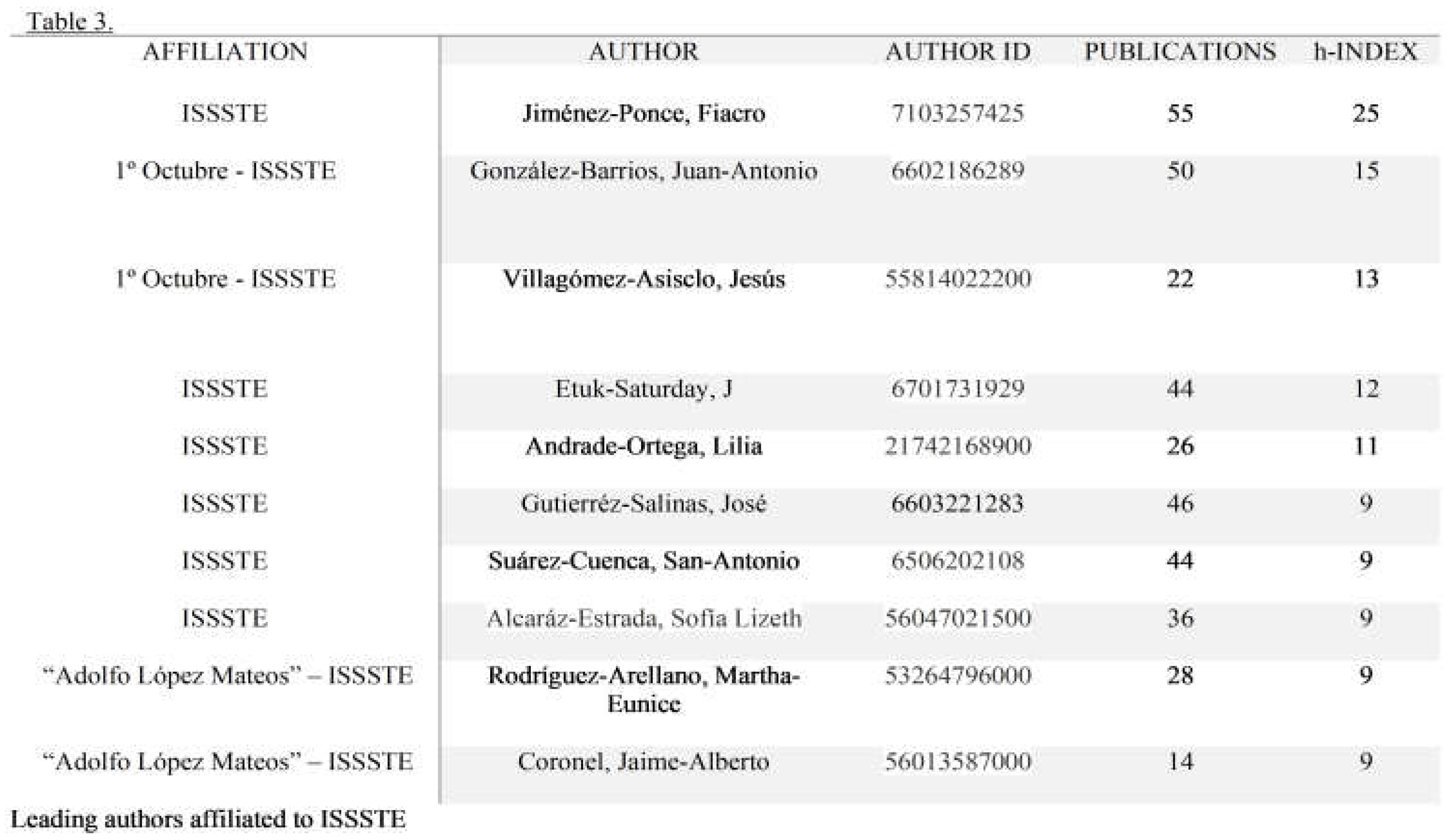
Overall, the most cited publications are shown in table 4 which also displays the institutions with greatest impact being Centro Médico Nacional 20 de Noviembre the leading one with “Celecoxib versus naproxen and diclofenac in osteoarthritis patients: SUCCESS-I study” being the top-cited publication (268 citations). Table 4 displays the other 11 articles with more than 100 total citations (104 the lowest and 355 the highest) being 3 of them published by CMN 20 de Nov, even the oldest one in the list “Demonstration of central γ-aminobutyrate-containing nerve terminals by means of antibodies against glutamate decarboxylase”. As already mentioned, the most cited article has its author affiliated to CMN 20 nov, nonetheless the most cited article in ISSSTE as mother affiliation is “Evolution of mortality over time in patients receiving mechanical ventilation” with 355 citations and looking closer to table 1 and table 4, ISSSTE as mother affiliation remains as protagonist with 1844 documents (table 1).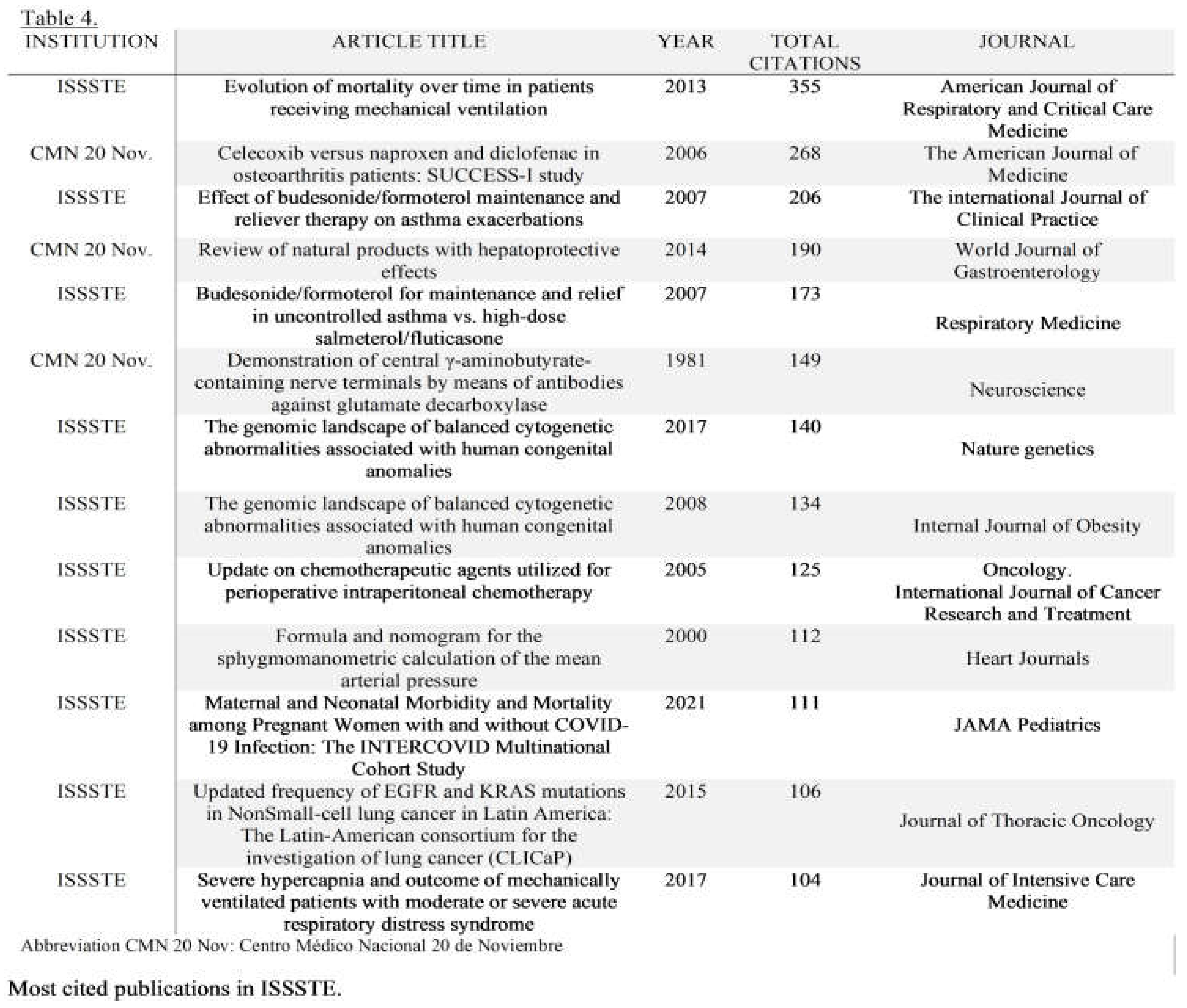
As it is shown in Figure 7, most of the scientific research of ISSSTE is centralized as 92.4% of it is produced in Mexico City followed by Jalisco (6.2%) and finally Baja California (1.3%). 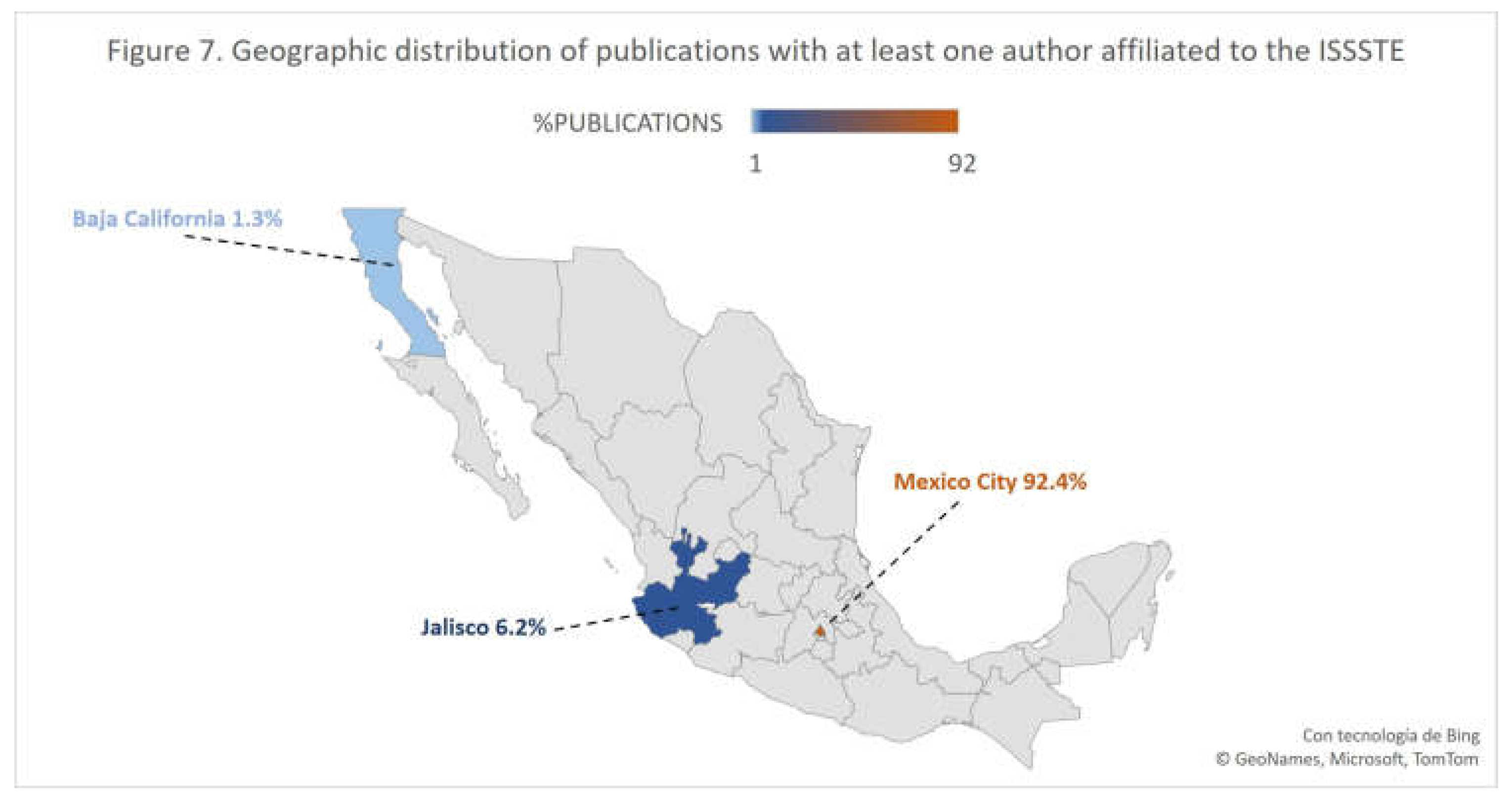
As shown in Figure 8, among all 92.4% of Mexico City, the borough with the largest scientific production is Benito Juárez, as the most productive authors are from Centro Médico Nacional 20 de Noviembre (CMN 20 de Nov) and with Hospital General Dr. Darío Fernández Fierro being in the same city borough. Table 1 shows that CMN 20 de Nov is once again the most productive institution regarding scientific research as it has the greatest number of: authors (n=458), documents (n=737) and as a result, document/author mean.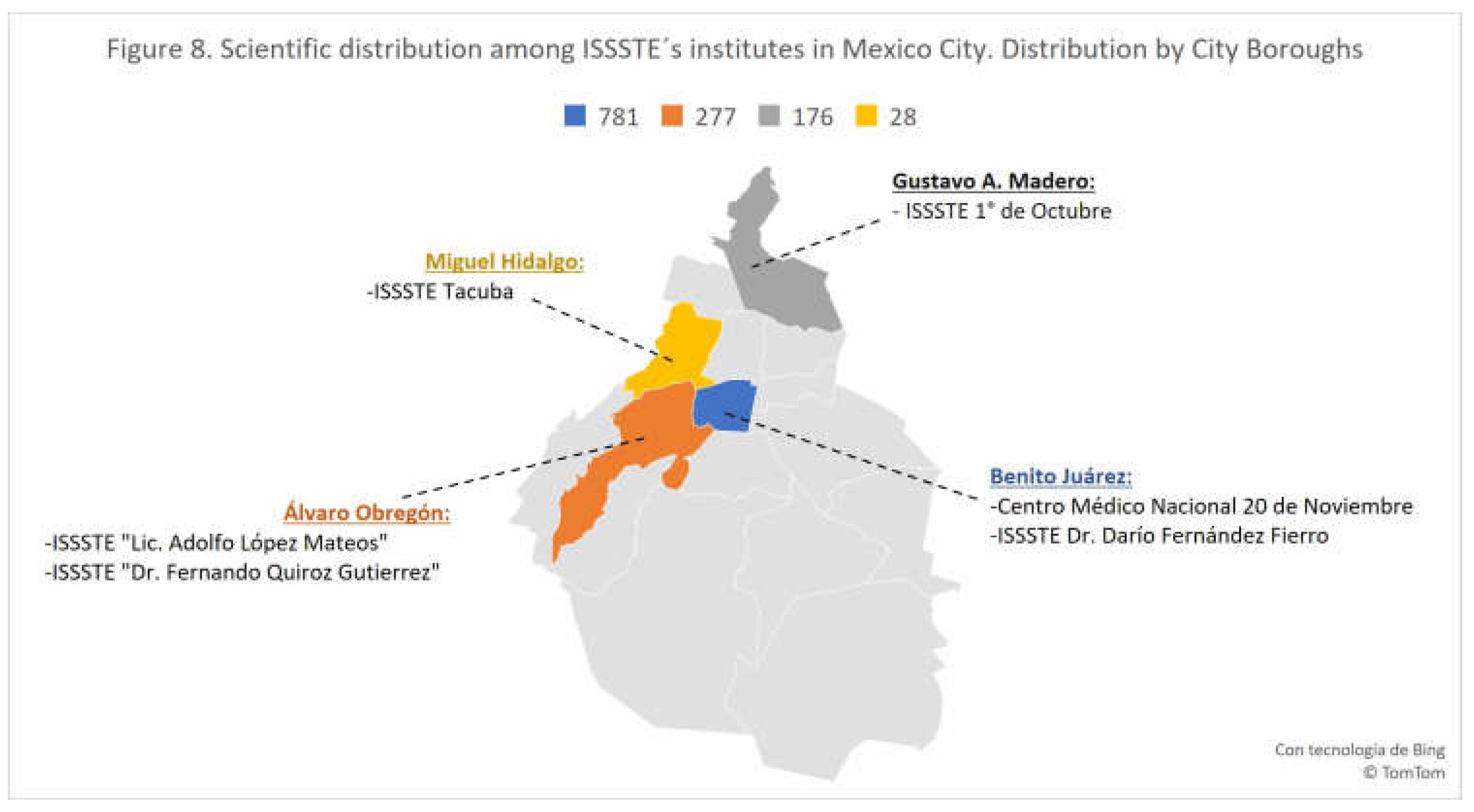
The top ten journals in terms of Impact Factor (IF) publishing Mexican papers are shown Figure 9. The top is the Journal of Clinical Oncology with the highest IF (IF = 44.54). 
Table 4 shows the most cited publications in journals being in consequence the most productive journals: “The American Journal of Respiratory and Critical Care Medicine” (n =355), “The American Journal of Medicine” (n= 268) and “The International Journal of Clinical Practice” (n= 206). The number of citations have a range from 355 to 0: The L0 index (proportion of uncited items relative to the total number of publications) (20) is 59.8% (1,235/2,063). National journals host 8% of the publications, while the rest were international.
Figure 10 displays a co-authorship network made in VOSviewer version 1.6.16. The Vosviewer program was useful, with the articles downloaded in .CSV format from the selected hospitals. We were able to analyze the relationship between the different authors belonging to each institution, highlighting the most productive authors (most cited ones), those who presented closer collaborations with authors from other institutes, and in contrast those who are more isolated and rather work on their own. Node sizes depend on the productivity of each author in an objective way: citations. The size is directly proportional to the scientific production, when more productive, a bigger node. Regarding node proximity and link length: VOSviewer detected collaborations between authors from the different affiliations and graphic with a shorter link length those with a narrower working network. This co-authorship network represent the Institutions are with different colors: Dark Green (Hospital 20 de Noviembre), Brown (Hospital Regional 1o de Octubre), Pink (Hospital Lic. Adolfo López Mateos), Red (ISSSTE), Yellow (Hospital General Dr. Darío Fernández), Light Green (Hospital General Tacuba), Blue (Hospital General Dr. Fernando Quiroz,)Gray (ISSSTECALI Tijuana) Light Pink (Hospital Regional Dr.Valentín Gómez Farías). The orange, light blue, purple, and light purple represent the authors who are not as productive (cited). The VOSviewer program arranged it this way to show the correlations management to summarize all research obtained. 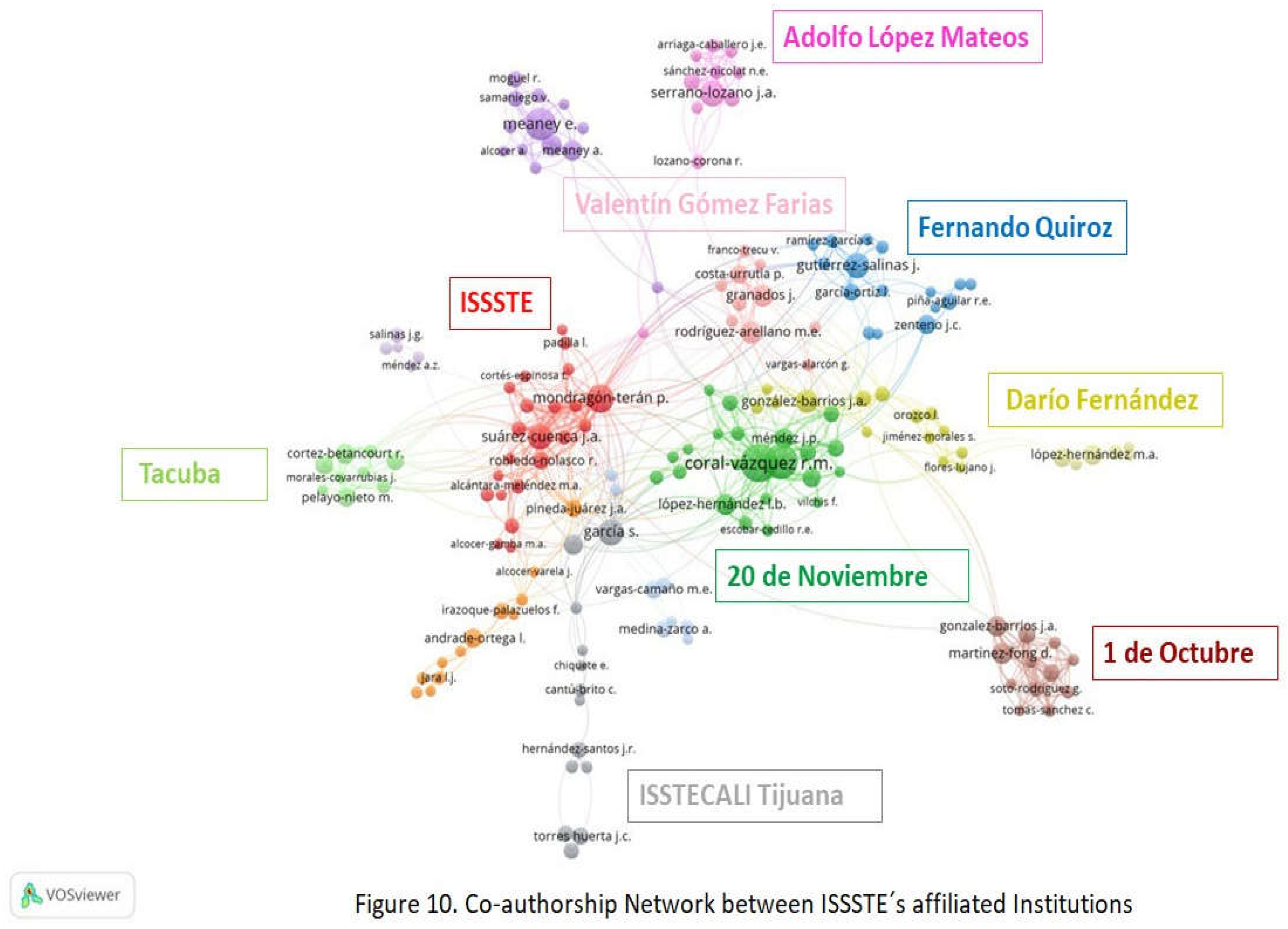
4. Discussion
The very concept of scientific “performance” is controversial, but bibliometric indicators allow to gauge the productivity (number of publications) and the impact (how often cited) at all the three levels: micro (an individual), meso (a health institutions) or macro (countries, specialties, universities). Both developed nations (North America (27), Europe(28), Asia(29), Oceania(30)), or less advanced economies (South America(31) or Africa(32)), have made efforts to evaluate how far their contributions have been important to the global corpus of science. However, the interest on the topic in Mexico is extremely low as we have stated above. Consciousness is awareness of awareness (33), but can we change if we are unaware that we are unaware? We want to create awareness in the Latin American medical community on how it is important to know where we stand to target the right direction.
We envision our bibliometric analysis as the Google Maps of research (34) as it works as a network server that offers an aerial view of research, (35) allows policy makers to take decisions according to identified abandoned and neglected areas (as an analogy to knowledge gaps), (36) shows where everybody is crowded (as an analogy of what are the main interests in the scientific field) (37) and predicts where you should go in the future (38) (focus on the most prevalent pathologies in medical consultation).
Beyond providing healthcare services, the ISSSTE also plays a role in education and scientific research. Generation of new knowledge (the goal of medical research) and its implementation are mandatory to promote wellness and offer a better quality of life to patients. The core of medical progress is the development of new technologies or procedures but social and health policies are also necessary to implement them in different circumstances (translational research). Research must be implemented and encouraged, as it is a turning point for problem solving and improves the training of human resources who become capable of providing better healthcare. As many other Mexican healthcare institutions, the ISSSTE intends to define and create new strategies to promote scientific research on the most prevalent and priority issues. The purpose of our study was to disclose who are the main stakeholders of Mexican medical research and how often the specialties dealing with the most prevalent pathologies make some contributions to the corpus of world medical knowledge. Indeed, any research project not culminating in a publication (by definition, accessible to the public) remains private (only known by the researchers). In our bibliometric analysis and by focusing on the most cited papers, we can know what has drawn the attention of this medical community and compare them with the most prevalent health conditions treated by the ISSSTE.
In our country seems like nobody else has ever asked the question we want to solve: “Is health system research focused on the patients’ needs?”. In the current state of knowledge, we cannot fully answer, but have the merit of being curious enough to ask this question for the first time, and we hope we will inspire others to complement our first attempt. Nonetheless, while carrying out our research, we noticed some quite interesting data. Taking a closer look and comparing keywords from table 2 and figure 4, words such as “hypertension”, “COVID-19”, “asthma”, “obesity”, “diabetes”, and “infection”, to mention some of them, appear in both of them, which creates the impression that authors are actually interested in and writing about the most prevalent pathologies on their clinical practice. However, when comparing the main disorders requiring medical care in the ISSSTE (Table 2) and comparing with the most cited articles (table 4), quite a few are related to respiratory diseases (COVID-19, asthma, mechanical ventilation, and respiratory distress syndrome). However, other topics highly cited related to oncological diseases and their treatment, are not among the most frequent causes of medical care. On the other hand, highly prevalent conditions such as metabolic syndrome, dyslipidaemia, hypertension, atherosclerosis, gastrointestinal conditions, pregnancy, and genitourinary infections are not the subject of top papers, nonetheless they do appear as the 20 most prevalent pathologies and the 50 most frequently occurring keywords in papers authored by the ISSSTE so those are themes of interest but they are not given priority. How this issue can be tackled remains beyond the scope of our paper and merits further research.
It has been suggested that publishing lots of papers is the resultant of multiple individual characteristics, that can vary from extraordinary ability and teamwork to unjustified and unethical co-authorship (39). We do not know if some of these top Mexican scientists have an honorary authorship, which has been shown to be as high as 26% in the radiology literature, where the department head was sometimes automatically listed as an author(40). Honorary authorship refers to those who are named as authors —despite having had little to do with the work involved in publishing original research reports—merely because they hold senior positions within the hospital or the department where the research occurred and may have helped secure funding or simple supervision(41). We might explore in a further study if this practice exists in Mexico and how often it might happen. The concept of the “add-my-name” practice has recently been introduced(42). In such cases, researchers ask their colleagues to append their names as co-authors to a research article where they have made no intellectual contribution; sometimes this is done in a reciprocal form. That is, authors simply have a network of friends who add each other’s names in turns.
National scientific production is highly skewed to Mexico City, as centres with the most productive authors (Centro Médico Nacional 20 de Noviembre) are located there, with the greatest impact as those authors also have written the most cited publications. On the other side of the spectrum, table 1 shows that some research centres have only a few documents; the ratio of documents per author is also low (many researchers have only one contribution and they stop writing further). This might indicate that the interest of authors in participating in the publication process is low and/or they tend to overcrowd the number of authors for a single paper. This phenomenon also needs to be further studied.
Accidentally, we came across a disambiguation issue in affiliation names than had never been reported before. Two hospitals from different institutions have the same name (Fernando Quiroz). One of them belongs to the ISSSTE and the other one does not; the former is in the Xico Valle de Chalco district in the nearby suburbs of Mexico City. However, all the papers of the ISSSTE’s Fernando Quiroz are misattributed to "Hospital Xico Valle" by Scopus (ID: 60095173), whose address is even listed in that neighboring suburb. That means that none of the Research departments has remarked that error in disambiguation and even less has asked Scopus to fix that situation. With this in mind, we highly recommend that the heads of research or teaching departments search for their own institution name and request correction from Elsevier. Scopus builds institution profiles from the affiliation text in the articles it indexes. Scopus algorithms can identify name variations and link them into one profile. Affiliation IDs are assigned to the "parent" institution as well as any "child" institutions in the institution's hierarchy. Due to the great variation in the way affiliations are represented by authors and publishers, this automated process can never be exact. Some variants may be missed, and others may be inappropriately included. Authorized users with knowledge of the institution can manually review alternate names to make sure profiles are correct and complete. How to update institutional affiliations? Various organizations that rank and evaluate institutions use Scopus data for their calculations. Institutions themselves often use this same data for reporting, bibliometrics and other purposes. Changes to profile information can change an institution's hierarchy, document counts and, subsequently, any institutional evaluations that use Scopus data. Therefore, Scopus limits who can make changes via the Institutional Profile Wizard (IPW) to the institution's authorized representatives. Only these users have access to an institution's profile and hierarchy.
Our co-authorship analysis (figure 10) shows how research projects are shared in between hospitals belonging to a single network: ISSSTE. This diagram (network of co-authors) clearly shows how some institutions are intimately linked, while others work on their own and are the “lone rangers” of research as it exposes and corroborates that the most productive authors belong to the research centers ISSSTE, as the mother affiliation and CMN 20 de Nov which are the ones with the larger nodes (red and dark green respectively) and the most co-authored links. In this way, their authors are not only the most productive ones but they also seem to follow the path of teamwork. While some other hospitals seem not to have tight connections, such as Adolfo López Mateos Hospital, Tacuba General Hospital and Hospital ISSSTECALI, it is interesting to realize that city borough Gustavo A. Madero has a total of 176 publications which are on behalf of a single hospital: Hospital Regional 1º de Octubre which by comparing with figure 10 (brown), does have big nodes but few co-author links. It seems that some institutions do not work hand in hand with other authors despite being under the same administration, contributing to build some barriers in the distribution of knowledge. Furthermore, our L0 index turned out to be of, used as a bibliometric parameter that can reveal Mexican medical literature fields are not being transcendental.
Analyzing figure 10 and table 1, we noticed that the number of documents listed in table 1 sum up more than 2,063 which means that some publications include authors from different affiliations, in consequence promoting co-authorship and teamwork between institutions as well.
Why did we use Scopus and not the WOS (Web of Science)? In Mexico, the National Council of Science and Technology (CONACYT: Consejo Nacional de Ciencia y Tecnología) evaluates scientific journals through the Mexican Science and Technology Journals Classification System (SCRMCYT: Sistema de Clasificación de Revistas Mexicanas de Ciencia y Tecnología). Of the 35 Mexican journals include in that list, the percentage indexed by Scopus, PubMed and the WoS are 89%, 49% and 34% respectively. (43). The selection of another repository would greatly underestimate Mexican production. Other countries have compared those repositories as well: in a Indian recent study, the Web of Science database was found to have only 1,025 conference papers indexed, compared to 20,189 in Scopus and 21,182 in Dimensions (44). Therefore, one of the main reasons for the variation in publication volume is the variable amount of coverage of conference papers in Web of Science and the other two databases. Second, it is also observed that the number of publication records of the type 'article' also varies significantly in the three databases, from 57,844 in Web of Science to 66,955 in Scopus and 94,387 in Dimensions, (44) concluding that report distribution is greater in Scopus.
We believe that scientific output of any given nation results from both individual and collective actions of its scientists seems to reflect what they think about knowledge generation, how they conceive this process and in which place of their economy, their society bestows research. Cross pollination of disciplines is fundamental to truly revolutionary advances in any given field of science and medicine cannot longer ignore scientometrics. In order to explain, we introduce the “R&D expenditure”, that is, the cost of research and development. According to Forbes magazine, it is considered one of the main engines of the country’s economy and a fundamental component for the generation of talent and innovation as well (45). In our days Global spending on R&D has reached a record high of almost US$ 1.7 trillion, but sadly the top-10 countries account for 80% of the spending. As part of the Sustainable Development Goals (SDGs), countries have pledged to substantially increase public and private R&D spending as well as the number of researchers by 2030 (46). Countries that invest in science today will be the richer nations of tomorrow: by increasing investment in R&D, the development of our countries will accelerate. On the other hand, if a country skimps on resources for R&D or basic science, they fall behind in the world rankings, losing the talent of their professionals, as these minds flee to nations that do invest in them and their projects (46). Not publishing more in terms of quantity and of quality (projects relevant to our country and truly original and disruptive research instead of running the same study already published abroad) will increase the reliance on foreign technology and perpetuate our state of submission to the developed nations.
How does spending on R&D affect wealth? The positive relationship between continual investment in research and development and economic growth has been known for years. Looking at Figure 1, we noticed there is the constant within either developed and developing countries that they do not invest in the future (nor in their present, but this article cannot prove it) as we demonstrate with this research, that they are not focusing on investing in the future as they do not focus on increasing their R&D, nonetheless it is percentual bigger than developing countries as ours. However, it is important to mention that some data are not available in the World Bank source therefore some data points are missing in figure 1. Supplementary file 1 shows us higher numbers in some leading countries in R&D investment allowing us to know where research and development expenditures are, highlighting three large geographical areas: Europe (Switzerland, Sweden, and Austria), North America and Southeast Asia (Korea, Japan, and China). This type of analysis is paramount to understand where we're heading to, especially if resources devoted to research are scarce, as it is the case in most Latin American countries, as shown in Figure 1.
By having a closer look at R&D figures in Latin America (Table 5)(47–60), we come to realise that Brazil does not proportionally have a large number of universities like Mexico has. Nonetheless, in terms of number of publications, Brazil performs much better than Mexico, and therefore we suggest more reflection should be carried on how our universities and hospitals are really contributing to the generation of new knowledge. For the time being, it is well known that universities have three main goals: teaching and training students’ skills and virtues relative to their future profession, informing the layman about the recent advancements in science and providing criteria for evidence-based decision in the civil society and finally, generation of new knowledge which is precisely the goal of research. Most Mexican universities certainly fulfil the first two roles, as students from other Latin American countries come to be trained, including undergraduate and post graduate medical students. But do Mexican universities contribute to create new medical knowledge? The present paper is also a first step to answer that crucial question.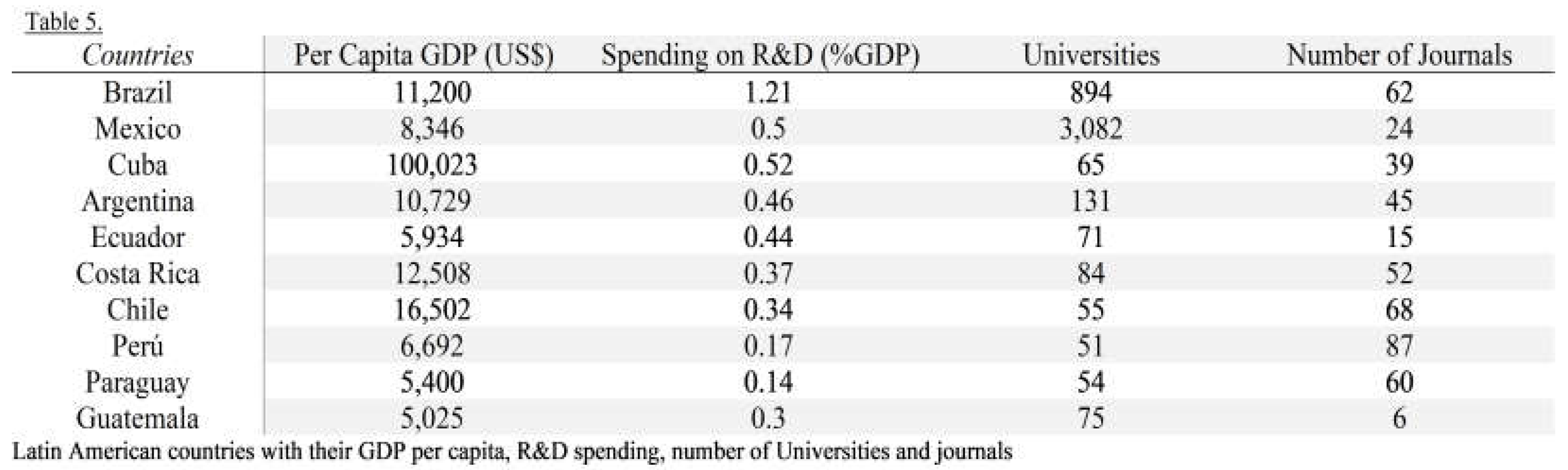
We would like to clear up that our study is pioneer analysis of Mexican medical literature, the very first of its kind and even if it does not represent all Mexican literature, it covers all specialties and an institution with a nationwide distribution. It pretends to work as a first step in the long path to answer a crucial question: which are the Mexican contributions to the global corpus of medical knowledge? Our findings have now set a reference for later comparisons and encourages further research to disclose the factors that influence both productivity and impact. Our goal in this article is to offer a real perspective in some selected research topics leading to fruitful future bibliometric research that could play an essential role in the development of Latin American countries.
We would like to underline the fact that, strictly speaking, bibliometric analysis objective is ONLY to analyse. This research does not intend to put any “negative label” on publishing purportedly in less prestigious journals or publishing less than expected. We consider that in some Latin American countries there is a feeling of discomfort or even shame when pointing at the weak points, in this case, of our performance in science however, we believe there should be no shame in being realistic, yet it is a great step to know where you are standing to set achievable goals to be better. It is imperative to keep in mind that you will not improve unless you understand your status and you will not change your goal if you do not even set your goals properly.
For the time being, we cannot determine what the “expected performance” of Mexican Literature should be but future analysis of medical literature of any given Latin American country may be compared to our statistics and update the ranking we are placed in that specific place given by those future comparisons.
In the scientific community the term “prolific author” figures as an impressive and transcendent character. No threshold has been defined but it goes from 40 articles in the last 5 year to 18 papers per year depending on the specialty, and while in critical care not a single author was from Latin America ], in orthodontics 19.2% of authors were from Brazil, surpassing richer countries like Italy or much larger, like India(61–63). On the other hand, factors that have rocketed these authors have been studied elsewhere(61) but this topic has never been properly and widely studied in Latin America. Moreover, even larger countries like Brazil and Mexico have economic, cultural, and social contrasts which merit different studies.
It is highly useful to our scientific community to know both the goals (external motivation), the profile (academic career) and even the personality (internal motivations) of these leaders. They live in the same country, work in the same institutions, and they are likely to face the same difficulties we deal with, but they write papers that many of us do not. We know that the present study touches a raw nerve, but somebody had to do it. A national survey may help in elucidating what the Mexican recipe for academic success is and that would be a notable contribution from our initiative.
Political or administrative measures and often palliative, as they will certainly change when the term of those deciders comes to an end. The only lasting solution to the skyrocketing scientific output of the Latin American medical community is a total rewiring of our mindset. And this Copernican revolution cannot come from the Holy Spirit but will emerge from a deeper insight into us, and the first step is a description of the patterns of production of our scientists. We firmly believe that if interinstitutional alliances to strengthen local research and promoting more exchange of information, national performance indicators will improve(17). Moreover, scientific collaboration between international institutions has shown to have a better chance to be published in greater recognized journals, have a larger audience, attract more citations and as a result a greater impact.
As we finally stablished, we expect this analysis to be a call to action to every doctor who have not published and in consequence cannot be analysed from the bibliometric point of view as they remain "non-existent" for medical research. All research that is not published, even if it is done, remains private, and when published, it becomes public. We would like to extend an invitation to all medical community in Latin America to join our efforts in building a solid group of researchers for laying solid foundations for the future of science in our countries, on the ground of an objective analysis of the weak points of our past, seasoned by our strengths from the present.
Our manuscript has clear limitations that we have already acknowledged, but our study has shed some light that allows a clearer understanding of the research process and provides more meaningful insights, leading to take data driven decisions. By knowing our past, we can modify our present strategies and therefore target a better future.
Supplementary Materials
The following supporting information can be downloaded at the website of this paper posted on Preprints.org. Figure S1: Representation (World Bank Data) showing the percentage investment in science and R&D of developed countries (1996–2020).
Author Contributions
Conceptualization and initial version, Gerónimo Pacheco Aispuro, Ileana Belén Rojas Jácome, Carlos Alejandro Martínez Zamora, Ángel Lee.; Manuscript, Ileana Belén Rojas Jácome, Carlos Alejandro Martínez Zamora, Ángel Lee.; Software, Cuauhtémoc Gil-Ortiz Mejía, Christopher Mader, Carlos Castillo Rangel, Alejandro Monroy Sosa, Mario Flores-Vázquez, Octavio Jesús Arroyo Zavala, Rodrigo Ramos-Zúñiga, Gerson Ángel Alavez, Guillermo González Garibay.; All authors have read and agreed to the published version of the manuscript.
Funding
This research received no external funding.
Institutional Review Board Statement
Not applicable.
Data Availability Statement
Original csv files from each institution along with the final list of papers in Excel can be provided by the corresponding author on reasonable request.
Acknowledgments
Not applicable.
Conflicts of Interest
Declare conflicts of interest or state “The authors declare no conflict of interest.” Authors must identify and declare any personal circumstances or interest that may be perceived as inappropriately influencing the representation or interpretation of reported research results. Any role of the funders in the design of the study; in the collection, analyses or interpretation of data; in the writing of the manuscript; or in the decision to publish the results must be declared in this section. If there is no role, please state “The funders had no role in the design of the study; in the collection, analyses, or interpretation of data; in the writing of the manuscript; or in the decision to publish the results”.
References
- Block, G.; Hurtado, C.; Morales, R. Mexico: health system review. Health Syst. Transit. 2020, 22. Available online: https://apps.who.int/iris/handle/10665/334334.
- Octavio, G.D.; et al.; Sistema de Salud en México Salud Pública Mex 2011; 53. Available online: http://www.scielo.org.mx/scielo.php?script=sci_arttext&pid=S0036-36342011000800017&lng=es&tlng=es (accessed on 12 May 2022).
- World Population Review. Best Healthcare in the World 2022 World Population Review. 2022. Available online: https://worldpopulationreview.com/country-rankings/best-healthcare-in-the-world (accessed on 7 July 2022).
- ISSSTE. Instituto de Seguridad y Servicios Sociales de los Trabajadores del Estado 2018. Available online: https://www.cuentapublica.hacienda.gob.mx/work/models/CP/2018/tomo/VII/Print.GYN.01.INTRO.pdf (accessed on 15 March 2022).
- ISSSTE. Anuario Estadístico 2021 - Población derechohabiente por año según tipo de derechohabiente, 2010 a 2021 2022. Available online: http://www.issste.gob.mx/datosabiertos/anuarios/anuarios2021.html#cap1 (accessed on 19 July 2022).
- Alba MIM, Hernández JAM, Ramírez JAM. EL GASTO EN INVESTIGACIÓN Y DESARROLLO EXPERIMENTAL (GIDE) EN MÉXICO, PROMOTOR DEL CRECIMIENTO ECONÓMICO. :17.
- Diario Oficial de la Federación. Programa Sectorial de Educación 2013-2018. Available online: https://www.dof.gob.mx/nota_detalle_popup.php?codigo=5326569 (accessed on 12 June 2022).
- Diario Oficial de la Federación. Ley General de Educación 2022. Available online: http://cgservicios.df.gob.mx/prontuario/vigente/5519.htm (accessed on 12 July 2022).
- UNESCO Institute for Statistic. Research and development expenditure (% of GDP) - Mexico | Data The World Bank. 2022. Available online: https://data.worldbank.org/indicator/GB.XPD.RSDV.GD.ZS?locations=MX (accessed on 12 June 2022).
- Trading Economics. Mexico - Research And Development Expenditure (% Of GDP) Trading economics. Available online: https://tradingeconomics.com/mexico/research-and-development-expenditure-percent-of-gdp-wb-data.html (accessed on 12 June 2022).
- de la Fuente JR, Heber, Joerg. Mexican science on the couch. Interview by Joerg Heber and Jesús Rogel-Salazar. Nat Mater. 2010, 9, 784–785.
- Scimago journal & Country Rank. Scimago Institutions Rankings. Available online: https://www.scimagojr.com/countryrank.php.
- Cabezas-Clavijo A, Torres-Salinas D. Bibliometric Reports for Institutions: Best Practices in a Responsible Metrics Scenario. Front Res Metr Anal 2021, 6, 696470. [CrossRef]
- Estrada, A.; Acosta, J.; Catacora, M.; Scientific production and collaboration networks in Peruvian Social Security, a bibliometric analysis in Scopus 2008-2017. 2019, 36, 116–23. Available online: http://www.scielo.org.pe/scielo.php?script=sci_arttext&pid=S1728-59172019000200007&lng=es&nrm=iso (accessed on 18 March 2022).
- Kokol P, Blažun Vošner H, Završnik J. Application of bibliometrics in medicine: a historical bibliometrics analysis. Health Inf Libr J 2021, 38, 125–38. [Google Scholar] [CrossRef]
- Alarcón-Ruiz, C.A.; Cortez-Soto, A.G.; Romero-Cerdan, A.; Benites-Bullón, A.; Altamirano-Farfá, E.F.; Pino-Zavaleta, D.A.; et al. Producción científica y redes de colaboración en la Seguridad Social del Perú (EsSalud): Análisis bibliométrico 2008-2020. Rev Cuerpo Méd Hosp Nac Almanzor Aguinaga Asenjo 2021, 14, 145–54. [Google Scholar] [CrossRef]
- Secretaría de Salud. Programa Sectorial de Salud 2019-2024 2019. Available online: http://saludsinaloa.gob.mx/wp-content/uploads/2019/transparencia/PROGRAM_SECTORIAL_DE_SALUD_2019_2024.pdf.
- Nonboe, M.H.; Lynge, E. How can we use bibliometric analysis to guide research forward?—an editorial for “Research trends and hotspots on human papillomavirus: a bibliometric analysis of 100 most-cited articles”. Ann. Transl. Med. 2022, 10, 849–849. [Google Scholar] [CrossRef]
- Kumar, M.; George, R.J. A. Bibliometric Analysis for Medical Research. Indian J. Psychol. Med. 2022, 45, 277–282. [Google Scholar] [CrossRef]
- Carrillo-Ruiz, J.D.; Armas-Salazar, A.; Navarro-Olvera, J.L.; Beltrán, J.Q.; Bowles, B.; González-Garibay, G.; Lee, Á. Bibliometric Analysis of Mexican Publications on Stereotactic and Functional Neurosurgery From 1949 to 2021. Front. Surg. 2022, 9, 886391. [Google Scholar] [CrossRef]
- Pruneda, A. Mexican medical publications. Medicina (Mex). 1951, 31, 100–104. [Google Scholar]
- Cueva, J. Various studies and publications on bronchial asthma in Mexico. Prensa Med Mex. 1974, 39, 128–132. [Google Scholar]
- Laguna, J. Periodical medical publications and the Gaceta Médica de México. Gac Med Mex. 1971, 102, 1–3. [Google Scholar] [PubMed]
- Feria-Velasco, A. Historical development of the neurosciences in Mexico: An overview with particular reference to publications on neurosciences in Archives of Medical Research. Arch Med Res. 1995, 26, S105–107. [Google Scholar]
- Valdez-Martínez, E.; Garduño-Espinosa, J.; Gómez-Delgado, A.; Dante Amato-Martínez, J.; Morales-Mori, L.; Blanco-Favela, F.; et al. Bibliometric analysis of publications by the Mexican Social Security Institute staff. Gac Med Mex. 2000, 136, 319–328. [Google Scholar]
- SUIVE/DGE/SECRETARIA DE SALUD. Veinte principales causas de enfermedad Nacional, por fuente de notificación Estados Unidos Mexicanos 2020 Población General 2020. Available online: https://epidemiologia.salud.gob.mx/anuario/2020/principales/nacional/institucion.pdf (accessed on 10 June 2022).
- Xie, J.S.; Nanji, K.; Khan, M.; Khalid, M.F.; Garg, S.J.; Thabane, L.; Sivaprasad, S.; Chaudhary, V. Publication trends in telemedicine research originating from Canada. Heal. Manag. Forum 2022, 35, 153–160. [Google Scholar] [CrossRef] [PubMed]
- Tozzi, A.E.; Fabozzi, F.; Eckley, M.; Croci, I.; Dell’anna, V.A.; Colantonio, E.; Mastronuzzi, A. Gaps and Opportunities of Artificial Intelligence Applications for Pediatric Oncology in European Research: A Systematic Review of Reviews and a Bibliometric Analysis. Front. Oncol. 2022, 12, 905770. [Google Scholar] [CrossRef] [PubMed]
- Huh, S. Journal metrics, document network, and conceptual and social structures of the Korean Journal of Anesthesiology from 2017 to July 2022: a bibliometric study. Korean J. Anesthesiol. 2023, 76, 3–11. [Google Scholar] [CrossRef]
- Izwan, S.; Chan, E.; Ibraheem, C.; Bhagwat, G.; Parker, D. Trends in publication of general surgery research in Australia, 2000–2020. ANZ J. Surg. 2022, 92, 718–722. [Google Scholar] [CrossRef] [PubMed]
- Evora, P.R.B.; Carmo, A.C.F.; Evolution of the Brazilian Journal of Cardiovascular Surgery. Braz J Cardiovasc Surg 2022, 37(5). Available online: https://cdn.publisher.gn1.link/bjcvs.org/pdf/0102-7638-rbccv-37-05-000I.pdf (accessed on 14 November 2022).
- Mutebi, M.; Lewison, G.; Aggarwal, A.; Alatise, O.I.; Booth, C.; Cira, M.; Grover, S.; Ginsburg, O.; Gralow, J.; Gueye, S.; et al. Cancer research across Africa: a comparative bibliometric analysis. BMJ Glob. Heal. 2022, 7, e009849. [Google Scholar] [CrossRef] [PubMed]
- Zeman, A. Consciousness. Brain 2001, 124, 1263–1289. [Google Scholar] [CrossRef]
- Xu, X.; Mishra, G.D.; Jones, M. Mapping the global research landscape and knowledge gaps on multimorbidity: a bibliometric study. J. Glob. Heal. 2017, 7, 010414–010414. [Google Scholar] [CrossRef]
- You, Y.; Wang, D.; Wang, Y.; Li, Z.; Ma, X. A Bird's-Eye View of Exercise Intervention in Treating Depression Among Teenagers in the Last 20 Years: A Bibliometric Study and Visualization Analysis. Front. Psychiatry 2021, 12. [Google Scholar] [CrossRef]
- Sweileh, W.M. Contribution of researchers in Arab countries to scientific publications on neglected tropical diseases (1971 – 2020). Trop. Dis. Travel Med. Vaccines 2022, 8, 1–14. [Google Scholar] [CrossRef]
- Zhou, Y.; Guo, X.; Mu, J.; Liu, J.; Yang, H.; Cai, C. Current Research Trends, Hotspots, and Frontiers of Physical Activity during Pregnancy: A Bibliometric Analysis. Int. J. Environ. Res. Public Heal. 2022, 19, 14516. [Google Scholar] [CrossRef]
- Sani'Ee, N.; Nemati-Anaraki, L.; Sedghi, S.; Chakoli, A.N.; Goharinezhad, S. The Effective Trends and Driving Forces in The Future of Research Performance Evaluation: A Qualitative Study. Med J. Islam. Repub. Iran 2022, 36, 393–406. [Google Scholar] [CrossRef]
- Moris, D. Highly prolific authors in medical science: from charisma to opportunism. J BUON Off J Balk Union Oncol. 2020, 25, 2136–2140. [Google Scholar]
- Eisenberg, R.L.; Ngo, L.; Boiselle, P.M.; Bankier, A.A. Honorary Authorship in Radiologic Research Articles: Assessment of Frequency and Associated Factors. Radiology 2011, 259, 479–486. [Google Scholar] [CrossRef]
- Quaia, E.; Crimi’, F. Honorary Authorship: Is There Any Chance to Stop It? Analysis of the Literature and a Personal Opinion. Tomography 2021, 7, 801–803. [Google Scholar] [CrossRef]
- Aiyebelehin, A.J. “Add-my-name” as a parody of research collaboration among Nigerian researchers. Account. Res. 2021, 29, 45–54. [Google Scholar] [CrossRef]
- Barajas-Ochoa, A.; Barajas-Ochoa, Z.; Ramos-Remus, C. Análisis bibliométrico de las revistas médicas del Sistema de Clasificación de Revistas Mexicanas de Ciencia y Tecnología. Gac Mexico 2019, 155, 1897. [Google Scholar] [CrossRef]
- India’s rank and global share in scientific research: how data sourced from different databases can produce varying outcomes? J Sci Ind Res 2021, 80. Available online: http://op.niscpr.res.in/index.php/JSIR/article/view/38273 (accessed on 26 october 2022).
- Coll Morales, F. Invertir en I+D, solución al mundo competitivo Forbes Mexico. Available online: https://www.forbes.com.
- UNESCO. Institute for Statistic. How much does your country invest in R&D? Available online: http://uis.unesco.
- World Bank. Brazil GDP per capita 2021. Available online: https://tradingeconomics.
- Brazil. Higher Education Available online: https://education.stateuniversity.com/pages/200/Brazil-HIGHER-EDUCATION.
- Brazilian Journals Publicações de Periódicos e Editora Ltda Available online: https://ojs.brazilianjournals.com.
- OECD. R&D Tax Incentives: Mexico, 2021 Directorate for Science, Technology and Innovation; 2021. Available online: https://www.oecd.org/sti/rd-tax-stats-mexico.
- SIC México. Sistema de Información cultural. Universidades por estado: 3,080 Cultura. Available online: https://sic.cultura.gob.mx/lista.php?
- United Nations Development Programme. HUMAN DEVELOPMENT INSIGHTS 2022. Available online: https://hdr.undp.
- Santos Gutiérrez, S.C.; López Segrera, F. Revolución cubana y educación superior. Aval Rev Aval Educ Super Camp 2008, 13, 391–424. [Google Scholar] [CrossRef]
- Martinovich, V. Revistas científicas argentinas de acceso abierto y circulación internacional: Un análisis desde la teoría de los campos de Pierre Bourdieu. Inf Cult Soc 2019, 0, 93. [Google Scholar] [CrossRef]
- Blanco Picado, Patricia. Costa Rica se sitúa entre los países con mayor apertura a la información científica Universidad de Costa Rica. 2022. Available online: https://www.ucr.ac.cr/noticias/2022/06/20/costa-rica-se-situa-entre-los-paises-con-mayor-apertura-a-la-informacion-cientifica.
- Universidades de Chile: Acreditadas y no Acreditadas 2022 Cursando.cl. 2022. Available online: https://cursando.
- Universidades SUNEDU. Superintendencia Nacional de Educación Superior Universitaria. 2017. Available online: https://www.sunedu.gob.
- ANEAES. Agencia Nacional de Evaluación y Acreditación de la Educación Superior. Nómina de Universidades del sector oficial y privado con marco legal de aprobación para su funcionamiento Gobierno Nacional. Available online: http://www.aneaes.gov.py/aneaes/index.
- UNIVERSIDADES DE GUATEMALA Universidades Privadas y Públicas de Guatemala ordenadas por Región Altillo.com. 2022. Available online: https://www.altillo.com/universidades/universidades_guatemala.
- World Bank. Research and development expenditure (% of GDP) Available online: https://data.worldbank.org/indicator/GB.XPD.RSDV.GD.
- Weiss, E.; Hjortrup, P.B.; Robba, C.; De Jong, A.; Helms, J. Highly prolific authors in critical care: which factors influence their scientific output? Intensiv. Care Med. 2019, 45, 1673–1675. [Google Scholar] [CrossRef] [PubMed]
- Wong, C.; Papageorgiou, S.N.; Seehra, J.; Cobourne, M.T. Prolific authorship in orthodontic scientific publishing. Orthod. Craniofacial Res. 2021, 25, 416–428. [Google Scholar] [CrossRef] [PubMed]
- Robba, C.; Weiss, E.; Hjortrup, P.B.; De Jong, A.; Helms, J. Who are these highly prolific authors in critical care? Intensiv. Care Med. 2019, 45, 1670–1672. [Google Scholar] [CrossRef] [PubMed]
| 1 | Instituto Nacional de Ciencias Médicas y Nutrición Salvador Zubirán |
| 2 | Instituto Nacional de Salud Pública |
| 3 | Instituto Nacional del Perinatología |
| 4 | Instituto Nacional de Pediatría |
| 5 | Instituto Nacional de Psiquiatría Ramon de la Fuente |
| 6 | Instituto Nacional de Neurología y Neurocirugía |
| 7 | Instituto Nacional de Geriatría |
| 8 | Instituto Nacional de Cardiología Ignacio Chávez |
| 9 | Instituto Nacional de Enfermedades Respiratorias |
| 10 | Instituto Nacional de Rehabilitación |
| 11 | Instituto Nacional de Medicina Genómica |
| 12 | Instituto Nacional de Cancerología |
Disclaimer/Publisher’s Note: The statements, opinions and data contained in all publications are solely those of the individual author(s) and contributor(s) and not of MDPI and/or the editor(s). MDPI and/or the editor(s) disclaim responsibility for any injury to people or property resulting from any ideas, methods, instructions or products referred to in the content. |
© 2023 by the authors. Licensee MDPI, Basel, Switzerland. This article is an open access article distributed under the terms and conditions of the Creative Commons Attribution (CC BY) license (http://creativecommons.org/licenses/by/4.0/).
Copyright: This open access article is published under a Creative Commons CC BY 4.0 license, which permit the free download, distribution, and reuse, provided that the author and preprint are cited in any reuse.