

Submitted:
10 February 2023
Posted:
10 February 2023
You are already at the latest version
Abstract
Collecting relevant data is an important aspect in allowing evaluation of the performance of systems, methods, algorithms, and techniques developed in the research process. Researchers at the South African Scientific and Industrial Research Council perfoemd a study to identify biometric(s) that can be used to identify and verify young children from birth to 16 years old. Three types of biometrics were considered in this study as a resukt of a comprehensive preliminary research, namely, fingerprins, iris and ear shap. This paper presents challenges identified and lessons learned during the in trying to collect data for scientific research that require interaction with children of different ages and their parents in different environments. . The study is primarily based on researcher’s experiences. Some of the discussion points discussed are of global relevance to children and general human beings, while others relate to South Africa in particular. The discussion aims to share knowledge and experience, hoping that this will help researchers prepare for a trouble-free child data collection process in the future. Keywords: Baby biometrics; long-term data collection, baby fingerprints, baby iris, baby ears
Keywords:
Infant Biometrics
; Longitudinal data collection
; infant fingerprint
; infant iris
; infant's ear
1. Introduction
The usage of biometrics methods in identifying and verifying adults have shown to secure the identity of individuals. However, there is still a lack of similar technologies that can be used to securely protect the identity of children. Thus, theCouncil for Scientific and Industrial Research (CSIR) launched an research study to create a prototype biometric identification system that may be used to establish or verify children's identities from birth to age 16. The research aims to combat child trafficking, identity theft and fraud, connecting lost and lost children with parents, and improving children's health management systems [1,2,3,4,5,6]. The unique challenge of the research is that existing technologies cannot accurately obtain biological data from newborns (children) and successfully match them to the same person during growth and adulthood, so children are susceptible to various forms of exploitation. As part of this research, the team started by collecting biometric data on children's fingerprints, ears, and iris at regular intervals for a period of two years. The aim is to collect data for a longer period to allow the researchers to investigate the changes that occur with the growth of children over time.
The remainder of the paper is structured as follows. Section 2 is the selection of the three modalities that were considered. Section 3 gives an overview of the related studies. Section 4 is the explanation of materials and methods used in the study. Subsequently, Section 4 discusses the experiences and lessons learnt in the process of obtaining permission, consent, and data collection. Section 5 outlines the results of the long-term data to date, and Section 6 provides some recommendations and conclusion.
2. Selection of Biometric Modalities
Modularity was selected according to seven criteria for the suitability of biometric characteristics: universality, uniqueness, permanence, collectability, performance, acceptance, and resistance to circumvention [2]. Figure 1, shows several biological methods of analysing biometric modalities analysis; however, this article focusses primarily on fingerprints, the iris, and ears, which are more distinct from other biometric modalities for infants.
In a perfect world, public relations managers would handle most communications between research teams and external stakeholders. However, due to financial limitations, these duties often fall on researchers who have not received public relations training. The following discussion should help researchers prepare for a variety of scenarios that they may not anticipate when collecting data from participants, particularly children. This discussion should help consider, reduce, and mitigate the risks associated with the collection of data from human participants, as well as increase the likelihood of success in similar projects.
3. Related Work
Over the years, several information on longitudinal data collection has been published. In 2001, a longitudinal study was conducted to investigate changes in the dimensions of the axial ocular and refraction in a group of twenty (20) babies aged four (4) to 53 weeks [7]. In their investigation, they raised issues related to longitudinal data, since observation or data collection would be different, but in the same child, it can be easily correlated. In 2016, an Indian group of researchers conducted a longitudinal data collection based on facial biometrics in 314 subjects for 12 months [8]. In their analysis, they claimed that their experiments revealed that infant facial recognition can be feasible from 3 (3) years. In 2018, a longitudinal data set was established for babies aged 2 (2) to eight (18) years, of 919 children [9]. In the case of the research presented in this article, the target is from birth to 16 (16) years because the intention is to be able to register the biometrics as from birth or at least close to birth. In 2018, a master's thesis was also published that discusses the feasibility of using the infant iris to recognise children aged zero to two years (0-1) [10]. They aimed to evaluate the quality of infants and adults acquired using the same acquisition device. The analysis was based on three age groups. This is the same approach described in [11,12,13]. In 2021, Das et al. [14] also conducted a longitudinal collection of iris data from children aged four (4) to 11 (11) years over three years. In their analysis, they discovered that ageing has a significant effect on recognition performance according to previous enrolment and the current recognition process [15]. The important aspect to consider in combating child trafficking is to ensure that biometric recognition is as easy as at birth because this will prevent children from being swapped or stolen at an early stage. Moolla et al. [16], discussed the processing of multimodal infant biometric modalities using the ear, fingerprint, and iris. The data set was collected from health centres, elementary public schools, and creche. Their analysis was that an ear is more plausible to use at birth, but more research is required to prove its stability throughout the lifespan of children [17,18]. Data were collected from infants as young as six weeks of age.
4. Materials and Methods
The materials required here include subjects, data collection equipment, facilities to collect subjects and biometric data, and data collection permissions in the form of ethical authorisations and consent from parents and legal guardians. Before discussing the lessons learnt, the processes followed are described in detail to provide context. A comprehensive view of the process and data collection stages of this project can be seen in Figure 2.
First, the data collection protocol, the device, and the survey must be defined. If equipment is to be purchased or built, the safety of people and especially children's equipment must be proven. The protocols and supporting documents are then submitted to the ethics review committee located within the institute. Once the Ethics Review Committee is satisfied that all requirements have been met, the project can move on to obtain approval from the facility or additional ethical approval from other committees, if necessary. Some of the identified data collected in the project were from hospitals and clinics. These are supervised by the Ministry of Health, and its ethics review committee ensures that the safety and health of citizens are not compromised. The ethical authorisation of the Institute allows you to obtain further authorisation from external committees such as the Ministry of Health. To obtain permission for research at these facilities, it is necessary to work in partnership between the Health Research Committee and the management of specific health facilities. Other locations identified as potential locations for long-term research in children's lives were childcare centres (or children's clubs), schools, and extracurricular clubs. The Ministry of Education has submitted a request for research in public schools. Individual requests are submitted to private schools, daycare centres, and extracurricular clubs that are not under the supervision of the department. Once permits have been obtained for some of these areas, parents and children can be spoken to in these areas and asked to participate in the study with the consent of their parents or legal guardians.
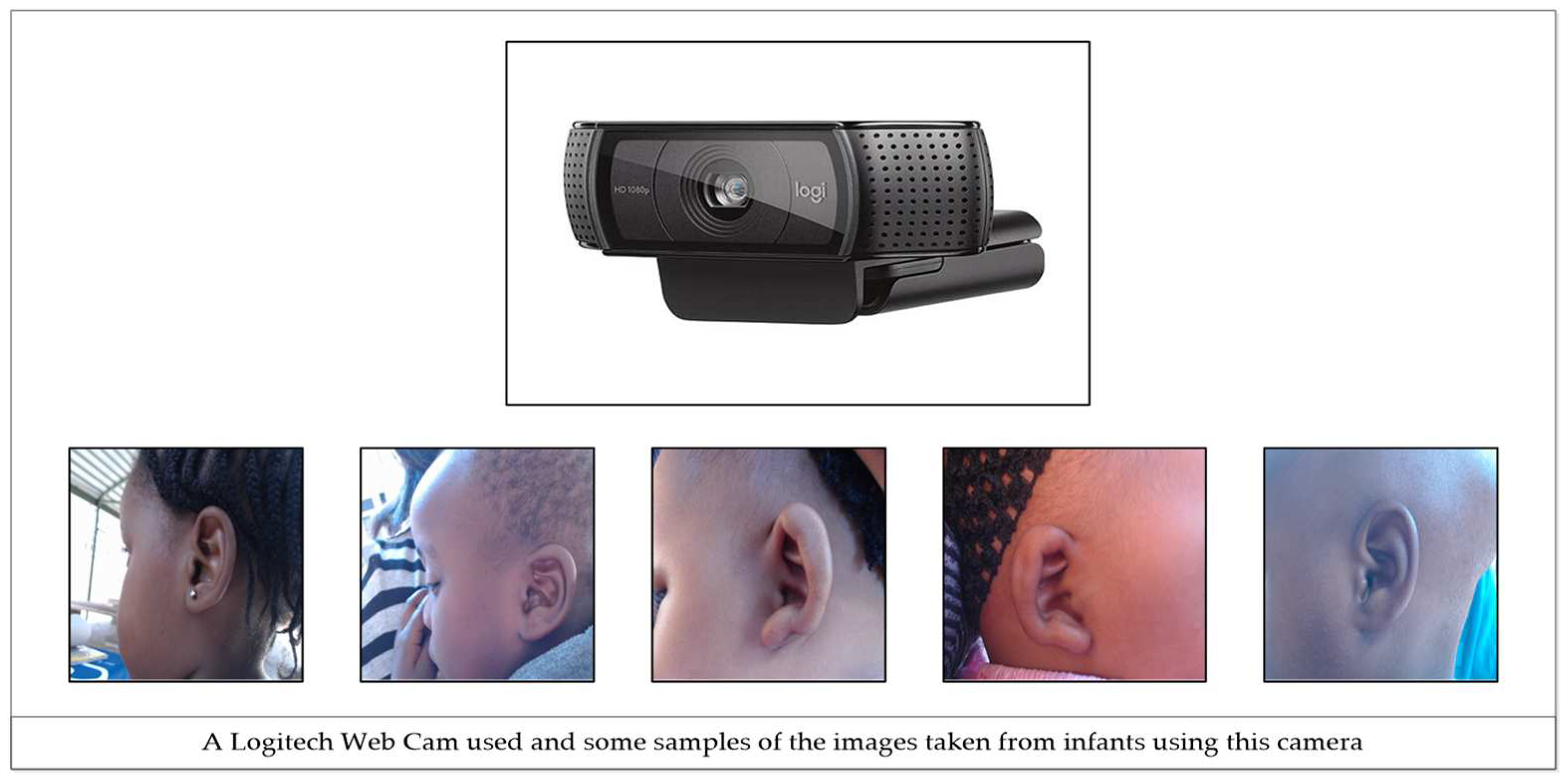
4.1. Ear Image Collection
The easiest way to capture the children's eye image was to use the
Figure 3.
Ear acquisition devices and sample ear images.
4.2. Iris Image Collections
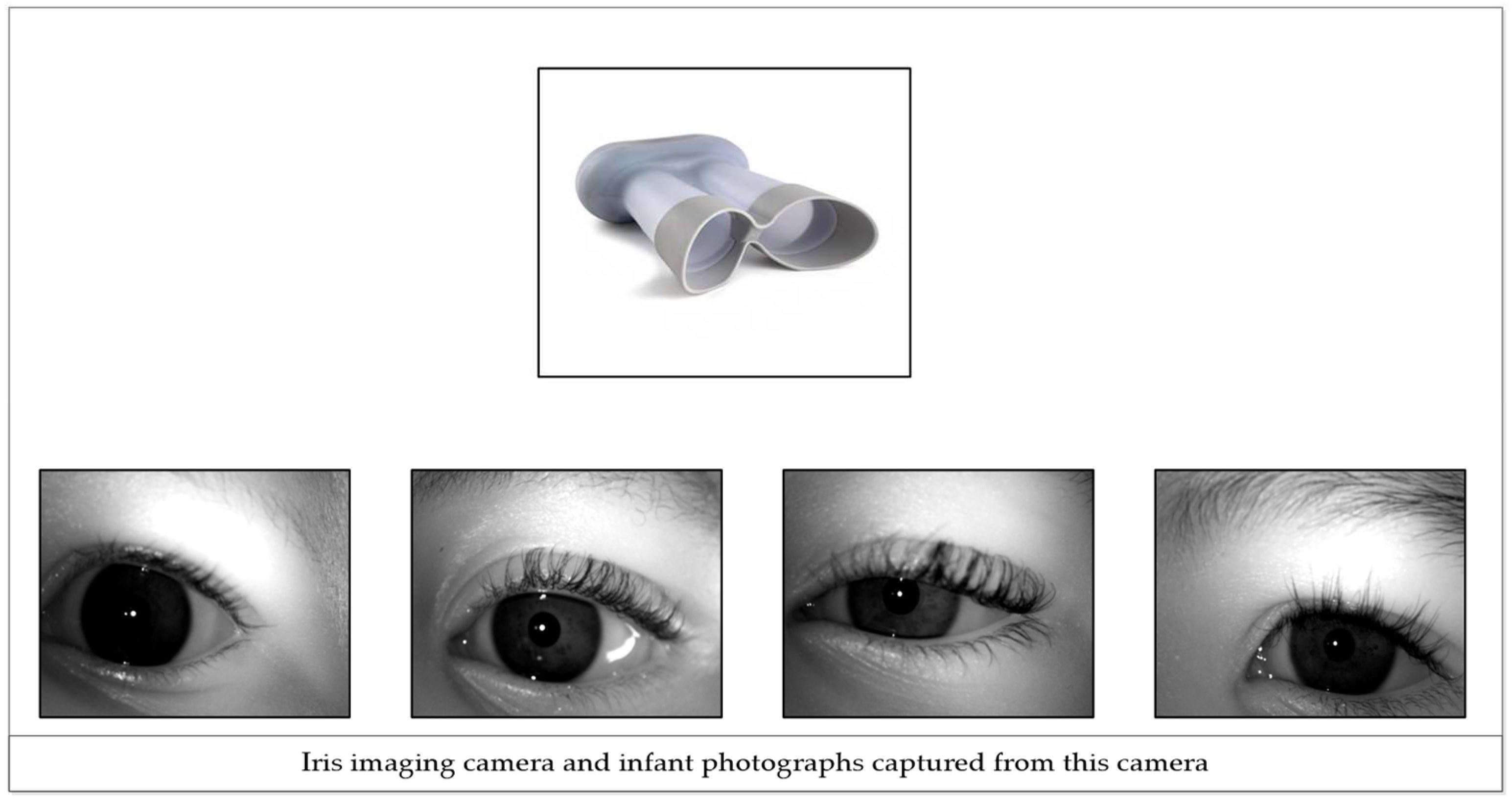
The iris images are difficult to acquire because the required region that exists within the eye can only be acquired if the eye is wide open.
Figure 4.
Iris acquisition device and samples of acquired iris images.
4.3. Fingerprint Image Collections
The fingerprint image is much easier to collect compared to the iris images. In the following section, “III. Lessons Learned”, discusses challenges faced during this process, what the research team learnt, how these challenges were dealt with, and suggestions on how researchers can better prepare for similar studies in the future. Some of the initial steps to process the fingerprints have been explored, and they can be accessed in
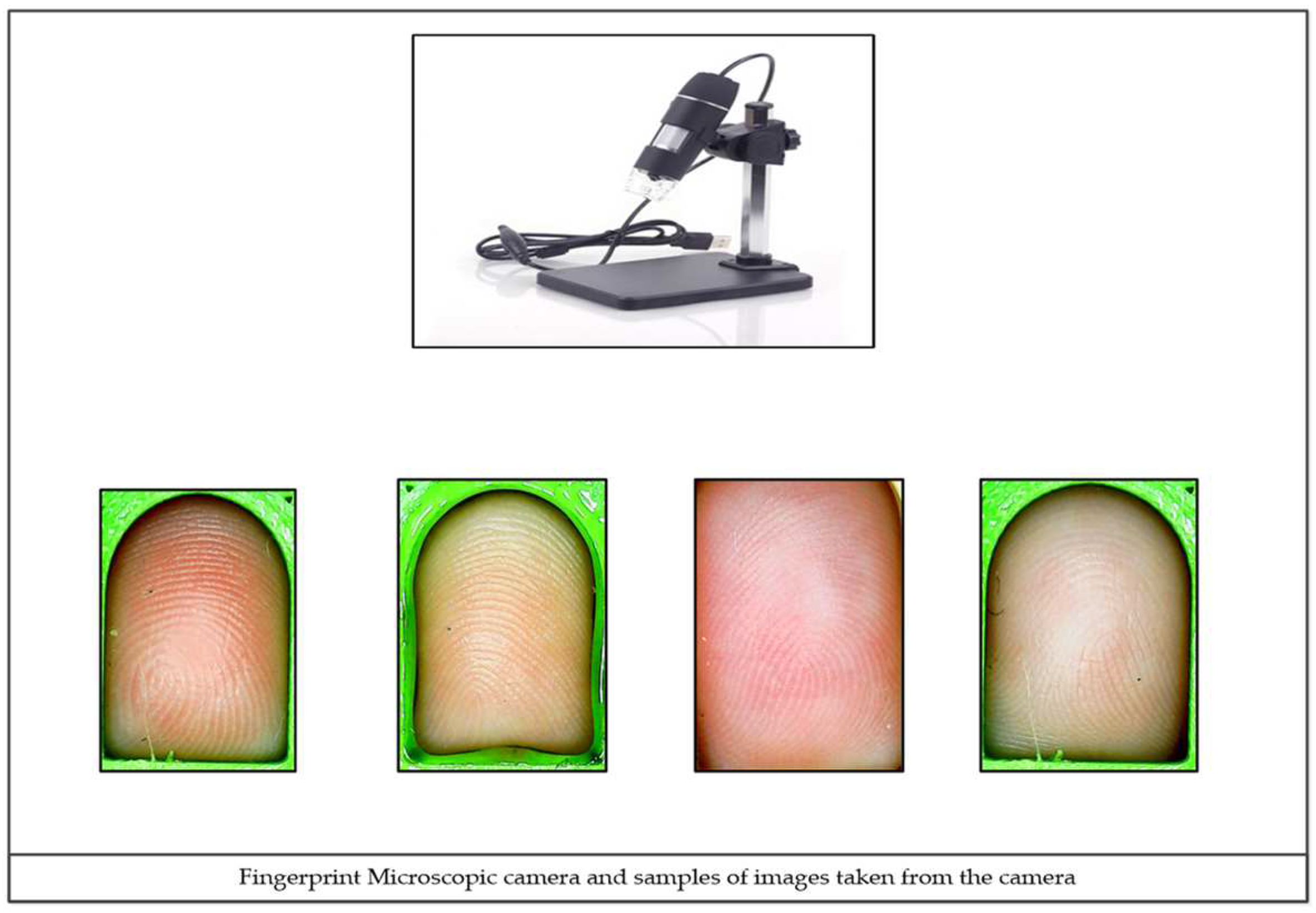
Figure 5.
Fingerprint Acquisition Device and Samples of infant fingerprint images.
5. The Data Collection Findings
This section has been divided into several subsections to provide a concise and precise description of the experience encountered during the data capture exercise.
5.1. Ethical Clearance
Children under the age of 18 years are considered vulnerable populations. Most countries (including South Africa) are protected by the laws and processes of various institutions. Researchers should take courses in ethical research at universities and research institutes to understand the implications of ethical behaviour in scientific research and the process of obtaining ethical certification. Often, if participants outside the host institution are involved, ethical approval must be obtained from both internal and external ethics review committees. These permissions may need to be obtained in a sequence and sometimes not in parallel. For example, in this study, the Institute's Research Ethics Committee first requested ethical approval. Once the initial approval has been obtained, researchers must still obtain additional approval from the Health Department's review committee for the collection of data from public health facilities. When planning a project, it is important to give enough time to these processes. Note that if the main investigator of the project is modified, some ethical applications may need to be submitted again for approval and approval.
5.2. Clearance at the Department Level
For access to participants with external entities such as government departments, it is important to be aware of their mandates and mission statements. If the project's goal and the external entity are not sufficiently overlapping, they may not have the authority to assist them. For example, schools are the ideal place to obtain regular longitudinal data on children under school age, but the Ministry of Education or schools can only support research directly related to education programmes. Other studies involving children cannot be supported in schools or during school hours. Furthermore, access to key decision-makers from large organisations and government agencies is often difficult and time-consuming, and approval and guidance are required before help is obtained from lower levels of management. Therefore, it is necessary to consider the success rate and the time-consuming effort before contacting entities whose objectives do not align with the project objectives.
5.3. Consideration at the Facility Level
Once ethical authorisation is obtained, individual locations can ask to use their facilities by making a request. Hospitals, clinics, daycare centres, schools, and extracurricular clubs can all provide continuous longitudinal access to children of various ages. A thorough search may be required to locate suitable facilities. Some places are eager to help but lack the necessary space or time. Some people might be hesitant to participate. This also requires time and travel to meet the appropriate hosts in person. It was found that personal conversations are more effective than telephone conversations and emails and that personal relationships with facilities also help build trust and promote engagement. Once the facility has provided access to researchers, good relations must continue to exist. This includes providing regular feedback to facility managers, maintaining the cleanliness of the area, respecting facility rules, and having friendly interactions with communities who use the facility regularly. Space is often limited, particularly in South Africa's public facilities. This must be considered when approving facilities that use their space. Many cannot accommodate researchers. Be careful not to take up too much space.
Researchers may have to source research from researchers, as the centre often does not have sufficient funds. The costs of buying and transporting the equipment from the facility and the facility must be considered. Weather effects should be considered, especially when researchers conducting data collection must be outside due to the nature of the data collection or due to space constraints. In bad weather, people are discouraged and the number of participants available is reduced. These unfavourable conditions can also have an impact on the willingness to participate.
5.4. Engaging Parents and Recruiting Participants
For all studies with children, the informed consent of the parent or legal guardian of the child. If some hosting facilities grant permission, you can try to engage with parents to grant permission for the collection of data from your children. Of course, many parents protect their children, especially young ones. Other parents are not interested. The success rate of engagement with the audience (whether it is a potential participant or a potential participant's parent) varies depending on platforms and communication channels, the questions they are asked, how they are asked, and who presents the research concept to them. Training in media relations or communications is useful in helping people understand these challenges and how best to deal with them. If available, the communication department should seek help. Direct contact with the audience, that is, placing a personal face on a researcher or company, was found to result in a more positive reaction than letters, emails, and telephone calls.
The context of listener should be contextual. When approaching potential participants, the recruit must understand the audience's background: the level of education, the level of income, the language, and other factors can play a role in the audience's mind. The recruit must understand the context and explain the study at a level that is recognisable to the audience. It is also effective to communicate with people in their native language. This is important in a multilingual environment. Medical personnel should be involved in the recruitment of parents and the data collection processes whenever studies call for the collection of data from very young children (such as those who have just been born). These individuals are more qualified to handle babies and are more trustworthy to new parents than to scientific researchers. By explaining privacy measures to parents and potential participants, they reduce their fears. If data is collected electronically, researchers should use strong encryption measures.
5.5. Engaging with Children Participants
Children's interactions vary from age to age. Children under the age of 6 years are more effective at collecting data if parents are physically present after their consent. The presence of these researchers gives children more confidence when interacting with researchers who may appear to be from abroad, and parents feel more at ease watching the data collection methods and participating in data collection. As a result, data collection in clinics is more productive, effective, and successful than data collection in daycare centres. However, some of the children came for treatments that require injections, such as vaccinations. Injections given by clinic nurses can make children feel uneasy and make them distrust other foreigners, such as data collectors. It is preferable in such cases to gather the necessary information before children visit nurses for vaccines. Children of this age are generally more curious and daring.
When teachers are present, they have comfortable interactions with researchers and do not require the presence of parents. When data are collected via electronic devices, after showing older children how to use the device, they immediately show interest and enthusiasm and can handle the device without any assistance. In collaboration with school administrators, time must be sought to accommodate interaction with children without affecting classes. An ideal time would be the day after a school exam. However, school attendance is often low. If the researcher decides to collect data at the end of the school day, transportation arrangements after school should be considered.
5.6. Long-Term Data Collection
The need to consider the repeat availability of participants in longitudinal studies must be considered. The availability schedule may not be suitable for the ideal timetable, depending on the host facility, and researchers may require compromise and flexibility on the travel timetable to optimise repeats. Furthermore, repeat participants should expect their numbers to decline over time as people move or lose interest in participating in research. It should also consider the transition of children from daycare centres to primary and secondary schools over time.
5.7. Communication
Many of the tasks related to the participation of stakeholders and the recruitment of participants are, in particular, outside the comfort zone, training, and education of scientific researchers. These tasks also take a lot of time, and researchers may not properly manage these relationships. Researchers also tend to use technical terms when talking to non-technical people, which may lead to misunderstandings or mistrust among listeners. For this reason, qualified public relations officers are recommended to participate in the consultation with facility managers and potential participants. Information sheets and banners were useful during recruitment. These documents briefly summarise the objectives, objectives, and advantages of the study. The banners help attract people to recruitment and contain the same key points as the information sheet.
5.8. Demographics of the Participant and Location Choice
A balanced data representation would be obtained in ideal scenarios. However, if demographic biases cause disinterest and distortion of representation, facilities can be obtained. This should be considered when deciding where to collect data.
5.9. Pilot Studies and Project Scaling
Pilot studies are required to test concepts at a small level and confirm theory in practice and then scale up to larger studies. Researchers may need to consider the time of these pilot studies and adjust the study if the pilot does not succeed as expected.
5.10. Preparing the Team
Projects that rely heavily on qualified people must consider human factors. During a long-term multi-year project, team members may not be available due to various circumstances. Like other tasks of the project, resource shortages can affect progress. Therefore, multiple researchers can work together on long-term projects. Thus, knowledge is shared, and if one resource is not available, others will know how to carry out tasks without interruptions. This is also a key element in succession planning and the dissemination of relevant knowledge and expertise.
In addition, it is useful to have at least as many people trained in the required data collection techniques, so that data collection is not hampered if a resource is not available. This is important if the repetition of long-term studies is sensitive to time. It is necessary to take time to ensure that the data collection method is well-defined and documented and that everyone on the team understands and follows the same protocols. This will ensure greater consistency in the collected data. Before starting the data collection day, make the checklist of items and tasks smoother.
5.11. Appeal
When dealing with strangers in a foreign environment, appearances are important. All members of the research team must wear the same uniform during data collection. These should be chosen to attract the attention of potential participants during recruitment but must remain professional. Technical equipment should be packed in a non-threatening manner if it is to be used. Children's-friendly designs and designs, as well as a desire for wiring and electronics, will alleviate parents' concerns, attract children to study, and assist them in maintaining their attention.
6. Data Analysis Results
The analysis of the collected data was based on two data analysis tools, namely, the failure to acquire and the acquisition rates compared to the age groups. Age groupings were devised to ensure that there is ample data for analysis. Table I shows the data groupings in terms of infant ages where group one (infants younger than twelve (12) months), group two (between twelve (12) months and two (2) years) and group three (infants older than two years).

Table 1.
Table of data from the three modalities.
| Age Groups | Ear Biometric | Fingerprint Biometric | Iris Biometric |
|---|---|---|---|
| Group One | 54 | 223 | 60 |
| Group Two | 127 | 271 | 78 |
| Group Three | 265 | 694 | 216 |
A comparison of acquisition rates is depicted in Figure 6. The biometric modality has a high acquisition rate in infants belonging to group one. For groups two and three, the ear has a low acquisition rate compared to the ear. This was caused by infants who wanted to look at the camera while the data capturer was capturing the ear images.
The biometric fingerprint had a significantly higher acquisition across all age groups. This is mainly because infants who are not afraid of offering their fingers to capture can be easily captured, but those who are scared make it difficult to acquire their biometric images. The challenge here will be to acquire only the full fingerprint instead of the partial fingerprint if the finger was in motion during the acquisition process.
The iris biometric, on the other hand, has the lowest acquisition rate for infants younger than 12 months. This is because some babies will cry and others will close their eyes, making it difficult to acquire their iris images. Infants in groups two and three also have the lowest acquisition rates compared to the ear and the fingerprint. This makes the biometric iris not usable as a single biometric modality for babies younger than twelve months (group one).
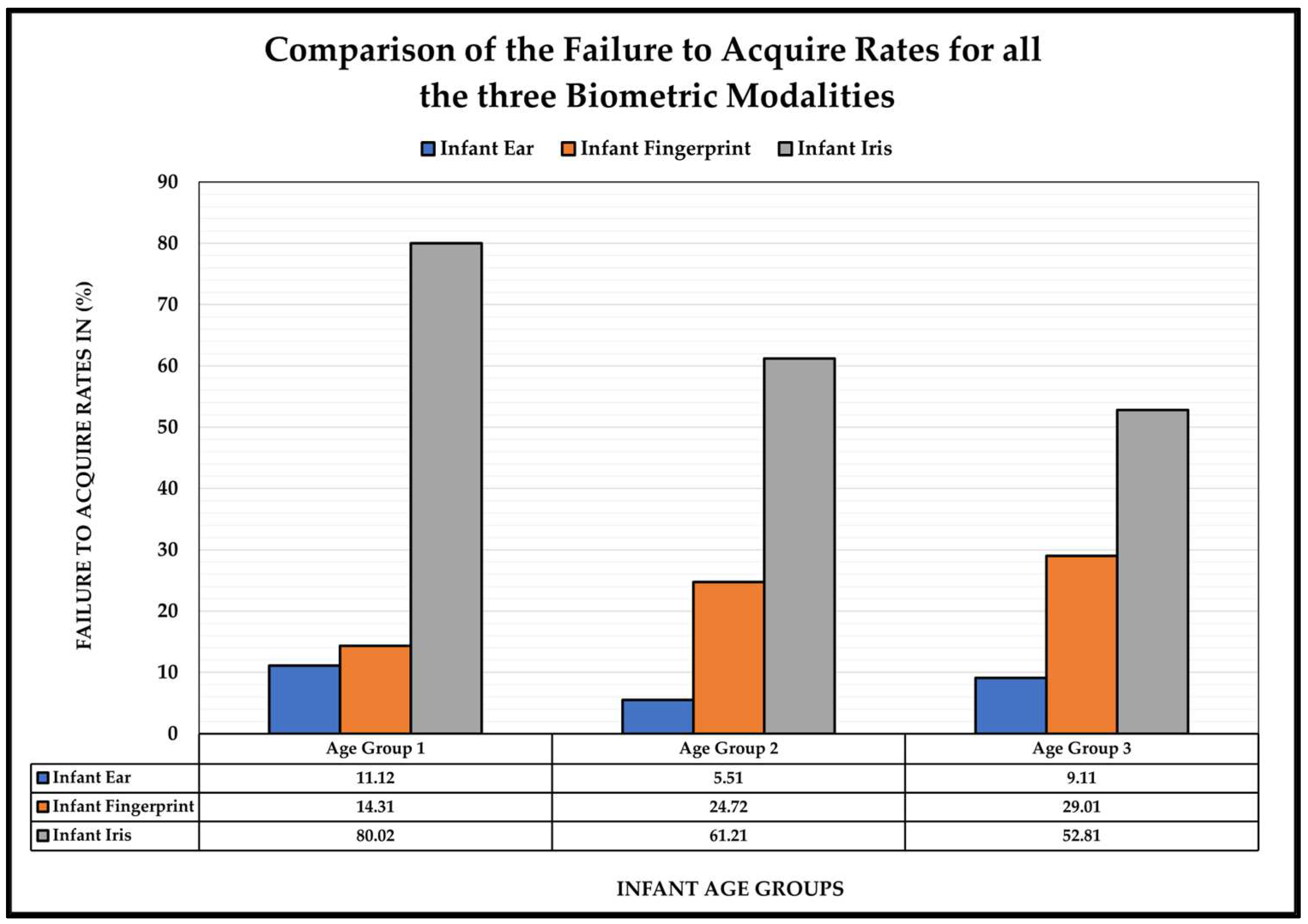
The comparison of failure-to-acquire rates is depicted in Figure 7. It is clear that the iris biometric has higher failure-to-acquire rates, and this is due to the difficulties in acquiring infant biometrics. The main challenge is the acquisition device used (the binocular device) that kids are scared of looking at. Is easier for older kids who are keen to exploit how the device functions.
Fingerprints also have higher failure-to-acquire rates compared to the ear biometric but are much lower compared to the iris biometric. Fingerprint rates are due to the infants who did not want their fingers held, and this poses a challenge if the fingerprint modality were to be used for infant recognition by itself.
The ear biometric modality has the lowest failure to acquire because the ear can be acquired even if the kids are asleep or even crying. From these assessments, it is clear that the ear biometric can be used to recognise babies as early as birth due to its high acquisition rates.
7. Recommendations
Since this research aims to develop biometric technologies that can be used to authenticate infants from birth. Data collection shows that the iris cannot be used for this purpose due to its low acquisition rate. Although ears and fingerprints are easy to obtain, the use of automatic authentication for babies at 6 weeks of age or younger needs to be further studied in the piloted study environment. As participants become older, more longitudinal data will be collected and more work will be done to evaluate and improve the techniques and methods used.
8. Conclusions
This paper explains in detail some of the challenges and lessons learned associated with collecting longitudinal data from children of different ages at various locations. These challenges are proposed and recommended, and it is hoped that this will facilitate data collection for other researchers undertaking similar efforts in the future.
Informed Consent Statement
The participants have given their written consent.
Data Availability Statement
Data are available upon request.
Acknowledgements
These authors acknowledge the data capturing facilities and the data subjects at large.
Conflicts of Interest
There are no conflicts of interest.
References
- FBI, ‘A Message to Parents How to Protect Your Kids with ID Kits’, 2006. Accessed: 30 December 2022. [Online]. Available: https://archives.fbi.gov/archives/news/stories/2006/july/idkits072406.
- A. Sussman, K. Becker, B. Cukic, G. Zektser, P. McKeown, and C. Bataller, IEEE Certified Biometrics Professional: Biometrics Fundamentals. IEEE, 2012.
- eNCA, ‘Matric pupil recovers his identity. ,” eNCA, May 2016. [Online]. Available: https://www.enca.com/south-africa/matric-pupil-gets-back-his-idenity., 2016.
- C. Gottschlich, T. Hotz, R. Lorenz, S. Bernhardt, M. Hantschel and A. Munk, “Modeling the growth of fingerprints improves matching for adolescents’, Aug. 2010. [CrossRef]
- A. K. Jain, K. Cao and S. S. Arora, “Recognizing infants and toddlers using fingerprints: Increasing the vaccination coverage,” in IJCB 2014 - 2014 IEEE/IAPR International Joint Conference on Biometrics, 2014. [CrossRef]
- A. K. Jain et al., ‘Giving infants an identity: Fingerprint sensing and recognition”, in ACM International Conference Proceeding Series, June 2016, vol. 03-06-June. [CrossRef]
- F. C. Pennie, I. C. J. Wood, C. Olsen, S. White, and W. N. Charman, ‘A longitudinal study of the biometric and refractive changes in full-term infants during the first year of life’, 2001. [Online]. Available: www.elsevier.com/locate/visres.
- L. Best-Rowden, Y. Hoole and A. K. Jain, “Automatic face recognition of newborns, infants and Toddlers: A longitudinal evaluation, Lecture Notes in Informatics (LNI), Proceedings Series of the Gesellschaft fur Informatik (GI), vol. P-260, pp. 0–7, 2016. [CrossRef]
- D. Deb, N. Nain, and A. K. Jain, ‘Longitudinal study of child face recognition,” in Proceedings - 2018 International Conference on Biometrics, ICB 2018, 2018, vol. 1984, no. age 12, pp. 225–232. [CrossRef]
- T. Hutchison, ‘A Longitudinal Analysis on the Feasibility of Iris Recognition Performance for Infants 0-2 Years Old’ 2018. [Online]. Available: https://docs.lib.purdue.edu/techmasters.
- N. Nelufule and A. de Kock, ‘Infant Iris Biometric Recognition System’, in 2023 Conference on Information Communications Technology and Society, Mar. 2023, pp. 1–6.
- N. Nelufule, A. de Kock, G. Mabuza-Hocquet, and Y. Moolla, ‘Image quality assessment for iris biometrics for minors.’ in 2019 Conference on Information Communications Technology and Society, ICTAS 2019, Apr. 2019. [CrossRef]
- N. Nelufule, G. Mabuza-Hocquet and A. de Kock, “Circular interpolation techniques toward accurate segmentation of iris biometric images for infants’, in 2020 International SAUPEC/RobMech/PRASA Conference, SAUPEC/RobMech/PRASA 2020, 2020, pp. 1–6. [CrossRef]
- P. Das, L. Holsopple, D. Rissacher, M. Schuckers, and S. Schuckers, ‘Iris Recognition Performance in Children: A Longitudinal Study, IEEE Trans Biom Behav Identity Sci, vol. 3, no. 1, pp. 138-151, January 2021. [CrossRef]
- M. Johnson, D. Yambay, D. Rissacher, L. Holsopple, and S. Schuckers, ‘A longitudinal study of iris recognition in children’, IEEE Trans Biom Behav Identity Sci, vol. 3, no. 1, pp. 1–7, 2021. [CrossRef]
- N. Nelufule, Y. Moolla and A. de Kock, “Biometric Recognition of Infants Using Fingerprints’, in 2023 Conference on Information Communications Technology and Society, Mar. 2023, pp. 1–8.
- C. S. Ntshangase and D. Mathekga, ‘The comparison of ear recognition methods under different illumination effects and geometrical changes’ 2019.
- C. S. Ntshangase and D. Mathekga, ‘Ear Recognition for Young Children; Ear Recognition for Young Children’ 2019. [Online]. Available: www.sciencedirect.com.
- Y. Moolla, A. de Kock, G. Mabuza-Hocquet, C. S. Ntshangase, N. Nelufule, and P. Khanyile, ‘Biometric Recognition of Infants using Fingerprint, Iris, and Ear Biometrics,” IEEE Access, vol. 9, February 2021. [CrossRef]
- N. N. Nelufule, ‘Combining Multiple Iris Matchers using Advanced Fusion Techniques to Enhance Iris Matching Performance’, Master Research Thesis, University of Johannesburg, Johannesburg, South Africa, 2014. [Online]. Available: https://core.ac.uk/download/pdf/54195433.pdf.
- N. Nelufule, F. Nelwamondo, T. Malumedzha, and T. Marwala, “Feature quality-based score level fusion using relative entropy measure for Iris recognition”, International Journal of Innovative Computing, Information, and Control, vol. 11, no. 4, pp. 1357–1368, Jul. 2015.
- N. A. Mngenge, N. N. Nelufule, F. v. Nelwamondo, and N. Msimang, ‘Fingerprint pores extractor,” in 2012 National Conference on Computing and Communication Systems, NCCCS 2012 - Proceeding, Nov. 2012, pp. 131–135. [CrossRef]
Figure 1.
Biometric Modalities Analysis Chart.
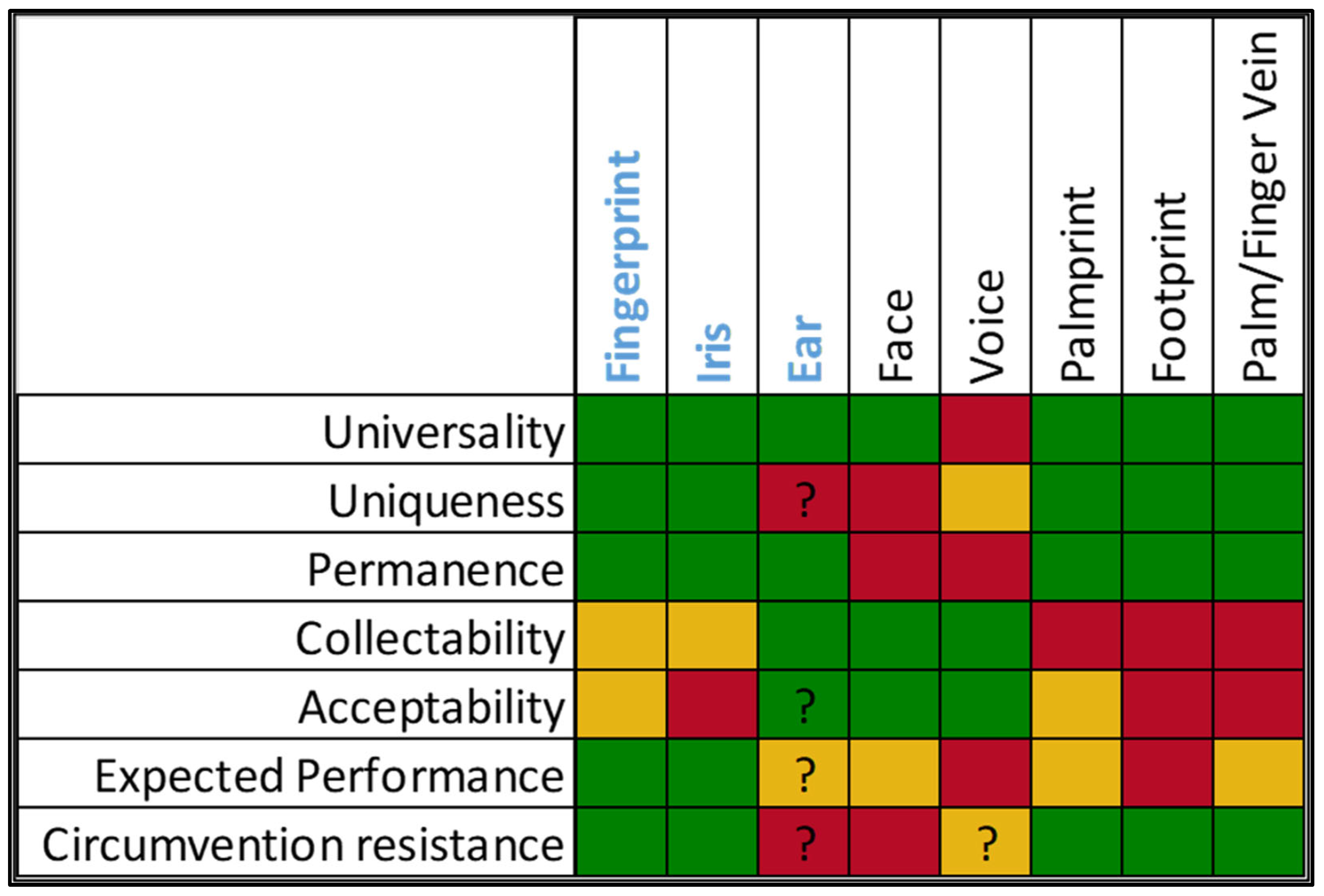
Figure 2.
Schematic representation of the data collection flow chart.
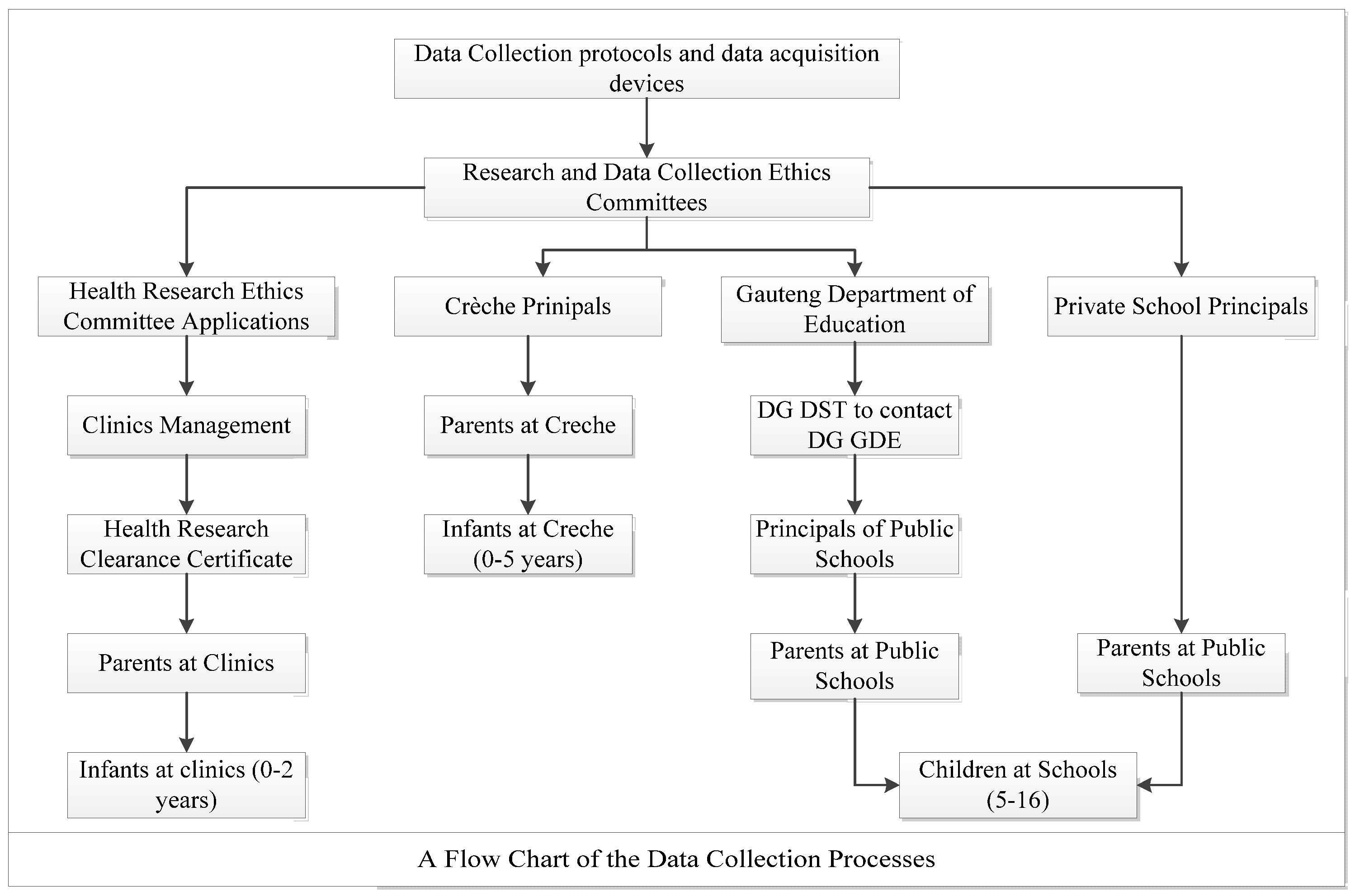
Figure 6.
Comparison of infant biometric data acquisition rates.
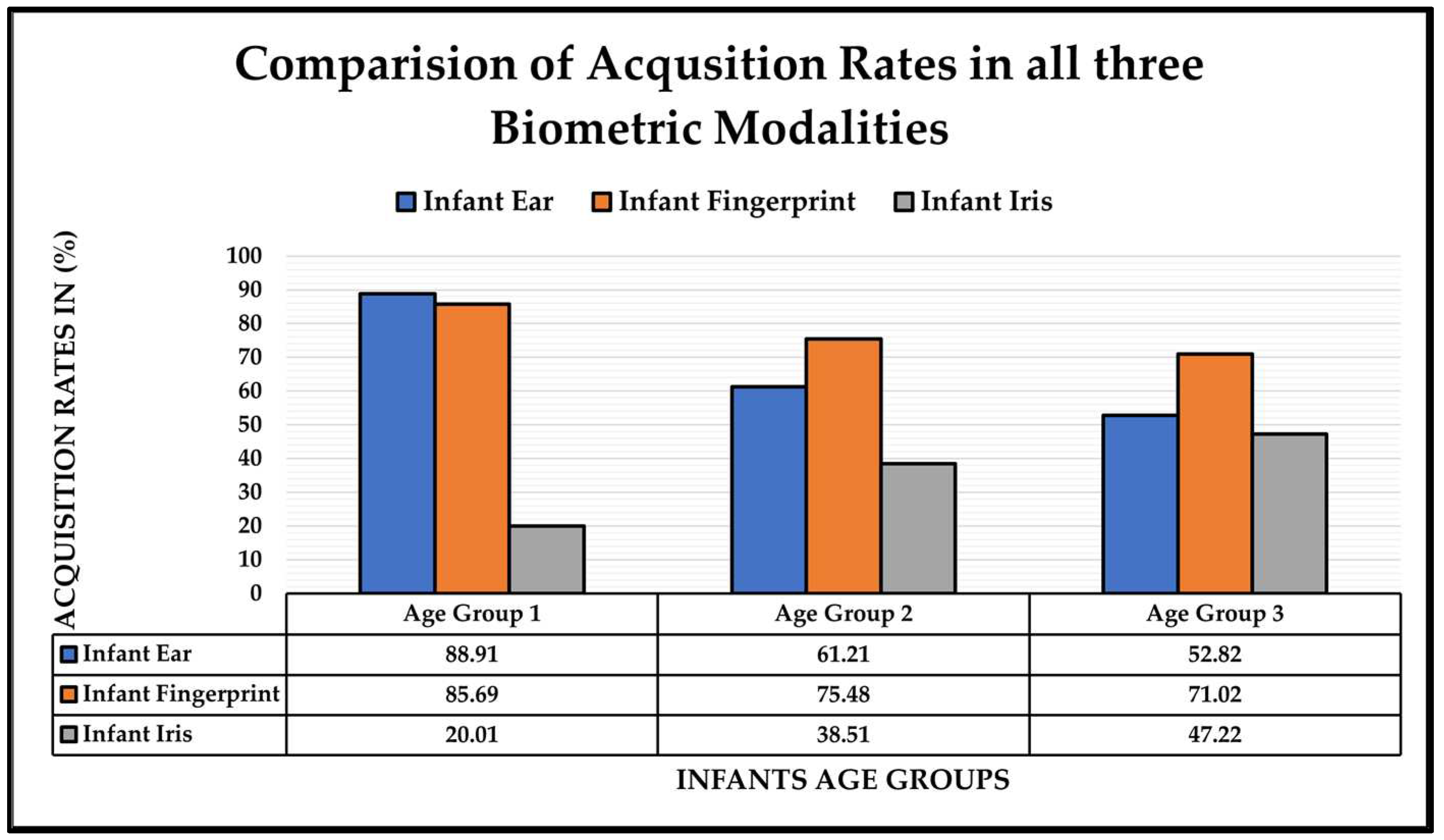
Figure 7.
Comparison of infant biometric failure to acquire rates.
Disclaimer/Publisher’s Note: The statements, opinions and data contained in all publications are solely those of the individual author(s) and contributor(s) and not of MDPI and/or the editor(s). MDPI and/or the editor(s) disclaim responsibility for any injury to people or property resulting from any ideas, methods, instructions, or products referred to in the content. |
© 2023 by the authors. Licensee MDPI, Basel, Switzerland. This article is an open access article distributed under the terms and conditions of the Creative Commons Attribution (CC BY) license (http://creativecommons.org/licenses/by/4.0/).
Copyright: This open access article is published under a Creative Commons CC BY 4.0 license, which permit the free download, distribution, and reuse, provided that the author and preprint are cited in any reuse.


