

Submitted:
09 February 2023
Posted:
09 February 2023
You are already at the latest version
Abstract
Depression and obesity are highly comorbid with one another, with evidence for bidirectional causal links between each disorder and a shared biological basis. The available evidence suggests that genetic factors play a major role in influencing both the occurrence of comorbid depression and obesity, their courses, and their response to existing treatments. The current paper is a scoping review of studies that have evaluated the contribution of specific genetic variants to the comorbidity between obesity and depression. Based on a search of the PubMed and EMBASE databases, 28 studies were included in this review, covering 54 candidate genes. Positive associations were identified for fourteen genetic loci (AKR1C2, APOA5, COMT, DAT1, FTO, KCNE1, MAOA, MC4R, MCHR2, NPY2R, NR3C1, Ob, PCSK9 and TAL1). Replicated findings across two or more independent samples were observed for the FTO and MC4R genes. Many of these gene products represent novel molecular targets for the pharmacological management of obesity which are not pharmacologically influenced by existing anti-obesity or antidepressant medications. The implications of these associations for future drug development are discussed, with an emphasis on recent evidence on the polygenic architecture of comorbid depression and obesity, and on a precision medicine approach to these conditions.
Keywords:
depression
; obesity
; genetics
; leptin
; fat mass- and obesity-associated gene
; melanocortin receptor
; neuropeptide Y
1. Introduction
Obesity is the most common metabolic disorder at the global level. According to estimates provided by the World Obesity Federation, around 650 million adults fulfill standard diagnostic criteria for obesity, and the prevalence of this condition has trebled in the past four decades [1]. A recent meta-analysis of global research, covering over 280 studies and 13 million subjects, estimated the global prevalence of central obesity at 41.5%, though there were significant variations related to age, gender, urban residence and national income [2]. Though obesity is comorbid with a wide range of medical and psychiatric conditions, comorbidity is not in itself proof of a causal association in either direction [3]. Evidence from cross-sectional and longitudinal research, across countries and settings, demonstrates a significant bidirectional association between depression and obesity, with each disorder increasing the likelihood of the other by approximately 1.5-fold [4,5]. Analysis of clinical and genetic data supports the contention that the association between depression and obesity is not only bidirectional but causal: in other words, depression can lead to obesity, and obesity can lead to depression [3,6,7]. This association appears to be specific to obesity and not to less severe increases in body mass [4,5], and remains significant even in individuals without elevations in other physiological parameters, such as plasma glucose, serum cholesterol and triglycerides, blood pressure or C-reactive protein [8]. A portion of the variance in this association can be explained by behavioural factors, such as overeating in depressed patients, and by the obesogenic effects of medications used in the treatment of depression [7,9]. However, even after taking these factors into account, there is substantial translational and clinical evidence that obesity and depression are associated with shared alterations in a number of physiological processes, including dysregulation of the hypothalamic-pituitary-adrenal axis, increased immune-inflammatory activity, changes in the composition of the gut microbiome, and altered brain structure and functioning [10,11,12,13].
The management of comorbid obesity and depression is challenging. A recent systematic review concluded that certain psychological and pharmacological therapies showed promise in the management of this group of patients. However, there was insufficient evidence from available studies to provide robust guidance in clinical practice, and the effects of both types of treatment were modest and not well-sustained at follow-up [14]. Obesity is associated with a poorer response to antidepressant treatment in depressed patients [15,16], while weight loss leads to an improvement in depressive symptoms [17], but this is often difficult to accomplish in practice. Moreover, undiagnosed depression can interfere with motivation for, and adherence to, lifestyle and behavioral interventions for obesity [18]. There is little evidence that currently available antidepressants have a beneficial effect on obesity, and it has even been suggested that these drugs contribute to obesity in certain cases [7,19,20]. In this scenario, there is a clear need for more effective pharmacological approaches that target the shared molecular pathways linking obesity and depression [21,22].
Evidence from family, twin, linkage, candidate gene and genome-wide association studies suggests that genetic factors account for a significant proportion of the overlap between depression and obesity [23,24,25,26,27]. Besides contributing substantially to the shared biological substrate of these disorders [28], multiple genetic variants influence the occurrence of specific symptoms, such as increases in appetite, during episodes of depression [29,30]. Moreover, polymorphisms in certain obesity-related genes may predict a poorer response to conventional antidepressants [31]. The genetic variants that have been tentatively flagged in this research are related not just to neurotransmission but to diverse biological pathways, including those involved in cell division, apoptosis, glucose and lipid metabolism, energy utilization, and immune-inflammatory regulation [32]. It is probable that a better understanding of the role played by these pathways, and the genes involved in their regulation, could lead to the development of safter and more effective treatments for both obesity and depression, as well as for patients with both disorders. A deeper understanding of the molecular genetics of this comorbidity could also lead to a more precise and personalized approach to the pharmacological management of obesity [33]. It was with this objective in mind that the current review was undertaken.
2. Results
A total of 28 studies were included in the final scoping review. Details of the studies included in this review are provided in Table 1.
2.1. Study Characteristics, Study Populations and Quality
Of the 28 studies included in this review, the majority (n = 20) were association studies involving a single gene or locus; only eight studies examined multiple genes across distinct loci. Five of the 28 included studies examined interaction effects between genotype and either depression or obesity. Nine studies used a case-control design: eight compared individuals with depression to healthy controls, and one compared individuals with obesity to controls. The remaining nineteen studies did not have a control or comparator group.
Study populations in the uncontrolled studies are as follows: adults in the general population (n = 6), adults with obesity (n = 6), elderly adults (n = 2), young adults (n = 2), adolescents (n = 1), pregnant women (n = 1) and adult patients seeking psychiatric care (n = 1). Ethnicity was specified in 17 of the 28 studies as being Caucasian (n = 12), African-American (n = 2) or multi-ethnic (n = 3); in the remaining eleven studies, ethnicity was not specifically mentioned.
The mean Q-Genie score for the included studies was 46.3 ± 6.1, indicating good study quality. Fourteen studies were rated “good”, thirteen were rated “moderate” and only one study received a rating of “poor”. The average Q-Genie score for sources of possible bias was 4.1, indicating a low risk of bias, while the average score for study power was 4.2, indicating generally adequate study power. Concerns related to individual studies being underpowered were identified in eight of the 28 (28.6%) included studies.
2.2. Genetic Loci Associated with Depression and Obesity
The 28 studies included in this review evaluated the effects of variants in 54 distinct genes on the relationship between obesity and depression. Among these variants, replicated positive associations were identified for two genetic loci, positive associations in single studies were identified for twelve genetic loci, and mixed or equivocal associations (i.e., both positive and negative findings) were reported for a further two loci. Details of these candidate genes and their physiological significance, are summarized in Table 2.
2.3. Replicated Candidate Gene Associations
Replicated findings across two or more independent populations were identified for the fat mass- and obesity-related gene (FTO) and the melanocortin 4 receptor gene (MC4R). FTO, located on chromosome 16q, encodes a nucleic acid demethylase enzyme that regulates the expression of multiple genes through its regulation of DNA and RNA methylation, exerting complex effects on glucose and lipid metabolism as well as food intake and satiety [62,63]. The effects of variants of this gene on the links between obesity and depression are complex: it has been associated both with elevated depressive symptoms in obese adults and with an increased body mass index (BMI) in depressed individuals. There is also evidence of an interaction between a specific SNP of this gene and the presence of depressive symptoms in influencing BMI. Thus, FTO variants appear to exert bidirectional effects on the link between depression and obesity.
The MC4R gene encodes a receptor for α-melanocyte stimulating hormone (melanocortin) that influences both food intake and energy expenditure; the action of melanocortin at MC4R is influenced by several factors, including neurotransmitters such as serotonin, other hormones such as leptin, and circulating levels of fatty acids [64]. Only a single functional polymorphism (rs17782313) of this gene has been studied in relation to obesity and depression; in one study, the C allele of this SNP was associated with elevated depressive symptoms independent of weight, while in the other, homozygosity for this allele was associated with higher weight in adults with obesity. Unlike variants in FTO, MC4R rs17782313 appears to have independent effects on depression and obesity.
2.4. Candidate Gene Associations from Single Studies
Of the remaining genes identified in this review, three (COMT, DAT1 and MAOA) are involved in monoaminergic neurotransmission, and have been extensively studied in relation to the monoamine hypothesis of depression. COMT and DAT1 variants were both associated with elevated depressive symptoms in adults with obesity, but only the latter was associated with elevated BMI. The significance of findings related to MAOA are unclear; the higher-activity variant of this gene was associated with lower depressive symptoms in obese adolescents, but this effect appeared to be gender-specific, and there are no studies of MAOA in relation to depression and obesity in adults.
Apart from monoamine transmitters, a single study implicated a functional variant of the NPY2 gene in both depressive symptoms and increased BMI. NPY2 encodes a receptor for neuropeptide Y, a peptide neurotransmitter that influences a wide range of behavioural and physiological processes including food intake, the stress response and mood [65].
Four studies implicated genes that encode specific hormones or their receptors. Among these, AKR1C2, involved in the synthesis of allopregnanolone, was associated with increased body mass index and post-partum depressive symptoms in pregnant women, though different SNPs were involved in each association. MCHR2 encodes a receptor for melanin-concentrating hormone (MCH). In certain animal species, MCH’s primary function is to regulate melanin concentrations and colour changes; however, it also plays a key role in regulating arousal and energy balance in mammals [66]. Homozygosity for a specific allele of the rs7754794 SNP of this gene appeared to exert a protective effect against obesity in individuals with depression. NR3C1 encodes the receptor for glucocorticoid hormones such as cortisol, thereby playing a central role in both stress responsiveness and energy balance. Functional variants in this gene have been consistently associated with depression [67]. In the current review, homozygosity for a specific variant of NR3C1 (Bcl1 G/G) was linked to elevated obesity in women with depression. Finally, the Ob gene encodes the hormone leptin, which plays a central role in regulating both food intake and energy metabolism [68]. A specific repeat polymorphism of Ob was associated with both obesity and depression, but only in women.
The remaining genes identified in this review represent diverse physiological and biochemical processes. These include proteins involved in the regulation of lipid levels (APOA5, PCSK9) which appear to be associated with obesity but not with depressive symptoms, a regulator of voltage-gated potassium channels (KCNE1) and a transcription factor (TAL1) best known as a regulator of haematopoiesis. The latter two associations are particularly intriguing as they were previously implicated in other forms of disease, but not specifically in obesity or depression.
3. Discussion
The current review identified fourteen candidate genes that appear to be involved in the link between obesity and depression, of which two were replicated in independent populations. Evidence from studies of large general population samples suggests that most cases of obesity are not caused by alterations in single genes, but by the additive or interactive effects of several genes involved in distinct physiological pathways. Moreover, this polygenic architecture appears to overlap significantly with that of depression [25,26,27,28,69,70,71,72,73]. Existing treatments for obesity are effective in some patients, but their use is often limited by adverse effects, and it is not known if they are effective in the presence of comorbid depression [74]. Moreover, there is no evidence that antidepressant drugs are themselves useful in treating obesity, and some of them may be associated with significant weight gain [75]. Against this background, the current review was undertaken to identify novel molecular targets that could lead to more effective and well-tolerated treatments for these comorbid conditions. Potential pharmacological approaches that target these pathways, both synthetic and natural, are summarized in Table 3 below. Drugs acting via standard targets for antidepressant medications are not covered here, as their use in obesity has been extensively reviewed elsewhere [19].
3.1. Synthetic Pharmacological Therapies
Given the preponderance of research implicating functional variants of FTO in the association between obesity and depression, it is natural to consider whether pharmacological manipulation of the FTO gene product – namely, the demethylase enzyme encoded by this gene – might be effective in treating these conditions. Though there are no currently available pharmacological agents that act through the inhibition or modulation of this enzyme’s activity, there are ongoing efforts to develop small-molecule FTO inhibitors for the treatment of other disorders in humans, particularly certain types of cancer [76]. This research is still in its early stages, but there is evidence that it is possible – at least in principle – to develop selective inhibitors of FTO that do not exert comparable effects on other demethylase enzymes, and that these compounds are active in in vitro models related to cancer cell lines [77]. If such compounds can be further refined and demonstrated to be safe and effective in humans, they may represent a valuable and innovative treatment approach to the treatment of obesity, especially when this condition is complicated by the presence of depression.
Besides FTO, evidence of an association between variants in MC4R and the presence of obesity and depression was identified in two independent populations. Two selective agonists of this receptor, bremelanotide and setmelanotide, have been developed and assessed for safety and efficacy in humans. There is evidence that bremelanotide is associated with modest benefits in terms of weight reduction and reduced caloric intake in a proof-of-concept trial involving women with obesity. However, this drug has to be administered parenterally and was associated with high rates of injection site reactions [78]. Setmelanotide has been evaluated in randomized controlled trials in both children and adults, but only in patients with monogenic obesity due to isolated loss-of-function mutations, such as Bardet-Biedl syndrome [79,80]. This drug also requires parenteral administration, and is associated with high rates of both injection site effects and other adverse events such as increased skin pigmentation, nausea and diarrhea. It is possible that further trials of these drugs in patients with obesity and depression may provide evidence of efficacy, though this may be limited by concerns related to safety and tolerability. There is evidence from animal models that antagonists (rather than agonists) of MC4R can ameliorate depressive-like symptoms; thus, it is not clear what degree of activation of this receptor would be optimal in managing patients with both obesity and depression [81,82]. Non-peptide modulators of MC4R are also under development, and may offer advantages in terms of pharmacokinetics and adverse effects [83].
A functional variant of MCHR2 appeared to confer a protective effect against increased weight in adults with depression. Studies of melanin-concentrating hormone modulators in laboratory settings are complicated by the facts that rodents, which are the most frequently used animals in these studies, do not express the MCHR2 receptor. However, administration of an experimental MCHR1 antagonist, GW803430, was associated with reductions in both obesity and depression in a rat model [84]. Selective antagonists of MCHR2 have been developed for use in other mammals, such as dogs and monkeys [85]. Though these agents are not currently available for experimental or clinical use in humans, they may represent a potentially valuable line of research in the management of comorbid obesity and depression.
A functional variant of the neuropeptide Y Y2 receptor gene NPY2R appears to be associated with both depression and increased body mass index. In an animal model, administration of neuropeptide Y was found to synergize with pharmacological manipulation of MC4R to alleviate depressive-like behaviors induced by stress. Experimental agonists of the Y2 receptor exist for use in research, and have been considered for use as novel antidepressants, but none have been developed for use in humans [86]. It has recently been suggested that combined agonism of the Y2 receptor and the glucagon-like peptide-1 (GLP-1) receptor may be a useful approach to treating addictive behaviours in humans [87]. GLP-1 agonists have shown independent evidence of efficacy in treating obesity in randomized controlled trials [88]. It is therefore plausible that such drugs could be useful in treating comorbid obesity and depression, particularly when associated with increased food intake or compulsive eating.
The NR3C1 receptor, which is the binding site for all glucocorticoid hormones, has far-reaching physiological effects that extend beyond its associations with depression and obesity. Therefore, direct pharmacological manipulation of this receptor carries definite risks [89]. Nevertheless, a competitive NR3C1 antagonist, named PT150, has been developed for use in humans and appears to be well tolerated in phase I trials [90]. In a mouse model of obesity, another novel NR3C1 antagonist, CORT125281, was associated with weight reduction and an improved lipid profile [91]. Given the existing evidence for the benefits of glucocorticoid receptor antagonism in patients with resistant depression [92], it is possible that drugs such as PT150 may be useful in select patients with depression and obesity resistant to standard treatments.
PCSK9 inhibitors are already in use as lipid-lowering agents in clinical practice, and are effective for this indication when added to standard therapies [93]. These drugs have not been evaluated for specific effects on obesity and depression in humans. A study of mice whose red blood cells were genetically engineered to carry a PCSK9 inhibitor showed that these animals maintained a normal body mass even when given a high-fat diet [94], suggesting that this molecular target for obesity merits further exploration. However, PCSK9 inhibitors have been associated with a slight but significant and paradoxical increase in depressive symptoms in humans [95]; therefore, caution is required when evaluating these drugs in patients with both disorders.
Among the other molecular targets identified in this review, synthetic inhibitors of AKR1C2 and TAL1 have been investigated as treatment approaches in cancer chemotherapy; however, they are not yet available for use in human subjects, and it is not clear what role they might play in the management of obesity associated with depression [96,97].
3.2. Natural Compounds
Certain natural compounds have been identified as potentially acting through the molecular pathways identified in this review. Though the evidence for their use in comorbid obesity and depression is largely at the preclinical stage, it is possible that some of these compounds may represent safe and effective treatment approaches to these conditions, or may serve as pharmacological “leads” to such treatments.
Two plant products have been identified as having potentially beneficial effects through their actions on FTO. Extracts from the roots of Angelica sinensis, which is used in traditional Chinese medicine, have been shown to suppress weight gain in rodent models, and this suppression was associated with increased expression of FTO, as well as with increased methylation of the FTO promoter region. However, this plant extract is a complex mixture of several compounds, including polysaccharides and phthalides, and it is not known which of these molecules is responsible for this specific effect [98]. Rhein, an anthraquinone molecule extracted from Rheum L. rhizomes used in traditional medicine, has been shown to inhibit the enzymatic action of FTO, and was observed to inhibit adipocyte differentiation in vitro [99].
Similarly, there is evidence that two phytochemicals may have anti-obesity effects through their actions on MC4R expression. Extracts from the leaves of Moringa oleifera, a plant used both for food and in traditional medicine, reduced weight gain and adiposity in rats fed a high-fat diet. These effects were associated with increased MC4R expression [100]. Daisaikoto, a traditional Kampo (Japanese) medicine, reduced both body weight and fatty liver in mice in whom MC4R was knocked out and who were fed a high-fat diet [101].
When considering the other candidate genes identified in this review, there is preliminary evidence that phytochemicals acting on NR3C1 may be effective both in obesity and in depression. Escin, a saponin compound extracted from Aesculus turbinata, has anti-obesity effects in mice which were partly mediated through its effects on this pathway [102]. Two Chinese herbal preparations, Baihe Zhimu and Xingpi Jieyu, have been identified as acting on NR3C1 and possessing potential antidepressant properties based on in silico network analyses [103,104], as does curcumin, extracted from turmeric [105]. Bioactive compounds derived from Korean ginseng (Panax ginseng) have been found to reduce obesity in rodent models, and this effect appears to be associated with a reduction in neuropeptide Y levels; however, it is not known to what extent these correlate with altered activity at the Y2 receptor [106]. Several plant compounds, including sulforaphane [107] and extracts of plants such as Prunus persica, Nelumbo nucifera, and Commiphora myrrha [108,109] have been shown to reduce elevated leptin levels in rodent models of obesity, and these effects correlate with their ability to prevent or attenuate obesity in these models. The carotenoid compound asthaxanthin [110] and the Chinese herbal preparation Bai He Gu Jin Tiang, which contains ten distinct herbs [111], have both been identified as acting on AKR1C2 in silico, which may be associated with anti-depressant and anti-obesity effects. Phytochemicals derived from Lysimachia vulgaris, Protium heptaphyllum and Salvia plebeia have been shown to reduce PCSK9 expression in vitro, though these have been investigated as lipid-lowering agents and not specifically for obesity or depression [112,113,114]. Finally, certain plant products, such as rottlerin [115], Coriandrum sativum metabolites [116], and the ginseng derivative gintonin [117], have been shown to be pharmacologically active at the KCNE1 binding site; however, these properties have been evaluated in the context of anti-arrhythmic or anti-convulsant activities.
3.3. Implications for Clinical Practice and Research
Depression and obesity, besides being highly comorbid with one another, share the property of being complex conditions, resulting from the interaction of multiple vulnerability genes with environmental factors such as childhood adversity, diet, physical activity, and stress [118,119]. Due to their complex nature, it is unlikely that a single class of treatments would be effective for all patients suffering from these disorders. This has led to interest in a personalized medicine approach to both depression and obesity [120,121]. One way of achieving this is through the use of polygenic risk scores, but these have not been specifically evaluated in the prediction of treatment outcomes in obesity and depression, and are crucially dependent on the availability of genetic data from diverse populations [122]. In the absence of such wide-ranging data, it is possible that pre-treatment screening for the functional polymorphisms identified in this review, particularly those related to the FTO and MC4R genes, may help in predicting treatment outcomes to both conventional and novel treatments for these conditions [123]. Alternately, peripheral assays of the levels of particular enzymes or hormones, or measures of receptor expression, may correlate with the response to specific treatments for depression and obesity: such an effect has already been demonstrated to some extent for the anti-obesity medication sibutramine, which causes a significant reduction in serum leptin levels post-treatment [124].
Prior to the initiation of formal drug development processes, it is important that the evidence identified in this review be replicated in diverse populations. Attempts should also be made to elucidate the cellular and tissue-level mechanisms through which these gene products are associated with obesity or depression. Such research would not only place future drug development on a firmer footing, but lead to the elucidation of further novel molecular targets, as well as interactions between those identified in current research [125,126,127,128]. Based on these results, both existing natural and synthetic compounds, as well as “leads” derived from such compounds, could be tested in animal models of obesity with associated depressive-like behaviors or symptoms [129,130]. When evaluating such compounds in clinical trials, an emphasis must be placed on rigorous standards for drug safety as well as efficacy, given the concerning history of serious adverse drug reactions associated with prior treatments marketed for both disorders [131,132]. In addition, attempts should be made to correlate any observed benefits achieved through the use of these drugs with changes in objective biomarkers, such as alterations in the expression of target genes, inhibition of target enzymes, or changes in the circulating levels of specific hormones.
3.4. Limitations
The current review is subject to certain limitations. First, it is based on the available literature on association studies in obesity and depression obtained through a search of selected databases, and could not account for unpublished or “grey” literature. Second, though the included studies were of an acceptable quality overall, a number of them were subject to important limitations regarding phenotype definition, selection of candidate genes, and study power. Third, the majority of published studies were conducted in high-income countries in which the majority of the population is of Caucasian ethnicity; hence, it is not clear to what extent these results can be generalized to other countries or ethnic groups. Fourth, caution is required when extrapolating from the results of animal or in vitro studies to human subjects, and most of the molecules mentioned in Table 3 are not currently available for clinical use. Fifth, certain natural compounds that exhibit in vitro or in silico evidence of efficacy may have pharmacokinetic properties that limit their use in human subjects; in such case, phytochemicals should be considered “lead molecules” rather than treatments in themselves [133]. Finally, it is possible that epigenetic modifications of gene expression, rather than polymorphisms of candidate genes themselves, may be more directly related to the pathogenesis of obesity and depression at a cellular level; therefore, it is important not to place undue weight on association studies alone [134].
4. Materials and Methods
The current study was a scoping review of studies examining the role of specific genetic variants in the relationship between depression and obesity. This review was carried out in accordance with the PRISMA extension guidelines for scoping reviews [135].
Study retrieval: Studies were included if they evaluated the effect of specific genetic variants (either single or multiple polymorphisms) on depressive symptoms in obesity, on obesity in depressed individuals, or on the co-occurrence of depression and obesity. Studies that only provided general evidence of heritability, such as family and twin studies, were excluded, as were studies that evaluated polygenic risk scores (PRS) without specifiying the relative contributions or the strengths of the associations with the specific variants that were included in the PRS.
The PubMed and EMBASE databases were searched using the following search terms: (“obesity” or “obese”) along with (“depression”, “depressive symptoms”, “depressive symptomatology” or “major depression”), and (“genetic” (including variants), “gene”, “linkage”, “association”, “polymorphism” (including variants) or “genome-wide”). Epigenetic studies were not included in this review, as have been extensively reviewed in a recent publication [134].
The PRISMA-ScR flow diagram for this study is provided below (Figure 1). Of a total of 1286 citations retrieved through the literature search, 261 duplicates were removed and the remaining abstracts were screened for suitability for the current review. At this stage, 737 citations were excluded as they were unrelated to the subject of this review. In the final step, the full-texts of 288 papers were evaluated for inclusion in this review, based on the criteria mentioned in the first paragraph. 260 papers were excluded at this stage, and a total of 28 publications were included in the final review. The reference lists of each included paper were searched for further relevant studies, but no additional paper was identified through this method.
Data charting and study quality assessment: All included studies were charted under the following headings: year of publication, study population and sample size, study methodology, study quality, both positive and negative study results. Study quality was assessed using the Q-Genie tool, which is a structured instrument to evaluate the quality of genetic studies. This tool evaluates the quality of a given genetic study across eleven distinct domains, covering the study rationale, definition of exposures and outcomes, selection of the study population, steps taken to minimize bias, statistical analysis and power, and appropriateness of the conclusions presented by the researcher. Based on the total score obtained, studies are classified as being of poor, moderate or good quality [136].
Data synthesis: Following the extraction of the above data, information on the genetic variants identified, their known physiological roles, and the strength and consistency of the evidence supporting their links with depression and obesity, were tabulated separately. Information on pharmacological agents related to each variant, either already marketed or in development, was included where available, and the implications of this information were discussed from conceptual and clinical perspectives.
5. Conclusions
Despite certain limitations, the current review identified certain novel molecular targets for the pharmacological management of obesity with comorbid depression or depressive symptoms. These targets included not only the well-known fat mass and obesity-associated protein gene FTO, but hormone receptors such as MC4R, MCHR2, and NR3C1, neurotransmitter receptors such as NPY2R, and genes not previously associated with these conditions, such as KCNE1, PCSK9, and TAL1. Available evidence suggests that certain natural and synthetic compounds targeting these molecular pathways may represent advances in the management of both disorders, though much of this evidence is at a preliminary stage and requires replication and verification in animal and human models. It is hoped that the findings of this review will be of use to those involved in the development and testing of novel drug therapies for obesity and depression, as well as to those advocating a personalized medicine approach towards these disorders.
Supplementary Materials
The following supporting information can be downloaded at the website of this paper posted on Preprints.org, None.
Author Contributions
Conceptualization, methodology, literature search, writing, review and editing, R.P.R. All authors have read and agreed to the published version of the manuscript.
Funding
This review paper received no external funding.
Institutional Review Board Statement
Not applicable.
Data Availability Statement
No original research data was generated for the purpose of this study.
Acknowledgments
None.
Conflicts of Interest
The author declares no conflict of interest.
References
- World Obesity Federation. Prevalence of obesity. Available online: https://www.worldobesity.org/about/about-obesity/prevalence-of-obesity (accessed on 21-01-2023).
- Wong, M.C.S.; Huang, J.; Wang, J.; Chan, P.S.F.; Lok, V.; Chen, X.; Leung, C.; Wang, H.H.X.; Lao, X.Q.; Zheng, Z.-J. Global, regional, and time-trend prevalence of central obesity: a systematic review and meta-analysis of 13.2 million subjects. Eur. J. Epidemiol. 2020, 35, 673-683. [CrossRef]
- Franks, P.W.; Atabaki-Pasdar, N. Causal inference in obesity research. J. Intern. Med. 2017, 281, 222-232. [CrossRef]
- Luppino, F.S.; de Wit, L.M.; Bouvy, P.F.; Stijnen, T.; Cuijpers, P.; Penninx, B.W.J.H.; Zitman, F.G. Overweight, obesity and depression: a systematic review and meta-analysis of longitudinal studies. Arch. Gen. Psychiatry 2010, 67, 220-229. [CrossRef]
- Sutaria, S.; Devakumar, D.; Yasuda, S.S.; Das, S.; Saxena, S. Is obesity associated with depression in children? Systematic review and meta-analysis. Arch. Dis. Child. 2019, 104, 64-74. [CrossRef]
- Marx, P.; Antal, P.; Bolgar, B.; Bagdy, G.; Deakin, B.; Juhasz, G. Comorbidities in the diseasome are more apparent than real: what Bayesian filtering reveals about the comorbidities of depression. PLoS Comput. Biol. 2017, 13, e1005487. [CrossRef]
- Wurtman, J.J.; Wurtman, R.J. Depression can beget obesity can beget depression. J. Clin. Psychiatry 2015, 76, e1619-e1621. [CrossRef]
- Jokela, M.; Hamer, M.; Singh-Manoux, A.; Batty, D.; Kivimaki, M. Association of metabolically healthy obesity with depressive symptoms: pooled analysis of eight studies. Mol. Psychiatry 2014, 19, 910-914. [CrossRef]
- Konttinen, H. Emotional eating and obesity in adults: the role of depression, sleep and genes. Proc. Nutr. Soc. 2020, 79, 283-289. [CrossRef]
- Schachter, J.; Martel, J.; Lin, C.-S.; Chang, C.-J.; Wu, T.-R.; Lu, C.-C.; Ko, Y.-F.; Lai, H.-C.; Ojcius, D.M.; Young, J.D. Effects of obesity on depression: a role for inflammation and the gut microbiota. Brain Behav. Immun. 2018, 69, 1-8. [CrossRef]
- Ouakinin, S.R.S.; Barreira, D.P.; Gois, C.J. Depression and obesity: integrating the role of stress, neuroendocrine dysfunction and inflammatory pathways. Front. Endocrinol. 2018, 9, 431. [CrossRef]
- Milano, W.; Ambrosio, P.; Carizzone, F.; De Biasio, V.; Di Munzio, W.; Foia, M.G.; Capasso, A. Depression and obesity: analysis of common biomarkers. Diseases 2020, 8, 23. [CrossRef]
- Opel, N.; Thalamuthu, A.; Milaneschi, Y.; Grotegerd, D.; Flint, C.; Leenings, R.; Goltermann, J.; Richter, M.; Hahn, T.; Woditsch, G.; Berger, K.; Hermesdorf, M.; McIntosh, A.;….; Dannlowski, U. Brain structural abnormalities in obesity: relation to age, genetic risk, and common psychiatric disorders : Evidence through univariate and multivariate mega-analysis including 6420 participants from the ENIGMA MDD working group. Mol. Psychiatry 2021, 26, 4839-4852. [CrossRef]
- Cao, B.; Xu, J.; Li, R.; Teopiz, K.M.; McIntyre, R.S.; Chen, H. Interventions targeting comorbid depression and overweight/obesity: a systematic review. J. Affect. Disord. 2022, 314, 222-232. [CrossRef]
- Woo, Y.S.; Seo, H.-J.; McIntyre, R.S.; Bahk, W.-M. Obesity and its potential effects on antidepressant treatment outcomes in patients with depressive disorders: a literature review. Int. J. Mol. Sci. 2016, 17, 80. [CrossRef]
- Grigolon, R.B.; Trevisol, A.P.; Gerchman, F.; Bambokian, A.D.; Magee, T.; McIntyre, R.S.; Gomes, F.A.; Brietzke, E.; Mansur, R.B. Is obesity a determinant of success with pharmacological treatment for depression? A systematic review, meta-analysis and meta-regression. J. Affect. Disord. 2021, 287, 54-68. [CrossRef]
- Fabricatore, A.N.; Wadden, T.A.; Higginbotham, A.J.; Faulconbridge, L.F.; Nguyen, A.M.; Heymsfield, S.B.; Faith, M.S. Intentional weight loss and changes in symptoms of depression: a systematic review and meta-analysis. Int. J. Obes. 2011, 35, 1363-1376. [CrossRef]
- Fabricatore, A.N.; Wadden, T.A.; Moore, R.H.; Butryn, M.L.; Heymsfield, S.B.; Nguyen, A.M. Predictors of attrition and weight loss success: results from a randomized controlled trial. Behav. Res. Ther. 2009, 47, 685-691. [CrossRef]
- Rodriguez, J.E.; Campbell, K.M. Past, present, and future of pharmacologic therapy in obesity. Prim. Care 2016, 43, 61-67. [CrossRef]
- Lee, S.H.; Paz-Filho, G.; Mastronardi, C.; Licinio, J.; Wong, M.-L. Is increased antidepressant exposure a contributory factor to the obesity pandemic? Transl. Psychiatry 2016, 15, e759. [CrossRef]
- Caron, A.; Michael, N.J. New horizons: is obesity a disorder of neurotransmission? J. Clin. Endocrinol. Metab. 2021, 106, e4872-e4886. [CrossRef]
- Kornhuber, J.; Gulbins, E. New molecular targets for antidepressant drugs. Pharmaceuticals 2021, 14, 894. [CrossRef]
- Afari, N.; Noonan, C.; Goldberg, J.; Roy-Byrne, P.; Schur, E.; Golnari, G.; Buchwald, D. Depression and obesity: do shared genes explain the relationship? Depress. Anxiety 2010, 27, 799-806. [CrossRef]
- Jokela, M.; Berg, V.; Silventoinen, K.; Batty, G.D.; Singh-Manoux, A.; Kaprio, J.; Smith, G.D.; Kivimaki, M. Body mass index and depressive symptoms: testing for adverse and protective associations in two twin cohort studies. Twin Res. Hum. Genet. 2016, 19, 306-311. [CrossRef]
- Wang, R.; Snieder, H.; Hartman, C.A. Familial co-aggregation and shared heritability between depression, anxiety, obesity and substance use. Transl. Psychiatry 20222, 12, 108. [CrossRef]
- Speed, M.S.; Jefsen, O.H.; Borglum, A.D.; Speed, D.; Ostergaard, S.D. Investigating the association between body fat and depression via Mendelian randomization. Transl. Psychiatry 2019, 9, 184. [CrossRef]
- Liao, S.-F.; Su, C.-Y.; Su, M.-H.; Chen, C.-Y.; Chen, C.-.Y.; Lin, Y.-F.; Pan, Y.-J.; Hsiao, P.-C.; Chen, P.-C.; Huang, Y.-T.; Wu, C.-S.; Wang, S.-H. Association of polygenic risks, depression, and obesity-related traits in Taiwan Biobank. J. Affect. Disord. 2023, 320, 397-403. [CrossRef]
- Gonzalez, J.R.; Ruiz-Arenas, C.; Caceres, A.; Moran, I.; Lopez-Sanchez, M.; Alonso, L.; Guindo-Martinez, M.; Mercader, J.M.; Esko, T.; Torrents, D.; Gonzalez, J.; Perez-Jurado, L.A. Polymorphic inversions underlie the shared genetic susceptibility of obesity-related diseases. Am. J. Hum. Genet. 2020, 106, 846-858. [CrossRef]
- Milaneschi, Y.; Lamers, F.; Peyrot, W.J.; Baune, B.T.; Breen, G.; Dehghan, A.; Forstner, A.J.; Grabe, H.J.; Homuth, G.; Kan, C.; Lewis, C.; Mullins, N.; Nauck, M.;….; Penninx, B.W.J.H. Genetic association of major depression with atypical features and obesity-related immunometabolic dysregulations. JAMA Psychiatry 2017, 74, 1214-1225. [CrossRef]
- Pistis, G.; Milaneschi, Y.; Vandeleur, C.L.; Lasserre, A.M.; Penninx, B.W.J.H.; Lamers, F.; Boomsma, D.I.; Hottenga, J.-J.; Marques-Vidal, P.; Vollenweider, P.; Waeber, G.; Aubry, J.-M.; Preisig, M.; Kutalik, Z. Obesity and atypical depression symptoms: findings from Mendelian randomization in two European cohorts. Transl. Psychiatry 2021, 11, 96. [CrossRef]
- Amare, A.T.; Schubert, K.O.; Tekola-Ayele, F.; Hsu, Y.-H.; Sangkuhl, K.; Jenkins, G.; Whaley, R.M.; Barman, P.; Batzler, A.; Altman, R.B.; Arolt, V.; Brockmoller, J.; Chen, C.-H.;…; Baune, B.T. The association of obesity and coronary artery disease genes with response to SSRIs treatment in major depression. J. Neural Transm. 2019, 126, 35-45. [CrossRef]
- Hartwig, F.P.; Bowden, J.; de Mola, C.L.; Tovo-Rodrigues, L.; Smith, G.D.; Horta, B.L. Body mass index and psychiatric disorders: a Mendelian randomization study. Sci. Rep. 2016, 6, 32730. [CrossRef]
- Docherty, A.R. Leveraging psychiatric and medical genetics to understand comorbid depression and obesity. Br. J. Psychiatry 2017, 211, 61-62. [CrossRef]
- Comings, D.E.; Comings, B.G.; Muhleman, D.; Dietz, G.; Shahbahrami, B.; Tast, D.; Knell, E.; Kocsis, P.; Baumgarten, R.; Kovacs, B.W. The dopamine D2 receptor locus as a modifying gene in neuropsychiatric disorders. JAMA 1991, 266, 1793-1800. [CrossRef]
- Comings, D.E.; Gade, R.; MacMurray, J.P.; Muhleman, D.; Peters, W.R. Genetic variants of the human obesity (OB) gene: association with body mass index in young women, psychiatric symptoms, and interaction with the dopamine D2 receptor (DRD2) gene. Mol. Psychiatry 1996, 1, 325-335. [DOI not available.].
- Ejchel, T.F.; Araujo, L.M.Q.; Ramos, L.R.; Cendoroglo, M.S.; Smith, M.de A.C.. Association of the apolipoprotein A-IV: 360 Gln/His polymorphism with cerebrovascular disease, obesity, and depression in a Brazilian elderly population. Am. J. Med. Genet. B. Neuropsychiatr. Genet. 2005, 135B, 65-68. [CrossRef]
- Chen, E.S.; Cendoroglo, M.S.; Ramos, L.R.; Araujo, L.M.Q.; Carvalheira, G.M.G.; de Labio, R.W.; Burbano, R.R.; Payao, S.L.M.; Smith, M.de A.C. APO A-V -113T→C polymorphism frequency and its association with morbidity in a Brazilian elderly population. Clin. Chem. Lab. Med. 2006, 44, 32-36. [CrossRef]
- Krishnamurthy, P.; Romagni, P.; Torvik, S.; Gold, P.W.; Charney, D.S.; Detera-Wadleigh, S.; Cizza, G.; P.O.W.E.R. Study Group. Glucocorticoid receptor gene polymorphisms in premenopausal women with major depression. Comparative Study Horm. Metab. Res. 2008, 40, 194-198. [CrossRef]
- Spalova, J.; Zamrazilova, H.; Vcelak, J.; Vankova, M.; Lukasova, P.; Hill, M.; Hlatava, K.; Sramkova, P.; Fried, M.; Aldhoon, B.; Kunesova, M.; Bendlova, B.; Hainer, V. Neuromedin beta: P73T polymorphism in overweight and obese subjects. Physiol. Res. 2008, 57, S39-S48. [CrossRef]
- Fuemmeler, B.F.; Agurs-Collins, T.; McClermon, F.J.; Kollins, S.H.; Garrett, M.E.; Ashley-Koch, A.E. Interactions between genotype and depressive symptoms on obesity. Behav. Genet. 2009, 39, 296-305. [CrossRef]
- Kivimaki, M.; Jokela, M.; Hamer, M.; Geddes, J.; Ebmeier, K.; Kumari, M.; Singh-Manoux, A.; Hingorani, A.; Batty, D.G. Examining overweight and obesity as risk factors for common mental disorders using fat mass and obesity-associated (FTO) genotype-instrumented analysis: the Whitehall II study, 1985-2004. Am. J. Epidemiol. 2011, 173, 421-429. [CrossRef]
- Rivera, M.; Cohen-Woods, S.; Kapur, K.; Breen, G.; Ng, M.Y.; Butler, A.W.; Craddock, N.; Gill, M.; Korszun, A.; Maier, W.; Mors, O.; Owen, M.J.; Preisig, M.; Bergmann, S.; Tozzi, F.; Rice, J.; Rietschel, M.; Rucker, J.; Schosser, A.; Aitchison, K.J.; Uher, R.; Craig, I.W.; Lewis, C.M.; Farmer, A.E.; McGuffin, P. Depressive disorder moderates the effect of the FTO gene on body mass index. Mol. Psychiatry 2012, 17, 604-611. [CrossRef]
- Samaan, Z.; Anand, S.; Zhang, X.; Desai, D.; Rivera, M.; Pare, G.; Thabane, L.; Xie, C.; Gerstein, H.; Engert, J.C.; Craig, I.; Cohen-Woods, S.; Mohan, V.; Diaz, R.; Wang, X.; Liu, L.; Corre, T.; Preisig, M.; Kutalik, Z.; Bergmann, S.; Vollenweider, P.; Waeber, G.; Yusuf, S.; Meyre, D. The protective effect of the obesity-associated rs9939609 A variant in fat mass- and obesity-associated gene on depression. Mol. Psychiatry 2013, 18, 1281-1286. [CrossRef]
- Beydoun, M.A.; Nalls, M.A.; Canas, J.A.; Evans, M.K.; Zonderman, A.B. Gene polymorphisms and gene scores linked to low serum carotenoid status and their associations with metabolic disturbance and depressive symptoms in African-American adults. Br. J. Nutr. 2014, 112, 992-1003. [CrossRef]
- Harbron, J.; van der Merwe, L.; Zaahl, M.G.; Kotze, M.J.; Senekal, M. Fat mass and obesity-associated (FTO) gene polymorphisms are associated with physical activity, food intake, eating behaviors, psychological health, and modeled change in body mass index in overweight / obese Caucasian adults. Nutrients 2014, 6, 3130-3152. [CrossRef]
- Bielinski, M.; Tomaszewska, M.; Jaracz, M.; Pulkowska-Ulfig, J.; Dlugosz, D.; Sikora, M.; Tretyn, A.; Kaminska, A.; Junik, R.; Borkowska, A. The polymorphisms in serotonin-related genes (5-HT2A and SERT) and the prevalence of depressive symptoms in obese patients. Neurosci. Lett. 2015, 586, 31-35. [CrossRef]
- Borkowska, A.; Bielinski, M.; Szczesny, W.; Szwed, K.; Tomaszewska, M.; Kalwa, A.; Lesiewska, N.; Junik, R.; Golebiewski, M.; Sikora, M.; Tretyn, A.; Akiskal, K.; Akiskal, H. Effect of the 5-HTTLPR polymorphism on affective temperament, depression and body mass index in obesity. J. Affect. Disord. 2015, 184, 193-197. [CrossRef]
- Delacretaz, A.; Preisig, M.; Vandenberghe, F.; Morgui, N.S.; Quteineh, L.; Choong, E.; Gholam-Rezaee, M.; Kutalik, Z.; Magistretti, P.; Aubry, J.-M.; von Gunten, A.; Castelao, E.; Vollenweider, P.; Waeber, G.; Conus, P.; Eap, C.B. Influence of MCHR2 and MCHR2-AS1 genetic polymorphisms on body mass index in psychiatric patients and in population-based subjects with present or past atypical depression. PLoS One 2015, 10, e0139155. [CrossRef]
- McCaffery, J.M.; Papandonatos, G.D.; Faulconbridge, L.F.; Erar, B.; Peter, I.; Wagenknecht, L.E.; Pajewski, N.M.; Anderson, A.; Wadden, T.A.; Wing, R.R; Look AHEAD Research Group. Genetic predictors of depressive symptoms in the Look AHEAD trial. Psychosom. Med. 2015, 77, 982-992. [CrossRef]
- Samaan, Z.; Lee, Y.K.; Gerstein, H.C.; Engert, J.C.; Bosch, J.; Mohan, V.; Diaz, R.; Yusuf, S.; Anand, S.S.; Meyre, D.; EpiDREAM Genetics investigators. Obesity genes and risk of major depressive disorder in a multiethnic population: a cross-sectional study. J. Clin. Psychiatry 2015, 76, e1611-e1618. [CrossRef]
- Yilmaz, Z.; Davis, C.; Loxton, N.J.; Kaplan, A.S.; Levitan, R.D.; Carter, J.C.; Kennedy, J.L. Association between MC4R rs17782313 polymorphism and overeating behaviours. Int. J. Obes. 2015, 39, 114-120. [CrossRef]
- Quteineh, L.; Preisig, M.; Rivera, M.; Milaneschi, Y.; Castelao, E.; Gholam-Razee, M.; Vandenberghe, F.; Saigi-Morgui, N.; Delacretaz, A.; Cardinaux, J.-R.; Willemsen, G.; Boomsma, D.I.; Penninx, B.W.J.H.; Ching-Lopez, A.; Conus, P.; Eap, C.B. Association of CRTC1 polymorphisms with obesity markers in subjects from the general population with lifetime depression. J. Affect. Disord. 2016, 198, 43-49. [CrossRef]
- Bielinski, M.; Jaracz, M.; Lesiewska, N.; Tomaszewska, M.; Sikora, M.; Junik, R.; Kaminska, A.; Tretyn, A.; Borkowska, A. Association between COMT Val158Met and DAT1 polymorphisms and depressive symptoms in the obese population. Neuropsychiatr. Dis. Treat. 2017, 13, 2221-2229. [CrossRef]
- Hellgren, C.; Comasco, E.; Skalkidou, A.; Sundstrom-Poromaa, I. Allopregnanolone levels and depressive symptoms during pregnancy in relation to single nucleotide polymorphisms in the allopregnanolone synthetic pathway. Horm. Behav. 2017, 94, 106-113. [CrossRef]
- Rivera, M.; Locke, A.E.; Corre, T.; Czamara, D.; Wolf, C.; Ching-Lopez, A.; Milaneschi, Y.; Kloiber, S.; Cohen-Woods, S.; Rucker, J.; Aitchison, K.J.; Bergmann, S.; Boomsma, D.I.; Craddock, N.; Gill, M.; Holsboer, F.; Hottenga, J.-J.; Korszun, A.; Kutalik, Z.; Lucae, S.; Maier, W.; Mors, O.; Muller-Myhsok, B.; Owen, M.J.; Penninx, B.W.J.H.; Preisig, M.; Rice, J.; Rietschel, M., Tozzi, F.; Uher, R.; Vollenweider, P.; Waeber, G.; Willemsen, G.; Craig, I.W.; Farmer, A.E.; Lewis, C.M.; Breen, G.; McGuffin, P. Interaction between the FTO gene, body mass index and depression: meta-analysis of 13701 individuals. Br. J. Psychiatry 2017, 211, 70-76. [CrossRef]
- Schepers, R.; and Markus, C.R. The interaction between 5-HTTLPR genotype and ruminative thinking on BMI. Br. J. Nutr. 2017, 118, 629-637. [CrossRef]
- Treutlein, J.; Strohmaier, J.; Frank, J.; Witt, S.H.; Rietschel, L.; Forstner, A.J.; Lang, M.; Degenhardt, F.; Dukal, H.; Herms, S.; Streit, F.; Hoffmann, P.; Cichon, S.; Nothen, M.M.; Rietschel, M. Association between neuropeptide Y receptor Y2 promoter variant rs6857715 and major depressive disorder. Psychiatr. Genet. 2017, 27, 34-37. [CrossRef]
- Brummett, B.H.; Babyak, M.A.; Singh, A.; Hauser, E.R.; Jiang, R.; Huffman, K.M.; Kraus, W.E.; Shah, S.H.; Siegler, I.C.; Williams, R.B. Lack of association of a functional polymorphism in the serotonin receptor gene with body mass index and depressive symptoms in a large meta-analysis of population based studies. Front. Genet. 2018, 9, 423. [CrossRef]
- Hay, R.; Cullen, B.; Graham, N.; Lyall, D.M.; Aman, A.; Pell, J.P.; Ward, J.; Smith, D.J.; Strawbridge, R.J. Genetic analysis of the PCSK9 locus in psychological, psychiatric, metabolic and cardiovascular traits in UK Biobank. Eur. J. Hum. Genet. 2022, 30, 1380-1390. [CrossRef]
- He, Y.; Brouwers, B.; Liu, H.; Liu, H.; Lawler, K.; de Oliveira, E.M.; Lee, D.-K.; Yang, Y.; Cox, A.R.; Keogh, J.M.; Henning, E.; Bounds, R.; Perdikari, A.; Ayinampudi, V.; Wang, C.; Yu, M.; Tu, L.; Zhang, N.; Yin, N.; Han, J.; Scarcelli, N.A.; Yan, Z.; Conde, K.M.; Potts, C.; Bean, J.C.; Wang, M.; Hartig, S.M.; Liao, L.; Xu, J.; Barroso, I.; Mokrosinski, J.; Xu, Y.; Farooqi, I.S. Human loss-of-function variants in the serotonin 2C receptor associated with obesity and maladaptive behavior. Nat. Med. 2022, 28, 2537-2546. [CrossRef]
- Rahati, S.; Qorbani, M.; Naghavi, A.; Pishva, H. Association and interaction of the MC4R rs17782313 polymorphism with plasma ghrelin, GLP-1, cortisol, food intake and eating behaviors in overweight/obese Iranian adults. BMC Endocr. Disord. 2022, 22, 234. [CrossRef]
- Gerken, T.; Girard, C.A.; Tung, Y.-C.L.; Webby, C.J.; Saudek, V.; Hewitson, K.S.; Yeo, G.S.H.; McDonough, M.A.; Cunliffe, S.; McNeill, L.A.; Galvanovskis, J.; Rorsman, P.; Robins, P.; Prieur, X.; Coll, A.P.; Ma, M.; Jovanovic, Z.; Farooqi, I.S.; Sedgwick, B.; Barroso, I.; Lindahl, T.; Ponting, C.P.; Ashcroft, F.M.; O’Rahilly, S.; Schofield, C.J. The obesity-associated FTO gene encodes a 2-oxoglutarate-dependent nucleic acid demethylase. Science 2007, 318, 1469-1472. [CrossRef]
- Speakman, J.R. The ‘fat mass and obesity related’ (FTO) gene: mechanisms of impact on obesity and energy balance. Curr. Obes. Rep. 2015, 4, 73-91. [CrossRef]
- Hainer, V.; Hainerova, I.A.; Kunesova, M.; Braunerova, R.T.; Zamrazilova, H.; Bendlova, B. Melanocortin pathways: suppressed and stimulated melanocortin-4 receptor (MC4R). Physiol. Res. 2020, 69, S245-S254. [CrossRef]
- Shende, P.; Desai, D. Physiological and therapeutic roles of neuropeptide Y on biological functions. Adv. Exp. Med. Biol. 2020, 1237, 37-47. [CrossRef]
- Diniz, G.B.; Bittencourt, J.G. The melanin-concentrating hormone (MCH) system: a tale of two peptides. Front. Neurosci. 2019, 13, 1280. [CrossRef]
- Peng, Q.; Yan, H.; Wen, Y.; Lai, C.; Shi, L. Association between NR3C1 rs41423247 polymorphism and depression: a PRISMA-compliant meta-analysis. Medicine 2018, 97, e12541. [CrossRef]
- Zhang, L.; Yuan, L.-H.; Xiao, Y.; Lu, M.-Y.; Zhang, L.-J.; Wang, Y. Association of leptin gene -2548 G/A polymorphism with obesity: a meta-analysis. Ann. Nutr. Metab. 2014, 64, 127-136. [CrossRef]
- Hung, C.-F.; Breen, G.; Czamara, D.; Corre, T.; Wolf, C.; Kloiber, S.; Bergmann, S.; Craddock, N.; Gill, M.; Holsboer, F.; Jones, L.; Korszun, A.; Kutalik, Z.; Lucae, S.; Maier, W.; Mors, O.; Owen, M.J.; Rice, J.; Rietschel, M.; Uher, R.; Vollenweider, P.; Waeber, G.; Craig, I.W.; Farmer, A.E.; Lewis, C.M.; Muller-Myhsok, B.; Preisig, M.; McGuffin, P.; Rivera, M. A genetic risk score combining 32 SNPs is associated with body mass index and improves obesity prediction in people with major depressive disorder. BMC Med. 2015, 13, 86. [CrossRef]
- Anguita-Ruiz, A.; Zarza-Rebollo, J.A.; Perez-Gutierrez, A.M.; Molina, E.; Guiterrez, B.; Bellon, J.A.; Moreno-Peral, P.; Conejo-Ceron, S.; Aiarzaguena, J.M.; Ballesta-Rodriguez, M.I.; Fernandez, A.; Fernandez-Alonso, C.; Martin-Perez, C.; Monton-Franco, C.; Rodriguez-Bayon, A.; Torres-Martos, A.; Lopez-Isac, E.; Cervilla, J.; Rivera, M. Body mass index interacts with a genetic risk score for depression increasing the risk of the disease in high-susceptibility individuals. Transl. Psychiatry 2022, 12, 30. [CrossRef]
- Jokela, M.; Elovainio, M.; Keltikangas-Jarvinen, L.; Batty, G.D.; Hintsanen, M.; Seppala, I.; Kahonen, M.; Viikari, J.S.; Raitakari, O.T.; Lehtimaki, T.; Kivimaki, M. Body mass index and depressive symptoms: instrumental-variables regression with genetic risk score. Genes Brain Behav. 2012, 11, 942-948. [CrossRef]
- Mulugeta, A.; Vimaleswaran, K.S.; Dickson, C.; Hypponen, E. Depression increases the genetic susceptibility to high body mass index: evidence from UK Biobank. Depress. Anxiety 2019, 36, 1154-1162. [CrossRef]
- Avinun, R.; Hariri, A.R. A polygenic score for body mass index is associated with depressive symptoms via early life stress: evidence for gene-environment correlation. J Psychiatr. Res. 2019, 118, 9-13. [CrossRef]
- Khera, R.; Murad, M.H.; Chandar, A.K.; Dulai, P.S.; Wang, Z.; Prokop, L.J.; Loomba, R.; Camilleri, M.; Singh, S. Association of pharmacological treatments for obesity with weight loss and adverse events.\ A systematic review and meta-analysis. JAMA 2016, 315, 2424-2434. [CrossRef]
- Serretti, A.; Mandelli, L. Antidepressants and body weight: a comprehensive review and meta-analysis. J. Clin Psychiatry 2010, 71, 1259-1272. [CrossRef]
- Zhou, L.-L.; Xu, H.; Huang, Y.; Yang, C.-G. Targeting the RNA demethylase FTO for cancer therapy. RSC Chem. Biol. 2021, 2, 1352. [CrossRef]
- Huff, S.; Kummetha, I.R.; Zhang, L.; Wang, L.; Bray, W.; Yin, J.; Kelley, V.; Wang, Y.; Rana, T.M. Rational design and optimization of m6A-RNA demethylase FTO inhibitors as anticancer agents. J. Med. Chem. 2022, 65, 10920-10937. [CrossRef]
- Spana, C.; Jordan, R.; Fischkoff, S. Effect of bremelanotide on body weight of obese women: data from two phase 1 randomized controlled trials. Diabetes Obes. Metab. 2022, 24, 1084-1093. [CrossRef]
- Pressley, H.; Cornelio, C.K.; Adams, E.N. Setmelanotide: a novel targeted treatment for monogenic obesity. J. Pharm. Technol. 2022, 38, 368-373. [CrossRef]
- Haqq, A.M.; Chung, W.K.; Dollfus, H.; Haws, R.M.; Martos-Moreno, G.A.; Poitou, C.; Yanovski, J.A.; Mittleman, R.S.; Yuan, G.; Forsythe, E.; Clement, K.; Argente, J. Efficacy and safety of setmelanotide, a melanocortin-4 receptor agonist, in patients with Bardet-Biedl syndrome and Alstrom syndrome: a multicentre, randomized, double-blind, placebo-controlled, phase 3 trial with an open label period. Lancet Diabetes Endocrinol. 2022, 10, 859-868. [CrossRef]
- Serova, L.I.; Laukova, M.; Alaluf, L.G.; Sabban, E.L. Intranasal infusion of melanocortin receptor four (MC4R) antagonist to rats ameliorates development of depression and anxiety related symptoms induced by single prolonged stress. Behav. Brain Res. 2013, 250, 139-147. [CrossRef]
- Sabban, E.L.; Serova, L.I.; Alaluf, L.G.; Laukova, M.; Peddu, C. Comparative effects of intranasal neuropeptide Y and HS014 in preventing anxiety and depressive-like behavior elicited by single prolonged stress. Behav. Brain Res. 2015, 295, 9-16. [CrossRef]
- Saleh, N.; Kleinau, G.; Heyder, N.; Clark, T.; Hildebrand, P.W.; Scheerer, P. Binding, thermodynamics, and selectivity of a non-peptide antagonist to the melanocortin-4 receptor. Front. Pharmacol. 2018, 9, 560. [CrossRef]
- Gehlert, D.R.; Rasmussen, K.; Shaw, J.; Li, X.; Aradyfio, P.; Craft, L.; Coskun, T.; Zhang, H.Y.; Chen, Y.; Witkin, J.M. Preclinical evaluation of melanin-concentrating hormone receptor 1 antagonism for the treatment of obesity and depression. J. Pharmacol. Exp. Ther. 2009, 329, 429-438. [CrossRef]
- Chen, X.; Mihalic, J.; Fan, P.; Liang, L.; Lindstrom, M.; Wong, S.; Ye, Q.; Fu, Y.; Jaen, J.; Chen, J.-L.; Dai, K.; Li, L. Discovery and characterization of a potent and selective antagonist of melanin-concentrating hormone receptor 2. Bioorg. Med. Chem. Lett. 2012, 22, 363-366. [CrossRef]
- Domin, H. Neuropeptide Y Y2 and Y5 receptors as potential targets for neuroprotective and antidepressant therapies: evidence from preclinical studies. Prog. Neuropsychopharmacol. Biol. Psychiatry 2021, 111, 110349. [CrossRef]
- Merkel, R.; Moreno, A.; Zhang, Y.; Herman, R.; Ben Nathan, J.; Zeb, S.; Rahematpura, S.; Stecyk, K.; Milliken, B.T.; Hayes, M.R.; Doyle, R.P.; Schmidt, H.D. A novel approach to treating opioid use disorders: dual agonists of glucagon-like peptide receptors and neuropeptide Y2 receptors. Neurosci. Biobehav. Rev. 2021, 131, 1169-1179. [CrossRef]
- Anam, M.; Maharjan, S.; Amjad, Z.; Abaza, A.; Vasavada, A.M.; Sadhu, A.; Valencia, C.; Fatima, H.; Nwankwo, I. Efficacy of semaglutide in treating obesity: a systematic review of randomized controlled trials. Cureus 2022, 14, e32610. [CrossRef]
- Clark, R.D. Glucocorticoid receptor antagonists. Curr. Top. Med. Chem. 2008, 8, 813-838. [CrossRef]
- Morice, C.; Baker, D.G.; Patel, M.M.; Nolen, T.L.; Nowak, K.; Hirsch, S.; Kosten, T.R.; Verrico, C.D. A randomized trial of safety and pharmacodynamic interactions between a selective glucocorticoid receptor antagonist, PT150, and ethanol in healthy volunteers. Sci. Rep. 2021, 11, 9876. [CrossRef]
- Kroon, J.; Koorneef, L.L.; van den Heuvel, J.K.; Verzijl, C.R.C.; van de Velde, N.M.; Mol, I.M.; Sips, H.C.M.; Hunt, H.; Rensen, P.C.N.; Meijer, O.C. Selective glucocorticoid receptor antagonist CORT125281 activates brown adipose tissue and alters lipid distribution in male mice. Endocrinology 2018, 159, 535-546. [CrossRef]
- Dwyer, J.B.; Aftab, A.; Radhakrishnan, R.; Widge, A.; Rodriguez, C.I.; Carpenter, L.L.; Nemeroff, C.B.; McDonald, W.M.; Kalin, N.H.; APA Council of Research Task Force on Novel Biomarkers and Treatments. Hormonal treatments for major depressive disorder: state of the art. Am. J. Psychiatry 2020, 177, 686-705. [CrossRef]
- Zhang, Y.; Suo, Y.; Yang, L.; Zhang, X.; Yu, Q.; Zeng, M.; Zhang, W.; Jiang, X.; Wang, Y. Effect of PCSK9 inhibitor on blood lipid levels in patients with high and very-high CVD risk: a systematic review and meta-analysis. Cardiol. Res. Pract. 2022, 2022, 8729003. [CrossRef]
- Deshycka, R.; Sudaryo, V.; Huang, N.-J.; Xie, Y.; Smeding, L.Y.; Choi, M.K.; Ploegh, H.L.; Lodish, H.F.; Pishesha, N. Engineered red blood cells carrying PCSK9 inhibitors persistently lower LDL and prevent obesity. PLoS One 2021, 16, e0259353. [CrossRef]
- Alghamdi, J.; Matou-Nasri, S.; Alghamdi, F.; Alghamdi, S.; Alfadhel, M.; Padmanabham, S. Risk of neuropsychiatric adverse effects of lipid-lowering drugs: a Mendelian randomization study. Int. J. Neuropsychopharmacol. 2018, 21, 1067-1075. [CrossRef]
- Kljun, J.; Pavlic, R.; Hafner, E.; Lipec, T.; Moreno-Da Silva, S.; Tic, P.; Turel, I.; Budefeld, T.; Stojan, J.; Rizner, T.L. Ruthenium complexes show potent inhibition of AKR1C1, AKR1C2, and AKR1C3 enzymes and anti-proliferative action against chemoresistant ovarian cancer cell line. Front. Pharmacol. 2022, 13, 920379. [CrossRef]
- Lim, F.Q.; Chan, A.S.-Y., Yokomori, R.; Huang, X.Z.; Theardy, M.S.; Yeoh, A.E.J.; Tan, S.H.; Sanda, T. Targeting dual oncogenic machineries driven by TAL1 and PI3K-AKT pathways in T-cell acute lymphoblastic leukemia. Haematologica 2023, 108, 367-381. [CrossRef]
- Zhong, T.; Zhang, H.; Duan, X.; Hu, J.; Wang, L.; Li, L.; Zhang, H.; Niu, L. Anti-obesity effect of radix Angelica sinensis and candidate causative genes in transcriptome analyses of adipose tissues in high-fat diet-induced mice. Gene 2017, 599, 92-98. [CrossRef]
- Huang, L.; Zhang, J.; Zhu, X.; Mi, X.; Li, Q.; Gao, J.; Zhou, J.; Zhou, J.; Liu, X.-M. The phytochemical rhein mediates M6A-independent suppression of adipocyte differentiation. Front. Nutr. 2021, 8, 756803. [CrossRef]
- Ezzat, S.M.; El Bishbishy, M.H.; Aborehab, N.M.; Salama, M.M.; Hasheesh, A.; Motaal, A.A.; Rashad, H.; Metwally, F.M. Upregulation of MC4R and PPAR-α expression mediates the anti-obesity activity of Moringa oleifera Lam. in high-fat diet-induced obesity in rats. J. Ethnopharmacol. 2020, 251, 112541. [CrossRef]
- Morita, S.; Sakamaki, A.; Koyama, K.; Shibata, O.; Owaki, T.; Oda, C.; Kimura, A.; Nakaya, T.; Ohbuchi, K.; Nahata, M.; Fujitskua, N.; Sakai, N.; Abe, H.; Kamimura, K.; Terai, S. Daisaikoto improves fatty liver and obesity in melanocortin-4 receptor gene-deficient mice via the activation of brown adipose tissue. Sci. Rep. 2022, 12, 10105. [CrossRef]
- Zhang, Q.-H.; Cui, X.-Y.; Wang, D.; Jin, Y.; Guan, Y.-X. Anti-obesity effect of escin: a study on high-fat diet-induced obese mice. Eur. Rev. Med. Pharmacol. Sci. 2022, 26, 7797-7812. [CrossRef]
- Zhao, Q.; Pan, W.; Shi, H.; Qi, F.; Liu, Y.; Yang, T.; Si, H.; Si, G. Network pharmacology and molecular docking analysis on the mechanism of Baihe Zhimu decoction in the treatment of postpartum depression. Medicine 2022, 101, 43. [CrossRef]
- Chang, Z.; He, L.-J.; Tian, D.-F.; Gao, Q.; Ling, J.-F.; Wang, Y.-C.; Han, Z.-Y.; Guo, R.-J. Therapeutic targets and mechanism of Xingpi Jieyu decoction in depression: a network pharmacology study. Evid. Based Complement. Alternat. Med. 2021, 2021, 5516525. [CrossRef]
- Nguyen, H.D.; Kim, M.-S. The protective effects of curcumin on depression: genes, transcription factors, and microRNAs involved. J. Affect. Disord. 2022, 319, 526-537. [CrossRef]
- Phung, H.M.; Jang, D.; Trinh, T.A.; Lee, D.; Nguyen, Q.N.; Kim, C.-E.; Kang, K.S. Regulation of appetite-related neuropeptides by Panax ginseng: a novel approach for obesity treatment. J. Ginseng Res. 2022, 46, 609-619. [CrossRef]
- Ashmawy, A.I.; El-Abhar, H.S.; Abdallah, D.M.; Ali, M.A. Chloroquine modulates the sulforaphane anti-obesity mechanisms in a high-fat diet model: role of JAK-2/STAT-3/SOCS-3 pathway. Eur. J. Pharmacol. 2022, 927, 175066. [CrossRef]
- Song, J.; Kim, J.; Park, H.J.; Kim, H. Anti-obesity effects of a Prunus persica and Nelumbo nucifera mixture in mice fed a high-fat diet. Nutrients 2020, 12, 3392. [CrossRef]
- Orabi, S.H.; Al-Sabbagh, E.S.; Khalifa, H.K.; Mohamed, M.A.E.; Elhamouly, M.; Gad-Allah, S.M.; Abdel-Daim, M.M.; Abd Eldaim, M.A. Commiphora myrrha resin alcoholic extract ameliorates high fat diet induced obesity via regulation of UCP1 and adiponectin proteins expression in rats. Nutrients 2020, 12, 803. [CrossRef]
- Lin, Z.; Li, F.; Zhang, Y.; Tan, X.; Luo, P.; Liu, H. Analysis of asthaxanthin molecular targets based on network pharmacological strategies. J. Food Biochem. 2021, 45, e13717. [CrossRef]
- Xie, R.-F.; Song, Z.-Y.; Xu-Shao, L.-Y.; Huang, J.-G.; Zhao, T.; Yang, Z. The mechanism of Bai He Gu Jin Tiang against non-small cell lung cancer revealed by network pharmacology and molecular docking. Medicine 2022, 101, e32555. [CrossRef]
- Pel, P.; Kim, Y.-M.; Kim, H.J.; Nhoek, P.; An, C.-Y.; Son, M.-G.; Won, H.; Lee, S.E.; Lee, J.; Kim, H.W.; Choi, Y.H.; Lee, C.H.; Chin, Y.-W. Isocoumarins and benzoquinones with their proprotein convertase subtilisin/kexin type 9 expression inhibitory activities from dried roots of Lysimachia vulgaris. ACS Omega 2022, 7, 47296-47305. [CrossRef]
- Mannino, G.; Iovino, P.; Lauria, A.; Genova, T.; Asteggiano, A.; Notarbartolo, M.; Porcu, A.; Serio, G.; Chinigo, G.; Occhipinti, A.; Capuzzo, A.; Medana, C.; Munaron, L.; Gentile, C. Bioactive triterpenes of Protium heptaphyllum gum resin extract display cholesterol-lowering potential. Int. J. Mol. Sci. 2021, 22, 2264. [CrossRef]
- Nhoek, P.; Chae, H.-S.; Kim, Y.-M.; Pel, P.; Huh, J.; Kim, H.-W.; Choi, Y.H.; Lee, K.; Chin, Y.-W. Sesquiterpenoids from the aerial parts of Salvia plebeia with inhibitory activities on proprotein convertase subtilisin/kexin type 9 expression. J. Nat. Prod. 2021, 84, 220-229. [CrossRef]
- Matschke, V.; Piccini, I.; Schubert, J.; Wrobel, E.; Lang, F.; Matschke, J.; Amedonu, E.; Meuth, S.G.; Strunker, T.; Strutz-Seebohm, N.; Greber, B.; Scherkenbeck, J.; Seebohm, G. The natural plant product rottlerin activates KV7.1/KCNE1 channels. Cell Physiol. Biochem. 2016, 40, 1549-1558. [CrossRef]
- Manville, R.M.; Abbott, G.W. Cilantro leaf harbors a potent potassium channel-activating anticonvulsant. FASEB J. 2019, 33, 11349-11363. [CrossRef]
- Choi, S.-H.; Lee, B.-H.; Kim, H.-J.; Jung, S.-W.; Kim, H.-S.; Shin, H.-C.; Lee, J.-H.; Kim, H.-C.; Rhim, H.; Hwang, S.-H.; Ha, T.S.; Kim, H.-J.; Cho, H.; Nah, S.-Y. Ginseng gintonin activates the human cardiac delayed rectifier K+ channel: involvement of Ca2+/calmodulin binding sites. Mol. Cells 2014, 37, 656-663. [CrossRef]
- Koochakpoor, G.; Hosseini-Esfahani, F.; Daneshpour, M.S.; Hosseini, S.A.; Mirmiran, P. Effect of interactions of polymorphisms in the melanocortin-4 receptor gene with dietary factors on the risk of obesity and type 2 diabetes: a systematic review. Diabet. Med. 2016, 33, 1026-1034. [CrossRef]
- Normann, C.; Buttenschon, H.N. Gene-environment interactions between HPA-axis genes and childhood maltreatment in depression: a systematic review. Acta Neuropsychiatr. 2020, Jan 6, 1-11. [CrossRef]
- Gonzalez-Muniesa, P.; Martinez-Gonzalez, M.-A.; Hu, F.B.; Despres, J.-P.; Matsuzawa, Y.; Loos, R.J.F.; Moreno, L.A.; Bray, G.A.; Martinez, J.A. Obesity. Nat. Rev. Dis. Primers 2017, 3, 17034. [CrossRef]
- Jones, C.; Nemeroff, C.B. Precision psychiatry: biomarker-guided tailored therapy for effective treatment and prevention in major depression. Adv. Exp. Med. Biol. 2021, 1305, 535-563. [CrossRef]
- Konuma, T.; Okada, Y. Statistical genetics and polygenic risk score for precision medicine. Inflamm. Regen. 2021, 41, 18. [CrossRef]
- Matsuo, T.; Nakata, Y.; Hotta, K.; Tanaka, K. The FTO genotype as a useful predictor of body weight maintenance: initial data from a 5-year follow-up study. Metabolism 2014, 63, 912-917. [CrossRef]
- De Vincentis, A.; Pedone, C.; Vespasiani-Gentilucci, U.; Picardi, A.; Derosa, G.; Maffioli, P.; Sahebkar, A. Effect of sibutramine on plasma C-reactive protein, leptin and adiponectin concentrations: a systematic review and meta-analysis of randomized controlled trials. Curr. Pharm. Des. 2017, 23, 870-878. [CrossRef]
- Liu, S.; Xiu, J.; Zhu, C.; Meng, K.; Li, C.; Han, R.; Du, T.; Li, L.; Xu, L.; Liu, R.; Zhu, W.; Shen, Y.; Xu, Q. Fat mass and obesity-associated protein regulates RNA methylation associated with depression-like behavior in mice. Nat. Commun. 2021, 12, 6937. [CrossRef]
- Li, Y.; Chen, H.; Wang, J.; Wang, J.; Niu, X.; Wang, C.; Qin, D.; Li, F.; Wang, Y.; Xiong, J.; Liu, S.; Huang, L.; Zhang, X.; Gao, F.; Gao, D.; Fan, M.; Xiao, X.; Wang, Z.-H. Inflammation-activated C/EPBβ mediates high-fat diet-induced depression-like behaviors in mice. Front. Mol. Neurosci. 2022, 15, 1068164. [CrossRef]
- Yoo, A.; Joo, Y.; Cheon, Y.; Lee, S.J.; Lee, S. Neuronal growth regulator 1 promotes adipocyte lipid trafficking via interaction with CD36. J. Lipid Res. 2022, 63, 100221. [CrossRef]
- Delgado, I.; Cussotto, S.; Anesi, A.; Dexpert, S.; Aubert, A.; Aouizerate, B.; Beau, C.; Forestier, D.; Ledaguenel, P.; Magne, E.; Mattivi, F.; Capuron, L. Association between the indole pathway of tryptophan metabolism and subclinical depressive symptoms in obesity: a preliminary study. Int. J. Obes. 2022, 46, 885-888. [CrossRef]
- Kurek, A.; Glombik, K.; Detka, J.; Basta-Kaim, A.; Kubera, M.; Lason, W.; Budziszewska, B. Regulators of glucocorticoid receptor function in an animal model of depression and obesity. J. Neuroendocrinol. 2018, Mar 9. [CrossRef]
- Glombik, K.; Detka, J.; Goralska, J.; Kurek, A.; Solnica, B.; Budziszewska, B. Brain metabolic alterations in rats showing depression-like and obesity phenotypes. Neurotox. Res. 2020, 37, 406-424. [CrossRef]
- Spielmans, G.I.; Spence-Sing, T.; Parry, P. Duty to warn: antidepressant black box suicidality warning is empirically justified. Front. Psychiatry 2020, 11, 18. [CrossRef]
- Mead, E.; Atkinson, G.; Richter, B.; Metzendorf, M.-I.; Baur, L.; Finer, N.; Corpeleijn, E.; O’Malley, C.; Ells, L.J. Drug interventions for the treatment of obesity in children and adolescents. Cochrane Database Syst. Rev. 2016, 11, CD012436. [CrossRef]
- Nelson, K.M.; Dahlin, J.L.; Bisson, J.; Graham, J.; Pauli, G.F.; Walters, M.A. Curcumin may (not) defy science. ACS Med. Chem. Lett. 2017, 8, 467-470. [CrossRef]
- Gharipour, M.; Barekatain, M.; Sung, J.; Emami, N.; Sadeghian, L.; Dianatkhah, M.; Sarrafzadegan, N.; Jahanfar, S. The epigenetic overlap between obesity and mood disorders: a systematic review. Int. J. Mol. Sci. 2020, 21, 6758. [CrossRef]
- Tricco, A.C.; Lillie, E.; Zarin, W.; Colquhoun, H.; Levac, D.; Moher, D.; Peters, M.D.; Horsley, T.; Weeks, L.; PRISMA extension for scoping reviews (PRISMA-ScR): checklist and explanation. Ann. Intern. Med. 2018, 169, 467-473. [CrossRef]
- Sohani, Z.N.; Meyre, D.; de Souza, R.J.; Joseph, P.G.; Gandhi, M.; Dennis, B.B.; Norman, G.; Anand, S.S. Assessing the quality of published genetic association studies in meta-analyses: the quality of genetic studies (Q-Genie) tool. BMC Genet. 2015, 16, 50. [CrossRef]
Figure 1.
PRISMA-ScR flow diagram for the current review.
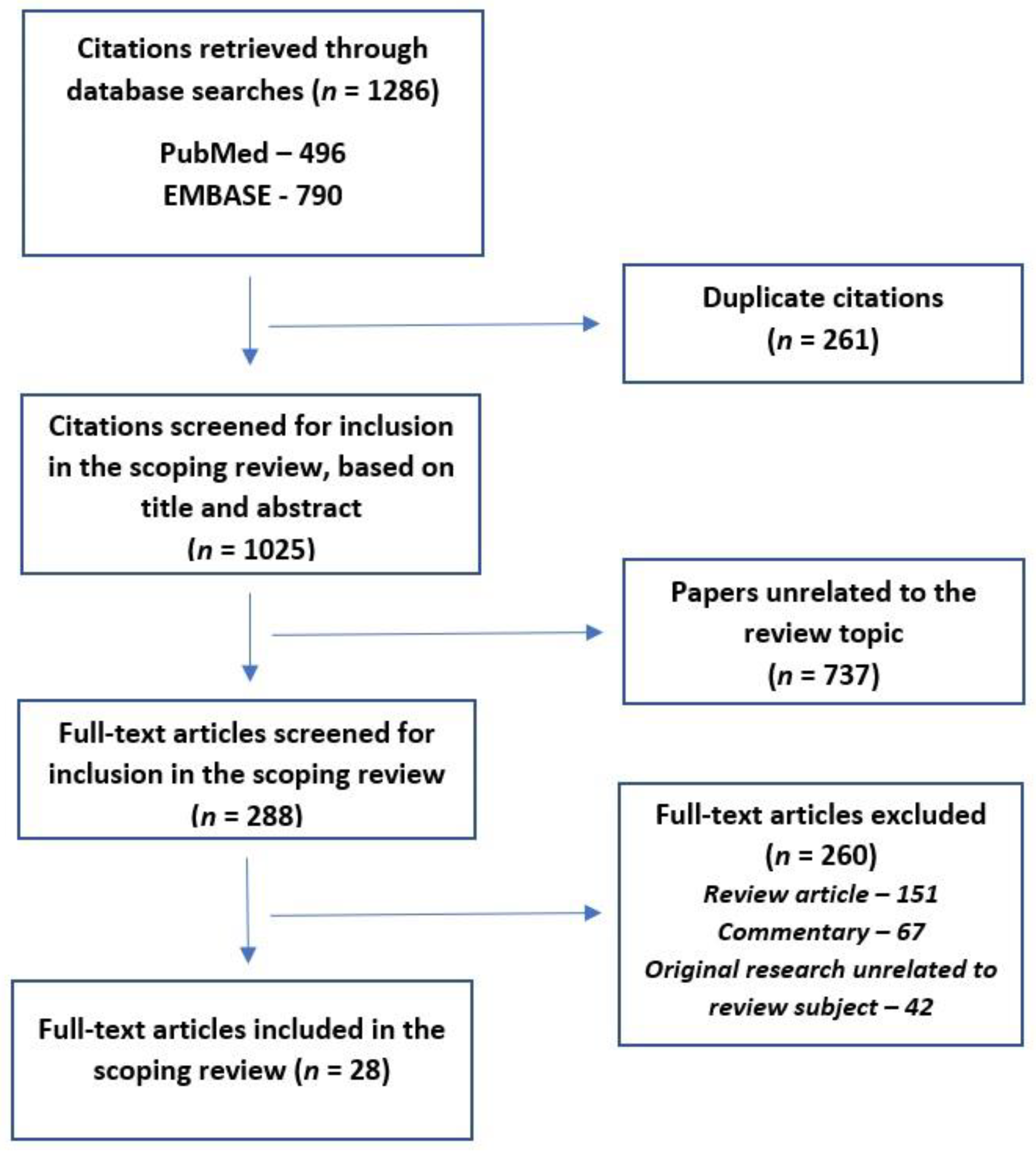

Table 1.
Genetic association studies included in the current review.
| Study and year of publication | Candidate gene(s) and polymorphisms studied | Study design | Study population and sample size | Results | Study quality (Q-Genie quality score) |
|---|---|---|---|---|---|
| Comings et al., 1991 [34] | DRD2 (Taq1 SNP) | Single-gene association | Patients seeking psychiatric care, Caucasian (n = 314) | DRD2 Taq1 A1 allele not significantly associated with depression or obesity | Poor (31) |
| Comings et al., 1996 [35] | Ob (D7S1875 repeat polymorphism) | Single-gene association | Young adults (age 26-30), Caucasian (n = 208) | Ob D7S1875 <208bp repeat polymorphism significantly associated with BMI and depressive symptoms, but only in women | Moderate (42) |
| Ejchel et al., 2005 [36] | APOA4 (360 Gln/His SNP) | Single-gene association | Elderly adults (age ≥ 60) (n = 383) | APOA4 360 His allele associated with both obesity and depression | Moderate (39) |
| Chen et al., 2006 [37] |
APOA5 (-1131T→C SNP) |
Single-gene association | Elderly adults (age 66-97) (n = 371) | APOA5 -1131 C allele associated with obesity in the presence of depression | Moderate (37) |
| Krishnamurthy et al., 2008 [38] | NR3C1 (Bcl1, N363S, rs33388 and rs33389 SNPs) | Single-gene association | Premenopausal women (age 21-45) with (n = 52) and without (n = 29) depression | NR3C1 Bcl1 G/G genotype associated with greater abdominal obesity in women with depression; no significant association for other SNPs | Moderate (39) |
| Spalova et al., 2008 [39] | NMB (P73T SNP) | Single-gene association | Adults with (n = 292) and without (n = 155) obesity or overweight, Caucasian | No significant effect of NMB P73T on weight loss or depressive symptoms when followed up over 2.5 years after a weight reduction programme | Moderate (42) |
| Fuemmeler et al., 2009 [40] | MAOA (30 bp VNTR) and SLC6A4 (5-HTTLPR 44bp Ins/Del) | Multiple-gene association, gene x depression interaction | Adolescents (n = 1584) | MAOA high-activity variant associated with lower risk of obesity in the presence of depression in male but not female adolescents | Moderate (45) |
| Kivimaki et al., 2011 [41] | FTO (rs1421085 SNP) | Single-gene association | Adults (age 35-55) (n = 4145) | FTO rs1421085 C allele associated with depression and obesity in men, but not in women; link between risk allele and depression in men apparently independent of obesity | Good (48) |
| Rivera et al., 2012 [42] | FTO (10 SNPs) | Single-gene association; gene x depression interaction | Two independent samples of adults with (n = 3734) and without (n = 2499) major depression | Significant associations between 5 SNPs of FTO and BMI in adults with depression, but not in controls | Good (55) |
| Samaan et al., 2013 [43] | FTO (rs9939609 SNP) | Single-gene association | Pooled data from 4 samples of adults with (n = 6561) and without (n = 21932) depression | FTO rs993609 A variant associated with increased BMI but lower risk of depression | Good (53) |
| Beydoun et al., 2014 [44] | 21 SNPs across 10 genes (ABCG5, APOB, APOA4, APOE, BCMO1, CD36, LIPC, FABP2, LPL, SCARB1) associated with serum carotenoid levels | Multiple-gene association study | Adults (age 30-64), African-American (n = 873) | No specific association between any individual SNP and either obesity or depression | Good (49) |
| Harbron et al., 2014 [45] | FTO (rs1421085 and rs17817449 SNPs and haplotype) | Single-gene association; gene x depression interaction | Adults with obesity, Caucasian (n = 133) | FTO rs17817449 GG genotype associated with more severe depressive symptoms; rs1421085 C allele mediates relationship between depressive symptoms and BMI | Moderate (41) |
| Bielinski et al., 2015 [46] | SLC6A4 (44-bp Ins/Del) and HTR2A (1438G/A SNP) | Multiple-gene association | Adults (age 18-73) with obesity, Caucasian (n = 180) | No significant association between either variant and depressive symptoms | Moderate (43) |
| Borkowska et al., 2015 [47] | SLC6A4 (5-HTTLPR repeat polymorphism) | Single-gene association | Adults with obesity, Caucasian (n = 390) | 5-HTTLPR L/L genotype associated with higher BMI and more severe depressive symptoms | Good (47) |
| Delacretaz et al., 2015 [48] | MCHR2 (8 SNPs) and MCHR2-AS1 (4 SNPs) | Multiple-gene association | Independent analyses of Caucasian adults with psychiatric disorders (n = 816) and in the general population (n = 119218) | MCHR2 rs7754794 TT genotype associated with lower BMI in patients with depression; similar but weaker association observed in the general population | Good (57) |
| McCaffery et al., 2015 [49] | 8 SNPs at 6 loci previously associated with depressive symptoms | Multiple-gene association | Adults with obesity or overweight, multi-ethnic (n = 2118) | KCNE1 rs1543654 associated with depressive symptoms; no significant associations for other SNPs | Good (46) |
| Samaan et al., 2015 [50] | 21 SNPs previously associated with obesity | Multiple-gene association | Multi-ethnic adults with (n = 3209) and without (n = 14195) depression | TAL1 rs2984618 SNP significantly associated with both BMI and major depression | Good (53) |
| Yilmaz et al., 2015 [51] | MC4R (rs571312, rs17782313, rs489693, rs11872992 and rs8087522 SNPs) | Single-gene association | Adults (age 24-50), Caucasian (n = 328) | MC4R rs17782313 C allele associated with higher depressive symptoms and higher BMI, but the latter was not significant after correction | Good (51) |
| Quteineh et al., 2016 [52] | CRTC1 (rs3746266 and rs6510997 SNPs) | Single-gene association | Pooled data from 3 samples of adults with (n = 5344) and without (n = 5515) major depression | No overall association between CRTC1 polymorphisms and depression; CRTC1 rs3746266 G allele and rs6510997 C allele associated with BMI in one of the samples | Moderate (43) |
| Bielinski et al., 2017 [53] | COMT (Val158Met) and DAT1 (VNTR polymorphism) | Multiple-gene association | Adults (age 39-69) with obesity, Caucasian (n = 364) | DAT1 9-repeat allele associated with higher BMI and depressive symptoms; COMT Met/Met genotype associated with depressive symptoms | Moderate (42) |
| Hellgren et al., 2017 [54] | 38 SNPs of four genes (AKR1C2, AKR1C4, SRD5A1 and SRD5A2) involved in allopregnanolone synthesis | Multiple-gene association | Pregnant women, Caucasian (n = 1351) | AKR1C2 rs28488494 SNP associated with BMI; AKR1C2 rs1937863 SNP associated with postnatal depressive symptoms | Good (50) |
| Rivera et al., 2017 [55] | FTO (rs9939609 SNP) | Single-gene association; gene x depression interaction | Pooled data from 5 samples of adults with (n = 6902) and without (n = 6799) depression | FTO rs9939609 A variant associated with higher BMI in patients with depression but not in controls | Good (54) |
| Schepers and Markus, 2017 [56] | SLC6A4 (5-HTTLPR repeat polymorphism) | Single-gene association | Healthy young adults (mean age 21.3) (n = 827) | 5-HTTLPR S allele associated with higher BMI and depressive symptoms | Moderate (45) |
| Treutlein et al., 2017 [57] | NPY2R (rs6857715 SNP) | Single-gene association; gene x weight interaction | Adults with depression (n = 595) and general population controls (n = 1295) | NPY2R rs6857715 T allele associated with depression independent of increased weight; trend towards an association between T allele weight gain in depressed patients | Good (51) |
| Brummett et al., 2018 [58] | HTR2C (rs6318 SNP) | Single-gene association | Pooled data from 10 adult samples, Caucasian and African-American (n = 27161) | No association between HTR2C rs6318 and either depressive symptoms or BMI | Good (54) |
| Hay et al., 2022 [59] | PCSK9 and surrounding locus (7 lead SNPs identified through sequential analysis of biobank data) | Single-locus association | Data from adult Biobank samples, mixed ethnicity (n = 73627) | PCSK9 rs2647282 associated with BMI; no association between any PCSK9 SNP and major depression | Good (49) |
| He et al., 2022 [60] | HTR2C (13 rare variants identified in a prior sample) | Single-gene association | Data from adult Biobank samples, Caucasian (n = 153352) | HTR2C V61I variant associated with depression and obesity, but not significant after correction | Moderate (44) |
| Rahati et al., 2022 [61] | MC4R (rs17782313 SNP) | Single-gene association | Adults (age 20-50) with obesity or overweight, Iranian (n = 403) | MC4R rs17782313 C allele associated with higher depressive symptoms; CC genotype associated with higher body weight | Moderate (45) |
Abbreviations: ABCG5, ATP-binding cassette sub-family G member 5 gene; AKR1C2, aldo-keto reductase family 1 member C2 gene; AKR1C4, aldo-keto reductase family 1 member C4 gene; APOA4, apolipoprotein A-IV gene; APOA5, apolipoprotein A-V gene; APOB, apolipoprotein B gene; APOE, apolipoprotein E gene; BCMO1, beta-carotene oxygenase 1 gene; BMI, body mass index; CD36, cluster of differentiation 36 gene; COMT, catechol O-methyltransferase gene; CRTC1, CREB-regulated transcription coactivator 1 gene; DAT1, dopamine transporter gene; DRD2, dopamine type 2 receptor gene; FABP2, fatty acid-binding protein 2 gene; FTO, fat mass and obesity-associated gene; HTR2A, serotonin type 2A receptor gene; HTR2C, serotonin type 2C receptor gene; LIPC, hepatic lipase gene; LPL, lipoprotein lipase gene; MAOA, monoamine oxidase A gene; MC4R, melanocortin 4 receptor gene; MCHR2, melanin concentrating hormone receptor gene; NMB, neuromedin beta gene; NPY2R, neuropeptide Y type 2 receptor gene; NR3C1, glucocorticoid receptor gene; Ob, leptin gene; PCSK9, proprotein convertase subtilisin / kexin type 9 gene; SCARB1, scavenger receptor class B1 gene; SLC6A4, serotonin transporter gene; SNP, single-nucleotide polymorphism; SRD5A1, 3-oxo-5α-steroid 4-dehydrogenase 1 gene; SRD5A2, 3-oxo-5α-steroid 4-dehydrogenase 2 gene; TAL1, T-cell acute lymphocytic leukemia protein 1 gene.
Table 2.
Functional significance and quality of evidence for genes associated with both obesity and depression.
Table 2.
Functional significance and quality of evidence for genes associated with both obesity and depression.
| Genetic locus | Physiological effects of gene product | Impact on obesity and depression |
|---|---|---|
| Genes with replicated associations | ||
| FTO (5 studies) | DNA/RNA demethylase enzyme that influences food intake, adiposity and energy expenditure | Multiple SNPs associated with elevated BMI in depression but not in general samples [42] rs9939609 A allele associated with higher BMI both in general samples and in patients with depression; also associated with lower depressive symptoms in general samples [43,55] rs17817749 GG genotype associated with elevated depressive symptoms in adults with obesity [45] rs1421085 C allele interacts with depressive symptoms to influence higher BMI [41] |
| MC4R (2 studies) | G-protein coupled, membrane-bound receptor for α-melanocyte stimulating hormone | rs17782313 C allele associated with increased depressive symptoms in adults both with and without obesity [51] CC genotype associated with increased body weight in adults with obesity [61] |
| Genes with positive findings in single studies | ||
| AKR1C2 | Reduction of 5α-dihydroprogesterone to allopregnanolone; one of two isoforms expressed in the brain | rs28488494 associated with BMI and rs1937863 associated with post-partum depressive symptoms in pregnant women [54] |
| APOA5 | Component of high-density lipoprotein (HDL); involved in regulation of plasma triglyceride levels | -1131 C allele associated with obesity in elderly adults with depression [37] |
| COMT | O-methylation and inactivation of catecholamine neurotransmitters – dopamine, epinephrine, norepinephrine | rs4680 Met/Met genotype associated with depressive symptoms in adults with obesity [53] |
| DAT1 | Reputake of dopamine into presynaptic neurons | 9-repeat allele associated with higher BMI and elevated depressive symptoms [53] |
| KCNE1 | Regulation of voltage-gated potassium channel activity in cardiac muscle, inner ear and brain | rs1543654 associated with depressive symptoms in adults with obesity [49] |
| MAOA | Catabolism of monoamine neurotransmitters – dopamine, serotonin, norepinephrine | High-activity variant associated with reduced obesity in adolescent girls with depression [40] |
| MCHR2 | G-protein coupled, membrane-bound receptor for melanin concentrating hormone | rs7754794 TT genotype associated with lower BMI in patients with depression [48] |
| NPY2R | Receptor for neuropeptide Y, which is involved in the stress response, eating behaviour, cognition and pain perception | rs6857715 T allele associated with depression independent of BMI [57] Trend towards an association between this allele and increased BMI in patients with depression [57] |
| NR3C1 | Nuclear receptor for cortisol and other glucocorticoid hormones; involved in regulation of carbohydrate metabolism, immune-inflammatory activity and the stress response | Bcl1 G/G genotype associated with greater obesity in women with depression [38] |
| Ob (Leptin) | Centrally active hormone secreted by adipose cells; regulates satiety and energy expenditure | D7S1875 <208bp variant associated with depressive symptoms and higher BMI in women [35] |
| PCSK9 | Proprotein convertase enzyme; regulates serum cholesterol levels by modulating the number of low-density lipoprotein receptors (LDL) | rs2647282 associated with BMI in adults; no association with depression [59] |
| TAL1 | Transcription factor involved in differentiation of erythroid and myeloid cells | rs2984618 associated with higher BMI and risk of major depression in adults [50] |
| Genes with mixed positive and negative findings | ||
| SLC6A4a | Reputake of serotonin into presynaptic neurons | 5-HTTLPR s allele associated with higher BMI and depressive symptoms in young adults [56] 5-HTTLPR l/l genotype associated with higher BMI and more severe depressive symptoms in adults with obesity [47] |
| APOA4b | Component of very low-density lipoprotein (VLDL) and chylomicrons; activator of enzymes involved in lipid metabolism; involved in regulation of serum cholesterol levels | 360 Gln/His associated with obesity and depression in elderly adults [36] |
a Two positive and two negative studies. b One positive and one negative study.
Table 3.
Potential pharmacological therapies for comorbid obesity and depression, based on genetic studies.
Table 3.
Potential pharmacological therapies for comorbid obesity and depression, based on genetic studies.
| Target gene | Synthetic agents | Natural agents |
|---|---|---|
| FTO | Selective inhibitors of FTO demethylasea |
Angelica sinensis ext. Rhein |
| MC4R | Bremelanotideb Setmelanotideb |
Moringa oleifera ext. Daisaikoto |
| AKR1C2 | Selective ARK1C2 inhibitorsa | Astaxanthin Bai He Gun Jin Tiang |
| KCNE1 | - |
Coriandrum sativum ext. Gintoin Rottlerin |
| MCHR2 | GW803430a | - |
| NPY2R | Neuropeptide Y, intranasala Combined NPY2R and GLP-1 agonistsa |
Panax ginseng ext. |
| NR3C1 | CORT125281a PT150c |
Aesculus turbinata ext. Curcumin Baihe Zhimu Xingpi Jieyu |
| Ob | - |
Commiphora myrrha ext. Nelumbo nucifera ext. Prunus persica ext. |
| PCSK9 | Alirocumabb Evolocumabb |
Lysimacha vulgaris ext. Protium heptaphyllum ext. Salvia plebeia ext. |
| TAL1 | PIK-75a | - |
Abbreviations: AKR1C2, aldo-keto reductase family 1 member C2 gene; Ext., extract; FTO, fat mass- and obesity-associated gene; GLP-1, glucagon-like peptide 1; MC4R, melanocortin receptor type 4 gene; MCHR2, melanin-concentrating hormone type 2 receptor gene; NPY2R, neuropeptide Y type 2 receptor gene; NR3C1, glucocorticoid receptor gene; Ob, leptin gene; PCSK9, proprotein convertase subtilisin / kexin type 9 gene; TAL1, T-cell acute lymphocytic leukemia protein 1 gene. a Under development or for experimental use in animal models only. b Randomized controlled trials and / or available on the market for use in human patients. c Preclinical trials ongoing in humans.
Disclaimer/Publisher’s Note: The statements, opinions and data contained in all publications are solely those of the individual author(s) and contributor(s) and not of MDPI and/or the editor(s). MDPI and/or the editor(s) disclaim responsibility for any injury to people or property resulting from any ideas, methods, instructions or products referred to in the content. |
© 2023 by the authors. Licensee MDPI, Basel, Switzerland. This article is an open access article distributed under the terms and conditions of the Creative Commons Attribution (CC BY) license (http://creativecommons.org/licenses/by/4.0/).
Copyright: This open access article is published under a Creative Commons CC BY 4.0 license, which permit the free download, distribution, and reuse, provided that the author and preprint are cited in any reuse.


