

Submitted:
31 January 2023
Posted:
02 February 2023
You are already at the latest version
Abstract
Brassica vegetables has demonstrated many health benefits over the years due to its composition of phenolic, flavonoid, and glucosinolate content. However, these bioactive molecules can be easily depleted during gastronomic operations. Therefore, a sustainable method which improves the phenolic content and antioxidant activity is required at large for the processors and consumers. Thermal processing has demonstrated as a method to improve the phenolic content and antioxidant status of Brassica vegetables. In the current study four different thermal processing methods, including freeze drying, sauteing, steam and air frying, were employed for five different Brassica vegetables, including kale, broccoli sprout, brussels sprout, red cabbage, and green cabbage. Total phenolic content (TPC), total flavonoid content (TFC), and antioxidant activities were assessed using radical scavenging activity (DPPH and ABTS•+), reducing power (FRAP), and chelating ability of the metal ions. Among tested, air frying at 160oC for 10 minutes showed the highest TPC, TFC, and antioxidant activity of the Brassica vegetables, while sautéing showed the lowest. Steam treatment was preferred over the freeze-drying treatment. Within the vegetables tested, both kale and broccoli sprout contained higher antioxidants properties in most processing treatment employed. Results also indicated that there is a strong correlation between TPC, TFC, and the antioxidant activity (p<0.05). This study indicates that air frying could be a choice of sustainable thermal processing method for improving biomolecules for Brassica vegetables.
Keywords:
Thermal processing
; Brassica vegetables
; Kale
; Broccoli sprout
; Air frying
; antioxidants
1. Introduction
Brassica vegetables, especially Brassica oleraceae (e.g., cabbage, Brussels sprout, broccoli sprout, kale), have gained attention over the years due to many health benefits. Associated health benefits include protective effects on type 2 diabetes, cardiovascular disease, coronary heart disease, and hypertension [1,2,3]. These vegetables are rich sources of fibre, vitamins, carotenoids, and minerals [2,4], including rich phenolic profiles with relatively higher antioxidant properties [4,5]. Among these natural antioxidants, flavonoids provide better protective properties as reducing agents and radical scavenging agents pertaining to antioxidant activity [5].
The common understanding is that when consumed raw, these Brassica vegetables would provide better nutritional benefits, whereas heat treatments and thermal processing decrease the nutrient content [5] with prolonged cooking. This controversial statement on thermal processing should be clarified with robust scientific evidence. A research question arises is if thermal processing affected the compositional changes of phenolic composition and antioxidant activity in Brassica vegetables. Enhanced food processing techniques are necessary to address the improved nutritional content in these gastronomic operations to fulfil the nutritional needs of the high risk populations for the chronic diseases [6].
Among the thermal processing techniques, pressurized steam, stir-frying, and air frying are some techniques that gained attention over the period [7,8,9,10,11]. In addition, freeze-drying has been popular due to its wide applicability in different food matrices [12,13]. A recent study reported an improvement of the phenolic composition and antioxidant profiles of certain Brassica vegetables such as canola and mustard using the air frying techniques compared to other thermal techniques employed [7,8]. Whether similar findings occur in Brassica oleraceae is of interest to test. Therefore, the current study was designed to assess the impact of different thermal processing techniques on the total phenolic content (TPC), total flavonoid content (TFC), and antioxidant activity on Brassica oleraceae vegetables. The findings of the current study would provide the importance of thermal processing on Brassica vegetables as a method to improve the phenolic and flavonoid content, ultimately improving health and food industry.
2. Materials and Methods
2.1. Materials
Five Brassica vegetables, including red cabbage, green cabbage, broccoli sprouts, brussels sprouts, and kale, were selected for the current study based on the potential health benefits towards the positive outcomes of type 2 diabetes. The vegetables were selected from three different locations in Manitoba (south, central, and north) on the same date to obtain a representative sample. Grocery stores include Sobeys (south Winnipeg), Fresco (central Winnipeg) and Safeway (north Winnipeg). All the vegetables were subjected to different processing conditions on the same day and stored at -80oC until utilized for the different assays.
2.2. Chemicals
Folin–Ciocalteu’s (FC) reagent, total phenolic content (TPC) standard, iron (II) chloride hexahydrate (98%), iron (III) chloride hexahydrate (97%), iron (II) sulphate heptahydrate (99%), hydrogen chloride (HCl, 99%), sodium acetate, 2,4,6-tris-(2-pyridyl)-s-triazine (TPTZ >98%), sinapic acid (>97%), and 2,2- diphenyl-1-picrylhydrazyl (DPPH, 97%), and Formic Acid were all purchased from Fisher Scientific Canada Ltd. (Ottawa, ON, Canada). Aluminium chloride (AlCl3), sodium nitrite (NaNO2), sodium carbonate (Na2CO3), sodium hydroxide (NaOH), ferrozine, disodium ethylenediaminetetraacetic acid (Na2EDTA) were purchased from Sigma Canada Ltd. (Mississauga, ON, Canada). Quercetin hydrate (>95%) and 2-amino-ethyl-diphenyl borate (98%) were purchased from Acros (Mississauga, ON, Canada).
Extraction reagents including methanol (optima grade) and ethanol (analytical grade) and standard compounds for the high-performance liquid chromatography (HPLC) were purchased from Sigma Canada Ltd. (Mississauga, ON, Canada).
2.3. Application of Different Processing Techniques to Optimize the Phenolic Content
2.3.1. Freeze Drying Treatment
Freeze-drying of the vegetables was conducted based on the method described by Wu et al. [14] with slight modifications. Each type of vegetable was cut into pieces of 2cm x 2cm size and stored for two hours at -80oC prior to freeze-drying. Freeze drying was conducted using a Labconco 4.5 Freezone Freeze Dryer (Labconco Corporation, Kansas City, MO, USA) at the temperature of -50oC for four days until the constant dry weight was recorded. After the freeze-drying, vegetables were ground into fine particles and kept at -80oC until further analysis (Figure 1).
2.3.2. Pressurized Steam Treatment
Pressurized wet extraction of the vegetables was conducted using an instant pot (Instant Pot Duo Mini 3 Qt Model number: IPDUOMINI 3Qt) at the temperature of 100oC at 10.2 psi for 5 minutes. The vegetables to water ratio were kept at 5:1 according to the method described by Korus et al. [15] with a few modifications. After each steam treatment, the vegetables were drained and cut into pieces of 2cm x 2cm size. Samples were freeze-dried according to the method described in Section 2.3.1 (Figure 1).
2.3.3. Air Frying Treatment
Air-frying/roasting of the vegetables was conducted using the method described by Fadairo et al. [7,8] with slight modifications. The same instant pot (Instant Pot Duo Mini 3 Qt Model number: IPDUOMINI 3Qt) was used in here with the air-fryer extension. All the vegetables were subjected to air-frying temperature and time combination of 160oC for 10 minutes based on the optimized results of Fadairo et al. [7] and Nandasiri et al. [16]. Samples were cut into pieces of 2cm x 2cm size after air-frying and freeze-dried according to the method described in Section 2.3.1 (Figure 1).
2.3.4. Stir-Frying/Sautéing of the Vegetables
The same instant pot (Instant Pot Duo Mini 3 Qt Model number: IPDUOMINI 3Qt) was used for the stir-frying operations using its in-built sautéing function according to the method described by Nugrahedi et al. [17] with minor modifications. The vegetable-to-oil ratio of 10:1 was used for the stir-frying operations using canola oil (complements brand, Winnipeg, Manitoba). The stir-frying operation was conducted at 250oC for 5 minutes. Vegetables were cut into pieces of 2cm x 2cm size after stir-frying and freeze-dried as per described in Section 2.3.1 (Figure 1).
2.4. Sample Preparation
2.4.1. Ultrasound-Assisted Extraction (UAE) of Phenolic Compounds
The phenolic extraction was conducted using the methods described by Liu et al. [18] and Liang et al. [19] with slight modifications. In brief, 0.05g of freeze-dried vegetable sample was weighed and dissolved in 0.45 mL of 70% (v/v) methanol (1:10 ratio of solid to solvent). Phenolic extraction was carried out by the ultrasound extraction using the SONOPLUS ultrasonic homogenizer HD 2200 system (BANDELIN electronic GmbH & Co. KG, Heinrichstraße, Berlin, Germany) with a power of 40% and a frequency of 20 kHz ± 500 Hz for 1 minute at room temperature (25oC). The extracts were centrifuged at 3000g for 30 minutes at refrigeration condition (4oC) using the Eppendorf™ centrifuge 5804R (Fisher Scientific, Ottawa, ON, Canada). The extraction was repeated two more times, and the final volume was adjusted to 1.5 mL. Samples were concentrated using the Savant SPD 111V SpeedVac Concentrator, (Thermo Scientific, Mississauga, ON, Canada) for 5 hours to remove the residual solvents followed by freeze drying at -50oC for 2-3 hours as per described in Section 2.3.1. Freeze-dried extracts were reconstituted in 0.5 mL of 100% (v/v) methanol and kept at -80oC until further analysis.
2.4.2. Phenolic Extraction for Antioxidant Assays
Phenolic extractions for the antioxidant assays were conducted according to the method described by Singleton & Rossi [20] with a few modifications. In brief, 0.5g of freeze-dried vegetable powder was dissolved in 5.0 mL of 80% (v/v) methanol (1:10 sample to solvent ratio) and kept at 25oC for 15 hours using an orbital shaker. After 15 hours, the extracts were centrifuged at 3000g for 30 minutes at refrigeration condition (4oC) using the Eppendorf™ centrifuge 5804R (Fisher Scientific, Ottawa, ON, Canada). The supernatant was collected and stored at -80oC until further analysis.
2.5. Antioxidant Activity of the Vegetables
2.5.1. Assessment of Total Phenolic Content (TPC)
The total phenolic content (TPC) of the obtained extracts was estimated using the Folin-Ciocalteu method described by Thiyam et al. [21] and modified for the plate reader as described by Fadairo et al. [7]. In brief, 40 µL of the reconstituted plant extracts obtained from 2.4.2 were added into a Corning 9017 96-Well Microplates (Fisher Scientific, Ottawa, ON, Canada) followed by the addition of 120 µL of deionized water. 40 µL FC reagent was added to the mixture and was incubated for 5 minutes at 25oC. After incubation, 40 µL Na2CO3 was added, and the sample mixture was kept in the dark for 1 hour. After 1-hour absorbance was measured at 640 nm using the microplate reader (Bio-Tek Powerwave XS, Vermont, USA). Methanol was substituted as blank, and TPC standard solution 1000mg/mL (Fisher Scientific, Mississauga, ON, Canada) was used to assemble the standard curve (Figure S1). TPC was expressed as milligrams of gallic acid per gram of vegetable on the dry weight basis.
2.5.2. Assessment of Total Flavonoid Content (TFC)
The total flavonoid content (TFC) of the vegetable extracts was determined by the aluminium chloride colourimetric method described by Zhishen et al. [22] with slight modifications. In brief, 25 µL of the reconstituted plant extracts obtained from 2.4.2 was added into a Corning 9017 96-Well Microplates (Fisher Scientific, Ottawa, ON, Canada) followed by the addition of 100 µL of deionized water (in a ratio of 1:4 (v/v)). The diluted sample was then mixed with 7.5 µL of NaNO2 5% (w/v), and the reaction mixture was held at room temperature (25oC) for 6 minutes. After 6 minutes, 7.5 µL of AlCl3 10% (w/v) was added and held at room temperature (25oC) for additional 5 minutes. Then 50 µL of NaOH (1 M) was added and mixed by VWR™ analog mini vortex mixer (Henry Troemner LLC, Thorofare, NJ, USA). The absorbance was measured at 510 nm using the microplate reader (Bio-Tek Powerwave XS, Vermont, USA). Methanol was substituted as blank, and quercetin standard solution 1.0 mg/mL (Fisher Scientific, Mississauga, ON, Canada) was used to assemble the standard curve (Figure S2). TFC was expressed as milligrams of quercetin per gram of vegetable on the dry weight basis.
2.5.3. DPPH Free Radical–Scavenging Assay
The DPPH radical scavenging activity of the extracted solution was measured using the DPPH assay described by Nandasiri et al. [23], with minor modifications. Briefly, 10 µL of reconstituted plant extracts obtained from 2.4.2 were added to 290 µL of 100% (v/v) methanol in a Corning 9017 96-Well Microplates (Fisher Scientific, Ottawa, ON, Canada), followed by the addition of 10 µL of the prepared DPPH solution (0.05 mM). The samples were kept in the dark for 5 minutes to generate the radicals. The absorbance was measured at 516 nm using the microplate reader (Bio-Tek Power wave XS, Vermont, USA). Methanol was substituted as blank. The free radical scavenging activity was measured using the following equation:
Where Ac is the absorbance of solvent control
As is the absorbance of the sample
2.5.4. Ferric Reducing Antioxidant Power Assay (FRAP Assay)
Apart from the radical scavenging activity, the reducing power of the extracts was assessed using a modified method of Benzie & Strain [24]. The working reagent of FRAP was prepared by mixing acetate buffer (300mM, pH = 3.6), TPTZ (2,4,6-tri[2-pyridyl]-s-triazine) solution (10mM in 40 mM HCl) with a 20mM FeCl3 solution in a ratio of 10:1:1 and kept at 37oC until a straw-colored solution was formed. Briefly, 10 µL of reconstituted plant extracts obtained from 2.4.2 were mixed with 90 µL of deionized water, followed by 90 µL of FRAP reagent in a Corning 9017 96-Well Microplates (Fisher Scientific, Ottawa, ON, Canada). The reaction mixture was then left in the dark for 8 minutes and the absorbance was measured at 593 nm using the microplate reader (Bio-Tek Powerwave XS, Vermont, USA). Deionized water was used as the blank, and a 1.0 mM solution of Trolox was used to create the standard curve (Figure S3).
2.5.5. Ferrous-Ion-Chelating Activity Assay Antioxidant Capacity
The chelating activity of the metals was assessed according to that described by Dinis et al. [25] with few modifications. In short, 10 µL of reconstituted plant extracts obtained from 2.4.2 were added to a Corning 9017 96-Well Microplates (Fisher Scientific, Ottawa, ON, Canada), with 50 µL of 2.0 mM FeCl2 solution and 20 µL of 5.0 mM ferrozine solution prepared fresh daily. The total volume was adjusted to 280 µL using deionized water. The mixture was then kept at room temperature (25oC) for 10 minutes, and the absorbance was measured at 562 nm wavelength using the microplate reader (Bio-Tek Powerwave XS, Vermont, USA). Deionized water was used as the blank, and a 1.0 mM solution of Na2EDTA was used to create the standard curve (Figure S4).
2.5.6. Total Antioxidant Capacity Assay (TAC)
The total antioxidant activity of each extract was assessed according to a protocol using a commercial KIT (Item # Cay709001-96, Cayman Chemicals, NJ, USA) using the microplate reader (Bio-Tek Powerwave XS, Vermont, USA). Deionized water was used as the blank, and a 1.0 mM solution of Trolox was used to create the standard curve (Figure S5).
3. Statistical Analysis
Results were presented as a mean ± standard deviation for all experiments conducted with five replicates. The normality of the data and constant variance were confirmed prior to the statistical analysis [26]. The differences between mean values of main factor were determined by two-way analysis of variance (ANOVA). The post-hoc analysis was conducted using Tukey’s test, with 5% statistically significant differences (p>0.05) considered statistically significant [26]. SPSS statistical software version 26 (IBM, New York, NY, United States) was used to analyze the data.
4. Results and Discussion
4.1. Impact of Thermal Processing on Total Phenolic (TPC) and Total Flavonoid Content (TFC)
Phenolic compounds have been reported to contribute to the plants flavor, color, and antioxidant activity. Folin-Ciocalteu assay determining TPC of vegetables were based on oxidation reaction of phenolic compounds in the presence of phosphomolybdate and phosphotungstate mixture [27]. The impact of different thermal processing techniques was evaluated for TPC. The results showed that air frying, compared to other techniques, has significantly (p<0.05) higher TPC of the vegetables regardless of the varieties (Figure 2). Statistical analysis indicated that type of vegetable, method of processing and interaction between them were significant in the model statistics with an adjusted R2 value of 0.996 (Table 1a). The previous studies by Nandasiri, et al.[16] and Fadairo, et al. [7,8] also showed improved TPC in canola and mustard by the application of air-frying. They observed highest TPC values for the canola meal substrate conditions at 190oC for 15 minutes (3.15 ± 0.14 mg GAE/g DW) and 20 minutes (3.05 ± 0.02 mg GAE/g DW), respectively. The present study optimized a condition with a lower temperature with a shorter time, 160oC for 10 minutes, exhibited much higher TPC values ranging from 1.76 ± 0.11 mg GAE/g DW (green cabbage) to 5.87 ± 0.23 mg GAE/g DW (broccoli sprouts) (Figure 2). A study conducted by Ayaz et al., [28] reported that TPC in the kale leaves was around 1.37mg/g on fresh weight basis (FW) which was much lower compared to the values obtained by the current study.
Application of lesser time in gastronomic operations are often preferred for the vegetables, hence the air-frying condition of 160oC for 10 minutes is preferred option for the Brassica vegetables. The air-fryer designed uses hot air (~ 200oC) to quickly cook the foods with continuous flow (using the rapid air technology) circulating through the cooking chamber [29]. This rapid air technology creates an opportunity to create faster cooking operations creating crispy coating outside the foods. Further, this rapid air technology reduces the preparation time (by 25-50%), pre-heating time (by 50-75%), energy consumption (by 50%) [29]. No recent reports on impact of air frying of Brassica vegetables have been reported up to date and this is the first study evaluating the impact of air frying on the compositional changes. The application of higher temperatures (>140oC) for shorter time intervals during the process of air-frying and consistent circulation of hot air throughout the system make its ideal to preserve the nutrients and phenolic compounds without leaching out [7]. Furthermore, in both canola and mustard it was observed that certain thermo-generative phenolic compounds were also formed during the thermal process of air-frying including canolol [7,8,16,30,31]. Canolol and other thermo-generative phenolic compounds has demonstrated higher antioxidant potential in the respective studies. Although not measured, formation of these thermo-generative compounds could be associated with the higher TPC values and antioxidant activities obtained via air frying of the present study.
In the present study, both sautéing and pressurized steam operations reported the lowest TPC levels (Figure 2). Further the statistical analysis indicated that type of vegetable, method of processing and interaction between them were significant in the model statistics with an adjusted R2 value of 0.983 (Table 1b). The leaching of the nutrients, glucosinolates, and other phenolic compounds during the steaming process may lead to the lower levels of TPC regardless of the types of vegetables [32,33]. Paciulli et al. [32] reported that steamed Brussels sprouts contained a TPC of 0.25 ± 0.8 mg of GAE/g, comparable to the values reported in the current study using the pressured steam treatment by the instant pot 0.19 ± 0.01 mg GAE/g DW (Figure 2). A similar study conducted by Cieślik, et al. [34] evaluated the impact of boiling, blanching, cooking, and freezing on different cruciferous vegetables, including Brussel sprouts, white and green cauliflower, broccoli, and curly kale, and observed considerable losses of total glucosinolates after blanching, and cooking, with 30% and 72.4%, respectively, which affected the TPC levels. However, interesting trend on correlation was observed with TPC and other antioxidant activities (Table 2). It was observed that FRAP (0.936), TFC (0.863) and metal ion chelating activity (0.911) has very high correlation with the TPC value (Table 2). However, poor correlation was observed between the TPC and the DPPH radical activity (0.234) (Table 2).
Thermal processing strategies have been applied in the food industry since ancient times with the focus of delaying the inevitable deterioration of perishable foods between production and consumption [9]. Thermal processing including steam, would destroy the microbial pathogens while reducing the number of spoilage microorganisms and inactivating certain enzymes related to relapse of foods [9]. Further, the use of oil in the stir-frying operations might also have a detrimental effect in the TPC levels of the vegetables. During the processing, some lipophilic phenolic compounds could leach out of the medium resulting losses in the TPC values. A study conducted by Nugrahedi et al. [17] showed minimal differences in the quantity of glucosinolates among the treatment groups of different time-temperature combinations for Chinese cabbage. The authors reported that inactivation of myrosinase enzyme at higher temperatures of stir-frying, would result in a negligible influence in its composition. However, in the current study we observed low TPC values ranging from 0.05 ± 0.00 mg GAE/g DW (green cabbage) to 0.35 ± 0.01 mg GAE/g DW (broccoli sprouts). In a different study conducted on serrano peppers and jalapeno peppers, Mwebi and Ogendi [10] reported that the antioxidant concentration in the stir-fry, steam, and boiled samples was nearly the same but much higher than the raw samples. Interestingly, freeze dried vegetables also had a lower TPC levels compared to the air-fried vegetables. In general, freeze-drying has been reported as a non-destructive method to preserve the nutrients. Together with the above study [10], the current study demonstrated freeze-drying operations not be an effective method compared to the air frying (Figure 2).
Certain phenolic compounds including flavonoids have also been proven to show strong antioxidant properties and health benefits [35,36]. The TFC of vegetables can be influenced by both intrinsic and extrinsic factors including variety, maturity stage, cultivation location, and other processing conditions including temperature, pH, pressure [37,38]. Current study found that application of air frying, was able to significantly improve TFC of the vegetables regardless of the varieties (Figure 3). Within air-fried treatment, kale contained the highest amount of TFC (90.76 ± 10.04 mg QE/g DW), followed by broccoli sprouts (67.21 ± 3.29 mg QE/g DW), and red cabbage (48.72 ± 2.01 mg QE/g DW). TFC also had a similar correlation trend compared to TPC (Table 2). TFC demonstrated higher correlations among FRAP (0.940), TPC (0.863) and metal ion chelating activity (0.939) (Table 2). However, similar to TPC, poor correlation was observed between the TFC and the DPPH radical activity (0.375) (Table 2).
These findings confirmed that air-frying is the preferred method of processing for the Brassica vegetables (Figure 3). It was reported that kale contains relatively higher amount of flavonoids including kaempferol, quercetin, isorhamntin, flvonol-3-O-glycosides, and flvonol-7-O-glycosides [39]. The higher TFC values could be associated with the distribution of these flavonoids. On the contrary, red cabbage contains a relatively higher amount of cyanidin compounds which represents the comparable higher TFC values [40]. In addition, the processing conditions of air-frying containing higher temperature at shorter time would further prevent them leaching out from the vegetables during the processing. Interestingly, the sauteing demonstrated the lowest values for the TFC (Figure 3). The solubility of certain flavonoids in hydrophobic medium is higher compared to the aqueous medium and this could be associated with the lower TFC levels in the sauteing treatment [41]. Formation of H-bonds with oil will further increase the solubility of the flavonoids in oil medium to allow leaching out from the extractants resulting lower flavonoid content in the final extracts of the sauté treatment [42]. Lemańska et al. [42] reported that both 3- and 5- hydroflavone formations with strong H-bond with oxygen atoms from C4=O, inhibit the deprotonationation and antioxidant potential. But with an increase in pH, the shift would take place from C3- and/or C5- hydroxyl group to C4= carbonyl group creating stable cations to promote electron donation for flavonoid molecules. Interestingly, the steam treatments showed higher TFC compared to the freeze-dried treatments (Figure 3). The shorter time exposure to heated vapor on the steam treatment would facilitate breaking of the cell wall materials of these vegetables thereby releasing the intracellular phenolic compounds into the medium resulting higher yields of TFC [43].
The current study confirms that thermal processing of the Brassica vegetables for shorter durations at higher temperatures would enhance the extractability of the flavonoids. These results were similar to the results of Nandasiri et al. [23] from canola meal using accelerated solvent extraction. They found that there was a significant increase in the concentration of flavonoids among the extracts between the extraction temperatures of 140oC (3.70 ± 0.11 µmol QE/g DM) and 180oC (5.45 ± 0.27 µmol QE/g DM). The application of both pressure (1500 psi) and temperature had favorable impact towards the extractability of the flavonoids [23]. Similarly, Zago et al. [44] reported that both pre-heating time and pre-heating temperature had a positive effect on the extractability of the TFC on defatted hemp cake. Yet the values were not significantly different. The TFC values ranged from 0.020 ± 0.01 µmol QE/g DM (160°C; 15 min) to 0.23 ± 0.01 µmol QE/100g DM (180°C; 30 min) with the pre-treatment time/temperature combinations for the defatted hemp cake [44].
4.2. Impact of Thermal Processing on Antioxidant Activity
Antioxidant activity of the vegetable extracts were evaluated using different assays leading to different mechanisms such as radical scavenging activity, chelating activity of metals, and the reducing power. As the composition of phenolic compounds differs in its structures and active sites each compound react differently, different mechanism of actions is required to better understand the antioxidant activity.
4.2.1. DPPH Free Radical–Scavenging Activity of the Brassica Vegetables
The radical scavenging activity of the vegetable extracts were evaluated primarily using the DPPH radical scavenging activity. DPPH radical scavenging activity is one of the widely applied colorimetric methods on measuring its antioxidant activity using its scavenging capacity towards DPPH• radicals via an electron donating mechanism. In general, a higher antioxidant capacity would lead towards a decrease in its absorbance. These radicals could react in four different pathways including proton coupled-electron transfer (PC-ET), electron transfer-proton transfer (ET-PT), sequential proton loss electron transfer (SPLET), and adduct formation (AF) [45,46]. Among the reported mechanisms both PC-ET and SPLET, mechanisms are considered to follow the DPPH radical formation. Hence, for the 70% (v/v) methanol extractants with a dielectric constant of = 33, SPLET mechanism is more applicable as it encourages ionization [45,47].
In the present study, both brussels sprouts and broccoli sprouts have higher DPPH radical activity despite the processing method with an average radical scavenging activity of over 70% (Figure 4), indicating their higher antioxidant potential. Statistical analysis further indicated that type of vegetable, method of processing and interaction between them were significant in the model statistics with an adjusted R2 value of 0.996 for the DPPH radical activity (Table 1d). Further, it confirms that in the sprout stage the composition of phenolics is much higher and condensed compared to the mature stage. In addition, the minimal changes in the radical scavenging activity despite the processing operations indicates that the endogenous phenolic compounds present in both brussels sprouts and broccoli sprouts are relatively stable and are minimally impacted by the gastronomic operations. In general, above 50% radical scavenging activity was reported for air-fry, sauté, and steam operations showing the thermal processing has favorable conditions towards the antioxidant activity (Figure 4). A study conducted by Mwebi & Ogendi [10] also reported that cooking operations has different impact towards the radical scavenging activity. Authors reported that DPPH radical activity was in the order of microwaved > stir-fried > steamed > raw > boiled for both serrano peppers and jalapeno peppers. Further, in another study conducted by Turkmen, et al. [48] reported that radical scavenging activity of fresh vegetables were in the order of broccoli > pepper > spinach > green beans > peas > squash > leek. Authors also found a similar DPPH activity of 78.17% for the fresh broccoli [48]. Similar to our findings, the authors also found and significant increase in the antioxidant activity in broccoli during gastronomic operations of boiling (15.90%) and microwaving (16.68%) compared to its fresh form. Increment in its antioxidant activity specifically of Brassica vegetables is reported to be due to inactivation of peroxidases at higher processing temperatures reducing the pro-oxidant effect [48]. However, DPPH showed lower correlation among TPC, TFC and other antioxidant activities, showing the mechanism of action is different (Table 2).
4.2.2. Ferric Reducing Antioxidant Power (FRAP) of the Brassica Vegetables
Antioxidant activity measured by the reducing power demonstrated a different pattern to the DPPH radical scavenging activity. The results showed that air-fried treatment facilitated the ferric reducing power of the vegetable extracts (Figure 5). For the air frying treatment both broccoli sprouts (0.37 ± 0.00 mM TE/g DW) and kale (0.31 ± 0.01 mM TE/g DW) showed a higher FRAP value while green cabbage (0.15 ± 0.00 mM TE/g DW) showed the lowest (Figure 5). Statistical analysis also indicated that type of vegetable, method of processing and interaction between them were significant in the model statistics with an adjusted R2 value of 0.998 for the reducing power (Table 1c). Interesting higher correlation was observed between the FRAP activity and TPC (0.936), TFC (0.940) and metal ion chelation (0.921) (Table 2). In addition, a moderate correlation was also observed between the FRAP and total antioxidant activity (0.530) (Table 2). The trends between TPC, TFC and FRAP further illustrates the relationship between the phenolic content and its antioxidant activity.
Sautéing treatment yielded the lowest antioxidant activity for all the type of vegetables. Lower FRAP values with sautéing could be due to leaching of phenolic compounds towards the oil fraction due to formation of strong H-bonds [42]. The reducing power is closely linked with the electron donating ability of a substance which facilitate the transformation of ferric ions (Fe3+) (light brown) to ferrous ions (Fe2+) (blue) [23]. Consequently, in sautéing due to the formation of H-bonds with the oil fraction further reduces its electron donating ability which results in a lower FRAP activity. Similar to both TPC and TFC steam treatment demonstrated a higher FRAP value compared to the freeze-dried treatment (Figure 5). Application of heat in a pressurized environment for shorter period would deactivate the myrosinase enzyme activity on the Brassica vegetables [49,50,51]. This phenomenon will activate the glucosinolates thereby increasing the antioxidant activity of the thermally processed vegetables [51,52].
In addition, Gaspar et al. [53] explained the electron transfer mechanism of phenolic acids demonstrating the association between the number of hydroxyl groups and electrochemical potential of a phenolic acid. The authors showed that if the phenolic compound contains higher number of hydroxyl groups it will result a lower electrochemical potential via o-quinone formation [53]. Teh et al. [54] also reported that higher extraction temperatures were correlated with higher phenolic content and higher antioxidant activity. The current study showed a similar trend on TPC, TFC and FRAP agreeing with the findings of Teh et al. [54].
4.2.3. Metal Ion-Chelating Activity (MIC)
Chelating ability of the metal ions were assed as a different mechanism of action for antioxidant activity. Like FRAP, air fried samples showed comparatively higher antioxidant activity. Among the Brassica vegetables kale showed the highest chelating activity for the air fried samples (0.43 ± 0.03 mM EDTAE/g DW), while green cabbage showed the lowest (0.08 ± 0.04 mM EDTAE/g DW) (Figure 6). Sauteing showed the lowest chelating activity among the thermal processing treatments (Figure 6). Statistical analysis indicated that type of vegetable, method of processing and interaction between them were significant in the model statistics with an adjusted R2 value of 0.974 for the metal ion chelating activity (Table 1e). Similar to FRAP, MIC demonstrated higher correlation among TPC (0.911), TFC (0.939), and FRAP (0.921) (Table 2). Moderate correlation was also observed between the total antioxidant activity (0.453) and DPPH (0.359) with MIC (Table 2). Mladěnka et al. [55] claimed that a neutral pH is favored for phenolic compounds to serve as metal ion chelators. They further stated that phenolic compounds containing 3-hydroxy-4-keto groups could create complexes while, phenolic compounds containing a catechol B ring, however, are unable to chelate the metal ions [55]. it is speculated that in sautéing operations, more compounds containing a catechol B ring could be formed resulting a lower metal ion chelating activity.
4.2.4. Total Antioxidant Capacity
Total antioxidant capacity of the extracts was measured using commercial kits by ABTS·+ scavenging activity. The assay is based on a colorimetric principle evaluating the decay of ABTS·+ in the presence of an antioxidant agent. For the current study Trolox was used as the antioxidant agent. Dudonné et al. [56] illustrated a strong positive correlation among TPC and ABTS·+ assay with a R2 value of 0.966. This was evident from the results of the current study showing the similar trend on TPC, TFC, FRAP, and metal ion chelation activity with air frying treatment producing the highest antioxidant activity (Figure 7). Broccoli sprouts (0.96 ± 0.01 mM TE/g DW) showed the highest ABTS·+ radical activity for the air frying treatment while both green (0.43 ± 0.03 mM TE/g DW) and red (0.41 ± 0.03 mM TE/g DW) cabbage showed the lowest (Figure 7). Statistical analysis indicated that type of vegetable, method of processing and interaction between them were significant in the model statistics. However, the adjusted R2 value for the total antioxidant activity was much lower compared to the other assays with an adjusted R2 value of 0.528 (Table 1f). However, the correlation among the ABTS·+ radical activity showed a similar trend of DPPH with moderate correlation among TPC (0.541), TFC (0.464), FRAP (0.530) and MIC (0.453) (Table 2). Both DPPH and ABTS·+ radical activity showed the lowest correlation with a r = 0.013 (Table 2) for the current study. Even though both assays work of radical scavenging mechanism it shows that mechanism of action between the two assays could be different.
Interestingly, both freeze dried and sautéed samples showed the lowest ABTS·+ radical activity on all the Brassica vegetables. It was also found that ABTS activity increases with increasing polarity of the solvent [57]. Consequently, the application of sautéing would result a low polar medium creating lower ABTS·+ radical activity (Figure 7).
5. Conclusions
The current study investigated the influence of different thermal processing methods to improve the antioxidant status of selected Brassica vegetables. The findings demonstrated the application of air frying improved the phenolic and flavonoid status and antioxidant potential of the selected Brassica vegetables. Both kale and broccoli sprouts demonstrated the highest antioxidant activity during the air frying treatment of 160oC for 10 minutes. It was further observed that antioxidant potential of the vegetables was improved with the thermal processing. The preferred method of gastronomic operation of pressurized steam treatment provided significantly (p<0.05) lower antioxidant potential compared to the air frying. Moreover, sautéing was the least favored thermal processing method yielding lower phenolic, flavonoid, and antioxidant activity. To the authors knowledge this is the first study to evaluate the impact of air frying on the phenolic, flavonoid, and antioxidant activity of the selected Brassica oleraceae vegetables (kale, broccoli sprout, brussels sprout, green cabbage, and red cabbage). The outcome of this study will further contribute to the food industry by introducing air frying as an innovative and sustainable method to improve the antioxidant status of Brassica vegetables. This technique could be further applied to improve the nutritional status of the people while creating new opportunities towards producing functional vegetables.
Author Contributions
R.N. and M.S. designed the study. R.N. and B.S. performed the experiments. R.N. interpreted the results, statistical analysis, and drafted the manuscript. M.S., C.W., and B.S. proofread the manuscript. M.S. was the P.I., provided financial support, directed the overall studies and had primary responsibility for final content.
Acknowledgments
The authors would like to acknowledge the Canadian Agriculture Partnership (CAP) funding, Ag Action Manitoba Program (grant number 100227192) for funding this research project. Also, the CIHR training fund (grant number—HTP-177412) is highly acknowledged for providing training funds for HQPs. The authors would also like to acknowledge the CIHR-CGSM funding for Breanne Semenko for her master’s study.
Conflicts of Interest
All authors read, edited and approved the final manuscript and authors declare there are no conflicts of interest.
References
- Nagata, N.; Xu, L.; Kohno, S.; Ushida, Y.; Aoki, Y.; Umeda, R.; Fuke, N.; Zhuge, F.; Ni, Y.; Nagashimada, M.; et al. Glucoraphanin Ameliorates Obesity and Insulin Resistance Through Adipose Tissue Browning and Reduction of Metabolic Endotoxemia in Mice. Diabetes 2017, 66, 1222–1236. [CrossRef]
- Tanongkankit, Y.; Chiewchan, N.; Devahastin, S. Effect of Processing on Antioxidants and Their Activity in Dietary Fiber Powder from Cabbage Outer Leaves. 2010, 28, 1063–1071. [CrossRef]
- Xu, L.; Nagata, N.; Ota, T. Glucoraphanin: A Broccoli Sprout Extract That Ameliorates Obesity-Induced Inflammation and Insulin Resistance. Adipocyte 2018, 7, 218. [CrossRef]
- Sikora Elżbieta; Bodziarczyk Izabela Composition and Antioxidant Activity of Kale (Brassica Oleracea L. Var. Acephala) Raw and Cooked—PubMed Available online: https://pubmed.ncbi.nlm.nih.gov/22744944/ (accessed on 12 December 2022).
- Fiol, M.; Weckmüller, A.; Neugart, S.; Schreiner, M.; Rohn, S.; Krumbein, A.; Kroh, L.W. Thermal-Induced Changes of Kale’s Antioxidant Activity Analyzed by HPLC–UV/Vis-Online-TEAC Detection. Food Chem. 2013, 138, 857–865. [CrossRef]
- OCN Opaskwayak Health Authority 2016 Adult Health Survey; 2017.
- Fadairo, O.; Nandasiri, R.; Alashi, A.M.; Eskin, N.A.M.; Thiyam-Höllander, U. Air Frying Pretreatment and the Recovery of Lipophilic Sinapates from the Oil Fraction of Mustard Samples. J. Food Sci. 2021, 1750-3841.15861. [CrossRef]
- Fadairo, O.S.; Nandasiri, R.; Nguyen, T.; Eskin, N.A.M.; Aluko, R.E.; Scanlon, M.G. Improved Extraction Efficiency and Antioxidant Activity of Defatted Canola Meal Extract Phenolic Compounds Obtained from Air-Fried Seeds. 2022.
- Lafarga, T.; Bobo, G.; Viñas, I.; Collazo, C.; Aguiló-Aguayo, I. Effects of Thermal and Non-Thermal Processing of Cruciferous Vegetables on Glucosinolates and Its Derived Forms. J. Food Sci. Technol. 2018, 55, 1973–1981.
- O. Mwebi, N.; M.O. Ogendi, B. Effect of Boiling, Steaming, Stir-Frying and Microwave Cooking on the Antioxidant Potential of Peppers of Varying Pungency. http://www.editorialmanager.com/cogentagri 2020, 6. [CrossRef]
- Roy, M.K.; Juneja, L.R.; Isobe, S.; Tsushida, T. Steam Processed Broccoli (Brassica Oleracea) Has Higher Antioxidant Activity in Chemical and Cellular Assay Systems. Food Chem. 2009, 114, 263–269. [CrossRef]
- Jin, X.; Oliviero, T.; van der Sman, R.G.M.; Verkerk, R.; Dekker, M.; van Boxtel, A.J.B. Impact of Different Drying Trajectories on Degradation of Nutritional Compounds in Broccoli (Brassica Oleracea Var. Italica). LWT—Food Sci. Technol. 2014, 59, 189–195. [CrossRef]
- Lohachoompol, V.; Srzednicki, G.; Craske, J. The Change of Total Anthocyanins in Blueberries and Their Antioxidant Effect After Drying and Freezing. J. Biomed. Biotechnol. 2004, 2004, 248–252. [CrossRef]
- Wu, W.; Chen, J.; Yu, D.; Chen, S.; Ye, X.; Zhang, Z. Analysis of Processing Effects on Glucosinolate Profiles in Red Cabbage by LC-MS/MS in Multiple Reaction Monitoring Mode. Molecules 2021, 26. [CrossRef]
- Korus, A.; Słupski, J.; Gebczyński, P.; Banaś, A. Effect of Preliminary Processing and Method of Preservation on the Content of Glucosinolates in Kale (Brassica Oleracea L. Var. Acephala) Leaves. LWT 2014, 59, 1003–1008. [CrossRef]
- Nandasiri, R.; Imran, A.; Thiyam-Holländer, U.; Eskin, N.A.M. Rapidoxy® 100: A Solvent-Free Pre-Treatment for Production of Canolol. Front. Nutr. 2021, 0, 399. [CrossRef]
- Nugrahedi, P.Y.; Oliviero, T.; Heising, J.K.; Dekker, M.; Verkerk, R. Stir-Frying of Chinese Cabbage and Pakchoi Retains Health-Promoting Glucosinolates. Plant Foods Hum. Nutr. 2017, 72, 439–444. [CrossRef]
- Liu, Z.; Shi, J.; Wan, J.; Pham, Q.; Zhang, Z.; Sun, J.; Yu, L.; Luo, Y.; Wang, T.T.Y.; Chen, P. Profiling of Polyphenols and Glucosinolates in Kale and Broccoli Microgreens Grown under Chamber and Windowsill Conditions by Ultrahigh-Performance Liquid Chromatography High-Resolution Mass Spectrometry. ACS Food Sci. Technol. 2022, 2, 101–113. [CrossRef]
- Liang, J.; Zago, E.; Nandasiri, R.; Khattab, R.; Eskin, N.A.M.; Eck, P.; Thiyam-Holländer, U. Effect of Solvent, Preheating Temperature, and Time on the Ultrasonic Extraction of Phenolic Compounds from Cold-Pressed Hempseed Cake. J. Am. Oil Chem. Soc. 2018, 95. [CrossRef]
- Singleton, V.L.; Rossi, J.A. Colorimetry of Total Phenolics with Phosphomolybdic-Phosphotungstic Acid Reagents. Am. J. Enol. Vitic. 1965, 16.
- Thiyam, U.; Stöckmann, H.; Zum Felde, T.; Schwarz, K. Antioxidative Effect of the Main Sinapic Acid Derivatives from Rapeseed and Mustard Oil By-Products. Eur. J. Lipid Sci. Technol. 2006, 108, 239–248. [CrossRef]
- Zhishen, J.; Mengcheng, T.; Jianming, W. The Determination of Flavonoid Contents in Mulberry and Their Scavenging Effects on Superoxide Radicals. Food Chem. 1999, 64, 555–559. [CrossRef]
- Nandasiri, R.; Eskin, N.A.M.; Thiyam-Höllander, U. Antioxidative Polyphenols of Canola Meal Extracted by High Pressure: Impact of Temperature and Solvents. J. Food Sci. 2019, 84, 3117–3128. [CrossRef]
- Benzie, I.F.; Strain, J.J. The Ferric Reducing Ability of Plasma (FRAP) as a Measure of “Antioxidant Power”: The FRAP Assay. Anal. Biochem. 1996, 239, 70–76. [CrossRef]
- Dinis, T.C.; Maderia, V.M.; Almeida, L.M. Action of Phenolic Derivatives (Acetaminophen, Salicylate, and 5-Aminosalicylate) as Inhibitors of Membrane Lipid Peroxidation and as Peroxyl Radical Scavengers. Arch. Biochem. Biophys. 1994, 315, 161–169.
- Pallant, J.” SPSS Survival Manual : A Step by Step Guide to Data Analysis Using SPSS Version 18; 4th Editio.; Open University Press, McGraw-Hill Education: Maidenhead, Berkshire, England, 2011; ISBN 13: 978-0-33-524239-9 (pb).
- Chandrasekara, A.; Shahidi, F. Content of Insoluble Bound Phenolics in Millets and Their Contribution to Antioxidant Capacity. J. Agric. Food Chem. 2010, 58, 6706–6714. [CrossRef]
- Ayaz, F.A.; Hayirlioglu-Ayaz, S.; Alpay-Karaoglu, S.; Grúz, J.; Valentová, K.; Ulrichová, J.; Strnad, M. Phenolic Acid Contents of Kale (Brassica Oleraceae L. Var. Acephala DC.) Extracts and Their Antioxidant and Antibacterial Activities. Food Chem. 2008, 107, 19–25. [CrossRef]
- APDS What Is Rapid Air Technology? Available online: http://apds.nl/development-en/what-is-rapid-air-technology/ (accessed on 27 January 2023).
- Nandasiri, R.; Zago, E.; Thiyam-Holländer, U.; Eskin, N.A.M. Attenuation of Sinapic Acid and Sinapine-Derived Flavor-Active Compounds Using a Factorial-Based Pressurized High-Temperature Processing. J. Am. Oil Chem. Soc. 2021, 98, 779–794. [CrossRef]
- Nandasiri, R.; Eskin, N.A.M.; Komatsu, E.; Perreault, H.; Thiyam-Holländer, U. Valorization of Canola By-Products: Concomitance of Flavor-Active Bitter Phenolics Using Pressurized Heat Treatments. LWT 2021, 138, 110397. [CrossRef]
- Paciulli, M.; Dall’Asta, C.; Rinaldi, M.; Pellegrini, N.; Pugliese, A.; Chiavaro, E. Application and Optimisation of Air–Steam Cooking on Selected Vegetables: Impact on Physical and Antioxidant Properties. J. Sci. Food Agric. 2018, 98, 2267–2276. [CrossRef]
- Lafarga, T.; Bobo, G.; Viñas, I.; Zudaire, L.; Simó, J.; Aguiló-Aguayo, I. Steaming and Sous-Vide: Effects on Antioxidant Activity, Vitamin C, and Total Phenolic Content of Brassica Vegetables. Int. J. Gastron. Food Sci. 2018, 13, 134–139. [CrossRef]
- Cieślik, E.; Leszczyńska, T.; Filipiak-Florkiewicz, A.; Sikora, E.; Pisulewski, P.M. Effects of Some Technological Processes on Glucosinolate Contents in Cruciferous Vegetables. Food Chem. 2007, 105, 976–981. [CrossRef]
- Kwon, O.; Eck, P.; Chen, S.; Corpe, C.P.; Lee, J.-H.; Kruhlak, M.; Levine, M. Inhibition of the Intestinal Glucose Transporter GLUT2 by Flavonoids. FASEB J. 2007, 21, 366–377. [CrossRef]
- Rice-Evans, C.A.; Miller, N.J.; Paganga, G. Structure-Antioxidant Activity Relationships of Flavonoids and Phenolic Acids. Free Radic. Biol. Med. 1996, 20, 933–956. [CrossRef]
- Um, M.; Han, T.H.; Lee, J.W. Ultrasound-Assisted Extraction and Antioxidant Activity of Phenolic and Flavonoid Compounds and Ascorbic Acid from Rugosa Rose (Rosa Rugosa Thunb.) Fruit. Food Sci. Biotechnol. 2018, 27, 375–382. [CrossRef]
- Irakli, M.; Chatzopoulou, P.; Ekateriniadou, L. Optimization of Ultrasound-Assisted Extraction of Phenolic Compounds: Oleuropein, Phenolic Acids, Phenolic Alcohols and Flavonoids from Olive Leaves and Evaluation of Its Antioxidant Activities. Ind. Crops Prod. 2018, 124, 382–388. [CrossRef]
- Lin, L.Z.; Harnly, J.M. Identification of the Phenolic Components of Collard Greens, Kale, and Chinese Broccoli. J. Agric. Food Chem. 2009, 57, 7401–7408.
- Manach, C.; Scalbert, A.; Morand, C.; Rémésy, C.; Jiménez, L. Polyphenols: Food Sources and Bioavailability. Am. J. Clin. Nutr. 2004, 79, 727–747.
- Ferreira, O.; Pinho, P. Solubility of Flavonoids in Pure Solvents. 2023, 21, 41. [CrossRef]
- Lemańska, K.; Szymusiak, H.; Tyrakowska, B.; Zieliński, R.; Soffers, A.E.; Rietjens, I.M. The Influence of PH on Antioxidant Properties and the Mechanism of Antioxidant Action of Hydroxyflavones. Free Radic. Biol. Med. 2001, 31, 869–881. [CrossRef]
- Li, J.; Guo, Z. Concurrent Extraction and Transformation of Bioactive Phenolic Compounds from Rapeseed Meal Using Pressurized Solvent Extraction System. Ind. Crops Prod. 2016, 94, 152–159. [CrossRef]
- Zago, E.; Nandasiri, R.; Thiyam-Holländer, U.; Michael Eskin, N.A. Influence of Thermal Treatments on the Antioxidant Activity of Hemp Cake Polar Extracts. J. Food Sci. Technol. 2022, 59, 3256–3265.
- Tavasi, V.; Bettens, R.P.A.; Leong, L.P. Temperature and Solvent Effects on Radical Scavenging Ability of Phenols. J. Phys. Chem. A 2009, 113, 3068–3077. [CrossRef]
- Zhang, H.Y.; Ji, H.F. How Vitamin E Scavenges DPPH Radicals in Polar Protic Media. New J. Chem. 2006, 30, 503–504. [CrossRef]
- Friaa, O.; Brault, D. Kinetics of the Reaction between the Antioxidant Trolox® and the Free Radical DPPH˙ in Semi-Aqueous Solution. Org. Biomol. Chem. 2006, 4, 2417–2423. [CrossRef]
- Turkmen, N.; Sari, F.; Velioglu, Y.S. The Effect of Cooking Methods on Total Phenolics and Antioxidant Activity of Selected Green Vegetables. Food Chem. 2005, 93, 713–718. [CrossRef]
- López-Berenguer, C.; Carvajal, M.; Moreno, D.A.; García-Viguera, C. Effects of Microwave Cooking Conditions on Bioactive Compounds Present in Broccoli Inflorescences. J. Agric. Food Chem. 2007, 55, 10001–10007.
- Ajila, C.M.; Brar, S.K.; Verma, M.; Tyagi, R.D.; Godbout, S.; Valéro, J.R. Extraction and Analysis of Polyphenols: Recent Trends. Crit. Rev. Biotechnol. 2011, 31, 227–249. [CrossRef]
- Francisco, M.; Velasco, P.; Moreno, D.A.; García-Viguera, C.; Cartea, M.E. Cooking Methods of Brassica Rapa Affect the Preservation of Glucosinolates, Phenolics and Vitamin C. Food Res. Int. 2010, 43, 1455–1463. [CrossRef]
- Verma, A.; Sharma, A.; Rai, P.K.; Kumar, D. Effect of Microwave Pre-Treatment on Quality Parameters in Indian Mustard. J. Food Sci. Technol. 2019, 56, 4956–4965.
- Gaspar, A.; Garrido, E.M.; Rio Esteves, M.; Quezada, E.; Milhazes, N.; Garrido, J.; Borges, F. New Insights into the Antioxidant Activity of Hydroxycinnamic Acids: Synthesis and Physicochemical Characterization of Novel Halogenated Derivatives. Eur. J. Med. Chem. 2008, 44, 2092–2099. [CrossRef]
- Teh, S. S.; Birch, E.J. Effect of Ultrasonic Treatment on the Polyphenol Content and Antioxidant Capacity of Extract from Defatted Hemp, Flax and Canola Seed Cakes. Ultrason. Sonochem. 2014, 21, 346–353. [CrossRef]
- Mladěnka, P.; MacÁková, K.; Filipský, T.; Zatloukalová, L.; Jahodář, L.; Bovicelli, P.; Silvestri, I.P.; Hrdina, R.; Saso, L. In Vitro Analysis of Iron Chelating Activity of Flavonoids. J. Inorg. Biochem. 2011, 105, 693–701. [CrossRef]
- Dudonné, S.; Vitrac, X.; Coutiére, P.; Woillez, M.; Mérillon, J.M. Comparative Study of Antioxidant Properties and Total Phenolic Content of 30 Plant Extracts of Industrial Interest Using DPPH, ABTS, FRAP, SOD, and ORAC Assays. J. Agric. Food Chem. 2009, 57, 1768–1774. [CrossRef]
- Pérez-Jiménez, J.; Saura-Calixto, F. Effect of Solvent and Certain Food Constituents on Different Antioxidant Capacity Assays. Food Res. Int. 2006, 39, 791–800. [CrossRef]
Figure 1.
Summarized Experimental Approach for Processing. FRAP, ferric reducing antioxidant power; DPPH, 2,2-diphenyl-1-picrylhydrazyl; ABTS•+, 2, 2‘-azino-bis-3-ethylbenzothiazoline-6-sulfonic acid.
Figure 1.
Summarized Experimental Approach for Processing. FRAP, ferric reducing antioxidant power; DPPH, 2,2-diphenyl-1-picrylhydrazyl; ABTS•+, 2, 2‘-azino-bis-3-ethylbenzothiazoline-6-sulfonic acid.
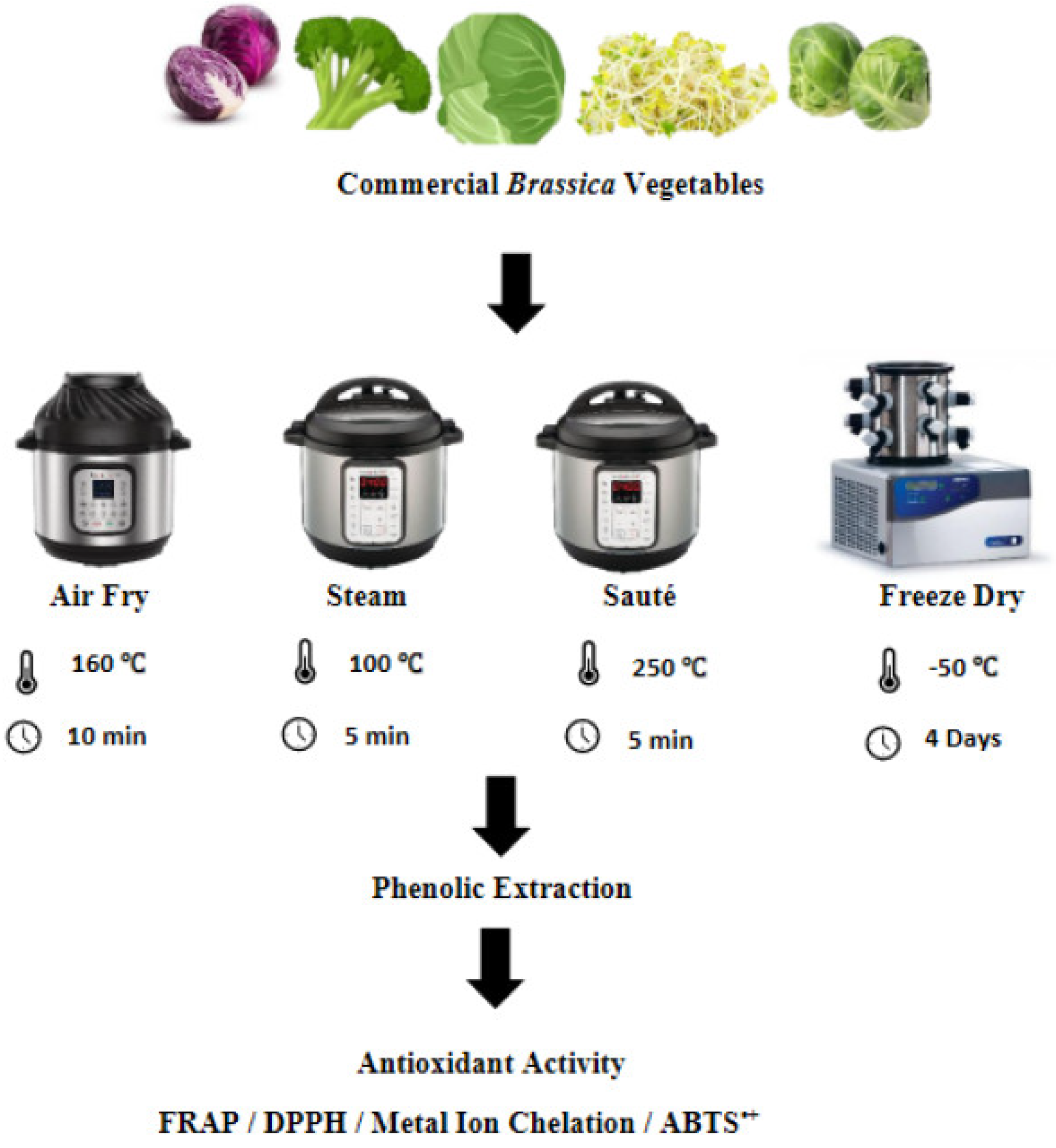
Figure 2.
The effects of thermal processing techniques on the total phenolic content (TPC) of the selected Brassica Vegetables. Bars represents mean ± standard deviation (n=3). Different letters in each vegetable indicate statistically differences by two-way analysis of variance; GAE; gallic acid equivalents, DW; dry weight, mg, milligram; g, gram; AF, air fry; FD, freeze dry.
Figure 2.
The effects of thermal processing techniques on the total phenolic content (TPC) of the selected Brassica Vegetables. Bars represents mean ± standard deviation (n=3). Different letters in each vegetable indicate statistically differences by two-way analysis of variance; GAE; gallic acid equivalents, DW; dry weight, mg, milligram; g, gram; AF, air fry; FD, freeze dry.
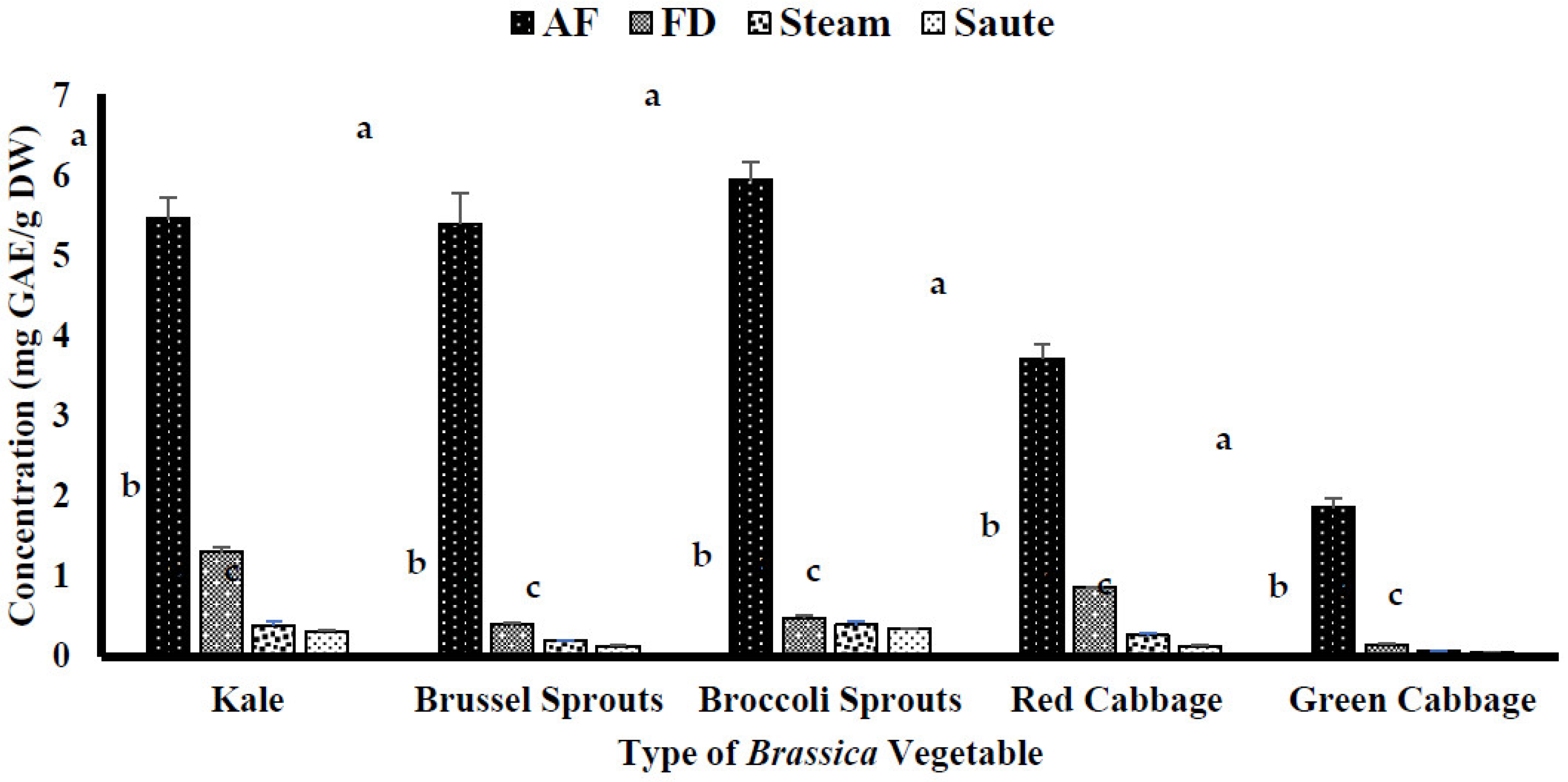
Figure 3.
The effects of thermal processing techniques on the total flavonoid content (TFC) of the selected Brassica Vegetables. Bars represents mean ± standard deviation (n=3). Different letters in each vegetable indicate statistically differences by two-way analysis of variance. QE, quercetin equivalents; DW, dry weight; mg, milligram; g, gram; AF, air fry; FD, freeze dry.
Figure 3.
The effects of thermal processing techniques on the total flavonoid content (TFC) of the selected Brassica Vegetables. Bars represents mean ± standard deviation (n=3). Different letters in each vegetable indicate statistically differences by two-way analysis of variance. QE, quercetin equivalents; DW, dry weight; mg, milligram; g, gram; AF, air fry; FD, freeze dry.
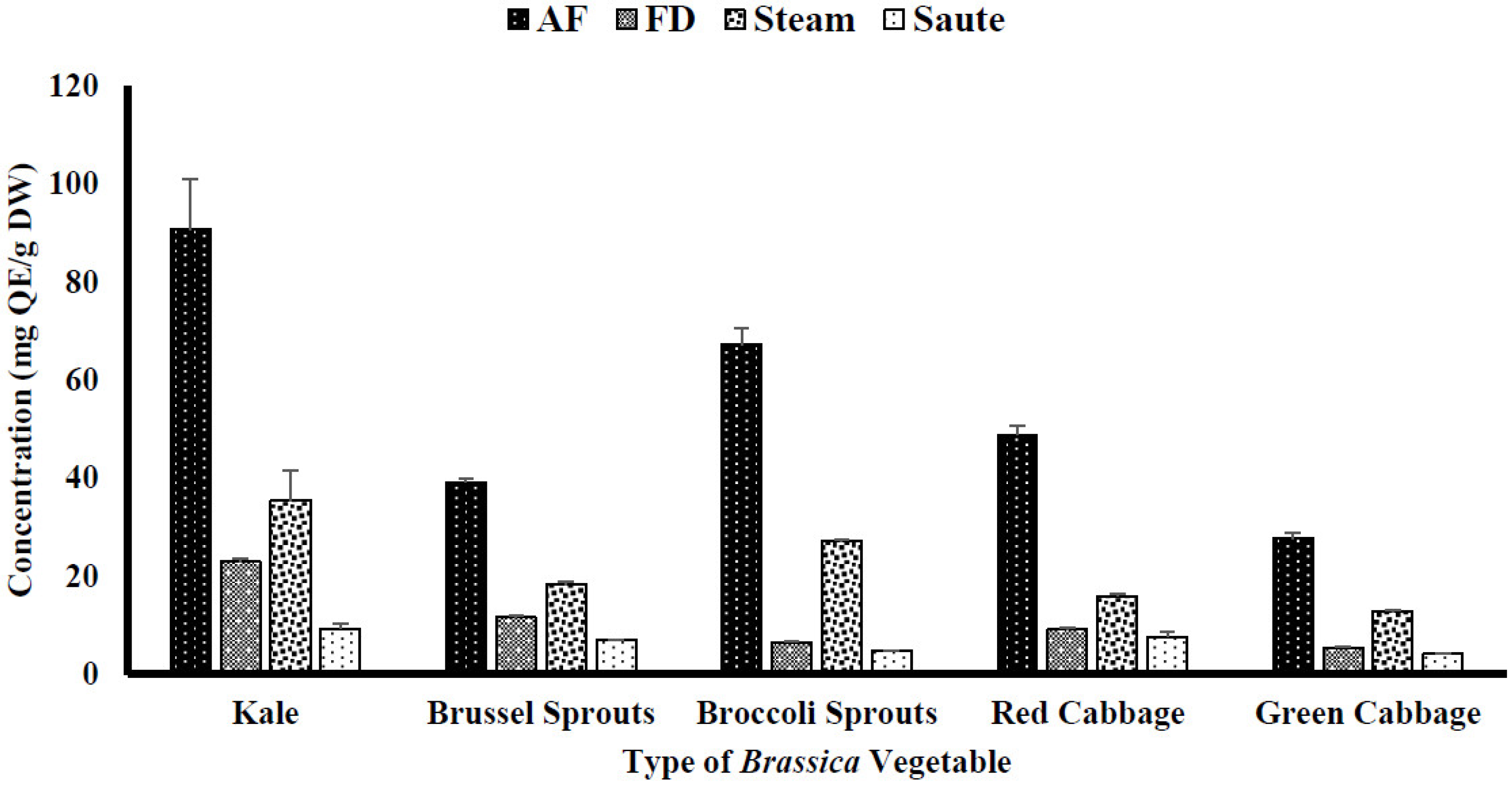
Figure 4.
The effects of thermal processing techniques on the antioxidant activity of the selected Brassica vegetables measured by DPPH radical scavenging activity. Bars represents mean ± standard deviation (n=3). Different letters in each vegetable indicate statistically differences in two-way analysis of variance. AF, air fry; FD, freeze dry; DPPH, 2,2-diphenyl-1-picrylhydrazyl.
Figure 4.
The effects of thermal processing techniques on the antioxidant activity of the selected Brassica vegetables measured by DPPH radical scavenging activity. Bars represents mean ± standard deviation (n=3). Different letters in each vegetable indicate statistically differences in two-way analysis of variance. AF, air fry; FD, freeze dry; DPPH, 2,2-diphenyl-1-picrylhydrazyl.
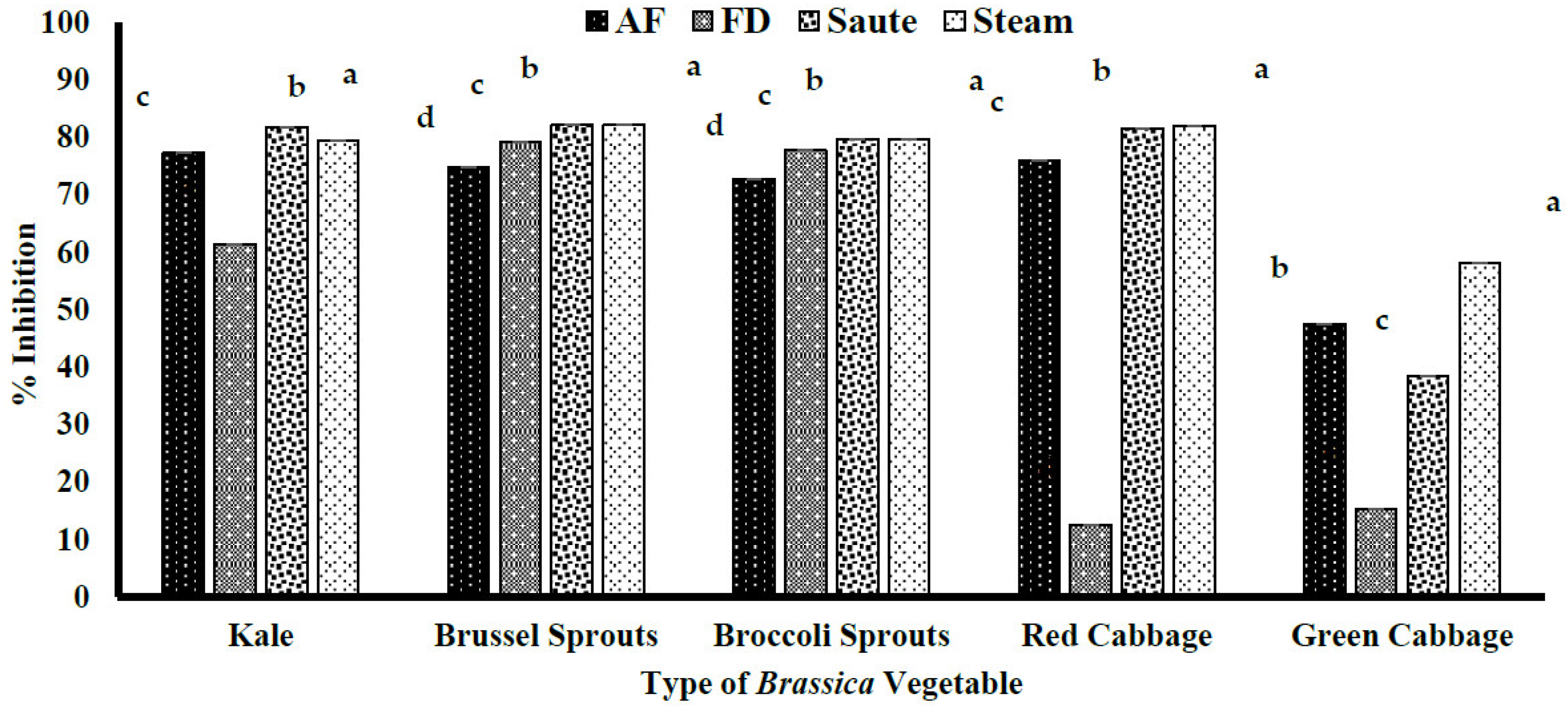
Figure 5.
The effects of thermal processing techniques on the antioxidant activity of the selected Brassica vegetables measured by FRAP antioxidant assay. Bars represents mean ± standard deviation (n=3). Different letters in each vegetable indicate statistically differences by two-way analysis of variance. mM, millimoles; g, gram; TE, Trolox equivalent; AF, air fry; FD, freeze dry; FRAP, ferric reducing antioxidant power.
Figure 5.
The effects of thermal processing techniques on the antioxidant activity of the selected Brassica vegetables measured by FRAP antioxidant assay. Bars represents mean ± standard deviation (n=3). Different letters in each vegetable indicate statistically differences by two-way analysis of variance. mM, millimoles; g, gram; TE, Trolox equivalent; AF, air fry; FD, freeze dry; FRAP, ferric reducing antioxidant power.
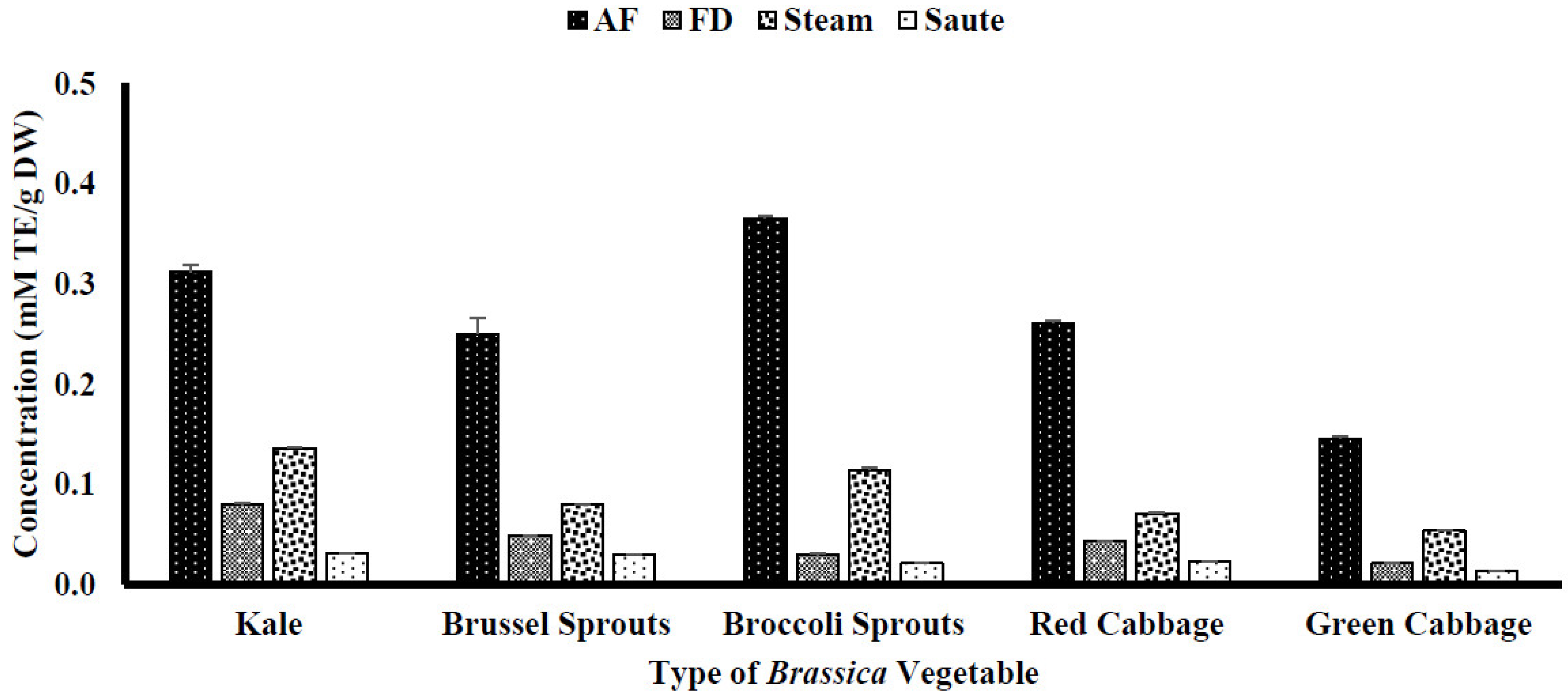
Figure 6.
The effects of thermal processing techniques on the antioxidant activity of the selected Brassica vegetables measured by chelating ability of the metals. Bars represents mean ± standard deviation (n=3). Different letters in each vegetable indicate statistically differences by two-way analysis of variance.; mM, millimoles; g, gram; AF, air fry; FD, freeze dry; EDTA, ethylenediaminetetraacetic acid.
Figure 6.
The effects of thermal processing techniques on the antioxidant activity of the selected Brassica vegetables measured by chelating ability of the metals. Bars represents mean ± standard deviation (n=3). Different letters in each vegetable indicate statistically differences by two-way analysis of variance.; mM, millimoles; g, gram; AF, air fry; FD, freeze dry; EDTA, ethylenediaminetetraacetic acid.
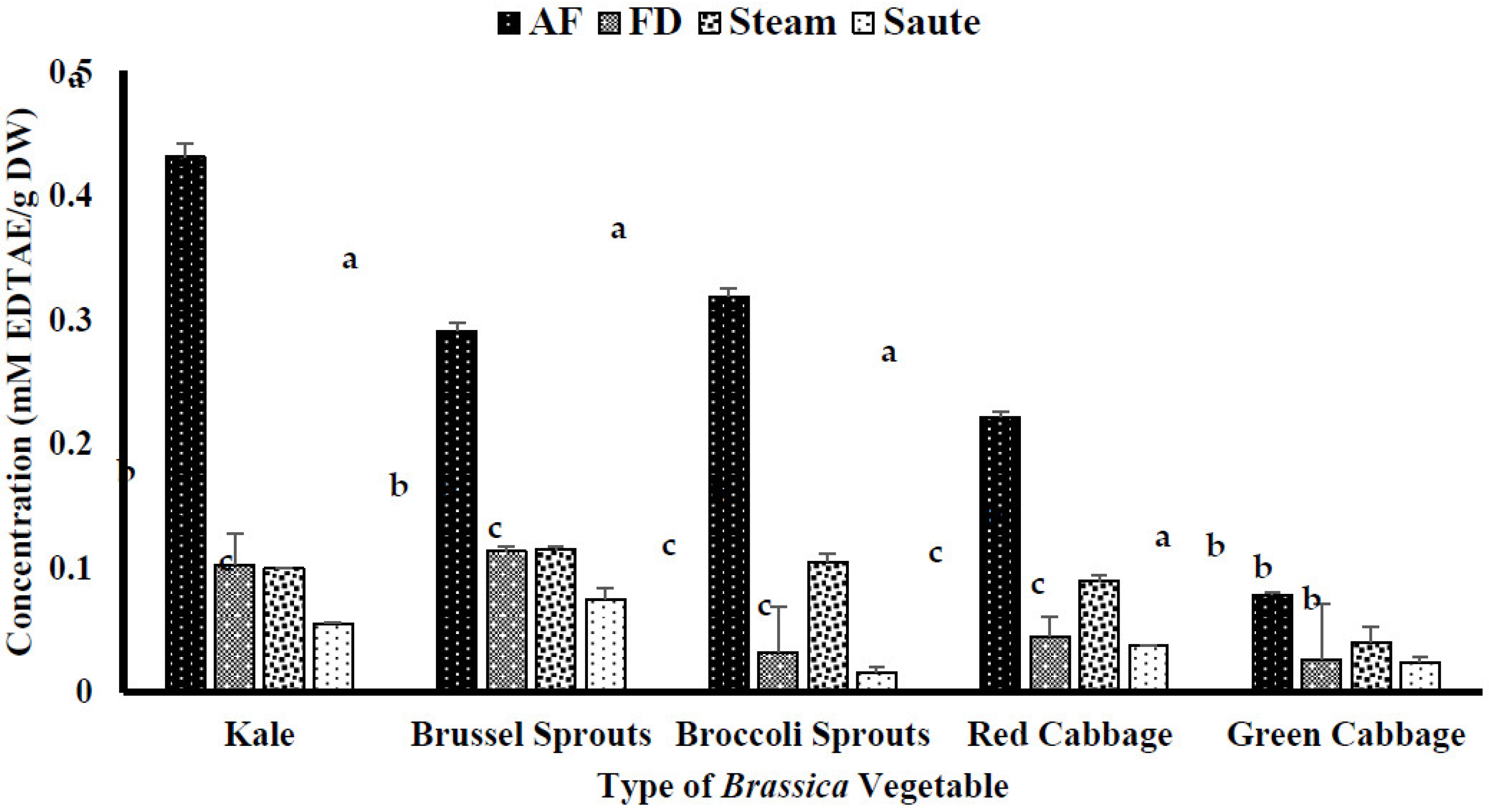
Figure 7.
The effects of thermal processing techniques on the total antioxidant capacity of the selected Brassica vegetables measured by ABTS radical scavenging assay. Bars represents mean ± standard deviation (n=3). Different letters in each vegetable indicate statistically differences by two-way analysis of variance. mM, millimoles; g, gram; TE, Trolox equivalent; AF, air fry; FD, freeze dry; ABTS, 2, 2‘-azino-bis-3-ethylbenzothiazoline-6-sulfonic acid.
Figure 7.
The effects of thermal processing techniques on the total antioxidant capacity of the selected Brassica vegetables measured by ABTS radical scavenging assay. Bars represents mean ± standard deviation (n=3). Different letters in each vegetable indicate statistically differences by two-way analysis of variance. mM, millimoles; g, gram; TE, Trolox equivalent; AF, air fry; FD, freeze dry; ABTS, 2, 2‘-azino-bis-3-ethylbenzothiazoline-6-sulfonic acid.
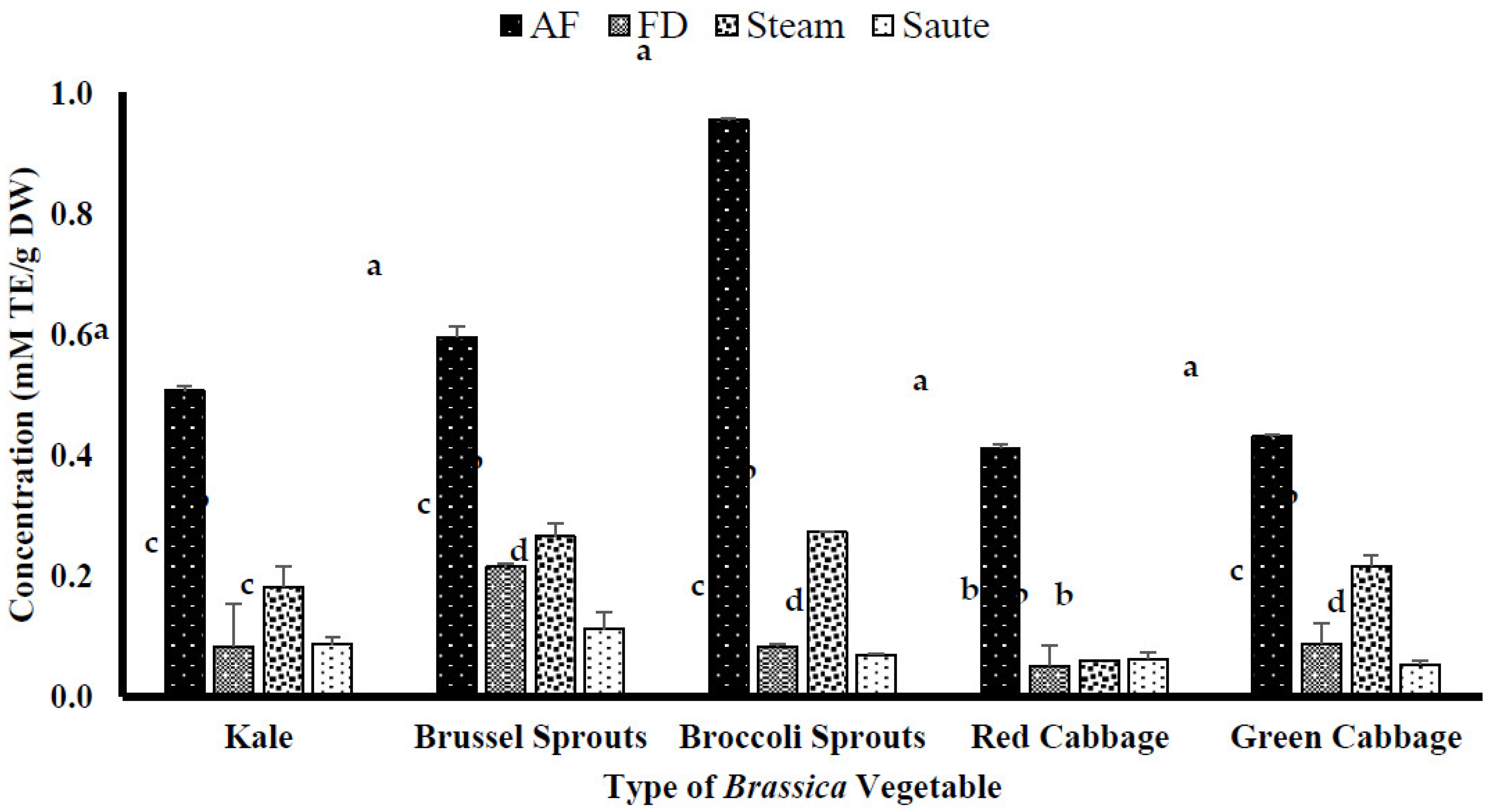

Table 1.
Analysis of Variance for total phenolic (a) and total flavonoid (b) content different antioxidant activities (c,d,e,f).
Table 1.
Analysis of Variance for total phenolic (a) and total flavonoid (b) content different antioxidant activities (c,d,e,f).
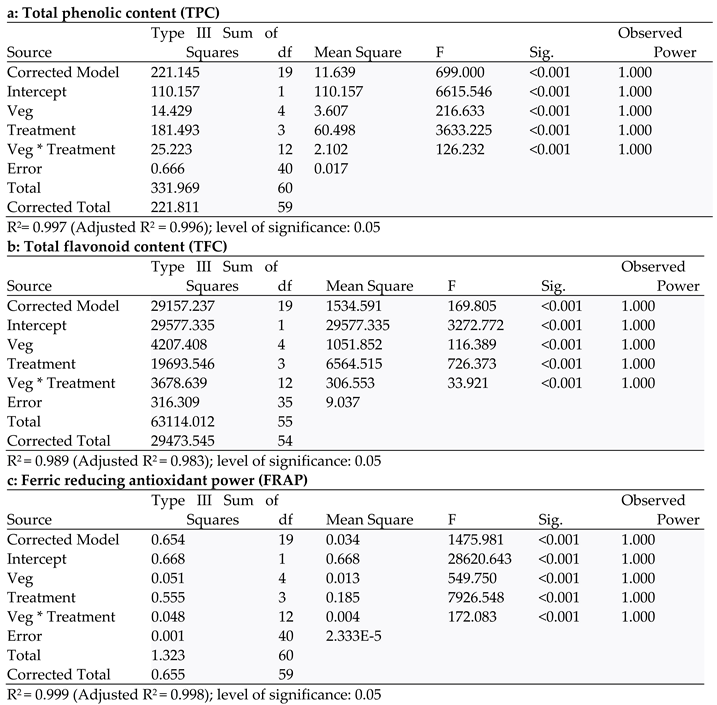
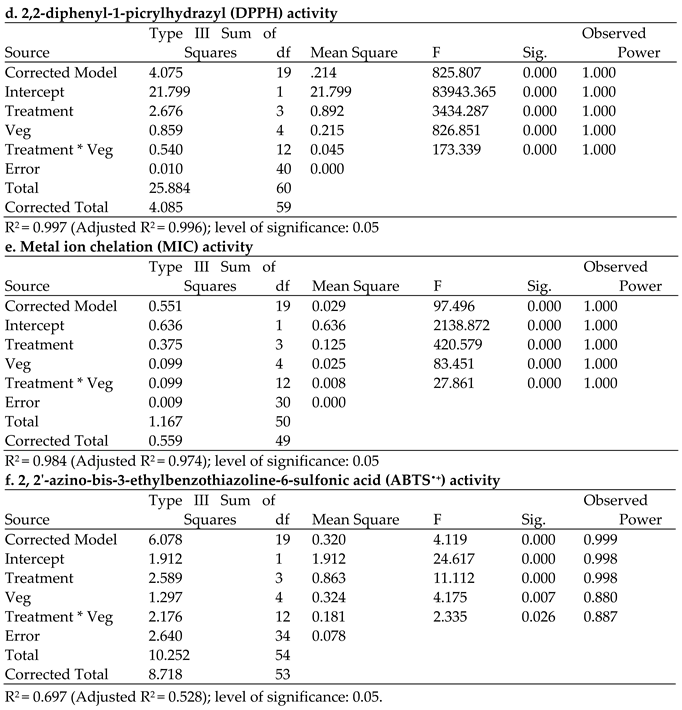
Table 2.
Pearson correlation analysis between different antioxidant activity, total phenolic and total flavonoid content.
Table 2.
Pearson correlation analysis between different antioxidant activity, total phenolic and total flavonoid content.
| TPC | FRAP | TFC | DPPH | MIC | ABTS | |
|---|---|---|---|---|---|---|
| TPC | 1 | |||||
| FRAP | .936** | 1 | ||||
| TFC | .863** | .940** | 1 | |||
| DPPH | .234 | .348** | .375** | 1 | ||
| MIC | .911** | .921** | .939** | .359* | 1 | |
| ABTS | .541** | .530** | .464** | .013 | .453** | 1 |
** Correlation is significant at the 0.01 level. * Correlation is significant at the 0.05 level. TPC, total phenolic content; TFC, total flavonoid content; FRAP, ferric reducing antioxidant power; DPPH, 2,2-diphenyl-1-picrylhydrazyl; ABTS•+, 2, 2‘-azino-bis-3-ethylbenzothiazoline-6-sulfonic acid, MIC, metal ion chelation activity.
Disclaimer/Publisher’s Note: The statements, opinions and data contained in all publications are solely those of the individual author(s) and contributor(s) and not of MDPI and/or the editor(s). MDPI and/or the editor(s) disclaim responsibility for any injury to people or property resulting from any ideas, methods, instructions or products referred to in the content. |
© 2023 by the authors. Licensee MDPI, Basel, Switzerland. This article is an open access article distributed under the terms and conditions of the Creative Commons Attribution (CC BY) license (http://creativecommons.org/licenses/by/4.0/).
Copyright: This open access article is published under a Creative Commons CC BY 4.0 license, which permit the free download, distribution, and reuse, provided that the author and preprint are cited in any reuse.