

Submitted:
02 January 2023
Posted:
04 January 2023
You are already at the latest version
Abstract
In this research, new setting is introduced for new SuperHyperNotions, namely, an SuperHyperStable and Neutrosophic SuperHyperStable. Two different types of SuperHyperDefinitions are debut for them but the research goes further and the SuperHyperNotion, SuperHyperUniform, and SuperHyperClass based on that are well-defined and well-reviewed. The literature review is implemented in the whole of this research. For shining the elegancy and the significancy of this research, the comparison between this SuperHyperNotion with other SuperHyperNotions and fundamental SuperHyperNumbers are featured. The definitions are followed by the examples and the instances thus the clarifications are driven with different tools. The applications are figured out to make sense about the theoretical aspect of this ongoing research. The ``Cancer's Recognitions'' are the under research to figure out the challenges make sense about ongoing and upcoming research. The special case is up. The cells are viewed in the deemed ways. There are different types of them. Some of them are individuals and some of them are well-modeled by the group of cells. These types are all officially called ``SuperHyperVertex'' but the relations amid them all officially called ``SuperHyperEdge''. The frameworks ``SuperHyperGraph'' and ``neutrosophic SuperHyperGraph'' are chosen and elected to research about ``Cancer's Recognitions''. Thus these complex and dense SuperHyperModels open up some avenues to research on theoretical segments and ``Cancer's Recognitions''. Some avenues are posed to pursue this research. It's also officially collected in the form of some questions and some problems. Assume a SuperHyperGraph. Then a``SuperHyperStable'' $\mathcal{I}(NSHG)$ for a SuperHyperGraph $NSHG:(V,E)$ is the maximum cardinality of a SuperHyperSet $S$ of SuperHyperVertices such that there's no SuperHyperVertex to have a SuperHyperEdge in common. Assume a SuperHyperGraph. Then an ``$\delta-$SuperHyperStable'' is a \underline{maximal} SuperHyperStable of SuperHyperVertices with \underline{maximum} cardinality such that either of the following expressions hold for the (neutrosophic) cardinalities of SuperHyperNeighbors of $s\in S:$ $~|S\cap N(s)| > |S\cap (V\setminus N(s))|+\delta,~|S\cap N(s)| < |S\cap (V\setminus N(s))|+\delta.$ The first Expression, holds if $S$ is an ``$\delta-$SuperHyperOffensive''. And the second Expression, holds if $S$ is an ``$\delta-$SuperHyperDefensive''; a``neutrosophic $\delta-$SuperHyperStable'' is a \underline{maximal} neutrosophic SuperHyperStable of SuperHyperVertices with \underline{maximum} neutrosophic cardinality such that either of the following expressions hold for the neutrosophic cardinalities of SuperHyperNeighbors of $s\in S:$ $~|S\cap N(s)|_{neutrosophic} > |S\cap (V\setminus N(s))|_{neutrosophic}+\delta,~ |S\cap N(s)|_{neutrosophic} < |S\cap (V\setminus N(s))|_{neutrosophic}+\delta.$ The first Expression, holds if $S$ is a ``neutrosophic $\delta-$SuperHyperOffensive''. And the second Expression, holds if $S$ is a ``neutrosophic $\delta-$SuperHyperDefensive''. It's useful to define a ``neutrosophic'' version of an SuperHyperStable. Since there's more ways to get type-results to make an SuperHyperStable more understandable. For the sake of having neutrosophic SuperHyperStable, there's a need to ``redefine'' the notion of an ``SuperHyperStable''. The SuperHyperVertices and the SuperHyperEdges are assigned by the labels from the letters of the alphabets. In this procedure, there's the usage of the position of labels to assign to the values. Assume an SuperHyperStable. It's redefined a neutrosophic SuperHyperStable if the mentioned Table holds, concerning, ``The Values of Vertices, SuperVertices, Edges, HyperEdges, and SuperHyperEdges Belong to The Neutrosophic SuperHyperGraph'' with the key points, ``The Values of The Vertices \& The Number of Position in Alphabet'', ``The Values of The SuperVertices\&The maximum Values of Its Vertices'', ``The Values of The Edges\&The maximum Values of Its Vertices'', ``The Values of The HyperEdges\&The maximum Values of Its Vertices'', ``The Values of The SuperHyperEdges\&The maximum Values of Its Endpoints''. To get structural examples and instances, I'm going to introduce the next SuperHyperClass of SuperHyperGraph based on an SuperHyperStable. It's the main. It'll be disciplinary to have the foundation of previous definition in the kind of SuperHyperClass. If there's a need to have all SuperHyperConnectivities until the SuperHyperStable, then it's officially called an ``SuperHyperStable'' but otherwise, it isn't an SuperHyperStable. There are some instances about the clarifications for the main definition titled an ``SuperHyperStable''. These two examples get more scrutiny and discernment since there are characterized in the disciplinary ways of the SuperHyperClass based on an SuperHyperStable. For the sake of having a neutrosophic SuperHyperStable, there's a need to ``redefine'' the notion of a ``neutrosophic SuperHyperStable'' and a ``neutrosophic SuperHyperStable''. The SuperHyperVertices and the SuperHyperEdges are assigned by the labels from the letters of the alphabets. In this procedure, there's the usage of the position of labels to assign to the values. Assume a neutrosophic SuperHyperGraph. It's redefined ``neutrosophic SuperHyperGraph'' if the intended Table holds. And an SuperHyperStable are redefined to an ``neutrosophic SuperHyperStable'' if the intended Table holds. It's useful to define ``neutrosophic'' version of SuperHyperClasses. Since there's more ways to get neutrosophic type-results to make a neutrosophic SuperHyperStable more understandable. Assume a neutrosophic SuperHyperGraph. There are some neutrosophic SuperHyperClasses if the intended Table holds. Thus SuperHyperPath, SuperHyperCycle, SuperHyperStar, SuperHyperBipartite, SuperHyperMultiPartite, and SuperHyperWheel, are ``neutrosophic SuperHyperPath'', ``neutrosophic SuperHyperCycle'', ``neutrosophic SuperHyperStar'', ``neutrosophic SuperHyperBipartite'', ``neutrosophic SuperHyperMultiPartite'', and ``neutrosophic SuperHyperWheel'' if the intended Table holds. A SuperHyperGraph has a ``neutrosophic SuperHyperStable'' where it's the strongest [the maximum neutrosophic value from all the SuperHyperStable amid the maximum value amid all SuperHyperVertices from an SuperHyperStable.] SuperHyperStable. A graph is a SuperHyperUniform if it's a SuperHyperGraph and the number of elements of SuperHyperEdges are the same. Assume a neutrosophic SuperHyperGraph. There are some SuperHyperClasses as follows. It's SuperHyperPath if it's only one SuperVertex as intersection amid two given SuperHyperEdges with two exceptions; it's SuperHyperCycle if it's only one SuperVertex as intersection amid two given SuperHyperEdges; it's SuperHyperStar it's only one SuperVertex as intersection amid all SuperHyperEdges; it's SuperHyperBipartite it's only one SuperVertex as intersection amid two given SuperHyperEdges and these SuperVertices, forming two separate sets, has no SuperHyperEdge in common; it's SuperHyperMultiPartite it's only one SuperVertex as intersection amid two given SuperHyperEdges and these SuperVertices, forming multi separate sets, has no SuperHyperEdge in common; it's a SuperHyperWheel if it's only one SuperVertex as intersection amid two given SuperHyperEdges and one SuperVertex has one SuperHyperEdge with any common SuperVertex. The SuperHyperModel proposes the specific designs and the specific architectures. The SuperHyperModel is officially called ``SuperHyperGraph'' and ``Neutrosophic SuperHyperGraph''. In this SuperHyperModel, The ``specific'' cells and ``specific group'' of cells are SuperHyperModeled as ``SuperHyperVertices'' and the common and intended properties between ``specific'' cells and ``specific group'' of cells are SuperHyperModeled as ``SuperHyperEdges''. Sometimes, it's useful to have some degrees of determinacy, indeterminacy, and neutrality to have more precise SuperHyperModel which in this case the SuperHyperModel is called ``neutrosophic''. In the future research, the foundation will be based on the ``Cancer's Recognitions'' and the results and the definitions will be introduced in redeemed ways. The recognition of the cancer in the long-term function. The specific region has been assigned by the model [it's called SuperHyperGraph] and the long cycle of the move from the cancer is identified by this research. Sometimes the move of the cancer hasn't be easily identified since there are some determinacy, indeterminacy and neutrality about the moves and the effects of the cancer on that region; this event leads us to choose another model [it's said to be neutrosophic SuperHyperGraph] to have convenient perception on what's happened and what's done. There are some specific models, which are well-known and they've got the names, and some SuperHyperGeneral SuperHyperModels. The moves and the traces of the cancer on the complex tracks and between complicated groups of cells could be fantasized by a neutrosophic SuperHyperPath(-/SuperHyperCycle, SuperHyperStar, SuperHyperBipartite, SuperHyperMultipartite, SuperHyperWheel). The aim is to find either the longest SuperHyperStable or the strongest SuperHyperStable in those neutrosophic SuperHyperModels. For the longest SuperHyperStable, called SuperHyperStable, and the strongest SuperHyperCycle, called neutrosophic SuperHyperStable, some general results are introduced. Beyond that in SuperHyperStar, all possible SuperHyperPaths have only two SuperHyperEdges but it's not enough since it's essential to have at least three SuperHyperEdges to form any style of a SuperHyperCycle. There isn't any formation of any SuperHyperCycle but literarily, it's the deformation of any SuperHyperCycle. It, literarily, deforms and it doesn't form. A basic familiarity with SuperHyperGraph theory and neutrosophic SuperHyperGraph theory are proposed.
Keywords:
SuperHyperGraph
; (Neutrosophic) SuperHyperStable
; Cancer's Recognition
1. Background
There are some researches covering the topic of this research. In what follows, there are some discussion and literature reviews about them.
First article is titled “properties of SuperHyperGraph and neutrosophic SuperHyperGraph” in Ref. [1] by Henry Garrett (2022). It’s first step toward the research on neutrosophic SuperHyperGraphs. This research article is published on the journal “Neutrosophic Sets and Systems” in issue 49 and the pages 531-561. In this research article, different types of notions like dominating, resolving, coloring, Eulerian(Hamiltonian) neutrosophic path, n-Eulerian(Hamiltonian) neutrosophic path, zero forcing number, zero forcing neutrosophic- number, independent number, independent neutrosophic-number, clique number, clique neutrosophic-number, matching number, matching neutrosophic-number, girth, neutrosophic girth, 1-zero-forcing number, 1-zero- forcing neutrosophic-number, failed 1-zero-forcing number, failed 1-zero-forcing neutrosophic-number, global- offensive alliance, t-offensive alliance, t-defensive alliance, t-powerful alliance, and global-powerful alliance are defined in SuperHyperGraph and neutrosophic SuperHyperGraph. Some Classes of SuperHyperGraph and Neutrosophic SuperHyperGraph are cases of research. Some results are applied in family of SuperHyperGraph and neutrosophic SuperHyperGraph. Thus this research article has concentrated on the vast notions and introducing the majority of notions.
The seminal paper and groundbreaking article is titled “neutrosophic co-degree and neutrosophic degree alongside chromatic numbers in the setting of some classes related to neutrosophic hypergraphs” in Ref. [2] by Henry Garrett (2022). In this research article, a novel approach is implemented on SuperHyperGraph and neutrosophic SuperHyperGraph based on general forms without using neutrosophic classes of neutrosophic SuperHyperGraph. It’s published in prestigious and fancy journal is entitled “Journal of Current Trends in Computer Science Research (JCTCSR)” with abbreviation “J Curr Trends Comp Sci Res” in volume 1 and issue 1 with pages 06-14. The research article studies deeply with choosing neutrosophic hypergraphs instead of neutrosophic SuperHyperGraph. It’s the breakthrough toward independent results based on initial background.
In some articles are titled “(Neutrosophic) SuperHyperModeling of Cancer’s Recognitions Featuring (Neutrosophic) SuperHyperDefensive SuperHyperAlliances” in Ref. [3] by Henry Garrett (2022), “(Neutrosophic) SuperHyperAlliances With SuperHyperDefensive and SuperHyperOffensive Type-SuperHyperSet On (Neutrosophic) SuperHyperGraph With (Neutrosophic) SuperHyperModeling of Cancer’s Recognitions And Related (Neutrosophic) SuperHyperClasses” in Ref. [4] by Henry Garrett (2022), “SuperHyperGirth on SuperHyperGraph and Neutrosophic SuperHyperGraph With SuperHyperModeling of Cancer’s Recognitions” in Ref. [5] by Henry Garrett (2022), “Some SuperHyperDegrees and Co-SuperHyperDegrees on Neutrosophic SuperHyperGraphs and SuperHyperGraphs Alongside Applications in Cancer’s Treatments” in Ref. [6] by Henry Garrett (2022), “SuperHyperDominating and SuperHyperResolving on Neutrosophic SuperHyperGraphs And Their Directions in Game Theory and Neutrosophic SuperHyperClasses” in Ref. [7] by Henry Garrett (2022), “Neutrosophic 1-Failed SuperHyperForcing in the SuperHyperFunction To Use Neutrosophic SuperHyperGraphs on Cancer’s Neutrosophic Recognition And Beyond” in Ref. [8] by Henry Garrett (2022), “(Neutrosophic) 1-Failed SuperHyperForcing in Cancer’s Recognitions And (Neutrosophic) SuperHyperGraphs” in Ref. [9] by Henry Garrett (2022), “Basic Notions on (Neutrosophic) SuperHyperForcing And (Neutrosophic) SuperHyperModeling in Cancer’s Recognitions And (Neutrosophic) SuperHyperGraphs” in Ref. [10] by Henry Garrett (2022), “Basic Neutrosophic Notions Concerning SuperHyperDominating and Neutrosophic SuperHyperResolving in SuperHyperGraph” in Ref. [11] by Henry Garrett (2022), “Initial Material of Neutrosophic Preliminaries to Study Some Neutrosophic Notions Based on Neutrosophic SuperHyperEdge (NSHE) in Neutrosophic SuperHyperGraph (NSHG)” in Ref. [12] by Henry Garrett (2022), there are some endeavors to formalize the basic SuperHyperNotions about neutrosophic SuperHyperGraph and SuperHyperGraph.
Some studies and researches about neutrosophic graphs, are proposed as book in Ref. [13] by Henry Garrett (2022) which is indexed by Google Scholar and has more than 2498 readers in Scribd. It’s titled “Beyond Neutrosophic Graphs” and published by Ohio: E-publishing: Educational Publisher 1091 West 1st Ave Grandview Heights, Ohio 43212 United State. This research book covers different types of notions and settings in neutrosophic graph theory and neutrosophic SuperHyperGraph theory.
Also, some studies and researches about neutrosophic graphs, are proposed as book in Ref. [14] by Henry Garrett (2022) which is indexed by Google Scholar and has more than 3218 readers in Scribd. It’s titled “Neutrosophic Duality” and published by Florida: GLOBAL KNOWLEDGE - Publishing House 848 Brickell Ave Ste 950 Miami, Florida 33131 United States. This research book presents different types of notions SuperHyperResolving and SuperHyperDominating in the setting of duality in neutrosophic graph theory and neutrosophic SuperHyperGraph theory. This research book has scrutiny on the complement of the intended set and the intended set, simultaneously. It’s smart to consider a set but acting on its complement that what’s done in this research book which is popular in the terms of high readers in Scribd.
1.1. Motivation and Contributions
In this research, there are some ideas in the featured frameworks of motivations. I try to bring the motivations in the narrative ways. Some cells have been faced with some attacks from the situation which is caused by the cancer’s attacks. In this case, there are some embedded analysis on the ongoing situations which in that, the cells could be labelled as some groups and some groups or individuals have excessive labels which all are raised from the behaviors to overcome the cancer’s attacks. In the embedded situations, the individuals of cells and the groups of cells could be considered as “new groups”. Thus it motivates us to find the proper SuperHyperModels for getting more proper analysis on this messy story. I’ve found the SuperHyperModels which are officially called “SuperHyperGraphs” and “Neutrosophic SuperHyperGraphs”. In this SuperHyperModel, the cells and the groups of cells are defined as “SuperHyperVertices” and the relations between the individuals of cells and the groups of cells are defined as “SuperHyperEdges”. Thus it’s another motivation for us to do research on this SuperHyperModel based on the “Cancer’s Recognitions”. Sometimes, the situations get worst. The situation is passed from the certainty and precise style. Thus it’s the beyond them. There are three descriptions, namely, the degrees of determinacy, indeterminacy and neutrality, for any object based on vague forms, namely, incomplete data, imprecise data, and uncertain analysis. The latter model could be considered on the previous SuperHyperModel. It’s SuperHyperModel. It’s SuperHyperGraph but it’s officially called “Neutrosophic SuperHyperGraphs”. The cancer is the disease but the model is going to figure out what’s going on this phenomenon. The special case of this disease is considered and as the consequences of the model, some parameters are used. The cells are under attack of this disease but the moves of the cancer in the special region are the matter of mind. The recognition of the cancer could help to find some treatments for this disease. The SuperHyperGraph and neutrosophic SuperHyperGraph are the SuperHyperModels on the “Cancer’s Recognitions” and both bases are the background of this research. Sometimes the cancer has been happened on the region, full of cells, groups of cells and embedded styles. In this segment, the SuperHyperModel proposes some SuperHyperNotions based on the connectivities of the moves of the cancer in the forms of alliances’ styles with the formation of the design and the architecture are formally called “ SuperHyperStable” in the themes of jargons and buzzwords. The prefix “SuperHyper” refers to the theme of the embedded styles to figure out the background for the SuperHyperNotions. The recognition of the cancer in the long-term function. The specific region has been assigned by the model [it’s called SuperHyperGraph] and the long cycle of the move from the cancer is identified by this research. Sometimes the move of the cancer hasn’t be easily identified since there are some determinacy, indeterminacy and neutrality about the moves and the effects of the cancer on that region; this event leads us to choose another model [it’s said to be neutrosophic SuperHyperGraph] to have convenient perception on what’s happened and what’s done. There are some specific models, which are well-known and they’ve got the names, and some general models. The moves and the traces of the cancer on the complex tracks and between complicated groups of cells could be fantasized by a neutrosophic SuperHyperPath(-/SuperHyperCycle, SuperHyperStar, SuperHyperBipartite, SuperHyperMultipartite, SuperHyperWheel). The aim is to find either the optimal SuperHyperStable or the neutrosophic SuperHyperStable in those neutrosophic SuperHyperModels. Some general results are introduced. Beyond that in SuperHyperStar, all possible SuperHyperPaths have only two SuperHyperEdges but it’s not enough since it’s essential to have at least three SuperHyperEdges to form any style of a SuperHyperCycle. There isn’t any formation of any SuperHyperCycle but literarily, it’s the deformation of any SuperHyperCycle. It, literarily, deforms and it doesn’t form.
Question 1.
How to define the SuperHyperNotions and to do research on them to find the “ amount of SuperHyperStable” of either individual of cells or the groups of cells based on the fixed cell or the fixed group of cells, extensively, the “amount of SuperHyperStable” based on the fixed groups of cells or the fixed groups of group of cells?
Question 2.
What are the best descriptions for the “Cancer’s Recognitions” in terms of these messy and dense SuperHyperModels where embedded notions are illustrated?
It’s motivation to find notions to use in this dense model is titled “SuperHyperGraphs”. Thus it motivates us to define different types of “ SuperHyperStable” and “neutrosophic SuperHyperStable” on “SuperHyperGraph” and “Neutrosophic SuperHyperGraph”. Then the research has taken more motivations to define SuperHyperClasses and to find some connections amid this SuperHyperNotion with other SuperHyperNotions. It motivates us to get some instances and examples to make clarifications about the framework of this research. The general results and some results about some connections are some avenues to make key point of this research, “Cancer’s Recognitions”, more understandable and more clear.
The framework of this research is as follows. In the beginning, I introduce basic definitions to clarify about preliminaries. In the subsection “Preliminaries”, initial definitions about SuperHyperGraphs and neutrosophic SuperHyperGraph are deeply-introduced and in-depth-discussed. The elementary concepts are clarified and illustrated completely and sometimes review literature are applied to make sense about what’s going to figure out about the upcoming sections. The main definitions and their clarifications alongside some results about new notions, SuperHyperStable and neutrosophic SuperHyperStable, are figured out in sections “ SuperHyperStable” and “Neutrosophic SuperHyperStable”. In the sense of tackling on getting results and in order to make sense about continuing the research, the ideas of SuperHyperUniform and Neutrosophic SuperHyperUniform are introduced and as their consequences, corresponded SuperHyperClasses are figured out to debut what’s done in this section, titled “Results on SuperHyperClasses” and “Results on Neutrosophic SuperHyperClasses”. As going back to origin of the notions, there are some smart steps toward the common notions to extend the new notions in new frameworks, SuperHyperGraph and Neutrosophic SuperHyperGraph, in the sections “Results on SuperHyperClasses” and “Results on Neutrosophic SuperHyperClasses”. The starter research about the general SuperHyperRelations and as concluding and closing section of theoretical research are contained in the section “General Results”. Some general SuperHyperRelations are fundamental and they are well-known as fundamental SuperHyperNotions as elicited and discussed in the sections, “General Results”, “ SuperHyperStable”, “Neutrosophic SuperHyperStable”, “Results on SuperHyperClasses” and “Results on Neutrosophic SuperHyperClasses”. There are curious questions about what’s done about the SuperHyperNotions to make sense about excellency of this research and going to figure out the word “best” as the description and adjective for this research as presented in section, “ SuperHyperStable”. The keyword of this research debut in the section “Applications in Cancer’s Recognitions” with two cases and subsections “Case 1: The Initial Steps Toward SuperHyperBipartite as SuperHyperModel” and “Case 2: The Increasing Steps Toward SuperHyperMultipartite as SuperHyperModel”. In the section, “Open Problems”, there are some scrutiny and discernment on what’s done and what’s happened in this research in the terms of “questions” and “problems” to make sense to figure out this research in featured style. The advantages and the limitations of this research alongside about what’s done in this research to make sense and to get sense about what’s figured out are included in the section, “Conclusion and Closing Remarks”.
1.2. Preliminaries
In this subsection, the basic material which is used in this research, is presented. Also, the new ideas and their clarifications are elicited.
Definition 3
(Neutrosophic Set). (Ref.[16],Definition 2.1,p.87).
Let X be a space of points (objects) with generic elements in X denoted by then the neutrosophic set A (NS A) is an object having the form
where the functions define respectively the a truth-membership function, an indeterminacy-membership function, and a falsity-membership function of the element to the set A with the condition
The functions and are real standard or nonstandard subsets of
Definition 4
(Single Valued Neutrosophic Set). (Ref.[19],Definition 6,p.2).
Let X be a space of points (objects) with generic elements in X denoted by A single valued neutrosophic set A (SVNS A) is characterized by truth-membership function an indeterminacy-membership function and a falsity-membership function For each point x in A SVNS A can be written as
Definition 5.
The degree of truth-membership, indeterminacy-membership and falsity-membership of the subset of the single valued neutrosophic set :
Definition 6.
The support of of the single valued neutrosophic set :
Definition 7.
(Neutrosophic SuperHyperGraph (NSHG)). (Ref.[18],Definition 3,p.291).
Assume is a given set. A neutrosophic SuperHyperGraph (NSHG) S is an ordered pair where
- a finite set of finite single valued neutrosophic subsets of
- a finite set of finite single valued neutrosophic subsets of
- and the following conditions hold:where
Here the neutrosophic SuperHyperEdges (NSHE) and the neutrosophic SuperHyperVertices (NSHV) are single valued neutrosophic sets. and denote the degree of truth-membership, the degree of indeterminacy-membership and the degree of falsity-membership the neutrosophic SuperHyperVertex (NSHV) to the neutrosophic SuperHyperVertex (NSHV) and denote the degree of truth-membership, the degree of indeterminacy-membership and the degree of falsity-membership of the neutrosophic SuperHyperEdge (NSHE) to the neutrosophic SuperHyperEdge (NSHE) Thus, the th element of the incidence matrix of neutrosophic SuperHyperGraph (NSHG) are of the form , the sets V and E are crisp sets.
Definition 8 (Characterization of the Neutrosophic SuperHyperGraph (NSHG)). (Ref.[18],Section 4,pp.291-292).
Assume a neutrosophic SuperHyperGraph (NSHG) S is an ordered pair The neutrosophic SuperHyperEdges (NSHE) and the neutrosophic SuperHyperVertices (NSHV) of neutrosophic SuperHyperGraph (NSHG) could be characterized as follow-up items.
- If then is called vertex;
- if then is called SuperVertex;
- if for all s are incident in and then is called edge;
- if for all s are incident in and then is called HyperEdge;
- if there’s a is incident in such that and then is called SuperEdge;
- if there’s a is incident in such that and then is called SuperHyperEdge.
If we choose different types of binary operations, then we could get hugely diverse types of general forms of neutrosophic SuperHyperGraph (NSHG).
Definition 9
(t-norm). (Ref.[17], Definition 5.1.1, pp.82-83).
A binary operation is a t-norm if it satisfies the following for :
- If and then
Definition 10.
The degree of truth-membership, indeterminacy-membership and falsity-membership of the subset of the single valued neutrosophic set (with respect to t-norm ):
Definition 11.
The support of of the single valued neutrosophic set :
Definition 12. (General Forms of Neutrosophic SuperHyperGraph (NSHG)).
Assume is a given set. A neutrosophic SuperHyperGraph (NSHG) S is an ordered pair where
- a finite set of finite single valued neutrosophic subsets of
- a finite set of finite single valued neutrosophic subsets of
Here the neutrosophic SuperHyperEdges (NSHE) and the neutrosophic SuperHyperVertices (NSHV) are single valued neutrosophic sets. and denote the degree of truth-membership, the degree of indeterminacy-membership and the degree of falsity-membership the neutrosophic SuperHyperVertex (NSHV) to the neutrosophic SuperHyperVertex (NSHV) and denote the degree of truth-membership, the degree of indeterminacy-membership and the degree of falsity-membership of the neutrosophic SuperHyperEdge (NSHE) to the neutrosophic SuperHyperEdge (NSHE) Thus, the th element of the incidence matrix of neutrosophic SuperHyperGraph (NSHG) are of the form , the sets V and E are crisp sets.
Definition 13 (Characterization of the Neutrosophic SuperHyperGraph (NSHG)). (Ref.[18],Section 4,pp.291-292).
Assume a neutrosophic SuperHyperGraph (NSHG) S is an ordered pair The neutrosophic SuperHyperEdges (NSHE) and the neutrosophic SuperHyperVertices (NSHV) of neutrosophic SuperHyperGraph (NSHG) could be characterized as follow-up items.
- If then is called vertex;
- if then is called SuperVertex;
- if for all s are incident in and then is called edge;
- if for all s are incident in and then is called HyperEdge;
- if there’s a is incident in such that and then is called SuperEdge;
- if there’s a is incident in such that and then is called SuperHyperEdge.
This SuperHyperModel is too messy and too dense. Thus there’s a need to have some restrictions and conditions on SuperHyperGraph. The special case of this SuperHyperGraph makes the patterns and regularities.
Definition 14.
A graph is SuperHyperUniform if it’s SuperHyperGraph and the number of elements of SuperHyperEdges are the same.
To get more visions on , the some SuperHyperClasses are introduced. It makes to have more understandable.
Definition 15.
Assume a neutrosophic SuperHyperGraph. There are some SuperHyperClasses as follows.
- (i).
- It’s SuperHyperPath if it’s only one SuperVertex as intersection amid two given SuperHyperEdges with two exceptions;
- (ii).
- it’s SuperHyperCycle if it’s only one SuperVertex as intersection amid two given SuperHyperEdges;
- (iii).
- it’s SuperHyperStar it’s only one SuperVertex as intersection amid all SuperHyperEdges;
- (iv).
- it’s SuperHyperBipartite it’s only one SuperVertex as intersection amid two given SuperHyperEdges and these SuperVertices, forming two separate sets, has no SuperHyperEdge in common;
- (v).
- it’s SuperHyperMultiPartite it’s only one SuperVertex as intersection amid two given SuperHyperEdges and these SuperVertices, forming multi separate sets, has no SuperHyperEdge in common;
- (vi).
- it’s SuperHyperWheel if it’s only one SuperVertex as intersection amid two given SuperHyperEdges and one SuperVertex has one SuperHyperEdge with any common SuperVertex.
Definition 16.
Let an ordered pair be a neutrosophic SuperHyperGraph (NSHG) Then a sequence of neutrosophic SuperHyperVertices (NSHV) and neutrosophic SuperHyperEdges (NSHE)
is called a neutrosophic SuperHyperPath (NSHP) from neutrosophic SuperHyperVertex (NSHV) to neutrosophic SuperHyperVertex (NSHV) if either of following conditions hold:
- there’s a vertex such that
- there’s a SuperVertex such that
- there’s a vertex such that
- there’s a SuperVertex such that
- there are a vertex and a vertex such that
- there are a vertex and a SuperVertex such that
- there are a SuperVertex and a vertex such that
- there are a SuperVertex and a SuperVertex such that
Definition 17. (Characterization of the Neutrosophic SuperHyperPaths).
Assume a neutrosophic SuperHyperGraph (NSHG) S is an ordered pair A neutrosophic SuperHyperPath (NSHP) from neutrosophic SuperHyperVertex (NSHV) to neutrosophic SuperHyperVertex (NSHV) is sequence of neutrosophic SuperHyperVertices (NSHV) and neutrosophic SuperHyperEdges (NSHE)
could be characterized as follow-up items.
- If for all then NSHP is called path;
- if for all and there’s then NSHP is called SuperPath;
- if for all then NSHP is called HyperPath;
- if there are then NSHP is called SuperHyperPath.

Table 1.
The Values of Vertices, SuperVertices, Edges, HyperEdges, and SuperHyperEdges Belong to The Neutrosophic SuperHyperGraph Mentioned in the Definition (20)
Table 1.
The Values of Vertices, SuperVertices, Edges, HyperEdges, and SuperHyperEdges Belong to The Neutrosophic SuperHyperGraph Mentioned in the Definition (20)
| The Values of The Vertices | The Number of Position in Alphabet |
| The Values of The SuperVertices | The maximum Values of Its Vertices |
| The Values of The Edges | The maximum Values of Its Vertices |
| The Values of The HyperEdges | The maximum Values of Its Vertices |
| The Values of The SuperHyperEdges | The maximum Values of Its Endpoints |
Definition 18. ((neutrosophic) SuperHyperStable).
Assume a SuperHyperGraph. Then
- an SuperHyperStable for a SuperHyperGraph is the maximum cardinality of a SuperHyperSet S of SuperHyperVertices such that there’s no SuperHyperVertex to have a SuperHyperEdge in common;
- a neutrosophic SuperHyperStable for a neutrosophic SuperHyperGraph is the maximum neutrosophic cardinality of a neutrosophic SuperHyperSet S of neutrosophic SuperHyperVertices such that there’s no neutrosophic SuperHyperVertex to have a neutrosophic SuperHyperEdge in common.
Definition 19. ((neutrosophic)SuperHyperStable).
Assume a SuperHyperGraph. Then
-
an SuperHyperStable is a maximal of SuperHyperVertices with a maximum cardinality such that either of the following expressions hold for the (neutrosophic) cardinalities of SuperHyperNeighbors ofThe Expression (1.1), holds if S is an SuperHyperOffensive. And the Expression (1.2), holds if S is an SuperHyperDefensive;
-
a neutrosophic SuperHyperStable is a maximal neutrosophic of SuperHyperVertices with maximum neutrosophic cardinality such that either of the following expressions hold for the neutrosophic cardinalities of SuperHyperNeighbors ofThe Expression (1.3), holds if S is a neutrosophic SuperHyperOffensive. And the Expression (1.4), holds if S is a neutrosophic SuperHyperDefensive.
For the sake of having a neutrosophic SuperHyperStable, there’s a need to “redefine” the notion of “neutrosophic SuperHyperGraph”. The SuperHyperVertices and the SuperHyperEdges are assigned by the labels from the letters of the alphabets. In this procedure, there’s the usage of the position of labels to assign to the values.
Definition 20.
Assume a neutrosophic SuperHyperGraph. It’s redefined neutrosophic SuperHyperGraph if the (Table 1) holds.
Table 2.
The Values of Vertices, SuperVertices, Edges, HyperEdges, and SuperHyperEdges Belong to The Neutrosophic SuperHyperGraph, Mentioned in the Definition (21)
Table 2.
The Values of Vertices, SuperVertices, Edges, HyperEdges, and SuperHyperEdges Belong to The Neutrosophic SuperHyperGraph, Mentioned in the Definition (21)
| The Values of The Vertices | The Number of Position in Alphabet |
| The Values of The SuperVertices | The maximum Values of Its Vertices |
| The Values of The Edges | The maximum Values of Its Vertices |
| The Values of The HyperEdges | The maximum Values of Its Vertices |
| The Values of The SuperHyperEdges | The maximum Values of Its Endpoints |
Table 3.
The Values of Vertices, SuperVertices, Edges, HyperEdges, and SuperHyperEdges Belong to The Neutrosophic SuperHyperGraph Mentioned in the Definition (20)
Table 3.
The Values of Vertices, SuperVertices, Edges, HyperEdges, and SuperHyperEdges Belong to The Neutrosophic SuperHyperGraph Mentioned in the Definition (20)
| The Values of The Vertices | The Number of Position in Alphabet |
| The Values of The SuperVertices | The maximum Values of Its Vertices |
| The Values of The Edges | The maximum Values of Its Vertices |
| The Values of The HyperEdges | The maximum Values of Its Vertices |
| The Values of The SuperHyperEdges | The maximum Values of Its Endpoints |
It’s useful to define a “neutrosophic” version of SuperHyperClasses. Since there’s more ways to get neutrosophic type-results to make a neutrosophic more understandable.
Definition 21.
Assume a neutrosophic SuperHyperGraph. There are some neutrosophic SuperHyperClasses if the (Table 2) holds. Thus SuperHyperPath, SuperHyperCycle, SuperHyperStar, SuperHyperBipartite, SuperHyperMultiPartite, and SuperHyperWheel, are neutrosophic SuperHyperPath, neutrosophic SuperHyperCycle, neutrosophic SuperHyperStar, neutrosophic SuperHyperBipartite, neutrosophic SuperHyperMultiPartite, and neutrosophic SuperHyperWheel if the (Table 2) holds.
It’s useful to define a “neutrosophic” version of a SuperHyperStable. Since there’s more ways to get type-results to make a SuperHyperStable more understandable.
For the sake of having a neutrosophic SuperHyperStable, there’s a need to “redefine” the notion of “ ”. The SuperHyperVertices and the SuperHyperEdges are assigned by the labels from the letters of the alphabets. In this procedure, there’s the usage of the position of labels to assign to the values.
Definition 22.
Assume a SuperHyperStable. It’s redefined a neutrosophic SuperHyperStable if the (Table 3) holds.
2. Extreme SuperHyperStable
Example 23.
Assume the SuperHyperGraphs in the (Figure 1), (Figure 2), (Figure 3), (Figure 4), (Figure 5), (Figure 6), (Figure 7), (Figure 8), (Figure 9), (Figure 10), (Figure 11), (Figure 12), (Figure 13), (Figure 14), (Figure 15), (Figure 16), (Figure 17), (Figure 18), (Figure 19) and (Figure 20).
-
On the (Figure 1), the SuperHyperNotion, namely, SuperHyperStable, is up. and SuperHyperStable are some empty SuperHyperEdges but is a loop SuperHyperEdge and is an SuperHyperEdge. Thus in the terms of SuperHyperNeighbor, there’s only one SuperHyperEdge, namely, The SuperHyperVertex, is isolated means that there’s no SuperHyperEdge has it as an endpoint. Thus SuperHyperVertex, is contained in every given SuperHyperStable. All the following SuperHyperSets of SuperHyperVertices are the simple type-SuperHyperSet of the SuperHyperStable.The SuperHyperSets of SuperHyperVertices, are the simple type-SuperHyperSet of the SuperHyperStable. The SuperHyperSets of the SuperHyperVertices, are corresponded to a SuperHyperStable for a SuperHyperGraph is the maximum cardinality of a SuperHyperSet S of SuperHyperVertices such that there’s no SuperHyperVertex to have a SuperHyperEdge in common. There’re only two SuperHyperVertices inside the intended SuperHyperSet. Thus the non-obvious SuperHyperStable is up. The obvious simple type-SuperHyperSet of the SuperHyperStable is a SuperHyperSet includes only one SuperHyperVertex. But the SuperHyperSets of SuperHyperVertices, don’t have less than two SuperHyperVertices insdie the intended SuperHyperSet. Thus the non-obvious simple type-SuperHyperSet of the SuperHyperStable are up. To sum them up, the SuperHyperSets of SuperHyperVertices, are the non-obvious simple type-SuperHyperSet of the SuperHyperStable. Since the SuperHyperSets of the SuperHyperVertices, are corresponded to a SuperHyperStable for a SuperHyperGraph is the SuperHyperSet S of SuperHyperVertices such that there’s no SuperHyperVertex to have a SuperHyperEdge in common and they are corresponded to a SuperHyperStable. Since They’ve the maximum cardinality of a SuperHyperSet S of SuperHyperVertices such that there’s no SuperHyperVertex to have a SuperHyperEdge in common. There aren’t only less than two SuperHyperVertices inside the intended SuperHyperSets, Thus the non-obvious SuperHyperStable, are up. The obvious simple type-SuperHyperSets of the SuperHyperStable, are SuperHyperSets, don’t include only less than two SuperHyperVertices in a connected neutrosophic SuperHyperGraph It’s interesting to mention that the only obvious simple type-SuperHyperSets of the neutrosophic SuperHyperStable amid those obvious simple type-SuperHyperSets of the SuperHyperStable, is only
-
On the (Figure 2), the SuperHyperNotion, namely, SuperHyperStable, is up. and SuperHyperStable are some empty SuperHyperEdges but is a loop SuperHyperEdge and is an SuperHyperEdge. Thus in the terms of SuperHyperNeighbor, there’s only one SuperHyperEdge, namely, The SuperHyperVertex, is isolated means that there’s no SuperHyperEdge has it as an endpoint. Thus SuperHyperVertex, is contained in every given SuperHyperStable. All the following SuperHyperSets of SuperHyperVertices are the simple type-SuperHyperSet of the SuperHyperStable.The SuperHyperSets of SuperHyperVertices, are the simple type-SuperHyperSet of the SuperHyperStable. The SuperHyperSets of the SuperHyperVertices, are corresponded to a SuperHyperStable for a SuperHyperGraph is the maximum cardinality of a SuperHyperSet S of SuperHyperVertices such that there’s no SuperHyperVertex to have a SuperHyperEdge in common. There’re only two SuperHyperVertices inside the intended SuperHyperSet. Thus the non-obvious SuperHyperStable is up. The obvious simple type-SuperHyperSet of the SuperHyperStable is a SuperHyperSet includes only one SuperHyperVertex. But the SuperHyperSets of SuperHyperVertices, don’t have less than two SuperHyperVertices inside the intended SuperHyperSet. Thus the non-obvious simple type-SuperHyperSet of the SuperHyperStable are up. To sum them up, the SuperHyperSets of SuperHyperVertices, are the non-obvious simple type-SuperHyperSet of the SuperHyperStable. Since the SuperHyperSets of the SuperHyperVertices, are corresponded to a SuperHyperStable for a SuperHyperGraph is the SuperHyperSet S of SuperHyperVertices such that there’s no SuperHyperVertex to have a SuperHyperEdge in common and they are corresponded to a SuperHyperStable. Since They’ve the maximum cardinality of a SuperHyperSet S of SuperHyperVertices such that there’s no SuperHyperVertex to have a SuperHyperEdge in common. There aren’t only less than two SuperHyperVertices inside the intended SuperHyperSets, Thus the non-obvious SuperHyperStable, are up. The obvious simple type-SuperHyperSets of the SuperHyperStable, are SuperHyperSets, don’t include only less than two SuperHyperVertices in a connected neutrosophic SuperHyperGraph It’s interesting to mention that the only obvious simple type-SuperHyperSets of the neutrosophic SuperHyperStable amid those obvious simple type-SuperHyperSets of the SuperHyperStable, is only
- On the (Figure 3), the SuperHyperNotion, namely, SuperHyperStable, is up. and are some empty SuperHyperEdges but is an SuperHyperEdge. Thus in the terms of SuperHyperNeighbor, there’s only one SuperHyperEdge, namely, The SuperHyperSets of SuperHyperVertices, are the simple type-SuperHyperSet of the SuperHyperStable. The SuperHyperSets of the SuperHyperVertices, are the maximum cardinality of a SuperHyperSet S of SuperHyperVertices such that there’s no SuperHyperVertex to have a SuperHyperEdge in common. There’re only one SuperHyperVertex inside the intended SuperHyperSet. Thus the non-obvious SuperHyperStable aren’t up. The obvious simple type-SuperHyperSet of the SuperHyperStable is a SuperHyperSet includes only one SuperHyperVertex in a connected neutrosophic SuperHyperGraph But the SuperHyperSets of SuperHyperVertices, don’t have more than one SuperHyperVertex inside the intended SuperHyperSet. Thus the non-obvious simple type-SuperHyperSets of the SuperHyperStable aren’t up. To sum them up, the SuperHyperSets of SuperHyperVertices, aren’t the non-obvious simple type-SuperHyperSet of the SuperHyperStable. Since the SuperHyperSets of the SuperHyperVertices, are corresponded to a SuperHyperStable for a SuperHyperGraph is the SuperHyperSet S of SuperHyperVertices such that there’s no SuperHyperVertex to have a SuperHyperEdge in common and they are SuperHyperStable. Since they’ve the maximum cardinality of a SuperHyperSet S of SuperHyperVertices such that there’s no SuperHyperVertex to have a SuperHyperEdge in common. There are only less than two SuperHyperVertices inside the intended SuperHyperSets, Thus the non-obvious SuperHyperStable, aren’t up. The obvious simple type-SuperHyperSets of the SuperHyperStable, are the SuperHyperSets, don’t include only more than one SuperHyperVertex in a connected neutrosophic SuperHyperGraph It’s interesting to mention that the only obvious simple type-SuperHyperSets of the neutrosophic SuperHyperStable amid those obvious simple type-SuperHyperSets of the SuperHyperStable, is only
- On the (Figure 4), the SuperHyperNotion, namely, an SuperHyperStable, is up. There’s no empty SuperHyperEdge but are a loop SuperHyperEdge on and there are some SuperHyperEdges, namely, on alongside on and on The SuperHyperSet of SuperHyperVertices, is the simple type-SuperHyperSet of the SuperHyperStable. The SuperHyperSet of the SuperHyperVertices, is the maximum cardinality of a SuperHyperSet S of SuperHyperVertices such that there’s no SuperHyperVertex to have a SuperHyperEdge in common. There’re only two SuperHyperVertices inside the intended SuperHyperSet. Thus the non-obvious SuperHyperStable isn’t up. The obvious simple type-SuperHyperSet of the SuperHyperStable is a SuperHyperSet includes only one SuperHyperVertex since it doesn’t form any kind of pairs titled to SuperHyperNeighbors in a connected neutrosophic SuperHyperGraph But the SuperHyperSet of SuperHyperVertices, doesn’t have less than two SuperHyperVertices inside the intended SuperHyperSet. Thus the non-obvious simple type-SuperHyperSet of the SuperHyperStable isn’t up. To sum them up, the SuperHyperSet of SuperHyperVertices, is the non-obvious simple type-SuperHyperSet of the SuperHyperStable. Since the SuperHyperSet of the SuperHyperVertices, is the SuperHyperSet Ss of a SuperHyperSet S of SuperHyperVertices such that there’s no SuperHyperVertex to have a SuperHyperEdge in common and it’s SuperHyperStable. Since it’s the maximum cardinality of a SuperHyperSet S of SuperHyperVertices such that there’s no SuperHyperVertex to have a SuperHyperEdge in common. There aren’t only less than two SuperHyperVertices inside the intended SuperHyperSet, Thus the non-obvious SuperHyperStable, is up. The obvious simple type-SuperHyperSet of the SuperHyperStable, is a SuperHyperSet, doesn’t include only less than two SuperHyperVertices in a connected neutrosophic SuperHyperGraph
- On the (Figure 5), the SuperHyperNotion, namely, SuperHyperStable, is up. There’s neither empty SuperHyperEdge nor loop SuperHyperEdge. The SuperHyperSet of SuperHyperVertices, is the simple type-SuperHyperSet of the SuperHyperStable. The SuperHyperSet of the SuperHyperVertices, is the maximum cardinality of a SuperHyperSet S of SuperHyperVertices such that there’s no SuperHyperVertex to have a SuperHyperEdge in common. There’re only one SuperHyperVertex inside the intended SuperHyperSet. Thus the non-obvious SuperHyperStable is up. The obvious simple type-SuperHyperSet of the SuperHyperStable is a SuperHyperSet includes only one SuperHyperVertex thus it doesn’t form any kind of pairs titled to SuperHyperNeighbors in a connected neutrosophic SuperHyperGraph But the SuperHyperSet of SuperHyperVertices, doesn’t have less than two SuperHyperVertices inside the intended SuperHyperSet. Thus the non-obvious simple type-SuperHyperSet of the SuperHyperStable is up. To sum them up, the SuperHyperSet of SuperHyperVertices, is the non-obvious simple type-SuperHyperSet of the SuperHyperStable. Since the SuperHyperSet of the SuperHyperVertices, is the SuperHyperSet Ss of SuperHyperVertices such that there’s no SuperHyperVertex to have a SuperHyperEdge in common. and it’s SuperHyperStable. Since it’s the maximum cardinality of SuperHyperVertices such that there’s no SuperHyperVertex to have a SuperHyperEdge in common. There aren’t only less than two SuperHyperVertices inside the intended SuperHyperSet, Thus the non-obvious SuperHyperStable, is up. The obvious simple type-SuperHyperSet of the SuperHyperStable, is a SuperHyperSet, doesn’t include only less than two SuperHyperVertices in a connected neutrosophic SuperHyperGraph is mentioned as the SuperHyperModel in the (Figure 5).
-
On the (Figure 6), the SuperHyperNotion, namely, SuperHyperStable, is up. There’s neither empty SuperHyperEdge nor loop SuperHyperEdge. The SuperHyperSet of SuperHyperVertices,is the simple type-SuperHyperSet of the SuperHyperStable. The SuperHyperSet of the SuperHyperVertices,is the maximum cardinality of SuperHyperVertices such that there’s no SuperHyperVertex to have a SuperHyperEdge in common. There’re only only SuperHyperVertex inside the intended SuperHyperSet. Thus the non-obvious SuperHyperStable is up. The obvious simple type-SuperHyperSet of the SuperHyperStable is a SuperHyperSet includes only one SuperHyperVertex doesn’t form any kind of pairs titled to SuperHyperNeighbors in a connected neutrosophic SuperHyperGraph But the SuperHyperSet of SuperHyperVertices,doesn’t have less than two SuperHyperVertices inside the intended SuperHyperSet. Thus the non-obvious simple type-SuperHyperSet of the SuperHyperStable is up. To sum them up, the SuperHyperSet of SuperHyperVertices,is the non-obvious simple type-SuperHyperSet of the SuperHyperStable. Since the SuperHyperSet of the SuperHyperVertices,is the SuperHyperSet Ss of SuperHyperVertices such that there’s no SuperHyperVertex to have a SuperHyperEdge in common and it’s a SuperHyperStable. Since it’s the maximum cardinality of SuperHyperVertices such that there’s no SuperHyperVertex to have a SuperHyperEdge in common. There aren’t only less than two SuperHyperVertices inside the intended SuperHyperSet,Thus the non-obvious SuperHyperStable,is up. The obvious simple type-SuperHyperSet of the SuperHyperStable,is a SuperHyperSet,doesn’t include only less than two SuperHyperVertices in a connected neutrosophic SuperHyperGraph with a illustrated SuperHyperModeling of the (Figure 6).
- On the (Figure 7), the SuperHyperNotion, namely, SuperHyperStable, is up. There’s neither empty SuperHyperEdge nor loop SuperHyperEdge. The SuperHyperSet of SuperHyperVertices, is the simple type-SuperHyperSet of the SuperHyperStable. The SuperHyperSet of the SuperHyperVertices, is the maximum cardinality of a SuperHyperSet S of SuperHyperVertices such that there’s no SuperHyperVertex to have a SuperHyperEdge in common. There’re only one SuperHyperVertex inside the intended SuperHyperSet. Thus the non-obvious SuperHyperStable is up. The obvious simple type-SuperHyperSet of the SuperHyperStable is a SuperHyperSet includes only one SuperHyperVertex doesn’t form any kind of pairs are titled to SuperHyperNeighbors in a connected neutrosophic SuperHyperGraph But the SuperHyperSet of SuperHyperVertices, doesn’t have less than two SuperHyperVertices inside the intended SuperHyperSet. Thus the non-obvious simple type-SuperHyperSet of the SuperHyperStable is up. To sum them up, the SuperHyperSet of SuperHyperVertices, is the non-obvious simple type-SuperHyperSet of the SuperHyperStable. Since the SuperHyperSet of the SuperHyperVertices, is the SuperHyperSet Ss of SuperHyperVertices such that there’s no SuperHyperVertex to have a SuperHyperEdge in common and it’s a SuperHyperStable. Since it’s the maximum cardinality of a SuperHyperSet S of SuperHyperVertices such that there’s no SuperHyperVertex to have a SuperHyperEdge in common. There aren’t only less than two SuperHyperVertices inside the intended SuperHyperSet, Thus the non-obvious SuperHyperStable, is up. The obvious simple type-SuperHyperSet of the SuperHyperStable, is a SuperHyperSet, doesn’t include only less than two SuperHyperVertices in a connected neutrosophic SuperHyperGraph of depicted SuperHyperModel as the (Figure 7).
- On the (Figure 8), the SuperHyperNotion, namely, SuperHyperStable, is up. There’s neither empty SuperHyperEdge nor loop SuperHyperEdge. The SuperHyperSet of SuperHyperVertices, is the simple type-SuperHyperSet of the SuperHyperStable. The SuperHyperSet of the SuperHyperVertices, is the maximum cardinality of a SuperHyperSet S of SuperHyperVertices such that there’s no SuperHyperVertex to have a SuperHyperEdge in common. There’re not only two SuperHyperVertices inside the intended SuperHyperSet. Thus the non-obvious SuperHyperStable is up. The obvious simple type-SuperHyperSet of the SuperHyperStable is a SuperHyperSet includes only two SuperHyperVertices doesn’t form any kind of pairs are titled to SuperHyperNeighbors in a connected neutrosophic SuperHyperGraph But the SuperHyperSet of SuperHyperVertices, doesn’t have less than two SuperHyperVertices inside the intended SuperHyperSet. Thus the non-obvious simple type-SuperHyperSet of the SuperHyperStable is up. To sum them up, the SuperHyperSet of SuperHyperVertices, is the non-obvious simple type-SuperHyperSet of the SuperHyperStable. Since the SuperHyperSet of the SuperHyperVertices, is the SuperHyperSet Ss of SuperHyperVertices such that there’s no SuperHyperVertex to have a SuperHyperEdge in common and it’s a SuperHyperStable. Since it’s the maximum cardinality of a SuperHyperSet S of SuperHyperVertices such that there’s no SuperHyperVertex to have a SuperHyperEdge in common. There aren’t only less than two SuperHyperVertices inside the intended SuperHyperSet, Thus the non-obvious SuperHyperStable, is up. The obvious simple type-SuperHyperSet of the SuperHyperStable, is a SuperHyperSet, doesn’t exclude only more than two SuperHyperVertices in a connected neutrosophic SuperHyperGraph of dense SuperHyperModel as the (Figure 8).
-
On the (Figure 9), the SuperHyperNotion, namely, SuperHyperStable, is up. There’s neither empty SuperHyperEdge nor loop SuperHyperEdge. The SuperHyperSet of SuperHyperVertices,is the simple type-SuperHyperSet of the SuperHyperStable. The SuperHyperSet of the SuperHyperVertices,is the maximum cardinality of SuperHyperVertices such that there’s no SuperHyperVertex to have a SuperHyperEdge in common. There’re only only SuperHyperVertex inside the intended SuperHyperSet. Thus the non-obvious SuperHyperStable is up. The obvious simple type-SuperHyperSet of the SuperHyperStable is a SuperHyperSet includes only one SuperHyperVertex doesn’t form any kind of pairs titled to SuperHyperNeighbors in a connected neutrosophic SuperHyperGraph But the SuperHyperSet of SuperHyperVertices,doesn’t have less than two SuperHyperVertices inside the intended SuperHyperSet. Thus the non-obvious simple type-SuperHyperSet of the SuperHyperStable is up. To sum them up, the SuperHyperSet of SuperHyperVertices,is the non-obvious simple type-SuperHyperSet of the SuperHyperStable. Since the SuperHyperSet of the SuperHyperVertices,is the SuperHyperSet Ss of SuperHyperVertices such that there’s no SuperHyperVertex to have a SuperHyperEdge in common and it’s a SuperHyperStable. Since it’s the maximum cardinality of SuperHyperVertices such that there’s no SuperHyperVertex to have a SuperHyperEdge in common. There aren’t only less than two SuperHyperVertices inside the intended SuperHyperSet,Thus the non-obvious SuperHyperStable,is up. The obvious simple type-SuperHyperSet of the SuperHyperStable,is a SuperHyperSet,doesn’t include only less than two SuperHyperVertices in a connected neutrosophic SuperHyperGraph with a messy SuperHyperModeling of the (Figure 9).
- On the (Figure 10), the SuperHyperNotion, namely, SuperHyperStable, is up. There’s neither empty SuperHyperEdge nor loop SuperHyperEdge. The SuperHyperSet of SuperHyperVertices, is the simple type-SuperHyperSet of the SuperHyperStable. The SuperHyperSet of the SuperHyperVertices, is the maximum cardinality of a SuperHyperSet S of SuperHyperVertices such that there’s no SuperHyperVertex to have a SuperHyperEdge in common. There’re not only two SuperHyperVertices inside the intended SuperHyperSet. Thus the non-obvious SuperHyperStable is up. The obvious simple type-SuperHyperSet of the SuperHyperStable is a SuperHyperSet includes only two SuperHyperVertices doesn’t form any kind of pairs are titled to SuperHyperNeighbors in a connected neutrosophic SuperHyperGraph But the SuperHyperSet of SuperHyperVertices, doesn’t have less than two SuperHyperVertices inside the intended SuperHyperSet. Thus the non-obvious simple type-SuperHyperSet of the SuperHyperStable is up. To sum them up, the SuperHyperSet of SuperHyperVertices, is the non-obvious simple type-SuperHyperSet of the SuperHyperStable. Since the SuperHyperSet of the SuperHyperVertices, is the SuperHyperSet Ss of SuperHyperVertices such that there’s no SuperHyperVertex to have a SuperHyperEdge in common and it’s a SuperHyperStable. Since it’s the maximum cardinality of a SuperHyperSet S of SuperHyperVertices such that there’s no SuperHyperVertex to have a SuperHyperEdge in common. There aren’t only less than two SuperHyperVertices inside the intended SuperHyperSet, Thus the non-obvious SuperHyperStable, is up. The obvious simple type-SuperHyperSet of the SuperHyperStable, is a SuperHyperSet, doesn’t exclude only more than two SuperHyperVertices in a connected neutrosophic SuperHyperGraph of highly-embedding-connected SuperHyperModel as the (Figure 10).
- On the (Figure 11), the SuperHyperNotion, namely, SuperHyperStable, is up. There’s neither empty SuperHyperEdge nor loop SuperHyperEdge. The SuperHyperSet of SuperHyperVertices, is the simple type-SuperHyperSet of the SuperHyperStable. The SuperHyperSet of the SuperHyperVertices, is the maximum cardinality of a SuperHyperSet S of SuperHyperVertices such that there’s no SuperHyperVertex to have a SuperHyperEdge in common. There’re only two SuperHyperVertices inside the intended SuperHyperSet. Thus the non-obvious SuperHyperStable is up. The obvious simple type-SuperHyperSet of the SuperHyperStable is a SuperHyperSet includes only less than two SuperHyperVertices don’t form any kind of pairs are titled to SuperHyperNeighbors in a connected neutrosophic SuperHyperGraph But the SuperHyperSet of SuperHyperVertices, doesn’t have less than two SuperHyperVertices inside the intended SuperHyperSet. Thus the non-obvious simple type-SuperHyperSet of the SuperHyperStable is up. To sum them up, the SuperHyperSet of SuperHyperVertices, is the non-obvious simple type-SuperHyperSet of the SuperHyperStable. Since the SuperHyperSet of the SuperHyperVertices, is the SuperHyperSet Ss of SuperHyperVertices such that there’s no SuperHyperVertex to have a SuperHyperEdge in common and it’s a SuperHyperStable. Since it’s the maximum cardinality of a SuperHyperSet S of SuperHyperVertices such that there’s no SuperHyperVertex to have a SuperHyperEdge in common. There aren’t only less than two SuperHyperVertices inside the intended SuperHyperSet, Thus the non-obvious SuperHyperStable, is up. The obvious simple type-SuperHyperSet of the SuperHyperStable, is a SuperHyperSet, doesn’t include only less than two SuperHyperVertices in a connected neutrosophic SuperHyperGraph
- On the (Figure 12), the SuperHyperNotion, namely, SuperHyperStable, is up. There’s neither empty SuperHyperEdge nor loop SuperHyperEdge. The SuperHyperSet of SuperHyperVertices, is the simple type-SuperHyperSet of the SuperHyperStable. The SuperHyperSet of the SuperHyperVertices, is the maximum cardinality of SuperHyperVertices such that there’s no SuperHyperVertex to have a SuperHyperEdge in common. There’re not only two SuperHyperVertices inside the intended SuperHyperSet. Thus the non-obvious SuperHyperStable is up. The obvious simple type-SuperHyperSet of the SuperHyperStable is a SuperHyperSet includes only two SuperHyperVertices doesn’t form any kind of pairs are titled to SuperHyperNeighbors in a connected neutrosophic SuperHyperGraph But the SuperHyperSet of SuperHyperVertices, doesn’t have less than two SuperHyperVertices inside the intended SuperHyperSet. Thus the non-obvious simple type-SuperHyperSet of the SuperHyperStable is up. To sum them up, the SuperHyperSet of SuperHyperVertices, is the non-obvious simple type-SuperHyperSet of the SuperHyperStable. Since the SuperHyperSet of the SuperHyperVertices, is the SuperHyperSet Ss of SuperHyperVertices such that there’s no SuperHyperVertex to have a SuperHyperEdge in common and they are SuperHyperStable. Since it’s the maximum cardinality of SuperHyperVertices such that there’s no SuperHyperVertex to have a SuperHyperEdge in common. There aren’t only less than two SuperHyperVertices inside the intended SuperHyperSet, Thus the non-obvious SuperHyperStable, is up. The obvious simple type-SuperHyperSet of the SuperHyperStable, is a SuperHyperSet, doesn’t include only more than one SuperHyperVertex in a connected neutrosophic SuperHyperGraph in highly-multiple-connected-style SuperHyperModel On the (Figure 12).
- On the (Figure 13), the SuperHyperNotion, namely, SuperHyperStable, is up. There’s neither empty SuperHyperEdge nor loop SuperHyperEdge. The SuperHyperSet of SuperHyperVertices, is the simple type-SuperHyperSet of the SuperHyperStable. The SuperHyperSet of the SuperHyperVertices, is the maximum cardinality of a SuperHyperSet S of SuperHyperVertices such that there’s no SuperHyperVertex to have a SuperHyperEdge in common. There’re only two SuperHyperVertices inside the intended SuperHyperSet. Thus the non-obvious SuperHyperStable is up. The obvious simple type-SuperHyperSet of the SuperHyperStable is a SuperHyperSet includes only less than two SuperHyperVertices don’t form any kind of pairs are titled to SuperHyperNeighbors in a connected neutrosophic SuperHyperGraph But the SuperHyperSet of SuperHyperVertices, doesn’t have less than two SuperHyperVertices inside the intended SuperHyperSet. Thus the non-obvious simple type-SuperHyperSet of the SuperHyperStable is up. To sum them up, the SuperHyperSet of SuperHyperVertices, is the non-obvious simple type-SuperHyperSet of the SuperHyperStable. Since the SuperHyperSet of the SuperHyperVertices, is the SuperHyperSet Ss of SuperHyperVertices such that there’s no SuperHyperVertex to have a SuperHyperEdge in common and it’s a SuperHyperStable. Since it’s the maximum cardinality of a SuperHyperSet S of SuperHyperVertices such that there’s no SuperHyperVertex to have a SuperHyperEdge in common. There aren’t only less than two SuperHyperVertices inside the intended SuperHyperSet, Thus the non-obvious SuperHyperStable, is up. The obvious simple type-SuperHyperSet of the SuperHyperStable, is a SuperHyperSet, doesn’t include only less than two SuperHyperVertices in a connected neutrosophic SuperHyperGraph
- On the (Figure 14), the SuperHyperNotion, namely, SuperHyperStable, is up. There’s neither empty SuperHyperEdge nor loop SuperHyperEdge. The SuperHyperSet of SuperHyperVertices, is the simple type-SuperHyperSet of the SuperHyperStable. The SuperHyperSet of the SuperHyperVertices, is the maximum cardinality of a SuperHyperSet S of SuperHyperVertices such that there’s no SuperHyperVertex to have a SuperHyperEdge in common. There’re only two SuperHyperVertices inside the intended SuperHyperSet. Thus the non-obvious SuperHyperStable is up. The obvious simple type-SuperHyperSet of the SuperHyperStable is a SuperHyperSet includes only less than two SuperHyperVertices don’t form any kind of pairs are titled to SuperHyperNeighbors in a connected neutrosophic SuperHyperGraph But the SuperHyperSet of SuperHyperVertices, doesn’t have less than two SuperHyperVertices inside the intended SuperHyperSet. Thus the non-obvious simple type-SuperHyperSet of the SuperHyperStable is up. To sum them up, the SuperHyperSet of SuperHyperVertices, is the non-obvious simple type-SuperHyperSet of the SuperHyperStable. Since the SuperHyperSet of the SuperHyperVertices, is the SuperHyperSet Ss of SuperHyperVertices such that there’s no SuperHyperVertex to have a SuperHyperEdge in common and it’s a SuperHyperStable. Since it’s the maximum cardinality of a SuperHyperSet S of SuperHyperVertices such that there’s no SuperHyperVertex to have a SuperHyperEdge in common. There aren’t only less than two SuperHyperVertices inside the intended SuperHyperSet, Thus the non-obvious SuperHyperStable, is up. The obvious simple type-SuperHyperSet of the SuperHyperStable, is a SuperHyperSet, doesn’t include only less than two SuperHyperVertices in a connected neutrosophic SuperHyperGraph
- On the (Figure 15), the SuperHyperNotion, namely, SuperHyperStable, is up. There’s neither empty SuperHyperEdge nor loop SuperHyperEdge. The SuperHyperSet of SuperHyperVertices, is the simple type-SuperHyperSet of the SuperHyperStable. The SuperHyperSet of the SuperHyperVertices, is the maximum cardinality of a SuperHyperSet S of SuperHyperVertices such that there’s no SuperHyperVertex to have a SuperHyperEdge in common. There’re only two SuperHyperVertices inside the intended SuperHyperSet. Thus the non-obvious SuperHyperStable is up. The obvious simple type-SuperHyperSet of the SuperHyperStable is a SuperHyperSet includes only less than two SuperHyperVertices don’t form any kind of pairs are titled to SuperHyperNeighbors in a connected neutrosophic SuperHyperGraph But the SuperHyperSet of SuperHyperVertices, doesn’t have less than two SuperHyperVertices inside the intended SuperHyperSet. Thus the non-obvious simple type-SuperHyperSet of the SuperHyperStable is up. To sum them up, the SuperHyperSet of SuperHyperVertices, is the non-obvious simple type-SuperHyperSet of the SuperHyperStable. Since the SuperHyperSet of the SuperHyperVertices, is the SuperHyperSet Ss of SuperHyperVertices such that there’s no SuperHyperVertex to have a SuperHyperEdge in common and it’s a SuperHyperStable. Since it’s the maximum cardinality of a SuperHyperSet S of SuperHyperVertices such that there’s no SuperHyperVertex to have a SuperHyperEdge in common. There aren’t only less than two SuperHyperVertices inside the intended SuperHyperSet, Thus the non-obvious SuperHyperStable, is up. The obvious simple type-SuperHyperSet of the SuperHyperStable, is a SuperHyperSet, doesn’t include only less than two SuperHyperVertices in a connected neutrosophic SuperHyperGraph as Linearly-Connected SuperHyperModel On the (Figure 15).
- On the (Figure 16), the SuperHyperNotion, namely, SuperHyperStable, is up. There’s neither empty SuperHyperEdge nor loop SuperHyperEdge. The SuperHyperSet of SuperHyperVertices, is the simple type-SuperHyperSet of the SuperHyperStable. The SuperHyperSet of the SuperHyperVertices, is the maximum cardinality of a SuperHyperSet S of SuperHyperVertices such that there’s no SuperHyperVertex to have a SuperHyperEdge in common. There’re only two SuperHyperVertices inside the intended SuperHyperSet. Thus the non-obvious SuperHyperStable is up. The obvious simple type-SuperHyperSet of the SuperHyperStable is a SuperHyperSet includes only less than two SuperHyperVertices don’t form any kind of pairs are titled to SuperHyperNeighbors in a connected neutrosophic SuperHyperGraph But the SuperHyperSet of SuperHyperVertices, doesn’t have less than two SuperHyperVertices inside the intended SuperHyperSet. Thus the non-obvious simple type-SuperHyperSet of the SuperHyperStable is up. To sum them up, the SuperHyperSet of SuperHyperVertices, is the non-obvious simple type-SuperHyperSet of the SuperHyperStable. Since the SuperHyperSet of the SuperHyperVertices, is the SuperHyperSet Ss of SuperHyperVertices such that there’s no SuperHyperVertex to have a SuperHyperEdge in common and it’s a SuperHyperStable. Since it’s the maximum cardinality of a SuperHyperSet S of SuperHyperVertices such that there’s no SuperHyperVertex to have a SuperHyperEdge in common. There aren’t only less than two SuperHyperVertices inside the intended SuperHyperSet, Thus the non-obvious SuperHyperStable, is up. The obvious simple type-SuperHyperSet of the SuperHyperStable, is a SuperHyperSet, doesn’t include only less than two SuperHyperVertices in a connected neutrosophic SuperHyperGraph
- On the (Figure 17), the SuperHyperNotion, namely, SuperHyperStable, is up. There’s neither empty SuperHyperEdge nor loop SuperHyperEdge. The SuperHyperSet of SuperHyperVertices, is the simple type-SuperHyperSet of the SuperHyperStable. The SuperHyperSet of the SuperHyperVertices, is the maximum cardinality of a SuperHyperSet S of SuperHyperVertices such that there’s no SuperHyperVertex to have a SuperHyperEdge in common. There’re only two SuperHyperVertices inside the intended SuperHyperSet. Thus the non-obvious SuperHyperStable is up. The obvious simple type-SuperHyperSet of the SuperHyperStable is a SuperHyperSet includes only less than two SuperHyperVertices don’t form any kind of pairs are titled to SuperHyperNeighbors in a connected neutrosophic SuperHyperGraph But the SuperHyperSet of SuperHyperVertices, doesn’t have less than two SuperHyperVertices inside the intended SuperHyperSet. Thus the non-obvious simple type-SuperHyperSet of the SuperHyperStable is up. To sum them up, the SuperHyperSet of SuperHyperVertices, is the non-obvious simple type-SuperHyperSet of the SuperHyperStable. Since the SuperHyperSet of the SuperHyperVertices, is the SuperHyperSet Ss of SuperHyperVertices such that there’s no SuperHyperVertex to have a SuperHyperEdge in common and it’s a SuperHyperStable. Since it’s the maximum cardinality of a SuperHyperSet S of SuperHyperVertices such that there’s no SuperHyperVertex to have a SuperHyperEdge in common. There aren’t only less than two SuperHyperVertices inside the intended SuperHyperSet, Thus the non-obvious SuperHyperStable, is up. The obvious simple type-SuperHyperSet of the SuperHyperStable, is a SuperHyperSet, doesn’t include only less than two SuperHyperVertices in a connected neutrosophic SuperHyperGraph as Lnearly-over-packed SuperHyperModel is featured On the (Figure 17).
- On the (Figure 18), the SuperHyperNotion, namely, SuperHyperStable, is up. There’s neither empty SuperHyperEdge nor loop SuperHyperEdge. The SuperHyperSet of SuperHyperVertices, is the simple type-SuperHyperSet of the SuperHyperStable. The SuperHyperSet of the SuperHyperVertices, is the maximum cardinality of a SuperHyperSet S of SuperHyperVertices such that there’s no SuperHyperVertex to have a SuperHyperEdge in common. There’s only one SuperHyperVertex inside the intended SuperHyperSet. Thus the non-obvious SuperHyperStable isn’t up. The obvious simple type-SuperHyperSet of the SuperHyperStable is a SuperHyperSet includes only less than two SuperHyperVertices don’t form any kind of pairs are titled to SuperHyperNeighbors in a connected neutrosophic SuperHyperGraph But the SuperHyperSet of SuperHyperVertices, does has less than two SuperHyperVertices inside the intended SuperHyperSet. Thus the non-obvious simple type-SuperHyperSet of the SuperHyperStable isn’t up. To sum them up, the SuperHyperSet of SuperHyperVertices, isn’t the non-obvious simple type-SuperHyperSet of the SuperHyperStable. Since the SuperHyperSet of the SuperHyperVertices, is the SuperHyperSet Ss of SuperHyperVertices such that there’s no SuperHyperVertex to have a SuperHyperEdge in common and it’s a SuperHyperStable. Since it’s the maximum cardinality of a SuperHyperSet S of SuperHyperVertices such that there’s no SuperHyperVertex to have a SuperHyperEdge in common. There’s only less than two SuperHyperVertices inside the intended SuperHyperSet, Thus the non-obvious SuperHyperStable, isn’t up. The obvious simple type-SuperHyperSet of the SuperHyperStable, is a SuperHyperSet, does includes only less than two SuperHyperVertices in a connected neutrosophic SuperHyperGraph
- On the (Figure 19), the SuperHyperNotion, namely, SuperHyperStable, is up. There’s neither empty SuperHyperEdge nor loop SuperHyperEdge. The SuperHyperSet of SuperHyperVertices, is the simple type-SuperHyperSet of the SuperHyperStable. The SuperHyperSet of the SuperHyperVertices, is the maximum cardinality of a SuperHyperSet S of SuperHyperVertices such that there’s no SuperHyperVertex to have a SuperHyperEdge in common. There’re only two SuperHyperVertices inside the intended SuperHyperSet. Thus the non-obvious SuperHyperStable is up. The obvious simple type-SuperHyperSet of the SuperHyperStable is a SuperHyperSet includes only less than two SuperHyperVertices don’t form any kind of pairs are titled to SuperHyperNeighbors in a connected neutrosophic SuperHyperGraph But the SuperHyperSet of SuperHyperVertices, doesn’t have less than two SuperHyperVertices inside the intended SuperHyperSet. Thus the non-obvious simple type-SuperHyperSet of the SuperHyperStable is up. To sum them up, the SuperHyperSet of SuperHyperVertices, is the non-obvious simple type-SuperHyperSet of the SuperHyperStable. Since the SuperHyperSet of the SuperHyperVertices, is the SuperHyperSet Ss of SuperHyperVertices such that there’s no SuperHyperVertex to have a SuperHyperEdge in common and it’s a SuperHyperStable. Since it’s the maximum cardinality of a SuperHyperSet S of SuperHyperVertices such that there’s no SuperHyperVertex to have a SuperHyperEdge in common. There aren’t only less than two SuperHyperVertices inside the intended SuperHyperSet, Thus the non-obvious SuperHyperStable, is up. The obvious simple type-SuperHyperSet of the SuperHyperStable, is a SuperHyperSet, doesn’t include only less than two SuperHyperVertices in a connected neutrosophic SuperHyperGraph
- On the (Figure 20), the SuperHyperNotion, namely, SuperHyperStable, is up. There’s neither empty SuperHyperEdge nor loop SuperHyperEdge. The SuperHyperSet of SuperHyperVertices, is the simple type-SuperHyperSet of the SuperHyperStable. The SuperHyperSet of the SuperHyperVertices, is the maximum cardinality of a SuperHyperSet S of SuperHyperVertices such that there’s no SuperHyperVertex to have a SuperHyperEdge in common. There’re only two SuperHyperVertices inside the intended SuperHyperSet. Thus the non-obvious SuperHyperStable is up. The obvious simple type-SuperHyperSet of the SuperHyperStable is a SuperHyperSet includes only less than two SuperHyperVertices don’t form any kind of pairs are titled to SuperHyperNeighbors in a connected neutrosophic SuperHyperGraph But the SuperHyperSet of SuperHyperVertices, doesn’t have less than two SuperHyperVertices inside the intended SuperHyperSet. Thus the non-obvious simple type-SuperHyperSet of the SuperHyperStable is up. To sum them up, the SuperHyperSet of SuperHyperVertices, is the non-obvious simple type-SuperHyperSet of the SuperHyperStable. Since the SuperHyperSet of the SuperHyperVertices, is the SuperHyperSet Ss of SuperHyperVertices such that there’s no SuperHyperVertex to have a SuperHyperEdge in common and it’s a SuperHyperStable. Since it’s the maximum cardinality of a SuperHyperSet S of SuperHyperVertices such that there’s no SuperHyperVertex to have a SuperHyperEdge in common. There aren’t only less than two SuperHyperVertices inside the intended SuperHyperSet, Thus the non-obvious SuperHyperStable, is up. The obvious simple type-SuperHyperSet of the SuperHyperStable, is a SuperHyperSet, doesn’t include only less than two SuperHyperVertices in a connected neutrosophic SuperHyperGraph
Figure 1.
The SuperHyperGraphs Associated to the Notions of SuperHyperStable in the Example (23).
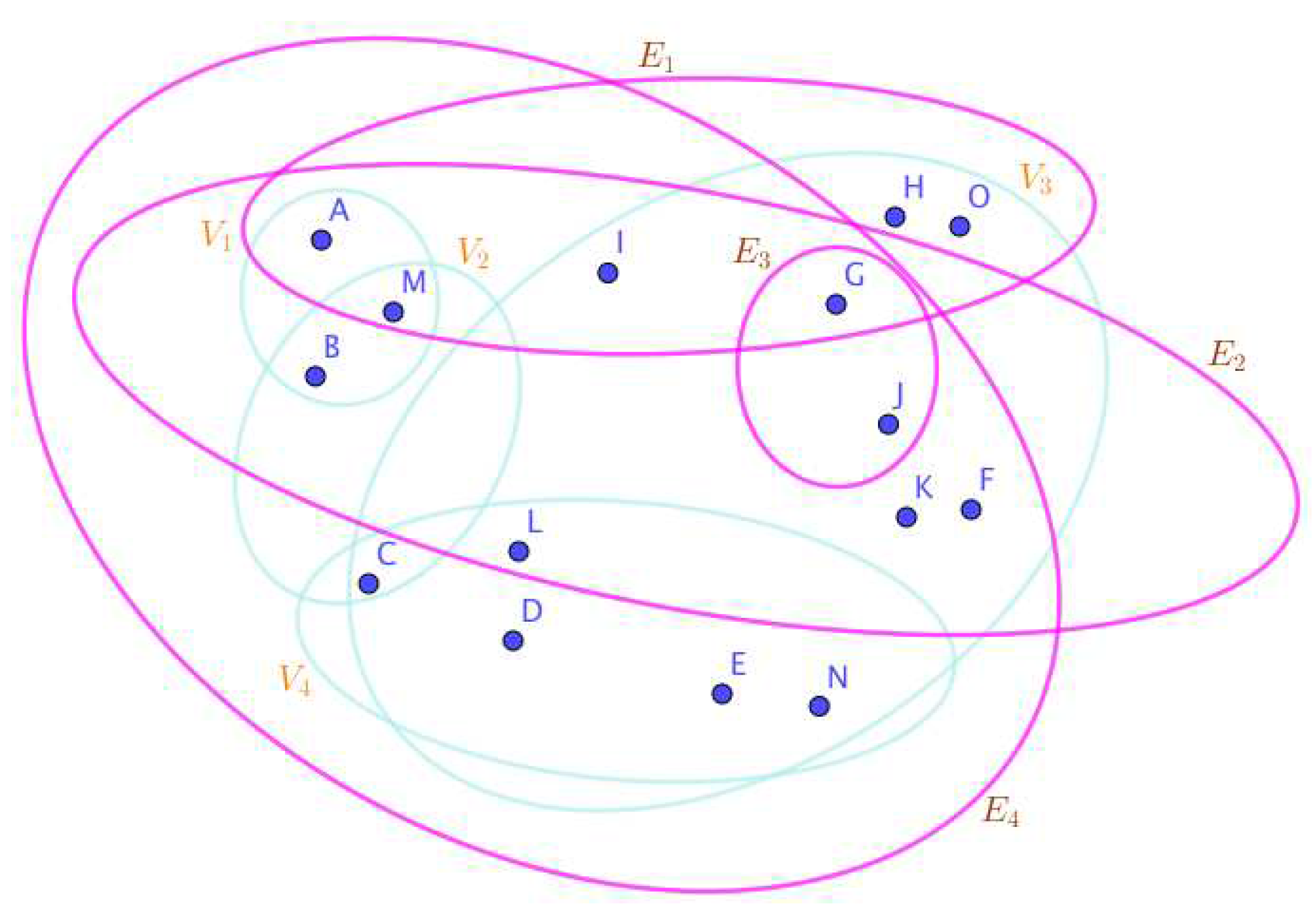
Figure 2.
The SuperHyperGraphs Associated to the Notions of SuperHyperStable in the Example (23).
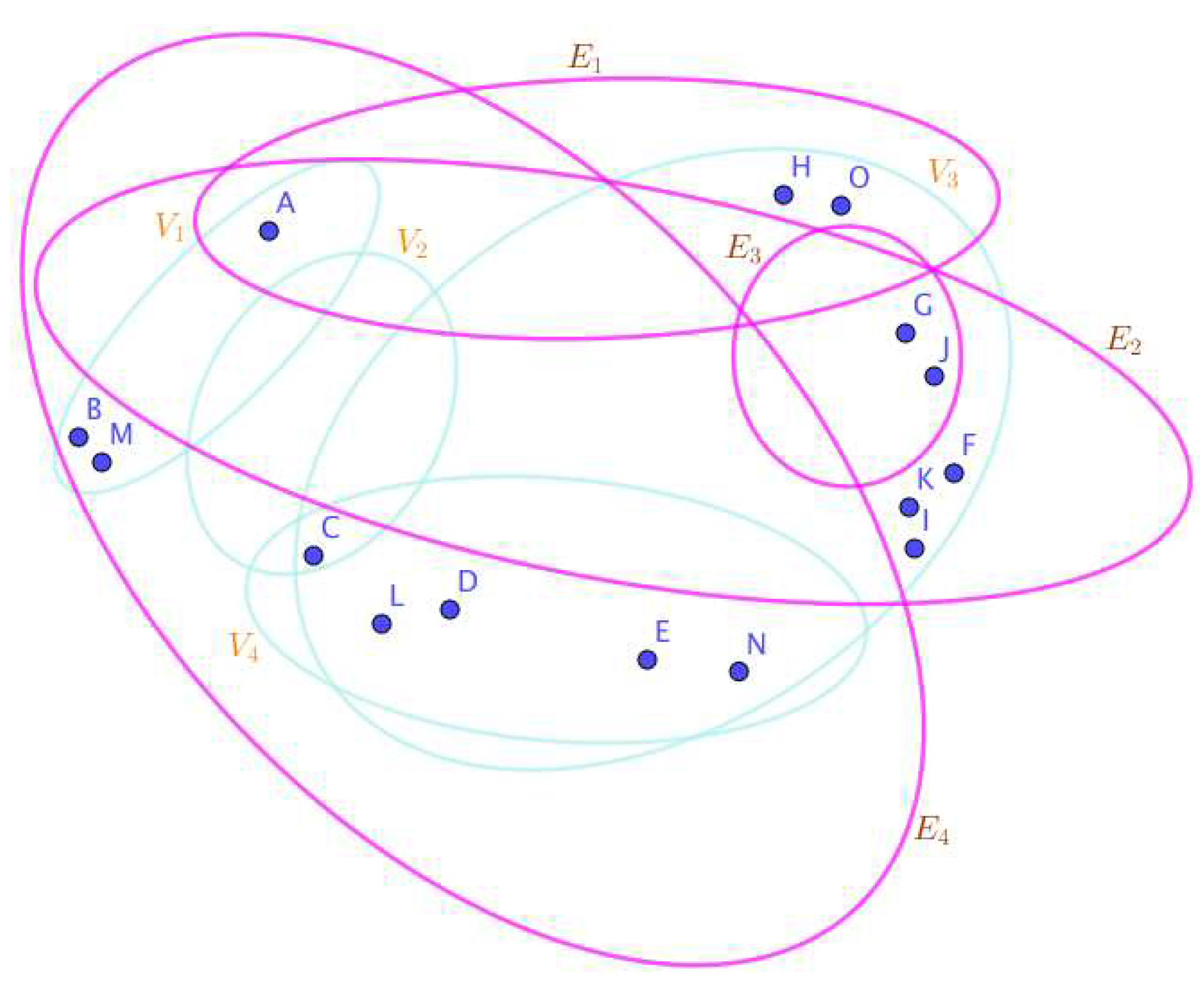
Figure 3.
The SuperHyperGraphs Associated to the Notions of SuperHyperStable in the Example (23).
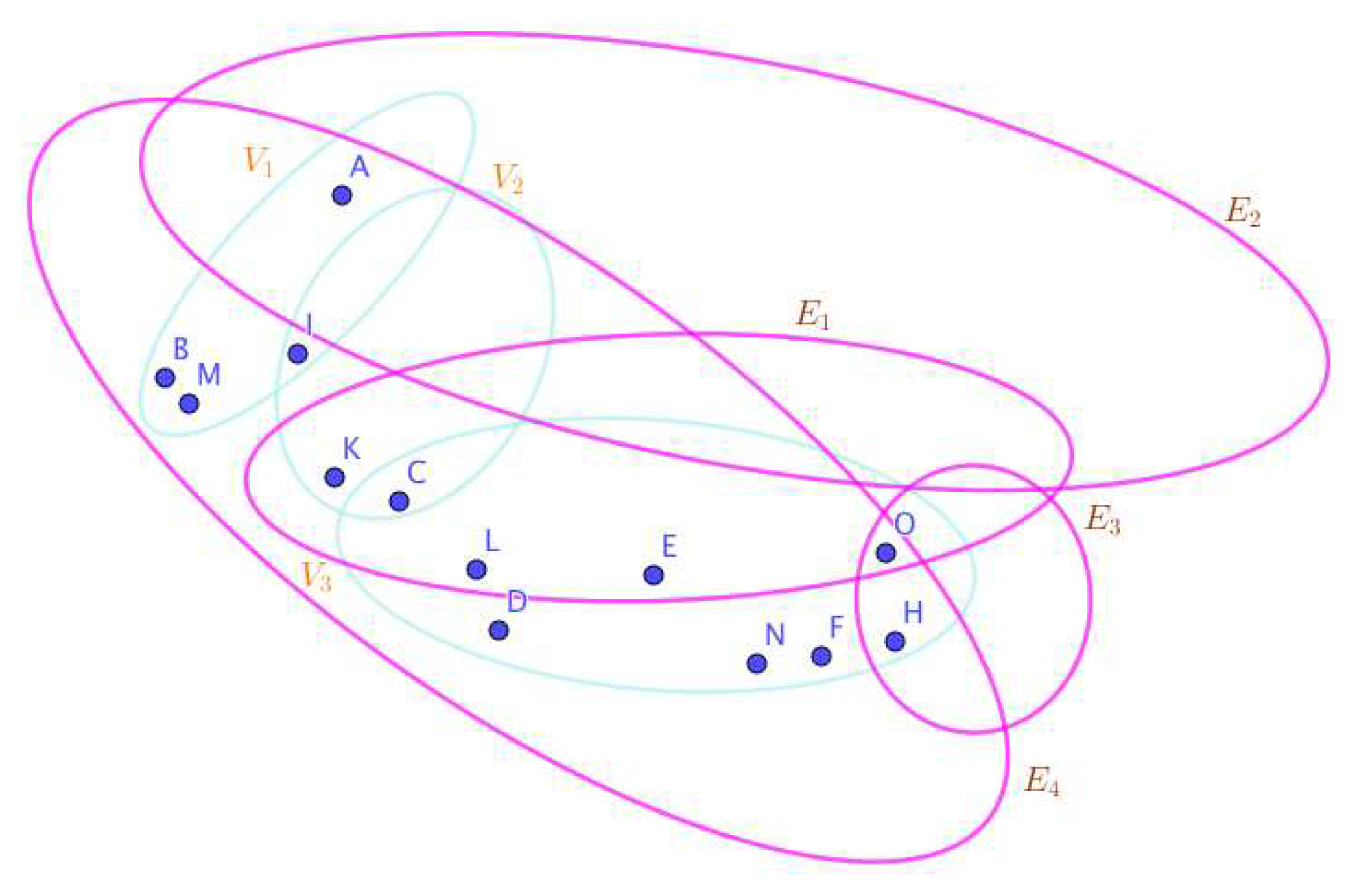
Figure 4.
The SuperHyperGraphs Associated to the Notions of SuperHyperStable in the Example (23).
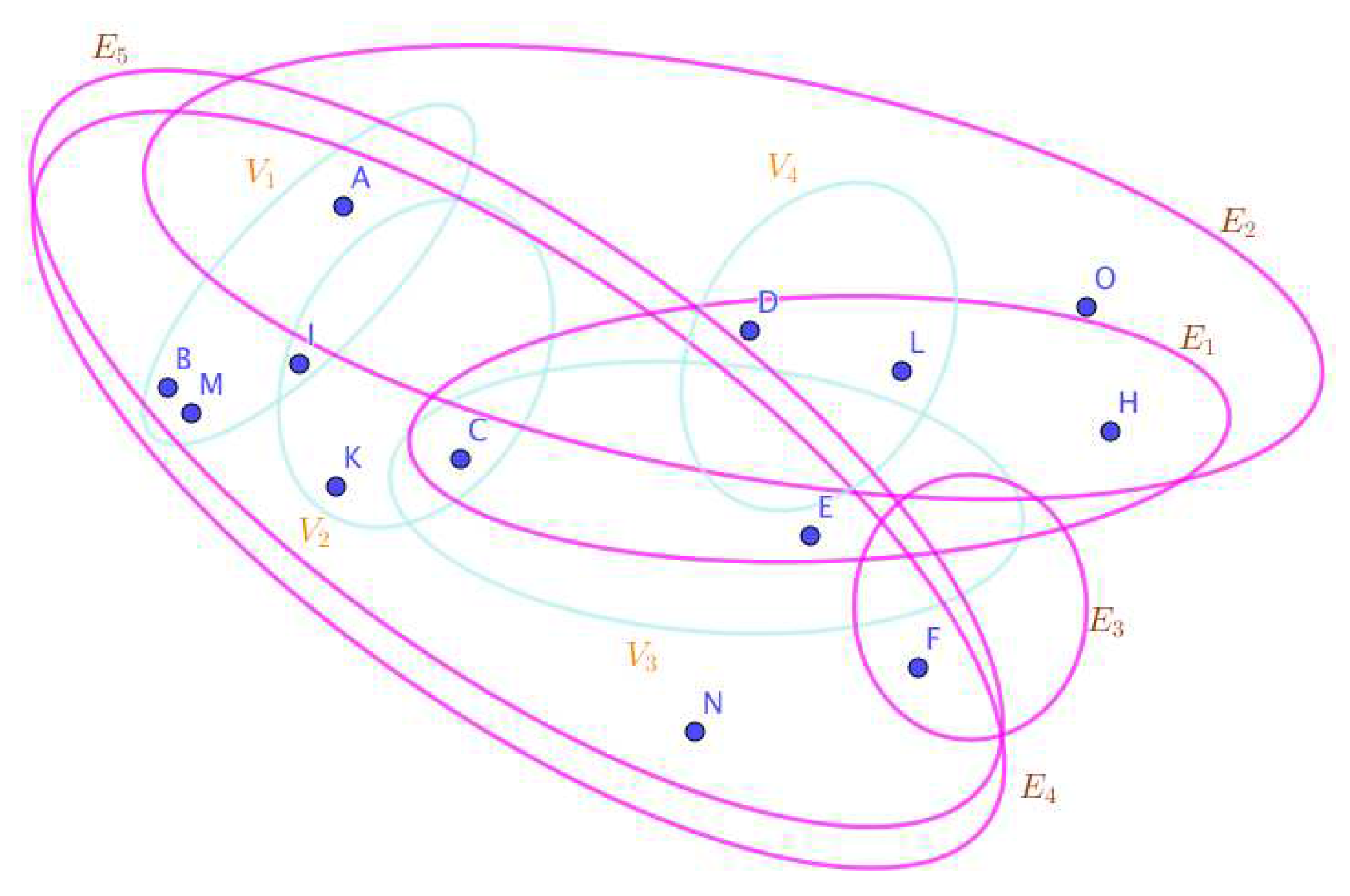
Figure 5.
The SuperHyperGraphs Associated to the Notions of SuperHyperStable in the Example (23).
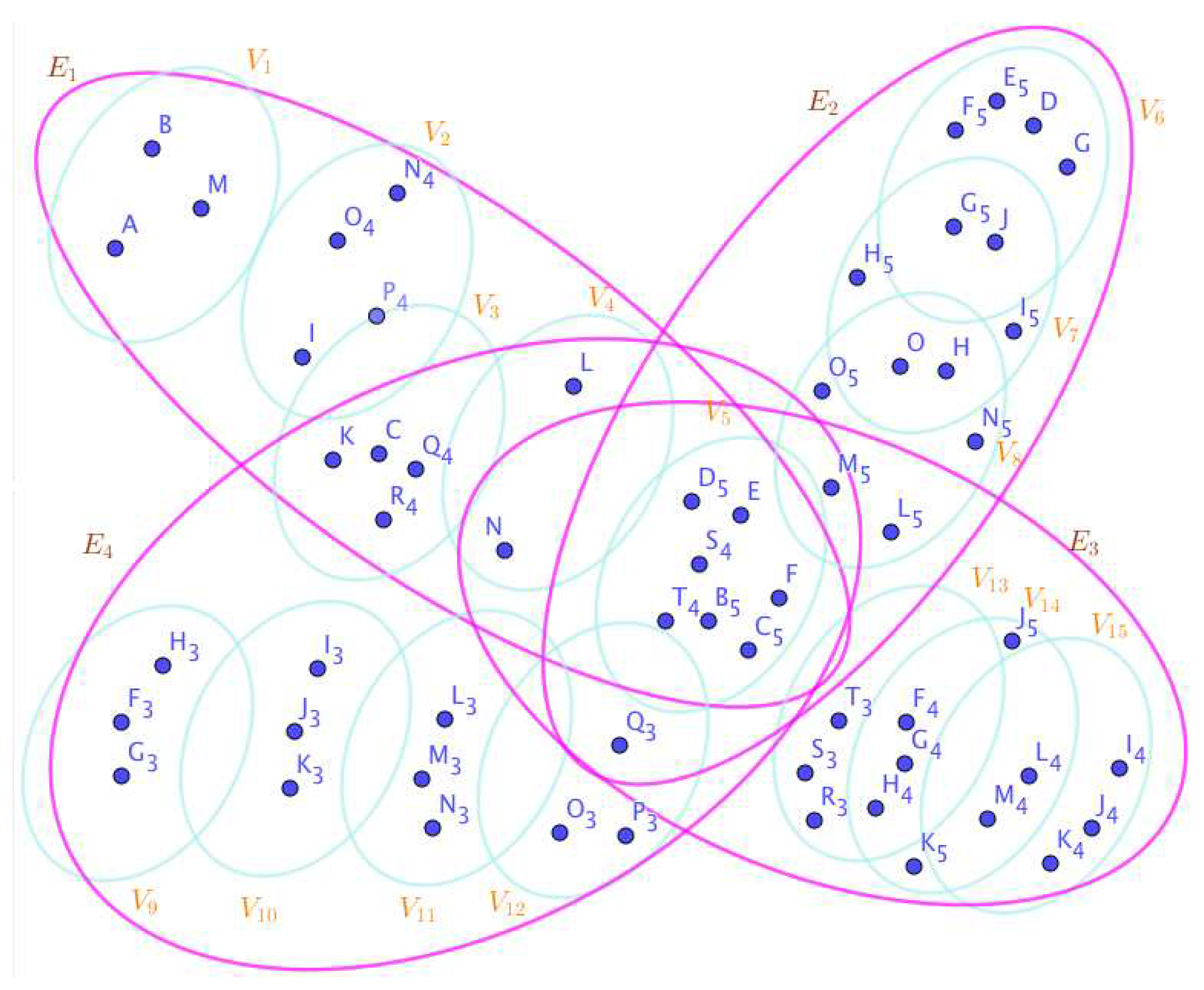
Figure 6.
The SuperHyperGraphs Associated to the Notions of SuperHyperStable in the Example (23).
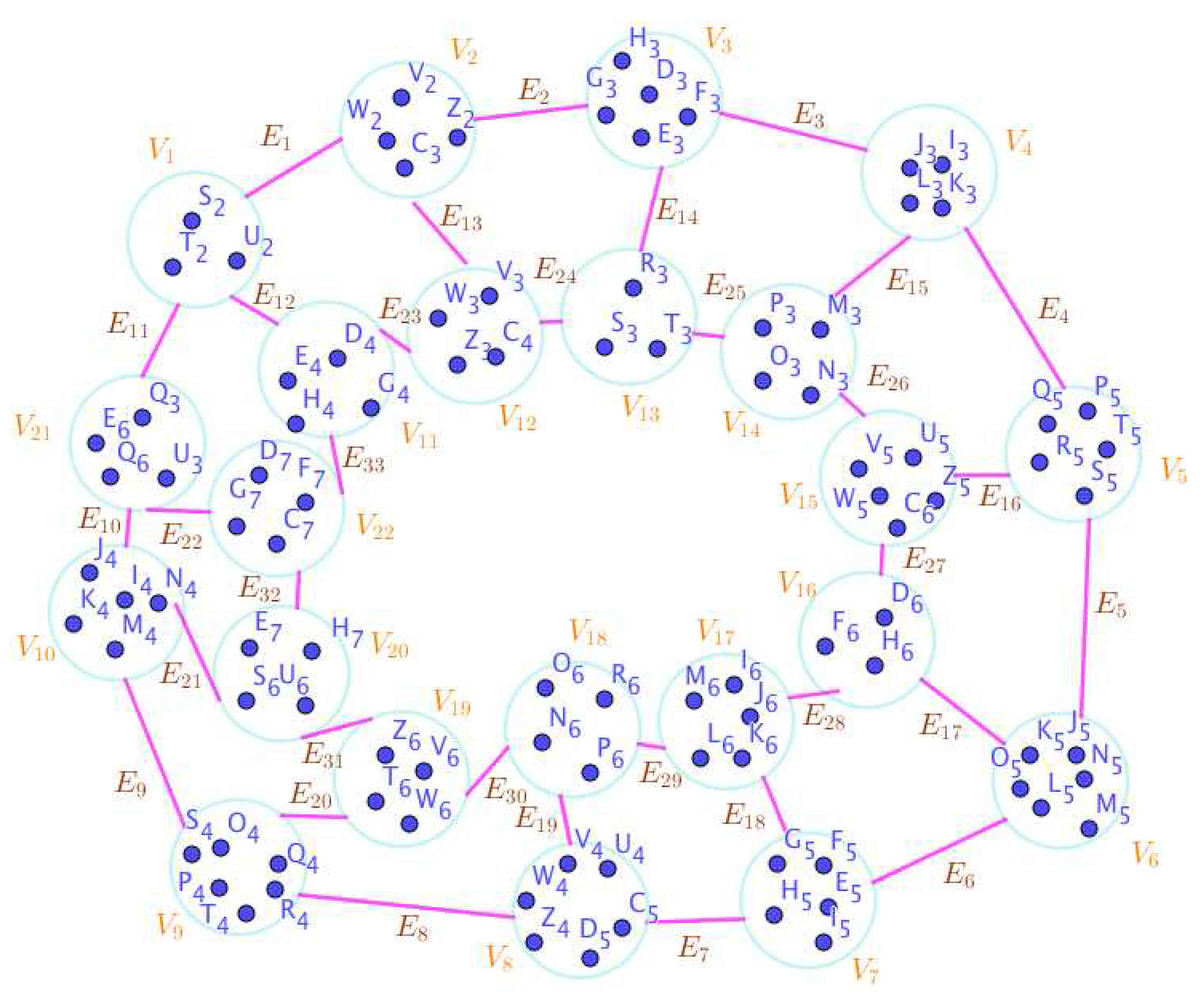
Figure 7.
The SuperHyperGraphs Associated to the Notions of SuperHyperStable in the Example (23).
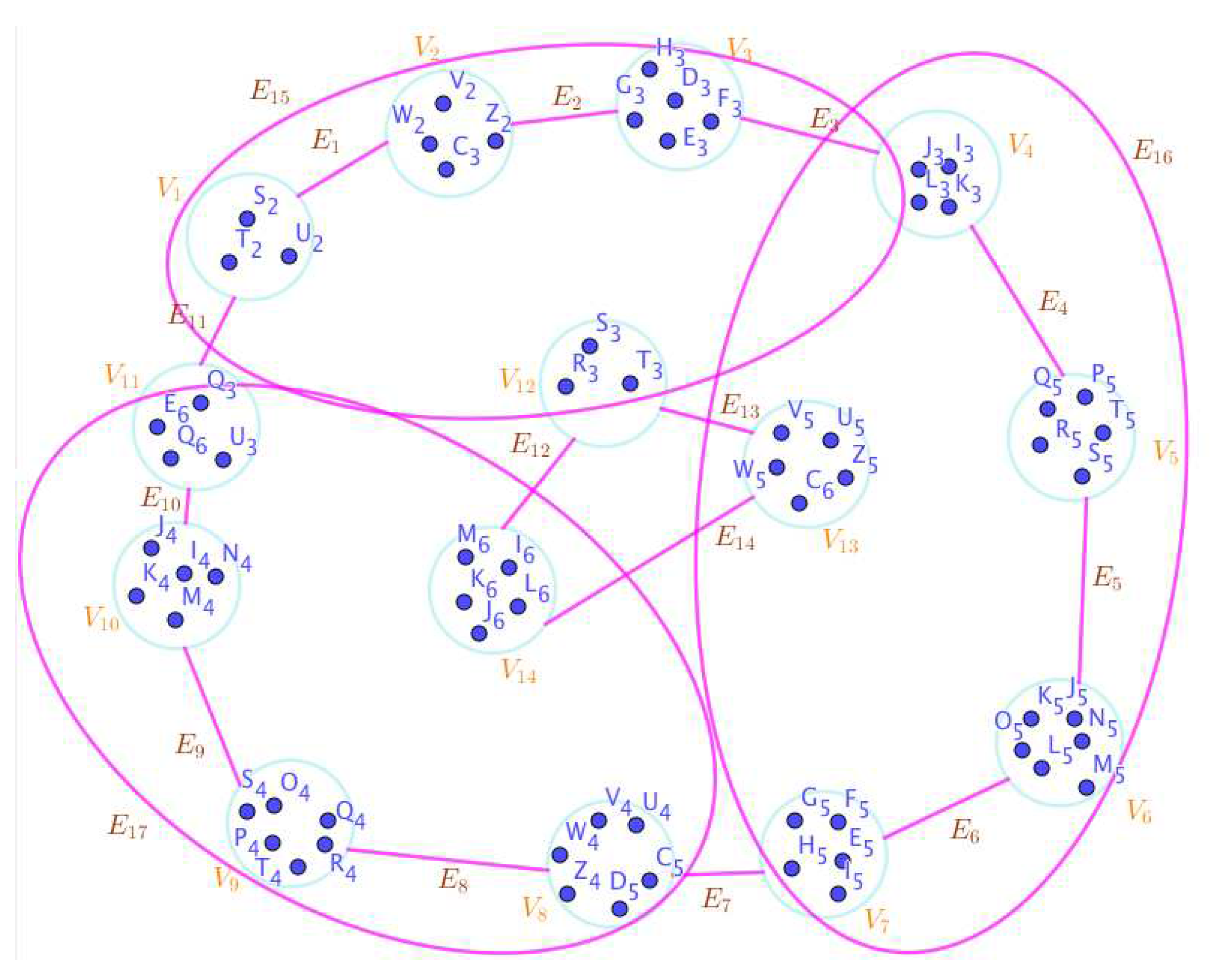
Figure 8.
The SuperHyperGraphs Associated to the Notions of SuperHyperStable in the Example (23).
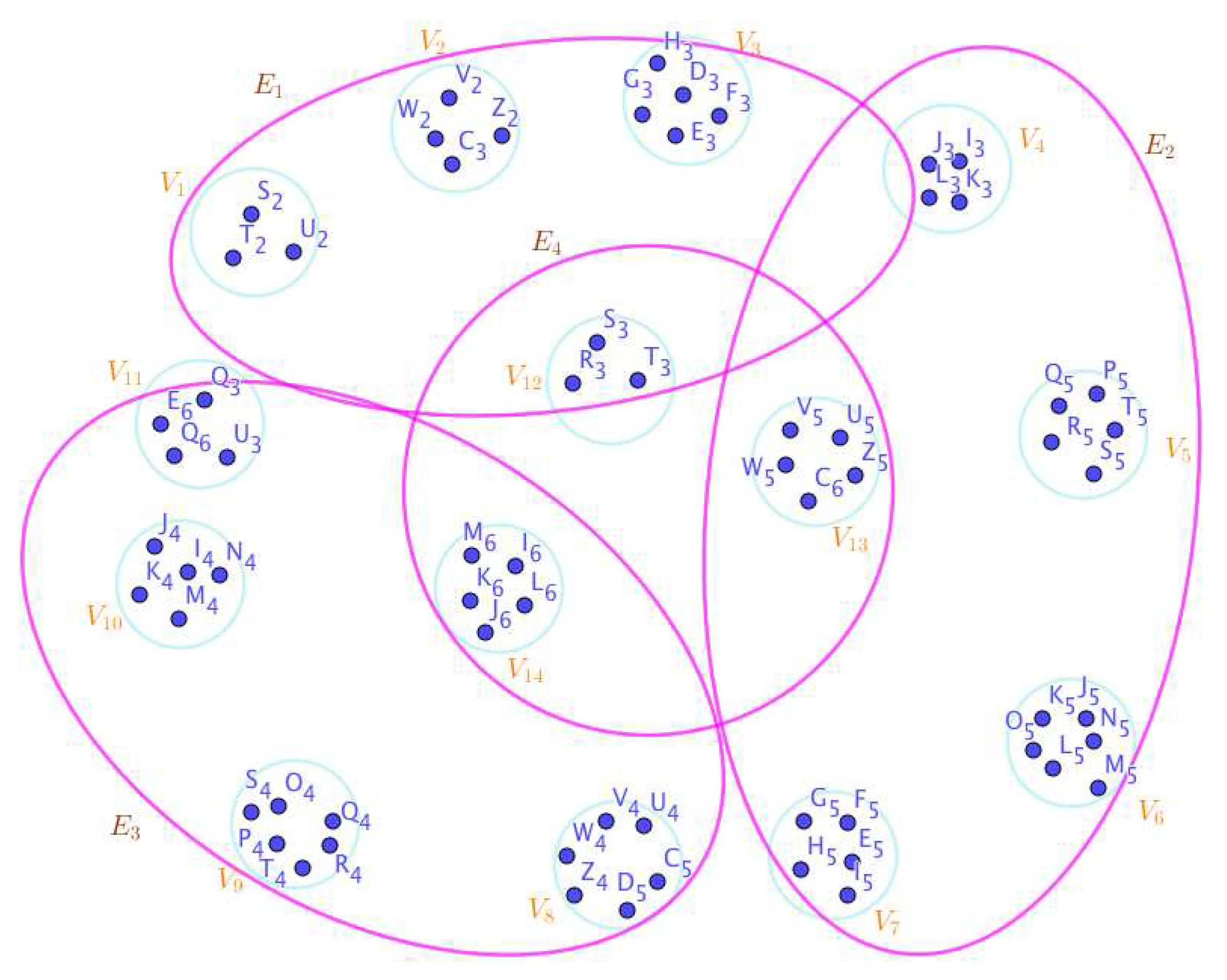
Figure 9.
The SuperHyperGraphs Associated to the Notions of SuperHyperStable in the Example (23).
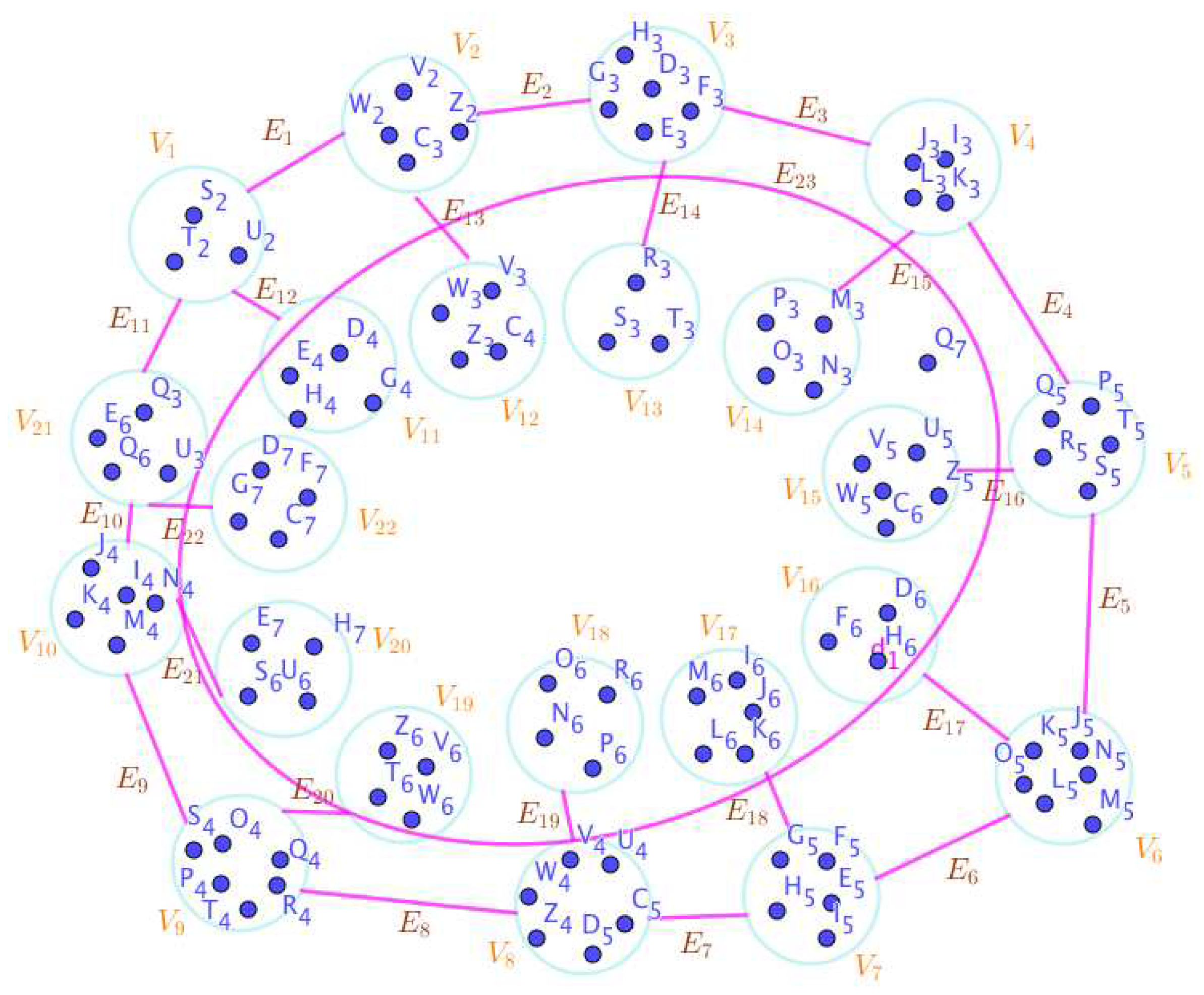
Figure 10.
The SuperHyperGraphs Associated to the Notions of SuperHyperStable in the Example (23).
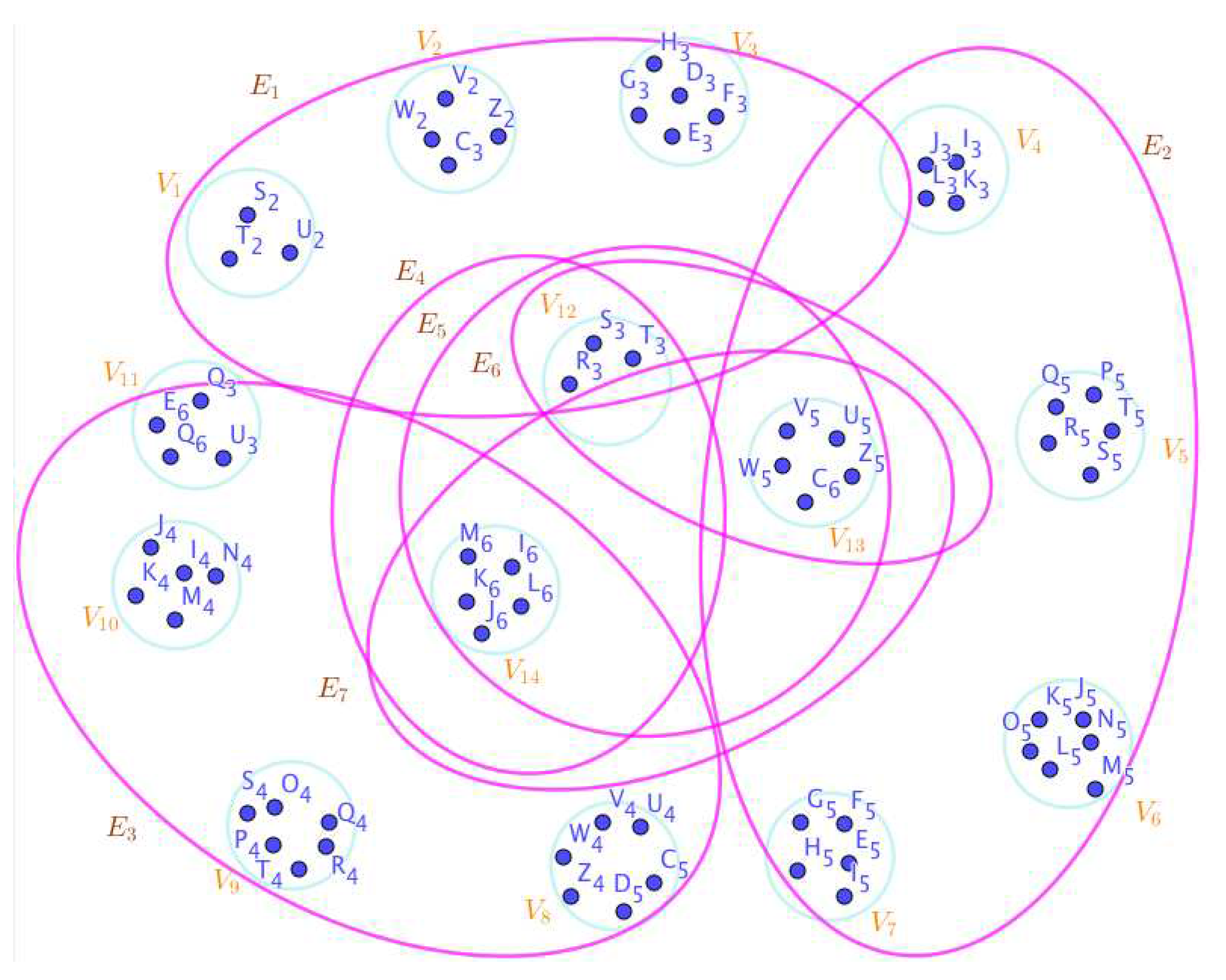
Figure 11.
The SuperHyperGraphs Associated to the Notions of SuperHyperStable in the Example (23).
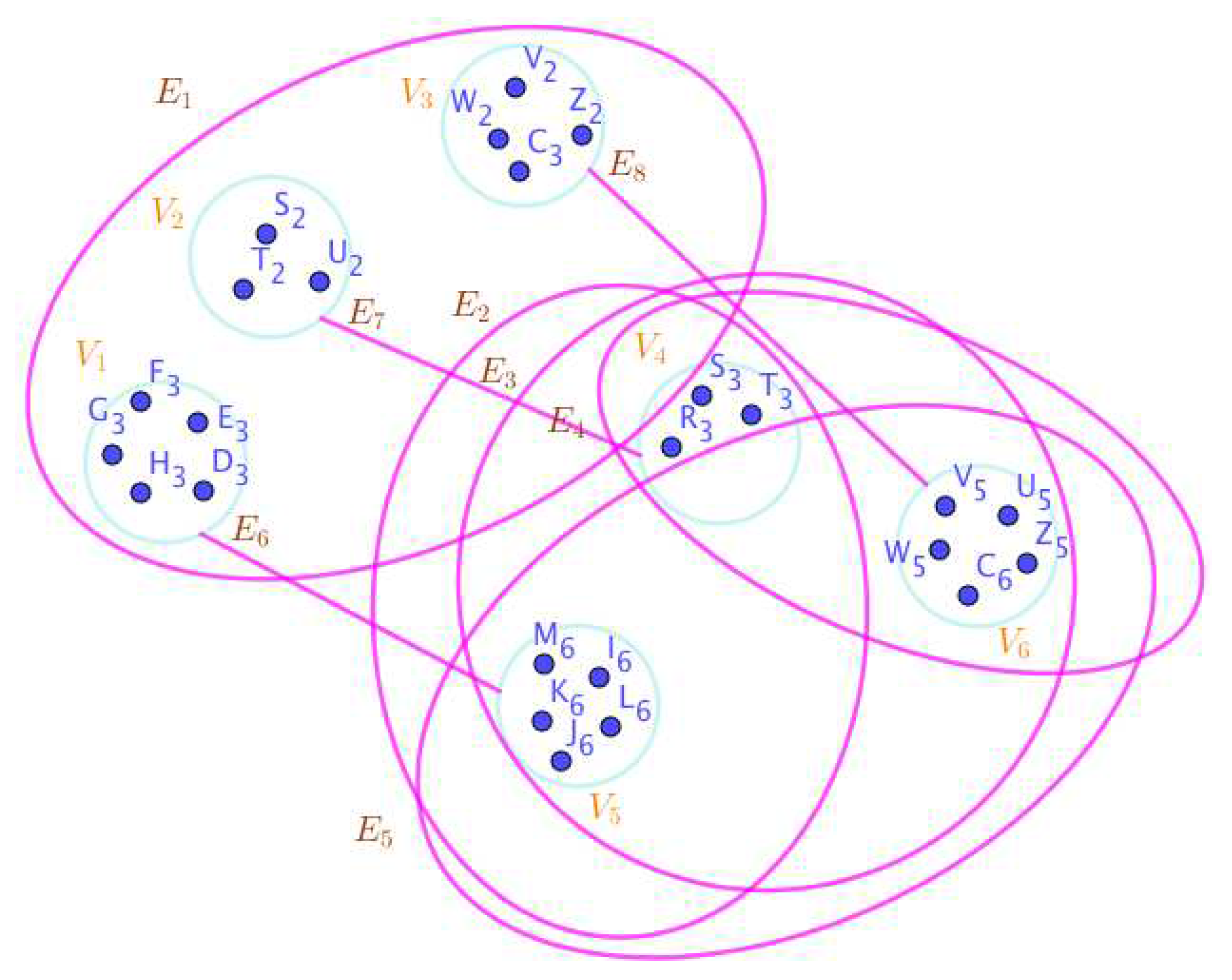
Figure 12.
The SuperHyperGraphs Associated to the Notions of SuperHyperStable in the Example (23).
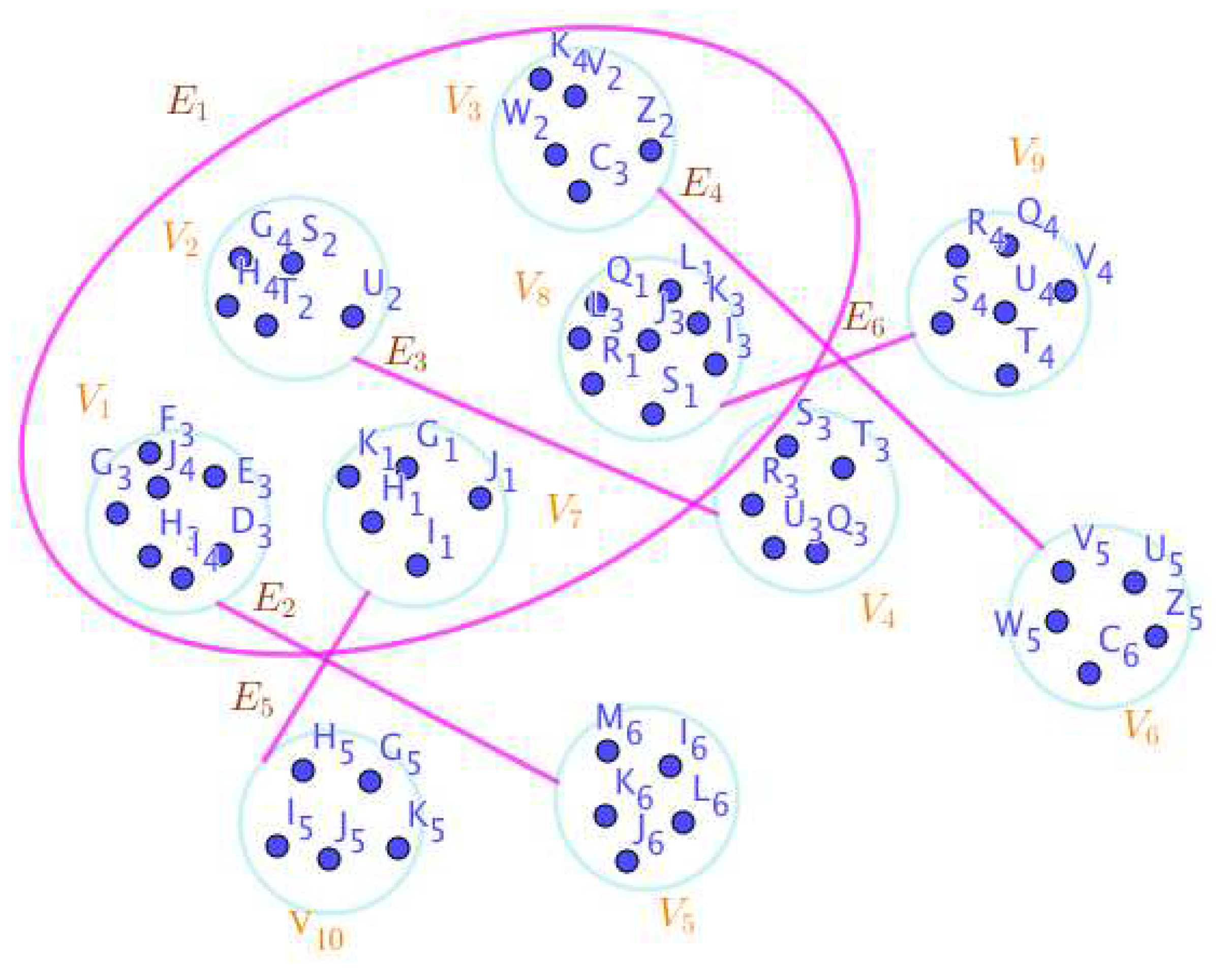
Figure 13.
The SuperHyperGraphs Associated to the Notions of SuperHyperStable in the Example (23).
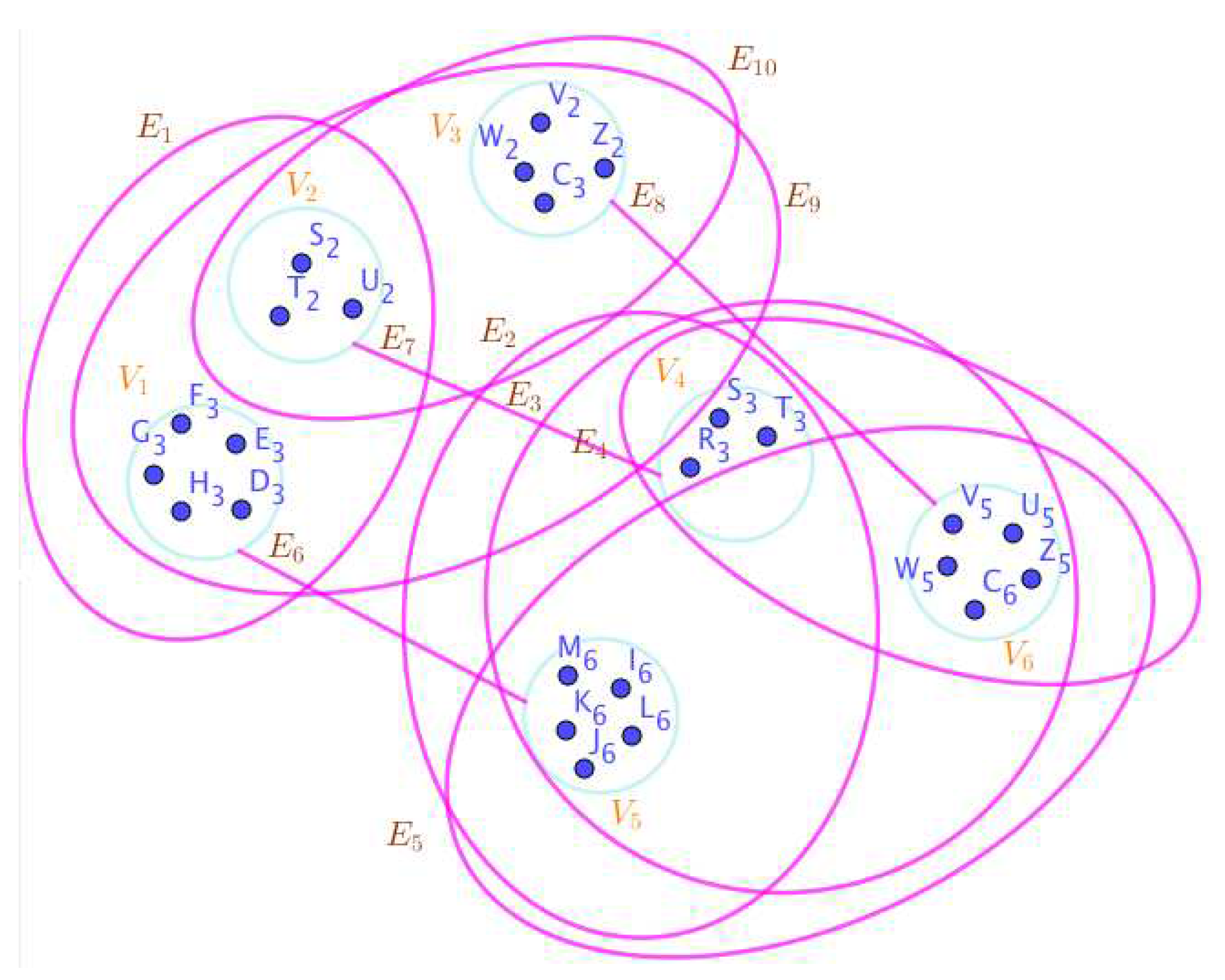
Figure 14.
The SuperHyperGraphs Associated to the Notions of SuperHyperStable in the Example (23).
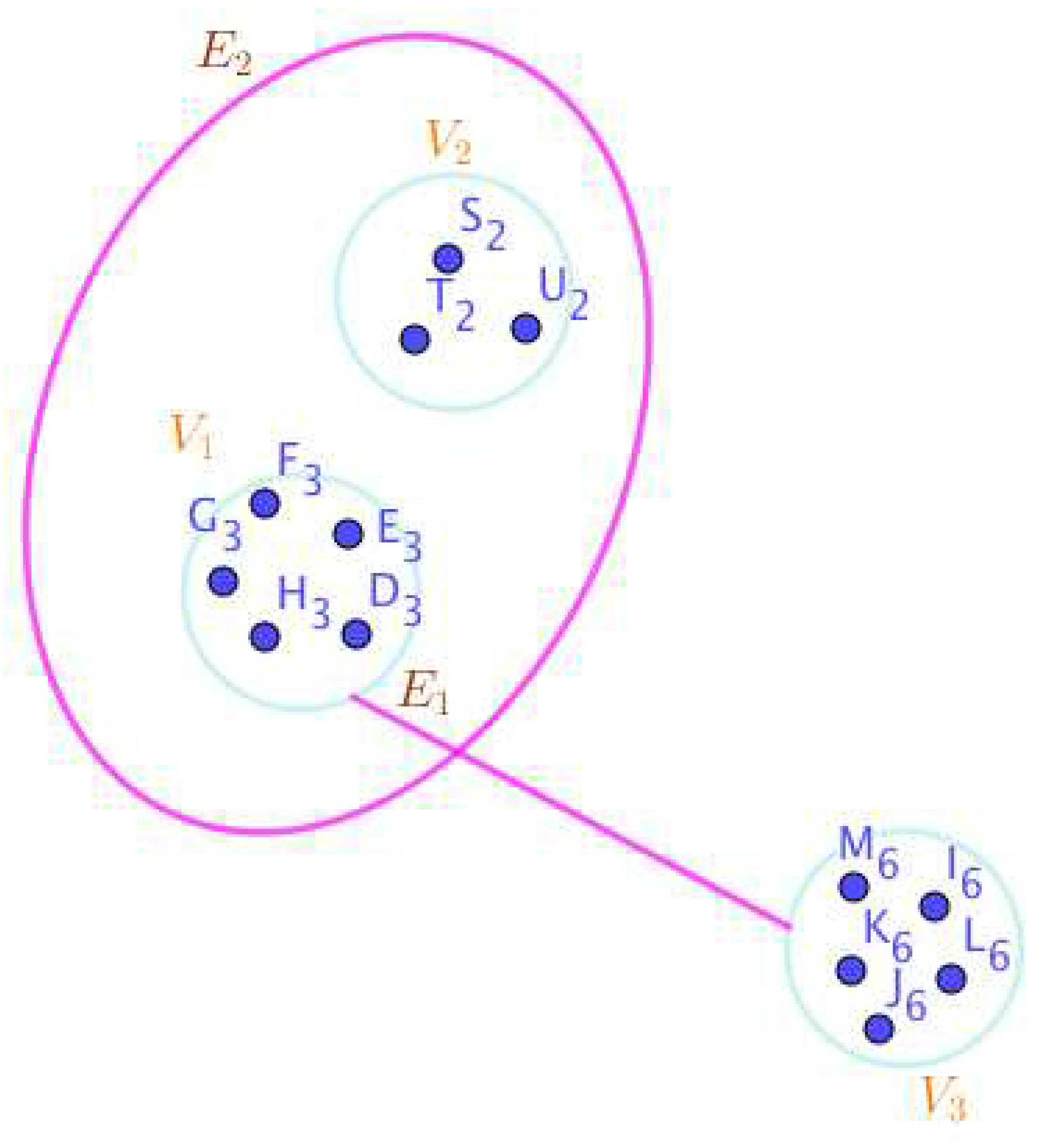
Figure 15.
The SuperHyperGraphs Associated to the Notions of SuperHyperStable in the Example (23).
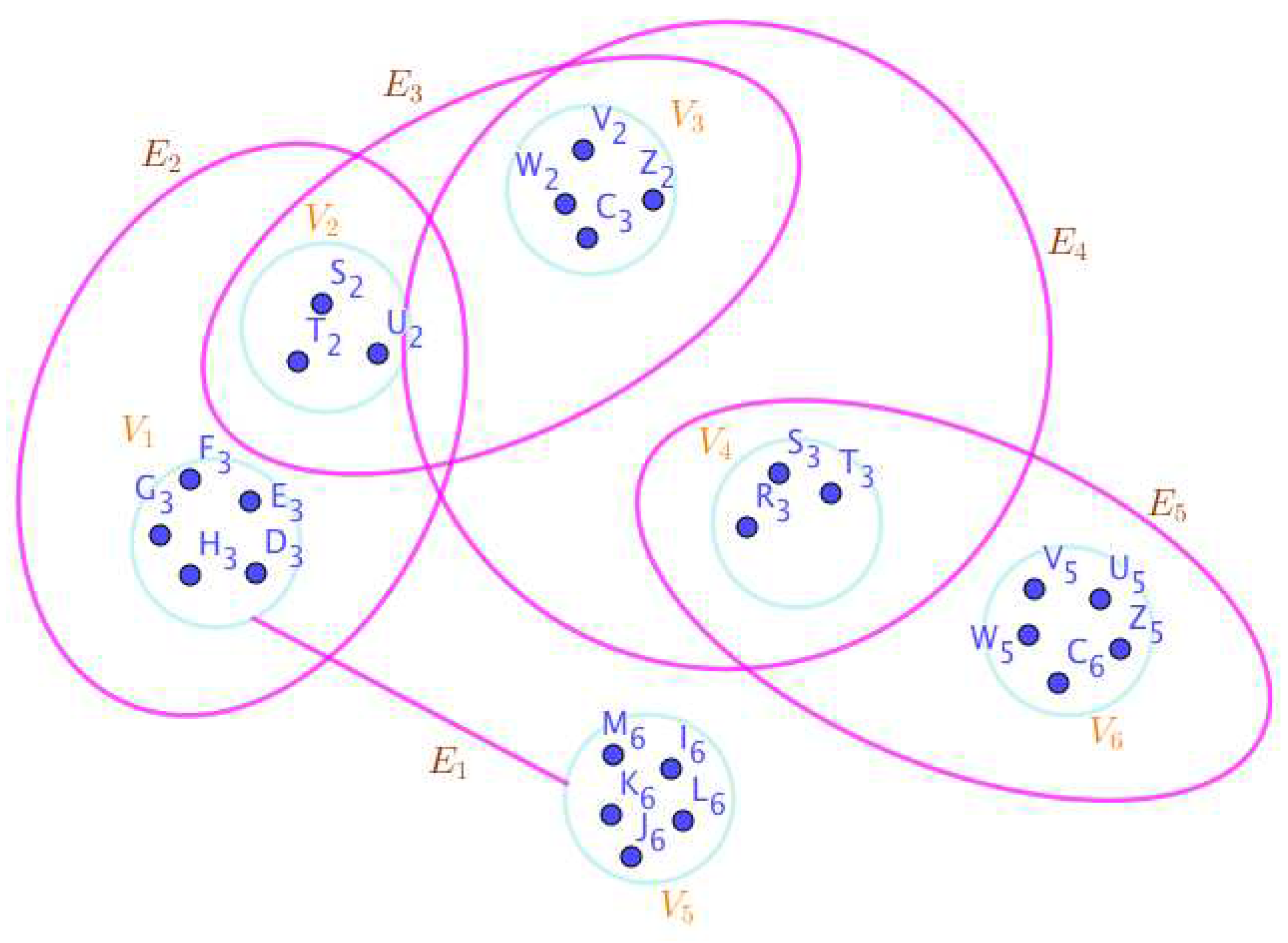
Figure 16.
The SuperHyperGraphs Associated to the Notions of SuperHyperStable in the Example (23).
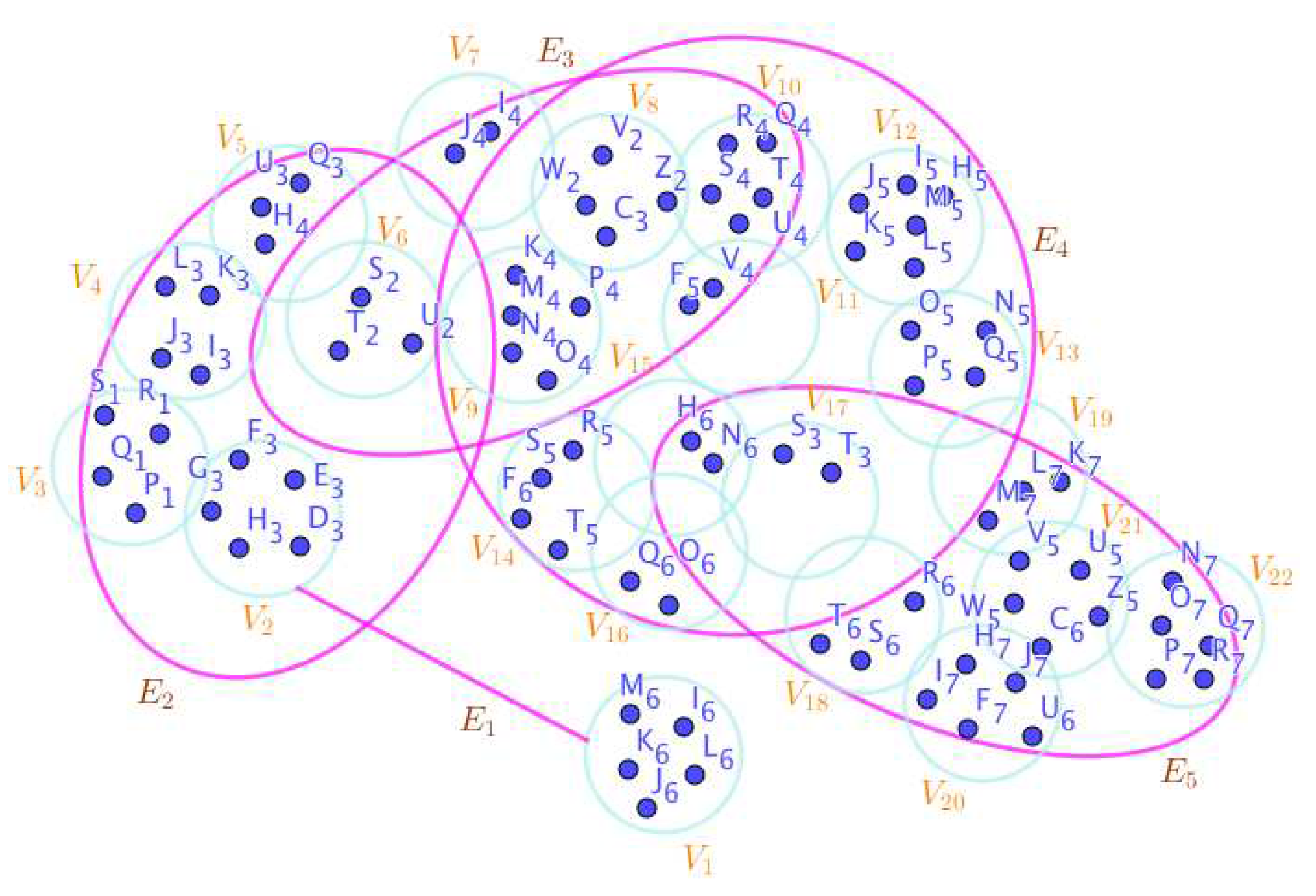
Figure 17.
The SuperHyperGraphs Associated to the Notions of SuperHyperStable in the Example (23).
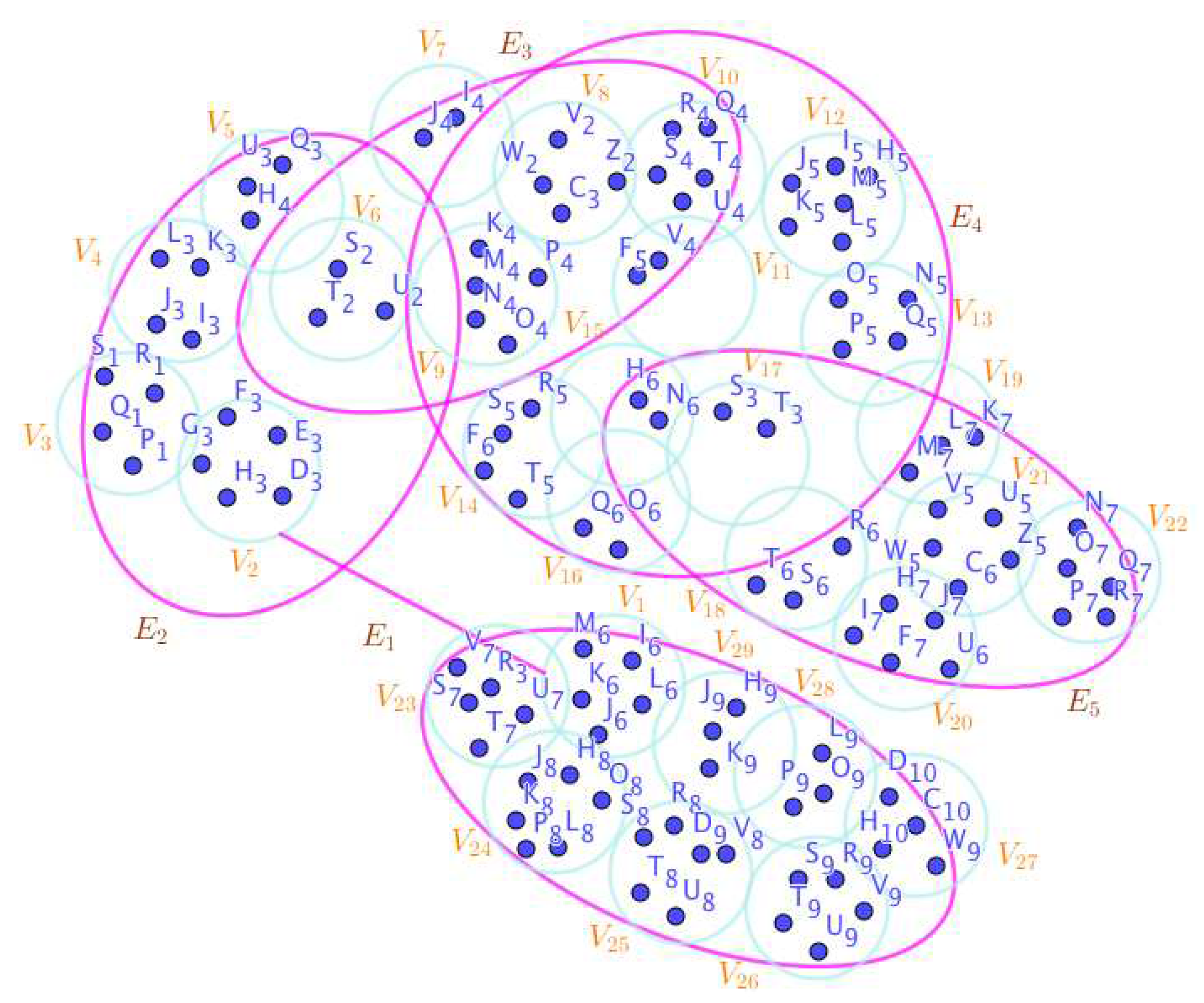
Figure 18.
The SuperHyperGraphs Associated to the Notions of SuperHyperStable in the Example (23).
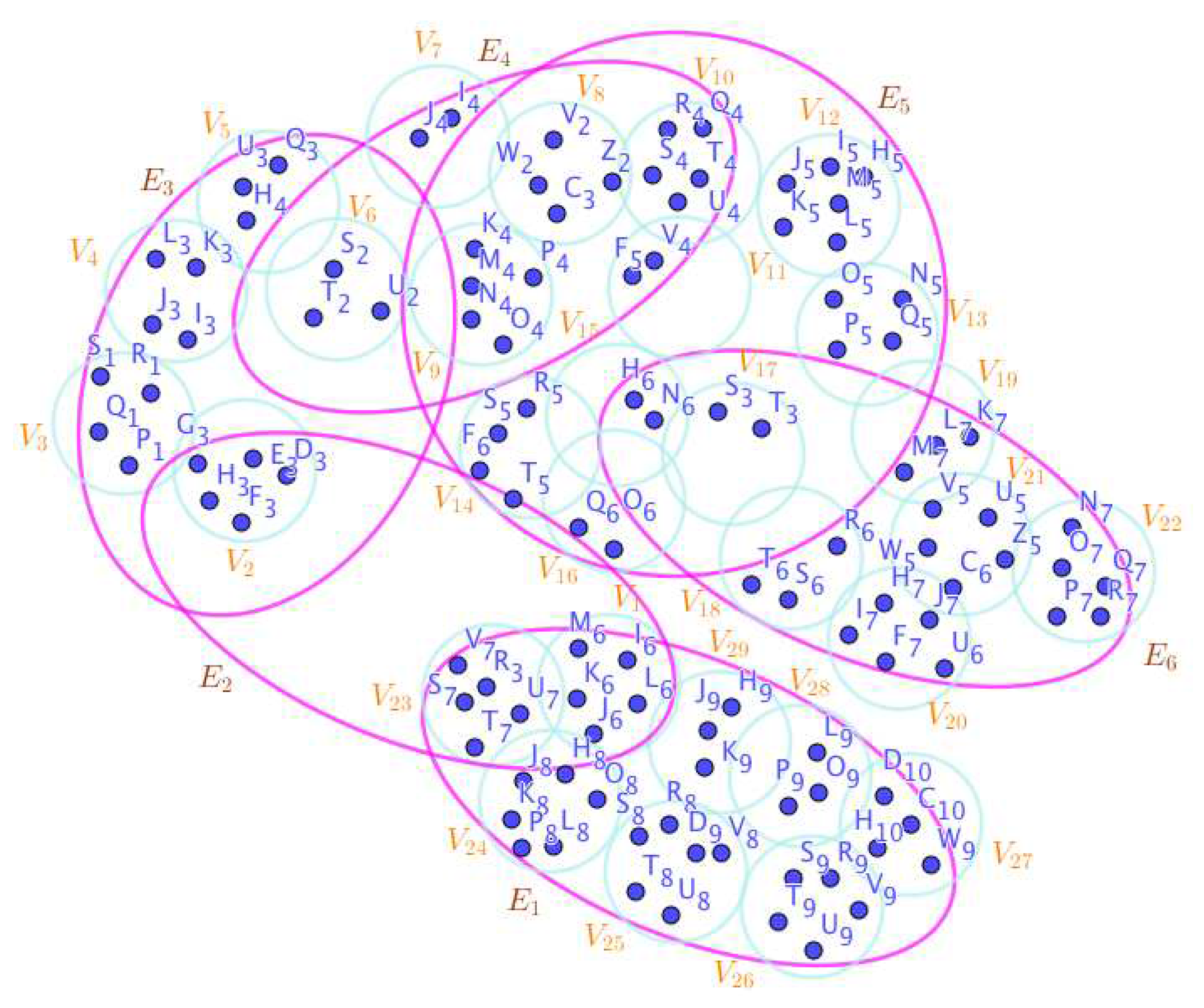
Figure 19.
The SuperHyperGraphs Associated to the Notions of SuperHyperStable in the Example (23).
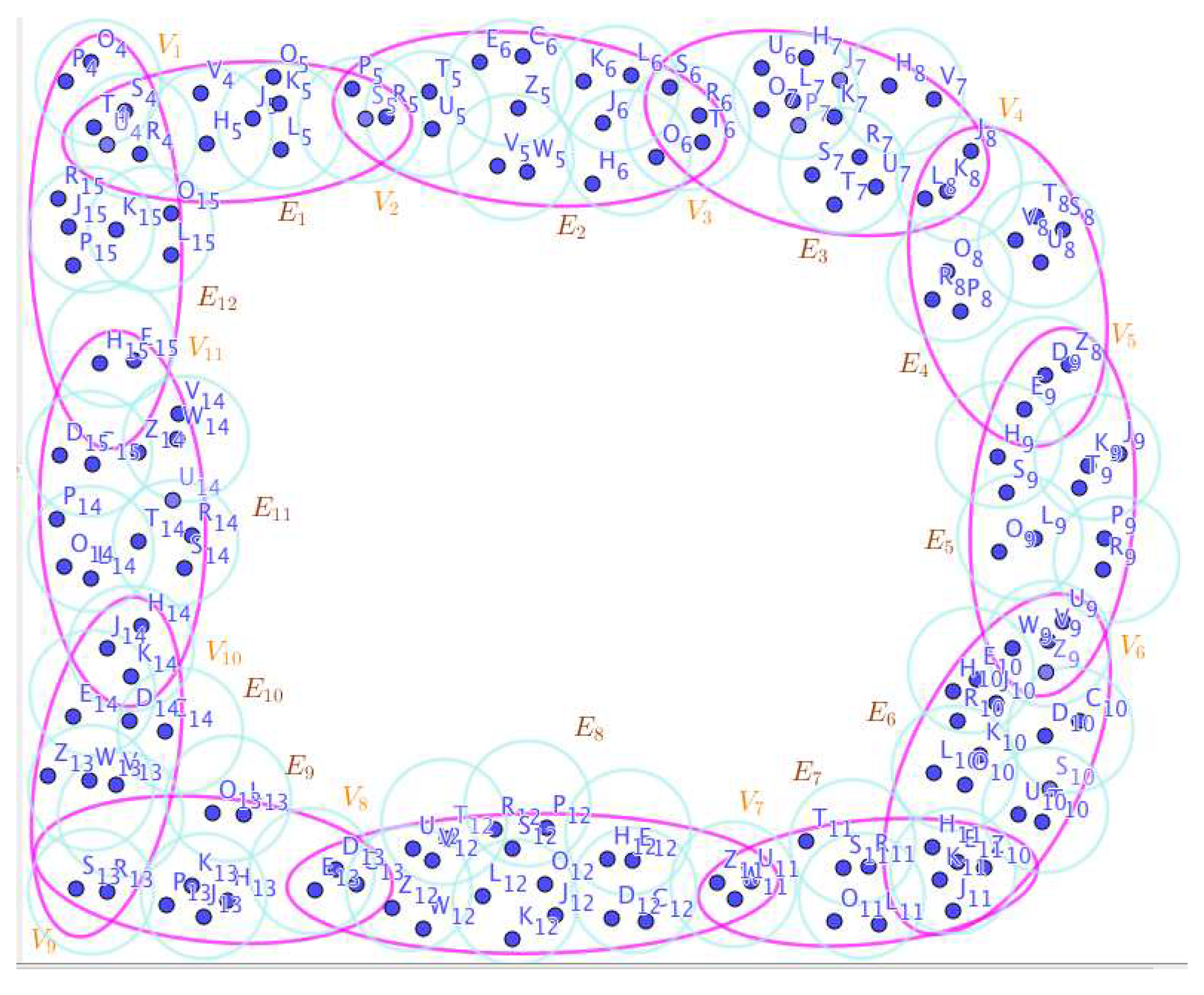
Figure 20.
The SuperHyperGraphs Associated to the Notions of SuperHyperStable in the Example (23).
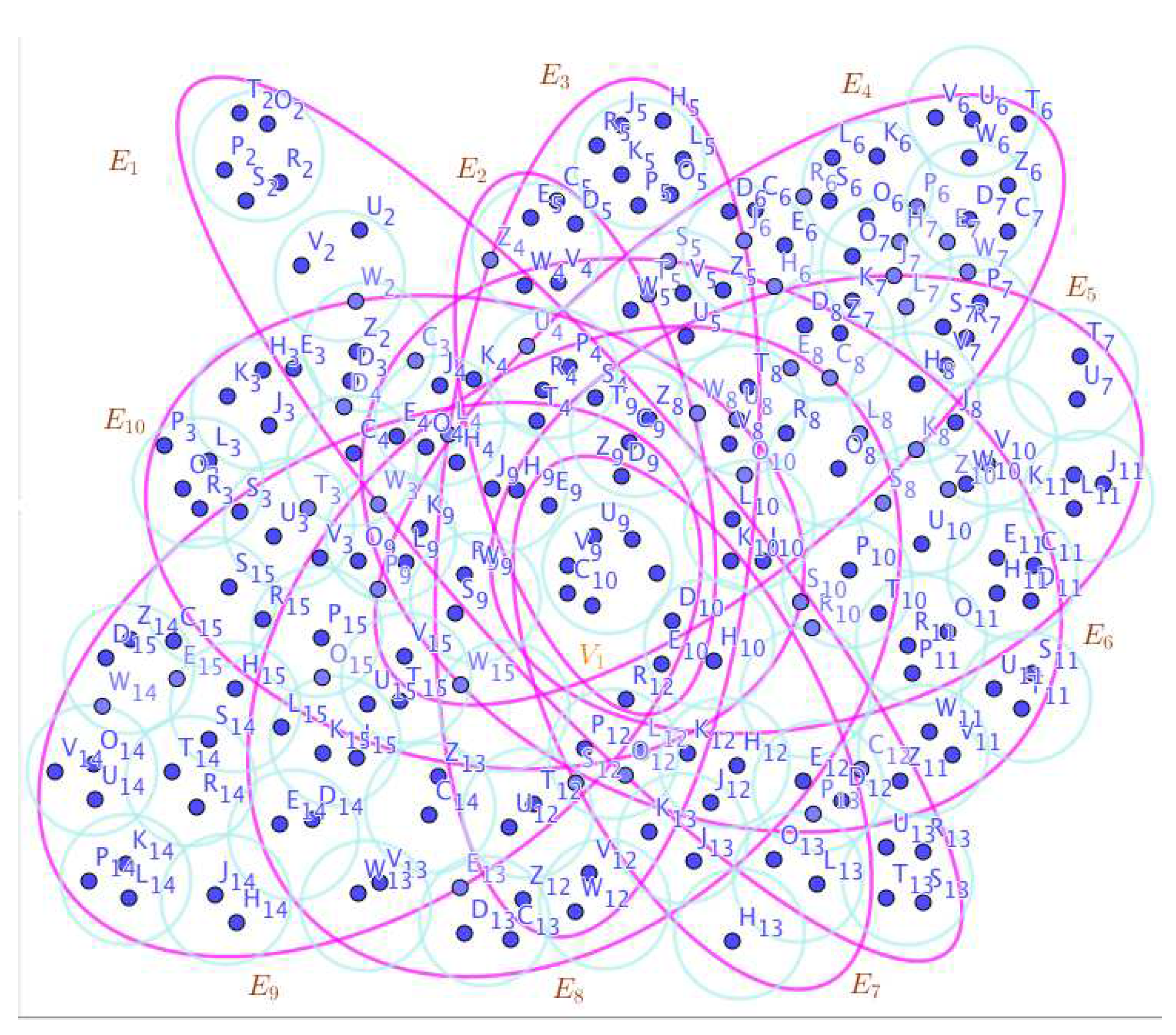
Proposition 24.
Assume a connected neutrosophic SuperHyperGraph Then in the worst case, literally, is a SuperHyperStable. In other words, the least cardinality, the lower sharp bound for the cardinality, of a SuperHyperStable is the cardinality of
Proof.
Assume a connected neutrosophic SuperHyperGraph The SuperHyperSet of the SuperHyperVertices is a SuperHyperSet S of SuperHyperVertices such that there’s no SuperHyperVertex to have a SuperHyperEdge in common but it isn’t an SuperHyperStable. Since it doesn’t have the maximum cardinality of a SuperHyperSet S of SuperHyperVertices such that there’s no SuperHyperVertex to have a SuperHyperEdge in common. The SuperHyperSet of the SuperHyperVertices is the maximum cardinality of a SuperHyperSet S of SuperHyperVertices but it isn’t a SuperHyperStable. Since it doesn’t do the procedure such that such that there’s no SuperHyperVertex to have a SuperHyperEdge in common. [there’s at least one SuperHyperVertex inside implying there’s, sometimes in the connected neutrosophic SuperHyperGraph a SuperHyperVertex, titled its SuperHyperNeighbor, to that SuperHyperVertex in the SuperHyperSet S so as S doesn’t do “the procedure”.]. There’s only one SuperHyperVertex inside the intended SuperHyperSet, Thus the obvious SuperHyperStable, is up. The obvious simple type-SuperHyperSet of the SuperHyperStable, is a SuperHyperSet, includes only one SuperHyperVertex doesn’t form any kind of pairs are titled SuperHyperNeighbors in a connected neutrosophic SuperHyperGraph Since the SuperHyperSet of the SuperHyperVertices is the maximum cardinality of a SuperHyperSet S of SuperHyperVertices such that there’s no SuperHyperVertex to have a SuperHyperEdge in common. □
Proposition 25.
Assume a connected neutrosophic SuperHyperGraph Then the extreme number of SuperHyperStable has, the least cardinality, the lower sharp bound for cardinality, is the extreme cardinality of if there’s an SuperHyperStable with the least cardinality, the lower sharp bound for cardinality.
Proof.
Assume a connected neutrosophic SuperHyperGraph Consider there’s an SuperHyperStable with the least cardinality, the lower sharp bound for cardinality. The SuperHyperSet of the SuperHyperVertices is a SuperHyperSet S of SuperHyperVertices such that there’s no SuperHyperVertex to have a SuperHyperEdge in common but it isn’t an SuperHyperStable. Since it doesn’t have the maximum cardinality of a SuperHyperSet S of SuperHyperVertices such that there’s no SuperHyperVertex to have a SuperHyperEdge in common. The SuperHyperSet of the SuperHyperVertices is the maximum cardinality of a SuperHyperSet S of SuperHyperVertices but it isn’t a SuperHyperStable. Since it doesn’t do the procedure such that such that there’s no SuperHyperVertex to have a SuperHyperEdge in common. [there’s at least one SuperHyperVertex inside implying there’s, sometimes in the connected neutrosophic SuperHyperGraph a SuperHyperVertex, titled its SuperHyperNeighbor, to that SuperHyperVertex in the SuperHyperSet S so as S doesn’t do “the procedure”.]. There’s only one SuperHyperVertex inside the intended SuperHyperSet, Thus the obvious SuperHyperStable, is up. The obvious simple type-SuperHyperSet of the SuperHyperStable, is a SuperHyperSet, includes only one SuperHyperVertex doesn’t form any kind of pairs are titled SuperHyperNeighbors in a connected neutrosophic SuperHyperGraph Since the SuperHyperSet of the SuperHyperVertices is the maximum cardinality of a SuperHyperSet S of SuperHyperVertices such that there’s no SuperHyperVertex to have a SuperHyperEdge in common. Then the extreme number of SuperHyperStable has, the least cardinality, the lower sharp bound for cardinality, is the extreme cardinality of if there’s an SuperHyperStable with the least cardinality, the lower sharp bound for cardinality. □
Proposition 26.
Assume a connected neutrosophic SuperHyperGraph If a SuperHyperEdge has z SuperHyperVertices, then number of those interior SuperHyperVertices from that SuperHyperEdge exclude to any SuperHyperStable.
Proof.
Assume a connected neutrosophic SuperHyperGraph Let a SuperHyperEdge has z SuperHyperVertices. Consider number of those SuperHyperVertices from that SuperHyperEdge exclude to any given SuperHyperSet of the SuperHyperVertices. Consider there’s an SuperHyperStable with the least cardinality, the lower sharp bound for cardinality. Assume a connected neutrosophic SuperHyperGraph The SuperHyperSet of the SuperHyperVertices is a SuperHyperSet S of SuperHyperVertices such that there’s no SuperHyperVertex to have a SuperHyperEdge in common but it isn’t an SuperHyperStable. Since it doesn’t have the maximum cardinality of a SuperHyperSet S of SuperHyperVertices such that there’s no SuperHyperVertex to have a SuperHyperEdge in common. The SuperHyperSet of the SuperHyperVertices is the maximum cardinality of a SuperHyperSet S of SuperHyperVertices but it isn’t a SuperHyperStable. Since it doesn’t do the procedure such that such that there’s no SuperHyperVertex to have a SuperHyperEdge in common. [there’s at least one SuperHyperVertex inside implying there’s, sometimes in the connected neutrosophic SuperHyperGraph a SuperHyperVertex, titled its SuperHyperNeighbor, to that SuperHyperVertex in the SuperHyperSet S so as S doesn’t do “the procedure”.]. There’s only one SuperHyperVertex inside the intended SuperHyperSet, Thus the obvious SuperHyperStable, is up. The obvious simple type-SuperHyperSet of the SuperHyperStable, is a SuperHyperSet, includes only one SuperHyperVertex doesn’t form any kind of pairs are titled SuperHyperNeighbors in a connected neutrosophic SuperHyperGraph Since the SuperHyperSet of the SuperHyperVertices is the maximum cardinality of a SuperHyperSet S of SuperHyperVertices such that there’s no SuperHyperVertex to have a SuperHyperEdge in common. Thus, if a SuperHyperEdge has z SuperHyperVertices, then number of those interior SuperHyperVertices from that SuperHyperEdge exclude to any SuperHyperStable. □
Proposition 27.
Assume a connected neutrosophic SuperHyperGraph There’s not any SuperHyperEdge has only more than one distinct interior SuperHyperVertex inside of any given SuperHyperStable. In other words, there’s not an unique SuperHyperEdge has only two distinct SuperHyperVertices in a SuperHyperStable.
Proof.
Assume a connected neutrosophic SuperHyperGraph Let a SuperHyperEdge has some SuperHyperVertices. Consider some numbers of those SuperHyperVertices from that SuperHyperEdge excluding more than one distinct SuperHyperVertex, exclude to any given SuperHyperSet of the SuperHyperVertices. Consider there’s an SuperHyperStable with the least cardinality, the lower sharp bound for cardinality. Assume a connected neutrosophic SuperHyperGraph The SuperHyperSet of the SuperHyperVertices is a SuperHyperSet S of SuperHyperVertices such that there’s no SuperHyperVertex to have a SuperHyperEdge in common but it isn’t an SuperHyperStable. Since it doesn’t have the maximum cardinality of a SuperHyperSet S of SuperHyperVertices such that there’s no SuperHyperVertex to have a SuperHyperEdge in common. The SuperHyperSet of the SuperHyperVertices is the maximum cardinality of a SuperHyperSet S of SuperHyperVertices but it isn’t a SuperHyperStable. Since it doesn’t do the procedure such that such that there’s no SuperHyperVertex to have a SuperHyperEdge in common. [there’s at least one SuperHyperVertex inside implying there’s, sometimes in the connected neutrosophic SuperHyperGraph a SuperHyperVertex, titled its SuperHyperNeighbor, to that SuperHyperVertex in the SuperHyperSet S so as S doesn’t do “the procedure”.]. There’s only one SuperHyperVertex inside the intended SuperHyperSet, Thus the obvious SuperHyperStable, is up. The obvious simple type-SuperHyperSet of the SuperHyperStable, is a SuperHyperSet, includes only one SuperHyperVertex doesn’t form any kind of pairs are titled SuperHyperNeighbors in a connected neutrosophic SuperHyperGraph Since the SuperHyperSet of the SuperHyperVertices is the maximum cardinality of a SuperHyperSet S of SuperHyperVertices such that there’s no SuperHyperVertex to have a SuperHyperEdge in common. Thus, there’s not any SuperHyperEdge has only more than one distinct interior SuperHyperVertex inside of any given SuperHyperStable. In other words, there’s not an unique SuperHyperEdge has only two distinct SuperHyperVertices in a SuperHyperStable. □
Proposition 28.
Assume a connected neutrosophic SuperHyperGraph The all interior SuperHyperVertices belong to any SuperHyperStable if for any of them, there’s no other corresponded SuperHyperVertex such that the two interior SuperHyperVertices are mutually SuperHyperNeighbors.
Proof.
Let a SuperHyperEdge has some SuperHyperVertices. Consider all numbers of those SuperHyperVertices from that SuperHyperEdge excluding one distinct SuperHyperVertex, exclude to any given SuperHyperSet of the SuperHyperVertices. Consider there’s an SuperHyperStable with the least cardinality, the lower sharp bound for cardinality. Assume a connected neutrosophic SuperHyperGraph The SuperHyperSet of the SuperHyperVertices is a SuperHyperSet S of SuperHyperVertices such that there’s no SuperHyperVertex to have a SuperHyperEdge in common but it isn’t an SuperHyperStable. Since it doesn’t have the maximum cardinality of a SuperHyperSet S of SuperHyperVertices such that there’s no SuperHyperVertex to have a SuperHyperEdge in common. The SuperHyperSet of the SuperHyperVertices is the maximum cardinality of a SuperHyperSet S of SuperHyperVertices but it isn’t a SuperHyperStable. Since it doesn’t do the procedure such that such that there’s no SuperHyperVertex to have a SuperHyperEdge in common. [there’s at least one SuperHyperVertex inside implying there’s, sometimes in the connected neutrosophic SuperHyperGraph a SuperHyperVertex, titled its SuperHyperNeighbor, to that SuperHyperVertex in the SuperHyperSet S so as S doesn’t do “the procedure”.]. There’s only one SuperHyperVertex inside the intended SuperHyperSet, Thus the obvious SuperHyperStable, is up. The obvious simple type-SuperHyperSet of the SuperHyperStable, is a SuperHyperSet, includes only one SuperHyperVertex doesn’t form any kind of pairs are titled SuperHyperNeighbors in a connected neutrosophic SuperHyperGraph Since the SuperHyperSet of the SuperHyperVertices is the maximum cardinality of a SuperHyperSet S of SuperHyperVertices such that there’s no SuperHyperVertex to have a SuperHyperEdge in common. Thus, the all interior SuperHyperVertices belong to any SuperHyperStable if for any of them, there’s no other corresponded SuperHyperVertex such that the two interior SuperHyperVertices are mutually SuperHyperNeighbors. □
Proposition 29.
Assume a connected neutrosophic SuperHyperGraph The any SuperHyperStable only contains all interior SuperHyperVertices and all exterior SuperHyperVertices where there’s any of them has no SuperHyperNeighbors in and there’s no SuperHyperNeighborhoods in but everything is possible about SuperHyperNeighborhoods and SuperHyperNeighbors out.
Proof.
Assume a connected neutrosophic SuperHyperGraph Let a SuperHyperEdge has some SuperHyperVertices. Consider all numbers of those SuperHyperVertices from that SuperHyperEdge excluding one distinct SuperHyperVertex, exclude to any given SuperHyperSet of the SuperHyperVertices. Consider there’s an SuperHyperStable with the least cardinality, the lower sharp bound for cardinality. Assume a connected neutrosophic SuperHyperGraph The SuperHyperSet of the SuperHyperVertices is a SuperHyperSet S of SuperHyperVertices such that there’s no SuperHyperVertex to have a SuperHyperEdge in common but it isn’t an SuperHyperStable. Since it doesn’t have the maximum cardinality of a SuperHyperSet S of SuperHyperVertices such that there’s no SuperHyperVertex to have a SuperHyperEdge in common. The SuperHyperSet of the SuperHyperVertices is the maximum cardinality of a SuperHyperSet S of SuperHyperVertices but it isn’t a SuperHyperStable. Since it doesn’t do the procedure such that such that there’s no SuperHyperVertex to have a SuperHyperEdge in common. [there’s at least one SuperHyperVertex inside implying there’s, sometimes in the connected neutrosophic SuperHyperGraph a SuperHyperVertex, titled its SuperHyperNeighbor, to that SuperHyperVertex in the SuperHyperSet S so as S doesn’t do “the procedure”.]. There’s only one SuperHyperVertex inside the intended SuperHyperSet, Thus the obvious SuperHyperStable, is up. The obvious simple type-SuperHyperSet of the SuperHyperStable, is a SuperHyperSet, includes only one SuperHyperVertex doesn’t form any kind of pairs are titled SuperHyperNeighbors in a connected neutrosophic SuperHyperGraph Since the SuperHyperSet of the SuperHyperVertices is the maximum cardinality of a SuperHyperSet S of SuperHyperVertices such that there’s no SuperHyperVertex to have a SuperHyperEdge in common. Thus, the any SuperHyperStable only contains all interior SuperHyperVertices and all exterior SuperHyperVertices where there’s any of them has no SuperHyperNeighbors in and there’s no SuperHyperNeighborhoods in but everything is possible about SuperHyperNeighborhoods and SuperHyperNeighbors out. □
Remark 30.
The words “ SuperHyperStable” and “SuperHyperDominating” refer to the maximum type-style and the minimum type-style. In other words, they refer to both the maximum[minimum] number and the SuperHyperSet with the maximum[minimum] cardinality.
Proposition 31.
Assume a connected neutrosophic SuperHyperGraph Consider a SuperHyperDominating. Then a SuperHyperStable is either in or out.
Proof.
Assume a connected neutrosophic SuperHyperGraph Consider a SuperHyperDominating. By applying the Proposition (29), the results are up. Thus on a connected neutrosophic SuperHyperGraph and in a SuperHyperDominating. Then a SuperHyperStable is either in or out. □
3. Results on Extreme SuperHyperClasses
Proposition 32.
Assume a connected SuperHyperPath Then a SuperHyperStable-style with the maximum SuperHyperCardinality is a SuperHyperSet of the interior SuperHyperVertices.
Proposition 33.
Assume a connected SuperHyperPath Then a SuperHyperStable is a SuperHyperSet of the interior SuperHyperVertices with only all exceptions in the form of interior SuperHyperVertices from the common SuperHyperEdges. An SuperHyperStable has the number of all the interior SuperHyperVertices minus their SuperHyperNeighborhoods.
Proof.
Assume a connected SuperHyperPath Let a SuperHyperEdge has some SuperHyperVertices. Consider all numbers of those SuperHyperVertices from that SuperHyperEdge excluding one distinct SuperHyperVertex, exclude to any given SuperHyperSet of the SuperHyperVertices. Consider there’s an SuperHyperStable with the least cardinality, the lower sharp bound for cardinality. Assume a connected neutrosophic SuperHyperGraph The SuperHyperSet of the SuperHyperVertices is a SuperHyperSet S of SuperHyperVertices such that there’s no SuperHyperVertex to have a SuperHyperEdge in common but it isn’t an SuperHyperStable. Since it doesn’t have the maximum cardinality of a SuperHyperSet S of SuperHyperVertices such that there’s no SuperHyperVertex to have a SuperHyperEdge in common. The SuperHyperSet of the SuperHyperVertices is the maximum cardinality of a SuperHyperSet S of SuperHyperVertices but it isn’t a SuperHyperStable. Since it doesn’t do the procedure such that such that there’s no SuperHyperVertex to have a SuperHyperEdge in common. [there’s at least one SuperHyperVertex inside implying there’s, sometimes in the connected neutrosophic SuperHyperGraph a SuperHyperVertex, titled its SuperHyperNeighbor, to that SuperHyperVertex in the SuperHyperSet S so as S doesn’t do “the procedure”.]. There’s only one SuperHyperVertex inside the intended SuperHyperSet, Thus the obvious SuperHyperStable, is up. The obvious simple type-SuperHyperSet of the SuperHyperStable, is a SuperHyperSet, includes only one SuperHyperVertex doesn’t form any kind of pairs are titled SuperHyperNeighbors in a connected neutrosophic SuperHyperGraph Since the SuperHyperSet of the SuperHyperVertices is the maximum cardinality of a SuperHyperSet S of SuperHyperVertices such that there’s no SuperHyperVertex to have a SuperHyperEdge in common. Thus, in a connected SuperHyperPath a SuperHyperStable is a SuperHyperSet of the interior SuperHyperVertices with only all exceptions in the form of interior SuperHyperVertices from the common SuperHyperEdges. An SuperHyperStable has the number of all the interior SuperHyperVertices minus their SuperHyperNeighborhoods. □
Example 34.
Proposition 35.
Assume a connected SuperHyperCycle Then a SuperHyperStable is a SuperHyperSet of the interior SuperHyperVertices with only all exceptions in the form of interior SuperHyperVertices from the same SuperHyperNeighborhoods. A SuperHyperStable has the number of all the SuperHyperEdges and the lower bound is the half number of all the SuperHyperEdges.
Proof.
Assume a connected SuperHyperCycle Let a SuperHyperEdge has some SuperHyperVertices. Consider all numbers of those SuperHyperVertices from that SuperHyperEdge excluding one distinct SuperHyperVertex, exclude to any given SuperHyperSet of the SuperHyperVertices. Consider there’s an SuperHyperStable with the least cardinality, the lower sharp bound for cardinality. Assume a connected neutrosophic SuperHyperGraph The SuperHyperSet of the SuperHyperVertices is a SuperHyperSet S of SuperHyperVertices such that there’s no SuperHyperVertex to have a SuperHyperEdge in common but it isn’t an SuperHyperStable. Since it doesn’t have the maximum cardinality of a SuperHyperSet S of SuperHyperVertices such that there’s no SuperHyperVertex to have a SuperHyperEdge in common. The SuperHyperSet of the SuperHyperVertices is the maximum cardinality of a SuperHyperSet S of SuperHyperVertices but it isn’t a SuperHyperStable. Since it doesn’t do the procedure such that such that there’s no SuperHyperVertex to have a SuperHyperEdge in common. [there’s at least one SuperHyperVertex inside implying there’s, sometimes in the connected neutrosophic SuperHyperGraph a SuperHyperVertex, titled its SuperHyperNeighbor, to that SuperHyperVertex in the SuperHyperSet S so as S doesn’t do “the procedure”.]. There’s only one SuperHyperVertex inside the intended SuperHyperSet, Thus the obvious SuperHyperStable, is up. The obvious simple type-SuperHyperSet of the SuperHyperStable, is a SuperHyperSet, includes only one SuperHyperVertex doesn’t form any kind of pairs are titled SuperHyperNeighbors in a connected neutrosophic SuperHyperGraph Since the SuperHyperSet of the SuperHyperVertices is the maximum cardinality of a SuperHyperSet S of SuperHyperVertices such that there’s no SuperHyperVertex to have a SuperHyperEdge in common. Thus, in a connected SuperHyperCycle a SuperHyperStable is a SuperHyperSet of the interior SuperHyperVertices with only all exceptions in the form of interior SuperHyperVertices from the same SuperHyperNeighborhoods. A SuperHyperStable has the number of all the SuperHyperEdges and the lower bound is the half number of all the SuperHyperEdges. □
Example 36.
Proposition 37.
Assume a connected SuperHyperStar Then a SuperHyperStable is a SuperHyperSet of the interior SuperHyperVertices, excluding the SuperHyperCenter, with only all exceptions in the form of interior SuperHyperVertices from common SuperHyperEdge. An SuperHyperStable has the number of the cardinality of the second SuperHyperPart.
Proof.
Assume a connected SuperHyperStar Let a SuperHyperEdge has some SuperHyperVertices. Consider all numbers of those SuperHyperVertices from that SuperHyperEdge excluding one distinct SuperHyperVertex, exclude to any given SuperHyperSet of the SuperHyperVertices. Consider there’s an SuperHyperStable with the least cardinality, the lower sharp bound for cardinality. Assume a connected neutrosophic SuperHyperGraph The SuperHyperSet of the SuperHyperVertices is a SuperHyperSet S of SuperHyperVertices such that there’s no SuperHyperVertex to have a SuperHyperEdge in common but it isn’t an SuperHyperStable. Since it doesn’t have the maximum cardinality of a SuperHyperSet S of SuperHyperVertices such that there’s no SuperHyperVertex to have a SuperHyperEdge in common. The SuperHyperSet of the SuperHyperVertices is the maximum cardinality of a SuperHyperSet S of SuperHyperVertices but it isn’t a SuperHyperStable. Since it doesn’t do the procedure such that such that there’s no SuperHyperVertex to have a SuperHyperEdge in common. [there’s at least one SuperHyperVertex inside implying there’s, sometimes in the connected neutrosophic SuperHyperGraph a SuperHyperVertex, titled its SuperHyperNeighbor, to that SuperHyperVertex in the SuperHyperSet S so as S doesn’t do “the procedure”.]. There’s only one SuperHyperVertex inside the intended SuperHyperSet, Thus the obvious SuperHyperStable, is up. The obvious simple type-SuperHyperSet of the SuperHyperStable, is a SuperHyperSet, includes only one SuperHyperVertex doesn’t form any kind of pairs are titled SuperHyperNeighbors in a connected neutrosophic SuperHyperGraph Since the SuperHyperSet of the SuperHyperVertices is the maximum cardinality of a SuperHyperSet S of SuperHyperVertices such that there’s no SuperHyperVertex to have a SuperHyperEdge in common. Thus, in a connected SuperHyperStar a SuperHyperStable is a SuperHyperSet of the interior SuperHyperVertices, excluding the SuperHyperCenter, with only all exceptions in the form of interior SuperHyperVertices from common SuperHyperEdge. An SuperHyperStable has the number of the cardinality of the second SuperHyperPart. □
Example 38.
Proposition 39.
Assume a connected SuperHyperBipartite Then a SuperHyperStable is a SuperHyperSet of the interior SuperHyperVertices with only all exceptions in the form of interior SuperHyperVertices titled SuperHyperNeighbors. A SuperHyperStable has the number of the cardinality of the first SuperHyperPart multiplies with the cardinality of the second SuperHyperPart.
Proof.
Assume a connected SuperHyperBipartite Let a SuperHyperEdge has some SuperHyperVertices. Consider all numbers of those SuperHyperVertices from that SuperHyperEdge excluding one distinct SuperHyperVertex, exclude to any given SuperHyperSet of the SuperHyperVertices. Consider there’s an SuperHyperStable with the least cardinality, the lower sharp bound for cardinality. Assume a connected neutrosophic SuperHyperGraph The SuperHyperSet of the SuperHyperVertices is a SuperHyperSet S of SuperHyperVertices such that there’s no SuperHyperVertex to have a SuperHyperEdge in common but it isn’t an SuperHyperStable. Since it doesn’t have the maximum cardinality of a SuperHyperSet S of SuperHyperVertices such that there’s no SuperHyperVertex to have a SuperHyperEdge in common. The SuperHyperSet of the SuperHyperVertices is the maximum cardinality of a SuperHyperSet S of SuperHyperVertices but it isn’t a SuperHyperStable. Since it doesn’t do the procedure such that such that there’s no SuperHyperVertex to have a SuperHyperEdge in common. [there’s at least one SuperHyperVertex inside implying there’s, sometimes in the connected neutrosophic SuperHyperGraph a SuperHyperVertex, titled its SuperHyperNeighbor, to that SuperHyperVertex in the SuperHyperSet S so as S doesn’t do “the procedure”.]. There’s only one SuperHyperVertex inside the intended SuperHyperSet, Thus the obvious SuperHyperStable, is up. The obvious simple type-SuperHyperSet of the SuperHyperStable, is a SuperHyperSet, includes only one SuperHyperVertex doesn’t form any kind of pairs are titled SuperHyperNeighbors in a connected neutrosophic SuperHyperGraph Since the SuperHyperSet of the SuperHyperVertices is the maximum cardinality of a SuperHyperSet S of SuperHyperVertices such that there’s no SuperHyperVertex to have a SuperHyperEdge in common. Thus, in a connected SuperHyperBipartite a SuperHyperStable is a SuperHyperSet of the interior SuperHyperVertices with only all exceptions in the form of interior SuperHyperVertices titled SuperHyperNeighbors. A SuperHyperStable has the number of the cardinality of the first SuperHyperPart multiplies with the cardinality of the second SuperHyperPart. □
Example 40.
Proposition 41.
Assume a connected SuperHyperMultipartite Then a SuperHyperStable is a SuperHyperSet of the interior SuperHyperVertices with only one exception in the form of interior SuperHyperVertices from a SuperHyperPart and only one exception in the form of interior SuperHyperVertices from another SuperHyperPart titled “SuperHyperNeighbors”. A SuperHyperStable has the number of all the summation on the cardinality of the all SuperHyperParts form distinct SuperHyperEdges.
Proof.
Assume a connected SuperHyperMultipartite Let a SuperHyperEdge has some SuperHyperVertices. Consider all numbers of those SuperHyperVertices from that SuperHyperEdge excluding one distinct SuperHyperVertex, exclude to any given SuperHyperSet of the SuperHyperVertices. Consider there’s an SuperHyperStable with the least cardinality, the lower sharp bound for cardinality. Assume a connected neutrosophic SuperHyperGraph The SuperHyperSet of the SuperHyperVertices is a SuperHyperSet S of SuperHyperVertices such that there’s no SuperHyperVertex to have a SuperHyperEdge in common but it isn’t an SuperHyperStable. Since it doesn’t have the maximum cardinality of a SuperHyperSet S of SuperHyperVertices such that there’s no SuperHyperVertex to have a SuperHyperEdge in common. The SuperHyperSet of the SuperHyperVertices is the maximum cardinality of a SuperHyperSet S of SuperHyperVertices but it isn’t a SuperHyperStable. Since it doesn’t do the procedure such that such that there’s no SuperHyperVertex to have a SuperHyperEdge in common. [there’s at least one SuperHyperVertex inside implying there’s, sometimes in the connected neutrosophic SuperHyperGraph a SuperHyperVertex, titled its SuperHyperNeighbor, to that SuperHyperVertex in the SuperHyperSet S so as S doesn’t do “the procedure”.]. There’s only one SuperHyperVertex inside the intended SuperHyperSet, Thus the obvious SuperHyperStable, is up. The obvious simple type-SuperHyperSet of the SuperHyperStable, is a SuperHyperSet, includes only one SuperHyperVertex doesn’t form any kind of pairs are titled SuperHyperNeighbors in a connected neutrosophic SuperHyperGraph Since the SuperHyperSet of the SuperHyperVertices is the maximum cardinality of a SuperHyperSet S of SuperHyperVertices such that there’s no SuperHyperVertex to have a SuperHyperEdge in common. Thus, in a connected SuperHyperMultipartite a SuperHyperStable is a SuperHyperSet of the interior SuperHyperVertices with only one exception in the form of interior SuperHyperVertices from a SuperHyperPart and only one exception in the form of interior SuperHyperVertices from another SuperHyperPart titled “SuperHyperNeighbors”. A SuperHyperStable has the number of all the summation on the cardinality of the all SuperHyperParts form distinct SuperHyperEdges. □
Example 42.
Proposition 43.
Assume a connected SuperHyperWheel Then a SuperHyperStable is a SuperHyperSet of the interior SuperHyperVertices, excluding the SuperHyperCenter, with only one exception in the form of interior SuperHyperVertices from same SuperHyperEdge. A SuperHyperStable has the number of all the number of all the SuperHyperEdges have no common SuperHyperNeighbors for a SuperHyperVertex.
Proof.
Assume a connected SuperHyperWheel Let a SuperHyperEdge has some SuperHyperVertices. Consider all numbers of those SuperHyperVertices from that SuperHyperEdge excluding one distinct SuperHyperVertex, exclude to any given SuperHyperSet of the SuperHyperVertices. Consider there’s an SuperHyperStable with the least cardinality, the lower sharp bound for cardinality. Assume a connected neutrosophic SuperHyperGraph The SuperHyperSet of the SuperHyperVertices is a SuperHyperSet S of SuperHyperVertices such that there’s no SuperHyperVertex to have a SuperHyperEdge in common but it isn’t an SuperHyperStable. Since it doesn’t have the maximum cardinality of a SuperHyperSet S of SuperHyperVertices such that there’s no SuperHyperVertex to have a SuperHyperEdge in common. The SuperHyperSet of the SuperHyperVertices is the maximum cardinality of a SuperHyperSet S of SuperHyperVertices but it isn’t a SuperHyperStable. Since it doesn’t do the procedure such that such that there’s no SuperHyperVertex to have a SuperHyperEdge in common. [there’s at least one SuperHyperVertex inside implying there’s, sometimes in the connected neutrosophic SuperHyperGraph a SuperHyperVertex, titled its SuperHyperNeighbor, to that SuperHyperVertex in the SuperHyperSet S so as S doesn’t do “the procedure”.]. There’s only one SuperHyperVertex inside the intended SuperHyperSet, Thus the obvious SuperHyperStable, is up. The obvious simple type-SuperHyperSet of the SuperHyperStable, is a SuperHyperSet, includes only one SuperHyperVertex doesn’t form any kind of pairs are titled SuperHyperNeighbors in a connected neutrosophic SuperHyperGraph Since the SuperHyperSet of the SuperHyperVertices is the maximum cardinality of a SuperHyperSet S of SuperHyperVertices such that there’s no SuperHyperVertex to have a SuperHyperEdge in common. Thus, in a connected SuperHyperWheel a SuperHyperStable is a SuperHyperSet of the interior SuperHyperVertices, excluding the SuperHyperCenter, with only one exception in the form of interior SuperHyperVertices from same SuperHyperEdge. A SuperHyperStable has the number of all the number of all the SuperHyperEdges have no common SuperHyperNeighbors for a SuperHyperVertex. □
4. General Extreme Results
For the SuperHyperStable, and the neutrosophic SuperHyperStable, some general results are introduced.
Remark 45.
Let remind that the neutrosophic SuperHyperStable is “redefined” on the positions of the alphabets.
Corollary 46.
Assume SuperHyperStable. Then
Where is the unary operation on the SuperHyperVertices of the SuperHyperGraph to assign the determinacy, the indeterminacy and the neutrality, for respectively.
Corollary 47.
Assume a neutrosophic SuperHyperGraph on the same identical letter of the alphabet. Then the notion of neutrosophic SuperHyperStable and SuperHyperStable coincide.
Corollary 48.
Assume a neutrosophic SuperHyperGraph on the same identical letter of the alphabet. Then a consecutive sequence of the SuperHyperVertices is a neutrosophic SuperHyperStable if and only if it’s an SuperHyperStable.
Corollary 49.
Assume a neutrosophic SuperHyperGraph on the same identical letter of the alphabet. Then a consecutive sequence of the SuperHyperVertices is a strongest SuperHyperCycle if and only if it’s a longest SuperHyperCycle.
Corollary 50.
Assume SuperHyperClasses of a neutrosophic SuperHyperGraph on the same identical letter of the alphabet. Then its neutrosophic SuperHyperStable is its SuperHyperStable and reversely.
Corollary 51.
Assume a neutrosophic SuperHyperPath(-/SuperHyperCycle, SuperHyperStar, SuperHyperBipartite, SuperHyperMultipartite, SuperHyperWheel) on the same identical letter of the alphabet. Then its neutrosophic SuperHyperStable is its SuperHyperStable and reversely.
Corollary 52.
Assume a neutrosophic SuperHyperGraph. Then its neutrosophic SuperHyperStable isn’t well-defined if and only if its SuperHyperStable isn’t well-defined.
Corollary 53.
Assume SuperHyperClasses of a neutrosophic SuperHyperGraph. Then its neutrosophic SuperHyperStable isn’t well-defined if and only if its SuperHyperStable isn’t well-defined.
Corollary 54.
Assume a neutrosophic SuperHyperPath(-/SuperHyperCycle, SuperHyperStar, SuperHyperBipartite, SuperHyperMultipartite, SuperHyperWheel). Then its neutrosophic SuperHyperStable isn’t well-defined if and only if its SuperHyperStable isn’t well-defined.
Corollary 55.
Assume a neutrosophic SuperHyperGraph. Then its neutrosophic SuperHyperStable is well-defined if and only if its SuperHyperStable is well-defined.
Corollary 56.
Assume SuperHyperClasses of a neutrosophic SuperHyperGraph. Then its neutrosophic SuperHyperStable is well-defined if and only if its SuperHyperStable is well-defined.
Corollary 57.
Assume a neutrosophic SuperHyperPath(-/SuperHyperCycle, SuperHyperStar, SuperHyperBipartite, SuperHyperMultipartite, SuperHyperWheel). Then its neutrosophic SuperHyperStable is well-defined if and only if its SuperHyperStable is well-defined.
Proposition 58.
Let be a neutrosophic SuperHyperGraph. Then V is
- the dual SuperHyperDefensive SuperHyperStable;
- the strong dual SuperHyperDefensive SuperHyperStable;
- the connected dual SuperHyperDefensive SuperHyperStable;
- the δ-dual SuperHyperDefensive SuperHyperStable;
- the strong δ-dual SuperHyperDefensive SuperHyperStable;
- the connected δ-dual SuperHyperDefensive SuperHyperStable.
Proof.
Suppose is a neutrosophic SuperHyperGraph. Consider All SuperHyperMembers of V have at least one SuperHyperNeighbor inside the SuperHyperSet more than SuperHyperNeighbor out of SuperHyperSet. Thus,
V is the dual SuperHyperDefensive SuperHyperStable since the following statements are equivalent.
V is the strong dual SuperHyperDefensive SuperHyperStable since the following statements are equivalent.
V is the connected dual SuperHyperDefensive SuperHyperStable since the following statements are equivalent.
V is the -dual SuperHyperDefensive SuperHyperStable since the following statements are equivalent.
V is the strong -dual SuperHyperDefensive SuperHyperStable since the following statements are equivalent.
V is connected -dual SuperHyperStable since the following statements are equivalent.
□
Proposition 59.
Let be a neutrosophic SuperHyperGraph. Then ∅ is
- the SuperHyperDefensive SuperHyperStable;
- the strong SuperHyperDefensive SuperHyperStable;
- the connected defensive SuperHyperDefensive SuperHyperStable;
- the δ-SuperHyperDefensive SuperHyperStable;
- the strong δ-SuperHyperDefensive SuperHyperStable;
- the connected δ-SuperHyperDefensive SuperHyperStable.
Proof.
Suppose is a neutrosophic SuperHyperGraph. Consider All SuperHyperMembers of ∅ have no SuperHyperNeighbor inside the SuperHyperSet less than SuperHyperNeighbor out of SuperHyperSet. Thus,
∅ is the SuperHyperDefensive SuperHyperStable since the following statements are equivalent.
∅ is the strong SuperHyperDefensive SuperHyperStable since the following statements are equivalent.
∅ is the connected SuperHyperDefensive SuperHyperStable since the following statements are equivalent.
∅ is the -SuperHyperDefensive SuperHyperStable since the following statements are equivalent.
∅ is the strong -SuperHyperDefensive SuperHyperStable since the following statements are equivalent.
∅ is the connected -SuperHyperDefensive SuperHyperStable since the following statements are equivalent.
□
Proposition 60.
Let be a neutrosophic SuperHyperGraph. Then an independent SuperHyperSet is
- the SuperHyperDefensive SuperHyperStable;
- the strong SuperHyperDefensive SuperHyperStable;
- the connected SuperHyperDefensive SuperHyperStable;
- the δ-SuperHyperDefensive SuperHyperStable;
- the strong δ-SuperHyperDefensive SuperHyperStable;
- the connected δ-SuperHyperDefensive SuperHyperStable.
Proof.
Suppose is a neutrosophic SuperHyperGraph. Consider All SuperHyperMembers of S have no SuperHyperNeighbor inside the SuperHyperSet less than SuperHyperNeighbor out of SuperHyperSet. Thus,
An independent SuperHyperSet is the SuperHyperDefensive SuperHyperStable since the following statements are equivalent.
An independent SuperHyperSet is the strong SuperHyperDefensive SuperHyperStable since the following statements are equivalent.
An independent SuperHyperSet is the connected SuperHyperDefensive SuperHyperStable since the following statements are equivalent.
An independent SuperHyperSet is the -SuperHyperDefensive SuperHyperStable since the following statements are equivalent.
An independent SuperHyperSet is the strong -SuperHyperDefensive SuperHyperStable since the following statements are equivalent.
An independent SuperHyperSet is the connected -SuperHyperDefensive SuperHyperStable since the following statements are equivalent.
□
Proposition 61.
Let be a neutrosophic SuperHyperUniform SuperHyperGraph which is a SuperHyperCycle/SuperHyperPath. Then V is a maximal
- SuperHyperDefensive SuperHyperStable;
- strong SuperHyperDefensive SuperHyperStable;
- connected SuperHyperDefensive SuperHyperStable;
- -SuperHyperDefensive SuperHyperStable;
- strong -SuperHyperDefensive SuperHyperStable;
- connected -SuperHyperDefensive SuperHyperStable;
Where the exterior SuperHyperVertices and the interior SuperHyperVertices coincide.
Proof.
Suppose is a neutrosophic SuperHyperGraph which is a SuperHyperUniform SuperHyperCycle/SuperHyperPath.
Consider one segment is out of S which is SuperHyperDefensive SuperHyperStable. This segment has SuperHyperNeighbors in S, i.e, Suppose such that By it’s the exterior SuperHyperVertices and the interior SuperHyperVertices coincide and it’s SuperHyperUniform SuperHyperCycle, Thus
Thus it’s contradiction. It implies every isn’t SuperHyperDefensive SuperHyperStable in a given SuperHyperUniform SuperHyperCycle.
Consider one segment, with two segments related to the SuperHyperLeaves as exceptions, is out of S which is SuperHyperDefensive SuperHyperStable. This segment has SuperHyperNeighbors in S, i.e, Suppose such that By it’s the exterior SuperHyperVertices and the interior SuperHyperVertices coincide and it’s SuperHyperUniform SuperHyperPath, Thus
Thus it’s contradiction. It implies every isn’t SuperHyperDefensive SuperHyperStable in a given SuperHyperUniform SuperHyperPath.
are obvious by
By is maximal and it’s a SuperHyperDefensive SuperHyperStable. Thus it’s -SuperHyperDefensive SuperHyperStable.
are obvious by □
Proposition 62.
Let be a neutrosophic SuperHyperGraph which is a SuperHyperUniform SuperHyperWheel. Then V is a maximal
- dual SuperHyperDefensive SuperHyperStable;
- strong dual SuperHyperDefensive SuperHyperStable;
- connected dual SuperHyperDefensive SuperHyperStable;
- -dual SuperHyperDefensive SuperHyperStable;
- strong -dual SuperHyperDefensive SuperHyperStable;
- connected -dual SuperHyperDefensive SuperHyperStable;
Where the exterior SuperHyperVertices and the interior SuperHyperVertices coincide.
Proof.
Suppose is a neutrosophic SuperHyperUniform SuperHyperGraph which is a SuperHyperWheel.
Consider one segment is out of S which is SuperHyperDefensive SuperHyperStable. This segment has SuperHyperNeighbors in S, i.e, Suppose such that By it’s the exterior SuperHyperVertices and the interior SuperHyperVertices coincide and it’s SuperHyperUniform SuperHyperWheel, Thus
Thus it’s contradiction. It implies every is SuperHyperDefensive SuperHyperStable in a given SuperHyperUniform SuperHyperWheel.
are obvious by
By is maximal and it is a dual SuperHyperDefensive SuperHyperStable. Thus it’s a dual -SuperHyperDefensive SuperHyperStable.
are obvious by □
Proposition 63.
Let be a neutrosophic SuperHyperUniform SuperHyperGraph which is a SuperHyperCycle/SuperHyperPath. Then the number of
- the SuperHyperStable;
- the SuperHyperStable;
- the connected SuperHyperStable;
- the -SuperHyperStable;
- the strong -SuperHyperStable;
- the connected -SuperHyperStable.
is one and it’s only Where the exterior SuperHyperVertices and the interior SuperHyperVertices coincide.
Proof.
Suppose is a neutrosophic SuperHyperGraph which is a SuperHyperUniform SuperHyperCycle/SuperHyperPath.
Consider one segment is out of S which is SuperHyperDefensive SuperHyperStable. This segment has SuperHyperNeighbors in S, i.e, Suppose such that By it’s the exterior SuperHyperVertices and the interior SuperHyperVertices coincide and it’s SuperHyperUniform SuperHyperCycle, Thus
Thus it’s contradiction. It implies every isn’t SuperHyperDefensive SuperHyperStable in a given SuperHyperUniform SuperHyperCycle.
Consider one segment, with two segments related to the SuperHyperLeaves as exceptions, is out of S which is SuperHyperDefensive SuperHyperStable. This segment has SuperHyperNeighbors in S, i.e, Suppose such that By it’s the exterior SuperHyperVertices and the interior SuperHyperVertices coincide and it’s SuperHyperUniform SuperHyperPath, Thus
Thus it’s contradiction. It implies every isn’t SuperHyperDefensive SuperHyperStable in a given SuperHyperUniform SuperHyperPath.
are obvious by
By is maximal and it’s a SuperHyperDefensive SuperHyperStable. Thus it’s -SuperHyperDefensive SuperHyperStable.
are obvious by □
Proposition 64.
Let be a neutrosophic SuperHyperUniform SuperHyperGraph which is a SuperHyperWheel. Then the number of
- the dual SuperHyperStable;
- the dual SuperHyperStable;
- the dual connected SuperHyperStable;
- the dual -SuperHyperStable;
- the strong dual -SuperHyperStable;
- the connected dual -SuperHyperStable.
is one and it’s only Where the exterior SuperHyperVertices and the interior SuperHyperVertices coincide.
Proof.
Suppose is a neutrosophic SuperHyperUniform SuperHyperGraph which is a SuperHyperWheel.
Consider one segment is out of S which is SuperHyperDefensive SuperHyperStable. This segment has SuperHyperNeighbors in S, i.e, Suppose such that By it’s the exterior SuperHyperVertices and the interior SuperHyperVertices coincide and it’s SuperHyperUniform SuperHyperWheel, Thus
Thus it’s contradiction. It implies every isn’t a dual SuperHyperDefensive SuperHyperStable in a given SuperHyperUniform SuperHyperWheel.
are obvious by
By is maximal and it’s a dual SuperHyperDefensive SuperHyperStable. Thus it isn’t an -SuperHyperDefensive SuperHyperStable.
are obvious by □
Proposition 65.
Let be a neutrosophic SuperHyperUniform SuperHyperGraph which is a SuperHyperStar/SuperHyperComplete SuperHyperBipartite/SuperHyperComplete SuperHyperMultipartite. Then a SuperHyperSet contains [the SuperHyperCenter and] the half of multiplying r with the number of all the SuperHyperEdges plus one of all the SuperHyperVertices is a
- dual SuperHyperDefensive SuperHyperStable;
- strong dual SuperHyperDefensive SuperHyperStable;
- connected dual SuperHyperDefensive SuperHyperStable;
- -dual SuperHyperDefensive SuperHyperStable;
- strong -dual SuperHyperDefensive SuperHyperStable;
- connected -dual SuperHyperDefensive SuperHyperStable.
Proof. Consider n half SuperHyperVertices are in S which is SuperHyperDefensive SuperHyperStable. A SuperHyperVertex has either or one SuperHyperNeighbors in If the SuperHyperVertex is non-SuperHyperCenter, then
If the SuperHyperVertex is SuperHyperCenter, then
Thus it’s proved. It implies every S is a dual SuperHyperDefensive SuperHyperStable in a given SuperHyperStar.
Consider n half SuperHyperVertices are in S which is SuperHyperDefensive SuperHyperStable. A SuperHyperVertex has at most SuperHyperNeighbors in
Thus it’s proved. It implies every S is a dual SuperHyperDefensive SuperHyperStable in a given SuperHyperComplete SuperHyperBipartite which isn’t a SuperHyperStar.
Consider n half SuperHyperVertices are in S which is SuperHyperDefensive SuperHyperStable and they’re chosen from different SuperHyperParts, equally or almost equally as possible. A SuperHyperVertex has at most SuperHyperNeighbors in
Thus it’s proved. It implies every S is a dual SuperHyperDefensive SuperHyperStable in a given SuperHyperComplete SuperHyperMultipartite which is neither a SuperHyperStar nor SuperHyperComplete SuperHyperBipartite.
are obvious by
By is a dual SuperHyperDefensive SuperHyperStable. Thus it’s -dual SuperHyperDefensive SuperHyperStable.
are obvious by □
Proposition 66.
Let be a neutrosophic SuperHyperUniform SuperHyperGraph which is a SuperHyperStar/SuperHyperComplete SuperHyperBipartite/SuperHyperComplete SuperHyperMultipartite. Then a SuperHyperSet contains the half of multiplying r with the number of all the SuperHyperEdges plus one of all the SuperHyperVertices in the biggest SuperHyperPart is a
- SuperHyperDefensive SuperHyperStable;
- strong SuperHyperDefensive SuperHyperStable;
- connected SuperHyperDefensive SuperHyperStable;
- δ-SuperHyperDefensive SuperHyperStable;
- strong δ-SuperHyperDefensive SuperHyperStable;
- connected δ-SuperHyperDefensive SuperHyperStable.
Proof. Consider the half of multiplying r with the number of all the SuperHyperEdges plus one of all the SuperHyperVertices in the biggest SuperHyperPart are in S which is SuperHyperDefensive SuperHyperStable. A SuperHyperVertex has either or zero SuperHyperNeighbors in If the SuperHyperVertex is in then
Thus it’s proved. It implies every S is a SuperHyperDefensive SuperHyperStable in a given SuperHyperStar.
Consider the half of multiplying r with the number of all the SuperHyperEdges plus one of all the SuperHyperVertices in the biggest SuperHyperPart are in S which is SuperHyperDefensive SuperHyperStable. A SuperHyperVertex has no SuperHyperNeighbor in
Thus it’s proved. It implies every S is a SuperHyperDefensive SuperHyperStable in a given SuperHyperComplete SuperHyperBipartite which isn’t a SuperHyperStar.
Consider the half of multiplying r with the number of all the SuperHyperEdges plus one of all the SuperHyperVertices in the biggest SuperHyperPart are in S which is SuperHyperDefensive SuperHyperStable. A SuperHyperVertex has no SuperHyperNeighbor in
Thus it’s proved. It implies every S is a SuperHyperDefensive SuperHyperStable in a given SuperHyperComplete SuperHyperMultipartite which is neither a SuperHyperStar nor SuperHyperComplete SuperHyperBipartite.
are obvious by
By S is a SuperHyperDefensive SuperHyperStable. Thus it’s an -SuperHyperDefensive SuperHyperStable.
are obvious by □
Proposition 67.
Let be a neutrosophic SuperHyperUniform SuperHyperGraph which is a SuperHyperStar/SuperHyperComplete SuperHyperBipartite/SuperHyperComplete SuperHyperMultipartite. Then Then the number of
- dual SuperHyperDefensive SuperHyperStable;
- strong dual SuperHyperDefensive SuperHyperStable;
- connected dual SuperHyperDefensive SuperHyperStable;
- -dual SuperHyperDefensive SuperHyperStable;
- strong -dual SuperHyperDefensive SuperHyperStable;
- connected -dual SuperHyperDefensive SuperHyperStable.
is one and it’s only a SuperHyperSet contains [the SuperHyperCenter and] the half of multiplying r with the number of all the SuperHyperEdges plus one of all the SuperHyperVertices. Where the exterior SuperHyperVertices and the interior SuperHyperVertices coincide.
Proof. Consider n half SuperHyperVertices are in S which is SuperHyperDefensive SuperHyperStable. A SuperHyperVertex has either or one SuperHyperNeighbors in If the SuperHyperVertex is non-SuperHyperCenter, then
If the SuperHyperVertex is SuperHyperCenter, then
Thus it’s proved. It implies every S is a dual SuperHyperDefensive SuperHyperStable in a given SuperHyperStar.
Consider n half SuperHyperVertices are in S which is SuperHyperDefensive SuperHyperStable. A SuperHyperVertex has at most SuperHyperNeighbors in
Thus it’s proved. It implies every S is a dual SuperHyperDefensive SuperHyperStable in a given SuperHyperComplete SuperHyperBipartite which isn’t a SuperHyperStar.
Consider n half SuperHyperVertices are in S which is SuperHyperDefensive SuperHyperStable and they’re chosen from different SuperHyperParts, equally or almost equally as possible. A SuperHyperVertex has at most SuperHyperNeighbors in
Thus it’s proved. It implies every S is a dual SuperHyperDefensive SuperHyperStable in a given SuperHyperComplete SuperHyperMultipartite which is neither a SuperHyperStar nor SuperHyperComplete SuperHyperBipartite.
are obvious by
By is a dual SuperHyperDefensive SuperHyperStable. Thus it’s -dual SuperHyperDefensive SuperHyperStable.
are obvious by □
Proposition 68.
Let be a neutrosophic SuperHyperGraph. The number of connected component is if there’s a SuperHyperSet which is a dual
- SuperHyperDefensive SuperHyperStable;
- strong SuperHyperDefensive SuperHyperStable;
- connected SuperHyperDefensive SuperHyperStable;
- SuperHyperStable;
- strong 1-SuperHyperDefensive SuperHyperStable;
- connected 1-SuperHyperDefensive SuperHyperStable.
Proof. Consider some SuperHyperVertices are out of S which is a dual SuperHyperDefensive SuperHyperStable. These SuperHyperVertex-type have some SuperHyperNeighbors in S but no SuperHyperNeighbor out of Thus
Thus it’s proved. It implies every S is a dual SuperHyperDefensive SuperHyperStable and number of connected component is
are obvious by
By S is a dual SuperHyperDefensive SuperHyperStable. Thus it’s a dual 1-SuperHyperDefensive SuperHyperStable.
are obvious by □
Proposition 69.
Let be a neutrosophic SuperHyperGraph. Then the number is at most and the neutrosophic number is at most
Proof.
Suppose is a neutrosophic SuperHyperGraph. Consider All SuperHyperMembers of V have at least one SuperHyperNeighbor inside the SuperHyperSet more than SuperHyperNeighbor out of SuperHyperSet. Thus,
V is a dual SuperHyperDefensive SuperHyperStable since the following statements are equivalent.
V is a dual SuperHyperDefensive SuperHyperStable since the following statements are equivalent.
V is connected a dual SuperHyperDefensive SuperHyperStable since the following statements are equivalent.
V is a dual -SuperHyperDefensive SuperHyperStable since the following statements are equivalent.
V is a dual strong -SuperHyperDefensive SuperHyperStable since the following statements are equivalent.
V is a dual connected -SuperHyperDefensive SuperHyperStable since the following statements are equivalent.
Thus V is a dual SuperHyperDefensive SuperHyperStable and V is the biggest SuperHyperSet in Then the number is at most and the neutrosophic number is at most □
Proposition 70.
Let be a neutrosophic SuperHyperGraph which is SuperHyperComplete. The number is and the neutrosophic number is in the setting of dual
- SuperHyperDefensive SuperHyperStable;
- strong SuperHyperDefensive SuperHyperStable;
- connected SuperHyperDefensive SuperHyperStable;
- -SuperHyperDefensive SuperHyperStable;
- strong -SuperHyperDefensive SuperHyperStable;
- connected -SuperHyperDefensive SuperHyperStable.
Proof. Consider n half SuperHyperVertices are out of S which is a dual SuperHyperDefensive SuperHyperStable. A SuperHyperVertex has n half SuperHyperNeighbors in
Thus it’s proved. It implies every S is a dual SuperHyperDefensive SuperHyperStable in a given SuperHyperComplete SuperHyperGraph. Thus the number is and the neutrosophic number is in the setting of a dual SuperHyperDefensive SuperHyperStable.
Consider n half SuperHyperVertices are out of S which is a dual SuperHyperDefensive SuperHyperStable. A SuperHyperVertex has n half SuperHyperNeighbors in
Thus it’s proved. It implies every S is a dual strong SuperHyperDefensive SuperHyperStable in a given SuperHyperComplete SuperHyperGraph. Thus the number is and the neutrosophic number is in the setting of a dual strong SuperHyperDefensive SuperHyperStable.
Consider n half SuperHyperVertices are out of S which is a dual SuperHyperDefensive SuperHyperStable. A SuperHyperVertex has n half SuperHyperNeighbors in
Thus it’s proved. It implies every S is a dual connected SuperHyperDefensive SuperHyperStable in a given SuperHyperComplete SuperHyperGraph. Thus the number is and the neutrosophic number is in the setting of a dual connected SuperHyperDefensive SuperHyperStable.
Consider n half SuperHyperVertices are out of S which is a dual SuperHyperDefensive SuperHyperStable. A SuperHyperVertex has n half SuperHyperNeighbors in
Thus it’s proved. It implies every S is a dual -SuperHyperDefensive SuperHyperStable in a given SuperHyperComplete SuperHyperGraph. Thus the number is and the neutrosophic number is in the setting of a dual -SuperHyperDefensive SuperHyperStable.
Consider n half SuperHyperVertices are out of S which is a dual SuperHyperDefensive SuperHyperStable. A SuperHyperVertex has n half SuperHyperNeighbors in
Thus it’s proved. It implies every S is a dual strong -SuperHyperDefensive SuperHyperStable in a given SuperHyperComplete SuperHyperGraph. Thus the number is and the neutrosophic number is in the setting of a dual strong -SuperHyperDefensive SuperHyperStable.
Consider n half SuperHyperVertices are out of S which is a dual SuperHyperDefensive SuperHyperStable. A SuperHyperVertex has n half SuperHyperNeighbors in
Thus it’s proved. It implies every S is a dual connected -SuperHyperDefensive SuperHyperStable in a given SuperHyperComplete SuperHyperGraph. Thus the number is and the neutrosophic number is in the setting of a dual connected -SuperHyperDefensive SuperHyperStable. □
Proposition 71.
Let be a neutrosophic SuperHyperGraph which is The number is 0 and the neutrosophic number is for an independent SuperHyperSet in the setting of dual
- SuperHyperDefensive SuperHyperStable;
- strong SuperHyperDefensive SuperHyperStable;
- connected SuperHyperDefensive SuperHyperStable;
- 0-SuperHyperDefensive SuperHyperStable;
- strong 0-SuperHyperDefensive SuperHyperStable;
- connected 0-SuperHyperDefensive SuperHyperStable.
Proof.
Suppose is a neutrosophic SuperHyperGraph. Consider All SuperHyperMembers of ∅ have no SuperHyperNeighbor inside the SuperHyperSet less than SuperHyperNeighbor out of SuperHyperSet. Thus,
∅ is a dual SuperHyperDefensive SuperHyperStable since the following statements are equivalent.
The number is 0 and the neutrosophic number is for an independent SuperHyperSet in the setting of a dual SuperHyperDefensive SuperHyperStable.
∅ is a dual strong SuperHyperDefensive SuperHyperStable since the following statements are equivalent.
The number is 0 and the neutrosophic number is for an independent SuperHyperSet in the setting of a dual strong SuperHyperDefensive SuperHyperStable.
∅ is a dual connected SuperHyperDefensive SuperHyperStable since the following statements are equivalent.
The number is 0 and the neutrosophic number is for an independent SuperHyperSet in the setting of a dual connected SuperHyperDefensive SuperHyperStable.
∅ is a dual SuperHyperDefensive SuperHyperStable since the following statements are equivalent.
The number is 0 and the neutrosophic number is for an independent SuperHyperSet in the setting of a dual 0-SuperHyperDefensive SuperHyperStable.
∅ is a dual strong 0-SuperHyperDefensive SuperHyperStable since the following statements are equivalent.
The number is 0 and the neutrosophic number is for an independent SuperHyperSet in the setting of a dual strong 0-SuperHyperDefensive SuperHyperStable.
∅ is a dual connected SuperHyperDefensive SuperHyperStable since the following statements are equivalent.
The number is 0 and the neutrosophic number is for an independent SuperHyperSet in the setting of a dual connected 0-offensive SuperHyperDefensive SuperHyperStable. □
Proposition 72.
Let be a neutrosophic SuperHyperGraph which is SuperHyperComplete. Then there’s no independent SuperHyperSet.
Proposition 73.
Let be a neutrosophic SuperHyperGraph which is SuperHyperCycle/SuperHyperPath/SuperHyperWheel. The number is and the neutrosophic number is in the setting of a dual
- SuperHyperDefensive SuperHyperStable;
- strong SuperHyperDefensive SuperHyperStable;
- connected SuperHyperDefensive SuperHyperStable;
- -SuperHyperDefensive SuperHyperStable;
- strong -SuperHyperDefensive SuperHyperStable;
- connected -SuperHyperDefensive SuperHyperStable.
Proof.
Suppose is a neutrosophic SuperHyperGraph which is SuperHyperCycle/SuperHyperPath/SuperHyperWheel.
Consider one SuperHyperVertex is out of S which is a dual SuperHyperDefensive SuperHyperStable. This SuperHyperVertex has one SuperHyperNeighbor in S, i.e, suppose such that By it’s SuperHyperCycle, Thus
Thus it’s contradiction. It implies every isn’t a dual SuperHyperDefensive SuperHyperStable in a given SuperHyperCycle.
Consider one SuperHyperVertex is out of S which is a dual SuperHyperDefensive SuperHyperStable. This SuperHyperVertex has one SuperHyperNeighbor in S, i.e, Suppose such that By it’s SuperHyperPath, Thus
Thus it’s contradiction. It implies every isn’t a dual SuperHyperDefensive SuperHyperStable in a given SuperHyperPath.
Consider one SuperHyperVertex is out of S which is a dual SuperHyperDefensive SuperHyperStable. This SuperHyperVertex has one SuperHyperNeighbor in S, i.e, Suppose such that By it’s SuperHyperWheel, Thus
Thus it’s contradiction. It implies every isn’t a dual SuperHyperDefensive SuperHyperStable in a given SuperHyperWheel.
are obvious by
By V is maximal and it’s a dual SuperHyperDefensive SuperHyperStable. Thus it’s a dual -SuperHyperDefensive SuperHyperStable.
are obvious by
Thus the number is and the neutrosophic number is in the setting of all types of a dual SuperHyperDefensive SuperHyperStable. □
Proposition 74.
Let be a neutrosophic SuperHyperGraph which is SuperHyperStar/complete SuperHyperBipartite/complete SuperHyperMultiPartite. The number is and the neutrosophic number is in the setting of a dual
- SuperHyperDefensive SuperHyperStable;
- strong SuperHyperDefensive SuperHyperStable;
- connected SuperHyperDefensive SuperHyperStable;
- -SuperHyperDefensive SuperHyperStable;
- strong -SuperHyperDefensive SuperHyperStable;
- connected -SuperHyperDefensive SuperHyperStable.
Proof. Consider n half SuperHyperVertices are in S which is SuperHyperDefensive SuperHyperStable. A SuperHyperVertex has at most n half SuperHyperNeighbors in If the SuperHyperVertex is the non-SuperHyperCenter, then
If the SuperHyperVertex is the SuperHyperCenter, then
Thus it’s proved. It implies every S is a dual SuperHyperDefensive SuperHyperStable in a given SuperHyperStar.
Consider n half SuperHyperVertices are in S which is a dual SuperHyperDefensive SuperHyperStable.
Thus it’s proved. It implies every S is a dual SuperHyperDefensive SuperHyperStable in a given complete SuperHyperBipartite which isn’t a SuperHyperStar.
Consider n half SuperHyperVertices are in S which is a dual SuperHyperDefensive SuperHyperStable and they are chosen from different SuperHyperParts, equally or almost equally as possible. A SuperHyperVertex in S has half SuperHyperNeighbors in
Thus it’s proved. It implies every S is a dual SuperHyperDefensive SuperHyperStable in a given complete SuperHyperMultipartite which is neither a SuperHyperStar nor complete SuperHyperBipartite.
are obvious by
By is maximal and it’s a dual SuperHyperDefensive SuperHyperStable. Thus it’s a dual -SuperHyperDefensive SuperHyperStable.
are obvious by
Thus the number is and the neutrosophic number is in the setting of all dual SuperHyperStable. □
Proposition 75.
Let be a SuperHyperFamily of the neutrosophic SuperHyperGraphs which are from one-type SuperHyperClass which the result is obtained for the individuals. Then the results also hold for the SuperHyperFamily of these specific SuperHyperClasses of the neutrosophic SuperHyperGraphs.
Proof.
There are neither SuperHyperConditions nor SuperHyperRestrictions on the SuperHyperVertices. Thus the SuperHyperResults on individuals, are extended to the SuperHyperResults on SuperHyperFamily, □
Proposition 76.
Let be a strong neutrosophic SuperHyperGraph. If S is a dual SuperHyperDefensive SuperHyperStable, then such that
Proof. Suppose is a strong neutrosophic SuperHyperGraph. Consider Since S is a dual SuperHyperDefensive SuperHyperStable,
Suppose is a strong neutrosophic SuperHyperGraph. Consider Since S is a dual SuperHyperDefensive SuperHyperStable,
□
Proposition 77.
Let be a strong neutrosophic SuperHyperGraph. If S is a dual SuperHyperDefensive SuperHyperStable, then
- S is SuperHyperDominating set;
- there’s such that is SuperHyperChromatic number.
Proof. Suppose is a strong neutrosophic SuperHyperGraph. Consider Since S is a dual SuperHyperDefensive SuperHyperStable, either
or
It implies S is SuperHyperDominating SuperHyperSet.
Suppose is a strong neutrosophic SuperHyperGraph. Consider Since S is a dual SuperHyperDefensive SuperHyperStable, either
or
Thus every SuperHyperVertex has at least one SuperHyperNeighbor in The only case is about the relation amid SuperHyperVertices in S in the terms of SuperHyperNeighbors. It implies there’s such that is SuperHyperChromatic number. □
Proposition 78.
Let be a strong neutrosophic SuperHyperGraph. Then
Proof. Suppose is a strong neutrosophic SuperHyperGraph. Let
It implies V is a dual SuperHyperDefensive SuperHyperStable. For all SuperHyperSets of SuperHyperVertices Thus for all SuperHyperSets of SuperHyperVertices It implies for all SuperHyperSets of SuperHyperVertices So for all SuperHyperSets of SuperHyperVertices
Suppose is a strong neutrosophic SuperHyperGraph. Let
It implies V is a dual SuperHyperDefensive SuperHyperStable. For all SuperHyperSets of neutrosophic SuperHyperVertices Thus for all SuperHyperSets of neutrosophic SuperHyperVertices It implies for all SuperHyperSets of neutrosophic SuperHyperVertices So for all SuperHyperSets of neutrosophic SuperHyperVertices □
Proposition 79.
Let be a strong neutrosophic SuperHyperGraph which is connected. Then
Proof. Suppose is a strong neutrosophic SuperHyperGraph. Let where x is arbitrary and
It implies is a dual SuperHyperDefensive SuperHyperStable. For all SuperHyperSets of SuperHyperVertices Thus for all SuperHyperSets of SuperHyperVertices It implies for all SuperHyperSets of SuperHyperVertices So for all SuperHyperSets of SuperHyperVertices
Suppose is a strong neutrosophic SuperHyperGraph. Let where x is arbitrary and
It implies is a dual SuperHyperDefensive SuperHyperStable. For all SuperHyperSets of neutrosophic SuperHyperVertices Thus for all SuperHyperSets of neutrosophic SuperHyperVertices It implies for all SuperHyperSets of neutrosophic SuperHyperVertices So for all SuperHyperSets of neutrosophic SuperHyperVertices □
Proposition 80.
Let be an odd SuperHyperPath. Then
- the SuperHyperSet is a dual SuperHyperDefensive SuperHyperStable;
- and corresponded SuperHyperSet is ;
- the SuperHyperSets and are only a dual SuperHyperStable.
Proof. Suppose is an odd SuperHyperPath. Let where for all and
It implies is a dual SuperHyperDefensive SuperHyperStable. If where then
So where isn’t a dual SuperHyperDefensive SuperHyperStable. It induces is a dual SuperHyperDefensive SuperHyperStable.
and are trivial.
By is a dual SuperHyperDefensive SuperHyperStable. Thus it’s enough to show that is a dual SuperHyperDefensive SuperHyperStable. Suppose is an odd SuperHyperPath. Let where for all and
It implies is a dual SuperHyperDefensive SuperHyperStable. If where then
So where isn’t a dual SuperHyperDefensive SuperHyperStable. It induces is a dual SuperHyperDefensive SuperHyperStable. □
Proposition 81.
Let be an even SuperHyperPath. Then
- the set is a dual SuperHyperDefensive SuperHyperStable;
- and corresponded SuperHyperSets are and
- the SuperHyperSets and are only dual SuperHyperStable.
Proof. Suppose is an even SuperHyperPath. Let where for all and
It implies is a dual SuperHyperDefensive SuperHyperStable. If where then
So where isn’t a dual SuperHyperDefensive SuperHyperStable. It induces is a dual SuperHyperDefensive SuperHyperStable.
and are trivial.
By is a dual SuperHyperDefensive SuperHyperStable. Thus it’s enough to show that is a dual SuperHyperDefensive SuperHyperStable. Suppose is an even SuperHyperPath. Let where for all and
It implies is a dual SuperHyperDefensive SuperHyperStable. If where then
So where isn’t a dual SuperHyperDefensive SuperHyperStable. It induces is a dual SuperHyperDefensive SuperHyperStable. □
Proposition 82.
Let be an even SuperHyperCycle. Then
- the SuperHyperSet is a dual SuperHyperDefensive SuperHyperStable;
- and corresponded SuperHyperSets are and
- the SuperHyperSets and are only dual SuperHyperStable.
Proof. Suppose is an even SuperHyperCycle. Let where for all and
It implies is a dual SuperHyperDefensive SuperHyperStable. If where then
So where isn’t a dual SuperHyperDefensive SuperHyperStable. It induces is a dual SuperHyperDefensive SuperHyperStable.
and are trivial.
By is a dual SuperHyperDefensive SuperHyperStable. Thus it’s enough to show that is a dual SuperHyperDefensive SuperHyperStable. Suppose is an even SuperHyperCycle. Let where for all and
It implies is a dual SuperHyperDefensive SuperHyperStable. If where then
So where isn’t a dual SuperHyperDefensive SuperHyperStable. It induces is a dual SuperHyperDefensive SuperHyperStable. □
Proposition 83.
Let be an odd SuperHyperCycle. Then
- the SuperHyperSet is a dual SuperHyperDefensive SuperHyperStable;
- and corresponded SuperHyperSet is ;
- the SuperHyperSets and are only dual SuperHyperStable.
Proof. Suppose is an odd SuperHyperCycle. Let where for all and
It implies is a dual SuperHyperDefensive SuperHyperStable. If where then
So where isn’t a dual SuperHyperDefensive SuperHyperStable. It induces is a dual SuperHyperDefensive SuperHyperStable.
and are trivial.
By is a dual SuperHyperDefensive SuperHyperStable. Thus it’s enough to show that is a dual SuperHyperDefensive SuperHyperStable. Suppose is an odd SuperHyperCycle. Let where for all and
It implies is a dual SuperHyperDefensive SuperHyperStable. If where then
So where isn’t a dual SuperHyperDefensive SuperHyperStable. It induces is a dual SuperHyperDefensive SuperHyperStable. □
Proposition 84.
Let be SuperHyperStar. Then
- the SuperHyperSet is a dual maximal SuperHyperStable;
- the SuperHyperSets and are only dual SuperHyperStable.
Proof. Suppose is a SuperHyperStar.
It implies is a dual SuperHyperDefensive SuperHyperStable. If then
So isn’t a dual SuperHyperDefensive SuperHyperStable. It induces is a dual SuperHyperDefensive SuperHyperStable.
and are trivial.
By is a dual SuperHyperDefensive SuperHyperStable. Thus it’s enough to show that is a dual SuperHyperDefensive SuperHyperStable. Suppose is a SuperHyperStar. Let
It implies is a dual SuperHyperDefensive SuperHyperStable. □
Proposition 85.
Let be SuperHyperWheel. Then
- the SuperHyperSet is a dual maximal SuperHyperDefensive SuperHyperStable;
- the SuperHyperSet is only a dual maximal SuperHyperDefensive SuperHyperStable.
Proof. Suppose is a SuperHyperWheel. Let There are either
or
It implies is a dual SuperHyperDefensive SuperHyperStable. If where then There are either
or
So where isn’t a dual SuperHyperDefensive SuperHyperStable. It induces is a dual maximal SuperHyperDefensive SuperHyperStable.
and are obvious. □
Proposition 86.
Let be an odd SuperHyperComplete. Then
- the SuperHyperSet is a dual SuperHyperDefensive SuperHyperStable;
- the SuperHyperSet is only a dual SuperHyperDefensive SuperHyperStable.
Proof. Suppose is an odd SuperHyperComplete. Let Thus
It implies is a dual SuperHyperDefensive SuperHyperStable. If where then
So where isn’t a dual SuperHyperDefensive SuperHyperStable. It induces is a dual SuperHyperDefensive SuperHyperStable.
and are obvious. □
Proposition 87.
Let be an even SuperHyperComplete. Then
- the SuperHyperSet is a dual SuperHyperDefensive SuperHyperStable;
- the SuperHyperSet is only a dual maximal SuperHyperDefensive SuperHyperStable.
Proof. Suppose is an even SuperHyperComplete. Let Thus
It implies is a dual SuperHyperDefensive SuperHyperStable. If where then
So where isn’t a dual SuperHyperDefensive SuperHyperStable. It induces is a dual maximal SuperHyperDefensive SuperHyperStable.
and are obvious. □
Proposition 88.
Let be a m-SuperHyperFamily of neutrosophic SuperHyperStars with common neutrosophic SuperHyperVertex SuperHyperSet. Then
- the SuperHyperSet is a dual SuperHyperDefensive SuperHyperStable for
- for
- for
- the SuperHyperSets and are only dual SuperHyperStable for
Proof. Suppose is a SuperHyperStar.
It implies is a dual SuperHyperDefensive SuperHyperStable for If then
So isn’t a dual SuperHyperDefensive SuperHyperStable for It induces is a dual maximal SuperHyperDefensive SuperHyperStable for
and are trivial.
By is a dual SuperHyperDefensive SuperHyperStable for Thus it’s enough to show that is a dual SuperHyperDefensive SuperHyperStable for Suppose is a SuperHyperStar. Let
It implies is a dual SuperHyperDefensive SuperHyperStable for □
Proposition 89.
Let be an m-SuperHyperFamily of odd SuperHyperComplete SuperHyperGraphs with common neutrosophic SuperHyperVertex SuperHyperSet. Then
- the SuperHyperSet is a dual maximal SuperHyperDefensive SuperHyperStable for
- for
- for
- the SuperHyperSets are only a dual maximal SuperHyperStable for
Proof. Suppose is odd SuperHyperComplete. Let Thus
It implies is a dual SuperHyperDefensive SuperHyperStable for If where then
So where isn’t a dual SuperHyperDefensive SuperHyperStable for It induces is a dual maximal SuperHyperDefensive SuperHyperStable for
and are obvious. □
Proposition 90.
Let be a m-SuperHyperFamily of even SuperHyperComplete SuperHyperGraphs with common neutrosophic SuperHyperVertex SuperHyperSet. Then
- the SuperHyperSet is a dual SuperHyperDefensive SuperHyperStable for
- for
- for
- the SuperHyperSets are only dual maximal SuperHyperStable for
Proof. Suppose is even SuperHyperComplete. Let Thus
It implies is a dual SuperHyperDefensive SuperHyperStable for If where then
So where isn’t a dual SuperHyperDefensive SuperHyperStable for It induces is a dual maximal SuperHyperDefensive SuperHyperStable for
and are obvious. □
Proposition 91.
Let be a strong neutrosophic SuperHyperGraph. Then following statements hold;
- if and a SuperHyperSet S of SuperHyperVertices is an t-SuperHyperDefensive SuperHyperStable, then S is an s-SuperHyperDefensive SuperHyperStable;
- if and a SuperHyperSet S of SuperHyperVertices is a dual t-SuperHyperDefensive SuperHyperStable, then S is a dual s-SuperHyperDefensive SuperHyperStable.
Proof. Suppose is a strong neutrosophic SuperHyperGraph. Consider a SuperHyperSet S of SuperHyperVertices is an t-SuperHyperDefensive SuperHyperStable. Then
Thus S is an s-SuperHyperDefensive SuperHyperStable.
Suppose is a strong neutrosophic SuperHyperGraph. Consider a SuperHyperSet S of SuperHyperVertices is a dual t-SuperHyperDefensive SuperHyperStable. Then
Thus S is a dual s-SuperHyperDefensive SuperHyperStable. □
Proposition 92.
Let be a strong neutrosophic SuperHyperGraph. Then following statements hold;
- if and a SuperHyperSet S of SuperHyperVertices is an t-SuperHyperDefensive SuperHyperStable, then S is an s-SuperHyperPowerful SuperHyperStable;
- if and a SuperHyperSet S of SuperHyperVertices is a dual t-SuperHyperDefensive SuperHyperStable, then S is a dual s-SuperHyperPowerful SuperHyperStable.
Proof. Suppose is a strong neutrosophic SuperHyperGraph. Consider a SuperHyperSet S of SuperHyperVertices is an t-SuperHyperDefensive SuperHyperStable. Then
Thus S is an SuperHyperDefensive SuperHyperStable. By S is an SuperHyperDefensive SuperHyperStable and S is a dual SuperHyperDefensive SuperHyperStable, S is an s-SuperHyperPowerful SuperHyperStable.
Suppose is a strong neutrosophic SuperHyperGraph. Consider a SuperHyperSet S of SuperHyperVertices is a dual t-SuperHyperDefensive SuperHyperStable. Then
Thus S is an SuperHyperDefensive SuperHyperStable. By S is an SuperHyperDefensive SuperHyperStable and S is a dual SuperHyperDefensive SuperHyperStable, S is an SuperHyperPowerful SuperHyperStable. □
Proposition 93.
Let be a[an] [r-]SuperHyperUniform-strong-neutrosophic SuperHyperGraph. Then following statements hold;
- if then is an 2-SuperHyperDefensive SuperHyperStable;
- if then is a dual 2-SuperHyperDefensive SuperHyperStable;
- if then is an r-SuperHyperDefensive SuperHyperStable;
- if then is a dual r-SuperHyperDefensive SuperHyperStable.
Proof. Suppose is a[an] [r-]SuperHyperUniform-strong-neutrosophic SuperHyperGraph. Then
Thus S is an 2-SuperHyperDefensive SuperHyperStable.
Suppose is a[an] [r-]SuperHyperUniform-strong-neutrosophic SuperHyperGraph. Then
Thus S is a dual 2-SuperHyperDefensive SuperHyperStable.
Suppose is a[an] [r-]SuperHyperUniform-strong-neutrosophic SuperHyperGraph. Then
Thus S is an r-SuperHyperDefensive SuperHyperStable.
Suppose is a[an] [r-]SuperHyperUniform-strong-neutrosophic SuperHyperGraph. Then
Thus S is a dual r-SuperHyperDefensive SuperHyperStable. □
Proposition 94.
Let is a[an] [r-]SuperHyperUniform-strong-neutrosophic SuperHyperGraph. Then following statements hold;
- if is an 2-SuperHyperDefensive SuperHyperStable;
- if is a dual 2-SuperHyperDefensive SuperHyperStable;
- if is an r-SuperHyperDefensive SuperHyperStable;
- if is a dual r-SuperHyperDefensive SuperHyperStable.
Proof. Suppose is a[an] [r-]SuperHyperUniform-strong-neutrosophic SuperHyperGraph. Then
Suppose is a[an] [r-]SuperHyperUniform-strong-neutrosophic SuperHyperGraph and a dual 2-SuperHyperDefensive SuperHyperStable. Then
Suppose is a[an] [r-]SuperHyperUniform-strong-neutrosophic SuperHyperGraph and an r-SuperHyperDefensive SuperHyperStable.
Suppose is a[an] [r-]SuperHyperUniform-strong-neutrosophic SuperHyperGraph and a dual r-SuperHyperDefensive SuperHyperStable. Then
□
Proposition 95.
Let is a[an] [r-]SuperHyperUniform-strong-neutrosophic SuperHyperGraph which is a SuperHyperComplete. Then following statements hold;
- if is an 2-SuperHyperDefensive SuperHyperStable;
- if is a dual 2-SuperHyperDefensive SuperHyperStable;
- if is an -SuperHyperDefensive SuperHyperStable;
- if is a dual -SuperHyperDefensive SuperHyperStable.
Proof. Suppose is a[an] [r-]SuperHyperUniform-strong-neutrosophic SuperHyperGraph and an 2- SuperHyperDefensive SuperHyperStable. Then
Suppose is a[an] [r-]SuperHyperUniform-strong-neutrosophic SuperHyperGraph and a dual 2-SuperHyperDefensive SuperHyperStable. Then
Suppose is a[an] [r-]SuperHyperUniform-strong-neutrosophic SuperHyperGraph and an ()-SuperHyperDefensive SuperHyperStable.
Suppose is a[an] [r-]SuperHyperUniform-strong-neutrosophic SuperHyperGraph and a dual r-SuperHyperDefensive SuperHyperStable. Then
□
Proposition 96.
Let is a[an] [r-]SuperHyperUniform-strong-neutrosophic SuperHyperGraph which is a SuperHyperComplete. Then following statements hold;
- if then is an 2-SuperHyperDefensive SuperHyperStable;
- if then is a dual 2-SuperHyperDefensive SuperHyperStable;
- if then is -SuperHyperDefensive SuperHyperStable;
- if then is a dual -SuperHyperDefensive SuperHyperStable.
Proof. Suppose is a[an] [r-]SuperHyperUniform-strong-neutrosophic SuperHyperGraph which is a SuperHyperComplete. Then
Thus S is an 2-SuperHyperDefensive SuperHyperStable.
Suppose is a[an] [r-]SuperHyperUniform-strong-neutrosophic SuperHyperGraph which is a SuperHyperComplete. Then
Thus S is a dual 2-SuperHyperDefensive SuperHyperStable.
Suppose is a[an] [r-]SuperHyperUniform-strong-neutrosophic SuperHyperGraph which is a SuperHyperComplete. Then
Thus S is an ()-SuperHyperDefensive SuperHyperStable.
Suppose is a[an] [r-]SuperHyperUniform-strong-neutrosophic SuperHyperGraph which is a SuperHyperComplete. Then
Thus S is a dual ()-SuperHyperDefensive SuperHyperStable. □
Proposition 97.
Let is a[an] [r-]SuperHyperUniform-strong-neutrosophic SuperHyperGraph which is SuperHyperCycle. Then following statements hold;
- if is an 2-SuperHyperDefensive SuperHyperStable;
- if is a dual 2-SuperHyperDefensive SuperHyperStable;
- if is an 2-SuperHyperDefensive SuperHyperStable;
- if is a dual 2-SuperHyperDefensive SuperHyperStable.
Proof. Suppose is a[an] [r-]SuperHyperUniform-strong-neutrosophic SuperHyperGraph and S is an 2-SuperHyperDefensive SuperHyperStable. Then
Suppose is a[an] [r-]SuperHyperUniform-strong-neutrosophic SuperHyperGraph and S is a dual 2-SuperHyperDefensive SuperHyperStable. Then
Suppose is a[an] [r-]SuperHyperUniform-strong-neutrosophic SuperHyperGraph and S is an 2-SuperHyperDefensive SuperHyperStable.
Suppose is a[an] [r-]SuperHyperUniform-strong-neutrosophic SuperHyperGraph and S is a dual r-SuperHyperDefensive SuperHyperStable. Then
□
Proposition 98.
Let is a[an] [r-]SuperHyperUniform-strong-neutrosophic SuperHyperGraph which is SuperHyperCycle. Then following statements hold;
- if then is an 2-SuperHyperDefensive SuperHyperStable;
- if then is a dual 2-SuperHyperDefensive SuperHyperStable;
- if then is an 2-SuperHyperDefensive SuperHyperStable;
- if then is a dual 2-SuperHyperDefensive SuperHyperStable.
Proof. Suppose is a[an] [r-]SuperHyperUniform-strong-neutrosophic SuperHyperGraph which is SuperHyperCycle. Then
Thus S is an 2-SuperHyperDefensive SuperHyperStable.
Suppose is a[an] [r-]SuperHyperUniform-strong-neutrosophic SuperHyperGraph which is SuperHyperCycle. Then
Thus S is a dual 2-SuperHyperDefensive SuperHyperStable.
Suppose is a[an] [r-]SuperHyperUniform-strong-neutrosophic SuperHyperGraph which is SuperHyperCycle. Then
Thus S is an 2-SuperHyperDefensive SuperHyperStable.
Suppose is a[an] [r-]SuperHyperUniform-strong-neutrosophic SuperHyperGraph which is SuperHyperCycle. Then
Thus S is a dual 2-SuperHyperDefensive SuperHyperStable. □
5. Applications in Cancer’s Extreme Recognition
The cancer is the disease but the model is going to figure out what’s going on this phenomenon. The special case of this disease is considered and as the consequences of the model, some parameters are used. The cells are under attack of this disease but the moves of the cancer in the special region are the matter of mind. The recognition of the cancer could help to find some treatments for this disease.
In the following, some steps are devised on this disease.
- Step 1.
- (Definition) The recognition of the cancer in the long-term function.
- Step 2.
- (Issue) The specific region has been assigned by the model [it’s called SuperHyperGraph] and the long cycle of the move from the cancer is identified by this research. Sometimes the move of the cancer hasn’t be easily identified since there are some determinacy, indeterminacy and neutrality about the moves and the effects of the cancer on that region; this event leads us to choose another model [it’s said to be neutrosophic SuperHyperGraph] to have convenient perception on what’s happened and what’s done.
- Step 3.
- (Model) There are some specific models, which are well-known and they’ve got the names, and some general models. The moves and the traces of the cancer on the complex tracks and between complicated groups of cells could be fantasized by a neutrosophic SuperHyperPath(-/SuperHyperCycle, SuperHyperStar, SuperHyperBipartite, SuperHyperMultipartite, SuperHyperWheel). The aim is to find either the SuperHyperStable or the neutrosophic SuperHyperStable in those neutrosophic SuperHyperModels.
5.1. Case 1: The Initial Steps Toward SuperHyperBipartite as SuperHyperModel
- Step 4.
- (Solution) In the (Figure 27), the SuperHyperBipartite is highlighted and featured.
Table 4.
The Values of Vertices, SuperVertices, Edges, HyperEdges, and SuperHyperEdges Belong to The Neutrosophic SuperHyperBipartite
Table 4.
The Values of Vertices, SuperVertices, Edges, HyperEdges, and SuperHyperEdges Belong to The Neutrosophic SuperHyperBipartite
| The Values of The Vertices | The Number of Position in Alphabet |
| The Values of The SuperVertices | The maximum Values of Its Vertices |
| The Values of The Edges | The maximum Values of Its Vertices |
| The Values of The HyperEdges | The maximum Values of Its Vertices |
| The Values of The SuperHyperEdges | The maximum Values of Its Endpoints |
-
The obtained SuperHyperSet, by the Algorithm in previous result, of the SuperHyperVertices of the connected SuperHyperBipartite in the SuperHyperModel (Figure 27),is the SuperHyperStable.
5.2. Case 2: The Increasing Steps Toward SuperHyperMultipartite as SuperHyperModel
6. Open Problems
In what follows, some “problems” and some “questions” are proposed.
The SuperHyperStable and the neutrosophic SuperHyperStable are defined on a real-world application, titled “Cancer’s Recognitions”.
- Question 99. Which the else SuperHyperModels could be defined based on Cancer’s recognitions?
- Question 100. Are there some SuperHyperNotions related to SuperHyperStable and the neutrosophic SuperHyperStable?
- Question 101. Are there some Algorithms to be defined on the SuperHyperModels to compute them?
- Question 102. Which the SuperHyperNotions are related to beyond the SuperHyperStable and the neutrosophic SuperHyperStable?
- Problem 103. The SuperHyperStable and the neutrosophic SuperHyperStable do a SuperHyperModel for the Cancer’s recognitions and they’re based on SuperHyperStable, are there else?
- Problem 104. Which the fundamental SuperHyperNumbers are related to these SuperHyperNumbers types-results?
- Problem 105. What’s the independent research based on Cancer’s recognitions concerning the multiple types of SuperHyperNotions?
7. Conclusion and Closing Remarks
In this section, concluding remarks and closing remarks are represented. The drawbacks of this research are illustrated. Some benefits and some advantages of this research are highlighted.
This research uses some approaches to make neutrosophic SuperHyperGraphs more understandable. In this endeavor, two SuperHyperNotions are defined on the SuperHyperStable. For that sake in the second definition, the main definition of the neutrosophic SuperHyperGraph is redefined on the position of the alphabets. Based on the new definition for the neutrosophic SuperHyperGraph, the new SuperHyperNotion, neutrosophic SuperHyperStable, finds the convenient background to implement some results based on that. Some SuperHyperClasses and some neutrosophic SuperHyperClasses are the cases of this research on the modeling of the regions where are under the attacks of the cancer to recognize this disease as it’s mentioned on the title “Cancer’s Recognitions”. To formalize the instances on the SuperHyperNotion, SuperHyperStable, the new SuperHyperClasses and SuperHyperClasses, are introduced. Some general results are gathered in the section on the SuperHyperStable and the neutrosophic SuperHyperStable. The clarifications, instances and literature reviews have taken the whole way through. In this research, the literature reviews have fulfilled the lines containing the notions and the results. The SuperHyperGraph and neutrosophic SuperHyperGraph are the SuperHyperModels on the “Cancer’s Recognitions” and both bases are the background of this research. Sometimes the cancer has been happened on the region, full of cells, groups of cells and embedded styles. In this segment, the SuperHyperModel proposes some SuperHyperNotions based on the connectivities of the moves of the cancer in the longest and strongest styles with the formation of the design and the architecture are formally called “ SuperHyperStable” in the themes of jargons and buzzwords. The prefix “SuperHyper” refers to the theme of the embedded styles to figure out the background for the SuperHyperNotions.
In the (Table 6), some limitations and advantages of this research are pointed out.
References
- Henry, Garrett. Properties of SuperHyperGraph and Neutrosophic SuperHyperGraph. Neutrosophic Sets and Systems 2022, 49, 531–561. Available online: http://fs.unm.edu/NSS/NeutrosophicSuperHyperGraph34.pdf https://digitalrepository.unm.edu/nss_journal/vol49/iss1/34. [CrossRef]
- Henry, Garrett. Neutrosophic Co-degree and Neutrosophic Degree alongside Chromatic Numbers in the Setting of Some Classes Related to Neutrosophic Hypergraphs. J Curr Trends Comp Sci Res 2022, 1, 6–14. [Google Scholar]
- Henry, Garrett. (Neutrosophic) SuperHyperModeling of Cancer’s Recognitions Featuring (Neutrosophic) SuperHyperDefensive SuperHyperAlliances. Preprints 2022, 2022, 120549. [Google Scholar] [CrossRef]
- Henry, Garrett. (Neutrosophic) SuperHyperAlliances With SuperHyperDefensive and SuperHyperOffensive Type-SuperHyperSet On (Neutrosophic) SuperHyperGraph With (Neutrosophic) SuperHyperModeling of Cancer’s Recognitions And Related (Neutrosophic) SuperHyperClasses. Preprints 2022, 2022120540. [Google Scholar] [CrossRef]
- Henry, Garrett. SuperHyperGirth on SuperHyperGraph and Neutrosophic SuperHyperGraph With SuperHyperModeling of Cancer’s Recognitions. Preprints 2022, 2022120500. [Google Scholar] [CrossRef]
- Henry, Garrett. Some SuperHyperDegrees and Co-SuperHyperDegrees on Neutrosophic SuperHyperGraphs and SuperHyperGraphs Alongside Applications in Cancer’s Treatments. Preprints 2022, 2022120324. [Google Scholar] [CrossRef]
- Henry, Garrett. SuperHyperDominating and SuperHyperResolving on Neutrosophic SuperHyperGraphs And Their Directions in Game Theory and Neutrosophic SuperHyperClasses. Preprints 2022, 2022110576. [Google Scholar] [CrossRef]
- Henry, Garrett. Neutrosophic 1-Failed SuperHyperForcing in the SuperHyperFunction To Use Neutrosophic SuperHyperGraphs on Cancer’s Neutrosophic Recognition And Beyond. ResearchGate 2022. [Google Scholar] [CrossRef]
- Henry, Garrett. (Neutrosophic) 1-Failed SuperHyperForcing in Cancer’s Recognitions And (Neutrosophic) SuperHyperGraphs. ResearchGate 2022. [Google Scholar] [CrossRef]
- Henry, Garrett. Basic Notions on (Neutrosophic) SuperHyperForcing And (Neutrosophic) SuperHyperModeling in Cancer’s Recognitions And (Neutrosophic) SuperHyperGraphs. ResearchGate 2022. [Google Scholar] [CrossRef]
- Henry, Garrett. Basic Neutrosophic Notions Concerning SuperHyperDominating and Neutrosophic SuperHyperResolving in SuperHyperGraph. ResearchGate 2022. [Google Scholar] [CrossRef]
- Henry, Garrett. Initial Material of Neutrosophic reliminaries to Study Some Neutrosophic Notions Based on Neutrosophic SuperHyperEdge (NSHE) in Neutrosophic SuperHyperGraph (NSHG). ResearchGate, 2022. [Google Scholar] [CrossRef]
- Henry, Garrett. Beyond Neutrosophic Graphs; E-publishing: Educational Publisher 1091 West 1st Ave Grandview Heights: Ohio, USA, 2022; Available online: http://fs.unm.edu/BeyondNeutrosophicGraphs.pdfISBN 979-1-59973-725-6.
- Henry, Garrett. Neutrosophic Duality; GLOBAL KNOWLEDGE - Publishing House 848 Brickell Ave Ste 950 Miami: Florida, USA, 2022; Available online: http://fs.unm.edu/NeutrosophicDuality.pdfISBN 978-1-59973-743-0.
- Smarandache, F. Extension of HyperGraph to n-SuperHyperGraph and to Plithogenic n-SuperHyperGraph, and Extension of HyperAlgebra to n-ary (Classical-/Neutro-/Anti-) HyperAlgebra. Neutrosophic Sets and Systems 2020, 33, 290–296. [Google Scholar] [CrossRef]
- Akram, M.; et al. Single-valued neutrosophic Hypergraphs. TWMS J. App. Eng. Math. 2018, 8, 122–135. [Google Scholar] [CrossRef]
- Broumi, S.; et al. Single-valued neutrosophic graphs. Journal of New Theory 2016, 10, 86–101. [Google Scholar]
- Wang, H.; et al. Single-valued neutrosophic sets. Multispace and Multistructure 2010, 4, 410–413. [Google Scholar]
- Nguyen, H.T.; Walker, E.A. A First course in fuzzy logic; CRC Press, 2006. [Google Scholar]
Figure 21.
A SuperHyperPath Associated to the Notions of SuperHyperStable in the Example (34).
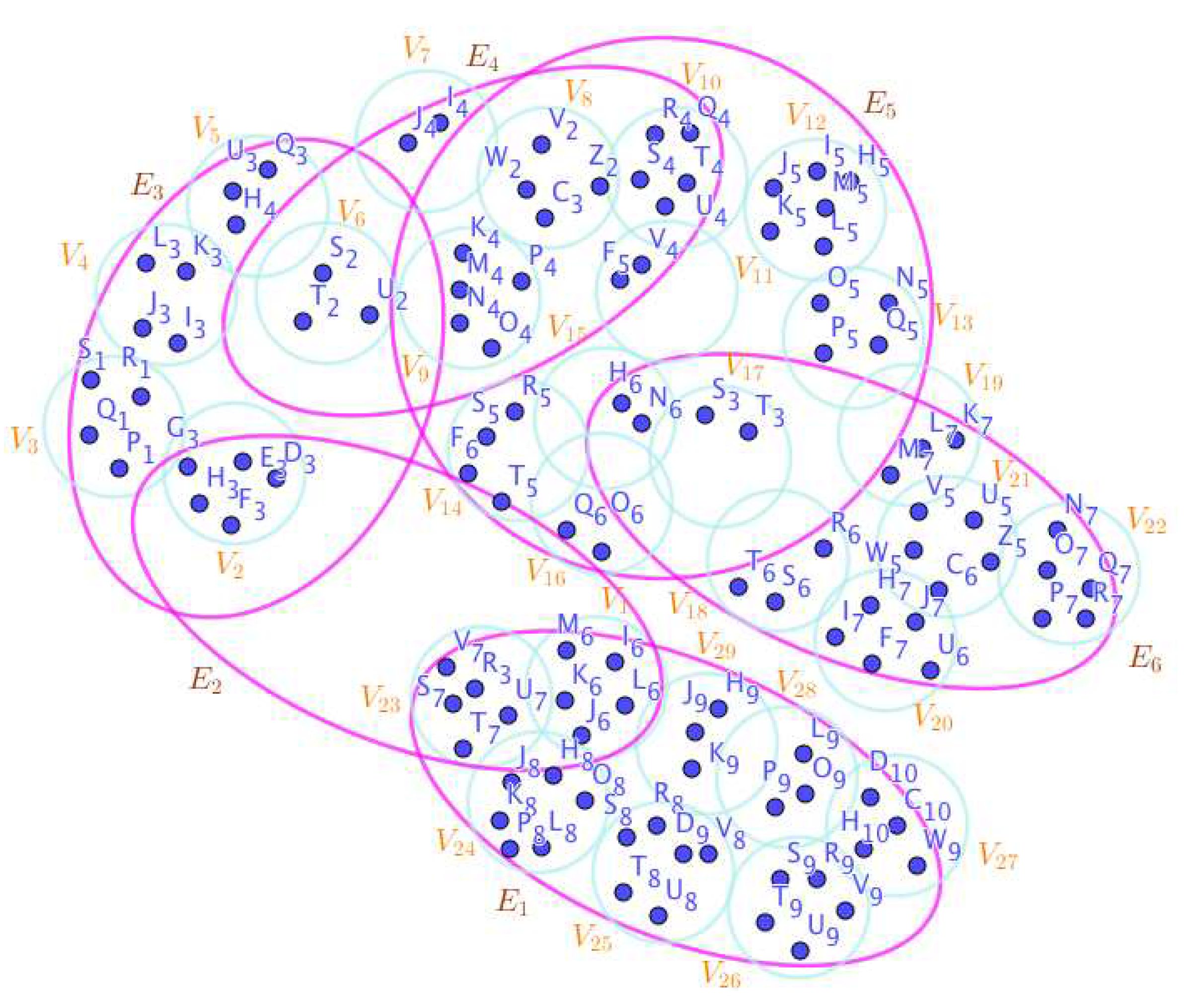
Figure 22.
A SuperHyperCycle Associated to the Notions of SuperHyperStable in the Example (36).
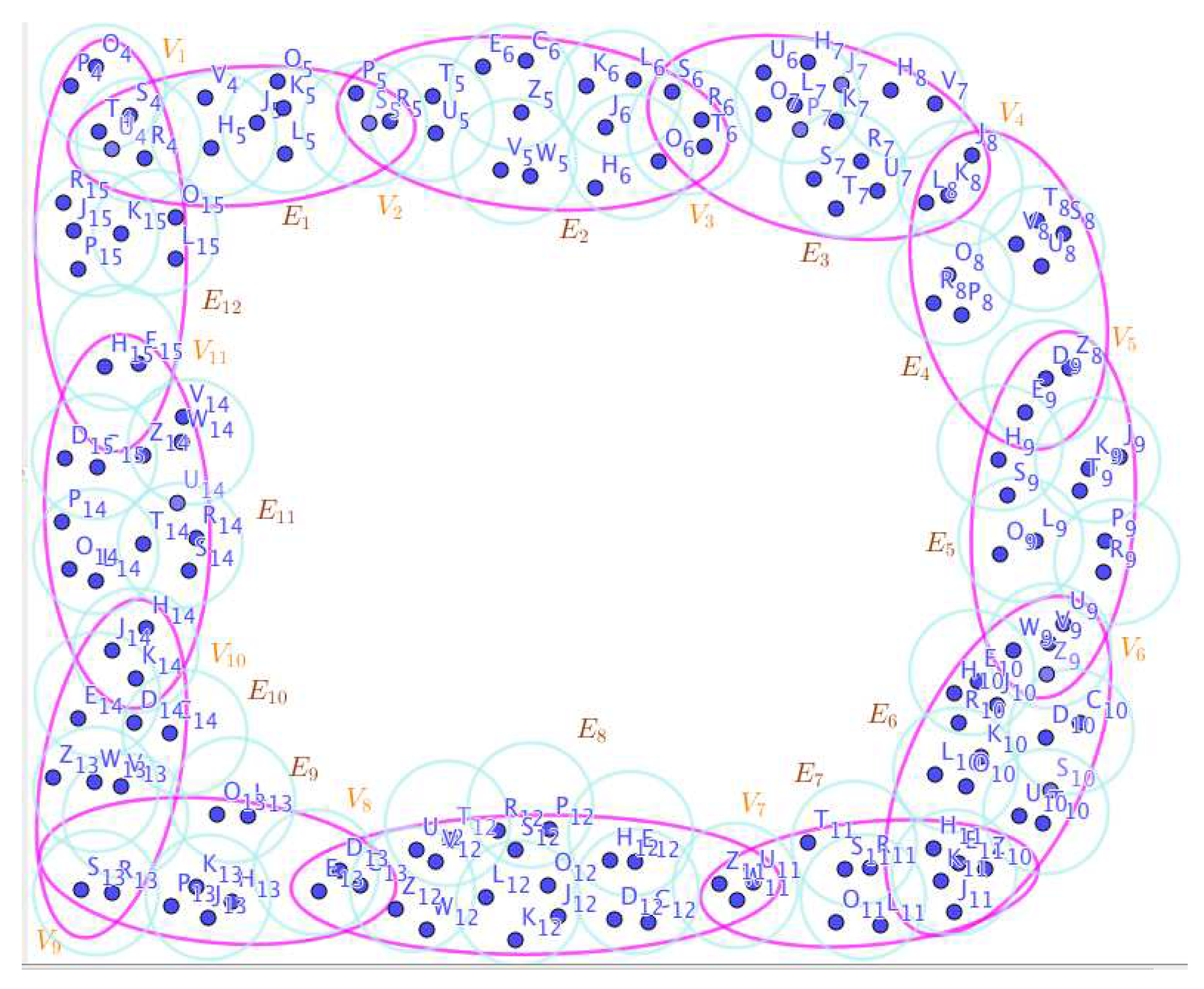
Figure 23.
A SuperHyperStar Associated to the Notions of SuperHyperStable in the Example (38).
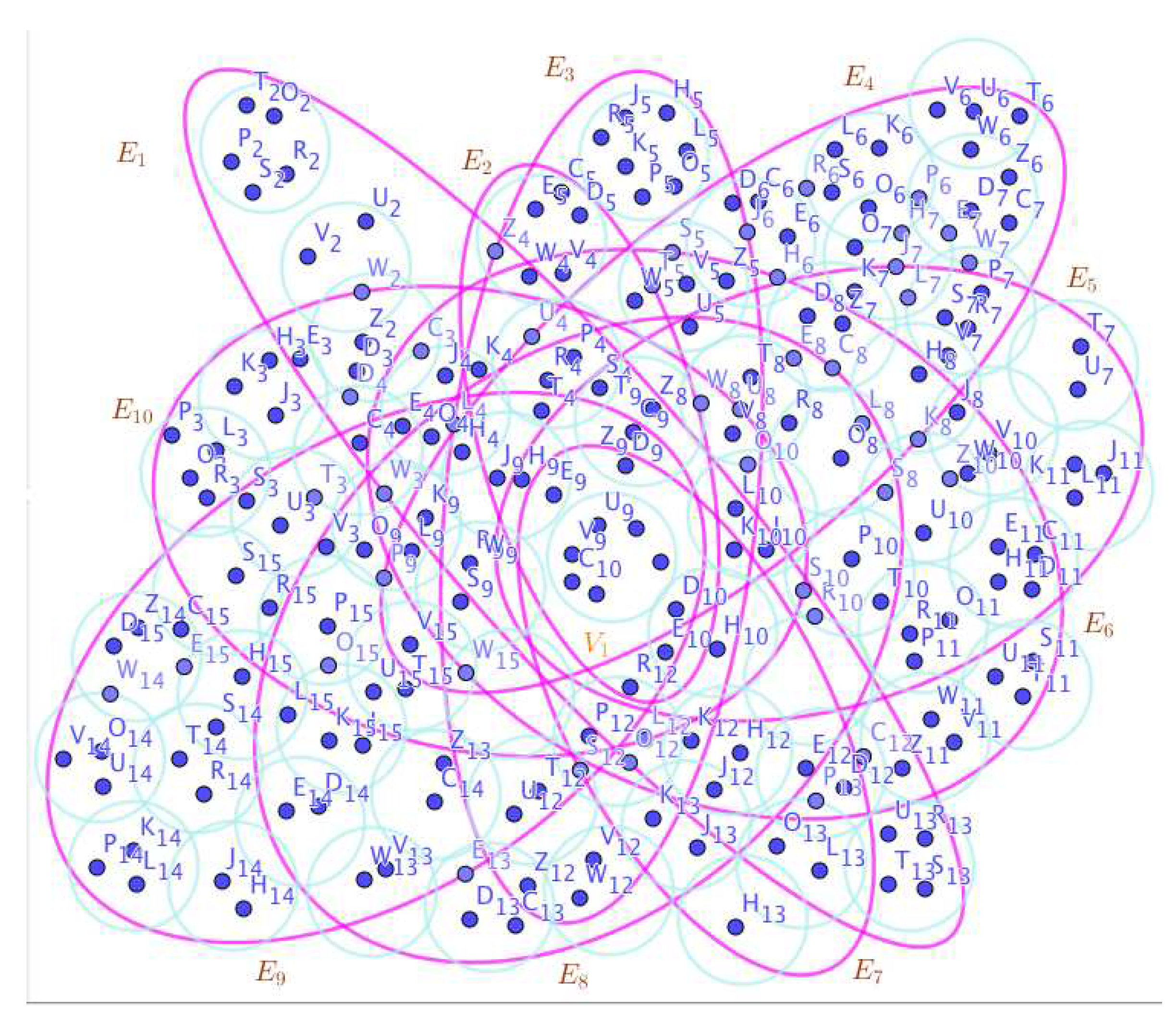
Figure 24.
A SuperHyperBipartite Associated to the Notions of SuperHyperStable in the Example (40).
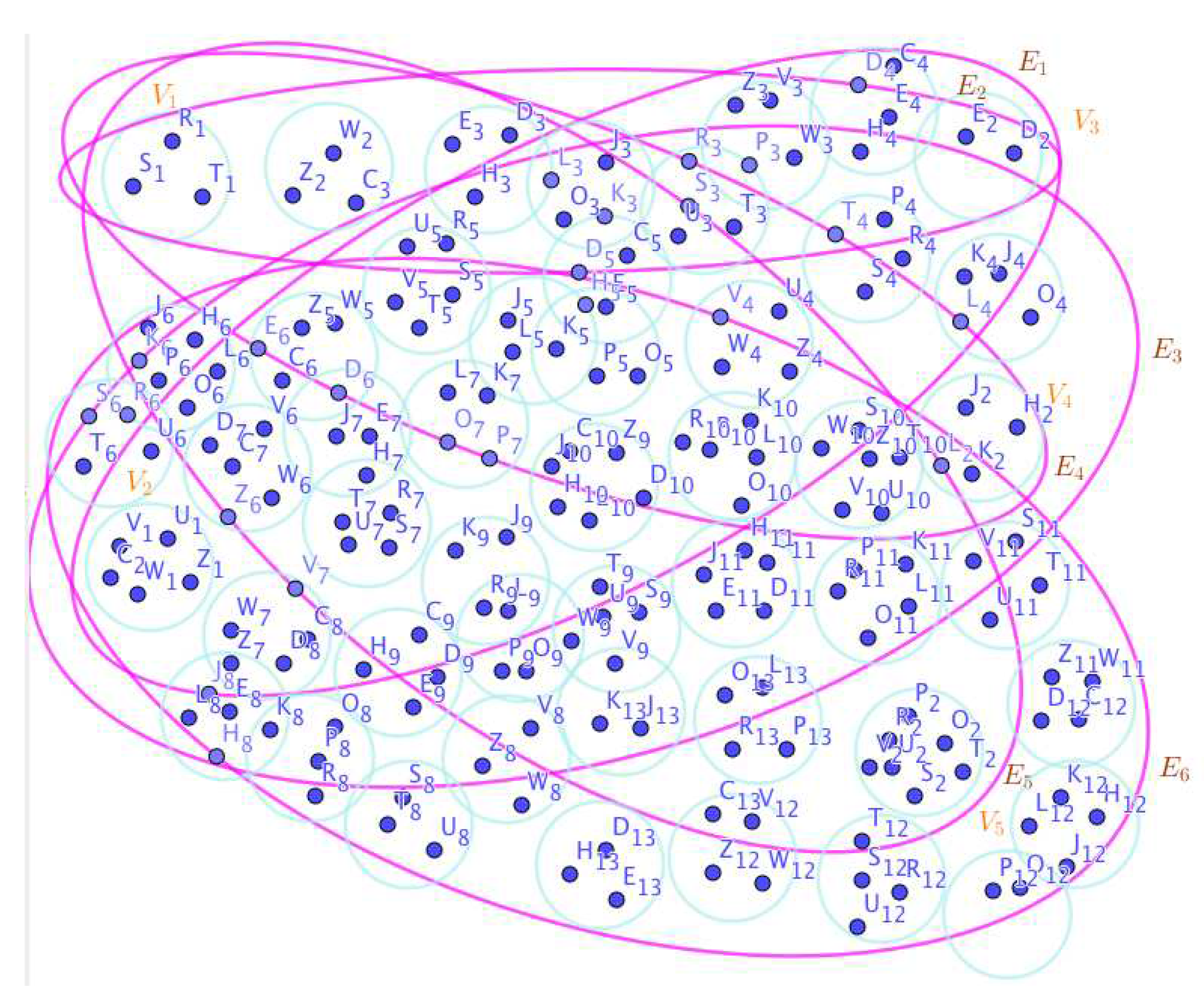
Figure 25.
A SuperHyperMultipartite Associated to the Notions of SuperHyperStable in the Example (42).
Figure 25.
A SuperHyperMultipartite Associated to the Notions of SuperHyperStable in the Example (42).
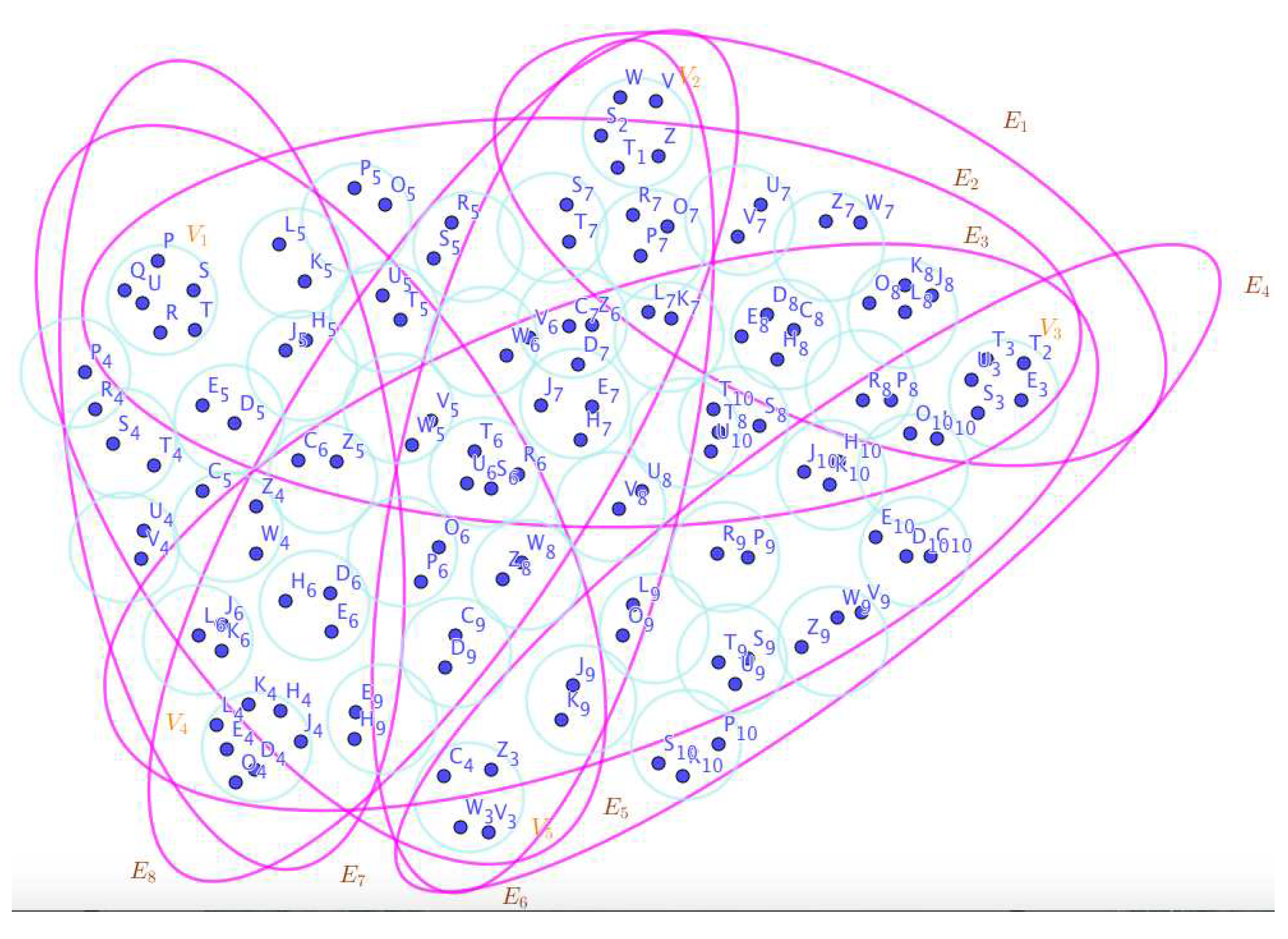
Figure 26.
A SuperHyperWheel Associated to the Notions of SuperHyperStable in the Example (44)
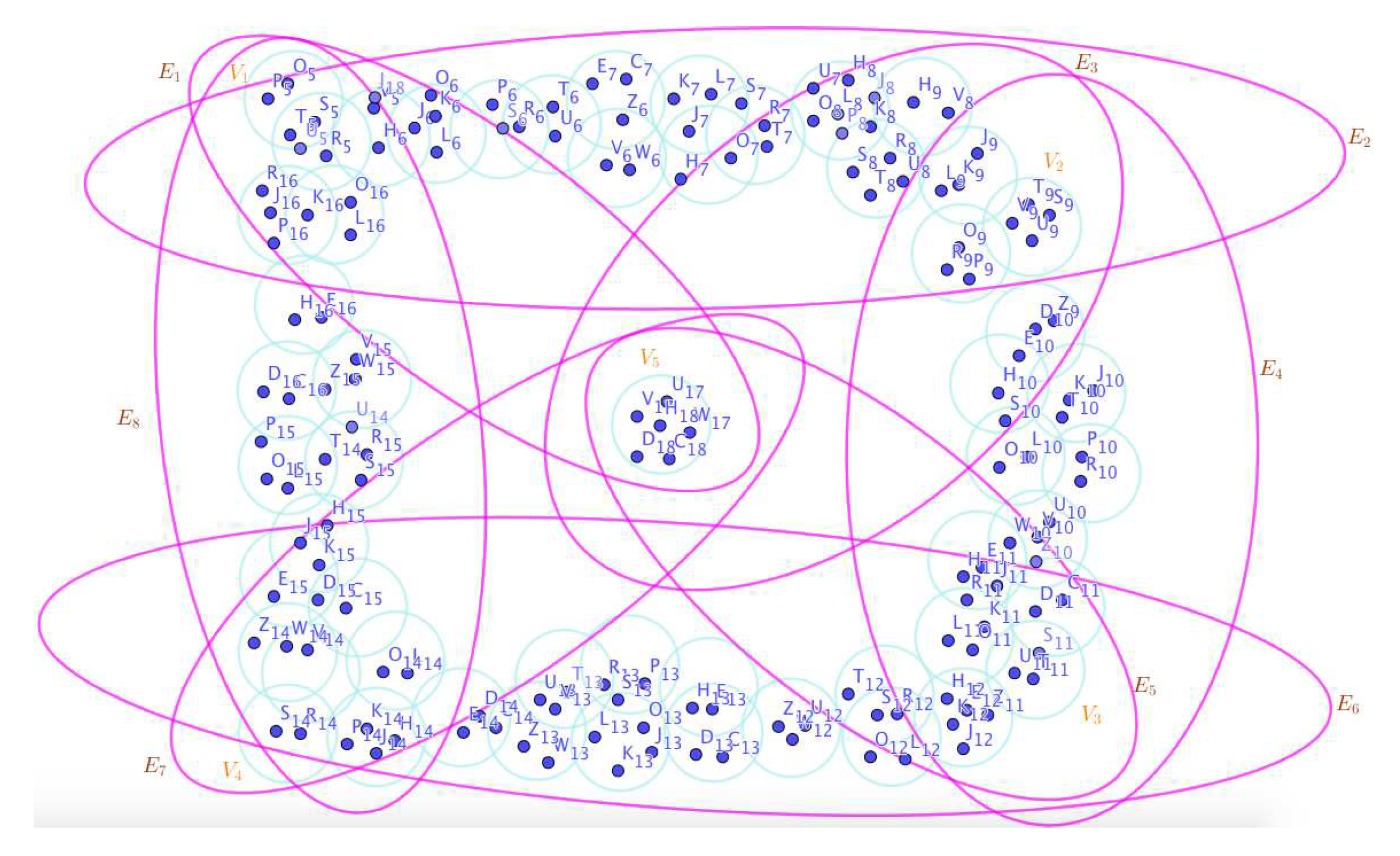
Figure 27.
A SuperHyperBipartite Associated to the Notions of SuperHyperStable.
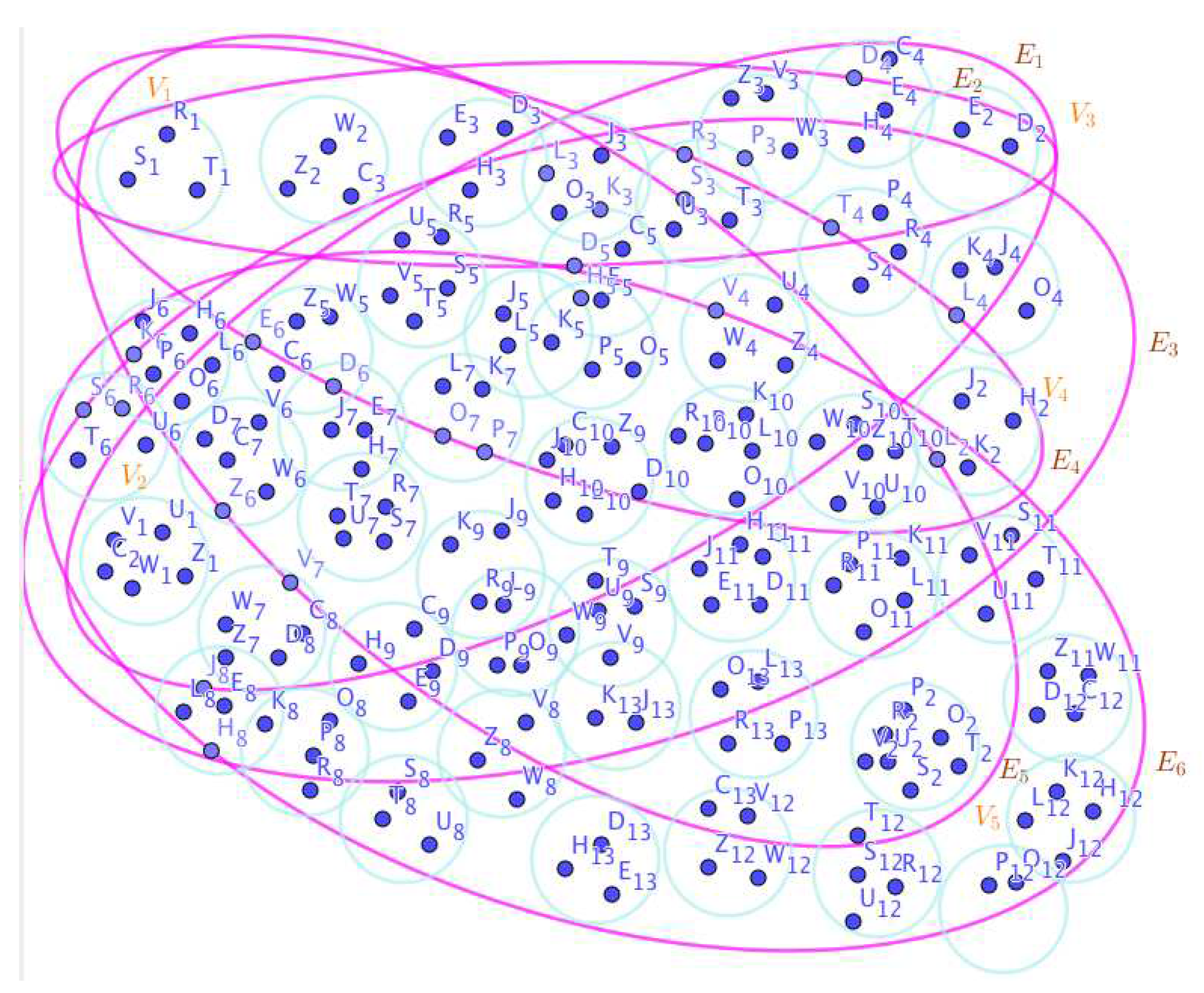
Figure 28.
A SuperHyperMultipartite Associated to the Notions of SuperHyperStable.
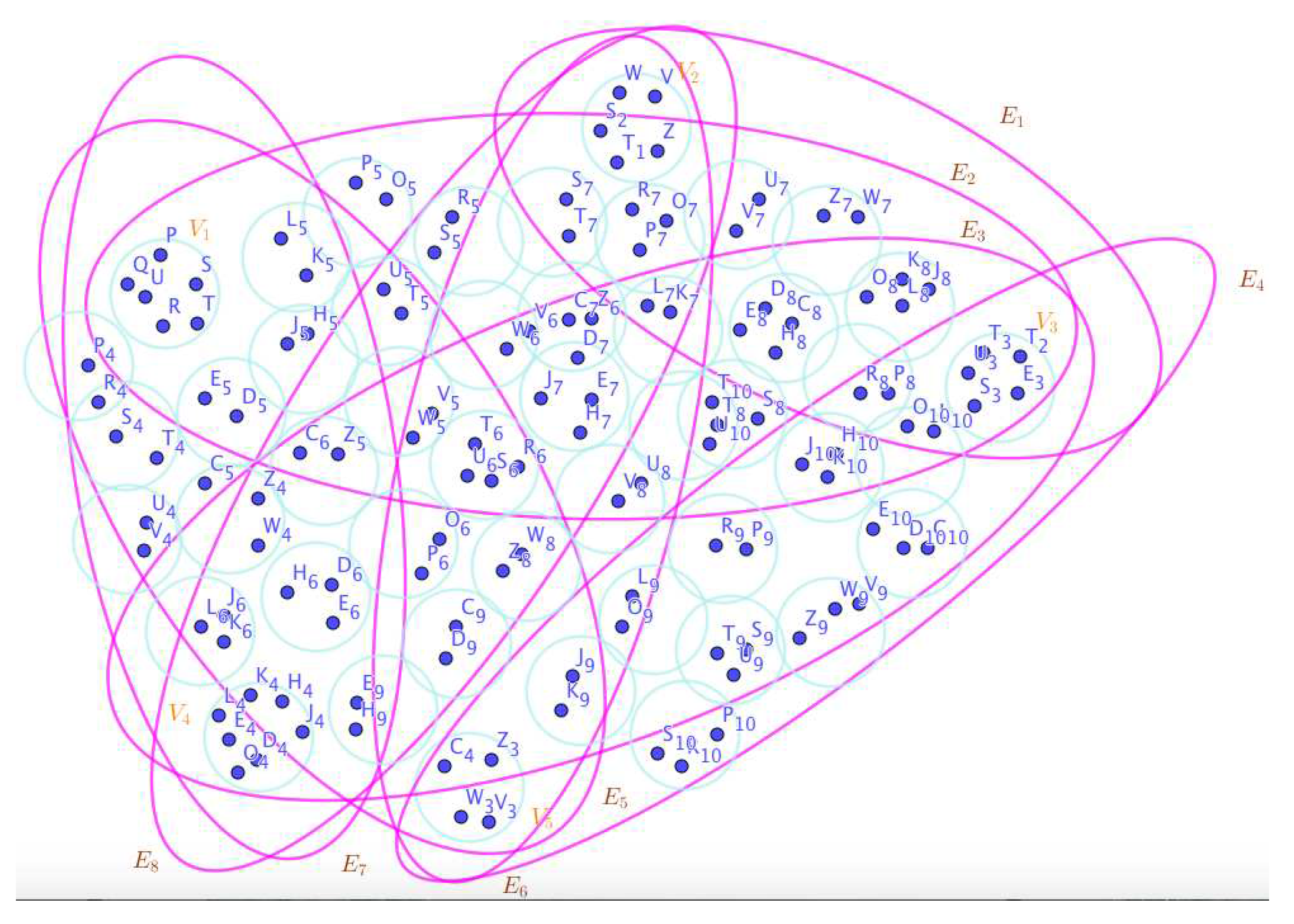
Table 5.
The Values of Vertices, SuperVertices, Edges, HyperEdges, and SuperHyperEdges Belong to The Neutrosophic SuperHyperMultipartite
Table 5.
The Values of Vertices, SuperVertices, Edges, HyperEdges, and SuperHyperEdges Belong to The Neutrosophic SuperHyperMultipartite
| The Values of The Vertices | The Number of Position in Alphabet |
| The Values of The SuperVertices | The maximum Values of Its Vertices |
| The Values of The Edges | The maximum Values of Its Vertices |
| The Values of The HyperEdges | The maximum Values of Its Vertices |
| The Values of The SuperHyperEdges | The maximum Values of Its Endpoints |
Table 6.
A Brief Overview about Advantages and Limitations of this Research
| Advantages | Limitations |
| 1.Redefining Neutrosophic SuperHyperGraph | 1.General Results |
| 2.SuperHyperStable | |
| 3.Neutrosophic SuperHyperStable | 2.Other SuperHyperNumbers |
| 4.Modeling of Cancer’s Recognitions | |
| 5.SuperHyperClasses | 3.SuperHyperFamilies |
Disclaimer/Publisher’s Note: The statements, opinions and data contained in all publications are solely those of the individual author(s) and contributor(s) and not of MDPI and/or the editor(s). MDPI and/or the editor(s) disclaim responsibility for any injury to people or property resulting from any ideas, methods, instructions or products referred to in the content. |
© 2023 by the authors. Licensee MDPI, Basel, Switzerland. This article is an open access article distributed under the terms and conditions of the Creative Commons Attribution (CC BY) license (http://creativecommons.org/licenses/by/4.0/).
Copyright: This open access article is published under a Creative Commons CC BY 4.0 license, which permit the free download, distribution, and reuse, provided that the author and preprint are cited in any reuse.


