

Submitted:
04 September 2021
Posted:
07 September 2021
You are already at the latest version
Abstract
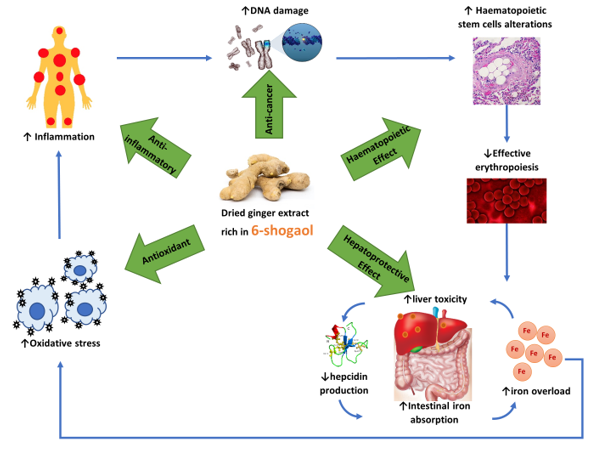
Myelodysplastic syndrome (MDS) evolves due to genomic instability, dysregulated signalling pathway and overproduction of inflammatory markers. Reactive oxygen species contribute to the inflammatory response, which causes gene damage, cellular remodelling and fibrosis. MDS can be a debilitating condition, and management options in patients with MDS aim to improve cytopenias, delay disease progression, and enhance quality of life. High serum ferritin levels, a source of iron for reactive oxygen species production, correlate with a higher risk of progression to acute myeloid leukaemia, and iron overload is compounded by blood transfusions given to improve anaemia. 6-shogaol is a natural phenolic compound formed when ginger is exposed to heat and/or acidic conditions, and it has been shown to possess anti-tumour activity against leukaemia cell lines and antioxidant effects. This narrative review assessed the potential benefits of this phytochemical in lower-risk MDS patients through examining the current evidence on the pharmacological and therapeutic properties of ginger and 6-shogaol.
Keywords:
Zingiber officinale
; 6-Shogaol
; 6-gingerol
; hematopoiesis
; hepcidin
; anaemia
Copyright: This open access article is published under a Creative Commons CC BY 4.0 license, which permit the free download, distribution, and reuse, provided that the author and preprint are cited in any reuse.