

Submitted:
27 October 2020
Posted:
30 October 2020
You are already at the latest version
Abstract
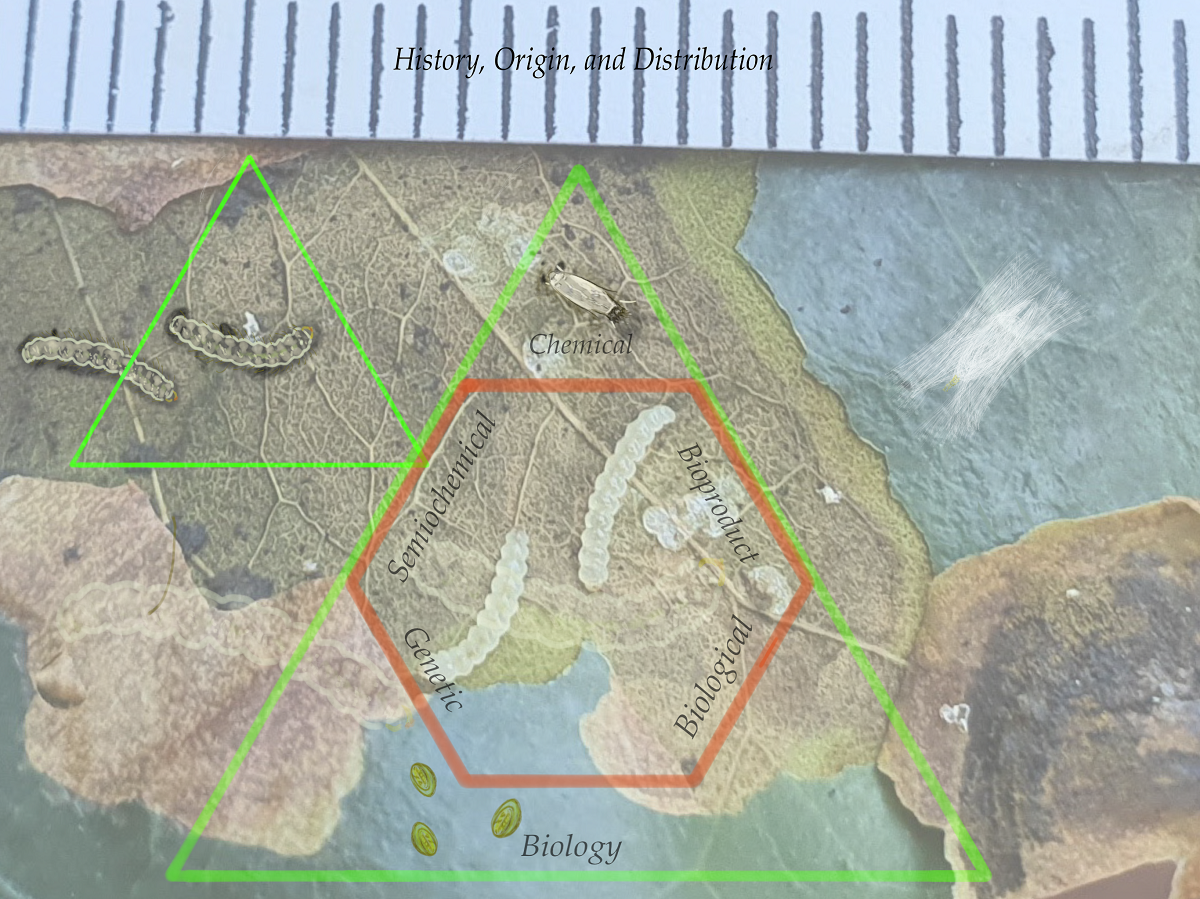
The coffee leaf miner (CLM) Leucoptera coffeella moth is a major threat to coffee production. Insect damage is related to the feeding behavior of the larvae on the leaf. During the immature life stages, the insect feeds in the mesophyll, triggering necrosis and causing loss of photosynthetic capacity, defoliation, and significant yield loss to coffee crops. Chemical control is mandatory to sustain the coffee production chain, though market requirements move towards conscious consumption, claiming for more sustainable methods. In this overview, we discuss aspects about the CLM concerning biology, history, geographical distribution, economic impacts, and the most relevant control strategies in progress. Insights to develop an integrate approach for a safer and eco-friendly control of the CLM are discussed, including bio-extracts, nanotechnology, pheromones, and tolerant cultivars.
Keywords:
resistance
; cultivar
; biopesticide
; biological control
; chemical control
; life cycle
; CLM
Copyright: This open access article is published under a Creative Commons CC BY 4.0 license, which permit the free download, distribution, and reuse, provided that the author and preprint are cited in any reuse.


