

Submitted:
02 May 2020
Posted:
03 May 2020
You are already at the latest version
Abstract
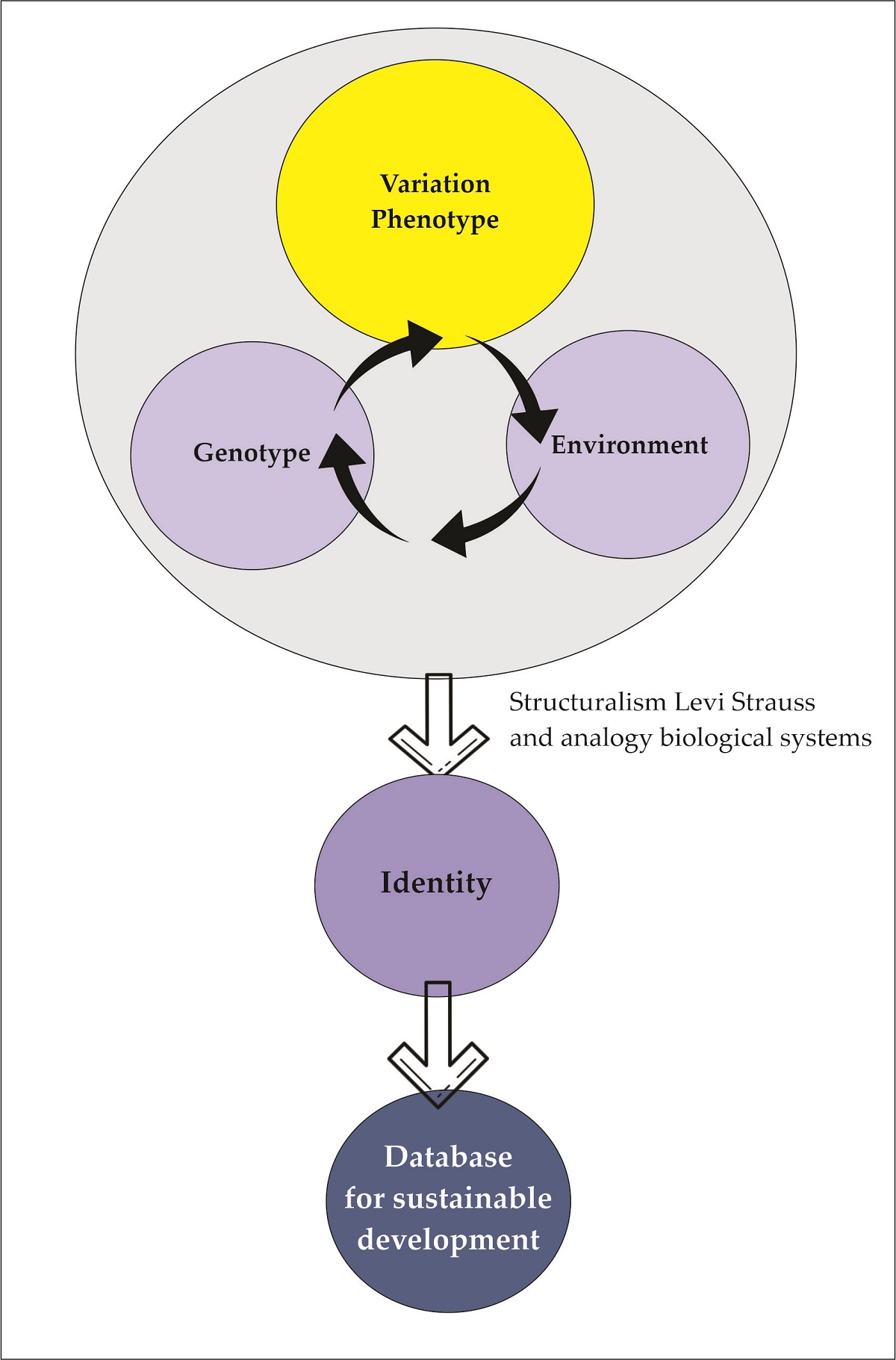
Phenotype variation is produced through a complex of interactions between genotype and environment. Phenotype, genotype, and environment are addresses the relationship between architecture and identity. The term genotype biology and phenotype have been adopted into architecture in the late twentieth century. Genotypes are abstract relational models that govern the arrangement of space, and the principle of organizing space and phenotypes is the real realization of genotypes in the physical environment. The genotype is a reflection that is not only about the spatial organization but also the nature of social and cultural patterns. Then this study purpose to an understanding of the connectedness variant phenotype from a genotype and environment. The repetition pattern being stable structure in variation phenotype uses as a database to finding an identity in architecture. The method used in this research was Levi Strauss's structuralism and multi-layer of a biological system. This research samples traditional Malay houses in West Borneo, Indonesia. These houses have a unique site and existing environment. The houses can be found mainly along the river. The results found from the phenotype, genotype, and environment have value and meaning as a traditional Malay house rule in West Borneo which was always handed down from generation to generation.
Keywords:
the building and the environment
; phenotype
; genotype
Copyright: This open access article is published under a Creative Commons CC BY 4.0 license, which permit the free download, distribution, and reuse, provided that the author and preprint are cited in any reuse.