

Submitted:
13 July 2019
Posted:
15 July 2019
You are already at the latest version
Abstract
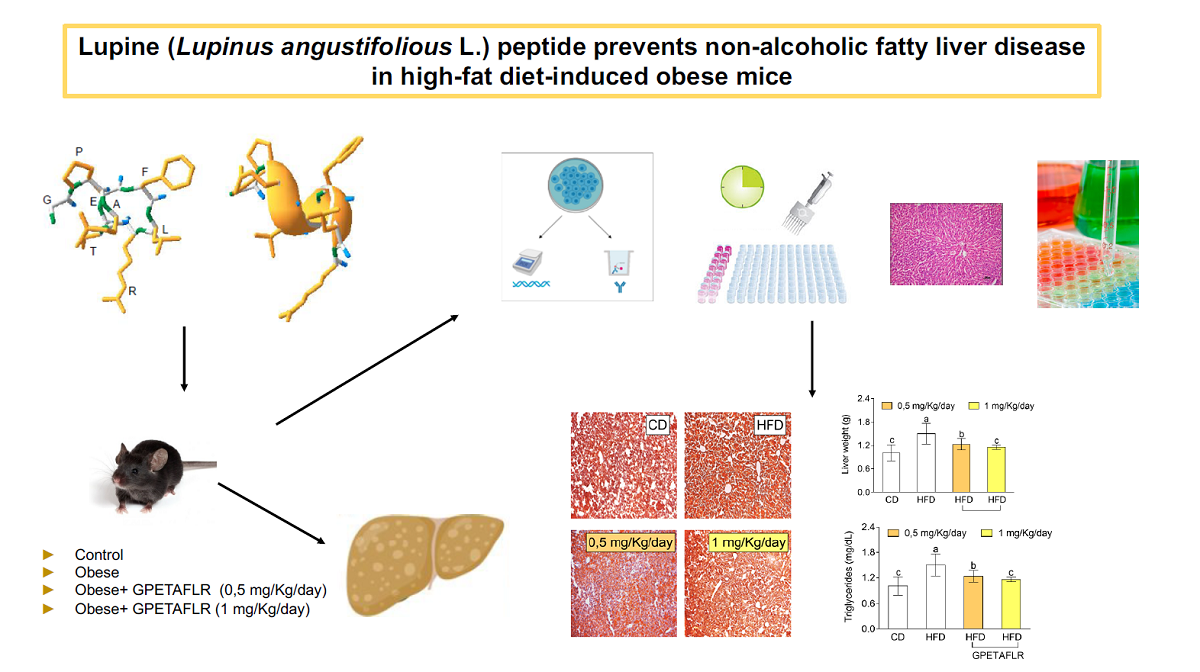
Bioactive peptides are related to the prevention and treatment of many diseases. GPETAFLR is an octapeptide which was isolated from lupine (Lupinus angustifolius L.) and showed anti-inflammatory properties. The aim of this study was to evaluate the potential activity of GPETAFLR to prevent non-alcoholic fatty liver disease (NAFLD) in high-fat diet (HFD)-induced obese mice. C57BL/6J mice were fed a standard diet or an HFD. Two of the groups fed the HFD diet were treated with GPETAFLR in their drinking water at 0,5 mg/kg/d or 1 mg/kg/d. To determine the ability of GPETAFLR to improve the onset and progression of NAFLD, histological studies, hepatic enzyme profile, inflammatory cytokine and lipid metabolism-related genes and proteins were analyzed. Our results suggest that HFD-induced inflammatory metabolic disorders were alleviated by treatment with GPETAFLR. In conclusion, dietary lupine consumption could repair HFD-induced hepatic damage, possibly via modifications in the liver’s lipid signalling pathways.
Keywords:
GPETAFLR peptide
; protein hydrolysate
; liver
; hepatic steatosis
; high-fat diet
Copyright: This open access article is published under a Creative Commons CC BY 4.0 license, which permit the free download, distribution, and reuse, provided that the author and preprint are cited in any reuse.


