
Submitted:
01 August 2018
Posted:
02 August 2018
You are already at the latest version
Abstract
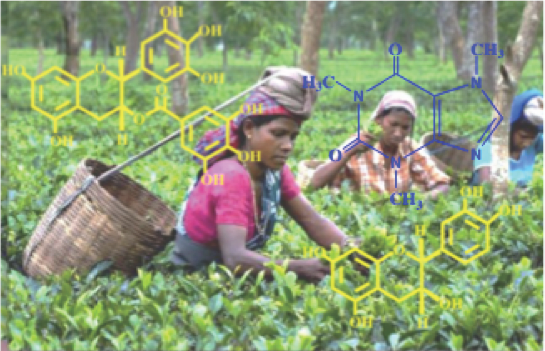
Tea and coffee are the most commonly used beverages throughout the world. Both decoctions are rich in small organic molecules such as phenolics/polyphenolics, purine alkaloids, many methylxanthines, substituted benzoic and cinnamic acids. Many of these molecules are physiologically chemopreventive and chemoprotective agents against many severe conditions such as cancer, Alzheimer, Parkinsonism, inflammation, sleep apnea, cardiovascular disorders, bradycardia, fatigue, muscular relaxation, and oxidative stress. Caffeine, a purine alkaloid, is a common metabolite of both tea and coffee aqueous decoctions and its concentration in tea/coffee depends on the fermentation process, preparation of the water extract and quality of tea leaves/coffee beans. A 250 ml of a coffee cup contains 100-150 mg caffeine while the same volume of strong tea contains 25-40 mg caffeine. The present paper presents the potential of caffeine as a potent chemopreventive agent that can be used for numerous physiological disorders.
Keywords:
caffeine
; methylxanthine
; chlorogenic acid
; caffeic acid
; inflammation
; antimutagen
; anticancer
; antioxidant
Copyright: This open access article is published under a Creative Commons CC BY 4.0 license, which permit the free download, distribution, and reuse, provided that the author and preprint are cited in any reuse.


