
Submitted:
03 July 2018
Posted:
04 July 2018
You are already at the latest version
Abstract
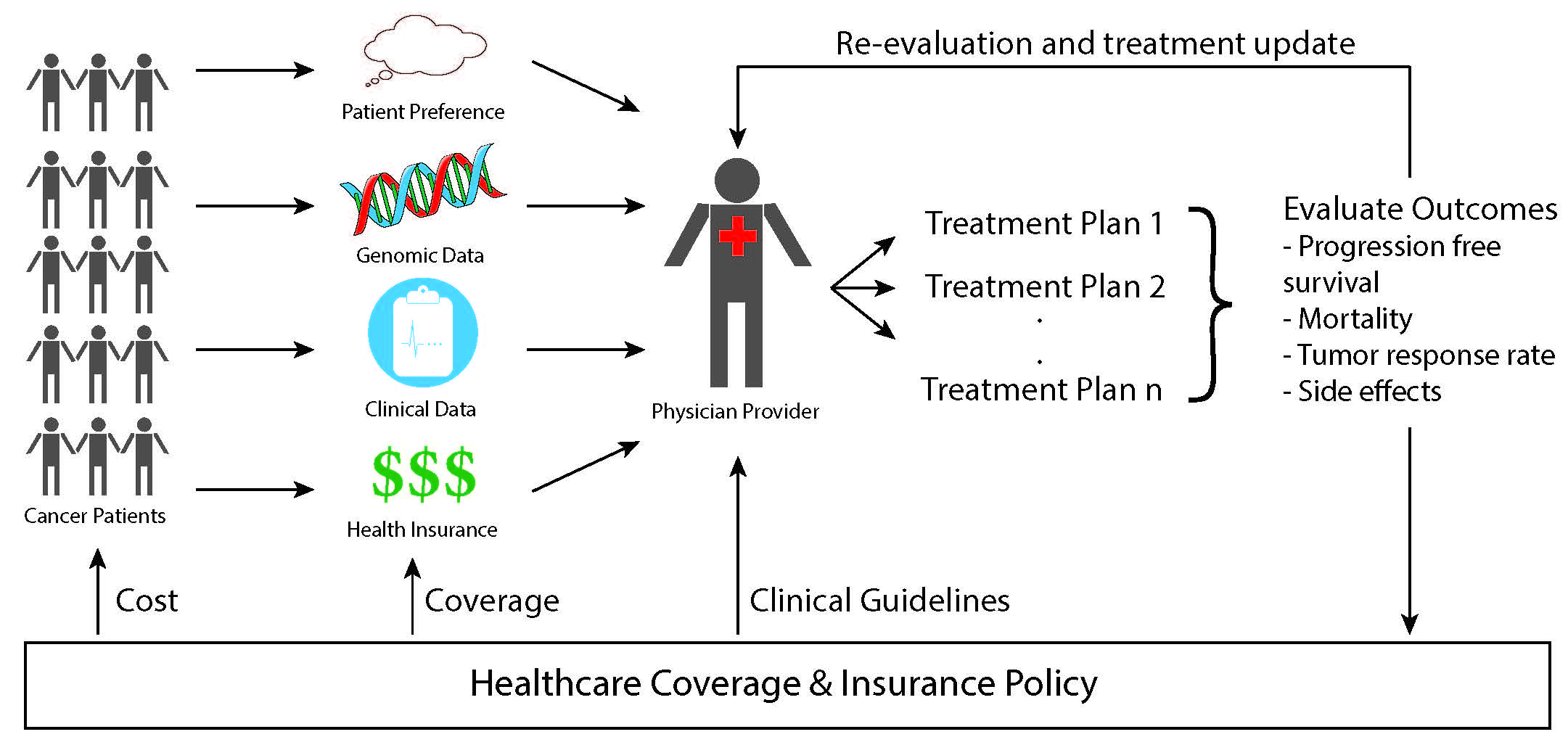
Precision medicine seeks to use genomic data to help provide the right treatment to the right patient at the right time. Next-generation sequencing technology allows for the rapid and accurate sequencing of many genes at once. This technology is becoming more common in oncology, though the clinical benefit of incorporating it into precision medicine strategies remains under significant debate. In this manuscript, we discuss the early findings of the impact of next-generation sequencing on cancer patient outcomes. We investigate why not all patients with genomic variants linked to a specific therapy receive that therapy and describe current barriers. Finally, we explore the current state of health insurance coverage for individual genome sequencing and targeted therapies for cancer. Based on our analysis, we recommend increased transparency around the determination of “actionable mutations” and a heightened focus on investigating the variations in health insurance coverage across patients receiving sequencing-matched therapies.
Keywords:
precision medicine
; next generation sequencing
; oncology
; patient outcomes
; health insurance coverage
Copyright: This open access article is published under a Creative Commons CC BY 4.0 license, which permit the free download, distribution, and reuse, provided that the author and preprint are cited in any reuse.


