

Submitted:
01 February 2018
Posted:
02 February 2018
You are already at the latest version
Abstract
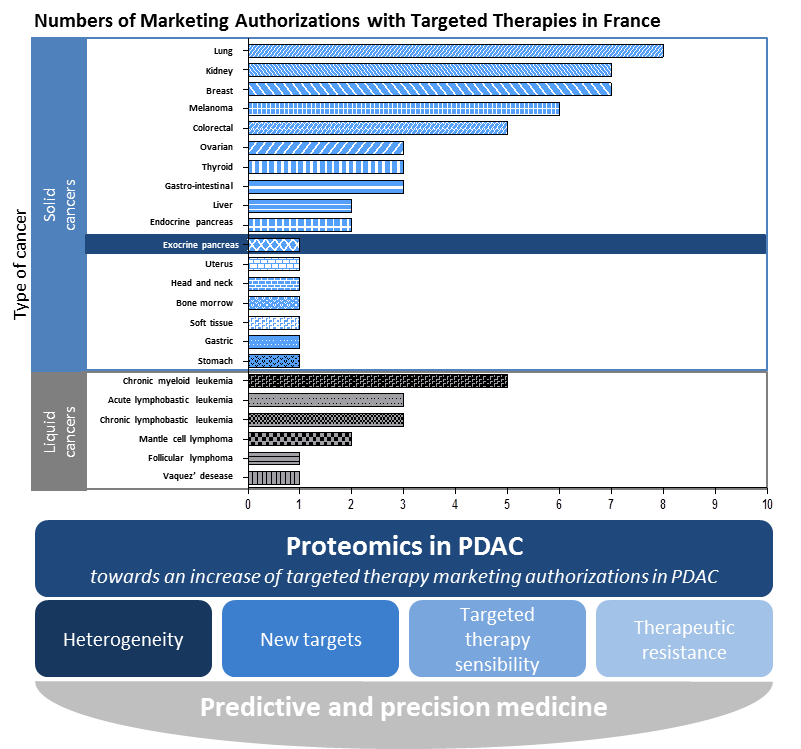
In metastatic pancreatic cancer patients non eligible to surgery, signal-targeted therapies so far failed to show a significant amelioration of survival. These therapeutic options were tested in Phase II/III clinical trials mostly in combination with the reference treatment Gemcitabine. These innovative therapies aim at annihilating the oncogene dependency; they also aim at renormalizing the tumoral stroma to allow immune cell function or re-vascularisation. Transcriptomics and genomics large scale analysis show the great heterogeneity of pancreatic cancers and failed to clearly delineate specific oncogene dependency besides oncogenic Kras. In this review, we will describe the most recent proteomic data in pancreatic tumors and its metastasis, which could help at identifying their major signalling dependencies, as well as explain why they are intrinsically resistant to signal-targeted therapies. We will also discuss why PI3K signalling, as a paradigm of pro-tumorigenic cell signalling and of tumoral adaptative resistance to drugs, is a relevant target in this context.
Keywords:
pancreatic cancer
; proteomics
; PI3K pathway
; precision medicine
; predictor of therapeutic response
Copyright: This open access article is published under a Creative Commons CC BY 4.0 license, which permit the free download, distribution, and reuse, provided that the author and preprint are cited in any reuse.


