
Submitted:
22 August 2016
Posted:
23 August 2016
You are already at the latest version
Abstract
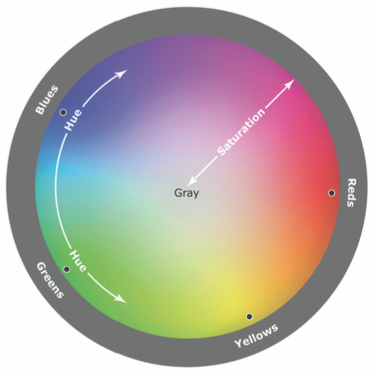
The reasons for the circular sense of human color perception generated by two sorts of color opponent neurons and three cone types are not well understood. Here we use geometrical analysis to examine the hypothesis that opponency, the recursive nature of color perception, and trichromacy arise as the most efficient ways of distinguishing spectrally different points on a plane using a minimum of color classes and receptor types.
Keywords:
trichromacy
; opponency
; color circularity
; spectral images
; unique colors
; four-color map problem
; perception
Copyright: This open access article is published under a Creative Commons CC BY 4.0 license, which permit the free download, distribution, and reuse, provided that the author and preprint are cited in any reuse.