



The intersection of media and preprints brings with it many benefits as well as some causes for concern, particularly with preprints in the news. The open access nature of preprints means that pioneering research is free to access online. This openness facilitates the discovery and dissemination of research via various online media channels.
However, because preprints aren’t subject to traditional peer review, this does mean that readers should be notified of the tentative nature of the findings in the research. It’s important that news outlets therefore state that any findings they report on are from a preprint article. Yet news outlets, driven by the urgency of deadlines to keep their news carousels spinning, are not always so attentive to such concerns.
Preprints and the media
Media refers to the different forms of media that disseminate information to the public. Examples of these forms are online news, tv, and newspapers. Generally, ‘the media’ is an umbrella term for all the various news outlets and their different forms of communication.
Preprints are a useful source of information for the media. Media outlets are consistently on the lookout for new information to communicate to their audiences, especially if that information proves to be beneficial to those who encounter it.
Preprints allow for researchers and the public to gain access to important information faster than usual. This expediency supports the quick turnaround of news headlines and the philosophy of breaking news. This philosophy being the earlier the information is released to the world, the better. The use of preprints in the news allows the media to keep ahead of the curve with significant events and developments.
COVID-19 and the rise of preprints
Indeed, the COVID-19 pandemic only facilitated this urgency for new and important information. “COVID changed everything”, says Jim Handman, executive director of the Science Media Centre of Canada. But what does he mean by this?
Well, whereas in the past scientific researchers may have been hesitant to publish their research earlier and without peer review, the pandemic necessitated the quick release of vital information. The virus and its effects were unprecedented, and the scientific community’s response had to be aggressive.
During the initial months, and reaching a climax for some preprint servers in May and June of 2020, the rate of pandemic-related preprints being published rose exponentially. Suddenly, preprints were a crucial line of defense against the virus. Scientists could quickly share and gather information and data from all around the world, helping to curb the spread of the virus and facilitating the study of its genetic makeup. The findings from preprints in the news functioned to communicate this information to a global audience.
Issues with preprint coverage
Preprints clearly have real-world benefits. Yet there are specific issues that come with encountering preprints in the news.
The main issue is that news outlets don’t always state that information has been sourced from a preprint article. A study by Science suggests that the public needs to be made aware of the unvalidated and therefore provisional nature of the research being referenced. By not doing so, there’s a risk of audiences overstating the credibility of the research, which may lead to issues of misinformation circling unchecked in worse-case scenarios.
Indeed, a certain paper released in the early days of the pandemic claimed to draw a comparison between COVID-19 and HIV. This led to the fueling of conspiracy theories claiming that the novel virus had been bioengineered in laboratories. In turn, these conspiracy theories entered the news ecosystem. Even though the original paper was formally withdrawn, it’s hard to undo the effects of misinformation.
The pressure media outlets are under only compounds the issue. The media is expected to report objectively and provide the public with factually sound information. However, journalists are under great pressure to provide news stories as quickly as possible. Furthermore, they report in ways that dramatize and therefore potentially misrepresent certain findings.
How to identify preprints in media
For the public and people who might be interested in scientific news, distinguishing the news from solid research result is crucial. Look for statements in news articles, such as “preliminary findings,” “published on a preprint server,” “a preprint study,” or “not yet peer-reviewed.” These can be signals that the research is early-stage and subject to change.
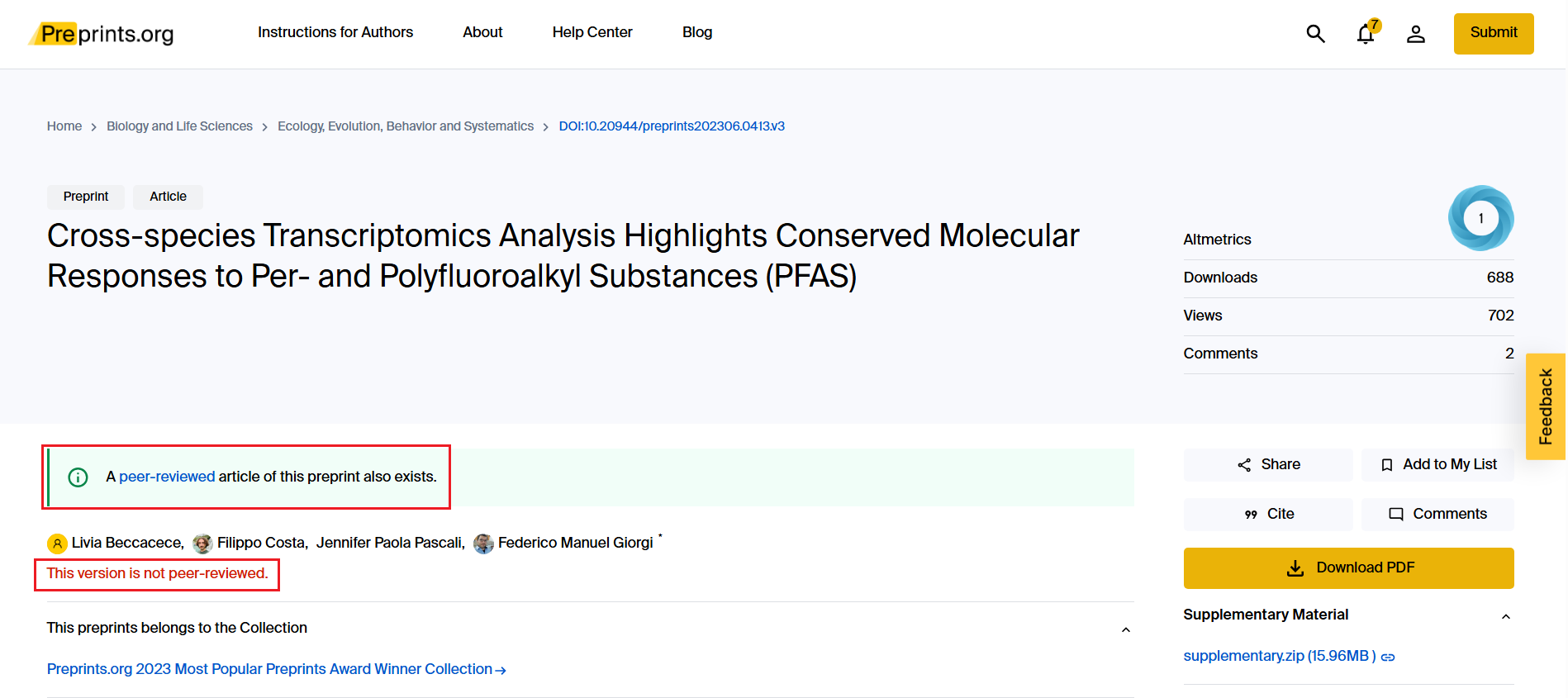
Additionally, if a news article link to a preprint, visit the preprint server to check its peer reviewed status. For example, Preprints.org clearly labels articles with messages like “This version is not peer-reviewed”. They’ll add a “A peer-reviewed article of this preprint also exists” label after review. These labels help readers assess the research’s reliability, fostering trust in platforms like Preprints.org that prioritize transparency.
At the end of the day, we should approach any information we encounter with a critical mindset. A news outlet may indicate the tentative findings are from a preprint. However, this doesn’t mean we should forego verifying and cross-checking the information anyway. In an information-saturated world, this kind of practice should be the norm.
Finding a place for preprints in the world
Evidently, preprints are a crucial part of the way we, whether as researchers or members of the public, encounter new information. For this reason alone, they deserve a place in our world.
What we need is greater awareness surrounding the provisional nature of preprints. We also need media outlets to indicate where necessary that their news stories are based on research that has yet to undergo peer review.
Preprints don’t always mean uncertainty, however. It’s useful to note that preprints do undergo a screening phase with basic ethical checks. Additionally, external academic editors often carry out consultations on the article. While preprints can differ from the versions submitted to journals later down the line, this isn’t always the case. Alice Fleerackers says that, when it comes to preprints, a significant number ‘are basically the exact manuscript that they submitted to a journal.’
So, we should be cautious of the findings in preprints. But we should also be open to their potential foresight and accuracy. By being attentive to both possibilities, the full potential of preprints is thus realized.
Learn more about Preprints.org
Ready to share your research with the world? At Preprints.org, we empower researchers to freely and instantly share their work with a global audience. This helps you gain early feedback, boost visibility, and accelerate discovery. Utilized effectively, preprints can become tools that you can use to improve your research and advance your career. Join over 350,000 researchers advancing open science on our accessible, multidisciplinary platform.
Ready to submit? Upload your preprint today and make your work quickly discoverable.
Just exploring? Browse over 100,000 preprints across disciplines and stay ahead of the latest research.