
Submitted:
20 November 2026
Posted:
25 November 2026
You are already at the latest version
Abstract
Background. Endometriosis-associated chronic pelvic pain (CPP) frequently persists despite hormonal suppression and excisional surgery, reflecting peripheral and central sensitization rather than lesion burden alone. Sacral neuromodulation (SNM) modulates sacral afferent traffic and has established efficacy in lower urinary tract and bowel dysfunction, but evidence in endometriosis-associated CPP is limited to small series.Objective. To evaluate the efficacy and safety of S3 sacral neuromodulation over 12 months in women with endometriosis-associated CPP refractory to medical and surgical treatment.Methods. Prospective, multicentre, single-arm cohort study (single treatment group; no control arm). Sixty-eight women were screened and 55 women aged 25–55 years with laparoscopically and histologically confirmed endometriosis and CPP of at least 6 months were enrolled. All had received guideline-based medical therapy (non-steroidal anti-inflammatory drugs, combined oral contraceptives, progestins, gonadotrophin-releasing hormone agonists, or combinations) for at least 6 months, discontinued at least 3 months before implantation, and 38 had undergone prior excisional surgery. All 55 underwent staged S3 quadripolar lead test stimulation; those achieving at least 50% pain reduction proceeded to implantable pulse generator placement. The primary outcome was change in 10-point Visual Analogue Scale (VAS) pain score from baseline to 12 months. Secondary outcomes were the Pain Catastrophizing Scale (PCS), a bladder-and-bowel symptom score, the 36-Item Short Form Health Survey (SF-36) physical and mental component scores, rescue analgesic use, and adverse events. Paired and independent-sample t-tests, McNemar’s test and Cohen’s d were used; p < 0.05 was considered significant.Results. Forty-five of 55 women (81.8%) responded to test stimulation, received a permanent device and completed 12-month follow-up; 10 (18.2%) did not achieve adequate trial relief and were not implanted. Mean VAS fell from 8.8 ± 0.9 to 1.8 ± 1.6 (mean change −7.0, 95% CI −7.50 to −6.50; t(44) = 28.4; p < 0.001; Cohen’s d_z = 4.2). Marked response (≥70% reduction) occurred in 30 of 45 (66.7%) and moderate response (30–69%) in 15 of 45 (33.3%). PCS, bladder-and-bowel and both SF-36 component scores improved significantly (all p < 0.001), and rescue analgesic use fell from 45 of 45 (100%) to 12 of 45 (26.7%; p < 0.001). No major device-related complications, infections, lead migrations or explanations occurred during 12 months.Conclusion. In this uncontrolled cohort, S3 sacral neuromodulation was associated with large, sustained reductions in pain and improvements in quality of life at 12 months, with a favourable safety profile, in carefully selected women with refractory endometriosis-associated CPP. Randomised, sham-controlled trials are required before causal efficacy can be claimed.
Keywords:
sacral neuromodulation
; endometriosis
; chronic pelvic pain
; neuromodulation
; visual analogue scale
; quality of life
; pain catastrophizing
1. Introduction
Endometriosis affects an estimated 10% of women of reproductive age — approximately 190 million women worldwide — and is among the leading causes of chronic pelvic pain (CPP), dysmenorrhoea, dyspareunia and infertility [1,2,26]. CPP is itself one of the commonest reasons for gynaecological referral and carries a disproportionate burden of disability, work loss and health-care utilisation [28,29]. Pain in endometriosis correlates poorly with lesion burden and is now understood as a multidimensional phenomenon involving local inflammation, neoangiogenesis and neurogenesis within lesions, peripheral nerve sensitisation, autonomic dysregulation and measurable central nervous system remodelling [3,4,5,27,32]. Functional and neurochemical imaging studies in women with endometriosis-associated CPP demonstrate altered insular connectivity and brain chemistry consistent with a centralised pain state [3].
This biology explains a clinically familiar problem: a substantial minority of women continue to experience disabling pain after optimal hormonal suppression and after complete excision of visible disease, including after hysterectomy with bilateral salpingo-oophorectomy [6,7]. For these women the conventional therapeutic ladder — analgesics, hormonal suppression, repeat surgery, pelvic physiotherapy — is exhausted, repeat surgery carries cumulative morbidity with diminishing benefit, and long-term opioid exposure is undesirable. Treatment options that act on pain transmission rather than on lesions are therefore needed.
Sacral neuromodulation (SNM) delivers low-amplitude electrical stimulation to the S3 nerve root and is an established, reimbursed therapy for refractory overactive bladder, non-obstructive urinary retention and faecal incontinence, with durable five-year effectiveness and a well-characterised safety profile [8,9,10]. Its putative analgesic mechanisms — modulation of Aβ and C-fibre afferent traffic, gating of dorsal horn nociceptive transmission, and modulation of supraspinal pain-processing networks — are directly relevant to the sensitised pelvic pain state of endometriosis [11,12]. Evidence in CPP is accumulating: a systematic review and meta-analysis of 26 studies and 853 patients with CPP reported an implantation rate of 64.3% after successful test stimulation and significant pain-score improvement in 13 of 16 reporting studies [13]. Data specific to endometriosis, however, remain limited to a prospective pilot study of 35 patients [14], a national registry-based long-term series [15] and small institutional cohorts, and no randomised sham-controlled trial exists.
Prospective, protocol-driven data with defined trial-phase criteria, standardised programming and multidimensional outcome assessment are therefore lacking. We report a 12-month prospective single-arm cohort study of S3 sacral neuromodulation in women with endometriosis-associated CPP refractory to medical and surgical management, assessing pain, pain-related cognition, bladder and bowel symptoms, health-related quality of life, analgesic requirement and safety.
2. Materials and Methods
2.1. Study Design and Reporting
This was a prospective, multicentre, single-arm (uncontrolled) interventional cohort study with 12 months of follow-up, conducted at affiliated clinical centres of NuRaX Clinics in Azerbaijan, Cuba and India. There was no control or sham-stimulation group and no randomisation; all participants received the same intervention. The manuscript is reported in accordance with the STROBE statement for observational studies, and the device intervention is described in line with IDEAL-D stage 2b recommendations [31].
2.2. Participants
Inclusion criteria. Women aged 25–55 years; endometriosis confirmed at diagnostic laparoscopy with histopathological confirmation; CPP of at least 6 months’ duration; baseline VAS pain score of at least 5 of 10; documented failure of at least 6 months of guideline-based medical therapy and/or of prior excisional surgery; ability to comprehend the device, operate the patient programmer and complete questionnaires; written informed consent.
Exclusion criteria. Untreated active pelvic infection or malignancy; pregnancy or planned pregnancy during the study period; sacral anatomical anomaly precluding S3 lead placement; untreated major psychiatric illness or active substance-use disorder; current opioid dose above 60 mg oral morphine equivalents per day; another identified dominant cause of pelvic pain (interstitial cystitis, inflammatory bowel disease, pudendal entrapment, hernia); presence of an implanted device or condition contraindicating magnetic resonance imaging or neurostimulation; inability to attend follow-up.
Consecutive eligible women presenting to the participating centres during the study period were screened. Patient selection, implantation candidacy and follow-up were adjudicated by a multidisciplinary team comprising gynecologists specializing in endometriosis, neuromodulation specialists, pain physicians and pelvic physiotherapists.
2.3. Baseline Disease Characterization
Disease severity was classified according to the revised American Society for Reproductive Medicine (rASRM) classification (stages I–IV). Baseline assessment recorded lesion type and location, maximum lesion diameter where available, presence of ovarian endometrioma or deep infiltrating endometriosis, number and type of previous pelvic operations, and evidence of residual or recurrent disease on transvaginal ultrasonography, magnetic resonance imaging (MRI), operative findings and histopathology. Before enrolment all patients had undergone pelvic ultrasonography and/or MRI to define lesion extent and exclude alternative pelvic pathology.
All patients had surgically confirmed endometriosis. On the basis of prior surgical management, the cohort was described in four mutually exclusive baseline categories (Table 1). These categories describe surgical status at enrolment only; they are not comparative treatment arms, and all patients received the identical SNM intervention.
- Category 1 — Radical surgery, no recurrence: previous hysterectomy with or without bilateral salpingo-oophorectomy and complete excision of endometriotic lesions, with no clinical or radiological evidence of recurrence.
- Category 2 — Fertility-sparing surgery, no recurrence: previous fertility-preserving laparoscopic excision with complete lesion removal and no recurrence on examination, ultrasonography or MRI.
- Category 3 — Persistent, residual or recurrent disease: previous radical or fertility-preserving surgery with persistent, residual or recurrent disease on postoperative assessment and imaging, judged unsuitable for further surgery and referred for neuromodulation because of refractory CPP.
- Category 4 — Diagnostic surgery only: diagnostic laparoscopy with biopsy (histological confirmation) but no previous therapeutic excisional surgery, with CPP refractory to medical therapy.
2.4. Outcome Measures
All instruments were administered by trained study personnel at baseline and at 1, 3, 6 and 12 months after permanent implantation.
The primary outcome was the change in pain intensity on the 10-point Visual Analogue Scale (VAS; 0 = no pain, 10 = worst imaginable pain), from baseline to 12 months, recorded as average pelvic pain over the preceding 7 days.
Secondary outcomes were: (i) the Pain Catastrophizing Scale (PCS; 13 items, range 0–52, higher scores indicating greater catastrophising) [16]; (ii) a composite bladder-and-bowel symptom score (range 0–28, lower scores indicating fewer symptoms); (iii) the 36-Item Short Form Health Survey (SF-36) physical and mental component summary scores (0–100, higher scores indicating better health-related quality of life) [17]; (iv) proportion of patients requiring rescue analgesia; and (v) safety, comprising device-related and procedure-related adverse events, infection, lead migration, loss of efficacy, revision and explantation.
Pre-specified responder definitions were: marked response, at least 70% reduction in VAS from baseline; moderate response, 30–69% reduction; non-response, less than 30% reduction. A reduction of at least 50% was the pre-specified threshold for proceeding from test stimulation to permanent implantation.
2.5. Intervention
SNM was performed with a standardised two-stage technique by two implanting teams (U.J. and N.A.) at the participating centres. Sacral neuromodulation was delivered with the InterStim™ II system (Medtronic, Minneapolis, MN, USA).
Stage I — test stimulation (lead placement). Under fluoroscopic guidance a foramen needle was introduced into the S3 sacral foramen. Position was confirmed both fluoroscopically and physiologically: desired motor responses were bellows contraction of the pelvic floor, plantar flexion of the great toe and anal sphincter contraction, with sensory responses referred to the perineal or vaginal/rectal region. A quadripolar tined lead was then advanced through the needle and positioned adjacent to the S3 nerve root, and tested intraoperatively across multiple electrode configurations to establish optimal thresholds and response. The lead was secured by its self-anchoring tines, the proximal end was tunnelled subcutaneously and connected to an external pulse generator for the trial period, and the incision was closed in layers (Figure 1A). The trial period lasted 14–21 days, during which patients recorded daily VAS scores and voiding and bowel diaries.
Stage II — permanent implantation. Patients achieving at least 50% reduction in average daily VAS during the trial proceeded to permanent implantation. Under local or general anaesthesia the existing lead was connected to an implantable pulse generator (IPG) placed in a subcutaneous pocket in the upper gluteal region; device integrity and stimulation parameters were verified intraoperatively; wounds were closed in layers (Figure 1B). Perioperative antibiotic prophylaxis was administered according to institutional protocol.
2.6. Postoperative Management and Programming
Stimulation parameters were individually optimized after implantation within the following ranges: frequency 10–20 Hz, pulse width 210–260 μs, amplitude 1.5–8.0 mA, sub-sensory to comfortable paraesthesia. Continuous stimulation was the default; cycling stimulation was introduced only in patients with suboptimal relief on continuous stimulation or with apparent habituation during follow-up, and patients with satisfactory control continued continuous stimulation. Patients were reviewed at 1, 3, 6 and 12 months for symptom assessment, voiding and bowel diaries, device interrogation and reprogramming as required.
No new hormonal therapy was initiated for study purposes after implantation. Stable concomitant medication was permitted provided it remained unchanged throughout follow-up; any change was recorded as a protocol deviation. Rescue analgesia was permitted when clinically necessary and was recorded at every visit.
2.7. Sample Size
No formal a priori power calculation was performed. The sample size was determined pragmatically by the number of consecutive eligible patients presenting to the participating centres during the enrolment period. Post hoc, 45 paired observations provide greater than 99% power to detect the observed within-subject effect (d_z = 4.2) and approximately 94% power to detect a difference of 0.5 SD at α = 0.05 (two-sided).
2.8. Statistical Analysis
Analyses were performed in SPSS version 25 (IBM Corp., Armonk, NY, USA). Continuous variables are presented as mean ± standard deviation (SD) and categorical variables as n (%). Distributional assumptions were assessed with the Shapiro–Wilk test and inspection of histograms and Q–Q plots. Within-patient change from baseline to 12 months was tested with paired-sample t-tests, with 95% confidence intervals (CI) for the mean change and within-subject effect size expressed as Cohen’s d_z (mean change divided by SD of the change). Marked and moderate responders were compared with independent-sample t-tests and Cohen’s d using the pooled SD. Change in rescue analgesic use was tested with McNemar’s test for paired proportions. Two-sided p < 0.05 was considered statistically significant.
The primary efficacy analysis was per protocol, comprising the 45 patients who received a permanent implant and completed 12 months of follow-up. Therapeutic success was defined as a successful test stimulation (≥50% VAS reduction) followed by a sustained response (≥30% VAS reduction from baseline) at 12 months; for the intention-to-treat success rate the denominator was the full enrolled cohort of 55 patients, so that trial-phase failures are counted as failures. No imputation of missing data was performed and no interim analyses were conducted.
2.9. Ethical Approval, Consent and Registration
The study was approved by the 3 different institutional ethics committees. 1. NuRaX Clinics and EGE Hospital, Azerbaijan, (approval no. SNS018/20/2024; date of approval 20-Jan-2024), 2. NuRaX Clinic and Sparsh Hospital, India (approval no. NUX/SNS/ENDO-30-2024; date of approval 30-Jan-2024) and 3. NuRaX Clinic and Clinic central Cira, Cuba (approval no. NUX/RPCE00/000/389; date of approval 15th March-2024). All participants gave written informed consent before enrolment, including consent for publication of anonymised clinical images and data. The study was conducted in accordance with the Declaration of Helsinki. The study was not prospectively registered in a public clinical trials registry; this is acknowledged as a limitation.
3. Results
3.1. Participants and Flow
Sixty-eight women were assessed for eligibility. Thirteen were excluded (9 did not meet inclusion criteria; 4 declined participation), and 55 were enrolled and underwent stage I test stimulation. Forty-five (81.8%) achieved at least 50% pain reduction during the 14–21days trial, received a permanent IPG and completed 12-month follow-up, with no losses to follow-up. Ten (18.2%) did not achieve adequate relief during the trial; their trial leads were removed, they were not permanently implanted, and they returned to conventional multidisciplinary gynecological management (hormonal therapy, analgesic optimization or consideration of repeat surgery). These 10 women had no further study assessments after the trial phase. Patient flow is shown in Figure 2.
Mean age was 39 ± 8 years (range 25–55). All patients had CPP for at least 6 months and were refractory to prior medical and/or surgical treatment. Endometriosis was laparoscopically and histologically confirmed in all 55 patients, and 38 (69.1%) had also undergone prior therapeutic excisional (radical or fertility-preserving) surgery. The remaining 17 (30.9%) had undergone diagnostic laparoscopy with biopsy only. Baseline characteristics of the enrolled, non-implanted and completing groups are shown in Table 1. Variables that were inclusion criteria, and therefore present in 100% of patients by definition, are shown for completeness but were not tested between groups.
3.2. Primary Outcome: Pain Intensity
Mean VAS pain score fell from 8.8 ± 0.9 at baseline to 1.8 ± 1.6 at 12 months. This was a mean reduction of 7.0 ± 1.7 points (95% CI −7.50 to −6.50; t(44) = 28.4; p < 0.001), a within-subject effect size of Cohen’s d_z = 4.2, and a mean relative reduction of 80%. The trajectory of improvement is shown in Figure 3. About half of the 12-month benefit was present at 1 month (VAS 5.1; mean reduction 3.7 points). Improvement continued to 3 months (VAS 2.8) and then stabilized (1.9 at 6 months; 1.8 at 12 months). Mean VAS at each visit is given in Table 3.
Among the 45 completers, 30 (66.7%) met the criterion for marked response (≥70% VAS reduction; mean reduction 8.0 ± 0.9 points). The other 15 (33.3%) met the criterion for moderate response (30–69% reduction; mean reduction 5.0 ± 0.7 points). No completer was a non-responder (<30% reduction) at 12 months. The difference between responder groups was significant (mean difference 3.0 points, 95% CI 2.46 to 3.54; t(43) = 11.3; p < 0.001; Cohen’s d = 3.57). Responder trajectories are shown in Figure 4. No patient lost efficacy between 6 and 12 months, and no patient required device revision or explantation for loss of effect.
3.3. Secondary Outcomes
All secondary measures improved significantly from baseline to 12 months (Table 2). PCS fell from 36.2 ± 6.1 to 12.4 ± 6.7 (mean change −23.8, 95% CI −26.1 to −21.5; p < 0.001), indicating a substantial reduction in pain-related catastrophising. The bladder-and-bowel symptom score fell from 21.1 ± 4.3 to 7.3 ± 4.6 (mean change −13.8, 95% CI −15.3 to −12.3; p < 0.001). The SF-36 physical component score rose from 28.6 ± 6.8 to 51.2 ± 7.9 (mean change +22.6, 95% CI +20.0 to +25.2; p < 0.001), and the mental component score rose from 32.4 ± 7.1 to 57.6 ± 8.2 (+25.2, 95% CI +22.5 to +27.9; p < 0.001). Pain and quality-of-life measures followed parallel trajectories (Figure 3; Table 3).
Rescue analgesic use fell from 45 of 45 patients (100%) at baseline to 12 of 45 (26.7%) at 12 months (McNemar’s test, 33 discordant pairs; p < 0.001).
3.4. Safety
No major device-related or procedure-related complications occurred during 12 months of follow-up. There were no cases of surgical-site or device infection, lead migration or fracture, IPG pocket complication, new neurological deficit, or explanation among implanted patients. Minor adverse events noticed for one participant who got transient implant-site pain but reduced after few days, one more participant developed some kind of stimulation related pain due to undesirable stimulation and resolved by reprogramming. Overall clinical outcomes are summarised in Table 4.

Table 2.
Clinical outcomes at 12 months in patients completing follow-up (n = 45).
| Outcome measure | Baseline | 12 months | Mean change (95% CI) | p |
|---|---|---|---|---|
| VAS pain score (0–10) | 8.8 ± 0.9 | 1.8 ± 1.6 | −7.0 (−7.50 to −6.50) | < 0.001 |
| Pain Catastrophizing Scale (0–52) | 36.2 ± 6.1 | 12.4 ± 6.7 | −23.8 (−26.1 to −21.5) | < 0.001 |
| Bladder-and-bowel symptom score (0–28) | 21.1 ± 4.3 | 7.3 ± 4.6 | −13.8 (−15.3 to −12.3) | < 0.001 |
| SF-36 physical component score (0–100) | 28.6 ± 6.8 | 51.2 ± 7.9 | +22.6 (+20.0 to +25.2) | < 0.001 |
| SF-36 mental component score (0–100) | 32.4 ± 7.1 | 57.6 ± 8.2 | +25.2 (+22.5 to +27.9) | < 0.001 |
| Marked response (≥70% VAS reduction), n (%) | N/Aa | 30 (66.7%) | N/Aa | N/Aa |
| Moderate response (30–69% VAS reduction), n (%) | N/Aa | 15 (33.3%) | N/Aa | N/Aa |
| Non-response (<30% VAS reduction), n (%) | N/Aa | 0 (0%) | N/Aa | N/Aa |
| Requiring rescue analgesia, n (%) | 45 (100%) | 12 (26.7%) | −33 patients | < 0.001b |
| Major device-related complication, n (%) | N/Aa | 0 (0%) | N/Aa | N/Aa |
| Explantation during follow-up, n (%) | N/Aa | 0 (0%) | N/Aa | N/Aa |
Data are mean ± SD or n (%). Lower scores indicate improvement for VAS, the Pain Catastrophizing Scale and the bladder-and-bowel score; higher scores indicate improvement for SF-36. The 10 patients who failed test stimulation were not implanted and are excluded from this analysis. a Not applicable: responder categories and adverse events are defined only after implantation, so no baseline value or statistical test applies. b McNemar’s test for paired proportions. CI, confidence interval; SF-36, 36-Item Short Form Health Survey; VAS, Visual Analogue Scale.
Table 3.
Mean outcome scores at each assessment in patients completing follow-up (n = 45).
| Outcome measure | Baseline | 1 month | 3 months | 6 months | 12 months |
|---|---|---|---|---|---|
| VAS pain score (0–10) | 8.8 | 5.1 | 2.8 | 1.9 | 1.8 |
| Mean VAS reduction, marked responders (n = 30) | N/A | 4.2 | 6.8 | 7.9 | 8.0 |
| Mean VAS reduction, moderate responders (n = 15) | N/A | 2.7 | 4.4 | 4.9 | 5.0 |
| Pain Catastrophizing Scale (0–52) | 36.2 | 28.4 | 20.6 | 15.3 | 12.4 |
| Bladder-and-bowel symptom score (0–28) | 21.1 | 15.6 | 10.8 | 8.6 | 7.3 |
| SF-36 physical component score (0–100) | 28.6 | 37.2 | 44.6 | 48.9 | 51.2 |
| SF-36 mental component score (0–100) | 32.4 | 40.8 | 48.7 | 53.6 | 57.6 |
Values are means. Assessments were made at baseline and at 1, 3, 6 and 12 months after permanent implantation. N/A, not applicable (reduction from baseline is undefined at baseline).
Table 4.
Summary of clinical outcomes (enrolled N = 55; completers n = 45).
| Outcome measure | Result |
|---|---|
| Patients enrolled and trialed | 55 |
| Permanently implanted and completing 12 months | 45 (81.8%) |
| Trial-phase failures, not implanted | 10 (18.2%) |
| Lost to follow-up after implantation | 0 (0%) |
| Therapeutic success rate, intention-to-treat | 45/55 (81.8%) |
| Therapeutic success rate, per protocol (implanted patients) | 45/45 (100%) |
| Marked responders (≥70% VAS reduction) | 30/45 (66.7%) |
| Moderate responders (30–69% VAS reduction) | 15/45 (33.3%) |
| Non-responders (<30% VAS reduction) | 0/45 (0%) |
| Mean VAS reduction at 12 months, all completers | 7.0 ± 1.7 points (80%) |
| Mean VAS reduction, marked responders | 8.0 ± 0.9 points |
| Mean VAS reduction, moderate responders | 5.0 ± 0.7 points |
| Paired t-test, 12 months vs baseline | t(44) = 28.4; p < 0.001 |
| Within-subject effect size | Cohen’s d_z = 4.2 |
| Marked vs moderate responders | Difference 3.0 points (95% CI 2.46 to 3.54); t(43) = 11.3; p < 0.001; Cohen’s d = 3.57 |
| Major complication rate | 0/45 (0%) |
| Explanation rate | 0/45 (0%) |
Therapeutic success was defined as a successful test stimulation (≥50% VAS reduction) followed by a sustained ≥30% VAS reduction at 12 months. The per-protocol success rate of 100% depends, by construction, on a successful test stimulation and should not be read as the effectiveness of the therapy. The intention-to-treat figure of 81.8% is the appropriate estimate. VAS, Visual Analogue Scale.
4. Discussion
This prospective single-arm cohort study found that S3 sacral neuromodulation was associated with a large and sustained reduction in pain in women with endometriosis-associated CPP who remained symptomatic despite guideline-based medical therapy and, in the majority, excisional surgery. Among the 45 women who responded to test stimulation and received a permanent device, mean VAS fell by 7.0 points at 12 months, with parallel improvements in pain catastrophizing, bladder and bowel symptoms, both SF-36 component scores and rescue analgesic requirement, and no major complications. On an intention-to-treat basis, 45 of 55 enrolled women (81.8%) achieved a sustained response at 12 months.
4.1. Mechanistic Interpretation
Endometriosis-associated CPP is a multifactorial disorder in which persistent inflammation, lesion-associated neurogenesis, peripheral sensitization, autonomic dysfunction and central sensitization interact [4,5,11,23,24]. Because pain severity correlates poorly with lesion burden, complete excision or hormonal suppression does not reliably abolish pain, particularly in women with long-standing or recurrent disease [6,7,18]. Sacral neuromodulation acts downstream of the lesion: by modulating S3 afferent traffic it is thought to attenuate dorsal horn nociceptive transmission and to influence supraspinal pain-processing networks, providing relief that does not depend on lesion clearance [11,12,19]. The concurrent improvement in bladder and bowel symptoms observed here is mechanistically coherent with this model, since the same sacral afferents sub serve bladder, bowel and pelvic somatic sensation, and it is consistent with the established efficacy of SNM in lower urinary tract and anorectal dysfunction [8,9,10,22]. Bowel involvement is common in advanced endometriosis and contributes independently to pelvic symptom burden, which may amplify the perceived benefit of a therapy acting on shared sacral pathways [30]. The large fall in PCS is also notable: catastrophizing is a well-established predictor of pain-related disability, and its reduction alongside pain intensity suggests an effect on the affective-cognitive dimension of pain rather than on intensity alone [16]. A comparable reduction in analgesic requirement has previously been described after sacral neuromodulation in refractory bladder pain syndrome, where narcotic use fell substantially after implantation [21].
4.2. Comparison with Existing Literature
Direct comparators remain scarce. In a prospective Finnish multicentre pilot study of 35 women with endometriosis-related CPP, SNM produced statistically significant improvements in Brief Pain Inventory pain items at one year [14], and long-term registry follow-up of the same national cohort reported durable benefit with acceptable device survival [15]. In the broader CPP population, a systematic review and meta-analysis of 26 studies (853 patients) found an implantation rate of 64.3% after successful test stimulation and significant pain improvement in the majority of reporting studies [13]. Our test-to-implant conversion rate of 81.8% is higher than that pooled estimate, plausibly reflecting stringent multidisciplinary selection of women with a clearly refractory but mechanistically appropriate pain phenotype, but possibly also reflecting a less conservative trial-success threshold or selection of a more favourable cohort; this difference should be interpreted cautiously.
The magnitude of pain reduction reported here (7.0 VAS points; 80% relative reduction) exceeds that typically reported in CPP series, where mean reductions of 3–5 points are more usual [13,15]. Several explanations must be considered alongside genuine treatment effect: the absence of blinding and of a sham arm, the use of a single unblinded patient-reported primary outcome, high baseline scores (mean 8.8) creating substantial room for regression to the mean, and the exclusion of trial-phase non-responders from the efficacy analysis by design. The effect size (d_z = 4.2) is far larger than is usual in chronic pain trials and should be regarded as hypothesis-generating rather than as a precise estimate of treatment benefit.
Established SNM literature in urinary and anorectal indications provides the safety benchmark. Five-year data from prospective multicentre studies report sustained effectiveness with device-related adverse event and revision rates in the range of 15–30% over that period, most commonly undesirable stimulation, implant-site pain and loss of efficacy requiring reprogramming or revision [9,10,20]. The absence of any device-related complication in our cohort is therefore favourable but must be read in the context of a 12-month horizon, a modest sample, and the need for an explicit prospective adverse event definition; longer follow-up would be expected to yield revisions.
4.3. Heterogeneity of Response
Two-thirds of completers achieved marked response and one-third moderate response, and 10 of 55 women derived no meaningful benefit during test stimulation. This heterogeneity is clinically important and reinforces the value of the staged design, in which the trial phase functions as a low-risk filter that avoids permanent implantation in probable non-responders. We hypothesize that variability reflects differences in disease chronicity, lesion characteristics and location, extent of previous surgery, the degree of established central sensitization, and individual neurophysiological responsiveness; none of these were formally tested here, and identifying pre-implantation predictors of response — including quantitative sensory testing, central sensitization inventories and imaging markers — is a priority for future work.
4.4. Strengths and Limitations
Strengths include the prospective design, uniform implantation technique and programming protocol, a pre-specified pain-based trial-success threshold, multidimensional outcome assessment spanning pain intensity, pain cognition, pelvic organ symptoms and health-related quality of life, complete 12-month follow-up of all implanted patients, and reporting of the intention-to-treat denominator.
The limitations are substantial and constrain interpretation. First, the study was uncontrolled: there was no randomisation, no sham-stimulation arm and no blinding of patients, investigators or outcome assessors, so placebo response, expectation effects and observer bias cannot be separated from device effect — a particularly important caveat for an implanted device with perceptible paraesthesia and for entirely patient-reported outcomes. Second, the sample was modest, drawn from a small number of affiliated centres with a shared referral pathway, and was sized pragmatically rather than by a priori power calculation, limiting precision and generalizability. Third, the study was not prospectively registered in a public trials registry. Fourth, follow-up was limited to 12 months, which is insufficient to characterize durability, device longevity, battery replacement burden or late revision. Fifth, planned subgroup analyses by rASRM stage, lesion characteristics and prior surgery were not performed because of limited power; baseline disease-severity variables are reported descriptively in Table 1. Sixth, hormonal and analgesic co-interventions, although protocol-restricted, were not centrally adjudicated, and residual confounding from concomitant treatment and natural fluctuation of endometriosis pain cannot be excluded.
4.5. Clinical and Research Implications
Within these constraints, our findings support consideration of sacral neuromodulation as a minimally invasive, reversible, lesion-independent option within multidisciplinary care, consistent with consensus guidance on the appropriate use of neurostimulation in chronic pain [25], for women with endometriosis-associated CPP who have exhausted medical and surgical management — a group for whom the realistic alternatives are repeat surgery of diminishing benefit or long-term opioid therapy. The staged design allows candidacy to be tested at low risk before committing to permanent implantation. Multicentre randomised trials with sham or delayed-activation control arms, blinded outcome assessment, core outcome sets for endometriosis pain, follow-up of at least 24 to 60 months, formal cost-effectiveness analysis and pre-specified predictor analyses are now required to establish causal efficacy and to define which women should be offered this therapy.
5. Conclusion
In this 12-month prospective single-arm cohort of women with refractory endometriosis-associated chronic pelvic pain, S3 sacral neuromodulation was associated with large reductions in pain intensity and pain catastrophizing, improved bladder and bowel symptoms and health-related quality of life, a marked fall in rescue analgesic use, and no major device-related complications. These results identify sacral neuromodulation as a promising, reversible therapeutic option for a group with few remaining choices, but because the study was uncontrolled and unblinded, they cannot establish efficacy. Randomised, sham-controlled trials with longer follow-up and pre-specified predictor analyses are needed.
Funding
None. No funding was received for this study and no device manufacturer provided financial or material support.
Author Contributions (CRediT)
U.J.: conceptualization, investigation (implantation and follow-up), formal analysis, writing — review and editing. K.A.G.: investigation, writing — review and editing. C.K.: methodology, writing — review and editing, final approval. N.A.: investigation (implantation and follow-up), data curation, writing — review and editing. G.K.M.: methodology, critical revision of the manuscript. P.M.: conceptualization, study design and protocol, formal analysis, writing — original draft, supervision, project administration. All authors read and approved the final manuscript and agree to be accountable for all aspects of the work.
Ethics approval
The study was approved by the 3 different institutional ethics committees. 1. NuRaX Clinics and EGE Hospital, Azerbaijan, (approval no. SNS018/20/2024; date of approval 20-Jan-2024), 2. NuRaX Clinic and Sparsh Hospital, India (approval no. NUX/SNS/ENDO-30-2024; date of approval 30-Jan-2024) and 3. NuRaX Clinic and Clinic central Cira, Cuba (approval no. NUX/RPCE00/000/389; date of approval 15th March-2024). Conducted in accordance with the Declaration of Helsinki.
Consent to participate
Written informed consent was obtained from all individual participants before enrolment. A blank copy of the patient information sheet and consent form.
Consent for publication
Written consent for publication of anonymised clinical images and individual data was obtained from the participants whose intraoperative images appear in Figure 1.
Data availability
The datasets generated and analysed during the current study are available from the corresponding author on reasonable request.
Conflicts of interest
None declared.
References
- World Health Organization. Endometriosis. Fact sheet. Geneva: WHO. Available online: https://www.who.int/news-room/fact-sheets/detail/endometriosis.
- Zondervan, K.T.; Becker, C.M.; Missmer, S.A. Endometriosis. N Engl. J. Med. 2020, 382(13), 1244–1256. [Google Scholar] [CrossRef]
- As-Sanie, S.; Kim, J.; Schmidt-Wilcke, T.; et al. Functional connectivity is associated with altered brain chemistry in women with endometriosis-associated chronic pelvic pain. J. Pain 2016, 17(1), 1–13. [Google Scholar] [CrossRef]
- Morotti, M.; Vincent, K.; Becker, C.M. Mechanisms of pain in endometriosis. Eur. J. Obstet. Gynecol. Reprod. Biol. 2017, 209, 8–13. [Google Scholar] [CrossRef]
- McKinnon, B.D.; Bertschi, D.; Bersinger, N.A.; Mueller, M.D. Inflammation and nerve fiber interaction in endometriotic pain. Trends Endocrinol. Metab. 2015, 26(1), 1–10. [Google Scholar] [CrossRef]
- Vercellini, P.; Viganò, P.; Somigliana, E.; Fedele, L. Endometriosis: pathogenesis and treatment. Nat. Rev. Endocrinol. 2014, 10(5), 261–275. [Google Scholar] [CrossRef]
- Taylor, H.S.; Kotlyar, A.M.; Flores, V.A. Endometriosis is a chronic systemic disease: clinical challenges and novel innovations. Lancet 2021, 397(10276), 839–852. [Google Scholar] [CrossRef]
- Siegel, S.; Noblett, K.; Mangel, J.; et al. Results of a prospective, randomized, multicenter study evaluating sacral neuromodulation with InterStim therapy compared to standard medical therapy at 6 months in subjects with mild symptoms of overactive bladder. Neurourol. Urodyn. 2015, 34(3), 224–230. [Google Scholar] [CrossRef]
- Siegel, S.; Noblett, K.; Mangel, J.; et al. Five-year followup results of a prospective, multicenter study of patients with overactive bladder treated with sacral neuromodulation. J. Urol. 2018, 199(1), 229–236. [Google Scholar] [CrossRef]
- Marcelissen, T.A.T.; Leong, R.K.; de Bie, R.A.; van Kerrebroeck, P.E.V.; de Wachter, S.G.G. Long-term results of sacral neuromodulation with the tined lead procedure. J. Urol. 2010, 184(5), 1997–2000. [Google Scholar] [CrossRef]
- Berkley, K.J.; Rapkin, A.J.; Papka, R.E. The pains of endometriosis. Science 2005, 308(5728), 1587–1589. [Google Scholar] [CrossRef]
- Martellucci, J.; Naldini, G.; Carriero, A. Sacral nerve modulation in the treatment of chronic pelvic pain. Int. J. Colorectal Dis. 2012, 27(7), 921–926. [Google Scholar] [CrossRef]
- Greig, J.; Mak, Q.; Furrer, M.A.; Sahai, A.; Raison, N. Sacral neuromodulation in the management of chronic pelvic pain: a systematic review and meta-analysis. Neurourol. Urodyn. 2023, 42(4), 822–836. [Google Scholar] [CrossRef]
- Zegrea, A.; Ojala, E.; Suvitie, P.; et al. Sacral neuromodulation in endometriosis — a promising treatment option for chronic pelvic pain. Acta Obstet. Gynecol. Scand. 2023, 102(12), 1634–1642. [Google Scholar] [CrossRef]
- Zegrea, A.; Ojala, E.; Kirss, J.; et al. Good long-term results of sacral neuromodulation for endometriosis related chronic pelvic pain. BMC Womens Health 2025, 25(1), 162. [Google Scholar] [CrossRef]
- Sullivan, M.J.L.; Bishop, S.R.; Pivik, J. The Pain Catastrophizing Scale: development and validation. Psychol. Assess. 1995, 7(4), 524–532. [Google Scholar] [CrossRef]
- Ware, J.E.; Sherbourne, C.D. The MOS 36-item short-form health survey (SF-36): conceptual framework and item selection. Med. Care 1992, 30(6), 473–483. [Google Scholar]
- Stratton, P.; Berkley, K.J. Chronic pelvic pain and endometriosis: translational evidence of the relationship and implications. Hum. Reprod. Update 2011, 17(3), 327–346. [Google Scholar] [CrossRef]
- Schmidt, R.A.; Senn, E.; Tanagho, E.A. Functional evaluation of sacral nerve root integrity: report of a technique. Urology 1990, 35(5), 388–392. [Google Scholar] [CrossRef]
- White, W.M.; Mobley, J.D., 3rd; Doggweiler, R.; Dobmeyer-Dittrich, C.; Klein, F.A. Incidence and predictors of complications with sacral neuromodulation. Urology 2009, 73(4), 731–735. [Google Scholar] [CrossRef]
- Peters, K.M.; Konstandt, D. Sacral neuromodulation decreases narcotic requirements in refractory interstitial cystitis. BJU Int. 2004, 93(6), 777–779. [Google Scholar] [CrossRef]
- van Kerrebroeck, P.E.V.; Marcelissen, T.A.T. Sacral neuromodulation for lower urinary tract dysfunction. World J. Urol. 2012, 30(4), 445–450. [Google Scholar] [CrossRef]
- Woolf, C.J. Central sensitization: implications for the diagnosis and treatment of pain. Pain 2011, 152((3) Suppl, S2–S15. [Google Scholar] [CrossRef]
- Latremoliere, A.; Woolf, C.J. Central sensitization: a generator of pain hypersensitivity by central neural plasticity. J. Pain 2009, 10(9), 895–926. [Google Scholar] [CrossRef]
- Deer, T.R.; Mekhail, N.; Provenzano, D.; et al. The appropriate use of neurostimulation of the spinal cord and peripheral nervous system for the treatment of chronic pain and ischemic diseases: the Neuromodulation Appropriateness Consensus Committee. Neuromodulation 2014, 17(6), 515–550. [Google Scholar] [CrossRef]
- Giudice, L.C. Endometriosis. N Engl. J. Med. 2010, 362(25), 2389–2398. [Google Scholar] [CrossRef]
- Horne, A.W.; Saunders, P.T.K. SnapShot: endometriosis. Cell 2019, 179(7), 1677–1677.e1. [Google Scholar] [CrossRef]
- Howard, F.M. Chronic pelvic pain. Obstet. Gynecol. 2003, 101(3), 594–611. [Google Scholar] [CrossRef]
- Daniels, J.P.; Khan, K.S. Chronic pelvic pain in women. BMJ 2010, 341, c4834. [Google Scholar] [CrossRef]
- Nezhat, C.; Li, A.; Falik, R.; et al. Bowel endometriosis: diagnosis and management. Am. J. Obstet. Gynecol. 2018, 218(6), 549–562. [Google Scholar] [CrossRef]
- von Elm, E.; Altman, D.G.; Egger, M.; et al. The Strengthening the Reporting of Observational Studies in Epidemiology (STROBE) statement: guidelines for reporting observational studies. Lancet 2007, 370(9596), 1453–1457. [Google Scholar] [CrossRef]
- Bulun, S.E. Endometriosis. N Engl. J. Med. 2009, 360(3), 268–279. [Google Scholar]
Figure 1.
Intraoperative images of staged sacral neuromodulation. (A) Fluoroscopic image confirming quadripolar tined lead position at the S3 sacral foramen during stage I test stimulation. (B) Creation of the subcutaneous upper gluteal pocket and placement of the implantable pulse generator during stage II permanent implantation.
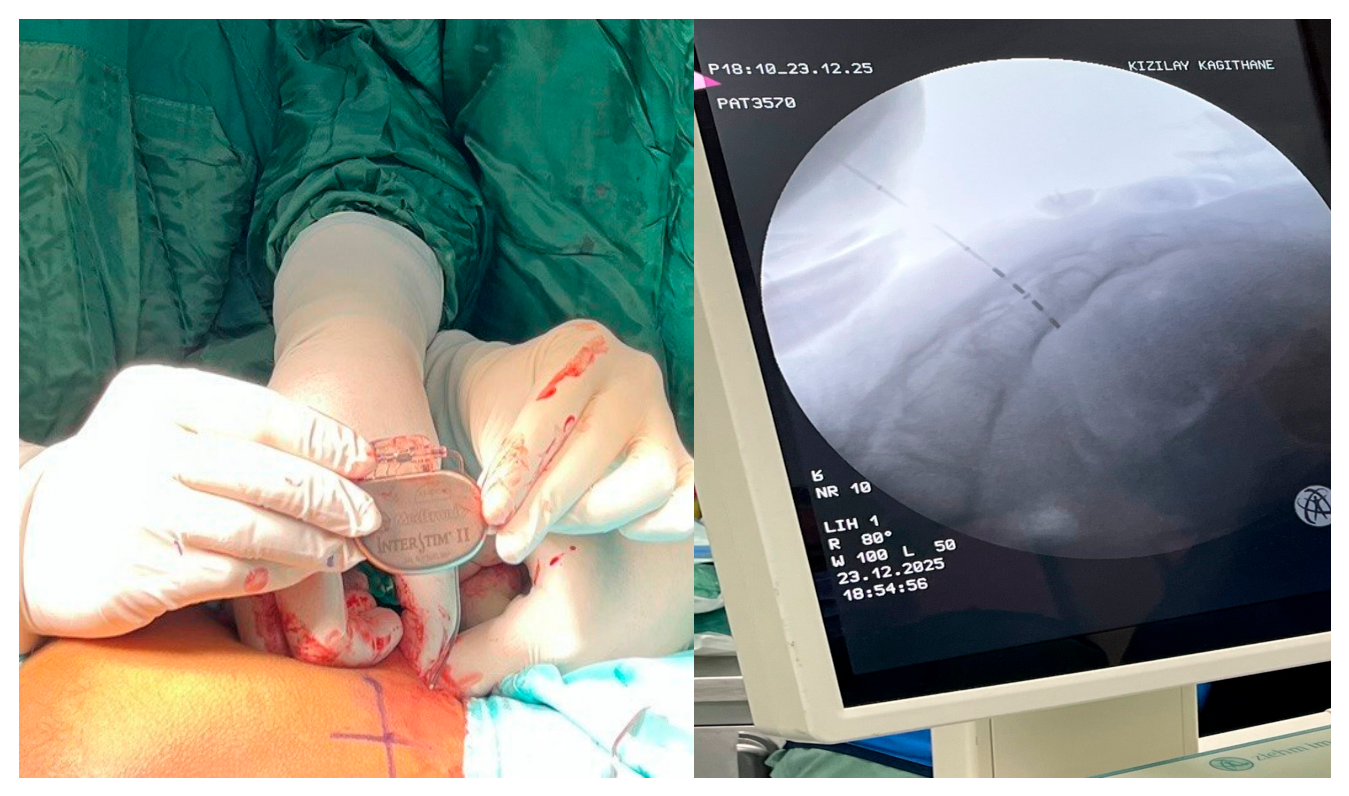
Figure 2.
Patient flow diagram. Of 68 women assessed for eligibility, 13 were excluded (9 did not meet inclusion criteria; 4 declined to participate). Fifty-five were enrolled and underwent stage I test stimulation. Ten (18.2%) achieved less than 50% pain reduction during the trial and were not implanted. Forty-five (81.8%) received a permanent implantable pulse generator (IPG), and all 45 completed 12-month follow-up and were analysed.
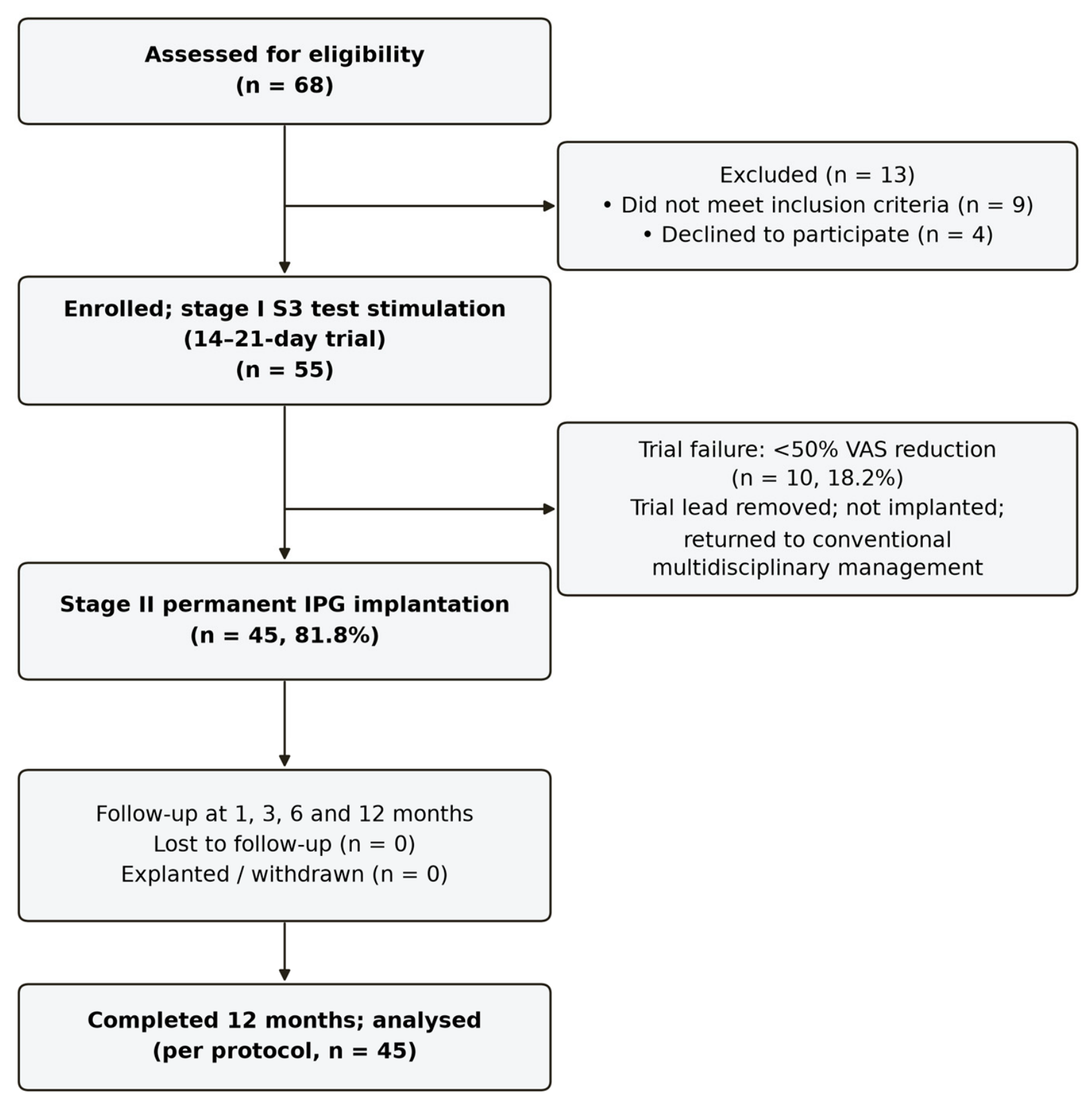
Figure 3.
Mean pain, pain-catastrophizing, bladder-and-bowel and quality-of-life scores from baseline to 12 months in patients completing follow-up (n = 45). Lower scores indicate improvement for VAS, the Pain Catastrophizing Scale and the bladder-and-bowel score. Higher scores indicate improvement for the SF-36 component scores. All changes from baseline to 12 months were statistically significant (p < 0.001). VAS, Visual Analogue Scale; SF-36, 36-Item Short Form Health Survey.
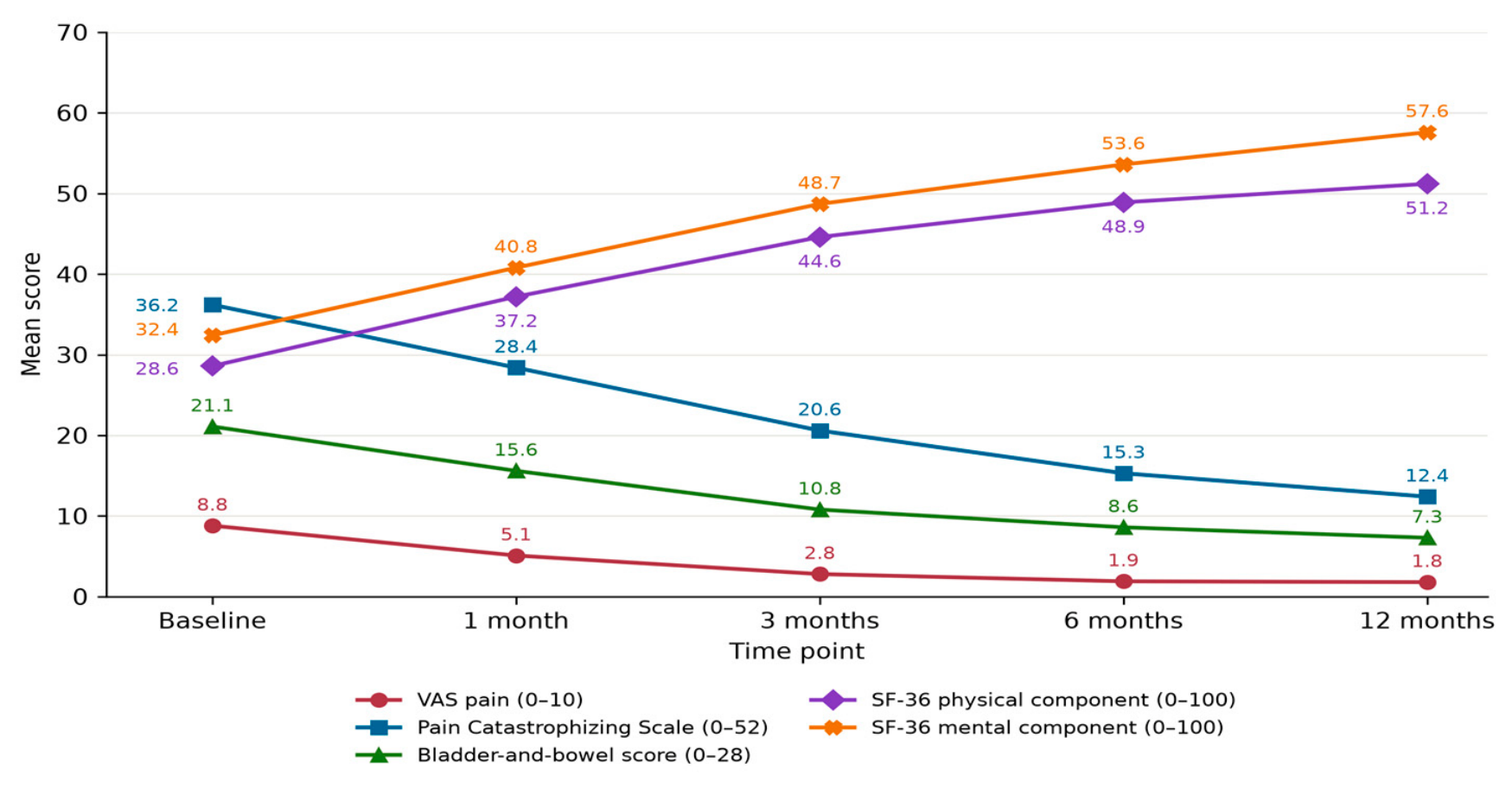
Figure 4.
Mean VAS pain reduction from baseline over time by responder group in patients completing 12-month follow-up (n = 45): marked responders (≥70% reduction; n = 30, 66.7%) and moderate responders (30–69% reduction; n = 15, 33.3%). Higher values indicate greater pain reduction. Error bars show ±1 SD at 12 months. The group means weighted by group size (30:15) equal the overall cohort mean reduction at each visit (3.7, 6.0, 6.9 and 7.0 points).
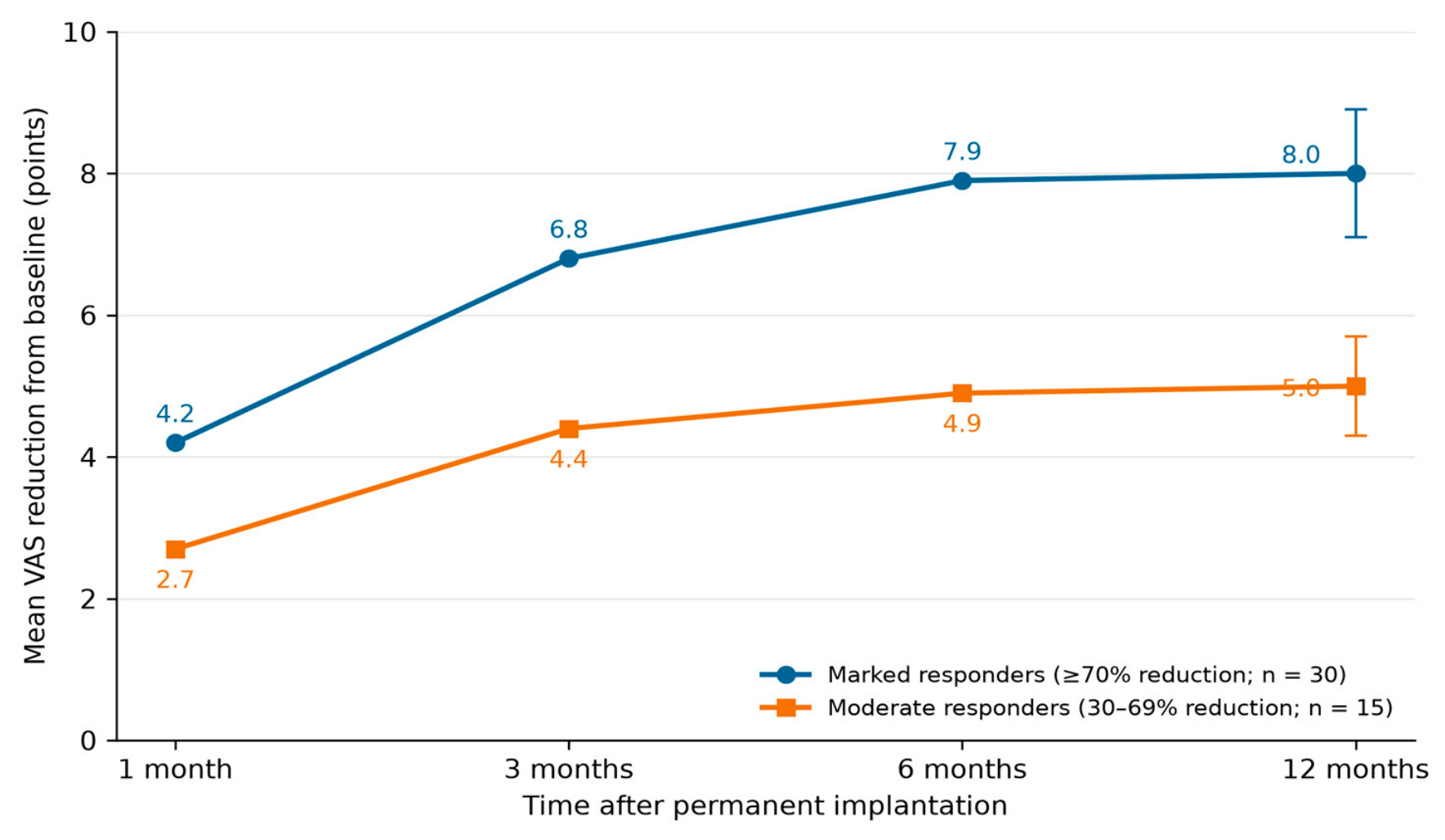
Table 1.
Baseline characteristics and study population summary.
| Parameter | Total enrolled (N = 55) | Not permanently implanted (n = 10) | Completed 12-month follow-up (n = 45) |
|---|---|---|---|
| Age, years, mean ± SD | 39 ± 8 | 40 ± 7 | 39 ± 8 |
| Age range, years | 25–55 | 26–53 | 25–55 |
| Chronic pelvic pain duration | ≥ 6 months | ≥ 6 months | ≥ 6 months |
| Baseline VAS pain score (0–10), mean ± SD | [ 7 ±1] | [4±1 ] | 8.8 ± 0.9 |
| Histologically confirmed endometriosis, n (%) | 55 (100%) | 10 (100%) | 45 (100%) |
| Refractory to prior medical therapy, n (%) | 55 (100%) | 10 (100%) | 45 (100%) |
| Previous therapeutic excisional surgery, n (%) | 38 (69.1%) | 7 (70.0%) | 31 (68.9%) |
| Diagnostic laparoscopy/biopsy only, n (%) | 17 (30.9%) | 3 (30.0%) | 14 (31.1%) |
| Category 1: radical surgery, no recurrence, n (%) | [ 17] | [4 ] | [12 ] |
| Category 2: fertility-sparing surgery, no recurrence, n (%) | [10 ] | [8 ] | [ 5] |
| Category 3: persistent/residual/recurrent disease, n (%) | [12 ] | [5 ] | [3 ] |
| rASRM stage I/II/III/IV, n | [8 ] | [ 5] | [2 ] |
| Ovarian endometrioma, n (%) | [4 ] | [ 4] | [3 ] |
| Deep infiltrating endometriosis, n (%) | [ 12] | [9 ] | [ 6] |
| Stage I test stimulation performed, n (%) | 55 (100%) | 10 (100%) | 45 (100%) |
| Permanent IPG implantation, n (%) | 45 (81.8%) | 0 (0%) | 45 (100%) |
| Attended 1-, 3-, 6- and 12-month assessments, n (%) | 45/45 implanted (100%) | N/Aa | 45 (100%) |
Data are n (%) or mean ± SD. The four surgical categories (Categories 1–3 plus diagnostic laparoscopy/biopsy only) are mutually exclusive, and Categories 1–3 together equal the previous-excisional-surgery row. IPG, implantable pulse generator; rASRM, revised American Society for Reproductive Medicine; SD, standard deviation; VAS, Visual Analogue Scale. a Not applicable: the trial lead was removed after a failed test stimulation, and these patients returned to conventional management with no further study assessments.
Disclaimer/Publisher’s Note: The statements, opinions and data contained in all publications are solely those of the individual author(s) and contributor(s) and not of MDPI and/or the editor(s). MDPI and/or the editor(s) disclaim responsibility for any injury to people or property resulting from any ideas, methods, instructions or products referred to in the content. |
© 2026 by the authors. Licensee MDPI, Basel, Switzerland. This article is an open access article distributed under the terms and conditions of the Creative Commons Attribution (CC BY) license (http://creativecommons.org/licenses/by/4.0/).
Copyright: This open access article is published under a Creative Commons CC BY 4.0 license, which permit the free download, distribution, and reuse, provided that the author and preprint are cited in any reuse.