
Submitted:
14 November 2026
Posted:
18 November 2026
You are already at the latest version
Abstract
The incorporation of micro- and nanomaterials into polymer, ceramic, and metal matrices represents a transformative leap in materials science and engineering [1,9,10] . By leveraging the unique structural, mechanical, and functional properties of fillers at the micro- and nanoscale, advanced composites overcome the inherent limitations of monolithic materials [4,12]. This review examines the synthesis routes, microstructural characterization, and synergistic reinforcement mechanisms of these multi-phase systems, emphasizing their profound impact on modern technological sectors including biomedical engineering, civil infrastructure, and advanced manufacturing [2,3,5].
Keywords:
micro-and nanomaterials
; polymer
; ceramics
; and metals matrices
; advanced composites
; structural characterization
; biomedical and civil engineering
1. Introduction
The continuous demand for high-performance materials with tailored property combinations has driven extensive research into advanced composites [1,4,9]. Monolithic polymers, metals, and ceramics frequently fall short under extreme mechanical, thermal, and environmental conditions [6,12]. To address these challenges, scientists integrate micro- and nanoscale reinforcements—for example metal oxides, graphene, carbon nanotubes, and ceramic particulates—into host matrices [2,4,10]. Material characterization is required for advanced applications to understand the size-dependent physical and chemical behaviors of these systems [9,12]. The synthesis of these materials is done at the laboratory scale using diverse processing routes to optimize interfacial interactions and maximize performance [5,11].
2. Methodology
The fabrication and analysis of micro- and nanomaterials involve sophisticated synthesis techniques and characterization tools tailored to each matrix type [11,12]. For metal matrix systems, flux-assisted liquid state processing, powder metallurgy, and selective laser melting are widely employed to uniformly disperse ceramic nanoparticles like titanium carbide and titanium diboride within aluminum and magnesium matrices [4,12]. Polymer nanomaterials are frequently synthesized via solution blending, microwave treatment, and electrospinning to yield uniform films and fibrous networks [2,7,8]. Figure 1 below explains further.
Analytical methods such as field emission scanning electron microscopy, fourier-transform infrared spectroscopy, transmission electron microscopy, and X-ray diffraction are utilized to evaluate microstructural features, crystalline structure, porosity distribution, and interfacial bonding [2,9,12].
Establishing precise finite element calculation regions and meshes—such as setting horizontal widths to five times the structural span and bedrock depth to 50 m to eliminate artificial boundary wave reflections—is essential for evaluating how advanced micro- and nanomaterials in polymers, ceramics, and metals perform under seismic action [13]. By optimizing these computational boundaries based on empirical geotechnical ratios, engineers can accurately simulate stress distribution and wave dispersion across nano-modified cementitious concrete linings, polymer joint seals, and high-strength metallic connection components without introducing artificial interference or excessive computational latency [13]. Figure 2-1 shows the computational model diagram and Figure 2-2 shows a diagram illustrating the tunnel's structural computation.
Implementing rigorous static and dynamic boundary conditions—utilizing fixed lateral boundaries for initial gravity loads and free-field boundary conditions during dynamic shaking alongside fixed-bottom and free-deformation top constraints—provides a reliable framework for testing these material-structural synergies [13]. Within these carefully bounded numerical environments, researchers can model the dampening effects and strain behaviors of polymer grouts and metal-reinforced ceramic segments, ensuring that underground infrastructure can withstand complex stress states and maintain structural integrity during extreme seismic events [13].
2.1. Seismic Load Input
Applying 10% and 2% exceedance probability artificial bedrock waves over 50 years—with giant earthquake acceleration peaks doubled and vertical amplitudes scaled to two-thirds—evaluates how advanced polymer waterproofing membranes and high-strength metallic bolts safeguard underground infrastructure under dynamic loading [13]. See Figure 2-3 and Figure 2-4 below.
2.2. Davidenkov Basic Model
Characterizing soft soil non-linear stress-strain behavior to assess stress transfer onto nano-modified cementitious ceramics utilizes the three-parameter Davidenkov model, defining instantaneous shear modulus Gd and damping ratio λ via fitting constants A, B, and reference shear strain γr (degrading to Hardin-Drnevich when A = 1 and B = 0.5):
2.3. How advanced micro- and nanomaterials in polymers, ceramics, and metals perform under seismic action
To evaluate how advanced micro- and nanomaterials in polymers, ceramics, and metals perform under seismic action, numerical models implement static fixed and free boundaries alongside dynamic free-field boundary conditions that connect peripheral grid regions to the main model via viscous dampers, where lateral boundary forces are mathematically formulated as:
where ρ represents mass density, Cp and Cs denote P-wave and S-wave velocities at the cross periphery, A is the assumed nodal region, vx,vy,vz as well as are the nodal velocities of the foremost lattice and free-field frontier in that order, and σ and τ represent the normal and shear stress components contributing additional forces [13].
3. Results
Experimental investigations into polymer, ceramic, and metal matrix composites consistently reveal substantial enhancements in mechanical, tribological, and biological performance [4,6,12]. The incorporation of micro- and nanofillers restricts dislocation movement, enhances micro-hardness, and significantly improves tensile and yield strengths [4,6,7]. For instance, metal matrix composites reinforced with ceramic particulates demonstrate superior wear resistance and reduced micro-cracking during thermal cycling [4,6]. In polymer-based systems, the addition of metal oxides or carbonaceous nanomaterials yields high crystallinity, thermal stability up to elevated temperatures, and effective antimicrobial inhibition [2,4]. Figure 3 below illustrates a comprehensive experimental result on the advanced composite characterization.
Furthermore, ceramic milieu mixtures reinforced with micro-structured fillers exhibit optimized friction behavior and robust resistance against abrasive and adhesive wear mechanisms [6].
3.1. Finite Element Modeling and Constitutive Simulation of Nano-Modified Cementitious Ceramics and Polymer Membranes in Seismic Infrastructure
Three-dimensional finite element modeling via FLAC3D software evaluates the seismic performance of advanced infrastructure across designated transverse, longitudinal, and vertical bedrock dimensions.
Graphical representations of soil dynamic behavior rely on specialized constitutive models, such as the three-parameter Davidenkov model capturing non-linear soft soil backbone curves and hysteretic damping, expressed mathematically as:
where Gd represents the instantaneous shear modulus, γd is the shear strain, γr is the reference shear strain, and A and B are empirical fitting constants. This Davidenkov constitutive equation characterizes soft soil behavior interacting directly with nano-modified cementitious ceramics and polymer-stabilized strata, illustrating how shear modulus degradation and hysteretic damping impact the macro-scale seismic resilience of advanced structural materials.
Pore water pressure generation under cyclic shear loading in saturated sandy layers is further modeled using the Finn formulation:
where εvd epresents the irreversible volumetric strain increment and C1 through C4 denote calibration coefficients [13]. The Finn formulation tracks pore water pressure accumulation and volumetric strain increments in saturated layers, emphasizing why advanced polymer waterproofing membranes and nano-modified ceramic matrices are essential to resist fluid-induced pressures and maintain structural integrity [13].
Numerical simulations incorporate scaled artificial bedrock accelerograms with vertical amplitudes set to two-thirds of horizontal components to model 10% and 2% exceedance probability earthquakes over a fifty-year span [13].
4. Advanced Applications
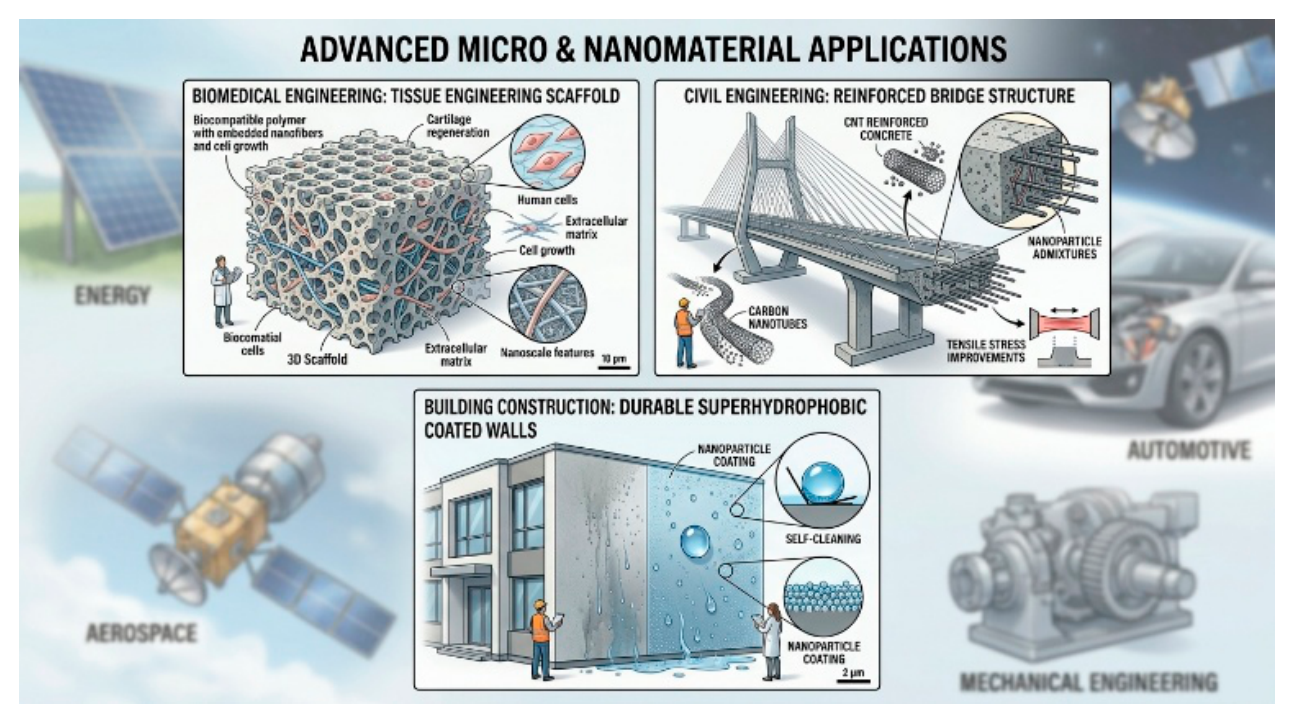
The extraordinary properties of micro- and nanomaterials enable sophisticated, real-world applications across multiple engineering domains [2,3,5]. In biomedical engineering, biopolymer hydrogels integrated with nanohydroxyapatite and carbon nanotubes serve as advanced bio-inks for three-dimensional and four-dimensional bioprinting of tissue engineering scaffolds, promoting cell proliferation and osteogenic differentiation [2,11,12]. Integrating multi-walled carbon nanotubes into ultra-high molecular weight polyethylene enhances both tribological performance and biological safety, significantly reducing wear rates and foreign-body immune reactions in total joint prostheses [11,12]. In civil engineering and building construction, advanced ceramic-polymer superhydrophobic coatings offer exceptional anti-icing, anti-vapor condensation, and corrosion-resistant properties for critical infrastructure exposed to harsh weather conditions [5,8]. Figure 4 below shows an advanced micro and nanomaterial applications.
Furthermore, combining micro-channel architectures with modern thermal energy storage significantly improves heat dissipation performance and overall energy efficiency in building enclosures [3].
5. Conclusions
The strategic integration of micro- and nanomaterials into polymer, ceramic, and metal matrices has revolutionized modern engineering by yielding multi-functional composites with superior mechanical, thermal, and biological properties [1,4,12]. Through precise control over synthesis methodologies, interfacial bonding, and microstructural characterization, these advanced materials successfully meet the rigorous demands of biomedical devices, civil infrastructure, and aerospace manufacturing [2,5,11]. Continued advancements in scalable processing and hybridization will further broaden their technological impact and everyday utility [2,4].
Acknowledgments
I wish to express my profound and heartfelt gratitude to Ing. Franklin Kumassah of the Department of Electrical/ Electronics Engineering, Takoradi Technical University (franklin.kumassah@ttu.edu.gh), for his benevolent words of encouragement and his gracious pledge of financial support towards the successful execution of this project and the publication of this article, whose promise via GCB Bank PLC deposit is still awaited, and I remain truly grateful for his generosity.
References
- George, S.C.; Tawiah, B.; Jacob, M.; Haponiuk, J. (Eds.) Advanced Nanomaterials and Composites; Springer, 2026. [Google Scholar]
- Losetty, V.; Lakkaboyana, S.K.; Chappidi, H.Y.; Venkateswarlu, K.; Trilaksana, H.; Koduru, J.R.; Yuzir, A.; Atanase, L.I.; Seepana, P.K.; Knani, S. Transformative applications of polymer-based metal oxide nanocomposites in medicine, industry, and environmental remediation: a review. J. Inorg. Organomet. Polym. Mater. 2026, 36(no. 1), 64–96. [Google Scholar] [CrossRef]
- Barmavatu, P.; Heeraman, J.; Das, M.K.; Mangalaraja, R.V.; Srinivasnaik, M. Synergistic integration of micro-channels and thermal storage systems for energy efficiency enhancement in heat transfer applications-a critical review. J. Therm. Anal. Calorim. 2026, 151(no. 2), 1097–1119. [Google Scholar] [CrossRef]
- Liu, B.; Sun, J.; Zhao, J.; Yun, X. Hybrid graphene and carbon nanotube–reinforced composites: polymer, metal, and ceramic matrices. Adv. Compos. Hybrid. Mater. 2025, 8(no. 1), 1. [Google Scholar] [CrossRef]
- Khaskhoussi, A.; Rahimi, E.; Calabrese, L.; Cornet, A.; Anusuyadevi, P.R.; Gonugunta, P.; Mol, A.; Proverbio, E. Advanced durable ceramic-polymer ultra-superhydrophobic coating with anti-icing, anti-vapor condensation, and corrosion-resistant properties. Chem. Eng. J. 2025, 515, 163767. [Google Scholar] [CrossRef]
- Sollapur, S.B.; Sharath, P.C.; Bharathkumar, B.R.; Hemanth, K.; Vishwanath, B.R.; Hosamani, A.K. Influence of micro-sized filler reinforcement in tribological performance of ceramic matrix composites. In Micro-and Nanocomposites; CRC Press, 2025; pp. 197–216. [Google Scholar]
- Gupta, N.K.; Verma, R.K. Next-Generation Polymer Nanocomposites: Pioneering Innovations for Tribological Excellence in Advanced Applications. In Hybrid Materials and Advanced Manufacturing; pp. 77–97.
- Selvaraj, V.; Karthika, T. Swarna; Mansiya, C.; Andal, V.; Alagar, M. Review on superhydrophobic polymer composite coating materials and its coating technology for advanced applications. Polym.-Plast. Technol. Mater. 2025, 64(no. 5), 694–734. [Google Scholar] [CrossRef]
- Schiavo, L.; Cammarano, A.; Carotenuto, G.; Longo, A.; Palomba, M.; Nicolais, L. An overview of the advanced nanomaterials science. Inorganica Chim. Acta 2024, 559, 121802. [Google Scholar] [CrossRef]
- Wan, F.; Thakur, A.; Thakur, P. Classification of nanomaterials (carbon, metals, polymers, bio-ceramics). In Integrated nanomaterials and their applications; Springer Nature Singapore: Singapore, 2023; pp. 37–55. [Google Scholar]
- Waidi, Y.O.; Barua, R.; Datta, S. Metals, polymers, ceramics, composites biomaterials used in additive manufacturing for biomedical applications. In Modeling, Characterization, and Processing of Smart Materials; IGI Global Scientific Publishing, 2023; pp. 165–184. [Google Scholar]
- Samudrala, S.K.; Chaitanya; Radhi, K.S. Metal, ceramics and polymer nano-composites for various applications: A review. Mater. Today Proc. 2022, 56, 1120–1128. [Google Scholar] [CrossRef]
- Sakyi, S.K.; Korankye, B.; Kweitsu, G. Seismic Response Analysis of Underground Structures. J. Environ. Earth Sci. 2018, 8(no. 5), 48–71. [Google Scholar]
Figure 1.
Synthesis and Characterization of Micro and Nanomaterials.
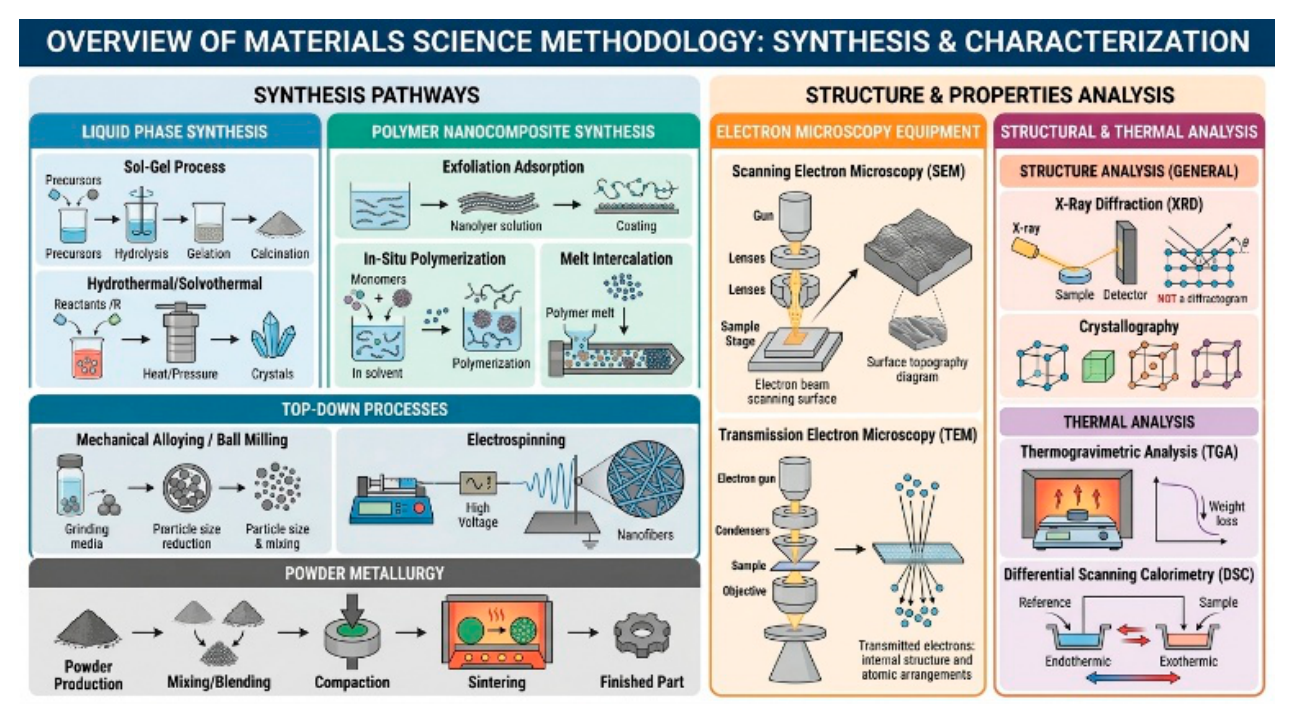
Figure 2-1.
The computational model diagram.
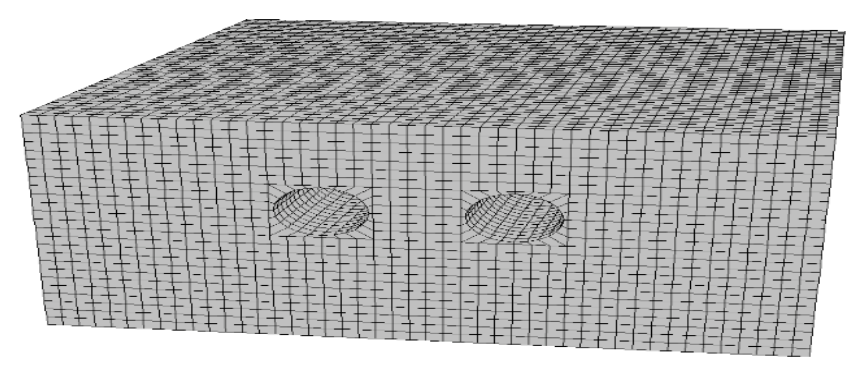
Figure 2-2.
A diagram illustrating the tunnel's structural computation.
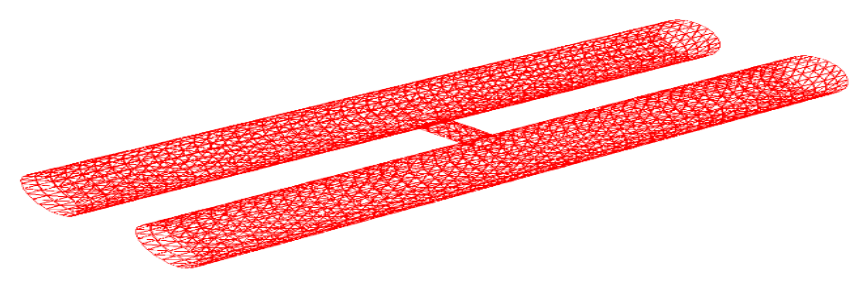
Figure 2-3.
Time history and spectral analysis of simulated 50m-deep seismic waves for Wuhan (10%/50-year probability).
Figure 2-3.
Time history and spectral analysis of simulated 50m-deep seismic waves for Wuhan (10%/50-year probability).
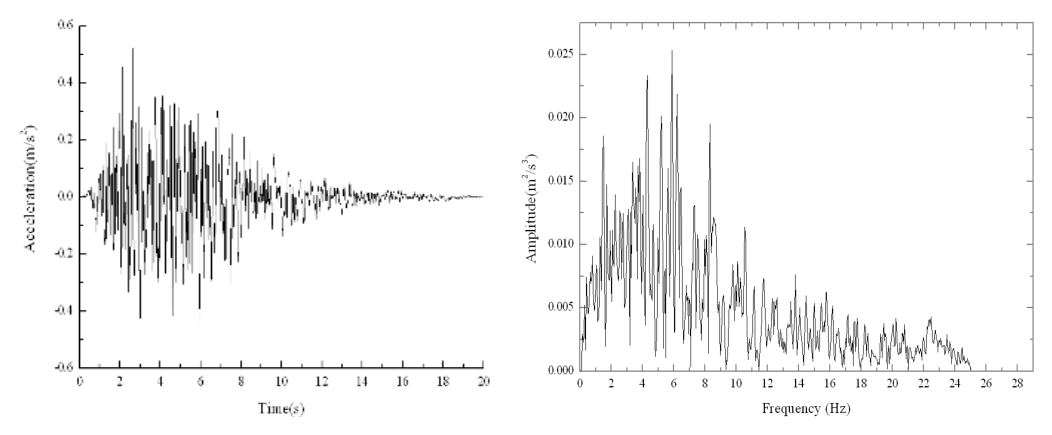
Figure 2-4.
Time history and response spectrum of 50m-deep simulated Wuhan seismic waves (2%/50-year exceedance probability).
Figure 2-4.
Time history and response spectrum of 50m-deep simulated Wuhan seismic waves (2%/50-year exceedance probability).
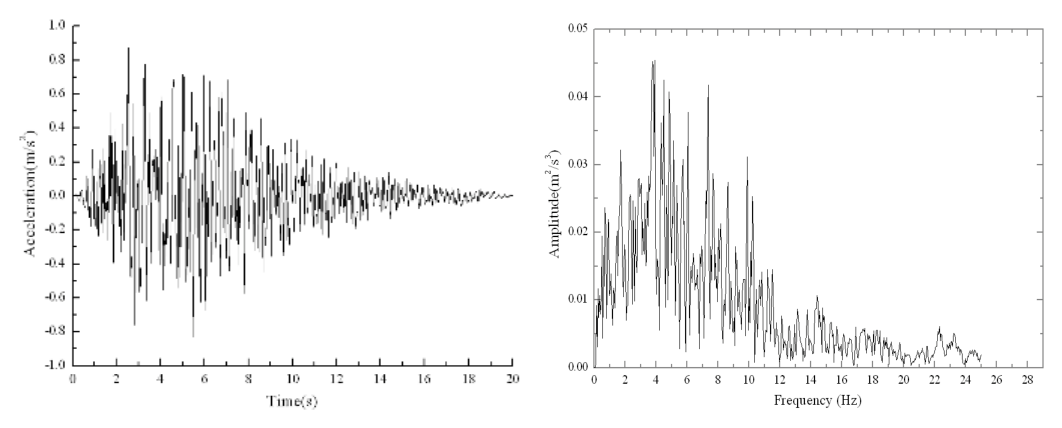
Figure 3.
Comprehensive experimental results: Composite Characterization.
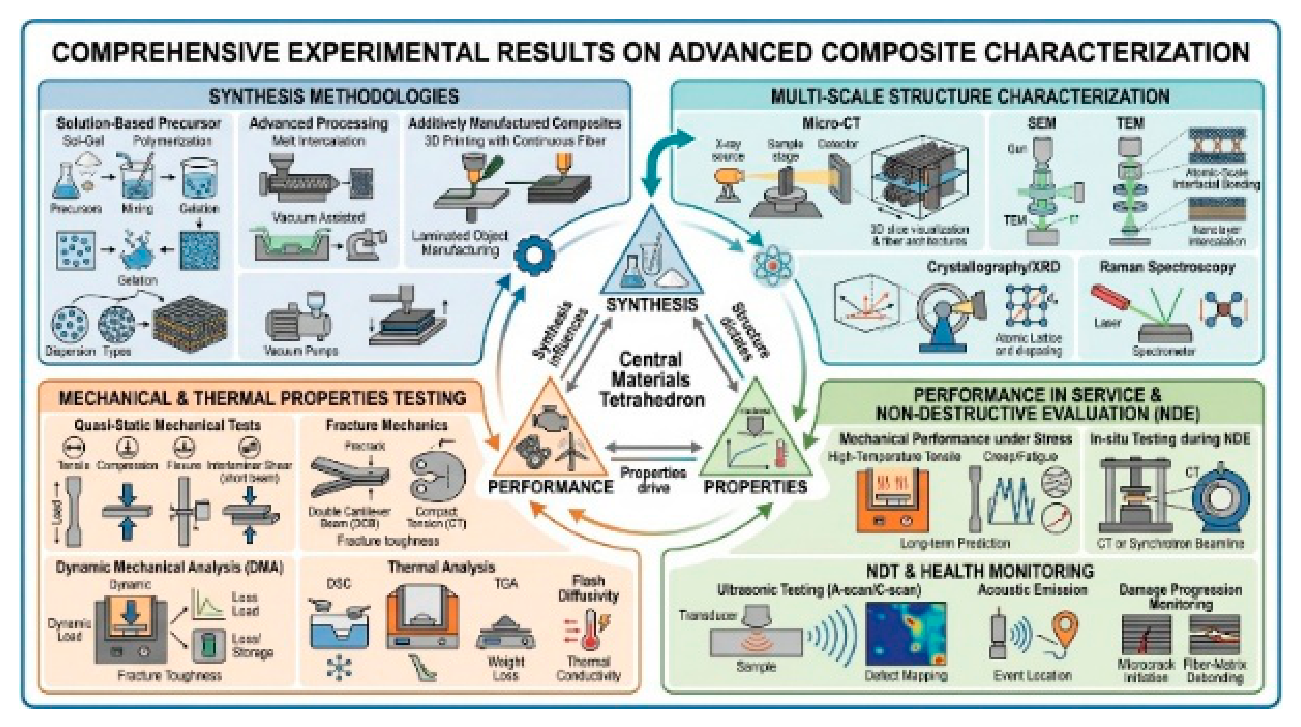
Figure 4.
Advanced Micro and Nanomaterials Applications.
Disclaimer/Publisher’s Note: The statements, opinions and data contained in all publications are solely those of the individual author(s) and contributor(s) and not of MDPI and/or the editor(s). MDPI and/or the editor(s) disclaim responsibility for any injury to people or property resulting from any ideas, methods, instructions or products referred to in the content. |
© 2026 by the authors. Licensee MDPI, Basel, Switzerland. This article is an open access article distributed under the terms and conditions of the Creative Commons Attribution (CC BY) license (http://creativecommons.org/licenses/by/4.0/).
Copyright: This open access article is published under a Creative Commons CC BY 4.0 license, which permit the free download, distribution, and reuse, provided that the author and preprint are cited in any reuse.