
Submitted:
12 November 2026
Posted:
13 November 2026
You are already at the latest version
Abstract
Background/Objectives: Thai Herbal Kratom recipe (THK) is a traditional polyherbal formulation used for muscle pain relief, traditionally administered as a herbal compress ball. However, its conventional dosage form has limitations in terms of convenience, reproducibility, and stability. This study aimed to pharmaceutically formulate THK into a stable topical ointment and evaluate its physicochemical properties and changes in total phenolic content (TPC) and total flavonoid content (TFC) during storage. Methods: Five ointment formulations (THK-F1–THK-F5) containing 0.2% (w/w) THK extract were prepared and evaluated for physicochemical characteristics. The selected formulation, THK-F3, was profiled using LC-QTOF-MS/MS. The physicochemical stability of THK-F3 and its corresponding extract-free base (B-F3) was compared through heating–cooling cycle testing and storage at 4 °C and 30 °C for 180 days. TPC and TFC were monitored during storage to evaluate changes in phytochemical content. Results: THK-F3 showed acceptable physicochemical characteristics. Chemical profiling tentatively identified 99 compounds, including mitragynine and several phenolic compounds. Phase separation occurred at 4 °C, and slight oil separation was observed after heating–cooling cycles, whereas no noticeable changes in appearance or odor occurred during storage at 30 °C. After 180 days, TPC and TFC decreased by 33.7% and 42.6%, respectively, at 30 °C, compared with 72.5% and 72.6% decreases at 4 °C. Conclusions: THK-F3 showed potential as a topical herbal formulation for further pharmaceutical development, while appropriate storage conditions are important for maintaining product quality.
Keywords:
herbal formulation
; Thai herbal kratom
; Mitragyna speciosa
; ointment
; phytochemical analysis
; product stability
; total phenolic content
; total flavonoid content
; rheology
1. Introduction
Herbal medicines have been used for centuries to treat and prevent various ailments across many countries worldwide. Approximately 80% of the global population relies on herbal medicine as part of primary healthcare, and this proportion is expected to increase further because of its perceived safety, low toxicity, and minimal adverse effects [1][2]. Despite their widespread use, they have several limitations, including inappropriate dosage forms, administration challenges, variability in herbal composition, lack of standardization, and inconsistent therapeutic efficacy [2,3]. These challenges significantly influence their clinical translation and broader acceptance in the modern healthcare system [2,3]. Consequently, formulation development is important for improving reproducibility, stability, convenience, and product quality.
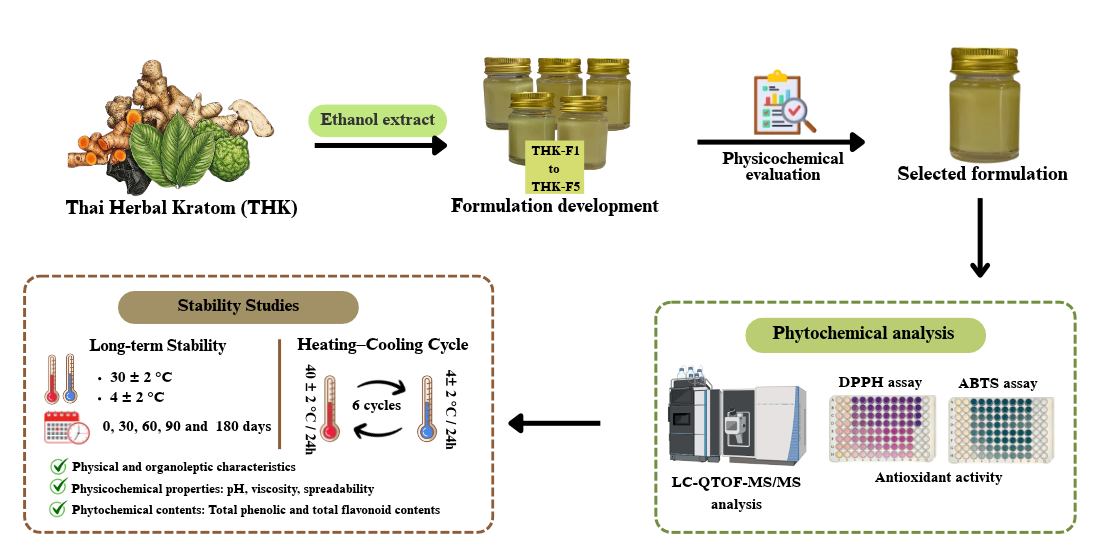
The Thai Herbal Kratom recipe (THK) is a traditional Thai polyherbal recipe widely used in southern Thailand and comprises six medicinal plants, including Mitragyna speciosa Korth. (the main ingredient), Zingiber cassumunar Roxb., Alpinia galanga, Citrus hystrix, Curcuma longa, and Aloe vera, combined in a 5:1:1:1:1:1 ratio. Traditionally, THK has been used as a topical herbal compress ball applied after Thai massage to relieve muscle pain. Our previous study investigated the phytochemical profile and biological activities of the ethanolic THK extract using in vitro and in vivo models [4]. The extract showed high levels of total phenolics and total flavonoids, which were strongly correlated with its vigorous antioxidant activity against DPPH and ABTS free radicals [4]. Liquid chromatography-mass spectrometry (LC-MS) analysis further revealed diverse bioactive constituents, including 4-hydroxycoumarin, curcumin, mitragynine, aloin A, and limonin [4]. Moreover, THK demonstrated significant anti-inflammatory effects in vivo, as evidenced by a marked reduction in rat paw edema and ear swelling [4]. Notably, the extract also exhibited analgesic effects, supporting its traditional use for the management of musculoskeletal pain [4]. Collectively, these findings suggest that THK has substantial pharmacological potential, likely mediated by synergistic antioxidant, anti-inflammatory, and analgesic mechanisms arising from its diverse phytochemical composition. However, its traditional application as an herbal compress ball presents practical limitations for both healthcare providers and patients, particularly regarding preparation, convenience, dosage-form reproducibility, and stability. Accordingly, this study aimed to pharmaceutically formulate THK into a stable topical ointment intended for muscle pain relief. Moreover, its physicochemical and phytochemical stability were evaluated to assess stability during storage and identify appropriate storage conditions.
2. Results
2.1. Development and Characterization of Ointment Formulations
Five THK ointment formulations (THK-F1 to THK-F5) were developed using white soft paraffin, hard paraffin, beeswax, lanolin, and cetostearyl alcohol in varying proportions. All formulations were semi-solid preparations with a characteristic odor. Their textural and application properties were evaluated, and the preliminary evaluation results are summarized in Table 1. Although all formulations appeared homogeneous and showed no visible phase separation, differences in texture and application characteristics were observed. THK-F4 and THK-F5 exhibited non-uniform textures and crumbled into flakes during application, whereas THK-F1, THK-F2, and THK-F5 were oilier and stickier. Based on the preliminary evaluation, THK-F3 was selected for further investigation.
The pH values of all formulations ranged from 4.86 to 4.97 within the acceptable range for topical products and were considered suitable for skin application without causing irritation. Evaluation of viscosity and spreadability showed that formulation THK-F1 exhibited the highest viscosity (11,509,026 cP), followed by THK-F5, THK-F4, and THK-F2, with values of 9,531,887 ± 685,848, 8,922,751 ± 389,265, and 8,561,122 ± 447,499 cP, respectively. THK-F3 exhibited the lowest viscosity (8,287,109 ± 829,947 cP). The spreadability values of all five formulations were relatively similar, ranging from 3.47 to 3.68 cm. The high viscosity and greasiness of formulation THK-F1 may be attributed to its high white soft paraffin content, although differences in other base components, including hard paraffin and lanolin, may also have contributed to its rheological properties. In addition, cetostearyl alcohol in THK-F4 and THK-F5 may have contributed to the structuring of these formulations. However, this study did not directly investigate these potential relationships. Based on the overall assessment of physical appearance and physicochemical properties, THK-F3 was considered the most suitable formulation because of its favorable texture, balanced greasiness upon application, and lowest viscosity. Although its spreadability was comparable to the other formulations, THK-F3 was considered the most suitable formulation based on the overall assessment of physical appearance and physicochemical properties. It exhibited a favorable physical appearance, the lowest viscosity among the five formulations, and a balanced level of greasiness upon application. These characteristics supported its selection for further studies. Although its spreadability was comparable to that of the other formulations, THK-F3 was selected for subsequent stability studies and biological activity testing.
Table 1. Physicochemical characteristics of five ointment formulations.
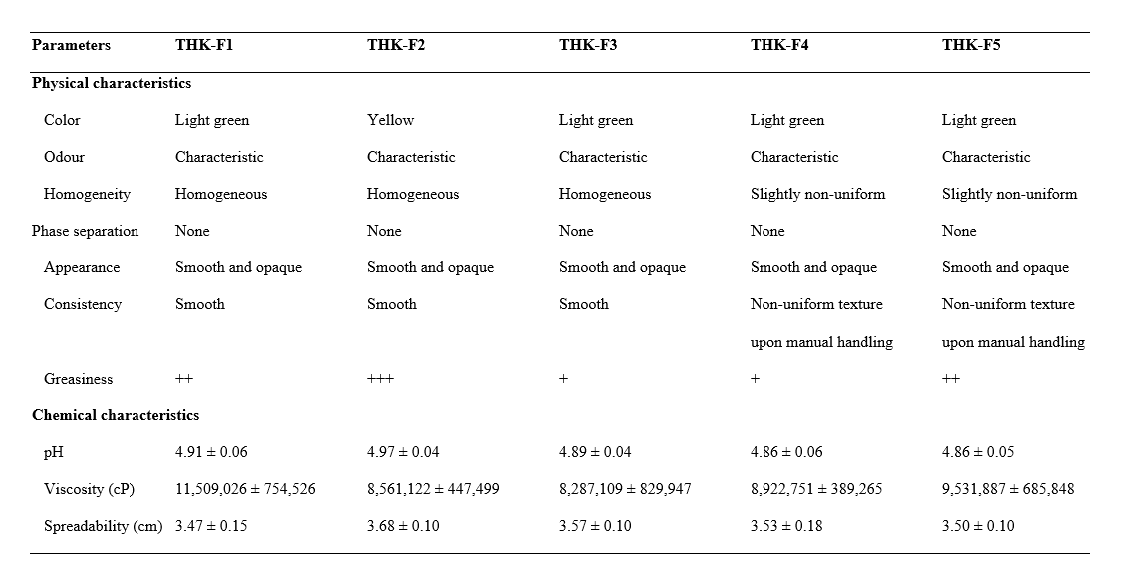
Data 3. Greasiness was evaluated subjectively: (+) low, (++) moderate, (+++) high.2.2. Phytochemical profiles of THK-F3 using LC-QTOF-MS/MS analysis.
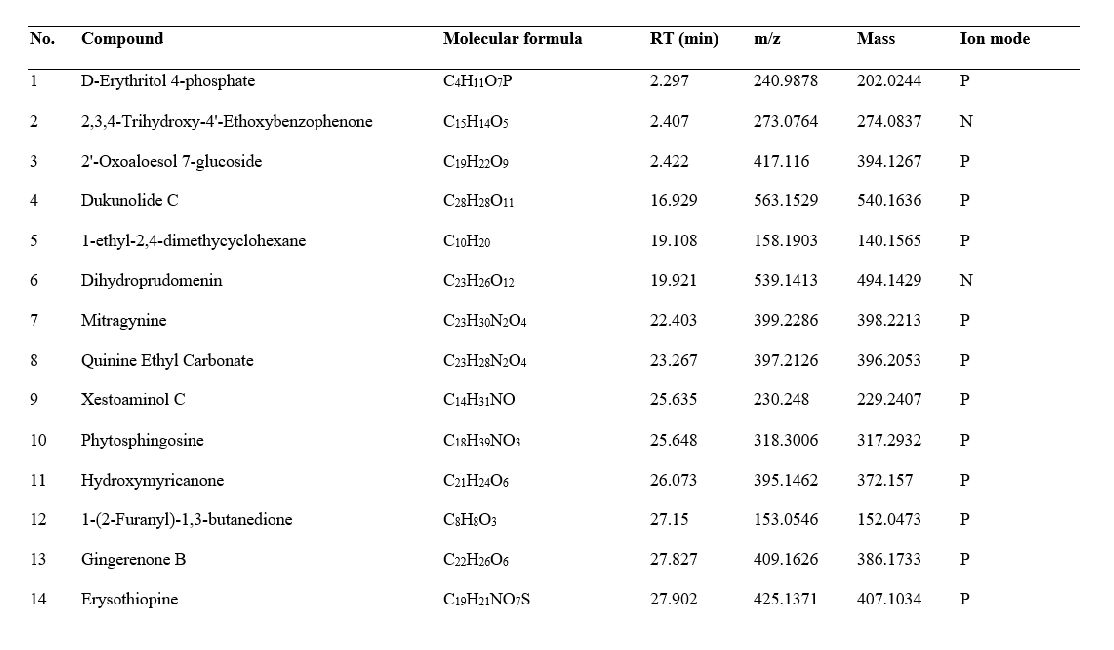
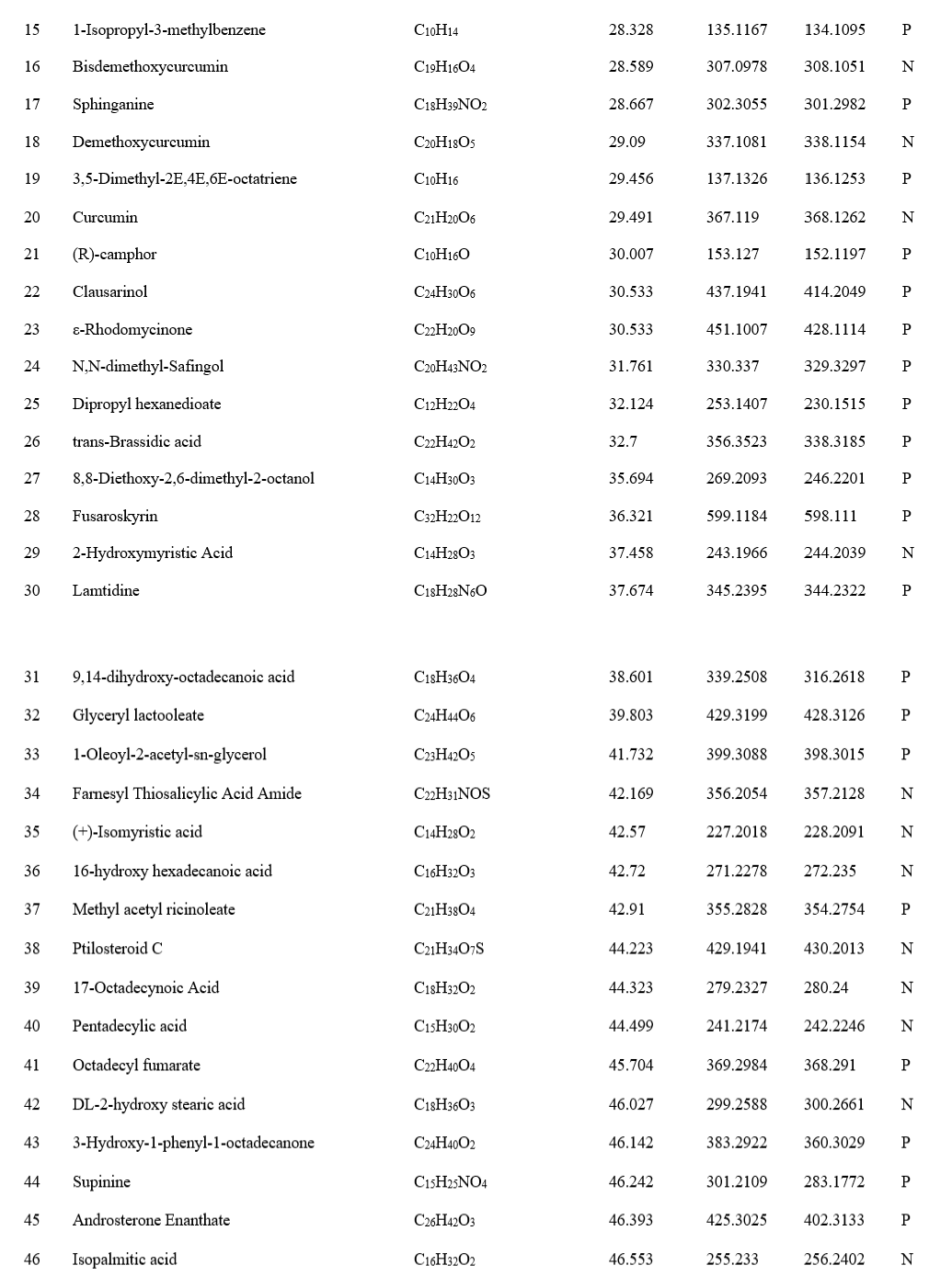
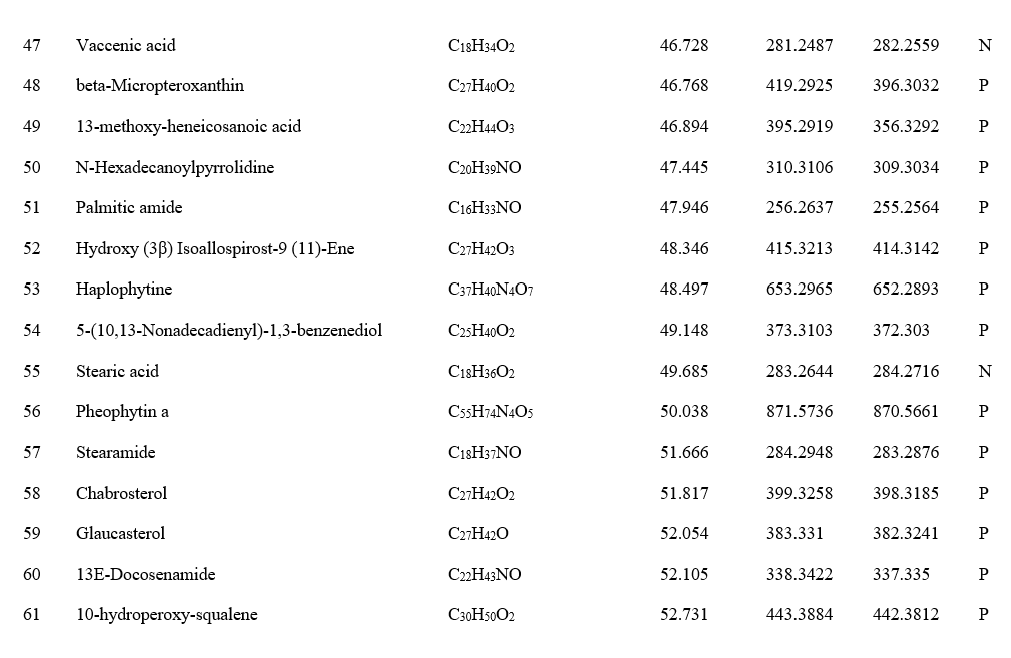
Phytochemical composition analysis of THK-F3 using LC-QTOF-MS/MS tentatively identified 99 compounds across positive and negative ionization modes. Of these, 22 were detected in positive ion mode, 76 in negative ion mode, and one was detected in both modes. Selected compounds are presented in Table 2. The detected compounds can be classified into several groups, including alkaloids, phenolics, terpenoids, lipids, fatty acids, and other organic compounds. Mitragynine, the main alkaloid of Kratom (Mitragyna speciosa, the main medicinal plant in THK), was tentatively identified. Additionally, phenolic compounds such as curcumin, demethoxycurcumin, bisdemethoxycurcumin, gingerenone B, and clausarinol were also tentatively identified.
Table 2. Selected compounds tentatively identified in THK-F3 by LC-QTOF-MS/MS analysis.
2.2. Antioxidant Activity of THK-F3
The antioxidant activities of THK-F3 and its base formulation, B-F3, were assessed using DPPH and ABTS scavenging assays, with results presented in Table 3. THK-F3 exhibited higher DPPH and ABTS radical scavenging activities than B-F3, with inhibition values of 41.28% and 82.37%, respectively. In comparison, B-F3 showed lower inhibition values of 33.80% and 75.57%, respectively. Trolox was used as a positive control, with IC50 values of 35.98 ± 0.16 µg/mL and 24.55 ± 0.11 µg/mL for the DPPH and ABTS assays, respectively.
Table 3. Antioxidant activity of base and THK-F3 ointments measured by DPPH and ABTS assays.
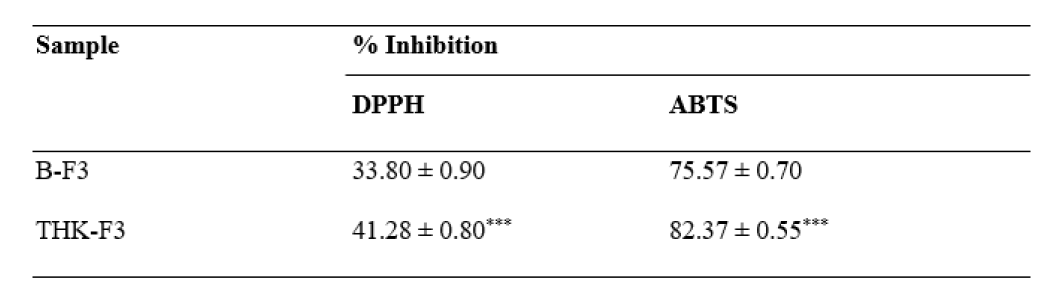
Values are expressed as mean ± SD (n = 3). Data were analyzed using an independent samples t-test. *** P< 0.001 indicates significant differences between formulations.
2.3. Heating-Cooling Cycle of THK-F3
The stability of THK-F3 was evaluated using a heating-cooling cycle assay. Table 4 presents the physical and physicochemical parameters of THK-F3 before and after six heating-cooling cycles. THK-F3 exhibited no noticeable change in color, odor, or overall consistency. However, phase separation was observed, characterized by minimal oil separation at the surface, resulting in increased stickiness upon topical application. A similar pattern was also observed in B-F3. The pH value of THK-F3 slightly decreased from 4.87 ± 0.05 to 4.84 ± 0.05, without a statistically significant difference (p > 0.05). Importantly, the pH remained within the physiologically acceptable range for skin (approximately 4-6) [5]. Viscosity decrease after the heating–cooling test in both B-F3 (from 8,944,204 ± 883,248 to 8,734,031 ± 726,812 cP) and THK-F3 (from 8,637,914 ± 410,975 to 7,904,352 ± 524,123 cP); however, the differences were not statistically significant (p > 0.05). Conversely, the spreadability of both samples significantly increased (3.47 ± 0.10 to 3.68 ± 0.12 cm for B-F3, and 3.50 ± 0.12 to 3.79 ± 0.09 cm for THK-F3, p < 0.05). These findings are consistent with the observed softening of the formulations and likely reflect changes in the internal structural network under alternating high- and low-temperature conditions.
Table 4. Effect of heating–cooling cycles on physical and physicochemical properties of B-F3 ointment and THK-F3 ointment.
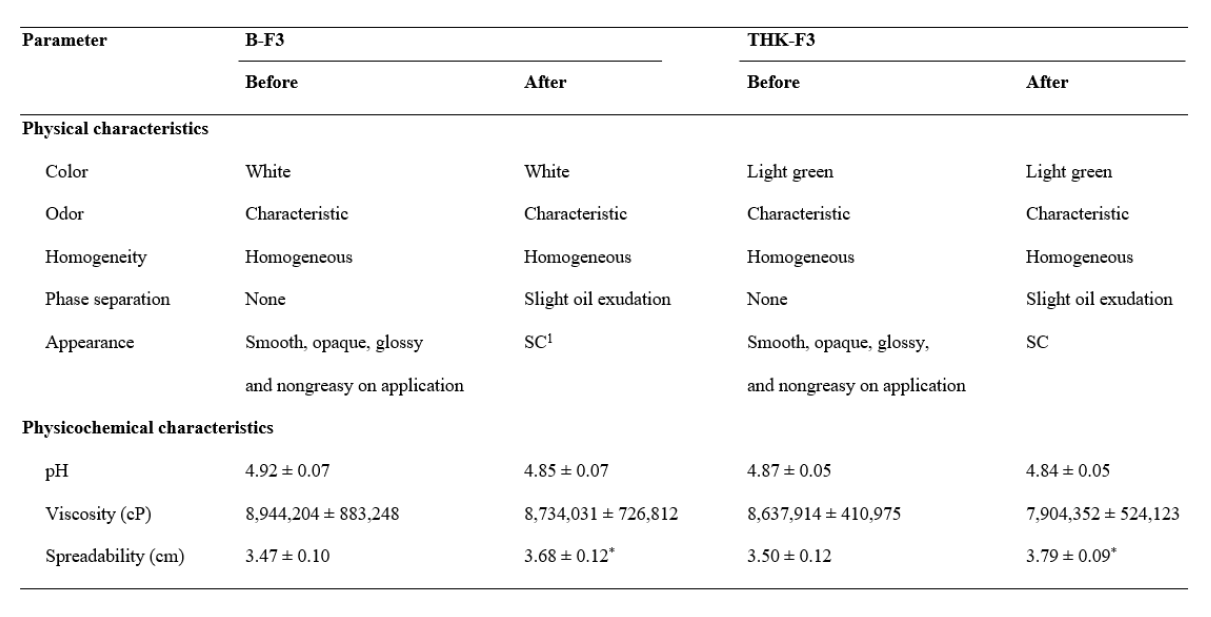
Values are expressed as mean ± SD. (n = 5). p-values were measured by paired t-test comparing values before and after heating–cooling cycles. *p < 0.05 compared with before. 1 SC = slight change.2.5. Long-Term Stability Study of THK-F3.
The long-term stability of THK-F3 was evaluated at 30 °C and 4 °C conditions to determine appropriate storage recommendations by assessing physical and physicochemical changes over 180 days. Table 6 presents the physical and physicochemical properties of B-F3 and THK-F3 during storage at 30 °C. After 180 days, neither B-F3 nor THK-F3 showed any changes in appearance, color, odor, homogeneity, or phase separation, indicating that THK-F3 maintained organoleptic stability comparable to its base formulation. In contrast, both B-F3 and THK-F3 stored at 4 °C showed slight changes in appearance and phase separation by 30 days of testing (Table 7).
Physicochemical stability at 30 °C (Table 6) and 4 °C (Table 7) was assessed by evaluating pH, viscosity, and spreadability. The pH of B-F3 stored at 30 °C differed significantly from Day 0 (4.92 ± 0.08) to Day 60 (4.74 ± 0.10) and Day 180 (5.14 ± 0.01) (p < 0.05). In contrast, THK-F3 stored at 30 °C showed no statistically significant change in pH throughout the storage period (Table 6), although a slight numerical variation was observed. pH value differed significantly between B-F3 and THK-F3 at Day 180 (5.14 ± 0.01 vs 4.94 ± 0.08). For samples stored at 4 °C, B-F3 showed a significant change in pH at Day 90 (4.72 ± 0.09) compared with Day 0, while THK-F3 showed a significant decrease in pH at Day 60 (4.68 ± 0.08) compared with Day 0 (4.87 ± 0.05), with the pH further decreasing to 4.59 ± 0.14 by Day 180 (Table 7). Despite these changes, the pH values remained within the physiologically acceptable range for skin application [5].
Viscosity measurements at 30 °C indicated minor fluctuations in B-F3, with an initial decrease between Day 30 (8,437,045 ± 829,018 cP) and Day 60 (7,950,798 ± 801,502 cP), followed by a significant increase at Day 180 (10,896,518 ± 352,763 cP) compared with Day 0 (8,944,204 ± 883,248 cP; p < 0.05). THK-F3 demonstrated a similar trend; however, no statistically significant changes were observed (Table 6). At Day 180, THK-F3 exhibited significantly lower viscosity than B-F3 (9,798,052 ± 741,021 vs 10,896,518 ± 352,763 cP). However, this study did not determine the underlying factors contributing to this difference. No significant changes were observed in both B-F3 and THK-F3 stored at 4 °C throughout the study period (Table 6).
Spreadability values of both B-F3 (3.47-3.68 cm) and THK-F3 (3.50-3.70 cm) at 30 °C (Table 5) and 4 °C (Table 6) showed no statistically significant changes over time within each formulation. Although viscosity varied over time, the stable spreadability and unchanged physical characteristics indicated that the formulations maintained acceptable rheological properties and topical applicability after 180 days at 30 °C. Collectively, these findings indicated that adding THK did not negatively affect the long-term physical and physicochemical stability of the ointment base. In contrast, THK-F3 demonstrated slightly improved stability, particularly in pH and viscosity consistency, suggesting the extract can be incorporated without compromising formulation integrity. Under the conditions evaluated in this study, THK-F3 stored at 30 °C showed better physicochemical stability than that stored at 4 °C, as no noticeable physical changes were observed throughout the study period. Although some physicochemical variations were observed, the formulations retained acceptable physical characteristics throughout storage at 30 °C. In contrast, storage at 4 °C led to visible changes in the product’s appearance, including slight oil separation, indicating reduced stability at low temperatures.
Table 5. Physical and physicochemical stability of B-F3 and THK-F3 during storage at 30 °C for 180 days.
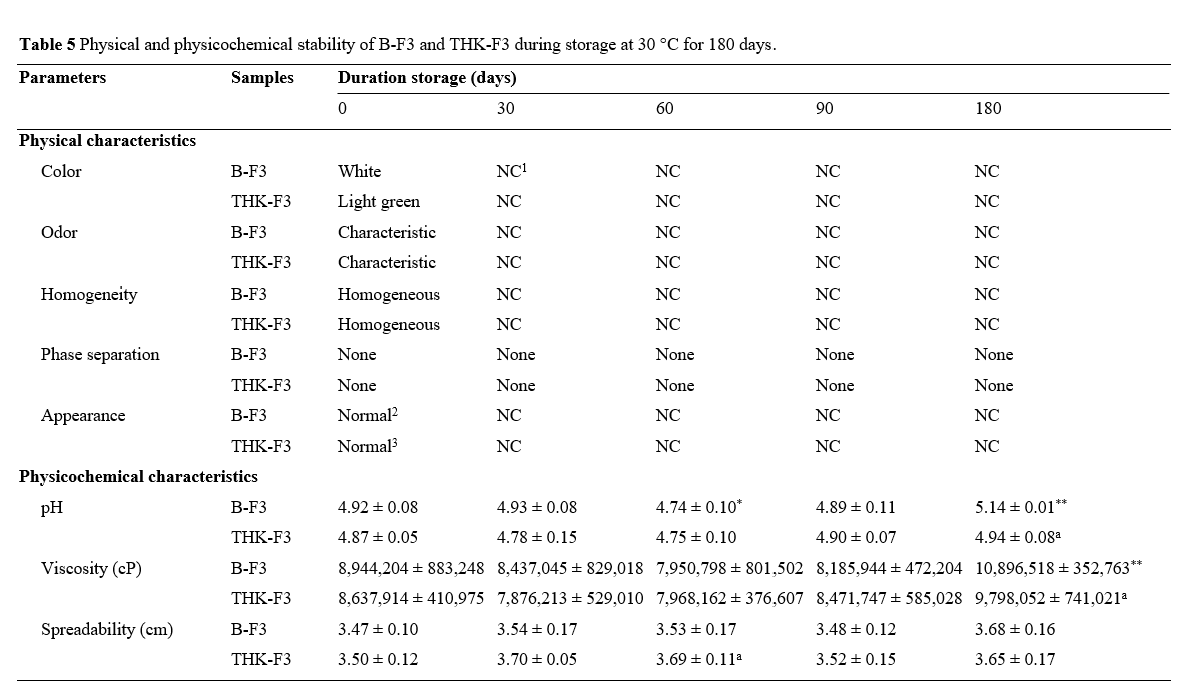
Values are expressed as mean ± SD (n = 5). Data were analyzed using two-way repeated measures ANOVA followed by Bonferroni post hoc test. *p < 0.05, **p < 0.01 compared with Day 0 within the same formulation. a p < 0.05 compared with B-F3 at the same time point.1 NC = No change, 2 Normal = Smooth, opaque, glossy, and nongreasy, 3 Normal = Smooth, opaque, glossy, and nongreasy.
Table 6. Physical and physicochemical stability of B-F3 and THK-F3 during storage at 4 °C for 180 days.
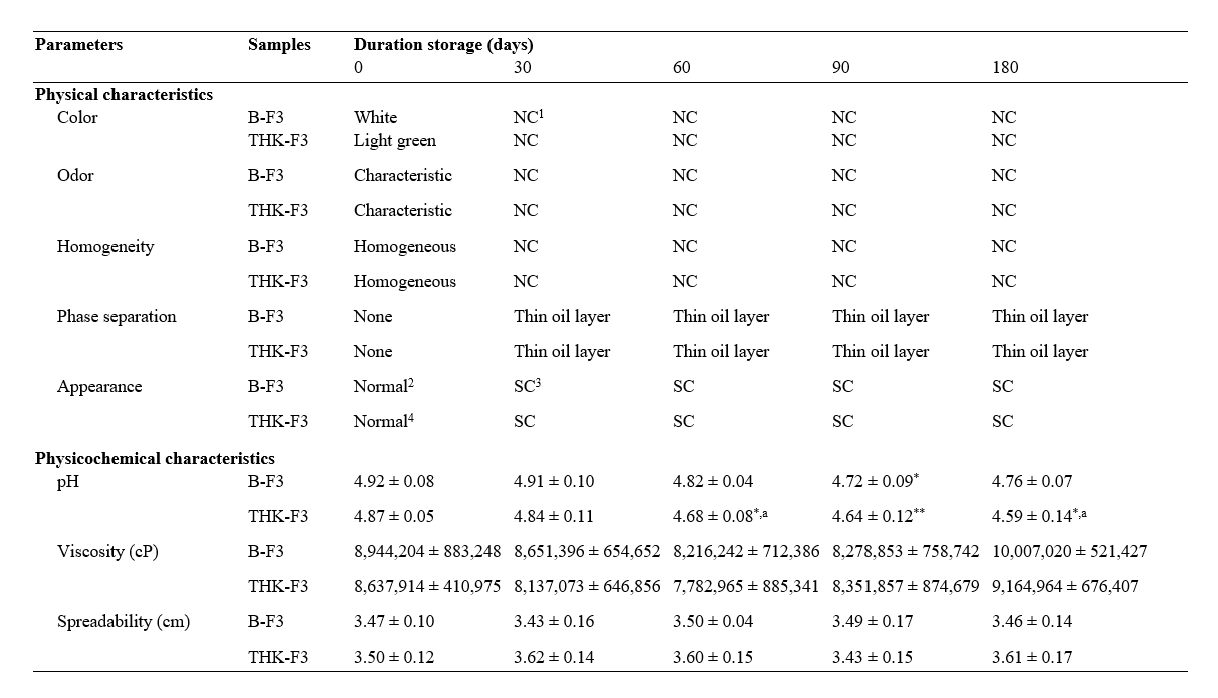
Values are expressed as mean ± SD (n = 5). Data were analyzed using two-way repeated measures ANOVA followed by Bonferroni post hoc test. *p < 0.05, **p < 0.01 compared with Day 0 within the same formulation. a p < 0.05 compared with B-F3 at the same time point. 1 NC = No change, 2 Normal = Smooth, opaque, glossy, and nongreasy, 3 SC = Slight change , 4 Normal = Smooth, opaque, glossy, and nongreasy.
2.4. Total Phenolic Contents (TPC) and Total Flavonoid Contents (TFC) of THK-F3
The stability of TPC and TFC of B-F3 and THK-F3 ointments was evaluated during storage at 4 °C and 30 °C for 180 days (Table 7). At Day 0, THK-F3 exhibited significantly higher levels of both TPC (101.86 ± 7.65 mg GAE/g ointment) and TFC (78.67 ± 2.69 mg CE/g ointment) than B-F3 (p < 0.05). During storage, both formulations showed a gradual decline in TPC and TFC under both temperature conditions. However, the greater reduction was observed in samples stored at 4 °C than at 30 °C. For B-F3, TPC significantly decreased from 81.40 ± 9.76 mg GAE/g ointment at Day 0 to 27.49 ± 3.34 mg GAE/g ointment by Day 180 at 4 °C, whereas a smaller reduction was observed at 30 °C (35.54 mg GAE/g ointment at Day 180). A similar decreasing trend was observed for TFC, which declined to 18.77 mg CE/g ointment at 4 °C and 34.07 mg CE/g ointment at 30 °C by Day 180. THK-F3 generally showed higher TPC and TFC values than B-F3 during storage, with significant differences observed at several time points. At Day 180, TPC of THK-F3 was 28.02 ± 1.93 mg GAE/g ointment at 4 °C but remained higher at 67.49 ± 3.30 mg GAE/g ointment at 30 °C, while TFC values were 21.57 ± 2.83 mg CE/g ointment at 4 °C and 45.13 ± 1.74 mg CE/g ointment at 30 °C. Based on the Day-0 values, THK-F3 stored at 30 °C retained 66.3% and 57.4% of its initial TPC and TFC, respectively, whereas samples stored at 4 °C retained 27.5% and 27.4%, respectively. Significant declines in TPC and TFC levels of THK-F3 were observed at 30 °C on Day 180 and Day 60, respectively, whereas storage at 4 °C significantly reduced these compounds by Day 30. Under the conditions evaluated in this study, storage at 30 °C showed better physicochemical stability than storage at 4 °C.
Table 7. Total Phenolic Content (TPC) and Total Flavonoid Contents (TFC) of B-F3 and THK-F3 ointments during storage at 4 °C and 30 °C.
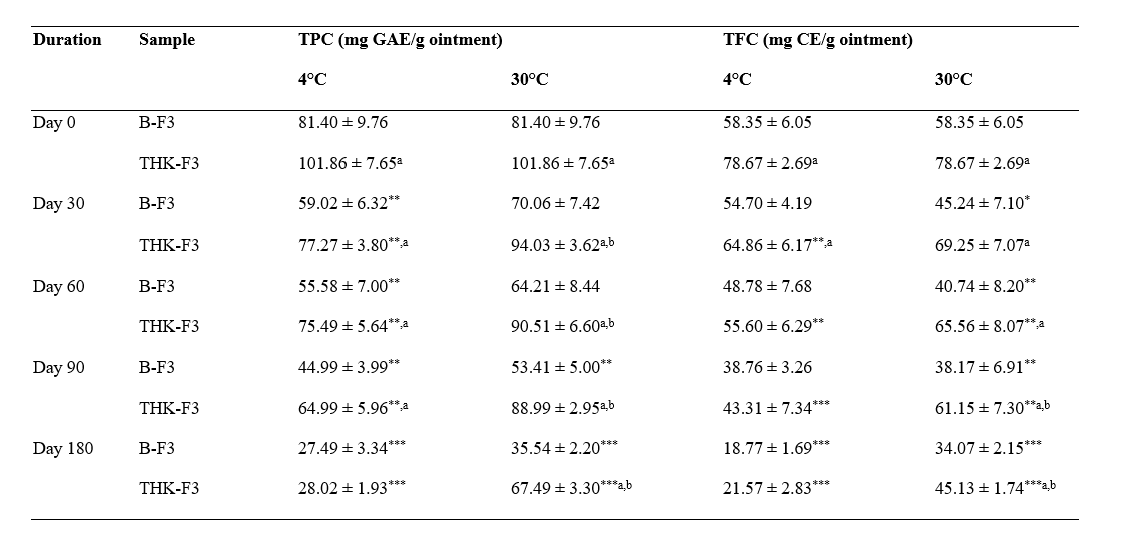
Values are expressed as mean ± SD (n = 5). Data were analyzed using two-way repeated measures ANOVA followed by Bonferroni post hoc test. *p < 0.05, **p < 0.01, ***p < 0.001 compared with Day 0 within the same formulation. a p < 0.05 compared with B-F3 at the same time point. b p < 0.05 compared between 4 °C and 30 °C storage conditions at the same time point.
3. Discussion
THK is a traditional Thai herbal recipe with six potent medicinal plants, including Mitragyna speciosa Korth. (the primary ingredient), Zingiber cassumunar Roxb., Alpinia galanga, Citrus hystrix, Curcuma longa, and Aloe vera. It is traditionally used as a compress ball for relieving muscle pain. This current study builds upon earlier research by formulating a stable, user-friendly ointment for the relief of muscle pain. The results demonstrated that THK-F3 maintained acceptable physicochemical properties and retained measurable levels of phytochemical constituents throughout the storage period, particularly at 30 °C.
Among five formulations, THK-F3 was selected for further experiments. This result is because THK-F3 provides a suitable balance between structural integrity and applicability. In this formulation, hydrocarbon components (vaseline and hard paraffin) form the primary semi-solid backbone, while beeswax contributes to matrix strength and viscosity [6,7]. Lanolin, a waxy ester composed mainly of long-chain fatty acids, was added to THK-F3 at 5% as a moisturizer. This may have contributed to the observed handling characteristics of the formulation [7]. In contrast, the absence of lanolin in THK-F1 led to a rigid base. In THK-F2, the different proportions of lanolin and beeswax may have contributed to the less favorable consistency observed during handling [6,7]. THK-F4 and THK-F5 contained cetostearyl alcohol, a mixture of fatty alcohols used in cosmetics, but this additive did not provide a clear advantage in the preliminary formulation evaluation compared with THK-F3, which lacked it. These compositional differences clarify why THK-F3 provided the optimal balance of viscosity, spreadability, and physical stability for topical application. Our previous LCMS study showed that the ethanolic extract of THK contained several bioactive compounds, including mitragynine, curcumin, demethoxycurcumin, and rhodomycinone [4], which have been tentatively identified in THK-F3 ointment. Therefore, incorporating THK extract effectively enriched the formulation with bioactive phytochemicals. Although the base formulation exhibited considerable antioxidant activity, this may be attributed to essential oils such as peppermint oil and methyl salicylate, which have been associated with antioxidant and free radical scavenging activities [8,9]. The incorporation of THK extract further enhanced the DPPH and ABTS radical scavenging activities. This additional antioxidant activity may be attributed to the phenolic compounds, flavonoids, and alkaloids present in the THK extract. These findings align with our prior report, which indicated that the ethanolic extract of THK inhibited DPPH and ABTS free radicals [4]. Overall, the findings indicate that the THK extract retained its antioxidant activity after incorporation into the ointment formulation.
Heating–cooling stability testing showed that THK-F3 retained its overall physical characteristics, although it showed slight oil separation and increased stickiness after repeated temperature cycling. These observations suggest that repeated temperature fluctuations may have affected the physical structure of the formulation. High temperatures (40 °C) may weaken the wax-oil network, and subsequent low temperatures (4 °C) induce changes in the arrangement of lipid components [10,11,12]. These temperature fluctuations may have affected the internal structure of the formulation, leading to partial instability and surface oil separation [10]. Although pH changed after the heating-cooling test, it remained within the physiologically acceptable range (4-6) for skin application [5]. Notably, when comparing storage at 30 °C and 4 °C, THK-F3 maintained a more stable pH and higher levels of phenolics and flavonoids throughout the 180-day storage period at 30 °C, suggesting better retention of these compounds under this storage condition. In contrast, at low temperatures, lipid crystallization may affect the physical organization of the ointment matrix, which could influence the distribution and homogeneity of phytochemical constituents within the formulation [10,11,12]. Thus, moderate-temperature storage may help maintain a more stable semi-solid matrix that better retains and disperses bioactive compounds. Although B-F3 also contained phenolic and flavonoid compounds, possibly from ingredients such as methyl salicylate, eucalyptus oil, peppermint oil, menthol, and camphor, THK-F3 consistently exhibited higher levels of these compounds throughout the storage period, indicating higher measured TPC and TFC values than B-F3. However, both formulations showed a gradual decline in these phytochemicals over the storage period, suggesting that phenolics and flavonoids may degrade during long-term storage. The reduction of TPC and TFC may be attributed to the inherent instability of these compounds, which are susceptible to oxidative degradation, hydrolysis, and structural transformation when exposed to environmental factors such as temperature, oxygen, and light [13,14]. These changes may reflect the susceptibility of phenolic and flavonoid compounds to oxidative degradation and interactions with the formulation matrix. However, the present study did not establish whether the observed reductions resulted from chemical degradation or changes in the formulation matrix that affected sample homogeneity and phytochemical recovery. In semi-solid formulations, interactions between phytochemicals and the lipid matrix can also influence compound stability and retention of bioactive compounds during storage. Similar trends have been reported in other herbal formulations, in which phenolic compounds gradually decreased over time due to chemical degradation and interactions with the formulation matrix [15,16,17,18].
The stability of a semi-solid topical formulation depends strongly on the structural integrity of the ointment matrix, as reflected in parameters such as viscosity, spreadability, and phase separation. In this study, both B-F3 and THK-F3 ointments exhibited some variation in rheological properties during storage, particularly viscosity. These physicochemical changes did not adversely affect the physical appearance or homogeneity of the formulations stored at 30 °C. Viscosity changes during storage may reflect alterations in the internal structure of the wax–oil network within the ointment matrix, particularly under prolonged temperature fluctuations [10,19,20]. However, this study did not directly investigate the structural changes responsible for the observed viscosity variations. This observation is consistent with previous research that reported increased viscosity in a herbal product containing Benincasa hispida after 30 days at room temperature [21]. Spreadability is a key parameter for assessing the applicability of semi-solid topical products. It reflects both the ease of application and the uniform distribution of active compounds [18,22]. The spreadability of both B-F3 and THK-F3 remained relatively stable during storage at 4 °C and 30 °C. The minor increase in spreadability observed in both formulations may be related to changes in viscosity, as lower viscosity can facilitate spreading [20,22]. These results indicated that the rheological properties of THK-F3 ointment remained suitable for topical application, even after extended storage. Because the primary objective of this study was to evaluate formulation consistency and stability during storage rather than compare the formulation with a commercial ointment, rheological parameters such as viscosity and spreadability were used primarily to monitor formulation performance throughout storage. As these parameters are formulation-dependent, they were interpreted in the context of formulation consistency and stability during storage. Phase separation serves as a critical indicator of formulation instability in semi-solid systems. THK-F3 stored at 30 °C exhibited no visible phase separation, suggesting good physical stability of the ointment matrix. In contrast, phase separation was observed at 4 °C, which may be attributed to lipid crystallization and changes in the internal microstructure, disrupting formulation homogeneity and promoting oil-phase separation [10,11,12].
Overall, THK-F3 maintained relatively stable physical and rheological properties during storage, with better retention of TPC and TFC at 30 °C than at 4 °C. These findings indicate favorable physicochemical stability of THK-F3 under the conditions evaluated and support its further development as a topical herbal formulation.
4. Materials and Methods
4.1. Chemicals
2,2-Diphenyl-1-picrylhydrazyl (DPPH), 2,2-Azino-bis (3-ethylbenzothiazoline-6-sulfonic acid) (ABTS), Gallic acid, catechin, and Trolox were obtained from Sigma–Aldrich (Singapore). Folin–Ciocalteu reagent (Loba Chemie, Mumbai, India), dimethyl sulfoxide (DMSO), sodium carbonate solution (Na2CO3), sodium nitrite (NaNO2), aluminum chloride (AlCl3), sodium hydroxide (NaOH), ethanol, and methanol were of analytical grade and purchased from commercial suppliers. White soft paraffin (petrolatum), hard paraffin, beeswax, lanolin, cetostearyl alcohol, methyl salicylate, eucalyptus oil, peppermint oil, menthol, camphor, and borneol were purchased from local suppliers.
4.2. Preparation of Plant Materials and Extraction of THK
THK consisted of six medicinal plants, including Mitragyna speciosa, Zingiber cassumunar Roxb., Alpinia galanga, Citrus hystrix, Curcuma longa, and Aloe vera. The names of each plant were verified using https://www.worldfloraonline.org on January 10, 2025. The preparation of plant materials and extraction of the THK were carried out according to a previously reported method [4]. Briefly, the six medicinal plants were authenticated and their quality evaluated in accordance with the Thai Herbal Pharmacopoeia. The plant materials were then extracted by maceration using 95% ethanol at room temperature for 7 days. The obtained extract was filtered and concentrated under reduced pressure using a rotary evaporator to yield a viscous extract. The concentrated extract was stored at −20 °C until use.
4.3. Formulation of Ointments
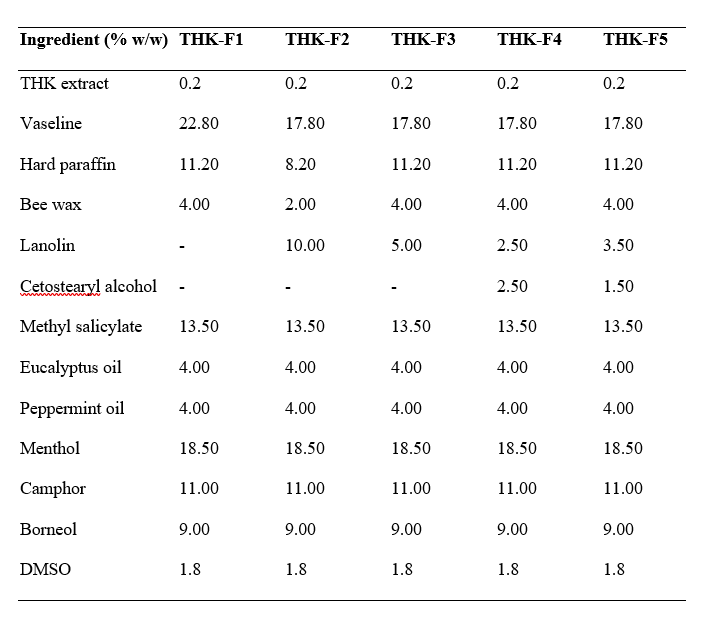
To develop the ointment formulations, THK extract was dissolved in dimethyl sulfoxide (DMSO) and incorporated at 0.2% (w/w), based on a previously reported dose that showed in vivo analgesic and anti-inflammatory activity [4]. Five ointment formulations were prepared using the fusion method with different wax-based excipient compositions, as shown in Table 8. After melting the ointment base components in a water bath at 60 °C until homogeneous, the THK extract solution was added and mixed thoroughly, and then the volatile components were added. The resulting ointments were poured into glass containers and allowed to cool at room temperature until solidified.
Table 8. Composition of THK ointment formulations.
4.4. Physical and Organoleptic Evaluation of Ointment Formulation
The physical and organoleptic characteristics of the ointment formulations were qualitatively evaluated during the stability study. The evaluated parameters included color, odor, appearance, homogeneity, phase separation, and tactile properties after application, including spreadability and greasiness [23]. Greasiness was evaluated subjectively based on tactile sensation and residual oily feel after application. The degree of greasiness was graded using a three-level qualitative scale: + (low), ++ (moderate), and +++ (high).
4.5. pH Measurement of Ointment Formulation
The pH meter (UltraBasic, Denver Instrument, USA) was calibrated with standard buffer solutions at pH 4.0, 7.0, and 10.0 before measurement. Briefly, 1 g of the ointment was dispersed in 100 mL of distilled water and sonicated in an ultrasonic bath (POWERSONIC™ CP2600D, Crest Ultrasonics, Malaysia) at 50 °C for 30 min to obtain a uniform dispersion. The mixture was allowed to stand at room temperature for 1 h, then vortexed to ensure homogeneity. The pH of the dispersion was measured in triplicate, and the results were expressed as mean ± SD [24].
4.6. Viscosity Measurement of Ointment Formulation
The viscosity of the ointment formulation was determined using a rotational viscometer (Brookfield Viscometer, Ametek DV2T). Measurements were preformed using spindle T-F (96) at 0.5 rpm and 25 °C. Approximately 30 g of the ointment sample was used for each measurement. The results were expressed as the mean ± SD in centipoise (cP) [25].
4.7. Spreadability test of Ointment Formulation
The spreadability of the ointment formulation was evaluated using a method adapted from Gupta, et al. [26]. The ointment sample (500 mg) was placed at the center of a marked circle with a diameter of 1 cm on a glass plate (20 × 20 cm). A second glass plate of the same dimensions was carefully placed over the sample. A 0.5 kg weight was then applied to the upper plate for 5 min at room temperature. After removing the weight, the spread ointment diameter was measured in centimeters. The results were expressed as the mean spread diameter ± standard deviation (SD).
4.8. Heating–Cooling Cycle Stability Studies
The THK ointment formulations were subjected to a heating–cooling cycle. The samples were packed in glass containers and stored alternately at 4 °C for 24 h and at 40 °C for 24 h, for a total of six cycles. After completion of six cycles, the ointment formulations were evaluated for physicochemical changes and compared with freshly prepared formulations (day 0) [18].
4.9. Long-Term Stability Study
THK ointment formulations were stored at 4 ± 2 and 30 ± 2 °C for 6 months in capped glass containers placed in an upright position. Samples were evaluated at 0, 30, 60, 90, and 180 days. Physicochemical properties, including appearance, color, odor, phase separation, greasiness upon application, pH, viscosity, and spreadability, were monitored during storage. In addition, total phenolic content (TPC) and total flavonoid content (TFC) were determined to evaluate the stability of bioactive compounds in the formulation.
4.10. Preparation of Ointment Samples for Total Phenolic Content (TPC) and Total Flavonoid Content (TFC) Analyses
THK ointment and base ointment (1 mg of each formulation) were dissolved in 1 mL of ethanol, vortexed, and sonicated in an ultrasonic bath (POWERSONIC™ CP2600D, Crest Ultrasonics, Malaysia) until the preparations appeared clear. The resulting stock solution (1,000 µg/mL) was serially diluted with ethanol to obtain concentrations ranging from 7.81 to 1,000 µg/mL for TPC and TFC analyses.
4.11. Determination of Total Phenolic Content (TPC)
The total phenolic content (TPC) of the THK ointment was determined using the Folin–Ciocalteu method, with slight modifications from a previously reported method [27]. Briefly, 100 µL of each standard or sample solution was mixed with 3.9 mL of distilled water, then 250 µL of 10% (v/v) Folin–Ciocalteu phenol reagent was added. The mixture was shaken thoroughly, after which 750 µL of sodium carbonate solution (Na2CO3) (20% w/v) was added. The reaction mixture was mixed well and incubated in the dark at room temperature for 2 h. After incubation, the absorbance was measured at 760 nm using a microplate reader (FLUOstar Omega, BMG LABTECH, Germany). The total phenolic content was calculated from a gallic acid calibration curve, and the results were expressed as milligrams of gallic acid equivalents per gram of ointment (mg GAE/g ointment).
4.12. Determination of Total Flavonoid Content (TFC)
The total flavonoid content (TFC) of the THK ointment was determined using the aluminum chloride colorimetric method, with slight modifications based on the method described by Hsieh, et al. [28]. Catechin was used as the reference standard. Briefly, 200 µL of standard or sample solution was mixed with 1.25 mL of distilled water and 75 µL of 5% (w/v) sodium nitrite (NaNO2) solution. After 5 min of incubation, 150 µL of 10% (w/v) aluminum chloride (AlCl3) solution was added, and incubated for 6 min at room temperature. Then, 500 µL of 1 M sodium hydroxide (NaOH) was added, and the total volume was adjusted to 2.5 mL with distilled water. The mixture was carefully mixed before determination. The absorbance was measured at 510 nm using a microplate reader (FLUOstar Omega, BMG LABTECH, Germany). The total flavonoid content was calculated from a catechin calibration curve and expressed as milligrams of catechin equivalents per gram of ointment (mg CE/g ointment).
4.13. Phytochemical Characterization by LC-QTOF-MS/MS
THK-F3 ointment was dissolved in LC–MS grade acetonitrile, sonicated, centrifuged, and the supernatant filtered through a 0.2 µm nylon membrane. Chromatographic separation was performed using an Agilent 1290 Infinity II LC system with a ZORBAX Eclipse Plus C18 Rapid Resolution HD column (150 × 2.1 mm, 1.8 µm; Agilent Technologies). The mobile phase consisted of 0.1% (v/v) formic acid in water (A) and acetonitrile (B), run at 0.2 mL/min for 60 minutes. The gradient program included 5% B (0–5 min), linear ramp to 100% B (5–45 min), hold at 100% B (45–50 min), return to 5% B (50–55 min), and re-equilibration at 5% B (55–60 min). The injection volume was 5 μL, and the column temperature was 25 °C.
Mass spectrometric analysis was performed using an Agilent 6545 Q-TOF mass spectrometer with a Dual Agilent Jet Stream electrospray ionization source in positive and negative ionization modes. AutoMS2 data were acquired over m/z 100–1,200 (MS) and 50–1,200 (MS/MS) at collision energies of 10, 20, and 40 eV. Source parameters were: gas temperature, 325 °C; drying gas flow, 13 L/min; nebulizer pressure, 35 psig; sheath gas temperature and flow, 275 °C and 12 L/min, respectively; capillary voltage, 4,000 V; nozzle voltage, 2,000 V; fragmentor voltage, 175 V; and skimmer voltage, 65 V. Data were processed using Agilent MassHunter Workstation, and compounds were tentatively identified by accurate-mass and MS/MS fragmentation matching against the METLIN PCD and PCDL (version 8).
4.14. Antioxidant Activity of Ointment Evaluated by DPPH and ABTS Assays
The antioxidant activity of the selected THK ointment and the base ointment was evaluated using DPPH and ABTS radical scavenging assays, with slight modifications based on previously reported methods [29]. Trolox was used as the reference standard. All measurements were performed in triplicate. THK ointment and the base ointment (10 mg of each formulation) were dissolved in 1 mL of DMSO and sonicated in an ultrasonic bath (POWERSONIC™ CP2600D, Crest Ultrasonics, Malaysia) for 15 min. The samples were centrifuged using a Centrifuge 5427 R (Eppendorf, Hamburg, Germany) at 5,000 rpm for 15 min at 25 °C, and the clear supernatant was collected for DPPH and ABTS assays. For the DPPH assay, 20 µL of the prepared sample solution was mixed with 180 µL of DPPH solution (80 µM). The reaction mixture was incubated in the dark at room temperature for 15 min. The absorbance was then measured at 517 nm using a microplate reader (FLUOstar Omega, BMG LABTECH, Germany). For the ABTS assay, the ABTS•+ working solution was generated by reacting ABTS with potassium persulfate and incubating in the dark for 16 h. The solution was diluted with distilled water to obtain an absorbance of 0.70 ± 0.02 at 730 nm before use. Then, 20 µL of the prepared sample solution was mixed with 180 µL of the ABTS•+ working solution and incubated in the dark at room temperature for 6 min. The absorbance was measured at 730 nm using a microplate reader (FLUOstar Omega, BMG LABTECH, Germany).
For each assay, the control consisted of DMSO mixed with the radical solution (DPPH or ABTS). The sample blank consisted of the sample solution mixed with the corresponding assay solvent without the radical solution. Sample absorbance was corrected by subtracting the sample blank absorbance before calculating the percentage of radical inhibition using the following equation: % Inhibition = [Control − (Sample – Sample blank) / Control] × 100.
4.15. Statistical Analysis
All data were analyzed using IBM SPSS Statistics version 25.0 (IBM Corp., Armonk, NY, USA). Results are presented as mean ± standard deviation (SD). Stability data obtained during storage at 4 and 30 °C were analyzed using a two-way repeated-measures analysis of variance (ANOVA), with time as the within-subject factor and formulation as the between-subject factor, followed by a Bonferroni post hoc test. Comparisons before and after heating–cooling cycles were performed using a paired-samples t-test. A p-value < 0.05 was considered statistically significant.
5. Conclusion
This study developed a physically stable Thai Herbal Kratom (THK) ointment formulation with favorable physical characteristics under the evaluated storage conditions, intended for topical muscle pain relief. Incorporating THK extract significantly increased total phenolic and flavonoid levels compared with the base formulation (B-F3). Stability testing showed that THK-F3 maintained relatively consistent physicochemical characteristics during storage at 30 °C, particularly pH, viscosity, and spreadability. Although phenolic and flavonoid contents gradually decreased during storage, THK-F3 retained higher levels of these compounds. Under the conditions evaluated, storage at 30 °C showed more favorable physical characteristics and better retention of phytochemicals than storage at 4 °C. These results indicate that THK-F3 ointment exhibits satisfactory physicochemical stability. Overall, the findings support the potential of THK-F3 as a topical herbal formulation and highlight the importance of appropriate storage conditions for maintaining product quality. However, further studies are needed to quantify individual phytochemical markers using HPLC, conduct more comprehensive long-term stability studies under appropriate storage conditions, and investigate skin permeation, safety, and therapeutic efficacy.
Author Contributions
Kanchapat Mahaprom: Writing – review & editing, Writing – original draft, Investigation, Formal analysis. Jomkarn Naphatthalung: Writing – review & editing, Writing – original draft, Formal analysis. Julalak Chokpaisarn: Writing – review & editing, Writing – original draft, Project administration, Methodology, Formal analysis, Data curation, Conceptualization, Funding acquisition.
Funding
This research was funded by Traditional Thai Medical Research and Innovation Center, Faculty of Traditional Thai Medicine, Prince of Songkla University (Grant No. TTM6904025S).
Data Availability Statement Data
will be made available on request.
Conflicts: of Interest
The authors declare no conflicts of interest.
Declaration: of generative AI and AI-assisted technologies
During the preparation of this work, authors used Grammarly Proofreader in order to edit writing quality and grammar. After using this tool, authors reviewed and edited the content as needed and take full responsibility for the content of the published article.
References
- Rao, G.H. Integrative Approach to Primary Health Care: Challenges and Opportunities. Apollo Med. 2026, 09760016251406680. [Google Scholar] [CrossRef]
- Saggar, S.; Mir, P.A.; Kumar, N.; Chawla, A.; Uppal, J.; Kaur, A. Traditional and herbal medicines: opportunities and challenges. Pharmacogn. Res. 2022, 14, 107–114. [Google Scholar] [CrossRef]
- Wang, H.; Chen, Y.; Wang, L.; Liu, Q.; Yang, S.; Wang, C. Advancing herbal medicine: enhancing product quality and safety through robust quality control practices. Front. Pharmacol. 2023, 14, 1265178. [Google Scholar] [CrossRef] [PubMed]
- Mahaprom, K.; Chokpaisarn, J.; Kunworarath, N.; Paduka, W.; Phoopha, S.; Limsuwan, S.; Neamsuvan, O. In vivo analgesic, anti-inflammatory activities, and phytochemical profile of Thai herbal Kratom recipe, a traditional Thai herbal medicine for muscle pain relief. J. Ethnopharmacol. 2025, 343, 119442. [Google Scholar] [CrossRef] [PubMed]
- Lukić, M.; Pantelić, I.; Savić, S.D. Towards optimal pH of the skin and topical formulations: From the current state of the art to tailored products. Cosmetics 2021, 8, 69. [Google Scholar] [CrossRef]
- Zbikowska, A.; Onacik-Gür, S.; Kowalska, M.; Sowiński, M.; Szymańska, I.; Żbikowska, K.; Marciniak-Łukasiak, K.; Werpachowski, W. Analysis of stability, rheological and structural properties of oleogels obtained from peanut oil structured with yellow beeswax. Gels 2022, 8, 448. [Google Scholar] [CrossRef] [PubMed]
- Barnes, T.M.; Mijaljica, D.; Townley, J.P.; Spada, F.; Harrison, I.P. Vehicles for drug delivery and cosmetic moisturizers: review and comparison. Pharmaceutics 2021, 13, 2012. [Google Scholar] [CrossRef] [PubMed]
- Mańkowska, D.; Dems-Rudnicka, K. Antioxidant activity and phenolic compounds in medicinal plants: a comparison of organic and conventional Mentha piperita, Melissa officinalis, Salvia officinalis, and Urtica dioica. Molecules 2025, 30, 4812. [Google Scholar] [CrossRef] [PubMed]
- Michel, P.; Olszewska, M.A. Phytochemistry and biological profile of Gaultheria procumbens L. and wintergreen essential oil: from traditional application to molecular mechanisms and therapeutic targets. Int. J. Mol. Sci. 2024, 25. [Google Scholar] [CrossRef] [PubMed]
- Jin, X.; Imran, M.; Mohammed, Y. Topical semisolid products—understanding the impact of metamorphosis on skin penetration and physicochemical properties. Pharmaceutics 2022, 14(11), 2487. [Google Scholar] [CrossRef] [PubMed]
- Kotera, M.; Kamigaki, T.; Kohama, A.; Shiota, M. Effect of temperature conditions of the home environment on the physical properties of semi-solid fat products. J. Food Meas. Charact. 2017, 11, 134–143. [Google Scholar] [CrossRef]
- Ramos, M.R.R.; Pineda, L.M.R.; Herrera, M.L. Factors affecting lipid crystallization: Chemical composition and processing conditions. J. Am. Oil Chem. Soc. 2026, 103, 355–369. [Google Scholar] [CrossRef]
- Olmedo, R.H.; Asensio, C.M.; Grosso, N.R. Thermal stability and antioxidant activity of essential oils from aromatic plants farmed in Argentina. Ind. Crops Prod. 2015, 69, 21–28. [Google Scholar] [CrossRef]
- Abdelmohsen, U.R.; Elmaidomy, A.H. Exploring the therapeutic potential of essential oils: a review of composition and influencing factors. Front. Nat. Prod. 2025, 4, 1490511. [Google Scholar] [CrossRef]
- Acosta, N.; Sánchez, E.; Calderón, L.; Cordoba-Diaz, M.; Cordoba-Diaz, D.; Dom, S.; Heras, Á. Physical stability studies of semi-solid formulations from natural compounds loaded with chitosan microspheres. Mar. Drugs. 2015, 13, 5901–5919. [Google Scholar] [CrossRef] [PubMed]
- Ling, J.K.U.; Sam, J.H.; Jeevanandam, J.; Chan, Y.S.; Nandong, J. Thermal degradation of antioxidant compounds: Effects of parameters, thermal degradation kinetics, and formulation strategies. Food. Bioprocess. Technol. 2022, 15, 1919–1935. [Google Scholar] [CrossRef]
- Serra, M.; Botelho, C.; Almeida, H.; Casas, A.; Teixeira, J.A.; Barros, A.N. Stable and functional cosmetic creams enriched with grape stem extract: A sustainable skincare strategy. Antioxidants 2025, 14, 784. [Google Scholar] [CrossRef] [PubMed]
- Oton, L.; Azevedo, M.D.G.; Falcão, J. Preliminary stability study of dry and glycolic extract of Ginkgo biloba L. incorporated in phytocosmetic formulations. Int. J. Phytocosmet. Nat. Ingred. 2018, 5, 8–8. [Google Scholar] [CrossRef]
- Chow, P.S.; Lim, R.T.Y.; Cyriac, F.; Shah, J.C.; Badruddoza, A.Z.M.; Yeoh, T.; Yagnik, C.K.; Tee, X.Y.; Wong, A.B.H.; Chia, V.D. Influence of manufacturing process on the microstructure, stability, and sensorial properties of a topical ointment formulation. Pharmaceutics 2023, 15, 2219. [Google Scholar] [CrossRef] [PubMed]
- Ballmann, C.; Mueller, B.W. Stabilizing effect of cetostearyl alcohol and glyceryl monostearate as co-emulsifiers on hydrocarbon-free O/W glyceride creams. Pharm. Dev. Technol. 2008, 13, 433–445. [Google Scholar] [CrossRef] [PubMed]
- Sabale, V.; Kunjwani, H.; Sabale, P. Formulation and in vitro evaluation of the topical antiageing preparation of the fruit of Benincasa hispida. J. Ayurveda Integr. Med. 2011, 2, 124. [Google Scholar] [CrossRef] [PubMed]
- Azmin, S.M.; Halim, A.A.; Nor, M.M. Physicochemical analysis of natural herbal medicated ointment enriched with Cymbopogon nardus and virgin coconut oil. In IOP Conf. Ser. Earth Environ. Sci.; IOP Publishing, 2021; p. 012040. [Google Scholar] [CrossRef]
- Tan, P.L.; Rajagopal, M.; Chinnappan, S.; Selvaraja, M.; Leong, M.Y.; Tan, L.F.; Yap, V.L. Formulation and physicochemical evaluation of green cosmeceutical herbal face cream containing standardized mangosteen peel extract. Cosmetics 2022, 9, 46. [Google Scholar] [CrossRef]
- Ilievska, B.; Loftsson, T.; Hjalmarsdottir, M.A.; Asgrimsdottir, G.M. Topical formulation comprising fatty acid extract from cod liver oil: Development, evaluation and stability studies. Mar. Drugs. 2016, 14. [Google Scholar] [CrossRef] [PubMed]
- Awad El-Gied, A.A.; Abdelkareem, A.M.; Hamedelniel, E.I. Investigation of cream and ointment on antimicrobial activity of Mangifera indica extract. J. Adv. Pharm. Technol. Res. 2015, 6, 53–57. [Google Scholar] [CrossRef] [PubMed]
- Gupta, S.; Raghuwanshi, N.; Varshney, R.; Banat, I.M.; Srivastava, A.K.; Pruthi, P.A.; Pruthi, V. Accelerated in vivo wound healing evaluation of microbial glycolipid containing ointment as a transdermal substitute. Biomed. Pharmacother. 2017, 94, 1186–1196. [Google Scholar] [CrossRef] [PubMed]
- Mocan, A.; Zengin, G.; Simirgiotis, M.; Schafberg, M.; Mollica, A.; Vodnar, D.C.; Crisan, G.; Rohn, S. Functional constituents of wild and cultivated Goji (L. barbarum L.) leaves: Phytochemical characterization, biological profile, and computational studies. J. Enzym. Inhib. Med. Chem. 2017, 32, 153–168. [Google Scholar] [CrossRef] [PubMed]
- Hsieh, M.C.; Shen, Y.J.; Kuo, Y.H.; Hwang, L.S. Antioxidative activity and active components of longan (Dimocarpus longan Lour.) flower extracts. J. Agric. Food. Chem. 2008, 56, 7010–7016. [Google Scholar] [CrossRef] [PubMed]
- Chokpaisarn, J.; Chusri, S.; Amnuaikit, T.; Udomuksorn, W.; Voravuthikunchai, S.P. Potential wound healing activity of Quercus infectoria formulation in diabetic rats. PeerJ 2017, 5, e3608. [Google Scholar] [CrossRef] [PubMed]
Disclaimer/Publisher’s Note: The statements, opinions and data contained in all publications are solely those of the individual author(s) and contributor(s) and not of MDPI and/or the editor(s). MDPI and/or the editor(s) disclaim responsibility for any injury to people or property resulting from any ideas, methods, instructions or products referred to in the content. |
© 2026 by the authors. Licensee MDPI, Basel, Switzerland. This article is an open access article distributed under the terms and conditions of the Creative Commons Attribution (CC BY) license.
Copyright: This open access article is published under a Creative Commons CC BY 4.0 license, which permit the free download, distribution, and reuse, provided that the author and preprint are cited in any reuse.