
Submitted:
11 November 2026
Posted:
13 November 2026
You are already at the latest version
Abstract
Background/Objective: Professional autonomy is central to midwifery practice and the provision of woman-centred childbirth care. However, formal recognition of professional competencies does not necessarily ensure their implementation within healthcare organisations. This study aimed to examine how international and Portuguese regulatory and policy documents conceptualise, support and potentially constrain the professional autonomy of midwives and nurse-midwives in childbirth care. Methods: A qualitative documentary analysis was conducted using a purposively selected corpus of 41 publicly available documents published between 2005 and 2026 (22 international and 19 Portuguese documents). Document selection and extraction were informed by the methodological framework proposed by Moilanen et al., and data were interpreted using Braun and Clarke's reflexive thematic analysis. Results: Five final themes emerged from the analysis: 1) Regulation legitimises and defines professional autonomy; 2) Competence underpins the authority to make decisions; 3) Professional autonomy embodies a woman-centred model of care; 4) Autonomy requires an organisational environment that makes it possible; 5) There remains a gap in autonomy between legal recognition and practice. Conclusions: International and Portuguese documents broadly recognise the importance of midwifery autonomy, although differences emerge in the extent to which regulatory recognition is translated into explicit organisational responsibilities and models of care. The findings highlight the importance of regulatory clarity, supportive organisational arrangements, professional leadership and interprofessional collaboration. Further empirical research is required to examine how these documentary frameworks are enacted in clinical practice.
Keywords:
document analysis
; midwifery
; nurse midwives
; professional autonomy
; professional self-regulation
1. Introduction
The quality of midwifery and the safety of care throughout the pregnancy cycle are closely linked to the professional autonomy of Midwives and Nurse midwives (M/NM). The World Health Organisation (WHO), the United Nations Population Fund (UNFPA) and the International Confederation of Midwives (ICM) publicly recognise the essential role of these professionals in global health. Accordingly, the World Health Assembly designated 2020 as the International Year of the Nurse and the Midwife, having for decades advocated a comprehensive set of guidelines on autonomy in midwifery [1,2,3,4,5,6,7]. Standards have been established for regulation, education and clinical practice, under which M/NM are the primary care providers for women in low-risk labour. It is recognised that when these professionals are integrated into health systems that support their philosophy of care [8], better maternal and foetal outcomes are achieved, and there is less intervention and manipulation of the woman’s body, which promotes positive birth experiences and women’s satisfaction [9]. However, realising these benefits is only plausible if M/NM exercise their skills [10] and knowledge [11] across the full scope of their practice; that is, if they have professional autonomy.
Autonomy refers to the capacity to act independently within a framework of acquired competencies, for which the professional is responsible and accountable [12]. In the context of healthcare, professional autonomy refers to the right and capacity of professionals to make independent clinical decisions within their scope of practice, taking responsibility for their actions whilst simultaneously benefiting from social recognition. It is in this context that international and national guidelines, through guidance or regulatory documents drawn up by international, professional or governmental bodies, play a key role in defining what, how and when M/NM should act.
Regulation is the weakest pillar of midwifery; very few countries recognise the profession as autonomous and regulated, and M/NM are frequently excluded from decision-making and the planning of health policies [13]. This regulatory weakness leads to inconsistencies in the exercise of M/NM competencies, which contradicts the guidelines of the WHO and the ICM [14]. When specific countries are identified, national legislation restricts the professional capacity of midwives within their scope of practice by placing them under the authority of a Ministry of Health [13], which fails to recognise the value of midwives in improving maternal-foetal health [9,15]. In Portugal, the recognition of the profession as an autonomous one faces further obstacles. The qualification required to practise the professional role of “Midwife” is that of “Specialist Nurse in Maternal and Obstetric Health”. This is a specialised nursing programme and therefore follows the regulatory standards of the nursing profession [13,15]. As this is the only educational pathway available in the country, a standalone midwifery education programme is currently precluded, as is the establishment of midwifery as an autonomous profession within the organisational framework of the Portuguese National Health Service. Added to this is the imbalance of political power between the nursing profession and the medical profession, which results in a reduced capacity to influence regulatory decisions.
Midwifery requires a firm and sustained defence of its regulatory autonomy, as well as clarity regarding its educational competencies and scope of practice [9,13,14] – conditions that will enable the definition of its professional identity and the social recognition of the role of its practitioners. Only when M/NM assume their professional standing and the inherent responsibility for maternal-foetal care will it be possible to ensure high-quality obstetric services that are effective in reducing maternal and neonatal mortality [16].
Written guidelines, competencies, regulations and health policies are fundamental to the development and strengthening of any autonomous profession. Much of the health-related documentation constitutes responses to legislative requirements or the rights of stakeholders and is publicly accessible [17]. Health-related documents contain data on a range of topics and populations of interest. This enables an understanding of multiple factors and the study of issues that would otherwise be inaccessible, and which may influence healthcare and public wellbeing. In research, the use of such documents also contributes to social and environmental sustainability [17,18].
In the literature, there is a scarcity of compilations of global guidelines and policies that incorporate the factors affecting autonomy in midwifery. This documentary analysis is therefore justified not only by the topicality of the subject, but above all by the gap between the autonomy formally granted and that experienced in clinical practice [13,14,16]. Exploring the autonomy of M/NM through a documentary analysis allows for a more explicit and transparent understanding of the phenomenon, as this methodology enables documents to be analysed systematically and concepts, assumptions and gaps within them to be identified.
Although previous studies have examined midwives’ professional autonomy, regulatory frameworks and barriers to autonomous practice, less attention has been paid to how international and national policy documents collectively construct professional autonomy and how their underlying assumptions, expectations and regulatory provisions converge or diverge. In particular, limited understanding remains of the relationship between formal professional recognition, the allocation of clinical decision-making responsibilities and the organisational conditions envisaged for implementing autonomous midwifery practice. A qualitative documentary analysis can contribute to addressing this gap by examining not only what regulatory and policy documents prescribe but also the meanings, tensions and potential inconsistencies embedded within their provisions.
This study aimed to critically analyse how international and Portuguese regulatory and policy documents conceptualise, recognise and frame the professional autonomy of midwives and nurse-midwives in childbirth care, with particular attention to regulatory provisions, professional competencies and organisational conditions. This gave rise to the research question that guided the entire process: How is the professional autonomy of midwives and nurse-midwives conceptualised, supported and constrained within international and Portuguese regulatory and policy documents relating to childbirth care?
2. Materials and Methods
2.1. Design and Theoretical Framework
A qualitative study employing an inductive approach, utilising documentary analysis as a method of data collection. As this is a powerful methodology for understanding and analysing health policies [19], its use was justified to analyse the guidelines on the autonomy of M/NM in childbirth care. As an exploratory method, it allows for triangulation with other methods [20]. As a systematic method for evaluating documents, it enabled contextualisation and the incorporation of a temporal dimension into the understanding of the evolution of these guidelines [18]. The study was informed by a contextualist qualitative orientation, recognising that documentary meanings are shaped by the institutional, historical and sociopolitical contexts in which the documents are produced and interpreted. Then, the theoretical and methodological framework was based on the reflexive thematic analysis [21]. As this is a study within the field of nursing and aimed at systematisation and methodological rigour, the framework proposed for the analysis of health documents as written data [17], was adopted. The method consists of seven interlinked phases. The first five are operational, whilst the remaining two cut across the entire process (Figure 1). To clarify this further, each stage is described separately below.
2.1.1. First Phase: Determining the Purpose, Data, and Study Design
Based on the research question – “How do international and national guidelines and policies influence the professional autonomy of M/NM in the care of women in labour?” – primary documentary sources, such as directives, legislation and regulations, were identified, as the priority was on official documents and the content of health policies [19]. At this stage, the aim was to identify documents that could be used in the research and would be of interest to the target audience [17], namely M/NM. The choice fell on documents in the public domain, specifically websites of institutions relevant to midwifery. At the international level, the WHO, UNFPA and the ICM were selected. The rationale for selecting the first two organisations is that they support M/NM education and strengthen midwifery associations, promoting the profession and its visibility [13]; the third was chosen as it is the non-governmental organisation that brings together more than 140 midwives’ associations from around the world [22], and because it participates in the global health agenda alongside the WHO and the United Nations (UN), and has produced reference documents on the establishment, management and regulation of midwifery services, ensuring the quality of care and the professional identity of M/NM internationally [13]. At national level, the choice fell on the regulatory body, the Portuguese Order of Nurses (OE), and the Directorate-General for Health (DGS), which is a central body of the Ministry of Health (MH) and whose mission is to regulate, guide and coordinate activities relating to health promotion and disease prevention, whilst ensuring safety and clinical quality within the health system [23]; and the most representative professional association, the Portuguese Association of Obstetric Nurses (APEO).
Given that the aim of the study was to analyse the international and national guidelines and policies that have influenced the professional autonomy of M/NM in childbirth care, the study—which was exploratory in nature—adopted a qualitative approach and utilised the qualitative method of documentary analysis [17].
2.1.2. Second Phase: Determining the Selection Strategy
At this stage, the aim was to determine the document selection strategy in terms of time frame, sampling method, and inclusion and exclusion criteria [17].
Search and selection of data
The search was carried out between January and April 2026, using the Google search engine, in open-access digital sources on the main official websites of international and national institutions responsible for regulating and issuing guidelines for the midwifery profession (internationalmidwives.org, who.int, ordemenfermeiros.pt, dgs.pt, apeo.pt). During the review of the documents, through initial skimming followed by in-depth analysis, the following keywords were identified: “midwifery autonomy”, “midwives/nurse midwives”, “autonomous”, “midwifery practice” and “midwifery regulation”. Related documents and references were sought on the websites themselves or within the documents. The documents were collected in English and Portuguese. The sample was selected intentionally, considering the research question and objective; consequently, the following selection criteria were defined:
- Inclusion criteria: official, implementing or legal documents, publicly accessible, from official institutions and credible professional bodies, dating from 2005 (the date of the first international definition of the scope of midwifery practice) [24], which mention autonomy in the scope of practice and regulation in midwifery, in the care of women in labour. The most recent version of each document was considered.
- Exclusion criteria: documents without a source or institutional link; books; news articles; opinion pieces; academic papers; presentations; and meeting minutes. Documents relating to home births, antenatal and postnatal care. Documents that have been revoked or whose revisions are out of date.
2.1.3. Third Phase: Selecting or Developing the Extraction Matrix
The aim of this phase was to select or develop an extraction matrix that would enable the systematic recording of documentary data [17,18]. The development strategy may be deductive (inference based on prior facts or theories) or inductive (inference based on the observation of patterns emerging from the data) [21,25].
Data extraction and organisation
In line with the inductive approach, a theoretical framework was drawn up, in which the documents were organised first by source type – international and national – and then by year, author, document type (official, legal or implementation), title and purpose (with the link recorded for possible future reference) (supplementary material). To archive the PDF documents, a folder was created in which the documents were identified, for easier retrieval, using a naming convention (year, author, country and type of document) [19]. The corpus for analysis consisted of 42 documents (international and national).
In a second step, an analysis matrix was constructed, in which the first column was divided into international and national documents. In this column, the documents were identified using the same naming convention as that used in the PDF archive file. The second column contained the document title to facilitate identification of the subject matter. The third column was reserved for the findings, and a fourth column for illustrations of these findings (Table 1) (supplementary material).
2.1.4. Fourth Phase: Pilot Testing the Selection Strategy and Extraction Matrix with Sub-Data
The aim here was to test the selection strategy and the extraction matrix to ensure the accuracy and consistency of the extracted data.
A test was carried out using five international documents and an equal number of national ones to assess the selection criteria, the relevance of the data extraction matrix and the removal of duplicate documents (e.g. in both languages). This made it possible to confirm the viability of the matrix for use with all the data [17].
2.1.5. Fifth Phase: Collecting and Analysing the Data
This phase began with a thorough reading of the documents to gain a general understanding of the data [18]. Subsequently, the units of analysis were identified; according to Bowen (2009), these may be a word, a sentence or an excerpt from the text.
In line with this, the analytical method employed was the reflexive thematic analysis proposed by Braun and Clarke (2006), which comprises six stages: (1) Familiarisation (reading and re-reading the data); (2) Coding (creating initial codes that capture meaningful units); (3) Generation of initial themes (grouping codes into themes); (4) Review of themes (against the data to ensure consistency); (5) Definition and naming of themes (with scope limitation); (6) Writing up (thematic narrative with illustrative quotations) [21]. This methodology aimed to provide a systematic procedure for identifying emerging patterns and themes, which led, inductively, to the construction of five final themes. Coding focused on passages addressing professional authority, scope of practice, clinical decision-making, accountability, interprofessional relationships, models of care and organisational conditions. Initial codes were progressively examined across documents to identify patterns of shared meaning and points of tension between international and Portuguese frameworks. Candidate themes were developed through an iterative process of engagement with coded extracts, the complete documentary corpus and the research question. The final themes were constructed through reflexive discussions among the researchers, considering both convergent and divergent documentary perspectives. Particular attention was paid to distinguishing explicit regulatory provisions from institutional recommendations and the researchers’ interpretations of their implications for professional autonomy (Table 2).
2.1.6. Sixth Phase: Ensuring Rigour of the Study
The sixth stage focused on ensuring the rigour of the document analysis, with a view to reducing the risk of bias in the selection and analysis of documents [17].
Regarding the rigour in the selection of document types, consideration was given to their purpose, the author’s influence and any conflicts of interest relating to funding; as these are health-related documents, they are produced for specific purposes and for specific target audiences [17,18]. For this reason, documents from reputable and globally respected organisations were selected.
About rigour in the selection and analysis of documents, bias could be related to: the chosen databases; undetected errors and inaccuracies in the data; inconsistencies in interpretation; and incorrect contextualisation of the data, which could consequently lead to bias in the analysis itself [17]. This issue was addressed through a more critical and detailed reading and re-reading of the documents, as well as their selection by two researchers, to enhance the quality and credibility of the study. The research team acknowledged that its professional backgrounds, clinical experiences and prior understandings of midwifery autonomy could shape document selection, coding and interpretation. Reflexive discussions were therefore used to critically examine analytical assumptions, consider alternative interpretations and make explicit the relationship between the researchers’ professional positioning and the themes developed. Reflexivity was understood as an integral component of knowledge production rather than as a mechanism for eliminating researcher subjectivity.
2.1.7. Seventh Phase: Method-Specific Research Ethics
The final stage involved reflecting on the ethics of the research and the methodology used throughout the process, with particular attention paid to obtaining organisational permission and approval and safeguarding the anonymity of individual data sources [17].
As the documents analysed are freely accessible on the internet, review by an ethics committee was not deemed necessary. However, a systematic approach was followed to validate the reliability, authenticity and representativeness of the data [19]. Meetings were also held amongst the members of the research team to facilitate a reflexive process of interpretative discussion throughout the document analysis.
Reflexivity was considered throughout the entire document analysis process. In terms of background, the research team consists mainly of academics in nursing, two specialising in maternal health and obstetrics and one in community nursing. The lead author is a PhD student in Health Sciences, specialising in Nursing, and works as a nurse midwife at a Portuguese maternity hospital. To ensure analytical rigour and the credibility of the conclusions, the team discussed their own reflections and cultural positioning in a series of meetings to prevent any bias in the analysis.
3. Results and Discussion
3.1. Characterisation of the Corpus Under Analysis
A total of 48 documents were identified in the theoretical framework compiled for the research. Following the application of the inclusion and exclusion criteria, 41 documents were selected for analysis. The document corpus comprised guidelines, position statements, opinions, regulations, legislation, standards and guidance published between 2005 and 2026. Of these, 22 were produced at international level and 19 in the Portuguese context. The documents address the definition of the profession, the specification of competencies and practice, regulation, ethics, education, and models and organisation of care. To facilitate a chronological understanding, the identified guidelines and policies were placed on a timeline (Figure 2), distinguishing between the international and Portuguese national contexts. It was immediately apparent that national guidelines followed international guidelines with a time lag, in most cases exceeding two years, which compromises the safety and quality of maternal and foetal care in Portugal.
3.2. Analytical Synthesis
An analysis of international and national guidelines and policies has shown that the autonomy of M/NM in childbirth care is based on interdependent pillars, such as regulation, education, models of practice and organisational contexts, forming a multidimensional construct. A reflexive thematic analysis of the documentary corpus enabled the identification of five themes:
Regulation legitimises and defines professional autonomy
Regulation is an essential pillar of the autonomy of M/NM, as evidenced in the documents analysed, which define it through the recognition of their competence and authority in the provision of care and in decision-making within the field of midwifery practice [2,7,26]. In international guidelines, such as the Global Standards for Midwifery Regulation (2011), regulation ensures high-quality care and the development of the profession, with a view to protecting the public and reducing maternal and foetal mortality and morbidity [2].
During the period analysed, international policies and guidelines progressively consolidated midwifery as an autonomous profession, with its own responsibilities, a specific body of knowledge and a defined scope of practice [1,5]. M/NM were recognised as fundamental to the provision of autonomous, high-quality care in Sexual, Reproductive, Maternal, Newborn and Adolescent Health (SRMNAH)[15,27] and ensured the legal protection of the target population within the scope of their comprehensive practice [2]. The guidelines emphasised the need for specific regulation of midwifery, separate from nursing [2,26], enabling its self-governance and the protection of the title of midwife [1]. The autonomy of midwives was linked to the definition and adoption of standards for education [10], regulation and professional practice [2]. In international literature, “working in isolation” [1,24] was distinguished from “independent and autonomous practice” within regulated systems, supported by scientific evidence and ethical principles [3]. European [28,29,30] and Portuguese [31,32,33] guidelines, forming part of this framework, set out requirements for education, the recognition of qualifications and professional competencies, whilst encouraging continuous professional development. The Portuguese regulatory framework explicitly assigned nurse midwives competencies and responsibility for the diagnosis, monitoring and management of low-risk labour [31,33,34].
More recent guidelines, such as Midwives’ Voices Midwives’ Realities (2016), identified challenges to professional autonomy (e.g. economic, social and gender-related) and the devaluation of the role of M/NM, despite improvements in maternal and foetal mortality and morbidity indicators [14]. The lack of recognition of these professionals and the limited opportunities for continuing professional development, leadership and participation in policymaking were also highlighted. All these aspects were cited as resulting from subordination to the medical profession and insufficient regulatory and legal support [4,14]. The fragmentation of care for women was evident, because of the imbalance between the obstetric care and midwifery care available. Better indicators of maternal and neonatal mortality were observed, but these were associated with increased costs – for example, due to the medicalisation of labour – and a decline in quality, reflected in negative birth experiences [35].
This demonstrated that autonomy is not merely an individual attribute, but an institutionally conditioned one, dependent on educational and regulatory systems aligned with international standards. By defining the scope of practice, the regulations themselves can simultaneously enable and restrict the professional autonomy of M/NM, thereby compromising the safety and quality of maternal and neonatal healthcare. In the Portuguese context, the autonomy of nurse midwives is severely constrained by the biomedical model and its “cascade” of technocratic routines, with growing implications for the population’s access to healthcare [36,37].
However, as noted in the literature, when the legislation forming the basis of regulation is not underpinned by health policies and supported by government laws, recognition of midwifery and clarity regarding its role and scope are limited, leading to confusion amongst the target population [13,38]. In the interests of public health, it is urgent that managers, legislators and politicians are educated on the importance of midwifery regulation [38,39]. They must work alongside M/NM to develop standards and policies for good practice in maternal health, which clarify the boundaries of autonomy and interdependence – rather than subordination – with other health professionals [13,38]. Regulation in midwifery is a fundamental, dynamic and complex pillar of the profession’s autonomy, but it is also the weakest [13]. The lack of government investment in the autonomy of M/NM severely constrains their clinical practice, leading to limitations in healthcare provision, particularly in hospital settings [40,41]. In recent years, regulation has been the pillar on which M/NM have sought greater strength to underpin their full practice.
Competence underpins the authority to make decisions
In the documentary corpus, autonomy was not only linked to regulation but was also associated with the ability to exercise control over two other structural dimensions of the profession: education and practice. In the European directives [28,29], there was a clear concern to facilitate mobility and simplify the recognition of professional qualifications, which subsequently made it possible to assess and map developments in the midwifery profession across Member States, as a result of multicultural scientific education [42]. During the period under study, international guidelines and policies advocated professional autonomy, underpinned by a single body of knowledge, standardised professional skills and behaviours [5,24,35], adherence to a code of ethics [3], self-governance [2] and decision-making processes by M/NM [10]. With regard to this last aspect, in the Munich Declaration, the Member States of the European Union, including Portugal [34,43,44], undertook to ensure that nursing and midwifery contribute to decision-making at all levels of development (local, governmental and international) and to the implementation of health policies and research [2,30,45]. The autonomy of M/NM was rooted in their own professional identity, based on a specific body of knowledge and internationally defined competencies [1,5,10]. In the literature, advanced education has been a path pursued with tenacity, and research has served as an affirmation of the expanding scientific knowledge of M/NM, which has proved crucial to the full realisation of their potential [46,47,48]. The integration of M/NM with appropriate education has had direct implications for the quality of obstetric care worldwide, with a significant impact on reducing concerning indicators in this area, such as maternal and neonatal mortality rates [13]. However, despite evidence of growing responsibility and accountability, the competencies and consequent decision-making of M/NM continued to be socially discredited in the face of the “centuries-old educational traditions” of other health professionals [13]. And, contrary to what one might expect, it was the higher-income countries that were the most restrictive in granting autonomy and in sidelining the clinical judgement of M/NM [9,49]. This is because they obstruct access by M/NM to leadership roles and participation in the formulation of obstetric health policies and, particularly incongruously, prevent compliance with legislation that enshrines the scope of midwifery practice [9,26]. Currently, the autonomy of Portuguese nurse midwives is restricted by the Ministry of Health (MH) and the Executive Directorate of the National Health Service (a body under the authority of the MH). The latter has created internal regulations and information technology barriers that directly contravene the letter of a government order and a guideline from the Directorate-General for Health (DGS) [33,34,50,51,52], which are explicit regarding the autonomy of nurse midwives in low-risk situations and coordination in situations of increased risk. Despite this, nurse midwives have been prevented from monitoring pregnant women without a general practitioner by prescribing tests and medication, and from arranging hospital admissions independently in low-risk situations, on the grounds that these are “medical acts” and in defence of a “culture of risk” [53]. However, this same culture has not prevented the closure of maternity wards across the country, thereby obstructing access to healthcare [36,37]. This has led to an increase in the number of out-of-hospital births without specialist supervision and exposes the maternal and neonatal population to physical, emotional and mental risks of yet unknown magnitude, at considerable cost.
In the literature, M/NM are consistently recognised for the scientific expertise that underpins their sound decision-making in the assessment, planning and autonomous provision of care in relation to physiological processes, as well as in the identification and referral of cases that fall outside their professional remit [54,55,56]. Interprofessional collaboration was not seen as opposed to autonomy, but as a component of autonomous and responsible practice – a concept that is still not fully understood by politicians, managers and corporatist clinical groups [40,57]. For M/NM the path forward lies in advanced education and evidence-based practice, and in the development of a professional identity linked to responsibility, accountability and autonomy.
Professional autonomy embodies a woman-centred model of care
The documents analysed addressed the recognition and strengthening of the autonomy of the midwifery profession, alongside the promotion of physiological childbirth [10,58,59]. The autonomy of these professionals was intrinsically linked to the philosophy and model of midwifery care, prioritising woman-centred care and aiming for a positive childbirth experience [8,60]. Within the analysed corpus, the autonomy of M/NM was demonstrated by the competence and responsibility with which they cared for women, in line with the definition of their scope of practice [1,5,24]. Respect for autonomy and the promotion of informed decision-making by women were explicit principles in the guidelines, reiterated in documents such as the ICM’s International Code of Ethics [3]. Advocacy for the physiology of pregnancy and labour [27,44,58,60], and the empowerment of women in terms of autonomy and decision-making regarding their health, enhance professional autonomy itself [8] and improve maternal and foetal outcomes [61]. International and national guidelines have emphasised the essential need to reorient health systems towards models of care that advocate for women [27,32,62] and are led by educated, qualified and regulated M/NM [13]. In these guidelines, and in line with the literature, the autonomous practice and role of M/NM lead to their recognition as the professionals of choice in maternal, newborn and child health services and as the primary providers of high-quality, woman-centred care [1,9,32,59,63,64]. This autonomous practice by M/NM, as well as being evidence-based, was structured around a partnership of trust and respect [40,54] that was built with women throughout labour, through observing and awaiting physiological developments [65]. The interplay between the autonomy of M/NM, woman-centred care and the protection of the physiology of labour suggests that the autonomy of these professionals takes on a relational dimension. In line with the literature, it is interpreted that the autonomy of M/NM and that of the woman reinforce one another. Knowledge of needs and expectations made care more personalised [56,66] and less interventionist [65,67], strengthened women’s confidence in their bodies and instincts [54], and enhanced the skills and autonomy of M/NM in supporting labour. The scientific evidence is consistent regarding the benefits of midwife-led continuity of care models, compared with other care models [68], in terms of safety of care and clinical responsibility. By acting autonomously in physiological and low-risk situations and interdependently in medium and high-risk pathological situations [8,69], M/NM are equipped to detect complications requiring referral at an early stage and to engage in interprofessional collaboration. By applying their skills in an evidence-based manner and taking responsibility for decision-making, M/NM are in line with the literature in demonstrating attributes that legitimise autonomous practice and the building of a relationship of trust with peers [70].
The paradigm shift in Portugal towards midwife-led care, based on international experience, is advocated by the OE [63]. However, the establishment of normal birth centres or birth houses faces limitations, ranging from a lack of vision at various levels of political, professional and organisational decision-making, which makes it impossible to transpose into the Portuguese legal framework the legislation governing the establishment and operation of such units [71]. The difficulty in accepting and implementing units specialising in midwifery-led care, due to these (very real) interprofessional and cultural barriers, overshadows the technical competence and clinical judgement of Portuguese nurse midwives. In a national reference document, such as the National Plan for the Monitoring of Low-Risk Pregnancies, neither the autonomy nor the responsibility of Portuguese nurse midwives is explicitly stated, as the guideline refers only to “professionals” or “nurses”. Furthermore, the indicators are of a medical nature rather than relating to midwifery [72]. A tension has been identified here between professional recognition and the conditions for nurse midwives’ clinical practice. The latest standards and guidelines from the DGS [50,52] reflect this asymmetry in decision-making power and the limitations on obstetric practice, by extending medical supervision to physiology, and not just to maternal-foetal pathology. Of particular concern is the fact that this occurs with the agreement of managers and policymakers and is socially perceived as the “first choice” care culture. The field of women’s healthcare remains at risk, which reduces women’s autonomy and participation in their own care and, simultaneously, the autonomy of M/NM [12,68,73]. Midwifery-led care and woman-centred models lead women and new mothers towards full autonomy [60,66,74]. Partnership with the woman is central to promoting high-quality maternity care, as it fosters critical judgement among M/NM, informed and shared decision-making, and respect for the woman’s personal experience of childbirth. The therapeutic alliance between the M/NM and the woman is paramount in humanising maternal-foetal care.
Autonomy requires an organisational environment that makes it possible
International and national guidelines and policies initially focused on the regulation and education of midwifery, the cornerstones of the profession [2,11]. In more recent documents, these aspects remained relevant but were accompanied by a greater emphasis on midwife-led care models, philosophy and conditions of professional practice [75]. In the body of literature analysed regarding the exercise of effective autonomy by M/NM, there was a call for closer links with other areas, such as the development of research and the strengthening of professional associations, but above all for a respectful working environment that facilitates the skills of M/NM. The documents also emphasised robust leadership and participation in health policy and budgetary decisions [35,49,75]. They advocated for political and organisational contexts that would enabling autonomous practice by midwifery professionals, based on a shift in financial and political commitment and the restructuring of services [4,6,14,58,76]. The guidelines emphasised that education and regulation, whilst indispensable, did not in themselves guarantee the full exercise of professional competencies. Leadership, resources, participation in governance, continuity of care and midwife-led models became central conditions for converting formal competence into actual decision-making capacity [7,26,27,35,49,75].
The interrelationship identified in the analysed corpus leads to the interpretation that the scope of the autonomy of M/NM has been broadened. The two pillars mentioned at the outset created the conditions for the recognition of professional competencies, whilst, subsequently, organisational and governance conditions established opportunities to mobilise these competencies in professional practice. In analytical terms, the autonomy of M/NM showed an evolution, shifting from a predominantly professional and regulatory conceptualisation to a more systemic understanding.
This interpretation is consistent with the literature, which links context to the autonomy of M/NM, redefining it as a relational and systemic phenomenon, dependent on the interplay between individual skills, organisational structures and health policies [13,14,39,59,77]. However, despite strong encouragement from international guidelines, the autonomous practice of M/NM faces many limitations, particularly at national level and in the transition of care to the hospital setting [13,68]. Hospital-centred care and an over-reliance on technical procedures systematically constrain the autonomy of M/NM, due to technocratic routines enforced by institutional protocols, which are embedded within hegemonic medical-surgical models [53,74,78]. In Portugal, the situation for nurse midwives is one of constant tension, despite the legal framework being favourable to them [31,69], as the majority of births take place in delivery theatres, where supervision and medical authority are exercised in a hierarchical manner, with the connivance of hospital managers [23,72]. The proportion of caesarean sections in hospital settings rose from 27.1 per cent in 1999 to 38.6 per cent in 2024, a figure substantially higher than the 10–15 per cent range historically considered optimal by the WHO at population level [79,80]. These data highlight the gap between regulatory autonomy and the autonomy really exercised. This interpretation is specific to the Portuguese context, as are the consequences outlined below. This situation has led to demotivation, burnout and people leaving the profession. In the literature, this phenomenon is described by international peers in contexts where the practice of the profession is restricted [81,82]. For those who remain in professional practice, international guidelines [10,58] and the support of the professional body and associations in defending their autonomous practice [13] remain. Only in this way can M/NM negotiate and engage in dialogue with policymakers and make their voices heard by decision-making bodies [13]. Despite the publication of several reports by the APEO on the safety of home births – currently lacking a legal framework – or in midwife-led care units, which are still in their early stages [60,62,71], this model has not been well received nor received funding within the National Health Service. The competencies of nurse midwives are not recognised by the population they serve; rather, they are understood as merely “carrying out doctors’ orders”. In the literature, this phenomenon is explained by the similarity of roles and the lack of clearly defined boundaries of practice, which lead to the invisibility of M/NM in relation to doctors [70], to the detriment of the health system [83]. The medicalisation of the professional context has, for years, been a barrier to an environment conducive to the development of autonomous practice by M/NM, exposing their leaders to medical hegemony, institutional management and political power [12,13,14]. This approach has also had a negative impact on professional collaboration within the interdisciplinary team [38,82]. Care that is not centred on the woman [40,84], but rather on medical decisions, generates conflicts amongst M/NM and creates a professional dilemma. In the literature, those who use international guidelines to underpin their autonomous practice and advocate for women and the physiology of labour are exposed to reprisals [15,67]. This is because, by opposing interventionism and the obstetricians’ “labour management clock”, they challenge medical prescriptiveness and hospital culture. On the other hand, those who adhere to protocols and fear confrontation with doctors restrict their own autonomy. They suppress their clinical judgement and decision-making, leaving the physiology of labour subordinate to the “culture of risk” [53]. M/NM lose their professional identity [53,82] because they do not speak with one voice [13].
The WHO, as the leading global authority on public health, has emphasised that the response capacity demonstrated by States during the COVID-19 pandemic stemmed from their adoption of international recommendations as a political priority. Similarly, the WHO’s international guidelines on maternal health need to be translated into national measures that are treated as a political priority. The lower priority given to maternal and neonatal health, reflected in the limited implementation of recommendations in this area, poses a risk to the health outcomes of future generations in the face of a health threat. In its current guidelines, the WHO itself argues that reform in maternal health and the growing practice of autonomous midwifery require financial and political commitment, as well as the restructuring of services [4,6,14,58,76], alongside more decisive global leadership involving government accountability and decision-making. This reinforces the need for respectful working environments and policies that facilitate autonomous practice, through the establishment of midwife-led care models [49]. As the ICM summarises: “Midwives are a cost-effective, critical solution to improve health outcomes and experiences for women and newborns, reduce health inequities in access and quality, and provide the continuum of SRMNAH care” (p.2) [49].
There remains a gap in autonomy between legal recognition and practice
International and national policies and guidelines have helped to legitimise the professional autonomy of M/NM through regulation, the definition of competencies and the recognition of clinical responsibility [2,3,8,10,31]. However, this autonomy does not automatically follow from regulatory recognition. Its realisation depends on organisational environments that allow these competencies to be fully exercised, on midwife-led models of care, on professional leadership, and on participation in the governance and formulation of health policies [13,59]. Thus, the body of literature reveals a persistent tension between autonomy that is widely recognised in documents and autonomy that remains constrained in the organisation and actual delivery of care. This interpretation is particularly consistent with the evolution of the corpus itself: whilst the earlier documents place greater emphasis on recognition, education, regulation and professional scope, the later ones broaden the focus to include leadership, a supportive environment, the organisation of services and the implementation of midwife-led models. For example, the ICM’s Professional Framework for Midwifery conceptualises the various professional and contextual elements as interdependent, and the most recent Portuguese documents continue to advocate for greater autonomy and the reorganisation of services to enable the full utilisation of nurse midwives’ competencies [36,37,85,86].
The document analysis demonstrated that the autonomy of M/NM is conceptualised as a dynamic construct, underpinned by a continuous interaction between education, regulation, professional ethics, models of care and socio-political contexts. This conceptualisation has evolved from a perspective centred on the definition of competencies towards a more comprehensive approach, which integrates structural and organisational conditions as fundamental determinants of professional autonomy (Figure 1). Despite growing international convergence regarding the autonomy of M/NM, the documents revealed persistent difficulties in its implementation. Professional hierarchies, medicalisation, unclear responsibilities, institutional barriers and organisational models that do not fully utilise the available competencies [13,14,38,59,78,82] have limited the transition from formal autonomy to autonomy that is effectively exercised. In Portugal, recent professional and regulatory documents continue to call for greater use of nurse midwives’ skills and the implementation of models led by these professionals, in line with the literature [32,62,64,71]. However, their implementation remains incomplete and/or stalled, as is the case with DGS Guideline No. 002/2023 – which has since been repealed – and its successor, updated in 2004 [50,87]: in the former, hospital care during low-risk labour was the responsibility of nurse midwives, including independent assessment and the decision to admit [85]; in the current version, this same situation can only be implemented with the knowledge of the on-call obstetrician [52]. Once again, the autonomy of nurse midwives is restricted by the interests of a professional group whose association monopolises government decisions. The OE must adopt a more forceful stance in defending its members, one that is sufficiently clear to leave no “grey areas” that might give rise to doubt. In woman-centred care, all professionals should be peers (and not subordinates), with respectful collaboration and equitable recognition of the competencies of each professional in obstetrics [40,57,88]. To make matters worse, at both international and national levels, the lack of leadership in midwifery excludes M/NM from political dialogue and decision-making on vital health policies [13,14]. This situation means that the professional competencies of M/NM remain unknown to the public, leading to restrictions on their autonomous practice due to hierarchies and inadequate management [13]. These factors, combined with socio-political contexts (often characterised by patriarchal structures), were identified in the analysis as barriers to the full implementation of professional autonomy [15,89], despite the favourable regulatory framework. In the literature, the key to harmonisation in midwifery lies in policymakers having the capacity to utilise, within their own countries, the tools identified by international and national guidelines, rather than perpetuating the old barriers that pose a genuine threat to the realisation of the 2030 Agenda [90]. It is consistently argued that the autonomy of M/NM is not merely a professional issue, dependent on technical and regulatory capacity, but simultaneously a contextual issue made possible by organisational and political conditions.
In the Portuguese context, which is like that of many other countries, the impact on the autonomy of M/NM arises from the tension between the legal protection of their rights and the day-to-day friction within the hospital environment and culture. There is an epistemological conflict here, characterised by two completely divergent views on childbirth: the pathologisation and medicalisation of the process within the medical model [41,82], in contrast to the promotion of women’s physiology and capacity within the obstetric nursing model [74]. This weakens and jeopardises maternal-foetal care by fragmenting the professional role of nurse midwives and their social recognition, between those who embrace their identity—grounded in the legal framework and scientific evidence—and those who denounce their subordination to the institutional hierarchy, medical hegemony and operational protocols. It should be emphasised that the autonomy of M/NM is an essential condition for the quality and safety of care for women and newborns. In 2016, the M/NM surveyed in the report Midwives’ Voices, Midwives’ Realities stated that, despite efforts to build their capacity through education, they continued to feel disrespected due to unequal power relations within the health system at all levels, which undermined their decision-making and professional autonomy and, consequently, their ability to provide quality care [13].
The autonomy of M/NM in the care of women in labour is an issue shaped by international and national guidelines that form a complex and multifaceted framework, encompassing education, regulation and the scope of practice, with a view to ensuring the safety and quality of maternal and foetal care and recognising the role of these professionals. As an overarching theme, arising from the relationship between the four previous themes, it directly addresses the issue under consideration in the literature review. The analysis shows that autonomy may be legally recognised and professionally underpinned yet remain constrained by organisational structures and policies (Figure 3).
Study limitations
Given the exploratory nature of the study and the wide range of sources, it is possible that some relevant documents may be missing. Limitations of the method include reliance on official documents (which describe regulations rather than day-to-day practices) and the deliberate selection of such documents. Therefore, the results should be understood as a focused analysis rather than an exhaustive inventory of all international and national literature or legislation. The corpus included documents with different purposes, legal status and levels of normative authority, ranging from binding legislation to professional position statements and institutional recommendations. These differences should be considered when interpreting the relative influence and implications of individual documents. As documentary analysis examines formal representations, regulatory provisions and institutional discourses, the findings cannot establish how professional autonomy is actually experienced or exercised in everyday clinical practice. The tensions identified between regulatory recognition and organisational implementation should therefore be understood as documentary and interpretative findings rather than direct evidence of clinical practice. Furthermore, the comparison between international and Portuguese documents must be interpreted in light of differences in professional regulation, educational pathways and healthcare system organisation. The researchers' professional backgrounds may also have shaped the interpretation of the documents, although reflexive discussions were undertaken throughout the analytical process. It is recommended that this documentary analysis be complemented by empirical research, notably qualitative studies involving interviews, to characterise actual practice. Furthermore, the exclusion of documents relating to home births and antenatal and postnatal care limits the findings to the intrapartum context.
4. Conclusions
A document analysis of international and national guidelines and policies revealed that the autonomy of M/NM in childbirth care is based on interdependent pillars, such as regulation, education, models of care practice and supportive organisational contexts, thereby forming a multidimensional construct.
Although most documents recognise M/NM as autonomous professionals responsible for their own clinical decisions, others highlight that, in practice, these professionals continue to seek greater recognition, autonomy and appreciation, particularly in the face of the power of the medical profession and institutional and political governance hierarchies.
In the document analysis carried out, the professional autonomy of M/NM in labour care was legitimised by international and national guidelines and policies, in the definition of competencies, the scope of practice, clinical responsibilities and the advocacy of a woman-centred model of care. However, this regulatory support has not been matched by its realisation in clinical practice, due to institutional and political barriers, creating a persistent gap between the formal scope of practice and its organisational implementation.
As a dynamic and systemic construct, the realisation of the professional autonomy of M/NM requires regulatory coherence and clarity, education and leadership, as well as organisational models that enable the full utilisation of midwifery competencies, particularly in low-risk labour care.
Supplementary Materials
The following supporting information can be downloaded at the website of this paper posted on Preprints.org, Table S1. Theoretical framework; Spreadsheets S1. Analysis matrix.
Author Contributions
Conceptualization, E.S.; methodology, E.S. and M.S-S.; validation, E.S., M.S-S., C.A. and O.Z.; formal analysis and interpretation, E.S., M.S-S, CA and OZ; writing—original draft preparation, E.S.; writing—review and editing, E.S., C.A, M.S-S. and O.Z.; supervision, C.A., M.S-S. and O.Z. All authors have read and agreed to the published version of the manuscript.
Funding
This research received no external funding.
Institutional Review Board Statement
Not applicable for studies not involving humans or animals.
Informed Consent Statement
Not applicable.
Data Availability Statement
All the data supporting the conclusions are included in the article.
Acknowledgments
“During the preparation of this manuscript/study, the author E.S. used OpenAI. ChatGPT-5.5; 2026 [cited 18 October 2026]. https//:chat.openai.com/chat, to generate the figures. The authors have reviewed and edited the output and take full responsibility for the content of this publication.”.
Conflicts of Interest
The authors declare no conflicts of interest.
Abbreviations
The following abbreviations are used in this manuscript:
| APEO | Portuguese Association of Obstetric Nurses |
| DGS | Directorate-General for Health |
| OD | Official Document |
| NL | Netherlands |
| ICM | International Confederation of Midwives |
| M/NM | Midwives /Nurse Midwives |
| MH | Ministry of Health |
| OE | Portuguese Order of Nurses |
| PT | Portugal |
| SRMNAH | Sexual, Reproductive, Maternal, Newborn and Adolescent Health |
| UN | United Nations |
| UNPF | United Nations Population Fund |
| WHO | World Health Organization |
References
- Midwifery: An Autonomous Profession. International Confederation of Midwives [Internet]. Available online: https://internationalmidwives.org/resources/midwifery-an-autonomous-profession/ (accessed on 24 June 2026).
- Global Standards for Midwifery Regulation. International Confederation of Midwives [Internet]. Available online: https://internationalmidwives.org/resources/global-standards-for-midwifery-regulation/ (accessed on 24 June 2026).
- International Code of Ethics for Midwives. International Confederation of Midwives [Internet]. Available online: https://internationalmidwives.org/resources/international-code-of-ethics-for-midwives/ (accessed on 24 June 2026).
- WHO. Global Strategic Directions for Strengthening Nursing and Midwifery (2016-2020) [Internet]. WHO Library Cataloguing-in-Publication Data. 2016. 56p. Available online: https://www.who.int/publications/i/item/9789241510455 (accessed on 10 July 2026).
- Definition of Midwifery. International Confederation of Midwives [Internet]. Available online: https://internationalmidwives.org/resources/definition-of-midwifery/ (accessed on 25 June 2026).
- WHO. Nursing and Midwifery in the History of the World Health Organization (1948–2017) [Internet]. World Health Organization; 2017. 102p. Available online: https://www.who.int/publications/i/item/nursing-and-midwifery-in-the-history-of-the-world-health-organization-(1948–2017) (accessed on 10 July 2026).
- WHO. Strengthening Midwifery Toolkit Module2 Legislation and regulation of midwifery - making safe motherhood possible [Internet]. WHO Library Cataloguing-in-Publication Data; 2011. Located at: ISBN 978 92 4 150196 5. Available from: chrome-extension://efaidnbmnnnibpcajpcglclefindmkaj/https://iris.who.int/server/api/core/bitstreams/e67ae3dd-c6e1-4374-9110-cc169b337282/content.
- Philosophy and Model of Midwifery Care. International Confederation of Midwives [Internet]. Available online: https://internationalmidwives.org/resources/philosophy-and-model-of-midwifery-care/ (accessed on 24 June 2026).
- UNFPA; ICM; WHO. The State of the World’s Midwifery 2021 [Internet]. 2021. Available online: https://www.who.int/publications/i/item/sowmy_2021 (accessed on 13 August 2025).
- Essential Competencies for Midwifery Practice. International Confederation of Midwives [Internet]. Available online: https://internationalmidwives.org/resources/essential-competencies-for-midwifery-practice/ (accessed on 24 June 2026).
- Global Standards for Midwifery Education - Companion Guidelines. International Confederation of Midwives [Internet]. Available online: https://internationalmidwives.org/resources/companion-guidelines-for-icms-global-standards-for-midwifery-education/ (accessed on 25 June 2026).
- Vermeulen, J.; Fobelets, M.; Fleming, V.; Luyben, A.; Stas, L.; Buyl, R. How Do Midwives View Their Professional Autonomy, Now and in Future? Healthcare 2023, 11, 1800. [Google Scholar] [CrossRef] [PubMed] [PubMed Central]
- Kemp, J.; Maclean, G.D.; Moyo, N. Global midwifery: principles, policy and practice; Springer: Cham, Switzerland, 2021. [Google Scholar]
- WHO; ICM; WRA. Midwives’ Voices Midwives’ Realities [Internet]. 2016. Available online: https://www.who.int/publications/i/item/9789241516112 (accessed on 11 November 2024).
- Goncalves, A.S.; Pestana-Santos, M.; McCourt, C.; Prata, A.P. Barriers and facilitators to the implementation of a midwifery-led care model: a qualitative systematic review. Midwifery 2025, 148, 104514. [Google Scholar] [CrossRef] [PubMed]
- Renfrew, M.J.; Ateva, E.; Dennis-Antwi, J.A.; Davis, D.; Dixon, L.; Johnson, P.; et al. Midwifery is a vital solution—What is holding back global progress? Birth 2019, 46(3), 396–9. [Google Scholar] [CrossRef] [PubMed]
- Moilanen, T.; Sivonen, M.; Hipp, K.; Kallio, H.; Papinaho, O.; Stolt, M.; et al. Developing a Feasible and Credible Method for Analyzing Healthcare Documents as Written Data. Glob Qual Nurs Res. 2022, 9, 23333936221108706. [Google Scholar] [CrossRef] [PubMed] [PubMed Central]
- Bowen, G. Document Analysis as a Qualitative Research Method. Qual. Res. J. 2009, 9, 27–40. [Google Scholar] [CrossRef]
- Dalglish, S.L.; Khalid, H.; McMahon, S.A. Document analysis in health policy research: the READ approach. Health Policy Plan. 2020, 35(10), 1424–31. [Google Scholar] [CrossRef] [PubMed]
- Morgan, H. Conducting a Qualitative Document Analysis. The Qualitative Report 2022. [Google Scholar] [CrossRef]
- Braun, V.; Clarke, V. Using thematic analysis in psychology. Qual. Res. Psychol. 2006, 3(2), 77–101. [Google Scholar] [CrossRef]
- WHO Africa. International Day of the Midwife 2025 | WHO | Regional Office for Africa [Internet]. 2026. Available online: https://www.afro.who.int/regional-director/speeches-messages/international-day-midwife-2025 (accessed on 2 June 2026).
- National Health Service. Directorate-General for Health [Internet]. Available online: https://www.sns.gov.pt/entidades-de-saude/direcao-geral-da-saude/ (accessed on 2 June 2026).
- International Confederation of Midwives. International Definition and Scope of Practice of the Midwife. International Confederation of Midwives [Internet]. Available online: https://internationalmidwives.org/resources/international-definition-of-the-midwife/ (accessed on 3 June 2026).
- Creswell, J.W.; Creswell, J.D. Qualitative, Quantitative and Mixed Methods Approaches, 5th ed.; SAGE Publications: Thousand Oaks, CA, 2018. [Google Scholar]
- Regulation Toolkit. International Confederation of Midwives [Internet]. Available online: https://internationalmidwives.org/resources/regulation-toolkit/ (accessed on 24 June 2026).
- Bill of Rights for Women and Midwives. International Confederation of Midwives [Internet]. Available online: https://internationalmidwives.org/resources/bill-of-rights-for-women-and-midwives/ (accessed on 24 June 2026).
- Directive 2005/36/EC of the European Parliament and of the Council of 7 September 2005 on the recognition of professional qualifications (Text with EEA relevance). OJ L [Internet]. 7 Sep 2005. Available online: http://data.europa.eu/eli/dir/2005/36/oj.
- Directive 2013/55/EU of the European Parliament and of the Council of 20 November 2013 amending Directive 2005/36/EC on the recognition of professional qualifications and Regulation (EU) No 1024/2012 on administrative cooperation through the Internal Market Information System ( ‘the IMI Regulation’ ) Text with EEA relevance. OJ L [Internet]. 20 Nov 2013. Available online: http://data.europa.eu/eli/dir/2013/55/oj.
- WHO. European Union Standards for Nursing and Midwifery: Information for Accession Countries [Internet]. WHO Regional office for Europe; 2009. Available from: chrome-extension://efaidnbmnnnibpcajpcglclefindmkaj/https://iris.who.int/server/api/core/bitstreams/465c006d-5a84-49b8-99e4-89468fd36538/content.
- Regulation No. 391/2019, of 3 May | DR [Internet]. Diário da República No. 85/2019, Series II, 3 May 2019. 3 May 2019. Available online: https://diariodarepublica.pt/dr/detalhe/regulamento/391-2019-122216892.
- Portuguese Order of Nurses. Opinion No. 59/2015 – Establishment of a Perinatal Care Nursing Centre [Internet]. Executive Committee of the College of Specialists in Maternal and Obstetric Nursing; 2015. Available from: chrome-extension://efaidnbmnnnibpcajpcglclefindmkaj/ https://www.ordemenfermeiros.pt/arquivo/documentos/Documents/Parecer_59_2015_04_09_2015_MCEESMO_Criacao_de_Centro_de_Enfermagem_de_Assistencia_Perinal.pdf.
- Republic of Portugal. Official Gazette [Internet]. Law No. 9/2009 of 4 March. Available online: https://diariodarepublica.pt/dr/detalhe/diario-republica/44-2009-130009 (accessed on 3 September 2026).
- Portuguese Order of Nurses. Regulations on the specific competences of specialist nurses in maternal and obstetric care [Internet]. Diário da República, 2nd series — No. 85. 3 May 2019. pp. 13560–5. Available from: chrome-extension://efaidnbmnnnibpcajpcglclefindmkaj/https://www.ordemenfermeiros.pt/media/17072/regulamento-n%C2%BA-391-2019_regulamento-das-compet%C3%AAncias-espec%C3%ADficas-do-eesmo.pdfICM. Strengthening quality midwifery education for Universal Health Coverage 2030: Framework for action. International Confederation of Midwives [Internet]. 2019 May 20 [cited 2026 Jun 25]. Available from: https://internationalmidwives.org/strengthening-quality-midwifery-education-for-universal-health-coverage-2030-framework-for-action/.
- APEO – Portuguese Association of Obstetric Nurses. Google Docs [Internet]. APEO Position Statement: Closure of maternity wards. 2024. Available online: https://drive.google.com/file/d/1GiA8ddS_bkWfNi5_CSPoR2JSMDJc15g6/view?usp=sharing&usp=embed_facebook (accessed on 25 June 2026).
- APEO – Portuguese Association of Obstetric Nurses. Google Docs [Internet] APEO Position Statement – Closure of A&E departments. 2024. Available online: https://drive.google.com/file/d/1F_tZtnvt5QgqCWE4ZGbKgyhDZ1-d7YUw/view?usp=embed_facebook (accessed on 25 June 2026).
- Healy, S.; Humphreys, E.; Kennedy, C. A qualitative exploration of how midwives’ and obstetricians’ perception of risk affects care practices for low-risk women and normal birth. WOMEN BIRTH 2017, 30(5), 367–75, Located at: WOS:000414350100009. [Google Scholar] [CrossRef] [PubMed]
- Sonmezer, E. Professional autonomy for midwives in the contemporary UK maternity system: part 2. Br. J. Midwifery 2021, 29(1), 19–25. [Google Scholar] [CrossRef]
- Amiri-Farahani, L.; Gharacheh, M.; Sadeghzadeh, N.; Peyravi, H.; Pezaro, S. Iranian midwives’ lived experiences of providing continuous midwife-led intrapartum care: a qualitative study. BMC Pregnancy Childbirth [Internet] 2022, 22(1), 1–10. Available online: https://research.ebsco.com/linkprocessor/plink?id=6d9ea70b-47f1-3867-b1ef-79623d066c56. [CrossRef] [PubMed]
- Hastings-Tolsma, M.; Temane, A.; Tagutanazvo, O.B.; Lukhele, S.; Nolte, A.G. Experience of midwives in providing care to labouring women in varied healthcare settings: A qualitative study. Health SA Gesondheid 2021, 26, Located at: Scopus. [Google Scholar] [CrossRef] [PubMed]
- Drandic, D.; Ugglas, A af; Dunkley-Bent, J.; Brigante, L.; Jokinen, M.; Vivilaki, V. Updating the EU Directives on Midwifery: A generational opportunity for the profession and women’s rights. Eur. J. Midwifery 2026, 10, 1–5. [Google Scholar] [CrossRef] [PubMed]
- Portuguese Order of Nurses. Quality Standards for Specialised Nursing Care in Maternal and Obstetric Health [Internet]. 2021. Available online: https://www.ordemenfermeiros.pt/media/23179/ponto-3_padr%C3%B5es-qualidade-dos-cuidados-eesmo.pdf.
- Portuguese Order of Nurses. Pocket Guide – Specialist Nurses in Maternal and Obstetric Health/Midwives [Internet]. Executive Committee of the College of Specialists in Maternal and Obstetric Nursing and Goody S.A.; 2015. Available from: chrome-extension://efaidnbmnnnibpcajpcglclefindmkaj/https://www.ordemenfermeiros.pt/arquivo/publicacoes/Documents/LivroBolso_EESMO.pdf.
- WHO. European strategic directions for strengthening nursing and midwifery towards Health 2020 goals [Internet]. WHO Regional office for Europe; 2015. Available from: chrome-extension://efaidnbmnnnibpcajpcglclefindmkaj/https://iris.who.int/server/api/core/bitstreams/5e7160a3-d02e-44ab-a4f9-b235c6ec732f/content.
- Vermeulen, J.; Buyl, R.; Fobelets, M. Exploring and enhancing midwives’ professional autonomy: Embarking on a journey of empowerment for midwives globally. Eur J Midwifery 2023, 7, 28. [Google Scholar] [CrossRef] [PubMed] [PubMed Central]
- Vermeulen, J.; Buyl, R.; Luyben, A.; Fleming, V.; Tency, I.; Fobelets, M. The exploration of professional midwifery autonomy: Understanding and experiences of final-year midwifery students. Nurse Educ. Today [Internet] 2024, 134, 106101. Available online: https://search.ebscohost.com/login.aspx?direct=true&AuthType=ip,sso&db=mnh&AN=38266429&lang=pt&site=ehost-live&scope=site&custid=s7469463. [CrossRef] [PubMed]
- Aqtam, I.; Shouli, M.; Hmod, H.; Torman, S.; Salman, R. Satisfaction and self-confidence levels among midwifery students in clinical training programmes at multisite Palestinian universities: a cross-sectional study. BMJ Open 2025, 15, e096845. [Google Scholar] [CrossRef] [PubMed]
- Enabling Environment. International Confederation of Midwives [Internet]. Available online: https://internationalmidwives.org/resources/enabling-environment-policy-brief-2021/ (accessed on 25 June 2026).
- Directorate-General for Health. Guideline 002/2023 of 10 May 2023, updated on 26 March 2024 – Healthcare during labour [Internet]. 2024. Available online: https://www.dgs.pt/normas-orientacoes-e-informacoes/orientacoes-e-circulares-informativas/orientacao-0022023-de-10052023-atualizada-a-26032024-cuidados-de-saude-durante-o-trabalho-de-parto.aspx (accessed on 25 June 2026).
- Regulation No. 1572/2026, of 9 February | DR [Internet]. Diário da República No. 27/2026, Series II. 9 February 2026. Available online: https://diariodarepublica.pt/dr/detalhe/despacho/1572-2026-1041066659.
- Directorate-General for Health. Guideline No. 001/2023, dated 27 January 2023, updated on 23 March 2026 – Organisation of Healthcare during Preconception, Pregnancy and the Postnatal Period [Internet]. 2026. Available online: https://www.dgs.pt/normas-orientacoes-e-informacoes/normas-e-circulares-normativas/norma-n-0012023-de-27012023-atualizada-a -23032026-organisation-of-healthcare-during-preconception-pregnancy-and-the-postnatal-period.aspx (accessed on 25 June 2026).
- Clemons, J.H.; Gilkison, A.; Mharapara, T.L.; Dixon, L.; McAra-Couper, J. Midwifery Job Autonomy in New Zealand: I do it all the time. Women Birth 2021, 34(1), 30–7. [Google Scholar] [CrossRef] [PubMed]
- Remvik-Larsen, L.; Gran, A.M.W.; Dahl, B. Midwives’ experiences of facilitating normal birth in midwifery-led units in Norway: A qualitative study. European Journal of Midwifery 2023, 7. Located at: Scopus. [Google Scholar] [CrossRef] [PubMed]
- Aanensen, E.H.; Skjoldal, K.; Sommerseth, E.; Dahl, B. Easy to Believe in, But Difficult to Carry Out—Norwegian Midwives’ Experiences of Promoting Normal Birth in an Obstetric-Led Maternity Unit. Int. J. Childbirth [Internet] 2018, 8(3), 167–76. Available online: https://research.ebsco.com/linkprocessor/plink?id=2cc4480c-a314-3d38-9264-108199c4df64. [CrossRef]
- Bradfield, Z.; Kelly, M.; Hauck, Y.; Duggan, R. Midwives’ perceptions of being ‘with woman’: A phenomenological study. BMC Pregnancy and Childbirth 2019, 19(1). Located at: Scopus. [Google Scholar] [CrossRef] [PubMed]
- Armanmehr, V.; Banafshe, E.; Hashemizadeh, H.; Alami, A.; Khajavi, A. Midwives’ Perception Regarding Conditions Influencing the Implementation of the Natural Childbirth Promotion Program in Iran: A Qualitative Study. Int. J. Community Based Nurs. Midwifery 2023, 11(2), 135–48. [Google Scholar] [CrossRef] [PubMed]
- WHO. WHO recommendations: intrapartum care for a positive childbirth experience [Internet]. 2018. Available online: https://www.who.int/publications/i/item/9789241550215 (accessed on 2 May 2026).
- Zolkefli, Z.H.H.; Mumin, K.H.A.; Idris, D.R. Autonomy and its impact on midwifery practice. Br. J. Midwifery 2020, 28(2), 120–9. [Google Scholar] [CrossRef]
- APEO – Portuguese Association of Obstetric Nurses. Google Docs [Internet]. How to Promote Natural Childbirth.pdf. 2022. Available online: https://drive.google.com/file/d/1tRmJvVIMlatQUfuIbyzYs15nKQoxyclg/view?usp=sharing&usp=embed_facebook (accessed on 25 June 2026).
- Transitioning to midwifery models of care: global position paper [Internet]. Available online: https://www.who.int/publications/i/item/9789240098268 (accessed on 19 October 2026).
- Rocca-Ihenacho, L.; Batinelli, L.; Thaels, E.; Rayment, J.; Newburn, M.; McCourt, C. Midwifery Unit Standards | midwiferyunitnetwork.org [Internet]. Midwifery Unit Network Limited under licence from City, University of London. 2020. Available online: https://www.midwiferyunitnetwork.org/download/munet-midwifery-unit-standards/ (accessed on 25 June 2026).
- Portuguese Order of Nurses. Consensus document ‘For the Right to a Normal Birth – A Shared Vision’ published on International Midwives’ Day [Internet]. Portuguese Nurses’ Association – May 2012. 2012 [cited 10 July 2026]. Available from: chrome-extension://efaidnbmnnnibpcajpcglclefindmkaj/https://www.ordemenfermeiros.pt/media/8905/livro_parto_normal.pdf.
- Ordem dos Enfermeiros. Parecer No 22/2023 - Assistência pré-natal das grávidas de baixo risco [Internet]. Mesa do Colégio da Especialidade de Enfermagem de Saúde Materna e Obstétrica; 2023. Available from: hrome-extension://efaidnbmnnnibpcajpcglclefindmkaj/https://www.ordemenfermeiros.pt/media/28756/parecer-mceesmo_22-2023_assistência-pré-natal-das-grávidas-de-baixo-risco_anonimizado.pdf.
- Zondag, D.; van Haaren-Ten Haken, T.; Offerhaus, P.; Maas, V.; Nieuwenhuijze, M. Knowledge and skills used for clinical decision-making on childbirth interventions: A qualitative study among midwives in the Netherlands. European Journal of Midwifery 2022, 6. Located at: Scopus. [Google Scholar] [CrossRef] [PubMed]
- Bradfield, Z.; Kelly, M.; Hauck, Y.; Duggan, R. ‘it’s what midwifery is all about’: Western Australian midwives’ experiences of being “with woman” during labour and birth in the known midwife model. BMC Pregnancy and Childbirth 2019, 19(1). Located at: Scopus. [Google Scholar] [CrossRef] [PubMed]
- Weltens, M.; de Nooijer, J.; Nieuwenhuijze, M.J. Influencing factors in midwives’ decision-making during childbirth: A qualitative study in the Netherlands. Women and Birth 2019, 32(2), e197–203, Located at: Scopus. [Google Scholar] [CrossRef] [PubMed]
- Healy, M.; Bamidele, O.; Gillen, P. Women’s experiences of planning a home birth with maternity care providers in middle-to high-income countries: a systematic review protocol. Evid Based Midwifery 2021, 19(4), 5–12, Located at: Scopus. [Google Scholar] [CrossRef] [PubMed]
- Portuguese Order of Nurses. Regulations on the Specific Competencies of Specialist Nurses in Maternal, Obstetric and Gynaecological Nursing [Internet]. 2010. Available from: chrome-extension://efaidnbmnnnibpcajpcglclefindmkaj/https://www.ordemenfermeiros.pt/arquivo/legislacao/Documents/LegislacaoOE/RegulamentoCompetenciasSaudeMaternaObstGinecologica_aprovadoAG20Nov2010.pdf.
- Saad, D.E.A.; Riesco, M.L.G. Autonomia profissional da enfermeira obstétrica. Rev Paul Enferm (Online) [Internet] 2018, 29(1/3), 11–20, Located at: LILACS. Available online: http://repen.com.br/revista/wp-content/uploads/2018/11/Autonomia-profissional-da-enfermeira-obst%C3%A9trica.pdf.
- APEO – Portuguese Association of Obstetric Nurses. Google Docs [Internet]. MLU Position Statement (full version).pdf. Available online: https://drive.google.com/file/d/1pGKTtH1Gy2dHkbDLG326RsKeR1SdB8xq/view?usp=sharing&usp=embed_facebook (accessed on 25 June 2026).
- Directorate-General for Health. National Programme for the Monitoring of Low-Risk Pregnancies [Internet]. 2015. ISBN 978-972-675-233-2. Available from: chrome-extension://efaidnbmnnnibpcajpcglclefindmkaj/ https://platform.who.int/docs/default-source/mca-documents/policy-documents/plan-strategy/prt-mn-74-07-plan-strategy-2015-prt-2015-programa-nacional-vigiancia-gbr.pdf.
- Vermeulen, J.; Luyben, A.; O’Connell, R.; Gillen, P.; Escuriet, R.; Fleming, V. Failure or progress?: The current state of the professionalisation of midwifery in Europe. Eur J Midwifery 2019, 3, 22. [Google Scholar] [CrossRef] [PubMed] [PubMed Central]
- Nilsson, C.; Olafsdottir, O.A.; Lundgren, I.; Berg, M.; Dellenborg, L. Midwives’ care on a labour ward prior to the introduction of a midwifery model of care: a field of tension. Int J Qual Stud Health Well-being 2019, 14(1), 1593037. [Google Scholar] [CrossRef] [PubMed] [PubMed Central]
- Professional Framework for Midwifery. International Confederation of Midwives [Internet]. Available online: https://internationalmidwives.org/resources/professional-framework-for-midwifery/ (accessed on 26 June 2026).
- Transitioning to midwifery models of care: global position paper [Internet]. 2026. Available online: https://www.who.int/publications/i/item/9789240098268 (accessed on 25 June 2026).
- Sonmezer, E. British Journal Of Midwifery [Internet]. Professional autonomy for midwives in the contemporary UK maternity system: part 1. 2020. Available online: https://www.britishjournalofmidwifery.com/content/professional/professional-autonomy-for-midwives-in-the-contemporary-uk-maternity-system-part-1/ (accessed on 16 June 2026).
- Zondag, L.; Maas, V.; Beuckens, A.; Nieuwenhuijze, M. Experiences, Beliefs, and Values Influencing Midwives’ Attitudes Toward the Use of Childbirth Interventions. Journal of Midwifery and Women’s Health 2022, 67(5), 618–25, Located at: Scopus. [Google Scholar] [CrossRef] [PubMed]
- INE Portal – Highlight 771842372 [Internet]. Available online: https://www.ine.pt/xportal/xmain?xpid=INE&xpgid=ine_destaques&DESTAQUESdest_boui=771842372&DESTAQUESmodo=2&xlang=pt (accessed on 26 October 2026).
- WHO Statement on Caesarean Section Rates [Internet]. Available online: https://www.who.int/news-room/questions-and-answers/item/who-statement-on-caesarean-section-rates-frequently-asked-questions (accessed on 1 November 2026).
- Hunter, B.; Fenwick, J.; Sidebotham, M.; Henley, J. Midwives in the United Kingdom: Levels of burnout, depression, anxiety and stress and associated predictors. Midwifery 2019, 79, 102526. [Google Scholar] [CrossRef] [PubMed]
- Spendlove, Z. Risk and boundary work in contemporary maternity care: tensions and consequences. Health Risk Soc. [Internet] 2018, 20(1/2), 63–80. Available online: https://research.ebsco.com/linkprocessor/plink?id=cc4a409e-283f-31c5-916d-6bcedb6efe5d. [CrossRef]
- Magalhães, T.; Taffner, V. Challenges to the independent practice of obstetric nurses in Brazil. Sena Aires J. Sci. Commun. 2020, 685–97. [Google Scholar] [CrossRef]
- Ferguson, B.; Baldwin, A.; Henderson, A.; Harvey, C. The grounded theory of Coalescence of Perceptions, Practice and Power: An understanding of governance in midwifery practice. Journal of Nursing Management 2022, 30(8), 4587–94, Located at: Scopus. [Google Scholar] [CrossRef] [PubMed]
- Directorate-General for Health. Regulation 001/2023, of 27 January 2023 – Organisation of healthcare during preconception, pregnancy and the postnatal period. [REPEALED] [Internet]. 2023. Available online: https://www.dgs.pt/normas-orientacoes-e-informacoes/normas-e-circulares-normativas/norma-0012023-de-27-de-janeiro-de-2023-organizacao-dos-cuidados-de-saude-na-preconcecao-gravidez-e-puerperio.aspx (accessed on 25 June 2026).
- Portuguese Order of Nurses. List of independent procedures performed by Specialist Nurses in Maternal and Obstetric Nursing [Internet]. Executive Committee of the College of Specialists in Maternal and Obstetric Nursing; 2022. Available from: chrome-extension://efaidnbmnnnibpcajpcglclefindmkaj/https://www.ordemenfermeiros.pt/media/27795/tabela-de-atos-aut%C3%B3nomos-dos-enfermeiros-especialistas-eesmo.pdf.
- Directorate-General for Health. Guidance No. 002/2023, dated 10 May 2023 – Healthcare during labour [REPEALED] [Internet]. 2023. Available online: https://www.dgs.pt/normas-orientacoes-e-informacoes/orientacoes-e-circulares-informativas/orientacao-n-0022023-de-10052023-cuidados-de-saude-durante-o-trabalho-de-parto.aspx (accessed on 25 June 2026).
- Prosen, M. A systematic integrative literature review of the factors influencing the professionalization of midwifery in the last decade (2009–2019). Midwifery 2022, 106, N.PAG, Located at: CINAHL Plus with Full Text. [Google Scholar] [CrossRef] [PubMed]
- Vermeulen, J.; Buyl, R.; Luyben, A.; Fleming, V.; Fobelets, M. Key Maternity Care Stakeholders’ Views on Midwives’ Professional Autonomy. Healthcare (Basel) 2023, 11(9), 1231. [Google Scholar] [CrossRef] [PubMed] [PubMed Central]
- Transforming our world: the 2030 Agenda for Sustainable Development | Department of Economic and Social Affairs [Internet]. Available online: https://sdgs.un.org/2030agenda (accessed on 26 October 2026).
Figure 1.
Methodological framework for the analysis of health documents as written data. Source: Diagram adapted from Moilanen et al. (2022). Doi: 10.1177/23333936221108706 with OpenAI. ChatGPT-5.5; 2026. https://chat.openai.com/chat.
Figure 1.
Methodological framework for the analysis of health documents as written data. Source: Diagram adapted from Moilanen et al. (2022). Doi: 10.1177/23333936221108706 with OpenAI. ChatGPT-5.5; 2026. https://chat.openai.com/chat.
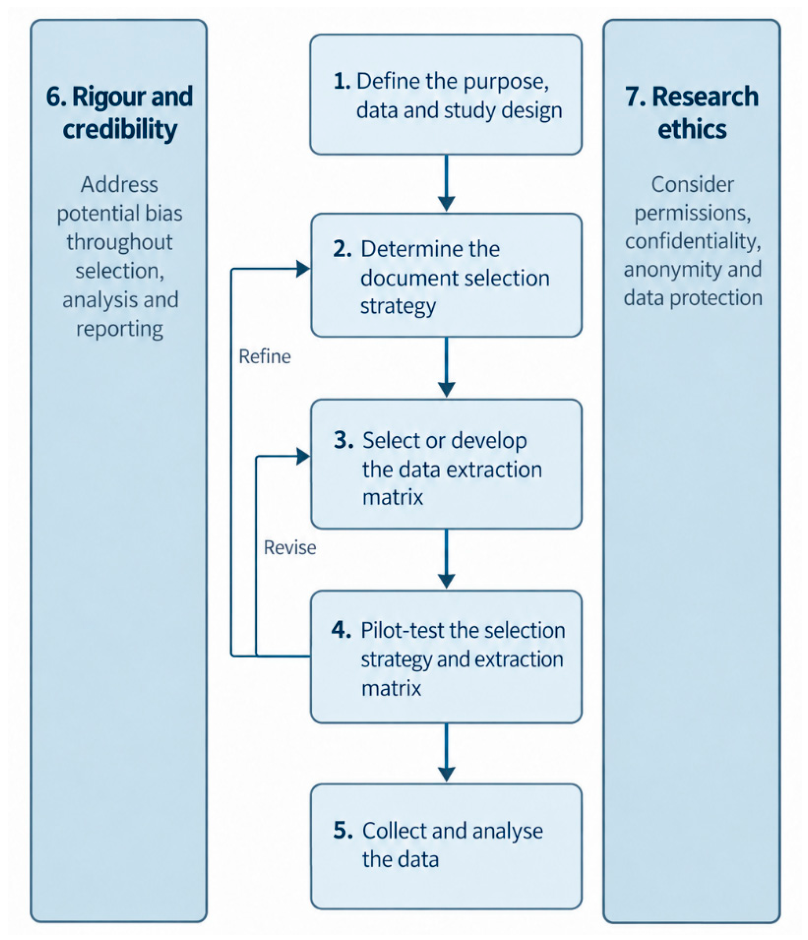
Figure 2.
Timeline of international and national guidelines (2005–2026). Source: Authors’ documentary analysis. OpenAI. ChatGPT-5.5; 2026. https//:chat.openai.com/chat.
Figure 2.
Timeline of international and national guidelines (2005–2026). Source: Authors’ documentary analysis. OpenAI. ChatGPT-5.5; 2026. https//:chat.openai.com/chat.
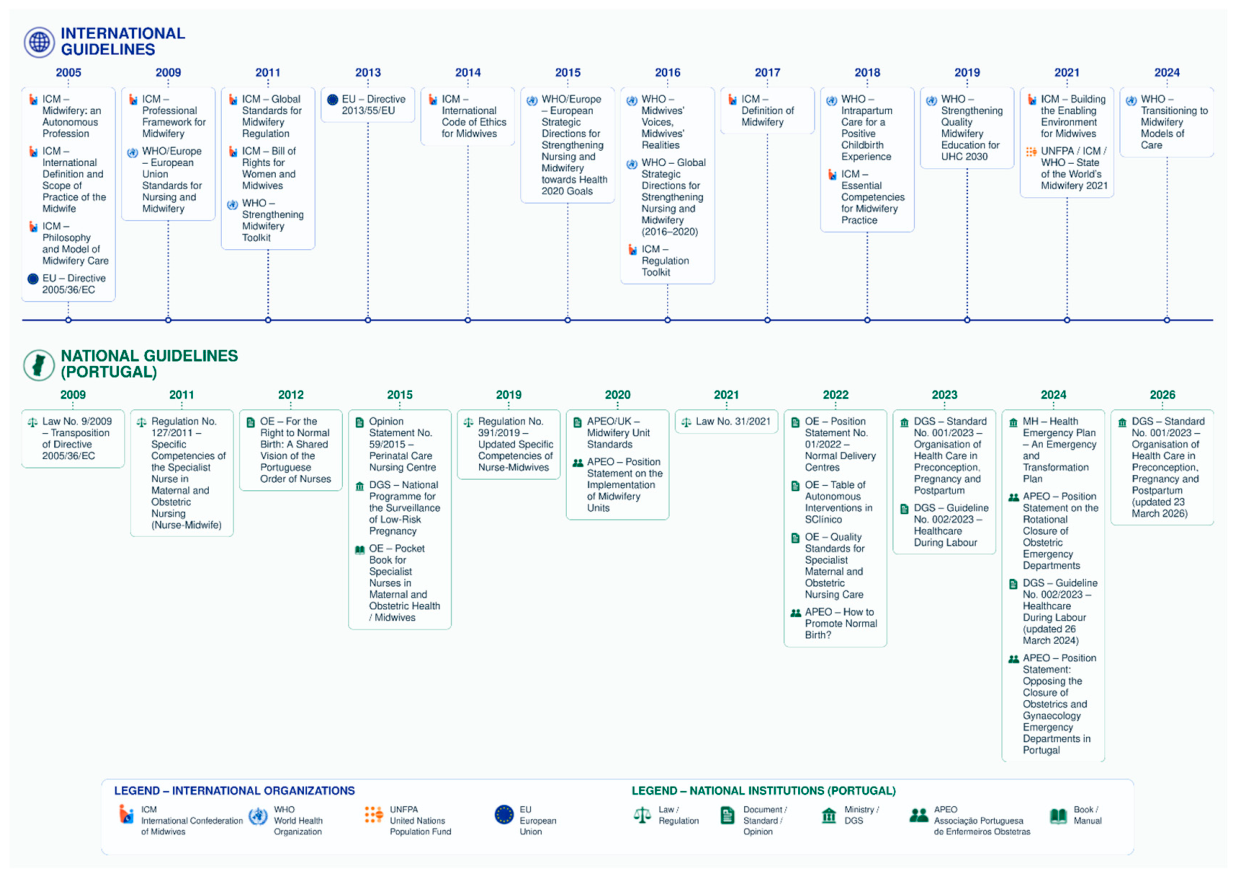
Figure 3.
Interpretative synthesis of documentary findings on midwives’ and nurse-midwives’ professional autonomy. Source: Authors’ documentary analysis. OpenAI. ChatGPT-5.5; 2026. https//:chat.openai.com/chat.
Figure 3.
Interpretative synthesis of documentary findings on midwives’ and nurse-midwives’ professional autonomy. Source: Authors’ documentary analysis. OpenAI. ChatGPT-5.5; 2026. https//:chat.openai.com/chat.
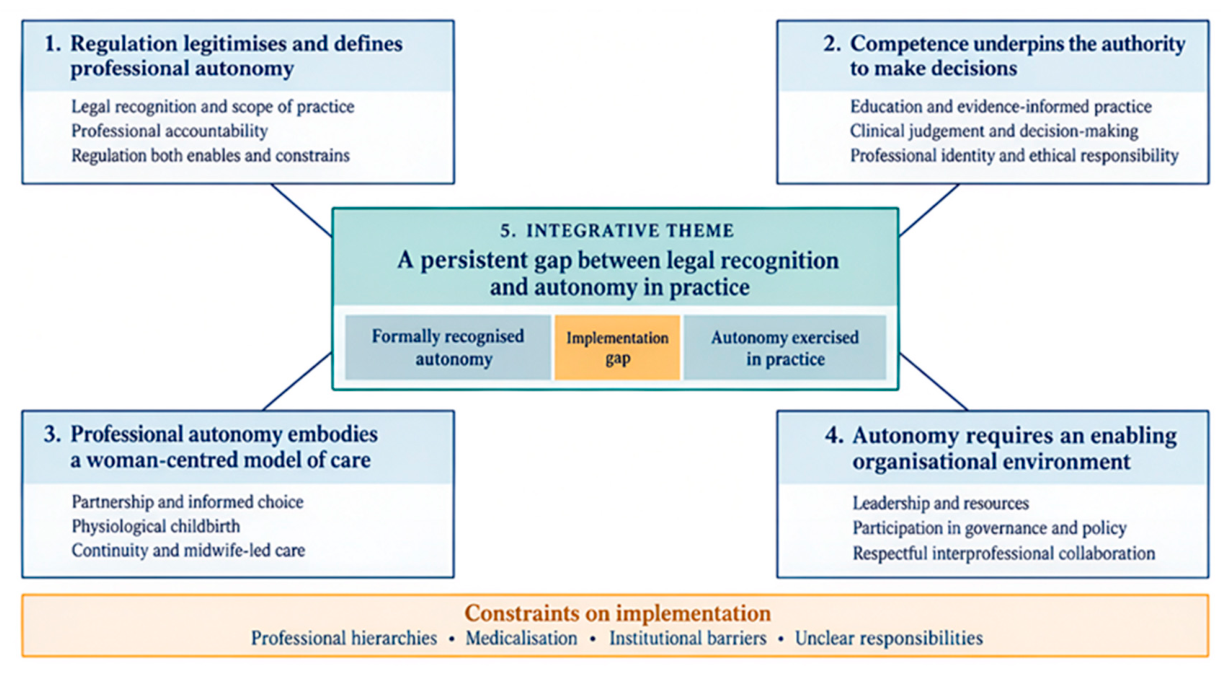

Table 1.
Extraction matrix (National and International examples).
| Documents | Geographical scope | Title | Findings | Illustrations |
|---|---|---|---|---|
| 2015 DGS PT OD | National | National surveillance programme for low-risk pregnancies | •It sets out the organisation and provision of antenatal care in Portugal by promoting interventions throughout a woman’s reproductive cycle. •It advocates person-centred care, continuous support and pregnancy as an opportunity for health promotion, setting out specific recommendations for each stage of the cycle and encouraging the active participation of women and their families. • It does not explicitly address the autonomy or responsibility of nurse midwives in the management of low-risk pregnancies and births, as it emphasises multidisciplinary teamwork and coordination between different healthcare professionals throughout the pregnancy management plan. • Monitoring of the quality of care is based solely on medical output indicators. |
For a long time, doctors, nurses and mothers themselves have sought to develop risk scales based on both maternal health and foetal development. Based on these risk assessments, criteria have been established for monitoring and managing the pregnancy to term, in accordance with the principle that the greater the risk, the greater the care required. Naturally, the greater the risk to the mother or the child, the more care will be required in the monitoring and delivery care programme, as well as in specialist neonatal care. (p. 7) Only as a team is it possible to draw up the best plan for monitoring a pregnancy, even if classified as low-risk. (p. 7) Questions to be answered without hesitation by the family doctor, the nurse, or the obstetrician. None replaces the other. (p. 7) |
| 2017 ICM NL OD | International | Definition of Midwifery | •Definition of midwifery as an autonomous profession, underpinned by its own body of knowledge, skills and responsibilities. •Description of how midwives act independently and responsibly in the care of women, people of diverse genders and newborns in the areas of sexual and reproductive health, the monitoring of pregnancy, childbirth and the postnatal period, and health education. •Practice is guided by principles of ethics, respect and interdisciplinary collaboration, to ensure continuity of care and referral in high-risk situations. •It is emphasised that standardised education in accordance with international criteria is essential to certify the full range of competencies, which underlines the protection of the professional title and regulation – key conditions for ensuring full autonomy and the quality of care provided. |
Midwifery possesses a unique body of knowledge, skills, and professional attitudes, derived from disciplines shared by other health professions, such as health sciences and sociology, but practised by midwives, and based on principles of autonomy, partnership, ethics, and responsibility. (p. 1) Midwifery is a care approach for women, people with gender diversity, and newborns, provided by midwives: Providing education on sexual and reproductive health, contraception, and family planning; administering contraceptives (within the scope of practice); and providing comprehensive care; optimising the normal biological, psychological, social, and cultural processes of pregnancy, childbirth, the postpartum period, and the neonatal period; Collaborating with midwives and other health professionals as needed to provide holistic care that meets the individual needs of each woman (p. 1) Midwifery care is provided by an autonomous midwife, qualified to act within her full competence… Obstetric competencies (knowledge, skills and attitudes) are possessed and practiced by midwives, educated through a pre-service/pre-registration obstetrics education programme that meets the ICM Global Standards for Midwifery Education. (p. 2) |
Source: Authors’ own elaboration.
Table 2.
Review and definition of themes.
| Proposed topics from stage 3 | Review in stage 4 | Final theme | Analytical definition | Sub-topics | Representative documents |
|---|---|---|---|---|---|
| Regulation; professional recognition; legal framework; self-regulation; protection of the title of M/NM | These points all converge on a common idea: regulation forms the formal basis that legitimises autonomy, whilst at the same time defining the boundaries of professional practice. | 1.Regulation legitimises and defines professional autonomy | International and national policies formally recognise midwives as professionals responsible for their own decisions, whilst at the same time setting out the legal and professional boundaries within which this autonomy may be exercised. | Professional recognition; self-regulation; protection of the professional title; scope of practice; professional liability | Midwifery: an autonomous profession (ICM, 2005); Directive 2005/36/CE; Law 9/2009; Global Standards for Midwifery Regulation (ICM, 2011); Regulation Toolkit (ICM, 2016); Directive 2013/55/UE. |
| Education; skills; scope of practice; responsibility; clinical decision-making; referral | Education and skills are not merely professional requirements: they underpin the ability to make decisions and assume clinical responsibility. They must therefore form part of a single subject area. | 2.Competence underpins the authority to make decisions | Autonomy is underpinned by a body of knowledge, specialised education and skills that enable professionals to assess, make decisions, intervene and refer cases. Policies transform competence into recognised professional authority. | Education; clinical decision-making; low risk; referral; accountability; interprofessional collaboration | Directive 2005/36/CE; Law 9/2009; Regulation 127/2011; International Definition and Scope of Practice of the Midwife; Definition of Midwifery. The Portuguese regulations specify autonomy in low-risk situations and autonomous/interdependent practice in higher-risk situations. |
| Natural childbirth; woman-centred care; informed decision-making; continuity; partnership | These contents demonstrate a high degree of conceptual coherence. The midwife’s autonomy is linked to the woman’s own autonomy, respect for physiology and the reduction of unnecessary interventions | 3.Professional autonomy embodies a woman-centred model of care | The documents do not present autonomy as a professional goal. It is justified by its contribution to safe, respectful, evidence-based care that values women’s physiology, continuity of care and self-determination. | Partnership with the woman; informed decision-making; natural childbirth; continuity of care; respectful care | Philosophy and Model of Midwifery Care; OE, For the Right to a Normal Birth (2012); WHO, Intrapartum Care for a Positive Childbirth Experience (2018); APEO 2020: Position statement – Portuguese regulations for the implementation in Portugal of Midwifery-Led Units; |
| Organisation of services; continuity; midwifery-led units; resources; leadership; governance | These codes share a common feature that goes beyond individual competence: they show that autonomy requires organisational conditions in order to be realised. | 4.Autonomy requires an organisational environment that makes it possible | Legal recognition and individual competence are insufficient without organisational models, resources, leadership, governance and the involvement of M/NM in decision-making. Autonomy is therefore both professional and contextual. | Facilitative environment; leadership; clinical governance; political participation; continuity; Midwifery-Led Units | ICM Professional Framework for Midwifery; WHO Strategic Directions; APEO 2020 and 2024; Health Emergency Plan (2015). |
| Medical hierarchy; medicalisation; underutilisation of skills; lack of or inadequate regulation; discrepancy between policy and practice | These elements should not be treated in isolation. Taken together, they highlight a tension between formally recognised autonomy and autonomy as actually exercised. | 5.There remains a gap in autonomy between legal recognition and practice | The cross-sectional analysis highlights a discrepancy between the political and normative discourse – which is largely in favour of autonomy – and the practical conditions under which it is implemented. Professional hierarchies, medicalisation, organisational constraints and the underutilisation of skills can transform legal autonomy into conditional autonomy. | Medical dominance; medicalisation; underutilisation of skills; legal/organisational constraints; failure to implement | WHO Midwives’ Voices, Midwives’ Realities; ICM Regulation Toolkit; ICM Building the Enabling Environment for Midwives; OE/APEO documents; recent Portuguese policies. |
Source: Authors’ own elaboration.
Disclaimer/Publisher’s Note: The statements, opinions and data contained in all publications are solely those of the individual author(s) and contributor(s) and not of MDPI and/or the editor(s). MDPI and/or the editor(s) disclaim responsibility for any injury to people or property resulting from any ideas, methods, instructions or products referred to in the content. |
© 2026 by the authors. Licensee MDPI, Basel, Switzerland. This article is an open access article distributed under the terms and conditions of the Creative Commons Attribution (CC BY) license.
Copyright: This open access article is published under a Creative Commons CC BY 4.0 license, which permit the free download, distribution, and reuse, provided that the author and preprint are cited in any reuse.