

Submitted:
10 November 2026
Posted:
11 November 2026
You are already at the latest version
Abstract
Background/Objectives: Advance care planning (ACP) is an important component of person-centered care; however, engagement remains challenging among patients with advanced non-cancer illnesses, their family caregivers, and healthcare professionals. This systematic review aimed to synthesize evidence on facilitators of and barriers to ACP engagement across these stakeholder groups. Methods: This systematic review with thematic synthesis was registered in PROSPERO (CRD420261346283) and reported in accordance with PRISMA 2020. PubMed, Scopus, and ScienceDirect were searched for qualitative, quantitative observational, and mixed-methods studies published between 1 January 2015 and 2 November 2026. The final database searches were conducted on 2 November 2026. Methodological quality was assessed using Joanna Briggs Institute critical appraisal tools, and findings were integrated through thematic synthesis. Results: Twelve studies were included, comprising ten qualitative studies, one cross-sectional study, and one mixed-methods study. Six interconnected analytical themes were identified: (1) readiness development, (2) negotiated social processes, (3) professional legitimacy and capability, (4) system-dependent practice, (5) cultural meaning, and (6) social legitimacy. Key facilitators included understanding of illness and ACP, supportive family involvement, trust-based communication, professional confidence, interdisciplinary collaboration, and organizational support. Barriers included limited awareness, emotional discomfort, family gatekeeping, prognostic uncertainty, unclear professional responsibilities, resource constraints, fragmented care, and culturally shaped concerns about death and future care. Broader social and policy contexts further influenced the perceived acceptability and implementation of ACP. Conclusions: ACP engagement among patients with advanced non-cancer illnesses is a dynamic, relational, and context-dependent process shaped by interacting individual, interpersonal, professional, organizational, cultural, and societal influences. Strengthening engagement may require iterative discussions tailored to evolving readiness, family involvement aligned with patients’ preferences, improved professional capability and role clarity, coordinated healthcare processes, and culturally responsive approaches supported by organizational and policy frameworks.
Keywords:
advance care planning
; advance directives
; palliative care
; patient participation
; chronic disease
1. Introduction
The global population is aging rapidly, accompanied by a growing number of people living with advanced non-cancer illnesses, including advanced heart failure, chronic obstructive pulmonary disease, end-stage renal disease, end-stage liver disease, advanced dementia, and neurodegenerative disorders [1,2]. These conditions are associated with substantial physical and psychosocial burdens, progressive functional decline, recurrent hospitalizations, and complex and often unpredictable illness trajectories [3]. As these illnesses progress, patients and their families may face increasingly complex decisions concerning life-sustaining treatments, symptom management, hospitalization, and end-of-life care [4,5,6].
Advance care planning (ACP) is an ongoing process that enables individuals to identify, discuss, and communicate their values, goals, and preferences regarding future medical care, particularly in anticipation of circumstances in which they may be unable to participate in decision-making [7,8]. As an important component of person-centered care and palliative care, ACP emphasizes communication among patients, family caregivers, and healthcare professionals and may involve the identification of surrogate decision-makers and documentation of care preferences [5,6]. ACP may improve the alignment of care with patients’ values and preferences [9,10], support family members in making difficult healthcare decisions, and contribute to improved experiences of end-of-life care [11,12,13,14,15]. However, the extent to which ACP reduces aggressive interventions or healthcare utilization may vary across populations and healthcare settings. Despite its potential benefits, ACP engagement remains limited among people with advanced non-cancer illnesses across many healthcare settings [16].
Engagement in ACP among people with advanced non-cancer illnesses may be facilitated by patient and family education, culturally responsive communication, continuity of care, interdisciplinary collaboration, and the integration of palliative care principles into routine practice [17,18]. These facilitators may support patients and families in understanding ACP, communicating their preferences, and participating in future care planning. However, engagement remains particularly challenging because the variable and frequently unpredictable trajectories of advanced non-cancer illnesses complicate prognostic communication and decisions about when and how ACP discussions should be initiated and revisited [19,20,21]. Barriers may also arise from limited awareness of ACP, emotional discomfort, cultural beliefs about death and dying, family reluctance, and insufficient confidence, training, or communication competencies among healthcare professionals [16,22,23,24]. At the organizational level, time constraints, fragmented care, unclear professional responsibilities, and inadequate institutional support may further impede the initiation, documentation, continuity, and implementation of ACP [21,24].
People with advanced non-cancer illnesses constitute a heterogeneous population characterized by differences in disease progression, prognostic uncertainty, functional and cognitive capacity, care needs, and opportunities for participation in decision-making. These differences may shape how ACP is understood, initiated, negotiated, and implemented across disease groups and care settings. Existing evidence on facilitators of and barriers to ACP engagement is distributed across studies involving different clinical populations, healthcare settings, and stakeholder groups. Although individual studies have identified patient-, family-, clinician-, and system-related influences, a synthesis that examines how these influences intersect across advanced non-cancer illness contexts is needed. Furthermore, integrating the perspectives of patients, family caregivers, and healthcare professionals may provide a more comprehensive understanding of ACP engagement as a dynamic and relational process rather than a single clinical event.
Therefore, this systematic review with thematic synthesis aimed to identify, critically appraise, and synthesize evidence on the facilitators of and barriers to ACP engagement among adults with advanced non-cancer illnesses, their family caregivers, and healthcare professionals involved in their care. Specifically, the review sought to examine how individual, interpersonal, professional, cultural, and healthcare-system factors influence ACP engagement across different advanced non-cancer disease groups and care settings. By integrating findings from qualitative, quantitative, and mixed-methods studies, this review aims to inform the development of context-sensitive, culturally responsive, and multilevel approaches to strengthening ACP engagement in clinical practice.
2. Materials and Methods
2.1. Registration and Protocol
This systematic review was conducted and reported in accordance with the Preferred Reporting Items for Systematic Reviews and Meta-Analyses (PRISMA) 2020 statement [25]. The review protocol was prospectively registered in the International Prospective Register of Systematic Reviews (PROSPERO; CRD420261346283).
2.2. Eligibility Criteria
Eligibility criteria were defined according to the Population, Phenomenon of Interest, and Context (PICo) framework. Studies were eligible if they: (1) were published in English between 1 January 2015 and 2 November 2026; (2) included adults aged ≥18 years with advanced non-cancer illnesses, including advanced heart failure, chronic obstructive pulmonary disease (COPD), advanced chronic kidney disease (CKD) or end-stage renal disease (ESRD), end-stage liver disease (ESLD), advanced dementia, or other progressive neurodegenerative disorders, or family caregivers and healthcare professionals involved in their care; (3) examined facilitators of and/or barriers to advance care planning (ACP) engagement, including ACP initiation, communication, discussions, decision-making, and documentation; and (4) reported original empirical findings from quantitative observational, qualitative, or mixed-methods studies. Advanced illness was determined according to the disease severity, functional status, prognosis, or advanced-stage classification reported in the original studies.
Studies conducted in hospital, community, primary care, long-term care, or palliative care settings were eligible, without geographical restrictions. Included studies were required to report findings directly relevant to ACP engagement among patients with advanced non-cancer illnesses, their family caregivers, or healthcare professionals involved in their care.
Reviews, editorials, commentaries, conference abstracts, study protocols, and other publications without original empirical data were excluded. Experimental studies primarily evaluating the effectiveness of ACP interventions were excluded because the review focused on factors influencing ACP engagement rather than intervention effectiveness. Studies involving exclusively patients with cancer or mixed cancer and non-cancer populations without separately extractable findings for patients with advanced non-cancer illnesses were also excluded. Studies that did not explicitly address facilitators or barriers to ACP engagement were considered ineligible.
For evidence synthesis, findings were initially grouped according to reported facilitators and barriers to ACP engagement and subsequently integrated through thematic synthesis to identify recurring patterns and overarching themes across study designs.
2.3. Search Strategy and Study Selection
PubMed, Scopus, and ScienceDirect were systematically searched to identify eligible studies published between 1 January 2015 and 2 November 2026. The final searches of all three databases were conducted on 2 November 2026. Controlled vocabulary, including Medical Subject Headings (MeSH), where applicable, and free-text terms related to advance care planning, advanced non-cancer illnesses, barriers, facilitators, engagement, and decision-making were combined using Boolean operators. Search strategies were adapted to the indexing systems and search functionalities of each database. The reference lists of included studies were also manually searched to identify additional eligible studies. The complete database-specific search strategies, including search terms, Boolean operators, applied limits, and the number of records retrieved from each database, are provided in Supplementary Table S1.
Retrieved records were imported into Rayyan for duplicate removal and screening. Two reviewers (N.C. and M.C.) independently screened titles and abstracts against the predefined eligibility criteria and subsequently assessed the full texts of potentially eligible studies independently. Reasons for exclusion at the full-text assessment stage were recorded. Disagreements were resolved through discussion or, if consensus could not be reached, by consulting a third reviewer (P.V.). The study selection process was documented using the Preferred Reporting Items for Systematic Reviews and Meta-Analyses (PRISMA) 2020 flow diagram.
2.4. Data Extraction
Two reviewers independently extracted data from each included study using a standardized data extraction form. The extracted information included the first author’s name, publication year, country, study design, study setting, participant characteristics, sample size, disease and stakeholder groups, advanced disease status and supporting evidence, study objectives, ACP engagement facilitators and barriers, ACP-related outcome measures, and relevant findings. Both quantitative and qualitative findings relevant to the review objectives were extracted to facilitate their integration into the subsequent thematic synthesis. Discrepancies between reviewers were resolved through discussion or, when consensus could not be reached, consultation with a third reviewer.
2.5. Outcomes
The primary outcome was the identification of facilitators of and barriers to advance care planning (ACP) engagement among adults with advanced non-cancer illnesses, their family caregivers, and healthcare professionals involved in their care. ACP engagement was defined as the process of understanding, considering, discussing, communicating, and documenting individuals’ values, goals, and preferences regarding future healthcare and treatment decisions. Facilitators were defined as individual, interpersonal, professional, organizational, or sociocultural factors that enabled or promoted ACP engagement, whereas barriers were defined as factors that impeded, delayed, or restricted participation in the ACP process.
2.6. Data Synthesis
Meta-analysis was not undertaken due to heterogeneity in study designs, populations, healthcare settings, and outcome measures. Findings were synthesized using the three-stage thematic synthesis approach described by Thomas and Harden [26], comprising line-by-line coding, the development of descriptive themes, and the generation of higher-order analytical themes.
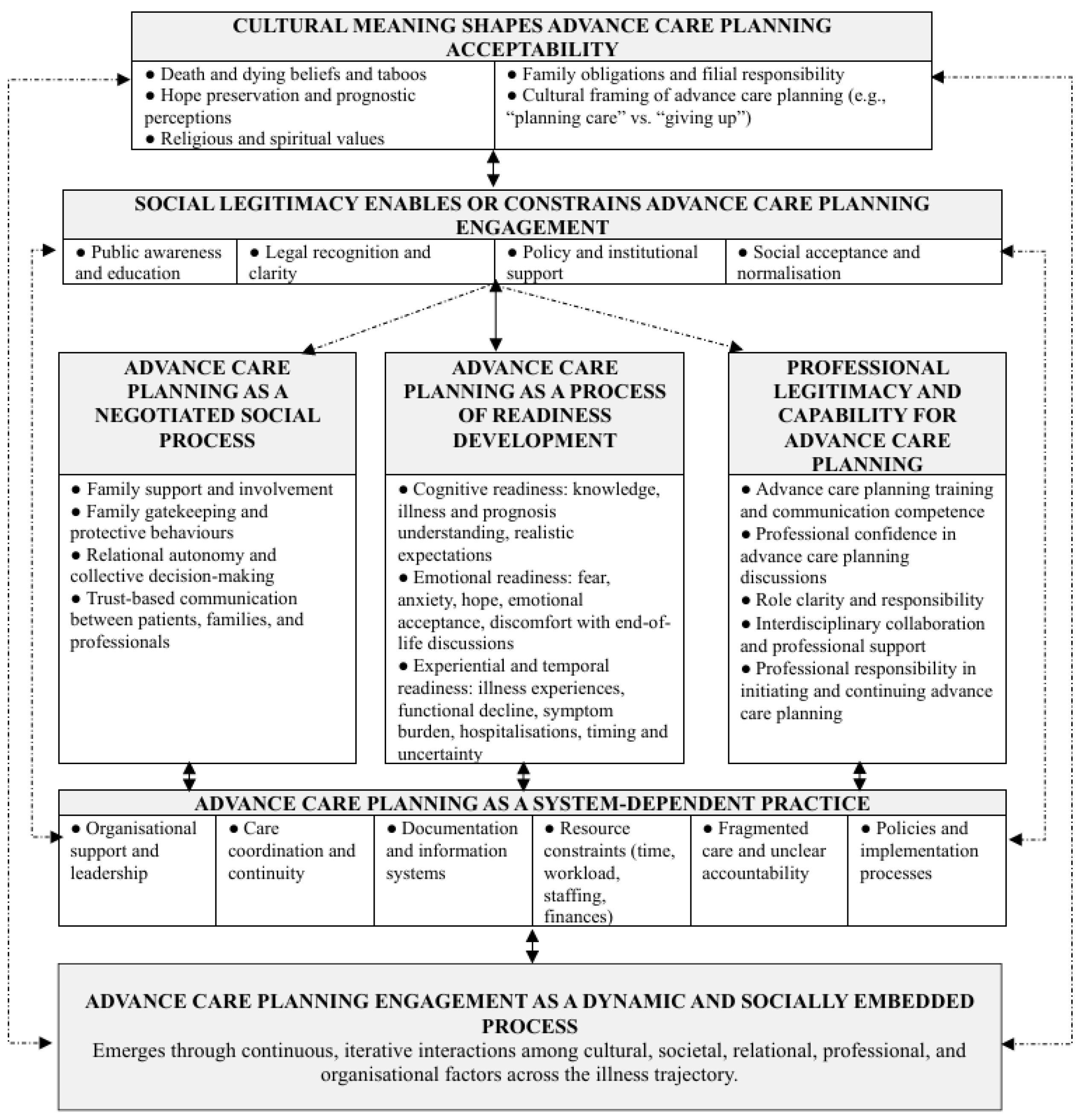
Two reviewers independently coded relevant findings extracted from the included studies. Quantitative findings were narratively transformed into qualitative statements, where appropriate, to facilitate integration with qualitative evidence. Codes were compared and refined through discussion before being organized into descriptive themes and subsequently developed into higher-order analytical themes. The analytical themes were examined for similarities and differences across stakeholder groups, disease groups, and healthcare settings, while considering individual, interpersonal, professional, organizational, sociocultural, and policy-related influences. The resulting synthesis was used to develop a conceptual model illustrating the interrelationships among the identified analytical themes.
2.7. Methodological Quality Appraisal
Two reviewers independently assessed the methodological quality of the included studies using the Joanna Briggs Institute (JBI) critical appraisal checklists appropriate to each study design [27,28]. Disagreements were resolved through discussion or, when necessary, consultation with a third reviewer. Each appraisal criterion was evaluated as “yes”, “no”, “unclear”, or “not applicable”, as appropriate. The appraisal findings were used to identify methodological strengths and limitations of the included studies and to inform the interpretation of the synthesized evidence.
3. Results
3.1. Study Selection
The database searches identified 4,151 records, including 1,561 from PubMed, 1,858 from Scopus, and 732 from ScienceDirect. After removing 2,514 duplicate records, 1,637 records underwent title and abstract screening, of which 1,202 were excluded. Subsequently, 435 reports were sought for retrieval, all of which were successfully retrieved and assessed for eligibility. Of these, 423 reports were excluded because they were not original studies (n = 67), employed ineligible experimental study designs (n = 86), involved ineligible populations (n = 117), reported outcomes unrelated to the review objectives (n = 98), or provided insufficient methodological information to establish eligibility (n = 55). Ultimately, 12 studies, represented by 12 reports, were included in the systematic review. The study selection process is illustrated in Figure 1.
3.2. Characteristics of Included Studies
The 12 included studies were conducted in seven countries: Australia, Canada, China, India, Japan, the United Kingdom, and the United States [29,30,31,32,33,34,35,36,37,38,39,40] (Supplementary Table S2). Study designs comprised ten qualitative studies [29,30,31,32,33,34,37,38,39,40], one cross-sectional study [36], and one mixed-methods study [35]. Sample sizes varied substantially, ranging from 14 participants in a qualitative subgroup analysis to 396 healthcare professionals in a cross-sectional survey. The mixed-methods study included 247 patient–caregiver dyads in its quantitative component and a qualitative interview subsample [35].
Participants included adults with advanced non-cancer illnesses, family caregivers, and healthcare professionals involved in their care [29,30,31,32,33,34,35,36,37,38,39,40]. The included studies focused on advanced heart failure (n = 2) [29,30], chronic obstructive pulmonary disease (n = 2) [31,32], advanced chronic kidney disease or end-stage kidney disease (n = 3) [33,34,35], end-stage liver disease or decompensated cirrhosis (n = 3) [36,37,38], and advanced dementia (n = 2) [39,40]. These studies were conducted across hospital-based, specialist outpatient, community, home-based, and long-term care settings. Most studies explored patients’, family caregivers’, and healthcare professionals’ experiences, perceptions, and contextual influences related to the initiation, communication, decision-making, and implementation of advance care planning. Detailed characteristics of the included studies are presented in Supplementary Table S2.
3.3. Methodological Quality Appraisal
The methodological quality of the 12 included studies was assessed using the Joanna Briggs Institute (JBI) critical appraisal checklists appropriate to each study design [27,28]. The mixed-methods study was assessed separately for its quantitative and qualitative components. Across the qualitative appraisals, the proportion of criteria rated as “Yes” ranged from 70% to 90%, whereas both cross-sectional appraisals fulfilled six of eight criteria (75%). The most frequently identified methodological uncertainties in qualitative studies concerned the reporting of researchers’ cultural or theoretical positioning and reflexivity. In the cross-sectional assessments, uncertainties primarily involved the identification and management of potential confounding factors. No criteria were rated as “No” in the appraisal matrix. Domain-level and study-level judgments are presented in Figure 2, with detailed appraisal results provided in Supplementary Table S3.
3.4. Thematic Synthesis of Facilitators of and Barriers to Advance Care Planning
The thematic synthesis of the 12 included studies generated six interrelated analytical themes: (1) ACP as a Process of Readiness Development; (2) ACP as a Negotiated Social Process; (3) ACP Requires Professional Legitimacy and Capability; (4) ACP as a System-Dependent Practice; (5) Cultural Meaning Shapes ACP Acceptability; and (6) ACP Is Enabled or Constrained by Social Legitimacy. Together, these themes comprised 25 descriptive subthemes and 33 codes, illustrating the multilevel influences shaping engagement in advance care planning (Figure 3). The analytical themes, corresponding descriptive subthemes, representative codes, and illustrative studies are presented in Supplementary Table S4, while the detailed codebook, including operational definitions and example findings, is provided in Supplementary Table S5.
3.4.1. Advance Care Planning as a Process of Readiness Development
Engagement in advance care planning (ACP) emerged as a dynamic process influenced by cognitive understanding, emotional preparedness, and experiences of illness progression. Readiness was not necessarily established at a single point in time but evolved as patients and families developed greater awareness of illness trajectories, anticipated future care needs, and considered the implications of treatment decisions [30,35,39,40].
Cognitive readiness was facilitated by understanding the purpose and benefits of ACP, recognizing the progressive nature of advanced illness, and developing awareness of prognosis and available treatment options [30,35,39,40]. Conversely, limited ACP knowledge, uncertainty about disease progression, and misconceptions regarding future care planning reduced patients’ perceived need for ACP and contributed to delayed engagement [30,35,40]. These findings suggest that informational understanding is an important foundation for meaningful participation in ACP discussions.
Emotional readiness was influenced by fear of death, anticipatory grief, anxiety, and discomfort associated with discussing future treatment limitations and end-of-life care [30,34,38,40]. Some patients and family caregivers avoided these conversations because they were emotionally distressing or perceived as threatening hope for continued treatment [30,34,40]. Emotional preparedness therefore influenced whether individuals were willing to initiate, participate in, or continue ACP discussions.
Experiential and temporal readiness developed through experiences of illness deterioration, increasing care needs, hospitalization, and changes in functional status [32,37,38,40]. Such experiences could increase recognition of the need for future care planning; however, ACP discussions were frequently postponed until substantial clinical deterioration or a healthcare crisis had occurred [32,37,40]. These findings highlight the importance of recognizing readiness as an evolving process while avoiding reliance on acute deterioration as the primary trigger for ACP initiation.
3.4.2. Advance Care Planning as a Negotiated Social Process
Engagement in advance care planning (ACP) emerged as a relational process in which patients’ preferences were shaped, communicated, and negotiated through interactions with family caregivers and healthcare professionals. Rather than reflecting individual decision-making alone, ACP involved balancing personal values, family expectations, and professional recommendations within established relationships [29,30,34,39].
Family support facilitated engagement by providing emotional reassurance, assisting patients in clarifying future care preferences, and participating in shared decision-making. Family caregivers also played an important role in preparing for surrogate decision-making and supporting communication between patients and healthcare professionals [34,35,37,39]. Conversely, family gatekeeping could restrict engagement when relatives avoided sensitive conversations, withheld prognostic information, or attempted to protect patients from emotional distress. Such protective behaviors sometimes limited opportunities for patients to express their own preferences or participate directly in future care decisions [30,34,38,40].
Relational autonomy further highlighted the interdependence of patients, families, and healthcare professionals in ACP decision-making. Patients’ preferences were not always formed or expressed independently but could be influenced by family responsibilities, interpersonal expectations, and differences in decision-making authority [29,30,34,39]. These findings suggest that meaningful engagement requires recognition of both patients’ individual preferences and the relational circumstances in which decisions are negotiated.
Trust-based communication facilitated engagement through established therapeutic relationships, empathetic dialogue, and continuity of conversations over time. Familiarity with healthcare professionals and confidence in their understanding of patients’ illness experiences could create opportunities for discussing sensitive preferences and revisiting decisions as circumstances changed [29,32,34,40]. Collectively, these findings indicate that ACP engagement depends not only on the willingness of individuals to participate but also on the quality of relationships and communication supporting shared deliberation.
3.4.3. Advance Care Planning Requires Professional Legitimacy and Capability
Advance care planning engagement depended on healthcare professionals’ knowledge, communication skills, confidence, role clarity, and perceived legitimacy in initiating discussions. Although healthcare professionals generally recognized its importance, uncertainty regarding responsibility, competence, and authority could limit engagement.
Education, specialized training, and interdisciplinary collaboration were important facilitators [30,36,37,39]. Trained professionals reported greater confidence in discussing prognosis, addressing emotional concerns, and facilitating discussions about future care [30,36]. Collaboration among physicians, nurses, social workers, and palliative care teams supported shared responsibility and coordinated communication [37,39].
Conversely, insufficient communication training and lack of confidence hindered discussions, particularly when responding to emotional reactions and balancing prognostic honesty with the need to preserve hope [30,35,36]. Prognostic uncertainty, particularly in conditions with unpredictable trajectories, could delay advance care planning until disease progression became more apparent [30].
Role ambiguity further constrained engagement. Uncertainty about who should initiate discussions, when they should occur, and which professional group should assume responsibility led to delayed or missed opportunities [38]. Engagement, therefore, depended not only on professional capability but also on the recognition of advance care planning as a legitimate and expected professional responsibility.
3.4.4. Advance Care Planning as a System-Dependent Practice
Engagement in advance care planning (ACP) was shaped by organizational structures, care coordination, documentation processes, resource availability, and continuity across healthcare settings. These system-level conditions influenced whether ACP could be initiated, sustained, and incorporated into routine clinical practice beyond individual clinicians’ efforts [31,32,33,35,36,40].
Organizational support facilitated ACP engagement through the integration of future care planning into routine clinical pathways, institutional recognition of ACP responsibilities, and the availability of structured processes for initiating discussions [33,35,36]. Care coordination further supported continuity by enabling communication of patients’ preferences and care decisions among healthcare professionals and across hospital, community, and home-based services [31,32,33,40].
Documentation systems influenced the translation of ACP discussions into recorded and accessible care preferences. Difficulties understanding advance directives, interpreting medical orders, or ensuring that documented preferences remained available and applicable across care settings could undermine implementation [29,35,39,40]. Clear, accessible, and revisable documentation was therefore identified as an important consideration for supporting continuity between discussions and subsequent care decisions.
Conversely, resource constraints, including limited consultation time, staffing pressures, and competing clinical demands, restricted opportunities for meaningful ACP conversations [31,38,40]. Fragmented healthcare systems further constrained engagement through discontinuity of services, inadequate information exchange, and unclear accountability across providers and settings [31,32,33,40]. Together, these findings suggest that sustained ACP engagement depends on organizational processes and coordinated service delivery that support the documentation, communication, and implementation of patients’ preferences.
3.4.5. Cultural Meaning Shapes Advance Care Planning Acceptability
Engagement in advance care planning (ACP) was shaped by cultural beliefs, religious and moral values, and socially embedded expectations concerning illness, death, and family responsibilities. These influences affected how patients and family caregivers interpreted ACP and whether discussions about future care were perceived as appropriate, meaningful, or potentially distressing [30,34,35,38,40].
Death-related beliefs influenced the acceptability of ACP, particularly where discussions about death and dying were considered culturally sensitive or inappropriate. Avoidance of end-of-life conversations could reflect concerns that such discussions might cause distress, undermine optimism, or conflict with established expectations surrounding serious illness [30,34,35,40]. Hope and prognosis were closely related to these interpretations, as ACP discussions could be perceived as signaling treatment failure or diminishing hope for recovery. Uncertainty about disease progression and concerns about discouraging patients further complicated communication about future care preferences [29,30,32,37].
Religious and moral values also shaped perceptions of ACP by influencing beliefs about illness, death, treatment decisions, and responsibilities toward seriously ill family members [30,38]. These values could affect how individuals understood the appropriateness of discussing future treatment limitations and expressing care preferences. Family obligation and filial piety further influenced ACP acceptability, particularly when protecting relatives from distress and fulfilling family responsibilities were prioritized in decisions about serious illness [30,38,40]. Such expectations could support family involvement while also discouraging direct discussions about prognosis or end-of-life preferences.
Collectively, these findings indicate that ACP acceptability is influenced not only by individual understanding and willingness but also by the cultural meanings attached to discussing death, maintaining hope, and fulfilling family responsibilities. These influences highlight the importance of recognizing cultural values when interpreting facilitators of and barriers to ACP engagement.
3.4.6. Advance Care Planning Is Enabled or Constrained by Social Legitimacy
Engagement in advance care planning (ACP) was influenced by the broader social, community, legal, and policy contexts in which future care decisions were discussed and implemented. Social legitimacy reflected the extent to which ACP was recognized as an appropriate component of serious illness care, understood by patients and families, and supported by relevant institutional and societal structures [30,31,35,39,40].
Public awareness influenced engagement through patients’ and families’ understanding of ACP and recognition of its relevance to progressive, life-limiting illnesses. Limited awareness, including difficulties recognizing advanced dementia as a terminal condition, could reduce the perceived need for future care planning and delay discussions [30,35,40]. Community engagement was identified as a potential facilitator through the involvement of primary care professionals, community-based services, and social networks that could provide opportunities for earlier conversations and continued support beyond hospital settings [31,40].
Legal recognition influenced confidence in whether documented care preferences could be understood, interpreted, and applied in subsequent clinical decisions. Uncertainty surrounding advance directives, medical orders, and the practical recognition of patients’ wishes could create confusion among patients, surrogate decision-makers, and healthcare professionals [29,39,40]. Policy support, including clearer clinical guidance and frameworks for ACP implementation, was identified as important for establishing ACP as a recognized component of care and supporting its application across different healthcare settings [31,33,40].
Social acceptance further shaped engagement by influencing whether discussions about death, future treatment preferences, and end-of-life care were regarded as appropriate and worthwhile. Social reluctance to discuss death could discourage ACP participation, whereas greater normalization of future care conversations was identified as a potential means of improving acceptability [30,34,40]. Collectively, these findings suggest that ACP engagement is influenced not only by individual, relational, and healthcare-system factors but also by the broader social recognition and institutional legitimacy of planning for future care.
4. Discussion
This systematic review synthesized evidence from 12 studies examining facilitators of and barriers to advance care planning (ACP) engagement among patients with advanced non-cancer illnesses. Six interrelated analytical themes were identified: ACP as a process of readiness development, ACP as a negotiated social process, ACP requires professional legitimacy and capability, ACP as a system-dependent practice, cultural meaning shapes ACP acceptability, and ACP is enabled or constrained by social legitimacy. Collectively, these findings suggest that ACP engagement is a dynamic and context-dependent process shaped by influences operating across individual, relational, professional, organizational, cultural, and societal levels [29,30,31,32,33,34,35,36,37,38,39,40]. Previous evidence has identified multiple barriers to ACP among healthcare professionals, including communication difficulties, limited training, and organizational constraints [41]. The present synthesis extends this understanding by integrating these influences within a conceptual framework focused specifically on advanced non-cancer illnesses. The findings indicate that barriers and facilitators should not be interpreted as isolated factors, as their influence on engagement may depend on the broader circumstances in which ACP discussions occur.
Readiness for ACP emerged as an evolving process influenced by cognitive understanding, emotional preparedness, and experiences of illness progression. Patients’ awareness of their condition, perceptions of future care needs, and emotional responses to discussions about serious illness influenced their willingness to engage [30,32,34,35,37,38,39,40]. These findings are consistent with a systematic review and meta-analysis demonstrating that readiness varies across ACP-related behaviors and is associated with multiple individual and contextual factors [42]. Evidence from a scoping review involving patients with chronic obstructive pulmonary disease also highlights the challenges posed by prognostic uncertainty and the timing of ACP discussions [43]. The present synthesis suggests that readiness should not be treated as a fixed prerequisite for participation. Rather, engagement may develop through repeated opportunities to discuss illness understanding, personal values, and anticipated care needs. This interpretation supports initiating ACP before substantial clinical deterioration while allowing discussions to be revisited as patients’ circumstances and preferences evolve.
ACP engagement was fundamentally relational, with family involvement functioning as both a facilitator and a potential barrier. Family caregivers could provide emotional support, assist patients in clarifying preferences, and participate in shared decision-making. Conversely, protective avoidance, information withholding, and competing expectations could restrict patients’ opportunities to communicate their wishes [29,30,34,35,38,39,40]. These findings are consistent with the concept of relational autonomy, which recognizes that decisions are shaped by interpersonal relationships, social circumstances, and individual vulnerabilities rather than independent choice alone [44]. Literature addressing ACP in Asian cultural contexts similarly emphasizes family responsibilities, collective decision-making, and the importance of accommodating relational values [45]. Furthermore, a systematic review and meta-analysis of dyadic ACP interventions suggests that involving patients and caregivers together can support ACP-related communication and outcomes [46]. The present findings therefore support an approach that recognizes the importance of family relationships while preserving patients’ preferences concerning the extent of family involvement. Meaningful engagement requires opportunities for patients to express their own values within the relational circumstances in which future care decisions are negotiated.
Professional legitimacy and capability were important influences on the initiation and continuity of ACP discussions. Healthcare professionals’ confidence, communication competence, training, and understanding of their responsibilities shaped opportunities for engagement [31,32,33,36,38,40]. Uncertainty regarding who should initiate ACP or communicate prognosis could contribute to delayed discussions and fragmented responsibility. These findings are consistent with qualitative research among nephrology nurses identifying barriers to initiating ACP discussions with patients with chronic kidney disease [47]. The present synthesis extends this evidence by distinguishing professional capability from professional legitimacy. Although training may strengthen clinicians’ knowledge and communication skills, engagement may remain limited when ACP is not recognized as an appropriate or shared clinical responsibility. Consequently, professional development should be accompanied by role clarification, interdisciplinary collaboration, and institutional support for ACP as a routine component of serious-illness care.
Healthcare-system conditions influenced whether ACP discussions could be sustained and translated into subsequent care decisions. Organizational support, care coordination, documentation systems, and resource availability shaped opportunities for engagement across healthcare settings [29,31,32,33,35,36,39,40]. These findings are consistent with qualitative research examining ACP practices across multidisciplinary and multi-facility palliative care settings, which highlights the importance of coordination and implementation processes [48]. Implementation research has also identified organizational and contextual barriers when ACP is introduced into settings where it is not yet established as routine practice [49]. The present synthesis suggests that professional competence alone may be insufficient when healthcare systems lack adequate consultation time, continuity, or accessible mechanisms for communicating care preferences. A systematic review examining electronic health records identified approaches for supporting ACP documentation and related clinical processes [50]. Nevertheless, documentation should facilitate rather than replace meaningful conversations. Sustained ACP engagement may therefore require coordinated clinical pathways that support repeated discussions, shared responsibilities, and the accessibility of patients’ preferences across care settings.
Cultural meanings shaped how ACP was interpreted and whether discussions about future care were considered acceptable. Beliefs concerning death, preservation of hope, religious and moral values, and family obligations influenced willingness to engage [29,30,34,35,37,38,40]. These findings are consistent with research examining differences in ACP perceptions and barriers among Asian patient–caregiver dyads [51]. Qualitative research involving community-dwelling older adults with chronic disease has also highlighted the importance of stakeholder perspectives and contextual influences on ACP engagement [52]. The present synthesis suggests that reluctance toward ACP may reflect concerns about the meaning, timing, or framing of conversations rather than opposition to future care planning itself. The concept of future care planning has been discussed in the literature as an alternative framing of planning-related conversations [53]. However, adapting terminology should not obscure the essential purpose of ACP. Culturally responsive communication should instead involve exploring patients’ values, preferred approaches to discussing prognosis, and expectations concerning family participation without assuming uniform preferences within particular cultural groups.
Social legitimacy influenced whether ACP was publicly understood, socially accepted, and formally supported within healthcare systems. Limited awareness, uncertainty concerning advance directives, and concerns about the recognition of documented preferences could undermine confidence in ACP processes [29,30,31,33,34,35,39,40]. Unlike organizational barriers that primarily affect the delivery of ACP within healthcare services, social legitimacy concerns the broader recognition of ACP as an appropriate and meaningful component of serious-illness care. The present findings suggest that formal documentation procedures and institutional policies may be insufficient when patients, families, and healthcare professionals remain uncertain about their purpose or practical application. Public education, community engagement, and clearer procedural guidance may therefore strengthen the acceptability of ACP and confidence in the communication of care preferences. Nevertheless, the effectiveness of these approaches requires further empirical evaluation across different sociocultural and healthcare-system contexts.
Taken together, the six analytical themes provide an integrated interpretation of ACP engagement among patients with advanced non-cancer illnesses. Readiness may develop through illness experiences, but meaningful participation also depends on supportive relationships and professional communication. Professional capability may facilitate discussions, whereas organizational constraints can limit their continuity and implementation. Cultural meanings and social legitimacy further influence whether ACP is understood and accepted as part of serious-illness care. The conceptual model developed from this synthesis (Figure 3) illustrates these interrelated influences. Although the available evidence does not establish causal pathways among the themes, the model provides a framework for understanding the complexity of ACP engagement and identifying potential targets for future multilevel interventions.
4.1. Implications for Practice, Policy, and Research
The findings suggest that ACP for patients with advanced non-cancer illnesses should be approached as an iterative, person-centered process that accommodates changes in illness experiences, readiness, and care preferences [32,35,40,42,43]. Healthcare professionals should provide opportunities for repeated discussions, assess patients’ informational and emotional preparedness, and involve family caregivers according to patients’ preferences [29,34,39,44,45,46]. Professional education should emphasize communication competence, prognostic discussions, role clarification, and interdisciplinary collaboration [31,33,36,41,47]. At the organizational level, ACP implementation may benefit from coordinated care pathways, adequate consultation time, and accessible documentation systems [48,49,50]. Culturally responsive communication and community-based engagement may further support the acceptability of ACP across diverse populations [45,51,52,53].
Future research should prioritize longitudinal studies examining how readiness and engagement evolve across different advanced non-cancer illness trajectories. Intervention studies are needed to evaluate culturally responsive, family-inclusive, and multilevel approaches that address individual, relational, professional, and organizational influences simultaneously. Further investigation should examine how ACP discussions translate into documented preferences and subsequent clinical decisions, particularly across fragmented healthcare systems. Greater representation of underrepresented populations, low-resource settings, and diverse sociocultural contexts is also needed to strengthen the transferability of future findings.
4.2. Strengths and Limitations of the Study
This systematic review synthesized evidence across five groups of advanced non-cancer illnesses and incorporated perspectives from patients, family caregivers, and healthcare professionals. The inclusion of qualitative, quantitative, and mixed-methods evidence enabled consideration of ACP engagement across individual, relational, professional, organizational, cultural, and societal levels. Thematic synthesis facilitated an integrated interpretation of these influences and supported the development of a conceptual model extending beyond a descriptive classification of barriers and facilitators.
Several limitations should be acknowledged. First, the evidence base comprised ten qualitative studies, one cross-sectional study, and one mixed-methods study. Consequently, the findings primarily reflect reported experiences, perceptions, and associations rather than established causal relationships. Second, the included studies represented seven countries, with uneven geographical coverage and limited representation from low-resource healthcare systems and several world regions. This may constrain the transferability of the findings to settings with different sociocultural and healthcare-system characteristics. Third, methodological appraisal identified limitations concerning researcher positioning and reflexivity in qualitative studies and the identification and management of confounding factors in quantitative assessments. These concerns warrant caution when interpreting individual findings. Fourth, heterogeneity in disease groups, stakeholder populations, healthcare settings, and definitions of ACP engagement limited direct comparisons and precluded quantitative synthesis. Finally, some descriptive subthemes were informed by a relatively small number of studies, and the relationships represented in the conceptual model remain interpretive rather than empirically established.
5. Conclusions
Advance care planning (ACP) engagement among patients with advanced non-cancer illnesses is a dynamic, relational, and context-dependent process shaped by six interconnected influences: readiness development, negotiated social processes, professional legitimacy and capability, healthcare-system conditions, cultural meaning, and social legitimacy. These findings suggest that ACP engagement extends beyond a single clinical encounter and requires consideration of interacting individual, relational, professional, organizational, cultural, and societal factors. Strengthening engagement may involve iterative discussions tailored to evolving patient readiness and illness trajectories, family involvement aligned with patients’ preferences, enhanced professional capability and role clarity, and coordinated integration of ACP into routine care. Culturally responsive communication and supportive organizational and policy environments may further facilitate meaningful participation and continuity of care. Together, these approaches may support patients in expressing, communicating, and revisiting their values, goals, and preferences as their illnesses progress and circumstances change.
Supplementary Materials
The following supporting information can be downloaded at the website of this paper posted on Preprints.org, Table S1: Database-specific search strategies; Table S2: Characteristics and eligibility of included studies; Table S3: Methodological quality appraisal of included studies using the Joanna Briggs Institute critical appraisal tools; Table S4: Theme matrix derived from the thematic synthesis; Table S5: Codebook used in the thematic synthesis.
Author Contributions
Conceptualization, N.C. and P.V.; methodology, N.C., P.V., and M.C.; validation, P.V.; formal analysis, N.C. and P.V.; investigation, N.C.; data curation, N.C. and M.C.; writing—original draft preparation, N.C. and P.V.; writing—review and editing, N.C. and P.V.; visualization, N.C.; supervision, P.V. and M.R. All authors have read and agreed to the published version of the manuscript.
Funding
This research received no external research funding. The article processing charge (APC) was supported by the Faculty of Nursing, Rattana Bundit University, Thailand.
Institutional Review Board Statement
Not applicable. This systematic review synthesized findings from previously published studies and did not involve the direct recruitment of human participants or the collection of identifiable personal data.
Informed Consent Statement
Not applicable.
Data Availability Statement
All data supporting the findings of this systematic review are available within the article and its Supplementary Materials. No new primary data were generated during this study.
Conflicts of Interest
The authors declare no conflicts of interest.
Abbreviations
The following abbreviations are used in this manuscript:
| ACP | Advance Care Planning |
| JBI | Joanna Briggs Institute |
| MeSH | Medical Subject Headings |
References
- Tesfay, F.H.; Zorbas, C.; Alston, L.; Backholer, K.; Bowe, S.J.; Bennett, C.M. Prevalence of chronic non-communicable diseases in Ethiopia: A systematic review and meta-analysis of evidence. Front. Public Health 2022, 10, 936482. [Google Scholar] [CrossRef] [PubMed]
- Knaul, F.M.; Arreola-Ornelas, H.; Kwete, X.J.; Bhadelia, A.; Rosa, W.E.; Touchton, M.; Méndez-Carniado, O.; Vargas Enciso, V.; Pastrana, T.; Friedman, J.R.; et al. The evolution of serious health-related suffering from 1990 to 2021: An update to The Lancet Commission on global access to palliative care and pain relief. Lancet Glob. Health 2025, 13, e422–e436. [Google Scholar] [CrossRef] [PubMed]
- GBD 2021 Forecasting Collaborators. Burden of disease scenarios for 204 countries and territories, 2022–2050: A forecasting analysis for the Global Burden of Disease Study 2021. Lancet 2024, 403, 2204–2256. [Google Scholar] [CrossRef] [PubMed]
- Boulet, J.; Belzile, E.L.; Dion, N.; Morency, C.; Bérubé, M.; Tremblay, A.; Pelet, S. Palliative care is a viable option for frail elderly patients with neurocognitive disorders admitted for hip fractures. BMC Musculoskelet. Disord. 2024, 25, 635. [Google Scholar] [CrossRef] [PubMed]
- Dinescu, A. Advance care planning. Clin. Geriatr. Med. 2021, 37, 605–610. [Google Scholar] [CrossRef] [PubMed]
- Mori, M.; Chan, H.Y.L.; Lin, C.P.; Kim, S.H.; Ng Han Lip, R.; Martina, D.; Yuen, K.K.; Cheng, S.Y.; Takenouchi, S.; Suh, S.Y.; et al. Definition and recommendations of advance care planning: A Delphi study in five Asian sectors. Palliat. Med. 2025, 39, 99–112. [Google Scholar] [CrossRef] [PubMed]
- Chikada, A.; Takenouchi, S.; Nin, K.; Mori, M. Definition and recommended cultural considerations for advance care planning in Japan: A systematic review. Asia-Pac. J. Oncol. Nurs. 2021, 8, 628–638. [Google Scholar] [CrossRef] [PubMed]
- van der Steen, J.T.; Nakanishi, M.; Van den Block, L.; Di Giulio, P.; Gonella, S.; In der Schmitten, J.; Sudore, R.L.; Harrison Dening, K.; Parker, D.; Mimica, N.; et al. Consensus definition of advance care planning in dementia: A 33-country Delphi study. Alzheimers Dement. 2024, 20, 1309–1320. [Google Scholar] [CrossRef] [PubMed]
- Sánchez Ortiz, M.; Forcano Garcia, M.; Altisent Trota, R.; Rocafort Gil, J. Advance care planning and frailty in nursing homes: Feasibility and acceptance of a stepwise, long-term care, structured model. J. Clin. Med. 2026, 15, 214. [Google Scholar] [CrossRef] [PubMed]
- Case, A.A.; Epstein, A.S.; Gustin, J.L. Advance care planning imperative: High-quality patient-centred goals of care. BMJ Support. Palliat. Care 2022, 12, 407–409. [Google Scholar] [CrossRef] [PubMed]
- Mosher, C.E.; Beck-Coon, K.A.; Wu, W.; Lewson, A.B.; Stutz, P.V.; Brown, L.F.; Tang, Q.; Helft, P.R.; Levoy, K.; Hickman, S.E.; et al. Mindfulness to enhance quality of life and support advance care planning: A pilot randomized controlled trial for adults with advanced cancer and their family caregivers. BMC Palliat. Care 2024, 23, 232. [Google Scholar] [CrossRef] [PubMed]
- Zhang, S.; Li, J.; Zhang, Y.; Hu, X. Effects of advance care planning for patients with advanced cancer: A meta-analysis of randomized controlled studies. Int. J. Nurs. Stud. 2025, 168, 105096. [Google Scholar] [CrossRef] [PubMed]
- Marchi, L.P.E.S.; Santos Neto, M.F.D.; Moraes, J.P.; Paiva, C.E.; Paiva, B.S.R. Influence of advance directives on reducing aggressive measures during end-of-life cancer care: A systematic review. Palliat. Support. Care 2021, 19, 348–354. [Google Scholar] [CrossRef] [PubMed]
- Sedini, C.; Biotto, M.; Crespi Bel’skij, L.M.; Moroni Grandini, R.E.; Cesari, M. Advance care planning and advance directives: An overview of the main critical issues. Aging Clin. Exp. Res. 2022, 34, 325–330. [Google Scholar] [CrossRef] [PubMed]
- Yamamoto, K.; Yonekura, Y.; Nakayama, K. Healthcare providers’ perception of advance care planning for patients with critical illnesses in acute-care hospitals: A cross-sectional study. BMC Palliat. Care 2022, 21, 7. [Google Scholar] [CrossRef] [PubMed]
- Zhou, Y.; Wang, A.; Braybrook, D.; Ellis-Smith, C.; Feng, H.; Gong, N.; Zhou, Z.; Harding, R. What are the barriers and facilitators to advance care planning with older people in long-term care facilities? A qualitative study. J. Clin. Nurs. 2026, 35, 2356–2370. [Google Scholar] [CrossRef] [PubMed]
- Dias, L.M.; Frutig, M.A.; Bezerra, M.R.; Barra, W.F.; Castro, L.; Rego, F. Advance care planning and goals of care discussion: Barriers from the perspective of medical residents. Int. J. Environ. Res. Public Health 2023, 20, 3239. [Google Scholar] [CrossRef] [PubMed]
- Abera, E.G.; Himbaro, S.A.; Gizaw, H.S. Barriers to and readiness for advance care planning: A systematic review and meta-analysis of quantitative and qualitative evidence. BMC Palliat. Care 2026, 25, 31. [Google Scholar] [CrossRef] [PubMed]
- Robinson, L.A.; Bevil, C.; Arcangelo, V.; Reifsnyder, J.; Rothman, N.; Smeltzer, S. Operationalizing the Corbin & Strauss trajectory model for elderly clients with chronic illness. Sch. Inq. Nurs. Pract. 1993, 7, 253–268. [Google Scholar] [CrossRef]
- Rolland, J.S. Chronic illness and disability: A multisystemic practice model. J. Fam. Nurs. 2025, 31, 63–74. [Google Scholar] [CrossRef] [PubMed]
- Hommel, D.; Azizi, B.; Visser, M.; Bolt, S.R.; Blom, J.W.; Janssen, D.J.A.; van Hout, H.P.J.; Francke, A.L.; Verheij, R.A.; Joling, K.J.; et al. Occurrence of advance care planning for persons with dementia, cancer and other chronic-progressive diseases in general practice: Longitudinal analysis of data from health records linked with administrative data. BMJ Open 2025, 15, e097655. [Google Scholar] [CrossRef] [PubMed]
- Konno, R.; Inoue, K.; Matsushita, Y.; Hashimoto, K.; Wiechula, R.; To, T.; Schultz, T.J. Barriers to advance care planning in older adults with dementia, their families, and healthcare professionals: An umbrella review of qualitative evidence. Res. Aging 2024, 46, 339–358. [Google Scholar] [CrossRef] [PubMed]
- Guccione, L.; Fullerton, S.; Gough, K.; Hyatt, A.; Tew, M.; Aranda, S.; Francis, J. Why is advance care planning underused in oncology settings? A systematic overview of reviews to identify the benefits, barriers, enablers, and interventions to improve uptake. Front. Oncol. 2023, 13, 1040589. [Google Scholar] [CrossRef] [PubMed]
- Inokuchi, R.; Hanari, K.; Shimada, K.; Iwagami, M.; Sakamoto, A.; Sun, Y.; Mayers, T.; Sugiyama, T.; Tamiya, N. Barriers to and facilitators of advance care planning implementation for medical staff after the COVID-19 pandemic: An overview of reviews. BMJ Open 2023, 13, e075969. [Google Scholar] [CrossRef] [PubMed]
- Page, M.J.; McKenzie, J.E.; Bossuyt, P.M.; Boutron, I.; Hoffmann, T.C.; Mulrow, C.D.; Shamseer, L.; Tetzlaff, J.M.; Akl, E.A.; Brennan, S.E.; et al. The PRISMA 2020 statement: An updated guideline for reporting systematic reviews. BMJ 2021, 372, n71. [Google Scholar] [CrossRef] [PubMed]
- Thomas, J.; Harden, A. Methods for the thematic synthesis of qualitative research in systematic reviews. BMC Med. Res. Methodol. 2008, 8, 45. [Google Scholar] [CrossRef] [PubMed]
- Barker, T.H.; Hasanoff, S.; Aromataris, E.; Stone, J.C.; Leonardi-Bee, J.; Sears, K.; Klugar, M.; Tufanaru, C.; Moola, S.; Liu, X.L.; et al. The revised JBI critical appraisal tool for the assessment of risk of bias for analytical cross-sectional studies. JBI Evid. Synth. 2026, 24, 401–408. [Google Scholar] [CrossRef] [PubMed]
- Porritt, K.; Evans, C.; Bennett, C.; Loveday, H.; Bjerrum, M.; Salmond, S.; Munn, Z.; Pollock, D.; Pang, D.; Vineetha, K.; et al. Systematic reviews of qualitative evidence. In JBI Manual for Evidence Synthesis, 2024 ed.; Aromataris, E., Lockwood, C., Porritt, K., Pilla, B., Jordan, Z., Eds.; JBI, 2024. Aromataris, E., Lockwood, C., Porritt, K., Pilla, B., Jordan, Z., Eds.; [CrossRef]
- Killackey, T.; Peter, E.; Maciver, J.; Mohammed, S. Advance care planning in advanced heart failure: The illusion of individual autonomy. Qual. Health Res. 2025. [Google Scholar] [CrossRef] [PubMed]
- Liu, N.; Chen, L.; Mao, X.; Xia, S.; Wang, Q.; Hu, D.; Zhang, W. Qualitative study on influencing factors of acceptance of advance care planning in patients with end-stage heart failure based on COM-B theory. Front. Public Health 2026, 14, 1820593. [Google Scholar] [CrossRef] [PubMed]
- Hirakawa, Y.; Aita, K.; Nishikawa, M.; Arai, H.; Miura, H. Facilitating advance care planning for patients with severe COPD: A qualitative study of experiences and perceptions of community physicians, nurses, and allied health professionals. Home Healthc. Now. 2021, 39, 81–90. [Google Scholar] [CrossRef] [PubMed]
- Kavanagh, E.; Rowley, G.; Simkiss, L.; Woods, E.; Gouldthorpe, C.; Howorth, K.; Charles, M.; Kiltie, R.; Billett, H.; Mastaglio, F.; Dewhurst, F. Advance care planning for patients with chronic obstructive pulmonary disease on home non-invasive ventilation: A qualitative study exploring barriers, facilitators and patients’ and healthcare professionals’ recommendations. Palliat. Med. 2023, 37, 1413–1423. [Google Scholar] [CrossRef] [PubMed]
- O’Hare, A.M.; Szarka, J.; McFarland, L.V.; Taylor, J.S.; Sudore, R.L.; Trivedi, R.; Reinke, L.F.; Vig, E.K. Provider perspectives on advance care planning for patients with kidney disease: Whose job is it anyway? Clin. J. Am. Soc. Nephrol. 2016, 11, 855–866. [Google Scholar] [CrossRef] [PubMed]
- Sellars, M.; Clayton, J.M.; Morton, R.L.; Luckett, T.; Silvester, W.; Spencer, L.; Pollock, C.A.; Walker, R.G.; Kerr, P.G.; Tong, A. An interview study of patient and caregiver perspectives on advance care planning in ESRD. Am. J. Kidney Dis. 2018, 71, 216–224. [Google Scholar] [CrossRef] [PubMed]
- Naik, B.; Damani, A.; Ghoshal, A.; Nagaraju, S.P.; Singhai, P.; Ammunje, S.N.; Attur, R.P.; Salins, N. Barriers and preferences in advance care planning: A mixed-methods study of end-stage kidney disease patients and caregivers in India. BMC Nephrol. 2025, 26, 415. [Google Scholar] [CrossRef] [PubMed]
- Ufere, N.N.; Donlan, J.; Waldman, L.; Dienstag, J.L.; Friedman, L.S.; Corey, K.E.; Hashemi, N.; Carolan, P.; Mullen, A.C.; Thiim, M.; et al. Barriers to use of palliative care and advance care planning discussions for patients with end-stage liver disease. Clin. Gastroenterol. Hepatol. 2019, 17, 2592–2599. [Google Scholar] [CrossRef] [PubMed]
- Patel, A.A.; Ryan, G.W.; Tisnado, D.; Chuang, E.; Walling, A.M.; Saab, S.; Khemichian, S.; Sundaram, V.; Brook, R.H.; Wenger, N.S. Deficits in advance care planning for patients with decompensated cirrhosis at liver transplant centers. JAMA Intern. Med. 2021, 181, 652–660. [Google Scholar] [CrossRef] [PubMed]
- Chung, A.; Lam, C.; Walling, A.M.; Wenger, N.S.; Patel, A.A. Barriers and facilitators to advance care planning among Latino individuals with decompensated cirrhosis. J. Pain Symptom Manag. 2026, 71, e835–e836. [Google Scholar] [CrossRef]
- Golden, S.E.; Rubim, F.; Thammana, R.; Disher, N.; Vranas, K.C.; Teno, J.M.; Izumi, S.; Kim, H.; Tjia, J.; Sullivan, D.R. Perspectives on advance care planning needs of persons with advanced dementia from their surrogates and clinicians. PEC Innov. 2023, 3, 100241. [Google Scholar] [CrossRef] [PubMed]
- Jeon, Y.-H.; McKenzie, H. A qualitative inquiry about end-of-life care for people with advanced dementia: “Planning ahead not in reality”. Geriatr. Nurs. 2026, 69, 103975. [Google Scholar] [CrossRef] [PubMed]
- Blackwood, D.H.; Walker, D.; Mythen, M.G.; Taylor, R.M.; Vindrola-Padros, C. Barriers to advance care planning with patients as perceived by nurses and other healthcare professionals: A systematic review. J. Clin. Nurs. 2019, 28, 4276–4297. [Google Scholar] [CrossRef] [PubMed]
- Tan, M.; Ding, J.; Johnson, C.E.; Cook, A.; Huang, C.; Xiao, L.; Tang, S. Stages of readiness for advance care planning: Systematic review and meta-analysis of prevalence rates and associated factors. Int. J. Nurs. Stud. 2024, 151, 104678. [Google Scholar] [CrossRef] [PubMed]
- Meehan, E.; Foley, T.; Kelly, C.; Burgess Kelleher, A.; Sweeney, C.; Hally, R.M.; Detering, K.; Cornally, N. Advance care planning for individuals with chronic obstructive pulmonary disease: A scoping review of the literature. J. Pain Symptom Manag. 2020, 59, 1344–1361. [Google Scholar] [CrossRef] [PubMed]
- Gómez-Vírseda, C.; de Maeseneer, Y.; Gastmans, C. Relational autonomy in end-of-life care ethics: A contextualized approach to real-life complexities. BMC Med. Ethics 2020, 21, 50. [Google Scholar] [CrossRef] [PubMed]
- Cheng, S.Y.; Lin, C.P.; Chan, H.Y.; Martina, D.; Mori, M.; Kim, S.H.; Ng, R. Advance care planning in Asian culture. Jpn. J. Clin. Oncol. 2020, 50, 976–989. [Google Scholar] [CrossRef] [PubMed]
- Liu, X.; Ho, M.H.; Wang, T.; Cheung, D.S.T.; Lin, C.C. Effectiveness of dyadic advance care planning: A systematic review and meta-analysis. J. Pain Symptom Manag. 2024, 67, e869–e889. [Google Scholar] [CrossRef] [PubMed]
- Chen, J.O.; Lin, C.C. Exploring the barriers faced by nephrology nurses in initiating patients with chronic kidney disease into advance care planning using focus-group interviews. J. Nurs. Res. 2021, 29, e179. [Google Scholar] [CrossRef] [PubMed]
- Tanimoto, M.; Okamura, N.; Sawada, K.; Igarashi, T.; Nishikawa, M. Barriers and facilitators of advance care planning practices in multi-disciplinary, multi-facility palliative care for Japan’s aging population: A qualitative analysis. PLoS ONE 2025, 20, e0323976. [Google Scholar] [CrossRef] [PubMed]
- Westbye, S.F.; Rostoft, S.; Romøren, M.; Thoresen, L.; Wahl, A.K.; Pedersen, R. Barriers and facilitators to implementing advance care planning in naïve contexts—Where to look when plowing new terrain? BMC Geriatr. 2023, 23, 387. [Google Scholar] [CrossRef] [PubMed]
- Huber, M.T.; Highland, J.D.; Krishnamoorthi, V.R.; Tang, J.W. Utilizing the electronic health record to improve advance care planning: A systematic review. Am. J. Hosp. Palliat. Care 2018, 35, 532–541. [Google Scholar] [CrossRef] [PubMed]
- Ali, N.; Anthony, P.; Lim, W.S.; Chong, M.S.; Poon, E.W.H.; Drury, V.; Chan, M. Exploring differential perceptions and barriers to advance care planning in dementia among Asian patient-caregiver dyads—A mixed-methods study. Int. J. Environ. Res. Public Health 2021, 18, 7150. [Google Scholar] [CrossRef] [PubMed]
- Hsu, S.E.; Wannasri, A.; Chen, L.A.; Lin, C.P. Unveiling facilitators and barriers on advance care planning among community-dwelling older adults with chronic disease during the COVID-19 pandemic: A qualitative study on stakeholders’ perspectives. Geriatr. Nurs. 2025, 65, 103564. [Google Scholar] [CrossRef] [PubMed]
- Mann, M.; Cahill, C.; Sivell, S.; Hackett, R.; Harding, E.; Taubert, M. Future care planning. BMJ Support. Palliat. Care 2025, 15, 614–617. [Google Scholar] [CrossRef] [PubMed]
Figure 1.
PRISMA 2020 flow diagram of the study selection process for the systematic review.
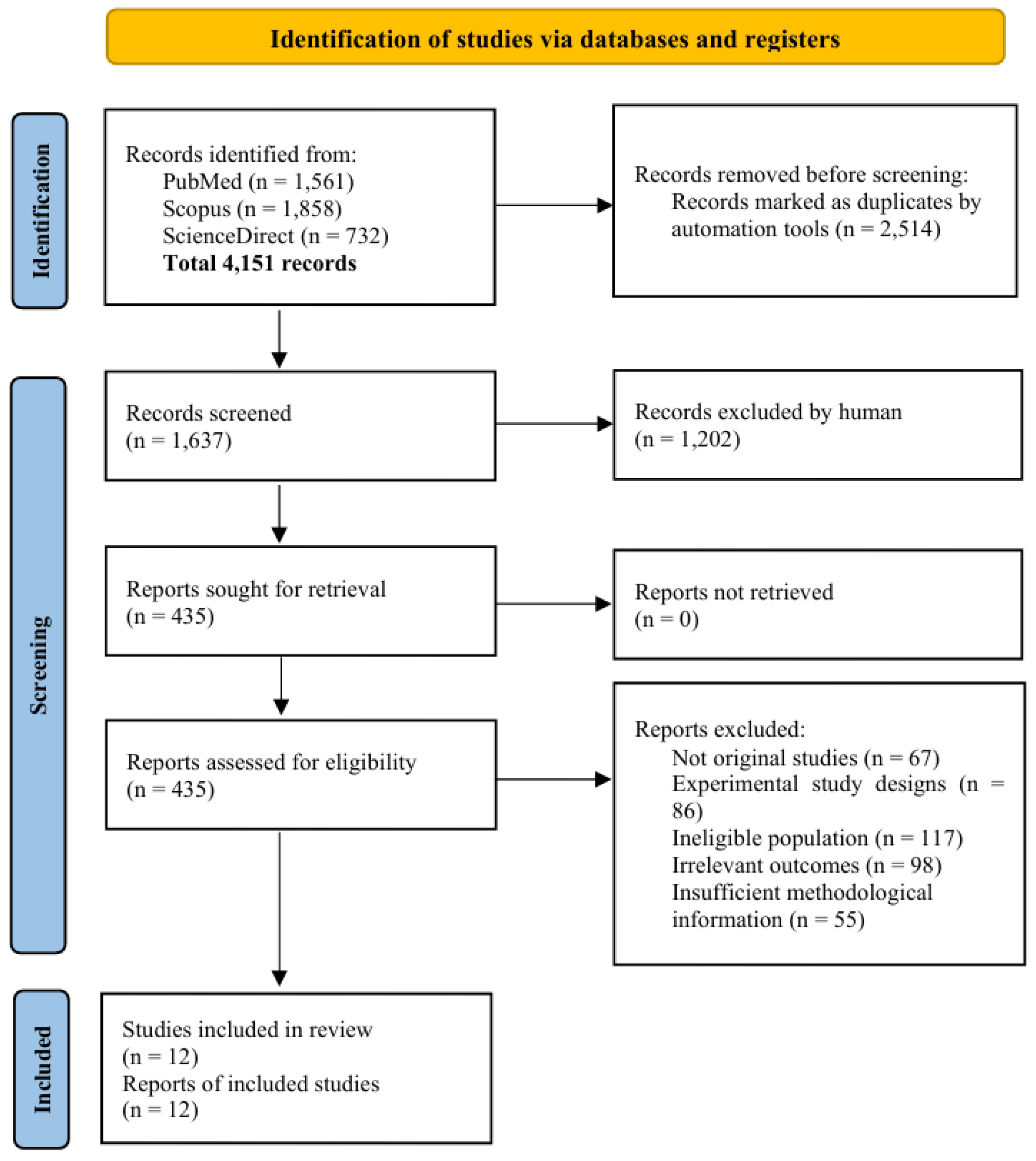
Figure 2.
Methodological quality appraisal of the included studies using the Joanna Briggs Institute critical appraisal tools.
Figure 2.
Methodological quality appraisal of the included studies using the Joanna Briggs Institute critical appraisal tools.
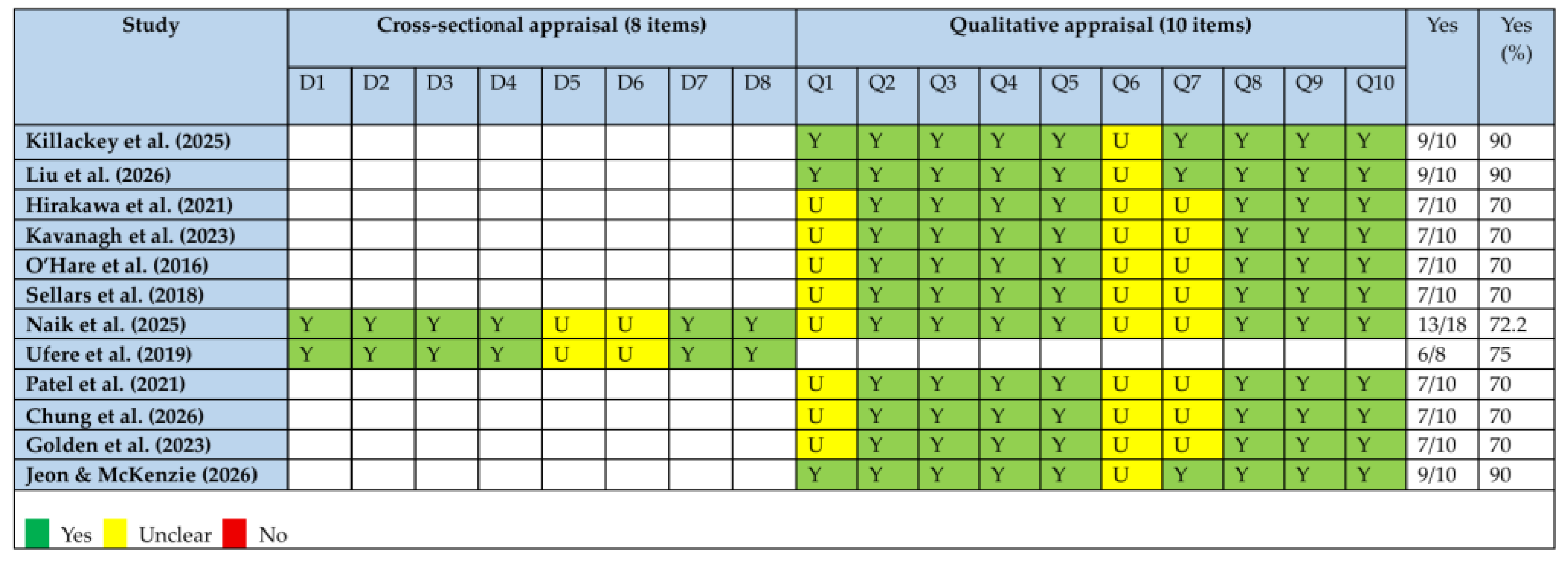
Figure 3.
Conceptual framework of factors shaping advance care planning engagement.
Disclaimer/Publisher’s Note: The statements, opinions and data contained in all publications are solely those of the individual author(s) and contributor(s) and not of MDPI and/or the editor(s). MDPI and/or the editor(s) disclaim responsibility for any injury to people or property resulting from any ideas, methods, instructions or products referred to in the content. |
© 2026 by the authors. Licensee MDPI, Basel, Switzerland. This article is an open access article distributed under the terms and conditions of the Creative Commons Attribution (CC BY) license (http://creativecommons.org/licenses/by/4.0/).
Copyright: This open access article is published under a Creative Commons CC BY 4.0 license, which permit the free download, distribution, and reuse, provided that the author and preprint are cited in any reuse.