

Submitted:
06 November 2026
Posted:
09 November 2026
Read the latest preprint version here
Abstract
Cyperus rotundus L. (purple nutsedge) is widely regarded as an aggressive invasive weed, yet its tubers and rhizomes contain nutrients and diverse phytochemicals with potential nutritional and pharmacological relevance. This review integrates evidence on its nutritional composition, redox-active phytochemistry, molecular mechanisms, biological effects, and emerging applications, with particular emphasis on the links between oxidative stress, inflammatory signaling, and metabolic regulation. The tubers contain resistant starch, dietary fiber, minerals, and several classes of bioactive compounds, particularly phenolic acids, flavonoids, terpenoids, phytosterols, and essential-oil constituents. Experimental evidence indicates that selected C. rotundus extracts and individual constituents exhibit direct antioxidant activity and can modulate endogenous redox and inflammatory signaling, including Nrf2/HO-1, NF-κB, and MAPK pathways, with additional evidence implicating mitochondrial and metabolic processes. These mechanisms have been associated, predominantly in preclinical models, with anti-inflammatory and metabolic effects as well as neuroprotective, gastroprotective, antimicrobial, cardiometabolic, hepatoprotective, and anticancer activities. These properties support further investigation of C. rotundus-derived ingredients for functional foods, nutraceuticals, natural preservatives, and cosmetic formulations. Translation remains limited, however, by heterogeneity among plant materials and extracts, insufficient pharmacokinetic and bioavailability data, incomplete long-term safety characterization, and the predominance of preclinical evidence. Overall, C. rotundus represents a promising redox-active and nutritionally relevant bioresource, but its clinical and industrial potential will depend on defining preparation-specific composition, biologically achievable exposure, efficacy, and safety.
Keywords:
Cyperus rotundus
; oxidative stress
; antioxidants
; reactive oxygen species
; NF-E2-related factor 2
; phytochemicals
; inflammation
; mitochondria
; functional food
; dietary supplements
1. Introduction
Cyperus rotundus L., commonly known as purple nutsedge, is a perennial species of the Cyperaceae family with a broad distribution across tropical, subtropical, and temperate regions [1]. It is also one of the most aggressive and economically important agricultural weeds, owing largely to its extensive underground network of rhizomes and tubers, which supports rapid vegetative propagation, resource storage, and regeneration after mechanical or chemical control [2]. These same underground structures are also the principal source of resistant starch, dietary fiber, phenolic compounds, essential oils, and other bioactive constituents investigated for their nutritional and pharmacological relevance [1]. This contrast between agronomic burden and biological value provides the basis for reconsidering C. rotundus as an underused bioresource [3].
Interest in C. rotundus as a useful plant predates modern pharmacological research [4]. Archaeobotanical evidence indicates long-standing consumption and use of the species in northern Sudan, while historical records describe applications in ancient Egypt and traditional Asian medicine [5]. Known as Xiangfu in Eastern medicine, C. rotundus has been used in preparations for gynecological disorders, while its tubers have also served as food ingredients; in parts of Asia, tuber powder was used as a flavoring and extracted starch for noodle preparation [2]. These historical and dietary uses provide a rationale for contemporary investigation but do not, by themselves, establish nutritional benefit or therapeutic efficacy [6].
The nutritional and pharmacological interest in C. rotundus arises from the combination of its macronutrient profile and chemically diverse secondary metabolites [6]. Nutritional analyses indicate appreciable amounts of carbohydrates, proteins, and other constituents, whereas phytochemical studies have identified multiple classes of potentially bioactive compounds [7]. These characteristics have prompted investigation of C. rotundus for food, nutraceutical, pharmaceutical, and cosmetic applications (Figure 1 and Figure 2) [8]. A central question is whether these constituents, either individually or within defined plant preparations, influence oxidative stress, inflammatory signaling, metabolic regulation, and mitochondrial function [9]. These processes are closely interconnected in chronic disease and provide a mechanistic framework for interpreting the reported biological activities of C. rotundus beyond compositional analysis or measurements of antioxidant capacity alone [10].
In this context, this review integrates current evidence on the nutritional composition, phytochemistry, molecular mechanisms, medicinal properties, and emerging applications of C. rotundus as a functional food ingredient and medicinal plant. Unlike previous studies that frequently focus on isolated aspects of this species, such as its impact, considering its agronomic or pharmacological properties, this review adopts an integrative approach, simultaneously addressing its nutritional composition, bioactive profile, and potential applications in food and health contexts, highlighting its relevance as a multifunctional and underexplored resource. While studies have extensively described the phytochemical composition and pharmacological properties of C. rotundus, they remain largely descriptive and compartmentalized [9]. Frequently, they fail to integrate the complex interaction between oxidative stress, inflammation, metabolic regulation, and mitochondrial function, as well as to position this species within the context of functional nutrition [2]. In contrast, this review adopts an integrative and mechanistic approach, linking molecular pathways to metabolic and clinical outcomes, and highlighting C. rotundus as a multifunctional, underexplored resource with potential applications in both food science and human health.
2. Methods
This narrative review was prepared with reference to the SANRA framework to promote transparency, critical appraisal, and a structured synthesis of evidence on the nutritional, phytochemical, redox-related, and medicinal properties of C. rotundus.
A literature search was conducted on PubMed, Scopus, and Web of Science on. Search terms included combinations of Cyperus rotundus, nutgrass, nutritional composition, phytochemicals, bioactive compounds, medicinal plants, functional foods, oxidative stress, antioxidant, reactive oxygen species, redox, Nrf2, NF-κB, MAPK, and mitochondria, using the Boolean operators AND / OR. No predefined publication-date restriction was applied.
Original experimental studies, clinical studies, and relevant review articles published in English were considered when directly pertinent to the chemical composition, nutritional properties, redox biology, biological activities, or potential applications of C. rotundus. No strict publication-date restriction was imposed, although priority was given to recent and methodologically informative studies. During interpretation, attention was paid to the material investigated, including isolated constituents, defined extracts, essential oils, and other plant preparations, as well as to the experimental level of evidence, including in vitro, animal, and human studies.
The selected literature was synthesized qualitatively and organized according to nutritional composition, phytochemical diversity, redox-related mechanisms, biological and pharmacological effects, human evidence, and potential functional or industrial applications. Particular attention was given to the relationship between chemical composition, oxidative-stress and inflammatory pathways, biological outcomes, and translational limitations. The synthesis followed SANRA principles of clear review aims, appropriate referencing, scientific reasoning, and critical appraisal of the evidence.
3. Botanical Characterization, Distribution, and Invasive Biology
3.1. Taxonomy and Growth Habit
Cyperus rotundus L. belongs to the family Cyperaceae, one of the largest families of monocotyledonous plants, comprising more than 3000 species worldwide [11]. The species combines sexual reproduction with highly efficient vegetative propagation, although its persistence and local spread depend predominantly on an extensive underground system of rhizomes and tubers [12]. This growth strategy contributes substantially to its ability to survive disturbance and rapidly re-establish after mechanical or chemical control.
3.2. Morphology and Reproductive Biology
The most distinctive feature of C. rotundus is its interconnected underground system of tubers, rhizomes, basal bulbs, and fibrous roots [5]. Tubers are major survival and regenerative organs; they are round to oblong, bear several buds capable of generating new shoots, and become darker and more lignified with maturation [5]. Rhizomes connect successive tubers and basal bulbs, forming an extensive underground network that may penetrate to depths greater than 40 cm [13]. Basal bulbs occur near the soil surface and function as important growth points from which aerial shoots emerge [14].
Above ground, C. rotundus develops erect, triangular stems approximately 15–60 cm in height and narrow, linear leaves arranged from the base [13]. Sexual reproduction appears to contribute less to persistence than vegetative propagation, with reported seed germination often below 5% [14]. Nevertheless, the species produces terminal inflorescences composed of reddish-brown to purple spikelets and small, triangular fruits [5].
3.3. Distribution, Environmental Adaptation, and Invasiveness
Cyperus rotundus is widely regarded as a cosmopolitan species and has been recorded in more than 92 countries across tropical, subtropical, and temperate regions, occurring predominantly between approximately 35° S and 45° N [2]. Its origin has been proposed to lie in South Asia, particularly India, although the species is now established across large areas of Asia, Africa, the Americas, and other suitable regions [7,8,15]. Its broad geographical range reflects substantial ecological plasticity [16,17,18]. Although it favors warm conditions, the underground tuber system can provide protection against environmental fluctuations and contribute to persistence under less favorable conditions [13].
The invasive success of C. rotundus is supported by several complementary traits [17]. Its interconnected underground network permits resource storage and rapid vegetative regeneration, while tuber reserves allow new shoots to emerge even after loss of the aerial portions and from considerable soil depth [14]. As a C4 species, C. rotundus is also well adapted to conditions of high temperature and limited water availability [14]. Once established, it competes strongly with crops for water, nutrients, light, and space, and allelopathic interactions may further suppress neighboring plants [1].
In Brazil, C. rotundus occurs across much of the country and infests diverse cropping systems, including sugarcane and short-cycle vegetable crops [19]. Agricultural machinery and implements can facilitate its local dispersal [20]. In parts of Asia, including China, India, and Pakistan, the species is simultaneously recognized as an invasive agricultural weed and used as a medicinal or nutritional resource [14]. This dual status is particularly relevant to the present review because the underground organs responsible for the plant’s persistence are also central to investigations of its nutritional composition and bioactive constituents [21,22].
4. Nutritional Composition and Properties
4.1. Macronutrients
The tubers of C. rotundus contain approximately 60–65% carbohydrates, with resistant starch representing an important fraction [2]. Resistant starch escapes digestion in the small intestine and can be fermented by the colonic microbiota, generating short-chain fatty acids such as butyrate [2,5]. These properties are relevant to intestinal physiology and may also influence postprandial glucose handling and satiety [23]. However, the extent to which these effects translate into prevention of obesity or type 2 diabetes specifically through C. rotundus consumption remains to be established.
Dietary fiber accounts for approximately 8–12% of the tuber composition and contributes to the nutritional interest of the species [23]. Its presence may support intestinal transit, satiety, and modulation of glucose absorption, while also providing fermentable substrates for the gut microbiota [24]. These characteristics support investigation of C. rotundus as a fiber-containing ingredient in functional-food formulations, although specific metabolic benefits require direct evaluation in appropriate experimental and clinical settings [6].
Protein represents approximately 10–14% of the dry matter of C. rotundus tubers [25]. Although this fraction is insufficient to position the tuber as a major stand-alone protein source, it contributes to the overall nutritional profile and may enhance the composition of composite flours and other food formulations [26]. Essential amino acids have also been reported, supporting further characterization of protein quality and digestibility [5]. Direct comparison with other tubers should, however, be based on values normalized to the same moisture basis [27].
Lipids constitute a relatively small fraction of C. rotundus tubers, generally less than 5% of dry matter, in contrast to Cyperus esculentus, which may contain substantially higher oil levels [26]. Phytochemical analyses have identified unsaturated fatty acids, including oleic and linoleic acids, together with phytosterols such as β-sitosterol [10]. These constituents add to the nutritional complexity of the tuber, although their physiological relevance will depend on their concentration, bioavailability, and the amount of C. rotundus consumed [28]. The comparatively low lipid content may nevertheless be advantageous in formulations in which reduced fat content is desirable [29].
Overall, the tubers combine a carbohydrate-rich matrix with resistant starch, dietary fiber, moderate protein content, and relatively low lipid levels [30]. This composition provides a nutritional basis for investigating C. rotundus in functional-food applications, but compositional data alone are insufficient to establish metabolic or disease-preventive efficacy [6]. The biological relevance of these nutrients should therefore be interpreted alongside processing, digestibility, bioavailability, dose, and human evidence discussed in later sections.
4.2. Micronutrients
The tubers of C. rotundus contain essential minerals, including iron, calcium, and magnesium [9,30,31]. Iron content may vary with the developmental stage of the plant, indicating that micronutrient composition is influenced by biological and potentially environmental factors [7,32,33]. Although this mineral profile contributes to the nutritional interest of the tubers, its physiological relevance also depends on bioavailability. Components such as phytates and dietary fiber may limit mineral absorption [2,33,34]. Therefore, mineral composition alone is insufficient to establish C. rotundus as a dietary supplement, and its contribution to mineral intake should be evaluated in relation to bioaccessibility, processing, and the amount consumed [33,34,35].
4.3. Bioactive Compounds and Redox-Active Phytochemistry
The phytochemical profile of C. rotundus is highly diverse, with more than 200 compounds reported across rhizomes, tubers, roots, and leaves [5]. Major classes include sesquiterpenes, flavonoids, phenolic acids, triterpenes, phytosterols, alkaloids, tannins, saponins, and polysaccharides [2,5,36]. Importantly, chemical composition varies with geographical origin, environmental conditions, developmental stage, plant part, and extraction method [5,37,38]. This heterogeneity should be considered when comparing biological studies because essential oils, crude extracts, enriched fractions, and isolated constituents cannot be assumed to have equivalent chemical profiles or biological activities [5,36,39].
Total polyphenol contents of approximately 20–30 mg gallic acid equivalents (GAE)/g of extract have been reported for C. rotundus tuber extracts [40,41]. Identified phenolic acids include gallic, caffeic, chlorogenic, ferulic, p-coumaric, vanillic, syringic, and protocatechuic acids [41,42,43]. These compounds contribute to chemical antioxidant capacity through mechanisms such as radical scavenging and transition-metal chelation [44,45]. Such activity provides a biochemical basis for further investigation but should not, by itself, be interpreted as evidence of protection against chronic disease in vivo.
Quercetin, luteolin, and kaempferol are among the principal flavonoids identified in the species [41,43]. In addition to direct antioxidant activity, experimental studies associate these compounds with regulation of redox-sensitive and inflammatory signaling, including NF-κB and Nrf2/HO-1 pathways, as well as mitochondrial integrity and apoptosis [9,46,47,48]. These mechanisms are considered in greater detail in the subsequent redox-mechanistic section because their relevance depends on the compound or preparation studied, dose, and experimental model [46,49,50].
Essential oils obtained from C. rotundus contain monoterpenes and sesquiterpenes, including α-cyperene, β-cyperene, β-cyperone, cyperotundone, cyperol, rotundone, isocyperol, mustakone, patchoulenone, and kobusone [5,8,51,52]. Experimental studies have reported antioxidant, anti-inflammatory, antimicrobial, analgesic, hepatoprotective, and neuroprotective activities for individual constituents or defined preparations [5,53,54]. α-Cyperone has received particular attention because preclinical studies associate it with attenuation of oxidative and inflammatory signaling, preservation of mitochondrial function, and regulation of apoptosis [5,53,54,55]. Antimicrobial effects of essential-oil constituents also provide a rationale for investigating food-preservation and cosmetic applications [8,56,57], although technological efficacy and safety require preparation-specific evaluation [7,54,57].
Other identified constituents broaden the chemical diversity of C. rotundus. Triterpenes include oleanolic acid, ursolic acid, betulinic acid, and lupeol, compounds associated with regulation of oxidative stress, inflammatory mediators, apoptosis, and cellular metabolism [58,59,60,61]. Phytosterols, including β-sitosterol, stigmasterol, and campesterol, have also been reported and may contribute to metabolic and inflammatory effects [62,63,64,65]. Alkaloids, tannins, and saponins occur in different C. rotundus preparations, although their species-specific pharmacology is generally less well characterized than that of flavonoids and terpenoids [5,36,40]. Polysaccharides represent another comparatively understudied fraction; experimental findings suggest antioxidant and immunomodulatory activity, supporting further mechanistic investigation [5,36,66,67].
Collectively, these phytochemical classes provide several potential routes through which C. rotundus preparations may influence redox homeostasis [5,68]. The available evidence encompasses both direct antioxidant activity and modulation of endogenous redox-sensitive signaling, including Nrf2- and NF-κB-related pathways [68,69,70,71]. Because these effects depend on the constituent, preparation, concentration, and experimental model, their mechanistic interpretation is considered separately in the following section.
Overall, the chemical diversity of C. rotundus provides a plausible basis for multi-target biological activity, with different constituents potentially converging on redox, inflammatory, metabolic, and other cellular pathways [5,60,61,67]. However, phytochemical complexity alone does not demonstrate pharmacological synergy [60,67]. Direct studies of defined compound combinations and standardized extracts are required to determine whether interactions are synergistic, additive, or antagonistic [60,67,70]. This distinction is particularly important when extrapolating effects of isolated constituents to whole-plant preparations [7,61,63]. Representative phytochemicals identified in C. rotundus, together with their reported cellular targets and biological effects, are summarized in Table 1.
4.4. Functional-Food and Nutraceutical Potential
The nutritional matrix and phytochemical diversity of C. rotundus provide a rationale for investigating its tubers and derived extracts as functional-food and nutraceutical ingredients [30]. Preparations from the tubers have been explored in powders, capsules, and liquid formulations, with antioxidant, anti-inflammatory, and metabolic activities reported predominantly in experimental studies [74]. Dietary fiber and resistant starch further increase interest in food applications because fermentable carbohydrates can support short-chain fatty acid production by the intestinal microbiota [75]. Whether these properties translate into clinically meaningful metabolic or gastrointestinal effects specifically from C. rotundus-containing products remains to be established.
The fiber and resistant-starch content of the tubers suggests potential use of C. rotundus flour in composite bakery and cereal-based products [30]. Its polyphenol and flavonoid content may also contribute antioxidant capacity to formulated foods, although retention of these compounds and their activity after processing require direct evaluation [76,77]. Comparisons with other functional flours are potentially informative, but compositional differences should be interpreted using comparable analytical and moisture bases rather than as evidence of nutritional superiority [30,78,79,80].
Aqueous preparations and infusions of C. rotundus also provide a basis for investigating functional beverages containing phenolic and other redox-active constituents [30,79]. In parallel, the characteristic aroma and antimicrobial activity of tuber essential oils have prompted interest in their use as natural flavoring or preservative agents [81,82,83,84]. These applications remain prospective and require evaluation of effective concentrations, sensory compatibility, stability, safety, and performance within defined food matrices [77,84,85]. The redox and inflammatory mechanisms underlying these proposed applications are discussed separately in the mechanistic section below.
The tubers can also be dehydrated and processed into flour, providing a practical route for evaluating their incorporation into composite food formulations [30,86]. However, the technological performance of C. rotundus in food matrices remains insufficiently characterized [30,87]. Key priorities include its effects on physicochemical properties, flavor and texture, sensory acceptance, shelf life, processing stability of bioactive constituents, and their bioaccessibility after incorporation into foods [77,86,88,89]. These factors will determine whether promising compositional characteristics can be translated into acceptable and reproducible functional-food products [86,90]. Standardization, systemic bioavailability, long-term safety, and clinical efficacy are considered separately as broader translational requirements [76,77].
4.5. Food-Security and Sustainability Considerations
The widespread occurrence of C. rotundus and the nutritional composition of its tubers have prompted interest in the species as an underused food resource [30,91,92,93]. Valorization of plant material traditionally regarded as an agricultural weed could contribute to ingredient diversification and broaden the range of locally available plant-derived foods [30,37,92]. This possibility may be particularly relevant in settings where conventional food resources are limited, although the actual contribution of C. rotundus to food security has not yet been established [30,92].
Valorization of C. rotundus may also offer a means of adding value to an underused biological resource and is conceptually consistent with efforts to diversify food systems [9,94,95]. However, sustainability should not be inferred from abundance alone [17,96]. Before broader food use can be advocated, extracts, flours, and other preparations require adequate toxicological characterization, compositional standardization, and compliance with food-quality and safety requirements [94,97,98]. These considerations are particularly important because the nutritional and phytochemical composition of C. rotundus can vary with plant material and processing conditions [37,93,96].
From this perspective, the principal opportunity lies not simply in the biological activity of C. rotundus, but in determining whether an abundant and historically underused species can be converted into safe, standardized, acceptable, and technically viable food or nutraceutical ingredients [92,99]. At present, this remains a prospective application rather than an established contribution to sustainable food systems [3,92,100]. Evidence from processing, safety, nutritional bioavailability, and real-world implementation will be needed before broader socioeconomic or food-security benefits can be inferred.
5. Medicinal Properties
Experimental studies have reported a broad range of biological activities for C. rotundus, including antioxidant, anti-inflammatory, antimicrobial, metabolic, neuroprotective, gastroprotective, cardioprotective, hepatoprotective, and anticancer effects [3,5,7,101]. These activities have been investigated using chemically diverse preparations, including crude extracts, essential oils, and isolated constituents derived mainly from tubers and rhizomes [3,5,81,102]. Consequently, the reported effects should be interpreted in relation to the preparation, constituent, dose, and experimental model rather than regarded as uniform properties of the species [7,101,103].
Across these experimental studies, redox regulation and inflammatory signaling emerge as recurring mechanistic themes. Selected C. rotundus preparations or constituents have been associated with reduced ROS-related damage and modulation of endogenous antioxidant defenses, including superoxide dismutase and catalase [5,26,104]. Other studies implicate inflammatory pathways such as NF-κB and downstream cytokines, whereas mitochondrial and metabolic processes have been proposed as additional points of convergence [7,105]. These mechanisms are biologically interconnected, but the strength of evidence differs according to the constituent, preparation, and experimental system [103,106,107]. Figure 3 and Figure 4 summarize the principal compounds, molecular pathways, and biological domains discussed below.
5.1. Anti-Inflammatory Properties
Preclinical studies support anti-inflammatory activity of C. rotundus extracts and individual constituents, particularly flavonoids, phenolic compounds, and terpenoids [3,108,109]. Experimental preparations have been associated with reduced expression of pro-inflammatory mediators, including TNF-α and IL-6, and with modulation of cyclooxygenase-2 (COX-2) [5,105,110]. These observations suggest that several phytochemical classes may contribute to the anti-inflammatory profile of C. rotundus, although their relative contributions and possible interactions depend on the composition of the preparation studied [5,40].
NF-κB and mitogen-activated protein kinase (MAPK) signaling appear to be important molecular targets in the available experimental literature [5,105,110]. Under inflammatory conditions, NF-κB activation promotes transcription of cytokines and other inflammatory mediators, whereas MAPK pathways involving ERK, JNK, and p38 contribute to inflammatory gene regulation [55,111]. Studies of C. rotundus-derived preparations or constituents have reported attenuation of these pathways together with reduced expression of inflammatory mediators [55,105]. These findings provide a mechanistic [112]basis for the observed anti-inflammatory effects, although direct pathway involvement should be interpreted according to the specific experimental model.
In vivo studies further report reductions in edema and inflammatory-cell infiltration following administration of C. rotundus extracts [7,113]. These changes have frequently occurred alongside attenuation of oxidative-stress markers, supporting a functional relationship between redox imbalance and inflammatory signaling [26,114,115]. ROS can facilitate activation of redox-sensitive inflammatory pathways such as NF-κB, while inflammatory processes can themselves reinforce oxidative stress [105,115,116]. Thus, modulation of this redox-inflammatory feedback may contribute to the anti-inflammatory effects observed in experimental models [83,105,115].
Terpenoid constituents of the essential oil, including cyperene and rotundone, have also been implicated in modulation of lipid mediators and inflammatory-cell activation [117,118,119]. These observations broaden the range of candidate mechanisms that may contribute to the anti-inflammatory activity of C. rotundus, but the relative importance of individual constituents within complex extracts remains uncertain [114,118,120].
Overall, preclinical evidence supports an anti-inflammatory profile involving cytokine regulation, COX-2, NF-κB, MAPK signaling, and interactions with redox processes [5,55,116]. However, differences among extracts, isolated constituents, doses, and experimental models limit direct comparison across studies [51,110,118]. Human evidence remains insufficient to establish clinical anti-inflammatory efficacy, and future studies will require standardized preparations, defined exposure, safety assessment, and controlled clinical evaluation [7,114,121].
5.2. Antioxidant Properties
The antioxidant properties reported for C. rotundus have been associated mainly with phenolic compounds, flavonoids, terpenoids, and other redox-active constituents [40,106,122]. Available studies support two related but mechanistically distinct levels of activity: direct antioxidant capacity in chemical assays and modulation of endogenous cellular defenses against oxidative stress [122,123,124].
C. rotundus extracts have shown radical-scavenging activity in assays including DPPH and ABTS, together with activity against hydroxyl radicals [40,122,125]. Polyphenols may contribute to these effects through electron or hydrogen donation and stabilization of radical species, thereby limiting oxidative chain reactions such as lipid peroxidation [45,106,126]. These assays establish antioxidant capacity under defined experimental conditions but do not, by themselves, demonstrate equivalent antioxidant effects in vivo [45,122,127].
Beyond direct radical-scavenging activity, the cited experimental literature implicates redox-sensitive cellular signaling in the effects of selected C. rotundus preparations or constituents [106,126,128]. Modulation of the Nrf2/antioxidant response element (ARE) pathway has been associated with increased endogenous antioxidant defenses, including superoxide dismutase (SOD), catalase, and glutathione peroxidase (GPx) [8,26,126,127]. This mechanism is distinct from direct scavenging because it involves regulation of endogenous cellular defenses and redox-responsive signaling [123,126,129].
Experimental studies have further reported reductions in indices of oxidative damage following treatment with C. rotundus preparations, including decreased malondialdehyde (MDA), together with preservation of proteins and nucleic acids under oxidative conditions [57,106,125]. These findings support cytoprotective effects in experimental systems, although their relevance to prevention or modification of human disease remains uncertain [5,57,123].
Redox regulation also intersects with inflammatory signaling. ROS can influence redox-sensitive pathways such as NF-κB, whereas inflammatory responses can increase cellular oxidant production [124,130]. The observation that some C. rotundus preparations reduce both oxidative-stress markers and inflammatory mediators therefore supports a possible redox–inflammation interaction [106,130,131]. The direction and magnitude of this interaction are likely to depend on the preparation, dose, and experimental context [5,57,130].
Essential oils rich in sesquiterpenes, including cyperene and rotundone, have also shown antioxidant activity in experimental systems and have been associated with modulation of redox pathways and protection against radical-induced cellular damage [57,132,133]. These observations extend the range of C. rotundus constituents with potential redox activity, but they do not establish whether interactions among different metabolites are synergistic, additive, or antagonistic [130,134,135].
Overall, experimental evidence supports antioxidant activity of C. rotundus through both direct chemical and indirect cellular mechanisms, including radical scavenging, modulation of endogenous antioxidant defenses, and redox-sensitive signaling [5,45,106]. However, differences among plant materials, extraction procedures, constituent profiles, doses, and experimental models complicate direct comparison across studies [57,131,133]. The predominance of preclinical evidence, together with limited information on bioavailability and biologically achievable exposure, means that clinical antioxidant efficacy remains to be established [5,123,133].
5.3. Analgesic Properties
Antinociceptive effects of C. rotundus have been reported primarily in experimental models and have been associated with several classes of bioactive constituents, including flavonoids, terpenoids, and phenolic compounds [5,53,136]. Proposed mechanisms involve modulation of inflammatory mediators and neurochemical pathways participating in peripheral and central nociceptive processing [53,136].
In vivo studies have reported reduced nociceptive responses following administration of C. rotundus extracts in models such as acetic acid-induced writhing and the formalin test [53,136,137]. These findings support activity against nociceptive and inflammatory components of pain [136,137]. Modulation of cyclooxygenase-dependent prostaglandin signaling has been proposed as one contributor to the peripheral component of this effect, although the mechanism should not be assumed to be identical to that of conventional non-steroidal anti-inflammatory drugs [138,139,140].
Central neurochemical mechanisms may also contribute. The available literature suggests possible involvement of opioid-related pathways and modulation of neuronal excitability [136,140,141]. In parallel, attenuation of pro-inflammatory mediators such as TNF-α and IL-6 may be relevant because sustained inflammatory signaling contributes to peripheral and central sensitization [140,142,143]. The relative contribution of these mechanisms to the antinociceptive effects of individual C. rotundus preparations remains uncertain [53,136].
Redox imbalance provides an additional mechanistic link between inflammation and nociception. ROS can facilitate nociceptor sensitization and amplify inflammatory signaling; therefore, the antioxidant effects reported for some C. rotundus preparations may contribute indirectly to reduced nociceptive responses [144,145,146]. Direct evidence establishing redox modulation as a necessary mediator of the analgesic effect, however, remains limited [144,147,148].
Essential oils rich in sesquiterpenes have also shown smooth-muscle relaxant and antispasmodic activity in experimental studies [7,149,150]. These effects may be relevant to visceral nociception associated with smooth-muscle contraction, although their contribution to analgesia and their clinical significance require direct investigation [149,150,151].
Overall, preclinical evidence supports antinociceptive activity of C. rotundus involving inflammatory, neurochemical, and potentially redox-sensitive mechanisms [5,53]. However, differences among extracts, constituent profiles, doses, and experimental models limit comparison across studies [53,145]. Human evidence remains insufficient to establish analgesic efficacy, and standardized preparations will be required before meaningful clinical evaluation [7,145].
5.4. Gastroprotective Properties
Preclinical studies suggest gastroprotective activity of C. rotundus extracts, potentially involving flavonoids, tannins, essential-oil constituents, and other bioactive compounds [152,153,154]. In animal models, treatment has been associated with reduced ulcer indices and improved gastric mucosal integrity, together with changes in mucus production, gastric acid secretion, and prostaglandin-related mucosal defense [115,155,156]. The ethanol model shows dose-dependent ulcer inhibition, and the protective action was attenuated by indomethacin, implicating endogenous prostaglandins [155].
Redox modulation may contribute to these gastroprotective effects. Experimental gastric injury induced by ethanol, non-steroidal anti-inflammatory drugs, or stress has been associated with oxidative damage, and C. rotundus preparations have been reported to reduce lipid peroxidation while supporting endogenous antioxidant defenses, including superoxide dismutase (SOD) and catalase [115,152,156]. These findings suggest that preservation of mucosal redox homeostasis may act alongside mucus production, prostaglandin signaling, and other cytoprotective mechanisms [155,157,158].
Taken together, the available evidence supports further investigation of the gastroprotective potential of C. rotundus [115,152,153]. However, because the evidence remains predominantly preclinical, its efficacy for the prevention or treatment of gastric ulcers in humans has not been established [26,152,159].
5.5. Antimicrobial Activity
Antimicrobial activity of C. rotundus has been reported primarily in experimental studies using extracts, essential oils, and phytochemical constituents such as sesquiterpenes, flavonoids, and phenolic compounds [160,161,162]. In vitro studies have shown inhibitory activity against Gram-positive bacteria, including Staphylococcus aureus, as well as Gram-negative species such as Escherichia coli and Pseudomonas aeruginosa [107,163,164]. The magnitude of these effects is likely to depend on the preparation, chemical composition, and concentration tested [161,164,165].
The essential oil is consistently the most active preparation, with MIC and MBC of 10 and 20 mg/mL against S. aureus and activity increasing with concentration and treatment time [164,165]. Activity is not uniform across Gram-negative species: the Iraqi oil inhibited E. coli but showed no effect against P. aeruginosa or Proteus vulgaris at any tested concentration [160], and one extract screen found C. rotundus not very effective against either Gram class [166].
Proposed mechanisms include disruption of microbial membrane integrity, interference with protein synthesis, and inhibition of nucleic-acid replication [165,167,168]. However, the relative contribution of these mechanisms remains preparation- and organism-dependent, and mechanistic evidence is less developed than the antimicrobial screening data [162,167,169]. Notably, α-cyperone showed antifungal activity but no antibacterial effect against E. coli or S. aureus under the conditions tested, suggesting the oil’s antibacterial action depends on other constituents or their combination [169]. Antifungal activity has also been reported against species including Candida albicans [166,170,171]. These findings extend the antimicrobial spectrum of C. rotundus-derived preparations but remain insufficient to establish efficacy against fungal infection in vivo [163,169,172].
The growing need for new antimicrobial strategies makes these findings relevant for further investigation, particularly as a source of chemically diverse antimicrobial constituents [162,163,167]. Translation toward pharmaceutical or food-preservation applications will require standardized preparations, definition of effective concentrations, safety assessment, and confirmation of activity in biologically or technologically relevant systems [57,81,162].
5.6. Antidiabetic and Related Metabolic Effects
Experimental studies have investigated the metabolic effects of C. rotundus, particularly in relation to glucose homeostasis and lipid metabolism [26,173,174]. Selected preparations have been associated with improved glycemic control and changes in pathways related to insulin sensitivity, glucose uptake, and carbohydrate metabolism [26,173]. These findings support antidiabetic potential in preclinical models, although the magnitude and mechanisms of the effects appear to depend on the preparation and experimental system [26,173,174].
Flavonoids, phenolic acids, and other constituents may contribute to these effects through several mechanisms [26,62,175]. Inhibition of carbohydrate-digesting enzymes, including α-amylase and α-glucosidase, has been reported and could reduce the rate of carbohydrate digestion and glucose availability. Other experimental findings suggest modulation of pathways related to insulin action and energy homeostasis, including inhibition of protein tyrosine phosphatase 1B and dipeptidyl peptidase 4 and changes in hepatic carbohydrate-metabolizing enzyme activities [26]. The relative contribution of these mechanisms to whole-preparation effects remains to be defined [26,175].
Effects on lipid metabolism have also been reported [2,3,173,174]. Experimental studies and a small clinical trial describe reductions in total cholesterol, low-density lipoprotein cholesterol (LDL-C), and triglycerides, together with increases in high-density lipoprotein cholesterol (HDL-C) in the clinical trial. These findings suggest that the metabolic effects of C. rotundus may extend beyond glucose regulation, although changes in lipid biomarkers should not be interpreted as evidence of reduced cardiovascular events or clinical cardiovascular risk [174].
Redox and inflammatory processes provide a plausible mechanistic bridge between these metabolic observations [26,176]. Oxidative stress and low-grade inflammation are closely associated with insulin resistance and metabolic dysfunction, and some C. rotundus preparations have shown antioxidant and anti-inflammatory effects in experimental systems [26,62,176]. Mitochondrial function may represent an additional point of convergence because cellular redox balance, substrate oxidation, and energy production are tightly coupled to metabolic homeostasis [176,177]. Whether modulation of these pathways directly mediates the glucose- or lipid-related effects of C. rotundus, however, requires more targeted mechanistic studies [26,173,174].
Together, these observations justify further investigation of C. rotundus-derived preparations as potential metabolic or functional-food interventions [26,127,178]. Their relevance to diabetes prevention or treatment cannot yet be established because standardized clinical studies examining glycemic endpoints are lacking [178,179].
Human evidence remains limited but includes a randomized, double-blind, placebo-controlled trial involving 96 adults with obesity [127,180]. Participants received C. rotundus extract (500 mg) combined with piperine (5 mg) twice daily for 90 days alongside diet and exercise [180]. Compared with placebo, the intervention was associated with reductions in body weight, body mass index, waist and hip circumferences, and waist-to-hip ratio, together with improvements in serum lipid parameters and apolipoprotein B-100. No adverse events or clinically significant changes in the reported laboratory safety parameters were observed during the study. However, because the intervention included piperine and concurrent lifestyle modification, the observed effects cannot be attributed unequivocally to C. rotundus alone. Moreover, this trial evaluated obesity-related outcomes rather than antidiabetic efficacy, so dedicated clinical studies with predefined glycemic endpoints are still required.
5.7. Neuroprotective Effects
Preclinical studies have reported neuroprotective effects of selected C. rotundus preparations and constituents, with oxidative stress, neuroinflammation, cell-survival pathways, and neurotransmission emerging as recurrent mechanistic targets [181,182,183]. Flavonoids, phenolic compounds, and terpenoids have been implicated in these effects, although their relative contributions depend on the constituent, preparation, dose, and experimental model [181,183,184].
Attenuation of neuronal oxidative stress is one of the more consistently proposed mechanisms of neuroprotection [182,184,185]. Experimental studies of C. rotundus preparations or constituents have reported reduced ROS-related injury together with increased activity of endogenous antioxidant enzymes, including superoxide dismutase (SOD), catalase, and glutathione peroxidase (GPx) [181,186,187]. These findings are biologically relevant because neural tissue is particularly susceptible to oxidative damage owing to its high oxygen demand and lipid-rich composition [181,182]. Nevertheless, the extent to which these redox effects translate into sustained neuroprotection in vivo remains dependent on the experimental context [69,106].
Neuroinflammatory signaling represents a second potential mechanism. Experimental findings associate selected C. rotundus-derived preparations or constituents with attenuation of microglial activation and pro-inflammatory mediators, including TNF-α and IL-6, together with modulation of NF-κB- and MAPK-related signaling [110,182,188]. Because oxidative stress and neuroinflammation can reinforce one another, simultaneous modulation of these processes may contribute to neuronal protection [182,189,190,191]. These mechanisms are relevant to the pathophysiology of neurodegenerative disorders, but evidence that C. rotundus modifies disease progression in Alzheimer or Parkinson disease is currently lacking [182,183].
Cholinergic neurotransmission may represent another relevant target. Studies cited in this review report inhibition of acetylcholinesterase (AChE) activity by C. rotundus-derived compounds or preparations [183,184,192]. Such an effect could increase acetylcholine availability and provides a mechanistic rationale for investigating cognitive outcomes [183,193,194]. However, biochemical inhibition of AChE should be distinguished from demonstrated improvement in cognition or efficacy in neurodegenerative disease.
Regulation of cell-survival and apoptotic pathways may also contribute to the reported neuroprotective effects [181,191,195]. Experimental findings indicate modulation of apoptosis-related proteins and caspase activity by selected constituents under cellular stress conditions [69,186,191]. Redox-sensitive cytoprotective pathways may intersect with these responses, linking antioxidant signaling to mitochondrial integrity and neuronal survival. However, the relative importance of these mechanisms across different C. rotundus preparations remains uncertain [195,196,197]. Potential microbiota-mediated contributions to neural and metabolic effects are considered separately in the section on emerging microbiota–redox–gut–brain interactions.
Overall, preclinical evidence supports neuroprotective potential involving redox regulation, attenuation of neuroinflammatory signaling, modulation of cell-survival pathways, and possible effects on neurotransmission [186,191,195]. These mechanisms are biologically interconnected, but they have not necessarily been demonstrated within the same preparation or experimental model [182,187,195]. Differences in extract composition, dose, bioavailability, and experimental systems further limit direct comparison [69,187,189]. Human evidence is currently insufficient to establish neuroprotective or cognitive efficacy, making standardized preparations, pharmacokinetic characterization, and appropriately designed clinical studies important priorities for translation [196,198,199].
5.8. Anticancer Effects
The anticancer potential of C. rotundus has been investigated primarily in preclinical studies using plant extracts and individual bioactive constituents [200,201,202]. Flavonoids, phenolic compounds, and terpenoids have been associated with modulation of processes relevant to carcinogenesis and tumor progression, including cell proliferation, apoptosis, angiogenesis, and inflammatory signaling [36,201,203]. The reported effects vary according to the preparation, constituent, concentration, and experimental model [36,197,203].
In vitro studies have reported inhibition of tumor-cell growth, cell-cycle arrest, and induction of apoptosis following exposure to selected C. rotundus extracts or constituents [197,200,204]. These responses have been associated with changes in apoptosis-related proteins, including increased Bax and caspase activity and reduced expression of the anti-apoptotic protein Bcl-2 [197,200,203]. Such findings support modulation of cell-survival pathways as one possible mechanism of the observed cytotoxic effects, although the responses are not necessarily shared across all preparations or tumor models [197,202,204].
NF-κB- and MAPK-related signaling has also been implicated in the experimental anticancer effects of C. rotundus [116,205,206]. Modulation of these pathways may influence inflammatory signaling and the expression of genes involved in cell survival and proliferation [36,197,206]. Because these signaling networks also participate in invasion and metastatic behavior, they provide a mechanistic basis for further investigation, although direct effects of C. rotundus on metastasis remain insufficiently established [202,203,205].
Redox regulation deserves particular consideration because its role in carcinogenesis and tumor-cell survival is context dependent [207,208,209]. Limitation of excessive oxidative damage may reduce DNA damage associated with cancer initiation, whereas established tumor cells can depend on tightly regulated redox homeostasis to sustain proliferation and survival [207,210,211]. Experimental findings suggest that some C. rotundus-derived constituents may alter this balance and promote oxidative conditions compatible with apoptotic signaling in tumor cells [197,200,212]. Thus, the anticancer relevance of C. rotundus should be viewed in terms of context-dependent redox modulation rather than antioxidant activity alone [210,211,213].
Terpenoid constituents of C. rotundus essential oils have also been proposed to influence angiogenesis and components of the tumor microenvironment [207,211,214]. Such effects could be relevant to tumor progression because vascular support and interactions between malignant and surrounding cells contribute to tumor growth and dissemination [211,215,216]. However, evidence for these mechanisms remains preclinical, and the active constituents, effective exposures, and biological specificity require further definition [197,211,215].
Overall, preclinical findings support anticancer potential involving modulation of cell proliferation, apoptosis, inflammatory signaling, redox homeostasis, and possibly angiogenesis [197,211,212]. However, most evidence derives from cell-based studies and animal models, and differences among extracts and isolated constituents limit direct comparison [106,197,200]. Before therapeutic relevance can be assessed, future studies should establish preparation-specific composition, biologically achievable exposure, selectivity for malignant versus non-malignant cells, pharmacokinetics, and safety [207,211,217]. Clinical anticancer efficacy of C. rotundus has not been established [211,218,219].
5.9. Emerging Microbiota–Redox–Gut–Brain Interactions
Resistant starch and dietary fiber from C. rotundus may provide fermentable substrates for the intestinal microbiota, leading to the production of short-chain fatty acids such as acetate, propionate, and butyrate [220,221,222]. Together with polyphenols and other phytochemicals, these microbial metabolites may influence intestinal barrier integrity, immune and redox homeostasis, and signaling along the gut–brain axis. However, direct evidence demonstrating these interactions specifically for C. rotundus remains limited [220,222,223]. These proposed microbiota–redox–gut–brain interactions are summarized in Figure 5.
6. Limitations of this Review
The evidence summarized in this review has several important limitations. Most studies of C. rotundus remain preclinical, comprising chemical assays, cell-based experiments, and animal models [5,53,54]. Although these approaches provide useful mechanistic and proof-of-concept information, their findings cannot be directly extrapolated to humans [5,54]. Well-designed clinical studies remain scarce, limiting conclusions regarding efficacy, safety, dose-response relationships, and clinically relevant biological effects [54,180].
A second limitation is the substantial variability in the phytochemical composition of C. rotundus, which may reflect geographical origin, environmental conditions, developmental stage, plant part, processing, and extraction method [5,37,53,224]. Consequently, crude extracts, essential oils, enriched fractions, and isolated constituents cannot be assumed to be chemically or biologically equivalent [5,53]. This heterogeneity complicates comparison among studies, reproducibility of reported redox and pharmacological effects, and development of standardized preparations [5,37,53].
Important translational uncertainties also concern bioavailability, pharmacokinetics, metabolism, and biologically achievable exposure [53,225]. For many reported constituents and preparations, it remains unclear whether concentrations associated with antioxidant or pharmacological effects in experimental systems can be reached in vivo; notably, recent pharmacokinetic analysis of α-cyperone demonstrated low absolute oral bioavailability in rats [225]. Information on dose-response relationships, long-term toxicity, interactions among constituents, and potential interactions with conventional medications is also limited [5,53,54]. These gaps currently constrain interpretation of C. rotundus as a therapeutic, nutraceutical, or functional-food ingredient.
This review also has methodological limitations inherent to its narrative design. Although the literature was searched across multiple databases and synthesized according to predefined thematic priorities, the search was not designed to provide exhaustive systematic coverage, and formal risk-of-bias assessment was not undertaken. Restriction to English-language publications may also have excluded relevant evidence. Accordingly, the conclusions should be interpreted as a critical synthesis of the available literature rather than a quantitative or systematic estimate of effect.
7. Future Perspectives
Future research should focus first on closing the translational gap between the extensive preclinical literature and the limited human evidence [5,53,174,180]. Priorities include defining standardized preparations, biologically achievable exposure, pharmacokinetics, dose-response relationships, and short- and long-term safety [5,53,225]. Once these parameters are established, appropriately designed clinical studies can evaluate selected outcomes in populations for which the preclinical evidence and proposed mechanisms are strongest, rather than assuming broad therapeutic efficacy across multiple chronic disorders [174,180].
Standardization of plant materials and derived preparations remains a central research priority [5,53]. Genotype, geographical origin, environmental conditions, cultivation practices, harvesting time, plant organ, processing, and extraction method can all alter phytochemical composition. Future studies should therefore report these variables systematically and develop chemically characterized pr eparations that permit batch-to-batch comparison. Metabolomics, transcriptomics, proteomics, systems biology, and network pharmacology may help identify candidate bioactive metabolites and pathway interactions, but predicted interactions should subsequently be validated experimentally as synergistic, additive, or antagonistic [5,226].
A related priority is to determine whether the constituents responsible for experimental redox and pharmacological effects reach biologically relevant concentrations in vivo [225]. Studies should characterize absorption, metabolism, tissue distribution, elimination, and the relationship between systemic exposure and biological response. Formulation approaches such as nanoencapsulation and other preparation-specific delivery strategies could be evaluated where poor stability or bioavailability is demonstrated, but their value should be established through preparation-specific pharmacokinetic and safety studies [225,227]. Potential interactions with conventional medications and dietary components also require systematic assessment [5,53].
For food and nutraceutical applications, research should move beyond compositional characterization toward performance in defined food matrices [6,30,92]. Priorities include processing stability, sensory acceptance, shelf life, bioaccessibility, retention of redox-active constituents, and the effects of formulation on biological activity. Scalable extraction and processing methods, compositional standardization, food-safety assessment, and regulatory requirements will also determine whether C. rotundus can progress from an underused plant resource to a reproducible functional ingredient [6,92].
The microbiota–redox–gut–brain axis represents an emerging but comparatively underdeveloped research directionfor C. rotundus [6,228]. Recent experimental work has shown that vinegar-processed C. rotundus and α-cyperone can modify gut microbial composition and intestinal-barrier integrity in mouse models of liver injury, but these findings do not establish gut–brain effects [228]. Future studies should determine whether C. rotundus-derived dietary fiber, slowly digestible starch, polyphenols, or other constituents produce reproducible changes in microbial composition or function and whether such changes are accompanied by alterations in short-chain fatty acids, intestinal-barrier integrity, immune signaling, redox homeostasis, or neural outcomes [30,228]. Establishing temporal and causal relationships will be important before microbiota-mediated mechanisms can be invoked to explain systemic or neural effects [228].
Computational approaches may complement experimental work by supporting chemotype classification, structure–activity analysis, target prediction, and prioritization of compound–pathway relationships for subsequent validation [5,226]. Their greatest value will lie in integrating chemically defined preparations with redox, inflammatory, metabolic, and phenotypic data rather than replacing experimental confirmation.
The next stage of C. rotundus research should therefore shift from cataloguing composition and biological activities toward establishing reproducible links among preparation-specific chemistry, molecular targets, biological exposure, redox and inflammatory responses, and clinically or technologically relevant outcomes [5,6,225]. Such an evidence chain will be essential for determining which applications merit progression toward functional-food, nutraceutical, or therapeutic development.
8. Conclusions
C. rotundus should be considered not only as an invasive agricultural species but also as a chemically diverse and nutritionally relevant plant resource. Its tubers and rhizomes contain starch, dietary fiber, minerals, dietary fiber, minerals, and multiple classes of bioactive constituents, including phenolic compounds, flavonoids, terpenoids, phytosterols, and essential-oil components [5,30]. Experimental studies associate selected preparations and constituents with antioxidant, anti-inflammatory, metabolic, neuroprotective, gastroprotective, antimicrobial, and anticancer effects [5].
Across this evidence base, redox and inflammatory signaling emerge as recurring mechanistic themes. Reported effects involve direct antioxidant capacity as well as preparation- and constituent-specific modulation of endogenous redox and inflammatory pathways, including Nrf2, NF-κB, and MAPKs [5,191,229]. These mechanisms intersect with mitochondrial, metabolic, inflammatory, and cell-survival processes, but their contribution is preparation- and context-dependent and should not be assumed to represent a uniform mechanism of action for the species.
The nutritional matrix of C. rotundus also provides a rationale for investigating its use in functional foods and nutraceuticals. Dietary fiber, slowly digestible starch, and redox-active phytochemicals are particularly relevant [30], although their physiological significance will depend on processing, bioaccessibility, dose, and preparation-specific composition. Microbiota-mediated effects and broader food-security or industrial applications remain promising but insufficiently validated.
Translation remains limited by heterogeneity in plant materials and extraction procedures, incomplete standardization, uncertain bioavailability and pharmacokinetics, limited long-term safety data, and the predominance of preclinical evidence [5,225]. Consequently, effects observed with isolated constituents or experimental extracts should not be extrapolated directly to whole-plant preparations or to clinical efficacy. C. rotundus therefore represents an underused bioresource of substantial scientific interest, but its future value will depend on establishing reproducible links between chemical composition, biologically achievable exposure, redox and inflammatory mechanisms, biological outcomes, and human or technological relevance.
Author Contributions
Conceptualization, V.Z.d.M.P., M.T. and S.M.B.; methodology, V.Z.d.M.P., W.H.C.d.S., E.L.G., K.Q., M.T. and S.M.B.; investigation, V.Z.d.M.P., W.H.C.d.S., E.L.G., R.D., M.A.M., C.R.P.D., E.d.S.B.M., A.M.R.F. and C.C.T.N.; data curation, V.Z.d.M.P., W.H.C.d.S., E.L.G., C.R.P.D. and E.d.S.B.M.; writing—original draft preparation, V.Z.d.M.P., W.H.C.d.S., A.M.B.O., ., R.D., M.A.M., C.R.P.D., E.d.S.B.M., A.M.R.F., M.O., and C.C.T.N.; writing—review and editing, V.Z.d.M.P., W.H.C.d.S., E.L.G., R.D., M.A.M., C.R.P.D., E.d.S.B.M., A.M.R.F., C.C.T.N., V.E.V., M.T. and S.M.B.; visualization, M.T. and S.M.B.; supervision, M.T. and S.M.B.; project administration, S.M.B. All authors have read and agreed to the published version of the manuscript.
Funding
This research received no external funding.
Institutional Review Board Statement
Not applicable.
Informed Consent Statement
Not applicable.
Data Availability Statement
Not applicable.
Acknowledgments
During the preparation of this manuscript, the authors used GPT-5.6 High (OpenAI) for language refinement, literature exploration, and assistance with the initial design and conceptual organiza-tion of figures. All AI-assisted outputs were critically reviewed, verified against the original scien-tific sources, and edited by the authors. The authors take full responsibility for the accuracy, integ-rity, and final content of the publication.
Conflicts of Interest
The authors declare no conflicts of interest.
Abbreviations
The following abbreviations are used in this manuscript:
| Abbreviation | Definition |
| ABTS | 2,2’-azinobis(3-ethylbenzothiazoline-6-sulfonic acid) |
| AChE | acetylcholinesterase |
| ARE | antioxidant response element |
| Bax | Bcl-2-associated X protein |
| Bcl-2 | B-cell lymphoma 2 |
| COX-2 | cyclooxygenase-2 |
| DPPH | 2,2-diphenyl-1-picrylhydrazyl |
| ERK | extracellular signal-regulated kinase |
| GAE | gallic acid equivalents |
| GPx | glutathione peroxidase |
| HDL-C | high-density lipoprotein cholesterol |
| HO-1 | heme oxygenase-1 |
| IL-6 | interleukin-6 |
| JNK | c-Jun N-terminal kinase |
| LDL-C | low-density lipoprotein cholesterol |
| MAPK | mitogen-activated protein kinase |
| MBC | minimum bactericidal concentration |
| MDA | malondialdehyde |
| MIC | minimum inhibitory concentration |
| NF-κB | nuclear factor kappa B |
| Nrf2 | nuclear factor erythroid 2-related factor 2 |
| ROS | reactive oxygen species |
| SANRA | Scale for the Assessment of Narrative Review Articles |
| SCFAs | short-chain fatty acids |
| SOD | superoxide dismutase |
| TNF-α | tumor necrosis factor alpha |
References
- Mendes, E.R.F.d.A.; de Figueredo Júnior, F. P.; Gomes, L. G. M.; Ferreira, D.; Soares, J. C. A. N. Uso de extratos vegetais no controle alternativo de Cyperus rotundus L. Rev. DELOS 2025, 18, e6257–e6257. [Google Scholar] [CrossRef]
- Kumar, K.H.; Amruta, N.; Khanum, F.; Narayana, V.; Srinivasulu, D. A review on Cyperus rotundus: ancient weed to modern elixir of life phytochemistry and therapeutic uses of Cyperus rotundus (Mustaka). 2021. [Google Scholar] [CrossRef]
- Pirzada, A.M.; Ali, H.H.; Naeem, M.; Latif, M.; Bukhari, A.H.; Tanveer, A. Cyperus rotundus L.: Traditional uses, phytochemistry, and pharmacological activities. J. Ethnopharmacol. 2015, 174, 540–560. [Google Scholar] [CrossRef]
- Rahmatullah, M.; Jannat, K.; Reeck, G.R.; Jahan, R.; Rahman, T.; Shova, N.A.; Islam, M. Ethnic use, phytochemistry, and pharmacology of Cyperus rotundus: A medicinal plant. In Ethnomedicinal plant use and practice in traditional medicine; IGI Global Scientific Publishing, 2020; pp. 82–104. [Google Scholar]
- Xue, B.X.; He, R.S.; Lai, J.X.; Mireku-Gyimah, N.A.; Zhang, L.H.; Wu, H.H. Phytochemistry, data mining, pharmacology, toxicology and the analytical methods of Cyperus rotundus L. (Cyperaceae): a comprehensive review. Phytochem Rev. 2023, 1–46. [Google Scholar] [CrossRef]
- Giorgi, G.; Mura, F.; Talone, A.; Zannini, E.; Brasili, E. From prehistoric staple to modern functional ingredient: Cyperus rotundus L. as a potential resilient food and feed source in sustainable agriculture. Food Biosci. 2026, 110119. [Google Scholar] [CrossRef]
- Taheri, Y.; Herrera-Bravo, J.; Huala, L.; Salazar, L.A.; Sharifi-Rad, J.; Akram, M.; Shahzad, K.; Melgar-Lalanne, G.; Baghalpour, N.; Tamimi, K.; et al. Cyperus spp.: A Review on Phytochemical Composition, Biological Activity, and Health-Promoting Effects. Oxid. Med. Cell Longev. 2021, 2021, 4014867. [Google Scholar] [CrossRef]
- Habib, A.; Arzoo, K.S.; Mariyam, Z.; Asif, M.; Anwar, N.; Ansari, A.P. Ethnobotany, Phytochemistry, Pharmacology and Therapeutic Potential of Su ‘ad K? f?(Cyperus rotundus L.): An Insight. Eur. J. Med. Plants 2024. [Google Scholar] [CrossRef]
- Babiaka, S.B.; Moumbock, A.F.; Günther, S.; Ntie-Kang, F. Natural products in Cyperus rotundus L. (Cyperaceae): an update of the chemistry and pharmacological activities. RSC Adv. 2021, 11, 15060–15077. [Google Scholar] [CrossRef]
- Akash, M.S.H.; Afzaal, A.; Rehman, K.; Hussain, A.; Ibrahim, M.; Shoaib, S.M.; Shahid, M.; Sadaf, B. Identification of Secondary Metabolites of Cyperus rotundus L. and Dose-dependent Effects on Antioxidant Activity and Carbohydrate Digestion Enzymes. Dose Response 2024, 22, 15593258241308724. [Google Scholar] [CrossRef]
- Wahua, C.A.M. Comparative morpho-anatomy of two sedges (Cyperus cyperoides (L.) Kuntze and Cyperus rotundus. Sci. Afr. 2024, 23, 101–108. [Google Scholar] [CrossRef]
- Prajapati, B.; Solanki, H. Genetic Characterization of Cyperaceae: Insights from DNA Barcoding Analysis of Cyperus difformis L., Cyperus stolonifer Retz., and Cyperus rotundus L. LIFE Sci. Leafl. 2024, 168. [Google Scholar]
- Benvenuti, S. Agroecology of Cyperus rotundus: Emergence dynamics of as a tool for sustainable weed management. Sustainability 2025, 17, 9543. [Google Scholar] [CrossRef]
- Iqbal, J.; Ditommaso, A.; Rehmani, M.I.A.; Jabran, K.; Hussain, S.; Nasim, W.; Fahad, S.; Shehzad, M.A.; Ali, A. Purple nutsedge (Cyperus rotundus) control through interference by summer crops. 2019. [Google Scholar]
- Ahmed, R.; Ahmed, M.W.; Khan, A.S.; Ahmad, A. Cyperus rotundus commonly used drug in Unani medicine. J. Drug Deliv. Ther. 2023, 13, 81–84. [Google Scholar] [CrossRef]
- Wu, R.; Yu, C.; Wu, Y. Characterization of the complete plastome of Cyperus rotundus L. (Cyperaceae). Mitochondrial DNA B Resour. 2021, 6, 58–59. [Google Scholar] [CrossRef]
- Peerzada, A.M. Biology, agricultural impact, and management of Cyperus rotundus L.: the world’s most tenacious weed. Acta Physiol. Plant. 2017, 39, 270. [Google Scholar] [CrossRef]
- Sivapalan, S.R. Medicinal uses and Pharmacological activities of Cyperus rotundus Linn–A Review. Int. J. Sci. Res. Publ. 2013, 3, 1–8. [Google Scholar]
- OLIVEIRA, L.; Canuto, R.S.O.; Canuto, D. Levantamento fitossociológico de plantas daninhas na cultura do feijão-caupi no agreste alagoano; Enciclopédia Biosfera: Goiânia, 2017; Volume 14, p. 861. [Google Scholar]
- Barbosa, M.d.C.F. Uso do extrato aquoso de Mucuna preta (Stizolobium aterrimum) como estratégia de manejo para a tiririca (Cyperus rotundus). 2024. [Google Scholar]
- Saensouk, P.; Saensouk, S.; Ragsasilp, A.; Appamaraka, S.; Junsongduang, A.; Sonthongphithak, P.; Zhang, Y.; Jitpromma, T. Exploring edible underground storage organ plants in Maha Sarakham Province, thailand: diversity, traditional uses, and horticultural importance. Diversity 2025, 17, 846. [Google Scholar] [CrossRef]
- Al-Rowaily, S.L.; Abd-ElGawad, A.M.; Alghanem, S.M.; Al-Taisan, W.A.; El-Amier, Y.A. Nutritional Value, Mineral Composition, Secondary Metabolites, and Antioxidant Activity of Some Wild Geophyte Sedges and Grasses. Plants 2019, 8. [Google Scholar] [CrossRef]
- Han, J.; Wu, J.; Liu, X.; Shi, J.; Xu, J. Physiological effects of resistant starch and its applications in food: a review. Food Prod. Process. Nutr. 2023, 5, 48. [Google Scholar] [CrossRef]
- Müller, M.; Canfora, E.E.; Blaak, E.E. Gastrointestinal Transit Time, Glucose Homeostasis and Metabolic Health: Modulation by Dietary Fibers. Nutrients 2018, 10. [Google Scholar] [CrossRef]
- Kazemi, M.; Valizadeh, R. Nutritive value of rangeland plants compared to Medicago sativa. 2019. [Google Scholar]
- Abdella, F.I.A.; Toumi, A.; Boudriga, S.; Alanazi, T.Y.A.; Alshamari, A.K.; Alrashdi, A.A.; Hamden, K. Antiobesity and antidiabetes effects of Cyperus rotundus rhizomes presenting protein tyrosine phosphatase, dipeptidyl peptidase 4, metabolic enzymes, stress oxidant and inflammation inhibitory potential. Heliyon 2024, 10, e27598. [Google Scholar] [CrossRef]
- Chen, L.; Chen, R.; Atwa, E.M.; Mabrouk, M.; Jiang, H.; Mou, X.; Ma, X. Nutritional Quality Assessment of Miscellaneous Cassava Tubers Using Principal Component Analysis and Cluster Analysis. Foods 2024, 13. [Google Scholar] [CrossRef]
- Wetters, S.; Häser, A.; Ehrlich, T.; Scheitle, C.; Nick, P. Tracing tiger nut (C. esculentus L.): functional food from the colossal Cyperus genus. Eur. Food Res. Technol. 2024, 250, 225–238. [Google Scholar] [CrossRef]
- Walsh, S.K.; Lucey, A.; Walter, J.; Zannini, E.; Arendt, E.K. Resistant starch-An accessible fiber ingredient acceptable to the Western palate. Compr. Rev. Food Sci. Food Saf. 2022, 21, 2930–2955. [Google Scholar] [CrossRef]
- Giorgi, G.; Sahin, A.W.; Patriarca, A.; Sciubba, F.; Massimi, L.; Zannini, E.; Miccheli, A.; Tomassini, A.; Brasili, E. Novel food ingredients from Cyperus rotundus L.: an ancient famine food and the world’s pernicious weed coming back on the table. Food Res. Int. 2026, 241, 119741. [Google Scholar] [CrossRef]
- Millena, C.; Binaday, J.; Bulawan, C.; Nipas, E.; Ruivivar, S.; Rosales, A. Nutritional composition and mineral bioavailability of selected root and tuber crops in the Bicol Region, Philippines. Food Res. 2024, 8, 382–396. [Google Scholar] [CrossRef]
- Čeryová, N.; Jakubčinová, J.; Lidiková, J.; Vollmannová, A.; Bobková, A. Genotypic variability in essential and risk element accumulation in Jerusalem artichoke tubers: implications for food safety. J. Sci. Food Agric. 2026, 106, 4781–4793. [Google Scholar] [CrossRef]
- Rousseau, S.; Kyomugasho, C.; Celus, M.; Hendrickx, M.E.G.; Grauwet, T. Barriers impairing mineral bioaccessibility and bioavailability in plant-based foods and the perspectives for food processing. Crit. Rev. Food Sci. Nutr. 2020, 60, 826–843. [Google Scholar] [CrossRef]
- Varshanath, B.; Robin, D.T.; Meera, S.; Dileep, A.; Archana, S.; Chandran, N.; Vandana Rani, M. Enhancement of iron, zinc, and calcium bioaccessibility and bioavailability in green gram (Vigna radiata L.) supplemented with buttermilk through phytate reduction: an in vitro dietary evaluation. Front Nutr. 2026, 13, 1756171. [Google Scholar] [CrossRef]
- Raes, K.; Knockaert, D.; Struijs, K.; Van Camp, J. Role of processing on bioaccessibility of minerals: Influence of localization of minerals and anti-nutritional factors in the plant. Trends Food Sci. Technol. 2014, 37, 32–41. [Google Scholar] [CrossRef]
- Selvakumar, D.; Shanmugarajan, S.; Jayashankar, S.; Sridhar, A.; Rajkumar, R.; Govindarajulu, S. PHYTOCHEMICAL PROFILING, CYTOTOXIC, ANTIOXIDANT AND IMMUNOSTIMULATORY EFFECTS OF CYPERUS ROTUNDUS: EVIDENCE-BASED VALIDATION OF A TRADITIONAL MEDICINAL PLANT. Genet. Mol. Res. 2026. [Google Scholar] [CrossRef]
- Dhar, P.; Dhar, D.G.; Rawat, A.; Srivastava, S. Medicinal chemistry and biological potential of Cyperus rotundus Linn.: An overview to discover elite chemotype (s) for industrial use. Ind. Crops Prod. 2017, 108, 232–247. [Google Scholar] [CrossRef]
- Baharudin, A.S.; Zainol, N.; Aziz, N.H. Optimisation of phytochemical compound extraction from Cyperus rotundus using central composite design. J. Chem. Eng. Ind. Biotechnol. 2026, 12, 36–46. [Google Scholar] [CrossRef]
- Bhattarai, K.; Pandey, I.; Sharma, K.R. Evaluation of Antioxidant Potential, Enzyme Inhibition, and Chemical Profiling Through Mass Spectrometry on Bark Extract of Berberis aristata. J. Nepal Chem. Soc. 2024, 44, 33–42. [Google Scholar] [CrossRef]
- Ngoc, Q.N.; Minh, T.N. Cyperus rotundus cyperaceae: a study of phytochemistry, total polyphenol content, flavonoid content, and antioxidant activity. In Proceedings of the E3S Web of Conferences, 2021; p. 06003. [Google Scholar]
- Essaidi, I.; Brahmi, Z.; Koubaier, H.B.H.; Snoussi, A.; Abe, N.; Bouzouita, N. Phenolic composition and antioxidant, antimicrobial and cytochrome P450 inhibition activities of Cyperus rotundus tubers. Mediterr. J. Chem. 2015, 4, 201–208. [Google Scholar]
- Hak-Dong, L.; Hyejin, C.; Chang-Dae, L.; Han, T.G.; Hoon, K.; Sung-Kwon, M.; Sanghyun, L. Antioxidative phenolic compounds from the aerial parts of Cyperus exaltatus var. iwasakii and their HPLC analysis. Appl. Biol. Chem. 2023, 66, 1–11. [Google Scholar] [CrossRef]
- Ali, A.B.; Chouikh, A.; Haddad, L. Cyperus rotundus tubers resin from Algeria: a promising source of natural antioxidants, anti-inflammatory, and photoprotective compounds. Ovidius Univ. Ann. Chem. 2023, 34, 132–139. [Google Scholar] [CrossRef]
- Nagulendran, K.; Velavan, S.; Mahesh, R.; Begum, V.H. In vitro antioxidant activity and total polyphenolic content of Cyperus rotundus rhizomes. J. Chem. 2007, 4, 440–449. [Google Scholar] [CrossRef]
- Yazdanparast, R.; Ardestani, A. In vitro antioxidant and free radical scavenging activity of Cyperus rotundus. J. Med. Food 2007, 10, 667–674. [Google Scholar] [CrossRef]
- Piva, M.; Martelossi-Cebinelli, G.; Mendes-Pierotti, S.; Chinen, W.H.; Cardines, P.H.F.; Martinez, R.M.; Georgetti, S.R.; Baracat, M.M.; Vicentini, F.; Verri, W.A.; et al. Flavonoids as Nutraceuticals to Treat Inflammatory Diseases: Focusing on Quercetin, Kaempferol, Luteolin, Apigenin, Epicatechin and Their Effects on Hepatic, Nervous, and Pulmonary Systems. Foods 2026, 15. [Google Scholar] [CrossRef]
- Zhang, L.; Xu, L.Y.; Tang, F.; Liu, D.; Zhao, X.L.; Zhang, J.N.; Xia, J.; Wu, J.J.; Yang, Y.; Peng, C.; et al. New perspectives on the therapeutic potential of quercetin in non-communicable diseases: Targeting Nrf2 to counteract oxidative stress and inflammation. J. Pharm. Anal. 2024, 14, 100930. [Google Scholar] [CrossRef]
- Zhong, R.; Miao, L.; Zhang, H.; Tan, L.; Zhao, Y.; Tu, Y.; Angel Prieto, M.; Simal-Gandara, J.; Chen, L.; He, C.; et al. Anti-inflammatory activity of flavonols via inhibiting MAPK and NF-κB signaling pathways in RAW264.7 macrophages. Curr. Res. Food Sci. 2022, 5, 1176–1184. [Google Scholar] [CrossRef]
- García-Mediavilla, V.; Crespo, I.; Collado, P.S.; Esteller, A.; Sánchez-Campos, S.; Tuñón, M.J.; González-Gallego, J. The anti-inflammatory flavones quercetin and kaempferol cause inhibition of inducible nitric oxide synthase, cyclooxygenase-2 and reactive C-protein, and down-regulation of the nuclear factor kappaB pathway in Chang Liver cells. Eur. J. Pharmacol. 2007, 557, 221–229. [Google Scholar] [CrossRef]
- Speisky, H.; Arias-Santé, M.F.; Fuentes, J. Oxidation of Quercetin and Kaempferol Markedly Amplifies Their Antioxidant, Cytoprotective, and Anti-Inflammatory Properties. Antioxidants 2023, 12. [Google Scholar] [CrossRef]
- Setiawan, M.; Agustini, S.M.; Patmawati; Lestari, N.D. In silico approach for predicting the bioactive compound of Cyperus rotundus to inhibit NF-kB and iNOS signaling pathways. Braz. J. Biol. 2024, 84, e278323. [Google Scholar] [CrossRef]
- Hana, A.; Hifzul, K. Unani Perspective and New Researches of Sa’ad ku’fi (Cyperus rotundus): A. J. Drug Deliv. Ther. 2018, 8, 378–381. [Google Scholar] [CrossRef]
- Wang, F.; Zhang, S.; Zhang, J.; Yuan, F. Systematic review of ethnomedicine, phytochemistry, and pharmacology of Cyperi Rhizoma. Front Pharmacol. 2022, 13, 965902. [Google Scholar] [CrossRef]
- Wang, Y.; Lv, M.; Liu, Y.; Wang, Y.; Zhang, N.; Chen, D. From traditional herb to modern therapeutics: phytochemistry, pharmacology, toxicology, and clinical translation challenges of Cyperus rotundus L. J. Holist. Integr. Pharm. 2026, 7, 11–22. [Google Scholar] [CrossRef]
- Zhang, X.; Wang, F.; Dai, Y.; Gao, Z.; He, J. α-Cyperone affects the development and chemosensitivity of breast cancer by modulating TRIM24. In Vitr. Cell Dev. Biol. Anim. 2025, 61, 816–824. [Google Scholar] [CrossRef]
- Bezerra, J.J.L. Compostos químicos e atividades biológicas do óleo essencial de Cyperus rotundus L. (Cyperaceae): uma revisão bibliográfica. Divers. J. 2021, 6, 2312–2323. [Google Scholar] [CrossRef]
- Hu, Q.P.; Cao, X.M.; Hao, D.L.; Zhang, L.L. Chemical Composition, Antioxidant, DNA Damage Protective, Cytotoxic and Antibacterial Activities of Cyperus rotundus Rhizomes Essential Oil against Foodborne Pathogens. Sci. Rep. 2017, 7, 45231. [Google Scholar] [CrossRef]
- Ha, J.H.; Lee, K.Y.; Choi, H.C.; Cho, J.; Kang, B.S.; Lim, J.C.; Lee, D.U. Modulation of radioligand binding to the GABA(A)-benzodiazepine receptor complex by a new component from Cyperus rotundus. Biol. Pharm. Bull. 2002, 25, 128–130. [Google Scholar] [CrossRef]
- Torres-Sanchez, A.; Torres, G.; Estrada, S.; Perez, D.; Garcia, C.; Milian, M.; Velazquez, E.; Molina, V.; Delgado, Y. Unraveling the Impact of Six Pentacyclic Triterpenes Regulating Metabolic Pathways on Lung Carcinoma Cells. Pharmaceuticals 2024, 17. [Google Scholar] [CrossRef]
- Laszczyk, M.N. Pentacyclic triterpenes of the lupane, oleanane and ursane group as tools in cancer therapy. Planta Med. 2009, 75, 1549–1560. [Google Scholar] [CrossRef]
- Panda, S.P.; Pachauri, N.; Mishra, S.; Singh, V. Pentacyclic Triterpenoids as Multitarget Ligands Bridging Inflammation, Metabolic Dysfunction, and Cancer: Mechanistic Insights and Translational Perspectives. Antiinflamm Antiallergy Agents Med. Chem. 2026. [Google Scholar] [CrossRef]
- Kakarla, L.; Katragadda, S.B.; Tiwari, A.K.; Kotamraju, K.S.; Madhusudana, K.; Kumar, D.A.; Botlagunta, M. Free radical scavenging, α-glucosidase inhibitory and anti-inflammatory constituents from Indian sedges, Cyperus scariosus R.Br and Cyperus rotundus L. Pharmacogn. Mag. 2016, 12, S488–s496. [Google Scholar] [CrossRef]
- Yoon, B.H.; Truong, V.L.; Jeong, W.S. Phytosterols: Extraction Methods, Analytical Techniques, and Biological Activity. Molecules 2025, 30. [Google Scholar] [CrossRef]
- Yuan, L.; Zhang, F.; Shen, M.; Jia, S.; Xie, J. Phytosterols Suppress Phagocytosis and Inhibit Inflammatory Mediators via ERK Pathway on LPS-Triggered Inflammatory Responses in RAW264.7 Macrophages and the Correlation with Their Structure. Foods 2019, 8. [Google Scholar] [CrossRef]
- Nattagh-Eshtivani, E.; Barghchi, H.; Pahlavani, N.; Barati, M.; Amiri, Y.; Fadel, A.; Khosravi, M.; Talebi, S.; Arzhang, P.; Ziaei, R.; et al. Biological and pharmacological effects and nutritional impact of phytosterols: A comprehensive review. Phytother Res. 2022, 36, 299–322. [Google Scholar] [CrossRef]
- Zheng, L.-m. Effects of Cyperus rotundus polysaccharide on production performance, egg quality, immune function and lipid metabolism of laying hens in late laying period. 2024. [Google Scholar]
- Merecz-Sadowska, A.; Sadowski, A.; Zielińska-Bliźniewska, H.; Zajdel, K.; Zajdel, R. Network Pharmacology as a Tool to Investigate the Antioxidant and Anti-Inflammatory Potential of Plant Secondary Metabolites-A Review and Perspectives. Int. J. Mol. Sci. 2025, 26. [Google Scholar] [CrossRef]
- Lewis-Luján, L.M.; Iloki-Lewis, A.P.; Guerrero-Magaña, D.E.; Osadchuk, M.A.; Trushin, M.V.; Galvez-Ruiz, J.C.; Vargas Durazo, J.T.; Perez-Martinez, C.J.; Burboa-Zazueta, M.G.; Torres-Figueroa, A.V.; et al. Plant-Derived Bioactive Metabolites from the Sonoran Desert: Redox Regulation, Nrf2/NF-κB Signaling, and Emerging Therapeutic Applications. Int. J. Mol. Sci. 2026, 27. [Google Scholar] [CrossRef]
- Yu, H.; Chen, Y.; Qu, T.; Hang, J.; Huang, X.; Hu, A.; Wang, T.; Gao, Y.; Shao, J.; Li, Y.; et al. α-Cyperone safeguards against cerebral ischaemia‒reperfusion injury through the activation of the Nrf2 signalling pathway. Eur. J. Pharmacol. 2025, 1002, 177842. [Google Scholar] [CrossRef]
- Krajka-Kuźniak, V.; Baer-Dubowska, W. Modulation of Nrf2 and NF-κB Signaling Pathways by Naturally Occurring Compounds in Relation to Cancer Prevention and Therapy. Are Combinations Better Than Single Compounds? Int. J. Mol. Sci. 2021, 22. [Google Scholar] [CrossRef]
- Wu, S.; Liao, X.; Zhu, Z.; Huang, R.; Chen, M.; Huang, A.; Zhang, J.; Wu, Q.; Wang, J.; Ding, Y. Antioxidant and anti-inflammation effects of dietary phytochemicals: The Nrf2/NF-κB signalling pathway and upstream factors of Nrf2. Phytochemistry 2022, 204, 113429. [Google Scholar] [CrossRef]
- Xue, B.-X.; He, R.-S.; Lai, J.-X.; Mireku-Gyimah, N.A.; Zhang, L.-H.; Wu, H.-H. Phytochemistry, data mining, pharmacology, toxicology and the analytical methods of Cyperus rotundus L. (Cyperaceae): a comprehensive review. Phytochem. Rev. 2023, 22, 1353–1398. [Google Scholar] [CrossRef]
- Taheri, Y.; Herrera-Bravo, J.; Huala, L.; Salazar, L.A.; Sharifi-Rad, J.; Akram, M.; Shahzad, K.; Melgar-Lalanne, G.; Baghalpour, N.; Tamimi, K. Cyperus spp.: A Review on Phytochemical Composition, Biological Activity, and Health-Promoting Effects. Oxidative Med. Cell. Longev. 2021, 2021, 4014867. [Google Scholar] [CrossRef]
- Jeurkar, M.M.; Kosalge, S.B.; Sheikh, N.W.A.; Telrandhe, U.B. Cyperus rotundus L.: Phytochemistry and pharmacological activities. Ann. Phytomed. 2022, 11, 186–196. [Google Scholar] [CrossRef]
- Irigoytia, K.; Parodi, M.B.; Espósito, N.; de Escalada Pla, M.; Genevois, C. Sensory profile of gluten-free breads based on alternative commercial flours. In Proceedings of the Biology and Life Sciences Forum, 2023; p. 124. [Google Scholar]
- Debelo, H.; Li, M.; Ferruzzi, M.G. Processing influences on food polyphenol profiles and biological activity. Curr. Opin. Food Sci. 2020, 32, 90–102. [Google Scholar] [CrossRef]
- Vargas-Ramella, M.; Favaro-Trindade, C.S.; Miranda-Vilela, B.; Estefanuto-Costa, M.; Franco-Brito, M.; Dos Santos, B.A.; Campagnol, P.C.B. Antioxidants in Plant-Based Food Matrices: From Structure-Activity and Degradation Kinetics to Formulation Design. Compr. Rev. Food Sci. Food Saf. 2026, 25, e70532. [Google Scholar] [CrossRef]
- Abebaw, G.; Hailu, W.; Belachew, T. Physicochemical, functional, and color properties of composite flour from peanut, chickpea, maize, and orange-fleshed sweet potato. Appl. Food Res. 2026, 101762. [Google Scholar] [CrossRef]
- Dada, M.A.; Bello, F.A.; Omobulejo, F.O.; Olukunle, F.E. Nutritional quality and physicochemical properties of biscuit from composite flour of wheat, African yam bean and tigernut. Heliyon 2023, 9, e22477. [Google Scholar] [CrossRef]
- Irondi, E.A.; Olatoye, K.K.; Abdulameed, H.T.; Aliyu, O.M.; Ajani, E.O.; Ogbebor, O.F. Physicochemical, in vitro starch digestibility and sensory characteristics of biofortified yellow maize-cowpea composite flours and biscuits. Food Prod. Process. Nutr. 2024, 6, 15. [Google Scholar] [CrossRef]
- Singh, R.; Chandel, S.; Rav, S.; Anmol; Aggarwal, G.; Singh, D.; Sharma, U. A hyphenated approach of chemical profiling, anti-bacterial assays, and molecular docking to validate the traditionally claimed anti-bacterial (Krimiroga) potential of Cyperus rotundus L. Microb. Pathog. 2026, 211, 108220. [Google Scholar] [CrossRef]
- Li, Y.X.; Erhunmwunsee, F.; Liu, M.; Yang, K.; Zheng, W.; Tian, J. Antimicrobial mechanisms of spice essential oils and application in food industry. Food Chem. 2022, 382, 132312. [Google Scholar] [CrossRef]
- Pandey, A.K.; Kumar, P.; Singh, P.; Tripathi, N.N.; Bajpai, V.K. Essential Oils: Sources of Antimicrobials and Food Preservatives. Front Microbiol. 2016, 7, 2161. [Google Scholar] [CrossRef]
- Masyita, A.; Mustika Sari, R.; Dwi Astuti, A.; Yasir, B.; Rahma Rumata, N.; Emran, T.B.; Nainu, F.; Simal-Gandara, J. Terpenes and terpenoids as main bioactive compounds of essential oils, their roles in human health and potential application as natural food preservatives. Food Chem. X 2022, 13, 100217. [Google Scholar] [CrossRef]
- Angane, M.; Swift, S.; Huang, K.; Butts, C.A.; Quek, S.Y. Essential Oils and Their Major Components: An Updated Review on Antimicrobial Activities, Mechanism of Action and Their Potential Application in the Food Industry. Foods 2022, 11. [Google Scholar] [CrossRef]
- Marta, H.; Rahayu, A.K.; Yarlina, V.P.; Fetriyuna, F.; Cahyana, Y.; Arifin, H.R.; Sondari, D. Physicochemical, pasting, and functional properties of tuber-based composite flours and their application in gluten-free muffins. CyTA-J. Food 2025, 23, 2541891. [Google Scholar] [CrossRef]
- Hafeez, F.; Sultan, M.T.; Raza, H.; Khalid, M.U.; Ikram, A.; Arshad, M.T.; Baig, I.; Imtiaz, S.; Abrar, M.; Imran, A.; et al. Integration of Multi-Cereals Into Wheat Flour: Nutritional Composition, Dough Rheology, and Sensory Profile of Composite Breads. Food Sci. Nutr. 2025, 13, e71267. [Google Scholar] [CrossRef]
- Sanna, M.; Sanna, S.; Serra, M.; Roggio, T.; Catzeddu, P.; Sanna, V. From Composition to Acceptance: Linking Nutritional, Structural and Sensory Attributes in Clean-Label Breads. Foods 2026, 15. [Google Scholar] [CrossRef]
- Nyefene, J.D.; Glago, P. Nutritional composition, sensory acceptability and shelf-life evaluation of wheat-corn chaff composite cake. Front Nutr. 2026, 13, 1808630. [Google Scholar] [CrossRef]
- Forsido, S.F.; Welelaw, E.; Belachew, T.; Hensel, O. Effects of storage temperature and packaging material on physico-chemical, microbial and sensory properties and shelf life of extruded composite baby food flour. Heliyon 2021, 7, e06821. [Google Scholar] [CrossRef]
- Meng, F.; Liang, J.; Jiang, Y.; Shi, M.; Zou, A.; Liu, J.; Zhao, X.; Tan, J.; Jia, R.; Zhong, S. Environmental regulation of seed germination and emergence in two populations of Cyperus rotundus L. (Cyperaceae), a weed species with industrial potential. BMC Plant Biol. 2026. [Google Scholar] [CrossRef]
- Liu, Y.; Xu, L.; Lin, L.; Jiang, M.; Liao, W.; Gao, T. Unlocking the Bioactivity of Cyperi Rhizoma as a Functional Food: Insights From Culinary Processing and Herb Combinations. Food Sci. Nutr. 2026, 14, e71808. [Google Scholar] [CrossRef]
- Cheema, P. A comprehensive evaluation of Cyperus rotundus Linn. Indian J. Plant Sci. 2015, 4, 35–41. [Google Scholar]
- Kagueyam, S.S.; Dos Santos Filho, J.R.; Contato, A.G.; de Souza, C.G.M.; Castoldi, R.; Corrêa, R.C.G.; Conte Junior, C.A.; Yamaguchi, N.U.; Bracht, A.; Peralta, R.M. Green Extraction of Bioactive Compounds from Plant-Based Agri-Food Residues: Advances Toward Sustainable Valorization. Plants 2025, 14. [Google Scholar] [CrossRef]
- Precup, G.; Marini, E.; Zakidou, P.; Beneventi, E.; Consuelo, C.; Fernández-Fraguas, C.; Garcia Ruiz, E.; Laganaro, M.; Magani, M.; Mech, A.; et al. Novel foods, food enzymes, and food additives derived from food by-products of plant or animal origin: principles and overview of the EFSA safety assessment. Front Nutr. 2024, 11, 1390734. [Google Scholar] [CrossRef]
- Hayat, Q.; Ali, Z.; Awais, M.; Shaheen, M. multivariate analysis for morphological traits of Cyperus rotundus. J. Life Soc. Sci. 2025, 2025, 43–43. [Google Scholar] [CrossRef]
- Schilter, B.; Andersson, C.; Anton, R.; Constable, A.; Kleiner, J.; O’Brien, J.; Renwick, A.G.; Korver, O.; Smit, F.; Walker, R. Guidance for the safety assessment of botanicals and botanical preparations for use in food and food supplements. Food Chem. Toxicol. 2003, 41, 1625–1649. [Google Scholar] [CrossRef]
- Turck, D.; Bohn, T.; Castenmiller, J.; de Henauw, S.; Hirsch-Ernst, K.I.; Maciuk, A.; Mangelsdorf, I.; McArdle, H.J.; Naska, A.; Pentieva, K.; et al. Guidance on the scientific requirements for an application for authorisation of a novel food in the context of Regulation (EU) 2015/2283. Efsa J. 2024, 22, e8961. [Google Scholar] [CrossRef]
- Ververis, E.; Ackerl, R.; Azzollini, D.; Colombo, P.A.; de Sesmaisons, A.; Dumas, C.; Fernandez-Dumont, A.; Ferreira da Costa, L.; Germini, A.; Goumperis, T.; et al. Novel foods in the European Union: Scientific requirements and challenges of the risk assessment process by the European Food Safety Authority. Food Res. Int. 2020, 137, 109515. [Google Scholar] [CrossRef]
- Vilas-Boas, A.A.; Pintado, M.; Oliveira, A.L.S. Natural Bioactive Compounds from Food Waste: Toxicity and Safety Concerns. Foods 2021, 10. [Google Scholar] [CrossRef]
- Kamala, A.; Middha, S.K.; Karigar, C.S. Plants in traditional medicine with special reference to Cyperus rotundus L.: a review. 3 Biotech 2018, 8, 309. [Google Scholar] [CrossRef]
- Mane, D.S.; Nangude, A.K.; Dangat, P.B. A Systematic Review of Cyperus rotundus Linn as an Massive Source of Pharmacologically Active Phyto-Medicine. Int. J. Res. Pharm. Allied Sci. 2025, 4, 55–67. [Google Scholar] [CrossRef]
- Zatu, No. AN V 28 FP-PRES setting forth the Refugees Regulations, 3 August 1988. Annu Rev. Popul Law 1988, 15, 190. [Google Scholar]
- Soumaya, K.J.; Zied, G.; Nouha, N.; Mounira, K.; Kamel, G.; Genviève, F.D.; Leila, G.C. Evaluation of in vitro antioxidant and apoptotic activities of Cyperus rotundus. Asian Pac. J. Trop. Med. 2014, 7, 105–112. [Google Scholar] [CrossRef]
- Seo, Y.J.; Jeong, M.; Lee, K.T.; Jang, D.S.; Choi, J.H. Isocyperol, isolated from the rhizomes of Cyperus rotundus, inhibits LPS-induced inflammatory responses via suppression of the NF-κB and STAT3 pathways and ROS stress in LPS-stimulated RAW 264.7 cells. Int. Immunopharmacol. 2016, 38, 61–69. [Google Scholar] [CrossRef]
- Setiawan, M.; Lestari, N.D.; Agustini, S.M. Evaluation of the 90-Day Administration of Cyperus rotundus Tubers on Nrf2, SOD, and MDA Profiles by Flow Cytometry. HAYATI J. Biosci. 2025, 32, 1025–1032. [Google Scholar] [CrossRef]
- Siroua, K.; El Ghallab, Y.; Aït Mouss, R.; Kadiri, F.; Belamine, H.; El Kouali, M.; Kenz, A. Chemical composition of essential oil from invasive Moroccan Cyperus rotundus L., in vitro antimicrobial and antiradical activities, and in silico molecular docking of major compounds on drug efflux pumps. South Afr. J. Bot. 2022, 147, 782–789. [Google Scholar] [CrossRef]
- Bezerra, J.J.L.; Pinheiro, A.A.V.; de Oliveira, A.F.M. Cyperaceae species used for the treatment of inflammation: A review of ethnomedicinal, pharmacological, toxicological, and phytochemical evidence. South Afr. J. Bot. 2022, 150, 1138–1158. [Google Scholar] [CrossRef]
- Shravani, G.; Gugulothu, S.; Ramanjaneyulu, K.; Venkatesh, V. Bridging tradition and evidence: the pharmacological potential of Cyperus rotundus L. 2026. [Google Scholar] [CrossRef]
- Jung, S.H.; Kim, S.J.; Jun, B.G.; Lee, K.T.; Hong, S.P.; Oh, M.S.; Jang, D.S.; Choi, J.H. α-Cyperone, isolated from the rhizomes of Cyperus rotundus, inhibits LPS-induced COX-2 expression and PGE2 production through the negative regulation of NFκB signalling in RAW 264.7 cells. J. Ethnopharmacol. 2013, 147, 208–214. [Google Scholar] [CrossRef]
- Fatima, I.; Sahar, A.; Tariq, A.; Naz, T.; Usman, M. Exploring the Role of Licorice and Its Derivatives in Cell Signaling Pathway NF-κB and MAPK. J. Nutr. Metab. 2024, 2024, 9988167. [Google Scholar] [CrossRef]
- Kumar, S.; Tiwari, R.; Alam, N. Anti-inflammatory activity of methanolic extract of Cyperus rotundus rhizome on carrageenan induced paw edema in rats. Int. J. Pharm. Sci. Res. 2012, 3, 5097–5100. [Google Scholar]
- Rocha, F.G.; Brandenburg, M.M.; Pawloski, P.L.; Soley, B.D.S.; Costa, S.C.A.; Meinerz, C.C.; Baretta, I.P.; Otuki, M.F.; Cabrini, D.A. Preclinical study of the topical anti-inflammatory activity of Cyperus rotundus L. extract (Cyperaceae) in models of skin inflammation. J. Ethnopharmacol. 2020, 254, 112709. [Google Scholar] [CrossRef]
- Pandey, N.; Mishra, P. Effect of ethanolic extract of Cyperus rotundus reduces the surgical induced secondary lymphedema and oxidative stress in adult mice tail. bioRxiv 2023.2009. 2018.558373. 2023. [Google Scholar] [CrossRef]
- Thomas, D.; Govindhan, S.; Baiju, E.C.; Padmavathi, G.; Kunnumakkara, A.B.; Padikkala, J. Cyperus rotundus L. prevents non-steroidal anti-inflammatory drug-induced gastric mucosal damage by inhibiting oxidative stress. J. Basic Clin. Physiol. Pharmacol. 2015, 26, 485–490. [Google Scholar] [CrossRef]
- Ramadhani, A.H.; Nafisah, W.; Isnanto, H.; Sholeha, T.K.; Jatmiko, Y.D.; Tsuboi, H.; Rifa’i, M. Immunomodulatory effects of Cyperus rotundus extract on 7, 12 dimethylbenz [a] anthracene (DMBA) exposed BALB/c mice. Pharm. Sci. 2020, 27, 46–55. [Google Scholar] [CrossRef]
- Mohanty, S.; Ray, A.; Mohanty, M.; Panda, P.C.; Nayak, S.; Sahoo, A.; Rani, K. Unravelling the anti-inflammatory activity of Cyperus rotundus essential oil through gas chromatography-mass spectrometry analysis, network pharmacology, and molecular docking approaches. Plant Sci. Today 2025, 12. [Google Scholar] [CrossRef]
- Fenanir, F.; Semmeq, A.; Benguerba, Y.; Badawi, M.; Dziurla, M.A.; Amira, S.; Laouer, H. In silico investigations of some Cyperus rotundus compounds as potential anti-inflammatory inhibitors of 5-LO and LTA4H enzymes. J. Biomol. Struct. Dyn. 2022, 40, 11571–11586. [Google Scholar] [CrossRef]
- Huang, J.; Jiang, Z.; Zhou, X.; Zhao, Z.; Liu, X.; Zhao, S.; Xiong, W.; Qu, X.; Chen, H.; Chen, H.; et al. Plant Essential Oils and Chronic Inflammatory Diseases: A Panoramic View of Molecular Mechanisms. Drug Des. Devel Ther. 2026, 20, 603511. [Google Scholar] [CrossRef]
- Soumaya, K.J.; Dhekra, M.; Fadwa, C.; Zied, G.; Ilef, L.; Kamel, G.; Leila, C.G. Pharmacological, antioxidant, genotoxic studies and modulation of rat splenocyte functions by Cyperus rotundus extracts. BMC Complement Altern. Med. 2013, 13, 28. [Google Scholar] [CrossRef]
- Johari, S.M.P.; Joshi, C.P.; Gandhi, T.M.P. Effect of Cyperus Rotundus on Cytokine Gene Expression in Experimental Inflammatory Bowel Disease. Iran. J. Med. Sci. 2016, 41, 391–398. [Google Scholar]
- Gomathi, S.; Maneemegalai, S. Phytochemical Analysis and In vitro Anti-oxidant Activities of Medicinal Plants Cyperus rotundus, Tinospora cordifolia and their Formulation. Orient. J. Chem. 2023, 39. [Google Scholar] [CrossRef]
- Jomova, K.; Alomar, S.Y.; Alwasel, S.H.; Nepovimova, E.; Kuca, K.; Valko, M. Several lines of antioxidant defense against oxidative stress: antioxidant enzymes, nanomaterials with multiple enzyme-mimicking activities, and low-molecular-weight antioxidants. Arch. Toxicol. 2024, 98, 1323–1367. [Google Scholar] [CrossRef]
- Sivandzade, F.; Prasad, S.; Bhalerao, A.; Cucullo, L. NRF2 and NF-қB interplay in cerebrovascular and neurodegenerative disorders: Molecular mechanisms and possible therapeutic approaches. Redox Biol. 2019, 21, 101059. [Google Scholar] [CrossRef]
- Yazdanparast, R.; Ardestani, A. In vitro antioxidant and free radical scavenging activity of Cyperus rotundus. J. Med. Food 2007, 10, 667–674. [Google Scholar] [CrossRef]
- Zhang, Q.; Ma, C.; Wu, X.; Hao, H. The Characterization and Identification of Cyperus Protein: An In Vitro Study on Its Antioxidant and Anti-Inflammatory Potential. Nutrients 2025, 17. [Google Scholar] [CrossRef]
- Dechakhamphu, A.; Wongchum, N.; Chumroenphat, T.; Tanomtong, A.; Pinlaor, S.; Siriamornpun, S. In Vitro and In Vivo Evaluation for Antioxidant and Anti-Diabetic Properties of Cyperus rotundus L. Kombucha. Foods 2023, 12. [Google Scholar] [CrossRef]
- Ma, C.; Wu, X. Cyperus peptide SFRWQ inhibits oxidation and inflammation in RAW264.7 cell model. Int. J. Biol. Macromol. 2024, 267, 131272. [Google Scholar] [CrossRef]
- Culletta, G.; Buttari, B.; Arese, M.; Brogi, S.; Almerico, A.M.; Saso, L.; Tutone, M. Natural products as non-covalent and covalent modulators of the KEAP1/NRF2 pathway exerting antioxidant effects. Eur. J. Med. Chem. 2024, 270, 116355. [Google Scholar] [CrossRef]
- Huang, Y.; Ebrahimi, H.; Berselli, E.; Foti, M.C.; Amorati, R. Essential Oils as Antioxidants: Mechanistic Insights from Radical Scavenging to Redox Signaling. Antioxidants 2025, 15. [Google Scholar] [CrossRef]
- Wu, L.; Kong, S.; Fang, J.; Wei, X.; Li, C.; Wang, H. Butterfly-layered covalent organic polymers loaded with essential oils of Cyperus rotundus L. Tenside Surfactants Deterg. 2026, 63, 95–107. [Google Scholar] [CrossRef]
- Essaidi, I.; Koubaier, H.B.H.; Snoussi, A.; Casabianca, H.; Chaabouni, M.M.; Bouzouita, N. Chemical composition of Cyperus rotundus L. tubers essential oil from the south of Tunisia, antioxidant potentiality and antibacterial activity against foodborne pathogens. J. Essent. Oil Bear. Plants 2014, 17, 522–532. [Google Scholar] [CrossRef]
- Olanrewaju, I.R.; Ajao, U.L. GC-MS characterization and antioxidant potential of rhizome essential oil from Cyperus rotundus L. growing in North central Nigeria. J. Essent. Oil Plant Comp. 2023, 1, 198–203. [Google Scholar] [CrossRef]
- Mladenović, M.; Astolfi, R.; Tomašević, N.; Matić, S.; Božović, M.; Sapienza, F.; Ragno, R. In Vitro Antioxidant and In Vivo Antigenotoxic Features of a Series of 61 Essential Oils and Quantitative Composition-Activity Relationships Modeled through Machine Learning Algorithms. Antioxidants 2023, 12. [Google Scholar] [CrossRef]
- Valdivieso-Ugarte, M.; Gomez-Llorente, C.; Plaza-Díaz, J.; Gil, Á. Antimicrobial, Antioxidant, and Immunomodulatory Properties of Essential Oils: A Systematic Review. Nutrients 2019, 11. [Google Scholar] [CrossRef]
- Imam, M.Z.; Sumi, C.D. Evaluation of antinociceptive activity of hydromethanol extract of Cyperus rotundus in mice. BMC Complement Altern. Med. 2014, 14, 83. [Google Scholar] [CrossRef]
- Rajamanickam, M.; Rajamanickam, A. Analgesic and anti-inflammatory activity of the extracts from Cyperus rotundus Linn rhizomes. J. Appl. Pharm. Sci. 2016, 6, 197–203. [Google Scholar] [CrossRef]
- Ping, C.P.; Tengku Mohamad, T.A.S.; Akhtar, M.N.; Perimal, E.K.; Akira, A.; Israf Ali, D.A.; Sulaiman, M.R. Antinociceptive Effects of Cardamonin in Mice: Possible Involvement of TRPV1, Glutamate, and Opioid Receptors. Molecules 2018, 23. [Google Scholar] [CrossRef]
- Alqudah, A.; Qnais, E.Y.; Wedyan, M.A.; AlKhateeb, H.; Abdalla, S.S.; Gammoh, O.; AlQudah, M.A. Lysionotin exerts antinociceptive effects in various models of nociception induction. Heliyon 2023, 9, e15619. [Google Scholar] [CrossRef]
- Yin, Z.Y.; Li, L.; Chu, S.S.; Sun, Q.; Ma, Z.L.; Gu, X.P. Antinociceptive effects of dehydrocorydaline in mouse models of inflammatory pain involve the opioid receptor and inflammatory cytokines. Sci. Rep. 2016, 6, 27129. [Google Scholar] [CrossRef]
- Oqal, M.; Qnais, E.; Alqudah, A.; Gammoh, O. Analgesic effect of the flavonoid herbacetin in nociception animal models. Eur. Rev. Med. Pharmacol. Sci. 2023, 27, 11236–11248. [Google Scholar] [CrossRef]
- Kaur, K.; Singh, L.; Kaur, A.; Bhatti, R. Exploring the possible mechanism involved in the anti-nociceptive effect of β-sitosterol: modulation of oxidative stress, nitric oxide and IL-6. Inflammopharmacology 2023, 31, 517–527. [Google Scholar] [CrossRef]
- Sheikholeslami, M.A.; Ghafghazi, S.; Parvardeh, S.; Koohsari, S.; Aghajani, S.H.; Pouriran, R.; Vaezi, L.A. Analgesic effects of cuminic alcohol (4-isopropylbenzyl alcohol), a monocyclic terpenoid, in animal models of nociceptive and neuropathic pain: Role of opioid receptors, L-arginine/NO/cGMP pathway, and inflammatory cytokines. Eur. J. Pharmacol. 2021, 900, 174075. [Google Scholar] [CrossRef]
- Cheng, P.F.; Yuan, H.; Ge, M.M.; Ye, D.W.; Chen, J.P.; Wang, J.X. Targeting the Main Sources of Reactive Oxygen Species Production: Possible Therapeutic Implications in Chronic Pain. Curr. Neuropharmacol. 2024, 22, 1960–1985. [Google Scholar] [CrossRef]
- Marpaung, N.L.E.; Lesmana, R.; Rohmawaty, E.; Barliana, M.I. Antinociceptive activity of Laportea species mediated by anti-inflammatory and antioxidant mechanisms: a systematic review and meta-analysis of in vivo animal studies. BMC Complement Med. Ther. 2026, 26. [Google Scholar] [CrossRef]
- Lourenco-Gonzalez, Y.; Fattori, V.; Domiciano, T.P.; Rossaneis, A.C.; Borghi, S.M.; Zaninelli, T.H.; Bernardy, C.C.F.; Alves-Filho, J.C.; Cunha, T.M.; Cunha, F.Q.; et al. Repurposing of the Nootropic Drug Vinpocetine as an Analgesic and Anti-Inflammatory Agent: Evidence in a Mouse Model of Superoxide Anion-Triggered Inflammation. Mediat. Inflamm. 2019, 2019, 6481812. [Google Scholar] [CrossRef]
- Jiménez-Cabrera, T.; Bautista, M.; Velázquez-González, C.; Jaramillo-Morales, O.A.; Guerrero-Solano, J.A.; Urrutia-Hernández, T.A.; De la, O.A.M. Promising Antioxidant Activity of Erythrina Genus: An Alternative Treatment for Inflammatory Pain? Int. J. Mol. Sci. 2020, 22. [Google Scholar] [CrossRef]
- Gu, J.; Wang, J.; Fan, H.; Wei, Y.; Li, Y.; Ma, C.; Xing, K.; Wang, P.; Wu, Z.; Wu, T.; et al. Decoding the mechanism of proanthocyanidins in central analgesia: redox regulation and KCNK3 blockade. Exp. Mol. Med. 2025, 57, 567–583. [Google Scholar] [CrossRef]
- Heghes, S.C.; Vostinaru, O.; Rus, L.M.; Mogosan, C.; Iuga, C.A.; Filip, L. Antispasmodic Effect of Essential Oils and Their Constituents: A Review. Molecules 2019, 24. [Google Scholar] [CrossRef]
- Cardeal Dos Santos, A.N.; da Cruz Freire, J.E.; Rodrigues, B.F.; Ferreira-da-Silva, F.W.; Júnior, J.; Leal Cardoso, J.H.; de Souza, A.N.C. Translational Perspectives on the Therapeutic Potential of Hyptis Crenata Essential Oil Terpenes in Smooth Muscle Function. Planta Med. 2024, 90, 1005–1014. [Google Scholar] [CrossRef]
- Martišienė, I.; Zigmantaitė, V.; Pudžiuvelytė, L.; Bernatonienė, J.; Jurevičius, J. Elsholtzia ciliata essential oil exhibits a smooth muscle relaxant effect. Pharmaceuticals 2023, 16, 1464. [Google Scholar] [CrossRef]
- Bezerra, J.J.L. Pharmacological Potential of Cyperaceae Species in Experimental Models of Gastrointestinal Disorders: A Review. Sci. Pharm. 2025, 93, 41. [Google Scholar] [CrossRef]
- Qu, H.J.; Lin, K.W.; Li, X.L.; Ou, H.Y.; Tan, Y.F.; Wang, M.; Wei, N. Chemical Constituents and Anti-Gastric Ulcer Activity of Essential Oils of Alpinia officinarum (Zingiberaceae), Cyperus rotundus (Cyperaceae), and Their Herbal Pair. Chem. Biodivers. 2021, 18, e2100214. [Google Scholar] [CrossRef]
- Elshamy, A.I.; Farrag, A.R.H.; Ayoub, I.M.; Mahdy, K.A.; Taher, R.F.; Gendy, A.; Mohamed, T.A.; Al-Rejaie, S.S.; Ei-Amier, Y.A.; Abd, E.A.M.; et al. UPLC-qTOF-MS Phytochemical Profile and Antiulcer Potential of Cyperus conglomeratus Rottb. Alcoholic Extract. Molecules 2020, 25. [Google Scholar] [CrossRef]
- Zhu, M.; Luk, H.; Fung, H.; Luk, C. Cytoprotective effects of Cyperus rotundus against ethanol induced gastric ulceration in rats. Phytotherapy Research: An International Journal Devoted To Medical And Scientific Research On Plants And Plant Products 1997, 11, 392–394. [Google Scholar] [CrossRef]
- Guldur, M.E.; Ozgonul, A.; Kilic, I.H.; Sogut, O.; Ozaslan, M.; Bitiren, M.; Yalcin, M.; Musa, D. Gastroprotective effect of Cyperus rotundus extract against gastric mucosal injury induced by ischemia and reperfusion in rats. Int. J. Pharmacol. 2010, 6, 104–110. [Google Scholar] [CrossRef]
- Sanpinit, S.; Chonsut, P.; Punsawad, C.; Wetchakul, P. Gastroprotective and Antioxidative Effects of the Traditional Thai Polyherbal Formula Phy-Blica-D against Ethanol-Induced Gastric Ulcers in Rats. Nutrients 2021, 14. [Google Scholar] [CrossRef]
- Guzmán-Gómez, O.; García-Rodríguez, R.V.; Quevedo-Corona, L.; Pérez-Pastén-Borja, R.; Rivero-Ramírez, N.L.; Ríos-Castro, E.; Pérez-Gutiérrez, S.; Pérez-Ramos, J.; Chamorro-Cevallos, G.A. Amelioration of Ethanol-Induced Gastric Ulcers in Rats Pretreated with Phycobiliproteins of Arthrospira (Spirulina) Maxima. Nutrients 2018, 10. [Google Scholar] [CrossRef]
- Atanda, H.; Balogun, T.A.; Alshehri, M.M.; Olivos-Ramirez, G.; Vilca-Quispe, J.; Chenet-Zuta, M.; Cárdenas-Cárdenas, R.; Delgado Wong, H.; Ropón-Palacios, G.; Umar, H.I. In silico study revealed the inhibitory activity of selected phytomolecules of C. rotundus against VacA implicated in gastric ulcer. J. Biomol. Struct. Dyn. 2023, 41, 10713–10724. [Google Scholar] [CrossRef]
- Hussain, H.A.A.-K. Extraction, Identification and Antibacterial activity of Cyperus oil from Iraqi. C. Rotundus. [CrossRef]
- Agbo, E.; Ogenyi, J.; Adah, C.; Agber, C. Phytochemical screening and in vitro antimicrobial activity of Cyperus rotundus leaf extracts. Niger. Ann. Pure Appl. Sci. 2021, 4, 41–48. [Google Scholar] [CrossRef]
- Al-Arnoot, S.; Abdullah, Q.Y.; Al-Maqtari, M.A.; Ibrahim, H.M.; Al-Shamahy, H.A.; Salah, E.M.; Al-Thobhani, A.; Al-Bana, M.N.; Al-Akhali, B. Multitarget antimicrobial mechanisms of plant extracts: A review of harnessing phytochemicals against drug-resistant pathogens. Sana’a Univ. J. Med. Health Sci. 2025, 19, 292–309. [Google Scholar] [CrossRef]
- Adeonipekun, P. Investigating the phytochemicals and antimicrobial properties of three sedge (Cyperaceae) species. Not. Sci. Biol. 2014. [Google Scholar] [CrossRef]
- Thuvaragan, S.; Nishadini, N.; Gnanakarunyan, T.; Srikaran, R. Comparative evaluation of antibacterial activity of solvent fractions and essential oil of Cyperus rotundus L. rhizomes. 2021. [Google Scholar] [CrossRef]
- Zhang, L.-L.; Zhang, L.-F.; Hu, Q.-P.; Hao, D.-L.; Xu, J.-G. Chemical composition, antibacterial activity of Cyperus rotundus rhizomes essential oil against Staphylococcus aureus via membrane disruption and apoptosis pathway. Food Control 2017, 80, 290–296. [Google Scholar] [CrossRef]
- Ceylan, Ş.; Camadan, Y.; Saral, Ö.; Batur, Ö.Ö. Chemical composition, antimicrobial, and antioxidant activities of medicinal plants nutsedge and fenugreek. BioResources 2022, 17, 4580–4594. [Google Scholar] [CrossRef]
- Álvarez-Martínez, F.J.; Barrajón-Catalán, E.; Herranz-López, M.; Micol, V. Antibacterial plant compounds, extracts and essential oils: An updated review on their effects and putative mechanisms of action. Phytomedicine 2021, 90, 153626. [Google Scholar] [CrossRef]
- Liang, J.; Huang, X.; Ma, G. Antimicrobial activities and mechanisms of extract and components of herbs in East Asia. RSC Adv. 2022, 12, 29197–29213. [Google Scholar] [CrossRef]
- Horn, C.; Vediyappan, G. Anticapsular and Antifungal Activity of α-Cyperone. Antibiotics 2021, 10. [Google Scholar] [CrossRef]
- Eltayeib, A.; Ismaeel, H.U. Extraction of Cyperus rotundus rhizomes oil, identification of chemical constituents and evaluation of antimicrobial activity of the oil in North Kordofan state. Int. J. Adv. Res. Chem. Sci. 2014, 1, 18–29. [Google Scholar]
- Sabir, M.N.; Izzat, S.; Abdullah, S.M.; Ismael, B.O.; Saour, K.Y.; Rachid, S. Examining the Phytochemical Analysis, In Vitro Cytotoxicity, and Antimicrobial Effects of Rotundine Glycoside Isolated From Cyperus rotundus L. Rhizomes. Pharm. Biomed. Res. 2024, 10, 57–72. [Google Scholar] [CrossRef]
- Khojaste, M.; Yazdanian, M.; Tahmasebi, E.; Shokri, M.; Houshmand, B.; Shahbazi, R. Cell toxicity and inhibitory effects of Cyperus rotundus extract on Streptococcus mutans, Aggregatibacter actinomycetemcomitans and Candida albicans. Eur. J. Transl. Myol. 2018, 28, 7917. [Google Scholar] [CrossRef]
- Singh, P.; Khosa, R.L.; Mishra, G.; Jha, K.K. Antidiabetic activity of ethanolic extract of Cyperus rotundus rhizomes in streptozotocin-induced diabetic mice. J. Pharm. Bioallied Sci. 2015, 7, 289. [Google Scholar] [CrossRef]
- Majeed, M.; Nagabhushanam, K.; Bhat, B.; Ansari, M.; Pandey, A.; Bani, S.; Mundkur, L. The Anti-Obesity Potential of Cyperus rotundus Extract Containing Piceatannol, Scirpusin A and Scirpusin B from Rhizomes: Preclinical and Clinical Evaluations. Diabetes Metab. Syndr. Obes. 2022, 15, 369–382. [Google Scholar] [CrossRef]
- Tran, H.H.; Nguyen, M.C.; Le, H.T.; Nguyen, T.L.; Pham, T.B.; Chau, V.M.; Nguyen, H.N.; Nguyen, T.D. Inhibitors of α-glucosidase and α-amylase from Cyperus rotundus. Pharm. Biol. 2014, 52, 74–77. [Google Scholar] [CrossRef]
- Hotamisligil, G.S. Inflammation and metabolic disorders. Nature 2006, 444, 860–867. [Google Scholar] [CrossRef]
- Fisher-Wellman, K.H.; Neufer, P.D. Linking mitochondrial bioenergetics to insulin resistance via redox biology. Trends Endocrinol. Metab. 2012, 23, 142–153. [Google Scholar] [CrossRef]
- Pande, A.; Majeed, A.; Majeed, S.; Pande, A.; Nagabhushanam, K.; Majeed, M.; Sengodagounder, M.; Thiruppathi, S.K. Phytochemical and Functional Insights into Cyperus rotundus Stilbenoids: LC-MS, Antioxidant, Antiglycation, and in Silico Assessment for Aldose Reductase Inhibition Activity. Nat. Product. Commun. 2025, 20, 1934578X251409308. [Google Scholar] [CrossRef]
- Swain, A. Antidiabetic properties of natural products of Cyperus species plants: a review. Indian J. Pharm. Educ. Res. 2023, 57, S226–S233. [Google Scholar] [CrossRef]
- Majeed, A.; Majeed, S.; Devarajan, T.V.; Narasinga Rao, S.; Gudimallam, S.; Ramanujappa, M.; Thazhathidath, S.; Mundkur, L. Efficacy and safety of Cyperus rotundus extract on weight management in obese individuals: A randomized, double-blind, placebo-controlled study. Medicine 2025, 104, e45666. [Google Scholar] [CrossRef]
- Kumar, K.H.; Khanum, F. Hydroalcoholic extract of cyperus rotundus ameliorates H2O2-induced human neuronal cell damage via its anti-oxidative and anti-apoptotic machinery. Cell Mol. Neurobiol. 2013, 33, 5–17. [Google Scholar] [CrossRef]
- Huang, B.; He, D.; Chen, G.; Ran, X.; Guo, W.; Kan, X.; Wang, W.; Liu, D.; Fu, S.; Liu, J. α-Cyperone inhibits LPS-induced inflammation in BV-2 cells through activation of Akt/Nrf2/HO-1 and suppression of the NF-κB pathway. Food Funct. 2018, 9, 2735–2743. [Google Scholar] [CrossRef]
- Sutalangka, C.; Wattanathorn, J. Neuroprotective and cognitive-enhancing effects of the combined extract of Cyperus rotundus and Zingiber officinale. BMC Complement Altern. Med. 2017, 17, 135. [Google Scholar] [CrossRef]
- Kumar, K.H.; Razack, S.; Nallamuthu, I.; Khanum, F. Phytochemical analysis and biological properties of Cyperus rotundus L. Ind. Crops Prod. 2014, 52, 815–826. [Google Scholar] [CrossRef]
- Salari, M.; Dahoee, F.; Fatemi, S.J.; Dogani, M. Lavandula angustifolia and Cyperus rotundus Extract Treatments Ameliorate Copper Toxicity in Rats. Brain Behav. 2025, 15, e70624. [Google Scholar] [CrossRef]
- Hemanth Kumar, K.; Tamatam, A.; Pal, A.; Khanum, F. Neuroprotective effects of Cyperus rotundus on SIN-1 induced nitric oxide generation and protein nitration: ameliorative effect against apoptosis mediated neuronal cell damage. Neurotoxicology 2013, 34, 150–159. [Google Scholar] [CrossRef]
- Sunil, A.G.; Kesavanarayanan, K.S.; Kalaivani, P.; Sathiya, S.; Ranju, V.; Priya, R.J.; Pramila, B.; Paul, F.D.; Venkhatesh, J.; Babu, C.S. Total oligomeric flavonoids of Cyperus rotundus ameliorates neurological deficits, excitotoxicity and behavioral alterations induced by cerebral ischemic-reperfusion injury in rats. Brain Res. Bull. 2011, 84, 394–405. [Google Scholar] [CrossRef]
- Gao, P.; Ding, N.; Lv, J.; Ramzan, M.N.; Wen, Q. α-Cyperone inhibitory effects on tumor-derived DNA trigger microglia by STING pathway. J. Ethnopharmacol. 2021, 264, 113246. [Google Scholar] [CrossRef]
- Hussein, J.S.; Medhat, D.; Abdel-Latif, Y.; Morsy, S.; Gaafar, A.A.; Ibrahim, E.A.; Al-Kashef, A.S.; Nooman, M.U. Amelioration of neurotoxicity induced by esfenvalerate: impact of Cyperus rotundus L. tuber extract. Comp. Clin. Pathol. 2021, 30, 1–10. [Google Scholar] [CrossRef]
- Brás, J.P.; Bravo, J.; Freitas, J.; Barbosa, M.A.; Santos, S.G.; Summavielle, T.; Almeida, M.I. TNF-alpha-induced microglia activation requires miR-342: impact on NF-kB signaling and neurotoxicity. Cell Death Dis. 2020, 11, 415. [Google Scholar] [CrossRef]
- Huang, B.; Liu, J.; Fu, S.; Zhang, Y.; Li, Y.; He, D.; Ran, X.; Yan, X.; Du, J.; Meng, T.; et al. α-Cyperone Attenuates H(2)O(2)-Induced Oxidative Stress and Apoptosis in SH-SY5Y Cells via Activation of Nrf2. Front Pharmacol. 2020, 11, 281. [Google Scholar] [CrossRef]
- Kashyap, P.; Choudhary, H.; Kumar, S. Dual anticholinesterase and antioxidant activity of selected plants used in Unani medicines and in silico studies of identified compounds from UPLC-QTOF analysis. J. Herb. Med. 2023, 41, 100709. [Google Scholar] [CrossRef]
- Jebasingh, D.; Devavaram Jackson, D.; Venkataraman, S.; Adeghate, E.; Starling Emerald, B. The protective effects of Cyperus rotundus on behavior and cognitive function in a rat model of hypoxia injury. Pharm. Biol. 2014, 52, 1558–1569. [Google Scholar] [CrossRef]
- MN, A.L.; Alboraiy, G.M.; Alsowig, E.M.; Alqattan, F.M. Cholinesterase Inhibitors from Plants and Their Potential in Alzheimer’s Treatment: Systematic Review. Brain Sci. 2025, 15. [Google Scholar] [CrossRef]
- Lee, C.H.; Hwang, D.S.; Kim, H.G.; Oh, H.; Park, H.; Cho, J.H.; Lee, J.M.; Jang, J.B.; Lee, K.S.; Oh, M.S. Protective effect of Cyperi rhizoma against 6-hydroxydopamine-induced neuronal damage. J. Med. Food 2010, 13, 564–571. [Google Scholar] [CrossRef]
- Sim, Y.; Choi, J.G.; Gu, P.S.; Ryu, B.; Kim, J.H.; Kang, I.; Jang, D.S.; Oh, M.S. Identification of neuroactive constituents of the ethyl acetate fraction from Cyperi Rhizoma using bioactivity-guided fractionation. Biomol. Ther. 2016, 24, 438. [Google Scholar] [CrossRef]
- Park, S.E.; Shin, W.T.; Park, C.; Hong, S.H.; Kim, G.Y.; Kim, S.O.; Ryu, C.H.; Hong, S.H.; Choi, Y.H. Induction of apoptosis in MDA-MB-231 human breast carcinoma cells with an ethanol extract of Cyperus rotundus L. by activating caspases. Oncol. Rep. 2014, 32, 2461–2470. [Google Scholar] [CrossRef]
- Chen, B.; Zhao, J.; Zhang, R.; Zhang, L.; Zhang, Q.; Yang, H.; An, J. Neuroprotective effects of natural compounds on neurotoxin-induced oxidative stress and cell apoptosis. Nutr. Neurosci. 2022, 25, 1078–1099. [Google Scholar] [CrossRef]
- Dabaghian, F.H.; Hashemi, M.; Entezari, M.; Movassaghi, S.; Goushegir, S.A.; Kalantari, S.; Movafagh, A.; Sharifi, Z.N. Effect of Cyperus rotundus on ischemia-induced brain damage and memory dysfunction in rats. Iran. J. Basic Med. Sci. 2015, 18, 199. [Google Scholar]
- Wang, F.; Song, X.; Ma, S.; Liu, C.; Sun, X.; Wang, X.; Liu, Z.; Liang, D.; Yu, Z. The treatment role of Cyperus rotundus L. to triple-negative breast cancer cells. Biosci. Rep. 2019, 39. [Google Scholar] [CrossRef]
- Bezerra, J.J.L.; Pinheiro, A.A.V. Traditional uses, phytochemistry, and anticancer potential of Cyperus rotundus L. (Cyperaceae): A systematic review. South Afr. J. Bot. 2022, 144, 175–186. [Google Scholar] [CrossRef]
- Mannarreddy, P.; Denis, M.; Munireddy, D.; Pandurangan, R.; Thangavelu, K.P.; Venkatesan, K. Cytotoxic effect of Cyperus rotundus rhizome extract on human cancer cell lines. BioMed Pharmacother. 2017, 95, 1375–1387. [Google Scholar] [CrossRef]
- Moradi Kooshkmeydani, M.; Khoradmehr, A.; Dehghani Firoozabadi, A.; Tavassoli, A.; Mohammad Rezazadeh, F.; Mohebbi, G.; A, A.K.; Mussin, N.M.; Farjam, M.; K, R.Z.; et al. Induction of Apoptosis by Ethanol, Methanol, and Ethyl Acetate Extracts from Cyperus Rotundus’ Leaf on In Vitro Human Ovarian, Cervix, and Breast Cancer Cell Lines. Int. J. Fertil. Steril. 2025, 19, 326–336. [Google Scholar] [CrossRef]
- Ahn, J.H.; Lee, T.W.; Kim, K.H.; Byun, H.; Ryu, B.; Lee, K.T.; Jang, D.S.; Choi, J.H. 6-Acetoxy Cyperene, a Patchoulane-type Sesquiterpene Isolated from Cyperus rotundus Rhizomes Induces Caspase-dependent Apoptosis in Human Ovarian Cancer Cells. Phytother Res. 2015, 29, 1330–1338. [Google Scholar] [CrossRef]
- Susianti, S.; Bahri, S.; Hadi, S.; Setiawansyah, A.; Rachmadi, L.; Fadilah, I.; Ratna, M.G. Integrating the network pharmacology and molecular docking confirmed with in vitro toxicity to reveal potential mechanism of non–polar fraction of cyperus rotundus linn as anti-cancer candidate. J. Multidiscip. Appl. Nat. Sci. 2024, 5, 56–73. [Google Scholar] [CrossRef]
- Bian, X.; Li, C.; Liu, X.; Liu, Z.; Song, X.; Wang, F.; Wang, X.; Shao, W.; Sun, H.; Yu, Z. Ethanolic Extract of Cyperus rotundus Augments Chemosensitivity to Docetaxel and Suppresses Autophagic Flux in HER2-Positive Breast Cancer Cells. Curr. Pharm. Biotechnol. 2025. [Google Scholar] [CrossRef]
- Jomova, K.; Alomar, S.Y.; Valko, R.; Fresser, L.; Nepovimova, E.; Kuca, K.; Valko, M. Interplay of oxidative stress and antioxidant mechanisms in cancer development and progression. Arch. Toxicol. 2026, 100, 27–73. [Google Scholar] [CrossRef]
- Wu, K.; El Zowalaty, A.E.; Sayin, V.I.; Papagiannakopoulos, T. The pleiotropic functions of reactive oxygen species in cancer. Nat. Cancer 2024, 5, 384–399. [Google Scholar] [CrossRef]
- Xing, F.; Hu, Q.; Qin, Y.; Xu, J.; Zhang, B.; Yu, X.; Wang, W. The Relationship of Redox With Hallmarks of Cancer: The Importance of Homeostasis and Context. Front Oncol. 2022, 12, 862743. [Google Scholar] [CrossRef]
- Akter, S.; Madhuvilakku, R.; Kar, A.K.; Nila, I.S.; Liu, P.; Inuzuka, H.; Wei, W.; Hong, Y. Reactive oxygen species (ROS) in cancer: from mechanism to therapeutic implications. Signal Transduct. Target Ther. 2026, 11. [Google Scholar] [CrossRef]
- Truong, T.T.; Singh, A.A.; Tak, S.; Na, S.; Choi, J.; Oh, J.; Mondal, S. Plant-Derived Antioxidants as Modulators of Redox Signaling and Epigenetic Reprogramming in Cancer. Cells 2025, 14. [Google Scholar] [CrossRef]
- Kilani, S.; Ben Sghaier, M.; Limem, I.; Bouhlel, I.; Boubaker, J.; Bhouri, W.; Skandrani, I.; Neffatti, A.; Ben Ammar, R.; Dijoux-Franca, M.G.; et al. In vitro evaluation of antibacterial, antioxidant, cytotoxic and apoptotic activities of the tubers infusion and extracts of Cyperus rotundus. Bioresour. Technol. 2008, 99, 9004–9008. [Google Scholar] [CrossRef]
- Arfin, S.; Jha, N.K.; Jha, S.K.; Kesari, K.K.; Ruokolainen, J.; Roychoudhury, S.; Rathi, B.; Kumar, D. Oxidative Stress in Cancer Cell Metabolism. Antioxidants 2021, 10. [Google Scholar] [CrossRef]
- Kirtonia, A.; Sethi, G.; Garg, M. The multifaceted role of reactive oxygen species in tumorigenesis. Cell Mol. Life Sci. 2020, 77, 4459–4483. [Google Scholar] [CrossRef]
- Ren, Y.; Wang, R.; Weng, S.; Xu, H.; Zhang, Y.; Chen, S.; Liu, S.; Ba, Y.; Zhou, Z.; Luo, P.; et al. Multifaceted role of redox pattern in the tumor immune microenvironment regarding autophagy and apoptosis. Mol. Cancer 2023, 22, 130. [Google Scholar] [CrossRef]
- Hegedűs, C.; Kovács, K.; Polgár, Z.; Regdon, Z.; Szabó, É.; Robaszkiewicz, A.; Forman, H.J.; Martner, A.; Virág, L. Redox control of cancer cell destruction. Redox Biol. 2018, 16, 59–74. [Google Scholar] [CrossRef]
- Foo, B.J.; Eu, J.Q.; Hirpara, J.L.; Pervaiz, S. Interplay between Mitochondrial Metabolism and Cellular Redox State Dictates Cancer Cell Survival. Oxid. Med. Cell Longev. 2021, 2021, 1341604. [Google Scholar] [CrossRef]
- Liu, Y.; Cai, X.; Liu, J.; Luo, Z.; Zhang, J.; Cao, Z.; Ma, W.; Tang, Y.; Liu, T.; Wei, H.; et al. The role of redox homeostasis in tumor progression: implications for cancer therapy. Acta Biomater. 2025, 204, 156–186. [Google Scholar] [CrossRef]
- Aboelella, N.S.; Brandle, C.; Kim, T.; Ding, Z.C.; Zhou, G. Oxidative Stress in the Tumor Microenvironment and Its Relevance to Cancer Immunotherapy. Cancers 2021, 13. [Google Scholar] [CrossRef]
- Silva, Y.P.; Bernardi, A.; Frozza, R.L. The Role of Short-Chain Fatty Acids From Gut Microbiota in Gut-Brain Communication. Front Endocrinol. 2020, 11, 25. [Google Scholar] [CrossRef]
- Kovacs, E.; Szabo, K.; Varvara, R.A.; Uifãlean, A.; Cozma, A.; Vulturar, R.; Sitar-Taut, A.V.; Gabbianelli, R.; Myhrstad, M.C.W.; Telle-Hansen, V.H.; et al. Resistant Starch and Microbiota-Derived Secondary Metabolites: A Focus on Postbiotic Pathways in Gut Health and Irritable Bowel Syndrome. Int. J. Mol. Sci. 2025, 26. [Google Scholar] [CrossRef]
- O’Riordan, K.J.; Collins, M.K.; Moloney, G.M.; Knox, E.G.; Aburto, M.R.; Fülling, C.; Morley, S.J.; Clarke, G.; Schellekens, H.; Cryan, J.F. Short chain fatty acids: Microbial metabolites for gut-brain axis signalling. Mol. Cell Endocrinol. 2022, 546, 111572. [Google Scholar] [CrossRef]
- Dalile, B.; Van Oudenhove, L.; Vervliet, B.; Verbeke, K. The role of short-chain fatty acids in microbiota-gut-brain communication. Nat. Rev. Gastroenterol. Hepatol. 2019, 16, 461–478. [Google Scholar] [CrossRef]
- Lawal, O.A.; Oyedeji, A.O. Chemical composition of the essential oils of Cyperus rotundus L. from South Africa. Molecules 2009, 14, 2909–2917. [Google Scholar] [CrossRef]
- Shang, Y.; Zhu, Y.; Zhang, K.; Zhang, Z.; Geng, H.; Liu, X.; Li, W.; Chen, L.; Li, C.; Liu, Y.; et al. The Pharmacokinetics, Bioavailability, and Excretion Studies of α-Cyperone in Rats by UHPLC-QQQ-MS/MS. Molecules 2025, 30. [Google Scholar] [CrossRef]
- Desai, V.; Shaikhsurab, M.Z.; Varghese, N.; Ashtekar, H. Molecular docking and network pharmacology study on active compounds of Cyprus rotundus for the treatment of diabetes mellitus. In Silico Pharmacol. 2024, 12, 98. [Google Scholar] [CrossRef]
- Kim, C.; Kim, S.; Jung, A.R.; Jang, J.H.; Bae, J.; Choi, W.I.I.; Sung, D. Nanoparticle Encapsulation of the Hexane Fraction of Cyperus Rotundus Extract for Enhanced Antioxidant and Anti-Inflammatory Activities in vitro. Int. J. Nanomed. 2024, 19, 8403–8415. [Google Scholar] [CrossRef]
- Jia-He, G.; Li-Ting, L.; Yue-Han, L.; Fu-Chao, W.; Jun-Tong, L.; Tian-Hui, G. Unlocking the Hepatoprotective Potential of Cyperus rotundus Through Edible Vinegar Processing: A Study on Functional Ingredient Enhancement. Food Sci. Nutr. 2026, 14, e71850. [Google Scholar] [CrossRef]
- Zhang, H.; Li, S.; Lu, J.; Jin, J.; Zhu, G.; Wang, L.; Yan, Y.; He, L.; Wang, B.; Wang, X.; et al. α-Cyperone (CYP) down-regulates NF-κB and MAPKs signaling, attenuating inflammation and extracellular matrix degradation in chondrocytes, to ameliorate osteoarthritis in mice. Aging 2021, 13, 17690–17706. [Google Scholar] [CrossRef]
Figure 1.
Potential applications of Cyperus rotundus in the food industry. Cyperus rotundus is a rich source of bioactive compounds, dietary fiber, resistant starch, and essential oils with potential applications as a functional ingredient, in fortified foods, functional beverages, and natural flavoring agents. These applications are supported by its antioxidant, anti-inflammatory, immunomodulatory, gut health-promoting, and glycemic regulatory properties, highlighting its potential for the development of innovative functional foods and nutraceuticals.
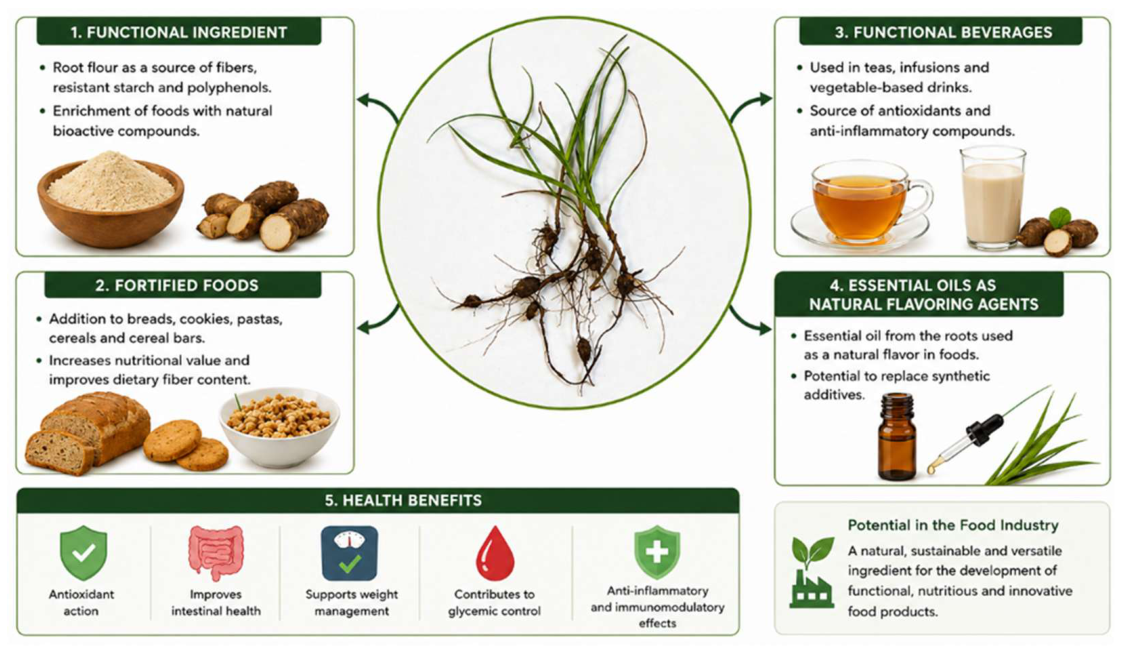
Figure 2.
Potential pharmaceutical and cosmetic applications of Cyperus rotundus. The bioactive compounds of Cyperus rotundus, including phenolics, flavonoids, terpenoids, and essential oils, support a wide range of pharmaceutical and cosmetic applications. Their antioxidant, anti-inflammatory, antimicrobial, and metabolic-regulatory activities highlight the potential of this species for the development of therapeutic formulations, skincare and haircare products, and other natural, sustainable cosmetic ingredients.
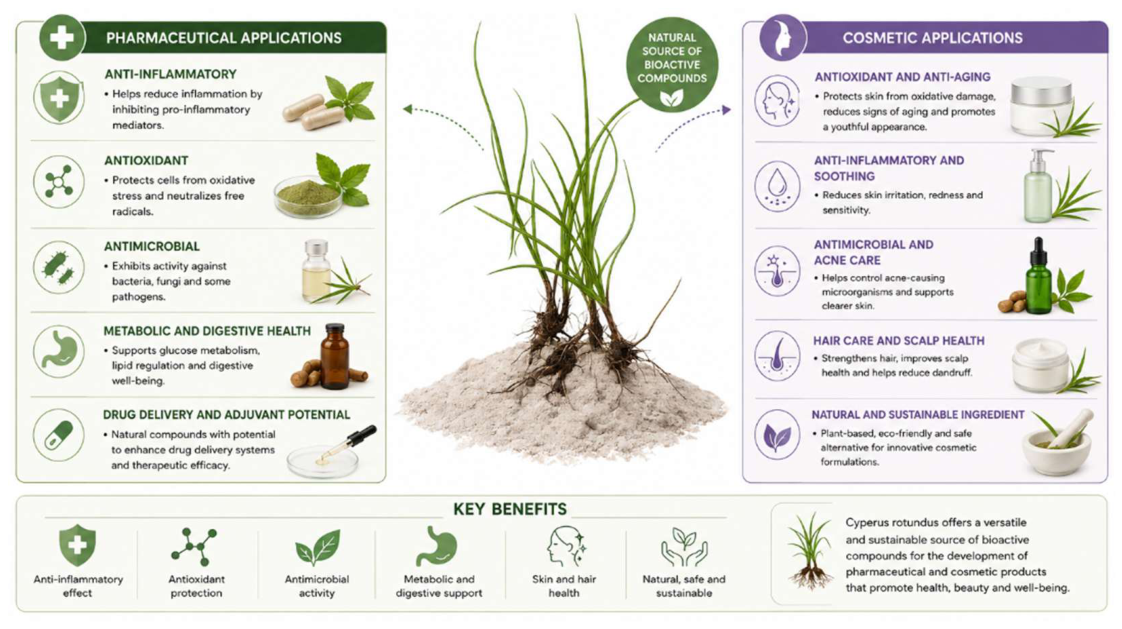
Figure 3.
Proposed redox-inflammatory and metabolic mechanisms associated with Cyperus rotundus and its bioactive constituents. The schematic summarizes selected phytochemicals and experimental findings linking C. rotundus-derived preparations or constituents with modulation of oxidative stress, endogenous antioxidant defenses, inflammatory signaling, and metabolic regulation. Reported molecular targets include reactive oxygen species (ROS), nuclear factor erythroid 2-related factor 2 (Nrf2), mitogen-activated protein kinases (MAPKs), nuclear factor-κB (NF-κB), cyclooxygenase-2 (COX-2), tumor necrosis factor-α (TNF-α), and interleukin-6 (IL-6). The pathways shown represent mechanisms reported or proposed primarily from preclinical studies and should not be interpreted as uniformly demonstrated across all C. rotundus preparations.
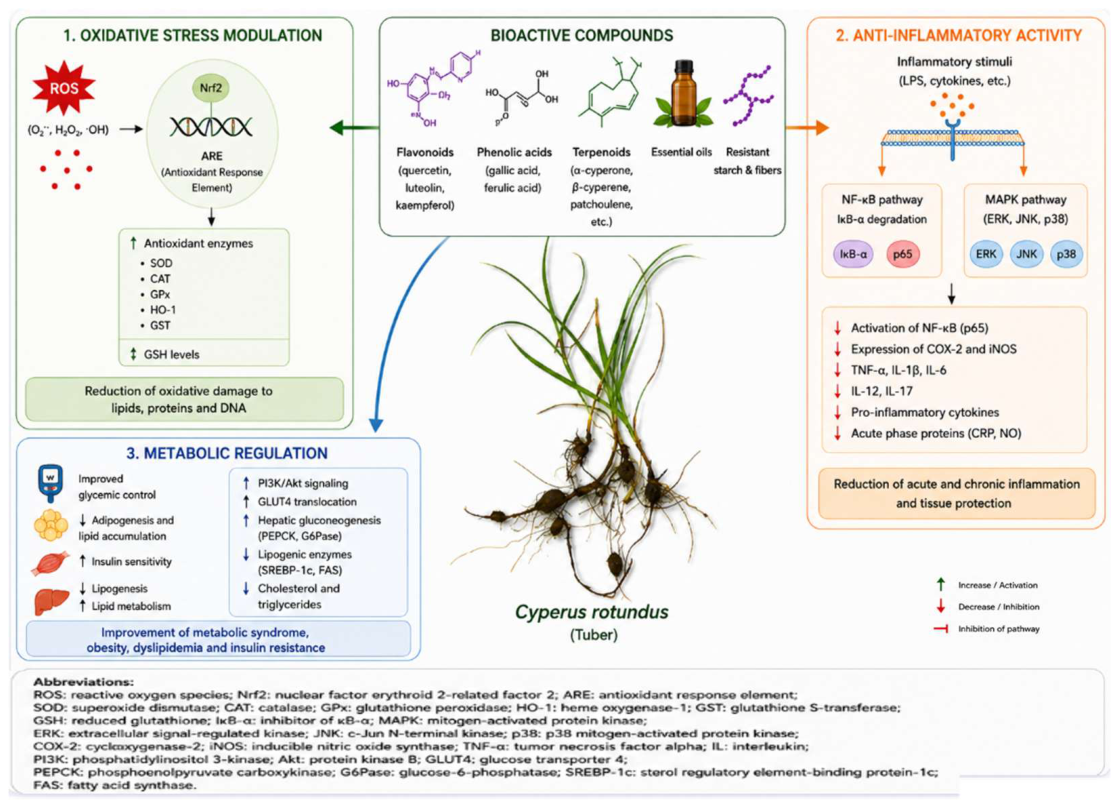
Figure 4.
Reported biological activities of Cyperus rotundus and major classes of bioactive constituents. Experimental studies of C. rotundus extracts, essential oils, and individual constituents have reported neuroprotective, antimicrobial, anticancer, immunomodulatory, gastroprotective, cardioprotective, and hepatoprotective effects. Proposed mechanisms include modulation of oxidative stress, inflammatory signaling, apoptosis, mitochondrial function, and other cellular pathways. The strength of evidence varies according to the preparation, constituent, dose, and experimental model, and most of these activities remain supported primarily by preclinical studies. Accordingly, the figure summarizes areas of biological and translational interest rather than established therapeutic indications.
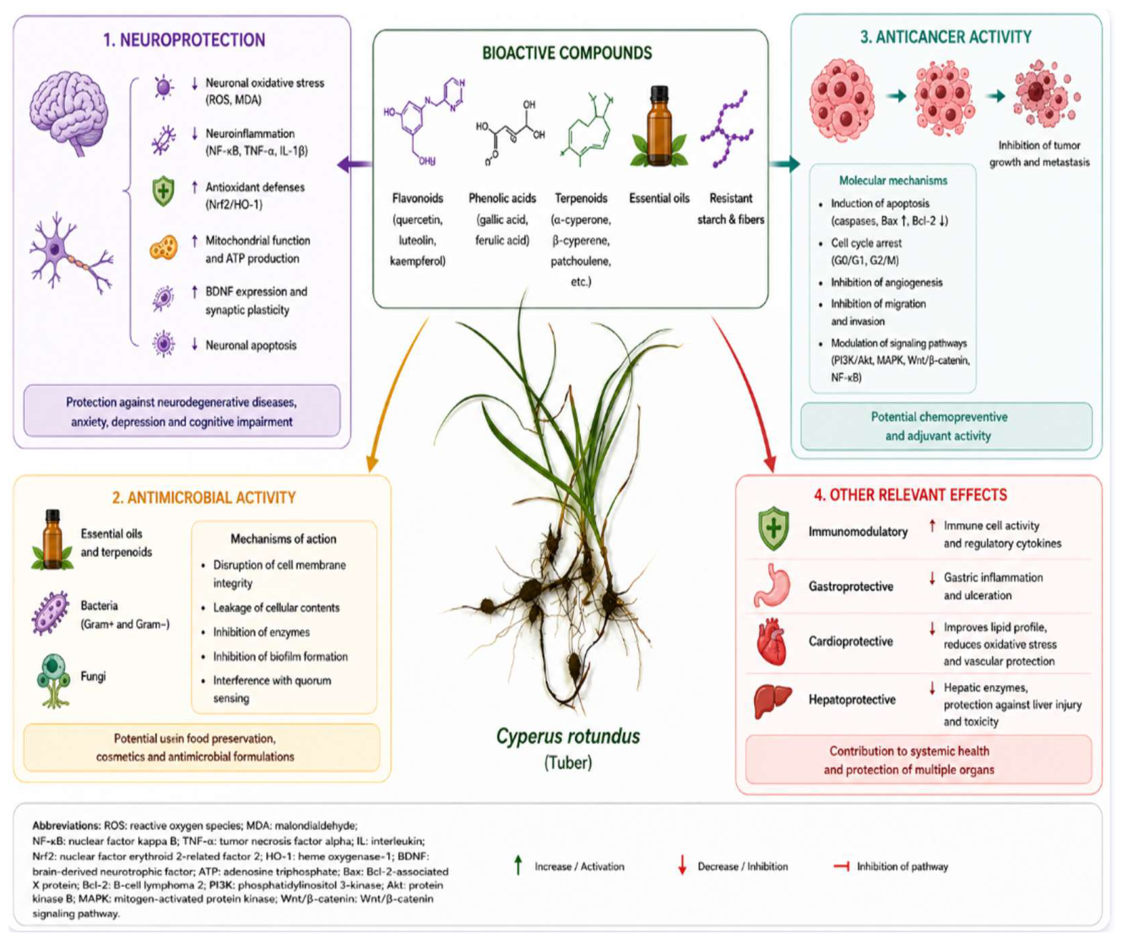
Figure 5.
Proposed mechanism by which Cyperus rotundus promotes gut health and gut–brain axis communication. Bioactive compounds present in C. rotundus, including resistant starch, dietary fiber, polyphenols, flavonoids, and essential oils, modulate the gut microbiota by promoting the growth of beneficial bacteria and reducing pathogenic bacteria. Microbial fermentation of dietary fiber and resistant starch produces short-chain fatty acids (SCFAs), particularly butyrate, acetate, and propionate, which improve intestinal barrier integrity, regulate immune responses, and attenuate intestinal inflammation. These local effects contribute to gut–brain axis communication and confer neuroprotective, anti-inflammatory, and metabolic benefits, supporting the potential of C. rotundus as a functional food ingredient for promoting overall health. These characteristics may make this plant a potential probiotic.
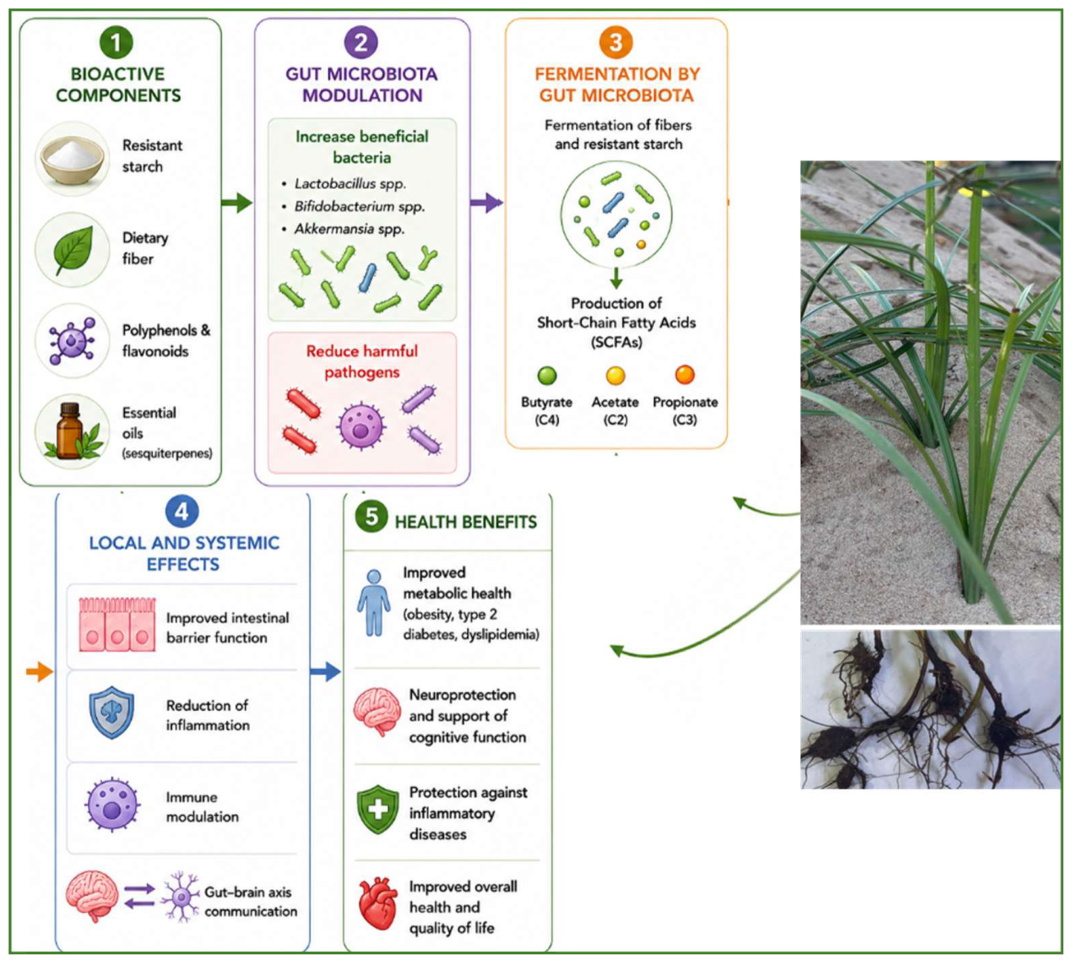

Table 1.
Some phytochemical compounds of Cyperus rotundus and their biological effects.
| Main compounds | Cellular effects | Biological effects | References |
| Flavonoids | |||
| Quercetin | Inhibition of NF-κB, activation of Nrf2 | Antioxidant, anti-inflammatory, and neuroprotective | [72,73] |
| Luteolin | MAPK and cytokine modulation | Anti-inflammatory and anticancer | [73] |
| Kaempferol | Regulation of apoptosis (Bax/Bcl-2) | Anticancer and antioxidant | [40] |
| Phenolic compounds | |||
| Gallic acid | ROS kidnapping | Cytoprotector | [72] |
| Ferrilic acid | Inhibition of lipid peroxidation | Anti-inflammatory and antioxidant | [2] |
| Terpenoids | [72] | ||
| Roundabout | Modulation of inflammatory mediators | Anti-inflammatory, antimicrobial | [72,73] |
| Ciperol | Modulation of cellular pathways | Antioxidant and antimicrobial | [72,73] |
| Sesquiterpenes | |||
| α-cyperene | Modulation of metabolism Modulation of cellular pathways |
Antimicrobial, antioxidant, and anti-inflammatory | [72] |
| β-cyperene | Lipophilic activity | Antimicrobial and cytotoxic | [72,73] |
| Pachulene | Interaction with cell membranes | Antioxidant and antimicrobial | [72] |
| Other compounds | |||
| Alkaloids | Stimulants or calming agents for the nervous system. | Analgesic potential | [72,73] |
| Saponins | Modulation of cell permeability | Antimicrobial and immunomodulator | [72] |
MAPK: Mitogen-Activated Protein Kinase.
Disclaimer/Publisher’s Note: The statements, opinions and data contained in all publications are solely those of the individual author(s) and contributor(s) and not of MDPI and/or the editor(s). MDPI and/or the editor(s) disclaim responsibility for any injury to people or property resulting from any ideas, methods, instructions or products referred to in the content. |
© 2026 by the authors. Licensee MDPI, Basel, Switzerland. This article is an open access article distributed under the terms and conditions of the Creative Commons Attribution (CC BY) license.
Copyright: This open access article is published under a Creative Commons CC BY 4.0 license, which permit the free download, distribution, and reuse, provided that the author and preprint are cited in any reuse.