

Submitted:
03 November 2026
Posted:
06 November 2026
You are already at the latest version
Abstract
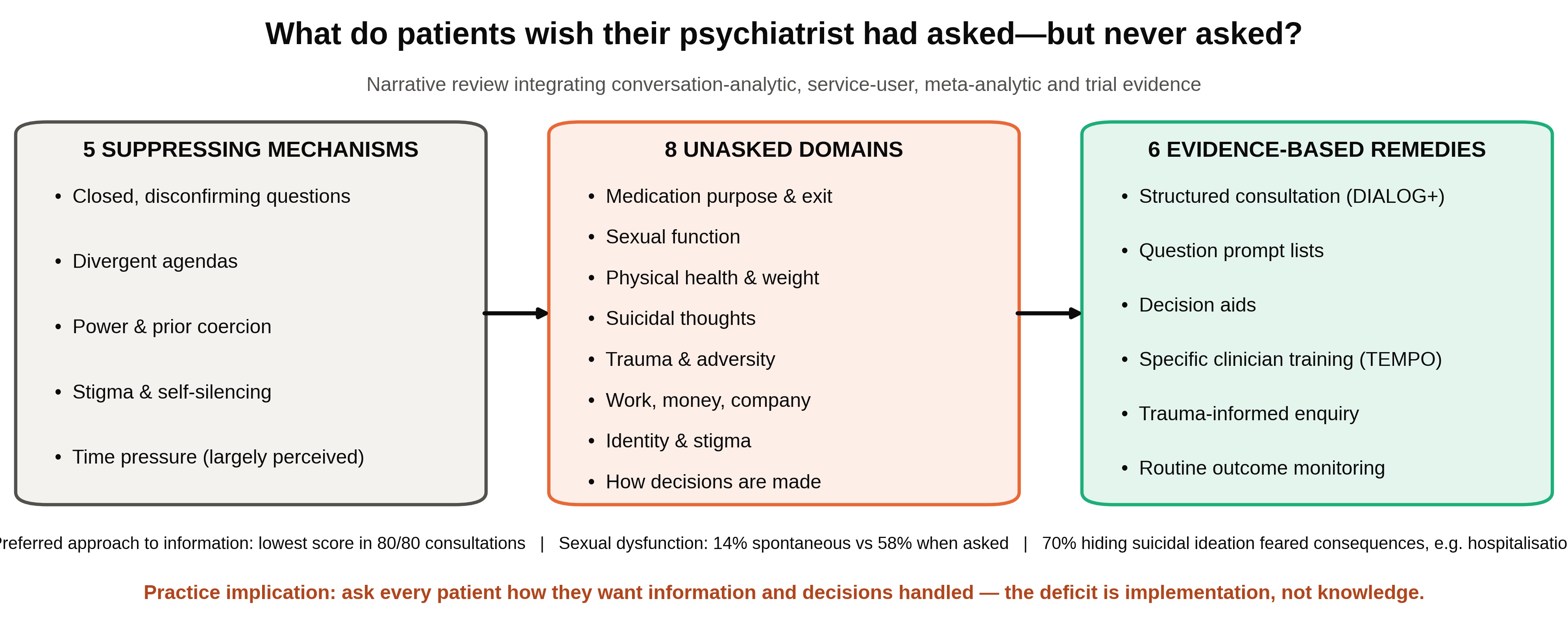
Objective: To synthesise evidence on what patients wish their psychiatrist had asked but did not, why these questions go unasked, what follows from the silence, and which interventions close the gap. Methods: Narrative review, reported against the SANRA scale, of literature identified through PubMed/MEDLINE, Scopus, the Cochrane Library and Google Scholar to November 2025, integrating conversation-analytic and observational studies, service-user surveys and qualitative research, systematic reviews and meta-analyses, and randomised trials. Results: Evidence converged on eight domains: medication purpose and exit; sexual function; physical health and weight; suicidal thoughts; trauma; work, money and company; identity and stigma; and how information and decisions are handled. The gap is measurable. The patient's preferred approach to receiving information was rated at the lowest possible level in 80 of 80 recorded consultations; 34% of service users reported being offered a choice of medication, whereas 57% of clinicians believed they always or nearly always offered one; sexual dysfunction was detected in 58% of patients on direct questioning but 14% spontaneously; and 70% of patients concealing suicidal ideation feared practical consequences, chiefly hospitalisation. Five mechanisms suppress enquiry: disconfirming question design, divergent agendas, power and prior coercion, stigma, and time pressure that is largely perceived. Structured consultations, question prompt lists, decision aids, specific clinician training, trauma-informed enquiry and routine outcome monitoring have supporting evidence. Conclusion: The unasked question is a systematic, measurable and clinically consequential feature of psychiatric practice, linked to concealed risk, non-adherence, unmet need and disengagement. The deficit is one of implementation, not knowledge. Practice implications: Psychiatrists should replace disconfirming questions with open invitations, ask every patient how they want information and decisions handled, enquire routinely across the eight domains, make the consequences of disclosing suicidal thoughts transparent, and embed structured patient-agenda tools in routine care.
Keywords:
physician–patient communication
; shared decision making
; patient-centred care
; psychiatry
; disclosure
; unmet needs
; question prompt list
1. Introduction
Every psychiatric consultation contains two agendas. One belongs to the clinician: clarify the diagnosis, quantify risk, titrate the medication, document the review. The other belongs to the person in the chair: Is this drug going to change who I am? Can I still work? Will this make me gain weight? Does what happened to me as a child matter? Am I allowed to say that I sometimes think about dying?
Three decades of communication research converge on a single, uncomfortable finding: the second agenda is routinely present but rarely voiced, and the silence is produced largely by the structure of the encounter rather than by patient reticence. Patients and psychiatrists disagree systematically about what matters most in an outpatient consultation, and it is the patient’s priorities that decide perceived service quality [1]. Poor communication and discontinuity remain among the most enduring complaints of mental health service users [2], and inadequate information, with consequent exclusion from decisions, is a persistent theme in their accounts [3].
The clinical stakes are established. Most studies relating physician–patient communication to health outcomes demonstrate a positive association [4]; quality communication strengthens trust, emotional regulation and treatment adherence [5], and adherence improves when physicians receive communication training [6]. Yet performance is uneven even in well-resourced settings: in one hospital study only 33% of physicians were rated excellent on all four assessed communication behaviours [7].
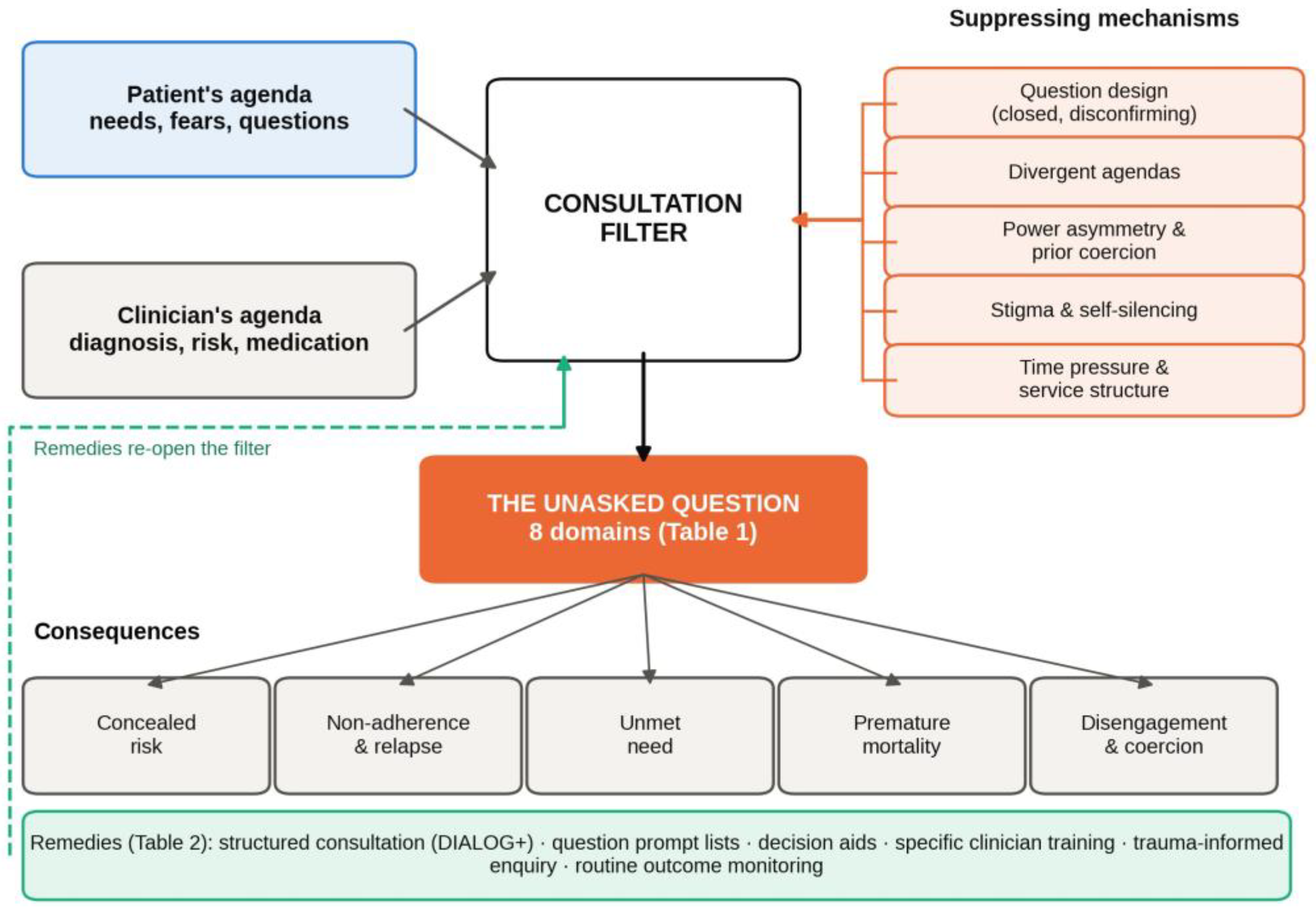
This review does not add another lament about poor communication. It answers four specific questions: (i) what do patients wish their psychiatrist had asked but never asked; (ii) why do these questions go unasked; (iii) what follows from the unasked question; and (iv) what works to close the gap. Fig. 1 summarises the conceptual model that organises the synthesis.
Figure 1.
Conceptual model of the unspoken agenda in psychiatric consultations. The patient’s and the clinician’s agendas pass through a consultation filter shaped by five suppressing mechanisms; what is filtered out becomes the unasked question, with five categories of consequence. Evidence-based remedies act by re-opening the filter.
Figure 1.
Conceptual model of the unspoken agenda in psychiatric consultations. The patient’s and the clinician’s agendas pass through a consultation filter shaped by five suppressing mechanisms; what is filtered out becomes the unasked question, with five categories of consequence. Evidence-based remedies act by re-opening the filter.
2. Methods
2.1. Design
We conducted a narrative, evidence-based review, reported in accordance with the Scale for the Assessment of Narrative Review Articles (SANRA) [8]; the completed checklist is provided as Supplementary File 1. A narrative rather than systematic design was chosen deliberately, because the question spans conversation analysis, service-user experience, epidemiology and intervention research, whose designs and outcomes cannot be meaningfully pooled.
2.2. Sources and Selection
PubMed/MEDLINE, Scopus, the Cochrane Library and Google Scholar were searched for English-language literature to November 2025, combining terms for psychiatrist–patient communication, shared decision making (SDM), information needs, unmet needs, disclosure and concealment, sexual side effects, physical health, suicidal ideation, trauma enquiry, stigma, coercion, question prompt lists, decision aids and routine outcome monitoring. Reference lists of key reviews were hand-searched (backward and forward citation chaining).
Four complementary evidence streams were integrated: (i) conversation-analytic and observational studies of naturally occurring consultations, which analyse what participants do rather than what they later report [9,10]; (ii) quantitative surveys and qualitative studies of service-user experience, satisfaction and unmet need [11,12]; (iii) systematic reviews and meta-analyses of communication, alliance and adherence [13,14,15]; and (iv) randomised trials and Cochrane reviews of communication-focused and decision-support interventions [16,17,18]. Systematic reviews, trials and widely cited primary studies were prioritised for every substantive claim; smaller studies were retained only where they supplied the sole direct evidence on a specific question. Findings were synthesised thematically into mechanisms, domains, consequences and interventions.
A caution frames all that follows. Patients are not a homogeneous block: preferences for involvement vary with personality, background, experience, problem, context and even the mood of the day [19]. Nothing here argues that every patient wants the same conversation; the argument is that the offer of the conversation should be routine and explicit.
3. Results
3.1. Why the Question Goes Unasked: Five Mechanisms
Question design. The most actionable finding in this literature is that clinicians’ question design constrains what patients can say. “Any questions?” is built not to elicit further talk, whereas “Do you have some questions?” invites it; “No problems with the medication?” invites confirmation that there are none, making concerns hard to raise [10]. In consultations with patients with psychosis, patients repeatedly attempted to talk about the content of their symptoms and were deflected, generating interactional tension [20]. Many “unasked” questions were therefore asked, and then closed down. The collaborative clarification of meaning (“repair”) is associated with adherence [21], and it is trainable [18].
Divergent agendas. In 200 consecutive psychiatric consultations, between 21% and 57% of patients, depending on the clinic, asked no questions at all [22]. In a large Japanese survey, what patients most wanted their psychiatrists to change was behavioural rather than therapeutic: to stop “only watching the computer” and to build trust [23]. The same two-sided “don’t ask, don’t tell” dynamic, clinician non-enquiry plus patient non-disclosure, has been described for insomnia [24] and recurs across the domains below.
Power and prior coercion. Thirty-four per cent of voluntary patients felt coerced into admission, half still did so a month later, and no patient characteristic predicted it; the drivers were not participating in decisions and not feeling respected [25]. Coercion research has long operationalised the patient’s experience as a lack of control, choice, influence and freedom [26], and informal coercion, through persuasion, leverage, threat and repeated requests, is pervasive and often invisible to clinicians, irrespective of legal status [27]. Its communicative legacy is durable: negative experiences of psychiatric power, such as involuntary admission, prevented patients from expressing preferences years later [28]. The question a patient most needs to ask may be precisely the one that a previous episode of coercion taught them not to ask.
Stigma and self-silencing. Public stigma operates through stereotypes, prejudice and discrimination [29], and when internalised produces the “why try” effect of diminished self-esteem and self-efficacy [30,31]. People with mental illness thereby face reduced life opportunities over and above the impairments of the disorder itself [32]. Self-stigma reduces help-seeking, is highest among people with schizophrenia, and is on average higher in South-East Asian and Middle Eastern than in European and North American countries [33]. A patient with high self-stigma will not spontaneously raise sexual dysfunction, suicidal thoughts or childhood abuse; the invitation must come from the clinician.
Time, structure and misperception. Time pressure is the barrier to SDM that clinicians cite most often [34], and psychiatric prescribers perceive SDM visits as longer than standard appointments [35]. The evidence does not support the perception: a Cochrane review of SDM interventions in mental health found no effect on consultation length [34], and clinicians who embed SDM in routine practice report that it takes no extra time [36]. The attitudinal barriers of “my patients don’t want it” and “I already do it” [28] are similarly contestable, because patients and providers both find SDM acceptable [37].
3.2. What Patients Wish Had Been Asked: Eight Domains
Table 1 maps each domain to a representative question, the documented gap and the key evidence.
Medication: purpose, duration and exit. The question patients most often manage to ask is about stopping: in 200 consultations, most wanted to know when medication could be reduced or stopped [22]. The deeper question, what the drug is doing and what the plan is, is seldom addressed. Over 60% of patients with bipolar disorder were dissatisfied with information about side-effect risks, including effects on their sex lives, and lower satisfaction with information was associated with lower adherence [11]. Clinicians overestimate their own performance: 57% said they always or nearly always offered a choice of medication, but only 34% of service users reported being offered one, and only 24% received enough information [12]. Patients who understand the purpose of a prescription are twice as likely to collect it, and patients recall about half of what they are told [54]. The stakes are high. Non-adherence affects more than one-third of people with schizophrenia each year, is often covert and is underestimated by clinicians [55]; discontinuation is followed by relapse in 77% of patients within one year and 90% within two, against 18% among adherent patients, with risk rising after as few as 10 days of missed medication [56]. Discontinuation rates for oral antipsychotics range from 26% to 44%, and up to two-thirds of patients are at least partially non-adherent [57]. Tellingly, the recommended remedies are conversational: shared decision making, regular assessment of adherence, management of side effects and a positive therapeutic alliance [55].
Sexual function and intimacy. This is the most clearly documented unasked question. Among severely mentally ill outpatients, 62.5% of men and 38.5% of women believed their medication caused sexual side effects, yet 50% never or infrequently discussed sexual functioning with their provider, 80% of affected women had never raised it, and 41.7% of men and 15.4% of women had stopped medication because of it [38]. Detection depends on asking: in 344 patients taking selective serotonin reuptake inhibitors (SSRIs), sexual dysfunction was reported by 58% when clinicians asked directly but by only 14% spontaneously [39]. Meta-analytic evidence confirms that treatment-emergent sexual dysfunction ranges from 15% to 80% across trials and is under-reported when no structured enquiry is used [58], with rates of up to 80% for SSRIs in some series [59,60], and systematic enquiry has been recommended because dysfunction is an unrecognised cause of non-compliance [40]. Patients wait for the clinician to raise the subject; when clinicians regard it as low priority or fear that honesty will encourage non-adherence, the burden of disclosure returns to an embarrassed patient [61].
Physical health, weight and metabolic risk. Mortality in serious mental illness is two to three times that of the general population, largely from cardiovascular disease driven by inactivity, diet, smoking and antipsychotic-related weight gain [42]; over 60% of people with schizophrenia smoke [43]. Service users want this addressed: they are concerned about weight and fitness, uncertain why assessments are done, report refused requests for help with weight gain, and expect clinicians to act proactively when illness compromises self-care [41]. Every patient should have a professional responsible for their physical health [62], and screening triggered by diagnosis or antipsychotic use is recommended [42,63].
Suicidal thoughts and self-harm. Approximately 45% of people who die by suicide consult a primary care physician in the preceding month, rarely with documented enquiry or disclosure [45]. Concealment is calculated rather than merely shameful: 70% of psychotherapy clients who concealed suicidal ideation feared practical consequences, chiefly involuntary hospitalisation, and nearly half would disclose only if that threat were reduced [44]. Across samples, people withholding information from clinicians cite embarrassment, fear of judgement, reluctance to accept follow-up treatment and not wanting it in their record [64]. The patient’s unasked question is therefore twofold: what happens if I tell you? and will you still treat me as a person afterwards?
Trauma and adversity. Among mental health service users, 47% have experienced physical and 37% sexual abuse [46]. Patients are comfortable being asked: most primary care patients accepted direct or questionnaire-based trauma enquiry and its inclusion in the record [47]. Yet 35 of 96 service users with childhood adversity were never asked [48], and unrecognised trauma exposes patients to re-traumatisation through removal of choice, judgemental responses, seclusion and restraint [46]. Facilitators of disclosure lie largely with the professional and the setting rather than the patient [48]. When disclosure occurs, recommended responses are specific: affirm that disclosing was right, do not probe for details, ask whether anyone has been told before and how that went, check current safety and emotional state, and offer follow-up and referral [65].
Work, money, housing and company. Unmet needs cluster outside symptoms: daytime activity, company, intimate relationships, employment, housing and money [49,66]. Patient–provider agreement on individual needs is only slight to fair [50], and only meeting client-stated needs has been shown to improve quality of life [67]. The needs perspective matters clinically, not only ethically: assessing needs requires the patient’s own view of what is unmet, turns assessment into negotiation, and better staff–patient agreement on needs independently predicts treatment outcome [66]; comprehensive needs assessments in severe mental illness likewise foreground daily functioning, work, education and social inclusion [68]. Although as many as 90% of people with mental health problems would like to work [51], only 15% of people with serious mental illness in the UK are employed [69]; the relationship is bidirectional, since poor mental health predicts later job loss and job loss predicts poorer mental health [70], and supported employment is an evidence-based intervention in its own right [71,72].
Identity and stigma. Person-centred care rests on the principle that people with severe mental illness are people, with histories, strengths and values [73]. When Dutch outpatients defined good care, they added elements absent from academic frameworks, including “professionals listen without judgment” and “patients are seen as persons with positive sides and strengths” [52]; some argue that help can only ever be defined by the person receiving it [74].
The encounter itself. In 80 routine psychiatric consultations rated with the OPTION (“observing patient involvement”) scale, the item assessing whether the clinician explored the patient’s preferred approach to receiving information was scored at the lowest level in every one [53]. Patients prioritise being listened to, explanation and reassurance over technical intervention: in Karachi, being listened to ranked first among the issues most important to patients [75], and in Polish ambulatory care, expectations of explanation and reassurance (mean 9.42) and emotional support (9.39) exceeded those of investigation and treatment (7.64) [76]. Expectations also vary by sex, socio-economic status and education [77]. Patients describe adequate information as “basic courtesy”: “I wasn’t told what the medication did positively or negatively – you were just told to take it” [78]. On acute wards, patients and relatives ranked information provision as a higher priority than most professionals did [3].
3.3. What Patients Want When They Are Asked
Patients seek information sufficient to feel respected and to take part, not exhaustive technical detail [78,79]. SDM, endorsed as the standard of care by the National Academy of Medicine, the National Institute for Health and Care Excellence, the American Psychiatric Association and SAMHSA [80], yields benefits in mental health comparable to those in general medicine [37]. For patients who take medication inconsistently, SDM is best understood as a long-term endeavour embedded in the therapeutic partnership rather than a single transaction [81].
A counterweight is essential. Some patients want the psychiatrist to decide [75], and only 7% of patients with severe mental illness answered “no” to a National Health Service community survey question on whether they had been involved as much as they wanted [19]. The resolution is procedural rather than substantive: whether a patient wishes to lead, share or delegate is itself a question that must be asked, and it is the question the OPTION data show is almost never asked [53].
Relational qualities complete the picture. The alliance, comprising agreement on goals and tasks and an emotional bond, robustly predicts outcome, largely through the clinician’s facilitative interpersonal skills [14]; in psychosis, task-oriented elements (collaboration, agreement on tasks, regular contact) appear most active for adherence [15], although the outcome evidence is less consistent [13]. The therapeutic relationship may act both through adherence and directly as a therapeutic ingredient [82], and clinical empathy is a core professional competence [83]. Trials in which practitioners enhanced how they expressed empathy have reported reduced pain and anxiety and improved satisfaction and adherence [84], and a theoretical model now specifies how empathic communication produces these effects [85]. Yet psychiatrists receive little specific instruction or supervision in communication [82].
3.4. Consequences of the Unasked Question
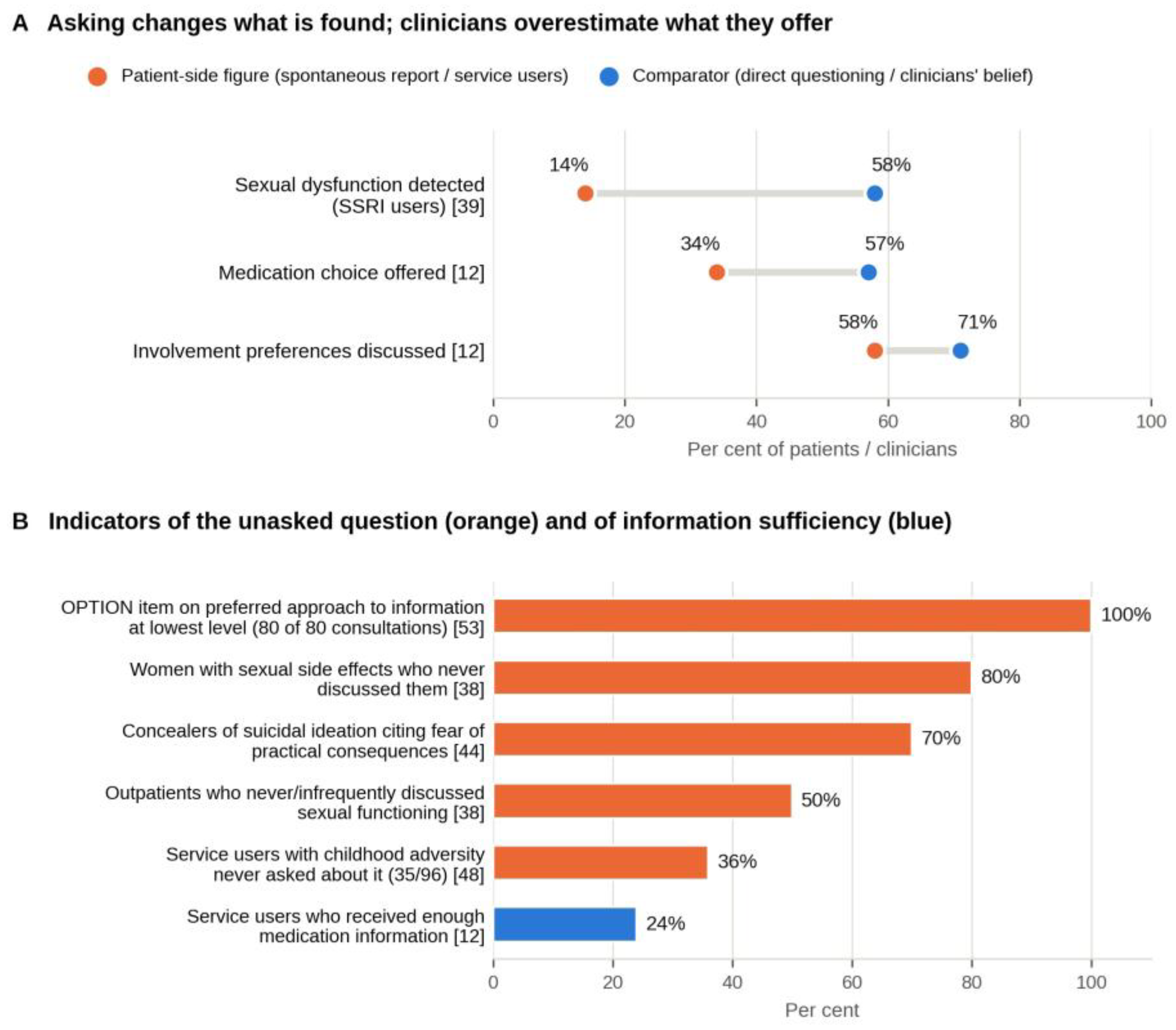
The consequences are measurable across five domains (Fig. 2). Concealed risk: suicidal ideation and trauma histories remain hidden when enquiry is absent or its consequences are opaque [44,45,48]. Non-adherence and relapse: 41.7% of men with perceived sexual side effects stopped medication [38]; in the CATIE study, 74% of patients discontinued medication prematurely, and 38% of surveyed patients stopped antipsychotics without telling their psychiatrist [21]; non-adherence in first-episode schizophrenia carries a roughly fivefold increase in relapse risk [86]. Unmet need and reduced quality of life: needs identified by patients but not clinicians remain unmet [50,66,67]. Premature mortality: physical health questions not asked become cardiovascular deaths not prevented [42,62]. Disengagement and perceived coercion: not feeling heard is itself a driver of perceived coercion [25], and its effects persist for years [28].
Figure 2.
The measured gap. (A) Paired comparisons showing that direct questioning multiplies detection of sexual dysfunction [39] and that clinicians overestimate the choice and involvement they offer [12]. (B) Indicators of the unasked question [38,44,48,53] and of information sufficiency [12]. Values are drawn from different populations and are not directly comparable.
Figure 2.
The measured gap. (A) Paired comparisons showing that direct questioning multiplies detection of sexual dysfunction [39] and that clinicians overestimate the choice and involvement they offer [12]. (B) Indicators of the unasked question [38,44,48,53] and of information sufficiency [12]. Values are drawn from different populations and are not directly comparable.
3.5. Interventions That Change The Encounter
Six intervention families have supporting evidence (Table 2). Structuring the consultation gives the patient’s agenda a guaranteed slot: DIALOG+, in which patients rate satisfaction with eight life domains and three treatment aspects and then choose what to discuss, improved quality of life in a cluster randomised trial [87] and has been associated with reduced treatment costs [88]. Preparing patients with question prompt lists or coaching produces small but consistent increases in question-asking and satisfaction [16,89], particularly when the clinician endorses the list [90], and does not lengthen consultations [91]. Decision aids improve knowledge, risk perception and values-consistent choice while reducing decisional conflict [17]. Training clinicians works when it is specific: in the TEMPO cluster randomised trial, psychiatrists trained to explore patients’ psychotic experiences used 44% more self-repair and achieved better therapeutic relationships [18], and simulation-based education improved trainees’ agenda setting and empathic skills [92]; generic communication training, however, has shown only modest effects on satisfaction with the relationship and none on mental state [93], and it has been called staggering that, a century after talking therapies emerged, so few trials examine how the conduct of consultations affects outcomes in severe mental illness [94]. Trauma-informed enquiry is explicit and manualisable: ask everyone, at initial assessment rather than in crisis, with a normalising preface, specific examples, the person’s own pace and an explicit right to decline [65]. Routine outcome monitoring improves outcomes and reduces dropout, with the greatest benefit for patients who are not improving [95,96,97], precisely the group least likely to volunteer their concerns.
4. Discussion and Conclusions
4.1. Discussion
This review shows that “what patients wish their psychiatrist had asked” has an evidence-based answer that is narrower, and more actionable, than the familiar complaint of poor communication. Eight domains recur across designs, countries and diagnoses, and the gap in each is quantified rather than anecdotal. Three insights reshape the problem. First, many unasked questions were in fact attempted by patients and closed down by question design [10,20]; the target is therefore clinician behaviour, not patient courage. Second, clinicians consistently overestimate their own performance [12], so self-report cannot serve as the measure of improvement. Third, the principal barrier, time, is largely perceived rather than real [34,91].
The findings also reframe what “asking” means. The question is bidirectional: what patients wish had been asked is inseparable from whether the clinician demonstrably works to understand what the patient does say, which is why self-repair, a measurable index of communicative engagement, rose with specific training [18]. It is equally procedural: because preferences for involvement differ [19,75], the first question is not “what would you like to decide?” but “how would you like us to decide?”, the behaviour rated at the lowest possible level in all 80 recorded consultations [53]. These principles are low-cost and portable, which makes them especially relevant to high-volume, time-constrained services in low- and middle-income countries, where self-stigma is on average higher [33].
Five research priorities follow. (i) Quantify the counterfactual: trials should test whether routinely asking a fixed set of questions changes adherence, disclosure and outcome, since current evidence is largely correlational [93]. (ii) Specify mechanisms: conversation analysis already provides sensitive, systematic measures of shared understanding [9,21], and specific behaviours should replace umbrella concepts [19]. (iii) Measure what clinicians do, not what they say: individual clinician style explains more variance in involvement than patient or structural factors [10]. (iv) Test the time objection empirically with objective consultation-length feedback [34,35]. (v) Build equity into enquiry: because self-stigma, unmet need and dissatisfaction are concentrated among the most disadvantaged [33,50,77], interventions that shift the burden of asking onto patients risk widening inequality; clinician-side change deserves equal weight [16,89].
The review has limitations. It is narrative rather than systematic, so selection bias cannot be excluded, although triangulation across four evidence streams mitigates it. Prioritising highly cited work favours older studies. Heterogeneity is substantial, for example estimates of antidepressant-associated sexual dysfunction range from 15% to over 80%, largely due to measurement [58,59]. Much of the evidence derives from high-income Western settings; the available Asian data suggest that both the content of unspoken questions and the acceptability of asking them are culturally patterned [23,33,50], which matters for low- and middle-income countries, including India, where consultation volumes are high and time is scarce. Finally, preference heterogeneity is real [19,75]: the defensible conclusion is not that all patients want SDM, but that all patients should be asked how they want information and decisions to be handled.
4.2. Conclusions
The unasked question is not an incidental lapse of courtesy but a systematic, measurable and clinically consequential feature of psychiatric practice, linked to concealed risk, non-adherence, relapse, unmet need, preventable physical morbidity and disengagement. Remedies with trial evidence already exist. The deficit is one of implementation, not knowledge, and it lies in the design of the routine consultation, which is the most tractable object of reform in psychiatric practice.
4.3. Practice Implications
Clinicians should (1) replace closed, disconfirming questions (“No problems with the medication?”) with open invitations (“What concerns do you have about the medication?”); (2) ask every patient how they wish information and decisions to be handled; (3) enquire directly and routinely about sexual function, weight and smoking, work and money, and trauma, using the questions in Table 1; (4) explain transparently what happens after disclosure of suicidal thoughts before asking about them; and (5) look up from the screen. Services should embed a structured patient-agenda tool (such as DIALOG+ or a question prompt list) and routine outcome monitoring, and should train clinicians in specific, observable communication behaviours rather than generic skills.
Funding
This research did not receive any specific grant from funding agencies in the public, commercial, or not-for-profit sectors.
Declaration of competing interest
The author declares that he has no known competing financial interests or personal relationships that could have appeared to influence the work reported in this paper.
Ethical approval and informed consent
Not applicable. This review synthesises previously published literature and involved no human participants, patient data or animals. No patient-identifiable information is included.
Data availability
No new data were generated or analysed in this study. All sources are cited in the reference list.
Declaration of generative AI and AI-assisted technologies in the manuscript preparation process
During the preparation of this work the author used Claude (Anthropic) to assist with language editing, formatting to journal requirements and preparation of figures. After using this tool, the author reviewed and edited the content as needed and takes full responsibility for the content of the published article.
Acknowledgments
None.
References
- Thomson SH, Doody GA. Parallel paths? Patient and doctor priorities in psychiatric outpatient consultations. J Ment Health 2010;19:461–9. [CrossRef]
- Newman D, O'Reilly P, Lee SH, Kennedy C. Mental health service users' experiences of mental health care: an integrative literature review. J Psychiatr Ment Health Nurs 2015;22:171–82. [CrossRef]
- Pollock K, Grime J, Baker E, Mantala K. Meeting the information needs of psychiatric inpatients: staff and patient perspectives. J Ment Health 2004;13:389–401. [CrossRef]
- Stewart MA. Effective physician–patient communication and health outcomes: a review. CMAJ 1995;152:1423–33.
- Sharkiya SH. Quality communication can improve patient-centred health outcomes among older patients: a rapid review. BMC Health Serv Res 2023;23:886. [CrossRef]
- Zill JM, Christalle E, Müller E, Härter M, Dirmaier J, Scholl I. Measurement of physician–patient communication—a systematic review. PLoS One 2014;9:e112637. [CrossRef]
- Clever SL, Jin L, Levinson W, Meltzer DO. Does doctor–patient communication affect patient satisfaction with hospital care? Results of an analysis with a novel instrumental variable. Health Serv Res 2008;43:1505–19. [CrossRef]
- Baethge C, Goldbeck-Wood S, Mertens S. SANRA—a scale for the quality assessment of narrative review articles. Res Integr Peer Rev 2019;4:5. [CrossRef]
- McCabe R, Healey PGT. Miscommunication in doctor–patient communication. Top Cogn Sci 2018;10:409–24. [CrossRef]
- McCabe R. Involvement in decision making: the devil is in the detail. World Psychiatry 2017;16:155–6. [CrossRef]
- Bowskill R, Clatworthy J, Parham R, Rank T, Horne R. Patients' perceptions of information received about medication prescribed for bipolar disorder: implications for informed choice. J Affect Disord 2007;100:253–7. [CrossRef]
- Pappa S, Barnett J, Gomme S, Iliopoulou A, Moore I, Whitaker M, et al. Shared and supported decision making in medication in a mental health setting: how far have we come? Community Ment Health J 2021;57:1566–78. [CrossRef]
- Priebe S, Richardson M, Cooney M, Adedeji O, McCabe R. Does the therapeutic relationship predict outcomes of psychiatric treatment in patients with psychosis? A systematic review. Psychother Psychosom 2011;80:70–7. [CrossRef]
- Wampold BE, Flückiger C. The alliance in mental health care: conceptualization, evidence and clinical applications. World Psychiatry 2023;22:25–41. [CrossRef]
- Thompson L, McCabe R. The effect of clinician-patient alliance and communication on treatment adherence in mental health care: a systematic review. BMC Psychiatry 2012;12:87. [CrossRef]
- [Kinnersley P, Edwards A, Hood K, Cadbury N, Ryan R, Prout H, et al. Interventions before consultations for helping patients address their information needs. Cochrane Database Syst Rev 2007;(3):CD004565. [CrossRef]
- Stacey D, Légaré F, Lewis K, Barry MJ, Bennett CL, Eden KB, et al. Decision aids for people facing health treatment or screening decisions. Cochrane Database Syst Rev 2017;4:CD001431. [CrossRef]
- McCabe R, John P, Dooley J, Healey P, Cushing A, Kingdon D, et al. Training to enhance psychiatrist communication with patients with psychosis (TEMPO): cluster randomised controlled trial. Br J Psychiatry 2016;209:517–24. [CrossRef]
- Priebe S. Common sense alone is not enough. World Psychiatry 2017;16:157–8. [CrossRef]
- McCabe R, Heath C, Burns T, Priebe S. Engagement of patients with psychosis in the consultation: conversation analytic study. BMJ 2002;325:1148–51. [CrossRef]
- McCabe R, Healey PGT, Priebe S, Lavelle M, Dodwell D, Laugharne R, et al. Shared understanding in psychiatrist–patient communication: association with treatment adherence in schizophrenia. Patient Educ Couns 2013;93:73–9. [CrossRef]
- Llewellyn-Jones S, Jones G, Donnelly P. Questions patients ask psychiatrists. Psychiatr Bull 2001;25:21–4. [CrossRef]
- Natsukari I, Higuchi M, Tsujimoto T. How do patients and families evaluate attitude of psychiatrists in Japan?: quantitative content analysis of open-ended items of patient responses from a large-scale questionnaire survey. BMC Psychiatry 2023;23:253. [CrossRef]
- Ferini-Strambi L, Auer R, Bjorvatn B, Castronovo V, Franco O, Gabutti L, et al. Insomnia disorder: clinical and research challenges for the 21st century. Eur J Neurol 2021;28:2156–67. [CrossRef]
- Katsakou C, Marougka S, Garabette J, Rost F, Yeeles K, Priebe S. Why do some voluntary patients feel coerced into hospitalisation? A mixed-methods study. Psychiatry Res 2011;187:275–82. [CrossRef]
- Gardner W, Hoge SK, Bennett N, Roth LH, Lidz CW, Monahan J, et al. Two scales for measuring patients' perceptions for coercion during mental hospital admission. Behav Sci Law 1993;11:307–21. [CrossRef]
- Silva B, Morandi S, Bachelard M, Bonsack C, Golay P. Pathways to experienced coercion during psychiatric admission: a network analysis. BMC Psychiatry 2024;24:546. [CrossRef]
- Hamann J, Kohl S, McCabe R, Bühner M, Mendel R, Albus M, et al. What can patients do to facilitate shared decision making? A qualitative study of patients with depression or schizophrenia and psychiatrists. Soc Psychiatry Psychiatr Epidemiol 2016;51:617–25. [CrossRef]
- Rüsch N, Angermeyer MC, Corrigan PW. Mental illness stigma: concepts, consequences, and initiatives to reduce stigma. Eur Psychiatry 2005;20:529–39. [CrossRef]
- Corrigan PW, Michaels PJ, Vega E, Gause M, Watson AC, Rüsch N. Self-stigma of mental illness scale—short form: reliability and validity. Psychiatry Res 2012;199:65–9. [CrossRef]
- Corrigan PW, Rao D. On the self-stigma of mental illness: stages, disclosure, and strategies for change. Can J Psychiatry 2012;57:464–9. [CrossRef]
- Hinshaw SP, Stier A. Stigma as related to mental disorders. Annu Rev Clin Psychol 2008;4:367–93. [CrossRef]
- Thornicroft G, Sunkel C, Alikhon Aliev A, Baker S, Brohan E, El Chammay R, et al. The Lancet Commission on ending stigma and discrimination in mental health. Lancet 2022;400:1438–80. [CrossRef]
- Verwijmeren D, Grootens KP. Shifting perspectives on the challenges of shared decision making in mental health care. Community Ment Health J 2024;60:292–307. [CrossRef]
- Maples NJ, Velligan DI, Jones EC, Espinosa EM, Morgan RO, Valerio-Shewmaker MA. Perspectives of patients and providers in using shared decision making in psychiatry. Community Ment Health J 2022;58:578–88. [CrossRef]
- Hayes D, Edbrooke-Childs J, Town R, Wolpert M, Midgley N. Barriers and facilitators to shared decision making in child and youth mental health: clinician perspectives using the Theoretical Domains Framework. Eur Child Adolesc Psychiatry 2019;28:655–66. [CrossRef]
- Patel SR, Bakken S, Ruland C. Recent advances in shared decision making for mental health. Curr Opin Psychiatry 2008;21:606–12. [CrossRef]
- Rosenberg KP, Bleiberg KL, Koscis J, Gross C. A survey of sexual side effects among severely mentally ill patients taking psychotropic medications: impact on compliance. J Sex Marital Ther 2003;29:289–96. [CrossRef]
- Montejo-González AL, Llorca G, Izquierdo JA, Ledesma A, Bousoño M, Calcedo A, et al. SSRI-induced sexual dysfunction: fluoxetine, paroxetine, sertraline, and fluvoxamine in a prospective, multicenter, and descriptive clinical study of 344 patients. J Sex Marital Ther 1997;23:176–94. [CrossRef]
- Lane RM. A critical review of selective serotonin reuptake inhibitor-related sexual dysfunction; incidence, possible aetiology and implications for management. J Psychopharmacol 1997;11:72–82. [CrossRef]
- Young SJ, Praskova A, Hayward N, Patterson S. Attending to physical health in mental health services in Australia: a qualitative study of service users' experiences and expectations. Health Soc Care Community 2017;25:602–11. [CrossRef]
- Baller JB, McGinty EE, Azrin ST, Juliano-Bult D, Daumit GL. Screening for cardiovascular risk factors in adults with serious mental illness: a review of the evidence. BMC Psychiatry 2015;15:55. [CrossRef]
- Ilyas A, Chesney E, Patel R. Improving life expectancy in people with serious mental illness: should we place more emphasis on primary prevention? Br J Psychiatry 2017;211:194–7. [CrossRef]
- Blanchard M, Farber BA. “It is never okay to talk about suicide”: patients' reasons for concealing suicidal ideation in psychotherapy. Psychother Res 2020;30:124–36. [CrossRef]
- Turecki G, Brent DA. Suicide and suicidal behaviour. Lancet 2016;387:1227–39. [CrossRef]
- Emsley E, Smith J, Martin D, Lewis NV. Trauma-informed care in the UK: where are we? A qualitative study of health policies and professional perspectives. BMC Health Serv Res 2022;22:1164. [CrossRef]
- Goldstein E, Athale N, Sciolla AF, Catz SL. Patient preferences for discussing childhood trauma in primary care. Perm J 2017;21:16-055. [CrossRef]
- McLaren K, Read J. Exploring clients' experiences of disclosing childhood adversity to mental health professionals. Child Prot Pract 2025;7:100256. [CrossRef]
- Isaacs A, Beauchamp A, Sutton K, Kocaali N. Care coordination can reduce unmet needs of persons with severe and persistent mental illness. Front Psychiatry 2019;10:563. [CrossRef]
- AshaRani PV, Tan YWB, Samari E, Wang P, Cetty L, Satghare P, et al. Needs of patients with early psychosis: a comparison of patient's and mental health care provider's perception. Front Psychiatry 2022;13:952666. [CrossRef]
- Boardman J. Work, employment and psychiatric disability. Adv Psychiatr Treat 2003;9:327–34. [CrossRef]
- Maassen EF, Schrevel SJC, Dedding CWM, Broerse JEW, Regeer BJ. Comparing patients' perspectives of “good care” in Dutch outpatient psychiatric services with academic perspectives of patient-centred care. J Ment Health 2017;26:84–94. [CrossRef]
- Goss C, Moretti F, Mazzi MA, Del Piccolo L, Rimondini M, Zimmermann C. Involving patients in decisions during psychiatric consultations. Br J Psychiatry 2008;193:416–21. [CrossRef]
- Mitchell AJ, Selmes T. Why don't patients take their medicine? Reasons and solutions in psychiatry. Adv Psychiatr Treat 2007;13:336–46. [CrossRef]
- Haddad PM, Brain C, Scott J. Nonadherence with antipsychotic medication in schizophrenia: challenges and management strategies. Patient Relat Outcome Meas 2014;5:43–62. [CrossRef]
- Kane JM, Correll CU. Optimizing treatment choices to improve adherence and outcomes in schizophrenia. J Clin Psychiatry 2019;80(5):IN18031AH1C. [CrossRef]
- Kaplan G, Casoy J, Zummo J. Impact of long-acting injectable antipsychotics on medication adherence and clinical, functional, and economic outcomes of schizophrenia. Patient Prefer Adherence 2013;7:1171–80. [CrossRef]
- Reichenpfader U, Gartlehner G, Morgan LC, Greenblatt A, Nussbaumer B, Hansen RA, et al. Sexual dysfunction associated with second-generation antidepressants in patients with major depressive disorder: results from a systematic review with network meta-analysis. Drug Saf 2014;37:19–31. [CrossRef]
- Rosen RC, Lane RM, Menza M. Effects of SSRIs on sexual function: a critical review. J Clin Psychopharmacol 1999;19:67–85. [CrossRef]
- Atmaca M. Selective serotonin reuptake inhibitor-induced sexual dysfunction: current management perspectives. Neuropsychiatr Dis Treat 2020;16:1043–50. [CrossRef]
- Marks S. A clinical review of antidepressants, their sexual side-effects, post-SSRI sexual dysfunction, and serotonin syndrome. Br J Nurs 2023;32:678–82. [CrossRef]
- Maj M. Physical health care in persons with severe mental illness: a public health and ethical priority. World Psychiatry 2009;8:1–2. [CrossRef]
- Kristiansen CB, Juel A, Vinther Hansen M, Hansen AM, Kilian R, Hjorth P. Promoting physical health in severe mental illness: patient and staff perspective. Acta Psychiatr Scand 2015;132:470–8. [CrossRef]
- Levy AG, Scherer AM, Zikmund-Fisher BJ, Larkin K, Barnes GD, Fagerlin A. Assessment of patient nondisclosures to clinicians of experiencing imminent threats. JAMA Netw Open 2019;2:e199277. [CrossRef]
- Sweeney A, Filson B, Kennedy A, Collinson L, Gillard S. A paradigm shift: relationships in trauma-informed mental health services. BJPsych Adv 2018;24:319–33. [CrossRef]
- Maj M, van Os J, De Hert M, Gaebel W, Galderisi S, Green MF, et al. The clinical characterization of the patient with primary psychosis aimed at personalization of management. World Psychiatry 2021;20:4–33. [CrossRef]
- Isaacs AN, Beauchamp A, Sutton K, Maybery D. Unmet needs of persons with a severe and persistent mental illness and their relationship to unmet accommodation needs. Health Soc Care Community 2019;27(4). [CrossRef]
- Torkar T, Homar V, Švab V. Triangulation study of needs assessment of people with severe mental illness in ‘follow-up’ day hospital settings. Nurs Open 2023;10:2859–68. [CrossRef]
- Evans J, Repper J. Employment, social inclusion and mental health. J Psychiatr Ment Health Nurs 2000;7:15–24. [CrossRef]
- Olesen SC, Butterworth P, Leach LS, Kelaher M, Pirkis J. Mental health affects future employment as job loss affects mental health: findings from a longitudinal population study. BMC Psychiatry 2013;13:144. [CrossRef]
- Frederick DE, VanderWeele TJ. Supported employment: meta-analysis and review of randomized controlled trials of individual placement and support. PLoS One 2019;14:e0212208. [CrossRef]
- Drake RE, Wallach MA. Employment is a critical mental health intervention. Epidemiol Psychiatr Sci 2020;29:e178. [CrossRef]
- Boardman J, Dave S. Person-centred care and psychiatry: some key perspectives. BJPsych Int 2020;17:65–8. [CrossRef]
- Carey TA. Beyond patient-centered care: enhancing the patient experience in mental health services through patient-perspective care. Patient Exp J 2016;3:46–9. [CrossRef]
- Channa R, Siddiqi M. What do patients want from their psychiatrist? A cross-sectional questionnaire based exploratory study from Karachi. BMC Psychiatry 2008;8:14. [CrossRef]
- Małus A, Galińska-Skok B, Konarzewska B, Szulc A. How do patients perceive ambulatory psychiatric care and what are their needs? Ann Agric Environ Med 2018;25:90–4. [CrossRef]
- Bener A, Ghuloum S. Gender difference on patients' satisfaction and expectation towards mental health care. Niger J Clin Pract 2013;16:285–91. [CrossRef]
- Powell J, Clarke A. Information in mental health: qualitative study of mental health service users. Health Expect 2006;9:359–65. [CrossRef]
- Happell B, Manias E, Roper C. Wanting to be heard: mental health consumers' experiences of information about medication. Int J Ment Health Nurs 2004;13:242–8. [CrossRef]
- Zisman-Ilani Y, Roth RM, Mistler LA. Time to support extensive implementation of shared decision making in psychiatry. JAMA Psychiatry 2021;78:1183–4. [CrossRef]
- Kaminskiy E, Zisman-Ilani Y, Morant N, Ramon S. Barriers and enablers to shared decision making in psychiatric medication management: a qualitative investigation of clinician and service users' views. Front Psychiatry 2021;12:678005. [CrossRef]
- Priebe S, McCabe R. Therapeutic relationships in psychiatry: the basis of therapy or therapy in itself? Int Rev Psychiatry 2008;20:521–6. [CrossRef]
- Hojat M, Maio V, Pohl CA, Gonnella JS. Clinical empathy: definition, measurement, correlates, group differences, erosion, enhancement, and healthcare outcomes. Discov Health Syst 2023;2:8. [CrossRef]
- Howick J, Steinkopf L, Ulyte A, Roberts N, Meissner K. How empathic is your healthcare practitioner? A systematic review and meta-analysis of patient surveys. BMC Med Educ 2017;17:136. [CrossRef]
- Neumann M, Bensing J, Mercer S, Ernstmann N, Ommen O, Pfaff H. Analyzing the “nature” and “specific effectiveness” of clinical empathy: a theoretical overview and contribution towards a theory-based research agenda. Patient Educ Couns 2009;74:339–46. [CrossRef]
- Subotnik KL, Nuechterlein KH, Ventura J, Gitlin MJ, Marder S, Mintz J, et al. Risperidone nonadherence and return of positive symptoms in the early course of schizophrenia. Am J Psychiatry 2011;168:286–92. [CrossRef]
- Priebe S, Kelley L, Omer S, Golden E, Walsh S, Khanom H, et al. The effectiveness of a patient-centred assessment with a solution-focused approach (DIALOG+) for patients with psychosis: a pragmatic cluster-randomised controlled trial in community care. Psychother Psychosom 2015;84:304–13. [CrossRef]
- Priebe S, Conneely M, McCabe R, Bird V. What can clinicians do to improve outcomes across psychiatric treatments: a conceptual review of non-specific components. Epidemiol Psychiatr Sci 2019;29:e48. [CrossRef]
- Faber MJ, van Dulmen S, Kinnersley P. Using interventions with patients before clinical encounters to encourage their participation. In: Elwyn G, Edwards A, Thompson R, editors. Shared decision making in health care: achieving evidence-based patient choice. 3rd ed. Oxford: Oxford University Press; 2016, p. 160–6. [CrossRef]
- Brown R, Butow PN, Boyer MJ, Tattersall MHN. Promoting patient participation in the cancer consultation: evaluation of a prompt sheet and coaching in question-asking. Br J Cancer 1999;80:242–8. [CrossRef]
- Licqurish SM, Cook OY, Pattuwage LP, Saunders C, Jefford M, Koczwara B, et al. Tools to facilitate communication during physician-patient consultations in cancer care: an overview of systematic reviews. CA Cancer J Clin 2019;69:497–520. [CrossRef]
- Ditton-Phare P, Sandhu H, Kelly B, Loughland CM. Acquisition of key clinical communication skills through simulation-based education: findings from a program for postgraduate psychiatry trainees (ComPsych). Discov Educ 2024;3(1). [CrossRef]
- Papageorgiou A, Loke YK, Fromage M. Communication skills training for mental health professionals working with people with severe mental illness. Cochrane Database Syst Rev 2017;6:CD010006. [CrossRef]
- Wilson J. Have 100 years of talking therapies taught psychiatrists how to communicate? BJPsych Adv 2018;24:221–4. [CrossRef]
- Lutz W, Rubel J, Deisenhofer AK, Moggia D. Continuous outcome measurement in modern data-informed psychotherapies. World Psychiatry 2022;21:215–6. [CrossRef]
- Kendrick T, El-Gohary M, Stuart B, Gilbody S, Churchill R, Aiken L, et al. Routine use of patient reported outcome measures (PROMs) for improving treatment of common mental health disorders in adults. Cochrane Database Syst Rev 2016;(8):CD011119. [CrossRef]
- Carlier IVE, Meuldijk D, van Vliet IM, van Fenema E, van der Wee NJA, Zitman FG. Routine outcome monitoring and feedback on physical or mental health status: evidence and theory. J Eval Clin Pract 2012;18:104–10. [CrossRef]

Table 1.
Questions patients wish their psychiatrist had asked: domains, representative questions and the documented gap.
Table 1.
Questions patients wish their psychiatrist had asked: domains, representative questions and the documented gap.
| Domain | Representative question patients wish had been asked | Documented gap | Key sources |
|---|---|---|---|
| Medication rationale and exit | “What is this drug for, and what is the plan for coming off it?” | Stopping was the question most often asked; >60% dissatisfied with side-effect information; only 24% of users received enough information | [11,12,22] |
| Sexual function | “Will this affect my sex life, and can we do something about it?” | 50% never or infrequently discussed sexual functioning; 80% of affected women never did; detection 14% spontaneous vs 58% on direct questioning | [38,39,40] |
| Physical and metabolic health | “Who is looking after your weight, blood pressure and glucose, and what would you like to do about it?” | Requests for help with weight gain refused; mortality two to three times the general population; >60% of people with schizophrenia smoke | [41,42,43] |
| Suicidal thoughts | “What would happen if you told me the worst of it?” | 70% of concealers feared practical consequences, chiefly hospitalisation; ~45% of suicide decedents saw a physician in the prior month | [44,45] |
| Trauma and adversity | “Is it relevant that this happened to you?” | 47% physical and 37% sexual abuse among service users; 35 of 96 never asked; most patients comfortable being asked | [46,47,48] |
| Work, money, housing, company | “Can we talk about work, money and who you spend time with?” | Unmet needs cluster in employment, money, company and daytime activity; up to 90% want to work; patient–provider agreement poor | [49,50,51] |
| Identity and stigma | “Do you feel seen here as a person, or as a diagnosis?” | Self-stigma highest in schizophrenia and reduces help-seeking; patients add ‘listen without judgment’ and ‘seen as a person with strengths’ to models of good care | [33,52] |
| The encounter itself | “How would you like information and decisions handled, and did we get that right today?” | Preferred approach to information explored in 0 of 80 consultations; only 34% of users offered a choice | [12,53] |
| Sleep and daily rhythm | “How are you sleeping?” | Practitioner non-enquiry plus sufferer reluctance: a ‘don’t ask, don’t tell’ phenomenon | [24] |
| Past experience of power | “Has anything in your previous care made it hard to speak up now?” | Past involuntary treatment silenced preferences years later; 34% of voluntary patients felt coerced into admission | [25,28] |
Numbers in square brackets refer to the reference list.
Table 2.
Interventions that bring the patient’s agenda into the consultation: mechanism, evidence and limitations.
Table 2.
Interventions that bring the patient’s agenda into the consultation: mechanism, evidence and limitations.
| Intervention | How it closes the gap | Principal evidence | Limitations / cautions | Key sources |
|---|---|---|---|---|
| Structured consultation (DIALOG+) | Patient rates eight life domains and three treatment aspects, chooses what to discuss; four-step solution-focused response | Cluster RCT in psychosis: improved subjective quality of life; associated with reduced treatment costs | Requires tablet/software and brief training; evidence mainly in psychosis | [87,88] |
| Question prompt lists and coaching | Prepare patients to voice questions before the consultation | Cochrane review and meta-analysis of 51 RCTs: small increases in question-asking, participation and satisfaction; no increase in consultation length | Small effects; burden falls on patients, risking inequity | [16,89,90,91] |
| Patient decision aids | Standardise information on options, benefits and harms; clarify values | Cochrane review: better knowledge, accurate risk perception, values-congruent choice, lower decisional conflict | Few psychiatry-specific aids; need local adaptation | [17] |
| Specific clinician training | Train observable behaviours (e.g. exploring psychotic experiences, repair) | TEMPO cluster RCT: 44% more self-repair, better therapeutic relationship; simulation improved agenda setting and empathy | Generic communication training shows only modest effects | [18,92,93] |
| Trauma-informed enquiry | Ask everyone, at assessment, with normalising preface, specific examples and right to decline | Consensus guidance; most patients comfortable being asked directly | Requires referral pathways and staff support | [47,65] |
| Routine outcome monitoring and feedback | Surfaces non-response and concerns the patient may not volunteer | Meta-analytic benefit (d ≈ 0.15), greatest in patients not improving; Cochrane evidence reviewed | Effects modest; depends on clinicians acting on feedback | [95,96,97] |
Numbers in square brackets refer to the reference list.
Disclaimer/Publisher’s Note: The statements, opinions and data contained in all publications are solely those of the individual author(s) and contributor(s) and not of MDPI and/or the editor(s). MDPI and/or the editor(s) disclaim responsibility for any injury to people or property resulting from any ideas, methods, instructions or products referred to in the content. |
© 2026 by the authors. Licensee MDPI, Basel, Switzerland. This article is an open access article distributed under the terms and conditions of the Creative Commons Attribution (CC BY) license (http://creativecommons.org/licenses/by/4.0/).
Copyright: This open access article is published under a Creative Commons CC BY 4.0 license, which permit the free download, distribution, and reuse, provided that the author and preprint are cited in any reuse.