

Submitted:
02 November 2026
Posted:
04 November 2026
You are already at the latest version
Abstract
The neutropenic diet (ND), also called a low-bacterial or low-microbial diet, is widely used in pediatric oncology and hematology to reduce the risk of presumed foodborne infection. Practices vary among centers, and its effectiveness remains debated. This narrative review aimed to assess the ND’s effectiveness, feasibility, health outcomes, and risks in pediatric hematologic and oncologic populations. Available pediatric evi-dence has not established a consistent infection-prevention benefit over standard food safety practices. Evidence remains limited, and findings in adults, including high-risk patients, cannot be directly generalized to children. The review also identifies potential costs of restrictive diets. Excluding foods such as fresh produce and limiting dietary variety may reduce palatability and energy intake, compromise nutrient and fiber in-take, and affect nutritional status. Dietary restrictions may burden families and inter-fere with children’s food preferences and social experiences. Possible effects on the gut microbiome and intestinal barrier warrant further study; current evidence does not establish these as clinical outcomes of ND in children. Overall, routine ND use in pedi-atric patients is not supported by evidence of superior infection prevention and may impose avoidable nutritional and psychosocial burdens. The review favors careful food handling and hygiene, alongside adequate intake and individualized nutritional sup-port, over blanket food-group exclusions. Clinicians should consider treatment, neu-tropenia duration and severity, nutritional status, and family context. Patients at par-ticularly high risk, including some undergoing hematopoietic stem cell transplantation or experiencing prolonged neutropenia, may need tailored precautions. Further pedi-atric research is needed to clarify benefits, risks, and the appropriate duration of any restrictions.
Keywords:
neutropenic diet
; pediatric oncology
; hematologic malignancies
; food safety
; infection prevention
; nutritional status
1. Introduction
In oncology, clinicians often implement dietary restrictions during neutropenia to reduce infection risk. Among infection-prevention strategies, the neutropenic diet (ND), often called the low-bacterial or low-microbial diet, has been widely adopted in transplant centers and pediatric oncology and hematology Centers worldwide to reduce dietary microbial exposure during neutropenia. The rationale for ND is to reduce exposure to potential pathogens by limiting or omitting raw fruits, vegetables, raw dairy products, and undercooked animal-derived foods. Its widespread adoption was based on theory, and at the time of implementation, clinical trial evidence did not support ND [1,2]. Among Centers, significant differences can be detected both in the establishment and in the implementation of these dietary limitations, as certain protocols are very limiting while others are more permissive, indicating the absence of a worldwide standard [3]. Current supportive care guidelines from the European Society for Blood and Marrow Transplantation (EBMT) and the European Society for Clinical Nutrition and Metabolism (ESPEN) no longer endorse the neutropenic diet (ND), instead favoring strict food safety and hygiene protocols [4]. Similarly, American health organizations have started replacing the ND with guidelines focused on safe food handling. Nevertheless, the majority of transplant centers continue to utilize the ND, driven by tradition, local policies, and, in certain instances, ingrained cultural views regarding infection risk [5]. This narrative review examines the effectiveness and feasibility of the ND, as well as its health outcomes and potential risks, in children and adolescents with hematologic or oncologic diseases.
2. Materials and Methods
We searched MEDLINE (via PubMed), Scopus, Web of Science, Embase, and the Cochrane Library for relevant publications published between 2005 and 2026. An organized, transparent literature search was employed for this narrative review. Since this review was meant to be a narrative synthesis rather than a systematic review, no a priori process was registered. However, in order to guarantee consistency and openness, we predetermined the primary steps of the search and selection procedure.
The search strategy combined three groups of terms: those related to the neutropenic diet (“neutropenic diet,” “low-bacterial diet,” or “low-microbial diet”); those defining the pediatric population (“child*,” “pediatric*,” “paediatric*,” or “adolescen*”); and those addressing the review outcomes (“infection*,” “febrile neutropenia,” “effectiveness,” “feasibility,” “adherence,” “food safety,” “nutritional status,” “malnutrition,” “growth,” “dietary intake,” “quality of life,” “psychosocial outcomes,” or “microbiome”). Synonyms within each group were combined using OR, and the three groups were combined using AND. The search focused on identifying randomized controlled trials, peer-reviewed observational studies, systematic reviews, meta-analyses, umbrella reviews, and comprehensive narrative reviews relevant to this manuscript’s aim. The last search was conducted on October 14th, 2026.
No database-level filters were applied during the initial search. Publications were eligible if they were available in full text, written in English, published between 2000 and 2026, and examined the health effects, both in terms of growth and future health outcomes, of a neutropenic diet in developmental age. Studies published before 2000 (with a few exceptions for older seminal or contextual publications that were permitted outside the primary search strategy), articles not available in English, and publications outside the predefined population, topic, or study categories were excluded.
After separately screening the retrieved records’ titles and abstracts, two reviewers evaluated the pertinent. Through discussion and, when needed, consultation with a third reviewer, the reviewers resolved any eligibility disputes. We assessed each article according to its title and abstract after eliminating duplicates. Articles that addressed an improper dietary exposure or demographic, were background or unrelated studies, were published in a language other than English, reported inaccurate results, or were of an inappropriate publication type were also eliminated. After that, we performed full-text evaluations and spoke with a third author to settle any eligibility disputes.
We also manually reviewed the reference lists of the chosen publications to find further relevant research. The structured literature search identified 235 papers published between 2000 and 2026. We examined 120 records by title, 100 by abstract, 80 in full text, and finally included 60 in the review after eliminating duplicates. Large, methodologically sound randomized controlled trials, peer-reviewed observational studies, systematic reviews, meta-analyses, umbrella reviews, and authoritative narrative reviews were given priority because this was a selective narrative review. The authors did not do a standardized risk-of-bias assessment, quantitative evidence synthesis, or formal systematic review protocol.
3. Neutropenic Diet
3.1. Immunocompetence and Immunocompromise in Pediatric Subjects
Immunodeficiency is a term used to describe any defect of the immune system, significant enough to impact on its function. Alterations of any element of the immune network may damage immune competence [6]. Immune defects can be classified into 2 categories:
- Primary immunodeficiencies: also known as Inborn Errors of Immunity. These are congenital and genetically determined immunodeficiencies, often caused by a single-gene defect [6,7]. Patients with this kind of defect often present with recurrent infections, as well as non-infectious manifestations like autoimmunity and immune dysregulation [7].
- Acquired immunodeficiencies, caused by external factors, such as neoplastic diseases, infections (like HIV), underlying systemic conditions, or iatrogenic causes, such as the neutropenic state induced by myelosuppressive chemotherapy in pediatric oncology [8].
About 70% of the white blood cells in the human body are constituted by neutrophils. They represent the immune system’s first cellular line of defence against bacterial infections, going from bone marrow to blood and then to peripheral tissues (lungs, soft tissues, etc…), producing reactive oxygen species and proinflammatory cytokines and phagocytising pathogens. The migration from blood to peripheral tissues is known as trans endothelial migration [9].
Neutrophils can be found in three main compartments in the body: bone marrow (BM), blood, and peripheral organs and tissues. The routine determination of their numbers is only carried out on peripheral blood. A patient with low circulating neutrophils is defined as neutropenic. Neutropenia can be classified, on the basis on peripheral blood neutrophils count, as:
- Mild: neutrophils count between 1.0 and 1.5 x 10^9/L
- Moderate: neutrophils count between 0.5 and 1.0 x 10^9/L
- Severe: neutrophil count lower than 0.5 x 10^9/L
3.2. Rationale of the Neutropenic Diet
Paediatric subjects undergoing chemotherapy (CHT), especially for hematologic malignancies, and children undergoing conditioning for hematopoietic stem cell transplantation (HSCT) are at higher risk of developing neutropenia from reduced BM production [12].
ND’s stated purpose is to reduce pediatric subjects’ exposure to bacteria, parasites, and mycetes, that are naturally present in and around food [13,14,15,16] and to reduce the risk of migration of these pathogens to the bloodstream, a process facilitated by the weakening of the gastrointestinal (GI) barrier during CHT [17]. ND generally involves limiting some or all of the following: yogurt, raw fruits and vegetables, cold cuts, take out/fast food, undercooked eggs (no runny yolks), uncooked or rare meats and seafood, raw nuts, and soft cheeses. Patients are sometimes advised to consume only thoroughly cooked foods, pasteurized dairy, and commercially manufactured items following strict quality assurance, or to consume packaged foods only right after their opening, but not after being opened and left in the fridge [13,18,19,20]. The proposed mechanistic reason is that all uncooked, undercooked, or fermented foods can carry a higher bacterial load, mostly composed by non-pathogenic organisms, but also potentially virulent ones, such as Aspergillus, Salmonella, Escherichia coli, and Listeria [21,22,23,24,25], and even these minimal bacterial loads could potentially lead to severe infection in neutropenic patients; thus eliminating all unnecessary and avoidable contact with pathogens could lead to a decrease in invasive bacterial infection, morbidity, and death [14,15,19].
With regard to children who have an acquired immunodeficiency resulting from HIV infection, they have increased nutritional needs to support normal growth and development, making nutritional care an essential component of treatment [26]. However, the burden of HIV-infected children and infants is greater in resource-limited settings [26] and this means that dietary interventions should prioritize ensuring food security by improving both the availability and nutritional quality of food. In addition, persistent intestinal inflammation and gut microbiome dysbiosis contribute to poor nutritional outcomes, and vitamin A, zinc, oral rehydration solution, and micronutrients are recommended for managing diarrhoea.[26]
FDA recommendations are summarized in Figure 1.
3.3. Use of the Neutropenic Diet in Clinical Practice
Since a unanimous consensus on the precise definition of ND has not yet been reached, substantial differences still exist among various Centers in its interpretation and application [13]. Almost all surveys conducted among Italian, European, and American cancer centers found extreme variability in the proportion of Centers applying low-microbial or neutropenic diets, and in what exactly an ND consists of. Also, the differences were found not only in what an ND is and where it is applied, but in when a patient is neutropenic enough to be put on the diet, and whether the diet should be started right at the start of CHT or when a low-neutrophil count is actually detected [28,29,30,31,32,33,34,35].
In an AIEOP study, surveying 22 Italian Paediatric Centres, 72% of centers made use of an ND with inpatients and 77% in outpatients; only 18% of centers did not establish rules about what type of water was allowed (bottled vs tap water). Some foods were banned across the board (raw milk, unpeelable fresh fruit, mouldy cheese, pastries, bakery goods, raw eggs, fish and cheese, cured meats, shellfish, and leftovers). Moreover, 18% of centers banned additional foods like sushi. Generally, the emphasis was put on the type of food and cooked/uncooked status, rather than safe handling of the food itself, perhaps because it is much more challenging to control how the food is handled than simply making a list of permitted vs forbidden foods [28]. Even so, when just comparing allowed/forbidden foods, substantial differences were found among participating centres. This variability is presumably attributable to the absence of a universal consensus for ND [28,29].
Another study reviewed the recommendations published on the websites of 20 top US cancer centers. 35% recommended, 20% disavowed, and 45% were neutral about the ND, with only 25% supported their recommendations with studies [30]. Morris et al. instead focused on surveying the dietitians of 16 centers of pediatric oncohematology and HSCT, and found general agreement on basic principles like avoidance of raw/unpasteurised milk, or raw, uncured meat, with inconsistent recommendations around water and raw unpeeled fruits and vegetables [29]. A large survey from the European Society for Bone Marrow Transplantation (EBMT) gathered responses from 90 centers in 23 European countries; the study found a very high prevalence of application of ND or low-microbial diets amongst HSCT centers (93%), with 66% of centers allowing food cooked from home as long as the patient is not in aplasia [32].
A survey of 28, not specifically pediatric, centers regularly practicing allo-HSCT in Austria, Germany, and Switzerland found, on the other hand, a good level of homogeneity in following regular food handling safety guidelines, instead of the stricter classical ND. The only heterogeneity was in the use of supplements or specific nutritional treatment like in the case of intestinal GvHD [36].
This variability may indicate that ND does not stem from concrete, reputable, shared evidence, but rather from mechanistic interpretations of the dangers of food in immunocompromised patients.
4. Effectiveness of the Neutropenic Diet
The simplest method of limiting the ingestion of pathogens is to follow standard food safety guidelines (FSG) prescriptions, such as cooking food at the right temperature to kill germs, refrigerating food promptly after cooking and thawing frozen food safely, avoiding cross-contamination, and washing hands and surfaces often [37].
Several studies have been conducted to assess whether ND could actually protect against infectious processes and, in most cases, this theory has not been confirmed. To critically evaluate these theories, it is essential to examine the precise composition of the control arms analyzed in these trials, as the characteristics of the comparator diets can substantially influence the clinical outcomes.
Moody et al. [38] conducted a randomized controlled trial comparing infection rates in pediatric cancer patients following a neutropenic diet with a control cohort consuming food prepared according to safety guidelines. The control arm followed no dietary restrictions, relying solely on the U.S. Food and Drug Administration (FDA) food safety recommendations based on four fundamental practices: correct handwashing, environmental sanitation, avoidance of cross-contamination between raw and ready-to-eat foods, adequate cooking of animal products to safe internal temperatures to reduce the bacterial load, and appropriate cold-chain management. The primary endpoint was development of febrile neutropenia. No significant differences in infection rates were observed between the study arms. These findings suggest that strict adherence to evidence-based food hygiene practices may be sufficient to mitigate infectious risk, without the necessity to eliminate specific food categories. Furthermore, both the neutropenic diet and the food safety diet seemed to be well tolerated, although adherence was better on the food safety diet arm [38]. The same results were confirmed by another randomized trial conducted by Moody et al. in 2017: one hundred fifty patients were randomly assigned to FSG (n = 73) or to ND + FSGs (n = 77). No significant difference was found between the two groups in the percentage of patients undergoing neutropenic infections: FSGs 33% versus ND + FSGs 35% (P = 0.78). Patients randomized to ND + FSGs reported that following the diet required more effort than those on FSGs alone [39].
Arnhold et Al. [40] conducted a scoping review to understand the use of the neutropenic diet in cancer patients and they highlighted considerable variability in when the diet starts and, above all, in the type of diet itself, even within the same hospitals. They selected nine articles with different study designs (experimental, narrative review, randomized controlled trial, cross-sectional study), and none of these showed an impact or benefit of the neutropenic diet on the clinical outcomes. One study analyzed was a randomized trial by Gupta et al. [41], which evaluated the effectiveness of the neutropenic diet compared with the Indian diet in 42 children who had to start a chemotherapy cycle. The patients who followed the neutropenic diet had a higher incidence of pneumonia and neutropenic enterocolitis than those who followed a standard Indian diet. Moreover, ND did not reduce the rate of febrile neutropenia.
A comparable rate of bacterial infection between patients following a neutropenic diet and others following a regular diet was also reported in an updated systematic review and meta-analysis by Sonbol et al. [42].
In addition to confirming the lack of evidence, according to the latest European Society for Clinical Nutrition and Metabolism (ESPEN) guidelines, there is no clear evidence that a neutropenic diet or other food restrictions are better for patients with cancer, including hematopoietic cell transplant patients (grade of recommendation A) [43].
Despite that, Toenges et al. [5] designed a questionnaire concerning the practice of nutrition in Germany, Austria, and Switzerland in immunodeficient patients after allogeneic hematopoietic cell transplantation. They found that, in most centers, clinical practice was still based on the recommendation of an ND to patients.
Wingard et al. recently performed a phase III non-inferiority trial on adult subjects; patients were randomly allocated to either an ND or LD, incorporating fresh fruits and vegetables. The main endpoint was the occurrence of any serious infection during neutropenia. The trial was stopped after the second interim analysis, after 214 evaluable patients were enrolled, because the LD arm’s infection rate significantly exceeded the established stopping threshold. In the LD group, 31.4% of patients had significant infections, whereas in the ND group, 20.2% had significant infections. Additionally, enhancement; calorie consumption did not increase in the LD group, and nearly 66% of individuals on both diets experienced significant nutritional issues. The LD arm showed no benefits in symptoms, quality of life, or survival [44]. This study involves adult patients, but we believe it is important to consider its results, further research will be necessary to confirm its findings in pediatric subjects.
Phillips et al. recently discussed this topic in a systematic review. This systematic review, which served as the evidence base for the clinical practice guideline recommendations, analyzed data from randomized controlled trials. Despite clinical heterogeneity among the dietary restrictions assessed, the data consistently indicated that such restrictions provide no clinically significant benefit in preventing infections. Consequently, the panel issued two conditional recommendations against the use of food restrictions for pediatric cancer patients undergoing chemotherapy and patients receiving allogeneic or autologous HCT. Additionally, the panel drafted a good practice statement highlighting the need for healthcare organizations and families to follow local food safety protocols [45].
5. Drawbacks and Adverse Effects of the Neutropenic Diet
5.1. Malnutrition
Although rare, food-borne infections can lead to critical clinical manifestations [46]. Although ND is mostly used in oncological patients to reduce the risk of infection, it has recently been debated for its possible nutritional consequences.
Systematic and scoping reviews showed how the alimentary restrictions due to ND - such as the exclusion of fresh fruit and vegetables and the limitation of dairy and meat products - can compromise the source of essential micronutrients and fibers, causing deficiencies in vitamins and minerals. The restrictiveness of ND typically leads to lower consumption of vital nutrients, including protein, energy, fiber, and vitamin C, compared to a standard diet [47]. Samples from ND had limited amounts of fiber and vitamin C, and no samples achieved the suggested daily intake of fiber, calcium, and iron [41]. This scarcity of fiber and vitamin C likely reflects the limited representation of fresh fruit and vegetables in the ND. Moreover, extended cooking times may destroy heat-sensitive vitamins, such as vitamin C and folate [48,49]. Other studies also found a lack of vitamin A [50]. Moreover, iron overload, a complication common among cancer patients, may accelerate the catabolism of both vitamin C and zinc [50,51,52].
In a brief report by Maia et al., they analyzed ND and found that it did not have a lower microbial load than the normal hospital diet. In addition, the regular diet appeared safer and more complete of every important nutrient, providing more benefits [48].
Among pediatric cancer patients, this nutritional gap is a particular concern. The combination of nausea, loss of taste, and limited food variety due to ND increases the risk of malnutrition [53] and consequently weakens immune defenses, reducing treatment efficacy and exacerbating therapy-related adverse effects. Since ascorbic acid has an essential role for the hydroxylation and structural stability of collagen, its deficiency directly damages the reconstitution of the extracellular matrix and connective tissue [54]. This biological deficit delays healing in chemotherapy-induced gastrointestinal mucositis, leading to persistent mucosal ulcerations that increase susceptibility to endogenous bacterial translocation. [55]. Thus, malnutrition and nutritional deficiencies due to ND can increase the risk of secondary bacteremia by compromising the intestinal barrier [47,48].
Another collateral effect is that the ND can reduce food variety and palatability, with consequent decline in daily energy intake and a worsening of the general nutritional status, accelerating weight loss [40]. Current evidence, therefore, suggests that the potential infection-prevention benefits of this diet are not supported by robust data, whereas the risks of malnutrition are concrete and clinically relevant. Consequently, many pediatric centers are now discontinuing its routine use, opting instead for integrated food safety protocols [40,47].
5.2. Effects on Microbiome
In order to reduce the intake of potentially contaminated foods, the ND implicates a reduction in the intake of fibers, phytonutrients and fermented foods, which can alter the diversity of gut microbiota, with consequent dysbiosis. The nutritional limitations of the low-microbial regimen, specifically reduced prebiotic fibers and uncooked plant matter, may diminish the supply of fermentation precursors for beneficial gut microbes, which can increase the risk of systemic infections rather than prevent them [13,56,57,58,59]. Furthermore, deficiencies in vitamin C, vitamin E, and beta-carotene, along with malnutrition, help regulate the composition and metabolic activity of the gut microbiota and indirectly influence normal intestinal barrier function and immune function [60].
Trifilio et al. showed an increased risk of diarrhea and urinary infections in patients on ND; this adverse outcome may be determined by a change in microbiota and normal gut flora following ND, given the established link between alterations in bacterial volume and the risk of developing these kind of infections [61].
The medical community’s clinical approach is rapidly shifting from protecting immune-depressed patients from infection risk to recognizing that reducing the variety of permitted foods, limiting fruits and vegetables, and causing dysbiosis can produce the opposite effect. That’s the reason why most recent oncology guidelines suggest abandoning the use of a strict neutropenic diet [14,62].
5.3. Psychological Effects of Dietary Restriction on Children and Young Adults
The effect of food restriction related to ND on the Quality Of Life of oncology patients is still under study and widely debated. Therefore, a standardized diet rather than ND is often preferred because it is less restrictive and less likely to disrupt patients’ social lives [13]. Moreover, large families often find it difficult to strictly adhere to the dietary guidelines, especially for financial problems and cultural preferences [63]. Some of the most frequent challenges described by the patients are unpleasant olfactory sensations, inadequate food presentation, hospitalization, separation from family, and social pressure due to the ND. In Western countries, the inability to consume desirable foods such as fast foods, street foods, and fresh fruits is a common source of complaints among pediatric hematology patients [63].
Several studies show that children with cancer, even though they have had to follow a restrictive diet such as a ND, often experience significant changes in their eating habits after starting treatment and these changes typically include a greater preference for unhealthy, salty, and carbohydrate-rich foods, along with reduced consumption of fruits and vegetables, which can negatively affect nutrient intake [64]. Furthermore, a diet rich in certain specific dietary components, such as saturated fatty acids, animal proteins, and simple sugars, can contribute to dysbiosis of the gut microbiota, compromise the mucosal barrier, and promote inflammation [65].
Moody et al. used the Peds QL Quality of Life Inventory Core Module and Cancer Module to assess health-related quality of life in pediatric subjects on ND for oncologic reasons. They reported that patients in the Food Safety Group achieved an average baseline core module score of 73, while patients in the Neutropenic Diet Group scored significantly lower at 55. This statistically significant difference could indicate poor quality of life in patients fed a neutropenia diet [13,38].
At the same time, other studies, like the ones conducted by Hamada at al. showed how these dietary restrictions did not directly compromise the Quality of Life of patients [66]. Thus, the debate about appropriate diet in oncological patients remains significant and makes relevant the necessity to elaborate nutritional approaches that can be both safe and palatable for patients.
The main studies on ND’s effects in pediatric subjects are summarized in Table 1.
6. Nutrition for Cancer Survivors
Luckily, cancer and its treatments are linked to numerous long-term complications, causing childhood cancer survivors (CCS) to face a disproportionate burden of disease, morbidity, and mortality throughout their lives. Current research indicates that CCS often struggle with poor dietary intake and suboptimal nutritional status. As cure rates for childhood cancer continue to rise, there is increasing interest in the role of diet and nutrition in reducing common adverse health outcomes in this population. However, there is a lack of large-scale studies that provide detailed nutritional assessments across diverse groups of CCS. Nevertheless, current research shows that considerable numbers of both pediatric and adult CCS exhibit unhealthy eating patterns, characterized by high consumption of ultra-processed foods and inadequate intake of vital micro- and macronutrients. This subsequently increases the likelihood of excessive weight gain, high blood pressure, elevated lipid levels, diabetes, and cardiovascular diseases in this group [67,68,69]. Identifying dietary patterns that reduce negative health effects in CCS is an emerging research area, with observational studies currently providing the main evidence. Studies indicate that diets that are minimally processed and diverse, containing ample whole grains, fruits, vegetables, and lean protein sources, are probably advantageous for the majority of CCS. In this context, adherence to healthy dietary patterns may pose important positive health effects in terms of prevention of non-communicable diseases [70,71].
7. Conclusions
The evidence reviewed does not demonstrate a consistent infection-prevention benefit from restrictive, low-bacterial diets in children with neutropenia or aplasia. Such diets may limit access to palatable, nutrient-rich foods; reduce energy intake and dietary variety; and increase the risk of nutritional inadequacy. Potential effects on the gut microbiome also warrant consideration, although their clinical significance in children remains uncertain.
Current approaches therefore emphasize safe food handling and hygiene rather than routinely excluding entire food groups. Food safety guidance recommends avoiding foods with recognized risks, including mold-ripened cheeses, unpasteurized milk, and raw or undercooked eggs, fish, poultry, and meat [55,60]. These practices should be accompanied by attention to adequate intake and individualized nutritional support [61].
A recent systematic review of adult and pediatric populations found no association between the neutropenic diet and lower rates of serious infection, pneumonia, diarrhea, or mortality compared with a liberalized diet [72]. These findings do not support routine use of the ND in patients with transient neutropenia or lower-risk cancers. Some patients at higher risk, including those undergoing hematopoietic stem cell transplantation or experiencing prolonged neutropenia related to hematologic malignancies, may require tailored dietary precautions.
Supportive care guidance from the EBMT and the ESPEN favors strict food safety and hygiene practices. American health organizations have also begun replacing the ND with guidance focused on safe food handling. Yet one survey found that 86% of transplant centers continue to use ND, reflecting established local practices and cultural views about infection risk.
Further pediatric research is needed to clarify the ND’s effectiveness, appropriate duration, and potential adverse effects. Nutrition supports children’s growth and neurodevelopment and contributes to the development of food preferences and positive mealtime experiences, tailored to each child’s clinical risk, nutritional needs, and circumstances. Individualized nutritional care should be an integral part of treatment for children and adolescents with hematologic or oncologic diseases. Existing supportive care guidelines from the European Society for Blood and Marrow Transplantation (EBMT) and the European Society for Clinical Nutrition and Metabolism (ESPEN) have shifted away from supporting the ND and now advocate replacing it due to duration and side effects of ND in pediatric subjects not only to support adequate growth and neurodevelopment, but also to prevent non-communicable diseases and to support taste development and meal enjoyment in these patients.
Author Contributions
M.E.C. wrote the first draft of the manuscript and supervised the literature review; G.P., T.S., and V.A. performed the literature review and co-wrote the manuscript; S.E. designed the project, revised the manuscript, and made a substantial scientific contribution; G.B. made a substantial scientific contribution and revised the first draft. All authors have read and agreed to the published version of the manuscript.
Funding
This research received no external funding.
Institutional Review Board Statement
Not applicable.
Informed Consent Statement
Not applicable.
Conflicts of Interest
The authors declare no conflicts of interest.
Abbreviations
The following abbreviations are used in this manuscript:
| BM | Bone Marrow |
| CCS | Childhood Cancer Survivors |
| CHT | CHemoTherapy |
| EBMT | European Society for Blood and Marrow Transplantation |
| ESPEN | European Society for Clinical Nutrition and Metabolism |
| FDA | Food and Drug Administration |
| FSG | Food Safety Guidelines |
| GI | GastroIntestinal |
| HSCT | hematopoietic stem cell transplantation |
| ND | Neutropenic Diet |
References
- Jubelirer SJ. The benefit of the neutropenic diet: fact or fiction? Oncologist. (2011) 16:704–7. [CrossRef]
- French M. A survey of the use of low mibrobial diets in pediatric transplant programs. J Am Diet Assoc. (2001) 101:1194–8. [CrossRef]
- Muscaritoli M, Arends J, Bachmann P, Baracos V, Barthelemy N, Bertz H, et al. ESPEN practical guideline: Clinical Nutrition in cancer. Clin Nutr. (2021) 40:2898–913. [CrossRef]
- Fox N, Freifeld AG. The neutropenic diet reviewed: moving toward a safe food handling approach. Oncology (Williston Park). (2012) 26:572–5, 580, 582.
- Toenges R, Greinix H, Lawitschka A, Halter J, Baumgartner A, Simon A, Arends J, Jäger P, Middeke M, Hilgendorf I, Klein S, Wagner-Drouet EM, Schmid C, Bug G, Wolff D; German-Austrian-Swiss GVHD consortium. Current practice in nutrition after allogeneic hematopoietic stem cell transplantation - Results from a survey among hematopoietic stem cell transplant centers. Clin Nutr. 2021 Apr;40(4):1571-1577. Epub 2021 Feb 26. PMID: 33744601. [CrossRef]
- Bousfiha A, Moundir A, Tangye SG, Picard C, Jeddane L, Al-Herz W, et al. The 2022 Update of IUIS Phenotypical Classification for Human Inborn Errors of Immunity. J Clin Immunol. 2022;42: 1508–1520.
- Castagnoli R, Delmonte OM, Notarangelo LD. Congenital and acquired defects of immunity: An ever-evolving story. Pediatr Allergy Immunol. 2022;33 Suppl 27: 61–64.
- Lehrnbecher T, Robinson PD, Ammann RA, Fisher B, Patel P, Phillips R, et al. Guideline for the Management of Fever and Neutropenia in Pediatric Patients With Cancer and Hematopoietic Cell Transplantation Recipients: 2023 Update. J Clin Oncol. 2023;41: 1774–1785.
- Filippi M-D. Neutrophil transendothelial migration: updates and new perspectives. Blood. 2019;133: 2149–2158.
- Schwartzberg LS. Neutropenia: etiology and pathogenesis. Clin Cornerstone. 2006;8 Suppl 5: S5–11.
- Rout P, Reynolds SB, Zito PM. Neutropenia. StatPearls. Treasure Island (FL): StatPearls Publishing; 2024.
- Zeng T, Li Y, Zhang C-L, Yu L-H, Zhu Z-P, Zhao X-L, et al. Garlic oil suppressed the hematological disorders induced by chemotherapy and radiotherapy in tumor-bearing mice. J Food Sci. 2013;78: H936–42.
- Ma Y, Lu X, Liu H. Neutropenic Diet Cannot Reduce the Risk of Infection and Mortality in Oncology Patients With Neutropenia. Front Oncol. 2022;12: 836371.
- Jubelirer SJ. The benefit of the neutropenic diet: fact or fiction? Oncologist. 2011;16: 704–707.
- Pizzo PA, Purvis DS, Waters C. Microbiological evaluation of food items. For patients undergoing gastrointestinal decontamination and protected isolation. J Am Diet Assoc. 1982;81: 272–279.
- Ball S, Brown TJ, Das A, Khera R, Khanna S, Gupta A. Effect of neutropenic diet on infection rates in cancer patients with neutropenia: A meta-analysis of randomized controlled trials. Am J Clin Oncol. 2019;42: 270–274.
- Abdel-Rahman O, ElHalawani H, Essam-Eldin S. S-1-based regimens and the risk of oral and gastrointestinal mucosal injury: a meta-analysis with comparison to other fluoropyrimidines. Expert Opin Drug Saf. 2016;15: 5–20.
- Jakob CEM, Classen AY, Stecher M, Engert A, Freund M, Hamprecht A, et al. Association between the dietary regimen and infection-related complications in neutropenic high-risk patients with cancer. Eur J Cancer. 2021;155: 281–290.
- Matteucci S, De Pasquale G, Pastore M, Morenghi E, Pipitone V, Soekeland F, et al. Low-bacterial diet in cancer patients: A systematic review. Nutrients. 2023;15: 3171.
- Ladas EJ, Sacks N, Brophy P, Rogers PC. Standards of nutritional care in pediatric oncology: Results from a nationwide survey on the standards of practice in pediatric oncology. a Children’s Oncology Group study. Pediatr Blood Cancer. 2006;46: 339–344.
- Bouakline A, Lacroix C, Roux N, Gangneux JP, Derouin F. Fungal contamination of food in hematology units. J Clin Microbiol. 2000;38: 4272–4273.
- Tournas VH. Spoilage of vegetable crops by bacteria and fungi and related health hazards. Crit Rev Microbiol. 2005;31: 33–44.
- Berger CN, Sodha SV, Shaw RK, Griffin PM, Pink D, Hand P, et al. Fresh fruit and vegetables as vehicles for the transmission of human pathogens. Environ Microbiol. 2010;12: 2385–2397.
- Zhao C, Ge B, De Villena J, Sudler R, Yeh E, Zhao S, et al. Prevalence of Campylobacter spp., Escherichia coli, and Salmonella serovars in retail chicken, turkey, pork, and beef from the Greater Washington, D.C., area. Appl Environ Microbiol. 2001;67: 5431–5436.
- Scallan Walter EJ, Cui Z, Tierney R, Griffin PM, Hoekstra RM, Payne DC, et al. Foodborne illness acquired in the United States-major pathogens, 2019. Emerg Infect Dis. 2025;31: 669–677.
- Fabusoro OK, Mejia LA. Nutrition in HIV-Infected Infants and Children: Current Knowledge, Existing Challenges, and New Dietary Management Opportunities. Adv Nutr. 2021;12: 1424–1437.
- https://www.fda.gov/food/buy-store-serve-safe-food/safe-food-handling accessed on October 14th 2026.
- Leardini D, Bossù G, Venturelli F, Baccelli F, Muratore E, Grasso A, Gasperini P, Pilotto C, Brescia LP, Giurici N, Barone A, Menconi M, Soncini E, Onofrillo D, Spadea M, Fabozzi F, Casartelli P, Rinieri S, Petris MG, Petroni V, Muggeo P, Perruccio K, Meazza C, Compagno F, Tambaro FP, Faraci M, Mastronuzzi A, Masetti R, Cesaro S. Food Safety Practices and Foodborne Illness in Italian Pediatric Oncology and Hematology Centers: A Survey on Behalf of the Infectious Disease Working Group of AIEOP. Pediatr Blood Cancer. 2025 Nov;72(11):e31782. Epub 2025 May 19. PMID: 40384506. [CrossRef]
- Morris A, O’ Connor G, Renshaw G. A cross-sectional survey to review food safety practices within pediatric oncology and stem cell transplant centers in the United Kingdom. J Pediatr Hematol Oncol. 2023;45: e471–e478.
- Brown TJ, Mukhija D, Premnath N, Venkatraman A, Jiv Singh Nagpal S, Gupta A. Dissemination of information on neutropenic diet by top US cancer centers: In-line with the evidence? Nutr Cancer. 2019;71: 1272–1275.
- Baumgartner A, Bargetzi M, Bargetzi A, Zueger N, Medinger M, Passweg J, et al. Nutritional support practices in hematopoietic stem cell transplantation centers: A nationwide comparison. Nutrition. 2017;35: 43–50.
- Peric Z, Botti S, Stringer J, Krawczyk J, van der Werf S, van Biezen A, et al. Variability of nutritional practices in peritransplant period after allogeneic hematopoietic stem cell transplantation: a survey by the Complications and Quality of Life Working Party of the EBMT. Bone Marrow Transplant. 2018;53: 1030–1037.
- Dietary restrictions for patients with neutropenia: a survey of institutional practices L H Smith 1.
- Significant inconsistency among pediatric oncologists in the use of the neutropenic diet Lauren E Braun.
- Carr SE, Halliday V. Investigating the use of the neutropenic diet: a survey of U.K. dietitians. J Hum Nutr Diet. 2015;28: 510–515.
- Toenges R, Greinix H, Lawitschka A, Halter J, Baumgartner A, Simon A, et al. Current practice in nutrition after allogeneic hematopoietic stem cell transplantation - Results from a survey among hematopoietic stem cell transplant centers. Clin Nutr. 2021;40: 1571–1577.
- CDC. Food Safety Basics. In: Food Safety [Internet]. 24 Nov 2025 [cited 29 Nov 2025]. Available: https://www.cdc.gov/food-safety/about/index.html.
- Moody K, Finlay J, Mancuso C, Charlson M. Feasibility and safety of a pilot randomized trial of infection rate: neutropenic diet versus standard food safety guidelines. J Pediatr Hematol Oncol. 2006;28: 126–133.
- Moody KM, Baker RA, Santizo RO, Olmez I, Spies JM, Buthmann A, et al. A randomized trial of the effectiveness of the neutropenic diet versus food safety guidelines on infection rate in pediatric oncology patients. Pediatr Blood Cancer. 2018;65: e26711.
- Arnhold APC, Araújo HGS, Cruz AF, Toffolo MCF, Mauricio SF. Use of neutropenic diet in the nutritional care of pediatric cancer patients with neutropenia: a scoping review. J Pediatr (Rio J). 2024;100: 132–142.
- Gupta A, Gupta AK, Meena JP, Khan MA, Agarwala A, Seth R. A Pilot Randomised Controlled Trial Examining the Benefit of a Neutropenic Diet for Children Undergoing Cancer Treatment. Nutr Cancer. 2022;74: 2930–2936.
- Sonbol MB, Jain T, Firwana B, Hilal T, Deleon T, Murad A, et al. Neutropenic diets to prevent cancer infections: updated systematic review and meta-analysis. BMJ Support Palliat Care. 2019;9: 425–433.
- Thibault R, Abbasoglu O, Ioannou E, Meija L, Ottens-Oussoren K, Pichard C, et al. ESPEN guideline on hospital nutrition. Clin Nutr. 2021;40: 5684–5709.
- Wingard JR, Lee JH, Li D, Al-Mansour Z, Farhadfar N, Hsu J, Hiemenz J, Dean EA, Brown R, Trikha G, Schulz JN, Cline CL, Leather H, Sugrue MW, Dahl WJ, McGee KH, Leggett A, Kelly DL. Randomized Noninferiority Trial of a Liberalized Diet Versus the Neutropenic Diet in Hematopoietic Stem-Cell Transplant Patients and Patients With Acute Leukemia. J Clin Oncol. 2026 Feb;44(4):300-310. Epub 2025 Dec 17. PMID: 41406403. [CrossRef]
- Phillips R, Fisher BT, Ladas EJ, Patel P, Robinson PD, Dupuis LL, Ammann RA, Beauchemin MP, Carlesse F, Castagnola E, Davis BL, Efremov K, Elgarten CW, Groll AH, Haeusler GM, Koenig C, Morris A, Santolaya ME, Spinelli D, Tissing WJE, Wolf J, Sung L, Lehrnbecher T. Use of food restrictions to prevent infections in paediatric patients with cancer and haematopoietic cell transplantation recipients: a systematic review and clinical practice guideline. EClinicalMedicine. 2025 Feb 12;81:103093. PMID: 40034572; PMCID: PMC11872571. [CrossRef]
- Lee AC-W, Siao-Ping Ong ND. Food-borne bacteremic illnesses in febrile neutropenic children. Hematol Rep. 2011;3: e11.
- Pedretti L, Leardini D, Muratore E, Capoferri G, Massa S, Rahman S, et al. Managing the Risk of Foodborne Infections in Pediatric Patients with Cancer: Is the Neutropenic Diet Still an Option? Nutrients. 2024;16. [CrossRef]
- Maia JE, da Cruz LB, Gregianin LJ. Microbiological profile and nutritional quality of a regular diet compared to a neutropenic diet in a pediatric oncology unit. Pediatr Blood Cancer. 2018;65. [CrossRef]
- Fabbri ADT, Crosby GA. A review of the impact of preparation and cooking on the nutritional quality of vegetables and legumes. Int J Gastron Food Sci. 2016;3: 2–11.
- Morrell MBG, Baker R, Johnson A, Santizo R, Liu D, Moody K. Dietary intake and micronutrient deficiency in children with cancer. Pediatr Blood Cancer. 2019;66: e27895.
- Lynch SR, Seftel HC, Torrance JD, Charlton RW, Bothwell TH. Accelerated oxidative catabolism of ascorbic acid in siderotic Bantu. Am J Clin Nutr. 1967;20: 641–647.
- Pérès JM, Bureau F, Neuville D, Arhan P, Bouglé D. Inhibition of zinc absorption by iron depends on their ratio. J Trace Elem Med Biol. 2001;15: 237–241.
- Hinkelmann JV, Possa L de O, de Oliveira CA, Faria BS, Hermsdorff HHM, Rosa C de OB. Food preferences and aversions of patients undergoing chemotherapy, radiotherapy and/or hematopoietic stem cell transplantation. Clin Nutr ESPEN. 2021;44: 331–336.
- Boyera N, Galey I, Bernard BA. Effect of vitamin C and its derivatives on collagen synthesis and cross-linking by normal human fibroblasts. Int J Cosmet Sci. 1998;20: 151–158.
- Sonis ST. Mucositis: The impact, biology and therapeutic opportunities of oral mucositis. Oral Oncol. 2009;45: 1015–1020.
- Schwabkey ZI, Wiesnoski DH, Chang C-C, Tsai W-B, Pham D, Ahmed SS, et al. Diet-derived metabolites and mucus link the gut microbiome to fever after cytotoxic cancer treatment. Sci Transl Med. 2022;14: eabo3445.
- Sørum ME, Boulund U, De Pietri S, Weischendorff S, Enevold C, Rathe M, et al. Changes in gut microbiota predict neutropenia after induction treatment in childhood acute lymphoblastic leukemia. Blood Adv. 2025;9: 1508–1521.
- Gulliver T, Hewett M, Konstantopoulos P, Tran L, Mantzioris E. The neutropenic diet and its impacts on clinical, nutritional, and lifestyle outcomes for people with cancer: a scoping review. J Nutr Sci. 2024;13: e60.
- Jahns L, Hübner J, Mensger C, Mathies V. A neutropenic diet in haemato-oncological patients receiving high-dose therapy and hematopoietic stem cell transplantation: A systematic review. Nutrients. 2025;17: 768.
- Li X-Y, Meng L, Shen L, Ji H-F. Regulation of gut microbiota by vitamin C, vitamin E and β-carotene. Food Res Int. 2023;169: 112749.
- Trifilio S, Helenowski I, Giel M, Gobel B, Pi J, Greenberg D, et al. Questioning the role of a neutropenic diet following hematopoetic stem cell transplantation. Biol Blood Marrow Transplant. 2012;18: 1385–1390.
- Ligibel JA, Bohlke K, May AM, Clinton SK, Demark-Wahnefried W, Gilchrist SC, et al. Exercise, diet, and weight management during cancer treatment: ASCO guideline. J Clin Oncol. 2022;40: 2491–2507.
- Singh A, Kushwaha N, Srishwan R, Zaman S, George NG, Kamal R, et al. Evaluating the efficacy and impact of neutropenic diet in pediatric hematology patients: a longitudinal cohort study on adherence, clinical outcomes, and socioeconomic factors. Front Nutr. 2025;12: 1533734.
- Goddard E, Cohen J, Bramley L, Wakefield CE, Beck EJ. Dietary intake and diet quality in children receiving treatment for cancer. Nutr Rev. 2019;77: 267–277.
- Zhang P. Influence of Foods and Nutrition on the Gut Microbiome and Implications for Intestinal Health. Int J Mol Sci. 2022;23. [CrossRef]
- Hamada N, Tajima F, Sakuno M, Tanabe K, Hasegawa R, Fuse M, et al. The influence of dietary restriction on quality of life in the patients with hematological malignancies who received chemotherapy: A single-institution study. Blood. 2013;122: 5586–5586.
- Feit T, Beals E, Dandekar S, Kadan-Lottick N, Joffe L. Nutritional assessment and dietary intervention among survivors of childhood cancer: current landscape and a look to the future. Front Nutr. 2024 Jan 31;10:1343104. PMID: 38357463; PMCID: PMC10864514. [CrossRef]
- Bérard S, Morel S, Teasdale E, Shivappa N, Hebert JR, Laverdière C, et al. Diet quality is associated with Cardiometabolic outcomes in survivors of childhood leukemia. Nutrients. (2020) 12:2137. [CrossRef]
- Monteiro CA, Cannon G, Levy RB, Moubarac JC, Louzada ML, Rauber F, et al. Ultra-processed foods: what they are and how to identify them. Public Health Nutr. (2019) 22:936–41. [CrossRef]
- Capra ME, Monopoli D, Decarolis NM, Giudice A, Stanyevic B, Esposito S, Biasucci G. Dietary Models and Cardiovascular Risk Prevention in Pediatric Patients. Nutrients. 2023 Aug 21;15(16):3664. PMID: 37630854; PMCID: PMC10458109. [CrossRef]
- Capra ME, Aliverti V, Bellani AM, Berzieri M, Montani AG, Pisseri G, Sguerso T, Esposito S, Biasucci G. Breastfeeding and Non-Communicable Diseases: A Narrative Review. Nutrients. 2025 Jan 30;17(3):511. PMID: 39940369; PMCID: PMC11819769. [CrossRef]
- Jamal F, Kouli A, Alsulaiman A, Benkhadra K, Munayirji B, Schwengber WK, Hamad A, Riaz ZB, Abou Hatab H, Hilal T, Sonbol MB. Neutropenic Diet Versus Liberalized Diet in Patients With Cancer: A Systematic Review and Meta-Analysis. JCO Oncol Pract. 2026 Sep 10:OP2600405. Epub ahead of print. PMID: 42721418. [CrossRef]
Figure 1.
Food safety recommendations according to FDA [27].
Figure 1.
Food safety recommendations according to FDA [27].
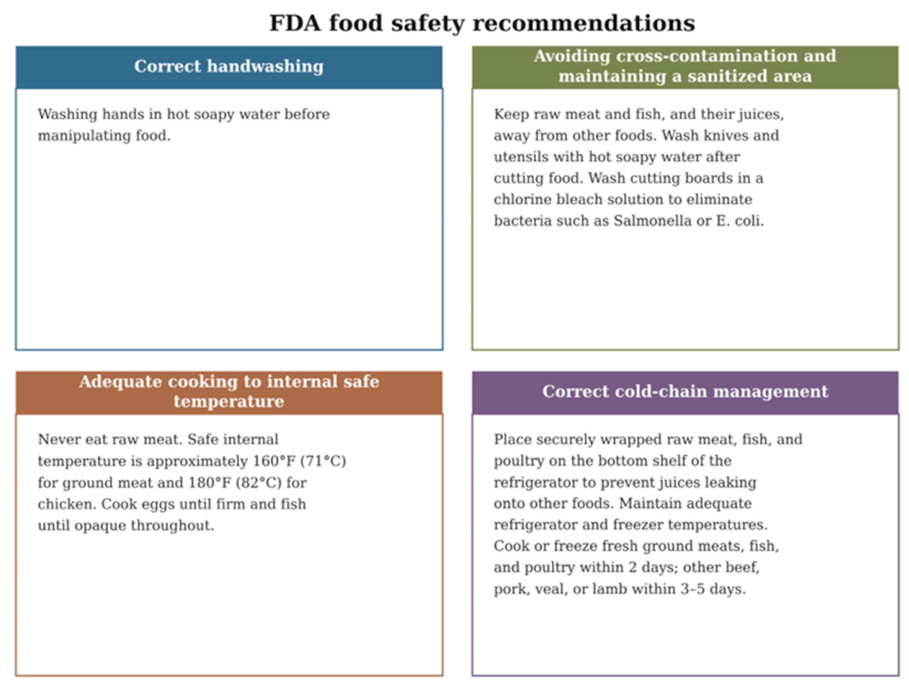

Table 1.
Main studies on ND in pediatric subjects.
| Type of study | Number of patients | Country | Outcomes | Reference |
| Systematic review and meta analysis |
6 studies, 1114 patients in total |
China | - neutropenic diets often interfere with patient food choices and may result in inadequate nutrient intake during chemotherapy -poor quality of life in patients fed a neutropenia diet |
(Ma et al. 2022) [13] |
| Randomized controlled trial | 150 patients FSGs (n = 73) or ND + FSGs (n = 77) |
USA? | -no significant difference between the groups in the percentage of patients who developed neutropenic infection: FSGs 33% versus ND + FSGs 35% (P = 0.78). - Patients randomized to ND + FSGs reported that following the diet required more effort than those on FSGs alone. |
(Moody et al. 2018) [39] |
| Scoping review | 21 studies | United States (9 studies) India (3 studies), The Netherlands ( 2studies) and Iran (2 studies) and one in Australia, China,Germany, The Philippines and Italy |
- ND does reduce the risk of infection in this population. -ND may lead to malnutrition due to it lacking variety and providing an unpleasant experience at mealtimes, - ND may be costing us more in the long-term, -ND decrease paediatric patient quality of life |
(Gulliver et al. 2024) [58] |
| Meta-analysis of randomized controlled trials | 5 RCT (total of 388 patients) | all publications in English language from database’s inception until September 12, 2017 | use of neutropenic diet was not associated with decreased risk of infection in neutropenic cancer patients | (Ball et al. 2019) [16] |
| Systematic review | 3 meta-analyses and 9 observational studies published between 2015 and 2022. The total number of participants was 3469, with 2054 in the intervention group (LBD) and 1415 in the control group (SD |
27 countries, including the USA, the Netherlands, the Republic of Korea, mainland China, Italy, Spain, France, Germany, Turkey, the United Kingdom, Belgium, Poland, Switzerland, Australia, Algeria, Austria, Hungary, Croatia, the Czech Republic, Denmark, Greece, Israel, Lithuania, Norway, Russia, Sweden, and Tunisia | -LBD is characterized by reduced palatability and a limited variety of food suppl and these factors contribute to malnutrition among patients -LBD does not guarantee significant reductions in food-borne infections or related mortality rates. |
(Matteucci et al. 2023) [19] |
| Scoping review | 9 articles | -the use of the neutropenic diet varies greatly among health professionals, resulting in heterogeneous practices. -The available literature presents an absence of evidence on the use, viability, and effectiveness of the neu- tropenic diet in oncological children with neutropenia |
(Arnhold et al. 2024) [40] | |
| Randomized Controlled Trial | 42 patients | India | Neutropenic diet was not effective in reducing FN rate and was associated with higher rate of NEC when compared to the standard diet. | (Gupta et al. 2022) [41] |
| Prospective observational study | 83 patients | India | The absence of a clear link between diet and infection underscores that neutropenic infections are primarily driven by the compromised immune function inherent to chemotherapy, rather than dietary practices alone. | (Singh et al. 2025) [63] |
Disclaimer/Publisher’s Note: The statements, opinions and data contained in all publications are solely those of the individual author(s) and contributor(s) and not of MDPI and/or the editor(s). MDPI and/or the editor(s) disclaim responsibility for any injury to people or property resulting from any ideas, methods, instructions or products referred to in the content. |
© 2026 by the authors. Licensee MDPI, Basel, Switzerland. This article is an open access article distributed under the terms and conditions of the Creative Commons Attribution (CC BY) license (http://creativecommons.org/licenses/by/4.0/).
Copyright: This open access article is published under a Creative Commons CC BY 4.0 license, which permit the free download, distribution, and reuse, provided that the author and preprint are cited in any reuse.